[dropcap]1[/dropcap]994. One of my first assignments was in the Bengaluru Press Club as a cub reporter for the Times of India, at that point, the number 4 English newspaper in the city. Sitaram Yechury held a press conference and I don’t remember the topic. I took down notes dutifully and asked a question that he had avoided answering till then. His eyes twinkled and he responded.
After the PC ended, he paused and asked me which paper I belonged to. And then asked, “How is the TOI doing here in Bengaluru?”
“Like the CPM,” I said. He was delighted. “Number 4,” I clarified and we both grinned.
My next interaction with Yechury was nearly 15 years later. I was assigned Left Parties in UPA II as my beat in New Delhi for Mail Today. I had a couple of colleagues sneer and say hah, they’ve given you a deadbeat, no stories from there.
It was a difficult beat to generate stories from, but it was fun because of the challenge. The plus side was, that every speech I had to listen to was wonderfully articulated and entertaining. The Left was and still is chock-full of fascinating speakers. I had the luck of listening to AB Baradhan who could give AB Vajpayee a run for his money in Hindi articulation, language, poetic inferences and deep philosophy.
I also got to interact quite a lot with Yechury, Prakash Karat and A Raja (CPI) among others.
This was the height of the Karat-Yechury rivalry. They were comrades too, no doubt, and backed each other. But to a political reporter, it’s the factions and divisions that fascinate. In formal interactions, neither would indicate or give an inch of their opinion of the other. Informally, sometimes, things would slip out — that couldn’t be reported, but always gave context for other stories.
Yechury’s charm was his biggest plus, his ability to laugh to deflect. Similar to JH Patel in some ways. It also meant that he was hard to pin down, hard to contradict and hard to hold accountable. He never did say anything that he would have to take back, but pinning him to answers or getting “news” from him (not humourous or dogmatic statements) was a big challenge.
One story that I did was based on an RTI reply that Subhash Agarwalji got, that identified all the ‘crorepati’ politicians. Imagine our absolute shock and greedy “news” glee when we found that Yechury was listed. We happily published the story (in those days, any politicians were the enemy that journos had to show up. It was a different era of journalism and this story and glee was in keeping with those times).
Yechury called us the next day, very unhappy. “I hold a 1/16th share of an inherited bungalow from my great grandfather and that property is notionally worth more than a crore. How can you people put me on the list of crorepatis?” he asked. We of course brushed it off, but I now think we were very unfair to the man, who did indeed live the simple life of the communist leader to the extent possible.
But he was not the typical communist leader. He battled that “taint” of being “elite” all through. He was liked and disliked, inspiring both awe and jealousy both inside his party and outside.
He didn’t like me much after that story and yeah, I don’t think I can blame him, though all I did was what we thought was good journalism, those days.
I will say that the comrade lived his life well and sincerely wanted the best for all people. I respected him and been lucky enough to meet that kind of politician. I wish that the next generations of journalists could get a chance to meet politicians like Sitaram Yechury.
Vasant Kunj (Lukhnow): “Chahte the bahut kuch karna, par sare sapne hi tod diye, kya karein ab? (I wanted to achieve so much, but all my dreams have been shattered. Now, what can I do?),” 10-year-old Mohammad Shahid commented while wandering the streets of Vasant Kunj in the heated afternoon. His face turned pale when asked about his studies.
“I was a bright student at Iram Public School. My education was discontinued when we moved to Vasant Kunj after the demolition of our home in Akbar Nagar. The school was close by and had Diwali and Independence Day programs, things that can’t happen anymore. What will I become without studies?”
Several children in Vasant Kunj of Lucknow share similar stories of heartache. With their homes demolished, they have not only lost their shelter but also their education leaving their dreams shattered. They complained about no schools in their new locality.
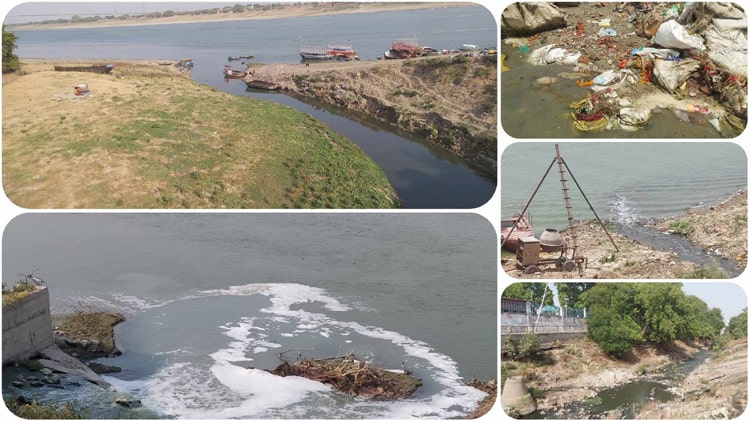
The Lucknow Development Authority in June demolished 1800 buildings including 1,169 houses and 101 commercial establishments in Akbar Nagar locality, displacing approx 12000 population including children, women and elderly. Akbar Nagar has Nazul type land, which means it is government own non-agriculture land. The anti-encroachment drive to develop the Kukrail Riverfront into an eco-tourism hub left hundreds of families in a state of helplessness. Both the High Court and Supreme Court had upheld the government’s decision. The displaced residents were relocated to small flats in the Vasant Kunj area under the Pradhan Mantri Awas Yojana (PMAY). The distance of Vasant Kunj, from Akbar Nagar is 17 kilometers. They say, in 20 kilometers in India, languages get changed. So, for Akbar Nagar residents, their life changed (for bad) in the name of development. Here it is how?
Struggle for education
Many orthodox families didn’t allow their girls to study, but they made an exception since the school was close to Akbar Nagar. Now that Vasant Kunj is far from the school, the girls are no longer allowed to continue their education. Some girls are rebelling against their families to continue their education, cycling 15 km to school. However, they remain unsure about how long they can keep up with this routine.
A barbar shop erected near the PM Awas buildings in Vasant Kunj | eNewsroom
Sanaya studies at Rajat School, 25 kms away, and it takes a lot of time to get there and often gets scolded by teachers for being late for school. ‘Hindu students make fun of me because my home was demolished. They say “You were living on Nazul land.” It was a Muslim area—that’s why it was demolished. My parents don’t want me to study but I’ve forced them. I’ve even been slapped for it. My brother takes me to school by rickshaw which is why I’m able to go. Girls in my caste don’t study, and people taunt me, saying a girl’s place is in the kitchen. I’m only allowed to finish high school, nothing more. It would have been easier in Akbar Nagar. My parents don’t trust me but I have confidence in myself. I’ll never get that freedom (Kabhi nahi milegi azadi). Other girls don’t want to humiliate themselves by telling their stories. I want people to know about me. My mother says we could have studied if our home hadn’t been demolished.”
The larger picture is bleak. A report sent by the state government to the union education ministry in September 2021 said that More than 35 percent of children drop out after class 8 in 13 districts of Uttar Pradesh. The report shows that only 87% of students who completed grade 8 in the previous year moved on to grade 9 in 2019-20. For girls, the transition rate is even lower at 81.5%, and in 13 districts, less than 65% of girls made it from elementary to secondary school.
Seema has lived in Akbar Nagar since childhood. Her mother passed away due to stress about home. Others died too— a man hanged himself, and another jumped off a building. She studied until the 8th grade and then enrolled in Iram Madrasa for a six-year course. “I completed four years but Akbar Nagar was demolished just when I had two years left. I feel wasted now. Na hi hum Hindi, angrezi padh paye aur na Urdu (I couldn’t study Hindi, English or [Urdu]). This numb feeling has left me with nothing. The government talks about ‘Beti Bachao, Beti Padhao. Beti ko to padhne hi nahi diya’ (They didn’t let me study). My nieces travel 15-16 km to school by van, but I had to stop studying. It costs a thousand rupees per child each month, plus fees. I’ve had to sacrifice my education for the little ones. I had hoped to pay tuition after finishing my studies. Ab irada hi khatam ho gaya hai (I have no intentions). With Akbar Nagar gone, my determination is gone too. What’s our future now? My childhood and memories died with our home,” Seema stated.
Uttar Pradesh consistently ranks last among large states in NITI Aayog’s School Education Quality Index (SEQI).
The irrigation department in July marked the houses in Pant Nagar, Indraprastha Nagar, Abrar Nagar, and Rahim Nagar as falling within the 50-metre floodplain area of the Kukrail River. Thereby, prohibiting construction in the area.
However, the Uttar Pradesh Chief Minister Adityanath who is often found boasting “bulldozer” or known as “bulldozer baba” dropped the idea after protests from residents.
A chicken shop near Vasant Kunj | eNewsroom
Unemployment soars
A vegetable vendor Mohammad Salman is struggling to make a living. He is not even earning 25% of his previous income. Salman said most of the people in helplessness have become fruit and vegetable vendors in Vasant Kunj. “We used to buy as customers but now we are the ones selling. Earlier, different people bought from us—office workers, labourers, outsiders. It was a bustling market on the road. Since this is a remote and isolated place, most people seeking livelihoods have become sellers. Who will buy when everyone is selling? It’s even hard to find labour work here. It feels like we’re herded in a circle, just surviving among ourselves,” Salman said.
He continued, “We can’t even afford to send our kids to school. It’s their age to study but they roam the streets. Let alone pay fees, we don’t even have enough to get them admitted to school. People say, ‘He’s poor, he’ll make his children illiterate.’ But it’s not us—it’s the situation we’ve been forced into. We had income in Akbar Nagar, our children were studying, and we were happy to spend on their education. Yahan to 20 rupees kamane mein bhi bahut zillat hai (Earning even Rs 20 is a struggle here).
People say, ‘Like father, like children—both uneducated.’ When we don’t earn, of course, our children will end up illiterate. We can’t meet our basic needs. We manage somehow when our kids or wives fall sick but who will take care of the family when men fall ill? We can’t even afford to get sick. The real problem here is earning.”
Meanwhile, the housing crisis continues to worsen. According to a 2024 estimate by the Housing and Land Rights Network (HLRN), over 1,53,820 homes were demolished in 2022 and 2023, leading to the forced eviction of more than 7,38,438 individuals across India. From 2017 to 2023, evictions affected over 1.68 million people, with the numbers rising steadily—1,07,625 in 2019, 2,22,686 in 2022, and 5,15,752 in 2023.
Women and the elderly face safety and accessibility
Women too face new challenges. “We were never worried about women’s safety in Akbar Nagar. It was a market area where we could go out alone and return late without fear. We feel scared here as soon as it gets dark— for ourselves and our children. The windows don’t have glass, the roads become deserted, and there are trespassers. We can’t leave our girls alone. We had a sense of security in Akbar Nagar where even neighbours would watch over the children. They’ve mixed people from different areas making the atmosphere unsettling. Their behaviour is uncivilized. Who can we trust?
Akbar Nagar had everything—schools, hospitals, and a nearby market. It was within walking distance. There’s not even a medical store for emergencies. I’ve had to stock up on medicines just in case. And what about the girls going to Karamat for education? Has anyone thought about how they’re managing? We live in fear. Who is looking out for our safety?” asked Rehana carrying a newborn in her lap.
The situation is dire for the elderly in Vasant Kunj. “I have knee pain due to my age. I can only leave the house for hospital visits, which are miles away. There is no lift facility. Climbing back up to the fourth floor is exhausting; I have to rest on each floor. The hospital is far away, and travelling there costs a lot. We often don’t have water and when it comes, it’s too dirty to drink without filtering. In Akbar Nagar, we could at least get water from our neighbours. Here, there’s no mosque or madrasa for the children, and we don’t even hear the call for namaz,” said an old lady catching a breath.
Delhi/Mumbai: With just two months to go for the Maharashtra assembly elections, the readjustment and realignments in both Maha Vikas Aghadi and the ruling National Democratic Alliance are evident.
The seat-sharing talks and the evaluation of the Lok Sabha results have forced key allies to take a closer look at their current situation and future politics.
The MVA composed of Shiv Sena UBT led by Udhav Thackray and Congress and Sharad Pawar’s Nationalist Congress Party is the most incongruous alliance. But the alliance formed by the compulsions of survival in the face of the Bharatiya Janata Party’s sustained onslaught clicked in the Lok Sabha polls to inflict heavy losses on the BJP. But the biggest gainer in the churn was Congress which thrashed the saffron brigade in Vidarbha and Marathwada.
Shinde’s Sena incurred the least damage. While SS UBT managed to just about retain its hold.
But that was the general election story. When these parties approach the assembly elections, the UBT Sena, is pushing for a BJP sort of arrangement with the Congress and the NCP wherein the regional party (in this case SS UBT) has the preeminent role, while the national parties get to contest the larger number of seats in the Lok Sabha election.
The concerns in Sena also stem from how this coalition may metamorphose in the days ahead. Especially, if the NCP (Pawar) and Congress together come closer to the halfway mark. That will make Sena UBT’s position vulnerable, almost redundant in the alliance.
It is precisely for this reason Shiv Sena UBT is pressing for the declaration of a CM candidate. And they want Uddhav Thackeray to be the face of the non-NDA alliance. It is an assurance of sorts that Sena wants the leadership of the alliance in the state will rest with its leader irrespective of the strength of each alliance partner.
NCP Pawar and Congress are in no mood to relent now. They will cross the bridge when there is a need.
This is why Sharad Pawar has openly said that the CM will be decided after the elections. And MPCC chief Nana Patola has clarified that the current priority for the party is to dislodge the NDA from power.
These statements, obviously have not gone down well with UBT Sena. Its chief Uddhav Thackray skipped the unveiling of the Congress stalwart Patang Rao Kadam last week in Sangli where top Congress leaders including Rahul Gandhi were present.
In the ruling alliance too, the realignment of forces is evident. Here, Ajit Pawar’s NCP is the odd one out. And there is a clear turf war between Pawar and Sinde-Fadnavis to appropriate credit for the social sector schemes launched by the government.
Shinde’s ministers have openly criticized Ajit Pawar. RSS mouthpiece has questioned the logic of aligning with the breakaway NCP group.
Now, after Ganesh Chaturthi, a fresh churn in Maharashtra politics will be heard soon.
[dropcap]H[/dropcap]aving visited Edinburgh multiple times, it’s undeniable that this city holds a significant place on the global cultural map. The vibrant festivals celebrating diverse art forms, the ever-changing weather, the warm and friendly locals, and the quintessentially Scottish atmosphere make Edinburgh feel like a world apart. This city, steeped in history, has always had a knack for surprises, especially regarding its connections with India, particularly my work base city, Kolkata—a fact that continuously enriches my understanding of global cultural interweaving.
In this culturally rich city, the first Indian Student Association in the UK was established. This was a surprising revelation, considering that many renowned cultural cities worldwide often hold hidden gems within their archives. The more I travel globally, the more my knowledge of #BaharBharat amazes me about Bharat. For instance, during a trip to Rio de Janeiro, I stumbled upon unexpected Bengali connections, which I later detailed in my articles. These historical threads, seemingly minor, weave a complex tapestry of cross-cultural exchanges that define our global heritage.
The Edinburgh Indian Association (EIA), founded in 1883, is a testament to these intricate connections. Initially established as a society for Indian students studying in Edinburgh, the association quickly became a vital platform for social events, debates, and cultural exchanges between Indians and Scots. It remained a student association until the 1950s, then it was taken over by members of the Indian diaspora in the city.
One pivotal moment in the EIA’s history came in 1911 when the association fought for and won its independence from university authorities. This legal victory marked a significant step towards self-determination and autonomy for Indian students in the UK. The EIA lost this court case, but perhaps despite this loss—or because of it—the students were able to run the affairs of the EIA without any serious inputs from the Trustees of the EIA. 11 George Square was owned by the University but there is no evidence that it tried to dictate what the students did or said, so to that extent, they had self-determination and autonomy.
EIA dining and reading room at 11 George Square
From 1911 to the 1950s, the EIA rented rooms at 11 George Square which became a vibrant hub featuring a debating hall, adining hall serving Indian cuisine, a library, and recreational facilities like a billiard room and a ping pong table. When I visited this time, the square was bustling with a festival, and it took a bit of time to locate the building.
I was informed by my friend, Professor Roger Jeffrey, Honorary Professorial Fellow at the School of Social and Political Science, University of Edinburgh, who was in India earlier this year with whom we had a productive meeting during his visit, exploring the potential for future collaborations that the EIA was not just a social club; it was a radicalising force that nurtured future leaders. Professor Roger still conducts tours showcasing this building and discussing its historical and academic significance.
Its members went on to play crucial roles in movements such as the British Guiana East Indian Association, the Non-European Unity Movement in South Africa, and the Indian National Congress. This highlights the profound impact that Edinburgh had on shaping leaders who would go on to influence global politics and social movements.
Edinburgh alum Kesaveloo Goonam Naidoo’s recollections of the EIA provide a window into its vibrant intellectual life. The association hosted illustrious visitors like Nobel Laureate Sir CV Raman and the controversial Right Srinivasa Sastri, whose visit sparked intense debates among Indian students. It also hosted Sir P C Ray, also an alum of the university, possibly a founder member (though we have no evidence of this: he came to Edinburgh in 1882) when he returned on a visit in 1920. These interactions not only enriched the cultural and intellectual milieu of Edinburgh but also mirrored the broader struggle for India’s independence.
As the Home Rule movement gained momentum in India, the EIA became increasingly active in political discussions, drawing the attention of Scotland Yard. This surveillance underscores the significant role that diaspora communities played in anti-colonial movements, acting as crucial nodes in the global network of resistance against British imperialism.
Reflecting on the legacy of Edinburgh Indian Association from a 21st-century perspective, it becomes evident that Edinburgh has been more than just a picturesque city with a rich cultural heritage. It has been a crucible of ideas, debates, and movements that have shaped the modern world. The historical ties between Edinburgh and India, exemplified by the EIA, remind us of the importance of cross-cultural connections in fostering intellectual growth and social change.
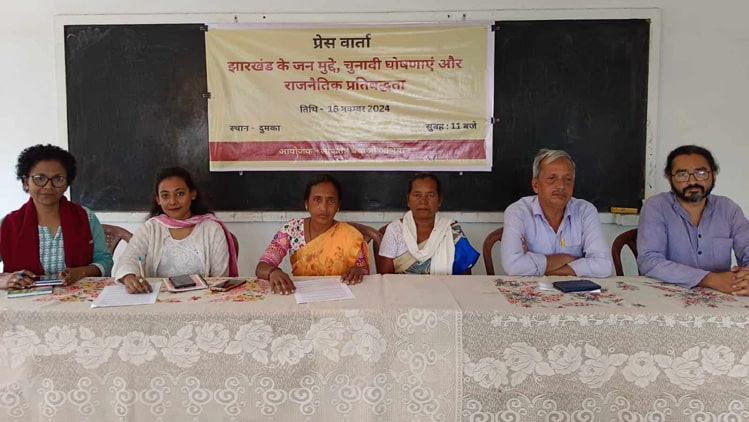
रांची: झारखंड की राजधानी में मंगलवार को एक अलग नज़ारा देखने को लोगों को मिला, जब झारखंड जनाधिकार महासभा से जुड़े सामाजिक कार्यकर्ता हाथों में बैनर और अंडा लिए बीच शहर खड़े हुए। उनकी मांग थी झारखंड सरकार के उस आदेश को लागू करना जिसमें आंगनबाड़ी में हर दिन एक अंडा देने को बोला गया था।
मंगलवार को, झारखंड जनाधिकार महासभा से जुड़े सामाजिक कार्यकर्ताओं ने दो विरोध प्रदर्शन किए। वे आगामी विधानसभा चुनावों में भारतीय जनता पार्टी के खिलाफ अपनी लड़ाई की घोषणा करने के साथ-साथ सोरेन सरकार को अपने वादों को पूरा करने की याद दिलाने के लिए राजभवन के सामने धरने पर बैठे। बाद में बारिश के बावजूद कार्यकर्ताओं ने अल्बर्ट एक्का चौक पर तख्ती और अंडा भी पकड़ रखा था, जिसमें आंगनबाड़ी केंद्रों में बच्चों के लिए अंडा उपलब्ध कराने को तत्काल लागू करने की मांग की गई।
दोनों कार्यक्रमों में राजनीतिक कार्यकर्ता और स्वराज इंडिया एवं भारत जोड़ो अभियान से जुड़े योगेंद्र यादव भी शामिल हुए।
शामिल लोगों ने डबल बुलडोज़र भाजपा राज नहीं चाहिए, और हेमंत सरकार, जन वादे निभाओ के नारे भी लगाए।
विभिन्न जिलों से 2000 से अधिक लोग रांची पहुंचे और ‘भाजपा हटाओ, झारखंड बचाओ’ और ‘हेमंत सोरेन सरकार, जन मुद्दों पर वादा निभाओ’ लगाए।
योगेन्द्र यादव ने कहा कि लगातार राज्य में साम्प्रदायिकता फैलाने की कोशिश हो रही है. जनता तो डबल बुलडोज़र भाजपा राज नहीं चाहती है। लेकिन हेमंत सोरेन सरकार को जन मुद्दों पर सच्चाई और प्रतिबद्धता के साथ कार्रवाई कर के जनता के संघर्ष का साथ देना होगा।
लोगों ने आदिवासी-दलित बच्चों में व्यापक कुपोषण के मुद्दे को भी उठाया। एक रिपोर्ट के अनुसार झारखंड के 40 फीसद बच्चे कुपोषित हैं।
सोमवती देवी ने कहा कि हेमंत सोरेन सरकार ने पांच सालों में कई बार घोषणा किया कि मध्याह्न भोजन और आंगनवाड़ी में बच्चों को रोज़ अंडे दिए जायेंगे। लेकिन पांच साल गुज़र जाने के बाद भी सरकार बच्चों की थाली में अंडा नहीं दे पाई है।
ज्यां द्रेज़ ने याद दिलाया कि आदिवासी-दलितों के लिए फर्जी मामले और सालों तक जेल में विचाराधीन बन के बंद रहना भी एक बड़ी समस्या है. गठबंधन दलों ने घोषणा पत्र में वादा किया था कि लम्बे समय से जेल में बंद विचाराधीन कैदियों को रिहा किया जायेगा।लेकिन इस पर किसी प्रकार की कार्रवाई नहीं हुई।
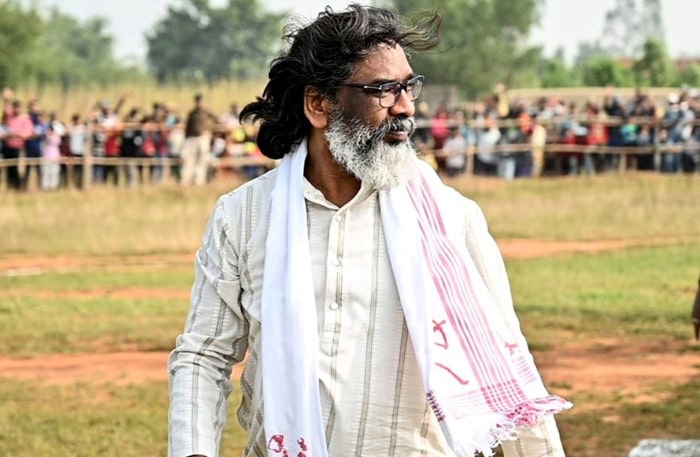
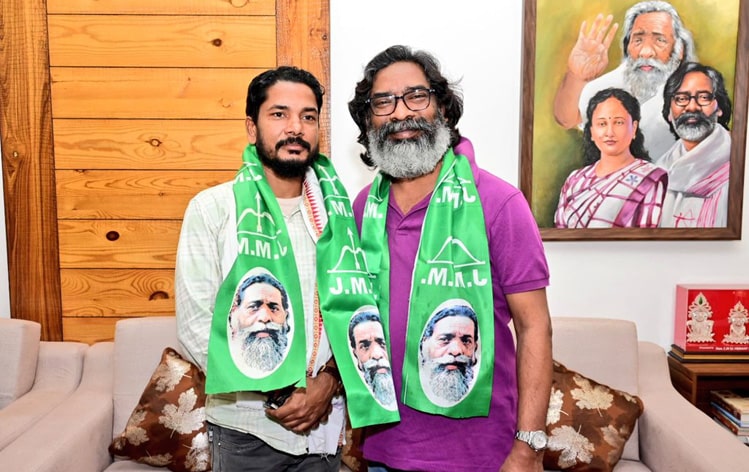
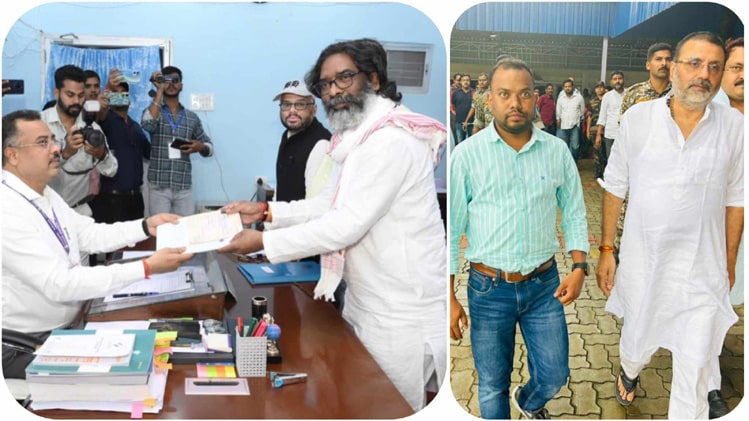
हेमंत सोरेन और झारखंड जनाधिकार महासभा के कार्यकर्तागण | साभार: एक्स/हेमंतसोरेनजेएमएम
धरने की शुरुआत में मंथन ने कहा कि 2019 के विधानसभा चुनाव में झामुमो-कांग्रेस-राजद गठबंधन दल अपने घोषणा पत्र में अनेक जन मुद्दों पर कार्यवाई का वादा किये थे। पिछले 5 सालों में राज्य सरकार ने जन अपेक्षा अनुरूप कई काम किये हैं लेकिन अनेक महत्त्वपूर्ण वादे अभी भी अपूर्ण हैं।
बिरसा हेम्ब्रम ने कहा कि पूर्व की भाजपा सरकार द्वारा राज्य की 22 लाख एकड़ गैरमजरूआ व सामुदायिक ज़मीन को लैंड बैंक में डाल दिया गया था। बिना ग्राम सभा से पूछे, लैंड बैंक से जमीन का आवंटन विभिन्न सरकारी और निजी परियोजनाओं के लिए किया जा रहा है। झामुमो ने इसे रद्द करने का वादा किया था लेकिन इस पर सरकार चुप्पी साधी हुई है।
जेम्स हेरेंज ने कहा इसी प्रकार भूमि अधिग्रहण कानून (झारखंड) संशोधन, 2017 के तहत निजी व सरकारी परियोजनाओं के लिए बिना ग्राम सभा की सहमति व सामाजिक प्रभाव आकलन के बहुफसलीय भूमि समेत निजी व सामुदायिक भूमि का जबरन अधिग्रहण हो रहा है। पश्चिमी सिंहभूम से आये हेलेन सुंडी ने पूछा कि अपनी चुनी हुई सरकार आदिवासियों का अस्तित्व खत्म होने का इंतजार कर रही है?
अजय एक्का ने कहा कि यह दुःख की बात है कि इस सरकार में भी संसाधनों और स्थानीय व्यवस्था पर पारंपरिक ग्राम सभा के अधिकारों को सुनिश्चित करने के लिए पेसा की नियमावली नहीं बन पाई. वन अधिकारों पर संघर्ष करने वाले जॉर्ज मनिपल्ली ने कहा कि राज्य सरकार वन पट्टों के आवंटन के बड़े-बड़े दावे कर रही है लेकिन राज्य के हजारों निजी व सामुदायिक दावे लंबित हैं। सरकार ने घोषणा की थी कि 9 अगस्त 2024 को हर ज़िले में 100-100 सामुदायिक वन पट्टों का वितरण किया जायेगा। लेकिन आज तक एक भी नहीं हुआ है। लातेहार से आए प्रणेश राणा ने कहा कि वन विभाग सदियों से खेती कर रहे ग्रामीणों पर फर्जी मामले दर्ज कर रही है।
आदिवासी समुदायों की मूल समस्याओं के साथ-साथ राज्य में दलित समुदाय भी अस्तित्व की लड़ाई लड़ रहा है। सफाई कर्मचारी आंदोलन के धरम वाल्मीकि ने बताया कि महज़ जाति प्रमाण पत्र और सीवर सेफ्टी टैंक में हो रही मौतों, के मुख्य संघर्ष है अनेक दलित युवा प्रमाण पत्र न बनने के कारण पढाई व रोजगार से वंचित हो रहे हैं। हालांकि राज्य सरकार ने भूमिहीन परिवारों के जाति प्रमाण पत्र के लिए एक प्रक्रिया बनाकर रखी है, लेकिन वो इतनी जटिल है कि प्रमाण पत्र मिलना ही बहुत मुश्किल है।
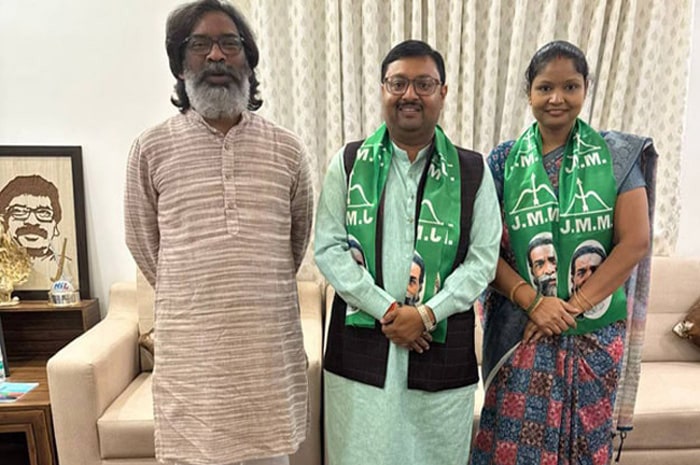
देर शाम मुख्यमंत्री हेमंत सोरेन ने महासभा के लोगों से मुलाकात की और वादा किया कि उनकी मांगों पर गंभीरता से विचार करेगी सरकार।
Kolkata: Kirity Roy, a well-known human rights activist in West Bengal. has been active in raising issues of people living around the India-Bangladesh border. The secretary of MASUM has also participated in several RG Kar protest rallies be it at Serampore, Hooghly or in Moula Ali. But now, the human rights activist is opposing the death penalty proposed to the rapists in the Aparajita Bill 2024 passed by the Bengal assembly led by Mamata Banerjee government.
Roy is not alone, Nisha Biswas, another prominent face in the field of activism in Bengal, Kavita Krishnan, women rights activist, who had led the 2012 Delhi Gangrape protest in national capital. And Dayamani Barla, a civil and tribal rights activist, who is known as Iron Lady in Jharkhand opposed the death sentence proposed in the anti-rape bill.
On August 9, the dead body of a trainee doctor pursuing her post-graduation from RG Kar Medical College and Hospital recovered was recovered from the seminar hall of the medical college hospital. Soon it was established that the 31 year-old trainee doctor had also been raped. After the news, anger spilled over across Kolkata, and later to Bengal and India. Kolkata Police arrested one Sanjay Roy, still the protest did not stop. The case was handed over to the CBI, but the movement to change the system and make the workplace safe for women continued. The Supreme Court too took Cognizance, a rarity in recent times, but protests that already became a movement did not die. Amid all these Mamata Banerjee, brought a bill in Bengal assembly, proposing capital punishment to rapists. The Bill introduces the death penalty or life-long imprisonment for rape by amending the relevant sections in the Bharatiya Nyaya Sanhita, the new penal code. In fact, death has been sought to be prescribed for five offences — rape; rape by police officer or public servant; rape causing death or sending victim to persistent vegetative state; gang rape, and being a repeat offender. It also amends the Bharatiya Nagarik Suraksha Sanhita to provide for special courts to try such offences in a time-bound manner, and the Protection of Children from Sexual Offences Act, 2012, to provide for death in cases of penetrative sexual assault and its aggravated form. The President’s assent will be required for the State amendments.
No Conclusive Empirical Studies That Show The Death Penalty Deters Crime
The incident pointed towards the negligence of Bengal’s Health department, police investigation, and crippled administration of the state government. To protest against this heinous crime and corrupted system, every citizen of West Bengal is moving out to the street and raising their voice for justice for about a month. Under these circumstances, the Mamata Banerjee Government announced this anti-rape Bill to divert the movement, said Kirity Roy.
Mamata Banerjee introducing Aparajita Bill in Bengal assembly | Courtesy: PTI
Roy further pointed out, “The death penalty is not a definitive answer to crime, as it fails to address the root causes and complexities of criminal behaviour. There are no conclusive empirical studies that show the death penalty deters crime. It is unacceptable for a civilized society that killers need to be killed as it perpetuates the cycle of violence. Article 21 of the Indian Constitution and Article 3 of the Universal Declaration of Human Rights (UDHR) both state that everyone has the right to life, liberty, and security of person and the death penalty violates both. A total of 112 countries have abolished the death penalty for all crimes, while 9 others have done so for common law offences. Additionally, 23 nations are in the process of abolishing capital punishment. However, 55 countries, including India, continue to retain the death penalty.”
The activist mentioned that how judiciary, administrative and legislative bodies are not doing its work, “We cannot reject that the struggle for women’s emancipation cannot be separated from the struggle against the hierarchical patriarchy in India. Unfortunately, laws, courts, parliaments, and ministries are happy to embrace this flawed system.”
“In the Nirvaya rape and murder case, Justice Verma Committee pointed out that-‘In the larger interests of society, and having regard to the current thinking in favour of the abolition of the death penalty, and also to avoid the argument of any sentencing arbitrariness, we are not inclined to recommend the death penalty. However, ruling political parties are arguing for encounter, death penalty as a result of justice for personal and political gain. Mahatma Gandhi’s famous quote, ‘An eye for an eye makes the whole world blind’ is a lesson for us that violence cannot be the solution for another-violence. The politics of revenge and state-sanctioned killings sustain cycles of violence,” he added.
Institutional Rape and Murder: A Major Concern, Prevent That
Nisha Biswas, a Kolkata based activist reacted, “My first question, why is there a different name for the victims? Sometimes it was Nirbhaya, Sometimes Abhaya and now Aparajita. If somebody has been raped, or brutalized, how she becomes Aparajita or Nirbhaya? Why hide the identity? We are not Nirbahya or Abhaya? We fear, in our lives. When we move on the roads, we fear. My age is 70 years, but at a lone place, if I hear some sound from my back, I turn in fear to see who is coming. This fear has been instilled in us.”
“Laws have been made in Maharashtra and Andhra and awaiting approval from The President of India. We have given capital punishment to people from Kolkata to Delhi. We hanged Dhananjay, what changed after that? After the Verma committee’s recommendation, the punishment from 7 to 10 years has increased but the conviction rate has gone down. For RG Kar protest, I was in Barasat recently, where a daughter was raped, now if there will be the death penalty, nobody in the family will support her. In most of the cases, rapes happen in homes, so how many cases will come out then?” she asked.
She pointed out, “Institutional murder is the main issue, it happened in RG Kar and in Uttar Pradesh too. Raped happened inside the ambulance, the patient was murdered and the wife was raped.”
“Society should be changed to instruct males, not females, instead of asking women to enter the home by 8 pm, it should be said to men. The laws were changed in Nirbhaya time too, and minors were hanged, but have they changed? I believe that even if the criminal has done the crime, he or she should not be hanged,” Nisha added.
The banner of a protest for justice in RG Kar’s rape and murder case reads: “Sorry for the inconvenience, State. Repair work is in progress
New Clothes, Women-Friendly Courtrooms, police-doctor should not have last word, essential for Rape Victims
Kavita Krishnan, the author of Fearless Freedom told eNewsroom, “The introduction of the death sentence will lead to more deaths of rape victims. We have laws in place, it is a question of how to implement them. How to make sure that policing, safety and rape victim’s dignity take place properly.”
The women rights activist said further, “What can be done for prevention of rape, for justice and rape survivors, some of those suggestions are there in the Verma committee report. Implementing these measures would be a great start. The Verma committee not only recommended changing the laws but it recommended specific measures that governments should be making which should be budgeted for and government should be transparent where it has been allocated.”
“Quick justice is bad. It is simply bad for the quality of judicial functioning. There will be no pressure on police to do an intensive investigation. Their sub-standard work will be incentivized. Even the courts will be pressurizing to quickly pass the judgments. The answer is increasing the number of judges and courts, and it is not just for rape survivors but for the people at large,” she mentioned.
“There are several reasons for opposing the Aparajita bill. One is, the way it has been drafted and passed. In this kind of haste. And in a tense situation. Where the government has not even responded to other questions of justice in the RG Kar case. In the wake of Nirbhaya, when there was a proposal to draft a bill and set up a Verma committee, activists feared it would be a mere appeasement. Our taxpayer’s money should be put in place to make institutional changes.
The activist who has watched many such major rape incidents suggested several important steps needed to be done than just pronouncing capital punishment, “Simple things can matter a lot in rape cases as suggested by Dr Pratiksha Bakshi. New clothes should be provided to rape victims in police stations and hospitals, as the clothes they remain wearing get used for evidence. Courtrooms should be made women-friendly, as it is mostly masculine. The judges still allow the prosecution to ask dehumanizing questions related to rape. The drawing conclusion of whether rape happened or not should not be done on police or even doctor’s finding, it could only be noted down.”
Societal, Administrative and Judicial Reform Key to Ending Rape
Dayamani Barla, the iron lady of Jharkhand too believes that capital punishment will not end the evils in society. “I believe that if we have to end the evils in society, the entire society, administration as well as the judiciary system should work responsibly and together. Then only the cases of rape will be stopped or lessened,” she said.
And added, “The laws which have been made to provide safety to women should be strictly implemented. I strongly believe that the death penalty will not stop the evils in society.”
Kolkata: Kolkata: The two-page resignation letter from Jawhar Sircar, the Trinamool Congress Rajya Sabha member who has resigned from politics and the Rajya Sabha over the mishandling of the RG Kar rape and murder case involving a trainee doctor by the Mamata Banerjee government, reflects the current state of Bengal.
The bureaucrat-turned-politician, posting his resignation letter addressing TMC supremo Mamata Banerjee on social media wrote, “I am quitting as MP primarily because of WB government’s faulty handling of the most spontaneous public movement following the terrible rape-murder case at RG Kar Hospital. I am also quitting politics. I will be with the people in their struggle for justice. My commitment to secular, democratic values will remain unchanged forever. Today, I quit politics.”
The letter not only highlighted the mishandling of the RG Kar rape and murder case but also pointed out the unchecked corruption in the state. Despite being a member of the highest house of the Indian parliamentary system, he was unable to meet with the Chief Minister of Bengal.
“I had to say all this in writing as I have not had the opportunity to speak privately with you In several months. I express my gratitude again for the opportunity you gave me to raise Bengal’s issues in parliament for 3 years, but I do not wish to continue as MP at all. My commitment to fight corruption, communalism and authoritarianism in the Centre and the States is simply non-negotiable,” the third last paragraph of the letter reads.
eNewsroom had recently published a story on Jawhar Sircar, on his excellent report card inside Rajya Sabha.
At the national level, while Mahua Moitra and Derek O’Brien have become prominent TMC faces, Sircar has recently gained popularity due to his important debates on financial issues and factual answers. The 72-year-old former IAS officer remains very active on social media and frequently posts. His writings on religious festivals are a rare work on Facebook by an authentic source. He writes about every festival celebrated in the country.
Since the RG Kar incident, while other TMC members have remained silent, the former chairperson of Prasar Bharati frequently commented in his posts that he found the state government’s work to be ‘very callous’.
However, on social media, there is a flood of messages on Sircar’s resignation letter, and most are respecting his decision. There are people like Kirti Chidambaram, MP from Shivganga who expressed surprise, “Surprised & disappointed by your decision. Parliament needs people like you. You added great value to our discussions in the Parliamentary Standing Committee on IT. While I understand your angst, I hope you will reconsider (sic).”
Some, like River Phoenix, suggested that it was time to stand with the party and that he should have resigned after 3-4 months, “Quitting or not quitting is totally your decision. But quitting your party when it is going through a tremendous crisis and opposition just shows opportunism. Whatever things are wrong in the party must have been wrong before also. But you didn’t quit before. Now when the party is facing backlash and opposition, you try to save yourself at this time, which is the worst kind of backstabbing anyone can do. You could have at least waited 3-4 months before things would have quietened, but leaving it now sends the worst message to the public about the party (sic).”
Political analyst Rasheed Kidwai told eNewsroom on Sircar’s resignation, “Though I am a well-wisher of Jawhar Sircar, you must understand the situation. Crime against women is a blot on the society and rape in India is very unfortunate. But if you see things after Nirbhaya Case, the rapes have increased. And the conviction rate, being 26-27 percent, is poor. It has become systematic. Not only are rapes occurring, but victims are also being killed, which makes the situation even more serious. Controlling this issue is beyond the capability of any political party; it involves society, the judiciary, and religious groups.”
Kidwai continued, “The solution of fast-track courts and speedy trial is also not justifiable as an innocent person will not have time to save himself. In many cases, higher courts have turned down lower courts’ decisions. The outrage is also selective; several equally heinous rape cases have occurred across the country since the RG Kar incident, including the recent Ujjain rape case, yet there has been little public outcry.”
“The rank and file of TMC are very diverse, with actors, artists, activists, and public intellectuals. Sircar and others should pressure Mamata Banerjee for better action in this regard. Being self-rightist is a choice, but correcting the system within the party is a good fight to do,” the political analyst added.
Reacting to Sircar’s letter, TMC leader Kunal Ghosh said that he agrees to a big part of Jawhar Sircar’s letter to Mamata Banerjee regarding his decision to resign as Rajya Sabha member.
“We have heard Jawhar Sircar has taken a decision. He was one of the best bureaucrats in the country, the greatest from West Bengal. It is his personal stand, decision, and letter. I won’t comment on it. He has the right to take a decision,” Ghosh said.
“We also agree with a big part of his letter. But our stand is that under the leadership of Mamata Banerjee and Abhishek Banerjee, we will take visible steps to address the concerns of civil society. We will try to address that by remaining in the party,” he added.
Delhi: In a dramatic turn of events, the Congress party has made a bold move in the run-up to the Haryana Assembly elections, drawing attention and excitement by welcoming two of India’s most celebrated wrestlers, Vinesh Phogat and Bajrang Punia, into its fold. The announcement, made on a Friday in New Delhi, saw the wrestlers join the Grand Old Party in a grand display of political maneuvering, with Congress President Mallikarjun Kharge and General Secretary KC Venugopal presiding over the occasion.
The induction of Phogat and Punia is being seen as a strategic maneuver by Congress to galvanize the youth and capture the electorate’s imagination. Both wrestlers, having recently resigned from their positions in Indian Railways—Phogat having been employed under the sports quota—are now set to launch their political careers. Their departure from their esteemed sports positions underscores their commitment to their new path, one that they hope will transform their popularity in the wrestling arena into political capital.
Their entry into Congress is not just about political debut; it carries with it a rich backdrop of recent activism. Both Phogat and Punia were prominent figures in the protests against Brijbhushan Sharan Singh, the former Wrestling Federation of India Chief and BJP MP, whom they accused of molestation. Their activism, which captured national attention and led to legal proceedings now ongoing in court, positions them as champions of justice and rights, a narrative Congress is keen to leverage.
Phogat is expected to contest from Badli, while Punia is eyeing either Julana or Badli—seats known for their significant Jat population, which could play a crucial role in their electoral prospects. The wrestlers’ recent show of support for protesting farmers further aligns them with grassroots issues, potentially endearing them to voters who have seen them advocate for critical causes.
Yet, the path to electoral success is fraught with challenges. The story of wrestlers in Haryana politics is mixed, with past figures like Yogeshwar Dutt and Babita Phogat struggling to make a significant impact despite being fielded by the BJP in 2019. Their experiences serve as a cautionary tale that not all sports icons translate their public adulation into political victories.
With the BJP grappling with anti-incumbency sentiments and Congress gaining momentum, the political landscape in Haryana is ripe for change. The question remains: can Vinesh Phogat and Bajrang Punia defy the odds and turn their sports fame into electoral success? Only time will tell if their wrestling prowess will translate into political clout in Haryana’s turbulent political arena.
I had stood last or second last in every class from Class 7 onward and had managed to fail in Class 8, necessitating a repeat of the year. The Headmaster of St Xavier’s seriously considered expelling me from school, but at my father’s fervent pleas, he gave me a last chance by shifting me from Science to Humanities. So, in 1967, I joined Class 10 in Humanities— which was the second year of our three-year ‘high school’ course.
The other ‘feathers’ in my cap were the several warnings I received for ‘poor conduct,’ mischief, and misbehavior. In other words, I was declared an ideal bad student when I joined, not without trepidation, on the first day in my new Humanities class—without knowing what had already been taught in Class 9. Everything was strange in this Class 10: the room, the boys, the subjects. No physics, chemistry, or maths—only vague subjects like history, geography, and literature.
But the strangest element was the class teacher, Father PY Gilson. I had seen this peculiar priest in the corridors and had always wondered how this placid Belgian missionary, with no noticeable chin and a peculiar French accent, survived the heat of India and the turmoil of unruly boys. Though he knew of my terrible reputation, he took no note and asked me to move to the first bench—something I had never done before. He then proceeded straight into the lessons, little realizing that I could hardly understand anything. Be that as it may, I was unconsciously drawn into his fascinating stories. Which child can resist a good story? Father Gilson seemed to weave tales with his magical voice and funny accent. His narrative was so life-like that I listened spellbound and gently stepped onto a magic carpet that carried me over fantasy lands. For the first time in my life, I was not bored in the classroom, and when the period ended, I could not believe it—I had actually enjoyed the literature!
More wonders followed as Father Gilson’s stories continued to flow from his magician’s hat. Soon, I started looking forward to his classes. Perhaps the greatest transformation he induced in me was not only a friendly attitude towards his subjects but towards studies in general. And that was just the beginning. Between classes and after classes, he encouraged me to meet him for extra lessons to make up for the year’s study that I had missed in Class 9. The special care he took with me had a soothing influence not only on my attitude towards studies but on the world at large.
However, my reverie was soon shattered by the reality of the first-class tests. I dreaded these approaching exams, convinced that I would never pass them, despite my brief flirtation with academics. “English Essay” was the first test, and I distinctly remember telling Father Gilson, with a choking voice, that I just could not write properly. His encouragement could hardly stop the streams of sweat that flowed endlessly during the exam.
When the results came out, you could have knocked me down with a feather. I had stood fourth in class! My parents were overjoyed, my friends pinched me, but nobody realized what it did to my confidence. The next surprise was a ‘first’ in Arithmetic. Coming from the Science stream to Humanities, it was not too difficult to score, and I had learned to dream. History, Geography, and other subjects followed, and I could not stop this new-found excitement for ‘topping’ in class. The rest was just crazy: one small success followed another, of course, with a lot of toil under Father Gilson’s constant guidance.
A few months later, we were all shocked to learn that Father Gilson was to leave for another school, and then, in a day or two, he was gone! I wept openly. Nobody had ever treated me like this before. Nobody else could turn around a sad case like mine into a fairy tale. And thanks to him, I am where I am today—there is no doubt about that.
A decade later, I was in the IAS and posted as Additional District Magistrate of Asansol and Durgapur in the Burdwan district of West Bengal. I was overjoyed to hear from a friend that Father Gilson was the Headmaster of St Xavier’s, Durgapur. I sought an immediate appointment and was eager to tell him that he was the teacher who had turned my life around. Would he recognize me? I could hardly wait!
The day finally arrived. A strange feeling of nostalgia overpowered me as the official car drove into the school with red lights, policemen, and the other unavoidable trappings of authority. I was ushered into Father Headmaster’s room, where a familiar scent greeted me. He was not there, as he had to take a class because some teacher was absent.
But he came in soon and shook my hand warmly. “I am proud of you,” he said. He was just the same, a trifle older. I was transformed—from a picture of confidence to a quivering, nervous ‘student’ groping for words. Even before I could frame my gratitude into proper sentences, the bell rang, and Father Gilson sprang up from his chair exclaiming: “Oh my God, there’s another class to attend. And the little boys are waiting. Naughty, you know. Like you were. I must go. God bless you, my son. Do well. But I must leave.” The good Jesuit teacher, whom I would never see alive again, had no time for my praises and my ever-lasting gratitude. He had other problems, children to tend to, to improve, to reform.
[dropcap]A[/dropcap] young boy called Aryan Mishra was killed by the cow terrorists in Haryana. The Times of India wrote that the boy was killed ‘mistakenly’. Why did the Jain paper say that it was a mistake and not a crime? Is it because the person was not Asif or Mohammad in place of Aryan Mishra?
Like bulldozer justice, Love Jihad and other issues, cow vigilantism too is deliberately made to criminalise Muslims. While it might be possible in the common parlance that communities and people have prejudices against each other when it becomes part of the rule book of the establishment then it will only bring disrepute and disaster. Law, say every good book of modern democracy, must remain neutral in all forms, gender, religion or region and must be committed to statute books and in layman’s language, as per the constitution.
What has happened in Haryana was bound to happen. One day the fire that you are putting on, will bring you too in its periphery.
The life of a human being is far less than that of a cow or bovine. Isn’t it a hypocrisy of how much noise we make on the ‘death’ of cows? All these bhakts have killed the entire cow market. Most of the farmers now avoid buying cows and after an age, they go to their ‘old age home’ or what is called gaushala. I can bet, none can run these gaushalas unless they get huge support. The governments are pumping money for it and ‘devotees’ make huge donations daily. So it is a lucrative business. It does not help the gaupalaks, those farmers who keep cows and equally respect them. Of course, they don’t do all dikhawa, and make loud noises about cows, ‘our mother’. If we all were concerned about it, they would not have been left to feed themselves and create a nuisance in open markets, eating polyethene.
The cow devotees or what is called gaubhakts have no time to fight against the owners of beef exporting companies, a majority of them hail from those jaatis who preach to us ‘save cows’. Have we ever heard of any demonstration, any letter written by the Sanghi moral police, their owners to the government of India to ban the beef companies? Why should beef be allowed to be exported? I am sure, the government has all the details and it must act against such companies if its policy is to protect cows and other such bovines.
We expect too much from the political class which blatantly uses the language of a rigid person suffering from prejudices. When you are in power, you follow Rajdharma, as Atal Bihari Vajpayee once said. Perhaps, the Supreme Court can frame some guidelines in this regard and save people from getting slaughtered in the streets. Like bulldozer justice by the government, mob lynching or killings in the name of keeping beef or killing a cow have become India’s version of blasphemy laws which must be stopped at all costs.
The Constitution protects us all and gives equal treatment as per law. The executive has to implement it impartially. It is time for the Supreme Court to see whether the Constitution is not being violated. One is sure that theymust be aware of what is happening in India in the name of ‘protection of cows’. It is time we stand up and speak against such brutal murder in the name of cow protection. The track record of the government of Haryana is not great in this regard and only the Supreme Court can ask for a status report of other such cases already pending in the court. Time for monitoring this cow terrorism killing innocent people.