Securing Uttarakhand’s Hills: Special Laws, Land Battles and a Growing Crisis

0

[dropcap]T[/dropcap]here is a need to protect the land, identity, and interests of the people living in the hills of Uttarakhand. There is a demand by various groups to have a special land law that does not allow outsiders to buy or purchase land under any pretext. They want the government to bring a special domicile act with a baseline of 1950 so that the land is not transferred to outsiders as is being done these days.

Need for Special Land Laws: Protecting the Hills from Overexploitation, Not Targeting Communities

While these demands are genuine, there is also a campaign going on from various handles that are just pushing how the Muslim population is growing multifold in Uttarakhand. These handles always look for any issue concerning Muslims and make it a huge challenge. Unfortunately, many activists and intellectuals are also using this to push their argument to bring special land laws. Does Uttarakhand need a special land law to protect it from Muslims, or is the issue different and requires serious introspection?

Many of the leaders want ST status for the hill people, and numerous others are asking for the state to be put under Schedule V. Unfortunately, these are just wish lists without understanding or even seriously introspecting the things. The thing is that Uttarakhand hills are at unease because, in the coming years, they are going to reduce seats due to delimitation exercises. Hills will become a minority in the future, and the whole theory of a hills state will just end unless the government continues to consider the issue based on geographical location and not based on population.

uttarakhand hills special laws land rights crisis
Uttarakhand | Author
Reimagining Representation: Ensuring Political Voice for the Hill Communities

First, the Uttarakhand activist should know that it has never been an issue of Pahadi versus Muslims but the original thing was Pahadi versus Desi. The whole narrative of the Muslim population increasing is based on demographic profiles selectively being used from Manglaur and other bordering towns with Saharanpur districts, where Muslims have a sizable presence. It is a historical fact, and those who annexed these regions to Uttarakhand from Uttar Pradesh should have known these facts. A similar thing happened with Shaheed Udham Singh Nagar when Sikh groups protested against merging with the state. One must understand that when Uttarakhand state was being carved out, people opposed the merging of Shaheed Udham Singh Nagar and Haridwar in Uttarakhand. The political leaders of that time wanted many more places. Thank God, Saharanpur, Najibabad, or Muzaffarnagar were not included; otherwise, the whole meaning of a hill state meant to protect and preserve Uttarakhand and its hill identity would have been lost.

Simply, plains have bigger populations, and hills can accommodate so many people. Now, hills have lots of pressure, and there is almost a negative growth of population, while the population in plains is growing multifold. So not merely Muslims are growing, but the Hindus too are growing. A state can’t have two laws: one for the Pahadi people and the other for the Desi people. Uttarakhand’s laws for SC-ST are rarely implemented. The OBCs have not got their due, and the government has declared many areas as OBCs. Jaunsar is declared as an ST area, which is unconstitutional. Jaunsaris are not tribals. It is not a tribal identity but a regional identity where all Jaati people live, but Jaunsar’s ST status benefitted the Brahmins and Thakurs living in the area. Shockingly, the SC-ST act is not implementable as the entire region is declared ST. There is more violence against Dalits in Jaunsar than in any other region. Will the netas of the movement speak about this?

uttarakhand hills laws land rights crisis
Author Vidya Bhushan Rawat in Uttarakhand
Beyond Pahadi versus Desi: Addressing Internal Inequalities and Misguided Campaigns

How can the entire state be declared as ST when they are not? Yes, the Chipko movement was that of the Scheduled Tribes, but how was this movement co-opted by the Brahmanical elite of the state, which carefully sidelined the tribal leadership and diverted the attention? New netas became bigger than the movement, and it lost its earlier shine. It was converted into a mere hugging tree movement, a romanticisation of the entire thing while ignoring the whole issue was access to forest produce when big companies were allowed to cut the trees and plunder the forests.

The only way for Uttarakhand hills to protect itself is by asking the government to declare districts of Pauri, Rudraprayag, Chamoli, Tihari, Uttarkashi, Nainital, Champawat, Bageshwar, and Pithaurgarh as special hill districts and ask the central government to put them under Schedule VI, as happens in the North East. Schedule VI is meant for the North East only, but the government can make laws for other states. None can stop them. Recently, even the tribal commission wanted Ladakh to be put under Schedule VI, which creates autonomous hill councils which have district councils with enough rights.

Uttarakhand state will have to follow what others do, hence at a certain point in time, the political representation for the plain people will increase and then there will be a crisis because the motive and philosophy of the hill state will be defeated. The only way is to make the hill districts protected areas under Schedule VI and create a hill council which is based on the political representation of the elected representative.

Uttarakhand government should also follow and implement Land Ceiling Laws in the Tarai and Haridwar-Dehradun districts. Get after the ceiling land and use it for public purposes. Land sales in the name of hotels, resorts, and any other commercial activities should completely be stopped in the hill regions. Anyway, who is trying to create a Muslim crisis in Uttarakhand is diverting the attention from the bigger issue, which is Pahad versus Maidan. Uttarakhand will have to handle it. Protect the hill regions and make specific laws so that the serenity and purity of our rivers and mountains remain intact. Uttarakhand needs stricter environmental laws so that our natural heritage is protected.

The issue of protection of hills is important as it is the lifeline of India’s biggest river system hence important that we ensure stricter laws but at the same point in time, we must not allow the crisis to be diverted to deliberately creating religious polarization. Uttarakhand government and political leaders must agree to a caste census and a broader socio-economic survey of the state which can reflect on ownership of land, jobs etc in government,  farming communities and a categorical figure of SC, ST, OBC and different minorities in the state. Nobody should be allowed to spread hatred through rumour-mongering and creating fear psychosis. To stop all such dangerous campaigns, a socioeconomic survey and caste census are the only answers. I hope people and the political leadership of Uttarakhand listen to this and act.

Unconstitutional and Unfair: How Proposed Waqf Bill Endangers India’s Religious Endowments

0

Kolkata: Park Court is a prime property located in the heart of Kolkata. The four-storey building, located at the Park Circus seven point crossing houses the office of Kolkata’s Deputy Commissioner of Police, South East Division. The way Kolkata Police functions from here, it seems to be a government property, but in reality, Park Court is a Waqf property under Waqf-Al-Aulad. Seven percent of its earnings goes to the Waqf Board.

“Twelve flats of Park Court (almost half part of the building) were taken on rent by Britishers in 1942. When we got independence, the police occupied the palace and started giving us Rs 65 as rent. They never increased the rent and we went to Calcutta High Court, seeking its intervention to vacate the property. In 2001, we won the case. The court of Justice Amitava Lala in its order said, ‘to immediately vacate the building comprising 12000 square feet area,’ informed Abrarul Haque, a Mutawalli, whose forefathers had waqf properties through their children.

More than half of the building is occupied by the police, while tenants reside in the remaining part. The property is worth several crores according to market value, and the nature of the occupants clearly shows that government officials are misusing it.

“But instead of vacating the building, the police have fully occupied them. And now, not only do they not pay us any rent, but any maintenance too. There is an attitude of officials and politicians too, to take undue advantage of the waqf properties. And they give us step-motherly treatment,” the Mutawalli mentioned.

Haque’s case is still fighting a case for the eviction of his Waqf-Al-Aulad property at Calcutta High Court. This is just one example of thousands such cases across India related to waqf properties.

However, the proposed Waqf (Amendment) Bill 2024, which should help the likes of Haque, who are long time sufferers, has not brought any hope for them, instead, most are fearing that if it gets implemented in its current form, then the District Magistrates (DM) will have more power to further use the properties for their work, instead of these properties being used for the betterment of the Muslim community.

waqf amendment bill 2024 property rights unconstitutional Park Court Kolkata
Park Court,, a Waqf-Al-Aulad property in Kolkata

The Waqf (Amendment) Bill 2024 was tabled during the Monsoon session of the parliament. Soon it was opposed by opposition members of parliaments in both houses- Rajya Sabha and Lok Sabha. The bill was then sent to the Joint Parliamentary Committee (JPC). The Government of India had made two teams of 10 members from Upper House and 21 from Lower in the committee.

Though the nationwide survey of waqf property has not been fully done, it is believed that after Indian Railway and Defense, the third largest property belongs to Waqf in India. There was churning within the Muslim community in India as to how to better use the waqf properties and help the community grow, the main purpose of the waqf, ironically, the proposed amendments in the 1995 Waqf Act are further weakening the community’s hold on it.     

How is the bill unconstitutional in many ways?

The Waqf (Amendment) Bill 2024 violates not only one but several Articles of the Indian Constitution including Article 14 (Equality Before the Law), Article 25 (Freedom of Religion), Article 26 (Freedom to Manage Religious Affairs) and Article 300A (Right to Property).

Violations of Article 14: The creation of separate Waqf Boards for different sects, the inclusion of non-Muslims in the Waqf Boards, and the requirement that only practising Muslims for at least five years can create a waqf, impose discriminatory requirements on the Muslim community, creating unequal standards that other religion communities in India do not face.

Violations of Article 25: The bill proposes arbitrary restrictions on who can create a waqf, mandates that all waqf must be created through written deeds and limits the ability of new converts to establish waqf, infringing on the religious freedom to practice and propagate Islam as guaranteed by the Article 25.

Violations of Article 26: The bill’s provisions allowing the government to change the purpose of a waqf, eliminating the ‘waqf by user’ clause and weakening the Waqf Tribunal directly interfere with the community’s constitutional right to manage its own religious institutions.

Violations of Article 300A: The amendments, particularly those that permit the government to seize waqf properties, threaten the constitutional protection of property rights, undermining the ownership and management of religious endowments.   

Just like that, it violates the Legal Framework including Supreme Court Rulings such as Shirur Mutt Case (1954), Union of India versus R Gandhi (2010) and L Chandra Kumar versus Union of India (1997).

And Legal Principles and Customs. The proposed bill disregards long-established legal principles and customs like Article 13(3)(a) of the Indian Constitution. And Principle of Non-Discrimination.

It also violates Islamic Law and Muslim Customs. The bill proposes several restrictions that conflict with Islamic law and established customs within the Muslim community, such as Oral Waqf and Mutawalliship, Masha of Waqif, Sectarian Divisions and Discrimination against new converts.

The bill will also impact on the non-Muslim religious communities. While the amendments primarily target Muslim Waqf properties, they set a dangerous precedent that could impact all religious communities in India.

Outrage in community over proposed bill

Recently, the CEO of Rahmani 30, Wali Fahad Rahmani, who is reaching out to stakeholders and making them aware community people of the unconstitutionality of the bill held a Round Table meeting in Kolkata. “We have met Joint Parliamentary Committee members, opposition leaders as well as the allies of the ruling National Democratic Alliance and informed them about the evil intent in the bill. We have even met Lallan Singh (JDU), who was in favour of the bill in the parliament. And also Chirag Paswen of LJP promised to oppose the bill. One major visible problem is the proposed new board members, out of eleven members, 7 can be from government and non-Muslims too. So how will it remain a religious community affair?” mentioned Fahad Rahmani to the gathered community people.   

A memorandum in this regard, in the name of Ahmad Wali Faisal Rahmani, Ameer Shariat (Head) of Bihar, Odisha and Jharkhand has been given to Bengal’s Urban Development Minister Firhad Hakim on the occasion.

“In Bengal, we are making a core committee to reject the bill and highlight this issue before concerning authorities in the state,” Rafay Siddique, who organized the Round Table meeting informed eNewsroom.

Meanwhile, senior advocate Mahmood Pracha also held a press conference in Delhi and asked people to outright reject the bill.

Concerned citizens have also started a campaign to email their objections to the bill. Recently the JPC has also sought public suggestions. 

“Misinformation has been propagated against waqf properties like any government property declared waqf. While the case is reversed. It is the waqf property which has been acquired by the governments and administrations. The bill should give special executive power to boards so that they can evict buildings like Park Court, where the court gave its verdict,” Asif Ali, a chartered accountant and concerned citizen, who has written to many higher authorities rejecting the bill told eNewsroom.

In Defense of Marginalized: Sanjeev on Caste, Classification and Dalit Unity

Women Activists and Doctors Reject BJP’s ‘Justice’ in RG Kar Rape and Murder Outcry

Kolkata: Advocate Noor Mahvish, Editor Mahasweta Samajdar, and Professor Nousheen Baba Khan have one thing in common: along with their professions, they are activists who have taken to the streets multiple times seeking justice for the raped and murdered trainee doctor from RG Kar Medical College. They have unequivocally condemned the Bharatiya Janata Party (BJP) and its affiliates for their violent protests and bandhs, believing that the saffron brigade has undermined their nationwide efforts against crime against women.

On Tuesday, August 27, Student Samaj, a right-wing student union backed by the BJP, organized the Nabanna Chalo Abhiyan to demand justice in the RG Kar rape and murder case. The BJP-supported student wing demanded the resignation of Bengal Chief Minister Mamata Banerjee and marched to Nabanna, the Bengal government’s secretariat. When stopped, the protesters attacked policemen with stones and vandalized government property. The violence resulted in serious injuries, including the permanent loss of eyesight for young Kolkata Police officer Debasish Chakraborty, and several others were critically injured. Consequently, the protesting junior doctors at RG Kar Medical College condemned the violence and clarified that they did not want the Chief Minister to resign.

However, BJP did not stop here and called for a 12-hour Bengal bandh on August 28. The two consecutive days of violent protest and bandh have disrupted civic life and schools where exams are going on.

The female protesters, who had participated in several rallies over the past two weeks, succeeded in having the case handed over to the Central Bureau of Investigation (CBI) and drawing the Supreme Court of India’s attention. The accused, Sanjay Roy, was arrested within 24 hours, and Sandip Ghosh, the principal, was removed. A Special Investigation Team was also constituted to investigate financial irregularities at the medical college. They expressed shock at the politicization of the issue and the shifting momentum away from addressing rape culture in India.

rg kar rape and murder women protesters bjp attacks police
Kolkata Police releases pictures of the stone peltors on August 27

Women Should Not Be Used as Political Tools

Noor Mahvish reacted, “As a woman actively involved in a two-week peaceful protest against rape and systemic gender-based violence, I am deeply troubled by the recent events in Bengal. What began as a peaceful, silent demonstration was abruptly disrupted and turned violent following a call from BJP-RSS affiliates. Many student groups, aware of the BJP’s history of escalating peaceful protests into violent spectacles for political gain, had previously cautioned against participating in the August 27 protest organized by the BJP wing,”

Noor, who also participated in the CAA-NRC protest, recalled. “The BJP-RSS lobby has a history of disrupting such movements. During the student protests in Delhi over the CAA, a criminal named Ram Gopal Bhakt opened fire on students advocating for their democratic rights and citizenship, injuring one. Similarly, during the Shaheen Bagh protests, a prominent BJP leader incited violence with slogans like ‘Goli Maro Salon Ko’ to undermine the women’s demonstration against discriminatory laws.”

“The BJP has numerous members accused of sexual violence, yet these individuals remain in positions of power. This troubling pattern of using violent tactics to advance political agendas has now extended to Bengal, where the party’s actions have escalated a peaceful protest into chaos to further their political objectives. Women should not be used as political tools; their rights and safety are fundamental and essential,” the advocate added.

BJP Has No Business in Holding Any Protest Against Rape Culture

rg kar rape and murder women protesters doctors bjp the telegraph report
The Telegraph’s report of BJP’s August 27 march to Nabanna

Mahasweta Samajdar stated, “Tuesday’s BJP rally was a clear attempt to hijack the people’s movement we had been advancing for almost 20 days. Earlier, we observed several attempts by the authorities to obscure the inquiry, and people are furious at the state government. We, from Reclaim the Night, Reclaim the Rights (Raat Dokhol, Adhikar Dokhol) movement participated in several rallies and human chains to mark our protest. We do not demand the resignation of the CM but rather accountability from her regarding the matter.”

Mahasweta mentioned, “The BJP, fully aware of its lack of credibility in protests against rape or atrocities against women, organized yesterday’s rally in the name of students to fulfill their political agenda.”

“I believe the BJP planned to incorporate violence into the rally to gain political advantage, which could have been avoided. We must remember these are the people who garlanded the rapists of Bilkis Bano, who marched with the national flag in support of the rapists of Unnao, and who failed to act against Brijbhushan Singh, who sexually exploited medal-winning wrestlers,” she added.

Student Samaj Protesters Were Misogynists; Our Fight Is Against Such Mentality

Nousheen Baba Khan claimed, “The recent Nabanna Chalo Abhiyan by the so-called ‘Student Samaj’ has exposed a troubling undercurrent in our society, highlighting deep-seated misogyny, double standards, and political manipulation. A viral video from the protest captured an elderly man, referred to as ‘Kaku,’ hurling the slur ‘Churi Pore Boshe Thakuk Era’ at the Kolkata Police, implying they should ‘wear bangles and sit,’ a phrase used to demean and insult. This phrase, often weaponized during protests, is a stark reminder of how society twists symbols of femininity, like bangles, into markers of cowardice. Even women, who are often the targets of such gendered insults, perpetuate this mindset, complicating the fight for equality. The issue is not just the slur but the deeply ingrained hypocrisy that allows such language to flourish. It’s the same hypocrisy that sees a woman at the rally using derogatory terms like ‘son of a whore’ to insult, while conveniently ignoring the stigma-free status of men who engage with sex workers. Such double standards divert attention from the real issues, like the unresolved case at RG Kar, where justice is still awaited for a female doctor who was allegedly raped even after her death.”

She further said, “This protest also reflects a disturbing trend where political agendas overshadow genuine causes. The so-called ‘student protest’ was marked by the conspicuous absence of actual students, replaced instead by middle-aged men, and a glaring lack of women participants. In a state known for its critical thinking and intellectual prowess, this is a disheartening sight.”

“The policemen were beaten badly, and one of the officers lost vision in one of his eyes. The irony of demanding justice for one uniform while ignoring the violence against another is lost on many, revealing a deep hypocrisy. The BJP, though not the strongest opposition in Bengal, has managed to turn this protest into a national spectacle, drawing attention for all the wrong reasons. Other political parties have wisely distanced themselves, and even the RG Kar doctors had to clarify their non-involvement. In a world where authoritarianism is on the rise, the massive participation in this protest—ostensibly for women’s safety—feels like a cynical exploitation of a serious issue for political gain. The people of Bengal, however, are not easily fooled and are likely assessing this situation with the critical eye for which they are known,” the professor pointed out.

rg kar rape and murder women protesters doctors trainee doctor
Each day, a fresh garland of flowers is placed at the shrine, which has become the epicentre of protests against the rape and murder of a 31-year-old trainee doctor on August 9 | Courtesy:Express Photo/Premankur Biswas

Bandh is a Sinister Attempt to Dilute Our Movement; CBI Should Focus on the Murder Case

The protesting doctors are the angriest about the politicization of the rape and murder of their colleague.

“We want justice for the trainee doctor who was violated and murdered, but that is not happening. Political parties calling for bandhs or hitting the streets is an attempt to weaken the doctors’ movement,” said Dr Sourav Bhakat to eNewsroom. Dr Sourav is an ex-student of RG Kar Medical College Hospital and is protesting alongside junior doctors at RG Kar.

Doctors are unhappy with the CBI’s progress and have even termed President Draupadi Murmu’s comments as mere lip service.

“CBI is yet to bring out its report. People have already started to highlight the corruption charges against the former principal. But what about progress in the rape and murder investigation? We believe that the corruption case is also an attempt to dilute the charges against the accused. We doctors are very clear that we are seeking justice for our colleague and are not aligned with any political party. This is a people’s movement; please don’t dilute the momentum.”

“Yesterday, the President spoke about women’s safety, but these are just words. Nothing is being done to deliver justice to the victim,” rued Dr Sourav.

क्या कहती है, झारखंड भाजपा के बारे में दो दिनों की ये तस्वीरें?

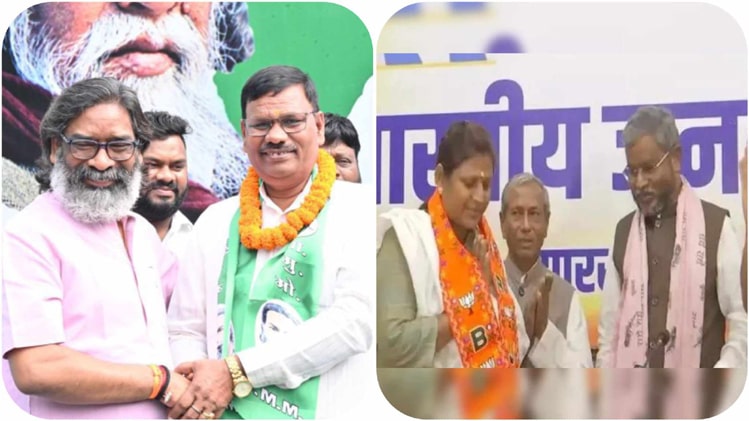
रांची/कोलकाता: तो आखिरकार चंपई सोरेन भारतीय जनता पार्टी ‘ही’ जॉइन करेंगे। पहली बार जब पूर्व मुख्यमंत्री दिल्ली से चश्मा बनाकर लौटे तो चंपई ने कहा था कि अब वो नई पार्टी बनाएँगे, पर एक हफ्ता भी नहीं हुआ और वे फिर से देश की राजधानी पहुँच गए, गृह मंत्री अमित शाह से मिलने। उसके बाद झारखंड के भाजपा प्रभारी हिमंता बिस्वा सरमा का 26 अगस्त को ट्वीट आया कि चंपई सोरेन 30 अगस्त को उनकी पार्टी जॉइन करेंगे। ठीक अगले दिन, प्रदेश अध्यक्ष बाबूलाल मरांडी प्रधानमंत्री नरेंद्र मोदी से मिलने दिल्ली पहुंच गए।

दो दिनों में दिल्ली जाकर भाजपा के दो शीर्ष नेताओं से बाबूलाल की अलग-अलग मुलाकातों की टाइमिंग को लेकर झारखंड में कई तरह की चर्चाएं हो रही हैं। क्या चंपई सोरेन के भगवा ब्रिगेड में आने से पार्टी के नेता खुश नहीं हैं और पार्टी दो धड़ों में बंट गई है?

हालांकि, भाजपा प्रदेश अध्यक्ष ने बुधवार को कहा कि उनकी प्रधानमंत्री मोदी से मुलाकात में झारखंड को लेकर सिर्फ राजनीतिक चर्चा हुई।

रांची के पत्रकार आनंद दत्ता ने ईन्यूज़रूम को इस बाबत बताया, “सिर्फ प्रदेश अध्यक्ष बाबूलाल ही नहीं, पूर्व मुख्यमंत्री अर्जुन मुंडा और नेता प्रतिपक्ष अमर बाउरी भी चंपई सोरेन के बीजेपी में शामिल होने से असहज महसूस कर रहे हैं। इन तीनों ने अपनी तरफ से चंपई सोरेन को पार्टी में न लेने और सरायकेला विधायक के पार्टी बनाने पर उन्हें बाहर से खुलकर समर्थन देने की बात कही थी।”

“चंपई सोरेन के भाजपा में आने की घोषणा के ठीक दूसरे दिन प्रधानमंत्री से मिलने पर बाबूलाल ने जरूर अपनी पीड़ा बताई होगी,” दत्ता ने आगे कहा।

वहीं, राजनीतिक विश्लेषक अमित राजा, जो बाबूलाल के गृह जिले से आते हैं, बताते हैं, “लोकसभा चुनाव के परिणाम के बाद पार्टी के केंद्रीय नेता, बाबूलाल के हाथों सब कुछ छोड़ना नहीं चाहते। पार्टी ने विधानसभा में बाबूलाल के अनुसार टिकट वितरण किया था। बहुत सारे जेवीएम से आए नेताओं को लोकसभा और विधानसभा उपचुनाव में टिकट बाबूलाल ने दिलवाया था, पर चुनाव में भाजपा सभी सुरक्षित सीटें हार गई थी।”

“वैसे बाबूलाल की तरह शिवराज सिंह चौहान भी आदिवासी राजनीति की समझ रखते हैं, एक मुख्यमंत्री बनने से पहले वो छत्तीसगढ़ में आदिवासियों के बीच काम कर चुके हैं, इसलिए वो जानते हैं कि कौनसा आदिवासी नेतृत्व पार्टी के लिए कितना फायेदेमंद साबित होगा,” अमित ने आगे कहा।

दत्ता ने अमित के बात को और विस्तार दी, “जिस तरह चंपई सोरेन को लेकर भाजपा में चल रहा है, उससे ये भी लगता है कि शिवराज सिंह चौहान, जो पहले चंपई सोरेन को अमित शाह से मिलवाना चाहते थे, वे भी नहीं चाहते कि चंपई भाजपा में आएं। इसलिए वे इस बार अमित शाह के पास चंपई सोरेन को लेकर नहीं गए।”

Justice Hema Report Triggers Mohanlal and AMMA Resignations: Is This the Dawn of a New Era in Malayalam Cinema?

0

Delhi: While one part of India is worried about the increase in rape cases and hitting the streets in protest, the other, Kerala’s film industry, is roiled by allegations of sexual exploitation. With this, the Me Too movement has begun in Malayalam cinema.

There were no surprises as Malayalam superstar and revered actor Mohanlal resigned on August 27 as the president of the influential Association of Malayalam Movie Artists, popularly known as AMMA, over the association’s handling of sexual abuse charges in the Kerala film industry. Mohanlal and 17 other executive members stepped down en masse from the artists’ association, citing moral responsibility. A new executive committee will be formed in two months. Their resignations came in the wake of the recent release of the Justice Hema Committee report, which highlighted allegations of sexual misconduct in the Malayalam film industry over the years by male actors. It is important to note that Mohanlal is not facing any charges.

Justice Hema Committee Report

In 2017, a three-member committee headed by retired Kerala High Court judge Justice K Hema was formed by the Kerala government following a petition by the Women in Cinema Collective (WCC) to the Kerala chief minister, demanding a probe into the abduction and sexual assault of a prominent actress and gender inequality in the film industry. Popular actor Dileep was accused of staging the kidnapping and assault in 2017, and his membership in AMMA had become a flashpoint then. The members of both associations, AMMA and WCC, often clashed when actor Dileep was reinstated in AMMA in 2018. The women’s organisation had blamed AMMA for standing by Dileep and not the survivor of the assault.

Now, the tide has turned. Within days of the release of the Hema Committee report, actresses have come forward and alleged sexual harassment by reputed male actors like Siddique and director Ranjith. Actress Minu Muneer levelled sexual harassment charges against popular actors M Mukesh and Jayasurya, alleging she was subjected to verbal and physical abuse during the shooting of a film. Bengali actor Sreelekha Mitra filed a complaint against filmmaker Ranjith for inappropriate behaviour. Actor Siddique was accused of sexual abuse by actress Revathy Sampath, who in turn filed a complaint against her with the Kerala police chief, citing “criminal conspiracy to fabricate and spread false allegations against him.”

Victims In Public Domain

“In 2013, I was subjected to physical and verbal abuse by these individuals while working on a project. I tried to cooperate and continue working, but the abuse became unbearable. As a result, I was forced to leave the Malayalam film industry and relocate to Chennai. I am now seeking justice and accountability for the trauma and suffering I endured,” Muneer said in a Facebook post.

Following severe criticism after the findings of the report, a Special Investigation Team (SIT) has been formed to investigate the hardships faced by women in the Malayalam film industry. “A Special Investigation Team formed to investigate the hardships faced by women in the film industry convened at the police headquarters to outline the continuation of the probe. The SIT has been strengthened by including additional women officers. All related cases registered at local police stations are to be handed over to the SIT for further investigation,” said the Kerala Police in its statement.

No matter what the outcome of the current crisis facing the Malayalam film industry, it’s an eye-opener for all other film industries. After the “Me Too” movement, women will not stay silent and put up with inappropriate behaviour by their male counterparts. And silence is no longer an option for prominent actors. They must stand up for their female colleagues and speak up for them to make the industry a safe place.

Housing Apartheid Reaches Rajasthan: Landlord’s Home Bulldozed After Tenant’s Son’s Mistake Is Given a Communal Color

0

Jaipur/Bhopal: The still-afresh-elected Bharatiya Janata Party government of Rajasthan has entered a bulldozer justice era taking inspiration and following the pattern of its neighboring states Madhya Pradesh and Uttar Pradesh. Both Hindi Belt states are well-known for their punitive demolition policy, which has rapidly grown in the past few years, especially against Muslims. 

The Rajasthan government in a similar row on August 17 demolished the home of Rashid Khan in Udaipur district because his Muslim tenant’s minor son stabbed his Hindu classmate in a school with a knife. The victim boy who was also a minor succumbed to his injuries due to blood loss on August 19.  

The incident destroyed four families altogether- the family whose son died in the attack, the landlord, his two tenants involving the one whose child attacked the other student. 

Riots, Arson And Police Inaction

Soorajpol police station on August 16 registered an FIR against the minor accused under Section 109 (1) (attempt to murder), 126 (2) (wrongful restraint), 115 (2) (voluntarily causing hurt) of BNS (Bharatiya Nyay Sanhita) and Section 3(2)(v) and 3(2)(va) of SC/ST Act. The boy and his father were also arrested on the day of the incident, however, the Hindutva organizations began giving it a communal colour. 

Soon there was arson, rioting, and burning of vehicles, tyres, and Muslim businesses demanding the bulldozer justice against the accused. Consequently, prohibitory orders and internet shutdowns were imposed. In videos available on the internet, a mob can be heard raising slogans, “Jai Sri Ram, Har Har Mahadev.” They sensationalized the issue, comparing it with Kanhaiya Lal’s brutal murder case in Udaipur, setting a communal narrative of a planned attack. Social media was poured with similar posts. 

There were allegations that the police walked with the rioters instead of stopping them. 

“[The accused] keeps abusing my nephew on caste and mother and sister every day. He attacked him outside the school at around 10.30 when rebuked, due to which he suffered severe injuries on his leg. [The accused] attacked my nephew due to the grudge of reprimanding him,” the FIR reads. 

eNewsroom tried to speak to the complainant and the victim’s uncle Vinod Mochi on a phone call. During the conversation he denied having any information about what happened. The visitors in the background did not allow him to speak and persisted in taking information from police and local media reports. However,  on insistence, Mochi said, “We don’t know what happened between the children. Two boys took [minor victim] to the hospital. I am a heart patient. I don’t know much. People are visiting us. There was no communal or Hindu Muslim issue.” 

The victim was hurt on the thigh. Two students took him to the hospital on a motorcycle. “I took the key from the principal to take the injured to the hospital. Another boy Usman also came along who tied his shirt on the victim’s thigh to stop bleeding,” said Vivek, a student in an interview with local media. 

No Hindu-Muslim Angle: Complainant 

On August 16 (Friday), Rashid Khan received two notices from the Udaipur Municipal Corporation and Regional Forest Officer addressed to Salim Sheikh. 

The Municipal Corporation notice said that he had constructed an illegal building on government land and was instructed to submit explanations within 24 hours, actions would be taken otherwise. At the same time, the Regional Forest Officer’s notice said that the structure was constructed on encroached forest land. They were instructed to remove the structure by 20.08.2024, otherwise, the forest department would evict them from the forest land. However, Khan’s home which he purchased three years back from Shafi Mohammad was turned into rubble the very next day on August 17. 

“I bought this home for 16,50,000 Rupees in 2019 taking a loan from relatives. An amount of 1.5 lac Rupees is yet to be paid and my house is destroyed. I rushed from office to office requesting authorities to prevent the demolition drive as the house belonged to me and not my tenant Saleem Sheikh. I showed them documents of the house but they did not stop saying we have an order from higher authorities. Many of my belongings were taken by the Municipal Corporation. It becomes our possession after action, the authorities had said, stated Khan.  

Human Rights Violation

Legal Researcher Idris Mohammad questioned the legality of the incident saying that demolition has become a new strategy for instant justice driven by unjustified anger and satisfying the majoritarian collective consciousness. It is a violation of human rights, and the courts have remained silent focusing on legal technicalities despite evidence that demolitions are state-sanctioned violence. 

“Rajasthan’s BJP government is merely following the high command attempting to gain popularity by targeting Muslims under the ‘Law of the Day.’ The demolition of a Muslim landlord’s house introduces a new level of ‘Housing Apartheid,’ further marginalizing Muslims who already struggle to find rental housing due to their religious identity. The criminal justice system is deeply flawed, with police often disregarding legal procedures and facing no accountability, even in cases of wrongful prosecution. 

Magistrates frequently overlook legal irregularities by the police. A survey revealed that nearly half of the police force believes Muslims are inclined to commit crimes. How can we expect the police to act without bias when making decisions to prevent crimes? In my opinion, the police force is one of the most communal agencies in the country, largely because they come from the same society we live in. I have yet to see any government program focused on sensitizing the police force,” Mohammad remarked.

The Accused Is Not Allowed To Meet Family 

Shamim Bano, the accused’s mother does dishes for a living while his father is a tempo driver. They have only son and five daughters, and one of them is differently-abled. I cooked him food like usual. “I wanted my son to be educated and hence admitted him to a school. He is just 15 years old and never quarrelled with anybody. I have no idea where he got the money for the knife. We have been living here for 35 years and no such incident happened. We are starving. Nobody wants to have us as a tenant. My son made a mistake and all of us are suffering. It would have been better if I was sent to jail.” rued Shamim in distress. 

Sources said that Bano was only allowed to see her husband briefly on August 24 and the boy and his father were allegedly beaten in custody. 

The Superintendent of Police Yogesh Goyal told eNewsroom, “The child is in detention and his father is also arrested. The investigation is under process.” He refused to make any further comments. 

The Mob Targeted Mosques And Muslim Businesses

In conversation with eNewsroom, a local said that the large mob targeted Muslim businesses and Mosques in the Hathi Pole and Chetak area while the police failed to prevent the violence. “The mob rallied chanting the slogans of “Jai Sri Ram (Glory be to Lord Ram).” They created a ruckus in the presence of police armed with lathis, sticks, and stones using petrol to ablaze the vehicles, and breaking the mirrors of bikes. The Hindutva outfits exaggerated the incident making it communal. Media also played a vital role. Muslims suffered high losses. It was the responsibility of the police to file an FIR against the rioters but they only chose to demolish the home on government orders,” he said.

Neelofar of the Bhim Army said that no one should take law and order into their own hands. There’s a legal process for everything. It would have been better if due procedure was followed. “This is a dictatorship. Instead of investigating the issue, they saw the person was Muslim and demolished his home. The house didn’t even belong to the accused or his father. Even if it was encroachment, proper procedures should have been followed. Punitive demolitions, whether by any state government, are unlawful in India. Holding a father accountable for his son’s crime is against the law. The administration violated legal norms, which is why they’re avoiding questions,” she said.

From Mud Huts to Metropolis: How Kolkata Rose from the Banks of the Hooghly on August 24, 1690

0

[dropcap]T[/dropcap]here is no doubt that today, the 24th of August, is a landmark day when the modern colonial city of Calcutta or Kolkata came up. True, there were human settlements in this area that were part of a zemindari possession of the famous family of Sabarna Roy Choudhury— but the great metropolis of Calcutta surely owes its founding to Job Charnock — who set up camp here.

This day in 1690 was a Sunday, when the English ship fought the monsoon swell in the unruly Hughli and dropped anchor at an obscure village called Sutanati. Job Charnock, Agent of the London East India Company, waded through the squishy silt with a small band of grumbling Englishmen and clambered onto Muhonto’s Ghat near Nimtollah. They took shelter in some ramshackle huts that served as the marketplace for cotton yarn and as soon as the weather cleared, this group began building the initial thatched houses with mud and bamboo. Charnock chose three villages — Sutanuti, Govindapur, and Kalikata that were to later transform themselves into Calcutta— the ‘city of places’.

This first ‘Consultation’ was recorded in the ‘Diary and Consultation Book for the Rt Hon’ble East India Company’ on the 28th of August notes “it is absolutely necessary to build a warehouse, dining room, a room to sort cloth in, a cook room and an apartment for the Company’s servants.”. All these were of mud and thatched. The Cutcherry building of the local zamindar was purchased for the safekeeping of the Company’s books and documents. It was located near the ‘great tank’ or Lal Dighi — later to become famous as Dalhousie Square, then BBD Bagh.

But, why did Charnock choose these three villages on the very backward left bank of the Hughli, when all the European colonies had strong bastions on the prosperous West Bank, close to this trading mart of Adi Saptagram and near the armed Mughal base at Hughi? The Portuguese were in Bandel, the Danish at Serampore, the French in Chandernagore and the Dutch at Chinsurah. The English factories at Hughly and Cossimbazar near Murshidabad were just about getting along, but were harassed by the corrupt Mughal governor and his agents. Job Charnock was among the first Englishmen to realise that Mughal power in Bengal was on the wane, and unless the English made a decisive move, they would be outwitted by the other European colonies or finished off by the Mughal officials.

This is when he started looking at other options — Balasore, Patna, Cossimbazar, Uluberia and Hijili, before selecting Sutanati. It had a deep channel for large English ships to berth and their powerful canons could blast away any enemy ships if they dared to approach Sutanati from the West Bank, across the wide Hughly river. The high ground near the river sloped to the east in the direction of the eastern wetlands and salt lakes connecting to the Sunderbans through numerous channels, Bagjola, Adi Ganga, Sonai, Nowai among others. The crocodiles and tigers in that zone would guard the east flank of Kolkata — from rogue officials of the Mughals and also the marauding Marathas.

With both east and west protected, the English could use their forces to guard narrow zones on the north and south of Calcutta — which was not a problem at all. Besides, the three selected villages had certain families of entrepreneurs and traders (the Bysaks, the Setts, the Sils or Mullicks) who were ideal for the ‘spirit of capitalism and trade’. Thriving haats and bazaars, like Baithakkhana near Sealdah where local merchants met regularly and good ghats and maritime trading possibilities tilted the balance in favour of Calcutta.

But the fact that water flowed from Calcutta villages on the banks of the Hughli away from the river (not towards and into it) — but in the direction of the eastern marshes meant that when the city spread— water logging became.  inescapable. In spite of this, Calcutta grew to become the Second City of the Empire and reached unimaginable heights of glory — all because of the fortuitous ships landing here on 24th August 1690.

झारखंड मुख्यमंत्री मईयां सम्मान योजना: क्या सोरेन सरकार की पहल से आदिवासी महिलाओं के पलायन और बच्चों के कुपोषण में कमी आयेगी?

रांची/कोलकाता: 2019 में, झारखंड विधानसभा के पांचवें कार्यकाल के लिए चुनाव में हेमंत सोरेन के नेतृत्व वाले गठबंधन (अब इंडिया ब्लॉक) ने पूर्ण बहुमत हासिल किया। हालाँकि, संख्या बल अधिक होने के बावजूद, मुख्यमंत्री हेमंत सोरेन ने आरोप लगाया कि उन्हें भारतीय जनता पार्टी के नेतृत्व वाले विपक्ष द्वारा राज्य में काम करने की अनुमति नहीं दी गई। अपने पांच साल के कार्यकाल के दौरान हेमंत सोरेन को जेल भी भेजा गया था। पांच महीने के अंतराल के बाद, वह फिर से राज्य की बागडोर उनके हाथों में है। तमाम ‘रूकावटों’ के बावजूद, हेमंत सोरेन फिर से अपने काम को करते हुए दिख रहें है। नवीनतम पहल झारखंड मुख्यमंत्री मईयां सम्मान योजना (JMMSY) है।

इस नकद हस्तांतरण योजना के तहत, 21 से 50 वर्ष की आयु की महिलाओं को हर महीने 1,000 रुपये मिलेंगे। 15 अगस्त (अंतिम तिथि) तक 43 लाख महिलाओं ने आवेदन किया था और 42,85,403 को मंजूरी दे दी गई, जिससे यह राज्य की सबसे बड़ी योजनाओं में से एक बन गई। लक्ष्य 50 लाख लाभार्थियों का है।

प्रदेश में इतने लाभार्थी वाली कोई अन्य योजना नहीं है।

आलोचकों को एकमात्र जवाब– मुख्यमंत्री मईयां सम्मान योजना

गौरतलब है कि सरकार ही नहीं विपक्ष भी इस योजना के महत्व को समझता है। 43 लाख लाभार्थियों ने केवल 18 दिनों के भीतर नामांकन किया और रक्षा बंधन से उन्हें प्रत्यक्ष लाभ हस्तांतरण (डीबीटी) के माध्यम से राशि मिलनी शुरू हो गई। 18 अगस्त (रविवार) को, झारखंड के मुख्यमंत्री द्वारा पाकुड़ से योजना की आधिकारिक शुरुआत करने के एक दिन पहले, अफवाहें फैल गईं कि पूर्व सीएम चंपई सोरेन दिल्ली के लिए रवाना हो गए हैं और जल्द ही भाजपा में शामिल होने के लिए पार्टी छोड़ देंगे। शाम को चंपई सोरेन ने एक पत्र जारी कर दावा किया कि 3 जुलाई को सीएम पद से इस्तीफा लेते वक़्त उन्हें अपमानित किया गया था।

हालाँकि, चार दिन से अधिक समय हो गया है, लेकिन चंपई सोरेन के पत्र पर न तो हेमंत सोरेन और न ही जेएमएम या इंडिया ब्लॉक के किसी अन्य नेता ने कोई टिप्पणी की है। पांचवें दिन यानि गुरुवार को गाण्डेय विधायक कल्पना सोरेन ने बस इतना कहा कि अगर उन्हें (चंपई सोरेन) कोई व्यथा थी तो पार्टी के वरिष्ठ लोगों के सामने बात रखनी चाहिए थी।

चंपई सोरेन बीजेपी में शामिल नहीं हुए और झारखंड लौट आये। जेएमएम के ‘कैबिनेट मंत्री’ ने नई पार्टी के गठन की घोषणा तो कर दी, लेकिन इंडिया ब्लॉक खेमे में पूरी तरह से सन्नाटा छाया हुआ है। सत्ता पक्ष की ओर से विपक्ष के साथ-साथ हेमंत सोरेन के नए आलोचक चंपई सोरेन के लिए एकमात्र जवाब है– मुख्यमंत्री मईयां सम्मान योजना।

मंगलवार को हेमंत सोरेन ने पलामू में दावा किया कि अगर उन्हें जेल नहीं भेजा गया होता तो यह योजना पांच महीने पहले ही शुरू हो गयी होती, जिससे झारखंड की महिलाओं को जल्द लाभ मिल पाता। इस बयान को उस दावे के जवाब के तौर पर भी देखा जा रहा है कि JMMSY पूर्व सीएम चंपई सोरेन की पहल थी।

क्या कहते हैं मुख्यमंत्री मईयां सम्मान योजना के बारे में सामाजिक कार्यकर्ता और अर्थशास्त्री?

झारखंड में भोजन का अधिकार कार्यकर्ता जेम्स हेरेंज महिलाओं को नकद हस्तांतरण की पहल का स्वागत करते हैं। “झारखंड और छत्तीसगढ़ दो ऐसे राज्य हैं जहां से आदिवासी लड़कियों की सबसे अधिक तस्करी होती है या वे दूसरे राज्यों में पलायन करती हैं। हाथ में नकदी आने से इसमें कमी आएगी। इससे गर्भवती महिलाओं को गर्भावस्था के दौरान बेहतर भोजन करने में भी मदद मिलेगी, जिससे जन्म लेने वाले कुपोषित शिशुओं की संख्या कम करने में मदद मिलेगी। लाभार्थी महिलाएं अपने बच्चों की शिक्षा पर भी पैसा खर्च कर सकती हैं। सबसे महत्वपूर्ण बात यह है कि जब पैसा महिलाओं के हाथ में होगा, तो उन्हें घरेलू हिंसा का कम सामना करना पड़ सकता है क्योंकि इससे महिलाओं के प्रति पुरुषों का दृष्टिकोण बदल जाता है,” जेम्स ने ईन्यूज़रूम को बताया।

सामाजिक कार्यकर्ता ने योजना पर अपने सकारात्मक दृष्टिकोण के कारणों का भी हवाला दिया: “झारखंड में एक योजना है जिसके तहत आदिवासियों को पेंशन के रूप में 1,000 रुपये मिलते हैं, और हमने आदिवासी परिवारों के बीच इसी तरह के प्रभाव को देखा है।”

जेम्स ने राहुल गांधी को नकद हस्तांतरण योजना के बारे में भी याद दिलाया: “यह अच्छा है कि हेमंत सोरेन के नेतृत्व वाली सरकार ने झारखंड में यह योजना शुरू की है। लोकसभा अभियान के दौरान, हमने राहुल गांधी के नेतृत्व वाली कांग्रेस, जिसने परिवार की एक लाख महिला सदस्यों को लाभ पहुंचाने का वादा किया था, से कहा था कि उसे जेएमएमएसवाई को एक पायलट प्रोजेक्ट के रूप में मानना ​​चाहिए और इसे कांग्रेस शासित राज्यों में भी लागू करना चाहिए। राशि कम हो सकती है, लेकिन इसकी शुरुआत की जानी चाहिए क्योंकि इससे निश्चित रूप से महिलाएं सशक्त होंगी।”

गुरुवार को हेमंत सोरेन ने पलामू में यह भी वादा किया कि अगले पांच साल में हर परिवार को एक लाख रुपये मिलेंगे।

झारखंड को अपनी कर्मभूमि बनाने वाले अर्थशास्त्री ज्यां द्रेज इस योजना और इसकी प्रगति से अच्छी तरह वाकिफ हैं. वह इसकी सराहना करते हैं, लेकिन सावधानी के साथ। उन्होंने ईन्यूज़रूम को बताया, “ये नकद योजनाएं निश्चित रूप से उपयोगी हैं, लेकिन ये बहुत महंगी हैं और इन्हें शिक्षक नियुक्तियों और स्वास्थ्य व्यय जैसी अन्य प्राथमिकताओं के साथ संतुलित करने की आवश्यकता है। धीरे-धीरे इसे लागू करना सबसे अच्छा होता, लेकिन ऐसा लगता है कि सरकार जल्दी में है, संभवतः आने वाले चुनावों के कारण।”


ये इंग्लिश में प्रकाशित स्टोरी का अनुवाद है।

Political Silence, Social Impact: The JMMSY and Its Ripples Across Jharkhand

0

Ranchi/Kolkata: In 2019, during the elections for its fifth term, the Hemant Soren-led coalition (now INDIA bloc) secured a full majority in the Jharkhand Assembly. However, despite having more than the required numbers, Chief Minister Hemant Soren alleged that they were not allowed to work in the state by the opposition, led by the Bharatiya Janata Party. During his five-year term, Hemant Soren was also sent to jail. After a five-month gap, he is again at the helm of the state’s affairs. Despite all the ‘disturbance,’ one constant for Soren was his work in the INDIA bloc government in the state. The latest initiative is the Jharkhand Mukhyamantri Maiya Samman Yojna (JMMSY).

Under this cash transfer scheme, women aged between 21 and 50 will receive Rs 1,000 every month (Rs 12,000 annually). By August 15 (the last date), 43 lakh women had applied, and 42,85,403 were approved, making it one of the largest schemes in the state. The target is 50 lakh beneficiaries.

There is no other scheme in the state with as many beneficiaries.

Silence is Golden

Significantly, it is not only the government but also the opposition that understands the importance of this scheme. The 43 lakh beneficiaries enrolled within just 18 days, and starting from Raksha Bandhan, they began receiving the amount through Direct Benefit Transfer (DBT). On August 18 (Sunday), a day before the Jharkhand Chief Minister was scheduled to officially launch the scheme from Pakur, rumors circulated that former CM Champai Soren had left for Delhi and would soon leave the party to join the BJP. In the evening, Champai Soren released a letter claiming he was humiliated when he resigned from the post of CM on July 3.

However, it has been more than four days, but neither Hemant Soren nor any other JMM or INDIA bloc leaders have commented on Champai Soren’s letter. Champai Soren did not join the BJP and returned to Jharkhand. As the ‘cabinet minister,’ he announced the formation of a new party, but there has been complete silence in the JMM camp. The only message from the ruling dispensation to the opposition, as well as the new critic of Hemant Soren, Champai Soren, is JMMSY.

On Tuesday, Hemant Soren claimed in Palamu that had he not been sent to jail, the scheme would have started five months earlier, allowing Jharkhand’s women to benefit sooner. This statement is also being seen as a response to the claim that JMMSY was the brainchild of former CM Champai Soren.

What Activists and Economists Say about JMMSY

James Herenj, a Right to Food activist in Jharkhand, welcomes the initiative of cash transfers to women. “Jharkhand and Chhattisgarh are the two states from where tribal girls are most trafficked or migrate to other states. Cash in hand will reduce this. It will also help pregnant women to have better food during pregnancy, which will help reduce the number of malnourished babies being born. Beneficiary women can also spend money on their children’s education. Most importantly, when money is in the hands of women, they may face less domestic violence as it changes men’s outlook towards women,” the activist told eNewsroom.

Herenj also cited reasons for his positive outlook on the scheme: “There is a scheme in Jharkhand under which tribals get Rs 1,000 as a pension, and we have noticed a similar impact among tribal families.”

The activist also reminded Rahul Gandhi about the cash transfer scheme: “It is good that the Hemant Soren-led INDIA bloc government has started this scheme in Jharkhand. During the Lok Sabha campaign, we had told Rahul Gandhi-led Congress, which had promised to benefit one lakh female members of the family, that it should consider JMMSY as a pilot project and implement it in Congress-ruled states too. The amount may be less, but it should be initiated as it will surely empower women.”

On Thursday, Hemant Soren also promised in Palamu that in next five years, every family will get Rs one lakh.

Economist Jean Drèze, who has made Jharkhand his workplace, is well aware of the scheme and its progress. He appreciates it, but with caution. He told eNewsroom, “These cash schemes are certainly useful, but they are very expensive and need to be balanced against other priorities such as teacher appointments and health expenditures. A gradual rollout would have been best, but the government seems to be in a hurry, possibly due to the coming elections.”