Written by:Maria Teresa Raju, Jahnavi, Jisha Surya, Shabbir Ahmed, Anisha Sheth, Pooja Prasanna
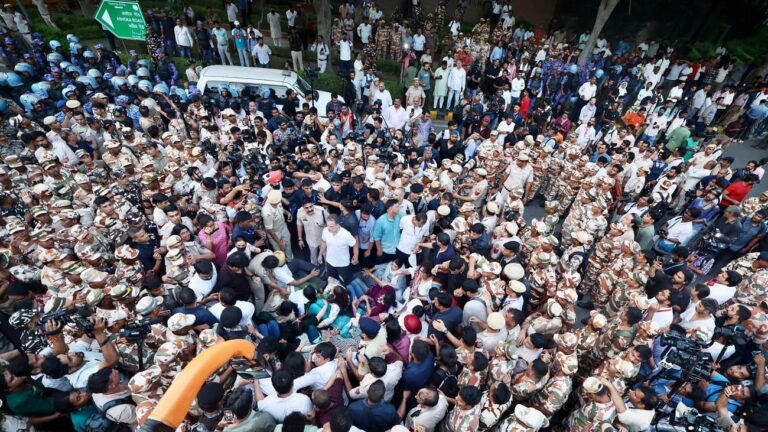
As Delhi witnessed a wave of protests against Chief Election Commissioner Gyanesh Kumar, the Delhi Police and the CRPF, deployed to maintain law and order, came down heavily on journalists covering the demonstrations.
Journalists were detained and assaulted, their equipment was damaged, and their phones were taken away. In fact, several journalists were detained by the Delhi Police even after a Supreme Court order on the afternoon of October 11 clearly stated that lawyers, journalists, and other professionals “shall not be hindered in the discharge of their professional duties in any manner whatsoever.”
The News Minute spoke to around 20 journalists who covered the protests, several of them from digital media organisations. Totally, the accounts reveal how journalists on the ground were subjected to detention, physical assault, intimidation, and the seizure or destruction of their equipment as they reported on the protests.
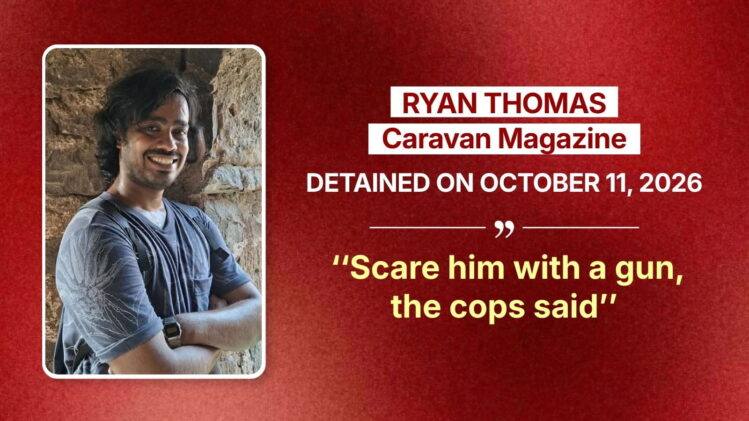
“You have to treat him with a gun, he is not listening”
I was at Connaught Place near Sansad Marg around 6 pm on October 11.
I was following some protesters who were being detained by the police. Suddenly one of the police officers turned toward me. It was ASI Kapil Kumar. He started questioning me very aggressively, saying, ‘What are you doing here?’
I put my hands up, saying, ‘Sir, I will go. Mujhe koi problem nahi karna hai, mujhe bas cover karna hai.’ [I don’t want to create any problem, I just want to cover the protest].
Four–five people came from behind and started manhandling me.
I told them, ‘Sir I am coming, I am cooperating.’ But they kept shoving me.
They were wearing khaki, so could have been Delhi Police. But my colleagues told me that their dialect sounded like they were from Haryana, so they could have been Haryana Police too.
They shoved me, grabbed me by the collar, and kept hitting my head. Four or five of them kept pushing me. I tried resisting a little bit, but after a point, they would have torn my t-shirt also, so I thought I’ll just go.
Then they shoved me inside a bus, made me sit down, tried snatching my phone and breaking my camera. So I put my phone in my pocket and kept the camera inside the bag and held it tightly so they wouldn’t snatch it. They kept beating throughout that time. Saying, ‘A lot of nationalism you have suddenly when you have a camera.’
This was the normal orange bus.
Another group of police officers came inside this bus. They said, ‘Put him in another vehicle and take him somewhere else, because he is not understanding.’ The first police officer who you can see in the video then handed me over to the group of police officers.
The moment I told them, ‘Sir please do not beat me, I am cooperating,’ I was slapped again. They kept pushing and shoving me while I said, ‘Sir I am coming with you, I have a press card also, you don’t have to detain me.’
But they didn’t listen, they threw me inside a police car after a lot of tussle.
Then they tried to threaten me with the butt of a gun. They took out the gun and they were just poking it in my stomach and with the stick also they were poking inside and they just kept beating, shoving around for some time.
They kept hitting my face and one of them said, “You have to treat him with a gun, he is not listening.”
This was at 6 pm. The SC order was already out by that time. I mentioned it to them also, ‘Sir, today only the SC said again to allow free movement,’ but they laughed it off.
They were like, ‘We will show you’ kind of thing.
One guy I was following was also put in the bus and car I was in. He was also beaten.
After a point I just pretended to delete it on my phone. I just selected all the pictures and they thought I had deleted the pictures, so then they were like, ‘Cool now you can go. Just keep walking straight and then right.’
It’s only because I kept insisting that I have a press card (that I was let go then).
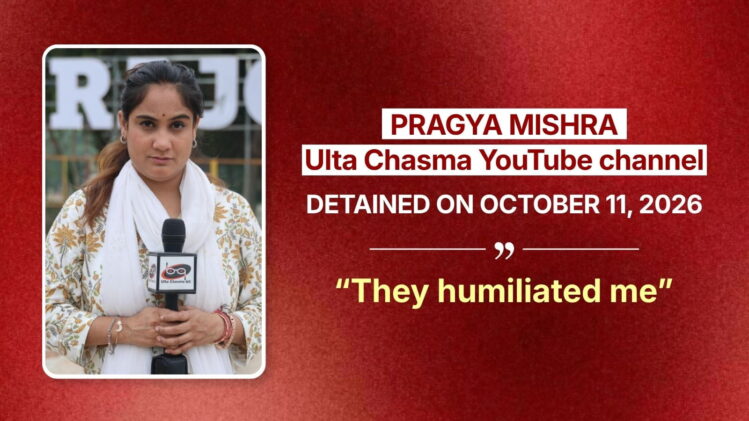
“I could walk on my own” — Pragya Mishra on Being Dragged by Delhi Police
On October 11 afternoon, I went over to RK Ashram, as I knew a demonstration with AISA leader Neha Bora was about to take place. I went there with my cameraman to cover the protest. Upon reaching, I saw protesters demonstrating in small groups. A young man was hit with a lathi and fell down. I went over to cover that. In that short duration, the police surrounded us and dragged my cameraman away. They injured him. When I rushed to protect him, a police officer came up from behind and started shouting loudly—it’s all recorded on camera—saying, “Catch her! Grab her! Put them on the bus!”
Then multiple female officers came, forcefully stuffed us into the bus, and dragged us. I kept telling them, “I have my mic ID, we are just doing our job. We are reputed journalists. We were doing our duty, showing what you were doing. And for showing that, you detained us!” I had my mic ID and my ID card. I repeatedly told them, “I could walk on my own, but you deliberately did this to humiliate and insult us.”
After being forced onto the bus, my cameraman, Anuj, somehow managed to follow behind in a vehicle. He heard me and, with great difficulty, I was able to retrieve my phone.
Multiple officers dragged me in such a rough manner—you can see it in the video—that my clothes got torn. To tell you the truth, I had no choice but to go and change my clothes first.
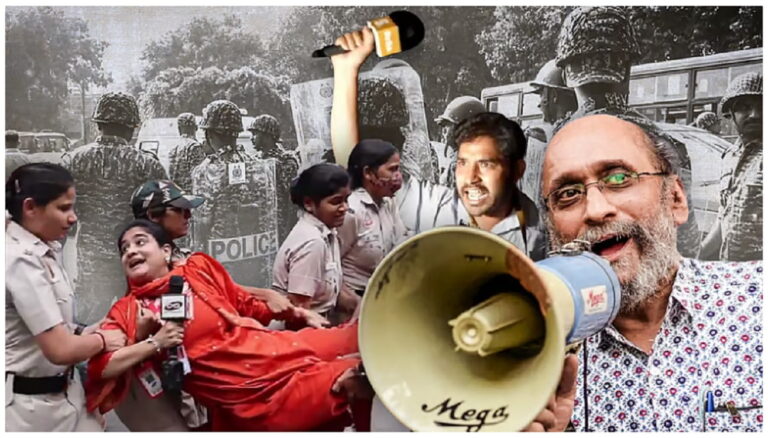
Footage shows journalist Pragya Mishra being physically lifted and carried away by at least four police personnel. The officers are seen holding her by her arms and legs as they carry her towards a waiting police bus, while she continues to hold her microphone and protest her detention.
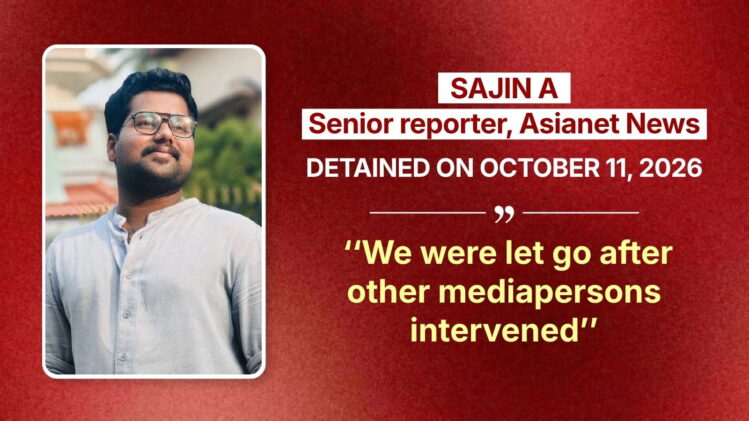
“They held them by their hands and legs” — Journalist covering Suhail Mohammed and Rahul
We were walking towards a protest at RK Ashram to cover it. My camerapersons were walking around 200 meters ahead. It was then that I noticed that police were detaining journalists along with protesters. I began capturing visuals using my phone.
I saw police carrying 24 News reporter Suhail Mohammed and cameraman Rahul into the bus. They held them by their hands and legs and dragged them into the bus.
While I was capturing visuals, a policeman held my hand. I showed him my ID card. But 2–3 policemen pushed me into the van.
Inside the van, we told the police that we were journalists, but they did not respond. As the vehicle moved forward, we saw some mediapersons from Kerala standing on the footpath. We shouted to them from the van that we were detained. Then they began calling senior police officers and alerting them.
They stopped the van at Connaught Place. They released us only after other mediapersons began arguing with them.
Because of the intervention of other mediapersons, our detention was limited to around 10–15 minutes. Of the total seven persons taken into custody in the van, only one was a protester.
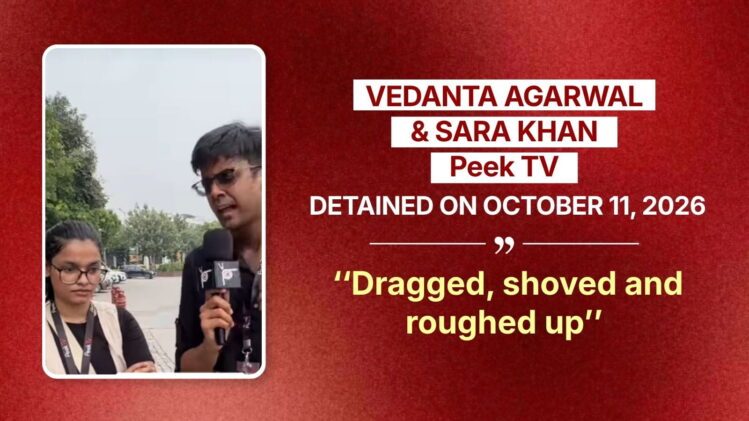
“She kept telling them she was from the press” — Sara Khan and Vedanta Agarwal
Vedanta and video journalist Sara Khan were reporting from near Connaught place, right in front of Rajeev Chowk metro station, on October 11, around 12.30 pm.
Police constables came and dragged them away in a bid to detain them. They were initially separated and detained in a bus which already had over a dozen protesters. There were more than five buses parked in a row. Around 150 people who were taking part in that march were detained in those buses.
Sara was dragged by 8–10 police personnel, mostly women constables. Initially, a male police officer pushed her a few times and then women constables dragged and shoved her into the bus. She kept telling them she was from the press but they did not care. She was roughed up and assaulted in the process and was detained in the bus for 5-10 minutes.
Then DCP Sachin Sharma who recognised Vedanta asked the police to let him and Sara go. Later another DCP came and apologised to Sara for having used force against her and claimed that they did not know they were from the press.
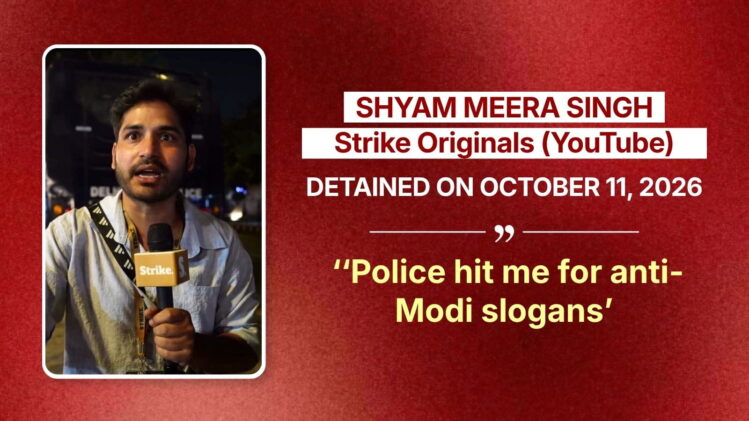
“Why can’t I raise slogans against Modi?” — Shyam Meera Singh
On October 11 evening, I was picked up near Connaught Place in front of Block B, around 8 pm. I was let go after about an hour.
There was a man pretending to be Muslim, wearing a skullcap but making anti-Hindu statements and trying to assault people. He was among a group of Vishwa Hindu Parishad and Bajrang Dal-related people.
I was surprised to see a seemingly elderly Muslim man assaulting people while he seemed to be accompanied by BJP supporters. Then I learned that he was actually Hindu and started reporting this.
The right-wing group then started raising slogans against me and tried to stop me from reporting. I tried to get away and sought help from the police, but they detained me instead. There was a constable named Dharmendra Kumar, I asked him for protection.
The goons then instigated the constable to detain me.
There is a pattern of police detaining people identified by the BJP-RSS goons.
When I was being taken into the van, I raised slogans of Inquilab Zindabad, Bhagat Singh Zindabad, Amit Shah Murdabad. The same official hit me thrice with a lathi, on my back and thigh.
When I asked why he was hitting me, he said because I was using abusive language by saying ‘Narendra Modi murdabad (Down with Modi)’.
I said, “How is that abusive? He has created chaos in Delhi, getting women protesters and journalists harassed. Why can’t I raise slogans against Modi?”
Eventually, my lawyer came and told the police about the Supreme Court order saying journalists cannot be stopped from doing their work. They initially said, ‘Koi order nahi hain’ (there is no such order) but my lawyer explained clearly that journalists and lawyers can’t be detained. Then they let me go.
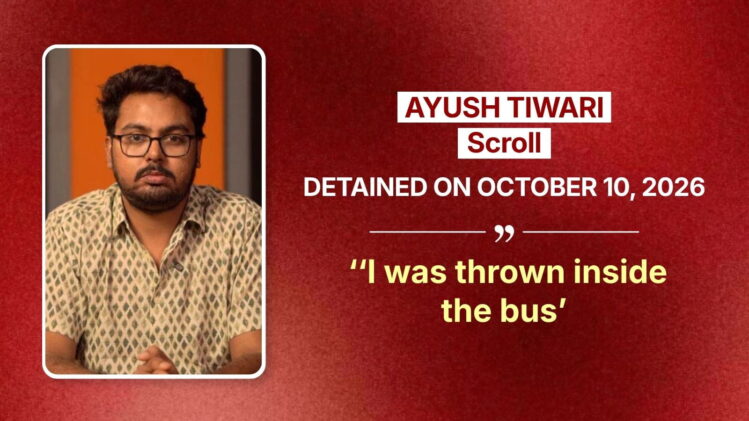
“This is my press card, I am a journalist” — Ayush Tiwari
On October 10, I was taking videos of SFI/CPI(M) members protesting at HKS Surjeet Bhavan, the CPI(M) office in Mandi House. I was right between the cops and the protesters.
I was just shooting a normal video. In the middle of the video, the cops started pulling me away. One of them said, ‘Isko bhi hatao’ [Take him away too].
At all times, I was wearing my press card around my neck. I shouted saying, ‘This is my press card, I am a journalist, national media’ – whatever I thought could help. The cop there – his face is also inside the video – wouldn’t listen.
They tried to drag me and I resisted. So there is a small injury on my waist. My shirt buttons from the middle to the bottom were completely ripped off. I was thrown inside the bus. We were driven around for an hour and a half.
This was Paharganj, the bus was crawling, it was a hot day. After a point, I think the bus just overheated. It was billowing fumes, and we were alerted to it by some people outside. Lots of protesters (inside the bus) panicked.
They started shouting, ‘Aag lag jayegi, humei kuch ho jayega, mar jayenge, jaane deejiye.’ [The bus will catch fire, we could die, let us go.]
The cops were also confused for a bit and didn’t know what to do, but then they relented. They opened the door right outside Paharganj police station and all of us walked out.
One of the policemen told me, ‘Come inside the police station.’ I said, ‘I am not coming. You drag me inside, I am not coming by myself.’
He then let me go.
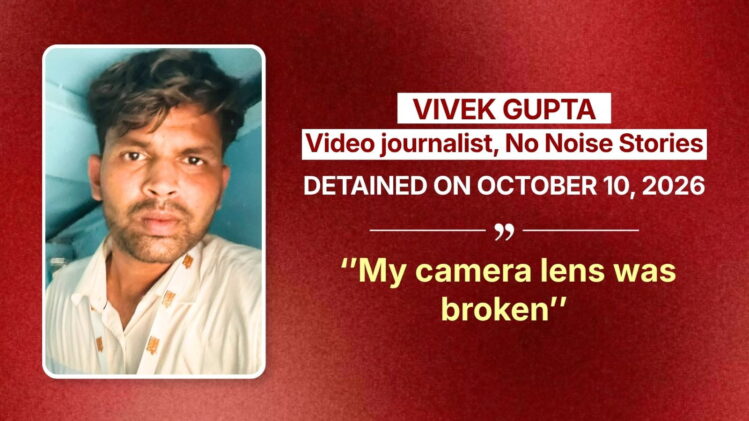
“The lens was broken, and the battery and memory card were gone”- Vivek Gupta
I was covering the protests near Jantar Mantar on the afternoon of Saturday, October 10, when I saw the police dragging a woman away. It was around 3.45 pm. I started shooting it.
Suddenly, a couple of police officers arrived and asked who I was. I told them I’m a journalist and showed them my ID. Still, they took my camera away. I kept requesting them for about half-an-hour to return it. When they gave it back, the lens was broken, and the battery and memory card were gone.
Then they took me to Zafarabad police station, which is over 50 km away from Jantar Mantar. Lots of people were already detained there. They took my camera away again, saying that since I was being detained I could not be allowed to keep a camera on me. I was there for about two hours. Around 7.30 pm, the police let all of the detainees go.
I bought the camera last year in September. It will take between Rs 50,000–60,000 to buy a new lens.
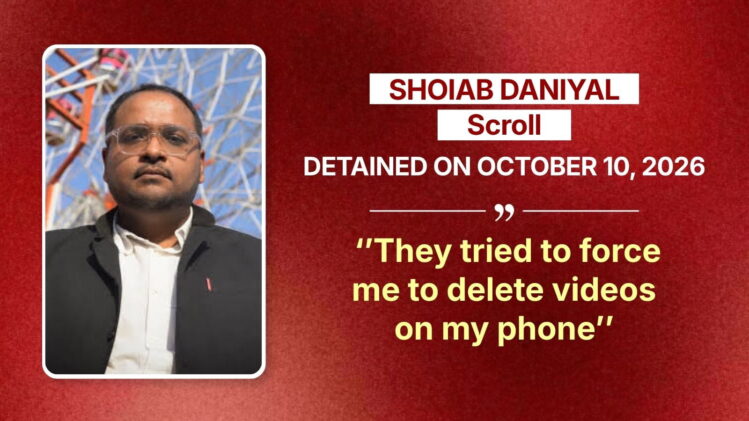
“Why have you set up a check post here today?” — Shoaib Daniyal
I was waiting outside my home in South Delhi for a taxi around 1 pm. I was supposed to go to Jantar Mantar, which was more than 20 km away from there. The police had blocked the road and set up a checkpost right outside my house. There was a policeman standing there so I went up to him and started chatting with him casually about what was happening.
I asked him, “Why have you set up a check post here today?” He became very suspicious. He searched my bag and clicked a photo of my Aadhaar card. He even noted down my address. Eventually, he said that he was going to detain me.
He called another policeman and together the two of them detained me. They called for a bus and took me inside it.
They said that they would take me to a nearby police station, but they never did. They stopped the bus in the middle of the road a short distance from my home. They kept me there for more than an hour.
They tried to force me to delete the videos on my phone I had shot about the detention. When I declined to do so, they called a couple of more policemen, who also tried to coerce me to delete the videos.
I refused.
The name of the police officer who detained me was Bhagwan Sahay.
I was eventually released around 2.30 pm.
The reason that they eventually gave for the detention was that this was a “bad time”. “You have to understand that there is disorder in the city today,” they told me.
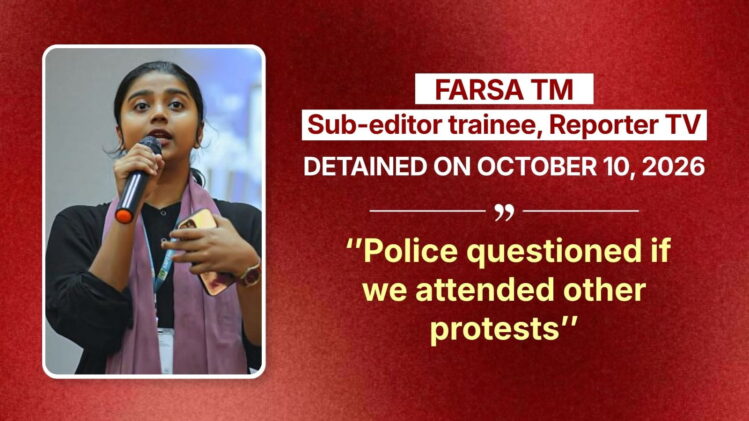
“We lost an entire working day at the police station” — Farza TM and Roshni Rajan
Due to the barricading, we had difficulty reaching Kerala House to cover the protest on October 10. The police denied us permission to proceed, even after we showed our press ID cards.
After reaching HKS Surjeet Bhavan [CPI(M) office] to cover the march by Left leaders, we began filming the protest. While I was recording the visuals, a woman police officer grabbed my hand. She let go only after I informed her that I was from the press.
A few minutes later, the police forcibly dragged Roshni (Reporter TV Assistant News Editor Roshni Rajan) and me into a police van. Despite repeatedly informing them that we were mediapersons and showing our press ID cards, they pushed us into the vehicle.
Even after we repeatedly asked where we were being taken, the police refused to provide any information. We were first taken to Burari Police Station and then transferred to another vehicle and taken to Sarai Rohilla Police Station. During the journey, the police questioned us about whether we had attended the protests against CAA-NRC or previous protests organised by CJP.
At the station, the police collected our addresses, contact numbers, and other personal details and made us sign it. We were made to wait until around 5.45 pm. We lost an entire working day at the police station. Sarai Rohilla Police Station was very far from where we had been picked up.
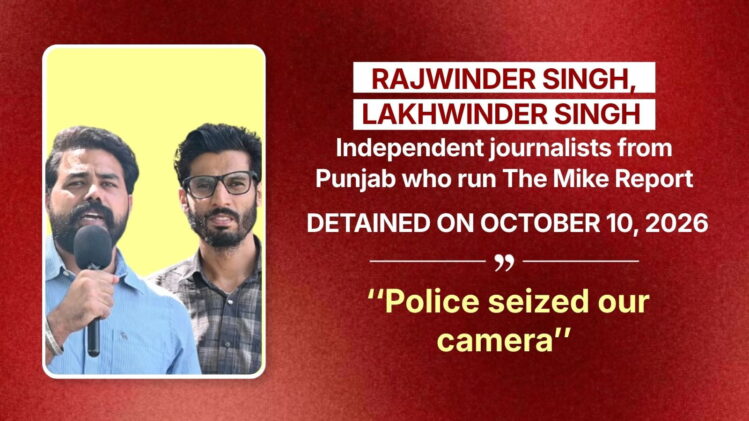
“We don’t know where the camera is” — Lakhwinder Singh and fellow journalist
We were detained on October 10 near Connaught Place around 11 am while reporting from there.
I was filming around four men in civilian clothes who had formed a chain. I had asked them who they were, why they were supporting the police. They were raising slogans such as ‘Delhi police lath maaro, yeh Pakistani hain (Delhi police beat them with lathis, they are Pakistanis – in reference to protesters)’.
The police were detaining protesters. We were filming what we saw. We asked the police why the men in plain clothes were with them, and who they were. Why were they instigating them to beat people with lathis, and would the police listen to them?
There was an IPS officer named Anil Shukla, chief of the Delhi Police Special Cell. He seized Lakhwinder Singh’s camera and handed it to a constable. Both of us were then detained. We don’t know where the camera is, the police aren’t giving us a proper response. The camera cost around Rs 1 lakh.
They first took us to Civil Lines police station for about an hour, then to the Kashmere Gate police station. They let us go around 7.30 pm.
They took our address, IDs, Aadhaar cards, and phone numbers.
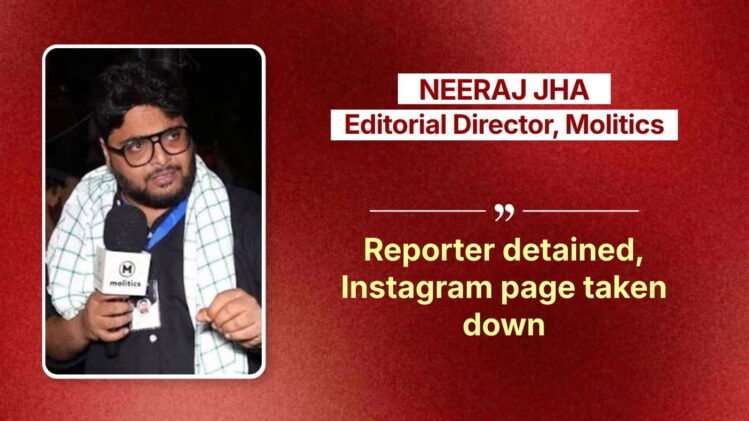
“He could do whatever he wanted” — Neeraj Jha and the Molitics team
I was manhandled by a policeman while I was covering the protest on October 10, and when I objected and told him that he could not behave in such a manner with journalists, his reaction stunned me. The policeman told me that he could do whatever he wanted.
The Instagram page of Molitics has been taken down, and we have not been told why. All we get to hear is that it has been taken down for ‘legal reasons’. We had 5,67,000 followers and gained 11,000 followers in just a few hours as we were covering the protests extensively. One of our reels, in which we showed how right-wing goons were trying to disrupt the protest, went viral and garnered three million views. This reel was deleted first, and later the entire account was taken down in India.
One of our reporters Aman was detained on October 10 and 11.
On October 11, at the Ramakrishna Ashram Metro Station, what I witnessed was that the moment the police saw media personnel with their identity cards, they were grabbed and taken into custody.
There was a female content creator who was arguing with the police as her cameraperson was detained and taken away. Other media personnel kept telling the cops not to detain the cameraperson. The police were in no mood to listen. After putting the cameraperson in the bus, the police came back in search of the female content creator and detained her also.
On the other side, where my colleague Harish was reporting, Pragya Mishra, a popular YouTuber, was also covering the protests. Delhi Police personnel abused a journalist, and when Pragya Mishra questioned them, she and her cameraperson were forcibly detained on the spot.
When I moved around, I saw that only journalists were being detained in a bus. Around six or seven journalists had been taken into custody. The police were so desperate to detain journalists that they used an entire bus to detain them and take them away.
One interesting thing we observed was that a group of right-wing goons carrying sticks were trying to bully those who questioned the government. They would identify the journalists and inform the police, and the police would take action. Shyam Meera Singh was heckled by right-wing goons and was later detained.
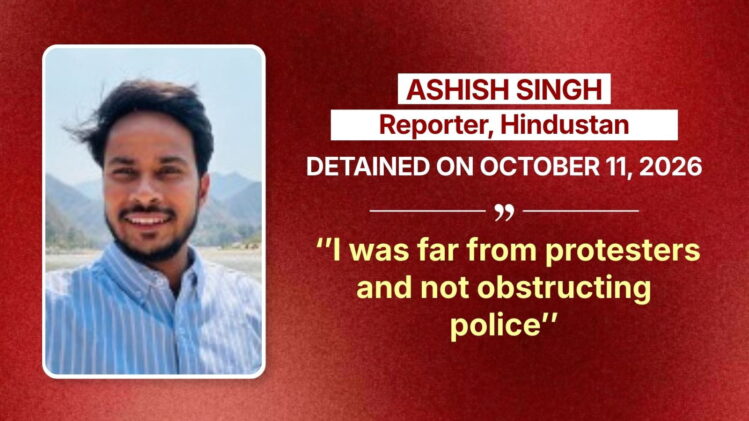
“I’m a HT reporter and I was also wearing my ID card” — Ashish Singh
Hindustan reporter Ashish Singh described how he was detained to Hindustan Times and said, “I was recording the detentions on my camera when I felt police pushing me. They also hurt me with some sort of pointed thing, maybe like a knuckle. I turned and told them not once but many times that I’m a HT reporter and I was also wearing my ID card, which I showed them. But they didn’t listen to me.”
He was soon pushed onto the bus with a photojournalist. “I was far from protesters and not even obstructing police in their duty, but they still misbehaved with me.”
Ashish was on the bus for around 20–30 minutes when it reached the Mandir Marg area, where he jumped out of the bus with the other journalist. “I was scared that the police would snatch our phones and delete all the media.”
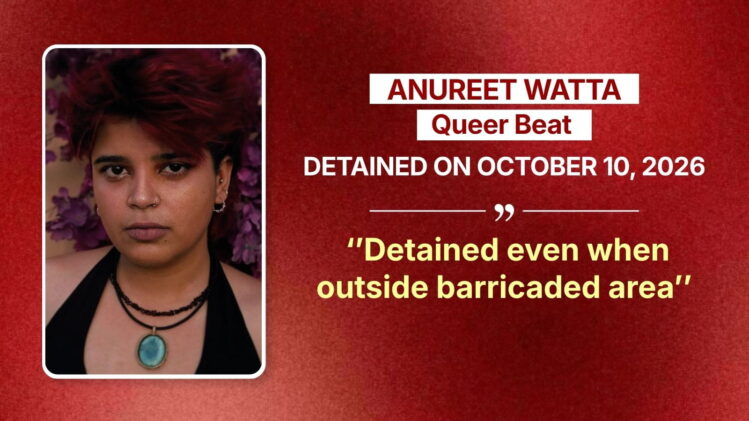
“They said only journalists with PIB ID cards were allowed”- Anureet Watta
Another journalist and I were heading towards the protest at Jantar Mantar around 10.30 am on October 10 recording the surroundings. The police asked us to stop. This was near Samrat Hotel, where the barricades started. But we were outside the area where prohibitory orders applied. This was 8 km away from Jantar Mantar.
The police asked us to show our ID cards and we did. But they said that anybody could have press ID cards and that they needed to be verified. They said only journalists who had Press Information Bureau (PIB) ID cards were allowed. They took us to Chanakyapuri police station.
There they asked us for our ID cards, Aadhaar card, home address, and said they will contact our employers.
We were there for four hours. We repeatedly asked them whether we had been detained, but they wouldn’t say anything. Finally after about three hours they told us we were detained.
While we were there, they brought in four young men, I think two of them were college students. The young men told the police that they were just walking around and that they were not protesting. The police asked them for ID cards and Aadhaar cards.
The police didn’t take our phones, but they went through the phones of the young men. They must have seen something on their phones because after that they began asking all kinds of questions. ‘Are you a terrorist? Why are you not answering?’ and said, ‘You have been brainwashed.’
The police asked the young men what caste they were, why they cared about protests when their parents worked hard, how many sisters they had, and about their sisters’ marital status… They told the young men to focus on working, and not bother with the protests.
Finally, around 3 pm, they let us go and we left to cover the protests.
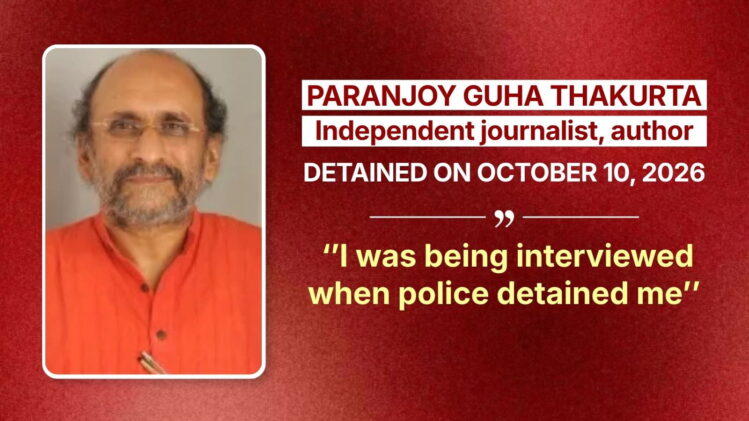
“I will now be moving court” — Paranjoy Guha Thakurta
Compared to many others who were detained on Saturday, October 10 my experience with the Delhi Police was rather benign. I was being interviewed by Anushakti of Cobalt Media when an inspector ordered his team of cops to take me inside a police vehicle.
(The video of the incident shows 3 policemen pulling him up by his hands and saying ‘uncleji chalo, byte mat do.’ The interviewer kept asking, ‘What is the need to detain him, he is over 70 years old and is a senior journalist.’ There are at least 20 police personnel seen surrounding him.)
They allowed me to take my mobile phone, which was with my son, and kept me in the vehicle for barely 20 minutes. I heard the policeman say something about there being a “misunderstanding.” I was driven around and dropped off at a point half a kilometre from where I had been picked up near Jantar Mantar. That’s it.
I will now be moving court with a petition saying what Delhi police did was unlawful and they have no right to pick up journalists who were on the ground doing their job.
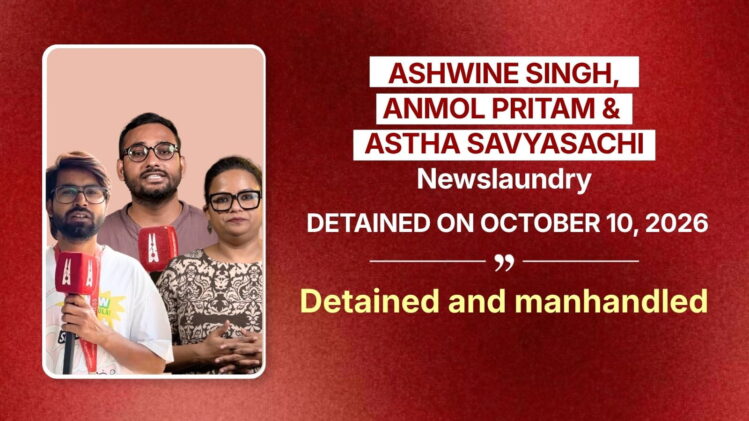
“You have to release all of us, all Newslaundry journalists” — Ashwine Kumar Singh
Around 11.30 am on October 10, our colleague Anmol Pritam was detained by the Delhi Police. He was going towards the New Delhi Railway Station. There was a police barricade and everyone was being detained. When he called us, we were at a place 5 minutes away.
When my colleague Astha and I reached there, we saw a police bus with about 30 persons inside, including many journalists, most of whom were YouTube journalists. Anmol and camera person Anshu Anand were among them.
I told the police, ‘Anmol is our colleague, we are from the media, and we are here to report.’
They replied, ‘You are also part of them, isko bhi pakadlo’ [grab him also].
I showed them my card, saying, ‘This is my card, I am from Newslaundry’
I used to work with NDTV until two months ago and I still have my PIB card which is valid till December. I had a photo of the card on my personal phone. When I took out my phone to show them the card, one IPS officer was standing there. They snatched my phone, and asked, ‘Phone kyu chala raha hei’. [Why are you using your phone?]
There was an IPS officer, whose name I could not identify, and another three-star person whose name was Dhan Singh Malik.
I repeatedly told the IPS officer, ‘Please let me speak, please see my card. I’m a PIB holder, I have my press ID card.’ But no one listened.
Astha told them that she is with me, so she was also bundled into the bus. They manhandled both of us.
This happened between 11.30 am and 12 noon.
They took the bus to Chhatrasal Stadium, which was around 40 minutes away. There, one policeman came inside the bus and counted the detainees.
From there, the bus took us to Adarsh Nagar police station. The whole journey took around 1.5 hours.
Finally after the intervention of a DCP – who is like a PRO – I knew, the police said they will let us go.
I said, ‘I will not go alone. You have to release all of us, all Newslaundry journalists. I had gone all the way there because they got detained.’
After five minutes, the SHO came from his office and he said, ‘Who is from the media?
Anmol pointed to around 15 people who were there.
The cop said he will not let go of all of them. Then he specifically asked for Newslaundry. He told me, ‘you identify your five people and we will let you go’.
The SHO then called the five of us to his room. He offered us water and tea, but we declined. He tried to say that our detention was unintentional, that these things happen in a crowd.
Astha and Anmol intervened to say that this was deliberately done by the police with the knowledge that we were from the media, but he refuted it again and told us that nothing would happen to us.
We were in the SHO’s chamber for around 5 minutes before a police officer came and returned our phones.
After 5-10 minutes, they wrote down our names and addresses, our office address and name and numbers, and then released us.
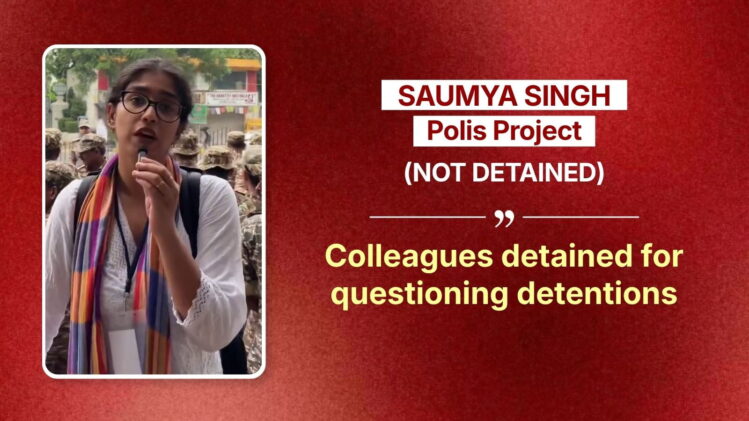
“Isko bhi daalo” — Amaan, Monika and Saurabh on questioning detentions
On October 11, around 4.30-5 pm, I was near the LIC building, trying to cover the barricaded area where there were a lot of police personnel. A woman police officer grabbed my bag and pulled me towards her, held my hand, and asked where I was going, though I was wearing my press ID. A male police officer intervened and asked her to let me go since I was from the media.
On October 10, right in front of us, some of us journalists saw a boy who seemed like a minor. He was surrounded by six cops and was being detained in a bus. All of us went after the bus and asked why they were detaining a young boy.
Amaan from Molitics was pushed back aggressively, near the LIC building. We then walked towards Indira Chowk. I was reporting that the police weren’t wearing visible name tags and were carrying tear gas explosives.
Right after that, we saw that they started detaining other journalists. When Amaan tried to question that, they said, ‘Isko bhi daalo’ [take him also] and pushed him into the bus. When Monika and Saurabh, journalists from The Unsalted, questioned this, they were also detained for a while.
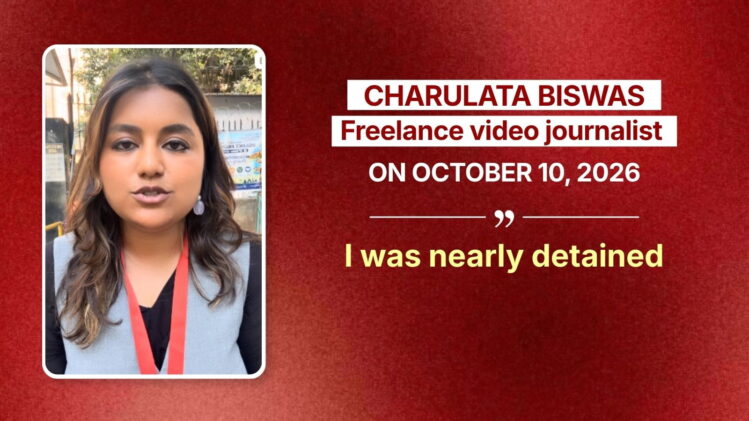
“I wasn’t detained, I was nearly detained”
On October 10, I went near AIIMS to upload my videos. Someone told me Delhi Haat INA Metro Station had a group of people who were being detained. This was 3–4 minutes from where I was standing, so I immediately rushed there.
A few hours ago, I had gotten tired because of the heat. At the time, I took off my badge and kept it in my pants pocket. I was very tired, so it didn’t occur to me to wear the badge immediately (after I reached Dilli Haat INA) and I thought, let me start recording.
I was standing away from the crowd. This woman officer – I think she was from the CISF, she was wearing a scarf like a mask around her face – she came to me and asked, ‘Do you want to go inside the van?’
I asked, ‘Why?’
She grabbed my arms and dug her nails into my skin and started pulling me towards the bus. I kept screaming, “Don’t detain me, I am a journalist.”
She left me the moment she saw that more protesters were being brought to the bus. The skin where she grabbed me was slightly torn and peeled off in that 30–40 seconds scuffle.
I went to my car, kept all my belongings in it, had some water, and stepped out again after a bit.
A few more officers saw that I was recording. The same woman officer approached me again, and said, ‘Do you want to go in? (Chalna hai kya?)
I asked her why she came back to me and why she was targeting me. I told her again that I am a journalist.
A Delhi police officer standing there asked me where my badge was. (It was in the car at this time.) I asked him where his badge was, to which he immediately pointed to his badge. I told him that he may be wearing it, but others weren’t.
I think it triggered him and he instructed the police officers to put me inside the bus. I was dragged inside the bus, and I kept trying with all my strength to resist. I was at the steps of the bus, and I kept screaming, I am a journalist, and the driver of my car recorded the whole thing.
Again, the woman officer dug her nails into my arms.
I found a way to get out and told them, ‘I have the card, let me just get it from the car.’
I got the ID card, but I didn’t step out to show it to them again, because I knew they would detain me. So I stayed inside my car and left from there.
I wasn’t detained, I was nearly detained.
On October 10, I saw a content creator being detained from RK Ashram. She had a muscle tear.
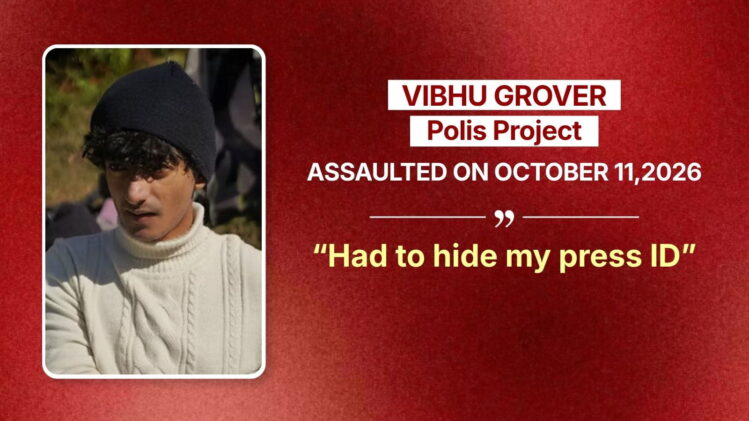
“They kicked me on the hip”- Vibhu Grover
On October 11, around 1 pm, while I was reporting, I told the police that they were defying SC orders by detaining protesters.
As soon as I started recording, one of the police officers recognised me from October 10 and said, ‘Yeh toh wahi banda hai, isko dhar lo’ (This is the same guy from the other day, detain him).
Four RAF officers charged at me and pushed me to the ground. I fell, and tried to protect my camera. A few other police officers asked them to let me go, but during those few seconds, they kicked me on the hip.
Then the same day, around 3.30–4 pm, I was reporting right outside Sansad Marg where there was heavy police deployment and a lot of people were getting detained. There was one police officer, Rohit Deshwal.
On October 10, I had seen Rohit Deshwal roughing up journalists a lot. He was hitting them. One of my colleagues from Molitics, Amaan, was harassed by him.
On October 11, he harassed me. They were detaining people, I was recording it and tried to follow the detainees. Some 5–6 policemen stopped me, and tried to push me and my camera aside. I asked them that when the Supreme Court has just issued an order that they cannot detain protesters, how were they doing this?
And then, Rohit Deshwal came and started pushing me on the main road of Connaught Place, verbally abusing me and asking me why I was disrupting traffic. I said I was standing on the side of the road and wasn’t disrupting traffic. He checked my press ID, started threatening me, “Tereko toh hum acche se batayenge (We will teach you a good lesson)”.
Usually we carry our press ID prominently so the police don’t stop us from restricted areas. But for the first time, we had to hide it. On October 10, at Bangla Sahib, some of my colleagues were detained while reporting. After that, for the first time in my life, I hid my camera and press ID in my bag.
One of my cameras was also damaged on October 10.
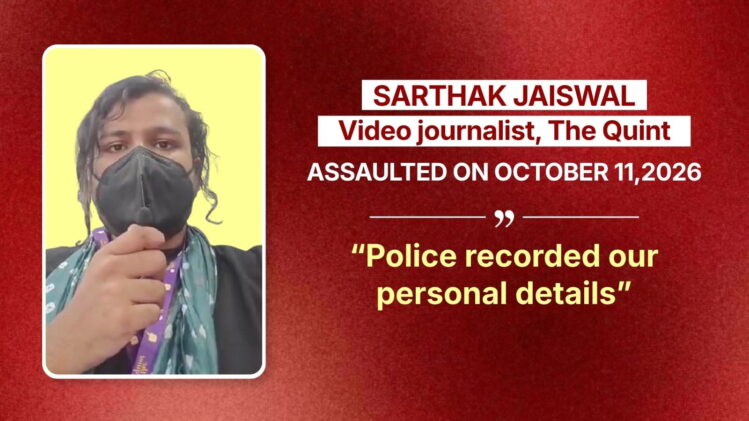
“Anyone could get an ID card made in Khan Market”- Sarthak Jaiswal
I, along with Anureet Watta, a journalist with The Queerbeat, were going to cover the protest by around 10 am on October 10. While attempting to cross a barricade, we were stopped by a police officer who questioned us and then directed us to a senior police officer.
When we presented our press ID cards, the senior officer said that those were not PIB cards. We reminded her that, according to the police advisory, journalists could carry either their organisation-issued ID cards or PIB cards. However, she was dismissive of our explanation, stating that she had never heard of our media organisation. She further remarked that anyone could get an ID card made in Khan Market and questioned how she could verify that we were journalists. She then directed us to the Chanakyapuri police station, stating that it was for verification.
At the police station, we were questioned about our personal details, including our contact numbers and native places, all of which were unrelated to our media organisations. We declined to provide unnecessary personal information and reiterated that our identities could be verified through our ID cards.
We were then made to wait at the police station for over 3.5 hours. The police offered us food and water. There were also other individuals detained, some who had come for the protest, others just to see it. We saw the police accessing their phones, checking their photo galleries and other information on their devices.
After some time, independent lawyers and lawyers from our organisation arrived at the police station. Following negotiations, we were released. However, before releasing us, the police recorded our personal details, including our contact numbers and Aadhaar card information.
Source attribution: The News Minute (original report)