মসজিদের তহবিল থেকে ‘১০০০ কোটির চুক্তি’: হুমায়ুন কবিরকে ঘিরে মুর্শিদাবাদে ক্ষোভের বিস্ফোরণ

মুর্শিদাবাদ: মুর্শিদাবাদের ছাইদার শেখ বলছিলেন “আমি বিশ্বাস করে ৬০০০ টাকা দান করেছি, রাজনীতির জন্য নয়,”। তার কণ্ঠে অবিশ্বাস এবং যন্ত্রণা উভয়ই ছিল। ডোমকলের একজন ধর্মপ্রাণ বাসিন্দা, ছাইদার স্মরণ করছিলেন যে কীভাবে তিনি এই এলাকায় একটি বাবরি মসজিদ নির্মাণের প্রস্তাব শুনে গভীর আনন্দ অনুভব করেছিলেন। তিনি জায়গাটি পরিদর্শন করেছিলেন, জুম্মার নামাজ পড়ে এবং এটিকে একটি পবিত্র প্রচেষ্টা বলে বিশ্বাস করে আর্থিকভাবে তাঁর অবদান রেখেছিলেন। কিন্তু সাম্প্রতিক বিতর্ক তাকে নড়েচড়ে বসতে বাধ্য করেছে। “যদিও রাজনৈতিক উদ্দেশ্যের জন্য ধর্মকে অস্ত্র করার অনুশীলন একটি দীর্ঘস্থায়ী ঘটনা, হুমায়ুন কবিরের বিরুদ্ধে অভিযোগগুলি বিশ্বাসঘাতকতার চেয়ে কম কিছু নয়। এটি সাধারণ মানুষের সরল বিশ্বাস এবং আধ্যাত্মিক বিশুদ্ধতার প্রতি সম্পূর্ণ অবজ্ঞা প্রতিফলিত করে,” তিনি বলছিলেন।

আপনার মসজিদের তহবিল কীভাবে রাজনৈতিক ক্ষমতা কিনেছে

ধর্মীয় প্রতিষ্ঠানের পবিত্রতার ওপর গুরুত্বারোপ করে ছাইদার আরো বলেন, “ইসলামী নীতি অনুযায়ী মসজিদ হল ‘আল্লাহর ঘর’—বিশুদ্ধতা ও ঐক্যের পবিত্র প্রতীক। নির্বাচনী লাভের জন্য এ ধরনের গভীর ধর্মীয় অনুভূতিকে কাজে লাগানো শুধু অনৈতিকই নয়, বিশ্বাসের মূল মূল্যবোধের সরাসরি বিরোধীও”। তিনি আরও হুঁশিয়ারি দেন, “যখন ক্ষমতার তাড়নায় কোনো উপাসনালয়কে ‘তুরুপের তাস’-এ পরিণত করা হয়, তখন এ ধরনের রাজনীতির নৈতিক ভিত্তি পুরোপুরি ভেঙে পড়ে।” আরেক স্থানীয় বাসিন্দা সাহাবুল শেখ বিশ্বাসঘাতকতার অনুরূপ অনুভূতির প্রতিধ্বনি করেছেন। তিনিও তার স্ত্রীর সাথে প্রস্তাবিত মসজিদের স্থান পরিদর্শন করেছিলেন, নামাজ পড়েছিলেন এবং এর নির্মাণে আর্থিক অবদান রেখেছিলেন। “ধর্ম আমাদের সততা এবং সততার মূল্যবোধ শেখায়। যারা, ধর্মের নামে, অন্যায়ের পথে হাঁটে এবং মানুষের বিশ্বাসের সাথে খেলে, নেতৃত্বে তাদের কোন স্থান নেই,” তিনি বলছিলেন। তিনি দৃঢ়ভাবে যোগ করেছেন, “আমি এই ঘটনার তীব্র প্রতিবাদ জানাই এবং দোষীদের উপযুক্ত শাস্তি দাবি করছি।”

আল্লাহর ঘরকে রাজনৈতিক গুটি মনে করা বন্ধ করুন

ধর্মীয় নেতারাও তীব্র প্রতিক্রিয়া জানিয়েছেন। এই বিষয়ে কথা বলতে গিয়ে একজন ইমাম মন্তব্য করেন, “মসজিদ হল উপাসনার অভয়ারণ্য, কোনো রাজনৈতিক দলের নির্বাচনী কার্যালয় নয়। সময় এসেছে যারা সাধারণ মুসলমানদের আবেগকে কাজে লাগিয়ে নিজেদের স্বার্থ হাসিল করতে চায়, তাদের মুখোশ খুলে দেওয়ার। পুরো মুসলিম সম্প্রদায়ের উচিত এমন কাউকে সামাজিকভাবে বয়কট করা উচিত, যে আমাকে একটি দাবার বোড়ের মতো ব্যবহার করার সাহস দেখায়।” তিনি দ্ব্যর্থহীনভাবে দৃঢ়তার সাথে বলেছিলেন, “কেউ আল্লাহর ঘরে কৌশল এবং কারসাজি করতে পারে না এবং এটি থেকে পার পেয়ে যাওয়ার আশা করতে পারে না।”

আম জনতা উন্নয়ন পার্টির চেয়ারম্যান হুমায়ুন কবিরের একটি স্টিং অপারেশন ভিডিও সোশ্যাল মিডিয়া প্ল্যাটফর্মে ভাইরাল হওয়ার পরে মুর্শিদাবাদ জুড়ে ক্ষোভ আরও তীব্র হয়েছে। ক্লিপটিতে, কবিরকে পশ্চিমবঙ্গের মুসলিম ভোটারদের প্রভাবিত করার বিনিময়ে ভারতীয় জনতা পার্টির (বিজেপি) কাছ থেকে ১০০০ কোটি টাকা দাবি করতে দেখা গেছে। ঐ ভিডিওতে হুমায়ুন কবিরকে মুখ্যমন্ত্রী মমতা বন্দ্যোপাধ্যায়কে “যেকোন মূল্যে” ক্ষমতাচ্যুত করার কৌশলের রূপরেখা দিতে দেখা যাচ্ছে, বিজেপির সিনিয়র নেতাদের সাথে সম্পর্ক এবং এমনকি প্রধানমন্ত্রীর কার্যালয়ের সাথে যোগাযোগের কথা শোনা যাচ্ছে।

ভিডিওটিতে বিরোধী দলের নেতা শুভেন্দু অধিকারী, উড়িষ্যার মুখ্যমন্ত্রী মোহন মাঝি এবং হিমন্ত বিশ্ব শর্মার সাথে তার কথিত কথোপকথনের উল্লেখ রয়েছে। এটি আরও একটি বিতর্কিত নির্বাচনী কৌশলের রূপরেখা দেয়, যেখানে কবির কথিতভাবে দাবি করেছেন যে মুসলিম ভোটগুলিকে সরিয়ে বিজেপির বিজয় নিশ্চিত করতে পারে, যখন তিনি জোর দিয়েছিলেন যে তিনি ৭০-৮০টি মুসলিম-সংখ্যাগরিষ্ঠ আসন প্রভাবিত করতে পারেন এবং বিনিময়ে উপ-মুখ্যমন্ত্রীর পদ সুরক্ষিত করতে পারেন।

স্টিং অপারেশন ভিডিও ১০০০ কোটি টাকার রাজনৈতিক চুক্তি প্রকাশ করেছে

ক্লিপটি ব্যাপক আর্থিক পরিকল্পনার কথাও উল্লেখ করে, যেখানে কবির অভিযোগ করেছেন যে পরিকল্পনাটি কার্যকর করার জন্য তার নির্বাচনী এলাকা প্রতি ৩-৪ কোটির প্রয়োজন হবে- যার যোগফল করলে দাঁড়ায় প্রায় ১০০০ কোটি টাকা। তবে, এটা অবশ্যই উল্লেখ্য যে স্বাধীনভাবে ভিডিওটির সত্যতা যাচাই করা হয়নি।
ভিডিওটি ছড়িয়ে পড়ার সাথে সাথে রাস্তায় এবং সোশ্যাল মিডিয়ায় ক্ষোভ ছড়িয়ে পড়ে, অনেকে কবিরকে রাজনৈতিক লাভের জন্য ধর্মীয় অনুভূতিকে কাজে লাগানোর অভিযোগ তোলেন। কিছু ব্যবহারকারী তাকে উপহাস করে “মুর্শিদাবাদের দ্বিতীয় মীরজাফর” বলে উল্লেখ করেছেন, যা বিশ্বাসঘাতকতার সমার্থক একটি নাম হিসেবে বাংলায় প্রচলিত। অন্যরা তাকে “বিজেপির দালাল” বলে আখ্যা দিয়েছেন। আলমগীর হোসেন নামের একজন স্কুলশিক্ষক যাকে বিপজ্জনক ও অনৈতিক প্রবণতা বলে বর্ণনা করেছেন তাতে গভীর ক্ষোভ প্রকাশ করেছেন।

তিনি বলেন, “মসজিদ কোনো রাজনৈতিক অস্ত্র নয়; আমরা ধর্মের সাথে জড়িত এই নোংরা খেলার অবসান চাই।” তিনি বলেছেন যে যদি ভিডিওটি সত্যি প্রমাণিত হয় তবে এটি একটি গভীর উদ্বেগজনক মানসিকতা প্রকাশ করে। “হুমায়ুন কবীরের আসল রং এখন জনসাধারণের সামনে উন্মোচিত হয়েছে তা নিছক নিন্দনীয় নয়, একেবারেই অসম্মানজনক”। এটিকে সাধারণ মুসলমানদের সরল বিশ্বাসকে শোষণ করার একটি “ঘৃণ্য ষড়যন্ত্র” বলে অভিহিত করেছেন। আরো উদ্বেগ প্রকাশ করে, হোসেন সতর্ক করে দিয়েছিলেন, “যদি ভাইরাল ভিডিওটি খাঁটি প্রমাণিত হয় তবে তা থেকে পরিষ্কার হয়ে যায় যে, তার কাছে ধর্ম একটি ‘ভোট ব্যাংক’ ছাড়া আর কিছুই নয়”।

মুর্শিদাবাদ বিজেপি-কবির আঁতাত প্রত্যাখ্যান করছে

বেলডাঙ্গার রবিউল ইসলাম ক্ষুব্ধ ভাষায় ক্ষোভ প্রকাশ করেন: “আমরা কি মুসলিম সম্প্রদায়ের সদস্য হিসাবে, নিছক গবাদি পশু, নাকি আমরা বুদ্ধি নেই? এই ধরণের লোকেরা যখন এই ধরনের কাজে লিপ্ত হয় তখন কি আমরা তা মেনে নেব বলে আশা করা যায়? আমাদের ধর্মীয় অনুভূতি কি বিক্রয়ের জন্য নিছক একটি পণ্য? আমরা তাদের নিজস্ব যুক্তিসঙ্গত অধিকারী এবং আমাদের নিজস্ব যুক্তিসঙ্গততা আছে।”

জয়নাল আবেদীন একই রকম মন্তব্য করে বলেন, “এদেশের সাধারণ, ধর্মপ্রাণ মানুষ মসজিদের মতো প্রতিষ্ঠান গড়ে তুলতে চায়—তাদের উপার্জনের একটি অংশ দিয়ে হোক বা নৈতিক সমর্থন দিয়ে হোক। হুমায়ুন কবিরের মতো নেতারা যদি এই অনুভূতিকে কাজে লাগিয়ে গোপনে তাদের নিজস্ব ‘স্কিম’ তৈরি করেন, তাহলে তা হবে মুসলিম সম্প্রদায়ের গণতান্ত্রিক ধারা। তিনি আরও বলেন, “যদি কোনো ব্যক্তি বা নেতা ইসলামের মৌলিক স্তম্ভ বা এর পবিত্র স্থানগুলির সাথে আপস করে, তবে তাদের রাজনৈতিক ও সামাজিকভাবে বহিষ্কৃত হতে হবে।”
সোশ্যাল মিডিয়াতেও তীব্র ক্ষোভ ছড়িয়ে পড়েছে। একটি বিস্তারিত ফেসবুক পোস্টে মিরাজুল ইসলাম লিখেছেন, “এই লোকটিকে নিয়ে আমার প্রথম থেকেই সন্দেহ ছিল। তিনি বাবরি মসজিদ ইস্যুকে ঘিরে আবেগকে কাজে লাগিয়ে নিজেকে মুসলমানদের ‘মসিহা’ হিসেবে তুলে ধরার চেষ্টা করেছিলেন।” তিনি অভিযোগ করেছেন যে সমর্থন জোগাড় করার জন্য মানসিক আবেদন ব্যবহার করা হয়েছিল। “মানুষ এতটাই প্রভাবিত হয়েছিল যে কেউ কেউ বেলডাঙ্গার প্রস্তাবিত জায়গায় ইটও নিয়ে গিয়েছিল।”

হুমায়ুন কবিরের ঘটনা দেখিয়ে দেয় কারণ পুরানো ঘটনাগুলি বাস্তবতা প্রমাণ করে

মিরাজুল আরও দাবি করেছেন, “তিনি মসজিদের নামে কোটি কোটি টাকা সংগ্রহ করেছেন, শুধুমাত্র হেলিকপ্টার ভ্রমণ সহ প্রচারাভিযানে ব্যয় করার জন্য,” বিজেপির সাথে “গোপন সম্পর্ক” অভিযোগ করে। অন্য একজন ব্যবহারকারী, মনজুর আলম, একটি বিস্তৃত প্রতিফলন প্রস্তাব করেছেন: “ভাইরাল ভিডিওটি সামান্যতম কৃত্রিম বুদ্ধিমত্তা উত্পাদিত বলে মনে হয় না, উল্টে হুমায়ুনের নিজস্ব লোভ প্রকাশ করে দেয়”
তিনি আরো বলেছেন, “অনেক মুসলিম রাজনৈতিক নেতা সম্প্রদায়ের প্রকৃত শুভাকাঙ্খী নন। তারা প্রায়শই সম্প্রদায়কে ক্ষমতা অর্জনের জন্য একটি সোপান হিসাবে ব্যবহার করেন,” পাশাপাশি জমিয়ত উলামায়ে-হিন্দের উদ্ধৃতি দিয়ে বাস্তববাদী রাজনৈতিক সম্পৃক্ততা এবং শক্তিশালী অরাজনৈতিক সম্মিলিত পদক্ষেপের প্রয়োজনীয়তার উপর জোর দেন। লালবাগের বাসিন্দা ফজলুল হক একটি তীব্র শব্দযুক্ত প্রতিক্রিয়ার প্রস্তাব দিয়েছেন: “মুর্শিদাবাদে মীরজাফরের ভূত দেখা যাচ্ছে—সে বিজেপির কাছ থেকে ১০০০ কোটি টাকা গ্রহণ করে নিজের পকেট ভরতে চায়… দুর্ভাগ্যবশত মুসলিম সম্প্রদায় এমন নরপশুদের শিকার হয় যারা তাদের হৃদয় জয় করে কেবল মধুর কথায় ভোলানোর চেষ্টা করে”।

বিতর্কের জবাবে, হুমায়ুন কবির ভাইরাল ভিডিওটির সত্যতা অস্বীকার করেছেন, অভিযোগ করেছেন যে এটি শাসক দলের দ্বারা কৃত্রিম বুদ্ধিমত্তা (এআই) ব্যবহার করে বানানো হয়েছে। “যদি তারা অন্যথায় প্রমাণ করতে ব্যর্থ হয়, আমি ২০০০ কোটি টাকা ক্ষতিপূরণ চেয়ে মানহানির মামলা করব,” তিনি বলেছিলেন। যাইহোক, কবিরের একটি পুরানো ভিডিও, কথিত স্টিং ক্লিপের মতো একই সেটিং এবং ব্যাকগ্রাউন্ড দেখাচ্ছে, সোশ্যাল মিডিয়াতেও ছড়িয়ে পড়েছে


এটি একটি ইংরেজি প্রতিবেদন থেকে অনূদিত।

IIM Academic, Aliah Professors, Journalist—All ‘Deleted’: Bengal’s Voter List Deletion Sparks Outrage

0

Kolkata: Nandita Roy, Mohd Shamim Akhtar, and Melisha Khatun—all professors—boast PhD degrees, but thanks to the Election Commission of India, after SIR in Bengal, they have now been given another common title, ‘Deleted Voters’.

Roy, Akhtar, and Khatun were among several deleted voters who gathered today at the Park Circus Maidan protest site, where a protest against SIR has been ongoing for the last 40 days.

From IIM Classrooms to ‘Deleted Voter’: Nandita Roy Questions ECI’s Process

The 38-year-old daughter of a war veteran and granddaughter of an army veteran, Roy is a distinguished academician who has not only taught in three Indian Institutes of Management (IIMs)—Kashipur, Lucknow, and Kolkata—but whose research work has also been published in renowned journals like Journal of Business Ethics and Management Learning.

She has been invited to international conferences as a speaker. “While I have all the documents, I followed every step. The only additional thing I had done was to fill out Form 8 for the change of address. Still, my name was there in the February 28 final draft. But later it was put under adjudication, and on March 31’s supplementary list, I found myself deleted,” Roy told eNewsroom.

“My grandfather and father were in the Indian Air Force, and my father was also a war veteran; he had participated in the 1971 (Indo-Pak) war,” informed the professor, whose ancestors are from Bengal. Roy has done her schooling at Assembly of God Church School and GD Birla, and completed her graduation, master’s, and PhD from Jadavpur University.

“There are two issues I want to point out. I have been told to fill Form 6. But why will I fill it? I have been a voter since 2009. Why should I become a new voter? And when privileged people like me, who have all the support systems to raise our voice and take necessary action, face this, I am thinking about the huge number of female voters whose names got deleted. I am shocked and term this situation of India as ‘Democracy has gone into Silence’,” added the furious professor.

Professor and MBBS Son Both Deleted: ‘Not a Jhola Chap,’ Says Akhtar

The case of 50-year-old Akhtar, the Head of the Department at Aliah University and a PhD scholar from Aligarh Muslim University, is more frightening, as not only his but also his son’s name—who is a first-year MBBS student—was deleted by the ECI.

“I have all the documents, including my passport. And there is no mismatch of names in my documents also. My other family members in Bihar were cleared in SIR, but they deleted not only me but my medical student son, whose name was added to the 2023 voter list. All the information is also available online. I am not a jhola chap; my work is needed in the international fraternity,” Akhtar added.

Gold Medalist, HoD, Yet ‘No Longer a Voter’: Khatun’s Disbelief

Khatun, the Head of the Department of Economics at Aliah University, is still in disbelief that she is no longer a voter in the world’s largest democracy.

The 39-year-old professor had earned her PhD from Burdwan University and was a Gold Medalist in MSc (Economics) from the same university. Khatun has published extensively in reputed indexed, UGC CARE-listed national and international journals and has presented her work at various prestigious academic conferences.

‘Add 27 Lakh Names or Let Me Die’: Activist’s Appeal to President, CJI

Along with the professors, activist Faridul Islam, whose name has been deleted, wrote to the President as well as the Chief Justice of India, seeking a wish for death if 27 lakh voters, along with him, were not added to the voter list.

Sandeep Ahamed, another social activist, also had his name deleted, as the software used to process the voter list put his name under adjudication due to a difference in spelling between “Sandip” and “Sandeep.”

The 54-year-old Ahamed, whose name was in the 2002 voter list, said, “The BLO, as well as a special observer, said to me that it is a software mistake and it will get corrected, but instead it got deleted.”

From 2002 Voters to Today’s ‘Deleted’: Elderly, Families Caught in the Fallout

Professor Akhtar, a voter from the Entally constituency, has also brought a 68-year-old citizen who has a similar name to him. Shamim Akhtar, a small-time businessman, is also a voter from Entally. The businessman, whose name was on the 2002 list, had undergone eye surgery and was wandering here and there with one eye. The only satisfaction for him is that his wife’s name is on the voter list.

Saheb Alam, a 60-year-old pensioner of National Jute Manufactures Corporation Limited (NJMC), has also been removed. Along with Alam, his 40-year-old nephew’s name was also deleted.

The 37-year-old Wasim Islam is also from Entally. He has been exercising his franchise since 2009, but in this SIR, not only his but also his two brothers’ and his 60-year-old mother’s names were deleted.

The Votadhikar Rakhya Manch also conducted a press conference on the April 14’s March from Park Circus to Esplanade, demanding that 27 lakh voters be added to the voter list.

On the occasion, several activists were present, including Sunita Biswas, Mahasweta Samajdar, and Gopa Mukherjee, along with the organizers Professor Saifullah, Zeeshan Zahid, and Sajidur Rahman.

Journalist Too ‘Deleted’: Anandabazar Desk Reporter Left Clueless

eNewsroom also came to know about a journalist, Chaitali Biswas, who works at the desk of the prominent Bangla newspaper Anandabazar Patrika, whose name was deleted.

“My father and mother both are voters. My name was not on the 2002 list, as I was not an eligible voter. Now I am clueless—why has it been deleted? The BLO did not cite any reason why it happened,” the journalist told eNewsroom.

“Our Faith is Not for Sale”: Murshidabad Denounces the ‘Babri’ Political Plot of Humayun Kabir

0

Murshidabad: “I had contributed ₹6,000 with faith, not for politics,” said Chaider Sheikh, his voice carrying both disbelief and anguish. A devout resident of Domkal, Chaider recalled how he had felt a deep sense of joy upon hearing about the proposed construction of a Babri Masjid in the area. He had visited the site, offered Friday prayers, and contributed financially, believing it to be a sacred effort. But the recent controversy has left him shaken.

“While the practice of weaponising religion for political ends is a long-standing phenomenon, the allegations against Humayun Kabir amount to nothing less than an act of betrayal. It reflects utter contempt for the simple faith and spiritual purity of ordinary people,” he said.

Bricks of Betrayal: How Your Mosque Funds Bought Political Power

Emphasising the sanctity of religious institutions, Chaider added, “According to Islamic tenets, a mosque is the ‘House of Allah’—a sacred symbol of purity and unity. To exploit such profound religious sentiment for electoral gain is not only unethical but also stands in direct opposition to the core values of the faith.”

He further warned, “When a place of worship is turned into a ‘trump card’ in the pursuit of power, the moral foundation of such politics collapses entirely.” Sahabul Sheikh, another local resident, echoed similar sentiments of betrayal. He too had visited the proposed mosque site with his wife, offered prayers, and made a financial contribution toward its construction.

“Religion teaches us the values of honesty and integrity. Those who, in the name of religion, tread the path of unrighteousness and toy with people’s faith—regardless of their other credentials—have no place in leadership,” he said. He added firmly, “I strongly protest against this incident and demand appropriate punishment for those found guilty.”

Sacrilege: Stop Treating the House of Allah as a Political Pawn

Religious leaders have also reacted sharply. An Imam, speaking on the issue, remarked, “A mosque is a sanctuary for worship, not an election office for any political party. The time has come to unmask those who seek to further their own self-interests by exploiting the emotions of ordinary Muslims. The entire Muslim community ought to socially boycott anyone who has the audacity to treat a holy site as a mere pawn on a chessboard.” He asserted unequivocally, “One cannot scheme and manipulate the House of Allah and expect to get away with it.”

The anger across Murshidabad intensified after a purported sting operation video featuring Humayun Kabir, Chairman of the Aam Janata Unnayan Party, went viral on social media platforms. In the clip, Kabir is allegedly seen demanding ₹1,000 crore from the Bharatiya Janata Party (BJP) in exchange for influencing Muslim voters in West Bengal. He is purportedly heard outlining a strategy to unseat Chief Minister Mamata Banerjee “at any cost,” claiming links with senior BJP leaders and even contact with the Prime Minister’s Office.

The video also contains references to his alleged interactions with Leader of the Opposition Suvendu Adhikari, as well as chief ministers Mohan Yadav and Himanta Biswa Sarma. It further outlines a controversial electoral strategy, where Kabir allegedly claims that diverting Muslim votes could ensure BJP’s victory, while asserting he could influence 70–80 Muslim-majority seats and secure the post of Deputy Chief Minister in return.

Sold Out: Sting Operation Video Exposes ₹1000 Crore Political Deal

The clip also refers to extensive financial planning, with Kabir allegedly stating that he would require ₹3–4 crore per constituency—amounting to nearly ₹1,000 crore—to execute the plan. However, it must be noted that eNewsroom has not independently verified the authenticity of the video.

As the video spread, anger spilled onto the streets and social media, with many accusing Kabir of exploiting religious sentiments for political gain. Some users mockingly referred to him as “Murshidabad’s second Mir Jafar,” invoking a name synonymous with betrayal. Others labelled him a “BJP stooge.” Alamgir Hossain, a schoolteacher, expressed deep anguish over what he described as a dangerous and unethical trend.

“A mosque is not a political pawn; we demand an end to this dirty game involving religion,” he said. He added that if the video proves authentic, it reveals a deeply troubling mindset. “The true colours of Humayun Kabir—now exposed to the public—are not merely reprehensible but utterly disgraceful,” he remarked, calling it a “despicable conspiracy” to exploit the simple faith of ordinary Muslims. Raising broader concerns, Hossain warned, “If the viral video proves authentic, it becomes abundantly clear that, to him, religion is nothing more than a ‘vote bank.’”

Selling Out the Community: Murshidabad Rejects BJP-Kabir Nexus

Rabiul Islam of Beldanga voiced anger in blunt terms: “Are we, as members of the Muslim community, mere cattle, or are we devoid of intellect? Are we expected to simply accept it when people of this kind engage in such acts? Is our religious sentiment merely a commodity to be put up for sale? We possess our own faculty of reason, and we will certainly hold them accountable.”

Jainal Abedin struck a similar note, saying, “Ordinary, devout people in this country aspire to establish institutions like mosques—whether by contributing a portion of their earnings or by offering moral support. If leaders like Humayun Kabir exploit this sentiment to secretly devise their own ‘schemes,’ it would constitute a monumental betrayal of the broader Muslim community.” He added, “If any individual or leader compromises the fundamental pillars of Islam or its sacred sites, they ought to be politically and socially ostracised.”

The outrage has also played out sharply on social media. Mirajul Islam, in a detailed Facebook post, wrote, “I had my doubts about this man right from the start. He tried to project himself as a ‘Messiah’ of Muslims by exploiting sentiments surrounding the Babri Masjid issue.” He alleged that emotional appeals were used to mobilise support. “People were influenced to such an extent that some even carried bricks to the proposed site in Beldanga.”

The Fake Messiah: Kabir Threatens Suit as Older Clips Prove Reality

Mirajul further claimed, “He has raised crores of rupees in the name of the mosque, only to spend it on campaign activities, including helicopter travel,” alleging a “secret nexus” with the BJP. Another user, Manzur Alam, offered a broader reflection: “The viral video did not appear to be AI-generated in the slightest. This reflects what I believe to be the unvarnished reality of Humayun.”

He added, “Many Muslim political leaders are not genuine well-wishers of the community. They often use the community as a stepping stone to attain power,” while also stressing the need for realistic political engagement and stronger non-political collective action, citing Jamiat Ulama-e-Hind. Fazlul Hoque, a resident of Lalbagh, offered a sharply worded reaction: “Behold the specter of Mir Jafar in Murshidabad—he seeks to line his own pockets by accepting ₹1,000 crore from the BJP… The unfortunate Muslim community falls prey to charlatans who win hearts with honeyed words, only to lead them toward ruin.”

Responding to the controversy, Humayun Kabir has denied the authenticity of the viral video, alleging it was fabricated using artificial intelligence (AI) by the ruling party. “If they fail to prove otherwise, I will file a defamation suit seeking ₹2,000 crore in damages,” he said.

However, an older video of Kabir, showing a similar setting and background as seen in the alleged sting clip, is also circulating on social media.


Young, Defiant, and Unafraid: Afreen Begum’s High-Stakes Fight in Ballygunge

0

Kolkata: A researcher-turned-politician, Afreen Begum, who is a CPI(M) candidate from the Ballygunge constituency, has made some sharp remarks on Mamata Banerjee, particularly regarding her role in the SIR and what she termed the “deceiving” politics of the Trinamool Congress supremo.

After releasing CPI(M)’s manifesto for Ballygunge, the 29-year-old PhD scholar from Jadavpur University spoke to eNewsroom India at length. In the interview, the young politician discussed the SIR and how, even while contesting her first election, she—the “Ballygunge Ki Beti,” as she calls herself—can defeat heavyweights in the Bengal elections.

Ballygunge, a high-profile constituency in Bengal, has interesting candidates from four major political parties. Neither the ruling TMC’s Sobhandeb Chattopadhyay, nor Congress’s Rohan Mitra, nor BJP’s Shatorupa, nor CPI(M)’s Afreen Begum had contested the last Assembly election from this seat. Only the BJP candidate had contested previously, that too 15 years ago, in 2011. The TMC has held the Ballygunge seat since 2006.

Here are excerpts from her interview with eNewsroom:

eNewsroom: You are a student contesting your first election. How challenging is your candidature against heavyweight candidates from the ruling TMC and the BJP?

Afreen Begum: I have spent my life in the bylanes of Ballygunge, so I am aware not only of the localities but also of the issues faced by people in my constituency. There are problems like substandard drinking water supply, unhygienic surroundings, illegal constructions, and youth unemployment. In 2022 byelection, the CPI(M)’s Saira Shah Halim was the runner-up in the Ballygunge by-election. TMC’s winning margin was only 10,000 votes, so the BJP is not really in contention here.

eNewsroom: What are your key issues? Are you contesting the election on the Hindu-Muslim binary, the SIR, or local issues in Ballygunge?

Afreen Begum: Our party has never engaged in the politics of religion, and I am also fighting against the BJP’s hate politics. Yes, the SIR is an issue, but it affects all of Bengal. At the same time, I am highlighting the lack of development by the ruling TMC in Ballygunge. I promise to improve the standard of living here. I also aim to reduce corruption and create job opportunities for the youth.

eNewsroom: There are claims that some CPI(M) leaders believe in a ‘Good SIR’ and ‘Bad SIR’. Do you agree that there is a ‘Good SIR’?

Afreen Begum: I was not aware of such claims. But I do know that in Kerala, there was no such mass deletion as seen in Bengal. This is because Chief Minister Pinarayi Vijayan ensured adequate deployment of Booth Level Officers (BLOs) and Electoral Registration Officers (EROs). In Bengal, however, sufficient BLOs and EROs were not deployed, which led to mass deletions.

eNewsroom: Since CPI(M) is also part of the opposition against the BJP at the Centre, how challenging is it for you to win amid the SIR exercise?

Afreen Begum: Around 23,000 votes have been deleted in the Ballygunge constituency, and nearly 18,000 of them belong to Muslims. However, we are hopeful of securing support from all sections, and the existing voters will ensure the BJP’s defeat.

eNewsroom: You are pursuing a PhD in education, and the New Education Policy (NEP) is one of your key research areas. Who stands to benefit from it?

Afreen Begum: No one. I am conducting research on the NEP and will present my findings, but so far, I believe it has not been designed for the benefit of students.

The CPI(M) leader also claimed that Mamata Banerjee receives votes from minority communities but does not strongly oppose the BJP’s anti-Muslim policies. She alleged that while some opposition parties assist the BJP in the Rajya Sabha by supporting key bills, Banerjee publicly assures resistance but later backs such measures—citing the NEP and the Waqf Bill as examples.

“Trinamool and BJP are two sides of the same coin,” she said.

The young candidate, with no political background added that she is committed to a long-term political career and will remain in public life regardless of the election outcome.

The ‘Ghuspetiya’ Hoax and the Arithmetic of Exclusion: Is the ECI Editing the Electorate to Fit the Result?

0

There is a famous quote by Lyndon B Johnson: “The vote is the most powerful instrument ever devised by man for breaking down injustice.”

Strikingly, India’s freedom movement, from the very beginning, echoed the demand for equal voting rights. In 1895, Bal Gangadhar Tilak was among the first to demand universal adult franchise. He realised the power of voting rights back then, but after 131 years, it seems India is in reverse gear.

The Election Commission of India (ECI), whose core principle is that every single voter counts and that no eligible citizen should be excluded, has now initiated a seemingly contradictory exercise that has led to the deletion of 90 lakh voter names from the West Bengal electoral roll. More troubling is the simultaneous erosion of transparency—once the ECI’s guiding principle—and its slide into opacity, which itself speaks of institutional complicity.

Erasure by Design: The Disenfranchisement of 90 Lakh

Interestingly, in the 2021 West Bengal election, the All India Trinamool Congress led the Bharatiya Janata Party by approximately 60.6 lakh votes. In the 2024 general election, this margin came down to around 42.4 lakh. Then, suddenly, the Election Commission of India announced a Special Intensive Revision (SIR) of the electoral roll. In West Bengal, the SIR process began in October 2025, and by February, when the list was released, 63 lakh names had already been deleted.

Now, just yesterday, after the Supreme Court of India refused to accept a plea to extend the time before the electoral lists were frozen at midnight, the ECI released its final supplementary list. After the first phase of SIR, about 63.66 lakh electors were removed from the electoral roll, while 60,06,675 were kept under adjudication. Following the final supplementary list released on April 7, 2026, around 27.16 lakh of those under adjudication were found ineligible and excluded.

Earlier, the total number of voters was 7.66 crore. Now it has been reduced to 6.77 crore—a fall of 11.62%. What was valid till 2024 has suddenly become invalid. By this logic, is the ECI itself suggesting that the 2024 general election was flawed?

Gender & Identity: The Target of a Not-So-Silent Purge

Before the revision, women constituted nearly half of West Bengal’s electorate, with about 968 female voters for every 1,000 men—around 49%. However, SIR data show that over 53% of the deletions were women. The SIR has effectively taken us back to the basic struggle for women’s voting rights. It has disproportionately impacted female voters and likely altered the gender balance of the rolls. This strengthens the argument that the SIR process is not gender-neutral in its impact.

A few days ago, Yogendra Yadav said that the story of the SIR in West Bengal is one of the Election Commission’s desperate attempts at mass deletion of voters inconvenient to the BJP. Similarly, three months ago, the international media outlet The Guardian reported under the headline: “India’s electoral roll revision threatens democracy and Muslims, say critics.”

Today, it was reported that a total of 2,826 names have been deleted from the electoral rolls in Nandigram in the supplementary lists. Of these, 2,700 are Muslims. The proportion of minority Muslims among the deleted is staggering—95.5%. A similar pattern has been observed in data analysis by Ankit Jain, which reveals that Muslims have been disproportionately marked as ‘under adjudication’ in the SIR.

Institutional Opacity: When the Referee Deletes the Players

A curious case was also reported on 07/04/26, where the Appellate Tribunal noted that the Election Commission, “for technical reasons,” could not furnish the reasons for the deletion of INC candidate Motab Sheikh from the electoral roll. The Appellate Tribunal, headed by former High Court Chief Justice TS Sivagnanam, ordered the inclusion of Motab Sheikh in the voter roll after noting that he possessed an Aadhaar card, passport, and driving licence bearing his name, and that there was no discrepancy in his father’s name.

But the question remains: when there was no discrepancy, why was his name deleted? Should we now believe that the Guardian article was accurate?

However, from the Supreme Court to India’s political discourse, no one seems in the mood to take serious note of this travesty of democracy. Even if 10% of the names are wrongly deleted, the number rises to 9 lakh. And the future will repeatedly record that they were denied the time to prove their legitimate right to vote.

It seems that the mission of erasure has been accomplished. The ECI’s past slogans like “Every Vote Counts” and “No Voter to be Left Behind” now lie in the dustbin of history.

Thanks to the Supreme Court.
Thanks to the ECI.
Thanks to the entire system that built and propagated the hoax of “Ghuspetiya.”

The future will remember each one of your roles.

The Aliah Ascent: Celebrating Nearly Two Decades of Research and Resilience

0

Kolkata: Reaffirming its commitment to inclusive education and minority empowerment, Aliah University celebrated its 19th Foundation Day at its New Town campus on Sunday, highlighting its journey from a modest beginning to a growing centre of academic excellence with national and international collaborations.

The event was marked by a strong emphasis on the university’s role in uplifting educationally lagging communities, particularly Muslims in West Bengal, while also showcasing its academic progress, research output, and institutional development over nearly two decades.

Vice-Chancellor Prof Rafikul Islam underlined the university’s transformation since its inception in 2008, noting significant achievements in research, publications, and student placements. He credited the institution’s growth to the collective efforts of its academic and administrative community over the years, describing the progress as a result of “sustained dedication across generations of leadership and staff.”

From Historic Roots to Modern Academic Excellence

Speakers at the event repeatedly invoked the legacy of the historic Calcutta Madrasah, established in 1780, positioning Aliah University as a modern extension of that tradition. They stressed the university’s responsibility as a state minority institution to expand access to quality higher education while promoting inclusivity and diversity.

The celebration also highlighted the university’s recent academic milestone—securing a B+ grade from the National Assessment and Accreditation Council in November 2024—seen as a step toward strengthening its institutional credibility.

A Vibrant Showcase of Talent and Achievement

Beyond speeches, the Foundation Day reflected the campus’s academic and cultural vibrancy. Departments, along with units such as the Training and Placement Office, NSS, and NCC, showcased their achievements through stalls. An art gallery featuring student works and sale items drew significant attention, while a documentary tracing the university’s journey was screened.

The cultural segment brought together performances ranging from drama and mime to music, reflecting student creativity. The event also included a prize distribution ceremony honouring winners of competitions such as quiz, extempore, and tarana held during the Foundation Day week.

The annual report for the 2024–25 academic session and the Spring 2025 newsletter were released on the occasion, documenting the university’s academic and institutional progress.

The programme concluded with a renewed institutional resolve to deepen academic excellence, expand inclusivity, and strengthen its societal role.

Visionary Voices: Leaders Who Joined the Milestone Celebration

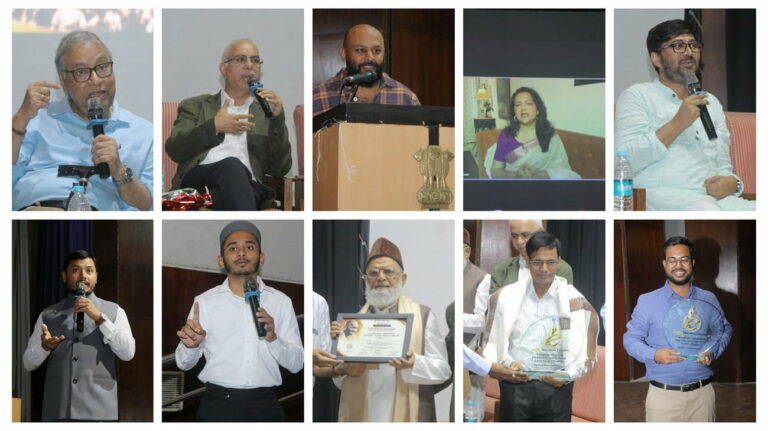
Among those present were Sk Abu Taher Kamruddin, President of the West Bengal Board of Madrasah Education and former Vice-Chancellor of Aliah University; Ahmed Hassan Imran, Chairman of the West Bengal Minorities’ Commission; Prof Ashutosh Ghosh, Vice-Chancellor of the University of Calcutta; Abu Taleb Khan, Vice-Chancellor of Biswa Bangla Biswabidyalay and former Vice-Chancellor of Aliah University; Syed Nurus Salam, Registrar of Sidho-Kanho-Birsha University and former Registrar of Aliah University; Pabitra Sarkar, former Vice-Chancellor of Rabindra Bharati University; Prof Md Sirajul Islam, former Dean at Visva-Bharati University; Sk Nurul Haque, former Principal Secretary of the MA & ME Department, Government of West Bengal and former Chairman of the West Bengal Public Service Commission; Nahid Ali, JC Bose Fellow and INSA Emeritus Scientist at the Indian Institute of Chemical Biology; Sibaji Pratim Basu, former Vice-Chancellor of Vidyasagar University; and Prof Saifulla, Dean of the Faculty of Humanities and Languages and Chairman of the Foundation Day Organising Committee

No Hearing, No Notice, Just Deletion: How Bengal’s SIR Erased a Decorated IAF Officer

0

Kolkata: Once a holder of a diplomatic passport, Wing Commander Md Shamim Akhtar (Retd), a decorated Indian Air Force (IAF) veteran, found that his name had been abruptly deleted from the electoral rolls in West Bengal—without any prior hearing.

High-Flying Service: The Decorated Career of Wing Cdr Akhtar

Wing Commander Akhtar, commissioned into the Indian Air Force on 15 December 2006, served the nation with distinction for 17 years. His career included key roles across the country—from training nearly 2,000 airmen at Air Force Station Tambaram to administrative leadership postings in Chandigarh and Allahabad. He also represented India internationally in a Young Officers’ Exchange Program with the Royal Thai Air Force.

He played a crucial role during the devastating 2018 Kerala floods, coordinating rescue and relief operations while serving at the Southern Air Command. After taking voluntary retirement (VRS) in July 2022 due to family commitments, Akhtar has been actively mentoring youth aspiring to join the armed forces and working with underprivileged students.

From Combat to Courtroom: A Veteran’s Fight for the Vote

According to Akhtar, his name was placed “under adjudication” during the ongoing Special Intensive Revision (SIR). However, before he could even be called for a hearing, his name was deleted in the second supplementary list released on March 28, 2026.

The Wing Commander (Retd) claims he followed all instructions issued by the Election Commission and remained in constant touch with the BLO at every step. “My name was there in the final list, so I had nothing to act on. But in the first supplementary list on March 23, it was marked ‘under adjudication’. I contacted my BLO, Mondal, but he did not tell me any procedure to follow and assured me that it would be restored automatically. Then on March 28, when my name was deleted in the second list, the BLO told me to hire a lawyer and approach the tribunal,” rued Akhtar.

What makes the case more puzzling is that:

Longevity: His name had been part of the electoral rolls since 2002.

Family Status: His family members’ names continue to remain on the list.

Lack of Due Process: No formal hearing or opportunity for clarification was provided.

The incident has sparked outrage among sections of civil society, with some questioning whether the deletion could be linked to the officer’s identity as a Muslim. “When a decorated officer with an impeccable service record is denied even a hearing, it naturally raises questions,” said Athar Firdausi, a rights activist.

Recently, Alt News, in its report “Bengal SIR: The Wall ECI Built Around Electoral Data and How We Broke Through It,” highlighted large-scale discrepancies, claiming that voters from communities less likely to support the BJP were disproportionately targeted for deletion or placed under doubt.

However, the Wing Commander is not the only alleged victim of the controversial SIR process. The list is long. eNewsroom has also reported that AGWB gazetted officer Reshma Shirin Iqbal’s name was deleted in a similar manner. Former Calcutta High Court judge Sahidullah Munshi’s name was also removed, and he publicly stated that the experience was not only humiliating but left him unsure of where to seek redress. It has also been reported that the names of the grandson and granddaughter-in-law of Indian Constitution illustrator Nandalal Bose were dropped.

The Murshidabad Files: Why Thousands of Valid Voters Are Now ‘Deleted’

0

Murshidabad: The publication of supplementary voter lists under the Special Intensive Revision (SIR) has triggered widespread alarm across Murshidabad district, as thousands of voters find their names struck off the rolls just weeks before the 2026 West Bengal Assembly elections. In the Raninagar Assembly constituency, early data from recently released supplementary lists have revealed a staggering rate of exclusions, leaving both common citizens and local elected representatives in a state of deep consternation.

Massive Voter Deletions Trigger Alarm in Raninagar Constituency

According to the final SIR list published on February 28, Raninagar had 92,796 voters classified under the “under adjudication” category. As the Election Commission (EC) began releasing supplementary lists in phases throughout March, the sheer volume of deletions has become the focal point of local seething indignation. According to the recently published supplementary lists, the Raninagar Assembly constituency in Murshidabad district has witnessed a significant number of deletions. In just two booths, the number of excluded voters is estimated to be around 800. This suggests that nearly 72 percent of voters previously marked as “under adjudication” in these booths have had their names removed from the rolls.

For instance, Booth No. 69, located at Raghunathpur-Daulatpur Primary School in the Tekraypur area, recorded a high number of exclusions. As per the final SIR list issued on February 28, a total of 614 voters from this booth were placed under the “under adjudication” category. Following several weeks of document verification, the supplementary list for this booth was released recently. It shows that 442 of these voters have been removed from the rolls, while 172 have been retained. In percentage terms, approximately 71.9 percent of the voters initially under adjudication at this booth have been excluded. Officials and residents alike have reported challenges arising from the process, affecting stakeholders from Booth Level Officers (BLOs) to the general public.

Data Analysis: 72 Percent Exclusion Rate in Murshidabad Booths

A similar trend has been observed at the adjacent polling station, Booth No. 70, located at Haribhanga Daulatpur Madrasa Education Centre. This booth had 497 voters under review. According to the latest supplementary list, 359 names have been deleted, including 156 women, while 138 voters have been retained. This translates to approximately 72.2 per cent of the voters under adjudication being excluded from the list. Voters have expressed concern over the outcome of the verification process. Samiul Islam, a local resident, alleged, “All necessary documents were submitted in compliance with the rules, yet our names have been excluded. The Commission is not functioning in accordance with the regulations and appears to be acting in a biased manner.”

Locals affected by the revisions have raised concerns over what they describe as inconsistencies in the verification process. Asabul Sheikh, a local resident, said that despite submitting all necessary documents, his wife’s name was excluded from the list. “I submitted all of my wife’s identity documents, along with those of her parents. My name appears on the list, as do the names of my in-laws, but my wife’s name has been marked as ‘deleted.’ We have been in a state of anxiety since then,” he said. Booth Level Officers (BLOs) from the affected polling stations have also expressed uncertainty over the large-scale deletions. Iqbal Sarkar, BLO for Booth No. 69, and Masuma Bibi, BLO for Booth No. 70, said that a significant number of names had been removed without a clear explanation. “Names have been deleted on a massive scale, and even we do not know the exact reasons. Most individuals submitted the required documents, yet their names were still excluded. In some cases, even members of our own families have been affected. This has led to growing resentment among the public, and in many instances, people believe the errors are on our part. But we have limited control over the process,” they said.

Samserganj SIR Crisis: Up to 98 Percent of Voters Struck Off

When contacted, Saikat Biswas, Block Development Officer (BDO) of Raninagar-I Block, declined to comment in detail. “We have nothing to say on this matter at present. The issue is currently under the purview of the judicial authorities,” he stated. Meanwhile, a similar pattern of large-scale deletions has been reported from the 56 Samserganj Assembly constituency in Murshidabad district. Supplementary lists from several polling stations indicate a strikingly high proportion of voters who have been removed from the rolls.

At Polling Station No. 97, Housennagar Shishu Shiksha Kendra, the total number of voters under the “under adjudication” category stood at 439. Of these, only 27 names have been retained, while 412 have been deleted, amounting to approximately 93.8 percent. At Polling Station No. 98, Housennagar Junior High School, 694 out of 750 voters under adjudication have been excluded. Similarly, at Polling Station No. 99, Chaksapur Bipin Mandal Smriti Primary School, 397 out of 402 pending voters have been removed, representing about 98.8 percent. The trend continues across other polling stations in the constituency. At Polling Station No. 100, 379 out of 386 voters have been deleted. At Polling Station No. 101, 539 out of 551 voters have been excluded, while at Polling Station No. 102, 600 out of 608 names have been struck off. Further, at Polling Station No. 103, 669 out of 687 pending voters have been removed, and at Polling Station No. 104, 488 out of 495 voters have been excluded.

Human Rights Concerns Over Systematic Exclusion in Bengal

The figures point to an unusually high rate of deletions across multiple booths, raising concerns among residents and observers over the scale and consistency of the ongoing revision process. Abdul Goni Khan, Secretary of the Domkal branch of the human rights organisation APDR, expressed concern over the scale of voter deletions in Murshidabad. Speaking to eNewsroom India, he alleged that thousands of names have been removed from the voter list during the Special Intensive Revision (SIR) process, leaving many residents uncertain about their electoral status.

He also criticised what he described as a lack of adequate public response to the issue. “In Murshidabad, the names of thousands of people have been struck off the voter list amid the SIR process, raising serious concerns about their rights. However, the response from the general public has been largely muted,” he said. Goni further claimed that Murshidabad appears to be among the worst-affected districts in the state in terms of voter deletions. “Despite the scale of the issue, there seems to be a sense of apathy among sections of the population. Many people do not appear to fully grasp the potential implications of their names being excluded from the electoral rolls,” he added. He urged greater awareness and engagement from the public, emphasising the need for people to address the issue through appropriate legal and democratic means.

Political Betrayal: Leaders Vanish Amid Mass Voter Disenfranchisement

Alamgir Hossain, a local teacher, attributed the ongoing crisis to what he described as the role of political parties in the process. Speaking to eNewsroom India, he alleged that competing political interests have contributed significantly to the current situation. “The political parties, through their actions, bear a large share of responsibility for this crisis. In their attempts to strengthen their electoral position, ordinary citizens have been drawn into the process without fully understanding its implications,” he said.

Hossain further claimed that, ahead of the elections, many party workers actively distributed SIR-related forms among residents, presenting them as measures intended for public benefit. “People were led to believe that these steps were meant to safeguard their interests. However, many now feel that they were encouraged to participate in a process whose consequences they did not anticipate,” he added. He also criticised what he described as the absence of political leadership at a time when concerns over voter exclusions have intensified. “Today, when many are facing uncertainty regarding their names on the electoral rolls, those leaders who had earlier engaged closely with the public are no longer visible,” he said.

Muted Public Response and Growing Fear in Murshidabad District

According to Hossain, the situation has also affected the scope for collective public response. “There appears to be a sense of confusion and fear among the people. The expected mobilisation or unified response has not materialised, leaving many residents uncertain about how to address their grievances,” he added. The scale of the exclusion remains unprecedented, and the silence from the corridors of power has only deepened the anxiety on the ground. As the countdown to the 2026 assembly polls begins, the residents of Murshidabad are left navigating a bureaucratic maze that threatens to strip them of their most fundamental democratic right—the right to vote.

Milord, Bengal’s Real Polarisation Is People vs Commission

0

The Chief Justice of India has expressed deep anger. He has gone so far as to say that he has never seen a state as polarised as West Bengal. He finds it hard to believe that judges and judicial officers—who are engaged in the Special Intensive Revision (SIR) of electoral rolls under the supervision of the country’s highest court—could be attacked in such a manner. He has directed the Election Commission to take immediate action. If necessary, the Commission may even call in central investigative agencies like the CBI or NIA in connection with the incident at Mothabari in Malda.

Many people disagree with the Chief Justice’s remarks. However, I agree with his statement that Bengal is indeed polarised—but this polarisation is not along communal lines. It is a polarisation between the people and the Election Commission. The people of Bengal are raising their voices against every decision of the Commission, and they are doing so out of political awareness. That, in itself, is the real polarisation. On one side stand the people of Bengal, and on the other stands the Election Commission.

The same Election Commission had initially stated that if a voter’s name—or that of their parents or ancestors—appeared in the 2002 electoral roll, there was nothing to worry about. Why, then, are people protesting in the streets today against the Commission? That is the question that must be answered.

Bengal Polarisation: People vs the Election Commission

To understand this, it is important to trace the chronology of the entire process. After the draft electoral roll was published, it appeared that the Election Commission had kept its word. People felt somewhat relieved. However, even at that stage, nearly 5.8 million names had been deleted, including those of deceased voters, relocated voters, and those who could not be traced. Even within this list, there were numerous discrepancies. The Commission then stated that those whose names had been unintentionally removed could reapply using Form 6 (application for new voter registration). Up to this point, things seemed acceptable, and people were not overly concerned.

But then the Commission announced that it could not establish any link between nearly 12 million voters in the draft roll and the 2002 electoral roll. These individuals were asked to appear at hearings with specific documents. This marked the beginning of widespread harassment. Elderly and sick individuals were repeatedly summoned to attend hearings—not once, but multiple times.

Harassment and AI Errors in Voter List Verification

Suddenly, micro-observers from other states appeared on the scene and were placed above the Electoral Registration Officers (EROs) and Assistant EROs. It also came to light that the Election Commission had introduced a peculiar technology to identify so-called “fake voters,” known as “logical discrepancy.”

When the initial draft was published, areas like Malda, Murshidabad, and Muslim-majority localities in Kolkata had a higher number of “mapped” voters—those whose details could be linked to their parents. Only a small number were “unmapped.” Strangely, when artificial intelligence was applied to detect “logical discrepancies,” the statistics reversed dramatically.

Many Muslims use variations in spelling or different forms of their names. Some families have more than six children—none of which should concern the Election Commission. Yet, using artificial intelligence, these were flagged as “logical inconsistencies.” As a result, after such evaluations, several lakh Muslim voters were removed from the final electoral roll.

Another troubling development during the publication of the final list was that nearly 6 million names were marked as “under consideration.” This marked the beginning of the second phase of complications—something the Election Commission appeared to have done quite consciously.

Court as a Shield: The SIR Constitutional Struggle

The state government had already approached the Supreme Court, questioning the constitutional validity of the SIR and the urgency with which it was being conducted ahead of elections. The Commission continued to discuss the SIR and its issues in court, and instead of deciding on its constitutional validity, the court issued directions on how the process could be completed in Bengal without resistance.

At times, the court said that names would not be removed due to spelling errors. At other times, it claimed to be ensuring that not a single voter’s name would be excluded from the final list. Judicial officers and judges were appointed to oversee hearings for those marked as “under consideration.” Yet, at no point did the court ask the Election Commission why it failed to complete the process on time. It did not question why documents were now required despite earlier assurances regarding the 2002 roll. Nor did it ask why such a large number of voters were suddenly deemed “unmapped.”

In effect, the court appeared to act as a shield for the Election Commission. Instead, it questioned why similar problems did not arise in other states where SIR was conducted, and why only West Bengal faced such issues.

The Human Cost: Fear of Statelessness in Bengal

Amid this process, people began searching for their names in the 2002 electoral rolls on their own. During this time, the story of Khairul Sheikh emerged. He was over sixty years old, not highly educated, but physically strong. He earned his livelihood through manual labor—driving a van, working as a daily wage laborer.

One day, it was reported that he had consumed pesticide in a suicide attempt. After several days in the hospital, he recovered and returned home. At the time, he feared that a discrepancy in the spelling of his name between the 2002 roll and the 2025 list might lead to its deletion. If his name were removed, would he be forced to go to Bangladesh? He was born in this country. He had worked and toiled here all his life. Why should he be driven out because of someone else’s error?

It was this fear that drove him to attempt suicide. Today, the very fear that made him a headline has become reality—his status still remains “under consideration.”

If Khairul Sheikh of Dinhata, Cooch Behar, attempts suicide again today, can the Election Commission escape responsibility? And not just him—countless others are living in fear. Some have even died out of anxiety over being declared outsiders in their own country. Who bears responsibility for these deaths, if not the Election Commission?

Yes, Bengal is indeed a politically aware state. Yes, Bengal is indeed polarised. But this polarisation is not between Hindus and Muslims. It is between the people and the Election Commission. It is a divide between countless marginalized, working-class individuals and a seemingly monstrous institution whose rules now threaten to render many stateless.

When the country’s highest court says that not a single person’s voting rights will be taken away, people place their trust in the judiciary. But when the same court later says that missing one election is not a significant loss, is it unnatural for people to feel angry?

In such a situation, it is only natural that people will point fingers at the Election Commission. The people of Bengal understand polarisation—but not as a Hindu-Muslim divide. They understand it as a divide between the people and the Commission.

“First the Voter, Then the Vote”: Malda Protests Intensify, AIMIM Leader Arrested

0

Murshidabad/Malda: Mofakkerul Islam, a leader of the All India Majlis-e-Ittehadul Muslimeen (AIMIM) and an advocate at the Calcutta High Court, has been arrested in connection with the Mothabari incident in Malda district. According to police sources, Mofakkerul was apprehended on Friday morning at Bagdogra Airport while attempting to board a flight to Bengaluru. Another individual was also arrested alongside him.

Mofakkerul faces serious allegations, including delivering provocative remarks and issuing threats against the administration. Police claim that on Wednesday, he addressed a gathering in Mothabari while standing atop a passenger vehicle and using a handheld microphone, during which he allegedly made inflammatory statements.

Officials further stated that action was taken following directives linked to the Supreme Court of India, after which the Election Commission of India issued an arrest warrant against him on Thursday. Mofakkerul Islam, 40, hails from Porsa Hatkhola in Itahar, located in North Dinajpur district. He has practised law at the Raiganj Court and has also appeared before the Calcutta High Court. He maintains a residence in Kolkata. He joined AIMIM in 2021 and contested the West Bengal Assembly elections the same year as the party’s candidate from the Itahar constituency. Over the years, he has been associated with several mass movements in the region.

AIMIM Leader Mofakkerul Islam Held at Bagdogra Airport

Following the Mothabari incident, police have launched a large-scale crackdown across Malda district. Authorities confirmed that 19 cases have been registered so far, and at least 35 individuals have been arrested in connection with the unrest. Addressing a press conference, North Bengal Additional Director General of Police K. Jayaraman said, “Nineteen cases have been registered regarding this incident, and 35 people have been arrested. We received intelligence that the accused, Mofakkerul, was at Bagdogra Airport; he was arrested immediately thereafter.” Tensions continue to prevail in parts of Malda, with security tightened to prevent further escalation.

A wave of anger and unrest has swept across the district as protests intensify over allegations of large-scale exclusions from the voter list under the Supplementary Inclusion Roll (SIR). From prolonged highway blockades to clashes with police, the situation has escalated into one of the most serious episodes of electoral discontent in recent times. The epicentre of the agitation has been a crucial arterial route connecting north and south Bengal. Beginning early Wednesday morning, thousands of agitated residents blocked the highway, bringing traffic to a complete standstill for over 15 hours. The blockade, which started around 9:00 AM, continued uninterrupted until approximately 12:40 AM the following night, leaving thousands of vehicles stranded on both sides.

The protests stem from allegations that the names of numerous legitimate voters have been arbitrarily deleted from the electoral rolls during the SIR process. Protesters claim that despite submitting all required documentation during verification hearings, their names appeared in lists of cancelled entries. Residents like Azmul Sheikh and Abdul Haque expressed their frustration, stating that they had no choice but to take to the streets. “We followed every instruction of the Commission and submitted all documents. Yet our names have been struck off. What else could we do?” they said during the blockade.

Malda Voter Deletions Trigger Massive Highway Blockades

The protest sites took on a semi-organised character, with demonstrators sitting on the highway for hours. Women, many accompanied by children, participated in large numbers. Food was arranged for protesters and stranded commuters alike—khichuri was served on leaf plates, while bread was distributed to bus passengers, truck drivers, and helpers. Ambulances, however, were allowed to pass, reflecting a conscious effort to maintain humanitarian considerations.

Despite the deployment of a massive contingent of police and central forces, authorities struggled to bring the situation under control. Senior officials from the district administration, along with top police officers, held multiple rounds of discussions with the protesters, but these talks failed to yield any breakthrough. The scale and intensity of the blockade rendered alternative traffic arrangements ineffective. Reports indicate that similar protests erupted simultaneously in multiple parts of the district, preventing authorities from diverting vehicles through alternate routes.

In a dramatic turn of events, seven Judicial Magistrates engaged in SIR-related duties found themselves stranded due to the unrest. The group, which included three women judges, was attempting to reach the district headquarters via the Mothabari bypass route when they were caught in the protests. They were eventually rescued shortly after midnight under heavy police and central force security. Authorities escorted them safely to their destination, though the operation was reportedly fraught with tension. Allegations have surfaced that protesters attempted to block roads using bamboo poles to prevent movement. Prior to the rescue, police reportedly resorted to a baton charge to disperse crowds gathered near the Kaliachak-II Block Office, where the officials had been stranded.

Judicial Officers Rescued Mid-Unrest by Security Forces

The situation remains volatile, with allegations and counter-allegations adding to the tension. Locals have claimed that police fired shots while attempting to control the crowd, though the administration has firmly denied these accusations. The Superintendent of Police has been present on the ground, overseeing operations as authorities attempt to restore normalcy. However, distrust between protesters and the administration continues to widen.

Sources within the Election Commission have indicated that the matter has been brought to the attention of the High Court. A report has also been sought from the Director General of State Police. Officials at Nabanna have refrained from making any public statements on the issue. Even as the situation in Sujapur remained tense, fresh protests erupted on Thursday morning in Narayanpur. Residents blocked roads, raising the same demands regarding voter list corrections.

Protester Sheikh Bapi accused the Election Commission of bias, alleging that it was acting under political influence. He further claimed that the use of artificial intelligence in processing voter data was flawed. “This AI does not understand Bengali—it only distinguishes between ‘Hindu’ and ‘Muslim’,” he alleged, reflecting a deep mistrust in the system. Another protester, Mainul Sheikh, alleged that voter deletions were disproportionately affecting minority-dominated areas. He pointed out inconsistencies in the Commission’s assurances, stating that even individuals whose parents were listed in earlier voter rolls, such as those from 2002, were now being excluded on grounds of “logical discrepancies.”

Protesters Slam AI Flaws and Bias in Voter List Changes

The unrest took a violent turn in English Bazar, particularly in the Jadupur area. Beginning around 10:00 AM, a large crowd assembled and blocked roads while holding national flags. While the protest initially remained peaceful, tensions escalated with the arrival of police forces. An agitated mob attacked a police vehicle in the Jadupur Bypass area, vandalising it and injuring the driver, who suffered a head wound after being struck by a brick. The incident marked a significant escalation in the protests.

Residents, including Mohammad Rabiul Sheikh, Dukhuni Bibi, and Mohammad Azharuddin, claimed that over 300 voters had been removed from the rolls in Booth Nos. 26 and 27 alone. They further alleged that around 250 additional voters were uncertain about their status, creating widespread anxiety. The protests were not confined to isolated pockets. Demonstrations and road blockades were reported from several areas across Malda and neighbouring districts. In Chandipur, within the Kazigram Gram Panchayat area, residents staged similar protests.

In the Mothabari Assembly constituency, agitation intensified significantly, with residents taking to the streets in large numbers. Beyond Malda, protests also spread to areas such as Dautalpur in Harishchandrapur-II Block and Purba Kashimpur in Hemtabad Block of North Dinajpur, indicating a broader regional impact. The issue has also taken a political turn, with leaders raising serious concerns over the voter list revisions. State minister and Trinamool Congress leader Sabina Yasmin launched a sit-in protest at the administrative office of Kaliachak-I block, raising the slogan, “First the voter, then the vote.”
Minister Sabina Yasmin Joins Sit-In Against Voter Removal

Sabina, who currently represents Mothabari and is contesting from Sujapur, highlighted the scale of the issue. She alleged that the constituency has the highest number of pending voter cases in the state and questioned whether the exclusions were linked to the area’s demographic composition. “We are going to seek votes, but people are asking us how they can vote if their names are not on the list. We have no answers,” she said.

She further claimed that in several polling booths, between 250 and 400 names had been removed arbitrarily, raising serious concerns about the fairness and transparency of the electoral process. The ongoing unrest in Malda underscores deeper concerns about electoral integrity and administrative accountability. The use of technology, including AI-based systems, in voter list management has come under scrutiny, with critics questioning its reliability and potential biases.

At the same time, the protests highlight the vulnerability of ordinary citizens who find themselves excluded from the democratic process. For many, the right to vote is not merely a legal entitlement but a fundamental expression of citizenship. As tensions continue to simmer, the coming days will be crucial. The administration faces the dual challenge of restoring law and order while addressing the grievances of thousands of affected voters. With a four-day deadline issued by protesters, pressure is mounting on authorities to act swiftly and decisively. For now, Malda remains on edge—its highways intermittently blocked, its administration under strain, and its people demanding answers to a question that lies at the heart of democracy: who gets to vote, and who decides?