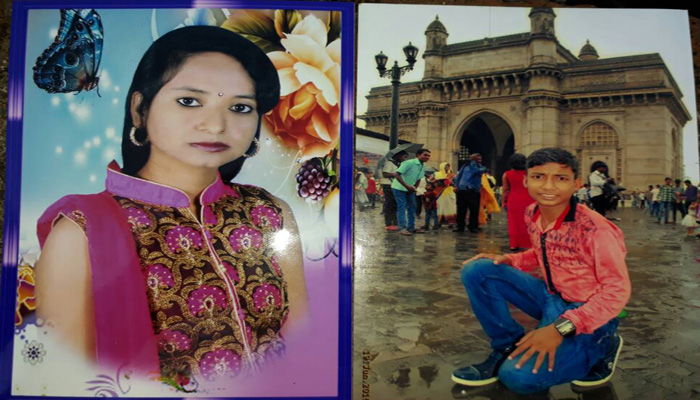
With her children, a mother also left city to make them doctor, engineer

0

Jaipur: Meet Razia Begum, a new age mother, who moved on to Kota from Sikar, Rajasthan for her kids. And yes, you heard us right. Razia stayed put for six long years in Kota, so that her two kids could crack the engineering entrance examination and another the medical entrance exam to become engineers and doctor. Razia’s husband Mohammad Hussain, is a Nayab Subedar in the Indian Army. However, instead of choosing to stay posted with him, she chose to take care of children in Kota, so that they could be guided well.

“My brother Shahid Hussain, was a bright student. He wanted to become an engineer, hence he got enrolled in a coaching institute in Kota. But Abbu was posted in Punjab. Ammi didn’t want my brother to live alone in Kota, so she packed her bags and tagged me and my younger sister along with her to Kota. It was here that we did our schooling, while bhai jaan prepared to crack the entrance examination,” said Mohit Alam, the second son of Razia to eNewsroom.

Razia’s stay gets longer

So, by the time, Shahid cracked the exam, Mohit was already preparing for his engineering exams. “Despite my brother having made it to National Institute of Technology (NIT) Kurukshetra, we had to stay back in Kota. As by then we were ready to take those preparatory classes,” he recounts.

Soon after he cleared All India Engineering Entrance Examinations (AIEEE) and got admission in NIT Durgapur, Tabassum Khan, Razia’s youngest child began her medical entrance examinations. This made her stay back in Kota till Tabassum cleared the entrance exam.

Six years itch gets over

“My sister cleared the medical entrance and got admission in Jaipur’s SMS Hospital, in 2014,” he informs. Post which,  Razia returned to Sikar lead her own life. However, soon her husband got posted to Jaipur, where she is now living with him. Her sons too seem to be doing well in life. Both her sons are working in Noida — one with Honda Car and the other in a multi-national company.

Interestingly, Razia, is just a standard 5th pass. Guess, this what pushed her to leave her comfort zone for six years, just to help her kids avail the best education.

Can you move out of your comfort zone or how much you will push your limit, for the better education of your children? Drop in a line in the comment box to let us know.

Bullet Trains: The Secret Of China’s Growth

0

Kolkata: As the train route for India’s first bullet train has been identified, it is believed that India will soon have its bullet trains. Taking this opportunity, I am sharing my first experience with China’s high-speed train.

Before I begin, let me clarify that the bullet train is considered a high-speed train in China.

In May 2015, when I landed in Beijing and was trying my best to get acquainted with the city, a friend of mine, Aakash Salampuriar, came to meet me. He was there on a scholarship. During our meeting, he asked, “Did you check out the high-speed train?” I replied, “You mean the bullet train? No, not yet.” To this, he said, “You should. When you travel by China’s high-speed trains, it will be an unforgettable experience.”

It took me a fortnight to make my first trip on a high-speed train, but it turned out to be a significant one — from Beijing to Shanghai, as I had to visit Wuxi, a city in Jiangsu province. Wuxi is only 117 kilometers away from Shanghai and, due to its rapid growth, is often referred to as “Little Shanghai.” Wuxi and Suzhou, two neighboring cities, host offices of all the Fortune 500 companies.

My company’s human resources representative accompanied me to the Beijing Nan (South) station. Upon arrival, I realized that navigating the enormous and crowded station alone would have been challenging. Entering the station and reaching the platform seemed like a daunting task.

Beijing Nan station, inaugurated in 2011, serves as a hub for trains traveling to every part of China. The cleanliness of the station stood out, especially considering that around a lakh (100,000) commuters use it daily. Reports suggest that approximately 2.2 lakh (220,000) people travel daily between China’s national capital and its financial capital using high-speed trains.

The cleanliness is maintained by two contributing factors: the tireless efforts of the cleaning staff, who work round the clock, and the disciplined behavior of travelers, who ensure their waste is disposed of in the numerous dustbins installed around the station.

High-speed trains reduce travel time to one-third of what regular trains take, and as a result, they primarily feature chair cars to accommodate more passengers and allow for quicker reservations.

Tickets between Beijing and Shanghai are priced at RMB 550, which is quite reasonable considering the reduced travel time. The ticket includes a QR code and the traveler’s name printed on it.

Interestingly, passengers can enter the platform premises only 15 minutes before the train’s departure. Anyone arriving less than five minutes before departure will not be allowed in, even if the train is still at the platform. However, tickets can be exchanged for the next available train without any fare deduction.

Upon entering the train, stewards, dressed as professionally as airline cabin crew, warmly welcome passengers. As expected from the clean platform, the train’s interiors, including the coaches and toilets, were spotless. Staff members were available round the clock to ensure cleanliness throughout the journey.

Now, for the most crucial aspect: speed and travel time. The maximum speed during my journey was 309 kilometers per hour. At such speed, the external view from the window becomes the only indicator of the train’s velocity. The train covered 1,200 kilometers in just 5 hours and 10 minutes to reach Wuxi, while it takes 5 hours and 30 minutes to reach Shanghai. Delays are rare and usually last no more than 5 or 10 minutes.

To put it into perspective, the distance between Delhi and Howrah (1,400 kilometers) could be covered in less than six hours with such trains.

China has a high-speed railway network spanning approximately 20,000 kilometers, connecting all provinces. On January 6 this year, China unveiled the world’s longest high-speed railway line, stretching 2,760 kilometers between Beijing and Kunming, the capital of Yunnan province. This journey now takes only 13 hours to complete.

After leaving the train, I had only one thought: if such a facility were available in India, it would save so much time that could be utilized for more productive activities. Currently, Indian trains not only take significantly longer but are also frequently delayed.

It’s no surprise that most people in China prefer high-speed trains. They eliminate lengthy check-ins and security procedures, allow unlimited luggage, and offer a fast, comfortable journey.

It will be fascinating to see how bullet trains reshape lives in India once they are introduced.

A cup, to conserve water, thanks to ‘water man’ doctor

0

Kolkata: Recently, Aamir Khan, launched the anthem Ala Toofan, for his pet project – The Satyamev Jayate Cup, an initiative by The Paani Foundation, that aims at maximising watershed and water conservation. The second edition of this competition– Water Cup is all set to kickstart on April 8, 2017. The tournament, which started off with a modest 3 districts participating in 2016, will be witnessing 30 districts participating this year.

The nation, has gone gaga over the motivational anthem, but do you know the man who motivated Mr Perfectionist to kick start this unique tournament? Meet, Dr Avinash Pol, a dental surgeon by profession and a water conservationist by passion.

The water man

A 43-year-old dentist hailing from Satara, Maharashtra, is busy travelling to various districts, building up the tempo and even handpicking a few villagers to be trained for the tournament. It took a good five days to get a slot of 15 minutes for this interview. “The tournament is about to take place. It’s getting more hectic with every passing day. Every morning I have to do shramdaan for two hours at Ajinkyatara, then attend my patients in the hospital post which I have to do work related to this tournament. At the moment I am in Sholapur and am busy doing the groundwork,” he says.

What is this Ajinkyatara and shramdaan, he is asked. To which he says, “This is where I began my journey as a conservationist. On January 12, 2013, in response to an appeal made by a local newspaper to clean the fort’s premise, I reached Ajinkyatara, a Maratha fort in Satara district. Two more people turned up in response to this advertisement. Since then, it has become a daily practice for me and them to reach the spot by 6:30 in the morning and toil for two almost two hours to clean up the fort premise. By the way, with time, our team is now a 40-member team.”

Recalling his journey  Dr Pol shares, “When I began practising in Satara, most of my patients complained about none of the government plans being implemented. They also complained of water crisis. So, one day, one of my patient asked me to attend a gram sabha related to public toilet. To my surprise not many turned up. However, that didn’t deter me from helping those villagers set up public toilets.” He laughs, and says, “Believe me I didn’t have to shell out a single paise to help them. All I did was, help them avail benefits from government schemes.”

Every government has policies to resolve water issues

Two decades back, this was how, Dr Pol began his humble journey as a social crusader. However, with time, he noticed that the problem of water scarcity, was increasing.

He reveals that any government, be it the Congress, BJP or any other political party at the centre, all set aside funds for the drought hit areas. “There are many government funds, but mediators to make them reach where needed is rare. So, I took it upon myself to be that missing link. I used to scan newspapers for news related to water conservation. I was also toiling two hours on daily basis, with my group at Ajinkyatara Fort. Our efforts, were already paying rich dividends, my group had grown. It comprised of a healthy group of 40 people, who without any communication or reminder reach the fort at 6:30 pm sharp, for the two hours shramdaan, as we call, for the betterment of the fort,” he adds.

His tale travels

His work was now and the changes he was bringing about in drought prone Satara district, was making people take notice of the silent revolution that he had brought about. One day, an official from his village introduced, him to a person called, Satyajit Bhatkal, who had come to know about his work and plan. A few days later the man was back, but this time with his crew. “Satyajit shot a documentary of the work that we were doing to conserve soil and water at Ajinkyatara. He showed my work to Aamir, who called me over for a lunch. He told me that he wanted to do something for drought prone areas. But I dissuaded him from giving grants or funds to the villages. They didn’t need money. What they needed was direction and guidance on how to conserve,” Dr Pol recalls.

That was when the idea of hosting the Water Cup took place. So, what is this water cup all about? Do people play matches? Well, for the uninitiated, Satyamev Jayate Water Cup, is a competition, held in Maharashtra, under the aegis of Paani Foundation, a non-profit organisation run by Bollywood star Aamir Khan, that aims at addressing drought issues in Maharashtra.

The Water Cup

The Satyamev Jayate Water Cup, Season 2, is a competition with a difference. During this contest, spanning over a time period of 45 days, participating villages work for watershed management and water conservation. The best performing village wins a trophy, and a prize money of Rs 50,00,000.

So, now with so much of a change coming in, does it mean that his work is done? “This is just the beginning. Helping out 70 villages till now is too little. When we will be able to eradicate this issue of water scarcity, from India, then the job will be done. But we will be able to achieve this, only if every single citizen is motivated to bring about a chance. Remember, no policy, no fund can bring about the change, unless, we get involved.”

So, are you ready, to contribute? Let’s just begin by not wasting water. What say?

Ambulance Dada: India’s new Padam Shri

0

Kolkata: He is simple, and speaks broken Hindi. He earns only Rs 4000 a month and sets aside one-fourth of his earning for public service. He bikes down beaten tracks of Jalpaiguri to reach hospitals on time. Meet the now Padma Shri Karimul Haq or the fondly called Ambulance dada, who has been selflessly ferrying patients from in and around his village Dhulabari to the hospitals in Jalpaiguri and Siliguri for the past 15 years.

Be it late at night or early wee hours, Haq doesn’t bat an eyelid when he gets a call from those in need. He has crossed rivers, fended off bears and elephants while traversing the jungles with patients tied on to his back as he sped off to the nearest hospitals, which of course is, miles away from his village. But none of the difficulties faced has made him say no to a patient calling him in need.

But, the selfless man has no idea about the importance of fourth highest civilian award in India— Padam Shri, which has been given to likes of Virat Kohli this year.

“I don’t know what this award means. It must be a huge one. A lot of people are calling me. Even the SDO has congratulated me. Babu (the owner of the tea garden he works for) has called me and hugged me. All that I know is that I am just serving the people of my area. I don’t want anyone to lose their loved ones,” he says, as he is getting his bike refuelled at a petrol pump after ferrying a patient.

Haq had lost his moment, on a fateful night. The fact that he couldn’t afford to hire an ambulance for his mother, somehow hit him hard. “One day, one of my co-worker, got injured in the tea garden. So, I had to rush him to the hospital on babu’s bike. That gave me an idea – a bike could be used as a makeshift ambulance. I took a loan and brought a bike, circulated my number to nearby mosques, temples and clubs, so that people knew that I was there to take their loved ones to hospital when needed.”

It was definitely not an easy journey for him. The phones kept ringing and with time more and more people began seeking his help. Till date, he has reached out to 4000 patients from in and around Dhulabari. “I set aside Rs 1000 from my earning. But that also used to run short. People that I take to the hospital are also poor. But that never stopped me from discontinuing my 24×7 ambulance service. And as time passed by, I from Karim, graduated  to being known as ambulance dada,” he says with great simplicity.

When he is asked, didn’t it ever pinch him that being a poor man himself; he shouldn’t be setting aside that amount? His answer leaves you bowled. “Didi, obhaab, to shob shomai thakey, taar maaney noi je aami karor shahojjo na kori (Crisis is a way of life for us. It in no way can stop me from helping someone). I have never cringed shelling out that money for my people,” he says.Haq, in these 15 years of selfless service has even taken a training to provide first aid. “I can take care of small medical issues, had to get myself trained. Now, things are getting better for Ambulance dada you see. Bajaj Motors has even gifted me a bike with a makeshift ambulance,” he adds.

On being asked, what now? He says, “I have dedicated my life to those in need. Even I don’t get many volunteers to help me. My son pitches in when I can’t handle a case all by myself. To kya? Kobi guru bola na ekla cholo re… tai korchi, dekho (So, what if no one comes to my call, as Tagore said, Ekla Chalo re).

Guess that is what has kept Ambulance Dada going, who has even dedicated his Padma Shri to the people of his region, to the people of Bengal.

More power to people like him!

The Unbelievable Nail Houses In China

0

Kolkata: Have you ever heard of China’s ‘nail houses’ — or dingzihu, as they are called in Mandarin? These are not architectural wonders or historical relics, but ordinary homes that have become extraordinary symbols of defiance — standing alone, stubbornly, amid sprawling construction sites and gleaming new cities.

The term nail house was coined because, like a nail that refuses to be hammered down, these houses remain firmly in place even as bulldozers roar around them. Their owners refuse to move, rejecting compensation offers from developers they consider unfair. As China’s cities have expanded at breakneck speed, nail houses have become a striking, almost poetic, counterpoint to the country’s relentless urbanization.

A Boom That Bulldozes Everything — Almost

Anyone visiting China can’t help but be awed by its infrastructure revolution — from six-lane highways and gleaming skyscrapers to its world-class rail network. The BBC once noted how China’s massive investment in transport and infrastructure has been one of the key drivers of its economic power. According to a McKinsey & Company report published in 2016, China spends more on infrastructure annually than North America and Western Europe combined.

But this astonishing development has also created countless stories of displacement and dissent. As cities expanded, millions of people were relocated from their ancestral homes. Most accepted the government or developer compensation and moved on. But a few — often small shopkeepers, farmers, or elderly residents — refused to yield, demanding fairer deals. Their refusal has left these solitary structures marooned in the middle of highways, construction pits, and shopping malls.

Defiance in the Face of Pressure

Developers, eager to meet deadlines and avoid financial losses, often resort to extreme tactics — cutting off water and electricity, digging trenches around the property, or building mounds to isolate the house. Yet, many nail house owners endure the hardship for months, even years, believing their land’s value — and their dignity — is worth fighting for.

One of the most famous examples was in Chongqing in 2007, where a single brick house stood defiantly atop a 10-meter-deep construction pit for weeks while excavators worked around it. The image went viral worldwide, turning the family into folk heroes of resistance. Eventually, after lengthy negotiations, they secured a better compensation package — and a small moral victory against the might of modern China’s development machine.

Shanghai’s Stubborn Shadows

When I lived and worked in China, I witnessed these striking images firsthand — especially in Shanghai’s Guangfuli area, where nail houses seemed to sprout like acts of rebellion amid glass towers and luxury apartments. Locals told me that the phenomenon had existed for over a decade and was only becoming more common as land prices soared.

The sight of a single home surrounded by a sea of cranes and scaffolding evokes mixed emotions — admiration for the owner’s courage, but also melancholy for a way of life being erased by concrete.

A Global Phenomenon, but Uniquely Chinese

There have been rare examples of similar resistance in the United States, Japan, and Switzerland — lone houses whose owners refused to sell out to developers. But nowhere has the phenomenon reached the scale or symbolism it has in China.

Because here, a nail house is not merely a property dispute. It is a story about belonging, identity, and the right to say no — even when the world around you insists on moving forward.

So, if you ever visit China — perhaps to marvel at its bullet trains or neon skylines — look closer. Somewhere between the glittering towers, you might still find a lonely little house, clinging to the earth it calls home. A stubborn nail refusing to be hammered down — reminding the world that progress is never just about what is built, but also about what refuses to be erased.

Geeta Phogat: The Girl Who Wrestled Taboos

0

Kolkata: She loves taking selfies. She loves posing for the camera and yes, she loves her coloured tresses just like any girl of her age. But then, there was a time, when she had to sacrifice it all – chocolates, golgappas and even her lovely long tresses for a dream that she and her father had together dreamt of on a sunny after when wrestler Karnam Malleshwari won a bronze at the 2000 Olympics in Sydney. Meet Geeta Phogat, the wrestler, who has been making to the headlines, too often now.

Yes, you are right, we are talking about Geeta Phogat, the poster girl of Indian wrestling today. And whom the story of Amir Khan starrer Bollywood movie Dangal is based on. Born in a typical Haryanvi family, in a sleepy town called Balali in Bhiwani, that none had heard of till a certain Geeta reached the wrestling mat and won gold for India at the 2010 Commonwealth Game. And the journey of her and ‘papa’ Mahavir Phogat has definitely not been an easy task.

Difficult but not impossible

“It definitely has been a difficult path for my papa as it was he who faced all the ridicule and criticism. We were just kids, who were merely following the dictates of our father, who has been one of our toughest coaches,” recalls Geeta, who is taking part in Pro Wrestling League, going on since January 2, 2017. On being asked if her father was really haani karak as in?

To that she chuckles and says – “Yes, to a certain extent. He didn’t let us go off easily just because we were girls. Even till date, he is very critical of the game we play. We were severely reprimanded each time that we performed badly. In fact we dreaded it.”

Band, baaja and baraat

Geeta, who got married in November reveals that she till date hasn’t been able of enjoy quality time with her husband Pawan Sharma, a wrestler too. “We haven’t been able to enjoy quality time together post marriage. We first had Dangal’s premiere to attend and now we are busy preparing ourselves for the ongoing Pro Wrestlers League. But, once it is over, we plan to go for our much delayed honeymoon.” She adds, “I am having a great time, success, money and now a happy married life. God has been kind.”

Geeta Phogat

So, what now? “Well, there is much to achieve. I have a mission now, you see. And that is Olympics 2020. I had somehow missed out this time. But, now that I have set my goal, I have begun my training.”

Geeta’s Rio regret

But wasn’t she disqualified from Rio Olympic 2016, as she didn’t participate in the repechage bout in Mongolia? “Well, I did so in full knowledge of my coach, as I was trying to save myself for the last chance in Istanbul as I was already of the race in Mongolia. But then I should have at least given a reason. I guess that upset many and hence Sakshi was fielded and she did a great jop. But as for me I am pinning my hopes on Olympics 2020.’’ Geeta feels that age won’t affect her performance if she remains fit and injury free. “Age is just a number. There are many international wrestlers who fight even in their late thirties.”

Geeta, is representing UP Dangal in Pro Wrestling League, a new entrant in this league, this year. On being asked, why not Haryana, she cheekily quips, “May be Haryana didn’t want us. But on a serious note, the owners should be asked why not even one of us has been taken in the team.” By us, she means the Phogat sisters and Sakshi Mallik.

Controversy and more

As we wind the interview, pop goes the question – your coach P R Sondhi, is quite upset with him being shown as the villain in the film, how true is the climax of the film?

To that she quips, “Well, in the film, he wasn’t named. There are so many coaches who trained us back them, he shouldn’t take it personally. It’s a film and many a time filmmakers take certain liberties. But I must clarify, my father wasn’t locked in the room during the finals, in fact he had witnessed me win. But yes, my dad had given us parallel training during the Commonwealth Games and was barred from entering the training area.”

Ritu Phogat: Queen of the Rings

0

Kolkata: She is just 22, but her moves are not that of a novice when on the mat. And guess what? She was bought for a whopping Rs 36,00,000 by her team Jaipur Ninja for the ongoing Pro Wrestling League 2017 championship. In fact that makes her the most expensive Indian wrester at the League. Well, we are talking about Ritu Phogat, the third of the Phogat sisters. Ritu Phogat is carving a name for herself. In an interaction with eNewsroom the latest Phogat on the wrestling match opens up about wrestling, women and much more.

Excerpts:

eN: What is it like to be one of the Phogat sisters?

Ritu: Well, to be honest, I have never thought along this line. But yes, being a Phogat, undoubtedly puts a great deal of pressure on me to perform. As, I have a legacy to follow. Not that I mind, but then also, at times the comparison does become a bit taxing.

eN: Of the two, whom do you admire the most – Geeta or Babita?

Ritu: Now, that’s a tricky one. I take the best from both of them. But now that you have asked, even Babita would agree. I guess, it has to be Geeta, as she had already paved the way for us. We just took a cue from her and followed the path that she paved for us. Believe, me it was much more easier for me that it was for her. Papa ki daant to sabse zyada usney hi khayee hai na (She has had to face most of Papa’s wrath)

eN: Why are all of you sisters in so much of an awe of your dad, even now?

Ritu: Well, that’s because whatever we are it’s because of him and his vision of making us do the unimaginable. Also, I must add, papa is really strict, even today. In fact, I am yet to come across a coach who is as strict as him.

eN: Coming back to the League, the fact that you are the highest paid woman wrestler in this league, does that add on to your pressure?

Ritu: Well, yes to a certain extent. The fact that bought me at this high a price means that they have tremendous faith in me. Hence, I will definitely give in my best to my team and I am very hopeful that Jaipur Ninja’s will win.

eN: Rajasthan and Haryana are neighbouring states and when it comes to women, they both don’t have that good an image. Your take?

Ritu: Time is changing and today, women are capable of doing anything. Look at us, we sisters have made a name in a game that till date is considered to be a male bastion. But then things are changing. People need to understand that daughters as good as sons and they should give their daughters a chance just like our papa gave us.

eN: What will it be like to fight with your own sisters on the mat?

Ritu: We do that daily, and she laughs, hahahaha. But on a serious note, during the league matches I don’t have a single opposite them as I am fighting under the category of 48 Kilo. But yes, if we ever get to fight, it will be interesting and easy as we know each other’s weaknesses too well.

eN: What’s a typical day in Ritu Phogat’s life?

Ritu: Well, it’s hectic. I have to wake up at four in the morning. Practice for 3 hours and then comeback home and rest. You know what? Papa, till date reaches the ground before us .Again in the evening we practice for a good three hours. My meal is very simple and uninteresting – dal, chawal and curd. In breakfast, till date we get juice and almond shake made by papa. Any day is really hectic, especially in Balali. In fact, when I am in my training camps, I feel more relaxed. Papa is a really tough taskmaster.

eN: What plans for Olympics 2020?

Ritu: Oh Boy! The training is already on. And it’s getting more difficult with every passing day. Now that Pro Wrestling League is on, Olympics training has taken a back seat. But let this get over… I am training even harder as my dream is to get a Gold in Olympic for India.

Kamalika Follows Deepika Padukone’s Foot Step

0

Kolkata: After Deepika Padukone, setting up The Live Love Laugh Foundation, Television actress, Kamalika Guha Thakurta, is all set to heal survivors of mental and physical trauma (domestic violence, physical mental abuse, health issues). Her venture Artscape aims at healing souls through performing arts. The actor has played myriad roles on Indian television – right from Gayatri Virani of the iconic Kyunki Saas Bhi Kabhi Bahu Thi to Guru Maa in Naagin, Following are excerpts from the interview:

eNewsroom: What is Artscape?

Kamalika: Artscape, is an initiative of mine, which uses performing arts to heal survivors of trauma – physical or mental.

eNewsroom: How does Artscape work?

Kamalika: We use different types of art forms (meditation, music and dance)  to develop individuality, enhance communication skills and instill a sense of confidence in these survivours.

eNewsroom: Tell us something about your Kolkata connect?

Kamalika: I was  born in a Bengali family of musicians and actors in Kolkata, which pushed me into being a lot more involved with performing art.

eNewsroom: Tell us about your association with the Srijon Foundation.

Kamalika: We set up Srijon with a vision to carry forward our cultural heritage. The focus, however, is to both promote and preserve the legacy of Rabindranath Tagore, both in Kolkata and Mumbai.

eNewsroom: What kind of survivours are you working with?

Kamalika: Artscape, is for survivours of physical and mental trauma. Our sessions aims at providing emotional support through our sessions.

eNewsroom: How do you balance your other passion –TV with Artscape?

Kamalika: The two are very different from each other and requires a lot of time management and efforts to manage effortlessly. Since I feel passionately for both, I don’t mind putting in that extra effort.

eNewsroom: Wanted to check your views on how television has changed today?

Kamalika: In these 19 years in the Television Industry I have witnessed the industry undergoing a sea of change. A number of channels and digital space opening up these days, hence a lot more work available to the actors. But, over the years, the industry has become impersonal and more demanding.

eNewsroom: We heard that you have recently shot for some serial in Rajasthan. Tell us something about it.

Kamalika: I had a great experience shooting in the deserts in Rajasthan. It is a new show for a leading Hindi Channel, but can”t share more details because of the confidentiality clause.