
Journalists Assaulted By Kolkata Police During Left Rally

Date:

Share post:

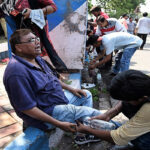
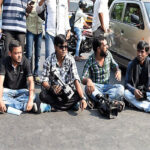
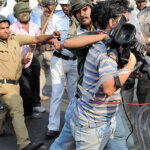
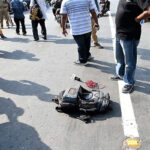
Kolkata: On Monday Kolkata turned into a battlefield when police lathi charged on Left supporters and journalists reporting on Left rally, which was organized to protest outside Nabanna, Mamata Banerjee’s office. The police not only resorting to using tear gas to disperse the rally participants but also resorted to mercilessly assaulting the journalists, which resulted in injuring at least a dozen newsmen. Some of the cameras were also smashed. One of the photojournalist who was assaulted said, “We were just doing our job. Why were we beaten blue-black for doing our work?” The attack has lead to a mass protest, with mediapersons organising a silent march from Rabindra Sadan to Lal Bazar Police station to condemn the attack on media, on Wednesday. Picture Credit:- Tanmay Bhaduri
Related articles

The Netaji We Don’t Talk About: Secularism, Socialism and the Fight for India

Was Netaji Subhas Chandra Bose really opposed to Jawaharlal Nehru? Vidya Bhushan Rawat’s book revisits their political relationship while exploring Netaji’s commitment to secularism, socialism, democracy and a pluralistic India.

Taken From Home, Heard From Bangladesh: Bengal Man’s Family Seeks Answers

Months after Abdul Rahim was allegedly detained in Uttar Dinajpur, his family heard his voice from Bangladesh. Two phone calls brought relief that he was alive, but also raised a frightening question: how did a man taken into custody in Bengal cross the border?

Democracy or Deleted? Rahul Gandhi Takes the Voter-List Fight to the Streets

Rahul Gandhi’s confrontation with the Election Commission over SIR has moved from Parliament to the streets. As Congress expands its protests over alleged voter deletions, the BJP challenges its claims, turning the electoral-roll dispute into a wider battle over institutional credibility and democracy

When “Why?” Becomes a Threat: Is West Bengal’s Democratic Space Shrinking?

West Bengal’s recent clashes over classrooms, universities, the press and cultural institutions raise a larger question: what happens when political power enters spaces meant for independent thought? The incidents may not be connected, but together they reveal how easily institutional autonomy and dissent can come under pressure.