The River of a Billion Lives: Vidya Bhushan Rawat on Sacred, Polluted and the Future of the Ganga

0

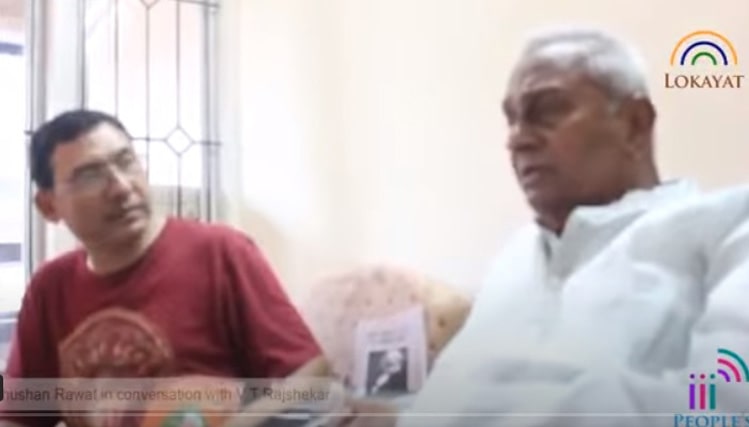
Kolkata: Vidya Bhushan Rawat, a dedicated activist, author, and filmmaker, has spent the last three decades working with marginalized communities. His commitment has taken many forms—from conducting padyatras (foot marches) for social causes to delivering lectures, conducting interviews, and producing documentaries. Recently, he achieved a rare milestone: traversing the Ganga from its source in the Himalayas to its mouth in the Bay of Bengal. This journey, which began in September 2021, marks three years of documenting the environmental, cultural, and historical dimensions of India’s most revered river.

Rawat’s extensive work includes numerous documentaries capturing the essence of this journey, and with over 25 published books to his name, his forthcoming work on the Ganga is highly anticipated. On the very next day after completing this extraordinary Ganga yatra (journey), he spoke to eNewsroom, sharing his reflections with a calm demeanor, yet at times brimming with excitement—much like the Ganga itself. Here is an excerpt from that conversation.

eNewsroom: Why did you decide to travel along the Ganga River?

VBR: Being a native of Uttarakhand, my love for rivers and mountains comes naturally. The first time I saw the Ganga was in 1978, when I was just a ten-year-old child. I had traveled to visit a relative’s house in Muni Ki Reti, Rishikesh, and was mesmerized by the beauty of the river. The water was a stunning green, pure and serene. Sitting on the bank and watching the calm flow of the river brought me immense joy.

As I grew older and moved to Dehradun for my studies, visiting Har Ki Pauri in Haridwar became a regular activity. I also knew that in our family, as in many others, it was customary to cremate the deceased on the banks of the Ganga in Haridwar. Even after I migrated to Delhi in 1991, my connection to Uttarakhand remained strong because of my deep love for its natural beauty.

Two decades later, I saw a powerful art exhibition by Ambedkarite artist Savi Savarkar at the Lalit Kala Academy. One of the paintings, titled Debrahminising the Ganga, made a lasting impression on me. However, the real spark for my Ganga journey came after I traveled to the upper Himalayan region of Uttarakhand in 2021, shortly after the Covid-19 lockdowns. I witnessed the mountains being exploited and saw muck flowing into the river. This inspired me to create a short 10-minute video titled Ganga Tum Behti Raho, which was well-received by many of my friends.

river ganga ganges environment yatra culture climate uttarakhand
Ganga in Uttarakhand | Credit: VBR

Having undertaken several padyatras in Uttar Pradesh and Uttarakhand, I began discussing the idea of a boat journey or an exploration of the Ganga. However, logistical and financial challenges made it difficult to realize at the time. Eventually, some friends offered to support my initiative to document the Ganga and the environmental crises it faces, particularly in Uttarakhand. This support helped me begin the project in earnest.

As I delved deeper into the river’s story, I realized that merely documenting the Ganga’s tributaries in the Himalayas would not be enough. I felt compelled to continue the journey all the way to the Bay of Bengal. Although I initially thought the challenges in the Himalayan region were the toughest, I found the low-lying Gangetic plains even more difficult to navigate.

In September 2021, I began my journey with a trek to Gaumukh from Gangotri, covering not just Uttarakhand but also the Yamuna Valley, Tons, Mahakali, and other regions. I traveled through Uttar Pradesh, Jharkhand, and West Bengal, completing the journey from Gangotri to Ganga Sagar. This journey has not only been a fascinating exploration but has also deepened my understanding of people, nature, geography, and the crises faced by both the rivers and the communities living along them.

eNewsroom: How significant was your journey in the context of Indian culture, given that civilizations in India grew around the Ganga?

VBR: For Hindus, the Ganga holds immense religious and spiritual value. To most, she is Maa Ganga. In the Uttarakhand region, however, she is known as Shailputri, the daughter of the Himalayas. Unfortunately, over the last few decades, the Ganga has been reduced to a symbol for rituals, often disregarding her dignity and sanctity. For me, it was equally important to look beyond her religious aspect and understand what draws us to the Ganga. Why is she Maa Ganga for everyone? In this sense, the journey has been profoundly educational for me.

Starting from the Himalayan region, I witnessed firsthand that the area is the abode of both Shiva and Buddha. Shaivism and Buddhism flourished in these mountains, nurturing a liberal cultural value system where man-woman relationships were more open and democratic. The priesthood was not as dominant here, but as the Ganga flows down into the plains, we see the increasing ritualization of the river and the cultural dominance of Brahmanism. More rituals led to more pollution in the plains, where few seemed concerned about the health of the river.

The Ganga is not just a source of religious and cultural fulfillment; it has also been a witness to the growth of various cultures and civilizations in India. Empires and kingdoms flourished along its banks, contributing glorious chapters to Indian history. King Jai Chand of Kannauj, vilified in history textbooks by Brahmanical historians, was actually one of the greatest kings of the region. Before him, King Harsha’s empire also thrived along the Gangetic belt.

river ganga ganges environment yatra culture climate heritage bengal
The historic Imambara of Bandel and the back side the Hooghly passing towards Kolkata | Credit: VBR

One of the most outstanding architectural works that has stood the test of time is Chunar Fort. The Ganga looks magnetic here, just before it reaches Kashi, where it becomes even more beautiful and intensifies the spiritual energy of the people, as millions come to bathe in her waters and worship Lord Shiva. The Ganga also witnessed the anti-Brahmanical and humanist values of legendary saints like Raidas and Kabir. Furthermore, one cannot overlook the importance of Sarnath, which holds immense significance for Buddhists worldwide.

Pataliputra, the capital of the great Ashoka, was located on the banks of the Ganga and its five tributaries. Although Patna city has shifted farther away, it is said that the original city lay on the banks of these five rivers. Today, Ganga, Ghaghara, Sone, and Gandak are still in close proximity to the city. Moreover, we cannot forget that Patna is also the birthplace of Guru Gobind Singh, the 10th Guru of the Sikh religion.

Another significant Buddhist center of learning along the Ganga was Vikramshila, one of the greatest universities after Nalanda. Between Bhagalpur and Sahibganj in Jharkhand, there are numerous Buddhist sites. Rajmahal, a town in Jharkhand situated along the Ganga and the Rajmahal hills, was once the capital of undivided Bengal, which included Bihar, Jharkhand, and Odisha. This designation was made by Raja Man Singh, one of Emperor Akbar’s most trusted generals, who was appointed Governor of Bengal. Today, Rajmahal is home to the beautiful Baradari and Juma Masjid, a mosque built by Raja Man Singh.

In Bengal, the Ganga’s journey is breathtaking and relatively unexplored by outsiders. The region is steeped in history, with remnants of Buddhist architecture in Gour, the pre-Mughal capital of Bengal. In Murshidabad, the capital during the Mughal period, we have the iconic Hazarduari and other stunning structures, all situated on the banks of the Bhagirathi. At Nabadwip, the birthplace of Chaitanya Mahaprabhu, the Bhagirathi meets the Jalangi River and is thereafter known as the Hooghly. At places like Bandel, Chandernagore, Hooghly, and others, we see a rich mix of Mughal, Portuguese, Dutch, French, and British architecture. The British played a significant role in developing the Hooghly river network, and many of the bridges and buildings they constructed are still in use by the administration today. The old Rajbaris and remnants of the zamindari system in Bengal tell their own tales. Interestingly, the zamindars in Bengal were not Rajputs but Brahmins, Muslims, and Kayasthas.

So, from the Himalayas to the Sundarbans, the Ganga is not just a river—it is the lifeline of India, shaping our civilization and giving us our identity. It nurtured the most fertile lands, supported fishermen and folk communities, and inspired enchanting music, like that of Bismillah Khan, created on its banks. The Ganga is our heritage, and we must not only respect and revere it but also protect it.

eNewsroom: How important is this journey for understanding climate change and environmental issues, especially considering that rivers like the Ganga, which impact billions of lives, are neither as clean nor as vast as they once were?

VBR: Yes, this is one of the most critical aspects of the journey. The rapid melting of glaciers is a tragic reality. This year, we saw many mountains without snow as early as May, which was heartbreaking. In addition, extreme weather conditions, floods, and increased forest fires are contributing heavily to disasters. As I traveled through the Gangetic plains, it was disheartening to see the lack of awareness regarding the protection of the river. From the lower parts of Haridwar, you can already see large sandy patches as the river grows narrower and narrower. Floods deposit silt and sand, which enter our fields in many places, devastating the agricultural system.

river ganga ganges environment yatra culture climate varanasi kanpur buxar
From Varansi to Kanpur to Buxar, Rawat found factory nalas, filth, garbage being thrown out in the river

At Kannauj, a farmer told me that there’s more profit in reti (sand) than in kheti (farming), meaning they’re now more involved in sand mining than agriculture. Sand mining is rampant in Uttar Pradesh and Bihar, and it’s leading to greater environmental damage. I must be honest in my assessment: I’m witnessing the desertification of Uttar Pradesh and Bihar. Every year, the rivers—Sarda, Ghaghra, Kosi, Gandak, and Ganga—bring floods that result in widespread destruction. The water level of the Ganga is low in many places, causing it to split and widen. Summers are becoming increasingly hotter. The water quality at Kanpur, Varanasi, and Patna is extremely poor; it’s not even fit for bathing.

As the Ganga enters Bengal, it becomes larger because it’s a low-lying area, but this also means floods wreak havoc on the lives of common people, with water everywhere.

The quality of Ganga’s water is a serious concern, and it should worry not just the authorities but every citizen. All efforts must be made to ensure that no sewage flows into the river. Municipalities and village Panchayats along the Ganga and its tributaries must be empowered to penalize industries that discharge chemical waste into the river. But it’s equally important that these local bodies should also be held accountable and penalized if they fail to stop the sewage from entering the river in their jurisdictions. Religious leaders must educate devotees about the importance of not throwing waste into the river. Disposing of old clothes, waste, plastics, flowers, and other items into the Ganga must stop. Bathing in the river should be regulated, and personally, I would request devotees to refrain from it. Instead, they can worship the river by taking a sip of the water and sprinkling it. That would do a great service to the nation.

I’m always amazed by the duplicity of people who claim Ganga is Maa and yet pollute it by spitting in the river and bathing in it as if they have never taken a bath at home. Taking a dip should fulfill a spiritual need, not turn into a “watersport.” If we continue to spoil our water bodies, we will ruin our sources of clean water. Ganga’s water is considered pure, and it is our national duty to protect it, not pollute it. We must remain vigilant because if Ganga’s pollution is not addressed, it could trigger a massive civilizational and environmental crisis for India.

eNewsroom: What have you learned from this journey? Did it challenge any of your preconceived notions about rivers, particularly the Ganga?

VBR: This journey has strengthened my belief that no journey is ever truly complete. It has given me new insights and made me realize how the Ganga has witnessed the growth of countless civilizations, kingdoms, empires, and contributed to literature, art, and culture. To be honest, I had no idea how vast and complex the river’s journey was. We’re typically familiar with names like Haridwar, Kanpur, Allahabad, Varanasi, and Patna, but there is so much more. Most North Indians don’t even know that the Hooghly is part of the Ganga, and in Bengal, the name Bhagirathi carries deep cultural significance. Many people in Bengal refer to the Hooghly simply as Ganga.

I also had the misconception that the river would feel lifeless after Kanpur, but I was wrong. I didn’t realize that Bihar has some of the most beautiful places along the Ganga. Munger, Bhagalpur, and Kahalgaon are breathtakingly beautiful and should be promoted more. I had no idea that Vikramshila, one of India’s greatest ancient universities, was located on the banks of the Ganga. Another revelation was the historic town of Sahibganj in Jharkhand, which truly opened my eyes. The journey from Sahibganj to Manihari by ship was unforgettable, and I was amazed to see large cargo ships sailing on the Ganga, especially in Bihar. It was an incredible experience to take a 45-minute journey on the river with my car aboard one of these ships—it showed me just how vast the Ganga truly is.

The Ganga in Bengal is particularly complex in terms of its branches, both tidal and non-tidal, which helped me gain a deeper understanding of the region. I wasn’t aware of how intricate the river system was. For a long time, I was confused about the origin of the Hooghly, thinking it began at the Farakka Barrage. But visiting Giria in Murshidabad, where the Hooghly begins, cleared up that confusion. Along the way, I encountered so many palaces, temples, mosques, Gurudwaras, and confluences. It has truly been a lifetime experience, but I know the journey will continue. This expedition has filled me with a deep sense of gratitude and a duty to do everything I can to protect and preserve these rivers, which are not just geographical lines but also our identity and heritage.

eNewsroom: Do you believe the Ganga will lose its importance in the next 20-30 years, or will it remain central to Indian life, or possibly even gain more prominence?

VBR: The Ganga, or any river in India for that matter, can never lose its importance. If that were to happen, our civilization would collapse. We cannot even imagine life without the Ganga. Look at the fertile lands of Western Uttar Pradesh, Bihar, Jharkhand, and Bengal. Ask the fisherfolk about its significance. However, the threat remains—if pollution continues unchecked, we may be left with only sewage water, which would be catastrophic. Religious revivalism has led priests to reduce the Ganga to a mere object for rituals, without any real effort to ensure its cleanliness.

We need to understand that a cleaner Ganga will bring greater satisfaction to us all. Why do people flock to the Himalayas, Devprayag, and Rishikesh just to see the river? It’s because the Ganga there is vibrant, full of life. Its waters appear sublime—so pure and clean that one instinctively wants to drink from it without hesitation. But as the river flows into the plains, we lose that purity. In Kanpur and Varanasi, you can’t even bathe safely in the river (although people still do, unaware of the poor water quality).

It’s time to take the climate crisis seriously. The issues of the Himalayas are critical, not just for the people of Uttarakhand, Ladakh, or Himachal Pradesh, but for the entire country. The government must remain vigilant, and the state governments should also address these concerns—most importantly, with the involvement of local communities. We cannot and should not attempt any solutions without their participation, as doing so would only lead to further disaster.

eNewsroom: What are your suggestions to policymakers for the betterment of the Ganga?

VBR: In my book, I will provide specific suggestions based on my observations in each state, as there are region-specific issues. However, here are a few common points. First, hold local bodies accountable and empower them to take action against industrial units that are polluting the river. Stop the flow of drainage water into the Ganga. The Green Tribunal or municipal corporations must penalize and prosecute companies or factories that fail to act on polluting units or drainage systems that affect the river. Allocate more funds to monitoring agencies. Engage local communities and villagers in efforts to protect and preserve the Ganga.

Religious tourism needs to be regulated. The massive influx of tourists to the Himalayan region will lead to disaster, as these areas lack the infrastructure to accommodate such large numbers of people. The sanctity of places like Kedarnath and the Sundarbans must be preserved at all costs, rather than allowing religious tourism to turn into a profit-driven enterprise. From the Himalayas to the Bay of Bengal, we need to carefully plan tourism so that a heavy influx of visitors does not damage local cultures and ecosystems.

Will Rahul Gandhi’s Rising Popularity Turn the Tide in Haryana’s BJP-Dominated Political Landscape?

0

New Delhi: All eyes are on Rahul Gandhi’s Haryana election campaign as Leader of Opposition.

After becoming Leader of the Opposition (LoP), the Haryana and Jammu & Kashmir assembly polls are the first real test for Rahul Gandhi to prove that the Congress party’s improved performance in the Lok Sabha elections was not a fluke. The grand old party, leaning heavily on his campaign, is gaining momentum among the masses, especially in Haryana, where the Congress faces a direct contest with the Bharatiya Janata Party (BJP). For the Congress, regaining power in the state is crucial.

The party is riding on renewed energy from Rahul Gandhi’s growing popularity and the anti-incumbency sentiment against the BJP government. However, Rahul Gandhi’s campaign is not only about winning votes but also about uniting the state’s party leaders, who have been divided into factions—a division that has cost them victories in states like Madhya Pradesh and Rajasthan.

The Congress MP kicked off his campaign on Thursday with two major rallies in the Hisar and Karnal districts. In Karnal, where Rahul Gandhi held his first rally, he managed to bring together Kumari Selja and former Haryana Chief Minister Bhupinder Singh Hooda.

The Raebareli MP is scheduled to address around eight rallies in Haryana. Along with him, his sister Priyanka Gandhi is also expected to join the campaign trail soon.

The most critical task for Rahul Gandhi will be to maintain party unity and fight the elections as a cohesive force against the powerful BJP, which is facing 10 years of anti-incumbency. Opinion polls and election surveys suggest that Congress may have the upper hand.

It will also be interesting to see which issues Rahul Gandhi raises during the assembly poll campaign. The Agniveer scheme and the BJP’s heavy-handed treatment of youth, especially the wrestlers who were dragged in Delhi, may feature prominently. The two prominent faces of the protesting wrestlers, Bajrang Punia and Vinesh Phogat, who fought a long battle against former BJP MP Brij Bhushan Singh, accused of sexual harassment of wrestlers, have joined Congress. Phogat, an Olympian, is also contesting the election.

Rahul Gandhi has consistently raised concerns about the Agniveer scheme, challenging the government over it. The Congress has made its opposition to the scheme clear.

The results of the Haryana elections will also have a bearing on the upcoming Maharashtra and Jharkhand polls. Delhi’s former Chief Minister, Arvind Kejriwal, had earlier requested the Election Commission to conduct state elections alongside those in Maharashtra and Jharkhand. If that happens, an additional election may be on the cards. Given the situation, every move by the Leader of the Opposition will be crucial for the party and its leadership.

Bovine Politics, Human Cost: Why Madhya Pradesh’s Cow Protection Year is Making Headlines for the Wrong Reasons

0

Bhopal: After assuming office, the Mohan Yadav-led BJP government in Madhya Pradesh pledged to celebrate 2024 as ‘Gauvansh Raksha Varsh (Bovine Protection Year),’ emphasizing its campaign on cow protection and preservation. In 2020, the state also constituted the ‘gau cabinet (cow cabinet)’ the first of its kind in the nation. Besides, the central Indian state has also amended the Madhya Pradesh Cow Slaughter Prohibition Act, 2004 empowering the district collectors to confiscate vehicles to prevent illegal transportation or smuggling of cows. In a controversial move, the administration has even demolished the homes of those accused of allegedly keeping beef in their refrigerators.


Despite government measures and crackdowns, the condition of cows in the state remains dreadful. Hundreds of cows still wander the roads leading to accidents and deaths— of humans and (sacred animals). However, there is little action against those who fail the government’s campaign and public outrage remains absent.


Cow Welfare in Madhya Pradesh: Claims, Promises And Reality Checks


The Animal Husbandry Department in August reported that 93 cows have died and 295 were injured in road accidents on state highways connecting Bhopal, Raisen, Vidisha, Sehore, Dewas, and Rajgarh cities of the heartland of India. At least three cows died everyday in July. The government reported in June freeing 7,500 cows and arresting 1,000 individuals for illegal cow transportation.


The Madhya Pradesh High Court recently issued a notice to key officials seeking a response from the state on stray cattle blocking national highways. A division bench of Justice Sanjeev Sachdeva and Justice Vinay Saraf questioned why cattle are allowed to gather on roads causing disruptions. The notice came in response to a Public Interest Litigation (PIL) filed by Tikamgarh resident Swami Dev Swaroopanand who raised concerns about the dire condition of cattle hurting religious sentiments of Hindus.


Notably, in August, the Madhya Pradesh government formed a high-level committee to tackle the issue of stray cattle, launching a 15-day special campaign to address the problem.


BJP MLA Vishnu Khatri in conversation with eNewsroom said that addressing the stray cattle issue isn’t simple, especially in rural areas. The government is making efforts. Five years ago, there were no gaushalas (cowsheds) in my assembly; now, we have around 10-12. The Yadav government increased the fodder allowance to Rs 40 per cow which helps. We’ve also involved private organizations to manage some gaushalas like the Tribal community doing an excellent job.


Madhya Pradesh has around 2,000 gaushalas and 9 lakh stray cattle. Funding for cows grew 26 times from 2019 to 2024 with daily funds rising from Rs 1.5 to Rs 20 under the Kamal Nath government, and to Rs 40 under the present BJP government.


Ground realities and resource allocations


Ishika Khakre of Animals With Humanity expressed concerns over the poor conditions of cows on the roads. She identified the lack of dairy by law enforcement as the main reason cows roam the streets. Dairy owners abandon cattle after milking, unable to afford their feed. While the Gauvansh Act in Madhya Pradesh bans cow slaughter, buffaloes can still be sent to slaughterhouses leaving aging cows on the streets. Despite being revered, many cows eat garbage showing a lack of government action.


“If the government were truly active, dairy bylaws would be enforced by now. Recent attempts to relocate cows to gaushalas failed due to poor conditions—no food, sanitation, or care. The problem isn’t a lack of laws but their implementation. Our team shared dairy bylaws with authorities in December but no actions were taken until accidents increased. Now, they’re collaborating with policymakers to implement long-term solutions, urging dairy owners to take responsibility and care for their cattle,” Khakre commented.


The Hindustan Times reported that the Madhya Pradesh government diverted the funds meant for SC/STs for cow welfare. According to the report, Rs 252 crore is allocated for cow welfare through the Gau Samvardhan and Pashi Samvardhan schemes. Rs 95.76 crore of this is from the SC/ST sub-plan. The fund has grown from around ₹90 crore last year.


“This is not a permanent program. Past allocations for cow protection don’t rule out future SC/ST funding. The government addresses various perspectives and fields. While SC/ST funds aim to support their progress, development comes from multiple sources, not just these funds. Any financial shifts are temporary and will improve over time. Previous governments failed to manage gaushalas properly. People only keep cattle for milk and abandon them afterwards. We must instil a sense of responsibility for ageing cattle, similar to caring for elderly parents. Unlike the Congress governments, the BJP is focusing on utilizing resources like cow urine and dung for medicines,” Khatri stated.


Communal tension and legal ramifications


Muslim men have been continuously harassed and lynched in allegations of cow-related offences, including slaughter, smuggling, theft, and transportation of cattle perpetrated by individuals affiliated with Hindutva organizations and right-wing groups. In May 2022, two Tribal men allegedly accused of slaughtering a cow were lynched by a Hindutva mob in tribal-dominated Seoni of Madhya Pradesh. Sixty three butchered bovines were found on June 19 in the district central to the government’s crackdown. Fifty five cases were registered, 99 people were arrested, and 1,301 cows were rescued in the first half of this year.


“Various self-serving organizations and workers take unwanted actions on emotions. Especially, when there is a mob that lacks wisdom. It’s important to differentiate between cow trafficking and animal husbandry during transportation. While unwanted minor incidents may occur, the government intends to protect cows. It has implemented measures to prevent these occurrences and the law takes action in such cases. It protects innocent individuals,” said Khatri.


A livestock transporter informed eNewsroom that his vehicle transporting buffaloes was stopped by RSS last week and an FIR was filed against him. “I only transport buffaloes, not cows. My business is entirely legal yet I face harassment. Farmers from various communities such as Rajputs, Yadavs, and Brahmins bring cattle to the market. The Municipal Corporation gives a receipt when the livestock are purchased. As long as the livestock remains with the seller it is legal.


However, once buyers obtain the receipt, it suddenly becomes illegal. This has happened to me at least 10 times when my transport was seized. I even pay a monthly fee to different police stations despite running a legal business. They make false allegations of animal cruelty but I won’t quit. Why would anybody risk their life transporting cows knowing the dangers?” he questioned.


The IndiaSpend database in 2017 revealed a disturbing trend: India had witnessed 78 cow-related hate crimes since 2012 with a staggering 97% of these incidents occurring after the Bharatiya Janata Party and Prime Minister Narendra Modi came to power in May 2014. Only one incident was reported in both 2012 and 2013. 86% of the victims were Muslims. Data collected by it from 2010 onwards revealed no reported cases during 2010 and 2011.


Eleven Muslim homes were demolished on June 15 in Bhainswahi of Mandla in allegations of illegal beef trade and recovery of 150 cows and beef in their homes. The action was taken just a day before Bakrid left entire families without shelter. In another instance in June, the authorities demolished the homes of four Muslim men in Jaora of Ratlam allegedly for throwing cow parts in the temple.


By July, the state demolished 21 homes in cow-related incidents in 2024.


The Supreme Court of India on September 17 stayed the demolitions of homes including those of accused individuals until October 1. The Court emphasized that even a single instance of illegal demolition undermines the “ethos” of the Constitution. However, this order does not apply to unauthorized structures on public roads, footpaths, railway lines, or water bodies.


“The Indian Constitution and laws do not discriminate based on religion or caste. Everyone has the right to celebrate their festivals. Demolitions typically occur only in cases of illegal encroachments and proper notices should be given. Though it may seem selective in the media, encroachment is still encroachment, regardless of religion. Bulldozers should be used appropriately and within legal parameters. I certainly won’t defend the government on this. It’s the responsibility of the concerned department that encroachments should be stopped immediately, not after incidents occur, as delayed demolitions aren’t justified. Bulldozers do not target only criminals; they operate under due process. There must be planning for development to address encroachments effectively,” remarked Khatri.


Cow holds a sacred status for many Indian Hindus making it a pivotal element in political discourse. In the 2023 state assembly elections, both the BJP and Congress used cow politics to sway voters. Madhya Pradesh Cow Slaughter Prohibition Act, 2004 law strictly prohibits the slaughter of cows, calves, bulls, and bullocks in the state. It criminalizes the act of cow slaughter with provisions for imprisonment and fines. It also bans the transportation of cows for slaughter within and outside the state.


The act amended in 2019 also has provisions against cow vigilantism.


Recently, Prime Minister Narendra Modi shared a picture with a calf on his “X” account amplifying the ongoing political narrative around cow protection and its role in shaping public sentiment.


“The dairy business is rife with malpractices where cows are treated as commodities. They’re often separated from calves to maximize milk output, and illegal drugs like oxytocin are used in 80% of dairies to boost milk production. Despite this, the government slot online ignores these issues while major players like Amul monopolize the industry, even classifying alternatives like soya milk as beverages. Instead of stricter actions against a particular community, the government should focus on addressing the actual issue. If we can channel the same energy used in demolishing homes into implementing existing laws, we could find real solutions,” Khakre added.

Heart of Bengal’s Healthcare: Inside the Dilemma of Disillusioned Doctors

Kolkata: Three batchmates from Calcutta Medical College passed their MBBS in 2013. Eleven years later, only one of them is working in Bengal’s health department. The other doctors are now employed with central institutions — one in an autonomous medical institution in North India, and the other is working in Kolkata but under the Government of India.

While the RG Kar rape and murder incident brought attention to institutional safety concerns for junior doctors, as well as corruption within these institutions, larger issues affecting resident doctors in Bengal, still persist. eNewsroom interviewed several resident doctors and uncovered two significant problems: salary disparity and deteriorating work culture. These issues are prompting doctors to either leave the state for opportunities elsewhere or avoid returning to ‘Sonar Bangla,’ resulting in a major brain drain of medical professionals from the state.

Batchmate 1: Opts for Central Government Job

“Shortly after completing my MBBS, I took the Union Public Service Commission Examination in 2015. Since July 2016, I’ve been working with the Central Government Health Scheme (Ministry of Health and Family Welfare). From the beginning, I have received a Seventh Pay Commission salary. Although private practice is not allowed, I haven’t felt much need for it. I chose a central government job because I need a basic work structure that the state government doctors, especially in rural areas, are not provided with. Most of the time, you’re initially posted in rural areas or on the outskirts,” said

He added, “I would have worked outside the state anyway, but when I was offered a central government job with a better pay scale (almost double) with a Kolkata posting, I was content. I’m now a Senior Medical Officer.”

This medical officer draws a monthly salary of Rs 1,50,000.

“It’s not that I don’t want to work in rural areas or for the state government. Apart from the salary difference, there’s also a lack of proper medical facilities needed to work effectively for the state,” he explained.

bengal health sector doctors brain drain medical

Batchmate 2: An Endocrinologist Working at an Autonomous Institution

“I was admitted in one of India’s best centres for my MD, so I completed my Master’s in Medicine (MD, Internal Medicine) in 2016 and my Doctorate in Medicine (DM, Endocrinology) in 2019. In 2021, I joined as an Assistant Professor at the same institution. I may be promoted next month,” said the doctor over the phone.

The endocrinologist earns Rs 1,70,000 and receives Rs 1.4 lakh in hand along with other perks, including full treatment coverage and medicine costs borne by the institution.

“Under me are a few students from Bengal doing their DM. These students are sponsored by the Bengal government. They have no choice but to return to Bengal after three years, but they’re not happy about it because they have no alternative,” the Assistant Professor remarked.

When asked if he feels an obligation to serve Bengal, as he completed his MBBS there, he responded: “I’m grateful for my education at Calcutta Medical College—it was very good. My schooling and medical education in Kolkata laid the foundation for everything I am today. While pursuing my MD and DM studies, I wanted to return to Kolkata because my ageing parents live alone in South Kolkata. But my friends advised me against it, saying it’s very difficult for someone like me, who is dedicated to their work, to thrive in Bengal. For me, salary is not the main issue; I need a dedicated work environment, which my friends say is severely lacking in Bengal.”

Batchmate 3: A Senior Resident at RIO, Calcutta Medical College

“I’m the one who joined most recently in 2020. After completing my graduation, I did a one-year fellowship and later began my service obligation,” said a senior resident at the Regional Institute of Ophthalmology (RIO), Calcutta Medical College. The ophthalmologist earns a fixed Rs 70000, without any additional perks, housing allowance, or health insurance.

The ophthalmologist, whose father is a renowned paediatrician, plans to open a clinic soon, so he is not seeking other jobs, either in government or the private medical sector. His sister, a microbiologist working in a government hospital, has done her MD and, after seven years of service, earns Rs 1,04,000.

“For the lower salary, the state government justifies it by allowing private practice for doctors. But like central jobs, if the state offered a better pay, 30 to 40 per cent of doctors would leave private practice because it carries huge risks. There’s a luck factor involved, along with the expenses of setting up an office. Clinics are not ideal places to treat patients,” noted the state government doctor.

bengal health sector doctors brain drain medical protest
A torch relay was organized by protesting doctors for the justice in RG kar case on September 20th. Several concerned citizens and activists participated in it | Courtesy: Mahasweta Samajdar/Facebook

Comparative Salary in Jharkhand and Bengal’s DA Case

In neighbouring Jharkhand, doctors receive higher salaries than their Bengal counterparts and are allowed to engage in private practice.

“The West Bengal doctors’ DA case is pending in the Supreme Court. We won the case in the High Court, but the state government appealed to the Apex Court. You can imagine that when the DA case is still unresolved, how we can fight for the implementation of the seventh pay commission in the state?” he reasoned.

State government doctors do benefit from the Old Pension Scheme (OPS), while central employees are required to opt for the New Pension Scheme (NPS).

Stories of Two Colleagues Working in Bengal’s Health Department

A cardiovascular and thoracic surgeon, performing complicated surgeries in private setups, expressed frustration at not being allowed to conduct surgeries in medical colleges. “I’m from North Bengal Medical College, currently on deputation at a medical college in Kolkata. When I ask to perform surgeries, I’m threatened of being sent back to North Bengal,” said the surgeon.

One of the demands of the 43-day-long protest by junior doctors was to address the work culture in North Bengal medical colleges, but this went unheard.

“A colleague of mine, who completed MCH from AIIMS is having to work in Bengal because of his parents. He is also facing difficulties in the current scenario,” the doctor lamented, adding that both of them are reconsidering their service in government hospitals.

Health of the Bengal Health Department

West Bengal has 23 government medical colleges and 8 private colleges. Every year, 3,900 doctors (3,600 from government institutions and 1,300 from private colleges) graduate.

Most of the doctors taking up government jobs are opting for Health Services over academic roles due to shorter duty hours in the former.

One of the best steps taken in the last decade in Bengal’s health sector was the development of Super Specialty Hospitals in every block. At least 43such units have been built. However, these facilities lack critical resources and are not serving their intended purpose.

There has been no recruitment of resident doctors since 2020, with lateral entries taking place in 2023. Additionally, there has been no recruitment in dental colleges since 2016.

Since TMC came to power, Mamata Banerjee has held the health portfolio. Previously, Dr Surja Kanta Mishra served as the health minister during the Left Front era.

Protest Leader and Medical Officer Prescribes Remedies for Bengal’s Ailing Medical Sector 

Accepting that there is a brain drain of doctors from Bengal, Dr Sourav Bhakat, Ex student of RG Kar Medical College and Hospital, who also led the 43-day protest of junior doctors after the rape and murder of a trainee doctor in RG Kar told eNewsroom, “In my batch of 2022, almost thirty percent went outside. And now, more students are opting for DNB courses instead of MD.”

The Diplomate of National Board (DNB) is a postgraduate degree in medicine awarded by the National Board of Examinations in Medical Sciences (NBEMS) under the Ministry of Health and Family Welfare, Government of India.

Dr Sourav, who is also a medical officer with GoB further said, “Not only the salary is less in Bengal in comparison to Delhi and Mumbai, but here it is also mandatory, which is not there in many states.”

The young doctor also reasoned why issues of salary and long work hours were not among their demands in the recently ended protest. “We did not ask for the raise in salary, as the people will say the protest is going on for salary enhancement. And as we have the habit of working continuously for 36 hours, we have added other important issues.”

But then how do you feel, things will improve in Bengal?

The young doctor has prescribed a remedy too to repair the broken system, “To change the system, senior doctors, who are in official positions need to correct themselves. They should be neutral. If a professor or senior doctor does not obey the wrong orders in fear of transfers, the threat culture will be weakened. The officials should not be nominated but elected. Today all are saying we need justice, but it will go in vain if the system within our colleges and hospitals does not change.”

Heroes of the People: Swara Bhaskar and Kunal Kamra Call Out India’s Judiciary and Police

0

New Delhi: When Dipankar Bhattacharya, CPI (ML)’s national general secretary, called political prisoners the true heroes in the struggle for democracy on Tuesday in Delhi, he pointed out the handful of people with the courage to stand up in the world’s largest democracy. While it is true that all the political prisoners, who are charged under the Unlawful Activities Prevention Act (UAPA), whether for CAA-NRC related protests, Bhima-Koregaon violence cases, or IPS officer Sanjiv Bhatt, are heroes in New India, few others are outside and raising their voices for them, like actor Swara Bhaskar and stand-up comedian Kunal Kamra. Both remain targets of right-wing trolls and face attacks from governments, their films and shows being canceled, but their voices are becoming stronger, especially Swara’s.

The two concerned citizens—Swara and Kunal—spoke their hearts out on the (in)justices of the judiciary and the (non) policing of Indian police at the Association for Protection of Civil Rights (APCR)’s public conference ‘Curtailed Freedoms: A Travesty of Justice,’ demanding the release of political prisoners who have been incarcerated for more than four years for protesting against the draconian Citizenship Amendment Act, 2019.

Personal Accounts and Injustices Highlighted by Families of Incarcerated Activists

Several Muslim student leaders and activists were arrested in the aftermath of these demonstrations, allegedly in connection with the Northeast Delhi riots of February 2020. Eighteen prominent individuals involved in the protests were charged under the UAPA in what has been widely observed as a targeted crackdown on protests.

On Tuesday, activists, leaders, and concerned citizens came together to mark four years since the imprisonment of student leader Dr Umar Khalid, demanding an end to his unlawful incarceration.

swara bhaskar kunal kamra umar khalid judiciary police
The speakers- Hartosh Singh Bal, Kunal Kamra, Sanjay Rajoura, Sawra Bhaksar, Farzana Yasmeen, Nargis Saifi at APCR’s conference on September 17 | Courtesy: NadeemKhan/Facebook

Swara Bhaskar’s Fiery Critique of Indian Judiciary

The Supreme Court of India in August 2024 said, “When a case is made out for a grant of bail, the courts should not have any hesitation in granting bail. The allegations of the prosecution may be very serious. But the courts must consider the case for granting bail by the law. Bail is the rule, and jail is an exception is a settled law.”

The only individual’s case from FIR 59/2020 to have reached the Supreme Court after being adjudicated and denied bail by the Delhi High Court is Umar Khalid. His bail application was not heard 12 times throughout 2023 and 2024. Khalid ultimately withdrew his application. A Delhi High Court judge recently recused from hearing his fresh bail plea.

In her 19-minute long speech, Swara minced no words and spoke her mind on the present-day judiciary in India: “Ordinary citizens are afraid of jail, of being beaten up—Muslims, Dalits, the poor—they get beaten up anywhere in this country. People like us worry about losing work and having films or comedy shows shut down. But what are you afraid of? By the time you reach the High Courts and Supreme Court, you’re 50 or 60, your children are settled and educated in good universities, maybe even abroad. So, what do you still want? A governor’s post? A Rajya Sabha seat? You have so much, and yet, you’re not able to simply do your job.”

She continued: “Four years is a long time. Umar was arrested in 2020, and since then, we’ve seen waves of COVID come and go, yet his bail hasn’t been heard. In this time, I met my husband, we fell in love, got married, and had a daughter who’s now one. While our families have accepted us, the justice system still hasn’t. So much has changed, yet they remain imprisoned.”

She went on: “A few months ago, Umar’s bail hearing was set, but the judge recused himself, claiming he wasn’t capable of handling the case. Judges, who live comfortably with perks funded by taxpayers, must fulfill their responsibilities. Recusing from such cases feels like a betrayal to the citizens, especially when their role demands that they read the case, consult the law, and make decisions.

“The citizens of our country have been let down by many institutions entrusted with power through our democratic system, but none have failed us as profoundly as the judiciary. It’s a crying shame,” she added.

Kunal Kamra’s Hard-Hitting Address on Policing

Comedian Kunal Kamra said, “I’m here because I’m Hindu. If I were Muslim, I’d just be in a photo. That’s the truth, and I realized this back in 2016 when I had been doing comedy for a few years.” He continued by criticizing Indian policing, questioning whether the police ever actually perform their duties or simply report crimes. “If there was a conspiracy, where were you then?” he questioned.

Kunal, citing examples of his shows being canceled, narrated how the Indian police are failing in their duties. He recounted an incident in Gujarat where someone threatened to blow up the auditorium on social media. Despite receiving calls from both the hall management and the police to cancel the show, no one contacted the person who made the threat. In contrast, he noted that in the US, the police would have apprehended the individual within half an hour, and such threats would be unlikely to occur.

swara bhaskar kunal kamra umar khalid judiciary police
SQR Ilyas, Dipankar Bhattacharya, Digvijay Singh along with the female speakers | Courtesy: Nadeem Khan/Facebook

Besides hailing political prisoners as heroes, Dipankar condemned the judiciary for delaying hearings and denying bail, even when rulings are clear. The ML leader highlighted how communal violence in India frequently targets Muslims and drew attention to the misuse of draconian laws like TADA, which led to many wrongful imprisonments and deaths.

He compared the conditions in India, especially regarding political prisoners, to the oppressive situation in Gaza, criticizing the erosion of judicial independence due to political interference.

Personal Accounts of Incarcerated Activists and Their Families’ Struggles

Nargis Saifi, wife of incarcerated activist Khalid Saifi, opened the conference with a reflection on the justice system’s inconsistencies. She pointed out a recent court order stating that “bail is the rule, and jail is the exception,” questioning who the rule truly applies to. “It seems that the rule is only for those whom the system favours, like Kejriwal and Manish Sisodia. It was easy to send them to jail, and equally easy to secure their release. But no one is willing to listen to people like us whose trials haven’t progressed in over four years. Judges and courts keep changing whenever it’s time for a bail hearing. It feels like an endless wait,” she remarked.

Khalid Saifi was arrested in February 2020. His wife, who never stepped out of home alone, is relentlessly fighting for her husband’s freedom.

Agreeing with Nargis Saifi, Umar Khalid’s father, Syed Qasim Rasool Ilyas, voiced his deep frustration with the legal system and its selective application of laws. He highlighted how draconian laws like UAPA are being misused to trap ordinary citizens in endless legal battles, pointing to the repeated delays in Umar Khalid’s bail hearing. “Instead of the prosecution proving guilt, the accused have to prove their innocence under UAPA. This flips the entire justice system on its head,” he remarked. Ilyas also criticized the way fabricated cases under such laws keep individuals in jail for years without any progress in trials, even when the charges lack merit.

Shakra Begum, the mother of Gulfisha Fatima, conveyed her pain in just a few words. She shared how her daughter, who had pursued education to make something of herself, was imprisoned for simply raising her voice. With a heavy heart, she expressed, “I have full faith in the judiciary that we will get justice, but this is not right. We were illiterate. These are the consequences of educating our children. It would have been better if we had let them remain uneducated.”

She added, “Mujhe himmat nahi hai bolne ki, wahi bolti thi. Yeh kya ho gaya hai.” (I do not dare to speak; she was the one who spoke up. What has this come to?)

MBA graduate and activist Fatima wrote many notes, crafts, and poetry in letters to her friend. She has been languishing in jail since April 2020.

Supreme Court Senior Advocate Shahrukh Alam highlighted how laws like the UAPA disproportionately affect Muslims, with their names often singled out in the media and court cases. She pointed out the reluctance of political allies and civil society to directly address the discrimination faced by Muslims. Alam also criticized the selective labeling of protests, where some are seen as acts of national catharsis, while others are branded as terrorist conspiracies, questioning the criteria behind such distinctions.

Rajya Sabha MP Digvijay Singh said, “We have faith in the Constitution, but just as Hitler targeted the Jews, they have targeted Muslims from the very beginning. Anyone who speaks in favour of Muslims is labelled anti-national. This mindset is at the root of all these problems and remains a significant danger before us. The way this ideology has infiltrated every level and every field is a threat to our democracy and our Constitution. Their mask is on every face. How many of you know that the Rashtriya Swayamsevak Sangh (RSS) is an unregistered body? It has no registration, no membership, and no accounts. If someone is caught, they claim he isn’t a member. How can he be a member when there’s no membership? The same was said when Nathuram Godse was caught—he wasn’t their member. The issue is the same. This fight is long, and the way they have infiltrated every system, whether it’s the Intelligence Bureau, UPSC, judiciary, or All India Services, needs serious discussion.”

The Caravan Magazine Editor Hartosh Singh Bal said that these issues did not begin in 2014, recalling the 1984 Sikh massacre. He pointed out how Congress rewarded the policemen involved with promotions because they saw aligning with the government as its advantage. Muslim elite leaders of the Congress Party remained silent for 60-70 years in Uttar Pradesh. He questioned why it took the BJP’s rise to power for these leaders to realize the need for change. He further noted that while the Congress has now started addressing Sikhs by name, they have yet to explicitly mention ‘Muslims’ in their discourse.

Satirist Sanjay Rajoura voiced his deep disappointment over the imprisonment of intellectuals in India. He argued that if justice had been served after the 1984 Sikh riots, the violence in Gujarat in 2002 could have been avoided.

Farzana Yasmeen, sister of Meeran Haider, reflected on her brother’s five years of imprisonment, stating that he is behind bars because he stood up for the people’s rights. She shared how Meeran always found joy in the unity of those who raised their voices for his freedom.

Student leader and RJD Youth President of Delhi Meeran Haider was arrested in April 2020. His party has yet to take a stand for him.

Noorjahan, the mother of Athar Khan, described her son’s four-year struggle in jail, noting the 62 hearings in the High Court, all resulting in rejection. She expressed frustration over being denied video calls with Athar, who was unjustly punished for a hunger strike he never participated in. Noorjahan questioned whether the police officials who charged her son under UAPA would ever be held accountable.

Young Athar Khan was also arrested from Chand Bagh by Delhi police in July 2020. Besides him, Mohammad Saleem Khan, Shifa Ur Rehman, Shadab Ahmed, and Sharjeel Imam are also in jail in the same case.

The February 2020 Northeast Delhi riots had left 53 people dead and 581 injured. The Delhi Police had arrested 2,619 people in connection with the riots. Of these, 2,094 are currently out on bail, and 172 remain lodged in jail.

Karma, Confession, and Compassion: How Religions Embrace the Power of Forgiveness

0

[dropcap]O[/dropcap]n the 8th of September this year, Jains observed Michchhāmi Dukkaḍaṃ (मिच्छामि दुक्कडम्) and 10 days later the Digambar Jains end this period with Kshamavani. This period of Paryushan is for daily fasting, inner reflection and confession — when they greet all saying: “Please forgive me with your full affection.

Jains greet their friends and relatives on these days saying “May all the evil that has been done be in vain.” It also signifies that “I am apologetic for everything if I have harmed you, knowingly or unknowingly, in any way by my action, my talk or my thought.” The phrase is an ancient Prakrit one and the Jain scholar Hemachandra gave it a symbolic etymological basis in his Yogasastra verse 3.124.

Jains insist that it is best to avoid bad karma and to clean the accounts of our deeds. The lesser the adverse balance of karma we have the less will be the damage — and we face better prospects in the next life. It should ultimately lead to salvation or liberation from this worldly life of any kind.
What do other religions do about hurt, repentance and apology?

The Bhagavad Gita teaches that forgiveness is a virtue that can heal and liberate the soul from the cycles of suffering. It asserts that when individuals choose forgiveness, they exhibit compassion and free themselves from the bonds of resentment. But Hindus have no specific occasion like the Jains — to beg for an apology, publicly.

Forgiveness is a vital Buddhist practice in both the bodhisattva and the arahant or liberation traditions – irrespective of whether or not there is repentance by the transgressor. The Buddhist practice of forgiving is basically a spiritual concern which is not founded on the premise of repentance like Jainism.

Islam teaches that Allah is Al-Ghaffur “The Oft-Forgiving”, and is the original source of all forgiveness Seeking forgiveness from Allah with repentance is a virtue. On Shab-e-Barat, a major event in the Islamic calendar, Muslims collectively worship and ask Allah to forgive their wrongdoings. The Holy Prophet had proclaimed that Allah would raise the status of whoever suffers an injury and forgive the person responsible — and take him to a higher degree and remove one of his sins.

The Jewish celebration of Yom Kippur or the Day of Atonement, the most solemn of Jewish religious holidays, is observed to expiate their sins and achieve reconciliation with God. Yom Kippur concludes the 10 days of repentance” that begin with Rosh Hashana (New Year’s Day).  The purpose of Yom Kippur is to effect individual and community purification by the practice of forgiveness of the sins of others and by sincere repentance for one’s own sins against God.

In Christian religions, the first Sunday before Lent that precedes Easter is called “Forgiveness Sunday”. It is observed more in Orthodox Churches, where each member of the community proceeds to the front of the church to ask fellow parishioners to forgive him or her. One by one, people bow to the person to say “Forgive me!” The other person responds: “God forgives. I forgive.” This is followed by extending hands and the kiss of peace — until each person has asked every other person for forgiveness, and the entire church is encircling the sanctuary.

A National Forgiveness Day was also started in Vancouver, Canada, by Christians from 1994 which was later named as the Global Forgiveness Day, fixed on July 7th. The main motto of the day was to forgive and to be forgiven.

In 2019, UNESCO recognised the Celestinian Forgiveness celebration in L’Aquila, Italy as an Intangible Cultural Heritage of Humanity. The annual ritual was inspired by Pope Celestine V, who issued a historical ‘Bull’ (order) in 1294 — as an act of partnership among different communities in Italy’s city and province of L’Aquila. The local communities undertake a ‘Forgiveness Walk’, with the lighting of the ‘Fire of Morrone’, accompanied by processions with drums, clarions and flag bearers — in true medieval style.

The traditional values of the celebration are forgiveness, hospitality, solidarity and peace are transmitted through tales told at home, in schools and in families. It is close to the community bonding festival of the Jains but while UNESCO has given international honour to the Italian Festival, our Jain ritual, which is much older, remains unrecognised.

संथाल परगना में बांग्लादेशी घुसपैठ के अपने ही आरोप को भाजपा ने अदालत में नकारा

Recognizing the Roots: Teachers Who Nurtured Kolkata’s Future Felicitated

0

Kolkata: When the name of Junaid Kamal was announced, a 32-year-old man, with the help of two crutches, tried to stand up from his seat and began moving towards the stage to be felicitated at Asma Memorial Trust’s function. Soon, the fine art teacher was assisted in walking to receive a memento, a plant, and a set of notebooks and pens.

It was the first time in his 13-year teaching career that the art teacher, who is associated with four different organizations in Kolkata and serves the community, was recognized as a specially-abled person (left leg and right paralysed).

“I am thankful for the felicitation. For someone like me, it is not only difficult to study, but getting a respectable job is another challenge. Even when you succeed, it is rare that people appreciate it in this fast-paced life,” the Academy of Fine Arts graduate told eNewsroom.

Junaid was not alone; at least 15 retired educators, from both government and private schools, were also felicitated at the event.

Dr Umar Khyyam (70) of Maulana Azad College, Mobark Ali Mobarak (65) from Bankura district Urdu School, Nurul Hoda (62) of Kankinara Himayatul Ghurba High School (underprivileged), and Ashraf Ahmad Jafri (65) of Karaya School, Kolkata, were among them.

There were also current teachers, such as Afaf Jameel of Frank Anthony Public School, Sangita Gurung of Assembly of God Church School, Michael A Panja of GD Goenka Public School, Dr Khalid Hossain of Monu Memorial Institution (Kolkata), Debashish from Well and Gold, Md. Shahnawaz of Noble Mission School, Mubashshreen Shakil of KS Consultancy & Academy, Shaguta Adnan, who teaches French, and Manwar Sultana of Sir Syed English Medium School, among the total 80 teachers who were felicitated.

educators teachers' felicitation kolkata education asma memorial
The felicitated and the felicitetors together after Asma Memorial Trust’s event

Teachers from South Point, East West, Goenka, Albani Hall, Islamia, Mohammed Jan, Flair International, and Izma International schools were also honored.

Noor Alam, the founder of NEET Basket, who also established the Asma Trust in memory of his wife to promote value-based education and encourage those involved in it, told eNewsroom, “We used to celebrate Education Day on the birthday of India’s first education minister, Maulana Abul Kalam Azad. But this year, we started the celebration earlier and began by felicitating educators who have served society but have not received any recognition for it.”

Alam, the Rashtriya Shiksha Ratan Award winner also pointed out that during the felicitation, a plant was given to each honoree to symbolize how educators nurture children. Just as trees benefit society in many ways, a well-nurtured child can positively impact the community.

The chief guest, Indian Revenue Service (IRS) officer Shamsher Ahmad, who took voluntary retirement and started Crescent School in one of Kolkata’s ghettos—Topsia—shared his journey as an educator. “When I started the school in Topsia (in 2002), I decorated the building very well. People asked me why I was doing so. I told them that to build confidence in the Topsia students, they must study in a place that is not inferior to other major schools in the city.”

“In later years, to boost their confidence to appear for the Union Public Service Examinations, I used my contacts and made my school a center for the UPSC exam, which produces IAS and IPS officers. As a result, today our school produces doctors and students who pursue higher education after graduating from Crescent,” Ahmad said to the gathering.

Sangita Gurung of Assembly of God said a one liner for the teachers, “Teach what your preach and preach what you teach, is the motto remained in my career and it should be with every teacher.”

Dr Sarfaraz Adil, founder of Izma International School, reminded attendees of the importance of education in Islam and how it has been emphasized. “Getting an education is one of the fundamentals of Islam. It not only includes religious education but also opens doors to physics, astronomy, and chemistry. Before Islam, there was no scientific temperament in religion. Only the rich could study, but Islam made education accessible to everyone. Prophet Muhammad announced that any slave who learned and became educated would be freed. Later, a slave named Hazrat Barira became educated and declared that she should be freed, according to the Prophet’s word. And she was freed. Although it was difficult because she was married to an uneducated slave, she wanted her freedom and to be separated from her husband, so she was granted it.”

Dr Adil also had a message for today’s teachers: “Information is easily shared among students. So, what is important for teachers is to teach students skills and show them the practical significance of what they learn in life and society.”

A Comrade’s Journey: Sitaram Yechury’s Unwavering Dedication to Secularism and Social Justice

0

[dropcap]T[/dropcap]he outpouring of grief, solidarity and condolence messages on the sudden demise of Comrade Sitaram Yechury, General Secretary of the Communist Party of India (Marxist) reflects the power of the Left intellectualism and politics beyond their traditional political base. It shows how the Left politics can’t be confined to merely parliamentary achievements. Still, its success lay in impacting the public, civic and intellectual space of the country and that was disproportionate to their success as political parties. That way, Sitaram Yechury’s death is a huge blow to not only the democratic progressive polity of India but It leaves a huge vacuum in the political spectrum, particularly in the left politics.

It is not that Sitaram Yechury was the tallest leader but he was one of the most pragmatic of the left leaders who had friends across political parties. Sitaram Yechury followed the school of Harkishan Singh Surjeet who had huge friends outside his party that led him to play a pivotal role in the formation of UPA-1. Surjeet was the man we needed today who could unite all the non-NDA political forces and Yechury as a Junior member to Surjeet had seen his political skills to negotiate through Congress, Samajwadi Party and other members of UPA. Surjeet’s death was a blow to the party at the national level though he was not a vote catcher he influenced the party’s base among the secular socialist political parties.

The Political Legacy of Sitaram Yechury and His Impact on Indian Left

After Surjeet’s death, the party’s two relatively young ideologues Prakash Karat and Sitaram Yechury were at the forefront of leading the party at the National level and the choice fell on Karat who was seen as a more dogmatic and impractical leader, unlike Surjeet. It was clear that the party was uncomfortable with his dogmatic positions and hence a more acceptable face of Sitaram Yechury became the General Secretary of the party. Today, the huge number of political leaders, activists, and intellectuals who came to pay respect to Yechury shows his reach beyond his ‘party’. Left parties and their strength are always visible whenever there is a crisis and therefore the cadre came in large numbers to bid adieu to one of their most beloved leaders.

Left politics in India has been active at the grassroots for years but unfortunately, rigidity at different levels forced its demise in numerous places. The traditional parties were being replaced by others who were able to understand the quest for representation among the most marginalized. The futile intellectual debate of ‘class-caste’ only proved the point of their opponent that the party is the biggest protector of the Brahmanical caste interests. Parties like CPI (ML) were spreading their base in Bihar and Jharkhand just because they understood this identity aspiration of the most marginalized and provided space to the communities. It is also a fact that you can’t blame one individual for the policies of the party particularly in the left parties where their state units are more powerful in many states than the central secretariat of the party.

A Pragmatic Leader Amidst a Shifting Political Landscape

Even with all criticism, left parties are not a one-man show and there is more democracy and discussion among them in comparison to any other political party claiming to represent the marginalized. There is still no messiah cult in the left politics, a need and demand for the colonial democracy that we are in.

Sitaram Yechury was not a mass leader but his impact on political opinion making was enormous. The power of the left despite shrinking remains in our social and cultural lives apart from various trade unions, academia and the political sphere. In the last decade, efforts have been made by not only the ruling party but many vilifying the left activists and leaders. As I said, there might be differences of opinion, their failure to include people from the margin in their decision-making bodies as well as the failure of the West Bengal model, the democratic left was still the need of the hour. Sitaram Yechury’s writings were sharp and well-explained. Frankly speaking, he was the face of the left politics in the last two decades who was articulate and much more comfortable in the north Indian politics of social justice in particular. Even when he hailed from the South, the ease with which he spoke Hindi was remarkable. While it is not my point that one must learn Hindi, the thing is, for a party leader who plans to work in the Hindi heartland, it is always great to be bilingual. That way, Yechury had commands like Comrade AB Bardhan in Hindi which made his writing and speeches understood by a very large audience in the Hindi heartland.

Whatever may be differences about individual opinion Sitaram Yechury proved that he did not have many faces whose private beliefs were the same as his political ideology unlike most of the Indian political as well as ‘intellectual’ class who are ‘revolutionary’ in public life but ‘reactionary’ and rigid in their private lives. He was the President of Jawaharlal Nehru University three times and one is sure that whenever the history of student movement and truly democratic characteristics of student politics would ever be discussed in India, Yechury’s contribution to student politics can never be omitted or discounted.

Personal Idealism and Contributions to India’s Social Fabric

One of the most vilified things in today’s India by the right-wing trolls on social media as well as Bania channels is interfaith marriages. Yechury spoke about his personal life for the first time in his last speech in Parliament in 2017, which could simply be termed as one of the finest speeches.

“I was born in the Madras General Hospital now called Chennai General Hospital to a Telugu-speaking Brahmin family. My grandfather was a judge, after the state reorganization the Andhra Bench of the state High Court went to Guntur (formation of Andhra Pradesh), so we shifted there in 1954, I was born in 1952. Shift to Hyderabad in 1956. My school education is in an Islamic culture that was prevalent in Hyderabad under Nizam rule in the early days of independence in 1956. I got my education there, then came to Delhi, to study there. I married a person whose father is a Sufi of the Islamic order whose surname is a Chishti, and whose mother is a Mysorian Rajput who migrated there in the 8th century AD. We are now in the 21st century. She is the daughter of these two, father and mother. A South Indian Brahmin-born family married to this lady what will my son be known as sir. What is he? Is he a Brahmin? Is he a Muslim? Is he a Hindu? What? There is nothing that can describe my son rather than being an Indian.”

These last sentences in the Parliament relate to those who are victimized and vilified simply because they are challenging the traditional system of marriages, moving beyond their castes and faiths and building up their dream based purely on the idealism of Baba Saheb Ambedkar, Periyar and Bhagat Singh. Unfortunately, the anti-caste movement would have promoted this kind of idealism but today in the age of deepening caste identities any alliance beyond your community might not be a politically fertile idea for all. Yes, for some, it might fetch bumper crops but not for all particularly when one partner is a Muslim. You suffer daily but Sitaram Yechury spoke from the heart and for those who have made their dreams as per this idealism.

It is important to understand that whether it is Marxism or Ambedkarism or any other idealism, dogmas take you nowhere. Ultimately, it is your way of life which matters more than anything.  Even when we criticize Marxists in India for being Brahmanical in nature, by his behaviour and the life that he lived, Sitaram Yechury was following the anti-caste idealism of Dr Ambedkar or Periyar. Frankly speaking, inter-caste marriages are still rare among Ambedkarites who should have been at the forefront of carrying out the mission of Baba Saheb. That way,

Sitaram Yechury might not have brought votes and seats to his party but he enriched our political idealism as well as civic spaces. Such voices are always required to remind us of our moral duties. It is also true that political activism is not always for power politics but is also meant to exert pressure on the ruling elite. Sometimes, you need conscious keepers for our society, otherwise, the so-called representatives of the people would act on the whims and fancies of the powerful corporations to protect their business interests.

As a true comrade dedicated to scientific rational thinking who lived a secular way of life. He donated his body for medical research. Again, despite all political differences, left leaders lived a life dedicated to scientific temperament and were relatively simple and honest than most of the political parties in today’s time. Sitaram Yechury’s last wish was honoured by his wife and journalist Seema Chishti and daughter who need kudos and appreciation.

Most of the time, the families decide against the wishes of the deceased and place their values on dealing with the dead body which ends up in exactly the opposite of the idealism of the individual passed away. It happened to many people because after the death their families performed all the religious rituals, they stood against all through their lives. At least, in his death, Sitaram Yechury as well as his family did not allow the death of his idealism dedicated to secularism, rationalist scientific thinking and humanist values.

Onam Celebrates Kerala’s Regional Autonomy, Contests Homogenisation

0

[dropcap]T[/dropcap]hiruvonam represents the peak of the 10-day celebrations of Onam in Kerala and by Malayalis of all communities, all over the world. It is more than a festival of joy for  it represents the core of the great reconciliatory heart of India wherein all religions have pooled in. Malayalis welcome Onam with with joy and unbelievably beautiful flower decorations called Pookalam.

The roots of Onam lie in a Hindu sacred tale of how Vishnu, as Vamana Avatar, pushed the Asura king Mahabali deep into the earth. Like all such stories, they recall the victory of a great god or goddess over dark forces personified by some demonic Asura.

Hindu lore invariably portrays the Asura as someone evil who challenges the divine into a mortal combat. All tale describe what superhuman efforts the god or goddess had to undertake to overpower him. Depicting the Asura as a dark creature with a fearsome moustache reflected the prejudices of the fairer section in Aryavarta and their insecurities about the ‘darker’ indigenous people of India.

Ramayana marks the destruction of a Rakshasa, while Durga Pujas emphasise the Devi’s triumph over Mahishasura. Where killing Asuras is concerned, it is little Balagopala who gets the first prize for the maximum number — from Putana to terrible Asuras Trinavarta, Bakasura, Aghasura, Vyomasura, Keshi and many more.

But Malayalis have always been different and Onam represents a brilliant example when they actually celebrate a defeated ‘demon’ — much more than the victor. The entire state and all sections of the people believe the defeated Mahabali is actually the real hero and have they organise the grandest of feasts in his honour.

Though Mahabali came from an impeccable Asura lineage, he just does not fit into such an antagonistic bracket. His great grandfather, Hiranyakashipu was a terror until he was vanquished by Narasimhama, but Prahlada, was a Vishnu-worshipping Asura — though he too suffered because of the jealousy of the gods.

According to the Kedara Kanda of the Skanda Purana, reiterated by Krishna in the Mahabharata, Prahlada’s son and Mahabali’s very generous father, Virochana, was tricked by Indra disguised as a Brahman into offering his own head. We need not repeat how the wise and just king of Kerala, Mahabali, was also artfully led by Vishnu, dressed as a Vamana and pushed into the netherworld.

What emerges from these tales is that the Asuras had enviable skills and strength, and when threatened, gods often resorted to subterfuge to win. But it is only in Kerala that Karma visits as Onam, because people celebrate the victim. That look forward to the annual return of their virtuous king, Mahabali, and not Vishnu’s overlordship over him.

In 2016, when the BJP attempted to ‘mainstream’ Onam, whatever that means, and wanted to celebrate Onam as Vishnu Jayanthi, rather than as Mahabali’s festival — the proposal was met with popular anger. It was roundly rejected by Kerala and the homogenisers of Hinduism are still wondering why on earth do they celebrate an Asura.

At present, Dalits and subaltern groups have started  celebrating and deifying Asuras, Rakshasas and other anti-heroes of Hindu lore. Decades ago, Periyar had attacked the Ramayana and upheld Ravana as the hero. Now some Dravidian groups are bent on valorising Narakasura who was vanquished by Krishna. Ravana has, incidentally, been worshipped for ages by certain traditional groups in several parts of India — Mandsaur, Gadchiroli, Bisrakh, Kangra, Mandya, Kakinada, Kolar and even Jodhpur. while JNU’s Mahishasura’s festival also hits headlines.

Mahabali’s tale is quite similar to the Greek one of Prosperine who is permitted to come once a year from the underworld to see her mother Ceres, the goddess of corn and harvest.

We must recall that it was not force or conquest, but the spirit of accommodation that had brought together so many different, widely-varying and contesting communities in India. The process required centuries of patience and tolerance, as adjustments were made with local deities and beliefs. Even Asuras were  equated with Devas, as descendants of Kashyap, through two of his wives, the sisters Aditi and Diti, but they continue to be on the receiving end.

Onam of Kerala and Jagannath in Puri represent the two most effective focal points that united a whole people. In Odisha, the very plebeian wooden stump worshipped by the tribals was ultimately elevated as the highest god of the universe, Jagannath. Bengalis celebrate Durga with demonstrative non-vegetarian fare instead of worshipping Ram with strict vegetarianism during Navaratri. This is another effective demonstration of regional autonomy and local unity. All of these are contrarian in nature and contest the myopic view that all of India needs to be standardised and homogenised.

But the best part of Thiruvonam is the bonhomie and enjoying the really delicious 25-course Sadhya lunch.