Muslims of Kolkata, done with ‘fatwa cleric’ Barkati

Kolkata: It seems, the days of Nurur Rehman Barkati, the Shahi Imam of iconic Tipu Sultan Masjid is numbered, as the waqf estate trustee members have initiated the process for the removal of Barkati, the ‘fatwa cleric’ after he made the controversial anti-national comments. The trustees, who had earlier requested him to amend his ways, have had their fill, of the cleric, his political involvement, controversial statements and fatwas.

While the Islamic scholars have also raised a serious question on him being a Mufti and the sanctity of his fatwas.

Significantly, Barkati, the Imam of iconic Tipu Sultan Masjid, had not anticipated this uproar when he called a press conference to declare that Bengal as a state had laws different from other Indian cities. And that he wouldn’t be removing the red beacon, which according to him, had been granted to him by the “British”.

ABC of Barkati

Barkati, was recruited as Qari of Tipu Sultan Masjid, way back in 1989 on recommendation of Shahzada Anwar Ali, a descent of Tipu Sultan, who is also the mutawalli or caretaker of the Masjid, which happens to be a waqf property. Barkati’s father, who was a mufti, had been associated with the famed masjid, as its Imam.

Speaking to eNewsroom, Ali said, “He is a very shrewd person. He knows how to play his cards. Of what I know he isn’t a mufti nor is he the qazi for Tipu Sultan Masjid. He is the qazi of Manicktalla. He calls himself the chief Mufti of Bengal government. Now, tell me, is it possible in a democracy that any government would have such religious position?”

A closer look at the nameplate flaunted by Barkati reveals that in the first line he introduces himself as the chief Qazi and Mufti of WB government, but at the end merely calls himself Mufti Nurur Rehman Barkati, which is quite contradicting. Barkati, had earlier manhandled Ali on being refrained from using the masjid premise for press conferences. Following which the cleric has been giving his fatwas and views from the Kolkata Press Club.

It’s not just Ali who is at loggerheads with Barkati. The common Muslim public of Bengal, also lost its cool again. This time, a huge number of people gathered outside the masjid, hours after TMC leader coaxed the maverick religious leader to remove his beacon, only to rough handle him. However, the public assault didn’t seem to have shaken up the Imam of Tipu Sultan Masjid. Hours after the public assault, during a telephonic conversation with eNewsroom, when asked if he is actually a Mufti (according to Islamic law, only a Mufti can give fatwas) he declares, “Yes, I am a mufti.” On being asked, does he has any evidence? He snarled, “Are you the Kolkata High Court? Who are you to ask for evidence?” However, on being pursued, said the cleric that he did have the mark sheet.

Mufti Manzar Hasan Khan Ashrafi Misbahi, the chief Mufti of Madrasa Darul Uloom Ali Hasan Ahle Sunnat, Mumbai, claimed that Barkati is not a mufti. “I had issued a fatwa against him as this man only creates bad blood. A mufti, according to Islam, is entrusted with maintaining peace and decorum in the society. We were friends initially, and so far I know, he did not such study. Now he might have got a certificate from somewhere, as he is claiming to have, but that doesn’t make him one in the true spirit of the religion.”

Misbahi also elaborate on Barkati’s Chief Mufti claims, “To be a chief Mufti, you need to have a board, where you will have several other Muftis working under you, which definitely isn’t the case in Bengal. Strict action needs to be taken against him.”

Mufti Misbahi, is the same cleric, who had issued a fatwa against ISIS.

Rise of Kolkata Muslims against Barkati, the fatwa cleric

It’s been quite a while, since the Muslims have been groaning at the fatwas issued by Barkati. This time, the murmurs on social media were quite loud. The discontent was evident, but Barkati hadnt anticipated, that all this would take the shape of a mob fury. On Saturday, people outside the masjid gathered to teach the “Fatwa Cleric” of Kolkata a lesson. “We, the Muslims of Bengal, have shown India how Indians should treat any religous cleric who misuing his position for personal gain or to spread hatred,” posted Md Zim Nawaz. In another post, Salman Shahji posted pictures of the gathering outside Barkati’s residence. Seeing people’s anger, Barkati and his supporterslocked themselves inside his residence within the masjid.

Also members of the West Bengal chapter of Jammat-E-Ullema-e-Hind, the most influential body of Islamic scholars in India, were seen staging a protest against Barkati outside the masjid, on Saturday.

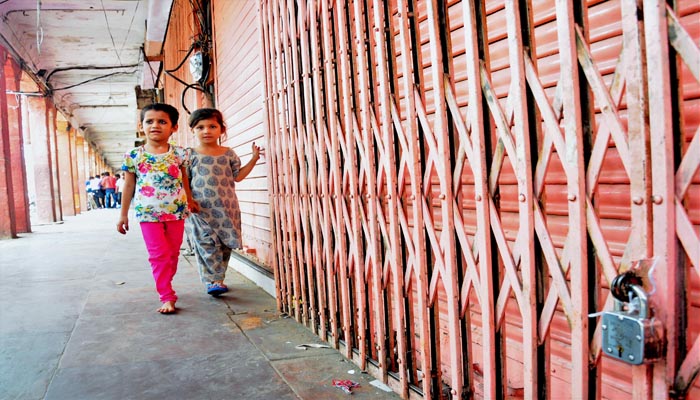
This is not the first time that Muslims have spoken against him, earlier this year, eNewsroom had exclusively reported about traders of Lenin Sarani going on a strike to protest against him.

Running out of steam

Barkati, the Imam of Tipu Sultan Masjid, is on the pay roll of the waqf property for years now. But during tenure as with the iconic masjid, he began strengthening his political clout, by issuing fatwas after fatwas and grew too big for his shoes. His journey as a fatwa cleric began under the CPI-M and gained momentum under the current government. Dropping in names, claiming to close to Chief Minister Mamata Banerjee are some of the cheap stunts that Barkati has always been good at.

However, Barkati, who takes his status, as the shahi imam seriously, seems to be running out of steam. Those allegedly endorsing his antics too seem to be distancing themselves from him.

“We are just fed up of him and his antics. He doesn’t seem to understand the fact that he is doing great damage to fabric of communal harmony of not just the state but the country also. His comments are being blown out of proportion to suit the agent of parties like Bharatiya Janata Party and the RSS,” said West Bengal Minister Siddiqullah Choudhary, who is also the head secretary of the Jammat.

On being asked why is CM not taking action against Barkati, he said, “Wait and watch. Law will take its course.”

Eviction from the status of Shahi Imam

The board of trustees of the Tipu Sultan masjid, which was built, by the grandson of the freedom fighter, during his exile in Bengal, too seem to be in a mood of terminating the ‘fatwa cleric’. “I had recommended him for this position and look how he is misusing his status. He even uses the Ashoka stamp, when he is not entitled to. He used to hold press conferences here in the masjid. We have reprimanded him many a time to not make such comments and even if he does, then he should not so it as the Imam of this masjid. But he has turned a deaf ear to our pleas. Hence I have recommended to the committee to have him removed,” said Ali.

On being asked, about the media being rife about Barkati already being terminated, he said, “Ours is a waqf property. He can’t be removed just like that. I think there has been some miscommunication. Our board is reviewing my recommendations and we are waiting for a legal opinion, before taking the plunge.”

LEENA KEJRIWAL: VOICE OF THE MISSING GIRL

0

Kolkata: Have you heard of the “Missing” game app? Also, have you spotted a life-sized black coloured silhouette of a girl,  on the street walls of Kolkata? Off late, Kolkata has been witnessing this wall graffiti gaining popularity in the city. These silhouettes are no ordinary wall graffiti, but part of MISSING, an ongoing public art project, by a Kolkata-based photographer and installation artist. Thanks to her endeavours, the MISSING project has become a global movement.

Meet Leena Kejriwal, an artist with a difference. For not every day does an artist marry off art with activism nor advocacy. But Kejriwal has done that and more. Through her installations, artworks and the much recent addition – online gaming app,  Kejriwal, advocates for a greater cause – stop Human Trafficking.

Kejriwal insists that she is no activist but an artist. She says, “I was married off into a typical Marwari family, where patriarchy rules. So, I kept being the stereotypical good wife and a doting mother of two kids, till I realised that photography, was all that I wanted to do.”

Leena Kejriwal and missing art
Leena Kejriwal with her art installation
Leena realises her dream

Kejriwal, who in her fifties, unlike other artists, began quite late. “I had always pursued photography as a hobby. I often used to sneak out early in the morning, to capture the beauty of Kolkata. During one such shoot, during the early wee hours, I realised that I needed to take photography more seriously. A compilation of my Kolkata-centric photograph (most of them in black and white) made me come up with Calcutta: Repossessing the City, a book, which was more like insider’s manual of the city. It became a bestseller. And then came my photographic installations, which went on to become my signature,” she says.

Kejriwal shot to the limelight, with her photographic installations at the Delhi Art Fair, 2014. The work got her international recognition. She feels that as an artist, she had a smaller reach, limited to art galleries. And to expand her reach, she needed to let her artwork into wall graffitis.

Missing Girl Campaign

“The art installation was getting all the recognition. But its message was definitely not reaching those, who needed to get it. Thus, I came up with this idea of having black silhouettes of a girl with #missing written, splashed across city walls. We tied up with NGOs, teachers, and schools, made students a part of this. For its girls of this age that are trafficked and boys of the same age end up being the buyers,” she adds. Explaining the silhouettes, she says, “These are like the black holes, where the trafficked girls go missing. And I am happy that I have been able to build some awareness with this campaign of mine.”

Leena Kejriwal's silhouette aims at raising the issue of human trafficking
The ‘Missing Girls’ silhouette

Elaborating on her transition from being a photographer to an artist advocating a cause, she says, “I needed to visit the red light areas of Kalighat for one of my project. The empty, expressions of the sex workers I encountered, lingered on to mind, long after, I was done with it. Their eyes seemed to be shrieking for help. This was something that my mind refused to erase. I think this experience of mine, in some way, made me broaden my vision.” This experience along with the fact that West Bengal records the maximum number of human trafficking cases in India, played a vital role in giving a direction to her work.

Art with a cause

Kejriwal, mentions, “Ruchira Gupta and her NGO Apne Aap Worldwide, gave a specific direction to my artwork, which is to work for gender equality. There is so much of violence happening against women, across the world. It’s not just India. We need to analyse or do some research on why women are being violated, across the world. You see the Bangalore mass molestation case; it needs a certain kind of a mindset for such a thing to happen.”

She feels, “Common man needs to understand the horrors of human trafficking. This will stop them from creating a demand for flesh trade.” She then goes on to add, “My gaming app – Missing,  makes a player step into the shoes of a trafficked girl. The challenge of the player to make the girl escape, unharmed. However, if the player misses his hints then he has to go through the agony that a trafficked girl undergoes. It’s disturbing, but it gives a bigger message to men – don’t create a demand for flesh trade.”

The game has been so much appreciated that Kejriwal has been shortlisted as a speaker at Games For Change conference. The event will be hosted in New York, towards the end of July. Wonder, if the game will bring about a change in the social fabric? Time will tell.

Dhanori: A village of war widows, and warriors in Rajasthan

Jhunjhunu: A common thread binds Sayera Bano, Hasan Bano, Anwar Bano, Mumtaj Bano and Alhamdo Bano, of Jhunjhunu’s Dhanori village. They are all war widows. This village in Rajasthan, has given Indian army, soldiers who have given their lives to serve the interest of the nation right from the First and Second World Wars to Sino-India war to  Indo-Pak war and the Kargil war. Name a war, and the village will have a martyr for it, and the war widows.

Sayera’s husband, Azimuddin Khan had been martyred in World War II, Hasan and Anwar had lost their husband Saifi Muhammad and Nizamuddin Khan in 1962, Indo-China war. Mumtaz’s husband Zafar Ali Khan had martyred in 1971 and Alhamdo’s husband Ramzan Khan gave his life, while protecting the Indian soil during the Kargil war. However, the widows of World War I from the village are no longer alive, but there were six army men from Dhanori had attained martyrdom, in the war.

A total seventeen soldiers hailing from Dhanori, have attained martyrdom for the country. At present, more than 550 from the village are serving the Indian Army, while many are enjoying their post retirement life back in their hamlet. There is not a single house in the village, from where a family member has not served the army.

“I have fought against Pakistan during the Indp-Pak war of 1971,” said retired Captain, Ali Hassan to eNewsroom. The war was not easy for our village, as we lost three of our sons, during this war. The village has also a Veer Chakra recipient. “Major MH Khan was from our village, I was under him. He was martyred in the war, later awarded the Veer Chakra,” recalled the retired captain.

MH Khan, whose father was an IAS officer, is the only army man from the village, to have made it to the rank of a Major in the Indian army. He, back then had pursued his education in Hyderabad.

Ali Hassan’s family has been protecting the Indian borders, fighting wars for safety of the nation for four generations now. Hassan takes immense pride in this and said with an air, “My grandfather and father were in the Indian army, so, I too joined it and now my son is serving our nation.”

Dhanori, is only 15 kilometers away from Jhunjhunu, and has a population of over 10000, of which a little over 70 percent comprises Muslims. They are mostly, Kayamkhani Muslims and have played a vital role in motivating people from every community to send at least one of their sons to serve the nation.

“We guided our friends from other community to join the Indian army,” Perwez Khan, who just retired after serving 17 years. He was youngest to be recruited from the village to Indian Army. He started serving the nation at a tender age of 16 only.

Despite, Dhanori sending so many men to fight for the nation, the government seems to be a little hesitant in acknowledging its contribution towards safeguarding India. “Dhanori has no senior secondary school. The Primary Health Center (PHC) shuts down soon after 4pm; there is no full-fledged hospital here. The roads are also not good. We also need a bank and an ATM,” rued Perwez.

“We also do not understand, why our village has not been adopted by any MP, since there will be no such place in India from where so many people have attained martyrdom,” said Alhamdo, the widow of Kargil war.

Production of Mica: 12 thousand tones, Export: 14 lakhs

0

Ranchi: Mica, the crumbly shiny white mass, comprising silicates of several elements, is a natural insulator and is thus used in electrical appliances and even in computer chips. It is also, used in paints and cosmetic products. And hence, its always, very much in demand, globally.

However, in early eighties, government of India had notified to ban mining in forest area. Of all the industry affected, Mica excavation was hit the most. This blanket ban immediately led to the closure of all Mica mines in Giridih and Koderma district of the mineral rich state. Interestingly, these two districts, together produced over 70 per cent of India’s Mica. However, till date, there remain only two license holders, in each areas.

Two decades down the line, Indian Mines Bureau (IMB) which brings out an annual book on Indian Minerals, in its latest edition has officially maintained that Jharkhand has ceased producing Mica since 2013. The book also maintains that there has been a huge decline in its production across the country.

According to The Indian Mineral Year Book 2015, which was released in December, 2016, there are only 31 mines that are operational in India. And that in 2013-14, India produced only 21,412 tones. But, when it came to export, the figure is as high as– 1,27,882 tonnes.

Interestingly, in the year 2014-15, the industry, as per official figure, had witnessed a 40 per cent decline in production. Legally, only 12,488 tones Mica were produced. But, despite all, India exported 1,40,960 tones. Thereby, clearly ringing the alarm bells, as to how India was exporting more Mica than it was actually producing?

However, the President of Mica Exporters Association, Jharkhand, Rajendra Bagaria claims, “IMB only assesses production of Mica. They don’t report on the waste lying around even after 100 years of mining.” Hence, accounting these waste Mica to be the source for Mica exports.

But, IMB’s table says the production include crude, and waste as well as scrap. When interrupted, the association president stands on his statement that dump (waste and scrap, known as Dhibra) do not get assessed by IMB.

“And after using that dhibra, which were there on raiyati (not forest) lands of some person, we were giving three and half percent cess to central government, while exporting. We were also telling successive state governments since long to survey such dumps and take a royalty,” adds Bagaria.

According to him, one such dump has been assessed containing Mica worth Rs 218 crores.

If you browse through some websites that has data related to Mica export, then it reveal that from Jharkhand only, through Kolkata sea route, companies export more Mica than what has been officially quoted as total production.

And China alone, according to IMB records, imported 88,146 tones of Mica in 2014-15. It is easily understandable that since long there has been large scale Mica excavation going from the ‘ghost’ mines of Jharkhand. And because of this the government is loosing out on royalties worth billions of rupees annually.

However, this is not the sole problem. Using children to gather the scraps from areas surrounding the deserted mines, is a bigger concern, as it is hazardous to health and has even caused the death of a few children.

In 2016 only, six children had died within a period of three months. Thereby, not only alerting the central and state governments, but also make car companies like Audi, Volkswagen and BMW to investigate the sources of their car paint. All this forced the Jharkhand government to finally take some initiatives.

“We are surveying the areas where mica scraps or mines are functioning. Geologists have also been put on job. So far we have identified 10 such spots where dhibras are dumped in huge scale. We have started the process to legalize these spots. In fact we have even put up an advertisement to announce the auction of these sites,” says Commissioner of Mines, Aboobacker Siddiqui to eNewsroom.

A day after the advertisement was published, Giridih police registered FIRs against eight people who had stored scraps without any license.

However, the commissioner, along with others, is also clueless about the huge gap in production and export quantity of Mica, “We had no idea about it, but as we have started the legalization process, we will try to bring every scrap spot and mines under the government,” adds Siddiqui.

Surprisingly, the British Geological Survey in 2005, had found that Koderma has largest deposit of Mica in the world (Wikipedia information). However, government of India has recently denotified it from the ‘major’ mineral category.

Wanted: A suitable ‘communist’ groom

Kolkata: Twenty-five-years old Manisha Prasad (name changed on request) has a different demand from her prospective husband. Unlike other girls, she does not care for money or looks of the groom. All that she is bothered about is – his political ideology.

The otherwise calm and docile girl, from Bandel, a sub-urban area in Bengal, is very clear about the fact that the boy that her family chooses for her should have Left ideology. Talking to eNewsroom over the phone, she firmly says, “I am a proud communist and I want to marry a man of the same ideology. I am not ready to compromise on this demand of mine.”

On being asked why make such a demand, she reveals, “I have grown up with this ideology. I feel communists are liberal and open minded. They treat women well and are better husbands. Also, the fact that I wouldn’t have to compromise on my political ideology, if I marry a person of communist background, made me and my family to place such an advertisement in a Bengali daily’s matrimonial section.”

Interestingly, Prasad, is neither from a Bengali family, which in most cases foster this ideology in their kids, nor her parents are supporters of this ideology. On the contrary, she is a girl of Bihari origin, who grew up in a Bengali household, thereby, imbibing on to their culture and ideologies, in an organic manner.

“She is as good as my own sister. Despite our biological parents being different, we share a strong bond. She in fact lives with us and we in consultation with her real parents placed this advertisement,” says Dipatanj Dasgupta, foster brother of Prasad. It is Dasgupta, who had placed the advertisement.

He further reveals, “The fact that she is originally from Bihar, also made us add this particular demand for the groom to be a communist in our ‘must have’ list. One can’t deny the fact that most people with a Left ideology are liberal and well mannered, who treat their women well. Manisha has been living with us since she was in standard VI and has a liberal outlook towards the world. It was but obvious to single out a man, who would not crush her ideology and beliefs.”

Was it only this or some other reasons too? Reacting to that, Dasgupta adds, “Well, yes, you can say so. Recently, we have witnessed many Bengalis turning pro-BJP. It’s their choice. But we are communist and we want to remain so, always. Getting our girl married into a family with a different political ideology, would mean that at some point of time our girl would have to compromise. And we didn’t want this, hence this collective decision to place this very specific advertisement.”

For many, this specification did come as a surprise. “Well, I did see this advertisement on Ganashakti. I was pleasantly surprised, about how a family was trying to keep its political ideology intact. It was a bit funny too,” said Soumyajit Rajak, an active SFI activist from Jadavpur University.

On the other hand many were upset with the family’s demand. “We are no longer taking calls on that number, as people are calling and abusing us for our choice of political ideology. Some of the WhatsApp messages are so offensive. I guess, the advertisement’s snap shot, has gone viral and we are being abused for no rhyme or reason. But yes, we have also received a lot of appreciations too,” Dasgupta added.

The real story behind Anaarkali of Aarah

0

Kolkata: Kulwinder Kaur, a 25-year-old dancer, was three months pregnant when she was shot dead by Lucky Singh, son of Punjabi political leader, while she was performing a dance number on stage. She died on the spot. Girls like Kaur are found in scores, across North India, who make a living by singing and dancing for weddings and parties hosted by the rich feudals.

Incidents like this happen and often go unheard. Telling the tale of many such women is journalist-turned-filmmaker Avinash Das’s directorial debut – Anaarkali of Aarah. The film’s poster that was recently launched by Karan Johar, shows an excited septuagenarian peeping out of the window, ogling at a garishly dressed Swara Bhaskar, who despite the loud make up and dress, sums the essence of this film.

Speaking to eNewsroom, Avinash says, “You, definitely, don’t need to be a rocket science expert to understand that the film, is about a Bjojpuri singer, who makes a living by singing kinky, double meaning songs at various occasions that the rich celebrate in the rural belts of North India. Even today, in villages, girls like Anaarkali, the protagonist of my film do exist.”

The film produced by Priya and Sandiip Kapur, has been both written and directed by Avinash Das. ‘Anaarkali of Aarah’ is the story of an erotic singer, who performs at various events along with her troupe. “The story is about a woman, an erotic singer, who at a point stands up against a powerful man in her area, to fight for her rights. It’s a film, that I have always wanted to make,” he says.

Now, does not that sound like Pink? “Well, the no thing common between the two is that both are women centric film, where the protagonist draws a line. Those, who are comparing Anaarkali with Pink, need to understand that in my film, its the protagonist who will directly confront her nemesis. However, in Pink it was a man, who was fighting for the women and that’s what makes my film different from it,” explains Avinash.

He then adds, “My film would have released much ahead of Pink, had we not had some major hiccups. Our leading lady, Richa Chadda, backed out even after having rehearsed with us. There were some other issues too, that forced us to delay the film.”

How did Swara fit in? Was it difficult to have roped her especially, after leading had walked out of the film? Answering that he says, with a laugh, “I guess, Swara was destined to play the lead of this film. I had talked to her about the film and she had loved the plot, but then somehow, I had roped in Richa, So, when things did not work out, I approached Swara as I was sure that she would say yes to it. Luckily, despite having tasted success, she did not throw any tantrums and said yes to my film.”

Speaking about the shooting and his first brush with directing established actors, he reveals, “Luckily, when it comes to communications, I am good at it. So, communicating with actors about what I wanted from them was not a big deal on the sets. Also, the stars never made me suffer from any unnecessary tantrums.” After a pause he adds, “I am really grateful to have Swara on board. She is such a dedicated actor. She spent almost a month in Aarah to learn what’s it like to be a person from that area.”

Shifting a little of his focus from his film, Avinash, who has over an experience of over two decades in journalism feels that it was films that he had always wanted to make. “I am from Darbhanga and I always wanted to make a cinema hall in my town. I was always fascinated with films. But saddled with responsibilities, I could not pursue my passion till now.” He says with a laugh, “Now my wife is having a really stable job, so I told her, if not now, then I will never be able to pursue my passion. Luckily she understood my position and gave me a few years to pursue my dreams and look luckily, things have fallen in place.”

Coming back to his film, he reveals, that it was during his days with NDTV, that he had seen a video of Tara Bano Faizabadi, an erotic singer, that he had decided to make a film on such erotic singers. He says, “The blank expression and ease with which she was singing such an erotic number, somehow hit me hard. Later another such singer called Baby had actually taken on the Vice Chancellor of Jaiprakash Narayan Vidyalaya, for miss behaving with her during an event. And the VC had to resign. In a way, Swara’s character, you can say, is very much an amalgamation of these two ladies.”

But, if the film has so much to do with women, then why is it not being released on March 8, International Women’s Day? To that he says, “Film release date has a lot of technicalities involved. We didn”t want the film to clash with any big film, but despite all care, the film is still going to clash with Phillauri.” He then adds, “I have seen the film’s promo its great. But since, our films of different genre, I think there wont be a major clash. I feel that both the films will be doing well at the box office.”

Innocent Getting Killed, But Cow Are Not Safe Even At State-run Gaushalas

0

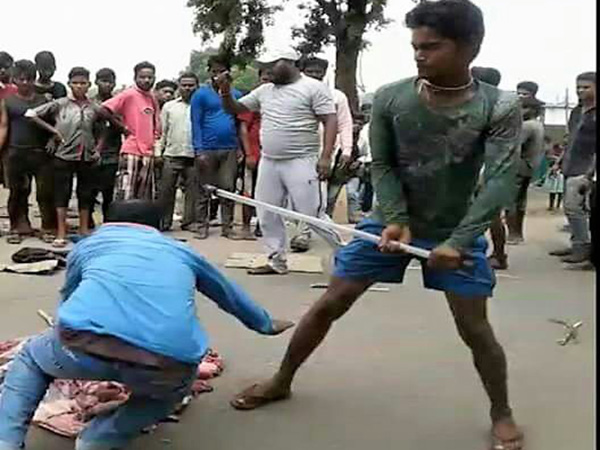
Jaipur: The state capital of Rajasthan, Jaipur, is not very far from Alwar, where Pehlu Khan, a farmer, was beaten up so badly that he succumbed to his injuries. Khan’s only crime was that he had bought a cow for his dairy. But when he was being lynched by a mob, which presumed on the basis of his religion that he was transporting cow for slaughtering, several cows were dying at Hingonia Gaushala, in Jaipur. Hingonia, happens to be the largest gaushala in Asia. However, cows, which, is now a protected animal in t

he country, thanks to the gau rakshaks, are in a pretty bad condition here. Last year, a statement before the Rajasthan assembly, revealed that more than 8000 cows had died at the shelter between January to August, in 2016 alone. This created an uproar and the management of this shelter was handed over to Akshay Patra. The budget allocated for this state-sponsored gaushala is over Rs 10 crores for the fiscal year 2016-17. The shelter has restricted entry and allow limited photography. Our photojournalist, Chandra Mohan Aloria, managed to gain access to highlight the actual condition of the cows inside. The photographs reveal that the sacred animal, continues to live in a dismal state at the shelter, where the carcasses of the revered animal does not even get a proper burial. The shelter, which is meant for the care of this animal, is witnessing a huge number of cow deaths, daily. No pain is being taken to remove dead bodies from the site of alive cows. And its not just at the gaushala, the cow, is under threat across the Pink City, where they can be spotted easily, munching on to plastic bags, which leads to asphyxiation and death of the animal.

Sujeda’s journey, from rolling beedis to Quill fellow

0

Kolkata: As a young girl, she used to roll beedis at home, just like any woman of Ahiron village of Murshidabad do for a living. A fleeting glance, wouldn’t make you realise the change that she bringing about in her hamlet. For the petite, young girl, in her early 20s would seem like just another Indian youth. But then, the moment she speaks, you will understand, that she really has the nerves of steel.

“I am just an ordinary girl. But I have set some goals for myself. I have also set a few standards, that I refuse to compromise on. I choose to ignore the criticism that I am subjected to, for choosing a path, that not many don’t tread on,” she says to eNewsroom.

Meet Sujeda Khatun, a fourth year BA LLB student at the Aligarh Muslim University, Murshidabad campus. She is the first female graduate for Arihon, a feat that she has achieved after facing a lot of flak from the society. However, the young girl feels that the journey would have been a lot more difficult if her parents had not been the winds beneath her wings. “It was my mothers unconditional support and also of my father, which made it possible for me to study this far. In our society, women are expected to roll beedis, cook food and take care of children. A woman, has no other identity, barring that of being a daughter, sister, wife and mother. I was disturbed by the stereotype identity of women, even as a child. Guess, that somewhere gave me the courage get empowered by education,” she recalled.

Journey of a Beedi Roller

On being asked, what was the turning point for her, to that she revealed, that it was “failure is the stepping stone for success” for her. She revealed, “Well, I failed my standard IX examination. It was so embarrassing for me. I then resolved to prove myself. I put in all my might to do excellent results. Today,I feel immense pride, when I say, that I have been supporting my entire educational journey through scholarships for meritorious students.”

Walking on a path, that none had dared to, Sujeda, has been bringing about a revolution of different sort and she is unapologetic about it. Being a law student, she is leaving no stones unturned to make women get justice.

“My maternal aunt, was subjected to domestic violence by her husband. One day, when her husband had beaten her blue and black, she told me to help her get freedom from him. I don’t know how I mustered up the courage to go against my mother, my pillar of support, and got my uncle behind the bar. Despite, people, slandering my character, demonising me for this move, I still believe it was the best thing that I ever did,” she narrated.

She then added, “Allah made us as equal partners but gave us different duties. However, the patriarchal society ridicules women  despite them delivering their best. This hurt me a lot. Seeing my elder sister and my friends suffer after marriage, made my resolve stronger to be an independent woman.”

Sujeda, who also runs and educational guidance centre – Educare Guide Centre, in Arihon. Through this centre she plays a vital role in motivating people to let their daughters study and work. She also runs a self help group cluster, where at the moment 12 work together for the cause of women empowerment. Speaking of the obstacles that she faces till date, she said, “Most families don’t want to educate girls to become economically independent. Many presume that working girls will give their earnings to their in-laws and not to their parents. My question is why can’t a working woman support her father’s family?”

She then added, “Precisely, for that reason, my father who had been supportive till now, is no longer that accommodating. But I have made up my mind to do my masters in law.” Sujeda, who has just returned from New Delhi after spending a month there as a scholar with the Quill Foundation, when asked if her parent were opposed to her going out of station, she revealed, “I now just inform them about what I am doing. I have ceased taking permission.”

The former beedi roller, who is now a fire brand girl, often taunted by her relatives and neighbours, for venturing out unchaperoned or for not getting married early, maintained that education is the only way of bringing about a social change. “I have decided to be an educator, for that is the only way to bring about a social change, where women are treated like equal halves,” she said. Apart from being a Quill scholar, she has recently been awarded with the Krishna Memorial Award for Women Educationists, Students & Caregivers.

Do Bollywood stars shy away from doing biopics of poets and authors?

0

Kolkata: As we gear up for Nawazuddin Siddiqui to get into the shoes of Saadat Hasan Manto, have you ever wondered why biopics based on the lives of authors and poets has never been the flavour of the season? Why most Bollywood biggies shy away from films based on the lives of legends likes of Sahir Ludhyanvi, Amrita Pritam or Kamala Das?

Bollywood stars including Aamir Khan, Farhan Akhtar, Sushant Singh Rajput and Priyanka Chopra have the gone extra mile to do films based on the life of sport legends, Mahavir Phogat (Dangal), Milkha Singh (Bhag Milkha Bhaag), Dhoni- The Untold Story (MS Dhoni) and Mary Kom (Mary Kom) respectively, thereby, indicating that biopics are very much in demand.

Hollywood too has inspired us with a long list of biopics that were both critically acclaimed as well as box office hits. Who can forget venerated poet Shakespeare (Joseph Fiennes) wooing Viola de Lesseps (Gwyneth Paltrow) in the film Shakespeare In Love? But then the directors took the poetic liberty to base the film on an imaginary love story. Such an idea would create furore had it been attempted in India.

In fact, if reports are to be believed there is talk of a biopic based on the highly acclaimed Persian poet Jalaluddin-Rumi. Oscar-winning writer Dave Franzoni of Gladiator fame was reportedly signed on to pen the script. And the producers hoped Leonardo DiCaprio would play the 13th century Muslim poet.

But if we delve further into the subject it appears that the film fraternity in India, Bollywood in particular, is yet to warm out to poets and authors. At least, that is what it seems, especially with Vidya Balan backing out of a film based on the life of author Kamala Das. Besides, there seems to be no news about Sonakshi Sinha’s much publicised film, which was supposed to be based on Amrita Pritam’s life. Also, there seems to be a shroud of mystery surrounding Shah Rukh Khan playing the famous poet, Sahir Ludhiyanvi.

The reluctance of Bollywood biggies to even talk on the subject is evident from the fact that repeated calls and messages made to the actors, seeking their view on the same, went unanswered.

The obvious reason for this could perhaps be assumed that portraying the life of an author or poet is not an easy task. “Making biopics are not easy. It involves lots of money. Recreating an era gone by needs a lot of minute detailing. It is a tough task to achieve,” shared actor Prosenjit Chatterjee, recounting his experience of shooting for his film based on legendary folk singer Lalan Fakir. Besides, the stress is not just on their outward appearance, a lot of finesse is required to portray the nuances of a creative mind.

And it is not just the money that is the issue the subject too needs careful handling. “I spent three months in Aligarh shooting for the film based on Majaz. But, when I saw the film at the post production stage, I wasn’t very pleased with it. Film is a director’s medium. So what you get in the end is how the director has visualised it,” pointed out actor Priyanshu Chatterjee who played the titular role in the film. Majaz was promoted by lyricist Javed Akhtar who is related to the legendary Urdu poet. Well known ghazal singer Talat Aziz had composed the music. Despite the positive news surrounding the film it was released only in a few territories and the majority of curious cinegoers were left wondering what went wrong.

Naseeruddin Shah had gone on record to say that commercial filmmakers should not touch serious subjects and should not be making biopics on legends. “They ruin the film completely,” he had said in an interview.

The veteran actor, however, had essayed the role of legendary Urdu poet, Mirza Ghalib in a television serial, produced by Gulzar.

Echoing the sentiment of Naseeruddin Shah, retired Aligarh Muslim University professor and producer of Majaz, Madi Ur Sherwani said, “The film may not have been the way we had visualised it initially. The fact that we had to release it hurriedly also played a part. But that has not deterred me. I am fascinated by the creative thought process of our literary greats. I will make more films on them. But this time I am going to direct them myself.”

Well, here’s hoping the films will be as memorable as the legendary poets or authors’ works have been.

Gurmehar issue gets murkier, ABVP burns her effigy in Kolkata

Kolkata: The Ramjas College issue has reached Bengal also, as both sides, Akhil Bhartiya Vidyarthi Parishad (ABVP) and Left student unions, hit on the streets to mark their protest.

But what was most astonishing was the fact that ABVP burnt the effigy of 21-year-old Ramjas College student Gurmehar Kaur. The members of saffron brigade’s student wing’s Kolkata chapter were also demanding the Lefts to vacate college and universities.

Gurmehar, daughter of a martyred army man had opposed ABVP’s violence on college campus. The reason for violence at Ramjas was the seminar in which Umar Khalid, Jawahar Lal Nehru University research scholar, had been invited as a speaker. Khalid was accused of sedition but Delhi police could not file charge sheet even after a year.

“We are protesting against communist and anti-nationals, who have created such big ruckus at New Delhi’s Ramjas College. To be precise, these days communists and anti-nationals are two faces of the same coin,” said Subir Haldar, ABVP’s state vice president. Haldar minces no words, when he clearly states, “We will confront those Leftists, who keep raising anti national slogans. But we are also open to discussions.”

However, on being asked, about rape threats, he said, “we condemn it. If someone has done so, then it should be properly investigated and if found guilty, he should be punished.”

If ABVP resorted to burning effigies, Left students of Jadavpur University, chose to demonstrate peacefully by organising a walk near their college campus.

Soumyajit Rajak, a student leader of Student Federation of India (SFI), Jadavpur University said, “We had organised a march yesterday, in protest of Gurmehar being labelled as an anti national. According to BJP supporters, anyone who criticises the government or has an opinion that doesn’t match with theirs, is an anti national. This, in reality is a way of making get engrossed in non issues, while the government gets away with doing whatever they want to.”

Speaking about the aggression with which, ABVP, is attacking the Left, in Bengal too, he said, “ABVP and BJP is desperate to make their presence felt in Bengal. So, they keep doing such things.”

Ironically, not only Gurmehar was threatened by rape, and even union ministers, actors and sport personalities jumped into the issue, taking sides  and even stating that Gurmehar’s mind was being polluted. Amid all, now Satyavijayi,  which is considered a Rastyasway Sewak Sangh (RSS) backed portal, has done a story on the tweets of Gaurav Pradhan claiming that Gurmehar has some ISI connection.

Looks like, with every passing day, Gurmehar’s issue will get more murkier.