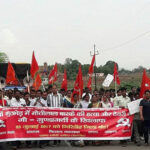
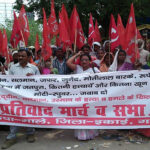
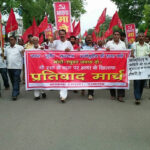
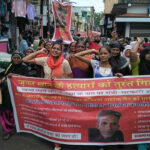
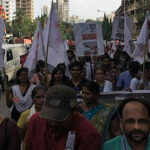
Ranchi/Kolkata: The ongoing protest against mob lynching, which has mostly remained apolitical, in nature, on July 3, witnessed a political party protesting against the most inhuman acts. The CPI-ML take on to the streets of various Indian cities, to condemn mob lynching in Jharkhand and other Indian states like Rajasthan and Haryana.
Several CPI-ML leaders and members were seen thronging the streets of various cities, while in Giridih, where the party has a strong presence called on for a bandh. In recent times, Giridih has witnessed a sudden rise in lynching cases. Recently, a dairy farmer Alimuddin Ansari, survived after being lynched by a mob and a tribal, Motilal Baske had been killed in an alleged fake encounter. The bandh called by CPI-ML was to condemn both cases. About eight rallies were led by former MLA Vinod Singh, Rajesh Yadav and Rajesh Sinha. CPI-ML had also organised protest marches in the state capital Ranchi and Garhwa district.
A similar protest march in Pratapgarh, CPI-ML backed the people’s protest, where one of its party members and social activist Zafar Khan, was allegedly lynched by Pratapgarh’s Municipal officials. The massive protest which had a large number of women demonstrated before Pratapgarh Municipal office also. Khan was killed when he had tried to stop municipal officials from clicking pictures to shame the women who were defecating in open.
While the citizen-driven protests condemning these hate crimes also continued in cities like Mumbai and Delhi. Both the cities witnessed massive turnouts during the events.