भारत जोड़ो यात्रा मेरी तपस्या है: राहुल गांधी

0

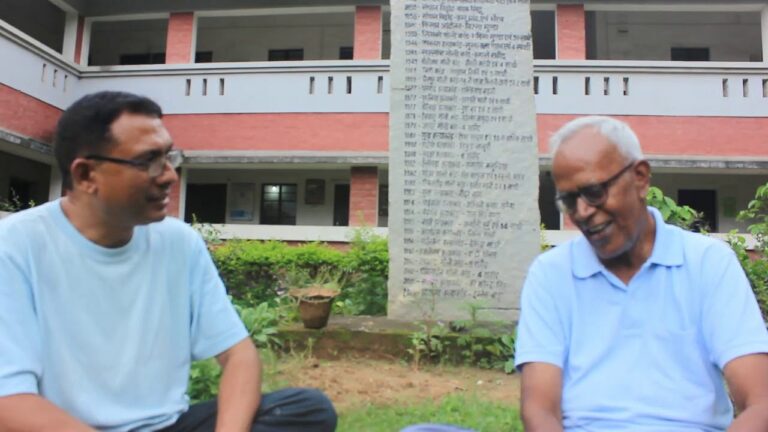
प क्यों चल रहे हैं?”, मैंने भारत जोड़ो यात्रा में राहुल गांधी से पूछा

राहुल: क्या आप पूजा और तपस्या में अंतर जानते हैं?

मैं: हाँ, पूजा प्रार्थना है और तपस्या योगसाधना (penance) है

राहुल: तपस्या शब्द ‘तप’ से बना है, जिसका अर्थ होता है गर्मी। जब आप तपस्या करते हैं तो आप गर्मी उत्पन्न करते हैं। वह गर्मी जो आपको खा जाती है। यह आपको पीड़ा देता है, यह आपको पीड़ा देता है और फिर आप प्राप्त करते हैं

मैं: लेकिन आप क्या हासिल करने की उम्मीद करते हैं?

राहुल: आपका प्यार, आपका आशीर्वाद, हमारी एकता

मैं: और भी तरीके हो सकते थे।

राहुल: हाँ। ज़रूर। लेकिन मैं बिना प्रयास किए, बिना तप किए कुछ भी हासिल नहीं करना चाहता। जब तक कोई उपलब्धि मुझे चोट नहीं देती,पीड़ा नहीं देती, वह उपलब्धि कहलाने लायक नहीं है। ये भारत जोड़ो यात्रा मेरी तपस्या है।

मैं: और मुझे यकीन है कि आप हासिल करेंगे।

राहुल: बिना किसी अपेक्षा के करी तपस्या, ही सफल तपस्या हो सकती है। मुझे नहीं पता कि जो मैंने करने की ठानी है उसे मैं हासिल कर पाऊंगा या नहीं, लेकिन मैं तब तक तप करता रहूंगा जब तक मैं इसे हासिल नहीं कर लेता।

और इसी वजह से राहुल गांधी भारत जोड़ो यात्रा में चल रहे हैं।

और यही कारण है कि हम सभी को उनके साथ चलना चाहिए और आशा है कि वह सफल होंगे।

उनसे मिलना आसान नहीं है, लेकिन अगर मिलते हैं, तो वह बात करने के लिए सबसे आसान आदमी है, कभी भी!
वह डराने वाले नहीं है और वह बातचीत में आप पर हावी होने की कोशिश नहीं करते हैं, चर्चा बस सुचारू रूप से चलती है।

वह सुनते है, बोलते है, वह आपको बात करने देते है और अद्भुत स्पष्टता के साथ इसका जवाब देते है।
यह आदमी कोई पप्पू नहीं है… यह एक हीरा है।

मैं रागा (राहुल गांधी) के साथ अपनी बातचीत पर कई पोस्ट लिखूंगा और अपने सुझावों के साथ भारत जोड़ो यात्रा के पूरे अनुभव के बारे में भी लिखूंगा।

सिर्फ एक पोस्ट में सब कुछ लिख पाने की कोशिश करना एक बहुत बड़ा अपकार या अन्याय होगा।

मैं गंभीरता से सुझाव देता हूं कि आप में से कोई भी जो भारत को एकजुट करने में रूचि रखता है, जाइए और भारत जोड़ो यात्रा का हिस्सा बनिए, राहुल गांधी से मिलने या किसी के साथ तस्वीरें खिंचवाने के लिए नहीं बल्कि अपने लिए। यही आपकी तपस्या होगी।


ये लेख अँग्रेजी में थी, इसे विवेक लेखी ने अनुवाद किया है

How important is Dvorak Technique to measure tropical cyclone

0

To save millions of lives and to take preventive measures against piles of devastation technology is immensely helpful to gauge tropical cyclone intensity. Thus, Dvorak Technique is a great discovery to forecast local meteorology and recognize cloud patterns for assessing the intensity of tropical storms.

Dvorak Technique was primarily developed in the year of 1969 and it was modified to accelerate the accuracy of forecasting tropical cyclones in 1973. This technology was set up by American meteorologist Vernon Francis Dvorak. Using satellite pictures of tropical cyclones within the North West Pacific Ocean he created this method which is now being used worldwide to analyze tropical cyclones. But unfortunately this year on 19th September he left us forever.

Several organizations around the world use this way from the very beginning to predict the power of the storm. In 1959, the establishment of the Meteorological Satellite Section of the US refers to the setup of the National Environmental Satellite, Data, and Information Service’s Satellite Analysis Branch. This branch is somehow responsible for doing Dvorak Technique to fix the vehemence of tropical cyclones. A Division under the National Oceanic and Atmospheric Administration, the National Hurricane Center’s Tropical Analysis and Forecast Branch created in 1967 use Dvorak intensity numbers for tropical cyclones and their precursors.

A tropical cyclone is a rapidly rotating storm system characterized by a low-pressure center, a closed low-level atmospheric circulation, strong winds, and a spiral arrangement of thunderstorms that produce havoc, rain, and strength. In the name of the cyclone, “Tropical” signifies the geographical origin of the system which exclusively forms almost over tropical seas. This kind of storm is mostly seen in the Pacific Ocean, Atlantic Ocean, Indian Ocean, Caribbean Sea, the Gulf of Mexico, and sometimes in the Bay of Bengal and the Arabian Sea. These tropical cyclones have different names like Hurricanes, Typhoons, Tropical storms, Tropical cyclones, and Tropical Depression among others.

Initially, Dvorak Technique calculates the vigor and consequences of tropical storms and depressions based solely on infrared satellite images which are also called infrared lights. Infrared light is electromagnetic radiation with wavelengths longer than those visible light. It is therefore invisible to the human eye. This technique compares these invisible images with some estimated visible patterns to forecast cyclonic impacts.

This method as it was originally conceived involved patterns matching cloud features with the development and decay model. But it went through advancement between the years 1970 and 1980. Calculations of cloud features become dominant in defining a cyclone’s intensity and the central pressure of the low-pressure area. A low-pressure area is a place where atmospheric pressure is lower than that of surrounding locations. This kind of area indicates cloudy windy weather with possible rain or storms while high pressure signifies lighter winds and clear skies. The formation of a low-pressure area is known as cyclogenesis which refers to the form of a cyclone. These kinds of cyclones consist of a roughly circular area of mostly calm weather at the center and this is called the “eye” of the cyclone. Typically it is 30-65 kilometers in diameter and surrounded by an “eye wall”. An eyewall is a ring of towering thunderstorms where the most severe weather and highest winds occur. Dvorak Technology uses the cloud-top temperatures within the eyewall and contrasts them with the warm temperatures within the eye itself via the use of infrared satellite images. This leads to a more objective assessment of the strength of tropical cyclones with eyes.

Due to human analysts, there are some subjective biases since sometimes tropical cyclones’ pattern fluctuates. To resolve this problem higher-resolution satellite imagery, more powerful computers, and automated techniques are being used to get a more reliable estimation. A new wind-pressure relationship in the North-West Pacific Ocean was thus devised by Atkinson and Holliday in 1975, and modified in 1977. Still keeping some subjectivity within the process, the Development of the objective Dvorak Technique began in 1998, and by 2004 a new modified Dvorak Technique was set up.

There is another method to foretell tropical cyclones which is the Saffir-Simpson Hurricane Wind Scale. It was developed by Herbert Saffir, a civil engineer, and Bob Simpson of the US National Hurricane Center. Despite the presence of this technology, the Dvorak Technique is very popular and fruit-bearing. But this method doesn’t correctly diagnose cyclonic intensity for storms like subtropical storm “Andrea” since it only applies to tropical cyclones.

Nowadays there are advanced model guidance, animations, artificial intelligence, machine learning, and modern satellite technology to help a high rate to evaluate more objectivity towards taking precautions. No doubt Dvorak Technique is a great discovery in this field.

In the past years, the world as well as India too has witnessed so many destructive cyclones. India faced hits by cyclone Fani (2019), Vayu (2019), Nisarga (2020), Amphan (2020), Gulab (2021), Yaas (2021), Tauktae (2021), Asani (2022), and very recently ‘Sitrang’ passed on. To take precautions against these fatal natural calamities this technology immensely helps. And in the future, it’ll give an objective message to forecast upcoming tropical cyclones Mandous (named by UAE), Mocha (named by Yemen), Biparjoy (named by Bangladesh), Tej (named by India), Hamoon (named by Iran) and so on.

India marches into Semi-Finals, Dream Final with Pakistan remains possible as Proteas Crash Out 

0

[dropcap]I[/dropcap]t’s been an unbelievable Sunday for the cricketing world! The T20 World Cup has found its 4 semi-finalists in India, Pakistan, New Zealand and England but they were finalized only after a huge dose of high drama. India qualified in the Top Four even before they went into their last match against Zimbabwe courtesy of the continuing tradition by Proteas to choke in the pressure matches. They were stunned by the Netherlands which allowed India to play their top game without any pressure – and the Men in Blue simply demolished Zimbabwe by 71 runs, outplaying the African side in all departments of the game. The easy win enabled India to top their Group and enter the Semi-finals where they will meet England in Adelaide on Thursday.

India batted first and got off to a decent start but skipper Rohit Sharma failed once again and Indian fans now hope that he will perform at his best in the crucial knock-out games. In contrast, KL Rahul was at his scintillating best and knocked up a fine fifty for the second match in a row. But it was Surya Kumar Yadav who stole the limelight yet again. He not only took India’s total to above par but became the highest run scorer in the format this year. He has now scored over a thousand runs in 2022. His partnership with Pandya made sure that India could set a stiff 187-run target for Zimbabwe.

India’s new ball bowlers were outstanding as the Zimbabweans came out for the tough chase. Bhuvneshwar Kumar and Arshdeep Singh both controlled the swing very well and virtually bamboozled the Zimbabwe batsmen. The result was a total capitulation as Zimbabwe were soon reduced to 28 for 3 in the powerplay and then 36 for 5 in the next couple of overs as the experienced Mohammed Shami and Hardik too picked up vital wickets. Some resistance by Sikandar Raza and Ryan Burl delayed the inevitable but Indian bowlers closed the game well before the scheduled 20 overs and Team India verily strolled into the semi-finals.

While the India game went on expected lines, it was the start of the day that shocked cricket fans all around the world. South Africa were firm favourites to win but choked at vital stages. Chasing 159 for victory, South Africa faltered to end on 145-8 with Dutch fast bowler Brandon Glover bowling a fine spell of 3-9 in two overs. Ultimately, the Netherlands sent the Proteas crashing out of the World Cup with a shocking 13-run victory in Adelaide which also propelled India into the semi-finals.

The shocker by the Dutch turned the Pakistan-Bangladesh clash into a knock-out game. As Bangladesh kept losing wickets regularly and set just a modest target of 128, Pakistan won the contest with 5 wickets to spare. Though they displayed nerves and some jitters, but with Shaheen Afridi finding peak form and Shadab Khan performing at his best, Pakistan now looks like a truly formidable side. Their bowling attack is rated extremely dangerous and is probably the best among all teams and if their batting starts clicking, Pakistan will take some beating in the knockout stage. 

With the triple-header on Sunday, the Super 12 phase of the T20 World Cup came to a dramatic close. South Africa’s shock loss to Netherlands not only reconfirmed their reputation as the chokers of the cricket world but also enabled Pakistan to join India in the last-four stage. With New Zealand and England having already sealed their qualification after Saturday’s Group 1 matches, the Semi-Final lineup was finally confirmed after two weeks of thrilling encounters, stunning upsets and high-voltage action.

In the first Semi-Final, Pakistan will clash with New Zealand, the Runners Up of the last T20 World Cup, at the Sydney Cricket Ground on 9th November. Having topped Group 2 after winning four of its five matches, India will play England on 10th November at the Adelaide Oval in Semi-Final 2.

With the arch-rivals from the subcontinent both clinching semi-final spots, the dream of an India vs Pakistan final remains very much alive at the T20 World Cup. However, England and New Zealand will surely have different ideas. The Kiwis and the England team both have extremely balanced sides and have played with panache and consistency in getting to the semi-finals from their group which was much tougher than the India-Pakistan group. As such, they are quite capable of winning their respective contests against the South Asian sides. 

However, if the mercurial and uber-talented powerhouses from the subcontinent can produce their best, the dream final between India and Pakistan seems a distinct and alluring possibility now. Who will finally get to the World Cup finals is, of course, rather uncertain. But what is quite certain is that Super Sunday has set up two tantalising semi-finals that are bound to thrill cricket fans and connoisseurs alike!

Team India pips Bangladesh in rain-affected thriller, gets closer to top 4 slot

0

Benjamin Franklin had once said that diligence is the mother of good luck. KL Rahul has not been in the best of form with the bat but was seen working hard on his batting with Kohli in the nets before the game against Bangladesh. His diligence paid off brilliantly on Wednesday as he not only scored a belligerent 50 off 31 balls but helped India escape a scare courtesy of his brilliant direct hit to run Litton Das out which became the turning point of the match. Eventually, India pipped Bangladesh by 5 runs (DLS) to get to the top of the points table in their group and now seem poised to reach the final four.

Despite setting a stiff target of 185, India were rocked back by Bangladesh opener Litton Das who came up with a cracking half-century in just 21 balls. As he peppered the boundary almost at will, Das dominated the opening stand and took the team’s score to 60 without loss in the Powerplay. Das had hit 56 of those runs while his partner Najmul Santo got just 4.

Das had taken his team to such a flier that Bangladesh seemed odd-on favourites to clinch the clash as they reached 66/0 in 7 overs. A sudden downpour, however, turned the course of the match.

Defending a revised target of 151 in 16 overs following the rain interruption, India were in a tough spot. But in a moment of individual brilliance, KL Rahul’s stunning direct hit from deep midwicket saw Litton Das fall short of the crease. His dismissal for 60 triggered a shift in momentum. With wickets falling regularly, India kept tightening the noose and ultimately, Bangladesh finished with 145/6 in 16 overs.

team india bangladesh t20 world cup top 4 slot
Courtesy: Twitter/T20WorldCup

The crucial win in this Super 12 match has greatly brightened Team India’s chances of reaching the semi-finals. With 6 points from 4 games, India now needs to only beat Zimbabwe on Sunday to clinch their place in the Top Four.

Earlier, India was put in to bat first under overcast skies and the openers looked shaky in the first few overs. With Rahul being circumspect initially, Rohit took it upon himself to up the ante but soon perished to Hasan Mahmud getting caught trying to hit one out of the park. With Kohli at the crease, there was an immediate sense of urgency and the strike was rotated much better helping Rahul to relax and gain confidence.

While India’s powerplay was dull with just 37 runs with the loss of 1 wicket, the next three overs produced a whopping 41 runs. Rahul turned the heat on the Bangladeshi bowlers and punished anything that was short or wide. His 50 was studded with 3 fours and 4 sixes. When he got out in the tenth over, he had ensured a strong base for India to raise a big score.

The in-form Suryakumar and Kohli stitched a racy 38-run partnership before Surya was bowled by Shakib as he looked to cut one between point and short third man. India’s innings saw a bit of wobble with a flurry of quick wickets but Kohli stood tall continuing his good form. His score of 64 saw him win the Player of the Match. Ashwin too chipped at the end with a couple of boundaries to push the total beyond 180, which looked like a steep task for Bangladesh.

At the innings change, many experts felt that India had an above-par score considering the low-scoring entertainers we’ve had throughout the tournament. Though Litton Das gave Bangladesh a flying start, once he was gone after the rain break, the tide turned in India’s favour. Besides tight bowling, India’s fielding, which was below average in the previous games, was top-class in this contest. Under floodlights and windy conditions, Indian fielders grabbed all their chances. Ultimately, needing 20 of the last over, it proved too much for Bangladesh – though an amazing six by Nurul Hasan had increased the blood pressure of many Indian fans.

The narrow win, via the DLS method, still does not guarantee India a place in the last four as the Men in Blue will need to win against Zimbabwe on Sunday. However, the win ensures that India’s fate is largely in their own hands and if they beat Zimbabwe, they will definitely finish among the Top 2 in the group. Even if their last game is washed off, Team India will end up with 7 points which will enable them to get through to the Semis as barring South Africa no other side in the group can now reach 7 points.

Despite their two defeats, Pakistan too is still in the race for the semis. With two matches left, Pakistan can get to six points and also has a healthy net run rate. But if Pakistan loses to South Africa in the next game, then India’s semi-final dream will get a boost while Babar Azam’s men will be ousted. However, if Pakistan beats South Africa on Thursday and Bangladesh on Sunday by decent margins, and Zimbabwe beats India, Pakistan could still squeak through.

However, the close contests so far, have given Team India a strong momentum and boosted their morale along with self-confidence. Ultimately, these could be vital as the knockout stage of the T20 World Cup beckons for all teams.

Mystery shrouds death of IIT Kharagpur’s Aerial Robotics researcher, mother seeks justice

0

Kolkata: The mother of Faizan Ahmed, 23, a student of the prestigious Indian Institute of Technology (IIT), Kharagpur, West Bengal, whose decomposed body was found in the hostel, has fervently appealed to Chief Minister Mamata Banerjee to urgently and immediately intervene, while seeking justice from her.

Even 12 days after the shocking incident, which led to students’ protests in the campus, the death of Faizan, a member of the Aerial Robotics Research Team in Kharagpur, remains a mystery. He was also an active member of the Students’ Welfare Group and UG Students’ Council.

On October 14, the partially decomposed body of the third-year Mechanical Engineering student was found inside the LLR Hostel. While the administration has claimed that the student committed suicide, the family believes that he was murdered.

The incident has not only shaken the parents, but most IITians in the campus are in a state of shock. They protested, held a night-long public meeting with the director, and organized a candlelight march in solidarity with their deceased fellow student.

“On October 11, he spoke to me about lunch. He said that it was a tasty meal. Then he said bye, mentioning he had to reach the library. In the evening, around 7.30 pm, when he was going for dinner, he spoke to his aunt and said, “Kadi wagairah bana hoga, kha lenge. Itna apne mausi ko bol kar usne phone rakh diya ( Kadhi etc will be in the menu, will eat it, he told his aunt and discontinued the call,” Rehana Ahmed, his mother, told eNewsroom.

Her voice choking, she said, “I want to know how did it happen so suddenly? Who did it? My son was a guest of Bengal, but Bengal did not return my son. A mother is requesting Didi (Mamata Banerjee) to give her justice.” Rehana broke down.

The family lives in Tinsukia, Assam. The parents have written to Assam Chief Minister Himanta Biswa Sarma and Union Minister of Education Dharmendra Pradhan for a high-level inquiry. Sarma tweeted about the incident and has written to the Bengal CM seeking a probe into the death.

faizan ahmed IIT Kharagpur IITian Assam Bengal
Faizan Ahmed

Who was Faizan?

Faizan is the only son of Rehana and Salim Ahmed. According to his family and friends, he was brilliant. He has been the winner of three gold medals at the state-level ‘Mathematics and Chemistry Olympiad’ —twice in Mathematics, and once in Chemistry.

“Since childhood, I have tried to make him participate in every competition in which he was eligible to appear. I used to tell him not to worry about winning or losing, just participate and enjoy. He used to consistently bring medals home,” said his mother.

His father said, “The meaning of his name was a ‘blessing’ and he was a blessing for us in a real sense. He would have been a blessing to the world.”

“There was always a smile on his face. His friends told me that even when somebody used to greet him with ‘Hi’, he would respond with a smile. When he visited us, at the dining table or at home, he used to bring life to the surroundings,” said his mother.

“Yes, Faizan was a happy boy and he used to smile a lot. He was a cut above a lot of IIT boys,” a fourth-year IIT student, told eNewsroom, but did not want to reveal his identity.

“He was a very confident student and smiled every time we met. I have known him since my Kota days where we both did coaching. But, in Kota, we were not close. When we arrived in Kharagpur and met in the campus, we became good friends. Faizan was special,” said a third-year student, requesting anonymity.

Member of the Aerial Robotics Research Team

Faizan was a member of the Aerial Robotics Team in Kharagpur. Abbreviated as ARK, it is one of the new projects in IIT geared towards research in robotics. The research group is sponsored by SRIC (Sponsored Research and Industrial Consultancy) as part of the Centre for Excellence in Robotics. The Facebook page of Aerial Robotics, Kharagpur, shows that he was selected for the team after a test in 2021.

The extra-ordinary student was also team member of Kharagpur RoboSoccer Students’ Group (KRSSG).

Faizan used to take online Mathematics classes as well. He had created a profile at sites like SuperProf.com.

The IITian and research scholar was active on Facebook but his profile remained locked. His profile is named as Faiz Ahmed. The bio mentioned shows that he was a member of the Students’ Welfare Group and UG Students’ Council.

faizan ahmed-iit kharagpur iitian assam bengal

Response of the administration, IIT, Kharagpur 

The family, which held a press conference in Assam, alleged that they were not shown CCTV footage by the IIT authorities. They demanded a Central Bureau of Investigation (CBI) inquiry into the mysterious death.

“They did not show us the CCTV footage. How is it possible that such a big institution would not have a CCTV camera in its hostels,” questioned Faizan’s aunt, Salma Ahmed. “They did not care for a grieving family either. It is a pre-planned murder.”

“After the incident, first, they told us that he died from hanging, then, that he was mentally unstable, and, finally, that he has had a heart attack! None of these are true. His nose was not visible,” Rehana Ahmed told media persons in Assam.

The family claimed that neither did they receive a call from the administration nor were they briefed properly about the incident when they reached the campus. Rehana said that when they reached the campus and spoke to the IIT director and deputy director, they had no answers to their questions. “We were not informed by the IIT administration; the police informed us. The warden said that he was unwell so he could not visit the hostels for three days. Is this how a premier institution functions?”

“Surprisingly and shockingly, one person (his surname was reportedly Das) kept smiling throughout the meeting with the authorities. While we were grieving, they expressed no seriousness. Das was smiling in front of Faizan’s mother, who had lost everything,” a relative said.

faizan ahmed IIT Kharagpur IITian Bengal authorities
The letter issued by the deputy director

“They are also saying that he was staying in a single room, but his clothes and other items were recovered from the double and triple rooms,” said a relative. Faizan had some issues in the hostel he was staying, so he had recently shifted to another one, according to sources.

Administration accepts glaring lapses

“Since we recovered Faizan’s dead body, there have been major protests inside the campus. We demanded the resignation of the Director, Virendra Kumar Tewari, for the negligence of the IIT authorities leading to Faizan’s death. Seeing the protest, Deputy Director, Amit Patra, addressed us in an Open House on the night of October 22,” said the third year IIT Kharagpur student.

The Open House started at 8.30 pm and went on till 7 am the next morning. The authorities accepted their lapses in handling the situation (Copy with eNewsroom). However, students, wearing black ribbons, were adamant in seeking the resignation of the director.

Students said that the open house had to end as the director fell ill. The deputy director reportedly said that they will convene another meeting with the students.

Rehana Ahmed also addressed the students on October 20 in the campus. “The administration had said sorry to us. But, what I will do with their sorry? It will neither bring back Faizan nor will it do justice.”

Investigating officer Samar Layek of Kharagpur town police station told eNewsroom, “Investigation is going on. It will take some time to reach any conclusion. We have interrogated more than 10 people, including students,” As for the post-mortem report, he said, “We have not got it till now.”

Sher-e-Bangla AK Fazlul Huq: The Renaissance Man

0

Today, October 26 is the 149th birth anniversary of the first Prime Minister of undivided Bengal Province, Abul Kashem Fazlul Huq, popularly known as Sher-e-Bangla AK Fazlul Huq or only Sher-e-Bangla. AK Fazluk Huq was born at Saturia village of Rajapur police station in Barisal district of undivided Bengal in his maternal uncle’s house. He was the only child of Qazi Muhammad Wazed and Saidunnessa Khatun. His primary education began at home. He learned Arabic, Persian and Bengali languages. In 1881, he was admitted to Barisal District School in class three. Huq was very fond of teachers because of his keen memory. He graduated from Calcutta Presidency College in 1891. He passed the examination in first division. At that time, Acharya Prafulla Chandra Roy was teaching chemistry at Presidency College. He was also very fond of Prafulla Chandra Roy. After passing FA in 1893, he passed BA in first class with honors in mathematics, chemistry and physics. Then he took admission in MA (English). It is being told that just six months before the exam, a friend quipped to him that “Muslim students don’t study mathematics because they are not brilliant”. After hearing this, Sher-e-Bangla insisted on taking the exam in Arithmetic and after studying Arithmetic only for six months, he secured first class. He graduated from Ripon College, Calcutta in 1897 with a BL degree. Then Huq started working in the Calcutta High Court as an apprentice to Sir Ashutosh Mukherjee. In 1900 he started directly practicing law.

According to historians, Fazlul Huq was a hero, a leader of leaders. The masses cherished Sher-e-Bangla because he tried to liberate them from the tyrannical zamindars (landlords) and the money-lending class. The middle class cherished him because he provided them with education and jobs. Huq Sahab left his government job and formed the Praja Samiti (tenant organization). Sher-e-Bangla dedicated his life for the improvement of the status of lower-class peasants. He donated his income for improving the status of peasants. From 1913, Fazlul Huq started active political life. Huq Saheb contested with Rai Bahadur Kumar Mahendranath Mitra in the by-election for the Dhaka Divisional seat of the Bengal Legislative Council and won. Fazlul Huq’s extraordinary eloquence and sincerity naturally attracted the electorate toward him. His Bengali identity can be found in his speeches. Therefore, despite being a Muslim, he was able to defeat a caste-Hindu candidate in a caste-Hindu- dominated constituency. Later, he held many political positions, among them Minister of Education and Health of Bengal (1924), Mayor of Calcutta (1935) and Prime Minister of undivided Bengal (1937–1943) among others.

Acknowledging the legitimate rights of the oppressed poor farmers of Bengal regardless of caste, he made the rights of farmers relevant in Bengali politics by forming the ‘Krishak Praja Party’ in Undivided Bengal. He took steps to abolish the zamindari system without compensation. The British government constituted the ‘Floud Commission’ in 1938 to examine its effectiveness. An amendment to the Bengal Tenancy Act was passed on 18 August 1938 and the unrestrained oppression of the zamindars over the peasants ended forever. The Jute Ordinance was promulgated in 1938 to ensure a fair price for jute growers. In 1939, the Debt Arbitration Board was strengthened by amending the ‘Chashi Khatak Act’. In 1940, He passed the ‘Mahajani Act’ in the Legislative Council as per the recommendations of the Floud Commission. In the same year, he enacted the ‘Shop Employees Act’ and enforced orders to give shop workers one day off a week and other benefits. The first holiday of ‘Pahela Boishakh’ is also his contribution.

sher-e-bangla ak fazlul huq 1st prime minister of united bengal abul Kashem
AK Fazlul Huq with Rabindra Nath Tagore | Courtesy: wikimedia.org

It was during his reign that primary education was introduced throughout Bengal without levying taxes on the poor peasants. He was elected a member of the Legislative Council of Bengal from 1913 to 1916 and spoke a total of 148 times. Out of which 128 times he stood up to give lectures on the education of backward Bengali Muslims. It was on his initiative that the Carmichael, Baker and Taylor Hostels were established in 1916. Today’s Maulana Azad and Lady Brabourne College are also the contributions of Fazlul Huq. He wanted women to be educated and was usually referred to as the ‘Renaissance Man’ by the intelligentsia. He was the first to allocate money in the government budget for the education of scheduled castes. The then DPI Hornel of the Education Department praised Fazlul Huq’s educational initiatives and honored him as the ‘Bentham’ of Bengal. He published a magazine for teenagers under his editorship named “Baalak” and another weekly magazine under joint editorship named “Bharat Suhrid”. He was also associated with a newspaper called Navayug published in Calcutta. The editor of the newspaper was the rebel poet Kazi Nazrul Islam. Huq Sahab along with Maulvi Osman Ali, the editor of the Bengali monthly Subuj Bangla (Green Bengal), promoted communal harmony and unity at Dhaka University by awarding gold medals to the best essays written by a Hindu student on any topic of Islamic interest, and to a Muslim student on any topic of Hindu interest.

On March 23, 1940, the Lahore proposal was presented by AK Fazlul Huq but later he differed from that proposal. On April 30, 1954, the Sher-e-Bangla said in a speech at Netaji Bhavan in Calcutta, “Bengalis are an integral nation. They speak the same language and live in the same unified country. Their ideology is the same and their way of life is also the same. Bengal has led the whole of India in many respects and despite the division of the country, the masses can act above the so-called leaders.… Today I have to participate in shaping the future history of India. I hope you will forgive me for using the word ‘India’. By that, I mean both Pakistan and India. I will refer to this division as an artificial division. I will serve India.”

Eminent Scientist and educator Acharya Prafulla Chandra Roy said in a conversation with Abul Mansoor Ahmad, “Fazlul Huq is a true Bengali from head to toe. Also, Fazlul Huq is a true Muslim from head to toe. I have never seen such a wonderful combination of a pure Bengali and a pure Muslim. I am not saying that because Fazlul Huq is my student. I am saying this because it is true. The combination of pure Bengaliness and pure Muslimness is the future Bengali nationality. He is the symbol of that combination. Do not break that symbol. Do not disrespect him. I am saying, if Bengalis do not respect Fazlul Huq, then there is sorrow for Bengalis.”

On April 27, 1962. Sher-e-Bangla passed away at the age of 88. He was laid to rest in the Dhaka University area. Today Bengalis have forgotten this great leader. His struggle for the rights of poor farmers and his contribution to the field of education were forgotten by today’s generation. Therefore, it is the need of the hour to spread the legend of his non-communal ideals and struggle for the rights of the oppressed people through the celebration of the birth anniversary in West Bengal.

Virat Propels Team India To Victory Over Pakistan In Unforgettable Thriller

0

[dropcap]C[/dropcap]ometh the hour, cometh the man! On Sunday evening, a day prior to Diwali, Indian cricket fans got the best gift from their superstar, King Kohli – a win against arch-rival Pakistan in the T20 World Cup. While there were many stars on the night, there was only one chant that resonated through the 90 thousand-plus packed Melbourne stadium at the end of the game, “Kohli, Kohli.” His superlative innings, for which all adjectives fall short, enabled Indians to celebrate like crazy after a game which went right down to the last ball as India won by 4 wickets!

It was a match that India could easily have lost but ‘King’ Kohli rekindled his ace form and steely resolve to snatch victory from the jaws of defeat. India won the toss and bowled first to take advantage of the swinging conditions. Mohammad Shami was back in the playing 11 and India preferred two spinners– Axar Patel and Ravi Ashwin. Pakistan began nervously as Babar Azam went for a Golden Duck in the second over. Not long after, they were reduced to 15 for 2 as Rizwan too was claimed by Arshdeep. The repair job was soon started by Shan Masood and Iftikhar Ahmed. While seamers were hard to take runs off, the spinners went for plenty, especially Axar who gave away 21 runs in his only over. That forced Rohit to bring back Shami in the 13th over which worked like a charm as Pakistan lost their third wicket.

A collapse in the middle overs left Pakistan wobbly at 120 for 7 in the17th over. But Shaheen hit a brisk 16 of 8 balls to take Pakistan to a par total of 159. With a pitch which offered a lot of bounce and seemed suitable for Pakistan’s fiery speedsters, 160 was a fighting target. 

India began their chase poorly and lost both Rohit and Rahul within the first couple of overs. With Virat at the other end, Suryakumar started confidently by hitting his first ball to the boundary. But he perished soon after for just 15 runs gloving a Haris Rauf delivery to the keeper. There was a mini-surprise when Axar Patel, the only left-hander in the line-up, was sent ahead of Hardik Pandya at number 5. Later, at the post-match presentation, Rohit revealed that Axar was sent in to prevent exposing the middle order to the Pakistan pace trio who were steaming in at full tilt at that time.

india pakistan cricket match t20 icc men's world cup
Courtesy: Twitter/@T20WorldCup

Unfortunately, Axar was soon run out cheaply as India faltered to 32 for 4 after 6 overs. As Hardik Pandya made his way to the crease, it looked like a herculean task for India to stage a comeback. Kohli and Hardik, however, calmed the nerves by rotating the strike for a while. But the required rate kept going up and one of Kohli and Hardik had to up the ante if India was to have any chance of making a dent in the total.

It was then that the Batting Gods showered special blessings on Kohli who had scored just 12 of 21 balls at one point. Taking control of the innings, Kohli soon powered his way to a cracking half-century of 43 balls. His 2 crucial sixes in the 19th over bowled by Pakistan’s best bowler on the night, Haris Rauf, bore a stamp of his special class. A magnificent six of Nawaz in the last over brought India to the brink of a famous win. Nervousness got to Nawaz as he bowled full tosses, no ball and wides to hand India a tense last-ball win where Ashwin kept his cool to chip one over mid-off to close the game.

vrat kohli anushka sharma india pakistan t20 cricket match world cup
Screenshot of Anushka Sharma’s Instagram post

All eyes however were focused on Kohli as he punched the ground teary-eyed even as Indian players rushed to the pitch to celebrate with him. With fans and experts applauding his glorious knock of 82 in 53 balls, Virat’s actor-wife, Anushka Sharma took to Instagram to celebrate his critical role in India’s marvellous win. “You beauty! You freaking beauty!! You have brought sooooo much joy in people’s lives tonight and that too on the eve of Diwali,” wrote Anushka in a caption under photos of Virat celebrating with his teammates. Praising his ‘grit, determination and belief’, Anushka asserted that this was the best match she had watched in her life – and most Indian fans might agree with the Bollywood star wife’s justifiably proud ranting! 

One must recall that in the past couple of years, while Virat had to face plenty of abuse for his poor form; Anushka too was not spared by passionate fans. Remembering the tough times and mental stress they experienced recently, Anushka added in her post that someday her little daughter will grow up to “understand that her dad played his best innings… which followed after a phase that was tough on him but he came out of it stronger and wiser than ever before!”

With Virat taking the Men in Blue to a morale-boosting victory, cricket fans hope the momentum generated by this thrilling win will propel Team India to regain the T20 trophy that has remained elusive ever since their triumph in the 2007 World Cup.

Xi Jinping Tightens Grip, Eases Out Li Keqiang

[dropcap]C[/dropcap]hinese Prime Minister Li Keqiang is most likely to resign in March 2023 when the National People’s Congress is scheduled to meet. He may be replaced by Wang Huning, who has worked relentlessly on ideology, party organisation, discipline and the fight against corruption within the Chinese Communist Party.

He has been promoted in the Polit Bureau Standing Committee to number 2.

The CCP Congress was attended by 2,296 delegates who elected 205 members of the Central Committee. The CC has elected a 25-member Polit Bureau and the seven-member all-powerful Standing Committee.

It is the Standing Committee that rules the party and the country if there is collective leadership, a rare quality under Xi Jinping.

Four current members have not been included in the new Standing Committee, to be unveiled on Sunday in the Great Hall of The People.

Li Keqiang is one of the people who has been left out.

Foreign Minister Wang Yang, once tipped to be the Premier too has been left out.

Han Zheng, former Shanghai party chief, and Li Zhanshu, the speaker of the National People’s Congress have not been included.

With these changes in the Standing Committee, the way for Wang Huning has been paved.

The three who remain on the Standing Committee are Xi, 69, Wang Huning, known for his work on ideology, and Zhao Leji who heads the CPC discipline apparatus.

It was Jiang Zemin who brought Wang Huning to the higher echelons of the party.

Zemin made Wang head of the Central Policy Research Office, a party think tank. He remained there for 15 years before being elevated to the Polit Bureau in 2017, by Xi Jinping.

Wang Huning has worked closely with three presidents- Jiang Zemin, Hu Jintao and Xi Jinping. He has been the chief speech-writer of these three presidents as well.

Wang has been elevated because he is a rare combination of national policy adviser, chief speech-writer and principal theorist to the country’s top leader.

His importance and closeness to the party General Secretary can be understood by the fact that he has accompanied him on many important state visits and significant internal trips.

He was on Xi Jinping’s trip to Hong Kong in July for the 25th anniversary of the city’s return to China.

Xi Jinping’s grip on the CCP can be gauged by the fact that its constitution was amended Saturday to include ‘Xi Jinping Thought on Socialism with Chinese Characteristics for the New Era’ in its charter.

Two ‘Establishments’ and ‘Two Upholds’ were included in the CCP constitution at the closing session of the party Congress Saturday.

One of the Two Establishments means to establish Xi’s status as the ‘core’ of the CPC’s Central Committee and of the whole party. The second establishment means the inclusion of Xi Jinping Thoughts in the charter.

A resolution was passed in this context. It was made mandatory for all party members to “uphold Comrade Xi Jinping’s core position on the Party Central Committee and in the party as a whole.”

This resolution was passed unanimously in the closing session of Congress.

The amendment also included the opposition to Taiwan’s Independence in its charter.

A resolution was passed, that reads, “The Congress agrees to include in the party constitution statements on… resolutely opposing and deterring separatists seeking ‘Taiwan independence.’

Another amendment to the CCP constitution includes “developing ‘fighting spirit’, promoting ‘Chinese-style modernisation’, recognising the party as the ‘supreme political leadership force’ and gradually achieving ‘common prosperity.’

Interestingly, all these phrases have been used by the party General Secretary several times.

The most significant ‘princeling has emerged as the new ‘tsar’ of the communist party and the party has put its seal on it.

Great Drama At The Great Hall Of The People

[dropcap]I[/dropcap]t is difficult to explain why and how the two-time General Secretary of the Chinese Communist Party and the former President of the Country Hu Jintao was led out of the podium of the party Congress. The CCP meetings are highly choreographed and it is most unlikely that something happened suddenly and Hu Jintao was led out by a marshal who picked him up from his chair. It can be seen that two marshals went to the former president, said something, picked him up by arms and removed him from his chair. Hu Jintao can be seen protesting, talking to present supremo Xi Jinping, trying to hold a piece of paper, resisted by the CCP Secretary General. He also told Xi something and patted Prime Minister Li Keqiang. He was reluctant to leave, he protested, but the 79-year-old leader was led out, most possibly by force.

It can not be ruled out at the same time the 79-year-old former Chinese president fell ill suddenly as he was sick. But he is seen protesting and talking to Xi Jinping. All this happened in front of cameras and in the presence of the world press.

Xi Jinping systematically removed or sidelined all of his opponents, particularly the Shanghai Gang or the ‘tuanpai group. Besides Hu Jintao, his predecessor Jiang Zemin and former CCP first Secretary Zheng Qinghong were important members of the so-called Shanghai Gang.

Xi Jinping represented the group of the ‘princelings’ or the children of the revolutionaries.

There has been a continuous clash between the two groups in the power struggle and Xi Jinping has succeeded in crushing the rival group ruthlessly. After he got full control of the party and the administration and got the nod for the third term, Xi Jinping might have thought it appropriate to send an extremely strong signal to the party and all of the possible dissenters.

But again, the 79-year-old leader was looking pale and weak, all of his hair was grey. He might have suffered suddenly though he did not show any signal of the same.

No one knows the truth, the CCP is most unlikely to explain it and Hu Jintao will not be allowed to open his mouth, neither his statement will be made public.

It is difficult to know the truth, the iron curtain is still there, perhaps longer and stronger than the Great Wall of China.

India-Pakistan Match Promises A Blockbuster At T20 World Cup

0

India and Pakistan will open their campaign for the T20 World Cup 2022 with a blockbuster clash at the Melbourne Cricket Ground (MCG) on October 23. With the arch-rivals battling, the biggest cricketing rivalry will unfold in the marquee match on Sunday. Pakistan had trounced India by 10 wickets in the T20 WC encounter last year. As Rohit Sharma leads the Men in Blue into a World Cup event for the first time, the key question is can Team India turn the tables this time?

To this seemingly simple query, there is no easy answer. After the defeat in the World Cup last year, India came back strongly in the first match of the Asia Cup T20 recently and outclassed Pakistan by 5 wickets at the group stage. But a week later, Pakistan turned things around, won by 5 wickets and ousted India from the Finals.

In effect, the Asia Cup, a virtual dress rehearsal for the T20 World Cup, saw the Asian Giants sharing the two matches. Despite the Asia Cup hiccup, Team India enters the World Cup on a high as they scored back-to-back series wins at home against Australia and South Africa. They also reached Australia nearly three weeks ago to acclimatise to the conditions Down Under. Besides, they’ve played a few practice matches and even beat hosts Australia in a warm-up game.

On the batting side, India has a strong and settled line-up. The top five comprising Rohit Sharma, KL Rahul, Virat Kohli, Suryakumar Yadav and Hardik Pandya have the class and quality that could be the envy of any side. Each one of them is in good nick, can swing any game and together they lend amazing fire-power to India’s batting might. In particular, Surya Kumar has been a special delight this year and often seems to be toying with bowlers. Surya is now possibly the most important cog in India’s batting wheel and even Pakistani great Wasim Akram recently said that SKY could well be the biggest threat to Pakistan. 

With Dinesh Karthik dovetailing as India’s specialist finisher and Axar Patel proving to be a handy replacement for the classy all-rounder Ravindra Jadeja, there are some little debates for most slots in the team.

On the bowling front, however, there are some grave concerns and selection dilemmas. With pace-ace Jasprit Bumrah injured, Mohammad Shami was drafted in but he bowled just one over against Australia and then the warm-up game with New Zealand was washed out, leaving him short of match practice. With Arshdeep Singh and Bhuvneshwar Kumar almost sure to feature, the Rohit Sharma-Rahul Dravid think tank has to choose the 3rd seamer from Shami and Harshal Patel.

Among the spinners too, the Rohit-Rahul team has to decide between Yuzi Chahal and Ravi Ashwin as the front-line spinner. As Pakistan is likely to play a few left-handed batters, Ashwin could get the nod as the more economical option who also adds to the batting depth.

If India’s bowling is a worry, the Pakistan batting is a tad fragile. Skipper and star batter Babar Azam poses the biggest threat to India along with his opening partner, Mohammad Rizwan. The rest of the Pakistan batters are rather inconsistent and despite the return of the dangerous leftie Fakhar Zaman, a serious question mark persists over their batting unit.

In contrast, Pakistani bowling is one of the most formidable in the world and has been greatly bolstered by the return of Shaheen Afridi, the ICC Cricketer of 2021. The 6-foot 6-inch fast bowler had knocked India out with his deadly new-ball spell in last year’s encounter and earned Pakistan its first-ever win over India in any World cup format. Besides Afridi, Naseem Shah, who starred in the recent Asia Cup, could be a huge threat on bouncy tracks in Australia. Leggie Shadab Khan and left arm Mohammad Nawaz also provide a spinning edge to the fearsome bowling attack.

Overall, given the potential of the two sides, India and Pakistan could well provide another high-octane contest as they square off against each other in the T20 World Cup. Ahead of the contest, a slug-fest has erupted between cricket boards. With the BCCI claiming they will not play the next Asia Cup if it is not shifted to a neutral venue, the PCB has threatened to skip the ODI World Cup in India next year. The politics and the hype have sharpened the keen sense of anticipation over the mega clash.

As cricket lovers await the high-voltage clash, rain threatens to play a spoiler. According to weather experts, there’s a 90% chance of rain in Melbourne on the day of the India-Pakistan battle. Inevitably, the prospects of a shortened game are pretty high. As such, Rohit Sharma and Babar Azam will need to prepare alternative plans and tactics in case the match is curtailed or conditions play spoilsport.

Shortened games, however, often turn out even more thrilling and the India-Pakistan game could well prove to be a nail-biting humdinger!