Meena Kumari: Performer Beyond Comparison

1

Films are emotions unraveled in images. Greater the bond between the images and the emotions of a story, greater the chance of a film impacting the audiences’ collective consciousness for a lifetime. Though multiple factors like Director’s vision, cameraperson’s photography as well as writer’s pen impact in creating the bond, yet it is the dexterity of the artist’s portrayal that strikes a chord with the masses and makes a film live long in public memory. Precisely for this reason, probably few artistes have dominated the public memory in such a gripping manner as Meena Kumari since she provided legitimacy to most roles with her effortless portrayal.

Although fifty-one years have gone by since she breathed her last, the magnificent actress is still remembered by everyone on account of her mesmerising performances that not only lent an earthiness to characters on screen but also gave them a distinct dignity. What is indeed praiseworthy is the fact that even in the most ordinary films; her enactment was so riveting that it helped induce a “willing suspension of disbelief” in spite of  other mundane happenings on screen. And it wouldn’t be wrong to say that Meena Kumari’s acting was many a time the only incentive or saving grace to watch a mediocre film, something that cannot be said for many other acting practitioners of her tribe.

Right from her beginning as a child artist, Meena impressed everyone with her fragility, spontaneity and histrionics as these never got dimmed in the presence of a camera. Coupled with her hypnotic voice, captivating smile and deft expressions, Meena’s acting had overwhelming power to captivate the attention of critics and commoners alike. So whether it was as a silent bride in “Daaera”, a village belle in “Baiju Bawra”, an unfortunate step mother in “Sharda”, a devoted wife in “Dil ek Mandir” or a courtesan in “Pakeezah”, Meena added an extra dimension to her role, thus carving a special niche in the viewers’ heart.

It is rather silly of dumb-headed critics to label Meena Kumari as only a ‘tragedy queen’ especially when she gave a fine exhibition of her skills in many comic and romantic roles as well in films like “Azaad”, “Kohinoor”, “Miss Mary” and “Shararat” to name a few. Of course, her personal tragedies and disappointments did lend an extra dimension to her pathos ridden characters in “Sahib, Biwi aur Ghulam”, “Kaajal”, “Chiraag Kahan Roshni Kahan”, “Phool aur Pathar” and “Ghazal” but avid film goers know that as an actress Meena Kumari had the rare ability to rise above the script and that in every role she proved her proficiency and brilliance since she understood the nuances of language and character much better than many other practitioners of her craft.

Unlike many actresses around the world, it is startling to note that Meena never did a ‘strip tease’ on screen nor ever made a lurid attempt to entice the audiences with her sexuality.

A remarkably attractive woman in her youth, Meena too once had a face and figure as fresh as the morning dew but she never tried flaunting raunchiness on screen. Instead, she delved deep into the inner recesses of the mind giving her characters a certain vulnerability as human beings and if only we look at the range of her histrionics, we would realise why she could give life to ‘Chhoti Bahu’ of “Sahib Bibi aur Ghulam” and ‘Chitralekha’ of “Chitralekha” as well as be everyman’s favourite mother and bhabhi with “Mere Apne”, “Dushman” and “Bhabhi ki Chudian”. Frankly, film students would be well advised to expand their acting horizons by introspecting on the searing intensity and conviction that she brought to her roles with her subtle inflections of tone or precise movement of her hands.

There are scenes galore from yesteryear films wherein she has proved what a powerhouse of talent she was with her impeccable timing, facial gestures and remarkably precise but coordinated movements of body within the confines of the set and texture of the story. The numbers of extra-ordinary scenes of this majestic artist are too many to elaborate but just a couple of examples like the court scene of “Phool aur Pathar” or the marital discord scene from “Sahib Bibi aur Ghulam” are enough to drive home the point that Meena had an absolute mastery over her craft despite being unlettered as well as untutored by any film school!

To me, it seems, poetry and acting were tools that she used to give expression to many of her stifled desires. An unwanted child of small-time actor Ali Baksh and dancer Iqbal Begum, Meena was forced into acting at the age of eight to support the family financially. Deprived of a normal, carefree childhood, Meena became a serious and analytic student of life which unfortunately she could not enjoy on her own behest. Like a caged bird, she longed for the distant yet rainbow horizons but was frequently duped in her personal domain by friends, relatives and professional colleagues. Cheated of domestic and marital bliss, Meena’ angst, pain and unshed tears found their way in her portrayals as well as her remarkable verses of Urdu poetry that are a delight to this day and age. In fact, she was a poetess of high calibre and her rendition of her Urdu poems under Khayyam’s baton are a treat to listen and the “Khanak” in her voice, which was so exquisite and mellifluous even otherwise in normal conversation, heightens the poignancy of thought. She was probably the only actress who could make audiences swoon with her vocal inflections and the dramatic impact of her dialogues is a folklore for cinegoers of yesteryears. Connoisseurs have spent a lifetime just listening to her renditions of “I Write, I Recite” as it is intoxicating and illuminating at the same time.

Although she lived only for thirty-nine years, Meena Kumari strode upon the Indian film sky like a colossus and till this day we have found no able substitute. Ah, if only death had not come to her at such a tender age, perhaps we might have had several more outstanding performances but if what is important about an actor is the acting and not the life, then, it is indeed a great consolation that we still have Meena Kumari’s performances preserved till eternity for everyone to enjoy and seek nirvana!

To Mainstream Ten Thousands Madrasa students, Shaheen reaches Bengal

Kolkata: For long Islamic education system in India— the Madrasas have been targeted by people with vested interest. The issue has been politicized so much that often the right-wing government as well as their leaders want to shut them down. However, there is a section of people from the Muslim community who also feel that there should be change in the syllabus of the traditional Madrasa education system.

Some institutions have already made changes in their syllabus.

Shaheen Group of Institutions, a Bidar-based (Karnataka) education organization has designed an integrated course – Hifzul Quran Plus, which has been operating since 12 years. Once enrolled, one can become a Hafiz ( a person who memorises the Quran) as well as study mainstream subjects. Shaheen Group has not just helped several students become Hafiz, but has also guided many of them to clear the toughest examinations like NEET (National Eligibility cum Entrance Test) who got admission in several premier government medical colleges across India.

Madrasa Plus Movement

Now, the educational group has set an aim to help 10000 Madrasa students including 5000 huffaz (who are dropouts) to clear the 10th board examination. Madrasa drop outs mean that Hafiz, who left the madrasa after memorizing the Quran. It will also cover those, who are continuing their madrasa education. The programme has been named as Madrasa Plus Movement.

“The selected students will be kept in different madrasas (58 so far) across India. In the major madrasa centres, we have around hundred students. Our trained teachers will train them for 18 months to make them eligible to appear in National Institute of Open Schooling (NIOS)’s 10th examination. The medium of education and exam remains Urdu,” informed Founder and Chairman, Shaheen Group Dr Abdul Qadeer to eNewsroom.

Dr Abdul Qadeer has been recently felicitated with Gowda Award (state level award) for his extraordinary contribution to the field of education.

He continued: “We want madrasas to host at least a hundred students, take care of their lodging and fooding, while we provide teachers and arrange their salaries. So far, six different organizations have agreed to sponsor the teachers.”

Watch the video: Dr Abdul Qadeer talks about Madrasa Plus Movement in Kolkata

Five hundred students target from Bengal

Dr Qadeer further said, “We want 500 Madrasa students from Bengal to get enrolled. There are two centres in the state, which will train Bengali-speaking students, and Urdu-speaking will be trained outside the state, where we have collaborated with other madrasas.”

The chairman also met well-known people of the Muslim community in Kolkata and sought their help in getting the students from the state.

What is an AICU of Shaheen?

The Academic Intensive Care Unit (AICU), designed by Shaheen Group has a one each to six, teacher and student ratio.

“Every student has different requirements and speed of grasping things. We teach them accordingly. We first start with the basics. Then we help them master mathematics and English. There is a bridge course for those interested in science subjects.

There are two madrasas selected where girl students will stay and get training under the AICU system.

Dr Qadeer also mentioned that after clearing 10th, such students can pursue education, be it higher secondary or any professional course of their choice.

Ramayana Kala Utsav’ in Ayodhya from April 7th to 9th

0


Kolkata: Ramayana Kala Utsav, an initiative by Prabha Khaitan Foundation will take place between 7th to 9th April 2023 in Ayodhya. It is a special and unique event. Thinkers, writers, artists and cultural workers of national and international fame will participate in this 3-day festival.

The aim of this event is to celebrate Maryada Purushottam Shri Ram, Shri Ram Charit, characters of Ramayana and Ramayug and the art, culture and ideals of Ramayana. 

Hriday Narayan Dixit, Uday Pratap Singh, Asha Prabhat, Malini Awasthi, Dr Sachchidanada Joshi, Anand Neelakantan, Kavita Kane, Anant Vijay, Yatindra Mishra and Koral Dasgupta are among the eminent architects, who will be part of it. 

Apart from these celebrities, artists who will light up the cultural evening with their performances include Dr Sonal Mansingh and Shinjini Kulkarni. The local artists would also grace the ‘Ramayana Kala Utsav’ with their performances.

Well-known author Anand Neelakantan says about ‘Ramayana Kala Utsav, “It is fascinating to see a Ramayana festival happening in Ayodhya. What could be more appropriate than celebrating Ramayana in the holy city from where it all began? Looking forward to participating in this event.”

“Ayodhya represents the spiritual soul of India, a symbol of India’s rich cultural heritage, a testament to the wisdom and resilience of our ancestors and a source of inspiration for future generations. Ramayan Kala Utsav, organised by the Prabha Khaitan Foundation is a first of its kind. And a unique celebration of the written word is a tribute to the power of storytelling. It is an opportunity to explore the rich tapestry of Indian literature.” – Deepa Mishra, Ehsaas Woman of Lucknow.

“The Ramayana, for a lot of us is more than just a story; it is a way of life that teaches us important lessons about courage, perseverance, and the triumph of good over evil. As we come together to organize this unique festival in Ayodhya, we are honored to bring together authors and artists who have dedicated their lives to studying, writing, and narrating the many different versions of this beloved tale. We are grateful for the opportunity to showcase this rich cultural heritage and share it with millions around the world. Together, we will create a truly unforgettable event that celebrates the power and beauty of the Ramayana,” said Aarti Gupta, Ehsaas Woman of Kanpur.

Manisha Jain, the Branding & Communication chief of the foundation added, “Along with discussions and talks, every evening of ‘Ramayana Kala Utsav’ will be buzzing with a cultural program, in which famous artists will show their respect for the life-festival of Shri Ram, his inspiration and ideals and messages through their performances.”

It will organised with the support of Ehsaas Women of Kanpur and Lucknow. Sahitya Akademi is the Knowledge Partner.

Under ‘Apni Bhasha Apne Log’ campaign, the foundation organises various programs such as ‘Kalam’ in Hindi; ‘The Write Circle’ in English; ‘Lafz‘ in Urdu, Arabic and Persian; ‘Aakhar,’ ‘Kitab‘ in other Indian languages; apart from ‘Sur and Saaz‘ and ‘Ek Mulakat‘ for art, music and culture. 

The purpose of organising these programs is the foundation’s aim to strengthen and popularise Hindi and other Indian languages along with our mother tongue. Through these programs, Prabha Khaitan Foundation provides a platform for the writers, artists and literature lovers associated with the field of literature, culture and arts to connect with each other through direct dialogue. 

Through its programs, the foundation, apart from the highly established and prestigious figures, giving opportunities to young writers and artists who are talented. It is also strengthening their language as well as culture through their art and writing. The foundation is also active in gender equality and women empowerment. It is in collaboration with individuals, organisations active in this field to provide awareness, innovation, new training and opportunities.


Breaking A Fast And Misconceptions About Islam

Kolkata: During the month of Ramazan, Iftar parties hosted by politicians and Muslims for people of other faiths are pretty common. But in Kolkata, Om Prakash Shah, a chartered accountant by profession and peace activist by passion, has been hosting iftar at his house for his Muslim and non-Muslim friends to break ‘fast (roza)’ and discuss Islam for almost three decades now.

But, at a time when hate against the largest minority community of India has been institutionalized for political gains, coming across posts, WhatsApp forwards against Muslims and their beliefs is no longer a rarity. Thus, at a time when hatred against Muslims is at its peak, the small annual get-together organised by the peace activist keeps alive the hope of a plural Indian society.

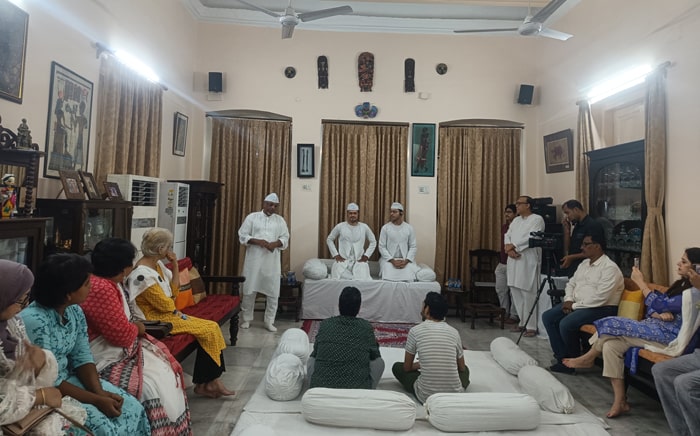
On Saturday, some well-known people from the Muslim community as well as non-Muslims were present at Octogenarian OP Shah’s central Kolkata residence for the Gandhian’s interfaith iftar party. Among those invited were professors, social activists, journalists and chartered accountants.

“India is a country of several languages, cultures and religions. I always used to think how to bring people of different religions closer. I believe that when different communities celebrate each other’s festivals, they understand each other better. So three decades back I started hosting Iftar,” Shah informed eNewsroom.

The Gandhian, who has also worked as an editor and has been a member of the Press Council said, “Some common and some new faces are included in my guest list. In the last thirty years, it has been attended by diplomats, ministers, army persons, retired judges, bureaucrats, MPs and MLA.”

He added, “We call the guests one-and-half-hour ahead of the iftar timing, so that we can have a good discussion on Islam. These talks have helped clear many misconceptions about the religion.”

Like all other iftars hosted by Shah, this year’s iftar party too had people asking questions related to Islam. Saturday’s discussion began with the host and his guest Bimal Sharma, a senior management consultant broaching the topic of Jihad.

Professor and activist Nousheen Baba Khan tried to explain in detail.

“I feel that Jihad is not exclusive, but rather a progression towards the ultimate goal of self-mastery and devotion to Allah. There are three forms of Jihad. They are;

Jihad-e-Asghar, the lowest form of Jihad, is about defending oneself and others against physical harm or injustice. ‘Self-control’ is essential in determining when and how to respond to threats, and the use of force should always be a last resort.”

“Jihad-e-Akbar, the higher form of Jihad, is about the struggle against one’s own inner demons and weaknesses. This form of Jihad requires a deep understanding of oneself and the ability to control one’s thoughts, desires, and impulses. ‘Self-control’ is crucial in this type of Jihad, as it involves resisting temptation, overcoming harmful habits or addictions, and striving towards spiritual purity and enlightenment.”

“Finally, Jihad-e-Kabir, the highest form of Jihad, is about seeking and upholding truth in all aspects of life. This form of Jihad involves standing up for justice, speaking out against oppression and falsehood, and seeking knowledge and wisdom to live a life that is aligned with the teachings of Islam.

‘Self-control’ again is essential in this type of Jihad too, as it requires resisting the temptations of power, wealth, and influence to stay true to one’s principles and values,” she added.

Irfan Sher, who is raising awareness about Waqf property related issues in Kolkata and outside, talked about how different religious books give a similar message – there is one God.

Mahesh Shah, a CA agreed with Sher. He explained that just like separte sections are created to accomodate large number of students, several religions came into existence to accommodate and cater to the beliefs of the world’s large population. Mahesh had participated with his wife, Renuka Shah, a women’s rights activist.

Rabiul Islam, Professor of Mathematics at St. Xavier College mentioned the issues that Indian Muslims face while fasting during the month of Ramazan.

Senior journalist Abdul Aziz pointed out that there is also a misconception that Islam came to this world along with Prophet Muhammad, “But it came with the first man in the universe, Prophet Adam. Islam completes with Prophet Muhammad and there Allah through Quran said that now no prophet will be sent to mankind. The Quran also says about one lakh 24 thousand prophets and we have to believe in all.”

Biswajit Matilal, ex VP Communication remained a patient listener throughout the conversation and joined the iftar.

Journalist Afaque Haider and tax consultant Md Hussain Rizwi were the other guests.

Nurullah Jawaid, a journalist, expressed his gratitude to OP Shah for organizing such a get-together to save Ganga Jamuni Tehzeeb, which is on the decline.

Since Shah is a vegetarian, he serves veg-iftar and it has been appreciated by the guests.

Shah is also Chairman of Center for Peace and Progress. The iftar gets hosted under the center.

Opposition leaders rally in support of Rahul Gandhi after disqualification from Parliament

0

Kolkata: Journalist Siddique Kappan, who was released on bail after serving more than two years in jail, fact-checker Mohammed Zubair, who got bail after spending 23 days in jail, and Rahul Gandhi, who has been disqualified from parliament, have one thing in common.

Kappan was on his way to report on Hathras gangrape case, when he was detained midway, without him even reporting the story. He was kept behind bars for 28 months.

Zubair, co-founder of Alt News, had started the Unhate campaign, to highlight hate speeches made right from Nupur Sharma to several so-called religious leaders, on Twitter. He was arrested by Delhi Police over a fictitious tweet and was only granted bail after the Supreme Court intervened.

Gandhi, in his recent speech, highlighted the relationship between Prime Minister Narendra Modi and businessman Gautam Adani to allege that the Indian PM supports crony capitalism. However, the Congress leader was sentenced to two years imprisonment in connection with another speech, in which he had asked why every thief has ‘Modi’ as surname.

All of the above three were questioning the government, but instead of taking action against the accused, the questioners were arrested or punished.

In PM Modi’s ‘New India,’ criminals or accused individuals are not being arrested or held behind bars, but its those who raise questions are having to face the consequences.

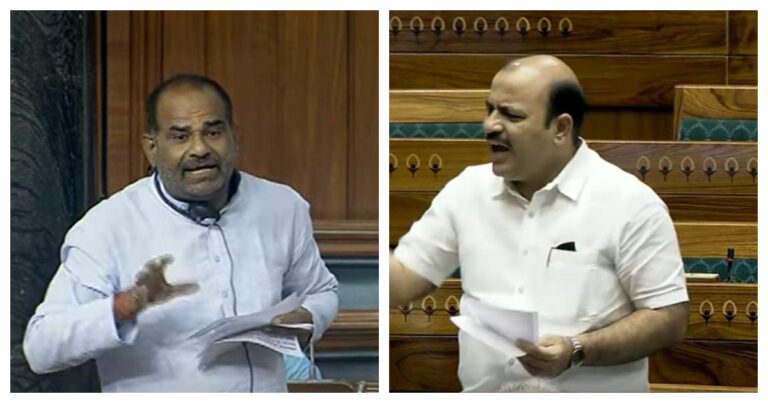
Within a day of the two-year sentence imposed by a Surat Court, Speaker of Lok Sabha, Om Birla, disqualified former Congress president. Most of India’s opposition parties and their leaders in solidarity with Rahul Gandhi spoke out against the action.

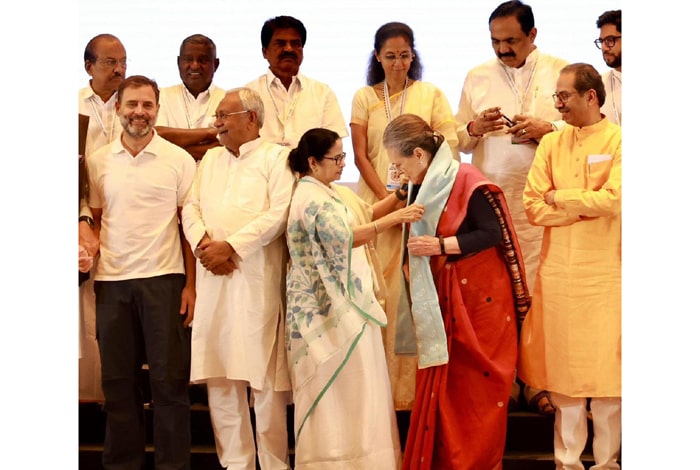
Saugato Datta, Managing Director of Ideas 42, compiled a list of tweets in which opposition leaders (including those who do not always see eye to eye with Congress) expressed support for Rahul Gandhi and spoke out against his malicious disqualification from Parliament. This list includes Trinamool Congress chief Mamata Banerjee, TMC leaders Mahua Moitra and Derek O’Brien, Arvind Kejriwal (the National Convener of Aam Aadmi Party), Akhilesh Yadav (President of Samajwadi Party), MK Stalin (President of DMK), Pinarayi Vijayan (CM of Kerala and Politburo Member of CPM), YSR of TRS, Sitaram Yechury of CPM, Sharad Pawar (NCP chief), Tejashwi Yadav of RJD, Hemant Soren of JMM, Uddhav Thackeray of Shiv Sena, and Jayant Singh of RLD.

Dipankar Bhattacharya, CPIML General Secretary, also tweeted against the disqualification and called for a united opposition.

The ruling Bharatiya Janata Party is now focusing on Rahul Gandhi’s speech for which he was disqualified, alleging that it was against the Other Backward Caste (OBC) community.
However, the news has been reported in almost all international media, and all have mentioned Gandhi’s recent speech in parliament on the relationship between PM Modi and Adani. Adani’s companies were reported by Hindenberg Research as short-selling, which was the main reason for the disqualification. The report led to losses of billions to Adani companies and the invested money of government units.

Lydia Polgreen, New York Times Opinion columnist, tweeted, tagging the NYT news on Rahul Gandhi’s disqualification: “India had been losing its democracy slowly. Now it’s happening all at once. This is a classic move in the elected autocrat playbook: use a pliant justice system to make your most powerful opponents ineligible to run against you (sic).”
While opposition leaders and international media seem worried about Rahul Gandhi’s disqualification as they believe it is yet another attack on Indian democracy, Indian National Congress will hold a protest against it from Monday.

A Twitterati Anas Tanwir commented on it, “Haan weekend mana lo pehle (Yes, let them celebrate the weekend first.”

On Saturday, Rahul Gandhi held a press conference and said, Prime Minister Narendra Modi is scared of my next speech on Adani.

Nishikant’s indecent language and Mahua’s digging into his education qualification

Kolkata: Mahua Moitra, Trinamool Congress’s member of parliament known for her fiery speeches inside the parliament, also uses Twitter to highlight major issues with documents. The Krishnanagar MP has raised many serious points about the Adani Group on Twitter recently. She has also tweeted the discrepancies in the affidavit of Bharatiya Janata Party MP from Godda, Nishikant Dubey about his MBA, PhD degrees and exact age during Dubey’s matriculations.

The allegations against Godda MP are getting serious

On Tuesday, the TMC MP tweeted about the BJP MP’s age during his matriculation. Moitra mentioned that in 2009, Godda MP’s age was 37 years. And in 2014, he was 42. This means the MP was just 10 years old when he had done matriculation. She also shared the two affidavits Godda MP submitted to the Election Commission.

Earlier, on March 17, Moitra had tweeted about Dubey’s MBA degree. He pointed out that while the full-time degree has been obtained for the year 2013-15, BJP MP was also a full-time member.

mahua moitra tweet nishikant dubey bjp tmc mp

And on the same day, TMC MP had also tweeted that Delhi University in 2020 through an RTI claimed that no person with the name of Nishikant Dubey ‘either admitted or passed out’ from any MBA programme in DU.

After her RTI-related tweet, Moitra also tweeted: “People who live in glass houses shouldn’t throw stones. And people who have fake degrees & have lied on affidavits should definitely not throw the rule book (sic).”

Dubey’s use of filthy language against the women MP and MLA

In response to the female MP’s tweet on his degrees, Dubey came up with an Election Commission letter but used obscene language in two of his tweets against TMC MP and Congress MLA Deepika Singh. On March 18, Dubey tweeted and used words like (Vikrit Mansikta Ki Shikar Bengal Se Aayi Ek Mahila Sansad aur Jharkhand Ki Vikrit Vidhayika) and appealed to cadres not to mock them as in Hinduism, Vishali’s Nagar Vadhu (a prostitute) was given respect.

After the tweet, several netizens criticized the BJP MP. AAP leader Alka Lamba also reminded that PM Modi’s wife Jasoda Ben will get such respect.

mahua moitra tweet nishikant dubey bjp tmc mp

Delhi Commission for Women (DCW) chief Swati Maliwal also slammed the BJP MP for his ‘nagar vadhu’ tweet and alleged that he referred to Trinamool Congress MP Mahua Moitra and Congress MLA Dipika Pandey Singh.

However, some Twitteratis have also suggested the TMC MP should not get distracted and remained focused on Adani issues.

It began after Nishikant Dubey cited the rule book to disqualify Rahul Gandhi, on Congress MP’s allegations against businessman Gautam Adani and Prime Minister Narendra Modi.

Godda MP has history of using foul language against his opponents

Earlier also, questions have been raised on the degrees of Godda MP and then again he had used foul language for the officers and leaders of Jharkhand.


mahua moitra tweet nishikant dubey bjp tmc mp

He had even tweeted that the Hemant Soren government will not be able to see the light of September 2022.

And when the Hemant Soren government did not fall, Moitra mocked the BJP MP for his prediction.

Nishikant Dubey has been into the limelight recently for all the wrong reasons and even slapped with FIRs for allegedly disturbing government officials in their performing their duties in Deoghar airport.

Interestingly, even after a day, Dubey, who is very vocal on every issue and active on Twitter, did not respond to TMC MP’s age-related tweet.

All Rounders Power Team India to Test Win over Aussies, Key to Success in ODI Series 

0

[dropcap]A[/dropcap]fter a convincing 2-1 series triumph over Australia, Team India has once again shown its ability to conquer all challenges. In the process it has not only reached the final of the WTC but also emerged as the top ranked side in the world in all three formats. While most players made contributions to the team’s win, perhaps the most pleasing aspect of India’s victory was the key role that the three all-rounders played as they came up with feats that few would have expected them to at the start of the Border-Gavaskar Trophy.

On spinning tracks, India remained dominant across the board in the first two tests. At times it was also a case that Australia shot themselves in the foot, as exemplified by their implosion in the 2nd innings of the 2nd test when they collapsed from 61-1 to 113 all out. Australia panicked quite often and their nerve, tactics and character were all found wanting in crunch moments in the first two tests. In contrast, India was cool and calculated. While pitches were not the monsters they were made out to be, they bowled smartly and strategically, knowing that the Aussies would fall by playing rash and reckless shots.

The fizzing deliveries from the “Revving Ravis”- Ashwin and Jadeja – were too hot to handle for most Aussies for most of the series. Their bowling exploits gave Team India a decisive edge to skittle out the Aussies in low totals. Both of them ended up as the top wicket takers in the series and in a rare occurrence were also the joint winners of the Man of the Series award.

In the batting department, Shubman Gill consolidated his rising star status with a fine century in the final test. Rohit Sharma too began the series with a hundred but was slightly below his best in the next three matches. Virat Kohli also grinded out his 75th international century in the 4th Test, showcasing that class is definitely permanent!

The series though might be remembered for the class act by India’s all-rounders. Jadeja especially made a smashing comeback as he was out for six months due to injury and in his comeback series vs Australia, he finished with 22 wickets from 4 matches which has helped him massively in the ICC Test all-rounders rankings. He is now the top all-rounder in the world in the Tests format. Jadeja also made good contributions with the bat in the series.

Similarly, Ashwin apart from his bowling brilliance, scored a vital 23 and 37 in the single innings he got in  the first two tests respectively.  After Jadeja at the top of the Test all-rounders list, Ashwin and Axar occupy the 2nd and 4th  spots and the combined exploits of the trio kept Team India ahead through the series.

It is this luxury of having 3 match winning all-rounders in Ashwin, Jadeja and Axar Patel that made Team India seem invincible and gave a special depth to their batting unit. In the first Test, when India was collapsing, it was the Jadeja- Axar partnership that rescued India. In particular, Axar was magnificent as a batter all through the series. He got limited chances to bowl due to Ashwin-Jadeja working their magic, but as he scored 84, 74, 12*, 15* and 79 in the series, he barely put a foot wrong as a batsman!

Team India can carry the confidence of the Test win in the ODI series. But that may be a much closer, tougher encounter with Australia being bolstered by the arrival of fresh players. Besides Cameroon Green, they will have Stoinis and Maxwell to add to their all round skills for the ODI clash. Even Mitchell Marsh, returning from ankle injury, will now be available though he will not be able to bowl in this series where the Aussies will also miss the skills of Pat Cummins.

For India, KL Rahul who flopped badly in the test series will get a chance to revive his sagging career. In Rishabh Pant’s absence after his freak accident, Rahul has donned the wicketkeeper’s gloves quite adequately and he will hope to also make a strong statement which is critical for his long-term future as an integral member of Team India.

With skipper Rohit Sharma absent for the first ODI in Mumbai due to family factors, all-rounder Hardik Pandya will don captaincy duties in the 50-over format for the first time. His batting, bowling and fielding has often given a winning edge to the Indian team. Ever since he led Gujarat Titans to a historic IPL triumph in 2022, Hardik is seen as a potential Team India skipper and the first ODI will be an opportunity for him to showcase his captaincy credentials. Of course, Hardik’s presence strengthens the All-round balance for Team India in the ODI encounter with the Aussies.

Overall, fans and cricket cognoscenti can look forward to a close contest as both sides are likely to go full tilt in the ODI World Cup year. In particular, the Aussies, smarting from their Test defeat, will be super-charged up for success in the ODI clash. There is less hype about the series considering that it follows the BGT and is preceded by IPL. Nevertheless, with the two giants matching their skills in the 50-over format, cricket fans are in for a pulsating, mouth-watering encounter before they get ready for the extravaganza of the IPL!

मदरसों ने जिस तरह से शिक्षा के माध्यम से अमीर-ग़रीब, जातिवाद का फर्क मिटाया वह संसार के किसी अन्य एजुकेशनल सिस्टम में नहीं मिलता

स्टिस राजेंद्र सच्चर ने मुसलमानों को आरक्षण देने की वकालत करती हुई ऐसी रिपोर्ट पेश की जिसे पढ़ कर कोई भी ईमानदार शख्स इसे लागू करवाने की हिमायत करेगा। वह सेक्यूलरीज्म का रिपोर्ट कार्ड नहीं बल्कि एक पूरी कौम को आज़ादी के बाद सरकारी नौकरियों, शैक्षणिक संस्थानों, प्राइवेट सेक्टर और दूसरे ज़रूरी आयामों से बेदखल कर देने का दस्तावेज़ था। उसमें बताया गया है कि मुसलमानों के हालात दलितों से भी बदतर हैं। सच्चर ने किसी एक भौगोलिक क्षेत्र के कुछ मुसलमानों, सवर्ण अथवा पिछड़े मुसलमानों की बात नहीं कि थी बल्कि उन्होंने उस रिपोर्ट में हर एक मुसलमान की बात लिखी थी।
इन हालातों में भी मुसलमानों ने अपने शैक्षणिक संस्थानों को बचाए रखा। जब उनके छोटे कल-कारखानों को बंद करवा दिया गया तो वे काम सीख कर खाड़ी मुल्क की तरफ जाने लगे। वहां से पैसा भेजते, किसी तरह से घर परिवार चलता। देश की गरीबी भी दूर करने का काम किया। लेकिन सरकारें तो चाहती थी अजमल और याकूब पंचर बनाए।
कोई सकीना किसे के घर में बर्तन मांजे। और इसमें वे कामयाब भी हुए। लेकिन ऐसे लोगों के सामने मदरसे सीना ताने खड़े रहे। हाफिज़, मौलवी और आलिमों ने गांव गांव टहल कर अभिभावकों से बच्चों को मांगा। उन्हें पढ़ाया ताकि वे इज्जत की ज़िंदगी बसर कर सकें। यतीमों को गोद लिया। बेसहारा को ज़िंदगी दी।
मुझे इस्लाम की बहुत सी चीज़े पसंद हैं उसमें एक चीज़ यह भी है कि इस्लामी शिक्षा पर किसी एक का हक़ नहीं। कुरान पढ़ कर कोई भी हाफिज़ बन सकता है। जिस गरीब परिवार को गांव में अन्य मुसलमानो द्वारा दुत्कार दिया जाता था, उसका बच्चा हाफिज-ए-कुरान बन पगड़ी बांधे आता है तो सामंती और लठैत मुसलमान भी कुर्सी छोड़ उठ जाते हैं। मदरसों ने भारत में सामाजिक क्रांति की और चुपचाप की। इसलिए मदरसों की ज़रूरत है।
मदरसों ने जिस तरह से शिक्षा के माध्यम से अमीर-ग़रीब, जातिवाद का फर्क मिटाया वह संसार के किसी अन्य एजुकेशनल सिस्टम में खोजने से भी नहीं मिलता। हाफिज़ और मौलवी के नाम के बाद आज भी साहब लगाया जाता है। पैसों से भरपूर मुसलमान भी ऐसे आलिमों को सम्मान देते नहीं थकते।
हमारे वोट से सरकार बनाने वालों ने अपनी जाति, अपने लोगों को नौकरियां दी लेकिन मुसलमानों को दंगा, गाय, भगवा में फंसा कर शोषण करते रहे। इन सबके ज़िम्मेदार कौन लोग हैं? वे लोग जो खुद के विकास सूचकांक को बढ़ाते रहे लेकिन साथ में रहने वाले मुसलमानों की सुध भी न ली। कभी लिंचिंग पर हफ्तों चर्चा, कभी गाय चोरी पर दर्जनों डिबेट, मज़ाल है जो मुसलमानों की अच्छाई पर बातें हो।
कभी फर्जी इनकाउंटर तो कभी दंगे। यही नियति बना दी गई हमारी। बुद्धिजीवियों से लेकर क्रांतिकारियों तक ने कभी नहीं सोचा कि मुसलमान इस देश में भयभीत क्यों रहता है। क्या बेहतर माहौल बनाने की ज़िम्मेदारी उनकी नहीं है जिनके अपने लोगों, नेताओं के द्वारा ऐसे हालात बना दिए गए जिससे हर तरह की समस्या सामने आ खड़ी हुई। हमारे ऊपर दंगे थोपिए और हमारे ही मोहल्ले में शांति मॉर्च निकालिए, कहां का उसूल है यह।
आज भी लाखों की तादाद में मुस्लिम बच्चे मदरसा तो छोड़िए, बेसिक स्कूली शिक्षा से वंचित हैं। मुद्दा होना चाहिए था उन बच्चों को तालीमयाफ्ता कैसे बनाया जाए लेकिन विडंबना देखिए लोग बात कर रहे हैं मदरसे होने चाहिए या नहीं। मदरसों के प्रति ऐसा माहौल बनाया जा रहा है कि वहां कोई जाए ही न। ठीक है। न जाए। तो करे क्या। कहां जाए। कान्वेंट स्कूल? जहां की फीस पूरे परिवार के महीने भर के राशन के बराबर होती है। अच्छा सजेशन है। खूब समझ कर दिया गया होगा।
मदरसे, मुसलमानों के पैसे से चलते थे, चलते हैं और चलते रहेंगे। वहां सिर्फ मज़हबी नहीं बल्कि एक ज़िम्मेदार, आत्मनिर्भर और मेहनतकश इंसान बनाने की ट्रेनिंग दी जाती है। वहां से मौलाना आज़ाद बने, वहीं से ज़ाकिर हुसैन और वहीं से कलाम। जिसकी जैसी सामर्थ्य थी वो वैसा बना। आप चाहतें हैं हम पंचर की दुकान पर बैठे तो यह होने नहीं देंगे। कुछ न होने से कुछ होना, बन जाना बेहतर होता है। हम आपकी जूती नहीं साफ करेंगे, मस्जिदों के अहाते में पोछा लगा लेंगे।

Why Kapil Sharma matters in these uncertain times

0

In a recent episode of Kapil Sharma Show, a visibly amused Anupam Kher asked Kapil Sharma, “How do you manage to come up with such rib-tickling one-liners at the drop of a hat,”? The effervescent and ever-smiling Kapil, always thinking on his feet, came up with a quick-witted response that had the audience in splits. He said, “I am from Punjab where people barely have anything constructive to do. They just keep talking silly things. I was also one of them. Somebody suggested why didn’t I go to Bombay as I would make money by selling those wacky and funny ideas.’’ This is vintage Kapil Sharma, the current baadshah of comedy, gifted with a puckish sense of humour, and who for the last ten years, has become a household name in India.

A self-made man, Kapil hails from an ordinary middle-class family in Punjab’s Amritsar. Kapil is a born comedian and has a nuanced comic talent. His show guarantees laughs, and the quality of darts is mostly of the highest standard. In his shows, bodacious by all accounts, he regales and entertains us by asking his celebrity guests to narrate their funny experiences and embarrassments in life. Be it actors Salman Khan, Akshay Kumar, singer Mikka or cricketer Harmanpreet Kaur, Kapil has funny questions up his sleeve for each of these celebrities from different professions. In fact, Kapil has this uncanny knack of bringing the best out of celebrities who grace his shows. When Kapil flirts with Bollywood heroines, peppered with innocuous remarks, it provides lots of belly laughs. Kapil loves to indulge in self-deprecating humour by making fun of his own tooti footi (Pidgin) English in front of his guests. He is like one of us and comes across as a simple guy sans any ego and pretensions. Perhaps, Kapil is one of those rare personalities who, besides being a comedian, is also a gifted singer. The comedian will soon be seen as a disillusioned delivery boy in the upcoming movie Zwigato directed by Nandita Das.

Kapil’s fans come to India from as far as the US, the UK and other European countries to be part of the audience in his reality show. The audience comprises a whole gamut of people from all walks of life. They sit together, laugh together irrespective of their social background. Just as nature allows no vacuum, so Kapil and his fans draw each other. In other words, humour is a great leveller. Kapil has made us realize that life is worth living no matter how tough and disconcerting it might get. He reduces our stress hormones. His show teaches us to be optimistic and look at the lighter side of life. He has impressed on us the need to laugh at oneself and at life’s idiosyncrasies.

Using a hackneyed adage, laughter remains the best medicine in these uncertain times and has its therapeutic underpinning, especially after the devastating pandemic laced our guffaws with shades of blue. And who else but our own Kapil to keep reminding us that a day without laughter is, in the words of Charlie Chaplin, “a day wasted.”

kapil sharma show stand up comedian laughter Zwigato
Kareena Kapoor Khan with Kapil Sharma in his show | Courtesy: Twitter/KapilSharmaK9

Making it big in the dog-eat-dog world of stand-up comedy was never easy for Kapil who started off by doing small comic roles in comedy shows on TV around 2009. The likes of Raju Shrivastav and Sunil Pal, despite their advancing age, were still drawing a large crowd in public functions and gatherings. But the young and good-looking Kapil was made of different stuff. His comic timing and unique dialogue delivery marked him out as someone who had all the potential to blaze a trail in Indian comedy. Finally in 2012, Kapil Sharma came to success after he got the opportunity to host Kapil Sharma Show and wrote its genetic code in an act of derring-do. There is nothing on television quite like Kapil Sharma Show which also has other talented comedians to jazz up the episodes with their madcap antics. It has completed ten years and continues to rule our hearts. Kapil has more than 44 million followers on Instagram.

We desperately need the likes of Kapil Sharma whose comedy show is a balm for our frazzled nerves in an age when militarism, communal disharmony and violence have become endemic. So, next time, you feel overburdened with weltschmerz, or a red mist descends, tune in to Kapil Sharma Show to laugh your head off. It will be good for the health of your heart.

India is far behind in reaching the target of the mean population sodium intake by 2025

0

An assessed 2.2 million and 7 million cardiovascular disease deaths could be averted by 2025 and 2030 respectively if countries across the globe meet all the targets set by World Health Organization (WHO) in lessening their mean population sodium intake by 30 percent.

Recently a report published by WHO says that as of October 2022, only 55 percent of the total 194 member countries have implemented WHO-guided sodium reduction policies and other means through mandatory and voluntary approaches. Along with many other nations, India is also well behind its goal of cutting down sodium infusion by 30 percent by the year 2025.

Usually, we have sodium in our body through Table Salts, meat, poultry, fish, ready-made and convenience foods, composite dishes, savoury snacks, beverages, pasta, noodles, cheese, dressings, dips, game, processed food, chocolates, biscuits, cakes, butter, sauce, and many more.

In 1807, discovered and isolated for the first time by the British Chemist Sir Humphrey Davy, Sodium(Na) is a soft, silvery-white, highly reactive alkali metal of Group I of the Periodic table. It’s the 6th most plentiful element comprising 2.8 percent of Earth’s crust. Usually, people intake sodium as table salt (Sodium Chloride) or as flavor-enhancer Sodium Glutamate. It helps to carry nutrients through the plasma membranes and to maintain normal cellular homeostasis. It eases the function of nerves and muscles and keeps the balance of fluids and electrolytes. The kidney regulates how much sodium is in the blood as too much sodium builds up in the blood causing Hypertension.

Sodium seems to be a healthy element but there is no exact estimation of how much of it we should consume. Though it is appraised that we can infuse 500 milligrams of sodium for a health benefit. But the global average of sodium input is calculated to be 4310 milligrams per day (nearly 10.8 grams/day salt), which is more than double the WHO suggestion of fewer than 2000 milligrams per day (nearly 5 grams/day salt) for an adult. Children should be adjusted downward based on their energy requirements relative to those adults. Here lies the gravest concern of suffering from the burden of non-communicable diseases like cardiovascular disease, hypertension, gastric cancer, obesity, Meniere’s disease, and Osteoporosis also. Worldwide there is an assessed 1.89 million deaths per year associated with excessive consumption of sodium.

To mitigate this global problem, in 2013 all the member countries of the WHO adopted the Global Action Plan for the Prevention and Control of Non-Communicable Diseases 2013-2020 and set a target of a 30 percent relative reduction in mean population sodium intake by 2025 and 25 percent relative decrease in the prevalence of raised hypertension. As sodium reduction seems to be a very cost-effective route to get rid of a load of heart diseases, in 2015 all the member states approved the updated, affordable, feasible, impact-driven “Best Buys” Sodium Reduction Policies of WHO.

The four “Best Buys” interventions are the implementation of a National salt-reduction strategy, Consumer Awareness, Clean Front-of-Pack labeling of salt content on food, and Reformulation of processed foods to contain less salt. To examine the deployment of these policies WHO has introduced the Sodium Country Score ranging from 1 to 4 where 1 implies the lowest and 4 implies the highest implementation level. But the report indicates that there are a few countries that have been able to decrease population sodium consumption. Out of 194 states, only 5 percent have deployed at least two mandatory policies, only 22 percent have implemented at least one mandatory policy and only 33 percent have followed at least one voluntary strategy. Since the progress is slow All the member nations adopted the implementation Roadmap-2023-2030 for achieving the target.

The report indicates that low-income countries have started to run these mandatory policies less frequently. The most applied measure is a voluntary media campaign comprising 49 percent of all the member states. In the southeast Asian region there are 11 States out of them no one achieves the Sodium Country Score 4. India is one of them and has a score of 2 with at least one voluntary policy implemented. Like many other lower-middle-income countries India is also lacking a national framework to fight against this menace, though India has a mandatory declaration of sodium on industry-manufactured (pre-packaged) foods.

As per the report, an Indian consumes 3873 milligrams of sodium (nearly 9.8 grams/day salt) per day on average. This inference is a great danger!

Due to the changes in eating habits of Indian people, they’re eating extra amounts of sodium, sugars, and unhealthy fats, particularly trans-fatty acids, and saturated fatty acids. As a result, people are suffering from unhealthy diet-related ailments. So there is an urgency to formulate WHO’s recommendation on the ground.

To fight back against this cause WHO developed benchmarks for sodium content in 18 food categories and called on food operators to deploy this globally in 2022. WHO also assures to help all the countries to fulfill the target with new and better tools, innovative ideas, advocacy steps, and specialized subsidies. If we reach the extended target, we’ll be able to reduce the rate of casualties due to cardiovascular diseases by 3.1 percent by the end of 2030.