After suggesting MLAs, not to take commission, I do not get a chance to speak: BJP’s Jharkhand MLA

Giridih: Member of Legislative assembly (MLA) from Gandey Assembly segment, Jharkhand, Jai Prakash Verma, made a startling revelation about his party colleagues. He said, “The party leaders do not give me a chance to speak inside the state assembly after I had talked about how MLAs could play an important role in countering corruption.”

MLAs refuse to take self-correction advice on corruption

“Every member of the house was giving a speech on how to eradicate corruption in Jharkhand. When my chance came, I explained how everyone (81 legislators) could help. I mentioned that if we don’t take a commission and ensure that those working under us are not corrupt, then we could take corruption straight on. I was asked to sit midway,” narrated Jai Prakash Verma, an MLA of Bhartiya Janata Party (BJP).

“I had made this suggestion almost two years back. But since that fateful day, I did not get proper chance to speak inside the assembly,” he added.

Not a newbie in politics

The young leader from Gandey, who is not being heard inside Jharkhand’s Assembly, is not a rookie when it comes to politics. Jai Prakash Verma or JP is the nephew of late Ritlal Prasad Verma, a six-time MP and one time MLA from Koderma and Jamua constituencies, of Jharkhand, respectively.

His personal profile is impressive too. Forty five-year-old JP is a postgraduate (Geography and English) and an alumna of Sainik School, Tailaya. He is a graduate of Chandigarh’s DAV College, the same college that former Indian Cricket team captain, Kapil Dev went to.

I fight against corruption

This first time MLA’s Facebook also talks about helping the poor and fighting against corruption. And Verma claims that he actually practices what he preaches.

“I do not take commission and I have told all the block development officers (BDOs) and Circle Officers (COs) of my area that they should abstain from taking commission from my cadres for developmental works being carried out in my area,” he said.

During the interview, the MLA also accuses officials of delaying his work. “As our cadres do not give any commission, NREP (National Rural Employment Programme)’s Executive Engineer Ramashray Sharma* often creates a problem in our work,” he reveals.

He then adds, “This often delays the MLA funds from getting released for my area. If you will see expenditure record, you will find that Gandey’s MLA has used least amount of funds, which is because officials delay in my works.”

Lavish election campaign corrupts a party

Before signing off, he mentions, “I also believe that parties should not spend much on election rallies as such rallies often lay the foundation for corruption in future.”

Rampant corruption in Jharkhand is not a new thing. Former chief minister of Jharkhand, Madhu Koda has even been convicted in corruption charges.

And the revelation by Verma, of not being allowed to speak inside assembly, just because he wants self-rectificationin order to eradicate corruption from state, is something serious to debate on.

The MLA, has twice, raised serious questions on the functioning style of Jharkhand Chief Minister Raghubar Das and had said that Das does not listen to MLAs. However, on being asked on the same, he refused to comment.

*eNewsroom tried contacting Executive engineer Sharma to seek his comment on the allegation but he couldn’t be contacted on the same

Adani Power Plant in Godda is a violation of Paris Climate Agreement—Babulal Marandi

0

Kodaibank (Giridih): Babulal Marandi, the former chief minister of Jharkhand supremo of Jharkhand Vikash Morcha (Prajatantrik), today claimed that Adani’s proposed power plant in Godda, Jharkhand, is a violation of Paris Climate Agreement 2015.

Godda Thermal Power threat to environment

The Godda Thermal Power Project of Adani Powers will be primarily using coal imported from Indonesia, South Africa and Australia. It is the high usage of coal for power generation that Babulal Marandi is averse to. The Paris Agreement aims at holding the rise in global temperature to below 2 °C above pre-industrial levels and to limit the increase to 1.5 °C above pre-industrial levels. “It further clearly states to develop a system which lowers greenhouse emission. Coal or fossil fuels emit maximum greenhouse gases when burnt. Is it not the thermal plant violating the agreement?” he questions.

According to Marandi, it’s not just environmental issues that the thermal plant has. He mentions, “This thermal plant of Adani will need a lot of water to produce electricity. According to estimates made, it may be equivalent to the water needed by the people of Godda, but Godda is not a water surplus, but water scarcity district. And often people have to face it.” According to him, the biggest issue is that the thermal plant will be producing power for Bangladesh.

Jharkhand’s pain will be Bangladesh’s gain

He then quickly questions, “Tell me, how justified is the government in taking away the lands of local farmers to set up this thermal plant which will not cater to the demand of the localities but that of Bangladesh?” He then adds, “In return, for facing all the adversities, the people of Godda will get to enjoy the pollution caused by this project.”

“The project is not feasible also as, after 20 years people will use only renewable energy, especially solar power than electricity. The largest power generation plant so far is NTPC, which generates electricity which is costlier than that of solar energy,” he said.

Marandi even challenged Prime Minister Narendra Modi to debate on the issue, “I challenge PM Modi to debate with me at Morahbadi Ground (Ranchi), on the benefits of Adani’s power plant for the people of Jharkhand.”

No compensation for land acquired

JVM (P)’s MLA Pradeep Yadav and several other people were imprisoned for opposing the power plant in Godda. Locals had also protested against the forceful acquisition of their land. But not much had been reported in the media.

Marandi also claimed that since independence, a large number of people in Jharkhand have been displaced because of establishment of public sector units, a trend which still continues. “In the last 70 years, 1400 lakh hectares land have been acquired for the formation of PSU leading to the displacement of thousands of people. These poor people were not even given proper compensation.”

He further points out, “Raghubar government has recently cancelled 2100 lakhs hectares of Gair Majrua lands and has transferred them to the land bank, which is being displayed to the corporate as land available in Jharkhand for business. However, it has not been surveyed how many people are living on these lands, and most of the people living with government and administration’s permission only.”

“In Deoghar itself, more than 100 families have been displaced and left to live without a roof over their head, for the construction of the airport. Recently, one of the displaced local has died out of cold,” Marandi alleged. He then adds, “Raghubar Das only works for corporates.”

Of corruption and Raghubar Das

During the interview, he also accused Jharkhand’s chief minister Raghubar Das of being deeply involved in corruption.

“The large-scale irregularities in mining lease, PWD tender and expense for advertisements will send minister and officers to jail if properly investigated. In fact, there should be CBI inquiry into these issues,” Marandi demands.

The JVM (P) chief also attacked Raghubar Das for not removing Rajbala Verma from the post of Chief Secretary. Verma has been sent reminders for more than 30 times by the CBI while investigating the multi-crore Fodder Scam, for alleged discrepancies in withdrawing money from Chaibasa treasury as the collector.

“I have told opposition leaders to stall the budget session of the assembly on the issue of Rajbala Verma only,” he reveals.

Marandi, who began his political career with BJP to become the CM and also a Union Minister, alleged that “In every act of Raghubar Das’ corruption, centre’s hand is in glove”.

The former chief minister of Jharkhand rues that reason for which Jharkhand was formed is yet to be fulfilled.

Where is Vikas?

“In last 17 years, Jharkhand has witnessed all kind of political experiments, right from having an independent CM to a non-tribal one. Now, it can also not be rued that no party has got a majority in the assembly. But if you want to get idea how much development (Vikash) took place in Jharkhand, see the government hospitals, neither block nor sadar hospitals are in good condition. The government schools are in bad condition, as the student-teacher ratio is very bad,” says Marandi, who was once a teacher.

“Residents of Jharkhand are unable to pursue B.Ed or engineering as they don’t have money to pay the tuition fees. In last three years, competent students, who cracked BIT Mesra’s engineering examination, were unable to take admission because of lack of money. About 20 seats remained vacant in the year 2015, 2016 and in 2017,” he adds.

Taking a final dig at the present CM of Jharkhand, he says, “The recent deaths due to starvation in Jharkhand are a proof of the development that the Raghubar government keeps claiming in its advertisements.”

As we wrap up, he is asked, on the possibility of getting into any political alliances for the forthcoming elections, he signs off by saying, “In the interest of Jharkhand, we can forge an alliance with any party, but BJP.”

A tribal, owner of priceless Alexandrite land, evicted and forced to wander

0

Gariyaband/Raipur: “World’s most precious stones lies beneath your land,” officers told me.  Praye Lal begin to narrate his story. He further said, “And your land is worth billions, but from now onwards, it will be used for the government. Give us your land and in exchange you will get a job, following which you wont have to wander to eke out a living. You will be made a guard for your land. You will be paid a salary to feed your family. Keep this Rs 12000. Following this incident, I was made the guard, but I was never paid the promised salary. After sometime, the officers removed me from the job.”

Around 240 kilometers away from Chattisgarh’s capital, Raipur, in the village of Sendimuda, in Gariyaband, lived a family of five. They neither had many utensil, nor even of earthen pots.

About 25 years ago, Pyare Lal, used to cultivate paddies in his two acres of land. Back then, his life was not really happy but then he and his family never had to skip meals. But life changed, once these stones were discovered under her field. These precious stones soon proved to be a curse for him, as now he has become a daily wage labour. The name of the priceless stone discovered beneath his farm is- Alexandrite.

Alexandrite, is a precious gemstone, which changes its colour depending on the intensity of light. During the day it turns green and gradually changes its colour to brown, violet and red as the day fades into night. Scientists call it the Alexandrite effect. It is said that in 1831, mineralogist Nals Gustaf Nordenscold, had discovered it in the Ural Mountain of Russia for the first time. And was named after Russia’s Tsar Alexander II. In Russia, 5 carat (1000 Miligram) Alexandrite has been found. Brazil too has deposits of Alexandrite of same weight. Other than these countries, this precious stone is also found in India, Sri Lanka, Madagascar and Tanzania. However, in these nations, only 3 carat Alexandrite are available.


Alexandrite tribal chattisgarh gemstone
The land of Pyare Lal

Coming back to Pyare Lal, he does not even know the names of the gemstone. “These gemstones, neither could help me nor the people of our village. We also do not know what it is used for. Today also, the patta of the mining area is in my name, but I am not allowed to go inside my own field. My land has been fenced and taken away by the government. However, I have not been given any farming land in exchange,” he rued.

In 2000, Chattisgarh was carved out from Madhya Pradesh. The State Mineral Department’s retired regional chief officer NK Chandrakar says, “In 1993, the entire had been taken under police custody and handed over to the Mineral Department. Same year, under the department’s guidance a survey was conducted. But we could not begin mining in the area, as we didn’t get the permission from the state government.” The department officially states, that 1918 pockets were dug, which yielded 307 gram Alexandrite.

Deputy of Deobhog Janpad, Deshbandhu Nayak informs, “Illegal mining began to take place, despite the area being under the custody of the department between 1993-98. Only when the villagers began to protest against illegal mining that it was curbed.”

On the other hand, Pyare Lal, who was forced to become a labour from farmer, has another grievance, “I have worked as a labour under MNREGA, but I was not paid my wage for 60 days.” He then questions, “Even after making me labour, government is not giving me my wage. Why is the government deceiving me again and again?”

Cartist Yatra: Where Art Gets Wings

Kolkata: After winning accolades in Ahmedabad, Mumbai, Pune, Bengaluru, Kochi and Hyderabad Himanshu Jangid, a vintage car restorer from Jaipur, reached Kolkata with a mission of spreading road safety and painting the town, albeit the cars of those who wanted to give an artistic twist to their four-wheelers. The Cartist Yatra reached Kolkata with its caravan comprising painted shipping containers, 15 artists and a myriad collection of automobile art.

The three-day art extravaganza hosted at the Eco Park, in association with HIDCO and Kolkata’s Museum of Modern Art (KMOMA) on its finale had as many as 150 young artists camping at venue, painting automobiles and canvases with cityscape, Howrah Bridge, the iconic rickshaws or human tongas, bright flowers, dancers, human caricatures, and everything else that captured the essence of the city.

“We not just had artists participating but also a healthy footfall of locals who came to witness this unique amalgamation of art and cars,” said Himanshu.

The participating artists got a chance to do some artwork on a Honda City and a few Maruti Zen. Running parallel to the live art extravaganza was a Cartist exhibition, where cars painted by artists in different participating cities were displayed along with a variety of modern art pieces including two must-see 1:1 scale handmade frames of Jaguar E-Type and a Volkswagen Beetle.

Cartist car art himanshu jangid
Another set of cars at the show

Speaking about the roadshow, Himanshu said, “It took Cartist Yatra about two months to reach Kolkata by road. The idea of Cartist and this journey is to blend art and passion for cars into a single entity. And of course, provide a platform to talented artists across India to showcase their creativity.”

The journey, which began on November 4 from Jaipur, has travelled to Ajmer, Bhilwara, Udaipur, Ahmedabad, Mumbai, Pune, Hyderabad, Bangalore, and Vijayawada, before reaching Kolkata, from where it shall be travelling to Delhi and Chandigarh.

What adds on to this unique yatra is the fact that in each city, Himanshu has been selecting a handful of artists, with an exceptional artistic bend, who will get a chance to assemble in Jaipur, for the annual Cartist Automobile Art Festival 2018.

Speaking of this opportunity was a young artist, Sumit Dey, “This is for the first time that an art event with such a unique concept has been hosted in Kolkata. I am very excited about participating in this event.”

After Manju, Barkti says, I am with Mamata Di, I will go wherever she goes

Kolkata: Sixty-five-year-old Nurur Rahman Barkati, knows the route to make it to the headlines. The controversial cleric, who had been sacked from his post of being the Shahi Imam of the iconic Tipu Sultan Masjid, in an interview to Bengali newspaper, neither accepted nor denied the possibility of joining Bharatiya Janata Party (BJP).

The news of Barkati, the man who openly criticized BJP and the man whom BJP abhorred, being roped in shocked many.

The probable induction of Barkati comes at the time, when two Muslim women associated with instant talaq case—Ishrat Jahan, the petitioner and her lawyer Nazia Elahi Khan joined BJP in Bengal, seems to be real.

This possibility has left many in shock. Taslima Nasrin, the author in exile, from Bangladesh, reacted on the development with very sharp tweet, “Times of India’s Bengali newspaper ‘ei samay’ published a news yesterday, Imam Barkati the Muslim fatwabaz fanatic may join BJP. Barkati said last year: ‘Muslims who work for BJP will be beaten up’. Now the question is who will beat him up?”

However, when eNewsroom contacted the controversial cleric, he said, “The question of me joining BJP doesn’t arise as of now. There has been no discussion with any BJP leaders regarding me joining them. I have always been a supporter of Mamata and will always be.”

On being reminded about his comments made to the media, he said, “See, I don’t do things under disguise. The day, I will be making a political move I will be calling a press conference and declaring it. You know very well, how competent I am at calling such press meets.” He then hinted to his controversial exit from the imamat of Tipu Sultan Masjid, from where he had decreed many fatwas, which made him earn the title of the fatwa cleric, added, “I have been enjoying my break till now. I am a 65 and at the moment am not interested in contesting any election.”

On being asked that could his unceremonious sacking from his citadel and Mamata Banerjee’s silence, be the reason for him to join BJP, he said, “Not at all. I have no bitterness for her.” On being asked about this proximity to Mukhtar Abbas Naqvi and Shahnawaz Hussain, he said, “That was when Mamata was with NDA. I will go wherever she goes.”

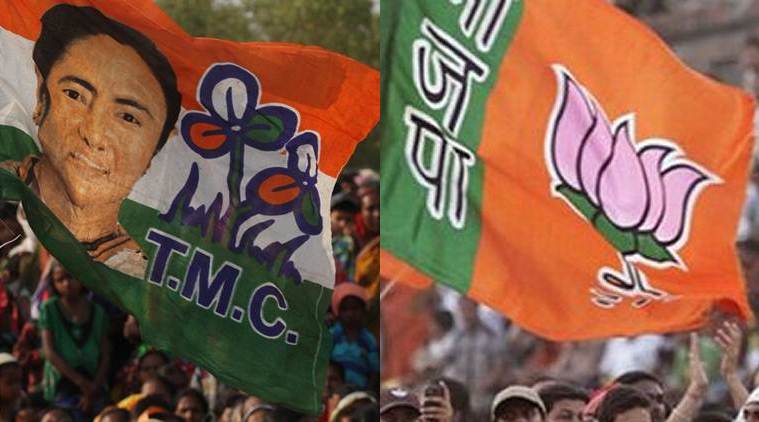
West Bengal BJP, has had to face a major embarrassment when Manju Basu, former TMC MLA was announced by BJP as its candidate for Noapara bypoll, denied being BJP’s candidate. She even declared that she is with TMC and Mamata Banerjee only.

However, those who know Barkati from close quarters feel that he is testing the water in both the parties. The mutawalli of Tipu Sultan Masjid, Anwar Ali, said, “He knows how to play his cards. He is using media to give two different statements, to stay in news. I know him from close quarters, I guess, in doing so he is testing the water of both BJP and TMC. At the moment the ruling party has distanced itself from him. So, by making such comments he gets to check if he can worm back to TMC.”

He then added, “But let me tell you, there is a strong chance of him joining the saffron brigade.” According to a source, it’s not just the fatwa cleric, but many known Muslim faces and clerics are on the list of people that BJP is trying to rope in. Needless to say, with the elections approaching, the recruitment of Muslims in BJP in Bengal is gaining momentum.

Sheltered in India After Attacks, Bangladeshi Blogger Faces Hate Speech Allegations

0

Kolkata: India has always given asylum to people who have been targeted for their freedom of expression in their respective countries. But then there are exceptions. Here we are talking about a person, who after being attacked in his own country reached India, took asylum and is now involved in spreading hatred and is even making money out of it. Meet Sunnyur Rahman, a resident of, Nakhal Para, Dhaka, Bangladesh. A self professed atheist, who was part of the famous Shahbag movement in Bangladesh. After being attacked by fundamentalist, he went into hiding.

The atheist blogger, who was once lauded by many for his rationalist approach and bravery during the Shahbag movement, is gradually being distanced by many, even from the atheist circle of Bengal.

Rahman, once proudly claimed in his video, in 2013, “I am a proud atheist. Thank God I am an atheist.” But now shares videos, where he is seen pleading for ‘ghar wapasi’, rejoicing on becoming a Sanatani Hindu and then stating how his Hindu brethren in India are exploited especially in Bengal. So Rahman is now Satyanisth Arya and he often posts videos, which are not against religious bigotry but have a communal in tone. On his line of attacks now are not religious beliefs but community, to be precise Muslims and the Bengali Hindus, whom he in many videos of his declare as meek people, who prefer boot licking the Muslims.

His date of entry into the Indian Territory is unclear, but Sunnyur Rahman began resurfacing on social media with videos of a different hue since 2016.

Several videos made by him are available on Google, Youtube, and Facebook. They have either been uploaded by Sunnyur himself or by some channel or by unknown individuals. Significantly, Sunnyur is not on work permit in India but in several of his videos and cartoons, he has shared his Paytm number, asking people to donate. Most of these videos often target the Chief Minister of Bengal or mock the Muslims of India. He uploaded his last video on December 30, 2017, where he shared the news of two other atheist bloggers Asad Nur and Lemon Fakir joining him in India.

Watch the video on Sunnyur

The tonality of recent videos is making his supporters distance from him. “Atheism is an ideology which questions the existence of God. Once an atheist, you are always an atheist. All of a sudden you can’t switch from atheism to theism,” said Prabir Ghosh, co-founder of Kolkata-based Bharatiya Bigyan O Yuktibadi Samiti, a science and rationalists’ association.

On being asked, what could be the reason behind Sunnyur’s change of tune, Satyajit Chatterjee, general secretary of Humanist Association said, “We had welcomed him when he had arrived in India. In fact we were supporting him when he was in Bangladesh, during the Shahbag movement. We keep following his videos, and off late have also witnessed his change in tune. His videos, definitely try to create a Hindu-Muslim divide, which is not acceptable, that’s definitely not the job of an atheist. It seems evident that he has drifted from his ideology.”  He then added, “Going by the content he now shares, we condemn what he is doing now.”

One of Sunnyur’s cartoons with Paytm number

Another atheist who has been following Sunnyur’s movement in Bengal is Soibal Dasgupta. He stated, “I have been following Sunnyur Rahman’s videos (both presently online and deleted) since the time I had covered the activities of the Sangh. It is quite evident that he is neither an atheist nor a theist but an opportunist who is using his place of asylum to earn a living by pitting the communities against each other.”

Dasgupta, who has also studied theology added, “As an atheist, I do empathise with him for what had happened in Bangladesh but not at the expense of disrupting peace and harmony in my country. What the Islamic fundamentalists couldn’t do, Sunnyur did it himself— murdering the rationalist Sunnyur Rahman.”

eNewsroom also contacted a senior journalist from Dhaka, Nuruzzaman Labu, who shared, “Sunnyur has a wife, her name is Afia Islam. Bangladesh government is aware of the fact that he is in India, but they do not know, what he is doing there.”

Well known social activist Kavita Shrivastava, who has always stood for freedom of expression, and supported authors be it for Salman Rushdie or Taslima Nasreen, when they were opposed in India, said on Sunnyur, “I am all for freedom of speech. But what Sunnyur is doing is not acceptable, especially, releasing videos full of hate speeches and seeking funds through Paytm. There is no transparency of the funds he is getting. Such people should be booked under IT (Information Technology) act and CrPC (Code of Criminal Procedure) and IPC (Indian Penal Code) sections for hate speeches.”

Kolkata Police seemed to have knowledge of Sunnyur’s activities, but they are yet to take action. Pravin Tripathi, DC, Kolkata, said, “Our cyber crime department will be looking into the matter.” Interestingly, a source in the cyber crime cell revealed, on condition of anonymity, that the police had noticed Sunnyur being active at the time of Baduria riots and had been warned, following which he had deleted many of his videos and had disappeared. He added, “We thought that he had left for good. We had no clue that he is back. The possibility of him being used by some political party cannot be ruled out.”

Bangla speaking natives left out in Assam’s NRC updation, but BJP now wants it for Bengal

Kolkata: Like Assam, Bhartiya Janata Party (BJP), wants to have a National Register of Citizens (NRC) system in Bengal too. Senior BJP leader Mohit Roy told eNewsroom that state BJP will demand National Register of Citizens (NRC) to be implemented in Bengal. “A significant number of Bangladeshis are here in Bengal, who even has voting rights. We need to find these illegal immigrants. NRC would be the best way out,” claimed Roy, who is also a consultant environmentalist.

However, what Roy is claiming about NRC updation, a system to weed out illegal immigrants, is not going down well for so many people not only in Assam but also in Bengal.  The Chief Minister of Bengal, Mamata Banerjee, on Wednesday accused the BJP-led central government of “hatching a conspiracy” to drive out Bengalis from Assam by “excluding” their names from the list of the NRC. “People have gone there for work and some of them have made Assam their home. In the name of NRC, they are planning to drive Bengalis out of the state,” said Banerjee. The first draft of NRC has listed only 1.9 million people out of 3.29 million applicants as legal Indian citizens.

And to register their protest strongly, on Thursday, Member of Parliament (MP)s from Trinamool Congress held protest over NRC issue outside Parliament House.

And in Assam, according to sources, Bengali residents of Subhas Pally, Dhubri or Silchar are feeling the heat as the first draft list of NRC that was published at the stroke of midnight of December 31. Many are feeling helpless and insecure as their names have not been listed in the draft. At present, NRC of 1951 is being updated in Assam under the supervision of the Supreme Court to identify original residents of the state in order to check illegal migration from neighbouring country.

But, observers feel that under the garb of weeding out illegal immigrants, names of Indian citizens who have provided all valid documents have not been listed whereas top ULFA rebel leader Paresh Baruah’s name made it to the first draft. While names of many prominent personalities have been left out.

Pradeep Saha, and his family have been living in Subhas Pally for four generations now, but he informed, “Our names are not in the first list despite furnishing all required documents.” His wife Arpita said that many families are in the same boast as they are in. “In some families, out of five family members only two names have made it to the draft list,” claimed Arpita.

Another Bengali resident of Subhas Palli, Malati Kar, speaking to eNewsroom said, “We had provided all the documents including the documents of NRC of 1951 of my father-in-law and my husband. Still, my husband’s name is missing from the list.”

Districts like Dhubri and Silchar (headquarters of Cachar district) of Assam has nearly 100 per cent Bengali population. But only 29.83 per cent of their population have made it to the list. Speaking of Cachar district, which comprises of three villages, only 35 per cent of its NRC applicants have been listed. Here too, a majority of the population are Bengalis, who claim to have migrated to the region during the British regime, when India had not been partitioned.

Significantly, the name of former vice-chancellor of Assam University Tapodhir Bhattacharjee, whose family has been living in Silchar from 1930s, has also not made it to the first draft of NRC. “My father Tarapada Bhattacharjee was an elected MLA in 1962 and we have been living here since 30’s. We neither entered India as traffickers or as immigrants. We are not refugees. We are simple residents India, who chose to make Silchar our home, at a time when Bengal had not been partitioned. We have been branded as Bangladeshis, as we speak Bangla,” Bhattacharjee told eNewsroom.

How Electoral Bonds Were Designed to Weaken the Opposition, Not Clean Political Funding

0

The Electoral Bonds scheme, notified by the Union Government on January 2, is a clever step towards emaciating the opposition parties. Neither will it lead to greater transparency in the funding of political parties (as claimed by Finance Minister Arun Jaitley) nor will it check the flow of black money into the electoral process. Even Election Commission has expressed apprehensions at the move. The scheme was mischievously included in the 2017-2018 budget proposals.

According to the notification, only the State Bank of India (SBI) can issue the Electoral Bonds  in the denominations of Rs 1000, Rs 10,000, Rs one lakh, Rs ten lakh and Rs one crore. A total of 53 branches of SBI have been authorised to sell the Bonds – one branch in the capitals of all the States and Union Territories – more than one branch in some States. An individual or body can purchase these Bonds from the designated branches after fulfilling the KYC (Know Your Customer) requirements. However, the Bonds will not carry the name of the purchaser.

The byer can donate these Bonds to a political party which is registered with the Election Commission and has received not less than one per cent of the votes in the last Lok Sabha or Assembly election. The party can encash the Bonds only by depositing these in its bank, registered with Election Commission, within 15 days after the issuance of the Bond. If not deposited within 15 days, the amount of the Bond will go to the Prime Minister’s Relief Fund.

Jaitley told Lok Sabha on January 2 that ‘the element of transparency is that the balance sheet of donors will reflect that they have bought a certain amount of Bonds and political parties will also file their returns (with the Election Commission) that will reflect the extent of Electoral Bonds received.’ The Finance Minister also said that ‘political funding needs to be cleansed up. A very large part of donation coming to political parties by the donors, quantum and source is not known…. Electoral Bonds (will) substantially cleanse the system.’

Election Commission had expressed the apprehension that abolition of relevant provisions of the Companies Act of removing a cap of 7.5 per cent of profit for political donations can lead to money laundering by setting up of shell companies for diverting funds for donations to political parties.

The Election Commission was not amused when Jaitley had announced the Electoral Bonds scheme in his budget proposals. Its objection mainly was that it might lead to the use of black money in electoral politics. In his keynote address at a conference of Association for Democratic Reforms (ADR) some time back, Election Commissioner O P Rawat observed that ‘the recent amendments in the election and income tax laws make it clear that any donation received by a political party through an Electoral Bond has been taken out of the ambit of reporting in the Contribution Report which political parties have to submit to the EC. Implications of this step can be retrograde as far as transparency is concerned. Furthermore, where contributions received through Electoral Bonds are not reported, a perusal of contributions reports will not make it clear whether the party in question has taken any donations in violation of Section 298 of the Representation of the People Act, which prohibits political parties from taking donations from Government companies and foreign sources.’

Election Commission had expressed the apprehension that abolition of relevant provisions of the Companies Act of removing a cap of 7.5 per cent of profit for political donations can lead to money laundering by setting up of shell companies for diverting funds for donations to political parties.

The January 2 notification says: ‘the information furnished by the buyer (of Electoral Bonds) shall be treated confidential by the authorised bank and shall not be disclosed to any authority for any purposes, except when demanded by a competent court or upon registration of a criminal case by any law enforcement agency.’

That, of course, is the official position. Unofficially, the SBI is all but part of Finance Ministry. In the corruption-ridden system that we have, an unscrupulous Finance Minister can always get the information as to who purchased Electoral Bonds of what amounts and to which parties’ accounts have these been credited. Next is carrots and sticks approach.

Seven wonders add New Year Celebration charm in Kolkata and Jaipur

0

Kolkata/Jaipur: The replicas of seven wonders were the preferred choice for the New Year revelers on the night of December 31, 2017, and January 1, 2018, in the state capital of Bengal and Rajasthan– Kolkata and Jaipur respectively. And here also Taj Mahal, the 1st among the seven wonders saw the maximum number of revelers. Kolkata’s Eco-Park which set up replicas of seven wonders recently had more than a lakh visitors. While a club in Jaipur too made Taj Mahal, London Bridge, and other models to attract people. While in Giridih, Somnath, the coordinator of Sankalp, an NGO organized a New Year celebration for the underprivileged children. And it was not only in India, migrated workers from Jharkhand, celebrated ushered in the new year in style, in Malaysia. Pictures by Chandra Mohan Aloria, and Arpita Das

BJP will play communal card but we will stick to development agenda: TMC’s Uluberia candidateBJP will play communal card but we will stick to development agenda: TMC’s Uluberia candidate

0

Kolkata: A day after being declared as Trinamool Congress (TMC) candidate from Uluberia parliamentary constituency, Sajda Ahmed, widow of Sultan Ahmed, claims that her husband had worked for all, and not any specific community. She also maintains that Bhartiya Janata Party (BJP) will play communal politics in Uluberia, but she will not get trapped and will stick to the development agenda of TMC.

Sultan Ahmed, two times MP from Uluberia, and prominent Muslim face TMC had died of cardiac arrest on September 4, 2017. Ahmed was named in Narada sting case and died during its trial. Sajda, his widow, is the TMC candidate for Uluberia, which will be going for a by-election on January 29, 2018.

Dressed in a white salwar kameez, seated in one of the many rooms of the most important building of Ripon Street, Sajda meets media persons for the first time after her husband’s demise.

And she seems to be following instructions from the party. When Sajda is asked about the speculations of her son Sharique Ahmed contesting the elections, she passes it off by saying, “Well, to be honest, he is too young to enter this field. However, if he wants to and the party approves of him then, of course, he can contest sometime later. We will do what our party supremo, Mamata didi wants. If she has shown confidence in me then I shall deliver.”

She then adds, “The issue now is not me or Sharique contesting elections from Uluberia, but we overcoming the communal forces, who are trying their best break the peace out there.” Sajda asserts that she has a good idea about the constituency, from where her husband had won back to back. Speaking about the approaching elections, she says, “Senior party men made it clear that– we will fight this election on the basis of developmental work. We know that BJP will be playing the communal card and will try to polarize the votes, but we have no plans of doing so as communalism is not the ideology of TMC politics.” On being asked if she was aware of Yogi Adityanath traveling to Bengal to mobilize BJP workers and supporters, she smiles, pauses and says, “They can do what they want. We know what the people of Bengal want. We under no circumstance will polarize the votes by playing the communal card. My husband has worked for the people of Uluberia and I want to take forward his legacy. I am sure the common man understands this and will do what they feel is right.”

As the interview proceeds and questions related to her husband props, an emotional Sajda takes a break only to come back after a few minutes to answer questions like a pro. Speaking about her political debut, she shares, “Long back, my husband had wanted me to join politics. But I had declined. There were already two politicians in the family and I had my kids to groom. So many years down the line, today, when I will be contesting this election, in a way will be fulfilling his wish.” Sajda, a graduate of the University of Calcutta, is a social worker and one of the governing members of Islamia Hospital, Kolkata.

And now that Sajda is contesting on the same turf, which once belonged to her husband, she tries to convince that, “I might not have campaigned, but I have been like a shadow for my husband, during his 30 years of political career.”

However, Sajda seemed not so keen on touching upon or commenting on the controversy surrounding Sultan Ahmed.