Warm response to ‘Know Your Army’ show

1

Jaipur: To mark India’s 70th Independence Day, the Sapta Shakti Command of Indian Army organise a two-day event– Know Your Army from August 13 to 14 in Jaipur. Several army weapons including tanks, rocket launchers were exhibited, while army men flaunted their skills during the exhibition. The locals responded well to the show. The event had a healthy footfall comprising,  senior citizens, teenagers and kids, who came along with their guardians to meet the soldiers and see their latest equipments. Senior army officials claimed that the event was just to showcase their equipments but also to interact with the civilians. See here the pictures clicked by our photojournalist Chandra Mohan Aloria.

Amitabh Bachchan at Versova to back Beach Man Afroz Shah

0

Mumbai/Kolkata: Afroz Shah, a Mumbai-based lawyer by profession took up a daunting task of cleaning the 2.5 km long Versova beach. Inspired by his work, Bollywood Superstar Amitabh Bachchan too visited Versova and met the beach man.

The two years long journey inspired many and thousands joined the mission. Every week, during weekends, Afroz Shah used to go to Versova Beach and start cleaning it. Gradually, people noticed his work, and then many joined him.

Later, Municipal Corporation also extended its support. Till now his efforts helped remove 5.3 million tonnes garbage from one of the most sought after beaches of India’s financial capital and home of Hindi film industry. Many Bollywood actors also participated in the cause.

Today, on the 97th week of the campaign, Superstar Amitabh Bachchan visited Afroz Shah and took part in the cleaning act. Recognizing his extra-ordinary work, Shah has been awarded Environment Award by the United Nations (UN).

Afroz Shah’s work inspired thousands of Mumbai youth and especially students, who join him on weekends in large numbers. Later celebrities too started joining him. And finally it was millenium star who visited Versova and watched the work of the beach man.

Watch our video to know the beach man’s work.

Toilet: Ek Prem Katha’s inspiration, Anita, gets peanuts for copyrights

0

Bhopal: Do you think it’s fair enough to sign a contract, seeking copyright rights for a real life story for a mere five lakh Indian rupees, while shelling out 18 crores to shoot the film? Well, that’s what exactly happened with Akshay Kumar’s much talked about Toilet: Ek Prem Katha.

The filmmakers, san Akshay, met Anita Narre, the lady on whom the film is based upon just twenty days prior to the film’s release. Director Shree Narayan Singh and actor Bhumi Pednekar went to meet Anita and her husband Shivram Narre, and handed over an agreement paper seeking their permission from the couple to allow the filmmakers to use their story for a commercial film for a nominal fee of Rs 5 lakhs.

Speaking to eNewsroom, Shivram said, “The first thing that we asked them was – why did they come to us so late? Why come to us when the film is ready? To which, they told us that they were not aware of our story. They need to shoot a few clips, which would be shown at the end of the film.” He then added, “I was surprised at their reply, but we are poor people and could not counter them much.”

Interestingly, a soft copy of the agreement papers which they shared with eNewsroom clearly has the copyright clause which means, Anita, the Personality (as mentioned in the contract) had given the filmmakers the rights in lieu of Rs 5,00,000 to publish, republish or narrate her story anywhere in the Universe and she couldn’t object to it.

Two sections of the contract clearly states: “The personality is a well-known personality who brought about a social revolution, by standing up against the issue of defecation in the open and has taken great efforts to create awareness among the people of the country to construct toilets in their houses.”

“The producer was desirous of making a film on this entire incident, related to the personality on the issue of fight against defecation in the open and had approached the personality for narrating the story of the particular incident and certain important, ancillary aspects thereof (“story”) which the producer wanted to develop in a film script (“script”) and subsequently produce a cinametograph film based on the script (“film”).”

Anita, Toilet
The two paragraphs inside red area, clearly point out the important works of Anita and the film made on her character

As evident from the contract details, the film is based on Anita’s life and the filmmaker was seeking her consent. Narre’s family realizing the significance had not readily accepted the amount. They had requested the director and his team for a bigger compensation amount, as the commercial film would be earning in crores by selling their story. “I politely asked them for Rs 30 lakhs, but the fillmakers felt that it was too big an amount. They refused and gave us 48 hours to take or leave the offer. We had even pleaded for more time as the contract was in English.”

He further revealed, “We got a call stating that if we fail to sign, we should return the papers and money. We are poor people, with little earning, so we gave in to this tactic and went to Bhopal and signed the contract on July 20.”

Significantly, in 2012, Sulabh International had rewarded Anita with Rs 5 lakh cash for her revolutionary work.  But five years down the line, the film makers, who will earn billions of rupees, gave the same amount to her.

Seeking an insider’s take on the issue, legendary script writer Salim Khan told eNewsroom, “Copyright rights are not very stringent in India. One can’t do much. However, I would like to add that since the concerned lady has signed the dotted lines, she has no option but to honour the contract.”

Interestingly, Shivram also informed that, their agreement copy has also been taken by the Friday Filmworks lawyers.  The film has been produced by Friday Filmworks (India) Pvt. Ltd. “They said us that they will post the papers from Mumbai,” added Shivram.

‘Toilet Revolution’ bride gets only Rs 500 as brand ambassador

0

Bhopal: The coy Indian bride, who made it to the headlines, way back in 2011, for ushering in a toilet revolution in India, is now leading a life of alienation. While the movie based on her life – Toilet: EK Prem Katha is making it to Page 3 section daily.

Anita Narre, an Arts Graduate from Madhya Pradesh’s Jiturana village in Betul district, was heralded by all for a brave feat and even rewarded for making such a demand for the first time in India, where open defecation is a norm. However, after the initial acknowledgement, today, Anita leads an anonymous life. Interestingly, Anita, the brand ambassador of Swachh Bharat’s Ghar Ghar mein Sauch (Toilets at Every House) for MP, has been least utilized by the government to sensitise people about the ills of defecating in the open.

“Apart from being in news for sometimes and getting rewarded by Sulabh International, we have not been used by the state or union governments to inspire people to build toilets,” rued Anita to eNewsroom, who chose to leave her in-laws home within two days of being married, for the lack of a toilet in their house.

Her husband, Shivram Narre, was left with no option but to have a toilet built in a bid to bring back his bride. It took him 10 days to fulfill his wife’s demand.  Sulabh International rewarded Anita with a cash prize, while MP government announced her as Swachh Bharat’s ambassador in 2012.

“But, even after announcement, for one year, no government official contacted us. Later in 2013, we went to Vidyanchal Bhavan, Bhopal, where we filled a form, which stated that we would be getting a fee of Rs 500 for visiting each panchayat to inspire villagers to build toilet and not to defecate in open,” recalled Shivram.

“However, we could visit only two panchayats—Khadla and Shelgaun. Thereafter, no official assisted us in visiting other places. We have been left to do it of our own. When we demanded travelling allowance, no one cared. As we had no money to do it on our own, the movement could not take any shape further,” he added.

Interestingly, Open Defecation Free (ODF) is a term of Indian government’s Swachch Bharat Abhiyaan, which also made it to the headlines recently, when Pratapgarh Municipal officials allegedly lynched Zafar Khan, for stopping them to click pictures of women defecating in the open. However, it seems MP government is not that keen on meeting its target, when the ‘revolutionary bride’ hails from state itself. Not only government did not use them for the cause but was also not very kind to the couple.

“Leave aside the work of persuading people to make toilets, in 2013 we got only Rs 500 for our work as the MP government’s brand ambassador” revealed Anita.

The couple is jobless at the moment and has already used the five lakhs reward to build a three room pucca house, which is still under construction.

Shivram, a third year student of Bachelor of Science, works as a daily labour to make ends meet. “I often take up odd jobs as a daily labour. I am paid Rs 100 for each day that I work,” said Shivram. Anita, a graduate now, is also in the look out of a job, so that they can provide a stable life to their two daughters.

Interestingly, her village and village panchayat (which comprises of four neighbouring villages) is yet to become ODF, even as Akshay Kumar starrer Toilet: Ek Prem Katha is getting raving reviews for highlighting a burning issue. Wouldn’t, it have been more interesting if the actor, who recently unveiled 24 toilets in 24 hours via Instagram, had asked Kaya, the organization that is constructing toilets, to build a few in Anita’s panchayat too. After all, it all began there, right?

[print-me]

Chandigarh stalking: Making police citizen-friendly! Who is interested?

0

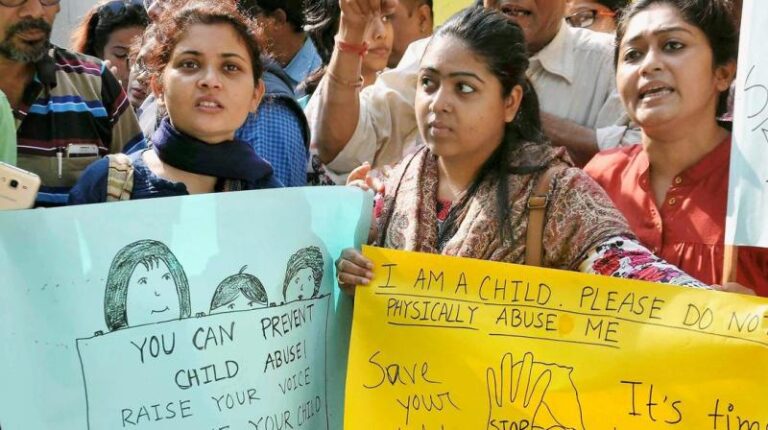
The Chandigarh stalking incident has once again focussed attention on the working of the police which is still governed by a law enacted by the British more than 156 years ago. The daring of the victim and her family background (her father being an IAS officer) have made the incident a talking point all over the country, forcing the police to give up their intention to dismiss it as a minor incident. The policeman brutalities on innocent citizens and policemen’s misbehaviour with women is a common occurrence in the country and is not always reported by the media. The harassment of a young, unmarried girl and her family members by policeman in a tribal district of Madhya Pradesh had made a MP High Court judge describe the police as ‘criminals in uniform’.

In Chandigarh, the 29-year-old woman was going in her car when two persons in a car blocked her way, banged on her windows and even tried to force the door open. Finally, a police patrol team came, responding to her SOS. She duly lodged a complaint of attempt to abduct her with the criminal intentions. One of the accused happened to be Vikas Barala, son of Haryana BJP president’s son.

As the son of a high profile ruling party leader was involved, the police diluted the charges with the result that Barala and his friend were granted bail within hours whereas the attempt to abduct is a more serious crime. The police also said that the CCTV cameras on the route were not functioning. That was till the victim, Varnika Kundu, created a ruckus. Following this, the police promptly ‘retrieved’ the CCTV cameras and even confirmed Varnika’s version of the incident.

Talks of reforming the police and making the force accountable to the society have been going on at various levels for decades but no one has made an honest attempt in this respect. The British rulers had enacted the Police Act of 1861 after the mutiny of 1857 to establish a police force which could be used to consolidate and perpetuate their rule in this country, by terrorising, oppressing and suppressing the natives if necessary. The tragedy was that the British, when they left the country, handed over the power not to the people of this country but to a bunch of politicians who soon saw the advantage of keeping the British-constituted police force intact for their own use. Little wonder that the Police Act of 1861 must be the only one, out of thousands of acts inherited by us from the colonial regime, which has not been amended even once so far.

The Congress was in power at the Centre and in the States most of the time after independence. That may be the reason why the Congress leaders scarcely felt the need for changing the Police Act. Opposition leaders occasionally raised their voice against the continuation of the Act, Ram Manohar Lohia being the most vocal of them. But the voice of the Opposition was much too feeble to make the ruling party to take notice.

In the 1980s, BJP president Lal Krishna Advani scarcely opened his mouth without demanding repeal or amendment of the Police Act of 1861. When he became Deputy Prime Minister and Home Minister in the Atal Behari Vajpayee government, this hypocrite not only did not remember his oft-repeated demand but used the police force like the British had used it. Of all the persons, even Congress Chief Minister of Madhya Pradesh Digvijaya Singh had started harping on the need to change the Police Act of 1861, but only when he had foreseen the rout of Congress at the close of his second term. He had himself used the police arbitrarily against his opponents. Narration of macabre rape of a hapless tribal woman or a grisly murder of a poor farmer never appeared to affect Digvijaya Singh who continued to smile or indulge in frolics, as those attending the Assembly sessions had observed all those years. Criticism of the working of the police-had, however, been a different matter. The former raja of Raghogarh would promptly be on his feet urging the Speaker to expunge the remarks against the police. The chemistry of his complexion would change as he tried to defend the policeman.

The BJP’s Sunderlal Patwa made the same nefarious use of the police as his Congressi successor did later. Four persons were arrested by the Indore police for possessing heroin in 1991. The case against them was registered under the Narcotic Drugs and Psychotropic Substances Act (NDPSA), which makes the offence non-bailable. As it came to be known that one of the arrested persons was Ehsan, younger brother of Patwa’s smuggler-friend Mohd Shafi, the police tore ten pages of the Roznamcha and made fresh entries about the case in order to enable the four criminals to get bail. Patwa, instead of booking the police officers under Section 204 IPC, patted them on the back.

Jharkhand shamed again, as father carries son’s dead body on his back

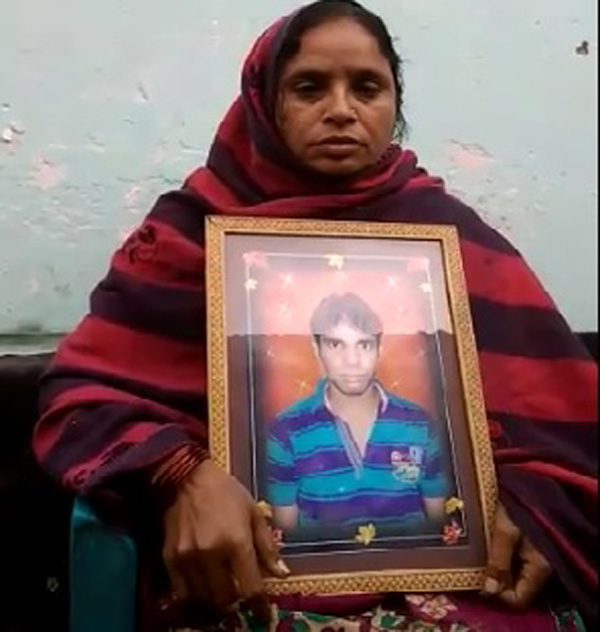
Ranchi: There is no pain bigger in the world than carrying the dead body of your child, they say. Thanks to the awry state of human health service in Jharkhand, a father from the mineral rich state have to undergo it on Saturday.

Suman Singh, an eight-year-old son of farmer Karan Singh was having very high temperature. Karan, a resident of Gumla’s Basia block, first took him to a hospital in Sisai village, unequipped with proper facility to handle to case, the doctor, asked Suman’s father to take him to the Sadar Hospital.

Suman, a student of standard one, on reaching the hospital was prescribed a few medicines. “The prescribed medicine was unavailable in the hospital. Karan didn’t have enough money to buy the medicines. As he was arranging for the money and buying it outside, Suman breathed his last,” said one of Karan’s relative.

The family’s woe didn’t just end there. The grieving father had to wrap his dead son’s body on a gamcha and tie it on to his back and walk all the way to his home, because the hospital also failed to provide him with an ambulance.

Significantly, Sadar Hospital, Gumla has got model hospital reward by the state government.

However, the civil surgeon JP Singh denied that medicine was not available at the hospital and claimed that Suman was brought dead. He also claimed that Karan Singh did not ask for ambulance and silently took away the body of his son.

Meanwhile, the Chief Minister of Jharkhand Raghubar Das has ordered inquiry into this incident.

However, the counter denial and a probe being initiated, is not being able to pacify the people of Jharkhand. They now want to know, why such incidents taking place in their sate and how many inquiries will the CM initiate? They want to know, when Das will take measures to better the health infrastructure in state.

Last month, a brother was denied ambulance at Chatra district by Sadar hospital authorities, when Rajendra Uraon had died from snake bite and his brother Laxman and wife had to carry Rajendra’s body.

Dead body, ambulance
[/media-credit] File picture of Uraon family carrying the body of Laxman
“It is a known fact that the healthcare system is in shambles in Jharkhand and most cases get referred from one hospital to another or from one city to another. This requires ambulance service and Jharkhand is among the few states of India where there is no 108 ambulance service. Which means, private operators are ruling the roost, and poor often could not afford to pay them,” Krishan Murari Sharma, a social activist told eNewsroom.

“Non- availability of medicine is another common thing in state hospitals, and news reports of how government supplied medicines get sold out into market or are left to expire. But, when it happens in a model hospital, then it worries us more,” Sharma added.

With SC stay, Shivraj’s Minister back in form

0

The Supreme Court stay on Election Commission’s decision to disqualify Narottam Mishra for grave electoral offences has once again underlined the deficiency of our legal system. The Apex Court directed Delhi High Court to dispose of Mishra’s petition preferably within two weeks. Without waiting for the outcome of his petition, Mishra resumed his work as Madhya Pradesh Minister of Public Relations, Legislative Affairs and Water Resources.

The Election Commission (EC) held Mishra guilty of an offence under Section 171H of the Indian Penal Code, 1860 for issuing ‘direct appeals’ which appeared in his name, containing his photograph, and were published on the day of the poll, November 27, 2008. In his account of election expenses, Mishra had left the column on ‘campaign through electronic/print media’ blank and accordingly, the EC held, he had knowledge of and impliedly authorised publication of the ‘impugned advertisements’ within the meaning of section 77 of the Representation of People Act, 1951.

Mishra was also found by the EC to not have disclosed all his expenditures properly. It says, ‘the guidelines for maintenance of day to day accounts of election expenditure clearly stipulate that goods or services received in kind like vehicles, posters, pamphlets, media advertisement, helicopters, aircrafts etc from party or any person/body/association’ must be detailed in Part A of the accounts. Therefore the Commission said even if it were to accept Mishra’s argument that he did not pay for the alleged advertisements that supported his candidature, ‘he clearly derived benefit from the same and was thus obliged to have included a notional estimate of such expenditure in his day to day accounts register, but has failed to do so.’

In its 69-page decision of June 23, EC report includes a list of the stories that appeared in these papers – with headlines that sound unlike any news report. Here’s a sample: ‘Kshetra ke vikas ke liye Narottam Mishra ki jeet zaroori (Narottam Mishra’s victory is necessary for the development of the region)’, ‘Datia ka vikas Narottam ke haath (The progress of Datia is in Narottam’s hands)’; ‘Rozgar ka sapna pura karenge Narottam (Narottam will fulfil our livelihood dreams)’; ‘Sabke dil par chaa gaye Narottam (Narottam has won everyone’s hearts)’; the list goes on and on. The EC report goes on to document how identical reports with the identical headlines were published in multiple editions of big newspapers. The decision was taken unanimously by EC comprising (then) Chief Election Commissioner Nasim Zaidi and Election Commissioners A K Joti and O P Rawat.

Mishra moved a petition in the Gwalior bench of Madhya Pradesh High Court to obtain a stay order against his disqualification. He was refused though the High Court agreed to hear his petition. A petition on an issue related to Mishra’s disqualification was moved by a mysterious person in the principal bench of High Court at Jabalpur and Chief Justice Hemant Gupta hastily transferred Mishra’s petition from Gwalior bench to Jabalpur bench. Rajendra Bharti, who had lost to Mishra in the 2008 Assembly elections (from Datia constituency) and was the complainant to the Election Commission about Mishra’s ‘paid news’ activities, smelt a rat and moved the Supreme Court and got Mishra’s petition  transferred from Madhya Pradesh High Court to Delhi High Court where a single bench refused to grant stay to Mishra. He made an appeal before a division bench of Delhi High Court but again was denied a stay though the division bench agreed to hear his petition in August. Desperate to get a stay, Mishra then moved Supreme Court.

The Supreme Court on July 28 kept in abeyance the June 23 the order of the Election Commission. The apex court said, “We are of the opinion that the matter involves substantial questions of law regarding the interpretation of various provisions of the Representation of People Act (Sections 10A, 77, 78, 123 etc).”In the circumstances, we are of the opinion that the ends of justice would be met in the instant case by requesting the High Court of Delhi to hear the above-mentioned LPA expeditiously preferably within a period of two weeks from today.” The bench said, “We also deem it appropriate, in the circumstances, to keep the operation of the order of the Election Commission dated June 23, 2017, referred to supra, in abeyance”. The apex court, however, made it clear that it had not expressed any opinion regarding any question or any matter on merits.

What was lacking in the Apex Court’s order was whether Mishra could function as full-fledged Cabinet Minister of Public Relations, Legislative Affairs and Water Resources and take decision till his petition is finally disposed of by the Delhi High Court. Such vague stay orders are liable to be misused for taking decisions not in the interest of the country or the people. Prime Minister Indira Gandhi was elected to Lok Sabha from Rae Bareli constituency. She was disqualified by Allahabad High Court on the ground of electoral malpractices in June 1975. She was given a stay by the Supreme Court. Thereafter, how she imposed Emergency and played havoc with various limbs of democracy like the Judiciary, the Legislature and the Press is part of the not-too-distant history.

BJP’s love for Kalam and Indian Muslims

0

Jaipur: The second death anniversary of former President of India and scientist APJ Abdul Kalam was commemorated by Bhartiya Janata Party (BJP) across India. However, in Rajasthan, the party leaders invited Muslim students, to mark the occasion at the BJP party office in Jaipur. They not only paid floral tribute to Dr Abdul Kalam, but also gave away freebies.

Significantly, most children were sporting the skull cap, an object identical with the Muslim identity. Political observers maintain that BJP looks for Muslims sporting beard and skull cap or women wearing burqa when it comes to showing Muslim presence in their events. Social scientists say that practicing Muslims do not fit into idea of good Muslims for most BJP leaders.

Indian women celebrate teej with great fervour

0

Jaipur: In many parts of India Teej was celebrated today. In Rajasthan, most women celebrate it with great fervour. Many events were organized to mark the occasion. Comes every year in the month of saawan, women pray for the well being of their husbands. They put mehandi on their hands, dress up well and even fast. In Jaipur, Teej Festival was also organized in which, models in traditional Indian attire sashayed down the ramp. Ujjain, in Madhya Pradesh, is the other city, where it is celebrated widely. Here, indulge in the festivity  through pictures clicked by Chandra Moha Aloria in Pink City.

Rat in AC coach, despite CAG raps Indian railways

0

Giridih/Kolkata: Comptroller and Auditor General (CAG) rapping up Indian Railways for not giving quality services to the travelers, is a welcome move as frequent travelers know the condition of railways very well. Right from serving food unfit for human consumption, to passing off dirty linens to the next passenger is a well known fact today. However, did you know that rats and cockroaches are rampant in air conditioned coaches? As for cleanliness of the coaches, the lesser said, the better.

Indian Railways

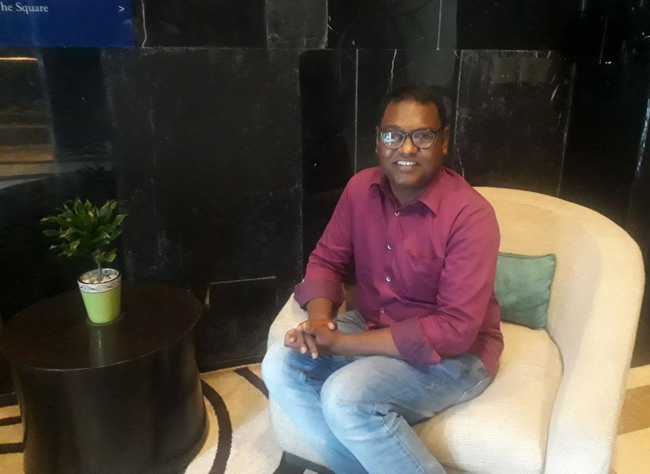
The condition of the trains plying on non-premium routes is even more pathetic. Take the example of this chartered accountant, who often travels to Giridih from Kolkata. On the night of July 23, 2017, when Aakash (name changed on request), a Kolkata-based chartered accountant (CA) and other passengers boarded AC 3 coach, they were in for a horrible experience. Most of the travelers seated in seats 41-48 at B1, in this Kolkata-bound train, couldn’t sleep, thanks to the nauseating stench of a dead rotting rat under one of the berths.

Two coaches, an AC and sleeper coach gets attached to Giridih-Madhupur train (53520), which is later linked to Patna-Kolkata train (13132) at Madhupur Junction.

“It’s not just dead rats that you will find in this coach, but also live rats, moving all over the place,” said a rather disgusted Aakash (see in the picture).

He then added, “It seems, like the coaches are neither checked properly nor maintained, especially, during the time of rainy season. Around same time, last year, when I was travelling, we had spotted cockroaches in the coach,” recalled the CA.

Interestingly, attendants also do not remain in the coach through the entire journey. They often disappear after dispatching the bed rolls.

Sunil Joshi, another regular traveler, is happy that now at least CAG has attested the experience of a commoner travelling by train on regular basis. “In last few years, the fare has also gone up still we do not get clean coaches and now the rats in AC coaches are adding on to our disgust.”

Joshi added, “There are too many issues, the area under the berths and the toilets are also dirty, let’s not talk about them.”

Now, if AC coaches are in such a condition, then imagine the plight of those travelling by sleeper or non-AC coaches.

When eNewsroom contacted, the Station Master of Madhupur Junction, Subodh Sinha, first did not accept the deplorable condition of AC 3 coaches. “As far I know, the coaches are being cleaned regularly, but let me look into the matter again, especially if the passengers are complaining,” Sinha said.