Jaipur amazes with its beauty in Diwali lights

0


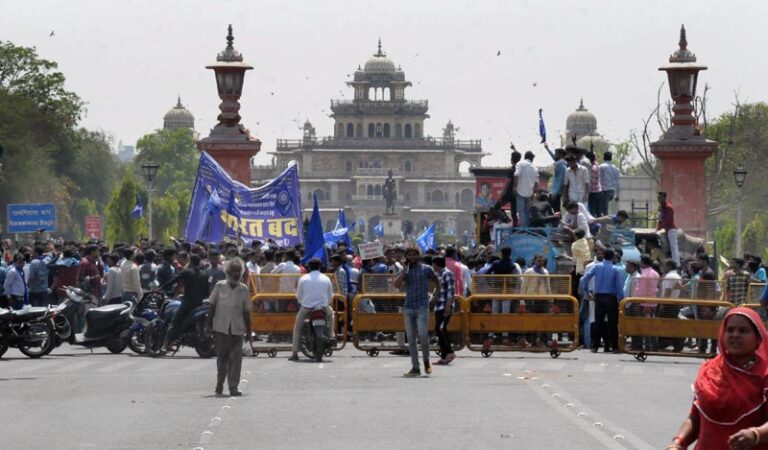
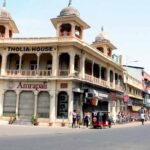
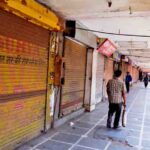
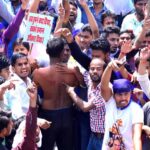
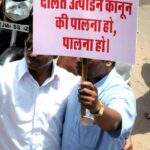
Jaipur: The old city of Jaipur,  better known as Pink City, as everyone knows, is beautiful because of its colour and marvellous structure. During the festival of light, Diwali or Deepawali, spectacular lighting adds on to the charm of this city area. Keeping the recent three-day curfew into account, this festivity was very much need. Our photojournalist Chandra Mohan Aloria clicked a few pictures to capture the festive mood of the old city.

Deepika Padukone furious after Padmavati’s rangoli get vandalised

Kolkata: Ever since Sanjay Leela Bhansali and his team reached Jaipur to shoot for his magnum opus – Padmavati, the film has been surrounded with controversies galore. Jaipur’s Rajput Karni Sena (RKS) had ransacked the sets, slapped Bhansali and threatened the team with dire consequences if they didn’t pack up and leave. Actor Deepika Padukone, who is playing the role of Padmavati is also under constant attack.

And all that without even having read a single line of the film’s script.

Their contention – Rajput glory was being compromised. The filmmakers, had met them on several accounts, but nothing seemed to pacify them. With the film about to release, filmmakers were wary of controversies stirring up in Rajasthan, but definitely not Gujarat.

Violating Padmavati in Gujarat

Actress Deepika Padukone, who is playing the titular role, finally took on to twitter to vent out her anguish against sustained violent outrage of the RKS members. Karan K, a Surat-based Rangoli artist, on had been toiling over 48 hours to design a rangoli, of Deepika Padukone as Padmavati at a mall, just ahead of Diwali. The celebratory mood, turned into an unfortunate one, when about 100 members of RKS, chanting “Jai Sri Ram” vandalised the art work, on Monday.

Karan took on to Twitter to share how his 48-hour-long effort had been aborted by the vandals.

He tweeted, “#padmavati Rangoli controversy! A crowd of 100 people cried JAY SRI RAM and rubbed out my48hrs’ intense work! #SanjayLeelaBhansali,” on Monday. Following which he again tweeted, tagging Deepika, saying that he waiting for her reaction to this act of vandalism.

Deepika breaks her silence

The actress, who till date, had only condemned the cowardly act of forcible gagging of one’s freedom of expression, on being tagged by Karan, broke her silence. She tweeted four times to express her anguish.

“Absolutely heart breaking to see the recent attack on artist Karan and his artwork! Disgusting and appalling to say the least! Who are these people? Who is responsible for their actions?”

She then went ahead a step further, urging Union Minister of Information and Broadcasting, Smriti Irani, seeking for immediate action. Her tweet read, “For how long are we going to let this go on? Allow them to take law into their own hands & attack our freedom & right to individual expression time & again!? This has to stop NOW & action must be taken!@smritiirani.”

Her four tweets were liked by around 26000 people and retweeted by more than 8000 twitteratis in seven hours. She got support from some Bollywood personalities too, including Rahul Dolakia.

No remorse

Meanwhile, the president of RKS, Sukhdev Singh Gomedi had no remorse over their act of vandalism. He even posted a video of theirs, vandalising the artwork, stating that they would repeat the act if similar promotional work for Padmavati is carried out. They had even issued a threat, of setting cinema halls, showcasing Padmavati, on fire, if the film was released without having them pass the content during a special screening.

Gomedi, didn’t receive repeated calls made by eNewsroom, seeking his version, on the incident.

Nine out of 10 children do not get adequate diet in Jharkhand

Ranchi/Kolkata: If you think or believe what government agencies in Jharkhand are saying – that the death of Santoshi Kumari due to hunger or starvation is one rare incident and similar case wouldn’t happen in the future, then, its time to do some fact checking.

According to the latest National Family Health Survey (NFHS-4, 2015-16), nine out of ten children aged between 6-23, do not get adequate food in Jharkhand.

Hunger Death

The survey, which is gets conducted under the aegis of Ministry of Health and Family Welfare says only 7.2 per cent children get adequate diet in Jharkhand. While in Tamil Nadu 31 percent children, belonging to the same age group, get adequate diet for hunger.

The survey further reveals that 47.8 per cent (which amounts to almost half of the children born) in Jharkhand are malnourished, while the national average remains 44.

Santoshi, a resident of Simdega district’s situation became worse, when her mother did not get food from PDS (public distribution system) shop as her Aadhar card was not linked. However, in general, most of the children lead a vulnerable life, in this mineral rich state.

For the fiscal year 2017-18, Jharkhand government has allocated Rs 3105.97 crores in health budget, which amounts to only four percent of the total budget.

“When it comes to attracting investors, Jharkhand government spends more than 200 crores only on one summit – Jharkhand Global Investors Summit. Of which, about 100 crores is just spent for for Public Relations (PR) works,” Ranchi-based Right to Information (RTI) activist, Sunil Mahto told eNewsroom.

Interestingly, it took both the Jharkhand and Union government to spring into action after almost 20 days of Santoshi’s demise. The government was initially denying the fact that the 11-year-old had died due to starvation. It, on the contrary, was claiming that she had died due to malaria. Thus, it would be interesting to see the government’s course of action.

Santhoshi’s death come immediately after the report, which shown India slipping down lower in the World Hunger Index Before signing off, we should remember that India has now slipped to 100 out of 119 countries in World Hunger Index ranking.

#MeToo, moved thousands of Indian women to express the sexual abuse they faced

0

Kolkata: Over the past 24 hours, MeToo has been trending over the internet. For, those walking in late, Metoo, is a social media campaign initiated by Hollywood actor Alyssa Milano, after the scandal of Hollywood producer Harvey Weinstein  came out in the open. The campaign aims at making women speak out, if they have experience sexual abuse at some point of their life and let the world know the magnitude of the sexual assaults that women face in her life.

The most trending

MeToo, has now become of the most trending topic on social media, with over half a million tweets and infinite number of Facebook shares. Eminent Hollywood personalities, right from Lady Gaga, Patricia Arquette to many more took on to the social media to make this movement go viral.

The campaign, which has taken off well in the west, has also gained a huge momentum, both in India and the sub-continent, among netizens.

Since Monday morning, several women, many well-known figures have shared MeToo on Twitter and Facebook, including activists, journalists, writers. As time trickled by, the social media movement grew stronger, with women taking on to Facebook and Twitter, to share their story.

Even UN Women also tweeted that it is the time to listen the voices of women around the world. It is the time we take stand against the violence against women. The twitter handle also mentioned that 1 out of 3 women and girl experience violence in their lifetime.

#MeToo, India

Delhi-based documentary maker Saba Dewan, a name synonymous with the #NotInMyName campaign, also, narrated her fear that she had developed because of the constant sexual advances that she had to face since the age of 6.

Significantly, Indian women, chose to share their experiences without naming and shaming the culprit. Also, according to most of the experiences shared, the offenders, were either relatives, colleagues or mostly men they had known for some time.

Interestingly, Bollywood refrained from addressing the issue. One or two stray tweet was all this movement got, unlike Hollywood. It is when, Bollywood actor like Priyanka Chopra, who is now getting many roles in Hollywood in an interview said after the MeToo trend that, she had lost major movies as she chose not to compromise.

Men Too!

Men too, came out in a decent number to share the sexual exploitation that they had faced as a child. Shilbhadra Baban Dutta, posted, “As a little boy, dirty men did dirty things to me.” Dutta, was not the only man speaking out on sexual abuse faced by men or boys. Sarfaraz Khan, a Fiji-based social worker, highlighted in his post, how parents and relatives turn a blind eye, when kids report of being sexually abused by a relative. In his post he shares that his plight of being violated at the age of 7.

Nobel laureate, Kailash Satyarthi, in support of the movement, tweeted, “MeToo is a reflection of the social and cultural revolution that is sweeping the world. The victims are shedding the stigmatisation. We will not allow our children and women to be invalidated by societal constructs, I stand with you all til (till) we end this.”

Trending, but not for India

But, despite thousand of shares and tweets related to MeToo being written by Indians, indicating that it is an everyday issue in India, many feel that the movement would yield not much result. “We took on to the streets after Nirbhaya. But has that stopped rapes? No. So, I have little hope about MeToo bring about a social change. Also, none of those tweeting are naming and shaming,” said Ananya Das, a Kolkata-based student of Sociology.

However, many feel that this could be a precursor, to bringing about a change. “Till sexual violence is not stamped out from the face of the earth we have to keep reminding the world, our men, our children, how we were violated and felt helpless then. We have to continuously break the culture of silence, break the culture of denial, finish the concept of honour and Shame associated with it. Only when girls and Women can talk normally about it, not have fear that they will be best will this violence and abuse finish. Men, families and society has to learn to respect the autonomy of the women. This is the key,” summed up Jaipur-based activist, Kavita Shrivastava.

Not the first

Me Too, is not the first social media movement to make people acknowledge sexual abuse of women. Earlier in 2014, #YesAllWomen campaign and 2012’s  #EverdaySexism campaign had also attempted to highlight the issue.

How a town’s huge firecracker recovery reminds Delhi ban

0

Giridih: Nobody has the exact idea about the firecrackers’ worth that go boom in Delhi, and National Capital Region (NCR) during Diwali. It is also, here that the Supreme Court has banned the sale of firecrackers, to control pollution.

But, 1300 kilometers away from Delhi, in Giridih, a small town in Jharkhand, which doesn’t even have one-fourth of the national capital’s population, firecrackers being recovered by the district administration over the past 72 hours. The raid is still on.

However, being small town, here the major concern for the administration was not pollution but huge quantity of illegal crackers, which is being stocked in residential area.

“We have seized 787 big boxes of firecrackers from four different locations. Our search is still on. We are conducting these raids, as our  major concern is the huge quantity of firecrackers  being stocked in residential area,” Sub-divisional Magistrate Vijaya Jadhav told eNewsroom.

Firecrackers worth four crores has been shifted in through 15 tractors to different locations. Most of the firecrackers are either made in China, from Indian city Sivakasi or from Bengal state.

firecracker giridih deepawali
Administrative officials monitoring the raid at the site

On Friday, when the search and seizure had begun on a tip off, which SDM Jadhav had got from her source, power had cut off for more than seven hours in the area surrounding the place where the firecrackers had been stocked up. And entire district administration including District Commissioner Uma Shankar Singh, Superintendent of Police Akhilesh Variar were seen supervising the raid, along with the SDM.

“We are really concerned. Such a huge stock in residential area can be lethal, so those trader stocking up firecrackers in their houses will be treated as accused. Two people have been arrested, but prime accuse Intikhab Alam, alias Putul is absconding,” informed Jadhav.

Firecracker Giridih deepwali
Officials recovering the firecrackers from a house

Administration has dispatched the recovered crackers to far away locations and issued fresh guidance for the firecracker sellers in the district.

On October 9, Supreme Court had banned the sale of firecrackers in Delhi-NCR. The order was given, on the basis of a petition filed by three toddlers, who had approached the court through their parents, claiming that firecrackers burst during Diwali, makes air poisonous the already polluted air of Delhi.

While in India, firecrackers are burst through out the year, on marriages, after cricket matches results, but its burst in massive quantity during Diwali festival. Cashing the occasion, large number of sellers do business without license and even stock in residential area, thereby, posing a threat to common man’s life.

Farmer neck-deep protest: Condition deteriorates, spirit soars high

0

Jaipur: The condition of the farmers, who have staged farmer neck-deep protest inside pits, and trenches since October 2, against alleged forcible land acquisition by Jaipur Development Authority are deteriorating fast.

Hundreds of farmers from Jaipur, Rajasthan are protesting against alleged forced land acquisition by JDA and termed it as Zameen Samadhi Satyagrah (land burial satyagrah). Farmers informed that their 320 hectares land, which belongs to 2500 farmer families have been forcibly acquired by JDA. After that, the heart-wrenching protest by farmers began on Gandhi Jayanti, October 2 at Nindar village in the outskirt of state capital.

“At least five farmers have high and low blood pressure because of staying inside the soil for such a long time. Female farmers who are inside pits, are also facing health related issues,” Nagendra Singh, a farmer who is communicating to media about the protest told eNewsroom.

But, it has not dampened the spirit of farmers.

“In fact, our agitation is getting bigger. As today, the number of farmers have increased and 29 more have added to existing 33,” added Nagendra.

Farmer neck-deep protest

Farmer Graveyard Pits Neck-deep
The neck-deep protest by Jaipur farmers that had begun on October 2, Gandhi Jayanti.

Since the news and the photographs of the peasant protest had surfaced, it was widely shared and commented on social media.  The unique demonstration against the government, neck-deep buried in pits, attracted India’s attention.  A large number of women folks too joined the protest and remain inside trenches to boost their male counterparts’ morale.

Farmer Graveyard Pits Neck-deep
A farmer being taken out from the pit

No Rajasthan government official have met the farmers and listened the grievances yet. Only the local police station SHO arranged doctors for the farmers.

Its a back to back protest by farmers in desert state, as last month only, Shekhawati region farmers had also a fortnight long movement against the Vasundhara Raje government to waive off their loan. They were successful in forcing the government to meet their demands. And like in Jaipur’s protest, female farmers had then also played important role in the agitation.

However, the Jaipur farmer’s protest is more similar in nature like the farmers from Tamil Nadu, who had sat in Jantar Mantar, New Delhi  and had even eaten rats, drunk urine while making the demands from center government to waive off their loans.

Indian farmer’s most heart-wrenching stage-in against land acquisition

0

Nindar/Jaipur: Hundreds of farmers from Jaipur, Rajasthan are protesting against alleged forced land acquisition by Jaipur Development Authority (JDA) and termed it as Zameen Samadhi Satyagrah (land burial satyagrah). The heart-wrenching protest by farmers began on Gandhi Jayanti, October 2 and they are demanding to enhance their compensation from JDA. The photographs of the peasant protest, shows them demonstrating against the government in a unique way. Half buried in pits, the farmers, have a large number of women folks to boost their morale. Its a back to back protest by farmers in desert state, as last month only, Shekhawati region farmers had also a fortnight long movement against the Vasundhara Raje government to waive off their loan. They were successful in forcing the government to meet their demands. However, the Jaipur farmer’s protest is more similar in nature like the farmers from Tamil Nadu, who had sat in Jantar Mantar, New Delhi  and even ate rats, drunk urine while making the demands from center government to waive off their loans.  Witness the peasant movement in Jaipur, through some captivating pictures clicked by our photo journalist Chandra Mohan Aloria.

Déjà Vu for BJP as Pilot rides bullock cart to protest fuel price hike

0

Jaipur: Rajasthan State Congress President, Sachin Pilot rode a bullock cart in Jaipur to protest the fuel price hike during the Bhartiya Janata Party (BJP) regime. He was accompanied by hundreds of other Congress party leaders and workers. Some rode on bullock carts, while some on carts pulled by camels or horses to register their protest. Significantly, women came saddled on horses during the protest rally. Some had also demonstrated with gas cylinders. Petrol is being sold at Rs 73.20 and diesel is at Rs 62.86 per liter in the Rajasthan state capital. “Before coming to power, BJP had promised that inflation would. However,  when crude oil price is at lowest rate in international market, the price of petrol and diesel is at its highest in India,” Pilot said, as reported by PTI. Interestingly, before 2014,  BJP leaders protesting with bullock cart and gas cylinders against the fuel price hike, was a regular sight, when United Progressive Alliance (UPA) government was at the center. However, the major protest against fuel price hike has been registered only by the Rajasthan Congress, while rest of India, party leaders and workers are yet to hit street over it. Picture credit: Chandra Mohan Aloria.

The BHU incident is the worst thing to happen to Narendra Modi

0

The BHU is the worst thing that could have happened to Narendra Modi in the three years of his disastrous regime. The students’ agitations elsewhere, like in JNU and Hyderabad, were supressed to a great extent by giving them a partisan colour to create confusion and hammering words and phrases like nationalism, duty to nation, support to disruptive forces, etc. That is not possible with the BHU for the simple reason that the issue involved is such as goes beyond political colours and is directly concerned with the dignity of the woman.

To recapitulate, a girl student of BHU was molested by some goons on the campus. When the students went to Vice-Chancellor G C Tripathi to complain and seek action against the culprits, the VC was reported to have asked the victim of molestation to forget the incident and stop stepping out of the hostel after 6 PM because the boys will be boys. Next day the students, mostly girls, held a demonstration demanding action against the offenders and seeking safety for girl students. Prime Minister Narendra Modi, whose Lok Sabha constituency Varanasi is, was in the city on that day and the students probably thought their grievance, which had failed to move the VC, would be heard at some higher level. The administration, however, responded with brutal and indiscriminate lathi-charge on them hitting some of the girl students even on head.

This led to anger in the student community across the holy city. The administration was able to wriggle out of an unpleasant situation, at least for the time being, by advancing the dussehra vacation by a few days and ordering closure of all educational institutions till October 2. The reprieve is, in all probability, short-lived as the issue involved is volatile — and the problem concerns not only the girls on campus or in one city alone. Already, there are reports that students in other universities are also preparing to join the protest once the educational institutions reopen after October 2.

The matter needs to be handled delicately, which is difficult to expect from an inexperienced gangster-turned Chief Minister of Uttar Pradesh. Once the students’ anger gets out of hand, it will not be possible either for Yogi Adityanath or for Prime Minister Narendra Modi to stem the tide, with people’s resentment against the latter’s ill-conceived policies and programmes already accumulating. The one handle left with arrogant rulers in such situations is the use of State force which only leads to aggravation when students are involved. Most of the countries in the world have over the centuries faced the students’ anger and tried in vain to control it with the use of force. Even mighty nations like the USA and France (then ruled by de Gaulle) could not withstand it.

Briefly, in 1967 the students of two universities in Paris started demonstrations against the French government of President Charles de Gaulle against bureaucratic policies on campus. The use of police by the government to disperse the demonstrators turned it into a larger political issue. Students and left-wing activists all over Paris organised protest marches against the government. More high-handed response by the government sparked violent clashes. All over the country, large numbers of workers and citizens started agitations in solidarity with the students, and called a general strike against the government.

Eventually, 22 per cent of France’s population was on the streets, bringing the French economy to a near-halt, forcing President de Gaulle to flee to Germany.

In the US in May 1964, some 1000 students marched through Times Square in New York to the United Nations to protest against the US involvement in the Vietnam War. More than 700 students and young people marched through San Francisco. In Boston, Madison, Wisconsin, Seattle, there were simultaneous smaller demonstrations. This was a small beginning which grew so enormous that the US ultimately had to pull out of the Vietnam War.

Nearer home, the students’ agitation brought down Chimanbhai Patel’s government in Gujarat in 1973. It started somewhat innocuously as students of LD College of Engineering in Ahmedabad went on strike against a 20 per cent hike in mess charges. A fortnight later, students of Gujarat University went on strike, which led to clashes between the police and the students. The news of use of police force against students who were fighting against corruption and price rise spread to other towns and cities. The Chimanbhai Patel government in Gujarat found itself in a corner after police records showed that 95 students were killed and more than 900 injured in police firing. Patel had to quit.

Narendra Modi and Yogi Adityanath today find themselves in a far worse situation as the issue raised by the BHU students is much more sensitive than a hike in mess charges or the war in another country.

Kolkata’s intriguing Puja Pandals– From social issues, self obsession to cycle of life

0

Kolkata: If you are wondering what’s new about West Bengal’s Durga Puja this year, then you are in for a surprise. For Bengalis, the festival is less a religious ritual and more a homecoming of Goddess Durga, who returns to her maternal home with her four children. This year, pandals across Kolkata have taken creativity to new heights—addressing issues like ecological balance, exposing fake medical practitioners, celebrating women’s empowerment, and even building replicas of cinematic extravaganzas such as Bahubali’s palace.

And why not? In this part of eastern India, Durga Puja is a celebration where the Goddess comes home from her sasural (in-laws’ place), and every community strives to welcome her with grandeur and innovation. Amid thousands of pandals, a few have already managed to capture the imagination of revellers with bold concepts and inventive artistry.

Selfie vs Self Zone

One such pandal is at SB Park Sarbojonin, Behala, Thakurpukur. Titled From Selfie to Self, it features a giant 140-foot chair constructed from nearly 5,500 small chairs. With the organisers sparing no expense, the layout is as striking as its message. The pandal is divided into two sections—one is the “self zone,” where the Goddess is placed.

In the selfie zone, visitors encounter medical equipment on display, including a CT scan plate. The walls are inscribed with Bengali poems that reflect on ego, urging visitors to look beyond the culture of selfies towards self-realisation.

Addressing Social Issues

At Md Ali Park, one of Kolkata’s iconic pujas, the organisers have stuck to their tradition of highlighting social evils. “Every year we try to give out a social message. Keeping in sync with our tradition, this year we focused on how fake doctors have become the new-age demons,” said Sanjay Sharma, head of the puja committee.

Initially, the asuras (demons) at this pandal were dressed as doctors, but following intervention from Chief Minister Mamata Banerjee and a request from the Indian Medical Association (IMA), the doctor’s apron was removed. A closer look at the idols also reveals subtle references to violence against women.

Women Shakti

The Ajeyo Sanghati Puja at Tollygunge Haridevpur has embraced Shakti Rupano (manifestations of power) as its theme. With a budget of ₹35 lakh, the pandal decoration uses iron objects from everyday life—pipes, shutters, grills, scissors, kitchen utensils, and water pipes.

“These are simple items we often overlook. Our message is that nothing in this world is useless,” explained Arijit Nandi, assistant secretary of the puja committee. The idol here retains a traditional look, set against the strength of iron.

Down the Memory Lane

At Kashi Bose Lane, nostalgia takes centre stage. Themed Aabohan (invocation), the pandal is divided into three sections—sound, modern classical instruments, and mantra.

The sound section showcases familiar items like a train horn, a calling bell, and a rickshaw bell. “We have displayed radios from the earliest 1903 model to modern designs. Traditional tools used for making pillows and quilts are also part of the collection,” said Pradipta Nan, joint secretary of the puja committee.

Decoding Durga?

At 95 Pally, Jodhpur Park, the pandal theme is Adhara—something that cannot be coded or deciphered. Designed to resemble an old iron temple of the Dorjis, the pandal attempts to explore the unknowable.

“The key highlight of the theme is that God, the Supreme Being, is pure consciousness, something beyond human comprehension. However hard we try, we can never decode the Divine,” said Bijoy Dutta, general secretary of the committee. Mirrors, lanterns, music, and lighting have been arranged to complement the mystical theme.

Immortal or Antheen

Eminent painter and installation artist Bhawatosh Sutar has conceptualised a pandal on the theme Antheen—meaning immortal or endless. “Humans die, but knowledge remains and is carried forward by others. It is an endless cycle. We have tried to showcase this cycle,” explained puja convenor Samir Ghosh.

At the centre is a single mahogany log, sculpted with one side depicting the Mother Goddess and the other her consort, Lord Shiva. The spacious mandap allows visitors to view both sides of the sculpture. At the entrance, a Shiva linga and a yoni khatra made of 2,000 shells symbolise the eternal cycle of birth and rebirth.