



Jaipur: The condition of the farmers, who have staged farmer neck-deep protest inside pits, and trenches since October 2, against alleged forcible land acquisition by Jaipur Development Authority are deteriorating fast.
Hundreds of farmers from Jaipur, Rajasthan are protesting against alleged forced land acquisition by JDA and termed it as Zameen Samadhi Satyagrah (land burial satyagrah). Farmers informed that their 320 hectares land, which belongs to 2500 farmer families have been forcibly acquired by JDA. After that, the heart-wrenching protest by farmers began on Gandhi Jayanti, October 2 at Nindar village in the outskirt of state capital.
“At least five farmers have high and low blood pressure because of staying inside the soil for such a long time. Female farmers who are inside pits, are also facing health related issues,” Nagendra Singh, a farmer who is communicating to media about the protest told eNewsroom.
But, it has not dampened the spirit of farmers.
“In fact, our agitation is getting bigger. As today, the number of farmers have increased and 29 more have added to existing 33,” added Nagendra.
Farmer neck-deep protest
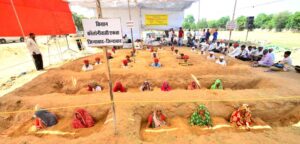
Since the news and the photographs of the peasant protest had surfaced, it was widely shared and commented on social media. The unique demonstration against the government, neck-deep buried in pits, attracted India’s attention. A large number of women folks too joined the protest and remain inside trenches to boost their male counterparts’ morale.
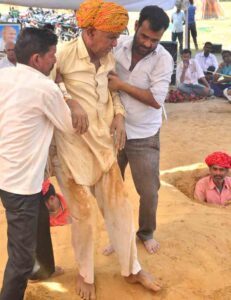
No Rajasthan government official have met the farmers and listened the grievances yet. Only the local police station SHO arranged doctors for the farmers.
Its a back to back protest by farmers in desert state, as last month only, Shekhawati region farmers had also a fortnight long movement against the Vasundhara Raje government to waive off their loan. They were successful in forcing the government to meet their demands. And like in Jaipur’s protest, female farmers had then also played important role in the agitation.
However, the Jaipur farmer’s protest is more similar in nature like the farmers from Tamil Nadu, who had sat in Jantar Mantar, New Delhi and had even eaten rats, drunk urine while making the demands from center government to waive off their loans.

