Amazing Alpana art work makes Kolkata Puja unforgettable

0

Kolkata: Kolkata’s Durga Puja has never been as beautiful as it became this year, thanks to the longest Alpana ever created on Lake Road. The 1.25 km long Alpana has not only been made by Art school students but by top Tollywood actors and celebrities also. The organizers will also attempt to get it registered in Limca Book of Records for being the longest Alpana.

Civil society should step in to monitor budget and governance

0

New Delhi: In times when transparency and accountability in governance gain increasing significance as tools to fill in the gaps of democratic deficiencies, a robust network of civil society and budget experts convened in Delhi to discuss theses aspects of deepening governance. The coalition, People’s Budget Initiative, (PBI), with a membership of diverse organisations working across different sectors in the country is organizing the national convention on pressing issues deserving a closer scrutiny and a larger public debate.

A two-day national convention on “Civil Society Budget Work and Governance Accountability in India: Continuity and Change” which aims to coordinate inputs of all those gathered at the meeting for improved budget and governance accountability began here on Tuesday at YMCA auditorium.

Noted activist Anjali Bhardwaj and the newly appointed Co-convener of PBI said that civil society should step up its responsibility to monitor and use whatever accountability and transparency tools are available.

“We as citizens need to ensure proper implementation of Clause 4 of the RTI Act which is about pro-active disclosure of information in the public domain, and is the least implemented section of the law even after twelve years of the legislation. There is an equally strong need for a grievance redressal law, referred as RTI 2 by some, so that the supervisory structures in the system can be held accountable. The Bill introduced in 2011 and widely debated for bringing in time bound grievance redressal needs to be passed by the Parliament. A host of other accountability legislations exist, but need to be implemented”, Anjali said.

She shared that accountability of private sector is also becoming important now. With a focus on e-governance, it is needed that information around people’s concerns and issues should be available in forms accessible to them.

Warren Krafchik, who heads International Budget Partnership, shared that budgets are a powerful way to link citizens with democracy and governance, and governments can engage citizens in these processes through open budgets. Southern countries have emerged as leaders in budget transparency norms shifting the global discourse on budget work. Open data is often conflated and confused with the idea of open government. There are success stories on how growing citizens’ involvement increases allocations, equity in budget, and effective spending of public money.

Subrat Das, the head of Centre for Budget and Governance Accountability, (CBGA), and Co- convener of PBI shared that budget transparency still remains an unfinished agenda. Budget transparency at the grassroots level which provides locally relevant budget data about facility level services in a format that is easy to understand, and in a timely manner is yet to become a reality. This kind of information will help people connect with budget issues.

Apart from the inaugural session three other sessions were conducted during the course of the day wherein representatives of NGOs from all over India participated.

A photographer’s quest for life

0

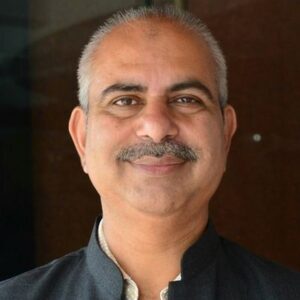
Jaipur: Thirty-five-year old photographer Chandra Mohan Aloria, with his unique eyes for things is an excellent photojournalist. The down to earth photographer is based at Jaipur, Rajasthan. The pictures clicked by him speaks volumes about his work and often steals the limelight. In his decade old journey, his pictures have been published in several vernacular languages media of Rajasthan, Rediff.com and now in eNewsroom.


Watch the Video story on photographer Chandra Mohan Aloria


Karwan-e-Mohabbat: Healing wounded souls of India

0

Kolkata: Hate crimes, riots and caste atrocities is not a new thing in India, however, in the last three years, the rate of such crimes has been on the rise. From Jharkhand to Rajasthan, and even Delhi, people have witnessed a rise in the number of people being beaten to death over rumor of beef consumption, cow smuggling for slaughter, and cow skinning.

However, the latest addition to these hate crimes is the fact that in most cases police remains as mute spectators, while the government denies the occurrence of such crimes, as the police gives  clean chit to the accused.

Concerned about the issue of hate crimes becoming a norm in India, many individuals have come forward to erase the divide.

Amidst all, one unique initiative is that of former Indian Administrative Service (IAS) officer and activist Harsh Mander, which has the likes of John Dayal on board for a journey called Karwan-e-Mohabbat or the Caravan of Love. Flagged of from Assam on September 4, it will be travelling to eight Indian states – Jharkhand, Rajasthan, Delhi, Madhya Pradesh, Haryana, Gujarat, Uttar Pradesh and Odissa.

The motive is simple – make the victims feel, they are not alone, provide them legal aid call upon people from the majority community and motivate them enough to not remain a mute spectator to hate crimes.

In his own words, Mander describes two-day stay of Karwan-e-Mohabbat in Rajasthan, which was a challenging one, as Hindu outfits had opposed Karwan’s visit to the site where dairy farmer Pehlu Khan was lynched, “On our first day in Rajasthan, the Karwan was greeted in Behror, where Pehlu Khan had been lynched, with stones and footwear. The second day, in Ajmer, we were pelted instead with rose petals, as we marched for peace and love on a busy street with hundreds, singing and shouting slogans of the unity of people of all faith, and against hate. We were all overwhelmed with the numbers of people who joined the aman rally.”

He added, “We were greeted first by the local gurudwara. Several Christian priests and nuns also joined in. As we walked, ordinary people, who has gathered on both sides of the road threw flowers on us. Some even chanted – aman, aman, aman (peace, peace, peace). The rally ended resoundingly at the entrance of the historical Khwaja Moinuddin Chishthi Dargah, where we were greeted by the entire senior trustees of the Dargah. Rose petals fell from above, as they spoke about the importance of love and compassion, and how fitting that a Karwan of love should come to the shrine of a sufi saint who epitomised love and believed in the equality of all human beings.”

The journey has entered into its last phase and is currently in Gujarat, where it will conclude on October 2.

On being asked, how his experience had been far, Mander told eNewsroom, “There is very great sense of fear among the Muslims and Dalit community of India. Not much is being done, either by the police or the government to eradicate their fear.”

“One of the prime motives of Karwan-e-Mohabbat is to tell the majority community that they can’t remain silent to incidents when people belonging to the minority community are attacked. But they are still silent and its frightening,” he added.

Women power, helped Rajasthan farmers get success without violence

0

Jaipur: Since September 1, thousands of farmers from Rajasthan’s– Sikar, Churu, Jhunjhunu, Sri Ganganagar, Bikaner were seen protesting against Vasundhara Raje’s government to waive off their loans.

The protest ran for 13 days, following which, Rajasthan government had to accept the demands of the agitating farmers. The government was compelled to waive off the farmer loan, which amounted to Rs 50,000. This success, would not have been possible, if the females of the mentioned region had not participated in the agitation in large numbers.

Amazingly, these women behind their so-iconic veils, not just resorted to blocking the roads, but also were successful in stopping the police from reaching the area where the protest was being staged. These women, interestingly even danced on to the tunes of revolutionary songs, which was critical of the government policies.

Following, which the Rajasthan government even imposed Section 144 and even blocked internet service. However, despite all, they could not dent the enthusiasm of the farmers and women.

Most of the farmer’s agitation in India, in the past had turned violent, in Madhya Pradesh, protesting farmers, even had to face the bullets, but here no such thing happened in Rajasthan. Vasundhara led BJP government had to accept farmer’s demand, after their attempt to snub the protest failed. And one can’t deny the role that these women played in both adding vibrancy and vigour to the protests.

Recently, Rahul Gandhi during his Rajasthan visit had criticized that BJP has no time for farmer’s issue.

Watch the video

“You are shamelessly saving cow-goons,” activists to Vasundhara Raje

0

Jaipur: In an open letter, addressing Rajasthan’s Chief Minister Vasundhara Raje, more than fifty activists from Rajasthan undersigned as People’s Union for Civil Liberties (PUCL) members, reminded the CM that her government is not even caring to follow the Supreme Court’s instructions while dealing with atrocities of cow vigilantes in the name of cow protection. The letter, comes after the alleged killers of dairy farmer Pehlu Khan, got a clean chit.

On April 1, at Behror in Alwar district, a dairy farmer 55-year-old Pehlu Khan, who had bought cow from cattle market for milking and had the receipt also, was lynched by cow-vigilantes while transporting. In the incident, his sons had also received severe injuries.

However, even after the heinous crime, Rajasthan chief minister had not condemned it. Only after three days dharna at state capital Jaipur, Vasundhara Raje had condemned the crime. But five months down the line, six accused of lynching Pehlu Khan lynching, were let off the hook, with the Rajasthan Police, closing the case (number 255/2017). However, investigation for probing cases (no 252/2017 and 253/2017) against deceased Pehlu Khan and his sons for cow smuggling are still on.

The activists say in the beginning of the letter that Vasundhara government favours atrocities by cow vigilantes and its acts prove that. The government had transferred the case from deputy superintendent of police, Kothputli which was monitored under Director General of Police (DGP) Priyadarsani to CB-CID. While soon after the incident home minister Gulab Chand Kataria’s comment that cow vigilantes did good work, but they should not take law in their hands, with such statements how a neutral investigation is possible? They questioned.

The strong-worded letter not only condemned the police act to clean cheat alleged killers, but also listed all the cases in which government did not pursue the case according to its merit or intensity of the crime. It mentioned lynching of Zafar Khan by Pratapgarh Municipal officials, which was saved by Chairman Ashok Jain and no action was taken in the case. Another case of Nagaur where Abdul Ghafur was killed in 2015, but no one had been arrested. The letter also mentioned the Rabbani Hotel case, in which chicken meat was alleged to be beef and that the fiasco has led to the hotel being sealed, while the woman, Kamla Didi is, who caused the ruckus is roaming freely.

Also, a 58-year-old tribal, Bhagat Ram Meena was also beaten to death in the name of cow vigilantismon September 9. In this case, after 13 hours, a case got registered but no concrete action has taken.

There are several examples where Muslims, nomads, tribals and dalits have been killed in the name of cow protection and the pattern says that entire government machinery has saved cow-goons and now saving Phelu Khan’s killers.

The open letter also reminded CM that in an article in Times of India, she had claimed that she did not support mob lynching and Bhartiya Janata Party (BJP)’s nationalism believes in patriotism, hence it could not be intolerant.

“Hope, you will not shed crocodile tears only through articles but will also give instructions to take action against cow-goons, who has become a synonyms of fear,” reads the letter.

PUCL also made it clear that they will lend all support to Pehlu Khan’s family and will challenge the clean chit given to the accused in the court.

While, PUCL, released open letter, Indian Administrative Service (IAS) officer turned social activist Harsh Mander, who is on a pan-India tour with his Karwan-e-Mohabbat, to promote peace, reached Behror, in Rajasthan to pay tribute to Pehlu Khan. However, he was stopped by police. But, Mander, who was determined to pay tribute, along with his group, sat on a dharna, which eventually compelled the police to let him go ahead with his plan.

The police, giving a clean chit to those accused of lynching Pehlu Khan, has lead to furor in Rajasthan. Ever since the news was highlighted, #noonekilledpehlukhan has been trending, with many openly criticising the government for not doing justice.

Marriage to funeral, all in a two-hour break of Jaipur’s curfew

0

Jaipur: What does a curfew do to a normal life? It paralyses every activity. And who can feel it better than the residents of Ramganj, Jaipur, where there is curfew since Friday night.

After three days of curfew, there was a two hour break. During this break, which was from 3.30 pm to 5.30 pm not only people came out of their homes to buy essentials goods and food items, but also a bride and grooms took the opportunity to get married. Funerals were also taken to bury the dead. Some residents who were outside city and could not return during the curfew hours were also seen returning to their abode.

There was also a moment when huge gathering of locals had to be dispersed due to fear of some police action. On Friday night, because of police throwing a stick on a couple, which fractured the woman pillion rider’s hand but police refused to registering, locals attack on police and burnt some vehicles, causing injuries to some policemen. Later in police firing, one person died and police imposed curfew in four police station area in and around Ramganj.

The Walled City area or Pink City, because of its heritage background, in a normal day remain abuzz with activities, as its a must visit for local and foreign tourists.

Our photojournalist Chandra Mohan Aloria stayed there during the curfew break and captured most of the activities.

A day after: Uneasy calm in Jaipur

0

Jaipur: The clash between police and the residents of Ramganj, Jaipur which caused death of a civilian also paralysed the public life. The fiasco between police and common man occurred, on Friday night, when an injured woman, during police lathi charge, approached officers to register a complain, the police refused. It aggravated the matter and soon one of the most famous centers of Jaipur turned into a battle ground between police and locals. The incident caused severe injuries to several including police, and death of a civilian. Later,  at four police station areas in and around Ramganj, curfew has been imposed. The old city market area was almost shut, the jam-packed roads were mostly deserted.

Our photojournalist Chandra Mohan Aloria visited the affected area and captured some intriguing pictures, depicting how life has been affected in Ramganj. Have a look.

Now, journalist Ravish Kumar, gets death threat

2

Kolkata: Barely a few days after the assassination of Gauri Lankesh, the Banglore based editor of Lankesh Patrike, senior journalist and anchor of NDTV’s Prime Time show Ravish Kumar is getting death threats on his phone.

On Friday morning, Ravish Kumar wrote about receiving phone calls, where the callers threatened him with dire consequence, on his Facebook Page. For a journalist like him, who has made a mark as pro-people journalism, and rational writer, has been constantly abused by the trolls on social media. The rise of the army of trolls has increase moreover, in these four years. However, calls, cannot be ignored, especially after the assassination of Lankesh. She too had been getting such calls, till she was killed.

“I am consulting my well-wishers, and as they will suggest, I will be finally taking a call on whether, I should report the threat,”Ravish said, while speaking to eNewsroom.

Ravish Kumar is among the few journalists in India, who has been continuously reinventing his show, often highlighting the issues that still plagues India and if required is even critical of the government and its policies.

These days, he is also active on social media and even after getting abusive comments, he replies to several’s comments on his Facebook page.

After Gauri’s murder, death threats are being issued not just to journalists, but also to rationalists and activists, who are critics of right-wing ideology, on the social media. Samar Anarya, who is a coordinator in Asian Human Rights Commission, and a Jawarhar Lal Nehru University (JNU) pass out, is very active on social media and writes in both English and Hindi languages. He too has received a threat call.

Samar Anarya Death threat
Screenshot of Samar Anarya’s post about the threat call he received

Significantly, Samar, a native of Uttar Pradesh is based in Hong Kong. And he was threatened on his international number.

“My number is available in public domain, so anyone can get it. But getting a threat call on my Hong Kong number, highlights the extent to which these people can go. I know, these cowards, have a list ready. Earlier, too, I had got such threat calls,” Samar told eNewsroom.

Senior journalist P Sainath has also mentioned the same, in his recent article published in The Wire.

Sainath in his write up, has explained the modus operandi of Lankesh’s murder is the message to all those not following the diktat. Guari, an open critic of the saffron brigade, has been warned to not voice her thoughts, following which she was shot point blank, right in front of her house. Investigations, have now revealed, that the pistol used for killing her, was of the same kind used to silence rationalists MM Kulbargi, Narendra Dabholkar and Govind Pansare. In fact, a Mumbai High Court observation, had even mentioned that format in which these killings are carried out are very well planned.

“The forces behind the assassination of Guari have a list, and they want us to know that they will pursue it,” Sainath wrote in the article.

eNewsroom in its earlier story has mentioned that a report published by the New York –based Committee for Protection of Journalists (CPJ), Indian exposing corruption often pay with their lives. As per CPJ data, 28 Indian journalists (including Lankesh) have been murdered since 1992. And so far conviction has happened in only one case.

International newspaper Washington Post had its September 6 edition’s headline screaming – Who is next? Whatever be the answer to this question posed, but one thing is evident it is – where the world’s largest democracy is heading to by trying to gag its fourth pillar.

Gauri’s killing proves, India is dangerous for gutsy journalists

0

Kolkata: Gauri Lankesh, a firebrand editor, who began her journalistic career with Kolkata’s Ananda Bazar Patrika, used to run her own publication Lankesh Patrike. She was a fierce critic of right-wing Hindu fanatism and communalism. Gauri, was only 55, when assassinated.

India, dangerous for journalists

Her killing, has been vehemently condemned by activists and journalist across India. But, it highlights one thing – India is increasingly becoming a dangerous country for journalists critical of the government or nationalist sentiment. According to the World Press Freedom Index, brought out in 2016, by Reporters without Borders, India ranks as low as 133 out of 180 countries sampled. The report states, “The situation is worsening in India, which is now ranked 133rd of the 180 countries, although its media are dynamic and much more capable of playing the role of a democracy’s watchdog than the media of most other countries in the last third of the index.”

According to this report, almost every month a journalist is attacked in India. And the journalists of Uttar Pradesh and Jammu and Kashmir are the most vulnerable.

Another report published by the New York –based Committee for Protection of Journalists (CPJ), Indian exposing corruption often pay with their lives. As per CPJ data, 28 Indian journalists have been murdered since 1992. Interestingly, they are yet to get justice. It states, “India’s culture of impunity is leaving the country’s press vulnerable to threats and attacks”.

But, why?

Explaining the rise in the number of journalists being murdered, S.N. Sinha, president of Indian Journalists Union, said, “Journalists were killed earlier too. However, we are disturbed by the present trend. Now, journalists who are critical of the present government being bumped off. It’s an open secret, that Gauri Lankesh was an open critic of the right-wing ideology. She had even been threatened with dire consequences.”

Gauri, had even been convicted for a defamation case filed by BJP MP Pralad Joshi, for having published articles against the saffron brigade in her tabloid.

Investigative journalists at higher risk

Many feel that the stakes are higher for Indian investigative journalists. Elaborating on the same was, Raja Chowdhury, a Gujarat-based investigative journalist. He said, “That’s (risk) part and parcel of being an investigative journalist. There were threats earlier too. But now, they are result oriented threats.” Chowdhury, who runs an investigative online portal Khooobsurat, further added, “These days we are given a diktat, which if not followed, we have to be prepared to face consequence, which can be in any form.”

Explaining this sudden rise, Sinha, said, “People are not open to criticism. They can’t accept the fact that media, being the watchdog of Indian democracy and has the right to criticize the present government. Media, has always criticised other government, for their failure. It’s nothing new. However, today,  we can’t deny the fact, that we as journalists in India are at a risk. Till date, we don’t a law to protect us. We have been trying to get one into place, but it’s just not happening.”

While, Chowdhury claimed, “If you give absolute power to a single party in a democracy, with a weak opposition, then this is bound to happen.”