Jaipur: The proposed bill, which seeks to amend the Criminal Penal Code (CrPC) in a bid to shield judges and bureaucrats, has invited sharp criticism from all quarters, ever since it was tabled in Rajasthan assembly by Vasundhara Raje’s government on Monday.
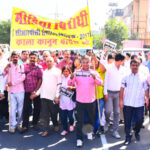
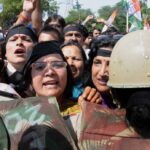
Huge protests against the controversial ordinance was witnessed with people, oppositions, media and lawyers hitting on the streets of the state capital, to voice their discontent. On Monday, leaders of Congress party, led by its state president Sachin Pilot had protested against the ordinance with black batches on face and shoulders. They described the proposed amendment as Black Law. Congress leaders who had marched towards assembly, had been detained by the police.
Rajasthan ordinance
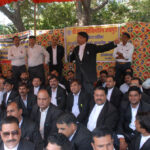
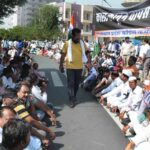
The protest further, on Tuesday, a large number of journalists and lawyers were seen hitting on the streets of Jaipur. This time, too, journalists were detained by the police. However, Rajasthan journalists got supports from across India as The Indian Women Press Corps, Press Club of India, Press Association, And Federation of Press Clubs in India expressed their solidarity and demanded from Raje to withdraw the ordinance. If the amendments get passed by the assembly, it will become impossible to lodge an FIR against government officials and judges without a getting a go from the government.
The amendment also bars the media of reporting against a corrupt official, without having an FIRs lodged against the official. Flouting rules will lead to a two-year imprisonment of the offender. Seeing the rising anger of several sections of people, Raje government has sent the ordinance to Select Committee to review it. But, journalists and activists have demanded that the ordinance should be withdraw immediately as it is against the Article 4 of the constitution.
“We want the ordinance to be repeal now,” said Kavita Srivastava, of PUCL.
Watch all the three major protests’ main pictures clicked by our photojournalist Chandra Mohan Aloria’.