Freedom Of Religion and Christian Minorities in India

0

In the recently released report, Freedom House downgraded India from free to partly free due to the atmosphere of intolerance, treatment of journalists, protestors and religious minorities. The events of 19th March at Jhansi station more than reflect this fact. On 19th March two nuns belonging to Sacred Heart congregation, who were travelling from Delhi to Odisha with two postulants, were forced to de-board the train. Some Bajrang Dal/ABVP types alleged that the nuns, who were in their usual cassette, were taking the girls for conversion. These vigilantes asked for Identity cards and religion of the teenager postulants and the circulating video shows they were aggressive in their tone all through.

The postulants said that they are Christians and intend to become nuns. The police was brought in and four of these women were taken away by police, were forced to leave the train. They were permitted to travel again the next day after the intervention from Bishops House. The frightening incident where the women had to face the male vigilantes and the male police personnel has sent the shock wave around. A statement was issued by Kerala Catholic Bishops Conference (KBC) stated that nuns were taken to the custody without any reason and humiliated. The KBC also demanded suitable action against those who harassed the women. As the nuns are from Kerala, Kerala Chief Minister Pinarayi Vijayan wrote to the Home minster Amit Shah demanding intervention from him. Shah, who is incidentally facing elections in Kerala, has promised to look into the matter.

The ABVP/Bajrang Dal activists were quoting the UP anti conversion law and intimidating the women. The activists indulging in such action has been increasing during last few years. The sense of impunity is seeping in deep into these groups as they have seen that those indulging in such crimes are not only treated with kid gloves but often catch the eye of top leaders and are duly rewarded. While this incident has come to light; many priests have been facing similar problems from quite sometimes.

‘Persecution Relief’ report (2019) points out “The frequency of attacks on Christian’s gatherings is escalating to heights especially during when Sunday morning Worship service and house prayer meetings. Pastors and congregation members are beaten, sometimes so badly that they break their legs, vandalize the churches and the Hindu fundamentalists make reports to the police that these Christians are converting the people to Christ. Hundreds of Christians are being imprisoned on false charges of converting Hindus to Christianity.”

The ‘Freedom House’ report mentions the attacks on Muslims prominently as the attacks on Muslims are very glaring while those on Christians are generally sub-radar and reported less often. The very nature of anti-Christian violence in India beginning in the decades of 1990s has been a bit different. The first major act of anti Christian violence was the brutal burning of Pastor Graham Stewart Stains in 1999. Bajrang Dal’s Dara Singh (Rajendra Pal) who is currently in jail was the one who mobilized people on the pretext that Pastor Stains is a threat to Hinduism as he is converting the people on the pretext of treating Leprosy patients.

That time it was NDA government led by Atal Bihari Vajpayee with Lal Krishna Advani as Home minister. Initially Advani stated that it can’t be a work of Bajrang Dal worker as he knows them too well. The incident was so horrific that the President of India K.R. Narayanan lamented that the ‘Killings belong to World’s inventory of Black deeds” Shaken by this the NDA Government sent a top level ministerial team with Murli Manohar Joshi, George Fernandez and Navin Patnaik. The team opined that the killings were part of the International conspiracy to destabilize the NDA Government. At the same time Advani appointed Wadhava Commission to investigate the incident. Wadhava Commission concluded that Bajrang Dal Activist Dara Sing, who was also participating in other Vanavasi Kalyan Ashram, Vishwa Hindu Parishad type activities, was the culprit and that there is no statistical increase in the number of Christians in the area where Pastor Stains was working.

Later we witnessed the regular occurrence of anti Christian violence in Adivasi areas of Dangs (Gujarat), Jhabua (Madhya Pradesh) and Orissa. Every year around Christmas time the anti Christian violence used to take place and the peak of this was the August 2008 Kandhamal Violence in which nearly hundred Christian lost their lives, hundreds of Churches were damaged or burnt and thousands of Christians were displaced. National People’s Tribunal headed by retired Chief Justice of Delhi High Court Justice A.P. Shah opined that “What happened in Kandhamal was a national shame, a complete defacement of humanity, …Survivors continue to be intimidated, denied protection and access to justice”.

The anti Christian violence has been preceded by a ceaseless propaganda that Christian Missionaries are getting huge foreign funding, and is doing the conversion work through fraud and allurement. All Christian denominations don’t operate on the similar ground. There may be few who proclaim conversion to be their goal, but majority of the denominations are not out for canvassing for conversion or allurement. Indian Christianity is very old. One version telling us its beginning from AD 52, when St. Thomas arrived on Malabar Coast and set up churches. Since then many a missions are working in remote areas and also cities. Their primary work being in the sectors of health and education. Incidentally many leading lights of Hindu nationalists like Advani and Jaitley have been products of Christian mission schools.

The major reason for this propaganda is to pose obstacle to the activities of missionaries in Adivasi areas in particular, where these activities are giving succor to the sick on one hand and empowering Adivasis through the work of education on the other. From the decades of 1980s the VHP/Vanvasi Kalyan Ashram has been focusing on the Adivasi belt where Swamis belonging to these organizations have been active, Aseemanand in Dangs, Gujarat, Laxmananand in Orissa, followers of Asaram Bapu in Jhabua, MP.

In these areas Shabri and Hanuman are also being promoted as icons of Adivasis and religiosity is being promoted along with anti-Christian propaganda. It is this propaganda which forms the root of violence and it is the electoral power at Center from last few years which encourages the vigilantes to do such acts as witnessed in Jhansi.

झारखंड पारा-वेट्स ‘कोविड योद्धाओं’ को 10 महीने से मजदूरी नहीं

रांची: झारखंड के मुख्यमंत्री हेमंत सोरेन ने झारखंड के लोगों के रोजगार के मुद्दे पर समय-समय पर चिंता व्यक्त की है, लेकिन अधिकारी उनका उल्टा करते हैं।

तीन पारा-वेट्स (कोविड योद्धाओं) जो झारखंड के पशुपालन एवं सहकारिता मंत्री बादल पत्रलेख के जिले, देवघर से आते हैं, उन्हें अब दस महीने से मजदूरी नहीं मिली है। इसमें मार्च 2020 से दिसंबर 2020 तक लॉकडाउन अवधि शामिल है।

देवघर जिले के विभिन्न प्रखंडों में प्रशिक्षित पारा-वेट्स – अनीस हाशमी, गुणाधर दास और पूरन कुमार राउत कोविड योद्धाओं की तरह पशुपालन अस्पतालों में तैनात रहें और काम किया।

“मैं सितंबर 2019 में पारा-वेट्स के रूप में शामिल हुआ था और सितंबर से फरवरी 2020 तक (छह महीने की) मजदूरी मुझे मिली है। लेकिन मार्च के बाद से, जो कोविड के वजह से लॉकडाउन अवधि थी, की हमें हमारी मजदूरी नहीं दी गई है। हमने अपने और अपने परिवार के जीवन को खतरे में डाल कर लॉकडाउन के दौरान अपना कर्तव्य निभाया। लेकिन हमारे रोज़गार की सराहना करने के बजाय, हमारी मजदूरी ही रोक दी गई है।” हाशमी ने ईन्यूज़रूम को बताया।

अब तीनों पारा-वेट्स ने मुख्यमंत्री, झारखंड, पशुपालन मंत्री बादल पत्रलेख और सचिव, पशुपालन मंत्री को पत्र लिखा है। उन्होंने संयुक्त याचिका में अपने ज्वाइनिंग लेटर भी संलग्न किए।

“मुख्यमंत्री (हेमंत सोरेन) रोजगार देने की बात करते हैं, लेकिन जिले के अधिकारी हमारे साथ अलग ही व्यवहार कर रहे हैं। वे हमें अपनी नौकरी से निकालना चाहते हैं। इन सभी अस्पतालों में कोई पशु चिकित्सा कर्मचारी या सहायक नहीं है और इस तरह के केंद्र में हमारे जैसे पारा-वेट्स की बहुत महत्वपूर्ण भूमिका है।”

झारखंड कोविड योद्धाओं पारा-वेट्स पशुपालन विभाग

जबकि गुणाधर दास ने कहा, “जब से नए जिला पशुपालन अधिकारी डॉ संजय कुमार आए, हमारी मजदूरी रोक दी गई है। हमें यह भी जानकारी मिली है कि हमारे वेतन का भुगतान करने के लिए आवंटन भी है। इसके बावजूद हमें भुगतान नहीं किया जा रहा है।”

अपने पत्रों में, तीन पारा-वेट्स (कोविड योद्धाओं) ने उल्लेख किया कि उन्होंने जिला पशु चिकित्सा अधिकारी को अपनी मजदूरी जारी करने के लिए लिखा है और अनुरोध किया है, लेकिन अधिकारी ने कार्रवाई नहीं की।

मजदूरी का भुगतान न करने के कारण, इन सभी परिवारों की आर्थिक स्थिति दयनीय हो चली है, और इस बीच 21 मार्च को, राउत ने अपने पिता को भी खो दिया।

“मेरे पिता का मेदांता, रांची में इलाज चल रहा था, लेकिन पैसे की कमी के कारण मुझे उन्हें मधुपुर लाना पड़ा। यहाँ उनका इलाज सही से नहीं हुआ और पिता का निधन हो गया,” राउत ने उदासी के साथ कहा।

नैन्सी सहाय, निदेशक, पशुपालन विभाग ने ईन्यूज़रूम को बताया कि उसने एक रिपोर्ट मांगी है, फिर आगे कहा, “जिला पशु चिकित्सा अधिकारी देवघर ने मुझे मौखिक तौर पे सूचित किया है कि दैनिक वेतन पर इन पारा-वेट्स की नियुक्तियां कानूनी नहीं हैं।”

सहाय ने यह भी उल्लेख किया कि उनके पास ऐसे दैनिक मजदूरी देने के लिए कोई आवंटन नहीं होता।

लेकिन उन्होंने आगे कहा, “चूंकि तीनों व्यक्तियों ने दस महीने तक काम किया है, इसलिए मैं यह सुनिश्चित करूंगी कि उन्हें उनका बकाया मिल जाए।”

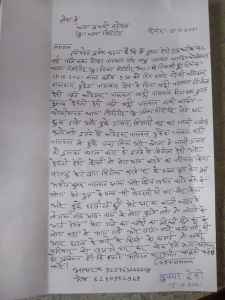
हालांकि, तीनों व्यक्तियों का दावा है कि पारा-वेट्स के रूप में उनकी नियुक्ति राज्य सरकार के आदेश (दिनांक- 15 फरवरी, 2019) पर आधारित थी, जो कि सचिव, पशुपालन विभाग (चित्र देखें) के द्वारा जारी हुआ है। सचिव ने महालेखाकार को भी एक पत्र लिखा था और विशेषज्ञों का मानना ​​है, जब महालेखाकार इन नियुक्तियों को अवैध करार देगा तब ही इसे समाप्त किया जा सकता है।

ये ख़बर इंग्लिश में पब्लिश हो चुकी न्यूज़ का अनुवाद है।

Delhi Government Bill and Bihar Police Bill hint at a frightening future for the country

0

[dropcap]I[/dropcap]n its manifesto for the Delhi Assembly elections in 2013, BJP promised ‘full statehood to Delhi’. Now it has taken away whatever powers the Delhi Assembly and the elected government of Delhi had. The Government of National Capital Territory of Delhi (Amendment) Bill, 2021, adopted by Parliament, simply passes all the powers of the Assembly and the elected government on to the Lieutenant-Governor (LG) picked up by the Modi government not on his administrative competence but on his capacity to overlook rules and regulations to please his two masters.

The Bill simply provides that ‘Government’ means ‘Lieutenant-Governor’; he will have discretionary powers even in matters where the Assembly is empowered to make laws; and his opinion will be necessary to implement any decision taken by the Council of Ministers; and the Assembly will not make any rule to enable itself to consider he matters of day-to-day administration.

During the Bihar Assembly elections last year, BJP promised good governance in the State. BJP could not get full majority there but got enough to occupy the driver’s seat with the help of smaller number of Nitish Kumar’s JDU. Though Kumar is the Chief Minister but he is completely at the mercy of the BJP. Instead of taking any steps to provide good governance in the State, the BJP-JDU government has endowed the Special Armed Police (which was previously known as the Bihar Military Police) with extraordinary powers. The Special Armed Police can now arrest anyone without a warrant or without permission from a magistrate; it can search any premises without a warrant or magistrate’s permission; if an officer is accused of having committed a crime, the court cannot take cognisance on its own; and court cannot inquire on its own an allegation of torture/harassment in custody.

The Bihar Police Bill negates the rule of law. Not only that, it amounts to the contempt of Supreme Court as it violates Supreme Court’s 1997 directions on arrest. More dreadfully, the Delhi and Bihar bills give a peep into the dangerous designs of Prime Minister Narendra Modi and Home Minister Amit Shah. If they get hold of the West Bengal Assembly, win a sizeable number of seats in the poll-bound Southern States and BJP acquires majority in Rajya Sabha also, one can only imagine what will happen to the Constitution.

SUPREME COURT DIRECTIONS ON ARREST:

In view of the increasing incidence of violence and torture in custody, the Supreme Court (in D K Basu vs. State of West Bengal, 1997) laid down 11 specific requirements and procedures that the police and other agencies have to follow for the arrest, detention and interrogation of any person. These are:

  1. Police arresting and interrogating suspects should wear “accurate, visible and clear” identification and name tags, and details of interrogating police officers should be recorded in a register.
  2. A memo of arrest must be prepared at the time of arrest. This should have the time and date of arrest, be attested by at least one witness who may either be a family member of the person arrested or a respectable person of the locality where the arrest was made, and be counter-signed by the person arrested.
  3. The person arrested, detained or being interrogated has a right to have a relative, friend or well-wisher informed as soon as practicable, of the arrest and the place of detention or custody. If the person to be informed has signed the arrest memo as a witness this is not required.
  4. Where the friend or relative of the person arrested lives outside the district, the time and place of arrest and venue of custody must be notified by police within 8 to 12 hours after arrest. This should be done by a telegram through the District Legal Aid Authority and the concerned police station.
  5. The person arrested should be told of the right to have someone informed of the arrest, as soon as the arrest or detention is made.
  6. An entry must be made in the diary at the place of detention about the arrest, the name of the person informed and the name and particulars of the police officers in whose custody the person arrested is.
  7. The person being arrested can request a physical examination at the time of arrest. Minor and major injuries if any should be recorded. The ‘Inspection Memo’ should be signed by the person arrested as well as the arresting police officer. A copy of this memo must be given to the person arrested.
  8. The person arrested must have a medical examination by a qualified doctor every 48 hours during detention. This should be done by a doctor who is on the panel, which must be constituted by the Director of Health Services of every State.
  9. Copies of all documents including the arrest memo have to be sent to the Area Magistrate (ilaqa Magistrate) for his record.
  10. The person arrested has a right to meet a lawyer during the interrogation, although not for the whole time.
  11. There should be a police control room in every District and State headquarters where information regarding the arrest and the place of custody of the person arrested must be sent by the arresting officer.

This must be done within 12 hours of the arrest. The control room should prominently display the information on a notice board. These requirements were issued to the Director General of Police and the Home Secretary of every State. They were obliged to circulate the requirements to every police station under their charge. Every police station in the country had to display these guidelines prominently. The judgment also encouraged that the requirements be broadcast through radio and television and pamphlets in local languages be distributed to spread awareness. These requirements are in addition to other rights and rules, such as:

  • The right to be informed at the time of arrest of the offence for which the person is being arrested.
  • The right to be presented before a magistrate within 24 hours of the arrest.
  • The right not to be ill-treated or tortured during arrest or in custody.
  • Confessions made in police custody cannot be used as evidence against the accused.
  • A boy under 15 years of age and women cannot be called to the police station only for questioning

Jharkhand Covid warrior Para-Vets have not got wages for 10 months

Ranchi: Time and again Jharkhand Chief Minister Hemant Soren has expressed concern over the issue of employment of Jharkhand’s people, but officials act otherwise.

Three Covid warriors (Para-veterinarians) who hail from the native place of Jharkhand’s Animal and Husbandry minister Badal Patralekh’s district, Deoghar, have not got their wages for ten months now. It includes the lockdown period from March 2020 to December 2020.

The trained Para Vets, Anis Hashmi, Gundhar Das and Puran Kumar Raut, are posted at animal husbandry hospitals in different blocks of Deoghar district.

“I had joined in September 2019 as Para-veterinarian and from September to February 2020, I got my wages. But from March onwards, which was the Covid induced lockdown period, we are not being given our wages. We put our and our family’s lives at risk and did our duty during the lockdown. But instead of appreciation and confirming our employment, our wages have been stopped,” Hashmi told eNewsroom.

Now they have written to the chief minister, Jharkhand, Minister of Animal Husbandry Badal Patralekh and Secretary, Animal Husbandry. They also attached their joining letters in the joint petition.

“The chief minister (Hemant Soren) talks about giving employment, but the district officials are treating us otherwise. They want to throw us out of our jobs. In all these hospitals there is no veterinary staff or assistant and these centers are running because of para vets like us,” Anis added.

Para vets wages covid warriros Animal Husbandry Deoghar Jharkhand
The state government letter to appoint trained para-vets

While Gunadhar Das said, “Since the new DAHO (district animal husbandry officer) Dr Sanjay Kumar joined, our wages have been stopped. We have also got information that there is allotment to pay our wages. Despite that we are not being paid.”

In their letters, the three para vets mentioned that they have written and requested the district veterinary officer to release their wages, but the officer did not act.

Because of the non-payment of wages, the economic conditions of all these families is precarious, and, on March 21, Raut lost his father.

“My father was under treatment at Medanta, Ranchi, but because of lack of money I had to bring him to Madhupur.  He could not get the required treatment here and passed away,” rued Raut.

When eNewsroom, contacted Secretary, Animal Husbandry department Aboobacker Siddiqui, he told to contact Director Nancy Sahay, who was in the meeting and promised to call back, but the call did not come.

After the publication of the news, Director Animal Husbandry Nancy Sahay called eNewsroom. She said while mentioning that she has asked for a report, “Verbally, DAHO, Deoghar has informed me that the appointments of these Para-Vets on daily wages are not legal.”

Sahay also mentioned that they have no allotments for such wagers.

She added, “Since all the three individuals have worked for ten months, I will ensure that they get their dues.”

However, the three individuals claim that their appointment as para-vets was based on a state government order (dated- February 15, 2019) by the Secretary, Animal Husbandry department (see above picture). The secretary, had written a letter to the Accounting General too, and experts believe, when the AG will term these appointments illegal then only it can be termed so.

However, the big question that arises is – if the appointment of these trained para-vets is illegal, then stern action needs to be taken against former DAHO, Deoghar, who made these appointments. 

Significantly, a para-vet is working in Simdega after a similar appointment and getting his wages. 

There are a handful of trained para-vets in Jharkhand, while almost all the districts have vacancies at animal husbandry hospitals. 


This is a developing story. Director, Nancy Sahay’s comment and additional matter has been added later after the publishing of the news.

“We will decide Mamata’s fate this time”

0

Continue from first two parts…

The turncoats

Both BJP MP Babul Supriyo and former TMC mayor cum Pandabeswar MLA Jitendra Tiwari drew criticisms for their roles in competitive communal violence in 2018. Tewari has recently joined BJP, apparently after coming under the CBI scanner over illegal coal mining and the saffron inroads in his main support base. His conflicts of interests with Mamata’s minister from Asansol North, Malay Ghatak who depends largely on Muslim votes is another factor, local observers said.

Tewari’s entry has upset Supriyo as BJP leadership has made room for the TMC turncoat despite the MP’s public protest. Some other local dons have also changed sides. It is likely to impact the coming polls. Now Supriyo has been named as the party candidate in Kolkata’s Tollygunge assembly seat.

“Does it indicate that Bubul is looking for a safe base after his bete noire’s entry in BJP? The Hindi-speaking camp appears to be gaining upper hand in Asansol BJP in tune to the party’s national ethos of Hindi-Hindu-Hindustan,” Suman Kalyan Moulick, a teacher and civil right activist said.

He recalled that BJP had tried to keep the communal cauldron boiling during the lockdown period in Asansol. After the Tablighi Jamaat episode, the saffron party tried to stop the entry of Muslim cart-vendors in Hindu- dominated areas. But the Asansol Civil Rights Association pressed on the administration to stop the nuisance.

“BJP is yet to start the poll campaign in Asansol. But we are keeping our fingers crossed because of its lead in all the assembly segments of the Lok Sabha constituency in 2019. Asansol North was the epicenter of communal violence in 2018. However, Hindu votes are likely to be divided mainly between the BJP and TMC,” Moulick added.

babul supriyo asansol belt left cong isf mamata bengal raniganj jamuria aishe ghosh
Left, Congress an ISF leaders at Brigade rally (File picture) | Courtesy: indianexpress.com

Left-Congress-ISF alliance role

CPM held the LS seat for decades after the post-independence Congress heydays. Now it has lost its ideo-political influence and organisational power in the socio-economic backdrop of decaying ‘sunset industries’, toothless trade unions, the advent of unorganized sectors as well as mafia economy and misdeeds during its long rule. Nevertheless, it retained Raniganj and Jamuria in the 2016 assembly polls. It lost Pandabeswar to Trinamool Congress but had put up an impressive fight there and in Barabani.

This time, the Left-Congress-Indian Secular Front alliance has fielded a candidate in Asansol North against Ghatak. But both imam Imdadul Rashidi and other Muslim opinion-makers in the railpar area felt that ISF leader Abbas Siddiqui, a Bengali Muslim, won’t be able to influence Urdu-speaking brethren.

Wasimul Haque, the former opposition leader in the TMC -controlled Asansol municipal corporation that covers Raniganj, Kulti and Jamuria has left CPM to join TMC. He had criticised the middle-class Bengali leadership of CPM for lacking the fighting spirit both against BJP and TMC after the riots. Now he resented the CPM’s eagerness to avenge the LF downfall by Mamata a decade ago rather than battling the greater danger of BJP takeover of Bengal.

“I have decided to go by my people’s choice and joined Mamata Banerjee. I hope that the Left leaders will sincerely ensure their supporters vote for the LF alliance and not go for the BJP as they did in previous polls,” Haque said.

Indeed, Left-Congress votes were instrumental behind BJP’s surging voting share, from roughly 10 percent in the 2016 assembly poll, a seven percent downslide from 17 percent in the 2014 LS election to 40 percent in 2019. The corresponding steady decline in Left-Congress has already underscored the pattern. But Mamata Banerjee’s sustained carrot and stick policy to make her rule ‘opposition free is much to be blamed. The LF-Congress leaders have denied any planned vote transfer but held the state ruling party’s repression responsible for the exodus of their support base to the central ruling party.

“We will decide Mamata’s fate this time”

Arij Jalees, a teacher and CPIM councillor in neighbouring Raniganj constituency is more hopeful about the role of the Left alliance this time. Unlike Wasimul Haque, a former fellow corporator in Asansol, he has stayed with CPM. According to him, Mamata should appreciate the ground reality both in the Asansol zone and as well as in the whole of Bengal. ”

left cpm tmc bjp asansol 2018 riots
CPM candidates from Jamuaria Aishe Ghosh campaigning on March 14 | Twitter: Aishe

Left-Congress-ISF combine can save the TMC government by cutting into the anti-TMC votes that were likely to land in BJP’s kitty. Our performance will decide Mamata’s fate,” he claimed.

For him, Muslims will vote for TMC, but many will do it out of desperation. They have grievances against the ruling party’s corruption and highhandedness. Also, they are apprehensive that many TMC MLAs would succumb to the lures of BJP horse-trading as the pre-poll exodus from the ruling party has already proved.

Jalees hoped that some left-leaning Hindu voters who had gone to BJP would also come back. “My Hindu friends are angry over the increasing fuel price. The middle class is opposed to the wholesale privatisation of public banks, insurance companies et al.”

Regarding scheduled castes voters, he said: “Now things are changing. Some of the Dalit youth are coming back to us. But the problem is that TMC here is still dominated by riot-accused from the Muslim side. BJP will definitely try to encash the local Hindu sentiments against it,” Jalees added.

While not much sure about the Left’s ability to retain Raniganj, he is confident about the victory of the CPM candidate in Jamuria. Aishe Ghosh, the young student leader from JNU is the candidate. She had suffered BJP attacks personally on the campus. “The leadership should have fielded more and more young people earlier. It is the changing faces of the Left which are likely to attract the young voters, particularly those who are opposed to communal politics of BJP and criminal politics of TMC simultaneously.”

Asansol belt: A repeat of 2016 or 2019 depends on Lefts too

0

Asansol/Kolkata: BJP won’t be able to repeat 2019 results in the Asansol belt in 2021 if TMC and Left Front can retain their bases. TMC bagged five out of seven assembly segments under Asansol parliamentary constituency in 2016. CPM held two. BJP was distant third even two years after its victory in the LS poll in 2014. But the saffron brigade got leads in all seven in 2019 in the aftermath of communal riots in 2018.

The Modi wave did not work in the last assembly election. But the scenario changed after the riots over Ram Navami rallies by BJP-VHP that went through Muslim mohallas while the Sangh DJ boxes disgorged provocative songs and slogans. Competition over Ram politics by some TMC-turned BJP leaders like former mayor Jitendra Tiwari who have stakes among the Hindi-speaking population worsened the situation. TMC, generally seen as a pro-Muslim party, was almost divided along religious lines in the riot-hit Asansol North and Raniganj. Some leaders from both communities instigated their coreligionists to violence. 

Consequently, BJP got a good lead in all seven segments in 2019. The victory margin for Babul Supriyo increased to the tune of around two lakh votes. The saffron party’s vote share crossed 51 percent with a phenomenal hike of around 15 percent. Correspondingly, CPM’s vote share nosedived to 7.8 percent as it lost more than 15 percent votes. Congress was also down to meagre 1.7 percent, poorer by 2.54 percent. TMC stood second by bagging more than 35 percent votes, an increase of around five percent in comparison to its 2014 tally.

left cpm tmc bjp asansol 2018 riots
File picture of Asansol’s 2018 Ram Navami procession | Courtesy: National Herald

Hindi-speaking and working-class voters

The Hindi-speaking working-class population here is generally inclined to vote for BJP, local observers said. But the saffron party is nowhere close to a clean sweep this time. TMC will make a deep cut across the belt and the Left alliance will do the same in some of the seven seats, they pointed out. 

According to a local vernacular journalist who did not wish to be named, TMC has distanced itself from Hindi-speaking voters since the 2014 victory of BJP. “TMC leaders have promoted Bengali-Bihari binary over the years. Hindi-speakers are being treated as outsiders despite having settled here for generations. There is a feeling of discrimination and grievances over Muslim appeasement during and after the last riots,” he said. BJP has already made good use of Mamata Banerjee’s ‘outsider’ tag earlier by calling it an insult to upcountry settlers. 

Nevertheless, Modi’s party won’t be able to make a cakewalk among them. “There is no Modi wave this time. The promise of Sonar Bangla hardly appeals as people know the reality of Sonar UP and Bihar. People across the communities are angry with fuel price hikes. Further, the inclusion of coal, sand and iron scrap mafias including the TMC deserters among the BJP candidates have stoked the infights,” the middle-aged scribe added.

Sudipta Bose, an independent trade union activist who works among the contract laborers of different backgrounds in Eastern Coal Field collieries in Raniganj-Dishergarh-Pandaveswar belt, said Mamata would be able to attract a section of Hindi-speaking workers by dint of her popular cash benefit schemes et al. 

“The TMC government did not discriminate in providing food to the poor during the lockdown months. Hindi-speaking students also got cycles and funds under Kanyashree. They have been listed in Swasthya Sathi health scheme also,” she observed. “Religious politics has good traction among the Hindi-speaking. But the appeal of the Hindutva ideology is much less than a pragmatic desire to see the change of guard after experiencing TMC hooliganism and corruption.” 

left cpm tmc bjp asansol 2018 riots working class Hindi-speaking industrial zone
A group of miners are at work in a mine in Raniganj | Courtesy: BBC/Arindam MUkherjee

The appeal of old Left politics of class unity above religion and language divides has nosedived following the closures of big public and private sector factories and the consequent devastation in socio-economic life in labor colonies around them. The huge surge in sectarian identity politics has been coterminous with the rise of unorganised sectors, a sharp reduction in the rank of regular factory hands, and fragmentation of workforce into small permanent staff and army of casual-contract laborers as they are made to compete over shrinking wages as well as living space, above all, job security. 

“Workers get united over their bread and butter issues. But unionised do not see non-unionised and contract labor at par when their interests clash. Moreover, religious-caste-linguistic divides are rampant now in their social-political consciousness with the Hindu-Muslim narrative being a dominant one. Even Dalit and tribal hands are not free from it,” Sudipta observed.  

The closure of the iconic Burn Standard and Hindustan Cables by the Narendra Modi government in the same year did not affect the voting pattern. Workers felt that the units, though sick for years, could have been revived with proper technology up-gradation and marketing. They are yet to receive their full dues.

Vote boycott

The wagon colony residents around Burn Standard have refused to vacate their quarters till the full payment. In retaliation, the factory authorities had stopped water and electricity supply. The supply has been partially restored at the intervention of the district administration. In desperation, the residents have called for a vote boycott this time, Rabin Pramanik, a young local scribe said.

“But the plight of the workers’ families of closed units and increasing privatisation of public sector companies including banks may affect some unionised labor, government employees and educated middle class only. A good section of Bengali and Hindi-speaking scheduled castes and tribal voters have been swayed by the religious affinities,” Pramanik observed. 

Recalling the 2018 riots in Raniganj that had witnessed massive vandalism, CPM corporator Arij Jalees there said that BJP-VHP had used mainly Hindi-speaking Dalits against Muslims. The saffron brigade has gained ground among the Left support base in the slums dominated by lower castes and tribes at the outskirts, more since 2016. Sudipta saw a much larger pattern in it. “Dalit youths who are either jobless or poorly paid workers in unorganised sectors are being increasingly criminalised by BJP moneybags in Asansol-Ranigani-Durgapur industrial zone to use them in communal violence and anti-trade union politics.” 

(To be continued…)

Amid protests in Bangladesh against PM Modi’s visit, activist writes to EC not to allow PM’s Bangladesh visit to be telecast on Bengal’s voting day

0

Kolkata: Transparency activist Saket Gokhale has filed a representation affidavit with the Election Commission of India regarding Prime Minister Narendra Modi’s visit to Orakandi in Bangladesh.

On March 26 and 27, PM Modi will be in Bangladesh as State Guest. While on his first day of the tour, the first foreign country visit by the Indian PM after lockdown forced by Covid-19, Modi will attend Bangladesh’s 50th Foundation day functions. On his second day he will go to Orakandi.

Orakandi city has a shrine for the Matua community that influences several seats in Bengal.

Saket Gokhle said, “Modi is making this two day visit 200 km outside Dhaka just for campaigning on foreign soil targeting the Matua community in Bengal.”

He also mentioned that ironically and diabolically Modi is making this visit on 27 March i.e. the 1st day of Phase 1 polling in Bengal.

BBC in its report on March 21 mentioned that students are protesting in Dhaka demanding that the Bangladesh government led by Sheikh Hasina should not invite Modi for country’s foundation year celebrations.

pm modi's bangladesh visit matua bengal elections Matuas Orakandi Saket Gokhale

Through his representation affidavit, Saket has demanded that the Election Commission should;

1. Vet an advance copy of Modi’s speech to be delivered at Orakandi in Bangladesh

2. Require all TV media to broadcast Modi’s program at Orakandi only after the close of polling i.e. 6 pm

3. Restrain BJP from using this alleged state visit of PM Modi for election campaigning.

The Matuas are a close-knit group in Bengal belonging to the scheduled caste community, who migrated from Bangladesh during and after Partition.

The Matuas have a significant presence in four parliamentary seats here, making them one of the biggest vote banks in the state. Although no official count exists, it is estimated that there are about one crore Matua voters.

Matuas, mostly who have migrated to India post 90’s have yet to get Indian Citizenship and BJP had raised this issue just before the Lok Sabha polls in 2019. It paid well to the saffron brigade and for the first time, they won 18 out of 42 seats from Bengal.

However, after amending India’s citizenship law (CAA), the Modi government has not been able to frame rules which has irked Matua voters.

The Wire reported that Modi’s visit to Orakandi during the Bangladesh visit is an attempt at wooing the Matua voters in India.

“It is unfortunate that PM Modi is using foreign soil for election purpose. We are also going to write to Election Commission about it. And as far as Matua community is concerned they are slipping out of the hands of BJP”, Trinamool Congress MP Saugata Roy told eNewsroom.

Asansol: Will voters cross communal divides to reflect on real issues of their daily lives?

0

Asansol: Politics of communal polarisation has helped Bharatiya Janata Party (BJP) to win Asansol parliamentary constituency for successive two terms in 2014 and 2919. Will it be able to wrest the seven assembly segments from its friend-turned-foe Trinamool Congress (TMC) and CPM in 2021 state polls? Though TMC won five and CPM retained two in 2016, the tri-corner Bengal poll this time is likely to see changes. Notwithstanding BJP’s lead in all the seven seats in 2019, local factors including inner-party feuds in both Narendra Modi and Mamata Banerjee camps are likely to impact the outcome, locals say.

Changing economy and politics in the industry zone

Asansol is the headquarters of Paschim Bardhaman district. It is one of the major industrial zones of West Bengal, though, it has retained only a shadow of its former glory. Known as mini India, the Hindu majority here is divided mainly between Bengalis and Hindi-speaking upcountry settlers (around 40 percent) while Muslims (approx 21 percent) are dominated by Urdu-speaking people known as Biharis. North Indian upper castes and Marwaris dominate business here while scheduled castes (28 percent) dominate the slums and unorganised workforce in all the towns.

Tribals (approx. 7 percent) reside in outlying areas remanding the rural landscape before the British Raj turned the belt close to Bihar and Jharkhand into a colliery cum heavy industry hub as well as a railway junction. Sikhs and Christians have also been a small but important part of the social mosaic since the days of early settlers in the 19th century. 

Narendra Modi waves helped Babul Supriyo, a singer turned political rookie to sail through successfully in 2014. But his increased margin in 2019 was largely attributed to the communal polarisation following a series of communal violence in 2018 March over Ramnavami processions, mainly in Asansol north and Raniganj. 

asansol communal divide bengal elections bjp tmc cpm
File picture of Asansol-Raniganj riots 2018. Affected women from both Hindu-Muslim families had narrated their plights together. Credit: Swatilekha Mondol

The closure and sickness of much big public and private sector units for various economic-political reasons have turned the zone into a veritable graveyard of industries since the eighties. CPM held its citadels during three decades of Left Front rule. But the writing on the wall was clear as the gradual decline of organised industry, traditional labor economy and trade union movements made the ground fertile for social fragmentation and divisive politics, particularly after the demolition of Babri Mosque. 

The nexus of land mafias-big money- corrupt politicians and police who have been grabbing factory lands has played on the fight for increasingly scarce livelihood and living space among the toilers and the jobless youth. Illegal mining in this area under the Eastern coalfield region has furthered mafia control over the economy and politics here at the cost of society and nature. The mafia machination over competitive identity politics over religion, languages, places of origin et al has blossomed fully now with the increasing saffron offensive in Bengal.

The BJP-VHP-Bajrang Dal penetration in this zone has been spearheaded mainly by Marwari businessmen who have used Hindu lower castes, particularly Hindi-speaking poor Dalits as foot soldiers in violence against neighboring Urdu- speaking, highly ghettoised but relatively better off Muslims.

asansol communal divide bengal elections bjp tmc cpm
A gutted home in Raniganj after riots in 2018 | Credit: Swatilekha Mondol

After Mamata Banerjee unseated the LF in 2011, the TMC brand of identity cum vote-bank politics has only facilitated the surge of Hindutva forces in Asansol and elsewhere. According to local observers, Mamata had first courted the conservative Muslim clergy. The latter brought out huge rallies on the day of Milad-Un-Nabi or celebration of the birthday of prophet Muhammad as well as on Muharram day to assert their strength in response to BJP-VHP’s increasingly provocative Ram Navami shows. Mamata’s men later tried to grab a share of the Ram cake by organising parallel Ram Navami rallies as well as Bajrangvali and Ganesha pujas to win over Hindi-speaking Hindus. 

2018 riots

The dance of death and destruction in March 2018, mainly in Asansol North (AN) and neighbouring Raniganj, took place in the backdrop of this mutually polarizing politics. Both Hindu and Muslim elders in the slums of AN Rail Par area (dubbed as mini Pakistan by the Sangh Parivar) whom I had met after the mayhem, recalled wistfully how they had taken parts both in Muharram and Durga Puja-Dussehra processions earlier. Similar refrains were heard in Ronai on the way to Raniganj where people across the faith line thronged a Mazar. At least four persons lost their lives in the violence including a teenager and a woman. All of them were poor. 

The cry of the women across the religious divide at the slums of Raniganj’s Rajabadh-Hatkhola area still haunts this correspondent. Their dilapidated homes were vandalised and looted by avenging youth of both sides, politically aligned to BJP-VHP and TMC. Both BJP MP Babul Supriyo and TMC mayor cum Pandebewar MLA, Jitendra Tiwari instigated competitive violence. Babul’s communal campaigns online shocked even his Bengali fans. 

https://www.facebook.com/enewsroom.in/videos/163175828872101

Muslims are rooting for TMC

A revisit to Asansol North a few days back makes it evident that minorities mostly favour Mamata Banerjee. Imdadul Rashidi, the middle-aged imam of Noorani mosque off the Ok road in the railpar area was a voice of sanity amid the ugly communal frenzy in 2018 even after he had lost his teenage son. The boy became a victim of the cycle of mutual killings and mayhem. But the bereaved father refused to stoke the fire at his son’s janaza and called for peace and amity. His message saved the situation in Asansol and adjoining areas including Jharkhand. The imam and his clan hailed from the neighbouring state. 

Last time he declined to speak in clear political terms. But Modi 2 government’s majoritarian moves and BJP’s aggressive drive to bag Bengal have changed his mood. Now he stands for Mamata. 

“Her government has worked for common people, both Muslims and Hindus, the best in the last 50 years in Bengal. So I want it to come back for peace and amity. The beauty of India and Bengal lies in its Ganga-Yamuna tehzeeb. That cherished heritage is being destroyed now. I am sure politics of hatred will be defeated and the culture of love and peace will win,” the imam said.  

Disclosing, he was a Congress supporter but never got involved in active politics till the ground reality changed rapidly. “I still have no hatred against those who had killed my son. I still hope my message for peace and amity has melted their hearts. I know that Ram Navami’s violence was engineered to polarize local people along the communal line. I still meet my Hindu neighbours and don’t hold the community as a whole responsible for my son’s death. But BJP is taking India back towards the time of the partition,” he commented.

Referring to the visit of Sanyukt Kisan Morcha leaders from Delhi borders in Asansol who appealed to Bengal voters not to vote for BJP, the imam supported their demands. “My prayers are with them. Rakesh Tikait had strengthened BJP after the Muzaffarnagar riots. Modi Ji could have used that support for the welfare of the common people. But that didn’t happen.” 

Muslim families in the railpar area echoed the sentiments of imam Rashidi. “Babul Supriyo never visited our areas even after the riots. Mamata didi serves poor people of all religions. Modi Ji has virtually thrown us out of frying pan into the fire. His latest gift is the staggering hikes in fuel prices,” Noor Jahan Khatun, a housewife said. Abdus Samad, a middle-aged private tutor was caustic. Modi Ji will not provide us bread and jobs. At least, he should allow us to live in peace in Bengal,” he said.

( To be continued)

Re-examining a judgment

The judgment of the trial court in the defamation case of MJ Akbar versus Priya Ramani is the first judicial response in India to the MeToo movement, a cause which has made significant, and positive, impact on the handling of professional relationships at the workplace, to ensure sensitivity and safe space for women to share their traumas and encourage healing. Its impact has been recorded as progressively affirmative, with organizations updating the workplace policies on sexual harassment more broadly; including sexual harassment training and renewed regulations to investigate allegations of sexual transgressions.

The movement in India has essentially been a social media driven movement, and at variance with other countries where criminal prosecution was triggered in some high profile cases.

There has been much media comment on the judgment, including for its notable effort to coordinate the broader social movement to the Indian criminal justice system.

The judgment has also invoked Constitutional law extensively. However, very little attention has been drawn to the question of whether its legal reasoning has been sound, especially while invoking the Constitution.

The principal aim of this piece is to highlight gaps in the judgment from the standpoint of established Constitutional principles; rather than to scrutinise the outcome of the judgment. Looked at it through this lens, the judgment seems to have thrown up more questions than answers, which may attract further judicial, Constitutional and jurisprudential scrutiny.

Dignity versus Reputation

The first is over the ‘right to reputation’ versus ‘right to dignity’ debate. One paragraph of the verdict says: “….the right of reputation cannot be protected at the cost of the right of life and dignity of woman as guaranteed in Indian Constitution under Article 21…”

The judgment seems to have clearly given preferential treatment to right to dignity over right to reputation. In the absence of a direct encapsulation of both these rights in the text of any Constitutional provision, the Supreme Court of India has in a catena of judgments included both as a subset of “life and personal liberty” under Article 21. Moreover, the judgment is silent on any judicial precedent or a larger jurisprudential and constitutional principle for placing one subset over the other. In the absence of  settled law,  the judgment is found wanting on what test it has relied upon to choose one over the other.

This point becomes even more significant considering that trial courts are not conferred with the jurisdiction to lay down the law on Constitutional matters. This aspect may, therefore, interest the attention of Constitutional courts.

Last year, a seven-judge bench of the Supreme Court, in a review petition before it in Kantaru Rajeevaru v. Indian Young Lawyers Association and Ors (2020), referred a question to a nine-judge bench to decide, “Which fundamental right takes precedence over the other in such cases where two fundamental rights appear to be competing and conflicting in application?” The case relates to the issue of interplay between the freedom of religion under Articles 25 and 26 of the Constitution and other fundamental rights, particularly right to equality under Article 14.

The judgment also cited provisions of international legislative framework on protection of right to dignity: Universal Declaration of Human Rights 1948, International Labour Organisation (Discrimination and Occupation) Convention 1958, International Covenant on Economic, Social and Cultural Rights 1966 etc. to drive home the importance of right to dignity.

But it has not taken cognizance of the international framework protecting right to reputation. Article 19 of the International Covenant on Civil and Political Rights 1966 recognises ‘respect for the right to reputation of others’ as a restriction on exercise of freedom of expression. Article 12 of the Universal Declaration of Human Rights 1948 protects an individual’s ‘honour and reputation’. Similar provisions are there under the American Convention on Human Rights 1969 and the European Convention on Human Rights 1950.

While efforts of the judgment in amplifying right to dignity are creditable, it would have been much more convincing had the judgment also taken cognizance of international conventions on reputation, and made a reasoned case for its conclusions.

Moving forward, it is important for judicial discourse to comb situations where there may be conflict between fundamental rights inter se generally, and right to reputation versus right to dignity in defamation suits, specifically.

A clearer enunciation of guidelines should be proposed to cater to sexual harassment cases where defamation suits may be seen as standing in the way of victims from narrating their stories or retracting their formal complaints.

Process as punishment

The judgement further observed that “…woman cannot be punished for raising voice against the sex abuse on the pretext of criminal complaint of defamation”. Here, the judgment deserves credit for flagging the sociolegal issue of ‘process as punishment’- a systemic plague affecting the criminal justice system. ‘Process as punishment’ describes the taxing process through which an accused wades through during the criminal trial until adjudication.

The recognition of this malaise and its subsequent invocation to benefit women is welcome. However, its specific application in a case as a ground for judicial decision- making raises interesting questions. Is it suggesting that access to a legal right to defamation cannot be invoked in sexual harassment cases? Or that voices against sexual harassment enjoy immunity from criminal defamation law if they form a part of a broader social movement? Or what situations qualify where recourse to a legal right by an aggrieved party be termed as punishment for accused?

Instead of limiting itself to defamation, the judgment unnecessarily enters into the slippery domain of open questions of constitutional interpretation.

Is Secularism a threat to Traditions of India?

0

India got independence from British colonial rule on 15th August 1947 after a long struggle which was inclusive and had plural dimensions. Foundation of Indian Constitution is Liberty, Equality, Fraternity and Justice. The values of secularism are deeply ingrained all through and particularly in Articles 14, 19, 22, and 25. It gives us freedom of religion, to practice, preach and propagate the same.

Not all Indians were for such plural values which respect diversity. The communal streams immediately attacked the constitution saying it does not reflect the glorious contribution of Indian past, the values given in holy tomes like Manu Smriti. Communal stream was critical of the Constitution and did not accept the tricolor as our national flag. Nearly seven decades down the line those opposing Indian Constitution and its values are rearing their heads from the last few decades. There are top leaders like the Prime Minister Narendra Modi who on one side claim to be Hindu nationalists and on the other level for electoral purposes claim that “We are secular not because the word was added in our Constitution. Secularism is in our blood. We believe in Sarva Pantha Sambhava.”

There is yet another types of leaders like Yogi Adityanath, the Chief Minister of UP who detest this ideology out and out. Recently he stated that secularism was the “biggest threat” to the traditions of India getting recognition on the global stage.” At an earlier occasion he had stated that “The word “secular” is “the biggest lie”, and suggested that the people who propagated it should apologize to the nation, a reference to the Congress party.”

Adityanath who has taken the oath on Indian Constitution has no qualms in denigrating one of its core values. He himself is the Mahant (Chief Priest) of Gorakhnath Math. He is saffron clad like few others in his party.

Let us see how secularism is a threat to traditions of India. India is inherently plural with rich diversity in religious traditions, languages, ethnicities, food habits, dressing pattern, ways of worship etc. In a way the Hindu religion, in whose pretext he is taking secularism to the task itself is so diverse; from the Brahmanical traditions of hierarchy to the Bhakti tradition talking of equality; there is a wide range. Has this diversity hampered the path to recognition of India on the global stage?

The rich contributions of India are recognized all over the World. The contributions of philosophers like Buddha are appreciated in large parts of the World, more particularly South East Asia. During freedom movement Mahatma Gandhi rose like a colossus and based on Indian tradition he propagated non Violence and Satyagriha (invocation to truth). These were the contributions which inspired many great leaders in the World including Martin Luther King (Jr) and Nelson Mandela who followed his path to take their goals towards fruition. Indian philosophy influenced global thinking in multiple ways.

Even though global culture is diverse and learns from each other, the astronomical and mathematical contributions from India made their place in the global knowledge systems. Further the first Prime minister of India, Jawaharlal Nehru, gave the unique concept of ‘non alignment’, which was picked up by large sections of the World and many nations joined this unique movement at the peak of its success.

Contrary to what Adityanath is stating; it is precisely due to the secular path which we followed that we could achieve miraculous progress in the first 5-6 decades of our republic in the areas of industrialization, education, irrigation, atomic and space research among others. As such we seem to have stagnated during the last couple of decades as the path of secularism has been denigrated and mocked at. Lately the communal party is gloating that in the last elections nobody dared to utter this word!

There is also criticism that the introduction of this word in 1976 during emergency was uncalled for and so should be done away with. As such the whole constitution is seeped with the values of secularism. While at one level secularism says that the state has no religion, Indian model of secularism respects all religions without being guided by it. Secularism is unique in another way that it respects those communities which are in minority and provides for affirmative, protective clauses for them. These are currently being labeled as ‘appeasement of minorities’ and are being made a rallying point for electoral mobilization of the majority community.

While Adityanath is lamenting against secular plural diverse values and propagates for Hindu Nation, the ideology of the ruling party, he is not alone in that. At the moment multiple articulations are being put forward. One Anant Kumar Hegde the Union minister bluntly stated that BJP is in power as it wants to change the constitution. One earlier Sarsanghchalak K. Sudarshan also put it forward by saying that Indian Constitution is based on Western values and so not suitable for our country. We should bring a Constitution based on Indian Holy books!

Religious nationalists all over the world abhor the secular-plural values they limit their power to impose their own values on society, to create a value system of hierarchy, the overt expression of which comes in the books like Manusmriti. The pre modern structural hierarchies of class, caste and gender are their ideal, be it the Talibans, Muslim Brotherhood (Egypt based communal organization) or those indulging in politics in the name of Buddhism in Sri Lanka and Myanmar.

The plight of Pakistan, where communal forces had been dominant, is there for all of us to see. Neither it could remain united as Islamic nation nor could it make headways in areas of science, education, health and industrialization.

The communal mindset needs to be overcome to focus on the progress of society in the areas of education, health, employment and nutrition rather than celebrating religious festivals at the expense of the state or taking up issues related to temple-mosque and putting to the margins the issues of marginalized sections of society.