Has Sourav Ganguly Joined BJP?

Kolkata: A post is being circulated by Facebook page – Paschim Bange BJP Chai (We want BJP in Bengal) since Monday. It has already been shared more than 11000 times on social media and has attracted over three hundred comments.

The post in question is a news about former Indian Cricket team captain, the prince of Bengal, Sourav Ganguly having joined the West Bengal Chapter of Bharatiya Janata Party (BJP). The page has over 8300 followers.

The post written in Bengali, declared, “Former cricket captain Sourav Ganguly joins BJP and PM Narendra Modi’s sabka saath sabka vikas agenda, is joined by an honest, dedicated man who is loved by India. Today is a day of celebration ……let’s share the news”.

This is not the first time that a political party is trying to rope in Sourav or dada, as he is affectionately called in Bengal. In the past CPIM, TMC and BJP have tried their best to rope in the cricket icon of Bengal. However, till date, Sourav, who is currently serving Cricket Association of Bengal as its president, has always smartly turned down such offers, stating that he is not interested in joining politics.

sourav ganguly bjp bengal cricketer politics
The number of share the post got is more than the number of followers of the page

BJP, who is trying to secure firm footings in Bengal, has been trying its best to rope in the veteran cricketer since 2013. In 2015 mainstream media went overboard with speculative stories about Sourav joining BJP. The speculative news were so many in number that the ace cricketer had to issue a public statement, to douse all the speculations of him joining the saffron brigade.

A similar attempt is now being made by spreading the fake news of dada having joined BJP. This attempt definitely is not the first time that BJP has tried to create opinions related to Bengal by spearheading a fake propaganda. Prominent BJP leaders like Babul Suprio and Paresh Rawal have been left red faced for having circulated fake news or images.

sourav ganguly bjp bengal cricketer politics
A Sourav Ganguly fan also tweeted about the page to the former skipper and Kolkata Police

Perhaps, some understand the trend for spreading fake propagandas, for a good number of comments condemned the Page Admin for posting fake news. Mriganka Das, one of the members of the page, wrote, “Toder jonnoye BJPer naam kharap hochchey, Ki dorkar fake news dewaar? (It’s for people like you that BJP is earning a bad name. What was the need of posting this fake news?). While maximum followers were elated about Sourav joining the BJP, a few even pitched him as the next Chief Ministerial candidate. However, the most alert or proactive members of the group was Uparendra Nath Brahmachari, who calls himself a nationalist, but not a blind one. He posted a link on the thread that he had earlier, reported a similar post made by Pashchim Bange BJP Supporter (Supporters of BJP in West Bengal). The screen grab of his twitter handle shows him tagging both Sourav and Kolkata Police, thereby alerting both about the fake news circulation.

However, Sourav is yet to make any official comment regarding the same.

Jharkhand’s mentally-challenged senior citizen denied ration and pension, dies

Ranchi: A 65-year-old mentally-ill person died in Kodakel village of Murhu block in Khunti district of Jharkhand on Friday. He had been denied ration and pension, claimed Jharkhand chapter of Right to Food campaign.

The Right to Food activists who visited the village and met the family members of the deceased , Sudama Pandey, issued a press communiqué and mentioned that not only Sudama was denied ration and pension but several others in the tribal dominated Murhu village have been facing difficulties because of irregularities in the implementation of welfare schemes.

It reads, “On May 27, a local newspaper published a news of the death of a 60-year-old resident of Kodakel village of Murhu – Sudama Pandey – due to hunger and illness. The report also stated that Sudama Pandey was mentally ill and did not have any caregiver. According to the report, although Sudama did not have a ration card, he received ration till a month and a half ago.”

However, the team learnt that the newspaper report was not accurate and Sudama did not die of starvation. Sudama Pandey was indeed mentally ill, but he was looked after and was regularly fed by his brother’s family. He was physically ill for a few days before his death and had become quite weak. The team also found that, according to his Aadhaar, Sudama was 65-years old.

The RTF report pointed out that Sudama was denied his entitlements of ration and pension. His brothers’ family applied for a ration card for him, but he was never issued one. One of his nephews, Om Prakash tried to get his bank account opened in the Murhu branch of Bank of India, but was unable to do so even after 8-9 attempts.

As Sudama did not have a bank account, he was also denied of his old age pension.

According to Sudama’s relatives, he could have got better care if he had received a pension.

The fact finding team also found other irregularities in the implementation of welfare programmes in the village. One of Sudama’s sisters in law – Vimla Devi – said that she stopped receiving her widow pension in her bank account since last September. She made several trips to the bank to inquire about her pension, but did not receive any information. When the fact finding team checked her details on the Public Finance Management System website, it learnt that her pension amount is getting credited in an Airtel Payment Bank linked with Vimla Devi’s Aadhaar number.

The team found that the ration cardholders of the village complained that the ration dealer – Sumitra Devi – gives 2 kg less per ration card but writes the full entitlement in ration cards and also charges for the full entitlement. They also said that the ration dealer tears the receipt with details of purchased rations.

“Irregularities found in Murhu is rampant across Jharkhand and are regularly highlighted by the Right to Food. However, the government has shown little seriousness in addressing them,” added the RTF communiqué.

Transgenders are first humans, says Shree Ghatak

Kolkata: Shree Ghatak made it to the national headlines last year, for becoming the first transgender in Eastern India to get legally married. Understanding the need of the transgender community to be financially empowered, she flagged off Troyee Foundation, a non-governmental organisation on her wedding day.

A year down the line, Ghatak and Troyee organised a cultural evening to commemorate their achievement. “We all talk about the need of having an inclusive society, where the marginalised get their due, respect and more. A society where the third gender is treated like humans and not as someone to jeer on is what we all dream of. Troyee is an initiative, which aims at empowering the transgenders and the marginalised to lead a decent life,” said Ghatak.

Her NGO, for the past one year has been providing a platform to the transgenders to hone their skills. The one year old foundation has organised various workshops like jewellery making, bakery, chocolate making, jute bag making, make-up art and candle making so that these people can be economically empowered. “These workshops are free of cost and those who do not belong to LGBT community but belong to marginalised classes can also take part,” informed Ghatak.

The cultural wing of the organisation presented a dance recital ‘ek onno nari kahini’ where they presented a dance drama based on Ghatak’s life, which was nothing short a struggle, which she faced beautifully. A website of the foundation was also launched during the event, which was hosted at Purbashree, EZCC auditorium on Sunday.

Dressed in a resplendent orange with blue zari bordered Kathan saree and looking absolutely amazing, oozing confidence as she spoke to eNewsroom at the backstage. “In every aspect the talent that we have are compromised. After so much development, society is still not ready to acknowledge our existence, leave aside acknowledging our talents. Troyee Foundation comes here with the intention of providing a platform for LGBT community to bring their talents out,” mentioned Ghatak.

Eminent elocutionist Sujoy Prasad Mukherjee praised Ghatak and the work being done under the aegis of Troyee Foundation. “I would like to say that we should be acknowledged and thus treated as human being and not as gender. We are very much a part of the society,” said Sujoy, who beautifully rendered ‘O je mane na mana’. Dancer Kohinoor Sen Barat too stressed upon the need to help the LGBT community come out of the closet and assert their rights. “Those who have right intent they will get people with themselves who would help them to blossom. We are with the Foundation and Shree in her endeavour,” said Barat.

Ruby Das Sain who is a professor of Sociology at Jadavpur University spoke of the fact that in ancient times, people belonging to third gender were very much respected. Even during the Mughal regime, they are revered. “Things began to change once British colonised India. They criminalised third gender and after so many years of Independence, our society is yet to warm up to them in an open way.”

Jharkhand’s angry tribals resort to Pathalgadi, their age-old practice

Ranchi: At a time when Jharkhand is all geared up for the Dhanbad visit of Prime Minister Narendra Modi on May 25 to lay the foundation stone for developmental works worth Rs 27000 crores, Pathalgadi, an ancient practice of the Indian tribals to declare self-rule is spreading fast in several districts of the mineral rich state.

Angry tribals resort to Pathalgadi practice

During Pathalgadi movement tribals belonging to scheduled area, through Gram Sabhas demarcate their village area and implement the constitutional power given to them under PESA (Panchayats Extension to Schedule Areas). Once it’s implemented, outsiders are barred from entering the village including police and administrative officials. Also no one, including government can’t acquire land or sell without seeking permission from the Gram Sabha, while the locals can draft their own rules to save the tribal culture.

The practice got highlighted in Jharkhand about a year back. At least a dozen villages of Khunti districh have done pathalgadi and announced self-rule in their villages. Now the movement has spread out to the industrial belt of Seraikela-Kharsawan. On Tuesday, under the leadership of Joseph Purty pathalgadi was done in six more villages of Seraikela-Kharsawan, following which, Jharkhand police arrested one Durga Munda on the charges of organizing pathalgadi events. Not happy with the police, the villagers retaliated, by holding police land mines, vehicles and eight policemen hostage for four hours. A similar protest was executed in February, earlier this year, when 25 policemen were held hostage for arresting the gram pradhan on the charges of pathalgadi. Later police arrested movement leaders that include some retired government employees.

Pathalgadi, a constitutional practice

“There is a tradition and history of pathalgadi among tribals belonging to the Munda tribe. However, when these villages started practicing the ancient tradition, police began to inquire them as its an anti-national activity, forcing the villagers to start taking the police as hostages,” said Dayamani Barla, a social activist of tribal rights.

She further claimed that what tribals were doing was not unconstitutional, “It has been a practice among the tribals to inscribe the constitutional power given to them under PESA Act 1996 on stones and installed the stones at the village borders.”

Why the need for it, now

Explaining the resurgence of the ancient practice, Barla reasoned, “Actually, the laws made for the betterment of the tribals have not been implemented in the right way, hence not much changes have been seen in their lives. On the other hand their properties and resources are being exploited. Be it CNT (attempts to amend it has been made) or PESA or the Forest Rights Act, none have been implemented well. In fact not even eight pattas have been issued in the last twelve years of the implementation of Forest Rights nor have any gram sabhas been formed or entrusted with any powers. Hence, these consistent failures forced the tribals to go for pathalgadi.”

The activist also justified the tribals for not sending their kids to government schools. “At first one may think that the villagers practicing pathalgadi, not sending their children to schools are wrong. But a closer examination will reveal that these schools are often ill equipped and have a single teacher teaching over a hundred students. So, where is the quality? So when they say that they will start their own school, you will realize that they are right in doing so for the sake of their children, provided they don’t teach anything against state or country,” she said.

Questioning the government, she said, “I have been told by villagers of a certain village in Palamu that some officials has informed them that their land would be acquired by the government as it has gold deposits, which the government wants to unearth. Villagers said that now government or any company will displace them if they do not pathalgadi their land.”

CPI-ML leader Vinod Singh also maintains that the tribals doing pathalgadi, are not wrong. “The government should not arrest the leaders, as it won’t resolve the issue. Talking, negotiations and tactful dealing is needed to be done by the government.”

BJP’s double stand

Significantly, BJP government seems to have double standard when it comes to pathalgadi movement. While the Raghubar Das, chief minister of Jharkhand, a BJP-ruled state is dead against this movement, Raman Singh, Chief Minister of Chattisgarh, is backing the pathalgadi movement in his state. He has even stated that pathalgadi is being done in accordance with the constitution.

“When pathalgdi was done in Jashpur district of Chattisgarh, Raman Singh had called it unconstitutional. However, he now has expressed no objection to this movement,” said Akhilesh Edgar, a member of Chattisgarh Nagrik Sanyukt Sangarh Morcha to eNewsroom.

But he maintained that there is an agenda when it comes to the way this ancient movement is being treated in Chattisgarh.

“Here, the government is supporting pathalgadi, as they see it as a useful movement to contain the Christian missionaries. Initially, the government had blames the missionaries for instigating pathagadi, however, they later in some areas used it as a mean to stop Christians from entering tribal areas,” added Edgar.

However, in Jharkhand, a lot is being done by the government to crush the movement.

India’s chess prodigy fights with brilliant minds and poverty together

0

Kolkata: Nine-year-old Sneha ranks fifth in the all India under 9 ranking. Yet the chess prodigy from Bengal is facing financial constraints, which is preventing her from winning laurels for India at the international arena.

The organiser of Commonwealth Chess Championship that is taking place in Delhi from June 25 has invited Sneha to participate but money is playing the spoilsport. “She needs a minimum of Rs 25,000 to participate in the tournament. But I don’t have any money,” said Bhogirath Halder, Sneha’s father to eNewsroom.

Started playing chess from a tender age of five, Sneha has fulfilled the criteria of participating in various international championships including Commonwealth games. She is an intermediate player. She has won silver in national championship 2016. The 9-year-old has participated in nearly 40 championships including state, national and international levels and has brought trophies. Her ELO rating is 1177 as per April 2018.

But due to poverty, little Sneha, who spends seven hours in practice, is not able to continue her sport. She lives with her parents in a one room rented place in Maheshtala. Her father Bhogirath Halder is a private tutor teaching English and her mother works as a tailor to make ends meet. She was under the tutelage of grand master Dibyendu Barua but is no longer associated with Dibyendu Barua Chess Academy.

chess prodigy sneha halder kolkata
Sneha is challenging a USA player

Due to lack of money, Sneha has not been able to participate in Asian Championship in Uzbekistan in March last year. Her parents went to Chief Minister Mamata Banerjee’s residence at Kalighat last year. “We needed Rs 2 lakh to meet the travel expense. Didi immediately called minister Arup Biswas and said that monetary assistance be given to my daughter,” informed Halder. But for that, Bengal Olympic Association’s president Ajeet Banerjee’s reference letter is a must. “We walked for one month to get his reference letter. We pleaded with him but he didn’t relent,” said Halder. He even went to Governor to seek help but nobody came for assistance.

But she represented India in a World Championship in Brazil in August 2017. Though her expense from Delhi to Brazil was taken care of by the government of India but her father had to take her to Delhi. And for that her mother had to sell all her gold jewellery to meet the expenses of air travel. Sneha participated in under -9 International championships in Nepal where she stood first.

“My brother’s friend Amitava Bhattacharya and our family friend and school teacher Debjani Raychowdhury helped me with Rs 15,000. So with this amount, I could take my daughter to Nepal,” said the father.

But such people who would stand by Sneha and give her strength to fight all odds are less in number.

“I want to work hard and bring laurels for my country,” said Sneha who is a student of class 3 whose strength is perseverance, patience and dedication.

But, who is her role model, and what she does when she did not play mind games on chess board?

Listen from her only, “Garry Kasparov is my inspiration, and my role model. And I liked doing painting, when I do not play chess,” the little master smilingly answered.

Are we ready to stand by this chess prodigy and not let a flower die before it blooms.

Apprehending an Iraq redux, families of those abducted in Afghanistan get shivers

Ranchi: Reminiscences of the 39 Indian abducted and killed in Iraq and the Narendra Modi government not sharing the news of them being killed is still fresh in the memory of the common man. And perhaps that is making it difficult for the families of the seven Indians who were recently abducted in Afghanistan. These Indians are employees of KEC International and were working in Afghanistan when unknown gunmen abducted them about a fortnight ago. Among the seven, four are from Jharkhand. The Afghanistan media suspects the role of Taliban in the abduction.

Ironically, even after a fortnight, neither the company has contacted the families (except one) of those abducted, nor has the Ministry of External Affairs spoken out a word about the victims.

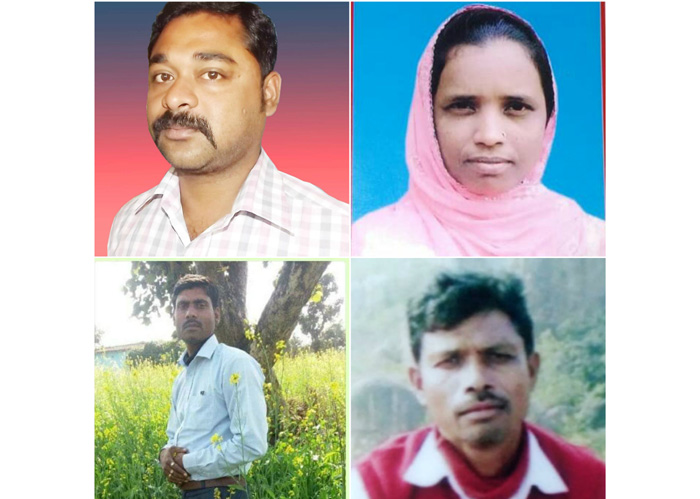
The four men from Jharkhand — Prasadi Mahto, Hulas Mahto and Prakash Mahto from (Bagoder) Giridih and Kali Mahto from (Vishnugarh) Hazaribagh district, along with a few more had gone to work with KEC International four years ago. During this span of time, the company had given them the permission to visit their family only once. These men, also happen to be the sole bread earners of the family.

The KEC officials have contacted and informed the family of Prasadi Mahto, about the abduction, because of which later, Sikander Ali, an admin of Pravasi, a WhatsApp Group, came to know about three more people of Jharkhand having been abducted.

It was because of Sikander Ali’s investigation, that the local media could report about the families of the victims. Following which Giridih’s Deputy Commissioner Manoj Kumar visited the families. However, no official announcements has been made by MEA.

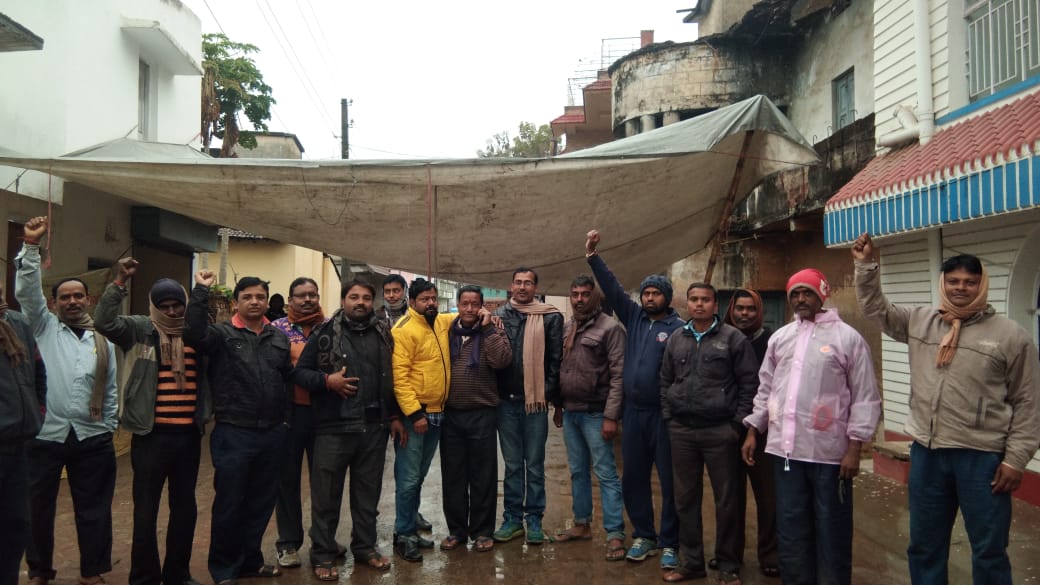
Not happy with the silence, the family members of the three victims, staged a sit-in before the Raj Bhavan on Monday. The protest was organized by CPI-ML.

“We are demanding that the government should take swift action in this case. I had also met Jharkhand’s Chief Minister Raghubar Das and had requested him to talk to Ministry of External Affairs to send a delegate comprising central and Jharkhand officials to Kabul, so that the matter can be investigated in the right way. But the government is yet to take any action in this regard,” Vinod Singh, former MLA of Bagoder, told eNewsroom.

He then added, “Now, the families are feeling that their wards have been left on their own.”

abduction afghanistan jharkhand iraq isis
The  villagers rally , demanding  therelease of Indians abducted in Afghanistan

Before the dharna at state capital, on May 19, villagers of Bagoder, mostly women took out a rally, demanding the immediate release of Indians abducted in Afghanistan. Earlier, Bagoder’s MLA Nagendra Mahto had also met Raghubar Das, but no concrete step has been taken either by the state government or by the central government so far.

In the interim, the condition of the family members is going from bad to worse with every passing day. Pemia Devi, wife of Kali Mahto, has fallen ill and her condition is deteriorating fast. With no money for treatment, the Pravasi group is now crowd funding for her treatment. Kali has five daughters and a son and had visited his family only once in these four years.

Take the case of Hulas Mahto, he had just married off his sister and opted for this well-paying job in Afghanistan, in hope of clearing off the loan. He too has three kids, while Prasadi had four children and Prakash Mahto, has two.

“Since when we have heard the news about him (Kali Mahto) being abduction, we have left eating. He has small children, what they will do? He has only one son, and who is even mentally stable. I request government to send him (Kali) back earliest,” requested Pemia Devi.

Among the other three Indians who have been abducted, Mantu Singh is from Bihar, while Rajan Kaushik and Murlidharn are from Kerala. However, like the four men from Jharkhand, the name of these three people has also not been officially confirmed by the government.

In March, Minister of External Affairs Sushma Swaraj broke the news before the Parliament that all the 39 Indians, who were abducted by ISIS three years ago, got killed by the terrorists.

The Indian construction workers, who were from Punjab, Bihar, Himachal Pradesh and Bengal, had been taken hostage when the ISIS invaded Mosul, Iraq’s second largest city, in 2014. The workers were trying to leave Mosul when they were caught.

The revelation was a shocking one as only a year back, Swaraj had indicated the possibility of them being alive, and opposition leaders had made it a point to remind the Minister of External Affairs the same.

How 20 kilometers in 18 minutes journey helped the first human heart transplant in Eastern India

Kolkata: Ujjwal Das was neither a disgraced policeman trying to prove himself as in the film Traffic nor Superman. But he definitely became a superhero for the family of 39-year-old Dilchand Singh on Monday. The man of the moment, traversed 20 kilometres in 18 minutes to ferry the live heart from Kolkata Airport to Fortis Hospital, Anandapur, through a green corridor created from the airport to the hospital.

Singh, a resident of Deogarh, Jharkhand, was suffering from dilated cardiomyopathy, a condition where the heart loses its elasticity to pump blood due to enlargement of the left ventricle and was in need of urgent heart transplant. He had been on the wait list since 2017.

His wait came to an end with a heart being harvested from a 21-year-old donor who was declared brain dead after meeting a tragic road accident in Bengaluru. A concerted effort by several agencies, both government and private led to the creation of a green corridor, which made it possible for the live heart to be harvested at SPARSH Superspecialty hospital, Yeshwantpur to the Fortis hospital in flat four hours.

Eastern India’s first heart transplant was also marked by the first green-channel transportation of a vital organ to Kolkata from another city.

The journey spanning 2,000 km could be completed in four hours, flat because of the green corridors created both in Bangalore and Kolkata, involving the traffic police. This made it conducive for the ambulance drivers to  drive fast in order to facilitate a fast organ transit.

Ujjwal Das, the ambulance driver who covered 20km distance in 18 minutes

The ambulance ferrying the heart took only 26 minutes to cover the 32km from the Yeshwantpur hospital to the airport. While, in Kolkata, the 20km journey from the airport to the hospital was made in 18 minutes by the other ambulance driver Ujjwal Das.

With the donor heart reaching the hospital, a three-hour-long surgery was performed under the supervision of Dr K R Balakrishnan, Director, Cardiac Sciences and Dr Suresh Rao, Chief Cardiac Anesthetist, of Fortis Malar Hospital. They had been flown in from Chennai for the first human heart transplant in eastern India. A team of 15 doctors successfully conducted the transplant surgery. Dr Tapas Raychaudhury, Director, Cardio-Thoracic & Vascular Surgery and Dr K M Mandana, Director, Cardio-Thoracic & Vascular Surgery along with Dr Saikat Bandopadhyay, Senior Consultant, Cardiac Anesthesiologist & Intensivist from Fortis Hospital, Anandpur performed it.

Minutes after the surgery, Dr Balakrishnan said, “We had never experimented with something like this. Most of the time, the family of bread dead patients refuse to donate organs. We are hoping that this surgery paves the path for many more such operations.”

While Dr Tapas Raychaudhury added, “We are extremely happy to have successfully performed the first heart transplant in eastern India. We are confident of the fact that this surgery marks the beginning of a robust Heart Transplant Programme in Kolkata. We have benefited from the expertise in heart transplant acquired by Fortis group over the past decade.”

Singh’s brother, Umesh, who accompanied him to Kolkata from Jharkhand, mentioned, “We left our city within two hours of having received a call from the hospital that a donor’s heart had been arranged. It’s a major surgery. We are hopeful for the best to happen.”

Going by the success rate of such transplants, in general, it has been observed that in 95 percent cases the recipient survive for over 30 days, while in 85 percent cases, they survive for five years and in 70 percent case, they live beyond a decade.

However, keeping the statistics into account, Dr K M Mandana noted, “The patient is under constant observation for next 24 to 48 hours. His condition is stable.”

Home they bought her warrior dead

Giridih/Ranchi: Anger and grief shrouded the atmosphere of Palgunj village in Giridih, Jharkhand, when the last rite of Border Security Force (BSF) jawan Sitaram Upadhayay was being performed, on Saturday.

A native of Palgunj, Sitaram had joined the Indian army in 2011 with a dream of protecting his mother land. He succumbed to his injuries, while protecting the borders, when Pakistan violated ceasefire and open fired at several districts in Kashmir. He is survived by his wife and two kids – a three-year-old daughter and a two-year-old son.

His father, who has recently lost his vision, claimed that Sitaram, had visited his family in Palgunj and had left for Kashmir on May 2 and had resumed his duty on May 5. One the fateful night, he had even had a long chat with his wife around 10 pm and had informed her that everything was under control and he would be on duty at the borders post midnight.


Little did he know back then that Pakistan would violate ceasefire and resort to unprovoked firing during which a total of 12 people, including another BSF jawan had sustained injuries, while Sitaram succumbed to his injuries. Significantly, on May 18, Prime Minister Narendra Modi was supposed to visit Jammu and Kashmir on a state visit.

His widow Rashmi Kumari, blamed the wrong decision of the Narendra Modi government for her husband’s death. She said, “The government shouldn’t have gone for a one-sided ceasefire announcement and should have not believed in Pakistan.”

The mortal remains of Sitaram were first brought to Ranchi, where he was given state honour. Following which, his widow Rashmi along with her kids accompanied the last journey of the martyr from Ranchi airport to his native village via road.

Hundreds of people from his village and neighbouring area assembled on Saturday to pay their tribute to this son of soil. Also found in attendance were political leaders affiliated with various political parties, senior police officials and BSF jawans. Angry civilians were seen shouting anti-Pakistan slogans as the last rites were performed.

Jharkhand government has announced a monetary assistance of Rs 10 lakh to his family. However, an angry Rashmi said, “The government shouldn’t have announced the Ramazan ceasefire. The compensation won’t bring back my husband.”

However, CPI-ML has demanded that Jharkhand government should give Rs One crore to the family and also build a statue in the memory of its brave son.

Amid high voltage political drama during Bengal panchayat polls, TMC clean sweeps

Kolkata: It’s has been an unprecedented victory for the Trinamul Congress (TMC) to retain the Bengal’s three-tier village administrative system, winning 95 per cent of zila parishads, 90 of panchayat samitis and 73 per cent of gram panchayats seats that went for the polling. The final results were declared late at night on Thursday.

TMC chief and Bengal chief minister Mamata Banerjee dedicated this massive victory ‘to the people of Bengal and martyrs’ families’, who according to her, voted for development and nothing else really mattered to them. Though, all the opposition parties called panchayat election 2018 ‘a farce.’

Even TMC has an unprecedented victory, the election highlighted two things- BJP is strengthening its ground in Bengal as been second (distance second) in position and the number of Independent candidates winning the election is the second most prominent character.

During the panchayat election, more than a third of the seats didn’t see any contest and the Calcutta High Court had stayed announcement of those results in a directive last week. Trinamul’s victory percentage will increase if results of those seats were announced as most of those candidates belong to them only.

BJP has been able to make inroads into villages across Alipurduar, Jalpaiguri, Jhargram, Purulia and parts of West Midnapore and even Birbhum, which stood out for the large number of uncontested seats, where saffron party candidates won more than 20% gram panchayats that went to vote. These areas have substantial tribal population where development has not taken place the way it should have. “We have to do more work in these areas,” said Anubrata Mandal, president of Birbhum Trinamul Congress.

TMC, on the other hand, has been successfully decimated Congress in Murshidabad and taken a massive lead in Malda and North Dinajpur — all erstwhile Congress strongholds.

“The people of the state have voted for development and the result was expected,” said MLA of Rajarhat Newtown constituency Sabyasachi Dutta. Meanwhile, TMC leader Arabul Islam, who was arrested after a youth was killed in Bhangar days before the rural polls were held, has won a panchayat samiti seat from the area. His son, Hakimul Islam, also won from a panchayat samiti seat in North Gazipur area of Bhangar.

Five of the eight independent candidates, who were backed by the Jomi, Jibika, Poribesh O Bastutantra Raksha Committee (JJPOBRC) — an umbrella organisation of 16 villages that is protesting against the construction of a power plant in Bhangar — have won gram panchayat seats in Polerhat II in South 24 Parganas. They had filed their nominations via WhatsApp, claiming that armed miscreants had stopped them from filing their nomination papers.

“It is clear from the results that we are still in the fight. BJP has come second, which is no surprise for us. Had the election been free and fair, we would have performed better,” claimed Bengal BJP president Dilip Ghosh.

“This (the results) was meant to be, as the election had turned into a farce. We are apprehending a similar situation in the 2019 Lok Sabha polls as well,” said Bengal Congress president Adhir Chowdhury.

Sporadic incidents of violence were reported as the results were declared on Thursday. A clash between TMC and BJP workers broke out in Birbhum district, after the latter won the Mallarpur gram panchayat. Police resorted to lathicharge to bring the situation under control.

Violence also broke out at Chopra in North Dinajpur district, where two persons suffered gunshot injuries.

12 people killed during Bengal Panchayat Polls, over 72 per cent voting

Kolkata: At least, a dozen people have been killed and several injured as violence and clashes between the supporters of opposing political parties marked the Bengal panchayat polls on Monday. The polling for electing 38,616 representatives across three tiers of state (rural) bodies started at 7 a.m. and ended at 5 p.m.

Bengal Director general of police, Surajit Kar Purakayaastha confirmed the death of 12 people in poll violence. He added that out of these 12 people, the identity of six people is yet to be ascertained.

As per State Election Commission (SEC), there are 622 Zilla Parishads, 6,158 Panchayat Samitis and 31,836 Gram Panchayats across Bengal, which are undergoing polls. This is because 16,814 Gram Panchayat seats, 3,059 Panchayat Samiti seats and 203 Zilla Parishad was uncontested. The counting of votes will be held on May 17.

According to the SEC, 72.5 per cent votes were cast during the high voltage polls across Bengal.

The Panchayat poll is the last major election in the state before the next year’s Lok Sabha polls. Around 46,000 personnel of West Bengal Police have been deployed, besides a total of 12,000 Kolkata police, around 1500 security personnel from the states have been deployed to take stock of the situation.

Reports of violence and booth capturing have been received from several areas of South 24 parganas, Cooch Behar, Midnapore West and several other parts of the state. A Trinamool Congress (TMC) worker Arif Gazi was shot dead in Kultali area of South 24 Parganas.

While in the morning, there were reports of a BJP supporter injured after being allegedly stabbed by TMC workers. In other incident, at least 20 people have been injured after a crude bomb exploded in Amdanga’s Sadhanpur in North 24 Parganas.

A ballot box was burnt outside a polling booth in Rajganj block in Jalpaiguri district. According to locals miscreants entered Tamantola school polling booth, brought outside the ballot box and set it on fire. Voting was stopped in the booth after the incident. Election officer Shilpa Gauri Saria, on receiving the complaint, asked officials to close the polling booth.

Meanwhile, Bharatiya Janata Party (BJP) supporter Sujit Kumar Das was slapped by minister in charge of North Bengal Development department Rabindra Nath Ghosh at one of the polling station in the presence of police. BJP has filed a complaint against Ghosh with SEC. On the other hand, a TMC worker, Anarul Mita, suffered bullet injuries in an attack in Cooch Behar’s Dinhata on late Sunday night, after which he was admitted to the hospital in a critical condition. The victim has alleged that Bharatiya Janata Party (BJP) workers are behind the attack

In North 24 Parganas, a Communist Party of India (Marxist) party worker and his wife, who were charred to death after their house was torched last night, alleged that TMC workers were behind the attack. Incidents of violence were also reported from Bhangar, where a media vehicle was torched and a camera broken, after which media was prohibited from entering the area. Bhangar locals blocked the roads, alleging that TMC workers were capturing the polling booth.

State minister for food and supplies, Jyotipriyo Mallick, has accused that the BJP workers are bringing in “outsiders” to disturb the peace in the state. He claimed that the outsiders are coming from the Bangladesh. Jashore, SaathKhira – such place has turned out to be one of the most suitable routes for infiltration. Overnight clashes were reported in West Midnapore, Malda and South and North 24-Parganas. Three persons were killed two in West Midnapore and one in Malda. While police said one West Midnapore death happened due to personal enmity, BJP claimed the victim was their supporter and lodged an FIR naming Trinamool supporters.