Revoking of Article 370 is unethical, says Left, resist the decision, hold two protest rallies in two days

0

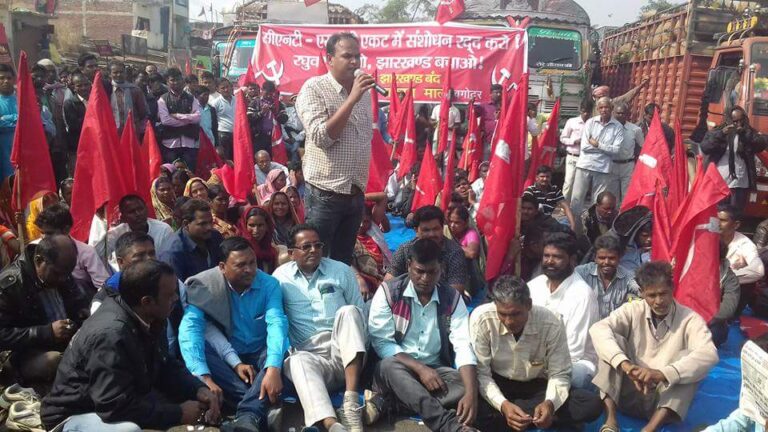
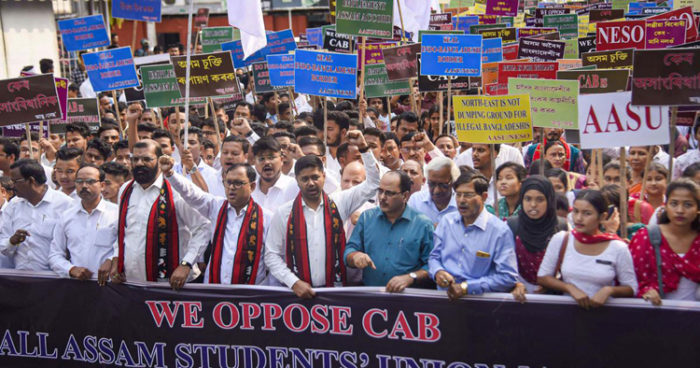
Kolkata: Putting up a resistance against the centre’s decision to revoke Article 370, CPIM, organised a protest rally in Kolkata on August 7. This is the second protest rally organised by the Left since the centre revoked Article 370 on Monday, August 5. The first rally was organised on Monday itself, with all Left parties like CPIM, CPI, CPI-ML, RSP, SUCI and DYFI participating in the protest rally.

Leading the rally were prominent Left Leaders like Chairman Biman Bose, CPIM General Secretary Surjya Kanta Misra, former MP Mohammad Salim and many more.

The leaders along with the participants of the rally were seen carrying huge placards and banners condemning the centre’s decision to revoke Article 370, there were a few banners which also demanded the release of political leaders put under house arrest in the Kashmir valley.

Interacting with the media, Md Salim said, “We demand the immediate release of all the leaders affiliated to various political parties to be immediately released from house arrest. We are in particular worried about comrade Yousuf Tarigami, who is also under house arrest.”

TMC BJP CPIML article 370 kashmir left cpim kolkata
Left cadres burn effigy of Amit Shah for abolishing Article 370 and bifurcating Jammu and Kashmir, in Kolkata

While Bose said, “Revoking of Article 370 is unethical. We resist this decision of the centre. We have been hitting on the streets to express our opinion and putting forward our demand, which is the cancellation of the centre’s decision. And we will keep doing it till the centre does the needful.”

On being asked about the great divide that the centre’s decision has created with political parties by large and Trinamool Congress (TMC) walking out of the Parliament when the bill to revoke 370 was passed, Salim scathingly attacked TMC. He said, “BJP and TMC are the two faces of the same coin. TMC which has been saying that they are not supporting the centre decision chooses to walk out means that by walking put they have some how shown their support to the government decision. Had they voted against the bill, then our vote count would have been higher and better.”

However, on being asked about Pakistan’s move to condemn the revoking of Article 370, the Left leaders maintained that they would be speaking about their movement in India and would not comment on the same.

So far, it seems, it is the Left parties mostly who hit the street on the issue. Similar protests have taken place in many places of West Bengal and in India.

Kashmir: For Whom the Bell Tolls

0

Many of my fellow countrymen, mostly Hindus, have hailed Union Home Minister Amit Shah after the passage of Narendra Modi government’s sweeping legislation in the Upper House of the Parliament on the troubled state of Jammu and Kashmir (J&K). It’s a matter of little time that the lower house of our highest legislature will also succumb to the regime’s brute majority and arm-twisting tactics outside the house.

Shah’s cronies including the A-listers in Indian big business have already greeted the crown prince as the reincarnation of Sardar Vallavbhai Patel; the first occupant of the hollowed chair in independent India and the original ‘íron man’ who had achieved national integration by incorporating princely states during the Partition years. The courtiers have also welcomed this move as a masterstroke against Pakistan’s proxy war against India which is aimed at gobbling up the parts of original J&K that has been left with India after the 1948 intrusion of Pak raiders as well the incursion of China in the north-east.

The move fulfills one of the most controversial pledges of Hindu hyper-nationalist BJP’s poll manifesto within three months of the second coming of Modi, the messiah of Hindu resurrection, even as he has failed to deliver in his first innings on mundane things like jobs for youth and farmer’s distress. Also, Rashtriya Swayamsevak Sangh (RSS), the party’s ideological fountainhead is more than happy as the surgical strike in Kashmir underlines a leap forward towards the majoritarian Hindu Rashtra that it has been propagating since inception.

But, are we ordinary mortals prepared for its far-reaching consequences, both internal and external?

The design

India’s sole Muslim-majority state’s special status vide article 370 of Indian constitution that promised it maximum autonomy at least in theory now stands annulled. Further, the historic state itself has been abolished. It will be now bifurcated into two centrally ruled Union Territories (UT). Buddist-dominated Ladakh bordering Chinese Tibet will be separate with no legislative assembly. The Muslim-majority Kashmir Valley and Hindu-dominated Jammu region in the plains that border Pakistan with remain together. But it will lose a full statehood with a nominal assembly with little power. Maintenance of law and order, land management and hosts of other subjects scheduled in state and concurrent lists of the constitution will be passed on to union government. Both the UTs will be ruled by two lieutenant governors like the national capital territory of Delhi with their puppeteers at the Centre holding the strings.

The design is ostensibly aimed at defang Pakistani claim on the Indian part of the state as well as its supporters in the valley. Further, it will not only facilitate the return of the Kashmiri Pandits to their ancestral homes in the valley who had been forced to flee by the terror groups. With the scrapping of article 35A of the constitution that was a safeguard against land alienation of locals of all faiths, now the mainlanders including the big business would be free to buy land and property as well as settle permanently in the residual J&K. The intended influx from the plains will trigger demographic changes and consequent delimitation of electoral constituencies. In turn, it would dilute the support base for Muslim separatism in the valley and parts of Jammu which will eventually integrate the land to Hindu-dominated India.

The regime has made the momentous move when the state is under the President’s rule which is a smokescreen for central government’s rule, the most abused section of Indian constitution. An unprecedented security build up has preceded the government’s parliamentary move as additional thousands of security forces have been rushed to the state to spread fear psychosis and quell any violent protest. Even pro-Indian political leaders of Kashmir valley including the former chief ministers have been put to house arrests or taken in custody. Hindu pilgrims to Amarnath cave as well as tourists and students from mainland India were returned in a hurry, ostensibly to preempt terrorist attacks but actually to avoid any local backlash. The civil and military machinery has been prepared for a siege within for a long period.

In a way, the abolition of the unified statehood and the bifurcation of the territory has only formalised the present ground reality of J&K. The valley has virtually become an internal occupation zone, one of the world’s most militarised and brutalised parts since past three decades. New Delhi largely controls the state, with or without an elected state government, on the ground of ongoing Indo-Pak tussle over it which has remained inconclusive despite four wars between the twins born in August 1947.

The questions refuse to die

Will it facilitate integration of people of Indian Kashmir with our nation-state, or trigger more disintegration, communal hatred and violence as well as militarisation and dance of ‘Death’ in the ‘heaven on Earth’ with cascading effects in mainland India to the content of the hearts of enemies? What will be the impact on our centre-state relations in rest of country and the federal structure that has been increasingly violated in order to create a unitary state, halting by the earlier Congress regimes and now aggressively by the BJP-RSS dispensation? Is it a culmination of national integration project based on pluralistic Indian nationalism of our freedom fighters? Or is it a mainstreaming of communal fractures in our body polity and road map to a one-party dictatorship under the garb of one nation-one election- one supreme leader slogan that will fructify the Sangh’s dream of Hindu-Hindi-Hindustan?

Does the dismemberment of historic state of J&K and abolition of its special status through this ramrod legislation and unprecedented gagging of public opinion in Kashmir valley upheld the unity of the union? Or, does it underline the denouement of the secular, democratic and republican ethos of our freedom struggle which makers of our constitution had codified in the book despite all our contradictions?

According to the new normal of our public life, enforced by the rulers at the Centre, the questions will be called anti-national. The hired howlers or hyper-nationalists by creed would like to lynch the questioner. Else, they will ask the government to throw him/her into a dungeon for sinning against Mother India and colluding with her enemies as urban naxal or Jihadi terror suspect. The Unlawful Activities Prevention Act has been amended suitably to extend the police state only before the J&K bill was placed.

The recent massive mandate for the BJP has bolstered the Sangh Parivar to translate its agenda into legislations in quick successions. The denouement of the state which has been the flashpoint of South Asia between two nuclear neighbors has not come through the discussions and agreement of the pro-Indian political forces of the state and its elected assembly that had earlier ratified the merger with India but demanded more autonomy time to time. It has been accomplished through an executive ordinance and legislative bill, rubber-stamped by a fellow-traveller president. Both were introduced at the fag end of monsoon session of the parliament without giving the emasculated opposition enough time to go through the watershed bill and decide after a discerning debates on internal and external ramifications. What happens if other Christian-dominated NE states or recalcitrant sub-nationals like Tamils and Bengalis as well as tribals in the hinterland demand maximum autonomy like the Kashmiris and the new emperor wipes out the legitimate entities at one fell swoop in the parliament using its brute majority?

The mothballed history

It’s true, prevailing social-political reality in J&K is a far cry from its syncretic past that was a creation of its people over the millenniums of Hindu, Buddhist, Mughal and Sikh rules. It had laid the cornerstone for its composite traditions and modern polity. The role of people of J&K was exemplary when rest of Indian subcontinent was convulsing under communal riots during the Partition years. A substantial section of Kashmiri Muslims and fellow believers in Kashmiriyat had refused to join Pakistan that was born out of two nations theory. The state’s Hindu king had initially dithered while tinkering with the idea of an Independent realm. The letter and spirit of his eventual agreement to join Indian union, though disputed by all stakeholders including Pakistan, reflected the popular desire for maximum autonomy based on composite Kashmiriyat.

This mothballed tradition and its collective memory have been under severe strains during Indo-Pak wars over the land as well as periods of certain regional and religious tensions in post-independence decades. The misgovernance and mockery of democracy in J&K, as we have suffered across the country, have only increased the tension between the seekers of unity and diversity. The mix of religious and regional identities and violence against minorities within has always helped the autocratic centres to suppress legitimate cries from the margins. The ouster of Pandits from the valley and Pak-sponsored Jihadi terror on poor labourers from the mainland became handy to sway the Hindu public opinion in favor of wanton human rights violation in the valley during the decades of separatist insurgency.

Chronicles of a death foretold

The Modi-Shah regime could not have a more opportune moment to press for its agenda when the grand old party of the land, Indian National Congress (INC), has been reduced to a headless chicken with clipped wings. The residual opposition comprising mostly of regional parties whose bosses have no qualms about running with the hares when hunting with the hounds. Lefts, who have dug their own graves in their former strongholds and now have microscopic presence in the parliament are only left to cry in the wilderness. The electoral authoritarianism of Modi-Shah only reminds early periods of Hitler and Mussolini. We know what befell the patriotic Germans and Italians later who had lauded the ‘final solution’ of Jew problem by the Third Riech Fuhrer and his buddy. The death knell of Indian democracy, if goes unheard by my fellow countrymen, we will be the pallbearers of Indian civilization that Asoka and Akbar, Nanak and Tukaram, Buddha and Basavanna had built.


Opinions expressed in this column are those of the author and not of eNewsroom. This is an open forum and we try
to give space to every school of thought.


Democracy is being killed democratically: Opposition leaders at state level consultation on electoral democracy

Kolkata: On the day, when Article 370 and Jammu and Kashmir bifurcation issue was being discussed across India, the West Bengal Chapter of all Indian political parties were having a brainstorming session on other recent important issue including One Nation One Election, amendments in Right To Information (RTI) Act and Electoral Bonds.

A state-level consultation on Electoral Democracy and Role of Political Parties had been organised by West Bengal Election Watch (WBEW), Association for Democratic Reform (ADR) and IMSE at Kolkata.

The leaders of political parties who participated included, Bharatiya Janata Party (BJP), Indian National Congress (INC), CPI-ML, CPI, SUCI, Forward Block and RSP.

Significantly, ruling Trinamool Congress (TMC) did not send its representative for the consultation event. Nobody from CPM was also present, but party had conveyed earlier to the organisers that they wouldn’t be able to participate as the day was coinciding with founder of Communist Party of India – Muzaffar Ahmed’s Birth Anniversary Celebration which was being organized at their party office.

During the closed-door meeting between all major political parties of West Bengal and the civil society, which lasted for a couple of hours saw the leaders and  civil society engaging in a meaningful discussion.

The opening speech of Manoj Bhattacharjee, representing the Revolutionary Socialist Party (RSP), was fiery and besides several important questions he also mentioned about the Kashmir issue.

He said, “While RTI has been destroyed. There is so much secrecy shrouding the Kashmir issue at the moment. The central government needs to understand that decisions can’t just be imposed on the citizens. Given scenario is the best example of how democracy is being killed democratically.”

Taking on the centre’s decision to pass the UAPA Act, he said, “The present situation is no different from the declared emergency of 1975 when those questioning the government were simply put behind bars. Back then the slogan was No Daleel, No Vakeel. Today the situation is no better. In this era of a non-declared emergency, those questioning the government are branded as anti-national and now that this law has been passed anyone who questions those in authority can be branded as a terrorist.”

Congress party’s Sukhbilash Berma said about amendments in RTI, “Our party had only enacted the RTI act, we must remember that no act is perfect. But, the present government instead of making amendments to better the law, have chosen to weaken it.”

Democracy

While most of the participating party representatives were seen openly questioning the need for One Nation One Election theory, BJP West Bengal’s vice president, Joyprakash Majumdar maintained, “Most of the political parties seem to be raising this issue, there is no reason to panic. It’s not like it will be implemented today. It will happen only after much needed political discussion and debate.”

An excited Majumdar was also heard saying during his speech, “The civil society always rallies strongly behind Amartya Sen if something is said against him. But they never support other intellects. They will question about lynching and other issues but will never question the intention of Tukde Tukde Insha Allah gang.”

However, when the Tanmay Ghosh from Banga Sanskriti Manch countered him on his comment on the tukde tukde Insha Allah gang comment, he quickly said, “By that, I didn’t mean the Muslims who respect the Indian Constitution and love the nation. I didn’t mean to label any particular community.”

After the event was over, speaking to eNewsroom Dr Ujjaini Halim, State Coordinator of WBEW, said, “It was a fruitful consultation between the political parties and civil society. And it was apparent that most of the political parties, barring one, were against the One Nation One Election concept. Many also raised questions on how this policy could do away with the federal government structure of the Indian democracy.”

Corruption in Judiciary: Apex Court’s changing attitude

0

Chief Justice of India (CJI) Ranjan Gogoi has granted permission to CBI to investigate corruption charges against a sitting judge of Allahabad High Court. This is a welcome departure from the attitude of one of his predecessors who had ruled while disposing of a case that no action should be initiated against a judicial officer even if he takes bribe.

Justice S N Shukla of Allahabad High Court (Lucknow Bench) was alleged to have favoured a private medical college by extending deadline to admit students for 2017-2018 in violation of the Supreme Court order. After receiving a complaint from Uttar Pradesh Advocate General Raghvendra Singh in September 2017, then CJI Deepak Misra constituted an inquiry panel comprising three High Court judges, two of them Chief Justices, to hold a preliminary inquiry into the allegations against Justice Shukla. The panel found that Justice Shukla had disgraced the values of judicial life, acted in a manner unbecoming of a judge to lower the majesty, dignity and credibility of his office and acted in breach of his oath of office, and that “there is sufficient substance in the allegations contained in the complaints against Justice Shukla and the aberrations complained of are serious enough to call for initiation of proceedings for his removal”. On receiving the panel’s report, Justice Misra asked Justice Shukla either to resign or seek retirement but he had refused.

The Supreme Court had in 1991 ruled while deciding a case that no investigating agency can lodge an FIR against a Supreme Court or High Court judge without first showing the evidence to the CJI for permission to investigate the judge. The CBI had written to CJI Gogoi to investigate the allegations against Justice Shukla. Attached with the CBI request was a note listing the preliminary evidence of corruption against Justice Shukla. After perusing the note, Judiciary CJI granted permission to CBI on July 30 to file an FIR against Justice Shukla and start investigation.

Contrast this with the attitude of the Supreme Court about five years ago when corruption in Judiciary was virtually given legitimacy by a judgement of the apex court — by a three-member bench presided over by then CJI K G Balakrishnan. An Additional District and Sessions Judge of Uttar Pradesh, Ramesh Chander Singh, was charged with illegal gratification for granting bail to a notorious offender. An inquiry was held by the vigilance wing of Allahabad High Court and it came to light that the respective courts, which had the jurisdiction, had rejected the bail applications of the accused twice on merits. It was alleged that the Additional Judge had granted bail on the third application in utter disregard of judicial norms and on insufficient grounds and it appeared to be based on extraneous considerations. The full court of the Allahabad High Court imposed a punishment of withholding two annual increments of the Additional District and Session Judge with cumulative effect and subsequently he was reduced to a lower rank. His writ petition challenging the punishment was dismissed by the High Court. He then went in appeal to the Supreme Court.

Judiciary

What the three-judge bench of the apex court comprising Chief Justice K G Balakrishnan, Justice Lokeshwar Singh Panta and Justice D K Jain ruled was incredible, to say the least. It said: “this court on several occasions has disapproved of the practice of initiation of disciplinary proceedings against officers of the subordinate judiciary merely because the judgements or orders passed by them are wrong. The appellate and revisional courts have been established and given powers to set aside such orders. The higher courts after hearing the appeal may modify or set aside erroneous judgements of the lower courts. While taking disciplinary action based on judicial orders, High Courts must take extra care or caution.” The bench set aside the Allahabad High Court judgement and directed that the appellant be immediately posted to the cadre of district judge and paid all monetary benefits due to him.


Opinions expressed in this column are those of the author and not of eNewsroom. This is an open forum and we try
to give space to every school of thought.

Go Green with seed-Tiranga this Independence Day

0

Mumbai/Kolkata: With Independence Day just round the corner, are you bothered about the National flags made out of plastic being strewn around your city? While this question was looming in our head about the plastic-made National Flags that remain strewn around every locality once the flag hoisting ceremony is over, it took Mumbai-based homemaker Shruti Dadhich to figure out an eco-friendly way of celebrating Independence Day.

Speaking to eNewsroom, Shruti said, “I am a mother of two lovely kids. Every Independence Day, I would get worried about how to dispose of the plastic flags that my elder daughter gets from her school. I would also get disturbed by the very sight of plastic flags strewn around after the celebration was over. A little bit of research and brainstorming session with myself, I came up with this idea of creating bio-degradable flags, which could grow into plants. And that was how it all began.”

She then quickly added, “Perhaps, the solution came easily to me as I have a Jaipur-based friend who manufactures seed paper.”

Watch the video of seed-Tiranga being made


Explaining the concept of seed papers and its journey so far, Divyanshu Asopa, CEO and founder of 21 Fools, the company said, “Seed paper that we manufacture in our Jaipur-based workshop, uses cotton waste, glue and seeds as raw materials. These seed paper sheets are hand-made."

eco-friendly beej seed tiranga tricolour independence day

Then Divyanshu explained how the idea came to them, “We were into the business of manufacturing greeting cards and soon I realized that there was a lot of paper wastage and sadly enough this waste couldn’t be recycled. Jaipur has a history for manufacturing handmade papers. So, we think a little more and the result was Divyanshu, has been supplying cards, calendars and diaries made from these specialized sheets to clients like Google, YouTube, BMW and HUL among others subscribing to his innovate go green concept.”

When asked about the concept of this eco-friendly Tirangas he said, “The idea was of Shruti and we are just helping her as an entrepreneur. Her idea is commendable. As not many of us are aware of the flag code and the right way to dispose of the national flag once the celebration is over.”

Elaborating about her Go Green Tirangas, she said, “I have got a good response and am getting a good number of orders. We have used marigold and basil seeds in our Tirangas. All that the buyers will need to do is, bury these flags in a plot, and water it and watch the seeds grow into beautiful marigold and basil plants.”

So, if you have been perturbed by the plastic flags, then at least for yourself pledge to catch hold of these bio-degradable National flags, which can grow into beautiful marigold or basil plants in flowering pot place in your very own balcony. These flags cost only Rs 10 per piece but are a better alternative to the plastic and metal flags.

Over 4500 children picks mica and do not go to school in Giridih, Koderma and Nawada districts- NCPCR Chairman

Ranchi: More than 4500 children are picking mica in Giridih, Koderma and Nawada districts of Jharkhand and Bihar, and are deprived of going to schools, acknowledged Priyank Kanoongo, Chairman of the National Commission for Protection of Child Rights (NCPCR) after holding a child rights hearing in Giridih.

While talking to the media persons, he said that Giridih and Kodarma district administration have been ordered to rehabilitate these children immediately. He also said that the order has also been ordered to file a lawsuit against those who are using child as labour.

The large number of children still involve in mica (dhibra) picking is significant as at least 6 different groups and non-government organization (NGO)s are claiming to work in these areas for the eradication of child labour.

The timing of NCPCR visiting Giridih and Koderma area is also significant as a teenage girl Champa Kumari has been recognized internationally for her works in the field of child rights.

It seems there are thousands Champa Kumari out there in the fields who are still looking for supporting hands to reach school and live a better life.

"The protection of the rights of the children is not possible without taking legal action against the offenders," said Chairman Kanoongo.

Watch NCPCR Chairman Priyank Kanoongo speaks:


In Giridih, he said that in front of the commission, more than 200 cases of child rights violations have been reported.

"We fixed a time frame for Giridih district administration to settle the cases," Kanoongo added.

He mentioned that most complaints received remain of children's rights violations in connection with schools and Anganwadi centers.

The chairman mentioned that after seeing cases of child rights violations in mica production area, the commission will also look after cases in coal, iron ore and other sectors.

Chairman Kanoongo informed that the members of the commission are travelling around the country and looking after the child rights violation cases.

The NCPCR team also conducted On the Spot grievance redressal hearing for the rights of children at New Circuit House, Giridih.

In the court, mainly cases of lack of resources have been raised. While complaints about child labour, violation of Pocso Act, JJ (Juvenile Justice) Act, child trafficking remained negligible.

And no case of child sexual harassment has been reported too.

The two hundred cases were education, health, social welfare, anganbadi and other sectors.

The NCPCR chairman was accompanied by Deputy Commissioner Rajesh Kumar Pathak and Superintendent of Police Surendra Kumar Jha.

All hands on deck: Congress in West Bengal hopes for turnaround before 2021

0

Kolkata: The hand that once rocked the cradle of Indian politics has weakened over the years. The name that roused respect and confidence in people now evokes pity. From one election to the other it has been the fall and fall of the Congress in West Bengal in particular and the country as a whole.

In the last Lok Sabha election, the party just managed to win two seats – Maldah Dakshin and Baharampur – with a thin margin of votes, a reduction from the four seats in 2014. The voting percentage in 2019 (5.4per cent) reduced by about 40 per cent from 2014 (9.73 per cent) and about 55 per cent from 2016 (12.7 per cent, assembly elections).

There are several reasons which have put the West Bengal Pradesh Congress Committee (WBPCC) on a wobbly platform, the most important being loss of credibility.

The national party tried to get into an electoral alliance with the Left both in the  2016 state elections and the 2019 Lok Sabha election. Before this, the party aligned with the Trinamool Congress to fight the 2009 Lok Sabha election. The party had won six seats. In 2014 again, there was a move to align with TMC and former state party chief Manas Bhunia had called it a “rational move”.

Such frivolous decisions of a national entity not only put its supporters in a quandary but also made the electorate perturbed about the Congress’s stand. In course of time, voters lost confidence in the party.

The party’s lack of strong leadership that could counter the Trinamool Congress or the BJP was another reason that weakened it from within. Moloy Ghosh, a former district secretary of the party, did not mince his words when he said some of the senior leaders of the Congress had vested interest and did not work for the benefit of the Congress.

“First Adhir Chowdhury was removed (as state Congress president in 2018) that adversely affected the party. Second, several seats in South Bengal were traded. Third, leaders with no credibility are holding the plum posts in the state and not allowing or grooming new and capable leaders… Had an alliance been stitched with the CPM, the Congress might have retained its four seats,” Ghosh said.

Om Prakash Mishra, who resigned as WBPCC vice-president after the 2019 poll debacle, also feels the same.

Mishra, who had been batting for an electoral adjustment with Left parties, said, “The performance of the party was the worst in West Bengal and according to me the reason is that the leadership here deliberately did not get into seat adjustment with the Left till the last minute. This was no innocent step but was meant to directly help the BJP… We won two (Lok Sabha) seats but these are the two constituencies where the Left did not put up their candidates… Both the Congress and the Left experienced sabotage at the highest level.”

Polarisation of votes and weak infrastructure at the grassroots level, as pointed out by WBPCC president Somen Mitra, and the ongoing Modi wave have also affected the party’s chances to a great extent. “Voters thought that the alternative to TMC is BJP and not the Congress,” said Abu Hasem Khan Chowdhury, the MP from Maldah (Dakshin).

Pointing out that the political arena in West Bengal is now divided into BJP and non-BJP, Mishra said the next course of action before the assembly elections in 2021 should be “to have political understanding with the TMC”.

“I am not in favour of any alliance but I think that BJP should be identified as the prime focus of our political campaign… There should be a calibrated understanding with the TMC,” he added.

But both Mitra and Baharampur MP Adhir Choudhury ruled out alliance with the TMC. “Mamata Banerjee should feel threatened by the upsurge of BJP in West Bengal and not us because we have nothing to lose,” said the former WBPCC chief as he outrightly rejected any alliance or understanding with the Trinamool Congress.

Mitra, on the other hand, said the Congress did try to come to an understanding with the TMC but “the Trinamool took advantage of that and weakened our party” by poaching Congress men and there is no way an understanding is possible now.

On how the Congress will plan its strategy before the Assembly elections, Mitra said, “We will go for an understanding with the Left and fight against both TMC and BJP. We will also act to regain voters’ confidence.”

The party needs to increase its visibility and credibility will follow, believes the Baharampur MP. “In politics, you cannot predict anything. True that we are not in a good position at the moment but things can always change. If we don’t increase our credibility voters will not accept us. Nothing will happen if we sit at home,” was Chowdhury’s blunt reply.

The Congress should also strengthen its units at the grassroots level. “The high command should decide what strategy should be followed before 2021. But I feel, the Congress should revive grassroots units to make the party relevant. In some pockets we are strong and we have to do the same in every district, village and booth. Strong local leaders should be groomed… I am positive the Congress can bring about change at all levels and in every sphere. There is always scope and hope to turn around,” said party’s Sujapur MLA Isha Khan Chowdhury.

Political observers say that, to revive the party and increase its visibility, the Congress should start acting on war footing. However, the national leadership is still unsure about who to project as the chief of AICC. Such indecisiveness and leadership crisis will not only impact the party nationally but also affect its state and local units.

Ghosh said many former members of the Congress who switched to the TMC want to come back but they are unsure about the future and leadership.

Teenager Champa Kumari wins prestigious The Diana Award

0

Ranchi: Where there is a will, there is a way…

13-year-old Champa Kumari has done what thousands of children in India who come from below the poverty line see only in their dreams.

Until 2016, Champa used to pick dhibra (waste of mica) in Ganwah block’s Jamdar village, 90 kilometers from Giridih headquarters with her entire family. While doing so, she had come across a rally of the Bachpan Bachao Andolan (now Kailash Satyarthi Children’s Foundation), which works to stop children from child labour and help connects children with school and education.

“When I saw the rally, I went to those people and told them that I also want to study, but my father is not interested in it. Later, I took them to my father,” Champa recalls while talking to eNewsroom.

But before going to the full story of Champa, it is important to know about the area she comes from. The area where Champa comes is called the ‘Third World’ because of its backwardness. Here most people are dependent on the waste of mica for eke-out-living. It is situated on the border of Giridih and Koderma, naxal infested area too. Several families are involved in the work of picking mica waste to earn their bread and butter. Many a times, people including children die when mica mines cave-in.

The daughter of Mahendra Thakur and Basanti Devi, Champa, who has four brothers and a sister, further said, “My father said that if he has to send somebody to school for study he will send his son and not daughter. Then I sing a folk song before my father, as why he should let me study. After listening to it, he reply was, when she can sing so well without studying, then she can do wonders after after study.

Champa said to her elder brother who works in Mumbai that she wants to study, then she got the full permission.

Child labour champa kumari mica child marriage diana award
Champa Kumari speaks in a function while Giridih Superintendent of Police Surendra Jha encourages her

But the 10-year-old not only joined school but remain active in many social activities and also prevented child marriages.

In 2016, with the help of Kailash Satyarthi Children’s Foundation, a child marriage was stopped and in 2017 we stopped second such marriage,” Champa said further.

“Today both the girls are in tenth standard, and I am studying in nine,” she says smilingly.

Champa has stopped two more child marriages, one in 2019 itself.

“We have to struggle a lot to stop these two child marriages. Society’s people were not ready to stop child marriage. Then we had to get the help of the child helpline and then the child marriage stopped,” said Champa who had become a fully social worker till now.

In these two cases, the girl’s age was only a few months less than 18 years, so when they attained the legal age of marriage, then their marriages were taken place.

Since when Champa get associated with the Kailash Satyarthi Foundation, she became the head of the Bal Panchayat of the program being run by the foundation. Later she became mukhiya at state level and now she is a national vice president.

Champa does not leave any chance to make society a better place.

“We had noticed the quality of leadership in Champa very early and by her actions she proved it in the years to come,” says Mukesh Kumar, Convener, Giridih District Kailash Satyarthi Children’s Foundation.

“Once I had the opportunity to share state with Kailash Satyarthi Sir and Chief Minister Raghubar Das Ji, so I requested the Chief Minister about the lack of teacher in our school. We lacked four teachers here and today our school has got two new teachers.” Champa informed jubilantly.

Similarly, when Champa shared the stage with the local MLA Rajkumar Yadav, she mentioned that the road to her house is not in good shape, and now construction of the road has begun.

Now Champa’s work is not only being heard local but internationally too, so the 13-year-old girl has been honour with Diana Award 2019, by The Diana Foundation, United Kingdom.

The Diana Award is conferred by the British Government to several children every year worldwide for their social works so that they can become an inspiration for other children.

Govind Khanal of the Kailash Satyarthi Foundation informed eNewsroom that Diana Foundation will also take up the expenditure on the post of Champa’s graduation.

But the story of Champa does not end here. Because of the financial hardships, Champa’s child labor has not yet completely ended.

Champa has to spend roughly 15 days a month for her tuition worth 600 rupees. “Every two and half hours in the evening, I work and cut the mica, almost 10 kilograms, which gives me 40 rupees. I do it for 15 days of the month and fund my tuition,” the Diana Award winner girl concludes.

But now after the Diana Award, Champa may not have lived in such a situation again.

Or may some donor come forward to help Champa.

Farmer who committed suicide in his own well was never an alcoholic : NREGA Watch

0

Ranchi: A fact-finding team of Jharkhand Narega Watch, has found out that the farmer who committed suicide at his own well, in Ranchi, had never been an alcoholic, as it is being claimed by local administration, which is determined to prove that the farmer had not committed suicide due to debt but had accidentally slipped into the well in an inebriated state.

On July 25, 2019, 43-year-old Lakhan Mahto, a resident of Patratu village of Patratu Gram Panchayat in Chanho block, jumped into a well to end his life. Ironically, he himself had constructed the same well.

Lakhan was the lone earning member of the household, which was dependent on agriculture. And to eke out a living Lakhan also had to work as a labour to earn some extra money to clear off his debt. And his failure to clear his debt, was stressing him out.

Lakhan is survived by his 85-year-old mother – Gujari Devi, 36-year-old, wife Vimla Devi and his three children – Suraj (18 years), Neeraj (15 years) and Praveen (12 years).

The scheme code of Lakhan’s work was 3401005010/IF/7080901221509, which had been sanctioned in December 2017.

He had to pay for the materials as well as for the labour wages as the payments had not been made on time. He had to take loans for this purpose and was hoping that he would soon be receiving money from the government. However despite putting in a lot of efforts he could not get back the money that he had already invested.

nrega lakhan mahto farmer suicide jharkhand
Job card of late lakhan mahto and his wife Vimla Devi

The fact-finding team found that all these resulted in a lot of stress and soon, Lakhan was under great psychological trauma and depression.

On the day of the tragedy, Lakhan woke up at around four in the morning and went to the nearby farm where he had constructed the well. When he did not return for a long time, people went out searching for him. However, the search ended with his dead body being discovered in the well.

Lakhan’s wife, Vimla Devi said that her husband had to borrow a total Rs 1,70,000 from three of his relatives  between January and February 2018  for the completion of the well, but he could not repay the loan even after 14 months as the wages and material payments had not been released to the concerned labours and vendors in their bank accounts by the government.

Didn’t get MGNREGA payment on time

It is a great administrative failure that Lakhan was literally forced to take risky loans while the government has the responsibility of making all the payments under MGNREGA and the beneficiaries are not supposed to invest a single penny. Further it is important to understand that Lakhan had to pay to the laborers at a local rate which is much higher than the MGNREGA wage rate of Rs 168 per day. The block administration could not ensure timely material supply to the work site which compelled him to take the loan from others to procure materials in order to complete the scheme.

Lakhan, for the last 13 months had been regularly visiting the block office, hoping for reimbursement of the outstanding amount of Rs 1,18,545 (one lakh eighteen thousand five hundred and forty five) from the government for the wages and payments to be made for the raw materials. Apart from Lakhan Mahto, in Patratu Panchayat, 28 other MGNREGA beneficiaries for the well are also facing similar situations.

MGNREGA

Even after five days of this tragic event, the government has neither offered a single benefit or compensation to the family and nor had paid the outstanding money which led to the tragic death of Lakhan Mahto. Gujri Devi, mother of Lakhan, an eighty-five-year-old lady, did not get the benefit of old age pension under the central pension scheme despite being eligible for the benefit. The ration received under the Annapurna Anna Yojana was discontinued in December 2010, despite her having submitted applications at the Panchayat and Block level several times. Her grievances still remain unheard and unaddressed. The family has not yet been offered the benefits of National Family Benefit Scheme (NFBS) under the National Social Assistance programme (NSAP) wherein the family is supposed to get a one-time compensation of Rs 20000 after the death of the earning member of the family.

During interaction with the family members the fact finding committee has found out that the claims made by the Block administration that Lakhan was drunk and intoxicated during the time of the incident, is baseless and false. The neighbours and family members had shared that the farmer was never addicted to alcohol.

Jharkhand NREGA Watch demanded:

  •  As per the notification 4-110 (NREGA)/ 10 RDD 4716, Ranchi, dated August 1, 2018, immediate compensation should be paid to the dependents of Lakhan Mahto
  • The family members should immediately be provided Rs 20000 as per the National Family Benefit Scheme (NFBS)
  • Vimla Devi, wife of late Lakhan Mahto should be enrolled under the widow pension scheme and the administration must ensure the payments of the same with immediate effect
  • Pending material payments for the scheme should be made immediately and re-imbursement of the to Lakhan’s family must be ensured
  • The watch also demand strong administrative action against the responsible officials who had failed to make on time payments which in turn led to the tragic incident. The department should identify the responsible persons and file criminal cases against them as soon as possible
  • The state government should take appropriate and effective steps to eradicate the complexity in material procurement and payments

चम्पा कुमारी: ढिबरा चुनने से लेकर डायना अवार्ड पाने तक का सफर

1

राँची: कौन कहता है आसमां में सुराख नहीं हो सकता, एक पत्थर तो तबियत से उछालो यारों…I

इसी तर्ज पे सिर्फ 13 साल की चम्पा कुमारी ने वो कर दिखाया जो हिंदुस्तान की हज़ारो-लाखों बच्चे जो गरीबी रेखा से नीचे जीने वाले परिवारों से आते है वो अपने ख्वाबो में देखा करते है।

जामदार गाँव, गांवा (गिरिडीह) की रहने वाली, चम्पा 2016 तक अपने पूरे परिवार के साथ ढिबरा चुनने का काम करती थी। एक दिन उसे बचपन बचाओ आंदोलन (अब कैलाश सत्यर्थी चिल्ड्रेन्स फ़ाउंडेशन) की एक रैलि दिखी जो बच्चो को बाल मजदूरी से रोकने का काम करती है और स्कूल और पदाई से जोड़ती है।

“मैने जब वो रैलि देखि तो में खुद उनलोगों के पास गयी और बोली के में भी पदाई करना चाहती है पर मेरे पिता इसके लिए तैयार नहीं है और में उनलोगों को अपने पिता के पास ले गयी,” चम्पा ने ईन्यूज़रूम को अपनी आप बीती सुनानी शुरू की।

पर चम्पा की पूरी कहानी जाने से पहले चम्पा कहाँ से आती है ये जानना जरूरी है। चम्पा जिस इलाके से आती है वो इलाका आज भी तीसरी दुनिया कहलाती है । गँवा प्रखण्ड गिरिडीह और कोडरमा के सीमा पर बसा एक इलाका जहां अभी भी ढिबरा (अबरख बचा हुआ गर्द) से हजारो घरो का चूल्हा जलता है। और पूरा का पूरा परिवार ढिबरा चुनने का काम करता है। आए दिनों कई लोगों की मौत भी अबरख खदानों में दबने से हो जाती है जिनमे बच्चे भी होते है।

महेंद्र ठाकुर और बसंती देवी की बेटी, चम्पा जिसे चार भाई और एक बहन है ने आगे बताया, “पिता जी फिर भी नहीं माने और बोले के अगर मुझे पड़ना होगा तो में बेटे को पड़ाऊंगा, बेटी को नहीं। जब मेंने अपने पिता से कहा, बेटी को क्यू नहीं पड़ौओगे और फिर एक गीत गाकर सुनाया तो मेरे पिता ने कहा के अगर में बिना कोई पढ़ाई किए इतना अच्छा गा सकती है तो फिर पढ़ कर किया कर सकती है।“

फिर चम्पा ने अपने बड़े भाई जो मुंबई में काम करते है उसे भी बोला के वोह पढ़ाई करना चाहती है तो फिर घर से उसे पूरी इजाजत मिल गयी।

पर 10 साल की चम्पा ने ना सिर्फ अपने पढ़ाई की बल्के कई और सामाजिक कामों में जुड़ गयी और आगे रह कर बाल विवाह भी रोका।

champa-kumari-abrakh-mica-diana-award
एक कार्यकर्म में चम्पा कुमारी अपनी बात रखती हुयी और गिरिडीह पुलिस कप्तान सुरेन्द्र झ उत्साहवर्दन करते हुए

“2016 में ही मेंने संस्था (कैलाश सत्यर्थी चिल्ड्रेन्स फ़ाउंडेशन) के साथ मिल कर एक बाल विवाह रोका और फिर 2017 में भी ऐसा करने में सफल रही,” चम्पा ने आगे बताया।

“आज वो दोनो लड़कियाँ दसवी की छात्रा है, और मेँ नौवि की,” मुसकुराते हुये चम्पा बताती है। चम्पा ने दो और बाल विवाह रोका है, एक तो 2019 साल में ही।

“इन दोनों बाल विवाह को रोकने में बहुत संघर्ष करना पड़ा। समाज वाले लोग मानने को तैयार नहीं थे। फिर हम लोगों को चाइल्ड हेल्पलाइन की मदद लेनी पड़ी और तब बाल विवाह रुका। चम्पा जो अब तक पूरी तरह सामाजिक कार्यकर्ता बन चुकी थी उसने बताया।

इन दोनों मामले में लड़कियो की उम्र 18 साल से कुछ महिने ही कम थी, इस लिए जब इनकी उम्र पूरी हो गई तो फिर शादी भी हो गया।

जब वो कैलाश सत्यर्थी फ़ाउंडेशन से जुड़ी थी तो उनके चलाये जा रहे प्रोग्राम की बाल पंचायत की मुखिया बनी। फिर राज्य स्तर की और अब वो राष्ट्रिय स्तर की उपाधिक्च्क है।

चम्पा वो कोई भी मौका नहीं छोड़ती जिससे समाज को और इलाके को बहतर बनाया जा सके।

“चम्पा में लीडरशिप क्वालिटी देखि थी हमलोगों ने और उसने ये साबित भी किया आने वालों सालो में अपने कामों से,” मुकेश कुमार, संयोजक, गिरिडीह ज़िला कैलाश सत्यर्थी चिल्ड्रेन्स फ़ाउंडेशन ने बताया।

“कैलाश सत्यर्थी सर और मुख्यमंत्री रघुबर दास जी के साथ स्टेज पे थी तो मेंने मुख्यमंत्री से अपने स्कूल में टीचर की कमी के बारे में बताया । हमारे यहाँ चार टीचर्स की कमी है और आज ही हमारे स्कूल में दो टीचर आ गए है। “ उत्साहित चम्पा ने बताया ।

इसी तरह जब चम्पा को मौका मिला इलाके के विधायक राजकुमार यादव के साथ स्टेज शेयर करने का तो उसने अपने घर तक रोड सही नहीं होने का ज़िकर किया और आज उस रोड का काम जारी है।

अब चम्पा के कामों की गूंज देश नहीं बल्के विदेशों में हो चुकी है और 13 साल की इस होनहार बच्ची को 2019 के डायना अवार्ड  (Diana Award) का सम्मान मिलने जा रहे है। डायना अवार्ड हर साल दुनिया के कई बच्चो को दिया जाता है उसके सामाजिक कामों को देख कर ताके वो बच्चे दुसरे बच्चो के लिए प्रेरणाश्रोत बन सके।

कैलाश सत्यर्थी फ़ाउंडेशन के गोविंद खननाल ने ईन्यूज़रूम को बताया के डायना फ़ाउंडेशन चम्पा की स्नातक तक की पदाई का खर्च भी उठाएगी।

पर चम्पा की कहानी यही खत्म नहीं होती, क्यूकी आर्थिक तंगी के वजह से अभी तक चम्पा की बाल मजदूरी पूरी तरह खत्म नहीं हुई है।

चम्पा को अपनी ट्यूशन के 600 रुपिए के जुगाड़ के लिए महीने के 15 दिन अबरख काटना पड़ता है। “में रोज शाम को ढाई घंटे अबरख काटने का काम करती हो जिससे मुझे 40 रुपए मिलते हैं। ये काम में महीने के 15 दिनों तक करती हु और अपना ट्यूशन का खर्च निकलती हूँ।” चम्पा ने अपने बात को विराम दिया।

पर अब डायना फ़ाउंडेशन के सम्मान के बाद शायद फिर चम्पा को ऐसे हाल में जीना नहीं पड़े। या फिर कोई दानकर्ता आगे आए चम्पा की मदद को ।