South Asian academics, activists and artists condemn “intensified military suppression” in Jammu and Kashmir

0

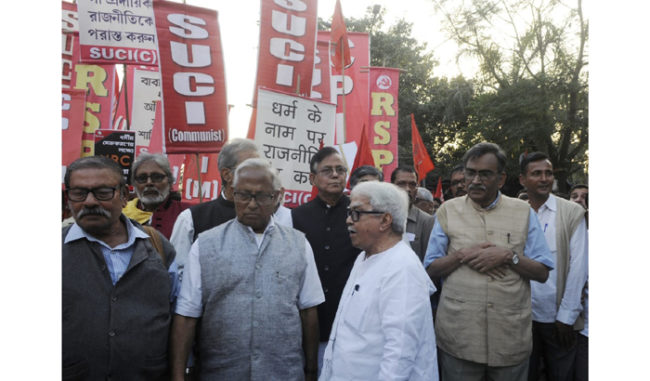
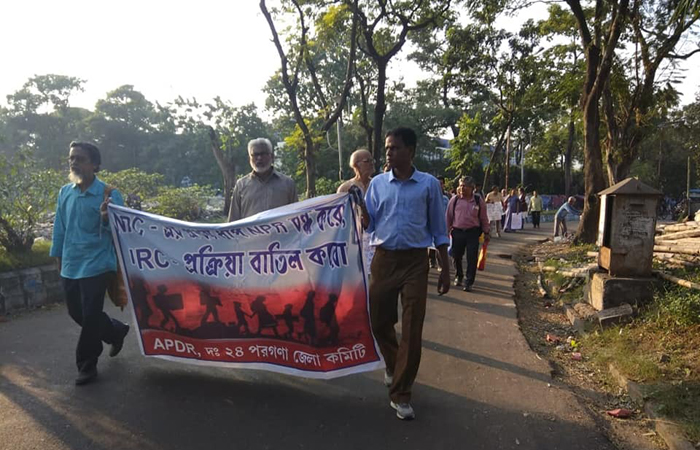
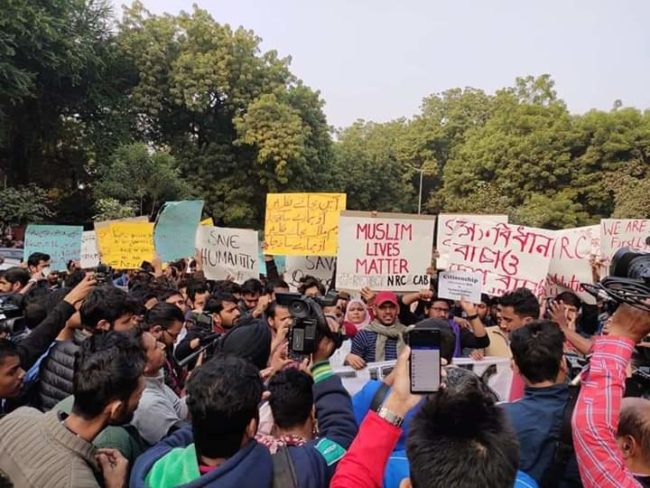
Kolkata: Around the time that 120 Harvard University’s faculty and students wrote a letter to the Prime Minister of India, seeking the immediate release of former IAS officer Shah Faesal another group of scholars, artists, social activists and others issued a statement of solidarity with the people of Kashmir.

These 251 signatories, of the ‘statement of solidarity’ have expressed their concern with regards to the “inhuman clampdown” in Jammu and Kashmir, since August 5, call themselves ‘concerned South Asians and friends of South Asia”.

The letter dated August 15, has been drafted by Kathmadu-based anthropologist Himali Dixit and curator Nayantara Gurung Kakshapati. It starts off by stating, “The stripping of the constitutionally guaranteed rights of special status and of statehood without consultation with the people of Jammu and Kashmir; and the implications of these recent developments for democracy, pluralism, and due process in India.”

“Article 370 of the Indian Constitution represented an historical understanding between the people of Jammu and Kashmir and the Indian state. On 5 August 2019, not only was Article 370 abrogated, but the very statehood of Jammu and Kashmir was abolished, bringing the region under New Delhi’s direct rule. The manner, in which these abrogations were accomplished, through executive order and in the absence of a state legislature, is a betrayal of the people of Jammu and Kashmir, whose elected representatives were never consulted. This is a sharp departure from democratic governance, and the constitutional validity of these decisions has been rightfully challenged,” wrote the signatories.

They further wrote, “We condemn the curtailment of civil liberties in Jammu and Kashmir: the blackout of telecommunications and internet services; the severe restrictions on media and on the freedom of movement, peaceful assembly, and protest; and the violent suppression of demonstrations. These are all violations of international human rights obligations, including the International Covenant on Civil and Political Rights (ICCPR), which India ratified in 1979.”

In the letter the signatories expressed their concern over the degeneration of Indian democracy. They expressed, “These actions of the Government of India exhibit a complete lack of respect for constitutionalism, secularism and democratic values. This does not bode well for India’s people, who have, uniquely in South Asia, benefited from decades of democratic rule. We are apprehensive of India’s future as a democracy and the implications that this degeneration will have on its population of 1.2 billion as well as on the rest of the subcontinent.”

Veena Das, Partha Chatterjee, A.S. Panneerselvan, Ayesha Jalal, Shahidul Alam, Kul Chandra Gautam, Gyanendra Pandey, Chandra Talpade Mohanty, M.V. Ramana, Pervez Hoodbhoy, Zia Mian, Sofia Karim, Sharmeen Obaid Chinoy, Martha Nussbaum, and Sheldon Pollock are some of the 251 signatories, who issued the solidarity statement.

PM Modi’s Independence Day speech: A roadmap to one party- one leader rule

0

[dropcap]A[/dropcap]daroniyo Pradhan Mantriji,

PM Modi

Badhai Ho, Sriman!

Your Independence Day speech at Red Fort ramp has endeared you to me more since it provided me a veritable road map to your elevation as Bharat Samrat . It proved your genius again when you dovetailed your ‘courageous’ decisions to revoke articles 370 and 35A of our constitution in order to scrap Jammu and Kashmir’s special status not only to Sardar Patel’s dream of ‘one nation one constitution’ but also to your professed dream of ‘one nation-one election’. It was only your humility that stopped you from hyphenating the last to an untold dream– one party- one leader—to complete the project.

It’s another matter that Shyama Prasad Mookerjee had popularised the demand for EK Desh Ek Nishan EK Bidhan‘ But I appreciate the fact that the Hindu Mahasabha and later Jana Sangh leader is yet to emerge as a national icon in your New India beyond our Parivar.

In contrast, your appropriation of Gandhi- Sardar and Ambedkar sans Nehru would allow us to cover our uncomfortable disjunction between the Parivar and freedom struggle. Among the big three, Sardar is most handy for us since his achievement of national integration, ‘Bharat Ka Ekikaran‘ can be presented as an initial step towards your goals– Ek Bharat- Ek Chunao- Ek Dal- Ek Neta.

You have revealed your Man Ki Baat in so many words. You named introduction of GST to ensure one nation-one tax regime and one-nation -one-power-grid as steps towards enforcing your idea of India discarding the hackneyed one that called for unity in diversity in all forms.

Samajhdaro ke liye Ishara hi Kafi Hai

You rightly said that residents of newly created union territories of Ladakh and Jammu & Kashmir will be able to connect directly to your central government for fulfillment of their demands. There will be no need for intermediate powers which only had ‘promoted separatism, terrorism, dynastic rules and corruption’. You did not repeat your assurance on 8th August that statehood would be restored to J&K on opportune moments. Perhaps the timid responses from the muted valley prompted you to drop that concession.

Now that example should be followed by people of other states, particularly those are in the margin of our nation as well as those who are still ruled by political parties with questionable patriotic credentials. As far I could fathom your far sight, the facade of federalism will be there as long as it is needed, given the hazards of democracy. The assembly polls will be conducted simultaneously with the parliamentary poll till our lotus blooms at every corner of the land leading us to the presidential form of government formally. Then, as Indians will attain more Paripakkata  or maturity, you will outdo Trump, Erdogan, Duarte or Bolsonaro and usher us into a permanent revolution of Stalinist varieties, even to a higher form of it which Hitler and Mussolini had accomplished.

PM Modi

By that time, I hope you and our glorious Parivar will be able to mute all the anti-national libtards and siculars of the land. The mission to wipe out the residual army of parasites and termites who are the fifth columns of our enemies across the border and repository of separatism and terrorism will go along with it. There will be no more prosecution of our great Gomata-bhakts cum Deshbhakts for lynching the Pehlu Khans. In fact, I take this opportunity to record my gratitude that all our six brothers have been acquitted from the charge of killing that doodhwala Khan on the eve of Independence Day. Hame ekin hai ki ab sare ke sare khan appne jan bacchane ke khatir aap kee pahlu me rahena chahenge. PM Modi had already ensured it in Gujarat before moving to Delhi.

Ban Gandhi and Tagore

Being a Bong, the news is doubly relishable for me on the day of Rakhi Purnima today as it exonerates me and many like me from the legacy of an old idealist fellow called Tagore.

That man, incidentally, a friend of Gandhi, too longed for Hindu-Muslim unity and introduced a different kind of Raksha Bandhan ceremony during the first division of Bengal. Though they differed crucially, both were ideosyncrats in their understanding of Indian civilization and nationalism as a creed. Their readings were so different from our Sangh’s take home reading on Dharma and Itihasa that they must be banned as seditious literature immediately. Their ideas of Hinduism are so anachronistic to our ideas that you should stop swearing by Pujya Bapu since the name-dropping has served already your purpose. Also, you should also replace the national anthem that Tagore had penned with ‘Namaste Sada Vatsale Matrubhume‘– our Sangh anthem. Unlike the Jana Gana Mana that celebrates India’s historical plurality with a common destiny of all Indians in modern time, our anthem pins on our singular identity. It identifies India as Hindubhumi only and exhorts all believers in Hindu Rashtra to be valourous in the battle for the protection of our Punyabhumi and Rashtra-dharma.

What the promise of non-coercive government means

Sriman, aap ne aaj ghoshna ki aam admi k zindagi me sarkar ki dabao nahi hona chiye. Phir Mushkilo me sarkar ki abhab bhi na ho. Henceforth, government won’t be coercive and intrusive in common man’s life but will be available at the time of his distress. This was the essence of the axiom — minimum government and maximum governance– the mantra which you chanted during 2014 campaign. You were clear enough that your avaya mantra was only meant for business and industry, particularly those corporate A-listers who had been little restive over income tax on super riches and penal actions upon failing to meet Corporate Social Responsibilities (CSR). They were also apprehensive over the arms-twisting by overenthusiastic taxmen who had apparently driven CCD chain owner to suicide recently. You reminded the taxmen and others whose hanky panky has tarnished your corporate-friendly image that wealthy men needed to be respected since they are your best hope to fight unemployment and poverty. Fair enough.

But the libtards around me mistook your promise of an unobtrusive and non-coercive governance as a licence to doubt, question or criticise you and our government while expecting police to protect them against our saffron vigilantes, both offline and online. I heard them heaving a sigh of relief that no more they would be called anti-nationals, urban Naxal or terror accomplice despite the latest changes in the anti-terror UAPA act. No more they will not languish in jail after being charged with sedition and conspiracy against the government/ State. That their complaints against Armed Forces Special Power Act and host of laws that have strengthened the police state will be changed while laws to protect citizens against corporate-state cyber surviellance will be come. The fools thought that democratic niceties will be allowed in the placid mainland when they are suspended at the recalcitrant margins.

Only laws that serve corporate-state will come

When you counted 1450 archaic laws that you have already thrown to the dustbin of history in last 5 years and another 60 in 70 days of your second coming, these protestniks and rightniks were clinging to their hopes that the colonial sedition act and related sections of Indian Penal Code (IPC) would also be repealed. They thought you had a change of heart and the government won’t be coercive to evict millions of the traditional forest dwellers and protect them under Forest Rights Act. Since these buggers are not easy to satisfy, they wanted you to stop dilution or violation of environmental, forest, land, mines and water laws that allow desi and phoren corporates to plunder forests, tribal land, mineral and water resources in the name of development and GDP growth.

‘Ease of Living’: For whom?

No doubt, these Jholawalas are the worst enemies of our country and allies of Maoists, the biggest threats to our internal security as your predecessor Maun Mohonji had predicted. It’s pertinent to point out that his party’s first family still have such hidden agents in their charmed circle. You are right in your refusal to make distinction between violent and non-violent Jholawalas when they oppose exclusion of millions of foreigners from the NRC in Assam and its extension in rest of the land on the ground of discriminatory legal process as well as subcontinental history and human rights. These renegades who have deserted the Sanatan Dharma are throwing spanners in the Parivar’s final solution to our Punyabhumi’s perennial problems with millions of parasites and termites which we can’t crush by merely by lynching.

Before you elaborated on your intended ‘ease of living’ for common man in his ‘Rojmara Zindagi‘, fools around me were expecting a transfer of Rs 15 lakhs to their bank accounts as you had promised in your first coming. They do not appreciate that you need not repeat your Jumlas given your pardarshita in selling new one every time you hog a podium. These ungrateful guys refused to accept your claim of controlled price-rise by brandishing bygons which they said had cost them Rs 50 per kg. You know Bongs are so fond of Begunbhaja with their Khichuri, even some of our Sakha members broke the anusashan and joined the doubters.

The P-T missiles

But all fell silent when you thundered against our eternal enemy without naming it and called for global and regional unity against that land of Satan which exports nothing but terror.

You know it better that all of us that even most rabid doubters and dissenters lose their nerves whenever you throw the P-T missiles at them. Your blast over Balakot has earned you second term and your Mission Kashmir is likely to give you the third. By 2029, I hope you will be able to weed out all the troublemakers and fulfill your dream of one nation- one party -one leader. Waiting for that day, my Naman to NAMO, the redeemer of Indian glory and destroyer of all the evils of the largest democracy of the world. Yada Yada Hi Dharmasya …..


Opinions expressed in this column are those of the author and not of eNewsroom. This is an open forum and we try
to give space to every school of thought.


India at 72, Do We Give It all Up? Or Rise Like The Phoenix Again?

0

Happy Independence Day India, India stands at 72 a little shaken, a little stirred, yet a warrior still perhaps we are the only generation who were brought up in the 80’s and 90’s that saw the transition and rapid strides made by the country in an epoch.

From Scooters to flashy mobikes to the automobile boom, from snail mails to Star TV to the dotcom boom, to the IT boom and our emails in the palm of our hands, we have seen it all.

If a five year old child can have memories, then summing up 35 years is a lot to recount.

As an Army daughter I found my father in the mid 80’s riding a lambretta with my mother, two other siblings, with the Stepney flattened out for my older sister to sit on as we rode our way into the late 80’s then elated to bring a brand new Maruti Suzuki home, also adding a 4th sibling to our brood.

Rajiv Gandhi was the then prime minister of the country. As a young child there was a sense of awe to see a debonair PM at the helm of affairs. As the rest of the children who were studying with me at the Army Public School, the feeling of patriotism was high. Religion was never discussed at home or at school nor did our parents ever bother to indoctrinate us, the first feeling of ‘otherness’ sank in when I realized that my name had a different ring to it then the other students of the class.

When I was in class 3 studying at The Army Public School, Delhi the class teacher approached me and said- Saira Shah for next week’s special assembly, I am getting children from all faiths to read out verses from their holy book, please find something appropriate that you can read from the Quran, that is perhaps the first time, a sense of identity dawned on me, not of being othered, the feeling that I am part of this big family and my thoughts and voice matters.

So off I went to my Father requesting him to suggest a verse from the Quran.

I reckon he simplified verse from the Holy Quran 109:1-6 which reads as “To you your religion and to me mine” for an eight year old child was interpreted as ‘’All religions are equal in the eyes of God, unto you your religion, unto me my religion,” from the Holy Quran, nervous about my first stage appearance, I went to the podium and confidently delivered the line to thunderous claps.

A positive reinforcement of a Muslim child as part of a story to the new narrative of India that was building up was reassuring.

Freedom independence day New India at 72 80's 90's
Another video grab of India in 80’s and 90’s. Courtesy: Google/Youtube

The New India of the 80’s was aspirational, Doordarshan had started telecasting the Ramayana and the Mahabharata, every Sunday we sat glued to our newly bought television set- a Weston colour TV, entertainment for children remained largely an outdoorsy event which meant cycling, swimming or cricket outside with the neighbours children, while the occasional Spiderman. He -Man, Chitrahaar, Buniyaad, Nukaad, Idhar Udhar was the usual watch on the idiot box.

80’s was largely peaceful, with the economy growing at an annual rate of 5.5 percent or 3.3 percent on a per capita basis, industry grew at a rate of 6.6% and agriculture at a rate of 3.6 percent.

The economy was further liberalised in 1991 with the dotcom boom of the late 90’ that saw India rise as an IT superpower and creating jobs for a pool of unemployed English speaking graduates that found succour in the ‘India Shining’ campaign, but despite these rapid growth strides and the progress we were making as a nation, a parallel narrative was being stirred in the India cauldron, we perhaps undermined the ‘blitzkrieg’ that was to come when in December 1992 a large group of right wing activists demolished the 16th century Babri Mosque in the city of Ayodhya, post which saw communal riots between Hindus and Muslims that led to the death of an estimated 2000 people, six weeks of riots further escalated in Mumbai resulting in the death of an estimated 900 people, that to my young eyes of a young girl studying in Ooty at a boarding school as trains to go back home for vacation were stalled was the beginning of an end, an inferno, the death of a secular dream, vividly remember my parents making their way to Meerut in an Army Jeep with ration stocked up for a month for my grandmother as curfew was imposed on our hometown Meerut, the enormity of what had transpired in the country had not yet hit home, the parents were largely successful in shielding us away from the gore of communalism.

The left leaning Congress party mired in corruption allegations was a spent force.

Circa 2019 as a New India is born again with the re election of Mr Narendra Modi, our parents did not witness partition, our grandparents did, however there is another partition of India happening in the hearts and minds of the people, the seeds of which were sown in 1992, but we were so blinded by utopia, that we failed to see the rot fermenting as a potent tonic as a new military carte-blanche approach to counter resistance and dissent is being used against citizens today.

So where do we the Generation X and the Millenials go from here? With a badly dismantled opposition, daily gagging of dissenting voices, slow murder of democracy, where do our guttered hearts go? As everywhere I go, the discussion amongst liberals and the minorities is about settling children abroad, away from the squalor of communal conflict and an economic meltdown and to think that most of us could not dream of acquiring another passport but the Indian one, the ones who could never ever imagine themselves to sing any other national anthem besides the ‘Jan Gan Man’, do we just give it all up? Or rise like the phoenix again?

Now is the time to reclaim the secular dream with all our heart and sinew and not get rattled by what is happening around us, look at ways to strengthen democracy, our present generation has a lot on our shoulders if we need to show our children more than a hundred reasons why India is still the land of opportunity and why being a proud Indian still matters.

Jai Hind!

Our Muslim identity is making it difficult for us to get justice, says Pehlu’s son Arif Khan

0

Alwar/Jaipur: On the eve of Independence Day, when the news of all six accused in Pehlu Khan’s lynching case being acquitted reached Haryana’s Nuh district, a sense of dejection set it. The family of Pehlu Khan, which has been running from pillar to post, seeking justice in the April 2017 case, in which Pehlu, a 55-year-old dairy farmer was lynched by a mob comprising Hindu extremists, on suspicion of cattle smuggling, is devastated with the news of the acquittal of all the six accused.

A total of nine people, based on the lynching video that went viral had been charge-sheeted. Three of the nine accused are minors and are being tried at a juvenile court. Speaking to eNewsroom, from Nuh, Rafiq Khan, brother of Pehlu, who was also attacked by the lynch mob on April 1, 2017, said, “We are shocked with the verdict. These people are rich and have political patronage and hence have been let off by the law. We will appeal before a high court to challenge this verdict.”

Meanwhile, Pehlu’s son Arif Khan, said, “It seems like no one killed my father. He died on his own. He wasn’t even lynched. Since 2017, we have been running from pillar to post seeking justice. But it seems like no one is ready to believe our story, simply because we are Muslims. Had we been from the majority community, I am sure that we would have got justice. It’s painful to see all the killers of my father being let off. We are losing our faith in the Indian judiciary.”

He added, “We had great hope from the present Congress government of Rajasthan. We believed that we might get justice under a less communally charged political party. But it seems like they are also playing the same majority appeasement card. My father was lynched under the BJP government, but the charge sheet was made when Congress came in power, but just see the irony, instead of making a strong case against the accused, we including my dead father have been charge-sheeted. Now, that the accused have been acquitted, we will have to fight the case to prove that we, who had accompanied our father on that fateful day, are not cow smugglers.”

On being asked about the Rajasthan government passing the anti-lynching law, Rafiq, emotionally said, “All that we know is that in this country poor will always be denied of justice. All the accused are from the majority community and are financially well off, so they have bought their freedom. We are poor Muslims, so getting justice will be difficult for us.”

Despite the duo being dejected by the court’s verdict maintained that they would be knocking the doors of a higher court seeking justice. Speaking about the verdict Asad Hayat, one of the legal advisors of Pehlu’s family said, “Fair investigation forms the base of getting justice. In this case, the investigation was unfair. Also, the court refused to summon the NDTV reporter who had done a sting operation in which one of the accused had described how he had lynched Pehlu Khan in Behror. We had appealed before the court under section 311 of IPC, but the court refused to call the reporter or seek their recording by simply stating that media recording is not admissible.”

He further added, “We are yet to get a copy of the judgement. Tomorrow is a holiday, we shall now be getting it on Friday. But just let me highlight, one thing, which makes this case different from the two lynching cases of Jharkhand where the courts held the accused guilty of their crime. In this case, the identification parade was conducted within the court, before the honourable judge. Secondly, in this case, the investigation was not fair.”

Meanwhile, Qasim Khan, lawyer of Pehlu Khan and his family, said, “The charge sheet had been weakened to benefit the culprits. The viral video which formed the basis of the case and was also the primary evidence, in this case, had somehow been destroyed. The 70 odd pictures that the police had got from the same video was presented as secondary evidence before the court. This perhaps made the judge give the accused the benefit of doubt in this case. Needless to say, we are unhappy with the judgment and shall be challenging it before a higher court.”

However, Pehlu’s son pointed out that this perhaps would be the last appeal before the court. “We have already spent a lot of money. We are now scared to pursue our dairy farming business. Because of our Muslim identity, it becomes easy to label us as cow smugglers.”

No One Killed Pehlu Khan

0

Alwar/Jaipur: A local court announced the verdict in the Pehlu Khan mob lynching case on Wednesday, August 14. The court of additional district judge no 1, Sarita Swami, gave benefit of doubt to six of the nine accused in Pehlu Khan lynching case.

A total of nine people were accused in this case, of which three are minors and are being tried at a juvenile court. The verdict was given after the judge had heard complete arguments of both the sides on August 7.

Speaking to eNewsroom, immediately after the verdict, Qasim Khan, the lawyer representing Pehlu Khan and his family said, “All of the accused have been acquitted by the court. It’s disappointing but we shall be appealing to the High Court.” The accused were given a clean chit based on mobile phone records and statement of a cow shelter.

On April 1, 2017, Pehlu Khan, a dairy farmer and a resident of Jaisinghpura village, Haryana, was lynched by a group of cow vigilantes, when he and his two sons were passing through Behror, in a truck, which had cows. His truck was intercepted by youths working for Hindu Right-wing organizations and mercilessly beat him up. He was taken to a local hospital, where he breathed his last on April 3.

The dairy farmer was mercilessly beaten while transporting cattle on April 1, 2017. He had named the accused in dying declaration, but prosecution failed in getting justice for his family.

It was one of the first mob lynching cases in Rajasthan and later several lynched. Only in Alwar, from Akbar to Umar and many other beaten to death over cattle or cow transportation.

Significantly, Pehlu was lynched during Vasundhara Raje led BJP government, and his case chargesheet filed during Ashok Gehlot led Congress government, but it seems nothing changed for the family members who were waiting for the justice.


Zomato employees protest over beef and pork delivery is led by BJP cadres and outsiders

Howrah/Kolkata:  The recent ongoing protest of Zomato employees at Howrah, West Bengal seems to have been led by protesters with political background as well as outsiders too, claimed Co-founder Alt News Mohammed Zubair. 


On August 11, news agency ANI had released a story saying App-based delivery service company— Zomato’s Howrah district employees are protesting against the delivery of beef and pork products. They said that it hurt their sentiments, when a Hindu is being given beef products to deliver, and soon pork will be delivered by Muslim delivery boys.


While the agency quoted two protesting employees, the copy had only named one of the protesting employee, for another quote, it simply mentioned, ‘another employee claimed’. However, a video footage that has surfaced shows the same unanimous quote being stated by one Sanjiv Shukla, a Bengal BJP cadre. Shukla has also talked to India TV.


zomato howrah beef pork bjp cadre
Screenshot of Alt News Co-founder tweets on the Zomato employees beef and pork delivery issue


And it is not only one BJP Karyakarta who has led the Zomato employee protest in Howrah for not delivering beef and pork items, but few more.


Bengal BJP Karyakarta Brijnath Varma has also led the protest and gave bites to electronic media organizations.


Another BJP cadre, Sujit Gupta, who is a resident of Varanasi, and recently started living in Howrah was also seen giving bites on the issue. 


All the three BJP workers, revealed by Alt News’ Mohammed Zubair has photographs with senior BJP leaders including Tripura Chief Minister Biplab Kumar Deb, Minister Giriraj Singh and Bengal BJP leader Mukul Roy. 


zomato howrah beef pork bjp cadre
Screenshot of Twitteratis reactions on the issue


Interestingly, like previous time, in which a Hindu customer had cancelled the order, saying he will not take delivery from a Muslim rider, netizens are more in solidarity with Zomato company than the controversy creators.  


Some Tweeted to company that it should terminate such employees and induct new ones, who have the zeal to perform. Few also made fun of the protest, saying, delivery boys have to deliver the food products and do not have to taste it.


Some also tagged BJP’s Bengal Twitter handle and questioned the party, as to why they are politicising a business issue?


Significantly, source said, the indefinite strike of Zomato employees in Howrah had started a week back and it was about getting more share in the payments per orders. It was not a beef and pork delivery issue.

Kashmir issue: Naa Rahega Baans, Na Bajegi Bansuri

0

Hon’ble Prime Minister of India,

Sirji, I am enthralled by the developments since your historic telecast to the nation on August 8 on abrogation of both article 370 and 35A of our constitution and bifurcation of Jammu and Kashmir state into two centrally ruled union territories four days earlier. Now that you have killed two birds with one stone; Kashmiri pride and Pakistani greed, our enemies, both external and internal are at their wit’s end. With the state itself stands abolished, there will be no more clamour for independence or maximum autonomy based on special status vide that silly article of faith of Nehru era. It’s a great feeling of wish fulfilment pervades the land that now Kashmir Ki Kali will blossom in my garden too and usher me into a pigment revolution. Moreover, we may inherit a chunk of ‘heaven on earth’ through in-law connections if we lag behind more resourceful compatriots.

Jiski Lathi Uski Bhains!

With Kashmir forced to be on silent mode, it’s fascinating to watch our homegrown 007 sharing snacks with commoners on the valley streets amid a standstill public life or counting the sale of sacrificial lambs on the eve of Id festival. The habitual dissenters may dismiss it as choreographed optics for propaganda to prove efficacy of the new normal pointing to the complete shutdown of all communications under a massive military-civil machine for more than a week. The foreign media and few of their Desi collaborators may try to tarnish your image by recording impromptu protests by few stone-pelter boys and their enraged sisters and mothers. But our forces’ quick dispersal of them under a cloud of tear gas and denial of the very existence of no-sayers by our professional media managers are really inspiring.

The anti-nationals here and there may have missed the surreal setting of your latest Man Ki Baat and called it a Kafkaesque horror. But who will deny that your regime has gone ahead of ‘Z’ years of Costa Gavras film in muting the voices of troublemakers without much wastage of bullets and payment to hired killers. So what most Kashmiris could not watch you live or exchange opinions about their changed fates? After all, It was not primarily meant for them but for us and the world outside.

It’s nice to notice that you have learnt much from your buddy Netanyahu who has not only succeeded in swallowing the spoils of 1973 war but also in dividing and annexing residual Palestine. If our influx is planned meticulously, we may not need to wait for long for the suitable demographic change there as Jews are doing in the Cannan and Chinese Huns in Tibet and Xinjiang. We know you still can’t afford to be as blunt and revengeful as your Zionist friend. So you have dangled your carrot by promising return of statehood to J&K sans Ladakh in future. The Candy-flossing of your stick was admirable as you have assured a land of milk and honey to commoners and more cash to buy the loyalty of local policemen and sarkari babus. What more you can offer? They must believe in you despite those pathological cynics calling it another spell of Jumlas. Have not we enjoyed our Acche Din during your first coming?

It’s another matter that our Motabhai as well as the guardians of our great Parivar in Nagpur have always felt that that Kashmiris do not deserve any level of self-rule, at least, till their brains are sanitised properly and permanently. They deserve our boots and bullets, at least pellets since they have refused to buy our narrative of their history and our freedom as their freedom. Instead of appreciating the benevolence of Indian people and beauty of our democracy, these ungrateful have increasingly fallen prey to the canards spread by those ‘Muttibhar’ pro-Pak or pro-Azadi rabble-rousers.

Who cares for history?

 So that the last King of Jammu and Kashmir, Hari Singh, the Hindu Kultitak had wanted an Independent realm in 1947-48 and signed the instrument of accession only after Pakistani raiders had reached close to Srinagar? So What if Sheikh Abdullah, the leader of Kashmiri Muslims had refused to buy Jinnah’s two nation theory and opted to join India? How much matters now that both the Hindu king and his Muslim challenger were keen on maximum autonomy within India, albeit for different reasons? Are not these insignificant details of history that their bargaining with Mountbatten and Nehru-Patel ultimately led to the separate constituent assembly for the state and formulation of its special status later? Who cares whether Sarder Patel was reluctant about inclusion of Muslim-majority Jammu and Kashmir in India unlike Hindu-dominated kingdoms of Hyderabad and Junagarh? What matters now even as he ultimately supported Nehru on article 370 and stood by him on plebiscite in Jammu and Kashmir since India had a huge support on the ground? Is not it a blasphemous act to believe that even Shyamaprasad Mookerjee, Nehru’s minister and Bharatiya Jana Sangh leader who became iconic martyr of RSS Parivar on Kashmir did not oppose the valley’s special status but asked for full integration of Jammu and Ladakh ? How much it is pertinent today that Mookerjee had agreed for unity of the state but demanded autonomy to non-valley regions before his unfortunate death in Kashmir? For that matter, the BJS, the precursor of BJP changed its tune following the frowns from RSS? Why the hell we need to understand the complex tug of war between Nehru’s composite Indian nationalism Vs Abdullah’s secular Kashmiri nationalism at one hand and between the regional aspirations of valley and Jammu? Why bother about the clashes between idealpolitik and realpolitik of the two leaders and their descendents who ruled India and Kashmir respectively for decades? Particularly, when a more familiar and simple communal narrative is handy for religious polarisation between the valley’s Muslims and Jammu’s Hindus who had always been instigated by BJS-Praja Parisad combine to deny the existence of all-faith Kashmiriyat based on its Hindu- Budhhist-Muslim-Sikh parampara?

Our Parivar Vs their Parivars

Have not our Parivar waited too long for the triumph of its vision of Hindu Rashtra; a majoritarian rule under a unitary state at the cost of all the pluralist traditions and regional aspirations that guided our constitutionally recognised federal principles, at least in theory? It’s a pity that the cry babies are mourning the death of federal and secular democracy. They have missed the bus long ago when they had hardly uttered murmurs of protest on the gradual erosion of J& K’s special status when they protested dismissal of elected state governments elsewhere by Nehru-Gandhi family.

Jammu and Kashmir

Can they deny that loyalty to the government in New Delhi and Indian nation have been made coterminous for all people at the margins of the nation-state, especially in J&K? The intermittent use of coercive police-military force and temporary concessions to regional sentiments have become an accepted paradigm of our polity before your rise on the Raisina Hills. You have only nailed the coffin. The opportunism of Abdullah and Mufti dynasts and others in between who played musical chairs for long made room not only for explosion of pro-Azadi sentiments but also for Pakistan’s proxy war through sectarian and Jihadi forces in the valley. The consequent expulsion of Pundits and killings of minorities have only legitimised and popularised our Sangh’s position. It’s another matter that you had slept with these regional dynasts in turn to keep away the national dynasts. Now that you have outfoxed both kinds of dynasts and promised a new Kashmir free from Pak-sponsored Aatankwad, Algavad and Parivarbad, we can not wait for similar surgical strike at the heart of India against those who still focus on social-political diversity as the guarantee for unity.

Gandhi will be buried finally

Dear Motabhai, I can’t adore you more for your telecast on the 77th anniversary of another historic speech by a fellow Gujarati,incidentally known as father of the nation, launching Quit India movement against the British Raj. Now that you have renewed our second freedom struggle by achieving almost a Congress-mukt Bharat with microscopic red and green tinges across the saffronised map, I am sure soon you will replace that Ramdhun-loving, lanky old man who fell to the befitting bullets from one of our Parivar’s heroes and paid the price for his crime of appeasement of Muslims and Pakistan. We were forced to paying lip-service to his values, particularly the obnoxious idea of non-violence at the cost of our martial glory. Thank God, we will finally get rid of his legacy. I can’t conclude my words of admiration without hailing your Chotabhai who is poised to replace another no-nonsense Gujarati whom you have already cast in huge stone. I am looking forward to the fulfilment of his vow to wipe out all termites and parasites which are eating up the vitals of our state and society.


Opinions expressed in this column are those of the author and not of eNewsroom. This is an open forum and we try
to give space to every school of thought.

Kashmir problem: victory of gun-loving lobby

0

In his broadcast to the nation on August 8, Prime Minister Narendra Modi made a facetious attempt to justify his Government’s chesty decision to abrogate the special status granted to Jammu and Kashmir under Article 370 of the Constitution. It was done in a military-like operation by detaining all political leaders of the State, keeping the entire population of the Valley virtually captive in their homes with the deployment of lakhs of security forces personnel and by snapping all communication channels between the State and the rest of India/world. By scrapping Article 370, the Modi Government has created a Union Territory of Jammu and Kashmir (with Assembly) and a Union Territory of Ladakh (without Assembly).

In his broadcast, the Prime Minister described Article 370 as the sole cause of all the imaginable problems — from cross-border terrorism to unemployment — in the border State. Some of the problems created by Article 370 as listed by Modi are: increase in nepotism and corruption; discrimination among citizens; denial of equal rights to girls and women; loss of lives of almost 42,000 innocent people in the last three decades; no special benefits to the members of the Scheduled Castes (SCs), Scheduled Tribes (STs) and Other Backward Communities (OBCs) as applicable in other parts of the country.

Then the Prime Minister announced financial benefits like LTC and HRA to Central government employees posted in Jammu and Kashmir at par with their counterparts elsewhere. Besides, he said now that the Article 370 has been made inoperative, the vacant posts in Jammu and Kashmir will be filled. J-K and Ladakh will be developed as major tourist attractions, film industry will be invited to shoot their films in the two Union Territories.

Most of Article 370 has, for all practical purposes, been eroded. Now hardly five per cent of the original Article remains. (With the approval of the State Assembly, the Centre is authorised to make any changes in its provisions). When Article 370 became operative in 1954, Jammu and Kashmir was a fully autonomous State with only Defence, External Affairs and Communications being under the control of Government of India.

It had its own Prime Minister, its president called Sadr-e Riyasat, its own Supreme Court, its separate Information and Broadcasting Ministry, its independent Radio Kashmir and so on. All that has changed over the decades. Chief Minister replaced Prime Minister and Governor appointed by the President of India took the place of Sadr-e Riyasat. Radio Kashmir retained its name but it was like any other radio station in the country being under the control of I and B Ministry. The Supreme Court of India has superintending powers over the State’s High Court. Major remnants of Article 370 were the State’s own Constitution, its separate flag, its law discriminating against women, denial of permanent presidentship to refugees who had migrated to Jammu from Punjab State of Pakistan and, of course, the law prohibiting outsiders to purchase land in the State.

Under the Constitution of Jammu and Kashmir, the State Assembly is competent to deal with all these matters. BJP was part of the alliance government (along with PDP) from March 2015 to June 2019 barring a three-month period when Governor’s Rule was imposed after Mufti Mohammad Sayeed’s death as the BJP was renegotiating the alliance terms with the late Mufti’s daughter Mehbooba mufti.

Did BJP, as part of the State government, ever suggest that the Pakistani refugees who had been living in Jammu since 1948 be made permanent citizens as per the procedure laid down in Section 9 © of the Constitution of Jammu and Kashmir or to extend certain privileges to SCs, STs and OBCs, or to end discrimination against women. Even otherwise, the law allowing discrimination against women was under the consideration of Supreme Court when Article 370 was abrogated. As for the law prohibiting outsiders from purchasing land, such laws exist in varying forms in Himachal Pradesh, Uttarakhand and States of the North-East.

As for the infiltration of terrorists, how can Article 370 be held responsible for that? The borders are controlled by the BSF and there has been a heavy deployment of security forces within the State. If the Central Government employees including security forces posted in Jammu and Kashmir were not getting financial benefits like their counterparts elsewhere, it was clearly a lapse on the part of the Central Government and not the “fault” of Article 370.

It appears the Modi government is dominated by the gun-loving lobby which does not want any issue settled amicably. Modi himself is a confused man, torn between his natural instinct of utter hatred against a certain section of people and the reaction of the foreign countries which he had come to face after he became Prime Minister in 2014. In his 2017 Independence Day speech, Modi had observed that the Kashmir problem could not be resolved either by bullets or by abuses and that a solution could be found only by embracing them (Kashmiris).

On October 23, the Modi government appointed former Intelligence Bureau (IB) chief Dineshwar Sharma as a Special Representative to start a dialogue with the people of Jammu and Kashmir in a bid to find a solution to the persisting problem. However, two days after his appointment, Chief of Army Staff General Bipin Rawat announced that the Army’s operations in Kashmir would continue “unabated” in spite of the Government’s attempt to have a dialogue with the stakeholders of the strife-torn State. Gen Rawat also said that the appointment of dineshwar Sharma would have no impact on the Army’s activities in the Valley.

Eventually the gun lobby won. Dineshwar Sharma was not even allowed to continue with its work. And what could have been a peaceful resolution of the problems was turned into an ugly military operation.


Opinions expressed in this column are those of the author and not of eNewsroom. This is an open forum and we try
to give space to every school of thought.

Garos in West Bengal village losing matrilineal identity

Kolkata: Gabrielle Bertrand in her book ‘Secret Lands Where Women Reign’, wrote, “Recalling my first contacts with that Garos community which has preserved its way of life and remained loyal to its traditions, I remember that the shock was so sharp that what I wrote at the time now seems to lack realism”.

The author interacted with the tribe in Garo Hills in undivided Assam more than five decades ago. The reality now is indeed in stark contrast with what the author experienced and wrote, especially in West Bengal.

A section of the tribe, of the Indo-Mongoloid stock lineage, dwells in North Bengal. They had migrated to Bengal from Mymensingh district in Bangladesh in the 1930s.

Now, the Garos population, which is mainly concentrated in Alipurduar and Cooch Behar districts of Bengal, is only a few thousands. Living among other communities for decades now, the matrilinial tribe is losing its “identity”.

In Alipurduar, Garos can be found in Garam Basti, a village off the highway.

The black-topped road with forests on both sides branches to a graveled path leading to Garam Basti. There are around 125 Garo households in the village living along with Nepali, Rajbongshi, adivasi and Bengali families. They are much different from their counterparts in Meghalaya and speak fluent Bengali.

garos garo tribe west bengal world indigenous day
A garo family at Garam Basti in Alipurduar

Fifty-two-year-old Banikanta Marak, a member of the local panchayat, shares that the early settlement of the Garos was in Athiabari. “Later, the British asked them to move out because of plantations. It was then that my ancestors came and settled here in Cooch Behar. Athiabari still has a locality called Garo para (neighbourhood),” said Marak.

However, the population of the Garos has dropped from 3,673 in 1991 to 2,039 in 2011 (Tribal Bengal by Krishnopriyo Bhattacharya).

A major change that this tribe in Bengal has undergone over the years is the decline of matriliny. Unlike the Garos in Meghalaya, those living in Bengal, especially in Garam Basti, take their fathers’ surnames “to avoid confusion”.

“Most of the people in our neighbourhood and in the state follow patriliny. Taking mother’s surname often creates confusion. So to be on the safe side, Garos here too follow patriliny,” said 47-year-old Subodini D Sangma.

For her children, however, it was not a problem as she and her husband have the same surname.

But Marak said he has followed matriliny and his children have taken their mother’s surname. “Matriliny is our tradition, our identity and we cannot give that up. I keep telling people whenever a clan meeting is organised. I have even told this during several village meetings,” he added.

Sitting inside a highway dhaba run by Marak, a Bengali-speaking Garo looked upset at his tribe’s losing identity. He narrated a story to explain the cause of this identity crisis. “I was summoned before my daughter’s school-leaving exam. The officer concerned did not know about matriliny and questioned my daughter about the ambiguity in the surname. I explained it to him,” he said.

Garos

garos garo tribe west bengal world indigenous day
Two women of Garo tribe, in their village Garam Basti in Alipurduar

Vinod M Sangma, a resident of Garam Basti, said not all government officers who are posted here know about the custom of the tribe and people had to face problems in the past.

He looked tired. A farmer like Vinod in this part of the state has many problems to worry about. He and many others are part of the man-elephant conflict and often lose crops to pachyderm attacks. When earning a livelihood is the primary concern, fighting for identity becomes a secondary one.
Garos and Khasis are the two main tribes which follow matriliny. Women in these tribes are the custodians of property. With change in matrilineal practice, the special power to women also vanishes. Marak insisted that the tribe in Bengal should not forget its identity and strive to save it.

Unlike in Meghalaya where land belongs to tribals, the Garos in West Bengal have no such advantage. Marak informed that since Alipurduar is a forested area it was not till recently that they received land pattas. “We had fought a lot for getting our rights. A bill was passed (in the state Assembly) in 2006 to accord recognition to our land. But the Left government did nothing to take it forward. It was after the Trinamool Congress came to power that we got the land patta in 2013-14 and other compensations around 2016,” he added.

The Garos, most of whom follow Christianity, still have the mahari system. The mahari is a family council and is considered the special guardian of customary laws. However, the system is not that strong as most of the customary laws are not followed.

While Christmas is the biggest festival for the Garos in the village, not many have seen an elaborate Wangala dance, which is their traditional harvesting festival. “I have heard that Wangala is a big affair in Meghalaya where some of our relatives stay. But we have never been there or seen it,” said Anukompa Sangma, Subodini’s teenaged daughter.

Bhattacharya, who is originally from Alipurduar and has done extensive research on the tribes of North Bengal including the Garos, said those living in Kalkut near Assam border have tried to revive their culture and tradition. “They had invited one person from Tura and propagated traditional music and dance form. The Garos in Kalkut have also formed a troupe and they perform indigenous dance and music. So they are trying to revive Garo culture which is not the case in Garam Basti. However, Garos here are small in number and it becomes difficult for them to retain their identity,” added Bhattacharya.

चक दे इंडिया के वक़्त मे, मैं उभरता सुपरस्टार था, मैं अब भी एक उभरता हुआ सुपरस्टार ही हूं: शाहरुख खान

मेलबर्न/कोलकाता: 8 अगस्त को, मेलबर्न के इंडियन फिल्म फेस्टिवल ने अपने दसवें साल के जश्न की शुरुआत एक ग्रैंड ओपनिंग प्रेस कॉन्फ्रेंस के साथ की, जो आज सुबह मेलबर्न के सेंट्रल बिजनेस डिस्ट्रिक्ट में हुई। यह अवार्ड विनिंग फिल्म फेस्टिवल, जिसे विश्व के सबसे बड़े फेस्टिवल्स में गिना जाता है, बॉलीवुड के जानी मानी हस्तियों की मौजूदगी में हर्षोल्लास व धूमधाम के साथ मनाया जाता है।
आयोजन का चार्ज लेते हुए, महोत्सव के निदेशक मितु भौमिक लांगे ने उत्सव के कार्यक्रमों की शुरुआत की। चूंकि सूची में एसआरके, केजो और तब्बू जैसे नाम शामिल हैं, जिनमें से किसी को भी परिचय की आवश्यकता नहीं है, वातावरण में इसके प्रति उत्साह स्पष्ट था। विक्टोरियन विधान सभा की तरफ से क्रिएटिव इंडस्ट्री के मंत्री, मार्टिन फोले इस मौके पर उपस्थित थे।
शाहरुख खान Shahrukh Khan Indian Film Festival इंडियन फिल्म फेस्टिवल
सुपरस्टार शाहरुख खान मेलबर्न के इंडियन फिल्म फेस्टिवल में
समारोह में गेस्ट ऑफ आनर खान का दर्शकों ने तहेदिल से स्वागत किया। सुपरस्टार, जिन्होंने यहां चक दे इंडिया (अपने करियर की सबसे यादगार फिल्मों में से एक) की शूटिंग की है, ने स्पष्ट रूप से बताया कि यह शहर उनके लिए कितना मायने रखता है। अपने मजाकिया अंदाज में उन्होंने चुटकी ली, “कई साल पहले 2006-07 में, मैं यहां आया था उस वक्त मैं उभरता सुपरस्टार था, जो हिट पर हिट फिल्में दे रहा था। और अब जब मैं यहां फिर से आया हूं, तो अब भी एक उभरता हुआ सुपरस्टार ही हूं जो उतनी हिट फिल्में (मजाकिया अंदाज में) नहीं बना रहा है, जितनी मैं चाहता था। यहां बोलने का अवसर देने के लिए मैं सभी का शुक्रगुज़ार हूं। जब मैं इस शहर में चक दे की शूटिंग कर रहा था, तो मैं सेट पर क्रू मेंबर्स के साथ ट्रीवियल (एक गेम) खेला करता था। भारतीय फिल्म अभिनेता होने के नाते, हम अक्सर स्थानीयता महसूस करते हैं। ये देखना दिलकश है कि यहां के भारतीय प्रवासियों – यहाँ के भारतीयों की दूसरी पीढ़ी के लोगों (जैसे कि मीतू) की वजह से भारतीय सिनेमा सबकी नजर में आ रहा है। यह बहुत ही खुशी की बात है और हर भारतीय को इस बात पर गर्व है। मैं सभी की तरफ से कह रहा हूं, कि हम यहां आकर बहुत खुश हैं।”
शाहरुख खान Shahrukh Khan Indian Film Festival इंडियन फिल्म फेस्टिवल
सुपरस्टार शाहरुख खान, तब्बू, अर्जुन कपूर और दुसरे भारतीय कलाकार मेलबर्न के इंडियन फिल्म फेस्टिवल मे
हमेशा की तरह मजाकिया और तेजतर्रार खान की ऊर्जा अपने लंबे समय के सहयोगी और खास दोस्त कारण जौहर के साथ मेल खा रही थी। उन दोनों के कमाल के चुटकुलों ने दर्शकों का मनोरंजन किया ही, साथ ही उन्होंने साहस के व्यापक विषय के बारे में भी बात की। इस मौके पर ज़ोया अख्तर, रीमा दास, त्यागराजन कुमार राजा, अर्जुन कपूर, तब्बू और फिल्म निर्माता श्रीराम राघवन भी मौजूद थे।
मेलबर्न का इंडियन फिल्म फेस्टिवल 8 अगस्त से 15 अगस्त तक मेलबर्न, ऑस्ट्रेलिया में चलेगा। इस महोत्सव में पूरे भारत व उपमहाद्वीप की 22 से अधिक भाषाओं की 60 फ़िल्में प्रदर्शित की जाएंगी। समारोह में फिल्म प्रशंसकों को पैनल डिस्कशन और प्रश्नोत्तर सत्र में अपने पसंदीदा कलाकारों और फिल्म निर्माताओं के साथ बातचीत करने का अवसर मिलेगा, जो प्रत्येक स्क्रीनिंग के बाद रहेगा।