Jadavpur University professor attacked by former student

0

Kolkata: A 45-year-old Professor of Jadavpur University attacked on Friday outside university premises by a former post-graduate student.

The student was stalking the professor for a week and had even attempted to attacked professor near his residence.

The incident took place today afternoon, around 2 pm just outside gate no 4 of Jadavpur University.

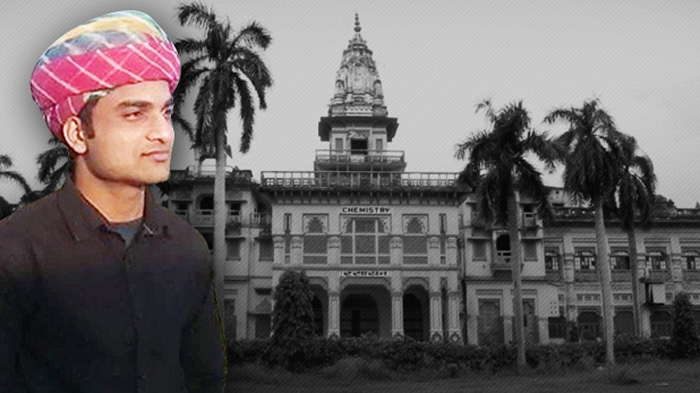
Professor Abdul Kafi was sipping tea at the makeshift tea stall outside the gate when he was suddenly attacked by former post graduate student of Bangla, Rajesh Satra, who passed out in 2015.

 Attacked Professor

Rajesh attacked Kafi. He pulled the professor’s hair and slapped him. The 45-year-old professor fell down. People rescued him and after preliminary medical treatment, Prof Kafi was discharged.

Satra is a resident of Arambaag. Sources from the university informed that he is a Rastriya Swaysewak Sangh (RSS) cadre.

While some also said that Satra is bit mentally imbalanced person.

But sources added that from the past few months, he has been stalking Prof Kafi and has sent him hate messages and death threats. Satra has also attempt to attack near Kafi’s residence few days back.

Some of the university students even mentioned that Satra’s social media page are full of hate messages for Prof Kafi as well as for the minority community.

After attack professor Prof Kafi, Satra went to the university’s Bangla department and behaved indecently using cuss words. Later he was rounded up by security personnel and handed over to Jadavpur Police Station.

Vice-chancellor Suranjan Das said that such incidents won’t be tolerated.

General Secretary of Jadavpur University Teachers’ Association (JUTA), Prof Partha Pratim Roy has condemned the attack professor.

“This former student has been attacking Prof Kafi for quite some time. We won’t let such incidents hamper our university’s atmosphere,” said Roy to eNewsroom over the phone.

On the basis of police complaint from JU, Satra has been arrested and a criminal case has been slapped against him under section 341, 353 and 500 of Indian Penal Code (IPC), informed a police officer of Jadavpur Police station.

The correspondent tried contacting and messaged also to Dr Kafi but there was no response from him.

Attack on Prof Kafi is not a rare incident, but one among many these days happening in and around college or university campuses in Bengal.

Only two days back, on Wednesday, another professor, of Hiralal College, Konnagar was assaulted.

Last week, President of Haldia College was assaulted by the Trinamool Congress (TMC) cadres.

Kamal Nath stuns euphoric BJP: but what next?

0

Congress Chief Minister of Madhya Pradesh Kamal Nath had a symbolic victory on July 24 when two BJP members voted along with Congress members in support of a criminal law amendment bill in the Assembly. The BJP had not opposed the bill, did not want a division on the bill and was not even prepared for the division. It was sudden. The BJP was stunned. Its euphoria born out of the fall of the Congress-JD(S) government in Karnataka a day earlier evaporated. The BJP had been taunting the Congress leaders in Madhya Pradesh from the moment the BJP in Karnataka had defeated the trust vote in the alliance government.

A little before the two BJP MLAs had sided with the Congress, Leader of Opposition Gopal Bhargava had boasted that following the go-ahead order of “our number 1 and 2”, the Congress government in Madhya Pradesh would go within 24 hours. Other BJP leaders had also been expressing similar sentiments in their excitement.

Kamal Nath

It was a master stroke by Kamal Nath to silence the vociferous BJP leaders. The operation was planned and executed in secrecy. As the discussion over the bill was over and the BJP members were complacent, there was a sudden demand for a division. The demand was made by an MLA of BSP, part of coalition government. A total of 122 members voted in support of the bill, including Narayan Prasad Tripathi and Sharad Kol of BJP (Congress 113 + BSP 2 + SP 1+ Independents 4 + BJP 2). In a House of 230 members, Congress has 114 members (the Speaker did not vote) and BJP 107. One seat is vacant.

The BJP leaders have been tongue-tied since. They have been holding parleys at various levels to take stock of this sudden development. The party’s central leadership is reported to be unhappy with the complacency of Madhya Pradesh leaders and has asked for a full report about the developments. The MP Assembly development is seen, in particular, a setback to BJP president Kamal Nath and Home Minister Amit Shah whose ambition to demolish opposition citadels in the country is not a secret.

It is not clear what Kamal Nath has promised to the two BJP MLAs who have shifted their loyalty to the Congress. Their action has, however, put BJP in a greater dilemma. BJP cannot act against them for having voted along with the Congress MLAs because the party had not issued whip. Without the whip, an MLA is free to support or oppose a bill as he/she likes.

If BJP expels them, they will continue to be MLAs and will be treated as independents. But if they get some position in the Congress government, that may give the BJP an opportunity to seek their disqualification as MLAs. If they continue like this till the next session of the Assembly, the BJP may get a chance to trap them by issuing whip on some issue and seek their disqualification if they defy the whip. If disqualified, they will not be eligible for contesting till the term of the present Assembly lasts.

The more likely scenario is that they will resign from the Assembly, get ministerial berths and seek re-election within six months. That, though, is likely to create a different type of problem for Kamal Nath. Some Congress MLAs who have held important ministerial positions in the past have of late been up in arms against the party leadership for having been kept out of the government and some of them were reported to have been assured of their inclusion at the next cabinet reshuffle. BSP and independents MLAs have their own expectations. And Kamal Nath cannot accommodate all of them.


Opinions expressed in this column are those of the author and not of eNewsroom. This is an open forum and we try
to give space to every school of thought.

एक साल का वक़्त गुजरा पर स्वामी अग्निवेश के ऊपर हमला करने वाला एक भी आरोपी पकड़ा नहीं गया

राँची: 80 साल के स्वामी अग्निवेश के ऊपर जब पिछले साल झारखंड के पाकुड़  में जान लेवा हमला हुआ था तो लगा झारखंड की रघुबर दास सरकार दोसियों को जल्द सजा दिलवाएगि। पर एक साल गुजर जाने के बाद भी इस हाइ प्रोफ़ाइल मामले में कोई आरोपी नहीं पकड़ा जाना सरकार के मन्सा पे ही सवाल खड़ा करता है के सरकार दोसियों को सजा दिलाने को लेकर गंभीर है भी या नहीं।

पिछले साल 16 जुलाई को सामाजिक कार्यकर्ता स्वामी अग्निवेश, जो पाकुड़ में आदिवासी मुद्दो पर एक कार्यक्रम में शामिल होने आए थे, बहुत बुरी तरह से मारा-पीटा गया था। स्वामी अग्निवेश, को शरीर में कई जगह गंभीर छोटे आई थी। जिसके बाद उनका पहले रांची, फिर दिल्ली में इलाज चला।

स्वामी अग्निवेश के मोब लिंचिंग उस दिन हुआ जिस दिन सूप्रीम कोर्ट ने पार्लियामेंट को एक अलग कानून लाने को बोला था।

पर इन सबके बावजूद मामले में कोई कारवाई नहीं हुयी अब तक।

अग्निवेश के सचिव मनोहर मानव ने रांची में एक प्रेस वार्ता कर ये बाते कही। मनोहर ने बताया के जब से उनके साथ मार-पीट की घटना हुयी है। स्वामी जी की  तबीयत सही नहीं रहती। आजकल वो कोएम्बाटूर में रह कर अपना इलाज करा रहे हैं।

स्वामी अग्निवेश हरयाणा विधान सभा से विधायक रह चूके हैं, उन्होने बंधुआ मजदूरी को खतम करने को लेकर बहुत काम किया है। और वो आर्य समाज के इंटरनेशनल प्रेसिडेंट भी रहे हैं।

हाइकोर्ट में याचिका दायर

सचिव मनोहर ने आगे कहा के चूके सरकार कारवाई नहीं करना चाहती दोसियों पर और झारखंड में अग्निवेश जैसे और भी बहुत से लोग जो लोकतन्त्र की रछा करने का काम करते हैं पे राज्य सरकार ने कारवाई की है इसलिए अब हाइकोर्ट में याचिका दायर की गयी है। जहां से निष्पक्छ निर्णय लिया जाएगा।

राज्य खतरे में

मौके पर मौजूद आदिवासी बुद्धिजीवी मंच के अध्यक्छ प्रेमचंद मुर्मू ने कहाँ के देश खतरे मे है और राज्य भी इससे अछूता नहीं है। संविधान प्रदत्त प्रावधानों की धज्जिया उड़ाई जा रही है। और देश आरएसएस के विधान से चल रहा है।

उन्होने ये भी कहा की राज्य में अभी तक पेसा कानून लागू नहीं हुआ है। अब ऐसा प्रतीत होता है के सरकार चाहती ही नहीं की पेसा कानून लागू हो, क्यूके इससे सारे अधिकार ग्राम सभा को चले जाएंगे।

झारखंड में पेसा कानून को लागू करने को लेकर आदिवासियो द्वारा चलाये जा रहे आंदोलन पथलगाड़ी करने वालों पर रघुबर दस सरकार ने सिर्फ तीन प्र्खंडो में 30000 से ज्यादा आदिवासियो पर देशद्रोह का मुक़दमा दर्ज कर दिया है।

Death threat to actor Kaushik Sen, one of the 49 open letter signatories to PM Narendra Modi

0

Kolkata: Actor and theater personality Kaushik Sen, one of the signatories of the letter written to the Prime Minister of India – Narendra Modi, requesting him to take exemplary action against mob lynching and also do not curb dissent, has received threat calls for having signed the open letter.

The Tollywood actor has informed the police and even shared the phone number for proper investigation to be made.

Actor Sen, who has been a vocal critic of both the BJP and Trinamool Congress, complained about a threat call made on his phone from an unknown number.  He further alleged that the caller had threatened him dire consequences if he didn’t stop raising his voice against mob lynching and increasing intolerance in India. Sen added, “The caller even said that I would be killed if I didn’t mend my ways.”

Mob lynching

Given the nature and tone of the call, Sen has circulated the number to all the other 48 signatories of the letter.  Around 49 celebrities had written an open letter to the PM of India seeking his attention and also demanding him to make his officials take action against the lynch mobs.  In the letter, the celebs referred to ‘Jai Sri Ram’ as a war cry and had also stressed upon “no democracy without dissent”.

Sen, however, maintained that he and the other signatories shouldn’t be labelled as anti-national. He said, “Artist and intellects are bound to be anti-establishment. They shouldn’t be branded as anti-national or anti-Modi.”  Sen pointed out, “I have aversion to the kind of politics that BJP has been playing in Bengal. The opposition always needs to play a positive and constructive role. But here the BJP is only doing things that will help them gain power in Bengal. Sadly enough, TMC is not being able to do enough to stall such communal outbreaks.”

He also mentioned about Jai Sri Ram not being part of the Bengali culture and how Ram Navami had evolved as a festival where the Hindus brazenly flashed weapons.

Meanwhile, another actor and TMC MP Nusrat Jahan has written an open letter two days after 49 celebs wrote to addressing Prime Minister Narendra Modi.

The Basirhat MP mentioned in her letter that mob lynching criminals are nothing but enemies of our country.

The actor-turned-lawmaker, also believes that mob lynching is an assault on democracy and has demanded for a law against it.


Today ‘Jai Sri Ram’ has become a provocative ‘war-cry’ 49 celebs write open letter to PM Modi

0

Kolkata: Around 49 intellects including the likes of Mani Ratnam, Goutam Ghose, Shyam Benegal, Anurag Kashyap, Aparna Sen, Konkona Sen Sharma, Ashish Nandi, Binayak Sen, Ram Chandra Guha, Shubha Mudgal and more, have written an open letter to Prime Minister Narendra Modi, expressing their anguish over increasing incidents of lynching and crushing of the voice of dissent across India.
In the letter dated July 23, the intellects have put forward their demand for  ‘swift’ and ‘exemplary punishment’ in cases of Lynchings.

The letter reads, “The lynching of Muslims, Dalits and other minorities must be stopped immediately. We were shocked to learn from the NCRB (National Crime Records Bureau) reports that there have been no less than 840 instances of atrocities against Dalits in the year 2016, and a definite decline in the percentage of convictions.”

Citing various sources for the data used by the intellects, the letter further reads, “254 religious identity-based hate crimes were reported between January 1, 2009, and October 29, 2018, where at least 91 persons were killed and 579 were injured (FactChecker,  indatabase (October 30, 2018).The Citizen’s Religious Hate-Crime Watch recorded that Muslims, (14% of India’s population) were the victims in 62% of cases, and Christians (2% of the population), in 14% of cases. About 90% of these attacks were reported after May 2014, when your government assumed power nationally.”

Following which they cited PM Modi criticizing lynching in the Parliament and went on to add, “You have criticized such lynchings in Parliament Mr Prime Minister, but that is not enough!”

Questioning the actions being taken by the officials against the perpetrators of the heinous act, they wrote, “We strongly feel that such offences should be declared non-bailable and that exemplary punishment should be meted out swiftly and surely. If life imprisonment without parole can be the sentence in cases of murder, why not for lynchings, which are even more heinous? No citizen should have to live in fear in his/her own country!”

In the letter they even highlighted the recent trend of mob forcing their Muslim victims to chant Jai Sri Ram, as they lynch, the letter stated, “Regrettably “Jai Shri Ram” has become a provocative ‘war-cry’ today that leads to law and order problems, and many lynchings take place in its name.”

Expressing shock over violence being perpetrated in the name of religion, they added, “These are not the Middle Ages! The name of Ram is sacred to many in the majority community of India. As the highest Executive of this country, you must put a stop to the name of Ram being defiled in this manner.”

In the letter, the intellects even expressed their deep concern over people being branded ‘anti-national’ or ‘urban Naxal’ for criticizing the government.

“There is no democracy without dissent. People should not be branded ‘anti-national’ or ‘urban Naxal’ and incarcerated because of dissent against the government. Article 19 of the Constitution of India protects freedom of speech and expression of which dissent is an integral part,” they wrote.

In the letter, they categorically mentioned that “Criticising the ruling party does not imply criticising the nation”. “No ruling party is synonymous with the country where it is in power. It is only one of the political parties of that country. Hence anti-government stands cannot be equated with anti-national sentiments. An open environment where dissent is not crushed only makes for a stronger nation,” reads the letter.

The other signatories of the letter include Aditi Basu (Social Worker), Adoor Gopalakrishnan (Filmmaker), Amit Chaudhury (Author), Anjan Dutt (Filmmaker, Actor), Anupam Roy (Singer-Songwriter, Music Director),Anuradha Kapoor (Social Activist), Asha Achy Joseph (Academic, Film Maker), , Baisakhi Ghosh (Floral Designer, Artist), , Bolan Gangopadhyay (Social Activist, journalist), Bonani Kakkar (Environmentalist, Founder – PUBLIC), Chitra Sirkar (Designer), Darshan Shah (Founder, Weavers Studio), Debal Sen (Cardiologist), Iftekhar Ahsan (Founder CEO, Calcutta Walks/ Calcutta Bungalow), Jayasri Burman (Artist), Joya Mitra (Environmentalist, Author), Kani Kusruti (Actor), Kaushik Sen (Film and Theatre personality) Ketan Mehta (Filmmaker), Mudar Patherya (Citizen), Narayan Sinha (Sculptor), Naveen Kishore (Publisher, Seagull Publications), Parambrata Chattopadhyay (Filmmaker, Actor), Partha Chatterjee (Historian, Social Scientist), Piya Chakraborty (Researcher), Pradeep Kakkar (Founder, PUBLIC), Ratnaboli Ray (Mental health activist), Revathy Asha (Filmmaker, Actor), Riddhi Sen (Actor), Rupam Islam (Singer-Songwriter, Musician), Rupsha Dasgupta (Director, Kolkata Sukriti Foundation), Sakti Roy Chowdhury(Professor of Sanskrit, Theatre personality), Samik Banerjee (Scholar, Film & Theatre Critic), Shivaji Basu (Surgeon, Urologist), Soumitra Chatterjee (Actor), Suman Ghosh (Filmmaker), Sumit Sarkar (Historian), Tanika Sarkar (Historian) and Tapas Roychaudhury (Cardiac Surgeon).

Mamata writes to PM Modi: Reverse Privatisation of Ordnance Factory Board

Kolkata: Chief Minister of West Bengal – Mamata Banerjee, has written a two-page letter to Prime Minister Narendra Modi on Tuesday asking him to stall and reverse the central government’s move to corporatise the ordnance factories across the country in the interest of national security and national defence.

The two-page letter comes in the backdrop of the centre’s move to corporatise the ordnance factories across India including the Ordnance Factory Board (OFB), headquarters in Kolkata.

The OFB has around 41 factories and nine training centres across India and has about 1.6 lakh officers and employees. OFB is often referred as the fourth pillar of the Indian Defence apparatus.

The letter mentions that OFB is the world’s largest Government set-up for manufacturing arms and ammunition for a country’s armed forces.

“I am shocked and surprised to know that this vital pillar of the country’s defence and this key industrial initiative of our land is now being contemplated to be subjected to a sudden exercise of de-governmentalisation, for which there has been not even an iota of stakeholders’ consultation uptil now. At least the Government of West Bengal has not received any inkling of discourses that have led to such inexplicable initiatives in the government of India,” she wrote.

She further, in her letter requested, “I would therefore, request you to kindly stall and reverse this process of corporatisation and privatisation in the greatest interest of the national security and defence of our country. While the industrial policy of our country has gradually been made more and more friendly to the private players in the marker, there are some core and strategic areas where the State is yet to abdicate its paramount role.”

Chennai Brew: Going beyond coffee, connecting communities

Kolkata/Chennai: This is ‘brewed’ in Chennai, but it is not coffee. It is a book titled Chennai Brew Some Voices Some Communities. Penned by debutante author Anuradha Uberoi, the book carrying a foreword by Dr. Kiran Bedi, Lt. Governor of Puducherry, was launched in Chennai recently.

It is anthropological in nature and traces the journey and the lives of the people belonging to the four communities – Bengali, Punjabi, Sindhi and Parsi – who ‘uprooted themselves from North India and came to the unfamiliar South.’ It talks about the challenges that the early settlers faced when they arrived in then Madras.

As one guess one understanding and learning Tamil was one of their biggest challenges for them. The books recounts how the members overcame this challenge, how they adopted and adapted in this new city while preserving and upholding the distinct identity of their respective communities.

Talking to eNewsroom right after the launch over the phone, Anuradha Uberoi, stated, “I have been living in Chennai for the last 31 years and have been associated with the field of organizational development for more than 25 years. A few years ago, I was asked to give a talk on the Punjabi community in Chennai as a part of Madras Week. This talk was highly appreciated and many suggested that I should write a book on the journey of the Punjabis in Chennai. This got me thinking and I thought: ‘Why confine myself only to Punjabis? Why not talk about the Bengalis, Sindhis Punjabis and Parsis who arrived in Chennai predominantly from North India and settled here?’ And that is how this voyage started. It has taken me three years to write the book.”

book chennai brew bengalis sindhis punjabis parsis
HR professional Anjani Gandhi in conversation with Anuradha Uberoi at the book launch

When one browses through the book, one can make out that meticulous research forms the backbone of this book that focusses on the behaviour, culture, traditions, customs, eccentricities, the quirks, pet peeves of these four communities in an engaging and humourous manner. It also showcases how ‘the current generation of settlers view its ethnicity’ and meshes their viewpoints with the reminiscences of the older generation.

“Yes! A lot of research has gone into shaping this book, but I have not consulted any experts. You will find that the book is filled with heart-warming anecdotes, nostalgic stories, old photographs and memorabilia. People from these respective communities happily shared these with me and also talked about their quirks et al. Everything has been told to me. I have not insinuated anything. The descriptions of the behaviour, culture, traditions etc., that the book touches upon hold good for these four communities residing not only in Chennai but also in other parts of India and the world as well,” informed Uberoi.

As one turns the pages of the book, one learns that the people from these four communities arrived in then Madras either because of ‘reversal in fortunes’ or to ‘further their business interests’ or ‘simply to get a good job’. The railways were a big draw back then – jobs at the coach factories were opening up and the railways also needed the services of qualified engineers. Next in line was the leather institute and back in those days, Bengalis were usually the only race that had PhDs. So, they were appointed as teachers at the leather institute. They also got admission at IIT Madras and eventually started teaching there as well. The thriving movie industry also beckoned the Bengalis. Thus, talented make-up artists and technicians arrived in Chennai and made it their home.

book chennai bengalis sindhis punjabis parsis
People browsing Chennai Brew

“While working on the book, people from the Bengali community explained to me how they consider themselves to be ‘studious’ and are not ‘overtly ambitious’. I discovered their reverence for Rabindranath Tagore and how proud they are of their cultural heritage. How celebrating Durga Puja in all its glory and indulging in adda completes them,” stated Uberoi.

The pages of Chennai Brew Some Voices Some Communities enlightens the reader that Chennai is also home to the Parsi community. “When I visited people from this community, they confessed that they are very “clannish” and how they would die without non-vegetarian food. But seriously, the Parsis are very pleasant, helpful, non-judgemental and enrich the city. The total number of Parsis in Chennai at present stands at 207. While the country is reeling under the pressure of increasing population, this community is shrinking rapidly and that is such a pity,” apprised Uberoi during her conversation with eNewsroom.

The book filled with photographs that speak a thousand words also fascinatingly portrays how the Sindhis adopted the local customs when they arrived in Chennai and mastered the Tamil language. “In the old days, a large number of young men used to accompany and travel with the elders. These men learnt on-the-job and eventually set up their successful business ventures in Chennai. They are very enterprising and I was even informed about how a few people from the community managed to make a fortune by selling our normal local handkerchiefs as scarves in Nigeria,” added Uberoi.

And what about Punjabis? “This community is a vibrant one and full of joie de vivre. They have come a long way since Partition. They are educated, resourceful, dynamic and are known for their warmth and hospitality. They have adapted to the ways of Chennai very well. You will not find one Punjabi on the roads of Chennai who cries, ‘Janta nehi main kaun hu? (Don’t you know who I am)?’ unlike their counterparts in New Delhi,” affirmed Uberoi with a smile and signed off by stating, “Chennai Brew Some Voices Some Communities celebrates people and asserts that although we might seem to be different on the surface, deep down, we are the same. We are the citizens of this great nation with the same core values.”

Plastic pollution chokes Shillong’s life

0

Shillong: Shillong is a favourite destination for Bengali tourists for more than one reason. It is the place whose beauty had once mesmerised Rabindranath Tagore, who immortalised Shillong in his novel Shesher Kobita. But that was early 20th century.

Shillong in this 21st century has lost much of its sheen, thanks to the unplanned urbanisation which has irreparably scarred the hills. The beautiful Shillong that attracts tourists from Bengal in hordes has an ugly face behind its façade of serene natural beauty that is always promoted for tourism.

Plastic pollution in Shillong city and on its outskirt, like a festering wound has only spread over the years. Local residents’ habit of disposing of garbage into streams has not only reduced the water bodies to mere drains but has also affected the Umiam lake, or Barapani as the tourists know it.

Reckless tourism has added to the woes with tourist sites bearing the brunt of rowdy behaviour of visitors.

The Umshyrpi stream flows by Brookside Bungalow, where Tagore had stayed in 1919. The poet was captivated by the beauty of the brooklet, which flows through the city and empties into the Umiam, and the rows of pine trees along the stream. The bard would have been heart-broken had he witnessed the beloved stream’s degradation. Once a source of fresh water, the Umshyrpi is now muddy and carries the burden of plastic waste. Heaps of garbage and floating bottles and wrappers are common.

meghalaya shillong umiam umshyrpi plastic pollution
The large scale dirt around famous Umiam lake

Another important stream, the Wahumkhrah that flows through Polo locality has also been affected.

Both the streams flow into the Umiam and during rains, all the plastic waste also goes into the lake. While the Umiam looks picturesque from the demarcated viewpoint for tourists, a tour of the not-so-visible parts reveals the dirty truth. The lake near Mawdun village is an eyesore. The water near the banks has a thick layer of garbage.

Boy Kharkongor, a villager, said he and other residents of Mawdun collect the waste and sell it. The villagers, most of whom are farmers, earn extra money from rag-picking. In fact, shanties have come up on the bank of the lake where the part-time rag-pickers live.

“Our families stay in the village where we practice farming. We are also growing ginger organically in this small plot (he shows a plot of land near the lake). I have been picking plastic waste for the last 10 years,” he said.

A tourist caught littering at the viewpoint, when asked why he was throwing the empty packet of potato chips on the road, said anonymously that there was no garbage bin nearby. He was among the many tourists who litter the site and don’t even regret it. “Even locals are throwing bottles and other waste. If they have no regard for their land why should we bother,” was the reply from another tourist.

meghalaya shillong plastic pollution umiam
A closer picture of Umshyrpi river reflects the severity of plastic menace

Dumping of waste has not only affected the beauty of Shillong but has threatened the Umiam dam that produces hydro-electricity. The dam, which was built in 1965, was supposed to have a life span of a century. But accumulating garbage and heavy siltation have reduced its life span. A study by Meghalaya Electricity Corporation Limited (MeECL) shows the dam will last till 2024 only.

Recently, members of the Committee on Environment, Meghalaya Legislative Assembly, visited the Umiam lake and were taken aback by the huge amount of garbage floating on the water. “Though most of the garbage has settled at the bottom of the lake, the quantity of garbage that was seen floating in water is abnormally huge,” the committee said in its report.

“The management of the lake is undertaken by MeECL. Water quality is being monitored by the Meghalaya Pollution Control Board; the lake catchment is managed by the Forest Department, and the urban watershed is a neglected orphan. Apart from electricity, Umiam lake also provides a range of ecological, economic and cultural services. The reservoir was created through huge public expenditure and the onus to save it lies with the people. The committee will consider the matter seriously,” the report added.

The chairman of the green panel, SK Sunn, said the members would meet soon and chalk out a plan of action to clean the lake along with other stakeholders. A time frame will also be fixed.

Sunn also appealed to the citizens to stop dumping garbage and plastic waste into the streams. When asked whether the committee was contemplating penalty for reckless residents, it was informed that a provision is already there in the civic bylaws but that is applicable only in municipal areas. “Beyond these areas, the dorbar shnong (traditional body at local level) can take a decision. However, the dorbar shnong in several localities are spreading awareness on proper disposal of waste,” said a government official.

Flash floods have already become common in the city and an UN report points to further aggravation of the flood situation.

In the past too, plans to clean up the streams were made but with no result. So the question remains whether this time the plan will be executed and how efficiently and how fast.

It will be a daunting task to clean the mess that Shillong is in right now. And further delay will only lead to a disastrous end to this popular tourist destination.

30000 Adivasis of Jharkhand’s Pathalgadi area charged with sedition!

Ranchi: As more than 30000 tribals residing in three blocks of Khunti district where Pathalgadi movement is going on are facing sedition charges, which is almost 10 per cent of total tribal population in the area, against which today several members of civil society, activists and concerned citizen sat on dharna before the Jharkhand Governor house in Ranchi.

Representatives of several people’s organisations from across Jharkhand gathered today at Raj Bhawan to protest against the severe violations of Constitutional rights of Adivasis of Khunti district and the use of the sedition law as an instrument of repression.

Later a press communiqué get issued, which pointed that in the last two years, several Adivasi villages of the district, primarily in Khunti, Arki and Murhu blocks, did ‘Pathalgadi’. Based on traditional practice of the Munda community and drawing from Constitutional provisions of Fifth Schedule and the Panchayat (Extension to Scheduled Areas) Act (PESA), stone plaques (pathals), painted with legal guarantees for Adivasis and rules formulated by the Gram Sabha, were erected at the entrance of the villages.

The stone slabs quote sections of the Indian Constitution and PESA that give special protections to Adivasis and recognize the Gram Sabha as the basis of self-rule in tribal-dominated areas. For example, Adivasis have the primary right over their natural resources – Jal, Jangal, Zameen. The plaques also mention some locally formed rules such as restricted entry to outsiders. Some interpretations of the Constitutional provisions, mentioned on the slabs, are definitely unusual and also, may be, impractical.

But instead of attempting to dialogue with the people of these villages on these interpretations, and their demands, the government has responded with severe repression and violence.

In 2018, police raided several villages that had done pathalgadi. It attacked Ghaghra village in Murhu during a Pathalgadi ceremony. They vandalised houses and severely beat people, including women, children and a deaf man. One pregnant woman who was beaten delivered a baby with disabilities.

Two persons were shot; one of whom died.

Many other Pathalgadi villages also saw police violence in the last two years. The police has randomly picked up villagers on the pretext of “questioning” them. Police camps have been setup in at least nine schools and two community buildings, without the permission of the respective Gram Sabhas.

Terming Pathalgadi as a wrong interpretation of Constitutional provisions, the police has charged 30,000 unnamed people under several draconian laws, including sedition. According to the government, almost 10% of the total population of the three blocks is anti-national! People of the region are not able to freely share violations of their rights as they are scared that they may be named in the FIRs.

The dharna was organised by Jharkhand Janadhikar Mahasabha (JJM), a network of activists and people’s organisations. It was attended by representatives of several organisations – Adivasi Women’s Network, Samajwadi Jan Parishad, Right to Food Campaign, Bagaicha, Jan Sangharsh Samiti, TRTC, Jharkhand Kisan Parishad, NAPM, Visthapan Virodhi Jan Vikas Andolan, National Domestic Worker’s Union, Van Adhikar Manch, Sarvodaya Mitra Mandal and so on.

Several activists – Arvind Avinash, Jean Dreze, B B Choudhary, Siraj Dutta, Jerome Kujur, Elina Horo, Bineet Mundu, David Solomon, Ambika Yadav, Jacinta Kerketta, Ranjeet Kindo, Saroj Hembram, Vinod Kumar, George Monippally, Vishwanath Azad, Sushma Biruli – participated in the sit-in.

Development economist Jean Dreze, addressed the dharna, and said, “The brutal manner in which the Jharkhand government is dealing with the pathalgadi movement is a case of gross of over-reaction to legitimate and nonviolent demands from the local adivasis. The tradition of self-government in Khunti should be valued and celebrated.”

In the protest, it was also mentioned that the government also considers people who raise questions on violations of Adivasi rights as seditious. Jharkhand government charged 20 people, including activists, writers and journalists, with sedition only because they had raised questions, on social media, on the government’s actions in Pathalgadi villages and attack on Adivasi rights.

Recently, warrants were issued against four of them – Stan Swamy, Vinod Kumar, Aloka Kujur and Rakesh Roshan Kido – who have always fought for Adivasi rights.

Young poet Jacinta Kerketta said, “The government should stop labelling voices of dissent as sedition. It is a violation of right to expression”.

It was also discussed during the dharna that the assertion of Khunti’s people through Pathalgadi has roots in the long history of alienation of land and exploitation of Adivasis in Jharkhand. Based on conservative estimates, at least 1.5 million people have been displaced in the state due to alienation of land between 1951 and 1995. Of these, 41% were Adivasis. In the last few decades, Khunti district itself has seen several attempts for forceful acquisition of land for various projects such as construction of Koel-Karo hydroelectric dams and Arcelor-Mittal steel plant. Both these projects had to be scrapped after public protests. There are also long standing grievances against the failure of the state to protect the distinctive social and cultural identity of the Adivasis.

And that in the last five years, there have been continuous attacks on Constitutional rights of Adivasis across the state. There have been several attempts to weaken the powers of Gram Sabhas in various acts. The government repeatedly tried to weaken the Chhotanagpur and Santhal Tenancy Acts that provide protection to Adivasis right to their land. The government also formulated the land bank policy that creates a pool of land owned by Gram Sabhas to be offered to corporates without the approval of the people.

At one end, the BJP-led state government continues to violate provisions of Fifth Schedule left, right and centre and runs away from implementing PESA. On the other end, the Prime Minister is busy creating news by bowing before the Constitution (book) before entering the Parliament.

Adivasi Women’s Network’s Elina Hora said on the occasion, “Jharkhand government should immediately check severe violations of human rights across the state in the form of violations of Adivasi rights, mob lynchings and attacks on women. TRTC’s Ranjit Kindo said, “We will always protest against the anti-people policies of the government. That’s a basic necessity of democracy”.

At the end of the dharna, JJM submitted a memorandum to the Governor Draupadi Murmu with the following demands including implementation of PESA in letter and spirit :

  • The government must immediately withdraw all frivolous FIRs filed against the thousands of unnamed residents of Khunti and activists on charges of sedition. It must also undertake judicial inquiry into the charges framed against the named people in the FIRs. It must make public all the evidence that formed the basis for these FIRs and the evidence collected in all related inquiries since then.
  • The government should undertake judicial inquiry into the violence unleashed by security forces in Ghaghra and other villages and ensure punitive action against the personnel responsible for the human rights abuses. It must ensure compensation to victims of human rights violations in these villages.
  • The government should initiate dialogue with representatives of the Pathalgadi villages, Adivasi organisations and experts on the Constitution.
  • The government must ensure immediate implementation of all provisions of Fifth schedule and PESA in letter and spirit.

Elementary school dropout uses ‘jugaad’ to develop low-cost tractor-like machine from scrap

Ranchi: Thirty-three-year-old Mahesh Karmali, a resident of Uncha Ghana village in Vishnughar, Hazaribagh, has proved that indeed necessity is the mother of innovation.

Karmali has designed a low-cost machine from scooter scraps to plough his field. However, Karmali is neither an engineer nor hold any technical degree. On the contrary, he s class VI dropout and used to work in a Bajaj Auto Showroom in Pune, Maharashtra, till January, this year. However, a sudden confrontation with some financial crisis made him use the engine and scraps of an old scooter to design a tractor to plough his field (watch the video).

“When I returned home, I was informed by my brother that he had sold our oxen, and was taking help from our family members to plough the farm. The news shocked me as I had bought both the oxen, but my brother had not informed me before selling them,” Karmali told eNewsroom.

Karmali owns 12-kattah land on which paddy farming is done every monsoon season.

“With no oxen to plough our farm, I have decided to build a machine which could help me do farming. I bought the scraps of Bajaj Chetak scooter for Rs 4251. Following which I toiled for three consecutive days and night, without adequate sleeping to design this machine, which I have named Power Tiller,” he informed.

Watch the video of Power Tiller made by Mahesh Karmali:


He added excitedly, “It cost me around Rs 12000, but now I can plough my 12 kattah of land using 2.5 litres of petrol.”

According to Karmali, the regular tractor used by farmers to plough fields consumes more petrol than the machine designed by him.

On being asked if the engine of any two-wheeler could be used to make Power Tiller?  He replied, “No, only those engines, which have a fan can be used for it. Most bikes do not have a fan. But yes, if a fan can be added to it, then Power Tiller can be made from such bike engines too.”

mahesh karmali power tiller farming

Karmali also claimed that he can develop a bigger and better Power Tiller by which can be used to plough a bigger area easily. “As of now I have made a machine which helps me in my farming work, and now I do not need an ox for farming. However, given the dynamics of the present design, one has to walk along with the machine when the farm is being ploughed. But I can develop a system where one can sit on the vehicle while the farm is being ploughed. Just like in tractors. The same design with some innovation can also be used for harvesting crops and suppressing grass,” he pointed out.

Karmali has three school-going children. His entire effort to come up with this innovation was to save money so that his kids didn’t have to discontinue their education. The cost for a pair of Ox was way higher than the amount invested by Karmali to design his jugaad tractor.

Understanding the need for such tractors for poor farmers who can invest in bulls and oxen, the mechanic cum farmer is looking investment to mainstream his innovation.

“So far people from neighbouring areas have visited and praised it a lot, but no financial support has been promised to me so that I can further develop it for the betterment of other farmers,” he added.