Even Virat is human…

0

Indian cricket captain Virat Kohli’s match-winning unbeaten 94 (off 50 balls) against the West Indies at Hyderabad on Friday is yet another personification of the team’s over-reliance on Kohli when the chips are down. But with an eye on the all-important T20 World Cup, is it prudent to solely look to the Indian captain to see the team through?

Objectively speaking, the middle-order in T20Is is collapsing and if the likes of Rohit Sharma and Kohli fail to get going, crisis looms large. And this is where experience comes into play which the selectors and the team management need to look into.

Kohli has been the stand-out performer with scores of 4, 61 NO,24, 72 NO, 19, 28, 59, 72 NO, 9 and 94 NO in his last few T20Is starting with the outing against Australia Down Under. In Hyderabad, he yet again snatched victory from the jaws of defeat with a calculative but an aggressive knock.

Rohit in the last few T20Is (starting from the series in West Indies) has had scores of 24, 67, 12, 9, 9, 85, 2 and 8 – flirtatious consistency to sum it up. Rohit’s opening partner Shikhar Dhawan has been extremely patchy with scores of 1, 23, 3, 40, 36, 41, 31 and 19.

But what is startling is the inability of the juniors to bell the cat when the seniors flounder. Have a look at these figures: Rishabh Pant (0, 4, 65 NO, 4, 19, 27, 6 and 18) and Shreyas Iyer (16 NO, 5, 22, 24 NO, 62 and 4) lack consistency and Hardik Pandya (in and out of the team due to injuries) also didn’t trouble the scorer much down the order in the matches he featured in recent times. Rahul has found touch of late which is somewhat assuring.

The current Indian T20 team may be on a winning spree, but the chinks in the armour could be detrimental if not handled adroitly. You need experience down the order to rescue the team if the top order gets dismissed cheaply (including Kohli at Number 3). The Kohli-Ravi Shastri combination has a tall order to stem this crisis, but the inclusion of Ajinkya Rahane could be a solution eyeing the World Cup

In the shortest format of the game, this is certainly an area which needs to be addressed. The problem is that we are resting too much on Kohli’s shoulders without realising that he is not infallible. It is true that somebody or the other gives Kohli company like KL Rahul in Hyderabad on Friday, but he remains the pivot. This runs contrary to the scenario in the five-day format with enough solidity and depth in the batting. In a team game, it is imperative that there are ones to fall back upon if the stalwarts disappoint. Individual heroics do not come in handy all the time.

But such has been the trend with the Indian team over the years – Sunil Gavaskar between the late ‘70s and early ‘80s in Tests and later Sachin Tendulkar both in Tests and ODIs (before the Dravids, Laxmans, Sehwags and Gangulys took the load off the Master Blaster) had to resuscitate the side frequently.

The current Indian T20 team may be  on a winning spree, but the chinks in the armour could be detrimental if not handled adroitly. You need experience down the order to rescue the team if the top order gets dismissed cheaply (including Kohli at Number 3). The Kohli-Ravi Shastri combination has a tall order to stem this crisis, but the inclusion of Ajinkya Rahane could be a solution eyeing the World Cup. Rahane found himself out of favour in T20Is and ODIs on the ground of not being able to rotate the strike which sounded nothing but ridiculous. Rahane opening the innings in T20s, has had a great run for Rajasthan Royals in the IPL. In fact, apart from anchoring the innings, he can also cut loose. And his ordinary international average of 20.83 and a strike rate of 113.29 should not play spoilsport as the man with enormous experience deserves another go. If Rahane clicks, then we can look at a Rohit-Rahul, Kohli, Rahane, Iyer/Manish Pandey, Pant/Samson) and Jadeja combination to bolster the Indian batting. And then there are Shikhar Dhawan and Shubman Gill and even Pandya also in the fray. And you never know – somebody from Ranchi with the tag of the ‘best finisher’ can also get a look-in subject to his fitness and form.

The World Cup will be played in Australia and Rahane’s seniority and record off-shores (in Tests though) should give him the edge over others. But it is also time that youngsters like Iyer and Pant joined the party if they are to figure in the team’s long-term scheme of things. Both have been given a long rope.

The tremors are not making a sporadic appearance and are sending warning signals. The T20 WC is still ten months away, and this gives Kohli and Shastri ample time for permutation and combination. Experimentation is a must but that does not necessarily mean banking on youth at the expense of experience. Is anybody all ears?


विकास को तरसता सर जेसी बोस और पीसी महालनोबिस की कर्मस्थली

गिरिडीह: एक वक़्त था जब गिरिडीह शहर का रास्ता देश के सभी महान लोग जानते थे। कई आए, कई रुके और कई बस गए। दुनिया के महान वैज्ञानिको में से एक, सर जगदीश चन्द्र बोस ने यहाँ रह कर अपनी ज़िंदगी की सबसे बड़ी खोज, क्रेस्कोग्राफ मशीन ईज़ाद की। भारत के सबसे बड़े सांख्यिकीविद और वैज्ञानिक प्रशांत चन्द्र महालनोबिस न सिर्फ यहाँ रहे बल्कि कोलकाता के बाद देश के दूसरे इंडियन स्टैटिस्टिकल इंस्टीट्यूट (आईएसआई) की स्थापना यहाँ की। रवीन्द्र नाथ टैगोर आए, गीतांजलि का बड़ा हिस्सा यहीं रह कर लिखा। आज़ादी के दौरान, अरुणा आसफ अली भी यहाँ रहीं और महान फ़िल्मकार सत्यजीत रे भी आए।

अभ्रख के कारोबार की वजह से भी दुनिया भर से कई बड़े कारोबारी यहाँ आए।

ये सिलसिला 80 के दशक तक चला, पर जो महान लोग गिरिडीह आते थे, वो इसलिए क्योंकि गिरिडीह का वातावरण (आबो-हवा) शानदार हुआ करता था। 1871 में ही यहाँ रेलवे स्टेशन की स्थापना हो चुकी थी। और गिरिडीह को हैल्थ रिज़ॉर्ट भी कहा जाता था।

विकास के निचले स्तर पर

1972 में गिरिडीह ज़िला हजारीबाग से अलग हुआ, और आज झारखंड विधान सभा चुनाव 2019 के दौरान, दिसम्बर 4 को ये 47 साल का हो गया।

पर इस आधे दशक में गिरिडीह ने कभी सामूहिक तरक्की की रफ्तार नहीं पकड़ी, या यूं कहें कि यहाँ के आम लोगों का जीवन स्तर बेहतर नहीं हुआ।

अभ्रख की चमक धीमी पढ़ चुकी है, और ये कुछ लोगों के निजी कारोबार तक सिमट गया। गिरिडीह की कोलियरी में भी नौकरी मिलना बहुत पहले बंद हो चुकी है।

गिरिडीह अब हैल्थ रिज़ॉर्ट तो दूर, अपने प्रदूषण के लिए जाना जाता है। लौह उद्योग ने कुछ रोजगार दिया, पर हवा-पानी-मिट्टी को जान लेवा बनाकर।

उसरी झरना, जहाँ सत्यजीत रे ने अपने फिल्म कि शूटिंग की, अब न वहाँ बाहर से ज्यादा पर्यटक आते हैं और न आईएसआई के खाली पड़े पदों को भरने बाहर से लोग आना चाहते हैं।

राजनीति ने नहीं तय की दशा और दिशा

अब आइए गिरिडीह के राजनीतिक हालात पर। विधान सभा का चुनाव है, मतलब प्रदेश की सरकार को चुनना है इसलिए बात करते हैं गिरिडीह विधान सभा की।

गिरिडीह विधान सभा का बड़ा हिस्सा शहरी इलाका है, और जब आप यहाँ होंगे तो दो तरह आवाज़ें सुनाई देंगी, एक एम्बुलेंस के सायरन की आवाज़ और दूसरी जेनेरेटर की। जेनेरेटर की आवाज़ तो साइलेंसर लगने से थोड़ी कम हुई है, पर हर दिन कम से कम एक दर्जन एम्बुलेंस यहाँ के मरीजों को धनबाद, बोकारो, रांची, दुर्गापुर और कोलकाता ले जाते हैं। ये बताने को काफी है कि गिरिडीह में सबसे खराब हालत यहाँ की स्वास्थ्य व्यवस्था की है। कुछ निजी हाथों में नर्सिंग होम्स चल रहे हैं, बाकी ज्यादातर इलाज़ के लिए लोगों को बाहर जाना पड़ता है।

एम्बुलेंस वैसे तो विधायक-एमपी ही देते हैं अपने कोटे से, और चलाने वाले लोग या संगठन सिर्फ मैंटेनेंस के नाम पर पैसा लेते हैं, पर ये चार्ज किसी भी प्राइवेट वाहन से कम नहीं होता। लगता है विधायक-एमपी को ये पूछने की फुर्सत नहीं रहती के इतना पैसा क्यू लेते हो जब गाड़ी उनके कोटे की होती है।

बिजली आपूर्ति में भी हालत ये है कि बिना इनवर्टर, बैटरी और जेनेरेटर के न आप घर में आराम से रह पाएंगे न अपना कारोबार सही से कर पाएंगे। भाजपा के मुख्यमंत्री रघुबर दास ने कई बार राज्य की जनता से वादा किया था कि दिसम्बर 2018 तक अगर 24 घंटे बिज़ली नहीं दी तो वो वोट मांगने नहीं आएंगे, अब जब मुखिया वादा नहीं निभा पा रहे तो इस बारे में विधायक से क्या उम्मीद कर सकते हैं।

बिजली की खराब व्यवस्था को लेकर झारखंड चेम्बर ऑफ कॉमर्स ने भी बहुत आवाज़ उठाई, पर हालात नहीं बदले।

स्कूल की हालत पर चर्चा ज्यादा करना इसलिए सही नहीं होगा कि रघुबर दास सरकार में पूरे  झारखंड में स्कूल्स कि दुर्दशा किसी से छिपी नहीं है तो फिर विधायक क्या करेंगे।

जल संकट विकराल रूप ले चुका है और नागार्जुना जल आपूर्ति भी नाकाफी साबित हो रही शहरी इलाके में।

विधायक से उम्मीद 

इन सबके बीच, सही मायने में उम्मीद जागी थी गिरिडीह के लोगों कि 2014-2019 के दौरान। पहली बार ऐसा हुआ कि उप मेयर, मेयर, एमपी, मुख्यमंत्री और यहाँ तक कि प्रधानमंत्री भी यहाँ के विधायक निर्भय शाहबादी की पार्टी भाजपा के रहे।
पर गिरिडीह में कोई बड़ा काम हुआ हो जो इस शहर को राष्ट्रीय पटल पे ला दे ऐसा कुछ नहीं हुआ।

गिरिडीह अब नगर निगम जरूर है, पर जब तक ड्रैनेज सिस्टम और रिंग रोड नहीं बनते है तब तक नगर निगम सिर्फ कागजों और होर्डिंग्स में लिखने में अच्छा है।

गिरिडीह विधानसभा का हिस्सा है पीरटांड़ ब्लॉक, ये ज़िले का सबसे पुराना ब्लॉक है, पर अति नक्सल प्रभावित है। यहाँ का वोट सभी पार्टियो को चाहिए, पर विकास में ये गिरिडीह का सबसे पिछड़ा इलाका है।

एक गिरिडीह-कोडरमा रेल्वे लाइन 21 सालो में अभी तक पूरी तरह चालू नहीं हुई और गिरिडीह-कोलकाता को लगने वाले दो कोच कभी भी बंद हो जाते हैं।

गिरिडीह शहर को कई बार अच्छे अधिकारी भी मिले और लोगों को लगा, नेता नहीं तो अधिकारी शहर को बेहतर कर देंगे, पर न यहाँ केके पाठक को रहने दिया गया, न तदाशा मिश्रा को और न विजया जाधव को। आईएएस जाधव के ट्रान्सफर कराने का इल्ज़ाम तो विधायक शाहबादी और मेयर सुनील पासवान पर ही लगा।

गिरिडीह का भविष्य

आज हाल ये है के गिरिडीह में रहने वाले सभी लोग ये मानते हैं कि उन्हें इलाज़, शिक्षा और रोज़गार सभी के लिए बाहर जाना होगा।

हाँ, जिस शहर में पानी की किल्लत हो, बिज़ली सही नहीं मिले, इलाज़ के लिए बाहर जाना हो, पढ़ाई में प्राइवेट स्कूल्स के भरोसे रहना पड़े, शहर की सड़कें भी सही न हों, वहाँ ज़मीन की क़ीमत आसमान छूती रहती है हमेशा।

ऐसा इसलिए कि ज्यादातर नेता या तो ज़मीन खरीद-फ़रोख्त बैक्ग्राउण्ड के होते हैं या जीतने के बाद इस काम में लग जाते हैं।

और ऐसा नेता चुनने का श्रेय जरूर मतदाता को जाता है जो बार-बार वोट काम और अच्छा कैंडिडैट देख कर नहीं बल्कि जाति या धर्म के आधार पर करते हैं।

अब 2019 के विधान सभा चुनाव के बाद ये देखना दिलचस्प होगा कि गिरिडीह बोस और महालनोबिस के ऐतिहासिक दौर को वापस देख पाता है या विकास की बाट जोहता रह जाएगा फिर एक बार।

By fighting over temple and mosques BJP cannot provide employment to the youth of India: Left Front

0

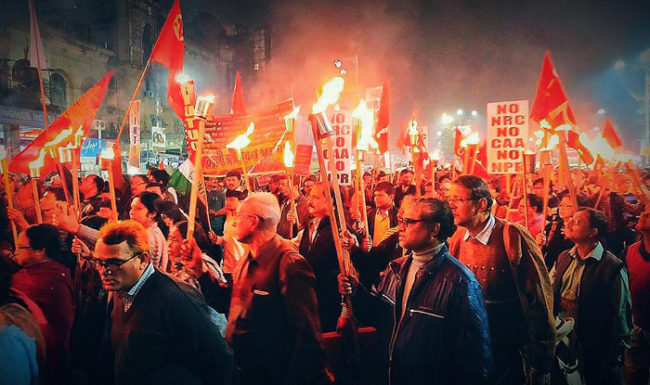
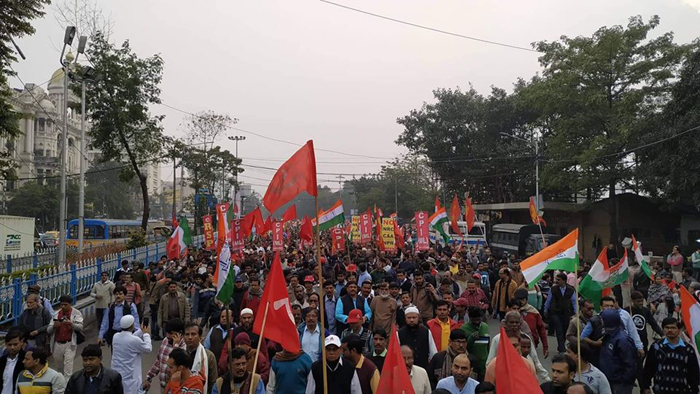
Kolkata: Shataf Balsar, a teenager took part in the rally organised by the Left Front from Esplanade to Rajabazar demanding immediate punishment of the culprits those demolished Babri Masjid 27 years ago. Shataf said that though he is not much aware of the Ayodhya land dispute but had participated in the rally  as his ‘Abbu’ (father) had asked him to.

Devika Chakraborty, a homemaker from Beliaghata who were also seen chanting slogans in favour of rebuilding Babri Masjid said, “Though I am from a Hindu Brahmin family but still I don’t support the vandalism on a mosque. What temple is for the Hindus, mosques are for the Muslims. The BJP doesn’t have any right to play with anyone’s sentiments.”

Chakraborty further claimed, “When Babri masjid was vandalized in 1992, I was a college student and have seen how my friends from the minority community had broken down. Instead of constructing temples the BJP should follow the teachings of Swami Vivekananda and serve the mankind.”

The Left parties observed Black Day, on the 27th anniversary of the demolition of Babri Masjid, and demanded immediate punishment to those who brought down the historic mosque.

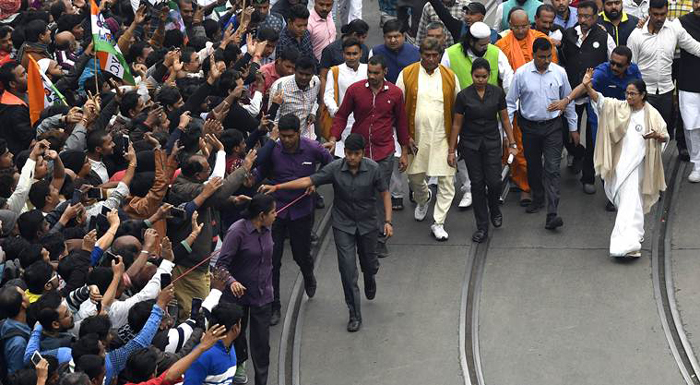
West Bengal Left Front secretary and Politburo member Biman Bose who was leading the rally quoted former West Bengal chief minister Jyoti Basu on the occasion and said, “Just to stay in power many political parties are trying to divide the country on religious lines. And destroying the heritage of India is a barbaric act. Those supported the move are also culprits.”

While senior leader and politburo member Suryakanta Mishra termed Prime Minister Narendra Modi led BJP government, a government filled with thieves and also that due to saffron camp’s divisive politics the country is getting destroyed.

“BJP is not bothered about the growing prices of commodities and also of unemployment. Is Pakistan responsible for the growing unemployment in India? By fighting over temple and mosques they (BJP) cannot provide employment to the growing unemployed youths in the country,” said Mishra.

Claiming that communalism and divisive politics won’t rule the country for long, West Bengal CPI leader Prabir Deb believes that only the communists can build a better nation.

Deb also informed that from December 11 CPI (M) and all its allied parties will hit the streets across the state and will be informing people the hazards of implementing NRC in the state.

Taking a dig at chief minister Mamata Banerjee, Forward Bloc leader Victor said that one side the TMC supremo is saying that she will not allow implementation in Bengal on the other hand she is giving NPR training to the state government officials.

“Only the Left Front believes in unity. The rest of the political parties play divisive politics. In August 4, 2005 Mamata Banerjee wanted to implement NRC and now she is playing dubious role. From April 1, if any official approach people to see their identity cards the people of Bengal should not cooperate with then. No one should cooperate with the RSS and the BJP,” added Victor.

Interestingly, BJP leader Rahul Sinha refuted all the charges of playing divisive politics, Sinha reacted, “The CPI (M) cannot do anything alone. Their alliance with Congress also failed. Now they are acting as the mouthpiece of the TMC supremo. BJP believes in safety of citizens of India for which implementation of NRC is required.”

On November 9, Supreme Court had given the verdict of to construct Ram temple at the disputed site at Ayodhya, and have also directed the Central government to allot an alternative 5-acre plot to the Sunni Waqf Board for building a new mosque within Ayodhya.

Versatility thy name is Ranveer Singh

Kolkata: Bittoo Sharma is now Jayeshbhai! If you are confused, here we go – it’s tracing Bollywood star Ranveer Singh’s transformation or to be more appropriate, putting it succinctly – commendable journey as an actor that has seen him grow in leaps and bounds.

He was Bittoo in his debut Band Baaja Baaraat (2010) and cut to 2019, he plays the Gujarati simpleton, Jayeshbhai in Jayeshbhai Jordaar. The first look of the film produced by Yash Raj Films (YRF) which also launched Ranveer, is all over and what strikes you instantly is Ranveer’s adeptness at fitting into any character under the Sun. The film hasn’t hit the screens yet, but rest assured, Ranveer’s prowess to pull off anything will add another winner to his kitty.

For Ranveer Singh Bhavnani, son of a Sindhi businessman, these nine years have been witness to his catapult to the higher echelons in the film industry. Without doubt, if there is one actor in the last few years who has cemented his place as a star and an actor of the highest tier, it has to be Ranveer and make no mistake about it. It’s superstardom with a natural flair before the camera and on screen – that’s Ranveer for you.

In fact, he can easily slip into the category of a versatile actor, if we look at the kind of roles he has explored over the years. If Band Baajaa Baraat announced the entry of someone gifted who is in for a long run, Ranveer has continued to enthrall us with one portrayal after another – the deceptive Varun in Lootere, the intense but violent lover in Goliyon Ki Raasleela Ram-Leela, a coal mafia in Gunday, the suave Peshwa Bajirao 1 in Bajirao Mastani , the evil and lecherous Alauddin Khalji in Padmaavat, a corrupt inspector who eventually mends his ways in Simmba and finally the street rapper in Gully Boy – Ranveer has been on top of his game with each every role he has played so far.

bollywood actor ranveer singh star Jayeshbhai Jordaar stardom
A still from ’83, in which Ranveer is in the role of Kapil Dev

Perhaps, no other contemporary actor has experimented to the extent Ranveer has and this is what stands him apart. And it is this ease at which he makes every character authentic that has made him the first choice for A-List directors. Be it Sanjay Leela Bhansali (Ram-Leela, Bajirao Mastani and Padmaavat), Ali Abbas Zafar (Gunday) or Rohit Shetty (Simmba) and Zoya Akhtar (Gully Boy) or the yet-to-be released Kabir Khan (’83), YRF’s Jayeshbhai Jordaar and Takht (Karan Johar), Ranveer brings a certain amount of authenticity to the table that earns him the confidence of his directors. When an over-meticulous director like Bhansali repeats Ranveer in three consecutive films, even his hard-core critics would have to sit back and marvel at the actor’s potentiality.

And his penchant towards diversification continues with his upcoming films. We have spoken about Jayeshbhai Jordaar and add to it Takht where he plays Mughal Prince Dara Shikoh and the sports drama ’83 in which he portrays the skipper of the World Cup-winning Indian cricket team in 1983, Kapil Dev. The film captures the triumphant journey of Kapil’s Devils to the pinnacle much to everyone’s surprise. Ranveer’s look as Kapil posing in the latter’s trademark Natraj style (playing the hook), has a striking resemblance with the former Indian skipper. And you can’t deny it!

Ranveer’s maturity as an actor reminds us of Akshay Kumar, who too went slow but steady with his career but now is a box-office darling. Both Ranveer and Akshay didn’t spiral to stardom with their maiden venture unlike a Hrithik Roshan who has had a sensational debut. Ranveer is somebody who would rather go for quality than quantity and this parallels him with the likes of Aamir Khan and Hrithik as well, who has won laurels with two variant subjects like Super 30 and War this year.

Propelling Ranveer to such heights doesn’t really tantamount to rubbishing the efforts of his peers like Ranbir Kapoor, Varun Dhawan and others. Yet Ranveer probably has stolen a march over them courtesy his choice of subjects. In fact, he is one actor who doesn’t really bother about the scale at which the film is made, rather he is more into the scope his role provides. And this is evident from the range of his characters that strikes a chord with us. With due respect, Ranveer is one actor who has dared to challenge himself in the true sense much like his actress-wife Deepika Padukone and to some extent, his Gully Boy co-star Alia Bhatt.

Ranveer not only guarantees box-office success, but his characters leave an indelible imprint on us. The guy is a complete combination of stardom and impeccable acting skills. He is special and even an iota of doubt about it should be thrown on the back burner.

Activists protest against NPR training being imparted by TMC government

0

Kolkata: Human rights organisation Association for Protection of Democratic Rights (APDR)on Thursday staged a demonstration in front of Administrative Training Institute (ATI) building in Salt Lake against the ruling Trinamool Congress (TMC) government for training state government employees for National Population Register (NPR).

APDR secretary Ranjit Sur said that the TMC government from the beginning was against the implementation of NRC in West Bengal but by giving lessons on NPR, it seems like TMC supremo and chief minister Mamata Banerjee is helping the Bharatiya Janata Party (BJP) to implement NRC in the state.

“NPR is the first step for implementing NRC in Bengal. By giving training on NPR the Trinamool Congress once against has proven their dubious nature. On one side the chief minister is criticizing the BJP for NRC and is claiming NRC for being one of the reason for the downfall of the saffron camp in the recently concluded bypolls  at the three assembly seats and on the other hand she is providing state government employees NPR training at ATI building,” Sur said.

The APDR secretary also stated that this training should be immediately stopped to avoid further division of West Bengal on religious lines.

Altaf Ahmed, assistant secretary APDR mentioned that Mamata Banerjee had earlier stated that she will conduct census in the state which is scheduled in 2021 and also that NPR has nothing to do with the census.

“Census is conducted with the purpose of getting demographic data of the population and is kept secret but NPR is done publicly to empower the purpose of implementing NRC,” Ahmed added.

While assuring people that NRC will not be implemented in West Bengal and that the TMC government would also oppose Citizenship Amendment Bill (CAB) when introduced in the Parliament, chief minister of the state had sought people’s cooperation for NPR.

The NPR is to be conducted in 2020 before the census of 2021 for which week long training for the government officers has also begun in Salt Lake.

The political slugfest between the ruling Trinamool Congress and the saffron camp has intensified in the state, with the two parties leaving no stone unturned to outsmart each other in reaching out to the common people across the state.

While the ruling party is chanting slogans against the NRC, the leaders of the saffron camp are keen on implementing the same in order to identify the ‘illegal immigrants’ from the neighbouring country.

Meanwhile, two other anti- NRC forums called the ‘Joint Forum against NRC’ and ‘No NRC movement’ are also scheduled to take out protest rallies on December 9 and December 19 respectively against the NRC, CAB and the NPR.

“On one side TMC supremo Mamata Banerjee is enjoying the good results in the elections by opposing NRC. Contradictory, to her anti-NRC claim she has been encouraging government employees to get trained for NPR. It seems like she is just fooling the common people of the state,” said Monotosh Mukherjee, one of the organizers of No-NRC Movement.

Saif Ali Khan and my jodi has been under-used in Bollywood: Ajay Devgn

Kolkata: Bollywood actor Ajay Devgn who has been in Kolkata for almost a fortnight, shooting for his next biopic – Maidaan, made it to INOX (Quest Mall) for the 3D trailer release of his much-talked-about film Tanhaji: The Unsung Warrior. The occasion also marked the launch of the multiplex’s Screen X theatre, which offers a 270-degree-viewing experience to the audience.

During the interaction, the 50-year-old actor spoke about Tanhaji, Maidaan, Kolkata, Bollywood controversies and his 100-film old Bollywood career.

100 not out

The biopic incidentally scores the century for Ajay in Bollywood. However, he claimed that despite having so many films to his credit he still feels like a fresher, while shooting for his latest release. On being asked if it was his conscious decision to have Tanhaji: The Unsung Hero, he said, “To be honest, I wasn’t even aware of this feat, till my director pointed out the same while we were shooting for the film.” He added, “When I was shooting for Phool Aur Kaantey, I hadn’t even thought that I would be able to act in so many films.

On Choosing Tanhaji for his home production…

The actor, said, “I was very impressed by the script. The idea of this film is to promote the unsung heroes of India. The students barely get to study a paragraph or two about Bravehearts like Tanhaji. Needless, to add, students beyond Maharashtra hadn’t even heard about him, till we produced the film.”
The actor also added that he plans to produce or act in a series of films about such unsung heroes of India. “I am sure there are many unsung heroes in Bengal, about whom people in other parts of India are not aware of. So, we are working on scripts revolving around unsung heroes, however, we at the moment can’t say for sure, regarding who will be the next unsung hero that we would feature.”

Biopics and distortion of history

The actor, however, seemed to be offended when asked about the recent controversy where the NCP leader Jitendra Awhad, he said, “Can’t you ask me questions about the film?” And then went on to add, “These days, people love creating controversies and making allegations. We have taken utmost care about not distorting history. We have consulted historians to check facts. I guess people are just making assumptions based on the trailer.” However, he did accept that despite adhering to historical facts the filmmakers while making these films do take cinematic liberties to make the film more engaging

On Saif-Ajay Jodi

The actor who gave some really big hits like Kachchey Dhaagey and Om Kara with Saif Ali Khan feels that the jodi has been under-used in Bollywood. He said, “It’s sad that we haven’t done as many films together as we should have done. But it feels good to work together.” He maintained that the moment he read the script, knew that Saif would be the best to essay the role of Uday Bhan.

Kolkata, Maidan and essaying footballer Abdul Rahim

Speaking about his Kolkata connect, the actor said, “I am here after 13 long years. And let me tell you, the Bengali sweets have made me put on 4 kilos.” The actor, who has been shooting in Kolkata and suburbs like Chandannagore, said, “Like Tanhaji, Abdul Rahim is also an unsung hero of Indian soccer, He was the manager and coach of the Indian football team, which back then was called “Brazil of Asia.” He added, “Sadly enough we are not even aware of this fact. When the script was narrated, I laughed, but a little research helped me realise that I was being told the truth. It’s a great feeling to act in a film about a man, who is the architect of modern Indian football.”

How two CJIs benefited from the Bhopal Gas Tragedy?

0

After the Bhopal Gas Leak Disaster of December 2-3, 1984, it was the politicians, the bureaucracy and a significant section of the judiciary who only added to the miseries of the victims to further their own selfish interests.

Two former Chief Justices of India (CJIs) stand out in this respect. RS Pathak virtually persuaded the Indian establishment to accept a settlement for US Dollars 470 million in return for waiving the civil and criminal liabilities of the Union Carbide (the criminal cases were later restored by the Supreme Court). Soon thereafter, Pathak was made a judge of the International Court of Justice at The Hague with the backing of the US lobby.

The settlement was accepted by the Union Government (headed by Rajiv Gandhi), which had appropriated to itself through an Act of Parliament the right to represent the Bhopal gas victims in all legal matters. The settlement was for 3000 dead and 1,02,000 injured, though the Indian Council of Medical Research (ICMR) had presumed over 25,000 dead within three days of the MiC gas leak.

The protests by scores of NGOs from all over the country against the unjust settlement were ignored. A Supreme Court bench later accepted the survivors’ plea about the inadequacy of the compensation amount in view of the larger number of deaths and the injured and directed the Union Government to make good the shortfall if the need be. The number of the injured and dead found eligible for compensation turned out to be five times more than the number for which Rajiv Gandhi had accepted the compensation.

The protests by scores of NGOs from all over the country against the unjust settlement were ignored. A Supreme Court bench later accepted the survivors’ plea about the inadequacy of the compensation amount in view of the larger number of deaths and the injured and directed the Union Government to make good the shortfall if the need be. The number of the injured and dead found eligible for compensation turned out to be five times more than the number for which Rajiv Gandhi had accepted the compensation.

Another CJI to use the disaster for his own selfish ends was A M Ahmadi. A Supreme Court bench had directed the Union Carbide to build 500-bed hospital in Bhopal with the modern facilities for treatment of the Bhopal gas survivors. The Indian officials of the UCC approached the Bhopal sessions court to release the company’s (seized) shares to enable it to build the hospital but the court refused and asked the company to finance the construction of the hospital from its own coffers. The court had reasoned that the shares would continue to be frozen to ensure appearance of the accused in the court.

Ahmadi, heading a Supreme Court bench, first released the shares so that the Union Carbide Corporation (UCC) could raise money by selling these and did not have to spend from its own coffers for construction of the hospital. Next, he diluted the charges against the Indian officials of the Union Carbide (Union Carbide chairman Anderson was already out of the bounds) so that they could be punished with the maximum of two years’ imprisonment; earlier the IPC sections had provided for life imprisonment or sentence up to ten years in jail.

The Bhopal Gas Peedit Mahila Udyog Sangathan (BGPMUS), the voluntary organisation working for the gas victims, had to petition the Supreme Court repeatedly to get the hospital treat the gas victims free of cost, as envisaged in the original apex court directive. In fact, it was on a petition of the BGPMUS that the Supreme Court directive for the establishment of the hospital was issued. Ahmadi was accused of misappropriating over Rs 100 crore of the hospital funds by the NGOs working among the gas victims.

The UCC had formed Bhopal Hospital Trust (BHT) to build the hospital with Sir Ian Percival, a London attorney, as its chairman. Sir Ian died in April 1998 and left behind financial accounts of the BHT showing that he had spent US $2.5 million on travel, refurbishing his London office and such other expenses. In August of that year, the BHT was Indianised to form the Bhopal Memorial Hospital Trust (BMHT). Justice A M Ahmadi, who had retired from the Supreme Court by that time, was appointed the chairperson of the BMHT. Later it was converted into Bhopal Memorial Hospital and Research Centre (BMHRC).

Though essentially established to cater to the requirements of the survivors of the gas leak disaster, the hospital had, from the beginning, been showing a cavalier attitude towards the gas victims, asking them to pay up heavy sums or turning them away. Its whole attention was on non-gas victims who could pay.

A shocking and disgraceful act that came to light in 2008 was the illegal manner in which secret drug trials were conducted on gas-victims at BMHRC during 2004-2008. After the matter become public, the authorities at BMHRC made every effort to shield the culprits.  BGPMUS and Bhopal Gas Peedith Sangharsh Sahayog Samiti (BGPSSS) held detailed inquiry into this unsavoury incident of using gas-victims as guinea pigs and demanded stringent action against the guilty.

The Bhopal Gas Peedit Mahila Udyog Sangathan (BGPMUS), the voluntary organisation working for the gas victims, had to petition the Supreme Court repeatedly to get the hospital treat the gas victims free of cost, as envisaged in the original apex court directive. In fact, it was on a petition of the BGPMUS that the Supreme Court directive for the establishment of the hospital was issued. Ahmadi was accused of misappropriating over Rs 100 crore of the hospital funds by the NGOs working among the gas victims.

A shocking and disgraceful act that came to light in 2008 was the illegal manner in which secret drug trials were conducted on gas-victims at BMHRC during 2004-2008. After the matter become public, the authorities at BMHRC made every effort to shield the culprits.  BGPMUS and Bhopal Gas Peedith Sangharsh Sahayog Samiti (BGPSSS) held detailed inquiry into this unsavoury incident of using gas-victims as guinea pigs and demanded stringent action against the guilty.

For pursuing the matter, BGPMUS and BGPSSS became interveners in Writ Petition (C) No.33 of 2012, which was filed by Swasthya Adhikar Manch, Indore, to oppose unregulated drug trials in the country, especially by multinational drug companies.


Views expressed here, are  author’s personal opinion.

Is Amit Shah making his presence felt in BCCI?

0

[dropcap]T[/dropcap]acit blessing with the larger interest of wresting control over powerful organisations – this seems to be the mantra of the Bharatiya Janata Party (BJP). The Board of Control for Cricket in India (BCCI) has been a lucrative target for a long time and now with Gujarati strongman Amit Shah as the Number 2 in the Union Cabinet, the road to the BCCI indoors is getting smoother with time in consonance with the party’s high aspirations.

Politicians have always had their eyes set on the BCCI. In the past we have had NKP Salve, Sharad Pawar, Madhavrao Scindia and Anurag Thakur helming the body and in the process, displaying their political muscles to the hilt. And now, we have Shah who seems to call the diktats from behind through his son.

Shah’s son Jay was recently elected as the secretary of the cash-rich board and now has been entrusted with the responsibility of representing the BCCI at all the meetings of the International Cricket Council (ICC) chief executives committee. The decision was taken at the BCCI AGM held on Sunday. Now this implies, he will be the face of the BCCI on the international forums – point noted. Jay is not the only person with a political pedigree in the BCCI – Union minister Anurag Thakur’s brother Arun Dhumal is the treasurer of the BCCI.

The showdown between the BCCI and the ICC is inevitable. But will Jay be able to put up a resolute fight in ICC meetings? This is a question that needs to be answered. Before Jay when the BCCI was run by the Committee of Administrators (CoA), it the CEO Rahul Johri who attended ICC meetings on behalf of the BCCI but he was not successful in tiding over the crisis the BCCI was facing in the ICC. In the absence of an experienced representative from the BCCI, Manohar (despite being an ex-BCCI president) had it easy to cut the BCCI’s sway.

The anointment of Jay not only proves he is a force to reckon with, but doesn’t it also ‘lay bare’ the saffron party’s proximity with the powers that be in the BCCI? Some eyebrows were raised when former Indian captain Sourav Ganguly pipped Brijesh Patel as the BCCI president at the eleventh hour. Though Ganguly has maintained there was no political blessing behind his ascension but a meeting with Shah was the trigger. And now, with Jay slated to fight for the Board at a time, when the BCCI and the ICC are at loggerheads over various contentious issues, one can smell a rat. Will the BCCI be remote-controlled?

Now, BJP loyalists may fume at this negativity around Jay’s rise in the BCCI, but let’s face it that it will evoke questions as to whether he was the right choice. Representing the BCCI at ICC meetings is no mean task especially when the BCCI is facing hostility from ICC Chairman Shashank Manohar and team who are hell bent on clipping the wings of the Big Three (India, Australia and England). The BCCI has the arduous task of restoring its authority on the ICC after its share (according to reports) fell to US$372 million from US$405 million with the ICC revoking the plan of the Big Three to get a lion’s share. Another point of tiff between the ICC and the BCCI is over the former’s decision to host an extra tournament post- 2023 that is vehemently opposed by the BCCI. This according to BCCI officials is another ‘ploy’ by the ICC to get a major share from the media rights at the expense of the BCCI.

The showdown between the BCCI and the ICC is inevitable. But will Jay be able to put up a resolute fight in ICC meetings? This is a question that needs to be answered. Before Jay when the BCCI was run by the Committee of Administrators (CoA), it the CEO Rahul Johri who attended ICC meetings on behalf of the BCCI but he was not successful in tiding over the crisis the BCCI was facing in the ICC. In the absence of an experienced representative from the BCCI, Manohar (despite being an ex-BCCI president) had it easy to cut the BCCI’s sway.

Ardent cricket fans have high expectations from Ganguly as the BCCI chief and he has already set the ball rolling. His agenda lists among others getting the BCCI its due, hiking the fees of domestic cricketers and hosting more Test matches under the lights. The former cricketer has the backing of his team as evident in the AGM– the first step being seeking dilution of the cooling-off period of the BCCI’s office-bearers (suggested by the Lodha Commission) and leaving it to the Supreme Court to review its decision. This if rescinded, will prolong Ganguly’s stay at the helm.

Nobody decries Jay’s credentials (he has earlier been the joint secretary of the Gujarat Cricket Association), but this sudden jump from a state association to countering adversities in ICC meetings may have come a bit too early for the young man. You need administrative experience at the highest level to discharge such a crucial task – perhaps somebody more experienced could have been chosen for the job, but such preferences (may be at the behest of somebody over-arching and influential) are a common feature in our sporting bodies.

Ardent cricket fans have high expectations from Ganguly as the BCCI chief and he has already set the ball rolling. His agenda lists among others getting the BCCI its due, hiking the fees of domestic cricketers and hosting more Test matches under the lights. The former cricketer has the backing of his team as evident in the AGM– the first step being seeking dilution of the cooling-off period of the BCCI’s office-bearers (suggested by the Lodha Commission) and leaving it to the Supreme Court to review its decision. This if rescinded, will prolong Ganguly’s stay at the helm.

Yes, he is making the right noise. But being the no-nonsense man he has always been, Ganguly will hold a pitiable sight if he submits to any external pressure. Ganguly also has the responsibility of dispelling notions that his election ‘had a strong political patronage.’ His posting a picture (with Thakur and members of his core team) on Twitter after the decks were cleared, with the caption, “The new team at. @bcci .. hopefully we can work well .. anurag thakur thank you for seeing this through ⁦@ianuragthakur,” does lead to speculations.

It’s easier said than done, but let there be this lingering hope that the BCCI does not run the risk of getting saffronised.

In a bid to win Lankan trust…

0

Sri Lanka has suddenly emerged as a key player in the sub-continent with three of its biggest neighbours – India, Pakistan and China walking that extra mile to woo the newly-elected President, Gotabaya Rajapaksa. Perhaps it is the first time in years that a strife-torn country is being courted.

If we decipher the reasons behind this show of cordiality and friendship towards Sri Lanka, the strategic interests of the three nations hold utmost relevance. India is apprehensive of a growing camaraderie between China and Sri Lanka as we had seen during the rule of Gotabaya’s brother Mahinda, who as President, was determined to diminish India’s influence in Sri Lanka by reaching out to China. Mahinda now holds the post of the Premier in the Lankan government. The Communist nation would not leave an inch to India in terms of diplomatic and economic outreach to Sri Lanka. China is leaving no stones unturned to seek Lanka’s support in its One Belt One Road initiative to expand its dominance in the continent.

Pakistan on the other hand is content playing the role of a loyal second bencher to China. Having failed to amass enough approval against India on Jammu and Kashmir, Imran Khan’s government has little option than toeing the Chinese line. In fact, the rivalry is between India and China with Pakistan’s role cut to that of a little brother whose fortunes rest on its all-weather ally. Though Pakistan has assured Sri Lanka of cooperation but it is a ‘ploy’ to seek the new government’s endorsement of its anti-India vendetta, which looks wishful thinking.

China as of now is in a position of strength vis-à-vis India because of the 99- year lease of the Hambantota Port granted to the Communist Nation by the Ranil Wickramasinghe-government in 2017. The flawed policies of the Mahinda-led administration (that was ousted in 2015) put the country under debt leaving his successors with the ignominy of signing a deal with the China Merchant Port Holdings.

However, New Delhi has made the right moves to close the gap that resulted in the Lankan President’s visit to India after taking over as the Head of State – India was the first country Gotabaya flew down to after assuming office and India was quick to seize the opportunity by announcing a line of credit of $400 million for developmental projects in Lanka and another $50 million to help its neighbour combat the menace of terrorism. This was preceded by a congratulatory trip to Sri Lanka by Indian external affairs minister S Jaishankar after Gotabaya’s victory in the Presidential polls.

The Rajapaksa family’s aversion towards India was a reason behind the chasm between the two countries that was compounded by the Mahinda government’s crackdown on the LTTE outfit bringing an end to 30 years of civil war. Though, Mahinda won the hearts of the Sinhalese Buddhists for his effort, his alleged human right violations irked the international community (including India) that labelled him as a mastermind of genocide. The Indo-Lanka ties have been bumpy since then.

However, New Delhi has made the right moves to close the gap that resulted in the Lankan President’s visit to India after taking over as the Head of State – India was the first country Gotabaya flew down to after assuming office and India was quick to seize the opportunity by announcing a line of credit of $400 million for developmental projects in Lanka and another $50 million to help its neighbour combat the menace of terrorism. This was preceded by a congratulatory trip to Sri Lanka by Indian external affairs minister S Jaishankar after Gotabaya’s victory in the Presidential polls.

But will that suffice? Though the new President of Sri Lanka wants to re-evaluate the Hambantota Port deal, it is unlikely that he would dare to cross swords with China, a nation Sri Lanka is indebted to. However, China doesn’t want to take any chance and would use all options to have Sri Lanka by its side as validated by the visit of the Special Representative of the State Council of the People’s Republic of China, Wu Jianghao to Sri Lanka that conspicuously coincided with the presence of the Pakistan foreign minister Shah Mehmood Qureshi in Colombo.

It may not be easy for any country to wean Sri Lanka away from Chinese hold because of compulsion on the part of the island nation, but what stands in New Delhi’s favour is the willingness of the new government to smoothen its ties with India. In fact Gotabaya doesn’t want India and the rest to read much into its links with China when he says in an interview to The Hindu, “I want to tell India, Japan, Singapore and Australia and other countries to also come and invest in us. They should tell their companies to invest in Sri Lanka and help us grow, because if they don’t, then not only Sri Lanka, but countries all over Asia will have the same (problem). The Chinese will take the Belt and Road Initiative all over unless other countries provide an alternative. if other nations don’t invest in island nation, Beijing will take its Belt and Road Initiative all over.”

Gotabaya doesn’t seem to be in a hurry and is keeping all his neighbours in good humour. He is aware that he faces the daunting task of getting the Lankan economy out of an abyss and time is ripe to capitalise on the ‘favours’ his neighbours are keen on showering him with.

Under the current scenario, it is incumbent upon India to instill confidence in the Lankan regime of its sincerity in burying the hatchet and helping Sri Lanka towards taking strides to economic revival. However, New Delhi has to play its cards close to its chest lest should it further alienate China pushing it closer to Pakistan. And Beijing too can’t afford to antagonise New Delhi which could have an unpropitious effect on its economic interests in India and escalate strains between the two countries.

Amid this tussle, it’s the island nation that would be the biggest beneficiary as Navin Pait in India Today puts in, “In a broader assessment, from Sri Lanka’s perspective, India and China are not good substitutes for each other. India cannot step into China’s shoes and spread billions of dollars in order to buy influence in Sri Lanka… Nor can it as easily overlook human rights reports and the treatment of the island’s Tamil minority. For its part, China cannot move itself into the Indian Ocean and become Sri Lanka’s neighbour. This lack of substitutability gives Colombo the rationale, reason and space for engaging both.”

Gotabaya doesn’t seem to be in a hurry and is keeping all his neighbours in good humour. He is aware that he faces the daunting task of getting the Lankan economy out of an abyss and time is ripe to capitalise on the ‘favours’ his neighbours are keen on showering him with.

Go Back Modi trends again on Narendra Modi’s second visit to Jharkhand

Ranchi: Just a few hours ahead of Prime Minister Narendra Modi’s scheduled Jharkhand visit on Tuesday, #GoBackModi started to trend on Twitter since morning.

Earlier on November 25, his first visit to Jharkhand, for Assembly Poll campaigning at Daltonganj and Latehar, the same hashtag was trending on Twitter.

This time, the Prime Minister addressed rallies in Khunti and Jamshedpur.

Jamshedpur (East) seat has become a keenly watched contest, where Chief Minister Raghubar Das is being challenged by his former cabinet colleague and Bharatiya Janata Party (BJP)’s senior leader Saryu Roy and also by Congress’ National Spokesperson Gaurav Vallabh.

In the last two years, Khunti district has become a centre of resistance for the tribals. The tribals of Khunti, since the implementation of PESA Act in their area and, have initiated the Pathalgadi movement. For this, they have faced severe brutal action from the state government. Raghubar Das government has termed Pathalgadi a seditious work and has slapped sedition cases on thousands of tribals living in Khunti district.

With hashtag Go Back Modi trending once again in Jharkhand for the second time, a counter hashtag– Modi Sang Jharkhand in Hindi also started trending. However, at 7 pm, while Go Back Modi was showing around 34000 tweets, Modi Sang Jharkhand had 28000 tweets.

There is, in general, a belief that tribals are angry with Raghubar Das led BJP  for other reasons like its attempt to amend CNT/SPT act and formation of Land Bank on Gair Majrua lands. Thus Khunti is the epicentre of tribal resistance.

Last time, Twitterati was in for a surprise when Go Back Modi was trending. Many had even compared this trend in Jharkhand with that of Kerela and Tamil Nadu, where every time Narendra Modi to face a similar hashtag trending just ahead of his visit.

With hashtag Go Back Modi trending once again in Jharkhand for the second time, a counter hashtag– Modi Sang Jharkhand in Hindi was also trending. However, at 7 pm, while Go Back Modi was showing around 34000 tweets, Modi Sang Jharkhand had 28000 tweets.

“Because of the misrule of BJP government, good people are under fear like Rahul Bajaj but wrong ones like rape accused Kuldeep Sengar and Dhullu Mahto are smiling. People are also angry about the rise of rape cases. The Ranchi girl was picked at 5.30 pm which is not a time around which girls should not go out. There is no law and order in Jharkhand. So all these are reflecting as a trend against Mr Modi,” Aakash said.

It seems BJP which has a strong IT Cell, tried to make Modi Sang Jharkhand trend after finding Go Back Modi trending on the top.

But those working at the grass-root level believe that with Go Back Modi trending once again, reflects the mood of Jharkhand, than Modi Sang Jharkhand. Aakash Ranjan, Right to Food activist, who is also campaigning for Dayamani Barla for Khunti seat, feels that people have woken up against BJP regime.

“Because of the misrule of BJP government, good people are under fear like Rahul Bajaj but wrong ones like rape accused Kuldeep Sengar and Dhullu Mahto are smiling. People are also angry about the rise of rape cases. The Ranchi girl was picked at 5.30 pm which is not a time around which girls should not go out. There is no law and order in Jharkhand. So all these are reflecting a trend against Mr Modi,” Aakash said.