The Woman Behind Agua Bonita: Meet Sandra Gonzalez Sanabria, Who Leads a Village Built by Former Guerrillas

Agua Bonita ( Colombia): In the village of Héctor Ramírez, known as Agua Bonita, in La Montañita, Caquetá, Colombia, a vision of peace and renewal is unfolding. In the pre-2016 period, this would have been nearly impossible for outsiders to visit here, which was the epicentre of violent resistance against state oppression. However, after the Peace Accord was signed between the Colombian government and former revolutionaries, marking the end of a 70-year insurgency that claimed over 400,000 lives till 2025, including civilians, rebel fighters, and security personnel. Visiting Agua Bonita during the Global Land Forum in Bogotá revealed a village of hope and resilience. The former revolutionaries of FARC led by Sandra Gonzalez Sanabria have settled here and converted this village into a centre of peace and hope.

A two-hour flight on a 60-seater plane from Bogotá lands in Florencia, the capital of Caquetá. From there, a two-hour drive leads to Héctor Ramírez, 10 kilometres from La Montañita, offering a gateway to Colombia’s Amazonian forests. The 30-minute journey from La Montañita reveals lush greenery and grazing cattle, reminiscent of Gujarat’s Gir cows, though distinct. Reports note that commercial grazing on community forestry lands, now controlled by Colombia’s elite, has caused massive deforestation in the region. However, post-2016, ranching and mining have significantly declined, and forests look greener.

From a Conflict Zone to a Village of Peace

While organisers provided an air-conditioned bus from the airport, many of us switched to a vibrantly painted local bus, called a Chiva, at La Montañita. Adorned in bold colours and blasting music, it evoked the feeling of travelling in rural buses with loud music in Bihar and Bengal.

Agua Bonita welcomed us warmly with villagers assembled in the makeshift hall where the event was being organised. The stunning beauty of the village looked at odds with its revolutionary past. Murals and paintings on every house wall paid tribute to commanders resembling Fidel Castro and Che Guevara, blending natural splendour with striking graffiti. The impact of the former commanders and their ideology was openly visible in the village. In an open hall, a large community gathered along with several officers of armed police, as well as local leaders from the municipality, as community elders. The events that followed were led by a confident yet concerned woman, Sandra Sanabria, popularly known as Betsy, when she took the microphone, making announcements in Spanish. Security officers outlined strict protocols, reflecting ongoing tensions. This hall served as our discussion centre for three days.

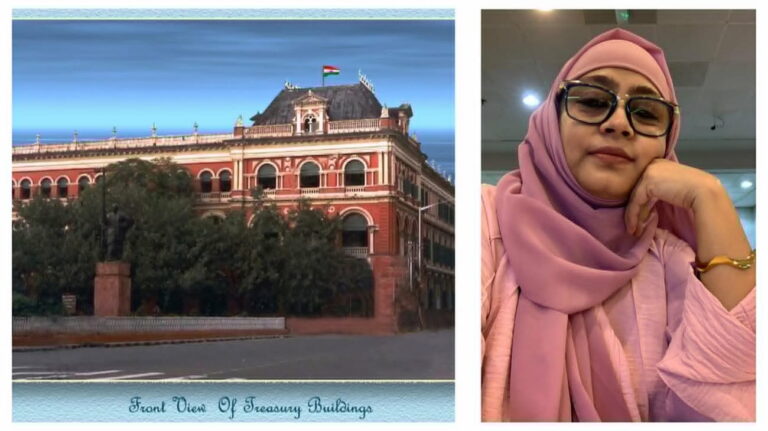
sandra gonzalez sanabria guerrilla aqua bonita colombia
Sandra Sanabria in combat uniform | Arranged

Sandra Sanabria: From Child Victim to Revolutionary Leader

Héctor Ramírez ETCR (Territorial Space for Training and Reincorporation) was established post-2016 to reintegrate former Revolutionary Armed Forces of Colombia (FARC) members into civilian life. Named after Héctor Ramírez, a FARC leader killed in the conflict, the region was a FARC stronghold in the 1990s and early 2000s. Despite the peace accord, dissident threats and violence persist, as evidenced by the heavy police presence during our visit. Without this historical context, Agua Bonita might seem like a staged showcase, but its lakes and mountains make it undeniably picturesque. The security protocol resulted in the male members of the team numbering nine, shifted to stay in a secluded place about a kilometre outside the main venue, but it came as a boon for all of us. The locality was stunningly beautiful, surrounded by greenery and a beautiful lake. We came to know that these huts allocated to us for our stay were meant to promote eco-friendly tourism for the communities living in Caquetá.

Interestingly, the community’s camaraderie defines Agua Bonita, transforming it into a beacon of peace and hope. Focusing on sustainable agriculture and ecotourism, it symbolises a fragile yet inspiring shift from conflict to coexistence, serving as a model for reconciliation and democratic inclusion.

While the village of Agua Bonita won our heart not merely because of its beauty but also the people and the community who actually taught us their philosophy of life, and led them, for this particular event, was Sandra Gonzalez Sanabria, the community’s passionate leader known as Betsy among friends and colleagues locally. Born on January 14, 1979, to a peasant family in Neiva, Huila, in the Caquetá region, Sandra fled home at 12 as life became extremely difficult after her father’s disappearance during the violent clashes between revolutionaries and government forces. “My father disappeared in Neiva, Huila, on February 13, 1986, when I was six,” she shared. “I consider myself an orphan due to the conflict between guerrillas and the army, where civilians were caught in the crossfire, accused by both sides.”

Sandra was witness to the violent suppression of the local people seeking their rights and faced the trauma in the aftermath of the sad event. It is beyond imagination how a young girl, not even in her teens, would have faced the rough weather of life, which was not really natural but state-sponsored. Sandra’s parents worked as peasant contractors for the wealthy Lara family, who owned prime lands in Caquetá. It is a sad reality that poor people have to serve the business interest of the powerful. FARC fighters had been targeting the rural landed elite and redistributing land after snatching it. Of course, for the state, it was criminal, but this area remained under FARC.

During the conflict, FARC forced the redistribution of these lands to peasants. Her father’s disappearance, a victim of state repression, shattered her family. “My mother found it difficult to raise her,” Sandra recounted. “At 12, I ran away and begged FARC to take me in, as my mother could no longer cope.” Joining FARC offered her a sense of family and purpose. “Life in the guerrilla struggle was tough and austere, but we lived like a family, with reading, training, and ideology to understand the class struggle.”

Sandra’s skills extend beyond ideology. She is an Auxiliary Technician in Pharmaceutical Services and an Agricultural Technician specialising in food processing. As a leader in Agua Bonita’s reintegration process, she emphasises collective work. “We arrived in Agua Bonita in 2017,” she said. “Over 400 former combatants settled here initially; now, 278 remain. There were 20 hectares of land, but we collectively farm 10 hectares as the rest is arid terrain.”

sandra gonzalez sanabria guerrilla aqua bonita village colombia

Education, Eco-Tourism and Feminist Leadership in a Former Rebel Stronghold

During our conversation in the village, we found the immense bond among people, which is the outcome of the collectivisation process. Individuality might be an acceptable phenomenon globally, but it is also resulting in mindless exploitation of our resources and increasing greed to amass wealth without bothering about others.

Sandra’s commitment to community shines through her work with children. Though she chose not to have her own, she fights for the well-being of over 25 children aged 18 months to 5 years, ensuring they receive foundational education. “What I love most about this community is the family warmth and collective spirit, despite challenges,” she said.

During our conference, children with cameras documented the event, trained in videography, photography, and editing at a local library run by the Multi-active Cooperative for Good Living and Peace in Caquetá (COOMBUVIPAC). It was wonderful to hear their narrative on how they report on the village problems and also learn about current issues and read the latest books. Founded by The Commons Party, COOMBUVIPAC has 115 members engaged in farming, construction, and cooperative work for a solidarity-driven economy.

As president of the Association of Women Producers of Essence of Peace (ASMUPROPAZ), Sandra champions women’s economic autonomy through agro-food gardens, human rights, and ecosystem restoration. Active for five years, ASMUPROPAZ fosters mutual agreements for responsible land governance, benefiting families beyond its members. Sandra also serves on the municipal peace council and the Departmental Council of The Commons Party, established in 2017 to ensure former FARC members’ political participation. “I’ve led reconciliation and peace projects,” she said, “and I’m a member of the Territorial Planning Council of La Montañita.” Sandra is a woman of ideas and deep conviction who leads from the front and encourages her colleagues and sisters to enjoy the power of self-reliance and economic independence. For three days, we saw her in different activities, including disturbing food, snacks and tea, up to coordinating things and making arrangements for the guests.

Agua Bonita’s murals and monuments look reminiscent of left movements in Kerala, West Bengal, and Telangana, where communities honour victims of state violence. A memorial, created during the Agua Bonita Festival, reflects the community’s struggle and hope, with symbols of pineapple farming and peacebuilding. Yet, Sandra acknowledges ongoing challenges: “Repression persists from shadowy state forces. Over 450 peace accord signatories have been killed since 2016.” This is a dark reality that you cannot make everyone happy with a particular decision, particularly in a state that sometimes uses these tactics to ‘rearm’ itself and act accordingly. The same is true about the dissenters who might not have liked the peace accord and are still looking for a ‘Bolshevik revolution’.

Sandra’s story underscores the importance of inclusive peace. “The 2016 peace agreement aimed to ensure a dignified life for Colombians,” she said. “I don’t oppose it, but I’m critical of its failures. It’s about the dignity of the excluded majority and caring for biodiversity.” Her words echo the frustrations of Colombia’s marginalised, challenging elite narratives and advocating for economic independence. For a person engaged with the Ambedkarite perspective, it caught my own imagination and gave me new learning. We always said that India is ruled by the Brahmanical minority, but when I read the stories of people in Latin America as well as Africa, I realise the damage that colonialism has done to these societies and that we are not alone. It has many aspects. Somewhere, it reflects in white supremacism. While we fight against Brahmanical hierarchy in India and the feudal landed Muslim elites in Islamic societies, it is a fact that globally, it is the ‘minority elite’ that rules our societies despite tall claims of ‘democracies’ and ‘rule of law’. It is not a hidden fact that post-colonial rule of law in Colombia has only established and strengthened the control of the settler elite in the country. Nevertheless, the fight against injustice continues, and the good thing is that common masses, native and indigenous and Bahujan communities have now understood the art of politics and governance as clearly indicated in the reflections of Sandra Gonzalez Sanabria.

sandra gonzalez sanabria guerrilla colombia
Sandra with her friends | Arranged

“Sowing Hope”: A Song, A Struggle, and a Socialist Dream

A song shared by Sandra, performed by two young people and Emilio, a peace accord signatory and artist in Agua Bonita, captures this spirit:

In the land where I was born,

where the sun embraces and the wind is harsh,

I sowed dreams with sweat and faith,

in a field where the skin grows tough.

Sowing hope, we will fight,

with heart and strength, never giving up.

For peace, for life, for a new day,

sowing hope, the future will come.

Amid bullets and broken promises,

we walk with a devoted soul.

Pain taught us to grow,

and in the struggle, we never stop believing.

In the fields, in the jungle, in the heart,

we carry the flag of redemption.

We don’t give up, we stand tall,

for a tomorrow where everyone will thrive.

Sowing hope, the future is here,

in our hands, we will make it near.

With love, with struggle, with dignity,

sowing hope, peace will arrive.

(The transcription and translation of the audio were provided by Grok)

Link to the song

Sandra Gonzalez Sanabria proudly embraces her association with FARC and the communist movement. She states, “I am an ordinary woman, a socialist, and a proud member of the Commons Party. Rooted in a social and peasant sensibility, I take pride in working alongside women deeply impacted by Colombia’s conflict—a reality I’ve lived since childhood. Many misunderstand socialism and communism. Colombia can be a patriarchal, violent, and individualistic society, yet socialism and communism are beautiful philosophies centred on prioritising collective well-being over competition. Embracing a simple life fosters happiness through solidarity and shared purpose.”

I’m struck by Sandra’s response to my provocative question. In so-called ‘liberal democracies,’ ‘socialism’ and ‘communism’ are often vilified and dismissed as contemptible terms. In many societies, both these terms are made to look even criminal and yet Sandra articulates them as a philosophy of life grounded in her experiences, something many of us struggle to do. Her political education and worldview stem from the practical realities of her surroundings, offering a perspective more authentic than uninformed critiques.

Sandra’s journey—from a childhood marked by conflict to a leader advocating for peace and empowerment—mirrors the transformation of Agua Bonita. Her story challenges elite narratives and calls for global solidarity among oppressed communities to rewrite their histories and build a future rooted in dignity and justice. A big salute to Sandra Gonzalez Sanabria.

Amid Attacks on Bangla Speakers, a Bengali Scholar Tops UGC NET with a Perfect Score

0

Kolkata: At a time of language-based identity politics, a young scholar from Bengal reaffirms the strength of mother tongue through academic brilliance

At a time when the detention of Bengali-speaking migrant workers has kindled debates around ‘language politics’ or identity politics in India, call it sheer irony — or celestial justice — that a PhD scholar from West Bengal, pursuing her research in Bengali language, has secured a perfect 100 percentile in the UGC NET 2025.

Meet 26-year-old Nilufa Yasmin from Bengal’s Katwa district, who has topped the UGC NET exam. With a deep love for song and Bengali literature, Nilufa is currently pursuing her research on Moddhojuger Bangla Sahitya (Medieval Bengali Literature).

Speaking to eNewsroom over the phone, she gushed, “When I appeared for the NET exam on June 26, I had a gut feeling that I would qualify for the Junior Research Fellowship this time. But I hadn’t anticipated that I would top the exam.”

She added, “This was my third attempt. In my previous two, I had qualified NET but missed the JRF. I had been aiming for a good rank, and that pushed me to give it one more go.”

With both her parents being educators, academics was always an obvious path. But Nilufa insists her parents were never the imposing type.

“I’m not a morning person,” she laughs. “I used to study late at night — often till dawn. Every time my dad caught me up at those odd hours, he would chide me, saying, ‘Don’t stress yourself so much. You don’t need to study this hard’,” she recalled.

Despite an impressive academic record, her passion for literature steered her https://ojs.njhsciences.com/ towards Bengali as her subject for higher education.

“I scored above 90 per cent in both Madhyamik and Uchcho Madhyamik (Higher Secondary) exams. And even though everyone kept asking me to take up Science, I chose Arts — and later, Bengali — because I love singing and literature, Bengali literature to be precise.”

And how many hours did she study to get this result? The young scholar laughs.

“I didn’t really follow a very structured routine. Sometimes I’d study for long hours, and sometimes I’d take long breaks. At times, I’d get bored of reading the same things over and over, and I’d call my mother to vent. Every time I spoke about being stuck in that same cycle, she would calmly say, ‘Don’t worry — you’ll get a perfect score this time’.”

So, what does Nilufa do when she’s not researching Bengali literature?

“I’m a trained Rabindra Sangeet singer and I also have a YouTube channel. I love singing — it keeps me going when I’m not buried in my research work,” she chirps.

And does she think her achievement will inspire others?

“I hope it does. I’d tell every girl who dreams of an academic career to aim for the JRF. It makes you financially independent while working on your PhD,” she added.

Koshi Drowns Villages, the State Buries Truth — A Century After Bapu, Only the ‘Oppressor’ Has Changed

0

[dropcap]T[/dropcap]he Koshi emanates from the Himalayas, fed by glacial waters from Tibet and rainwater from Nepal. It’s considered a whimsical, chanchal river. Since prehistoric times, it has been known to dramatically change its flow, cutting over riverbanks and changing its course by hundreds of kilometres, inundating miles of land. It also carries massive amounts of mica-laden soil from the Himalayas and dumps it in the plains, rendering fertile soil barren.

After Independence, check dams were built to tame this restless river. The people living on its banks enthusiastically participated in the project, giving up their lands and volunteering to work on the dams and barrages. They thought that, finally, the river would be calmed and that they would live happily ever after. They were wrong.

The trapped Koshi became even more tempestuous, and the torment of the people displaced by the embankment multiplied manifold. Today, their plight is akin to kala paani, the imprisonment suffered by many freedom fighters in the Cellular Jail in the Andamans.

Every late summer and monsoon, Koshi floods and tries to break free of the embankments to devour the land. The helpless villagers watch as their farms flood and the land simply dissolves into the river. They barely manage to salvage their belongings and scamper to higher ground. Some take refuge on the roofs of their homes only to discover that snakes and scorpions have also done the same. Sometimes, children fall off and vanish into the flood; some are rescued, many are lost. Villagers are bitten by venomous snakes and scorpions, but there is no primary care available, and no anti-venom is at hand. It takes more than four hours to reach the nearest hospital, so most of those bitten die. This happens every year without fail.

Flashback to a satyagraha

The Koshi Navnirman Manch has been fighting tirelessly for the rights of the embankment-affected over the past decade and a half. Mahendra Yadav, a stubborn and combative young man, is spearheading the battle in Supol district of north Bihar.

I went to Bihar a few days ago to campaign for the INDIA alliance in the upcoming Assembly elections. We partnered with 25 local organisations, who helped plan and execute a yatra under the banner ‘Badlo Bihar, Banao Nayi Sarkar’.

koshi floods bihar river satyagraha champaran Gandhi bapu
Tushar Gandhi with others | Courtesy: All Indians Matter

I reached Patna on July 11 and began the yatra the next morning from Bhitiharva in West Champaran district. I wanted to begin from where Kasturba and Mahatma Gandhi (whom I call ‘Ba’ and ‘Bapu’ respectively) fought for the rights of farmers and showed that the British could be forced to retreat. During the Champaran Satyagraha, Ba camped in Bhitiharva and established an ashram that still stands. She established a school for girls too, which barely survives.

From Bhitiharva, we went to places associated with the Champaran Satyagraha. We visited the school and college named after Raj Kumar Shukla, the man who brought Bapu to Champaran. We visited Kurtulia, where Bapu had sat under a neem tree and listened to the woes of indigo farmers. The British used to tie the farmers to the tree and flog those who could not pay the brutal tax imposed by them.

I then visited Motihari station, where Ba and Bapu had alighted and thousands of indigo farmers had welcomed them. Before that, I visited the village where Bapu was served the extradition notice while travelling on an elephant.

Motihari station has been renamed ‘Motihari Bapu Dham’ and a large statue of his has been installed on Platform 1. There is a museum dedicated to his visit, Gandhi Sangrahalaya, but it is in pathetic shape. Its highlight is a long table, seated at which the district magistrate had conducted the extradition trial. They have built a Bapu Park there too, where a larger-than-life statue in typical Kathiawadi dress was installed with the help of late industrialist Dhirubhai Ambani.

Motihari was being spruced up. Prime Minister Narendra Modi was to launch his campaign for the Bihar election there. He had announced that he wanted to turn Motihari into another Mumbai. In an earlier election, he had promised to restart the sugar mill at Motihari and drink tea sweetened by the sugar it produced. The mill remains shut and his promise forgotten.

koshi floods bihar river satyagraha champaran Bapu
Courtesy: All Indians Matter

The shelter that wasn’t

On July 15, we reached Supol. Mahendra and his associates were waiting for us. As we alighted from the car, we walked down to Benga Sanpatahan village on the banks of the Koshi, almost directly under the Koshi Mahasetu bridge. A flood relief shelter had been built by the local government there, which is where we held our first meeting. The condition of the shelter was poor – it stood almost in ruins. Many women, children and men had gathered there.

One group had started their journey at 6.30 am; they had to take a bus, walk and then take a boat, which unfortunately got stuck on a sandbar. They eventually got to the spot at 11 am, although they had to cover barely 10 km to 12 km. One woman complained that this was their daily plight. They spend a lot of money and time just to get to their place of work, and most of them earn a minimum wage. Many a time, even less than that.

I was told the shelter itself gets submerged and the people scamper to the terrace and watch helplessly as their homes are swept away.

After the meeting, where the people complained of neglect and official apathy, I suggested that they boycott the election. They said they had tried it, but the politicians were not bothered as they did not comprise a large enough vote bank. Strangely, their MLA is a ‘strong’ politician, representing Supol for seven terms. He is known as a ‘Nirman Purush’ (man who creates things), but he too isn’t bothered about their plight.

The villagers complained that most of the money allotted for relief schemes is lost to corruption. They added that even basic facilities like shelter, education, healthcare, transport, electricity and potable water had been denied to them during ‘Amrit Kaal’.

bihar satyagraha champaran gandhi villagers
Courtesy: All Indians Matter

‘We share space with snakes and scorpions’

After the meeting, we hiked to the riverbank where a boat was waiting to ferry us to the next village. I was yet to see the actual picture of the plight of these people.

Our next destination was Ekdera, a hamlet in Sisauni Panchayat in Marauna Block. Ekdera was almost one and a half kilometres from the riverbank, but there was no access road. We trudged through mudflats, waded through ditches and precariously walked on mud borders of paddy fields. Halfway there, a youth on a motorcycle offered to ferry me the rest of the way. He expertly navigated flooded paths, slippery tracks, narrow dykes and small humps of land where people had built homes.

Many had gathered to meet me, a ‘leader’ visiting their hamlets. They had never experienced this. Most of them had not believed that I would land up.

We heard the same litany of complaints: “We have no homes. They have been washed away multiple times. We are forced to flee and take refuge on higher ground… We sit on roofs for days on end till the floods recede. We have no food or water. Scorpions and venomous snakes also take refuge there, and often our children and we are bitten… There is no healthcare facility. It takes four hours to reach the nearest facility or hospital. Often, our people die before we can get there… There are no schools in or near our villages. Our children walk, cross rivers and take multiple modes of transport to reach educational institutions, even primary schools. It takes them two to three hours. Often, they have no choice but to drop out… We want to study and go to college. Please build schools in our village… We have no electricity. Solar lamps were fitted, but they are never repaired, and many of the poles, made of bamboo and teak, were swept away and never replaced… Our youngsters have no employment. Our men are forced to migrate to the metros and to Punjab, Haryana and Western Uttar Pradesh to work as farm labourers… We are cursed. We are the kala paani prisoners of the Koshi.”

I kept hearing similar complaints everywhere we went that day.

The skies were ominously overcast, and soon it began to rain. Hurriedly, a tarpaulin was spread and held above us like a tent as we sat out the shower huddled under what the locals called panni.

While we waited, two women pleaded with me for a home. They had lost their homes thrice to floods and had no money to rebuild. They were forced to live on higher ground in shanties. Their husbands were farm labourers in Punjab. These were once proud farmers, unaccustomed to a life of homeless destitution. Both women broke down as I watched helplessly.

koshi bihar river satyagraha champaran bapu villagers
Courtesy: All Indians Matter

‘We live like this our entire life’

Our next destination was Bela Panchagachiyain in Majaoha Panchayat of Kishanpur Block. The hamlet was a kilometre inland, but this time there was no motorbike. The dirt tracks had turned into mud and slush, and the ditches were flooded with dark, stagnant water. We waded through ankle-deep mud and knee-deep water surrounded by waist-high reeds and grass.

We had been warned about snakes and scorpions, which added to our anxiety. Once, I slipped and fell. The volunteers helped me up, and the villagers helped me clean up.

A large crowd had gathered at the hamlet to speak to us, many of them not believing that a descendant of the old man whose photo they saw on currency notes would visit them.

Once again, similar laments were heard. One of the women, Indira Devi, said: “You have come here just once. Unfortunately, you fell. Think of our plight. We live in such circumstances our whole life.” I felt ashamed at feeling sorry for myself.

Three girls – Chandula Kumari, Premlata Kumari and Khushboo – requested me to get primary, secondary and high schools built in their village and a college close by. “We want to study.”

Some young menShekhar and Akhilesh alias Mukeshspoke of the lack of teachers and the lack of health facilities.

When the rain stopped, we made our way by boat to Khokahnaha hamlet in Ghoghariya Panchayat of Marauna Block. Hundreds were patiently waiting for us. Once again, we heard the same tales: no drinking water, submerged farms, no electricity, no schools, no healthcare… just a miserable existence.

This village has a mixed Hindu and Muslim population living in harmony. The prevalent hate and division didn’t reach there. The venom spread by the Rashtriya Swayamsevak Sangh-Bharatiya Janata Party hasn’t poisoned their hearts. Misery and adversity, it would seem, repel hate.

We were behind schedule, and our boat got stuck on a sandbar. Our hosts had identified navigable channels, but the Koshi dumps so much silt and sand that new sandbars and shallows form in a matter of days. It took time to push our boat off the sandbar, and the propeller had to be cleaned too.

By the time the meeting ended, dark clouds had gathered, and we could sense a downpour coming. A panni was borrowed and hurriedly stretched over our heads. The downpour lasted about 20 minutes, and it was pitch dark by the time we resumed walking towards our boat.

By this time, Mahendra realised that it had gotten too late, so he cancelled the visit to the next two villages, Mungaur and Dumriya, in Supol Block. Even a public meeting on the riverbank had to be cancelled.

But fate had more excitement in store. In the dark, our boat hit many more sandbars and was marooned in the shallows. One jolt was so severe that one of my companions toppled over and his chair broke. Mine broke too, but fortunately, I did not fall. So, what should have been a 40-minute journey took three hours, and we finally reached our destination after 10 pm. It had been a long day and an emotionally disturbing one.

Throughout the trip, I saw large, colourful posters boasting about Amrit Kaal and the progress made by the ‘Double Engine Sarkar’ in Bihar. They had beaming mug shots of Chief Minister Nitish Kumar and PM Modi. I was amazed at how shameless our elected leaders have become. The people I had met that day were the antim jan Bapu talked about, the poorest and helpless, the last elements of our society.

When Bapu visited Champaran in 1917 and witnessed the plight of the indigo farmers, he was shocked. I had a similar experience when I visited the villages plagued by the annual inundation of the Koshi.

It is 2025, but nothing has changed, other than the oppressor. It used to be the British; now it is an uncaring government of independent India and its partner in Bihar.


The piece first published at All Indians Matter.

The Virus Wasn’t the Only Thing That Spread — So Did Hate

[dropcap]I[/dropcap] was in a small block in Chhattisgarh when the COVID-19 pandemic gripped the nation in 2020. Fear was all-encompassing — fear of infection, uncertainty, and death. But as the virus spread, so too did another — more insidious — epidemic: communal hate. What began as a public health emergency quickly devolved into a campaign of scapegoating and vilification. The Tablighi Jamaat, a Muslim missionary group, was blamed for everything from the spread of the virus to an imagined bio-war. I was not just a witness to this narrative; I was, in a small but painful way, a participant in it.

Our local mosque, the only one within a 5-kilometre radius, was managed by Muslims associated with the Tablighi Jamaat. I had prayed there regularly. But at the height of the media trial, I too fell prey to fear and uncertainty. I stopped going to the mosque. I offered my prayers at home. Worse still, I posted on social media, urging the Jamaat to suspend congregations and exercise caution. In hindsight, it was less a call for public health safety and more a subconscious surrender to the dominant narrative. I thought I was being balanced. I now see I was being diplomatic when I should have been principled. I deeply regret that choice.

A Mosque, a Moment of Weakness, and a Regret That Lingers

The Tablighi Jamaat gathering at Delhi’s Nizamuddin Markaz was held in early March 2020 — a time when no lockdown had been announced, flights were still operational, and public events of all types continued without restriction. The gathering included Indian and foreign attendees, many of whom became stranded due to the abrupt lockdown that followed.

Almost immediately, a media onslaught followed. Prime-time channels dubbed it a “super-spreader event.” Fake news and communal disinformation mushroomed. Stories about Muslims spitting to spread infection or engaging in “Corona jihad” flooded the public sphere. The Jamaat was not merely criticised — it was demonised. The government, especially in Delhi, released data that portrayed the Jamaat as a major contributor to the spread of COVID-19. Police filed FIRs. Foreign nationals were detained. Mosques were surveilled. Entire communities became objects of suspicion.

From Congregation to Condemnation: How the Jamaat Became the Villain

Now, years later, the truth is finally being acknowledged by the judiciary. Just this week, the Delhi High Court quashed 16 charge sheets filed against Indian citizens accused of sheltering foreign Jamaat attendees during the lockdown. The judge said: “Chargesheets quashed.” Back in January 2022, Delhi Police had opposed these quashing petitions, alleging that these individuals had violated prohibitory orders and contributed to spreading the virus. That claim has not stood the test of judicial scrutiny. These citizens were not criminals. They were victims of poor policy, media hysteria, and communal bias.

One cannot overstate the role of the media in legitimising this witch-hunt. Anchors who project themselves as rational, secular voices — including Rajdeep Sardesai — echoed the government’s position with minimal critique. They chose not to ask tough questions: Why were Jamaat members treated differently than attendees of the Kumbh Mela or political rallies? Why were Muslim congregations portrayed as reckless while Hindu gatherings were framed as acts of faith? Channels ran debate shows questioning whether the Jamaat should be banned, without examining whether any law had been broken. Photos of Muslim men in prayer were circulated out of context. And the media, instead of being a guardian of truth, became a tool of persecution.

Media as Prosecutor, Not Watchdog

Arvind Kejriwal’s role in this affair was particularly disappointing. Known for his secular image and governance-first politics, Kejriwal capitulated under pressure. His government released data blaming the Tablighi Jamaat for half of Delhi’s COVID cases, without clarifying the basis or timeline. He offered no defence of due process. No protection for those being unfairly maligned. His silence during similar violations at Kumbh Mela or political rallies revealed a dangerous truth — that his secularism is negotiable. When faced with the choice between standing up for justice and pandering to majoritarian sentiment, he chose the latter.

Just as disheartening was the silence — or weakness — of Muslim leaders. At a time when the community was being vilified en masse, those in positions of influence remained muted or evasive. Few stood up to defend the Jamaat or challenge the hysteria. Some even echoed the sentiment that the gathering was “irresponsible,” thereby legitimising the unfair treatment it received. The truth is, Muslims in India needed strong, clear leadership during that time. They got ambiguity instead. And this vacuum of leadership allowed the narrative of guilt to flourish.

This pattern of hesitation and delayed resistance has resurfaced during the ongoing assault on the Waqf. When the nationwide attack on Waqf properties and institutions began last year — through surveys, illegal occupations, and the weaponisation of state agencies — the common Muslim public remained silent. Many assumed it was “not their issue.” Prominent Muslim organisations responded late, and even then, in tepid terms.

But just like the Tablighi Jamaat case, the attack on the Waqf is not just about one group. It is a structural assault on Muslim identity, autonomy, and presence. By the time awareness spread, considerable damage had already been done — properties sealed, madrassas defunded, and the narrative again framed as one of “illegal encroachment.” This comparison is not incidental. In both cases, Muslims were first criminalised, then isolated, and finally punished — while their leaders calculated, hesitated, or remained silent.

Silence from Leaders, Both Political and Religious, Enabled the Witch-Hunt

Let us also not forget the role of the State. The police didn’t merely investigate — they persecuted. People were arrested and detained without due process. FIRs were filed on flimsy or non-existent grounds. Foreign nationals were held for months in legal limbo. Even in small districts like mine, local administrations began compiling lists of Muslims linked to the Jamaat. The implication was clear: a religious affiliation was enough to attract surveillance.

The High Court’s acquittal of these cases is a welcome development. But where is the accountability? Will the police apologise? Will the State compensate the innocent? Or will it quietly move on, having tarnished reputations and terrorised communities without consequence? This episode must be remembered — not just for the legal injustice, but for what it reveals about the fragility of India’s secular fabric. In the name of a virus, an entire community was demonised. And many, including myself, failed to stand up at the right time.

But recognition is the first step to repentance. I was wrong to be diplomatic when I should have been courageous. I should have visited that mosque, spoken in its defence, and challenged the disinformation. I won’t make that mistake again.

What the Tablighi Jamaat and Waqf episodes teach us is this: when truth is under attack, neutrality is betrayal. When a community is being targeted, silence is not wisdom — it is complicity. Let the courts quash the charges, yes. But let us also quash the prejudice and passivity that made those charges possible in the first place.

Who Cleans, Who Dies, Who Celebrates? Caste Politics Behind ‘Clean India’

1

[dropcap]T[/dropcap]hey go down into the sewers, but never come back the same. Some don’t come back at all.

This is not a line from a tragic novel. It’s a brutal reality for thousands of Dalit workers across India who die, suffer, or disappear in the dark trenches of our gutters, septic tanks, and drains — all in the name of keeping our cities clean. Despite being legally banned, manual scavenging continues to kill, maim, and marginalize a community that has been historically dehumanized.

The Reality Beneath Our Feet

According to the National Commission for Safai Karamcharis (NCSK), over 400 deaths due to manual scavenging were recorded between 2018 and 2023. Activists and ground-level workers, however, insist the actual number is much higher, as many deaths go unreported, misreported, or simply ignored by local authorities. These are not accidents. These are institutional killings rooted in caste, class, and indifference.

Manual scavenging involves cleaning human waste from dry latrines, open drains, and septic tanks without protective gear. The Prohibition of Employment as Manual Scavengers and Their Rehabilitation Act, 2013, outlaws the practice, but enforcement is feeble and convictions are rare.

In 1993, India first banned manual scavenging. In 2013, the Prohibition of Employment as Manual Scavengers and Their Rehabilitation Act expanded the ban and introduced rehabilitation measures. Yet, nothing changed on the ground. The sewers remained full, the machines missing, and the same community kept dying.

According to official figures, over 400 sanitation workers have died cleaning sewers in just the last five years, but some social organisations claim this is a gross undercount, as many deaths go unreported, misclassified, or settled quietly. The fact that even today humans are sent into toxic, oxygen-deprived chambers to clean feces with bare hands is not just a policy failure — it is a moral crisis. A democracy that promises dignity to all still allows one caste to die for the cleanliness of others.

Caste and the Curse of Birth

At the heart of this injustice lies India’s caste system. Nearly all manual scavengers belong to Dalit communities, particularly sub-castes like Valmiki, Balmiki, or Hela, historically labelled “untouchables.” This is not just a coincidence. It is caste-based occupational segregation — society telling people: “You were born to clean our filth.”

Manual scavenging is not just a dangerous occupation; it is the modern face of an ancient injustice. Rooted in the oppressive caste system, it emerged from a deeply entrenched social order that designated Dalits, particularly Valmikis and Helas, as “filth handlers,” condemned by birth to clean human excreta. British colonial policies institutionalized it further by integrating manual scavenging into municipal governance, and post-Independence India failed to dismantle the system. Instead, it continued — often invisibly — with the state as both employer and silent enabler.

A 2019 report by Safai Karmachari Andolan (SKA) found that over 98% of manual scavengers are Dalits. Despite affirmative action and constitutional guarantees, their daily lives remain entrapped in discrimination, humiliation, and danger.

They are not just cleaning gutters; they are trapped in centuries of systemic exclusion.

Life on the Edge: Poverty, Disease, and No Way Out

Those who survive the job still carry the scars. They suffer from chronic respiratory illness, skin diseases, and mental health trauma. Their life expectancy is far lower than the national average. Children drop out of school early, often forced to take up the same work. Women in this community clean dry latrines with bare hands, earning a pittance and bearing layers of social ostracism.

Housing conditions remain deplorable, access to clean water and healthcare is minimal, and social mobility is virtually non-existent.

State Machinery: Where is the Machine?

Despite the promises of Swachh Bharat Abhiyan and speeches about a “New India,” the government has failed to mechanize sewage cleaning at scale. A 2021 Parliamentary Standing Committee Report noted that only 27% of urban local bodies had sewer cleaning machines. In most places, the equipment lies unused or is unavailable due to poor planning, corruption, or lack of political will.

Meanwhile, workers continue to be sent down toxic sewers without harnesses, masks, or gloves — inhaling methane and hydrogen sulphide gases that suffocate them within minutes.

What kind of development kills the poor so the rich can live hygienically?

Laws Without Teeth, Rehabilitation Without Meaning

The 2013 Act mandates not only prohibition but rehabilitation of manual scavengers with provisions like skill training, housing, and alternate employment. Yet, the implementation has been negligible. According to the Ministry of Social Justice and Empowerment, less than 50,000 manual scavengers have been officially identified — a number that doesn’t reflect the scale of the problem.

Even those “rehabilitated” often receive inadequate training or temporary contracts and are pushed back into unsafe jobs. Some are given tricycles to collect garbage — a mere cosmetic shift, not dignity.

Swachh Bharat but for Whom?

India celebrates cleanliness with celebrity endorsements and colorful ads. But who gets the credit, and who pays the price? Swachh Bharat Abhiyan claims success in building toilets but rarely addresses who cleans them, at what cost, and under what conditions.

The Swachh Bharat Abhiyan has become one of the most advertised government missions in Indian history, with over Rs 1200 crore spent solely on publicity and advertisements between 2014 and 2019, according to official government responses in Parliament. Billboards, television jingles, celebrity endorsements, and glossy social media campaigns have promoted the idea of a “clean India” far and wide.

But beneath this clean image lies a filthy truth: the same government that finds hundreds of crores to spend on ads cannot find the political will or budget to provide basic safety gear, mechanized equipment, or dignified rehabilitation for sanitation workers.

Imagine what Rs 1200 crore could do:

· It could equip every sanitation worker in India with proper PPE kits, gas detectors, and mechanized tools.
· It could fund thousands of safe machines to replace dangerous manual cleaning of sewers and septic tanks.
· It could provide livelihood training and educational scholarships to the children of safai karamcharis — breaking the chain of caste-based occupation.

Instead, the face of the campaign is a celebrity holding a broom, while the reality is a Dalit man suffocating to death inside a sewer.

Swachh Bharat was meant to be a mission for dignity. But for the sanitation workers — mostly Dalits — it has only meant more work, more danger, and the same silence. They are the ones who make the vision of a clean India possible, but they remain invisible in policy, ignored in budgets, and discarded in death.

How can a nation claim cleanliness when its most essential workers are forced to die in human waste? A broom in the Prime Minister’s hand is not cleanliness.

Justice is. Mechanisation is. Dignity is. Safety is.

Until the government spends more on saving the lives of its workers than selling slogans to its voters, Swachh Bharat will remain nothing but a lie written in bold and soaked in blood.

The Moral Collapse of a Nation

The Constitution of India guarantees equality and dignity. Yet, we have normalized a system where one caste cleans the waste of another — under threat of death, without any support or respect. This isn’t just social injustice. It is the moral collapse of a modern democracy that prides itself on equality while allowing a community to die in silence.

India’s Sewer is Not Just Underground — It’s in Our Society

The stench of injustice is not just in the gutters. It’s in our silence, our privilege, and our politics. We’ve allowed an entire community to be buried in the name of “cleanliness,” and turned our eyes away while they choke, suffocate, and die.

How long will we stay silent? How long will we walk on clean city roads while pretending not to see the bodies buried beneath them — the ones that suffocate and die in darkness just to keep our surroundings clean?

When a sanitation worker enters a sewer, they’re not just cleaning waste. They are carrying the weight of India’s caste system, apathy, and hypocrisy on their shoulders. Every time a Dalit worker is sent into a toxic drain without safety gear and dies there, it is not an accident. It is a murder. A murder sanctioned by society, overlooked by the state, and ignored by us.

The government spends hundreds of crores on Swachh Bharat advertisements, but it cannot provide a simple oxygen mask, a machine, or even the dignity of a safe job to those who actually clean our filth.

What does that say about our priorities? Are we only moved by their deaths? Or are we ready to be ashamed of the way they are forced to live?

Those we call “safai karamcharis” are not just cleaners. They are carriers of our collective guilt. Their hands do not just hold brooms — they hold the truth we refuse to face. A truth soaked in sewage, caste, and silence.

Until the day no human has to clean another human’s waste with their bare hands, we are not a clean country. We are just pretending to be one.

Whose Electoral Roll Is It Anyway? CPIML Fears Customised Voter Lists to Tilt 2026 Polls in BJP’s Favour

0

Kolkata: “We are neither fighting against the Election Commission of India (ECI), which is a constitutional body, nor are we boycotting the Special Intensive Revision (SIR) of electoral rolls,” clarified CPIML’s general secretary Dipankar Bhattacharya while addressing media persons in Kolkata on the issue of protesting against the ECI’s SIR process.

CPIML, which was part of the massive protest in Bihar on July 9 demanding a rollback of the SIR in the state, held a press conference at the Calcutta Press Club to remind voters in West Bengal—where assembly polls are scheduled in 2026, after Bihar—of the implications of the SIR process.

Answering a query from eNewsroom, that the Press Information Bureau (PIB) stated in its July 4 press release that “SIR is being smoothly implemented in Bihar”, with booth-level agents (BLAs) of opposition parties also providing active support in the process. The release also mentioned the number of BLAs from different political parties participating in it. Does this not send a confusing message to the public—that while opposition parties are protesting against the SIR implementation publicly, they are cooperating internally?

“We are not boycotting the SIR process. As such, the government will be very happy if they are not participating in the election itself. We demand the rollback of the SIR process. We aim to defend the voting rights of every voter. The rest is up to the public—we will not tell them what to do or what not to do,” replied Bhattacharya.

‘This is not about abstaining, but about protecting the right to vote’

“Number of BLAs does not prove anything. BLAs and BLOs are all facing the reality and conveying the frustration and anger of the people (to election commission). And this is not a fight to stay away from the process and lose your voting rights, but to be a part of it and fight for voting rights,” he said.

“This is the cunningness of the Election Commission—to show that everything is well. That is why, after meeting Election Commission officials, we have to say it clearly after coming outside that everything is not well. Otherwise, they would have said that they have talked to political parties and everything is fine,” Bhattacharya added.

On the question of suspicion over BJP’s involvement and potential gains from the SIR process, Bhattacharya responded: “Every single voter’s voting rights matter to us—even BJP voters’ rights are a concern for us.

“There are two reasons why people think that the BJP is behind this. When we had gone to meet the Election Commission on the issue of the SIR process, we were told that this is a new Election Commission. Then we thought, why is the commission saying so?

“The Supreme Court has ordered that while selecting the Chief Election Commissioner (CEC), it should be done by a three-member committee, including the Chief Justice of India, the Prime Minister, and the Leader of Opposition. But the Narendra Modi government has replaced the CJI with its cabinet minister. So, out of the three members, two are from the government side. And the new CEC must be thinking that now he has only to work in collaboration with the government. So, they think that now they do not have to talk to opposition leaders or the public.”

Watch the video

‘If the BJP is not worried, what does that imply?’

“The other reason is that the common people of Bihar are very much worried about their voting rights—how, in this short period and during the rainy season, the entire process will get done? And as a political party, we are also worried. So, the BJP, as a party, should also be worried; their voters might also lose their voting rights and should raise the same question before the Election Commission: how will the SIR process be completed within a month? But the BJP seems relaxed and silent. It seems such parties are feeling that after the process, a ‘customised’ or ‘curated’ electoral roll will come out, which will benefit them,” he alleged.

The list of documents being considered by the ECI for SIR includes: birth certificate issued by a municipal body, panchayat, or another government authority; passport; matriculation certificate; government-issued identity card or pension order; permanent residence (domicile) certificate from the district magistrate or similar authority; forest-rights certificate under the Forest Rights Act; caste certificate (SC/ST/OBC) issued by a competent authority; NRC (National Register of Citizens) document (where applicable); family register issued by local bodies; land or house-allotment certificate from a government office; and government or PSU identity documents dated before 1987.

However, Aadhaar—which has been widely used in almost all government as well as private bodies—is of no use. Earlier voter ID cards and ration cards, which are common among most Indian residents, are also not applicable under the current SIR documentation process.

‘Vulnerable sections at greatest risk of disenfranchisement’

Sharing his observations from the SIR drive in Bihar, Bhattacharya noted: “Electors who submitted their enumeration forms received no acknowledgement. Migrant workers—including those employed abroad—are struggling to submit forms and are thus particularly vulnerable to disenfranchisement and the broader threat to citizenship.” He also highlighted the difficulties people face in obtaining domicile and caste certificates.

“We must understand that Bihar’s SIR drive is not a routine electoral revision. It’s unlike the one we had in 2003. This time, the burden lies on the voters to prove they are legitimate citizens of the country—in other words, they have to prove their citizenship,” Bhattacharya stated.

He continued: “Due to the sudden announcement of the SIR in Bihar, opposition parties are taking to the streets to protest against this surgical restructuring of the electoral roll, rather than discussing seat-sharing and electoral strategies. What’s happening in Bihar is being dubbed vote bandi. We believe this SIR process violates the principle of Universal Adult Franchise—a constitutionally guaranteed right that ensures Indian citizens can vote regardless of caste, social status, religion, ethnicity, or gender.”

The ML general secretary emphasised that despite the official cut-off year being 2003, millions in Bihar stand to be affected. “The sudden implementation of SIR has left Bihar voters vulnerable, as the threat of disenfranchisement looms large. The widespread participation in the chakka jam on July 9 showed a glimpse of the public’s anxiety and anger around this ‘Vote Bandi’ drive. The Bengal government must learn from Bihar’s experience and take steps to ensure that bona fide citizens are not deprived of their constitutional rights.”

So who would be most affected by the SIR? He responded: “The poor, the marginalised, women, and the third gender.” He added, “Considering that many of Bihar’s migrant workers are affected by the SIR, we must anticipate the repercussions if this model is replicated in Bengal. The Election Commission of India (ECI) has already indicated that West Bengal is next in line. The state government must closely observe how the SIR is being implemented in Bihar.”

“A large number of migrant workers from Bengal are already facing detention and arrests outside the state merely for speaking in Bengali. If their voting rights come under suspicion, they may soon be declared ‘D Voters’—a category that paves the way for mass detention and deportations, just as many had feared would happen after the NRC,” added Dipankar.

UN vs Superpowers: Francesca Albanese’s Gaza Dossier That Angered West

[dropcap]U[/dropcap]nited Nations Special Rapporteur on Palestine Francesca Albanese is now on the hit list of the American administration. It is for the first time that the US administration has openly and unashamedly targeted a UN official who was doing her job.

Francesca Albanese is an Italian by birth and was appointed UN Special Rapporteur on the Situation of Human Rights in the Palestinian territories occupied since 1967. The American administration was unhappy with her because she asked the European governments not to allow Israeli Prime Minister Benjamin Netanyahu to fly over their territories. Her point was that the International Court of Justice in Hague has issued an arrest warrant against Netanyahu, and all states that are signatories to it must follow the UN mandate.

American President Donald Trump has welcomed Netanyahu as a ‘war hero’ and, in turn, the Israeli Prime Minister handed a letter to the American President regarding nominating him for the Nobel Peace Prize. Ironically, another friend of Donald Trump who has already nominated him for the coveted prize is  Asim Munir, the field marshal of the Pakistan Army. How Americans can bring these hatemongers together is a ‘classic’ case of their double-speak on international policy matters.

Anyway, I don’t believe the American administration was unhappy with Francesca Albanese for demanding the arrest of Netanyahu. The same kind of demand has been made by European leaders many times against Russian President Vladimir Putin. I don’t trust these ‘international courts of justice’, which are a Western idea to dominate and intervene in the internal affairs of Sovereign countries. It only reflects the hypocrisy of the Western world, who consider Vladimir Putin and Russia as the biggest evil the world has ever known, but keeps shameless silence on the crime against humanity by Israel and Netanyahu.

The war cries against Francesca Albanese are actually for her powerful report on Palestine, which she presented during the 59th session of the Human Rights Council in Geneva. This report will open your eyes to how the greedy corporations have profited from the crisis in Gaza. For the first time, someone at that big level or one can say at the United Nations, brought the issue of big corporate money minting at the cost of the Gaza Genocide. This report provides minute details of big corporations and their linkages with the Military Industrial Complex of both Israel and the United States.

Over the last 30 years, we have seen UN platforms used to legitimise the corporate entries everywhere in the name of inevitability. This report on Palestine shows us the darker side of corporate interests. Last year, when I interviewed a Palestinian farmer, Abbas Milhem from the West Bank, he had informed me how the European and American settlers are occupying the land and threatening the Palestinian farmers. He had told me at that time that the fight was not for Gaza alone, but Israel wanted to occupy the West Bank too, because of its rich mineral resources. All big companies in the US and Europe are interested in that, and all their rule-based talks are only meant for the oppressed people and not meant for the colonisers and powerful countries.

Corporate interests have cleverly merged with national interests, and with media and academia in their control, a new narrative will soon be out. The global crisis was created out of colonial rivalry and business interests. They settled and removed people and communities from one place to another. Even after three hundred years, the politics of extraction and settlement continue to fulfil their economic interests, even at the cost of misery and catastrophe to local communities everywhere. The politics of ‘settlement’ is not over yet, and the new ‘peace deal’ or propaganda is to resettle Palestinians to some alien land in Africa so that the corporations can ‘peacefully’ extract the rich mineral resource there, even if people suffer and vanish from the place.

Francesca Albanese deserves kudos for her forthright views and powerful exposure of corporate participation in aggravating the human crisis and crimes against humanity in Gaza.

Hindutva’s Long War Against Two Words in the Constitution: ‘Secular’ and ‘Socialist’

0

[dropcap]T[/dropcap]he RSS General Secretary, Dattatray Hosabale, second in the RSS leadership hierarchy, stated on the eve of the imposition of the Emergency in 1975 that it was during the Emergency that the words “Secularism” and “Socialism” were inserted in the Preamble of the Indian Constitution. And that these words were not there in the original preamble of the Constitution drafted by Dr Ambedkar, so they should be removed.

This is not the first time such a demand has been raised from Hindutva quarters. When the BJP government came to power in 2014, on the following Republic Day, January 2015, the Government issued an advertisement with the picture of the preamble, in which these words were missing, on the same pretext that these were not in the one released in November 1949. A lot of debate took place, and a case was filed in the Courts demanding the deletion of these words from the present Constitution.

Multiple petitions were filed on the eve of the 75th anniversary of the constitution on November 25, 2024. The Supreme Court rejected these and dismissed all the petitions which challenged the inclusion of the words “socialist” and “secular” in the preamble. The justices held that the addition of these terms could not be objected to just on the ground that the original preamble did not contain them at the time when the Constitution was adopted.

Not just these two values, the Hindu nationalists are against the Constitution as a whole. During Constituent Assembly debates, many leaders had shown apprehension that secularism would be undermined, and there is a need to guard this to the utmost. As a representative sample, what Sardar Patel stated needs to be recalled: “I made it clear that this Constitution of India, of free India, of a secular State will not hereafter be disfigured by any provision on a communal basis.”

As per the Constitution, Hosabale’s argument is on the weak wicket as the very provisions of the Constitution spell these words. As per the fundamental rights enshrined in Article 25, which deals with the freedom of conscience and free profession, practice and propagation of religion. In this very article, the word “secular” is mentioned under clause (2)(a).

BJP, due to electoral compulsions, speaks in many tongues. It began with Gandhian Socialism, which was dumped in 1985 for the favour of caste hierarchy-based ‘integral humanism’. In the BJP’s Constitution of 2012, it stated its objective as aiming for a party which “…shall bear true faith and allegiance to the Constitution of India as by law established and to the principles of socialism, secularism and democracy and would uphold the sovereignty, unity and integrity of India.” 

The core agenda of RSS-BJP is to strive for a Hindu Nation where Manu Smriti will be the guiding principle. Right after the Indian Constitution was implemented on January 26, 1950, RSS mouthpiece Organiser came out with an editorial piece heavily criticising the Constitution. It stated on 30th November 1949, “The worst [thing] about the new Constitution of Bharat is that there is nothing Bhartiya about it… [T]here is no trace of ancient Bhartiya constitutional laws, institutions, nomenclature and phraseology in it”Meaning that Manu Smriti has been ignored by the makers of the Indian Constitution!

At the same time, the ideologue of Hindu Nationalism, VD Savarkar, stated that “Manu Smriti is that scripture which is most worshipable after Vedas for our Hindu Nation and which from ancient times has become the basis of our culture, customs, thought and practice. This book, for centuries, has codified the spiritual and divine march of our nation. Even today, the rules which are followed by crores of Hindus in their lives and practice are based on Manu Smriti. Today, Manu Smriti is a part of Hindu Law. That is fundamental.

[VD Savarkar, ‘Women in Manu Smriti’ in Savarkar Samgra (collection of Savarkar’s writings in Hindi), Prabhat, Delhi, vol. 4, p. 415.]

In the decade of the 1990s, three major statements and actions again showed its deeper and real affinity and goal of the Hindu Nation. In 1993, Rajju Bhaiyya, the then Sarsanghchalak of RSS, stated that “ Official documents refer to the composite culture, but ours is certainly not a composite culture… This country has a unique cultural oneness. No country, if it has to survive, can have compartments. All this shows is that changes are needed in the Constitution. A Constitution more suited to the ethos and genius of this country should be adopted in the future.”

In 1998, the BJP came to power as part of the NDA. One of the major things it did was to appoint the Venkatachaliah Commission to review the constitution, saying that it has become old and needs revision. The Commission did submit its report, but there was huge opposition to it, and so implementation of its recommendations was put on hold.

Undeterred by all this, in the year 2000, when K Sudarshan became the Sarsanghchalak of RSS, he stated that the Indian Constitution is based on western values, it should be scrapped and replaced by one based on the Hindu Holy books (i.e. Manu Smriti).

Many BJP leaders kept saying off and on this line. Anant Kumar Hegde of Karnataka said that they are in power precisely for changing the Constitution. In light of the 400 paar (beyond 400 parliament seats) slogan of the BJP, many of their leaders reiterated that they need this many seats so that they can achieve their goal of changing the same.

BJP’s tactical flexibility was on display when Mr Modi said that even if Babasaheb Ambedkar comes, he can’t change the Constitution. In the backdrop of the 2024 elections, Rahul Gandhi made a major issue around the Constitution by carrying a copy of the Constitution in his hand. There was no overt opposition from the RSS-BJP camp, and Modi even bowed to a copy of the Constitution.

The RSS-BJP strategy is multipronged, to try to tamper with the Constitution by various steps and at the same time to adopt the policies to bypass the ethos of the Constitution when in power. That’s what we are witnessing from the last decade or so. Hosabale is a calculated move to test the waters, to march further in their agenda of doing away with the democratic, secular values of equality.

Waqf Protest Debate: Faith and the Constitution — A Contract, Not a Creed

0

[dropcap]A[/dropcap]mana Begam Ansari’s recent article, “Religious autonomy isn’t absolute. Imarat-e-Shariah protest in Patna sidelined Pasmandas,” published in The Print on July 4, 2025, offers a pointed critique of the June 29 ‘Waqf Bachao, Samvidhan Bachao (Save Waqf, Save Constitution)’ protest at Gandhi Maidan led by Ameer-e-Shariat Ahmed Wali Faisal Rahmani, raising important questions about community leadership, inclusivity, and the broader discourse on rights. But it ultimately suffers from a pattern all too common in elite commentary on religion and law: it reaches sweeping conclusions based on selective logic, misapplied analogies, and deep suspicion of religious actors in public life.

The result is a flawed and divisive argument—one that undermines both constitutional integrity and the spirit of coexistence it was designed to protect.

1. The Constitution Is a Contract, Not a Competing Faith

At the heart of Ansari’s article is the suggestion—direct or implied—that invoking religious autonomy as part of constitutional rights is somehow contradictory or dangerous. But this reflects a fundamental misunderstanding. The Constitution of India is not a religion, nor does it ask anyone to abandon theirs. It is a ‘contractual agreement’ between citizens and the state: a framework negotiated in good faith so that people of different faiths, castes, languages, and regions can live together in mutual respect.

To suggest that asserting religious autonomy puts one outside the “national fabric” is to confuse the pluralistic spirit of the Constitution with a monolithic identity project. Religious freedom, as enshrined in Article 25, is not some grudging concession—it is a foundational right. The framers did not view the state as an overlord dispensing limited rights, but as a facilitator of peaceful diversity, bound to neutrality.

2. Fear-Mongering Through False Analogies

A major flaw in the article is the use of slippery slope reasoning. It asks: if one religious group demands autonomy in Waqf matters, what stops others from claiming constitutional protection for child marriage or other violations? But this is an illogical leap. Not all forms of autonomy are alike, and the Constitution is not without mechanisms to judge what is just or unjust.

The Waqf protest was not a call for extrajudicial immunity or rejection of civil law. It was a demand to preserve a centuries-old charitable system that Muslim communities have governed internally—often without public controversy—within the legal framework. Equating that with socially harmful or criminal practices is a gross category error.

The implication that any recognition of group rights will lead to barbarism is not just false; it feeds a colonial-era suspicion of non-Western traditions as inherently regressive. There is no way to engage a diverse republic.

3. Misreading Religion’s Relationship with Human Rights

The article hints that religion—particularly in its collective form—is often at odds with justice, equality, or individual dignity. But such generalisations ignore the moral and ethical frameworks within religions themselves, particularly in Islam. For example, the Qur’an says: “If anyone kills a person unjustly, it is as though he has killed all of humanity.” This moral weight placed on individual life is not peripheral; it’s central.

To assume that human rights are purely secular, modern, and linear in their evolution is historically and philosophically flawed. Human dignity has been a core religious value long before the UDHR was drafted in 1948. Moreover, modern rights discourses are themselves contested and evolving. They are not monolithic blueprints against which all religious practice must be judged.

Religion does not stand in opposition to rights. It often speaks a language of rights, just in different idioms, rooted in different worldviews.

4. Selective Critique of Religious Institutions

Ansari rightly raises concerns about how some religious institutions exercise power, especially regarding internal social hierarchies and women’s rights. But she moves from critique to broad delegitimisation. The Imarat-e-Shariah is portrayed as a parallel legal system with no accountability and no constitutional conscience. That’s a severe claim—yet no evidence is given that participants were coerced or that Imarat’s interventions are systematically unjust.

It is also worth noting the double standard: when Hindu or Christian institutions handle internal matters consensually, they are seen as civil society actors. When Muslim institutions do so, they are labelled separatist or feudal. This framing is neither intellectually consistent nor socially just.

5. The Pasmanda Question Deserves Attention, Not Instrumentalisation

Amana Begam raises concerns about Ashraf’s dominance and Pasmanda exclusion in the Imarat-e-Shariah protest. But this framing does not hold up under scrutiny. Several of the speakers at the June 29 rally were themselves from Pasmanda backgrounds. More importantly, the Waqf Amendment Act—which was the central focus of the protest—does not even mention Pasmandas. To inject Ashraf-Pasmanda binaries into this conversation is to impose a sectarian narrative that is neither organically arising from the protest nor reflected in the law itself.

While caste remains a lived social reality for many Indian Muslims, the deployment of Ashraf-Pasmanda categories in this context appears to echo the larger ideological playbook of communal forces that seek to fragment Muslim unity. Let us ask honestly: does an Ashraf pray in a different mosque than a Pasmanda? Are there separate burial grounds? Don’t Pasmandas routinely lead prayers, teach, and serve in Islamic institutions?

Neither “Ashraf” nor “Pasmanda” appear in the Qur’an or Hadith—they are not part of the Islamic moral or legal vocabulary. Rather, they are social constructions shaped by India’s caste legacy, often exploited to pit communities against each other. The real risk today is that these divisions are being leveraged not to uplift marginalised Muslims, but to weaken collective claims, so that what is constitutionally due to Muslims as a group is quietly diverted to dominant caste groups from the majority community under the pretext of social justice.

None of this is to deny the importance of intra-community reform or inclusion. But such work must be done with sincerity and historical awareness, not by wielding caste categories as weapons to delegitimise genuine constitutional protests. Doing so undermines both justice and unity.

6. The Real Fear-Mongering Is Against Religious Communities

While accusing religious institutions of stoking fear, the article itself suggests that allowing any religious autonomy risks dragging India into chaos or tribalism. This is the core fear-mongering narrative of hyper-secular absolutism: that religious actors, left unchecked, will always abuse power and violate rights. It paints a picture of Muslims—especially religious Muslims—as inherently untrustworthy in constitutional matters.

This not only alienates millions of devout citizens, but it undermines the Constitution itself, which was drafted by people who believed that faith and law can—and must—coexist.

7. Fundamental Rights Are for All, Not Just the Secular Few

The Constitution of India does not ask us to choose between religion and rights. It was built to hold both in balance. The real threat to that balance is not religious autonomy, but the growing tendency to treat religious life as a constitutional liability.

India’s democracy cannot thrive by excluding religious voices or treating every act of religious assertion as a threat to the republic. Fundamental rights, after all, were not meant to be monopolised by secular elites, but to be shared by every citizen, including those who pray, who fast, who serve, and yes, who protest to protect what they believe is sacred.

The way forward is not suspicion. It is a constitutional trust. And that trust must go both ways.

Between Hurt Sentiments and Constitutional Rights: A Muslim’s Plea

[dropcap]I[/dropcap]n a country as diverse and plural as India, the idea of secularism is not merely a constitutional doctrine—it is the ethical foundation of peaceful co-existence. Yet, in recent years, the rising use—and misuse—of laws that penalise so-called “blasphemy” or “religious insult” has posed a serious threat to both religious freedom and civil liberties. I write this as a Muslim student of law, with deep commitments to both the Indian Constitution and the Islamic tradition. And I firmly believe we must resist the impulse to support blasphemy laws, even when they appear to defend the honour of our faith. If we are forced to choose between blasphemy laws and secularism, we must stand unequivocally with secularism.

India does not have a formal “blasphemy law” like Pakistan’s infamous Section 295-C. But for decades, Section 295A of the Indian Penal Code (IPC) criminalised “deliberate and malicious acts intended to outrage religious feelings”. This provision, often invoked to target dissenters, artists, preachers, or even comedians, was vague enough to become a blasphemy law in practice. With the introduction of the Bharatiya Nyaya Sanhita, 2023 (BNS), which replaced the colonial-era IPC, the provision survives, now as Section 299. It criminalises speech that “intentionally or knowingly incites violence or promotes enmity between different religious groups”. While the language appears slightly more targeted, the potential for abuse remains. As before, it can be weaponised to silence those who critique dominant religious ideas or simply express unpopular opinions.

But this trend has a newer and more insidious companion—anti-conversion laws in several Indian states. These laws presume that any religious conversion, especially involving marginalised individuals, must be coerced or fraudulent unless proven otherwise. The result is that Muslim and Christian da’wah workers are routinely criminalised, not for threatening anyone’s faith, but simply for peacefully sharing their own. Islam makes it clear that Da’wah—inviting others to the worship of One God—is a fundamental religious duty. The Qur’an says in Surah An-Nahl (16:125):

“Invite to the way of your Lord with wisdom and good instruction, and argue with them in a way that is best.”

To engage in Da’wah is to speak truthfully about the central message of Islam—Tawheed, the oneness of God. This naturally entails saying that idolatry and polytheism are misguidances. It does not involve insult or hatred, but it does imply the theological rejection of other belief systems. Now here lies the danger: In a country where religious pride is easily inflamed, even this measured, respectful critique can be construed as “hurting sentiments”. And laws like BNS Section 299 or anti-conversion statutes are being used to punish da’wah itself.

We have seen several examples in recent years:

●    In Uttar Pradesh, Muslim preachers were arrested in 2022 and 2023 for alleged “mass conversions”, even when conversions were voluntary and legally executed.

●    In Madhya Pradesh, a Muslim cleric was booked after a sermon where he merely emphasised Islamic monotheism, which some alleged was “anti-Hindu”.

●    Even interfaith marriages involving conversion have been blocked, citing anti-conversion laws, despite the couple’s consent.

In such an environment, any da‘ee risks being branded a criminal, not for coercion, but for carrying out his or her religious duty peacefully. If laws intended to protect faith end up punishing preachers, then their logic is fatally flawed. Some Muslims argue that blasphemy laws are necessary to protect the dignity of Islam and its Prophet (peace be upon him). I understand that sentiment. The pain of hearing insults against the Prophet is real. But we must ask: How did the Prophet himself respond to such insults? In Makkah, he was called a madman, a poet, a liar. He was mocked and stoned. Yet he never demanded the punishment of his abusers. His response was Sabr (patience) and Hikmah (wisdom).

The Qur’an says in Surah Al-Qasas (28:55):

“And when they hear ill speech, they turn away from it and say, ‘For us are our deeds, and for you are your deeds. Peace be upon you; we seek not the ignorant.’”

In Surah Fussilat (41:34):

“Repel evil with that which is better. Then the one with whom there was enmity between you and him will become as though he was a devoted friend.”

The message is clear: Muslims are instructed to respond to insults with dignity, not with violence or legal persecution. The Prophet was a man of forbearance, not censorship. He understood that the truth of Islam does not need the police to defend it. It needs good character, thoughtful speech, and sincere dialogue. In India, secularism is not an abstract ideal. For Muslims, it is our practical shield. It is what ensures that we can build mosques, teach our children, publish our books, wear our clothes, and call others to Islam—all without fear. Blasphemy laws, by contrast, are a double-edged sword. Today, they may be used to silence an artist who mocked Islam. Tomorrow, they may be used to arrest an imam who explains Tawheed. We are already witnessing this inversion.

So let us not be fooled into supporting such laws out of short-term emotion. Let us instead stand for a society where speech is protected, even when it offends, and where the faithful rely on reason, not repression, to respond. The Indian Constitution guarantees the right to freedom of religion (Article 25) and freedom of speech (Article 19). These are not contradictory rights—they are mutually reinforcing. One cannot preach without freedom of speech; one cannot believe freely without the right to dissent. Our role as Muslims is not to demand legal punishment for those who offend us. Our role is to rise above, to engage, to educate. That is the prophetic way. And it is also the constitutional way.

We are living in an age where hurt sentiments are taking precedence over fundamental freedoms. But we must not join that chorus. If we want the freedom to preach Islam, we must defend others’ freedom to question it. That is the price of secularism, and it is also its promise. Blasphemy laws—whether explicit or disguised—have no place in secular India. Not just because they violate free speech, but because they undermine the very mission of Da’wah, criminalise sincere believers, and replace dialogue with fear.

Let us choose the harder path—the path of patience, principle, and constitutional morality. Let us choose secularism, for the sake of faith.