I am Muslim, I am India protest against hate crimes

Date:

Share post:

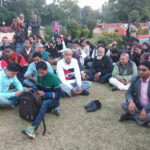
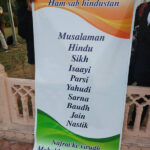
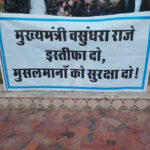
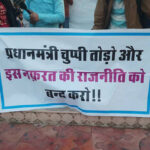
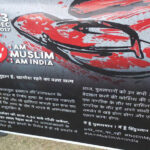
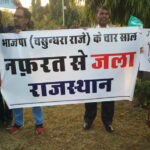
Jaipur:  Since 2015, there has been a drastic rise in hate crimes in India and intensity of every incident after another has been more than previous ones. More than three dozen people have been killed within three years in the name of cow worship, beef eating and now in the name of love-jihad, a term coined by Hindutva forces for inter-religious marriages. On December 6, when Muslims mourned the destruction of Babri Mosque, Malda’s Afrazul (Ifrazul) Khan was murdered in the most gruesome manner by one Shambhu Lal Regar in Rajsamand, Rajasthan. In the last two years, Rajasthan has witnessed several murders of Muslims. But this time, the cruelty broke all parameters. Since then civil societies have been protesting across India. On December 13, when Indian Parliament was attacked by militants, people gathered at Gandhi Circle in Jaipur to say — I am Muslim, I am India to stand against religious militants of India. In Delhi too, a protest under Not In My Name took place and people from all walks of life participated in it.
 

Related articles

India Counts the Cost of Extreme Heat. But Who Counts the Women Losing Work?

India has begun measuring the enormous economic cost of extreme heat, but much less is known about who bears that cost. Women workers, especially those in informal employment, may be among the most affected

‘We Need to Be More Understanding’: Sharmila Tagore Backs Seher Hashmi’s ‘Beyond the Horizon’ Ride

Seher Hashmi’s 7,000-km Beyond the Horizon expedition, flagged off by Sharmila Tagore in Delhi, aims to break mental-health myths and encourage people to seek support.

From GB Meeting Dispute to Campus Clash: What Happened at Jadavpur University

A violent confrontation at Jadavpur University over a proposed FETSU general body meeting left several students injured, as ABVP and Left-backed student organisations traded allegations of assault, vandalism and stone-pelting.

A Lifetime for the Marginalised: Remembering Kazi Mohammed Sherif, Champion of People’s Movements in Bengal

Kazi Mohammed Sherif spent a lifetime standing with marginalised communities, building institutions and strengthening people’s movements. His journey from public service to grassroots activism left behind a legacy of social justice, mentorship and collective action