Mamata Banerjee wins Bhawanipore bypoll by over 58000 votes, secures 72 per cent vote share

0

Kolkata: Bhawanipore bypoll was important not just for Mamata Banerjee to secure her chief ministership in West Bengal, but also to project Trinamool Congress supremo as the strongest opposition leader contending for Prime Ministerial candidate for the 2024 Lok Sabha polls. And the constituency has delivered its verdict – loud and clear.

The by-election results that were delivered weeks ahead of Durga Puja, on a Sunday gave a massive boost to Mamata Banerjee, who won by over 58000 votes by securing 84709 votes. The TMC supremo vote share remained 71.9 per cent.

Bharatiya Janata Party candidate Priyanka Tibrewal got 26230 votes. The BJP candidate was never in the race. In the 21 rounds of counting she couldn’t even reach close to Banerjee leave aside leading any round. Her vote share remained 22.2 per cent, means Tibrewal saved her security deposit by a whisker.

CPIM’s Srijib Biswas remained at distance third, could not save his security deposits.

This is the third win for Mamata Banerjee from Bhawanipore. With this win, she has secured her third term as CM of Bengal too.

Bengal CM while talking after the results mentioned how big was the margin for her win this time in comparison with the other election win margin, each time that she contested from Bhawanipore.

“I did not lose from any single ward. There are over 46 per cent non-Bengali voters in Bhawanipore constituency. Every community has voted for me,” said Banerjee.

TMC chief also announced three bypolls candidates that have been scheduled on October 30 along with her victory speech.

Addressing media persons, the chief minister mentioned, “Since Bengal polls had begun, the entire central government had done several conspiracies to remove us. I have been attacked too so that I could not contest the election. But the public made us win.”

“The matter of Nandigram result is sub-judice so I would not comment on that,” she added.

The TMC chief showed three fingers instead of two fingers as victory sign, to highlight her party’s win in two other seats—Jangipur and Shamshergunj.

She also requested from the Election Commission to keep the campaign time from October 20 to 27 for October 30 by-polls seeing the biggest festival Durga Puja in Bengal.

Meanwhile, Kolkata Mayor and minister in Mamata cabinet Firhad Hakim had already claimed that Mamata Banerjee would win by 50,000 to 60,000 votes. After the verdict, he told newsmen, “It is a revenge of Nandigram. We had given the call to take revenge of Nandigram, which people did. As Subhash Chandra Bose had given the call of Dilli Chalo before independence, after this win, we are giving the same call — Delhi Chalo (March towards Delhi) and BJP Bhagao Desh Bachao (remove BJP and save the country).”

New book offers blueprint for systems change in a deeply divided world 

As the world battles to shake off Covid-19, it appears increasingly stuck; inequality has widened, climate breakdown is accelerating, and many are suggesting that we may have missed the opportunities presented by the pandemic to build a more just and inclusive system. But a new book out this month shows us that a way forward is right under our noses – it just happens to be invisible to most people. The Systems Work of Social Change by Cynthia Rayner and François Bonnici, published by Oxford University Press,offers a fresh – and deeply hopeful – take on the age-old problem of how to change the world.

This book takes a textured view of social systems by illuminating an overlooked source of deep social change: the quiet and often unglamorous work that is happening daily in organizations around the world that have found innovative ways to solve localized challenges.

The book is framed by a fundamental paradox: We live in a world where what Rayner and Bonnici call the “industry of social change” (which Peter Buffet famously termed the “charitable industrial complex”) has grown to be larger than the global finance industry, contributing, on average, 4.5 percent to GDP and employing 7.4 percent of the world’s workforce. Yet social systems remain stubbornly resistant to change.

Rayner and Bonnici argue that if we want change, it is perhaps self-evident that we need to approach things in a “radically different way”. But to do so, they caution, requires us to first understand things in a radically different way. Simply put, “the thinking that got us here, will not get us to where we want to go”. In seeking to understand and reimagine, Rayner and Bonnici distil 200 years of thinking that has shaped the social change movement and turn to the lived experiences of eight leading social purpose organizations and a host of social change practitioners on almost every continent for insights on how to do things differently.

The result is an exhilarating and revealing glimpse into how positive social change actually happens, on the ground, and the processes and practices to drive this. Rayner and Bonnici have surfaced a set of clear and pragmatic insights that will be useful for people grappling with solving the world’s problems large and small; a kind of “how-to” for working in social systems that is both subtle and profoundly game changing.

In many ways this book is a deeply personal journey, born out of a sense of growing unease that the work they were doing was, at best, naïve in its understanding of how change happens. Bonnici and Rayner met at the University of Cape Town Bertha Centre for Social Innovation a decade ago – where Bonnici, a former medical doctor, was the founding director (he has since moved to head up the Schwab Foundation for Social Entrepreneurship) and Rayner was a senior researcher. Working in the tumultuous, unequal yet resilient society of post-apartheid South Africa, they found they had one foot in the world of institutional change-making and the other firmly planted in the “grassroots” work of social change.

Against this backdrop, they were approached by the Schwab Foundation to generate a new set of learnings from organizations tackling the same kind of complex, large-scale, and deep systemic problems they were encountering at the Bertha Centre. The Schwab Foundation hosts the world’s biggest community of accomplished social change leaders, while the Bertha Foundation supported networks of hundreds of social justice activists and social movements around the world.

This ignited a longer-term research engagement with the fundamentals of systemic change. Through the networks they had built with the organizations on the African continent, and globally through the Bertha Foundation and the Schwab Foundation, they spent five years exploring and studying dozens of social change organizations in greater depth than they ever had previously.

The book catalogues this journey, complete with the twists and turns of coming to terms with understanding the world of social change in a radically different way. The two ultimately conclude that systems cannot be “fixed” in the way that the industry of social change confidently sets out to achieve, but they can be changed through the systems work of organizations. They define this work as the day-to-day principles and practices that guide the actions of organizations and individuals as they undertake to change the systems and structures that cause deep problems to persist.

This work emphasizes process and people over outcomes and revolves around three key principles: connection (how people are working together), context (how people adapt their work to their context), and power (who makes the decisions).

“Through systems work, these organizations are engaging in day-to-day actions that acknowledge the depth of systemic problems. They are working to fundamentally alter the way a system functions in relation to change. They are ensuring that the people most immersed in the context of a social problem and who live it every day—the people we call primary actors in the system—are able to engage with the challenge in new ways. In this way, organizations are working within systems to make them function in more responsive and representative ways,” write Rayner and Bonnici.

“When we treat social change efforts with defined starts and ends, we nearly always feel frustrated, since our understanding of what needs to change is necessarily a moving target. However, by focusing on the process of change—asking critical questions such as who deserves? who designs? and who decides?—we can move forward into the future with a greater capacity to adapt.”

Ultimately, this book fills the awkward and unspoken gap between the theory of systems change and the actual practical work that is required to get this done. As such, it has been welcomed by the sector as important and overdue, with Stephan Chambers, Director, Marshall Institute, London School of Economics and Political Science calling it a breakthrough book that “will guide those who work in and think about systems change for a generation.”

Rayner and Bonnici say that they hope that the book will enable practitioners to move from a recognition that things are complex to having a handle on the steps required to navigate this complexity purposefully. And Winnie Byanyima, Executive Director, UNAIDS in her endorsement of the book suggests that this is exactly what it will achieve: “Addressing inequalities and deep-rooted injustices in our society requires a clear vision of the world we want and a process to get there. In The System Work of Social Change, Cynthia and François clearly articulate the key lessons and principles by which we can get there.  A must read for those who believe that together we can build a better world!”

A work of fiction that combines a murder mystery with ideas and characters taken from Hindu mythology

0

If you want a work of fiction that combines a murder mystery with ideas and characters taken from Hindu mythology, then Mayank Mahajan’s Balan & Dheera: A Tale of Kaliyuga has you covered. It cannot escape any sharp reader’s observation that this book is part of a pattern — of books that touch upon Hindu gods and make them into characters and participants in some epoch of human history.

Whereas some authors have weaved their mythology-laden tales during bygone ages when kings and kingdoms were the order of the day, Mr Mahajan has set his story in a contemporary setting — complete with chartered flights and cellphones and social media.

A modern setting no doubt offers many ways to connect with readers by creating characters that readers can relate to. At the same time, one can choose to comment on all the evils of human character in the modern age — Kaliyuga, as the Hindu timeline defines it.

In his tale, the author doesn’t hesitate to link ancient knowledge systems with modern scientific concepts — from Newton’s Laws to quantum physics, the space-time continuum and perhaps even dark energy and black holes.

The book begins with a series of mysterious murders taking place in some of the largest Indian cities — New Delhi and Lucknow. The murders are rather gruesome. The book’s principal characters are those in charge of solving these murders — police officers and a medical examiner. The names of the characters in the book are only their first names — Balan, Sathya, Maruti, Geeta, Anant, Meera, Vijaya and so forth. Only ‘Baij Nath’ is the exception.

As the investigation takes the police officers to the senior priest Baij Nath in Kashi, the tale gets uniquely intriguing as it links the murders to ancient rituals performed to capture souls. We learn about ‘Masters of Spirit’ and ‘negative energy’ and how the negative energy had been sealed forever.

The investigators figure out that there is a pattern to the murders — they all take place on days or nights of the full Moon. The victim belongs to the Zodiac sign applicable to that month. Thus alerted, the sleuths use some high tech computer wizardry to try and protect potential victims. The police fail miserably and also witness some extraordinary powers of the killer, Balan.

Baij Nath is sought out as the expert in religious matters and the only person who can solve this murder mystery. Nath has his theories. Sample this: “When I met the two police officers, who helped me discover the loss of ancient knowledge that I was entrusted with, I felt great sorrow. Among the scrolls that were stolen were practices to harness cosmic energy from souls for times of despair.”

Nath also says: “The soul has a fragile balance between good and bad. When the great powers sealed the evil back in Vedic times, they were able to get rid of the major clusters. But negativity, in traces, had seeped inside everything. That is why the Masters decided to leave traces of their energy all over the universe, so that life would remain in balance.”

On the Zodiac signs, Nath has this to say: “The twelve zodiacs, as you may or may not know, are not just astrological symbols but barriers that cover humanity. When the negative and the positive traces from the tyrants and the Masters amalgamated, they formed twelve variations in the balance of energies. The balance was only off by minor fractions. But it caused personality and ambition differences in individuals who fell under these variations. This barely maintained balance is what keeps mankind away from its latest potential for evil.”

Nath says about modern life: “The modern life and its ways have already been tipping the scale against humanity itself, but since the individual acts of negativity are not as substantial, the skewed scale has somehow maintained balance.”

In Nath’s telling, humanity’s future goes like this: “Greed, lust, gluttony, pride, envy, sloth and wrath, the sins that plague society today, have reduced the humanity quotient in humans, draining away the strength and corrupting the barriers. The judgement of mankind for all its collective wrongdoings, through the natural cycle, is inevitable. The human character will be repeatedly tested over centuries, and the race itself will choose its rise or fall.”

Nath warns that Balan is no ordinary criminal: “He is attacking these barriers and allowing the negativity to overpower the positive in order to reveal to the cosmos, what he considered as the true face of mankind.”

As the murders continued and the police officers’ plans to capture Balan ‘in the act’ failed, things kept getting worse and more desperate. People were rioting in the big cities and civilization itself was in danger of collapsing.

As Maruti soughts out Baij Nath in Jammu after taking the help of a journalist friend, Anant, Baij Nath spells out how grim the situation really was. Baij Nath explained how the Vedas recorded the birth of man as a part of many cosmic wonders, created by Lord Brahma, “when he brought the cosmos itself into existence.”

Things only keep getting worse. Balan displays more astonishing feats than ever before.

As Baij Nath tries to find a ‘solution’ to the Balan problem, Maruti also vanishes in a most astonishing fashion.

The scene shifts from Jammu to Bengaluru to the Padmanabhaswamy temple in Kerala. To explain the strange occurrences, Baij Nath talks about ‘dimensional barriers’ and other esoteric concepts such as time flowing in circles or in parallel and different timelines occasionally bumping against each other.

Meanwhile, the legend of ‘Dheera’ is touched upon in some detail. This is someone who was a contemporary of Ram and Laxman. Figures of mythology such as King Dasrath, Guru Vasishta and Rishi Bhardwaj make appearances in this section.

As we reach the last few chapters of this tale, we see a climactic battle between good and evil as it were. Many miracles take place and artefacts such as Shiva’s Trishul (or trident) make an appearance as does the Tandava dance of Shiva.

Even the very last few pages are full of many surprising twists and turns in the tale. The ‘climax’ is unpredictable and the writing style of the author keeps the reader glued to the book till the end.

From the graphic nature of the murders in the early pages to the cosmic-scale miracles towards the end as the epic battle reaches a climax, this is a book that is full of a lot of descriptive details. If you have grown up watching Hollywood thrillers like Interstellar or Tenet, and thought about how unlikely the plot points in those movies were, the book under review is in that class.

রাজেশ খান্না যখন হৃষিকেশ মুখোপাধ্যায়ের আগে তৃতীয় নেওয়ার সাহস করতে পারেননি

0

কলকাতা: নমক হারামের ক্লাইম্যাক্সের শুটিং করছিলেন হৃষিকেশ মুখোপাধ্যায়। দুটি নেওয়ার পর রাজেশ খান্না তৃতীয়টির জন্য পরিচালককে অনুরোধ করেন। এর জবাবে হৃষিকেশ মুখোপাধ্যায় কড়া জবাব দেন এবং অভিনেতাকে তার পকেট থেকে অতিরিক্ত কাঁচা মজুদের জন্য অর্থ দিতে বলেন। রাজেশ খান্না তার পরিচালককে আর বিরক্ত না করার সাহস করেন এবং দ্বিতীয়টি নিয়ে সন্তুষ্ট হন যা শেষ পর্যন্ত ক্যানড ছিল। এটি ছিল বহু-প্রতিভাবান হৃষিকেশ মুখোপাধ্যায়ের একটি দিক যার শতবর্ষ এই বছর। হৃষিদা যেভাবে তাঁকে সমগ্র চলচ্চিত্র মহল শ্রদ্ধার সঙ্গে ডাকত, তিনি ছিলেন প্রকৃত অর্থে একজন টেকনিশিয়ান।

কলকাতা বিশ্ববিদ্যালয় থেকে বিজ্ঞানে স্নাতক শেষ করার পর, হৃষিকেশ মুখোপাধ্যায় বিজ্ঞান ও গণিতের শিক্ষক হিসেবে সুপরিচিত ছিলেন। তিনি একজন দক্ষ দাবা খেলোয়াড়ও ছিলেন। সিনেমার প্রতি তার অনুরাগ শুরু হয়েছিল প্রমথেশ বড়ুয়ার মুক্তি দেখার মাধ্যমে। হৃষিকেশ মুখোপাধ্যায় প্রমথেশ বড়ুয়ার অভিনয় এবং কারিগরি দক্ষতার দ্বারা গভীরভাবে অনুপ্রাণিত হয়েছিলেন। হিন্দিতে, ভি. শান্তরামের সামাজিকভাবে উদ্বিগ্ন চলচ্চিত্রগুলিও তাকে চলচ্চিত্র নির্মাণের দিকে যেতে অনুপ্রাণিত করেছিল। তাই বিমল রায়, সলিল চৌধুরী এবং নবেন্দু ঘোষের সাথে তিনি সেলুলয়েডের জগতে ভাগ্য অন্বেষণ করতে মুম্বাই চলে যান।

হৃষিকেশ মুখোপাধ্যায় বিমল রায়ের দলে সম্পাদক হিসেবে যোগ দেন এবং দো বিঘা জমিনের চিত্রনাট্য প্রক্রিয়াতেও অংশগ্রহণ করেন। বিমল রায়কে সাত বছর সম্পাদক হিসেবে সহায়তা করে তিনি নিজেই পরিচালক হওয়ার উদ্যোগ নেন। তার অভিষেক ছিল মুসাফির যেখানে দিলীপ কুমার, সুচিত্রা সেন এবং কিশোর কুমারের মতো শীর্ষ অভিনেতারা অভিনয় করেছিলেন। তিনি এবং ঋত্বিক ঘটক মুসাফিরের চিত্রনাট্য লিখেছেন। চলচ্চিত্রটি একটি ফ্লপ ছিল তবুও হৃষিকেশ মুখার্জি রাজ কাপুর এবং নূতন অভিনীত তার দ্বিতীয় পরিচালনামূলক উদ্যোগ আনারি দিয়ে চলচ্চিত্রে নিজেকে একটি নিরাপদ স্থান তৈরি করেছিলেন। এটি একটি সুপার হিট ছিল এবং হৃষিকেশ মুখোপাধ্যায়কে পিছনে ফিরে তাকাতে হয়নি।

নিতিন বোস এবং বিমল রায়ের পরে, তিনি হিন্দি ছবিতে মধ্যম সিনেমার আন্দোলনকে সত্য উচ্চতায় নিয়ে যান। অনুরাধা তার সেরা চলচ্চিত্র বিষয়বস্তু এবং কৌশল অনুসারে অনুমিত হয়। অনুপমা, অভিমান এবং গোলমালের মতো আবেগপূর্ণ চলচ্চিত্র এবং রোলিকিং কমেডির জন্য হৃষিদা চিরকাল স্মরণীয়। যদিও তিনি সত্যকামকে তাঁর সত্যিকারের ব্যক্তিগত সৃষ্টি হিসেবে বিবেচনা করেছিলেন, অন্য অনেকেই মনে করেন আনন্দ এবং গুড্ডি তাঁর সত্যিই স্মরণীয় দিকনির্দেশনামূলক উদ্যোগ। হৃষিকেশ মুখোপাধ্যায় মূলত পরিচালনা ও সম্পাদনায় মনোনিবেশ করেন। তিনি বিরল ক্ষমতা সম্পন্ন অভিনেতাদের পরিচালনা করতে পারতেন এবং অশোক কুমার থেকে ধর্মেন্দ্র থেকে রাজেশ খান্না, অমিতাভ বচ্চন এবং শর্মিলা ঠাকুরের পাশাপাশি জয়া বচ্চন ক্যারিশম্যাটিক পরিচালকের সাথে কাজ করার স্মৃতি লালন করেছিলেন।

হৃষিকেশ মুখার্জি প্রমথেশ বড়ুয়া, ভি শান্তরাম, বিমল রায় এবং সত্যজিৎ রায়কে তাঁর মূর্তি মনে করতেন। তিনি সর্বদা প্রমথেশ বড়ুয়ার কাছ থেকে গল্প বলার শিল্প, ভি শান্তরামের কাছ থেকে বিষয় নির্বাচন, বিমল রায়ের কাছ থেকে প্রযুক্তিগত নিখুঁততা এবং নান্দনিকতা এবং সত্যজিৎ রায়ের কাছ থেকে সিনেমার ত্রুটিহীন উপস্থাপনা শেখার কথা স্বীকার করেছেন। বাংলার পরিচালকরা মৃণাল সেনই হোন, তপন সিনহা বলদ চৌধুরী মুম্বাইয়ে হৃষিকেশ মুখার্জির কাছে একজন আদর্শ হোস্ট পেয়েছিলেন। মাধবী মুখোপাধ্যায়ের এখনও মনে আছে হৃষিদা তার দাবা খেলায় কতটা সূক্ষ্ম ছিলেন।

গোলমালে অমল পালেকার পরিচালনা করার সময় হৃষিকেশ মুখার্জি প্রায়ই তাকে দেব আনন্দ বলতেন। তিনি ইচ্ছাকৃতভাবে সেই চিরসবুজ নায়কের নাম রেখেছিলেন যাকে তিনি সফলভাবে অমল পালেকারের আন্দোলন এবং গতিতে অনুপ্রাণিত করার জন্য আসলি নাকলিতে পরিচালনা করেছিলেন যে অমল একজন দেব আনন্দ ভক্ত ছিলেন।

তার সিনেমা ছাড়াও, হৃষিদা গঙ্গা জুমনা এবং ইয়াকিনকে চটকদারভাবে সম্পাদনা করেছেন এবং কুলিকে নিছক সম্পাদনার দক্ষতার উপর ভিত্তি করে একটি সত্য গল্পের বিন্যাস দিয়েছেন।

When Rajesh Khanna could not dare to give third take before Hrishikesh Mukherjee

0

Kolkata: Hrishikesh Mukherjee was shooting the climax of Namak Haram. After two takes Rajesh Khanna requested the director for a third one. To this Hrishikesh Mukherjee replied sternly and asked the actor to pay for the extra raw stock from his pocket. Rajesh Khanna dared not to annoy his director anymore and was satisfied with the second take which was finally canned. This was one aspect of the multi-talented Hrishikesh Mukherjee whose centenary is this year. Hrishida as he was called with respect by the entire film fraternity was a technician in the true sense.

After completing his graduation in science from Calcutta University, Hrishikesh Mukherjee was well known as a teacher of science and mathematics. He was also an accomplished chess player. His fondness for cinema started with his viewing of Pramathesh Barua’s Mukti. Hrishikesh Mukherjee was deeply moved by Pramathesh Barua’s sense of acting and technical finesse. In Hindi, the socially concerned films of V. Shantaram also inspired him to turn to filmmaking. So along with Bimal Ray, Salil Chowdhury and Nabendu Ghosh, he moved to Mumbai to seek a fortune in the world of celluloid.

Hrishikesh Mukherjee joined Bimal Ray’s team as an editor and also participated in the scripting process of Do Bigha Zamin. Assisting Bimal Ray as an editor for seven years he ventured on his own to become a director. His debut was Musafir which starred top actors like Dilip Kumar, Suchitra Sen and Kishore Kumar. He and Ritwik Ghatak penned the script of Musafir. The film was a flop yet Hrishikesh Mukherjee carved himself a secure niche in films with his second directorial venture Anari starring Raj Kapoor and Nutan. It was a super hit and there was no looking back for Hrishikesh Mukherjee.

After Nitin Bose and Bimal Ray, he took forward the movement of middle cinema in Hindi films to true heights. Anuradha is supposed to be his best film content and technique-wise. Hrishida is remembered forever for emotionally gripping films and rollicking comedies like Anupama, Abhiman and Golmaal. Though he considered Satyakam as his truly personal creation many others feel Anand and Guddi were his truly memorable directional ventures. Hrishikesh Mukherjee concentrated mainly on directing and editing. He could handle actors with rare abilities and everyone from Ashok Kumar to Dharmendra to Rajesh Khanna, Amitabh Bachhan and Sharmila Tagore as well as Jaya Bachhan cherished memories of working with the charismatic director.

Hrishikesh Mukherjee considered Pramathesh Barua, V. Shantaram, Bimal Ray and Satyajit Ray his idols. He always confessed to learning the art of storytelling from Pramathesh Barua, choice of subjects from V. Shantaram, technical perfection and aesthetics from Bimal Ray and flawless presentation of cinema from Satyajit Ray. Directors from Bengal be it Mrinal Sen, Tapan Sinha ox Chowdhury found an ideal host in Hrishikesh Mukherjee at Mumbai. Madhabi Mukherjee still fondly remembers how meticulous Hrishida was in his chess play.

While directing Amol Palekar in Golmaal Hrishikesh Mukherjee often said him Dev Anand. He deliberately named the evergreen hero whom he successfully directed in Asli Naqli to inspire movement and pace in Amol Palekar knowing well that Amol was a Dev Anand fan.

Besides his movies, Hrishida edited Ganga Jumna and Yakeen crisply and gave Coolie a true story format based on sheer editing skills.

CPIML: Moinul’s children are traumatised, daughter sobbing inconsolably, had not had anything to eat or drink since incident

0

Kolkata: “We met his (Moinul Haque) small daughter and son. The daughter was sobbing inconsolably and had not had anything since the incident took place. The family and community are traumatised, children in particular. The entire family is living under a makeshift house made of tin,” mentioned , press release shared by the CPIML team, after meeting the family.

A CPIML Liberation team visited the site of the infamous eviction and killing at Dhalpur, Darrang district, Assam.

On September 25, a delegation led by CPIML met the family members of Moinul Haque, the very poor peasant who was shot dead by Assam Police.

The report also pointed out, “We saw two homes near Moinul Haque’s house, which had not only been demolished but also burnt down.”

The incident, which came to the fore because of a video going viral, had shocked the world, especially in the manner, the poor peasant was shot at and then a photographer pouncing on his motionless body. “Moinul was defending his home from arson and firing by the police & the ‘photographer’ associated with the DM’s office. What can justify 17 Assam police personnel opening fire on a lone man armed with nothing but a stick? This is not crowd control, it is not an ‘encounter’, it is murder,” the members claimed.

The report also said that no process of eviction was followed by the administration, and they termed it, ‘illegal evictions.’

Eviction Notices have been served to some through Whatsapp calls the previous night, some got notices after eviction, and some have not yet received notices at all.

The visiting team questioned, “What was the tearing hurry to evict by force, without even serving notices properly?”

cpiml visits assam moinul haque darrang eviction
A dismantled house (probably) of Moinul Haque at Dhalpur village in Darrang | Courtesy: CPIML Liberation

The administration has acted against the locals as encroachers, but most of them had settlement papers and they lost their land from flood-related erosion.

The team termed the ‘encroachers’ as erosion affected farmers.

“The evicted households have settlement papers dating back to 7 February 1979, showing that they have been paying occupancy charges. The government has set up Aanganawadi Kendras and schools among others. When the river floods their land they are displaced onto government land. How can such households be termed ‘encroachments’?” it reads.

The team also found that the Land Policy is unjust, and made to benefit Corporates, not ‘indigenous’ people.

“The 2019 Land Policy and Brahma Committee report talks of evicting non-indigenous “encroachers” from government land which will be distributed to ‘indigenous’. The definition of ‘indigenous’ is not provided in the policy – why are families of Bengali-descent Muslims considered non-indigenous when they have lived on the land for 4 or 5 decades.”

Moreover, erosion-affected persons in Laika and Dadiya in Tinsukia who fit the BJP’s definition of “indigenous” are yet to get the government land they are demanding. Why divide erosion affected persons based on ethnicity or religion?

The fine print of the Land Policy makes it clear that even the “indigenous” Assamese are not going to receive any land. The whole thing is a ploy to grab land to hand over to corporate as is already happening near the airport, at Mikir Bamuni among others.

cpiml visits assam moinul haque darrang eviction
The river side at Dhalpur on the edge of which Moinuln and other locals used to live | Courtesy: CPIML

After visiting, CPI-ML​made demands:

The CM Himanta Biswa Sarma responsible for the communal eviction policy and his brother the SP of Darrang Sushanta Biswa Sarma conducted the murderous attack must resign.

Directions of the Supreme Court in its order dated 23.09.2014 in People’s Union for Civil Liberties vs. Union of India [(2014) 10 SCC 635] (on police encounter killings) must be strictly complied with. There should be a registration of FIR regarding the killing of Moinul Haque and Sheikh Farid. An independent investigation into this must be conducted by the CID or police team of another police station under the supervision of a senior officer. The police officer(s) concerned must surrender their weapons for forensic and ballistic analysis, including any other material as required for investigation.

The SP Darrang and police personnel involved in firing and arson must be sacked, arrested and charged under all appropriate criminal sections including murder, arson and attempt to murder.

No more evictions of the poor under any pretext. Instead evict the super-rich who have built resorts in forest core zones, tea companies who have occupied 6354 acres of land to illegally set up tea gardens, encroachments by industries in tribal belts, and the BJP office built on Govt land in Guwahati.

Stop the communal propaganda claiming that temples are being encroached on by ‘illegal immigrants’. In fact, at Darrang the temple has been kept safe in an area where almost 99% families are Muslim. The Hindu caretaker of the temple Parvati Das has also been evicted under the Land policy. If the Govt speaks of preserving sacred sites (“satras”) – why is the land grab near the airport destroying the “koita siddhi satra” near it?

Local communities are providing relief to the displaced persons but the Government must take responsibility and provide relief including medical camps, drinking water, food, shelter, and hygiene.

All evicted persons at Darrang must be restored to their lands and their homes must be rebuilt.

The team comprised Politburo member Kavita Krishnan, CPIML MLA from Bihar Comrade Rambali Singh Yadav, Central Committee member and Karnataka secretary Clifton D’Rozario, Central Committee member and Assam State Committed member Balindra Saikia. They were accompanied by Bihar youth activist Ravi Ranjan,

AIKS leader Jayanta Gogoi, Jipal Krishok Sromik Sangha leader Pranab Doley, Sangrami Krishok Sromik Sangha leaders Dinesh Das and Jehirul Islam.

Bhawanipore victory will bring a new dawn in Indian politics: Mamata Banerjee

0

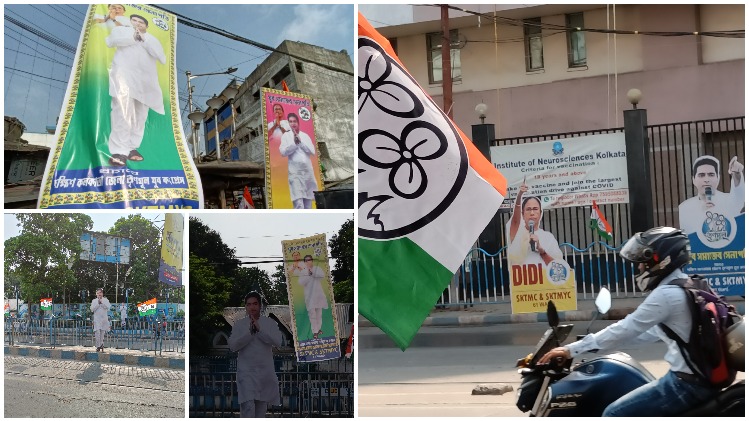
Kolkata: Bengal chief minister Mamata Banerjee who is contesting from Bhawanipore constituency to get elected as a legislator for the state assembly to continue her tenure as chief minister, hinted at the importance of her winning the bypoll. The victory would carver out a bigger national role national politics for her and TMC. She said at a public meeting at Jadubabu Bazar, Kolkata.

“You people made us win the Bengal election, now Bhawanipore victory will make a new beginning in our politics,” she told the crowd as they cheered the CM and Trinamool Congress candidate, who continued, “Thereafter, we will go across India. We will go to Tripura, Assam, UP and other states.” 

After the mandate for third consecutive terms for her party TMC, political observers believe that Mamata Banerjee will be a strong opposition face against Prime Minister Narendra Modi in 2024 Lok Sabha polls. The TMC chief had also visited national capital Delhi after her massive win and besides meeting PM Modi, she had met several opposition leaders to connect dots among the opposition parties in India. 

As, the TMC supremo contesting by-poll, to ensure her tenure as the CM, on Sunday, the second last day of campaigning, she made it clear, how important her win would be for national politics.

Bengal CM also attacked Tripura chief minister Biplab Deb for criticizing the judiciary and terming himself beyond everything. “I have a video, in which a BJP CM is saying that he is above law. He says, he does not care about courts. We do criticize court judgments, but how can we claim that we are above law?” Banerjee questioned.

“I have the video and if any citizen wants to lodge a defamation case against him, they can take it from me,” said Banerjee.

Earlier Bengal chief minister mentioned how in BJP ruled states, TMC leaders were not being allowed to enter. “They did not let our partymen to meet victims, it happened in Uttar Pradesh after Hathras gangrape incident, in Assam when people get killed because of NRC and our leaders want to meet them, they did not get permission, in Tripura also they doing same.

“But there is no such issue for BJP leaders when they visit Bengal. They come and dance here, dance means not dandia, means doing ulta-pulta thing (nonsense activities),” she pointed out.

The three-time chief minister and TMC chief in her 35 minutes long speech- whenever spoke on politics, she used Hindi language and when she mentioned her government’s work, her language choice remained in Bangla.

The 66-year-old seasoned politician, also used many couplets in her speech, from Sarfaroshi Ki Tamanna Ab Hamare Dil Mei Hai, Dekhna Hai Zor Kitna Baju-e-Qatil Mei Hai (The desire for revolution is in our hearts, let’s see how to strengthen the enemy has) to Roshni Chand Se Hoti Hai, Sitaaron Se Nahi, Mohabbat Ek Se Hoti Hai Hazaron Se Nahi (Light comes from the moon, not from stars, Love happens with one, not with thousands), connecting it with people’s love for her party TMC and that it could not happen with CPIM, Congress and BJP.

Bengal CM mentioned her government’s work during pandemics and lockdown, while accusing the BJP of doing nothing.

“BJP has no humanity. They left migrant workers on road. They did not even bear the cost of train fare. We did. We paid train fares. We brought our people from buses,” she mentioned.

TMC chief continued and alleged, “BJP beats and kills people it does not save life.”

Before the TMC supremo’s speech, the party’s All India General Secretary and Diamond Harbour MP Abhishek Banerjee who was also present at the meeting had spoken at length and challenges BJP to stop him from going to Tripura, when he has been allegedly attacked by BJP cadres.

He had tweeted on Tripura CM’s controversial remarks demanding Supreme Court to take cognizance of Deb’s comments.

“@BjpBiplab is a DISGRACE to the entire nation! He shamelessly mocks Democracy, MOCKS the Hon’ble JUDICIARY and seemingly gets away with it! Will the SUPREME COURT take cognizance of his comments that reflect such grave disrespect? (sic)”.

Assam killings pre-planned, says Kolkata’s civil society

0

Kolkata: Assam’s Bharatiya Janata Party government, has sown seeds of hatred against Bangla speaking Muslims in the mind of the people and planned the Assam killings, believe members of civil society in West Bengal.

A huge number people belonging to several civil society groups staged a protested in front of Assam Bhavan to register their anger against the brutal killings of three people including Maynal Haque and Shaikh Farid by Assam police, during the eviction drive.

A video that went viral on Thursday, showed the state police firing at a man coming towards them with a stick in hand, on Wednesday during the eviction drive. Not only did policemen fire on his bare chest from point-blank range but also lathi-charged his dead body. The video also showed professional camera man pouncing on the body of the deceased while he breathed his last.

Significantly, the superintendent of police of Darrang district is Sushanta Biswa Sarma, brother of Assam chief minister Himanta Biswa Sarma. 

The incident has angered all the right-thinking individuals. But apart from arresting the cameraman Bijoy Bonia, the Assam government did not take any action against Darrang police.

assam killings horror bengali muslims kolkata
Protesters at Assam Bhavan, Kolkata

“The killings of Bangla speaking Muslims were pre-planned. Else it would not happen at the district where the chief minister’s brother would be posted. And a government photographer would have not danced on a dying person’s body. But we will not let this go. Such a shameful incident has not happened anywhere in the world in recent history. We demand the resignation of Himanta Biswa Sarma. There will be bigger protests in coming days,” reacted Samirul Islam, of Bangla Sanskriti Mancha.

CPIML’s Sumon Sengupta said, “All these are the outcome of the politics of hatred propagated by the BJP against Muslims. In all BJP ruled states, Muslims are facing atrocities for one or another reason. But, we will continue our fight against it.”

The organizations which participated in the protest were— Bhumiputra Unnayan Morcha of India (BHUMI), Bangla Sanskriti Mancha, AISA, DYFI, RSP, SPDI, SIO among others. There were people from all fields of life, activists, professionals and civilians. Women and children had also come with placards to protest against the ‘barbaric killings’ by Assam police.

Today, a large number of people also hit the street to raise their voice against the horrific incident in national capital Delhi and Jharkhand’s capital Ranchi.

“The video is so horrifying that it crossed all the limits of inhumanity. What happened is state terrorism by Himanta Biswa Sarma. It is ethnic cleansing and mockery of the Indian constitution,” said Manzar Jameel, a social activist.

assam killings horror bengali muslims kolkata
Protesters at Assam Bhavan, Kolkata

Murad, a software professional, who is associated with BHUMI said, “I have to come here because Bangla speaking Muslims are always targeted in Assam. Earlier Nellie massacre happened and now this.”

“The people of India, who care about the rights of Afghanistan women, are good and should be appreciated. But they should worry about women in India too, who are becoming widows, because of such killings in BJP ruled states,” said Sucheta Dey, of CPIML.

“In Assam, all parties including BJP and Congress have created this situation against Bangla speaking Muslims. It is not just politics of power, but politics of hate that is being done by society at large in Assam. If you visit Assam, in many places, you will find it is written, throw out Bangla speaking people,” mentioned Shaikh Abid of ISF. 

Nousheen Baba Khan, an activist added, “Does Maynal Haque’s murder during the eviction enrage you more because his name was listed in the NRC? Would his killing justified if his name was not listed on the NRC list? Does it enrage you more because he was a Muslim or because he was a Bengali Muslim? You see this from different lenses because these power mongers want you to see things in this manner. They will keep you busy in such incidents to hide their acute failures in the economy and on several other areas.”

ये केवल एक मिनट बारह सेकेंड का वीडियो है

0

सके पहले फ्रेम में सात पुलिसवाले दिख रहे हैं। सात से ज़्यादा भी हो सकते हैं। सभी पुलिसवालों के हाथ में बंदूकें हैं। सबने बुलेट प्रूफ जैकेट पहन रखे हैं। तरह-तरह की आवाज़ें आ रही हैं। तड़-तड़ गोलियों के चलने की आवाज़ें भी आ रही हैं। कैमरे का फ्रेम थोड़ा चौड़ा होता है। अब सात से अधिक पुलिस वाले दिखाई देते हैं। गोली की आवाज़ तेज़ हो जाती है। एक पुलिसवाला हवा में गोली चला रहा है।एक के हाथ की बंदूक नीचे है। एक पुलिसवाला सीने की ऊंचाई के बराबर गोली चला रहा है। दूसरी तरफ से दो तीन पुलिस वाले भागे आ रहे हैं। उनके आगे एक आदमी भागा आ रहा है। वह ढलान से उतरता हुए तेज़ भागा आ रहा है लेकिन सामने से पुलिस वाले भी तेज़ी से उसकी तरफ बढ़े जा रहे हैं। अब वीडियो के फ्रेम में कई पुलिस वाले दिखाई देते हैं। एक पुलिस वाला उस आदमी पर बंदूक ताने दिखता है। एक लाठी उठाए दिखता है। कुछ और पुलिस वालों के हाथ में लाठियां हैं। भागने वाले आदमी के हाथ में भी लाठी दिख रही है। गोलियों के चलने की आवाज़ आती जा रही है। निहत्था भागता आया आदमी नीचे गिरा दिखता है। यहां तक वीडियो के 9 सेकेंड हो चुके हैं। सिर्फ 9 सेकेंड में आप इतना कुछ होते देखते हैं। जितना कुछ ख़ुद को दिन रात महान और सहिष्णु बताने वाले इस मुल्क को आप कई हज़ार साल में नहीं देख पाते हैं।

अब अगले छह सेकेंड में जो दिखता है वह भयावह नहीं है। आपके लिए जो क्रूरता और बर्बरता है, वह किसी के लिए संवैधानिक कर्तव्य हो सकता है। संविधान जिसने सबको बराबर माना है। वीडियो के 9 से 15 सेकेंड के बीच कई पुलिस वाले उस गिरे हुए और मरे हुए आदमी पर टूट पड़ते हैं। लाठियों से मार रहे हैं। गोलियों के चलने की भी आवाज़ें आ रही हैं। लोगों की आवाज़ें भी आ रही हैं। सब कुछ मिटा देने की इस कार्यवाही में एक कैमरा है जो इस पूरे प्रसंग को मिटने से बचा रहा है। सभी गतिविधियों को रिकार्ड कर रहा है। वही कैमरा ज़रा और खुलता है या कहिए कुछ पुलिस वाले कैमरे के सामने से हट जाते हैं।

एक लड़का सा दिखाई देता है। वह वर्दी में नहीं है ।उसके कंधे से बेल्ट के सहारे एक बैग लटका है। गर्दन में उसने सफेद और लाल रंग का गमछा लपेटा है। यह गमछा असम की पहचान है। इस लड़के के हाथ में एक कैमरा भी है। यहां तक वीडियो के 26 सेकेंड हो गए हैं। मैंने पॉज़ कर दिया था ताकि पुलिस और उस लड़के की बर्बरता को एक एक फ्रेम में देख सकूं। बिना वर्दी वाला वह लड़का लाश की तरफ तेज़ी से दौड़ता हुआ जाता है और मरे हुए उस आदमी की छाती पर कूद जाता है। काफी ऊंचाई से कूदता है। मैंने ओलिंपिक में इसी तरह किसी को कूदते देखा था। नाम याद नहीं। किसे देखा था। कूदने के बाद वह लड़का तेज़ी से कैमरे की तरफ़ मुड़ता है। तभी एक सिपाही उस मरे हुए आदमी पर ज़ोर से डंडे मारता है। मरा हुआ आदमी कोई प्रतिकार नहीं करता है। मरा हुआ आदमी मरे हुए आदमी पर वार करता है। कैमरे वाला लड़का ख़ुद को संभालता है और इस बार गर्दन पर कूदता है। थोड़ा आगे आता है और फिर से मुड़ कर मरे हुए व्यक्ति की तरफ पहुंचता है और इस बार मुक्के से उसकी छाती पर मारता है। एक बार और मुक्के से मारता है। एक पुलिसवाला उसे ऐसा करने से रोकता है। वहां से हटाता है। यहां तक वीडियो के 35 सेकेंड हो चुके हैं ।

अब सारे पुलिसवाले कैमरे के फ्रेम से हट जाते हैं। इतना सब कुछ हो चुका है लेकिन रिकार्ड करने वाले कैमरे को थामने वाला हाथ नहीं कांपता है। स्थिर है। गोलियों के चलने की आवाज़ें आ रही हैं। बहुत से लोगों के हल्ला करने की भी आवाज़ पीछे से आ रही है। एक लाश पड़ी दिखाई देती है। जैसे वह गिरने से पहले सावधान मुद्रा में होने का अभ्यास कर रही हो। एक दूसरा आदमी लाश की तरफ बढ़ता दिखाई दे रहा है। उसने जीन्स की पतलून पहनी है। पूरी बांह की कमीज़। वर्दी वाला नहीं है। रिकार्डिंग वाला है। उसके कंधे से भी एक बैग लटका है। जो कैमरा इन सबको होता हुआ रिकार्ड कर रहा है वो तेज़ी से लाश की तरफ बढ़ता हुआ लाश पर जाकर रुक जाता है। मैंने पॉज़ कर दिया है। 46 सेकेंड हो चुके हैं। प्ले कर देता हूं।

जिस व्यक्ति की मौत अब हर तरह के संदेह से परे हो चुकी है, उसने बनियान पहनी है। पुलिस के साथ भागा भागी में कुर्ता कहीं रह गया या वह बनियान में ही घर से निकला होगा। उसकी छाती पर चूड़ी बराबर गोलाई दिख रही है। जिसमें किसी ने लाल रंग भर दिया है। लगता है गोली छाती में सुराख़ बनाती हुई पार निकल गई है। ख़ून के छीटें भी दिखाई नहीं दे रहे हैं। गोली ने उतना ही सुराख़ किया है जितना उसे मारने के लिए ज़रूरी होगा। ख़ून के गोल धब्बे के अलावा बनियान एकदम साफ और सुरक्षित है। किस कंपनी का बनियान है, दूर से पता नहीं चलता है। उसकी लुंगी ऊपर तक मुड़ी है। हरे रंग की है। बायें पांव में रक्त के निशान हैं। सर के पास एक गमछा गिरा है। यहां तक वीडियो के 52 सेकेंड हो चुके हैं।

जैसे ही 54 सेकेंड होता है, अचानक वही बंदा तेज़ी गति से दौड़ता आता है और मरे हुए इंसान की छाती पर ज़ोर से कूद जाता है। इतनी ज़ोर से कूदता है कि खुद दूर जा गिरता है। वह फिर से वापस आता है और ज़ोर से उसकी छाती पर मुक्का मारता है। उसे रोकने जैसी आवाज़ें आ रही हैं। यहां तक वीडियो के 59 सेकेंड हो चुके हैं। एक पुलिस वाला लाश पर कूद कूद कर लात और मुक्का मारने वाले को हटा कर दूर ले जा रहा है। लाश अकेले में पड़ी है। 1 मिनट 12 सेकेंड हो चुका है।

इस 1 मिनट 12 सेकेंड के वीडियो को देखा जा सकता है। मुझे लगा कि मैं नहीं देख सकूंगा। आप भी देख सकते हैं। आए दिन आप इस तरह के वीडियो देखते रहते होंगे।

जिसमें लोग एक दूसरे को मार रहे हैं। पुलिस लोगों को मार रही है। आप पहले से ही मरे हुए हैं। आपको पता नहीं चलता है कि पुलिस देखने वालों को मार रही हैं। बता रही है कि इस तरह से मारे जाने की बारी किसी की भी आ सकती है।

इस देश में अदालत है। कई तरह की अदालतें हैं। कानून है। कानून की प्रक्रिया है। आप सभी ऐसा ज़रुर मानें। जैसा पुलिस कहे, वैसा ही मानिए। वर्ना 1 मिनट 12 सेकेंड से कम के वीडियो में आप निपटा दिए जाएंगे। ये विश्व गुरु भारत है।

मैंने वीडियो साझा नहीं किया है। महान फेसबुक के सामुदायिक नियमों को तोड़ना ठीक नहीं है। जब संवैधानिक नियमों को इस तरह तोड़ा जा रहा है तब फेसबुक के सामुदायिक नियमों की रक्षा में ही सबकी रक्षा है। आइये हम सब अंबेडकर जयंती मनाते हुए संविधान को छोड़ सामुदायिक नियमों का पालन करें। आमीन। जय हिन्द।

Has Babul Supriyo’s induction into TMC made Muslims uncomfortable?

0

Kolkata: The induction of Babul Supriyo, Member of Parliament from Asansol into Trinamool Congress has not gone down well with the Muslim community of West Bengal.

The 50-year-old two-time Asansol MP was a junior minister (till July) in PM Modi cabinet

The singer-turned politician joining the ruling party is being considered as a big blow to the Bharatiya Janata Party in Bengal and a significant gain for the TMC.

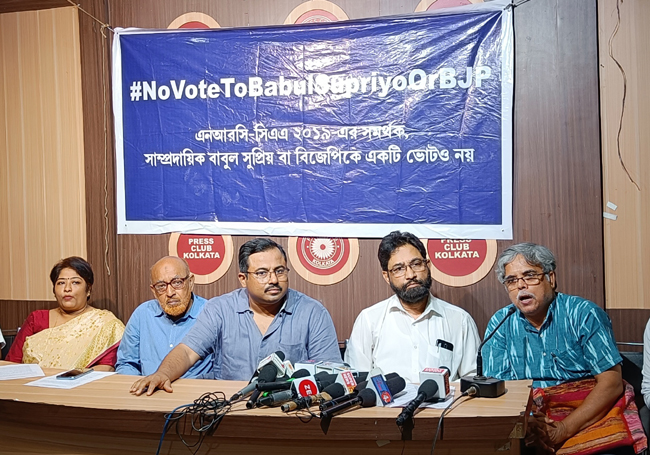
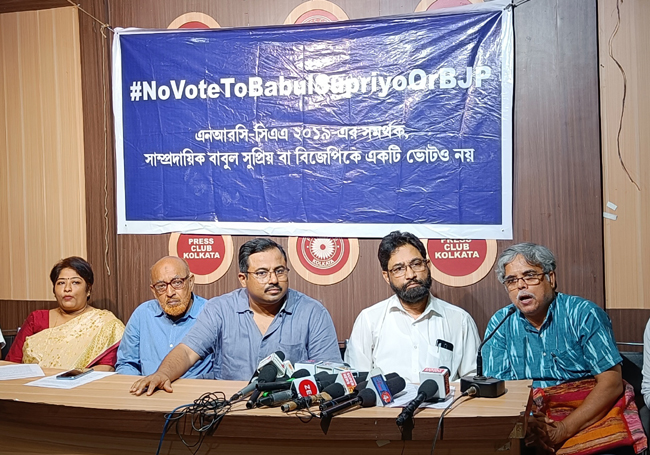
However, Muslim intellectuals based in Kolkata feel that TMC should not have taken Supriyo into the party fold since Supriyo was allegedly the instigator of the Asansol riots in which many innocent lives were lost in a city, which was known as a city of brotherhood. Asansol police had also slapped a case against the MP during the riots. Besides his role in the Asansol riots, there have been many incidents in which the former minister had used abusive languages against a Muslim youth and during his Jadavpur University visit.

Welcoming Babul Supriyo in TMC is uncalled for

“Mukul Roy and some other TMC leaders joining back the party after a brief stint with BJP are understandable. But welcoming Babul Supriyo into TMC is uncalled for,” reacted Mohammed Reyaz, assistant professor at Aliah University, Kolkata.

Reyaz, who also wrote several social media posts on the issue, claimed in one of his post, “Except embarrassing the BJP and taking revenge for trying to encourage defecation in the Trinamool Congress before the assembly polls, I do not think Babul Supriyo is bringing anything on the table for his new party.”

Reyaz questioned, “There are also murmurs that Babul Supriyo may resign and instead go to the Rajya Sabha on a TMC ticket. TMC has sent Jawhar Sircar and Sushmita Dev to the Upper House of Indian Parliament, what about Muslims, Bengali-speaking Muslims in particular? Why can’t one more Muslim be nominated to the Rajya Sabha?”

And added, “Muslims may feel uncomfortable with Babul Supriyo joining TMC, but they know they do not have many options.”

But Sabir Ahmed, social activist and educator caution the party, “If Mamata Banerjee and TMC are preparing for 2024 Lok Sabha polls then they should not ignore Muslims, which have always been the core voters of the party.”

Sabir also pointed out issues at the district level, “Besides joining of communal leaders, there are other issues, which are concerned for local Muslim TMC leaders. Wherever the party is making changes in district units, fewer Muslims are being inducted or given important responsibilities.”

Silence of Muslim TMC leaders

Significantly, when eNewsroom contacted a few Muslim TMC leaders to know their views on Supriyo joining TMC and Muslims feeling uncomfortable, Rajya Sabha MP Nadimul Haque and member of Lok Sabha Sajeda Ahmed both refused to comment.

However, an Asansol-based TMC youth leader said, “It is the party’s decision taken by senior leaders, so we can not do much. But, we feel that a person who created communal tension in Asansol, when is not be on the other side, we are hopeful of no such tension taking place in the future,” said Shahnawaz Khan, president, Asansol North Block II, Trinamool Youth Congress.

Politicians have no religion: Imam Asansol

Imdadullah Rashidi, Imam of a mosque in Asansol, whose 16-year-old son Sibtulla Rashidi was killed during the 2018 Asansol riots, told eNewsroom, “Let’s forget these things.” And mentioned, “Politicians have no religion, see how Nitish Kumar was earlier with Lalu Prasad Yadav and now against him.”

“But, if a person (Babul Supriyo) changes his ideology by joining a secular party, he should be given a chance,” he added.