पेंशन सहित सामाजिक सुरक्षा की सभी नीतियों पर बहस हो और अध्ययन हो

0

पुरानी पेंशन व्यवस्था ख़त्म की जा चुकी है। बैंकों में बचत दर अब न्यूनतम स्तर पर है। नई पेंशन स्कीम है। इसका क्या रिकार्ड रहा है, क्या यह पर्याप्त है, इस पर भी आँकड़ों के साथ बहस होनी चाहिए। जो इन चीजों को समझते हैं उन्हें ही तथ्य और विश्लेषण सामने रखने होंगे। हम जैसे लोग भी सामान्य बातें कर सकते हैं लेकिन उनमें जानकारियों की कमी होगी।

केवल सरकारी नौकरी वाले ही नहीं, सभी को पेंशन चाहिए। वकीलों को भी चाहिए। सारे वकील करोड़पति नहीं होते हैं। बुढ़ापे में उनकी भी हालत हम पत्रकारों की तरह हो जाती है। इसी तरह दूसरे पेशे के भी लोग होंगे। व्यापारी हैं। मज़दूर हैं। शिक्षक हैं। प्राइवेट कर्मचारी हैं। पेंशन का मतलब सामाजिक सुरक्षा के दूसरे कार्यक्रमों से भी है। उन सबको जोड़ कर सबके लिए बीमा, स्वास्थ्य, भोजन और रहने के मकान जैसी बुनियादी ज़रूरतों को ध्यान में रखकर कोई योजना और नीति बने।

सरकार कई प्रकार की सामाजिक सुरक्षा देती है। केंद्र और राज्य स्तर की कोई योजनाएँ चल रही हैं। किसानों के लिए कोई छह हज़ार दे रहा है तो कोई दस हज़ार दे रहा है। कोई बेरोज़गारी भत्ता दे रहा है तो कोई कुछ। कहीं एक हज़ार का वृद्धावस्था पेंशन है तो कहीं दो हज़ार का। कोई तीर्थ यात्रा करा रहा है तो कोई आरती करा रहा है। बुजुर्गों के लिए रेल किराए में छूट है। इस वक्त शायद बंद है लेकिन है तो सही।ऐसी

अनेक योजनाएँ चल रही हैं। इनमें से शिक्षा की योजनाओं को अलग कर बाक़ी सभी को सामाजिक सुरक्षा के दायरे में लाना चाहिए। सभी एकरूप और सार्वभौमिक हो। हर नागरिक को मिले।

सरकार आज भी पेंशन को अपनी जवाबदेही मानती है। वह पेंशन से मुक्त नहीं हुई है। वह कई प्रकार की पेंशन दे रही है। विधायक और सांसद पेंशन लेते हैं। आप एक बार विधायक बन जाएँ, फिर सांसद और फिर राज्य सभा में जाएँ तो तीन तीन पेंशन ले सकते हैं। किसी को एक भी पेंशन नहीं और किसी को तीन-तीन पेंशन। यह क्या का न्याय है? कुछ राज्यों में पुरस्कार प्राप्त करने वालों को भी पेंशन मिलती है। व्यापारी भाइयों के लिए भी पेंशन की कोई योजना है। व्यापारी, छोटे दुकानदार कुछ हिस्सा देकर 60 साल के बाद 3000 मासिक पेंशन का इंतज़ाम कर सकते हैं। अब इस राशि में किसी का क्या होगा। फिर अपने ही कर्मचारियों को नेशनल पेंशन स्कीम थमा कर।

उनके ऊपर छोड़ने का कोई मतलब नहीं बनता है। जब प्रधानमंत्री पेंशन ले रहे हैं तो उनके विभाग में काम करने वाले सचिव और सहायक को भी पेंशन मिलनी चाहिए।

इसी तरह बीमा को लेकर भी केंद्र और राज्य में तरह तरह की नीति है और बजट है। दूसरी तरफ़ स्वास्थ्य से लेकर तमाम सरकारी सुविधाएँ नाम की हैं। उनकी व्यवस्थाओं और गुणवत्ता में निरंतरता नहीं है। जवाबदेही और स्थायित्व नहीं है। सरकार को चाहिए कि कहीं मुफ़्त दवा कहीं मुफ़्त डायलिसिस जैसी लुभावनी योजनाओं की जगह एक समग्र नीति लाए। सबको सुविधा दे और जवाबदेही के साथ दे। सरकारी अस्पतालों में निवेश करें। हर नागरिक को एक समान बीमा दे।महँगे इलाज के कारण बुढ़ापा डरावना होता जा रहा है।

सभी जीवन की तमाम असुरक्षाओं से घिरे रहते हैं। हम सब जब काम न करने की उम्र में प्रवेश करेंगे और नियमित आय नहीं होगी तब क्या होगा। बैंकों में बचत के पैसे इतने नहीं होंगे कि नियमित आय के न रहने से आप जी सकें। मेडिकल बिल बहुत परेशान करता है। आप जिस हाउसिंग सोसायटी में रहते हैं वहाँ रखरखाव का हज़ारों रुपया देते हैं। वही महीने का पाँच हज़ार होता है। इसके अलावा आप निगम को भी पैसा देते हैं। टोल टैक्स देते हैं। यानी आपका पैसा पानी की तरह तरह-तरह के प्राइवेट और सरकारी टैक्स पर बहता जा रहा है। अगर नियमित आय इतनी न हुई तो एकदम फ़्लैट बेचकर बेघर होना पड़ जाएगा।

लखनऊ में शिक्षकों ने पुरानी पेंशन व्यवस्था की बहाली के लिए आंदोलन किया। उन्हें समझ आ रहा है कि बिना पेंशन के क्या होगा। लेकिन जिन्हें समझ आना चाहिए उन्हें नहीं आ रहा है क्योंकि विधायक और सांसद को पेंशन मिलती है। मैं साफ़ कहता हूँ । मुझे पेंशन चाहिए। इसका डर सताता ही है कि नौकरी नहीं रहेगी तो ख़र्च कैसे चलेगा।

यह जुगाड़ करना भी ठीक नहीं होगा कि कोई विधान परिषद का ही सदस्य बना दे ताकि पेंशन मिल जाए। इससे तो एक का जुगाड़ होगा, बाक़ी पत्रकारों और वकीलों का क्या होगा। सरकार ने एक कोने में पेंशन की सुविधा क्यों बचा कर रखी है ताकि किसी को इस तरह से सोचना पड़े। पेंशन सबका अधिकार होना चाहिए। इसे हासिल करने का एक भी अनैतिक रास्ता बचा नहीं होना चाहिए। सबको मिलनी चाहिए। कितने लोग विधायक या सांसद बन सकेंगे।

मेरे ही पेशे के कई वरिष्ठ पत्रकार लिखते हैं कि नियमित आय नहीं है। रिटायर होने के बाद किसी तरह ख़र्चा चलता है। वरिष्ठ पत्रकार शंभुनाथ शुक्ल हमेशा इस बात को उठाते हैं।अगर क़िस्मत से बच्चों ने मदद नहीं की तब फिर आप राम भरोसे। हर बच्चे की कमाई इतनी भी नहीं होती कि वह सबका भार उठाकर चल सके। नतीजा परिवार में तरह-तरह की अशांति। जिन्हें नहीं चाहिए वो सरकार के यहाँ नाम लिखा दें। जिन्हें चाहिए वो भी लिखा दें। और यह राशि एक या दो हज़ार की दिखावटी राशि नहीं होनी चाहिए।

इसलिए पेंशन और सामाजिक सुरक्षा को लेकर सरकार एक राष्ट्रीय टीम बनाए। जो केंद्र और राज्यों की योजनाओं का अध्ययन करे और टुकड़े-टुकड़े में कुछ को कुछ देने के बजाए सभी नागरिकों को सम्मानजनक पेंशन दे। हर किसी की आर्थिक समझदारी एक समान नहीं होती कि शेयर बाज़ार से पेंशन का इंतज़ाम कर ले। सरकार को इतना ही इस पर यक़ीन है तो वह ख़ुद कुछ पैसा शेयर बाज़ार में लगाए और उससे कमा कर नागरिकों को दे दे।


ये लेख रविश कुमार के फेस्बूक पेज़ से ली गई है

Erosion Of Trust Is Modi’s Biggest Failure; Farm Law Protest Is The Beginning Of The End

0

If one takes a dispassionate view of the three farm laws, that Narendra Modi has promised to roll back, then a few nagging questions remain. The idea that the laws will introduce free market forces and allow farmers to benefit from those, freeing them from middlemen, needs to be examined closely.

I am no agriculture expert but I do not understand the role of the middlemen when the government is supposed to buy grains and agricultural produce at the minimum support price (MSP) from the farmers? P.Sainath, the activist journalist who supported the farmer agitation, said that despite states announcing MSPs they did not procure the grains.

Making Farming A Viable Profession

The problem, therefore, is not about MSP, but the government stepping in to support farmers with the right price so that they did not have to sell at distress prices. Farming is not a viable profession in India, and yet 60% of the population of the country is engaged in agriculture.

Technology Solutions

The real problem and I am not an expert, should be to make farming an attractive occupation for young people, as attractive as the information technology or financial services professions are. Modern technologies like the Internet of Things, Drones, Accurate Weather Forecasting, the use of organic fertilizers like bio-slurry, reintroduction of farm animals to generate bio-inputs, could be an integrated approach to modernize Indian agriculture production.

Supply Chain Solution

Along with production, an entire supply-chain that includes high-technology storage, to prevent wastage (one-third of India’s agricultural produce is wasted), transportation, and ways of reaching the end-consumers, that could be the large food processing organization or the retail outlets, must be tied up seamlessly. Finance is the other element that has to be organized for all points of this chain. Crop insurance to protect farmers from natural disasters, climate control measures are all crucial moving parts of this integrated farm-to-fork system.

If the entire value chain is redrawn and appropriate technologies introduced at every point of this chain, to make it efficient, and transparent, only then will farmers benefit, buyers gain and new value unlocked that makes agriculture a technologically attractive profession.

Research & Development

Research is the other part of the agriculture value chain. Though some highly interesting research going on in places like Rice Research Institute, those are not being implemented at the field level due to the internal politics of these departments. Without research and continuous development of new techniques of farming, we cannot hope to feed our hungry millions.

Agriculture needs an integrated approach across production, sales, marketing, branding, research, and education. This should be a policy that must be created jointly with farmers to create trust with all stakeholders. The Modi government’s failure is its inability to generate trust with the farmers.

A Track Record Of Colossal Failures

The Himalayan failure of Modi’s previous decisions like demonetization, a scrappy GST, a disastrous lockdown, the delay in ordering Covid19 vaccines, have shown him as an inept administrator. Perhaps this is why the farmers remained unconvinced about his ability to deliver something worthwhile with his farm laws.

Worst was the attitude of thrusting laws down the throat of the farmers which increased this mistrust. It’s India’s tragedy that we have a leader who has zero trust among a large swathe of the population. Each day it is becoming apparent that Modi and his team lack administrative skills and above all empathy to govern such a hugely diverse country like India, despite his party enjoying an absolute majority.

Previous governments with far fewer numbers in the Parliament could transform the country when Modi is turning out to be a miserable failure, simply because he has lost the tremendous trust he enjoyed when he first formed the government in 2014.

छोटे बनाम बड़े किसान क्यों कर रही थी सरकार?

0

प्रधानमंत्री नरेन्द्र मोदी ने पिछली 10 फरवरी को लोकसभा में कृषि कानूनों पर एक लंबा भाषण दिया था। इस दौरान उन्होंने छोटे किसान के बरक्स बड़े किसान को रखते हुए एक थ्योरी दी। उन्होंने अपनी थ्योरी को स्थापित करने के लिए कुछ आंकड़े भी दिए। इन आंकड़ों में बताया गया कि देश भर में 12 करोड़ छोटे किसान हैं। प्रधानमंत्री का पूरा जोर इस बात पर था कि नए कृषि कानूनों से देश के छोटे किसानों को बड़ा लाभ होगा। हालांकि, उन्होंने कहीं भी यह बात स्पष्ट नहीं की कि नए कृषि कानून यदि लागू हुए तो विभिन्न राज्यों के छोटे किसानों को इससे किस प्रकार लाभ होगा।

प्रश्न है कि क्या वाकई नए कृषि कानूनों से खासकर छोटे किसानों का भाग्य बदल जाता? जहां तक आंकड़ों की बात है तो पिछले कई वर्षों से छोटे किसानों की संख्या लगातार बढ़ रही है। वजह भी स्पष्ट है कि ग्रामीण भारत में जमीन के लगातार बंटवारे के कारण छोटे किसानों की संख्या बढ़ रही है। कृषि सूचकांक, 2015 पर दृष्टि डालें तो देश में दो हेक्टेयर जमीन तक के किसानों की संख्या 68 प्रतिशत है। वहीं, चार हेक्टेयर जमीन तक के किसानों की संख्या 87 प्रतिशत है। इसी तरह, आठ और दस हेक्टेयर जमीन तक के किसानों की संख्या क्रमशः 95 और 99 प्रतिशत है। यानी भारत में दस हेक्टेयर से अधिक जमीन वाले किसान जिन्हें बड़े किसान कहा जा सकता है उनकी संख्या मुश्किल से एक प्रतिशत है।

प्रश्न है कि खुले बाजार में व्यापारियों को उपज बेचने से छोटे किसानों को लाभ होता तो बिहार, पश्चिम बंगाल, झारखंड, पूर्वी उत्तर-प्रदेश का पूर्वी, बुंदेलखंड, मध्य-प्रदेश, महाराष्ट्र का विदर्भ, खानदेश और मराठवाड़ा से लेकर शेष भारत जहां बड़ी संख्या में चार हेक्टेयर तक खेत वाले किसान हैं उन्हें उनकी उपज़ का सही दाम क्यों नहीं मिल पा रहा है? इन क्षेत्रों में सरकारी मंडियां कमजोर हैं और छोटे किसान न्यूनतम समर्थन मूल्य (MSP) पर अपनी उपज नहीं बेच पाते तो क्यों खुले बाजार के बड़े व्यापारी न्यूनतम समर्थन मूल्य से अधिक दाम पर छोटे किसानों की उपज़ नहीं खरीद रहे हैं।यदि इसी वर्ष की बात करें तो बिहार में खुले बाजारों में धान उत्पादक किसानों ने प्रति क्विंटल 900 रुपए की दर पर अपना धान बेचा। जबकि, छत्तीसगढ़ में सरकार ने न्यूनतम समर्थन मूल्य पर प्रति क्विंटल करीब 1,400 रुपए की दर से धान उत्पादक किसानों से उनकी उपज खरीदी। जाहिर है कि यदि खुले बाजार में छोटे किसानों को उनकी उपज का उचित दाम मिल रहा होता तो अब तक मिल चुका होता। वे बड़ी संख्या में अपने राज्यों से पलायन करके हर साल पंजाब और हरियाणा में मजदूरी करने क्यों जाते, जहां उन्हें चार-पांच सौ रुपए दिन के हिसाब से मज़दूरी मिलती है।

प्रश्न है कि यदि छोटे किसानों के प्रति केंद्र सरकार को इतनी ही हमदर्दी है तो वह उनसे जुड़ी समस्याओं का समाधान क्यों नहीं करती है? जैसे कि देश के जिन अंचलों में अधिक से अधिक छोटे किसान हैं वहां सरकारी मंडी बनाकर छोटे किसानों से सभी तरह की फसलों को न्यूनतम समर्थन मूल्य के दायरे में लाकर उन्हें खरीदने का संकल्प क्यों नहीं लेती है।

इसी तरह, उत्तर-प्रदेश में पिछले कुछ वर्षों से महाराष्ट्र से भी अधिक गन्ना उगाया जा रहा है। लेकिन, ऐसे किसानों का समय पर गन्ने का भुगतान तक नहीं होता है। पिछले वर्ष गन्ना उत्पादक किसानों को उनकी उपज का साढ़े सोलह हज़ार करोड़ रुपए बकाया है। इसमें ढाई हजार करोड़ रुपए ब्याज अलग है, जबकि वर्ष 2016 में जिन दिनों उत्तर-प्रदेश में विधानसभा चुनाव हो रहा था उन दिनों प्रचार के दौरान भाजपा के कई नेता लगातार यह कह रहे थे कि एक ओर सरकार शपथ लेगी तो दूसरी ओर गन्ना किसानों का भुगतान करेगी।

प्रश्न है कि ये छोटे किसान कौन हैं और इनके साथ अन्य कौन-सा वर्ग जुड़ा हुआ है? दरअसल, छोटे किसानों के साथ गांवों का वह बढ़ई, लोहार, कुंभार और भूमिहीन पशुपालक वर्ग भी शामिल हैं जो परोक्ष रुप से खेती पर निर्भर है। ये समुदाय किसानों से चारा लेता या ख़रीदता है और बदले में दूध बेचकर अपने बच्चे पालता है। हमारे देश के सकल घरेलू उत्पाद में डेयरी का बड़ा योगदान है।

लेकिन, कोरोना-काल से पहले भैंस का जो दूध चालीस रुपए लीटर मिल रहा था वही कोरोना-काल में कई ज़गहों पर यह घटते हुए 26 रुपए लीटर तक आ पहुंचा। विरोध में कई छोटे किसान और पशुपालकों ने अपना दूध सड़कों पर ही फेंका। इस दौरान उपभोक्ता के दाम तो कम किए नहीं गए, फिर सहकारी समितियों द्वारा दूध के दाम क्यों कम करा दिए गए। यदि छोटे किसान और पशुपालकों की इतनी ही चिंता होती तो यह सरकार उन्हें कम-से-कम उनके दूध का ही उचित दाम सुनिश्चित करा देती।

दूसरी तरफ, ऐसे पशुपालक परिवारों पर तो उत्तर-प्रदेश सरकार ने और भी बड़ी चोट मार दी। उत्तर-प्रदेश सरकार ने निर्देश दिया कि जो परिवार एक से अधिक पशु रखेगा वह कमर्शियल डेयरी के अंतर्गत आएगा। उन पर बिजली के कमर्शियल कनेक्शन लेने के लिए भी दबाव डाला जा रहा है। इसी तरह, देखा जाए तो छोटा किसान और पशुपालक एक आम उपभोक्ता भी है। लेकिन, जो सिलेंडर पहले वह 360 रुपए में ख़रीदता था उसी के लिए इस वर्ग को अब 700 रुपए देना पड़ रहा है। ज़ाहिर है कि केंद्र सरकार छोटे किसानों को सीधा लाभ देने की बजाय उन पर दया दृष्टि दिखाते हुए उन्हें अपनी ओर खींचना चाहती है।

मंजिलें दूर हैं मगर…

तीन कृषि कानूनों की वापसी से 4 जून, 2020 की स्थिति बहाल हुई है, जो कि किसानों के लिए एक बड़ी राहत है, लेकिन इससे किसानों की बुनियादी समस्या दूर नहीं होगी।

देश भर के किसानों की स्थिति देखी जाए तो पूरी खेती कुल 9.4 करोड़ हैक्टेयर में बंटी हुई है। जबकि, इस पर 10.1 करोड़ किसान धारक (होल्डर) हैं। इस तरह, भारत में खेतों का औसत आकार एक हैक्टेयर से भी कम है। जिनके पास जमीन है उनमें लगभग 85 प्रतिशत के पास एक हैक्टेयर से कम जमीन है। ज़ाहिर है कि ज्यादातर किसान परिवार जमीन के मामूली टुकड़े पर अपना गुजारा कर रहे हैं।

इसके अलावा भी एक बड़ी आबादी उन खेत मज़दूर परिवारों की है जिनके पास खेती का पट्टा नहीं है। एक अनुमान के अनुसार भारत में लगभग 40 प्रतिशत यानी 4 करोड़ खेत मजदूर परिवार हैं।

सवाल है कि खेत के इतने छोटे टुकड़े होने की स्थिति में ज्यादातर छोटे किसान और खेत मजदूर परिवारों को उनकी मेहनत की उपज का क्या उचित दाम मिलना संभव है?

इसे इस तरह भी समझ सकते हैं कि आज चार से छह सदस्यों के एक किसान परिवार को हर महीने न्यूनतम 20 से 30 हजार रुपए तो चाहिए ही। यानी उसे साल में ढाई से तीन लाख रुपए चाहिए ही। इसमें आपातकालीन स्थितियों में होने वाला खर्च शामिल नहीं है।

सवाल है कि एक हैक्टेयर से कम जमीन का किसान परिवार सिर्फ़ खेती से इतनी आमदनी हासिल कर सकेगा? इसलिए, किसानों को न्यूनतम समर्थन मूल्य के साथ-साथ खेती में एक ऐसी व्यवस्था बनाने की ज़रूरत है जिसमें एक किसान परिवार को अपनी आजीविका में उतनी आमदनी तो हो कि वह बुनियादी आवश्यकताओं को पूरा कर सके।क्योंकि, यदि किसान आत्महत्याओं की गहराई में भी जाएं तो यह निचोड़ निकलता है- जितने लोग खेती में हैं उतने लोगों की आजीविका देने की हालत में खेती नहीं है। इसलिए खेती घाटे का सौदा है। इसके पीछे एक बड़ी वजह यह है कि किसानों के पास आवश्यक आमदनी के अनुपात में खेती की ज़मीन नहीं है। जब ज़मीन ही नहीं है तो खेती पर निर्भर लोगों को आजीविका कैसे मिलेगी।

Setback for BJP, nine councilors, several leaders from one corporation join JMM

0

Ranchi: It is not just in Bengal, but in Jharkhand also, several Bharatiya Janata Party (BJP) leaders are leaving saffron camp, however, it may not become a piece of news for national media.

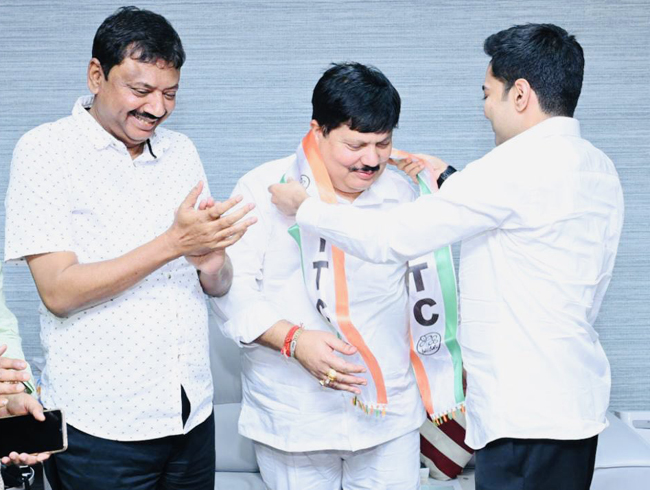
On Thursday, thirteen BJP ward councilors which include nine ward councilors of Giridih Municipal Corporation joined ruling Jharkhand Mukti Morcha (JMM) in the presence of chief minister Hemant Soren at Ranchi.

Giridih’s JMM MLA Sudivya Kumar who played the key role in bringing these councilors into the party fold said that the husbands of some female councilors too joined JMM.

Besides the councilors, others who left BJP were office-bearers of the party’s district unit.

The municipal corporation had come into the news, when its Mayor Sunil Paswan had to resign, as he had used an illegal caste certificate to fight election from a seat reserved for Scheduled Caste (SC) candidates. Paswan, a resident of Bihar, was not eligible to contest on reserved seat in Jharkhand.

bjp leaders join jmm jharkhand ward councillors giridih
Jharkhand CM Hemant Soren with ward councillors and ex-BJP leaders in Ranchi

The corporation has a total of thirty-six councillors, one among them has passed away. JMM had earlier fifteen out of thirty-five councillors. 

“Now with this additional nine, we have a total of twenty-four councillors,” informed Sanjay Singh, district president, JMM.

The development is significant as BJP which is known as a party having a stronghold among urban voters. It has been in Giridih too, as both mayor and its deputy were of BJP. And even after the resignation of Paswan, the deputy mayor, who is also from BJP, is now in-charge of the mayor.

While JMM, which has a stronghold in the rural belt, always strives to penetrate among urban voters. The turn-up of the councillors, who play the main role on the ground, can multiply the party’s prospect in the future.

 “The new joinees have expressed their faith in the ideology and leadership of Hemant Soren. So we hope it will strengthen party further,” claimed Sudivya Sonu.

Giridih’s municipal polls are due next year.

There is a third India too, Vir Das may have missed out

0

In December 2016, a 39-year-old guy lured a 12-year-old girl to his house on the pretext of giving her something to eat.

There the man had allegedly groped the minor girl, pressed her breasts and attempted to remove her clothes (salwar).

In January 2021, the Nagpur bench of Mumbai High Court led by Justice Pushpa Ganediwala acquitted the man from charges under POCSO because there was no “Skin to skin” contact.

Vir Das has touched upon beautifully the ‘two Indias’ that we have, but there is a ‘third India’ too that he missed out on.

The third India which toils daily to get their meals and goes to bed on a pavement dreaming of waking up in an Antilia someday only to be mowed down by a privileged drunk.

The third India which gets down in the gutters to clean up the crap of everyone else so that they can afford to keep their families healthy.

The third India which after slaving at work and then at home, has an uninterested drunk man pumping on the top of them at night, as they try to figure out how they are going to feed their child tomorrow.

The third India which has been told to live with their heads down, faces covered, touching feet and serving their masters without complaining just because they don’t have that extra piece of flesh hanging between their legs.

The third India which neither cares about whether we bleed blue or whether we bleed orange, as long as they themselves don’t end up bleeding crimson red on some street just because their name is Junaid.

The third India which hides when they see flags of religious colors or simply bows down their head, scared, as they walk past by it hoping the moment will pass soon.

The third India which wonders, why it never got the basic rights that others have just because of what family they were born in.

The third India which strives to survive without being lynched, molested, raped, trampled, mowed down or kicked around everyday just because of what or who they were born as.

The third India which neither knows Vir Das nor have heard of the Kennedy Center and will probably not read this post either or will care for either.

The third India which silently trudges on to live another day because if they try to stop and analyze the other two Indias, they will simply die.

The third India stares at another India which remains distinct and untouched by whatever happens. The India of the privileged political class and the business tycoon, that is supposed to help this third India, but hardly ever does.

Disclaimer: India is such a mix-pot of emotions, cultures and socially diverse classes. I am sure that there are more than just 2-3 Indias and it is not possible to cover everything in one single post or on a 7-minute video. We each have our own version of India. We just have to learn to respect each other’s versions without imposing ours on others.


The post has first published at the Facebook wall of Darshan Mondkar.

Minister Ajay Mishra should be arrested, else Lekhimpur Kheri victims will not get justice: Yogendra Yadav

0

Kolkata: “Minister Ajay Mishra ‘Teni’ should be arrested, after that he will have to resign also. Then only the Lekhimpur Kheri victims will get justice,” said Yogendra Yadav, a farmer leader in Kolkata.

Yadav who is touring Bengal to campaign for Jai Kisan Andolan further said, “Otherwise, Teni being minister, it is impossible that in this matter, even his son being arrested, farmers will get justice. And how it is possible that a minister, whose portfolio is looking after law and order. It is the minister who had threatened and provoked farmers. He had also shown thumbs down sign to anger farmers, so he is responsible for everything.”

Significantly, when Yadav was speaking about the Lekhimpur Kheri incident, in which Ajay Mishra’s son Ashish Mishra had allegedly mowed down farmers on October 3, at the same time Supreme Court formed a judicial probe headed by Retired judge Justice Rakesh Kumar Jain as the court expressed its dissatisfaction on the work of Uttar Pradesh police so far.

Yadav’s Swaraj India is part of Samyukta Kisan Morcha, which is protesting against three farm laws for almost a year now across India. After the Lekhimpur Kheri case, in which eight people were killed, Yadav had visited a victim, who happens to be a BJP worker, and SKM leaders expressed unhappiness over it, as the Swaraj India leader had not discussed his visit before the meeting. SKM had later suspended Yadav till November 21.

While today Yadav and other Jai Kisan Andolan leaders including Avik Saha, Deepak Lamba held a press conference and talked about their three-day Maha Panchayat in Bengal.

The farmer leader mentioned that through Jai Kisan Andolan, they are not only making aware farmers about their rights and training them for future movements, but also raising minimum support price (MSP) demand for them by respective state governments.

“We are raising this issue everywhere, be it BJP ruled state or non-BJP. In non-BJP states, who claim that they have sympathy with the farmers and stand with them, I say to them, your words are beautiful but without ensuring MSP, all are meaningless,” he said.

Yadav pointed out that both Bengal and Rajasthan are not giving MSP to their farmers, while the chief ministers of these states Mamata Banerjee and Ashok Gehlot often say that they are with farmers.

Did pandemic teach us the importance of physical literature festivals?

0

Kolkata: In January 2008, at Jaipur Literary Festival, Dev Anand was invited to discuss his autobiography, Romancing With Life. He confessed to the august gathering, “Literature has played a strong role in shaping my life. I am an avid reader of Charles Dickens, Ernest Hemingway and Roma Rolland. My best film Guide is based on R.K Narayan’s classic.”

Literary festivals have grown in stature and popularity nationwide in the past two decades. The Jaipur Literary Festival is the most talked-about followed by Times Literary Festival, Hindu Literary Festival, Tata Literary Festivals and Kalinga Literature Festival. These festivals provide platforms for literary personalities from various parts of the world to interact with each other to discuss their works and for upcoming authors-poets the essence of literature.

Due to the Covid pandemic, literary festivals across the nation were either stopped or held online. It has to be agreed that offline literary festivals provide more ground for creative interaction than online.

Eminent poet Sharmila Ray whose book cover was designed free of cost by late MF Hussain says, “I have attended poetry festivals in many places of India, Europe and Vietnam. A poetry festival is part of a literary festival. Physical presence helps much more in literary discussions than online which has limitations. I am happy the coveted Calcutta Book Fair will be held from January 2022.”

Literary festivals help to enlighten adult and young minds alike. Classics, fiction, non-fiction and even pulp fiction find prominence in literary festivals. V.K Karthika, editor of a reputed publishing house says, “Literary festivals are always welcome. I attend umpteen such festivals and the majority of my interactions bear fruits. The aspiring writers who attend such festivals can learn a lot from their seniors and develop their writing skills.”

physical literature festivals offline literary meets book fair covid
Gulzar at JLF in 2019 | Credit: Chandra Mohan Aloria

Recently many film personalities have added colour to literary festivals being present with their biographies. Waheeda Rehman once said, “My best works are literary-based i.e. Saheb Biwi Gulam, Guide and Teesri Kasam. The influence of literature broadens mental horizons and Pearl S. Buck left a great influence on me during Guide‘s English version.”

Not that all are rosy walks in literary festivals. Many literary festivals these days have become hotspots for hypocrites who rob honest persons of their social potential. In this context, Ruskin Bond once satirically stated that James Bond was a cheat. He was the real Bond. True intellectuals admired his statement.

Sanjoy Roy one of Jaipur Literary Festival (JLF)’s organizers says, “From the end of January 2022 we will hold the literary festival physically and also online. We will adhere to all Covid norms as instructed by the Rajasthan Government then. A week later we are organizing the Kabira Literary Festival at Varanasi on a physical platform following all Covid norms.”

Anjum Katyal who organizes the Nabanna Weekend Literary Festival states, “If we can hold the Nabanna Mela in 2022, March physically at Shantiniketan we will have the literary festival in the same way. Else it will be online as it was this May.”

The return of classic literature is another strong point for present-day literary festivals. It is encouraging to see young readers taking a special interest in Tagore, Sarat Chandra Chatterjee, Munshi Premchand and George Bernard Shaw. Well-known scholar Antara Deb Sen admits, “Classics will always be there to enlighten fresh minds, igniting positive creative views.”

Amazing Aussies outclass Kiwis, cruise to maiden T20 World Cup Crown

0

Mumbai: The remarkable quality to perform at their absolute best on the biggest of stages has made Australia one of the most dominant sides in cricket world championships. On Sunday, they clinched their maiden T20 World Cup title in their least-mastered format till now. The Aussies beat the Kiwis comprehensively – as New Zealand maintained the dubious record of never beating their trans-Tasman rivals in the knockout stages of any tournament since 1981.

Australia’s history of triumphs in the World Cup finals is truly enviable. In the 2003 ODI World Cup final, the Aussies won by 125 runs; in the 2007 ODI final they won by 53 runs; they won the 2015 final by 7 wickets; and now in the 2021 T20 final, they have decimated New Zealand by 8 wickets! These 4 World Cup victories reflect that once the Aussie team smells blood, they simply annihilate their opponents.

The new T20 World Champions defeated New Zealand in a rather one-sided final. Chasing a target of 173, Australia won the game with 7 balls to spare, thanks to aggressive half-centuries from Mitchell Marsh and David Warner. As the Aussies celebrated, many felt a sense of empathy for Kane Williamson who played an outstanding captain’s knock and yet saw New Zealand falling short in white-ball cricket – though this was not as agonising a loss for the Kiwis as their heart-wrenching defeat in the ODI World Cup two years ago.

Australia won the toss and elected to bowl in Dubai where 11 out of 12 times the team batting second had won in this tournament. Though the Pakistan-Australia semi-final, also played in Dubai, was not impacted much by dew, statistics weighed heavily in favour of the team batting second. As a witty fan said, the ‘Toss has been the Big Boss’ in this T20 World Cup!

Put into bat, the Kiwis were pegged on the backfoot quickly as the star of their semi-final victory, Daryll Mitchell, went cheaply. Martin Guptill and Kane Williamson repaired the damage but a tad too slow. Given the pressures of the final, the seniors managed to take New Zealand to just 57 for 1 in 10 overs. Martin Guptill’s laboured 28 off 35 balls reflected a pronounced struggle at the crease that was to hurt the Kiwi cause. Guptill’s scratchy form also seemed to affect the Kiwi skipper for a while.

After Guptill went, Captain Kane starred for the Kiwis with a thrilling 85 off 48 balls hitting 10 fours and three sixes. As Williamson shifted gears, it was a treat to watch him play. While he made only 15 runs in the first 16 balls that he faced, he thumped 70 off the next 31 deliveries in a knock of extraordinary brilliance. The Black Caps skipper became the captain with the highest score in a T20 World Cup final, surpassing Kumar Sangakkara.

Ultimately, in the last 10 overs, the Kiwis scored an astounding 115 runs to put up a fighting total. Despite the sluggish first 10 overs, New Zealand posted a fighting total of 172 for four.

australia icc t20 world cup champion
Mitch Marsh’s unbeaten 77 led Australia to its first men’s T20 World Cup triumph | Courtsy: Getty Images

For the Aussies, Josh Hazlewood was the pick of the bowlers with 3 for 16 while Adam Zampa returned figures of 1/26 in another tight and effective spell of leg-spin. Hazlewood’s show was particularly impressive for he had even dropped Williamson – a missed chance that could well have cost the Aussies the match. But Hazelwood kept his focus in an incisive spell of line and length.

As they came out to chase, Australia was put on the defensive as Aaron Finch was dismissed cheaply by Trent Boult. But then Mitchell Marsh and David Warner stole the match from right under the nose of the Kiwis smelling victory. Marsh was promoted to number 3 by the team management for this tournament and after years of struggle with injuries he has now flowered into a consistent performer with the exceptional big-hitting ability

The whole match for many experts depended in a big way on Warner’s batting. His recent knocks seem even more significant given that he was dropped by the Hyderabad IPL team. Warner showed his class at the business end of the World Cup and made sure that this time there was no hiccup as in the 2010 final against England. The Aussies cantered to an easy win with Maxwell also hitting a few lusty blows. Marsh deservingly got the Player of the Match award and David Warner was chosen the Player of the Tournament.

After the 2 pulsating thrillers in the semis, the final was a relatively tame game and a bit of an anti-climax for many cricket lovers. In a World Cup where West Indies came as defending champions, England and India began as favourites and Pakistan was tipped to be winners as the only unbeaten side in the Super 12 stage, it is Australia that has won the title in the summit clash against the often under-rated New Zealand.

Consistent cricket, backing one’s strengths and commitment to do the best even in the most trying circumstances is the ‘Mantra’ that other teams need to learn from the two finalists as the next T20 World Cup is just a year away in Australia. England now gets ready to face this resurgent Aussie side in the Ashes with most of the playing 11 from Sunday likely to feature in the Australian team for the first test.

Team India will also be facing the Kiwis in just a few days on 17th November in Jaipur for their T20 series. India may have underperformed in the World Cup but they have the talent and flair to give the Kiwis a run for their money as the Rahul Dravid-Rohit Sharma era begins.  

Significantly, this was a glorious World Cup, played amidst a once-in-a-lifetime pandemic. The players have played their hearts out, performing to their best which is commendable given that they were living out a bubble life. Some of these players have not been home for months, yet on the ground, they gave it all for their nation and the fans!

Finally, it’s been an outstanding campaign for the Aussies as everything clicked for them at the right time and they will now go into next year’s T20 World Cup on home soil as the defending champions. Many sense that this win may inspire Australia to return to pre-eminence in cricket once again.

Akhilesh Yadav on Jinnah: Communal Signaling in Contemporary Politics

0

As the intensity of communalism is on the rise the use of communal symbols, icons for present political goals are on the rise. Icons are also projected and highlighted to give the messages of the agenda of particular politics. As the fulcrum of Indian politics is tilting more towards ‘divisive politics’, more and more political personalities/parties are resorting to this abhorrent game.

One recalls that Lal Krishna Advani, who brought BJP to the political forefront through Ram temple agitation, Babri demolition and consequent communal polarization initially had a hardliner image and at that time he himself was a clever politician who proposed the name of Atal Bihari Vajpayee, who had a moderate image. As time passed Advani decided to project the moderate image for himself. As he visited Pakistan to inaugurate Katasraj Temple, he also visited Jinnah’s Mausoleum.

In the visitor’s book, he wrote, “There are many people who leave an unerasable stamp on history. But there are a few who actually create history. Qaed-E-Azam Mohd Ali Jinnah was one such rare individual,” He also quoted the 11th August speech of Jinnah in Pakistan Constituent Assembly, to show that Jinnah was very secular. In the process, he also undermined the Akhand Bharat goal of his parent organization the RSS. What he stated was part of the truth but for his organization RSS; Jinnah has been persona non grata as he is regarded as the creator of Pakistan, and so Advani himself got kicked up in Margdarshak Mandal, (Advisors Group) and was marginalized from the politics.

Now another leader in UP Akhilesh Yadav, on the eve of forthcoming elections recalled that “Sardar Patel, Mahatma Gandhi, Jawaharlal Nehru and (Muhammad Ali) Jinnah studied in the same institute. They became barristers and fought for India’s freedom,” The other side of this was that IT cell (BJP) shared only part of the video to project as if Yadav is saying that Jinnah got us freedom. This is a distortion, what Yadav said.

Can the Indian nationalists, Gandhi, Nehru and Patel be grouped in the same category as Jinnah? That way Jinnah’s political career is not a straight line. During the freedom movement, we see many leaders began as Indian nationalists and later got drawn into a communal vortex. We see Savarkar also began as an anti-British revolutionary, later led the communal Hindu Mahasabha and opposed the freedom movement and became the subservient part of the British policy of ‘divide and rule’.

Jinnah also has a trajectory of beginning as a member of the Indian National Congress. Was liberal, modern and secular to begin with but later due to differences with Gandhi on the concept of the Non-Cooperation movement, drawing the average people into anti-British struggle, he drifted away and in due course went on to lead the Muslim League.

Akhilesh Yadav is advising that we should turn the history book to learn what he is saying is true. One will like to remind him to read the history in full and not in a selective way. The full trajectory of Jinnah is more complicated with a major turn after the 1920s when Gandhi launched the ‘Non-Cooperation movement’ based on non-violence and Satyagraha. Jinnah wanted to remain a constitutionalist within the British framework and felt that involving the people at large will create unwanted turmoil. Gandhi and later other leaders of Congress saw the mass movement as part of the process of building the nation, this process was labeled as ‘India: Nation in the making’.

Jinnah, irrespective of his 11th August Pakistan Constituent Assembly speech (the state will not interfere in your religion} had fallen into the trap of communal politics. He did begin as the best Ambassador of Hindu Muslim unity and entered into Lucknow Pact with Congress leader Lokmanya Bal Gangadhar Tilak (1916). Later he started feeling that after Independence the Hindus will be a majority and Muslim interests will be hampered. In a way, he became a victim of the delusion that the Muslim League as the representative of all the Muslim and Muslim interests will not be safe with Hindu-dominated Congress ruling the country.

This was a serious flaw in his politics. From here he started looking at politics through a communal prism and now he aimed to preserve the interests of Muslims after the British leave. To the Motilal Nehru committee, he put several demands presumably for the interests of Muslims, but these demands were mostly for the preservation of dominance of elite Muslims.

The Hindu communalism at this time was emphasizing that this is a Hindu nation. Later Savarkar, Golwalkar theorized the secondary place of Muslims. In 1930 in Muslim League Convention Sir Mohammad Iqbal asked for a separate homeland for Muslims, Pakistan. Jinnah at that time did not take it seriously. In Assembly elections (1937) Muslim League did not fare well and Congress which won massively refused to incorporate Muslim League in the Ministries.

Around this time Jinnah’s separatism got a boost and in 1940 in the Muslim League convention he put forward the demand for Pakistan. British also had an important role in encouraging Jinnah to put forward this demand. The selective presentation of Jinnah’s role in the freedom movement and putting him in the same category as Gandhi, Nehru and Patel is totally misplaced as Akhilesh Yadav is blind to the role of Jinnah as the supreme leader of the Muslim League. This is generally what such leaders are doing. Selectively picking up the part which suits their political agenda and turning a blind eye to the whole picture.

On similar grounds, Hindu nationalists present Savarkar’s anti-British activities in the pre-Andaman Period and eulogizing him and forget his role as an ideologue of ‘Two Nation Theory,’ as President of Hindu Mahasabha in keeping aloof from the freedom movement, in helping British war efforts in the second World was and his being one of the accused in Gandhi murder case.

It is necessary that the underlying ideology of leaders are presented in full to evaluate them properly, but obviously, the likes of Rajnath Singh and Akhilesh Yadav have more interest in their political goals rather than the whole truth!

Heartbreak for Pakistan as aggressive Australia storm into T20 World Cup final

0

Mumbai: Self-belief is often the key difference between winning and losing in sport. On Thursday evening in Dubai, Australia displayed a ‘never say die’ spirit to win despite being cornered for most of the match. The Aussies came back from the brink to beat Pakistan by five wickets, thanks to a brilliant counterattack by Matthew Wade and Marcus Stoinis in a sensational semi-final. The superb turnaround led to an unbelievable victory for the Aussies as a stunning flurry of blows inflicted in the ‘death’ overs by Wade and Stoinis left Pakistan shell-shocked in the end.

The 2nd successive thriller, after the pulsating England-New Zealand Semi-Final, underlined the basic truth that the margin between winning and losing a T20 game is often so small and slim that even the most discerning cricket experts would find it impossible to predict who will triumph in closely-fought contests.

Aggressive Aussies v/s Passionate Pakistan was the most intriguing, tantalising clash of the competition. It was a match-up that the cricket cognoscenti were discussing ever since the semi-final lineups were finalized. Strangely, the Aussies were the underdogs while Pakistan was the favourites to go through to the finals after their 5 consecutive and convincing wins.

Aaron Finch, the Aussie captain won the toss and decided to field first. Pakistan’s opening pair of Babar Azam and Mohammad Rizwan after a few shaky overs got them off to a steady start. While Rizwan tried to up the ante, Babar anchored the innings carefully. Australia tactically did not bowl Mitchell Starc for more than an over in the powerplay. They were playing a bowler short and it was evident that they wanted to let their part-time bowler Maxwell have a go while Pakistan was still building a foundation for a hitting spree later.

The Pakistani openers have been consistently brilliant throughout the tournament but on the day they were a tad cautious which later proved costly. Despite not losing too many wickets, their innings couldn’t get an explosive lift off until Fakhar Zaman came into bat. After initial hesitancy, he flowered in this vital game. In the last few overs, it was fabulous hitting by Fakhar that saw Pakistan posting a slightly above-par total though this was possibly one of the best batting surfaces of the competition.

On the Aussie side, the pacers were a disappointment but leg spinner Adam Zampa was the pick of the bowlers. His terrific spell held the Pakistani batsmen in check in the middle overs and he also grabbed the first wicket, the prized scalp of Babar. At half time, Australia would have derived strength from New Zealand’s chase of an almost similar total against England on the previous night. They got off to a terrible start as Finch was dismissed by Shaheen for a 1st ball duck. Adam Warner was the crucial key for an Aussie chase and in partnership with Marsh, he got the innings off to a fighting tempo. Their 51-run partnership in less than 6 overs had Babar worried.

But a brilliant spell of leg-spinning magic by Shadab Khan pegged the Aussies back. Smith fell early but Warner continued his fluent hitting until he was caught behind. Strangely, the replays showed a gap between his bat and ball, even the Snickometer revealed a flat line. Warner had not asked for a review and had walked straight back. Now, the match swung in favour of Pakistan as Maxwell disappointed and the Aussies crumbled to 96 for 5.

It was at this crunch moment that Matthew Wade joined Marcus Stoinis with their side needing 81 runs to win in just 46 balls. They had a mountain in front of them but climbed it steadily till the target was near and then frantically finished with a stunning win. Wade hit Shaheen Afridi for 3 consecutive sixes to finish the match with an over to spare!

The Aussie run chase was strikingly similar to the one by New Zealand in the first semi-final. The result was identical, a victory by five wickets with six balls to spare. Pakistan may have some regrets – especially about Hassan Ali dropping Matthew Wade in the 19th over bowled by Shaheen. Had the catch been held, Australia would have needed 20 from nine balls with just four wickets remaining. Instead, it became 18 from nine and as Wade hit a hattrick of 6s, the Aussies won in just three balls with 6 balls left!!

It’s said that history repeats itself. As Pakistan crashed out, many were reminded of what Mike Hussey did to Pakistan in 2010. Matthew Wade has repeated it for them in 2021. Pakistan, tipped by most experts to get their 2nd T20 World Cup title, was cruelly ousted in a few overs of batting at its brutal, brilliant best. The Pakistan team and their fans are bound to be heartbroken but they can be proud of their campaign till it came to an abrupt end.

After losing to Pakistan, Virat Kohli had spoken about the difficulty in posting a strong total after losing quick wickets. But repeatedly the top teams have shown the need to continuously stay aggressive in this format. There is plenty to introspect for India as the Rahul Dravid-Rohit Sharma dispensation takes over. And Team India can do it well too since they are back home after an early exit from the World Cup.

After this amazing win, the Aussies will be charged up to grab their 1st T20 World Cup, the one ICC title that has eluded them till now. Fans can expect another cracker on Sunday as both New Zealand and Australia have beaten tournament favourites to stride into the finals.

No matter who wins, we will have a new champion for the men’s T20 World Cup on Sunday as neither Australia nor New Zealand has ever won this title. As the traditional rivals square off, the title clash promises to be a grand finale to a thrilling World Cup!