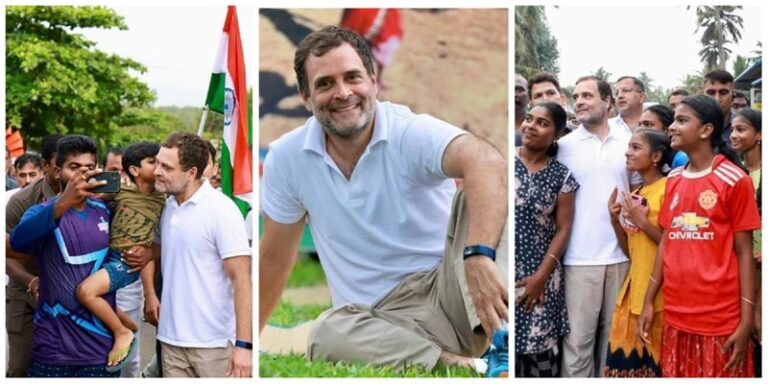
भारत के सबसे पुराने राजनैतिक दल, भारतीय राष्ट्रीय कांग्रेस, ने 7 सितम्बर से कन्याकुमारी से कश्मीर तक भारत जोड़ो यात्रा शुरू की है. देश के 12 राज्यों और दो केन्द्रशासित प्रदेशों से गुजरते हुए यह यात्रा कुल 3,500 किलोमीटर की दूरी तय करेगी. भारत जोड़ो यात्रा एक राजनैतिक दल का उपक्रम है परन्तु करीब 200 सामाजिक कार्यकर्ताओं, जिनका चुनावी राजनीति से कोई प्रत्यक्ष लेनादेना नहीं है, ने भी राहुल गाँधी से मुलाकात की और ऐसी सम्भावना है कि वे और उनकी संस्थाएं इस यात्रा में सक्रिय भागीदारी करेंगे. जानेमाने सामाजिक कार्यकर्ता और स्वराज इंडिया के मुखिया योगेन्द्र यादव से सामाजिक संस्थाओं से यात्रा में भागीदारी करने की अपील की है. इस अपील में उन्होंने इस यात्रा की आवश्यकता का अत्यंत सारगर्भित वर्णन किया है. उनके अनुसार:
इससे पहले हमारे गणतंत्र के मूल्यों पर कभी उतना नृशंस हमला नहीं हुआ, जितना कि पिछले कुछ समय से हो रहा है.
इससे पहले कभी नफरत, विघटन और बहिष्करण के भाव देश पर उस तरह से नहीं लादे गए जिस तरह से इन दिनों लादे जा रहे हैं.
इससे पहले कभी हम पर उस तरह से निगाहें नहीं रखी गईं और हमें उस स्तर के प्रचार और दुष्प्रचार का सामना नहीं करना पड़ा, जितना कि अब करना पड़ रहा है.
इससे पहले हमने कभी ऐसी निष्ठुर सरकार नहीं देखी जिसे अर्थव्यवस्था के बर्बाद होने और लोगों के हालात की कोई परवाह ही नहीं है और जो केवल अपने कुछ चमचों की सेवा में लगी है.
इससे पहले कभी वास्तविक राष्ट्रनिर्माताओं – किसानों और श्रमिकों, दलितों और आदिवासियों – को राष्ट्र के भविष्य को आकार देने के प्रक्रिया से उस तरह बाहर नहीं किया गया जिस तरह इन दिनों किया जा रहा है.
देश के वर्तमान निराशाजनक हालात का योगेन्द्र यादव ने अत्यंत सटीक वर्णन किया है. भाजपा जब अटलबिहारी वाजपेयी के नेतृत्व में पहली बार सत्ता में आई थी, उस समय कई सामाजिक कार्यकर्ताओं को लगता था कि कांग्रेस और भाजपा एक ही सिक्के के दो पहलू हैं. जल्द ही उन्हें समझ आ गया कि भाजपा ‘सबसे अलग’ है. जिस दौर में भाजपा का अपने दम पर बहुमत नहीं था और वह एनडीए गठबंधन का नेतृत्व करती थी, उस समय भी वह दूसरों से ‘अलग’ थी. संघ परिवार के सदस्य बतौर वह हिंदुत्व के एजेंडे के प्रति प्रतिबद्ध थी. वह भारतीय राष्ट्रवाद के बरक्स हिन्दू राष्ट्रवाद की पैरोकार थी. उस दौर में उसने शिक्षा का भगवाकरण किया और आरएसएस की शाखाओं की संख्या में जबरदस्त वृद्धि हुई.
भाजपा का प्रत्यक्ष और परोक्ष अल्पसंख्यक-विरोधी रवैया सबके सामने था. मुसलमानों के अलावा, ईसाईयों के खिलाफ भी हिंसा हुई. सन 1999 में पास्टर स्टेंस को बजरंग दल के दारा सिंह ने जिंदा जला दिया. इस भयावह कृत्य का उद्देश्य था उन लोगों को धमकाना जो प्रजातान्त्रिक मूल्यों के हामी थे. अल्पसंख्यकों के अधिकारों की रक्षा, प्रजातान्त्रिक मूल्यों का हिस्सा है. कॉर्पोरेट संस्थाओं की बन आई थी और मीडिया की खरीद-फरोख्त शुरू हो गई थी. गुजरात कत्लेआम ने सांप्रदायिक हिंसा में अमानवीय और बर्बर क्रूरता की नई मिसाल कायम की.
सन 2014 में भाजपा ने अपने बल पर पूर्ण बहुमत हासिल कर लिया. एनडीए की भूमिका नाममात्र की रह गई और भाजपा-आरएसएस ने पूरे जोशोखरोश से अपना एजेंडा लागू करना शुरू कर दिया. प्रजातंत्र को बनाये रखने के लिए जो संस्थाएं निर्मित की गईं थीं उन्हें कमज़ोर किया गया और आरएसएस एवं उसके संगी-साथियों ने बड़ी होशियारी से दलितों, आदिवासियों और यहाँ तक कि अल्पसंख्यक वर्गों के एक तबके को भी अपने झंडे तले लाने में सफलता प्राप्त कर ली. वर्तमान राजनैतिक परिदृश्य गरीबों और धार्मिक अल्पसंख्यकों के लिए अत्यन डरावना है. भारतीय संविधान के मूल्यों, विशेषकर बंधुत्व, को किनारे कर दिया गया है.
एक बेहतर भारत के निर्माण के लिए प्रतिबद्ध सामाजिक समूह प्रजातान्त्रिक मूल्यों को पुनर्स्थापित करने और समाज के हाशियाकृत तबकों के उनके अधिकारों के लिए संघर्ष के लिए ज़मीन तैयार करने की कोशिशों में लगे हुए हैं. शायद इसलिए अनेक सामाजिक समूह भारत जोड़ो यात्रा से जुड़ना चाहते हैं. इस यात्रा का उद्देश्य बंधुत्व को बढ़ावा देना और आम लोगों की ज़िन्दगी की परेशानियों के प्रति समाज का ध्यान आकर्षित करना है. आर्थिक असमानता बढ़ती ही जा रही है और समाज के एक बड़े तबके के नागरिक अधिकार केवल कागज़ पर रह गए हैं. बिलकिस बानो प्रकरण से पता चलता है कि समाज की सामूहिक सोच कितनी बदल गई है. बलात्कारियों और हत्यारों को जेल से रिहा किया जा रहा है और उनका स्वागत फूलमालाओं से हो रहा है. दूसरी ओर, कमजोरों और दमितों के लिए संघर्ष करने वाले उमर खालिद जैसे लोग जेलों में है. यह अत्यंत संतोष का विषय है कि तीस्ता सीतलवाड़ को जमानत मिल गई है.
भारत में यात्राओं ने सकारात्मक और नकारात्मक दोनों तरह की भूमिकाएं निभाईं हैं. महात्मा गाँधी की दो यात्राओं ने पूरे समाज को बदल डाला था. डांडी यात्रा औपनिवेशिक शासन के विरुद्ध संघर्ष का एक महत्वपूर्ण अध्याय थी. इस यात्रा ने आज़ादी हासिल करने के भारत के संकल्प को मज़बूत किया और सामाजिक सुधार और औपनिवेशिक शासन को उखाड़ फेंकने की इच्छा को बलवती किया. आश्चर्य नहीं कि सांप्रदायिक संगठन इस यात्रा से दूर रहे. इस यात्रा का आयोजन इस तरह से किया गया कि देश के नागरिक धर्म और जाति की सीमाओं के ऊपर उठकर अपनी पहचान को भारतीय पहचान में समाहित करें.
अम्बेडकर के महाड तालाब और कालाराम मंदिर आंदोलनों, जिनका उद्देश्य सामाजिक न्याय की स्थापना थी, के बाद गांधीजी ने जाति और अछूत प्रथा के खिलाफ संघर्ष शुरू किया. वे इस मामले में इतने गंभीर थे कि उन्होंने ब्रिटिश सरकार के विरुद्ध अपने आन्दोलन को विराम देते हुए, 1933 के बाद से अनेक यात्राएं निकलीं. इनका उद्देश्य जातिगत पदक्रम और अछूत प्रथा का उन्मूलन था. इन यात्राओं से भी भारत को एक करने में मदद मिली.
इनके अतिरिक्त जगन मोहन रेड्डी ने चुनावी लाभ के लिए, एनटीआर ने सत्ता हासिल करने के लिए और चंद्रशेखर ने मुख्यतः भारत को एक करने के उद्देश्य से यात्राएं निकलीं. परन्तु जिस यात्रा ने भारत को सबसे ज्यादा विभाजित किया वह थी भाजपा के लालकृष्ण आडवाणी द्वारा निकली गई रथयात्रा. इस यात्रा को मंडल आयोग की सिफारिशों को अमल में लाने के सरकार के निर्णय के परिप्रेक्ष्य में निकाला गया था. आडवाणी की यात्रा का एक लक्ष्य देश को धार्मिक आधार पर विभाजित करने भी था. इसके नतीजे में सांप्रदायिक हिंसा बढी और अंततः बाबरी मस्जिद को गिरा दिया गया. पिछले आठ वर्षों में विघटनकारी राजनीति का बोलबाला तेजी से बढ़ा है और देश की एकता और बंधुत्व के भाव पर गंभीर नकारात्मक प्रभाव पड़ा है.
यद्यपि भारत जोड़ो यात्रा एक राजनैतिक दल द्वारा निकाली जा रही है तथापि राष्ट्रीय एकता के व्यापक लक्ष्य को हासिल करने के लिए सामाजिक संगठन उससे जुड़ रहे हैं. यहाँ तक कि ऐसे संगठन भी इसका समर्थन कर रहे हैं जो कई मुद्दों पर कांग्रेस की राजनीति से सहमत नहीं है. उन सबको यह अहसास है कि सांप्रदायिक राजनीति और देश की एकता पर उसके कुप्रभाव का मुकाबला करना आवश्यक है. हमें यह आशा है कि गैर-भाजपा दल, क्षेत्रीय दल और सामाजिक कार्यकर्ता व संगठन, जो स्वाधीनता आन्दोलन से उपजे भारत के विचार में आस्था रखते हैं और उन मूल्यों में विश्वास करते हैं जो हमारे संविधान का हिस्सा हैं, यह समझते हैं कि इस समय आवश्यकता इस बात की है कि हम गाँधी और पटेल, मौलाना आज़ाद और नेहरु, सुभाष बोस और अम्बेडकर की सपनों को भारत को नष्ट होने से बचाएँ.
London: The crowning achievement of Britain’s Queen Elizabeth, who died on Thursday after 70 years on the throne, was to maintain the popularity of the monarchy across decades of seismic political, social and cultural change that threatened to make it an anachronism.
A dignified, dependable figure who reigned longer than any other British monarch, Elizabeth helped steer the institution into the modern world, stripping away court ritual and making it somewhat more open and accessible, all in the glare of an increasingly intrusive and often hostile media.
While the nation she reigned over sometimes struggled to find its place in a new world order and her own family often fell foul of public expectations, the queen herself remained a symbol of stability. She also tried to transcend class barriers and earned the grudging respect of even hardened republicans.
To much of the world she was the personification of Britain, yet she remained something of an enigma as an individual, never giving an interview and rarely expressing emotion or offering a personal opinion in public – a woman recognised by millions but known by hardly anyone.
“I think she’s brought life, energy and passion to the job, she’s managed to modernise and evolve the monarchy like no other,” her grandson Prince William, who is now the heir to the throne, said in a television documentary in 2012.
THE YOUNG QUEEN
Elizabeth Alexandra Mary was born on April 21, 1926 at 17 Bruton Street in central London.
The young princess never expected to ascend to the throne: it was only after her uncle King Edward VIII abdicated in 1936 because of his love for American divorcee Wallis Simpson that the crown passed to her father, George VI, when she was 10.
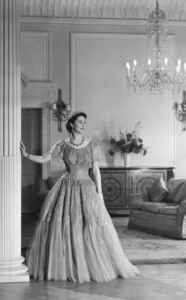
Queen Elizabeth II
She was just 25 when her father died and she became Queen Elizabeth II on February 6, 1952, while on tour in Kenya with her husband Prince Philip. Winston Churchill was the first of 15 prime ministers who served during her reign.
“In a way I didn’t have an apprenticeship, my father died much too young and so it was all a very sudden kind of taking on, and making the best job you can,” she said in a 1992 documentary.
“It’s a question of maturing into something that one’s got used to doing and accepting the fact that here you are and it’s your fate. It is a job for life.”
During her 70 years on the throne Britain underwent dramatic change.
The austere postwar 1950s gave way to the swinging 60s, the divisive leadership of Margaret Thatcher in the 80s, Tony Blair’s three-term New Labour era, a return to economic austerity and then the COVID-19 pandemic.
Labour and Conservative governments came and went, feminism changed attitudes to women, and Britain became a much more cosmopolitan, multi-ethnic society.
Elizabeth was on the throne for most of the Cold War from the death of Soviet leader Josef Stalin. During her reign there were 14 U.S. presidents, from Harry S. Truman to Joe Biden, and she met all bar Lyndon Johnson.
Britain’s vote to leave the European Union in 2016 exposed deep divisions in British society, while nationalists continued their push for a new referendum on Scottish independence that had the potential to rip apart the United Kingdom.
“As we look for new answers in the modern age, I for one prefer the tried and tested recipes, like speaking well of each other and respecting different points of view; coming together to seek out the common ground; and never losing sight of the bigger picture,” the queen said ahead of a 2014 referendum on Scottish secession, in what appeared to be a message to politicians. Scots voted to remain in the United Kingdom.
MORE EGALITARIAN
Over time, Britain evolved into a more egalitarian society, where the ruling class had to make way for a burgeoning middle class, where aristocrats no longer dominated the top universities and the majority of hereditary peers lost their seats in parliament’s House of Lords.
At first, Elizabeth relied heavily on her father’s old circle of advisers but gradually she brought in more career diplomats and business executives to the royal court as she and her husband Philip sought to modernise the monarchy.
“She’s shrewd, she’s compassionate, she has a good deal of insight, and she has the typical and traditional virtues that you associate with the British,” former Prime Minister John Major said amid celebrations to mark her 90th birthday.
“If you were designing someone to be monarch here in Britain, I think you would design someone exactly like Elizabeth II.”
In 1992, the queen responded to criticism about royal wealth by offering to pay income tax and cutting the number of her family members on the state payroll.
But her years on the throne were often far from smooth sailing.
She spent much of the early part of her reign saying farewell to the British Empire amassed under her forebears, from Kenya to Hong Kong. Barbados was the most recent country to dispense with her as head of state in November 2021.
However, she remained the monarch of 15 countries and head of the Commonwealth.
Her marriage to Philip, a Greek prince she wed aged 21, stayed solid for 73 years until his death in April 2021, but her sister, daughter and two of her sons were – very publicly – not so lucky in love.
She famously described as an “annus horribilis” the 40th anniversary of her accession in 1992 after three of her four children’s marriages failed and there was a fire at her Windsor Castle residence.
Queen Elizabeth II
PRINCESS DIANA’S DEATH
The death in 1997 of Princess Diana, the divorced wife of Elizabeth’s eldest son Charles, inflicted even more damage on the family’s public prestige.
It was the only occasion during her reign when there was any serious suggestion that the monarchy’s days might be numbered. The period was famously captured in the 2006 Oscar-winning film “The Queen”, when Elizabeth was portrayed as earnest but misunderstood.
But while her children and other royals at times blundered in and out of tabloid headlines with marital woes and public indiscretions, Elizabeth’s own behaviour remained above reproach.
“It’s not that she’s never put a foot wrong, it’s more positive than that – she understands the British people,” said Professor Vernon Bogdanor, an expert in British constitutional history.
The main criticism levelled against her was that she was too solemn, distant and aloof.
Critics said the only time she had shown real emotion in public was when the royals bid a tearful farewell to their magnificent yacht Britannia, months after her stoical response to Diana’s death.
But according to those who worked closely with her, in private she was not the detached public figure most saw, but perceptive, funny, and keenly aware of the nation’s mood.
LESS FORMALITY
In the last 20 years, backed by a far more professional and sophisticated media operation, there was still pomp and pageantry, but less formality around the queen and her family.
Millions turned out for celebrations to mark her 50th, 60th and 70th years on the throne, while her starring role in a spoof James Bond film became the highlight of the opening ceremony of the 2012 London Olympic Games.
In the short sequence she greeted Bond actor Daniel Craig at Buckingham Palace, uttering just four words before visual effects showed her apparently joining him on a helicopter and parachuting into the stadium.
A decade later at the start of a Platinum Jubilee pop concert, she again won huge plaudits for a pre-recorded comic sketch with Paddington Bear, in which she told the famous fictional character that she always kept his favourite snack – a marmalade sandwich – in her ever-present handbag.
The queen was said to crack jokes with world leaders, enjoy an easy familiarity with long-serving Commonwealth heads of government, and relish a wager on race horses. Racing was an enduring passion.
She was also accompanied for most of her reign by her corgi dogs, which earned a reputation for snapping at the heels of royal retainers and were descended from the dog called Susan she received as an 18th birthday gift from her parents.
“What we actually know about the queen is remarkably little,” said Matthew Dennison, a biographer of Elizabeth.
“We know that she enjoys racing. We know that she likes corgis. We know that she prefers blankets and sheets to duvets. But beyond that, we know almost nothing about her.”
During World War Two she learned to be a driver and a mechanic while serving in the women’s Auxiliary Territorial Service.
Her love of the outdoors and of animals was well documented and commentators said she came across as more at home in tweeds than tiaras.
“I do rather begrudge some of the hours that I have to do instead of being outdoors,” she once said.
Prince William’s wife Kate said that behind closed doors, the queen eschewed royal pomp.
“You would expect a lot of grandeur and a lot of fuss… but actually what really resonates with me is her love for simple things, the lack of fuss and I think that’s a special quality to have,” Kate told a TV documentary to mark Elizabeth’s 90th birthday.
CORONATION
Elizabeth became queen in 1952 and was crowned on June 2, 1953 in a televised ceremony in Westminster Abbey, becoming the first queen in her own right since Queen Victoria and the 40th monarch in a royal line that traces its origin back to William the Conqueror in 1066.
“Horrible,” she said of the carriage ride which took her from Buckingham Palace to the Abbey. “It’s only sprung on leather, not very comfortable.”
In September 2015, she overtook Victoria to become the country’s longest ever reigning monarch, an achievement to which she said she had never aspired, and the following year there were more celebrations for her 90th birthday.
She ascended the throne at the same age as Elizabeth I, but while the first Elizabeth saw her country attain the status of an important trading nation in the 16th century, her namesake presided over a Britain slipping from its position as a world leader in industry and technology.
As Britain’s place shifted, so the queen came to stand for unity, and the pomp around her family – with gilded carriages and spectacular royal weddings – a source of national pride for many.
Prince William’s marriage in 2011 to commoner Kate Middleton, which saw more than a million people throng London’s streets and drew an estimated two billion global viewers, was testament to that.
Opinion polls showed the country still largely believed in the hereditary monarch as head of state.
However, with her death, the monarchy’s future is set to face scrutiny like never before. Some commentators say the British public will not feel as strongly towards Charles, and polls suggest he is far less popular.
The decision of Prince Harry, William’s younger brother, and his American wife Meghan, a former actress, to give up their royal roles has also robbed the institution of two of its most popular global figures, while their accusations of racism against the institution linger.
The U.S. sex abuse civil lawsuit against second son Prince Andrew, which he paid to settle, has also inflicted damage on the family’s reputation. Andrew did not admit any wrongdoing in the case. He was not accused of criminal wrongdoing.
FAMILY LIFE AND PUBLIC DUTY
At her side for nearly all her reign was her husband, who she credited with being her “strength and stay”.
“I was blessed that in Prince Philip I had a partner willing to carry out the role of consort and unselfishly make the sacrifices that go with it,” she said in February 2022 when she marked 70 years on the throne.
The couple had four children: Charles born in 1948, Anne in 1950, Andrew in 1960 and Edward in 1964.
She had eight grandchildren and 12 great-grandchildren.
During much of her reign she was often upstaged for attention by three flamboyant women – her popular mother, Elizabeth the Queen Mother, her younger sister Margaret and later Princess Diana.
But the personal sorrow of losing her mother and sister – who died within weeks of each other in her Golden Jubilee year of 2002 – helped the queen establish her own position, leaving her the undisputed matriarchal figure of the nation.
Her working life included thousands of official engagements, varying from trips to schools and hospitals, to the grand ceremonies of state visits and national occasions.
She was famous for wearing brightly coloured outfits with a matching hat on royal engagements, to ensure she stood out from the crowds on her many “walkabouts”.
“I have to be seen to be believed,” she is said to have quipped.
She also took her religious duties as Supreme Governor of the Church of England very seriously, saying in 2012 the established Church was “commonly under-appreciated”.
She travelled further than any previous monarch, undertaking more than 250 overseas visits to well over 100 countries. She was renowned for her stamina and began cutting back on a once hectic timetable of foreign tours only as she moved into her 80s.
Even in her 90s she regularly carried out engagements. On one such event at the age of 93, she told officials she was still capable of planting a tree before shovelling the soil into the hole, and it was another two years after that before she needed to use a walking stick in public.
When she was hospitalised in March 2013 with symptoms of gastroenteritis, it was the first time she had needed hospital treatment in a decade.
It was not until October 2021 that she next spent a night in hospital, and she doggedly carried on with light duties even after testing positive for COVID in February the following year.
Her enduring importance was demonstrated at the start of the pandemic in 2020. With an anxious nation under a rigorous lockdown, the government turned to the queen to provide reassurance in a televised broadcast. Usually she gave such addresses only in her annual Christmas broadcast.
The queen had a few notable security scares. In 1981, a British youth fired blank shots near her during the military Trooping the Colour ceremony. Her horse shied but she was unhurt.
The same year, a “severely disturbed” teenager tried to assassinate the monarch while she was on a visit to New Zealand but he missed with his rifle shot.
In July 1982, an unemployed labourer called Michael Fagan made his way into her Buckingham Palace bedroom. He spoke briefly to Elizabeth, who was in her nightclothes, before being hauled off by security guards.
THE FUTURE
“It has been said that ‘the art of progress is to preserve order amid change and change amid order’, and in this the queen is unparalleled,” then-Prime Minister David Cameron said in a speech to parliament in 2012.
“She has never shut the door on the future; instead, she has led the way through it.”
The queen’s family and Britain’s political elite spoke in admiration of her ability to adapt without losing any of the dignity of her role.
The future success of the monarchy could depend on how much Britons admire the next person on the throne.
“Monarchy is only as good as the people doing the job,” said royal biographer Robert Lacey, who was historical consultant to the Netflix drama “The Crown”.
“We are essentially, when you look at the structure and the way the country runs, a republic with this glorious bauble that we all enjoy on top. And we can always unscrew the bauble any time we want.”
Elizabeth herself set out her life’s goal at an early age.
“I declare before you all,” she said in a 21st birthday broadcast, “that my whole life, whether it be long or short, shall be devoted to your service and the service of our great imperial family.”
Chicago, IL/Kolkata: World-renowned human rights activist Dr Gregory Stanton once again stated that India is preparing for ‘genocidal massacres’ of 200 million Muslims.
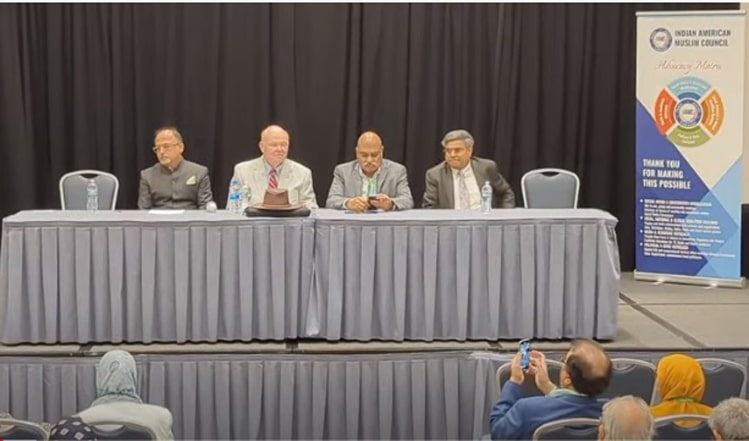
Dr Gregory Stanton was speaking at a panel discussion organized by the Indian American Muslim Council (IAMC) at the Islamic Society of North America’s (ISNA) annual convention.
The panel was also attended by senior investigative journalist turned author Niranjan Takle. Takle book- Who Killed Judge Loya, based on his investigative work got published recently. And Ajit Sahi, Advocacy Director of IAMC.
“India has all of the preparatory stages for more genocidal massacres,” Dr Stanton said at ISNA’s 59th convention in Chicago, citing the discriminatory Citizenship Amendment Act (CAA), the dehumanization of Muslims through hate speech, and the “non-prosecution of lynchings and other crimes committed by Hindus against Muslims.”
“Persecution of Muslims is reflected in termination of Kashmir’s autonomy. Much Muslim property has been expropriated or destroyed, and Muslims have been displaced into enclaves,” Dr Stanton added.
“A climate of impunity reigns, in which eyewitnesses to mass murders of their own families have been terrorized into recanting testimony, and the killers have been acquitted.”
He warned about the influence of the Hindu supremacist paramilitary group Rashtriya Swayamsevak Sangh (RSS), which is the parent ideologue of Prime Minister Narendra Modi’s Bharatiya Janata Party (BJP), saying that the RSS now pushes its violent supremacist ideology in, “schools, trade unions, cultural societies, and religious groups all over India.”
“[The RSS also] runs camps of the Bajrang Dal, where young Hindu boys are taught the ideology of Hindutva and where hatred and fear of Muslims are openly advocated. These camps receive large financial contributions from Indians abroad, especially through the India Development and Relief Fund,” said Dr Stanton.
He further warned that the BJP has already played a role in instigating violent and genocidal violence in the past, especially during the Gujarat pogrom of 2002, and that, “preparation for more massacres has already begun.”
“The killers clearly expressed their genocidal intent in their slogans: ‘Kill them all, destroy their society;’ ‘finish off all Muslims;’ ‘our people were not spared by them, don’t have mercy,’” he quoted. “Police officials said that BJP party officials instigated the mobs. ‘This was not a riot,’ said one senior police official. ‘It was a state-sponsored pogrom.’”
Takle stated that the BJP is implementing ideas put forth by the founders of the Hindutva ideology, including the weaponization of rape and cow vigilantism to spread fear among Indian Muslims.
Takle further raised the issue of Hindu extremism rising outside of India, naming several US-based organizations as channels for spreading the ideology.
“This Hindutva ideology I know for sure has spread across the world through several organizations like Vishwa Hindu Parishad, Hindu Swayamsevak Sangh، and they are trying to influence policies of foreign countries right now, apart from spreading hatred because it’s only hatred on which they can survive,” he said.
“I am a Hindu myself. This fight is against Hindutva. Hindutva is bigotry,” pointed out Ajit Sahi. “If Indian democracy goes down, it will have a terrible effect around the world, including the United States.”
Ranchi: In the battle of perception, Hemant Soren-led United Progressive Alliance defeated the opposition or more precisely Bharatiya Janata Party in Jharkhand on Monday.
A trust vote, which was called by the ruling party itself given the confusion engulfing the state for a fortnight now over the issue of chief minister Hemant Soren’s disqualification. UPA got 48 votes, including endorsement from CPI-ML and an independent MLA as well. The majority mark is 41 in the Jharkhand assembly. BJP and Ajsu walked out of the assembly during the voting.
Last month, the state election commission, which was hearing the case of Hemant Soren’s office of profit, sent its report to Governor Ramesh Bais. However, the governor is yet to make the report public, while media reports suggest that Soren has been disqualified.
But today, Hemant Soren gave a fiery speech inside the assembly. There seemed no fear in him concerning the uncertain future of his government,
The chief minister not only attacked the BJP and the Governor for creating confusion and political crisis in the state, but also mentioned his government’s future course of action.
“Since August 25, an environment of uncertainity has been created by the Election commission, Governor. When the UPA went to meet the Gov, he accepted that he had received the letter. And now he has moved from the backdoor to Delhi. A sense of insecurity, confusion has been created,” Soren said.
The tribal chief minister made his intent clear and stated, “Isliye Hum Ye Batana Chahte Hain Ki Hum Sadan Ke Andar Mazboot Hain Aur Bahar Bhi. Ye Shibu Soren Ka Beta Hai, Andolankari Ka Beta Hai, Aapse Kabhi Darega Nahi (That is why we want to show that we are strong in or outside the assembly. I am a son of Shibu Soren, son of a revolutionary, who will not fear from you).”
He lashed out at the BJP for doing politics of hate and division, “Aaj Kahin Bhi Hindu-Muslim Ki Ladayi Hoti Hai, Jahan Hoti Hai, Ye Pahunch Jaate Hain. Is Sarkar Mein Chahe Koi Bhi Ho Usko Marne Ke Liye Nahi Chor Sakte (Today, wherever Hindu-Muslim conflicts take place, they reach there. But in our government, we do not let people die, whoever they are).”
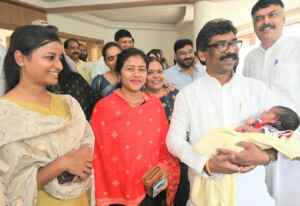
Hemant Soren with Ramgarh MLA Mamata Devi’s child after trust vote | Courtesy: Twitter/HemantSorenJMM
Soren did not miss the opportunity to point out that the two BJP legislators—Babulal Marandi and Samri Lal are also facing a disqualification issue which will be decided by the speaker.
“They (centre government) are drunk in power, and they think they can do anything. They talk about my membership. But see (BJP’s) Samri Lal Ji, who has got a fake certificate from another state. See Babulal Marandi, even chameleons do not change colour as many times as he does colour (Hinting at the change of party by Marandi).”
Soren also attacked RSS, “Inki Sakhao Mei Adivasi, Dalit, Alpsankhyak Ko Kaise Bewakoof Banaya Jaaye Inki Training Hoti Hai. Their (BJP) real face is very dangerous. It is not easy to understand. But the ruling alliance understands. We will crush the ideology of the BJP.”
“In the country, 90 percent of the drug supply comes through Adani’s port, but there is no one to question about it. And here the ED is unleashed.”
And then Soren said, “I want to tell everyone that the government will soon announce its decision on the 1932 year cut-off year domicile policy.”
Earlier, JMM MLA Sudivya Sonu in his speech pointed to the party’s plan of action in near future, “When we will make domicile policy, with the cut-off year 1932, they (BJP) won’t be able to do anything. If they will play with fire, they will become ashes, their politics will end.”
After winning the trust vote, Sonu told eNewsroom, “For the last 15 days, an environment was created to show that the government has no support from its alliance as well as legislators. Every day one or other rumour was being spread. But with this win, we not just giving a message to BJP but also to the Governor also that Hemant Soren government has got a comfortable majority.”
However, BJP’s Neelkanth Munda in his speech said that Jharkhand’s people believe that the government is in fear. “None from the Opposition, judiciary or the governor have asked for a trust vote. By bringing a no-confidence motion, the government shows that they have no faith in their own MLAs,” he said.
Congress’ Pradeep Yadav mentioned, “Four byelections happened in Jharkhand, but the people threw BJP away. So they want to buy the MLAs and create confusion. This is BJP’s old tactic. In 2014, BJP bought then Jharkhand Vikash Morcha’s six MLAs Babulal Marandi (now with BJP) party’s six MLAs.”
Vinod Singh of CPI-ML said that Jharkhand has a chequered history, horse trading always happened. And the centre with its full might, trying to destabilise the government.
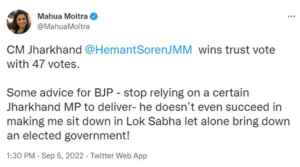
The trust vote of Soren government was being watched from several quarters. Trinamool Congress’s MP Mahua Moitra took a jibe at BJP MP Nishikant Dubey after the voting concluded. Dubey had claimed that the Soren government will not see the light of September.
“Some advice for BJP- stop relying on a certain Jharkhand MP to deliver- he doesn’t even succeed in making me sit down in the Lok Sabha let alone bring down an elected government (sic).”
Dubey was also the center of criticism by Jharkhand UPA leaders as he not only predicted the fall of the Soren government by August but also forecasted that is in the EC’s report that has been submitted to the governor.
The Godda MP was also in news recently for the wrong reasons, as he has been slapped with FIR by the Deoghar administration for entering ATC (Air Traffic Control) tower at Deoghar airport forcefully.
रामलीला मैदान में कांग्रेस की रैली थी। महंगाई के ख़िलाफ़ हल्ला बोल रैली। इस नाम से चैनलों में प्रोग्राम चलते हैं मगर हल्ला बोलने के नाम से होने वाली रैली कवर न हों, इसके लिए पहले से ही गोदी पत्रकार अफ़वाहें उड़ा रहे थे कि कांग्रेस की रैली को लेकर ट्विट करने वाले पत्रकारों को पैसे दिए गए हैं। रैली से पहले ही कुछ पत्रकारों ने इस तरह के ट्विट कर दिए। गोदी पत्रकारों को अच्छी तरह पता है कि विपक्ष को कवरेज नहीं मिलेगा। अख़बारों में भी भीतर के पन्ने पर कहीं होगा और राहुल गांधी ने मीडिया को लेकर जो कहा है, वह तो छपने से रहा। वैसे आप कल का अख़बार देख लीजिएगा और आज चैनलों को देख लीजिएगा। कितना छपता है, कितना दिखता है। बच गया सोशल मीडिया तो वहाँ भी कवर न हो इसके लिए पहले से ही पत्रकारों को ताना मार कर डराया जाने लगा। जो निर्लज्जता से गोदी मीडिया बने हुए हैं वो कांग्रेस की रैली पर ट्विट करने वालों को निष्पक्षता के नाम पर ताना मार रहे हैं। जो ख़ुद सत्ता पक्ष में समाहित हो चुका है, वह निष्पक्षता पर ताना तो मारेगा ही। मोहल्ले के बदमाश लोग कभी नहीं चाहते कि पढ़ने वाले शरीफ़ छात्र की घर-घर तारीफ़ हो।
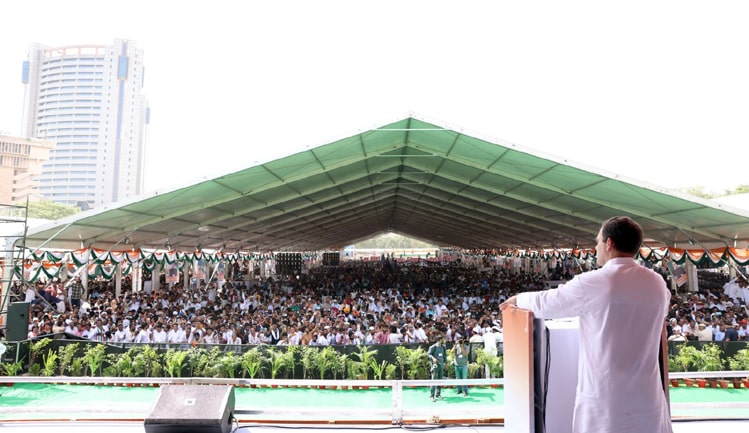
रामलीला मैदान में राहुल गांधी ने मीडिया को लेकर विस्तार से बात की। राहुल ने कहा कि देश में मीडिया नहीं है। मीडिया अब केवल दो उद्योगपतियों के हाथ में चला गया है। इन दो उद्योगपतियों का सारा मीडिया मोदी जी के लिए काम करता है और मोदी जी इन दो उद्योगपतियों के लिए काम करते हैं। मीडिया अब जनता की आवाज़ नहीं उठाता। विपक्ष की आवाज़ नहीं दिखाता। इसलिए कांग्रेस और विपक्ष को जनता के बीच जाना होगा। कई महीनों से राहुल के हर भाषण के केंद्र में मीडिया होता है। बिना मीडिया को उजागर किए उनका कोई भाषण पूरा नहीं होता है। उन्हें इस बारे में और विस्तार से बात करना चाहिए। कार्यकर्ताओं को बताना चाहिए कि उन्हें गोदी मीडिया से लड़ने के लिए क्या करना चाहिए। उसके कार्यक्रम क्या होने चाहिए। अख़बारों और चैनलों को लेकर कैसे जनता के बीच जाना चाहिए। उनका भाषण मुद्दों को रेखांकित तो करता है मगर विस्तार नहीं देता। जिस तरह से महंगाई का डिटेल दिया उसी तरह राहुल गांधी को अब नाम लेकर बोलना होगा, अपने अध्ययन के साथ बोलना होगा तभी उनके कार्यकर्ता को पता चलेगा कि जनता को क्या बताना है। विपक्ष गोदी मीडिया की आलोचना तो कर रहा है मगर अभी भी उसकी आलोचना में तैयारी की कमी दिखती है। यह एक असंभव लड़ाई है और इसकी तैयारी आधे-अधूरे तरीक़े से नहीं की जा सकती है।
मैं हमेशा से मानता रहा हूँ कि जब तक विपक्ष जनता के बीच गोदी मीडिया को उजागर नहीं करेगा, लोकतंत्र की कोई भी लड़ाई पास टाइम है। हर नागरिक को इस गोदी मीडिया से लड़ना पड़ेगा। कांग्रेस के लिए नहीं, अपने लिए। गोदी मीडिया से लड़ाई बीजेपी के ख़िलाफ़ लड़ाई नहीं है। गोदी मीडिया से लड़ाई नागरिकों के आज़ाद अस्तित्व और स्वाभिमान के लिए है। उसे अपने लिए गोदी मीडिया से लड़ना होगा और विपक्ष को जनता की मदद करनी होगी। जनता को अंदाज़ा नहीं है कि उस पर किस तरह का गोला गिरने वाला है। उसकी चीख पुकार उसके भीतर ही दब कर रह जाएगी।
इस समय जनता मीडिया से लड़ रही है मगर पूरी तैयारी के साथ नहीं। कभी वह अपने मुद्दों को लेकर ट्विटर पर ट्रेंड कराती है तो कभी लोकल चैनल के पास जाती है। वहाँ कवर नहीं होता है तो राष्ट्रीय चैनलों के पास जाती है। अख़बार भीतर के पन्नों पर जनता की ख़बरें छाप देते हैं। जनता महसूस कर रही है लेकिन वह गोदी मीडिया के ख़तरों को ठीक से नहीं समझ रही है। अख़बारों और चैनलों से थक-हार कर आप यू-ट्यूबर के पास जाते हैं। एक दिन वहाँ भी दरवाज़े बंद होने वाले हैं बल्कि बंद हो रहे हैं। सूचनाएँ कम हैं। विश्लेषण ही ज़्यादा है।
गोदी मीडिया से लड़ने में राहुल गांधी ने देर कर दी लेकिन वे अब गोदी मीडिया के ख़िलाफ़ बोलने लगे हैं। 2014 के पहले मीडिया विपक्ष की तरफ़ से सरकार से सवाल करता था,आज मीडिया ने विपक्ष को ही ग़ायब कर दिया है। तब बीजेपी की प्रेस कांफ्रेंस कांग्रेस से पहले कवर की जाती थी और बीजेपी के सवाल पर कांग्रेस से जवाब माँगा जाता था। आज कांग्रेस की बात रखने पर गोदी पत्रकार पत्रकारों को टार्गेट कर रहे हैं।
याद रखना चाहिए। विपक्ष का मतलब कांग्रेस और राजद नहीं होता है। विपक्ष का मतलब होता है जनता। जनता को झूठ और भय के आधार पर डराया जा रहा है। जनता हर बार पहले से ज़्यादा पीछे हट रही है जब जनता ही नहीं बचेगी तो देश कैसे बचेगा। अंग्रेज़ों के शासन में जनता ग़ुलाम थी, इसलिए देश नहीं था। तब जनता ने तय किया कि भारत माता की बेड़ियों को तोड़ देंगे। देश बन गया। जिन्हें लगता है कि वे देश के लिए कुछ करना चाहते हैं। उन सभी को गोदी मीडिया से लड़ना चाहिए। यह सबसे आसान लड़ाई है लेकिन मुश्किल है कि इसके लिए पहले ख़ुद से लड़ना पड़ता है। ख़ुद को आज़ाद कराना पड़ता है, इसीलिए यह उतनी ही मुश्किल लड़ाई भी है।
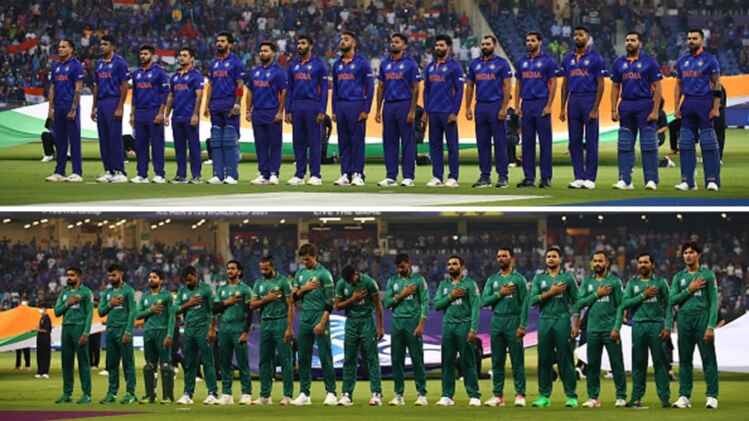
The battle lines are drawn for a pulsating clash with India and Pakistan both eyeing a strong start to their Super Four campaign in the Asia Cup on Sunday. For cricket fans all over the globe, India-Pakistan contests are much-awaited mega-events. Given their political tensions, however, Indo-Pak games are now played only in ICC tournaments which often means a wait for a few years. But this Asia Cup is a welcome surprise for cricket lovers as the arch-rivals will battle for a second time in a week and later possibly even in the finals of the tournament.
The face-off between Rohit Sharma’s India and Babar Azam’s Pakistan for the second Sunday in a row has aroused huge expectations. After India’s close win against Pakistan in the first match, both teams have upped their performances a notch. India beat Hong Kong easily and Pakistan thumped them by a massive margin, bowling them out for a paltry 38 as they chased 194.
Although India holds the edge after their win in the last encounter, it also implies added pressure, especially after Ravindra Jadeja’s injury which is a big blow for Team India. Jadeja had played a crucial role in India’s win in both their group stage games. In the game against Pakistan, Jadeja’s knock of 35 and his vital partnerships with Surya Kumar Yadav and Hardik Pandya helped the Men in Blue get over the line in a tense encounter. In the clash against Hong Kong, Jadeja bowled a tight spell where he gave just 15 runs in four overs and ensured that the associate nation was trounced.
Jadeja’s absence also implies a major selection headache for Team India. While Axar Patel has been drafted into the squad, who will play in the final XI is an open question. Veteran off-spinner Ashwin and Deepak Hooda with their all-round skills are other options. Given his big hitting and effective bowling ability, Hooda could well be a great choice. But filling the void left by Jadeja’s injury is a tricky task.
If Jadeja’s absence is a setback, King Kohli’s comeback is a cause for jubilation in the Indian camp. In his vital 35-run knock against Pakistan, Virat had shown signs of regaining his touch. His superb undefeated 50 in the game with Hong Kong is a clear signal that Kohli is on the verge of a return to his high-scoring self that makes him one of the all-time Greats in the game.
Besides Kohli’s welcome return to form, KL Rahul also got a 30-plus score against Hong Kong though he is still far from his best. Also, skipper Rohit looks in good nick though big scores remain elusive for him. Overall, the Top 3 of Team India seem to be getting into their groove and do not seem as vulnerable as they did before the last game against Pakistan.
On the Pakistan side too, the batting has shown signs of recovery. Though captain Babar Azam has failed twice in the Asia Cup, his opening partner Rizwan has excelled in both the games so far. In addition, aggressive southpaw Fakhar Zaman was in great form during his brisk 50. Despite the loss in the India encounter, the 155-run win over Hong Kong is Pakistan’s biggest margin of victory in T20I history and suggests that the momentum and morale are back for Babar’s boys.
Pakistan’s middle order, however, remains a worry. The way they crumbled against India in the first game is a reflection that it may be a weak link for the side. In stark contrast, the middle order is proving to be one of India’s big strengths. If Hardik Pandya’s heroics had pipped Pakistan in the last game, Surya Kant Yadav’s power-packed aggression was astounding in the Hong Kong game. Though Jadeja’s absence is a worry, with Dinesh Kartik and possibly Deepak Hooda in the mix, Team India sure has the batting riches to beat Pakistan.
In the bowling department, however, Pakistan remains a formidable force despite Shaheen’s absence due to injury. ALL their pacers seem to be sharp and are bowling well. From the fiery youngsters, Naseem Shah and Shahnawaz Dahani to the experienced veteran Haris Rauf all seem to be bowling in an aggressive fashion. Significantly, the two spinners, Shadab and leftie Mohammad Nawaz are also at their wily best. The strength of the Pakistani attack was more than obvious in the manner in which they bundled out Hong Kong for just 38.
In contrast, Indian bowling looks a tad less effective. Though Bhuvneshwar Kumar and Arshdeep Singh have been impressive, Avesh Khan’s lack of consistency is a cause of concern. While Hardik’s spells are vital, Jadeja’s absence could weaken the bowling attack.
Overall, the key contest may well revolve around India’s batting might and Pakistan’s bowling armoury. Given the form of both sides and their evenly-matched skills, the game on Sunday promises to be a humdinger. Ultimately, the team that handles pressure better on the day may well be the winners, as in most Indo-Pak blockbusters!
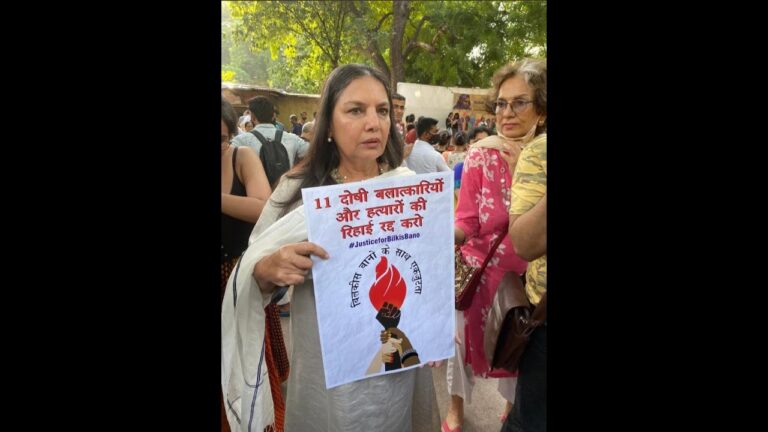
Kolkata: After the remission of 11 convicts in the Bilkis Bano gang rape and murder case on the 75th Independence Day of India, protests have erupted in several parts of India. From national capital Delhi, financial capital Mumbai, Kolkata, Jaipur, Varanasi to Giridih people hit the streets against the release of the rapists and murderers in the Bilkis Bano case.
During Gujarat Riots 2002, at least 14 members of Bilkis Bano’s family were gang raped and murdered. Among them was a 3-year-old daughter of Bilkis who was smashed to the wall, leading to the kid’s death. Bilkis and her mother were gang-raped in front of each other.
But, even after such heinous crimes, the criminals were released on Independence Day this year by the Gujarat government under its remission policy.
Kavita Krishnan, who attended a protest at Jantar Mander, New Delhi said in her speech that it was not remission but a reward for rapists and killers. She mentioned that it has been done to give a message that if you will rape a Muslim woman, you will be saved and rewarded.
The activist who had played a major role during the Nirbhaya agitation, said to Prime Minister Narendra Modi to speak on the Bilkis Bano issue and apologies to the nation.
Earlier, 6000 people across India condemned the remission and demanded Supreme Court to intervene.
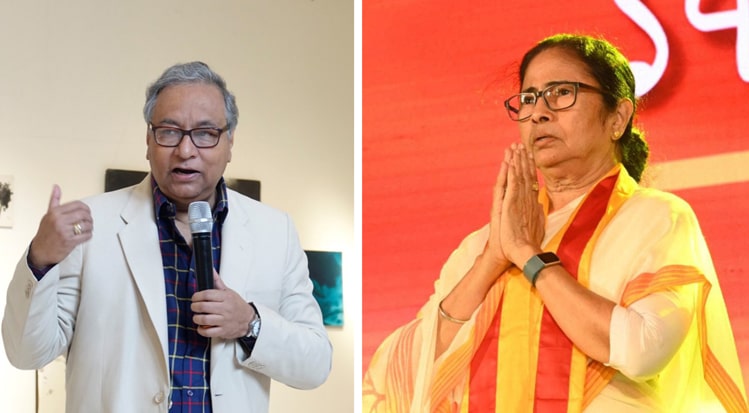
Kolkata: Amidst the news of her party leaders getting arrested, the last thing that Trinamool Congress chief Mamata Banerjee would not wanted is MP Jawhar Sircar expressing his family’s desire for him to quit politics, following the unceremonious arrest of his party leaders – Anubrata Mondal and Partha Chatterjee.
The former bureaucrat has had a spotless track record.
On Monday, while speaking to ABP Ananda, he pointed out that a part of TMC is ‘completely rotten’ and Bharatiya Janata Party cannot be fought in the 2024 elections with such elements remaining in the party.
Sircar has served Manmohan Singh as well as the Narendra Modi government and has been the chief executive officer (CEO) of Prasar Bharati. He was sent to Rajya Sabha by TMC in 2021.
Once he had said that in 2011 itself, he had got an offer to join politics, but he had not accepted it and continued his Indian Administrative Service (IAS) work.
In Rajya Sabha, he has been the most prominent faces of the party after Mahua Moitra and Derek O’ Brein.
On social media many describe him as (PM) Modi critic. And he has always been on the target of right-wing troll army. The right-wing website OpIndia often writes negative stories about him.
He mentioned that his family and friends asked him to quit politics after TMC leaders Partha Chatterjee and Anubrata Mondal were arrested.
“You can’t put up a fight against the BJP in 2024 with rotten elements in the party. A portion of the party is completely rotten. These rotten elements have to be operated out, or else it will infect the entire body,” he told ABP.
Referring to the hoards of cash recovered at the apartment of Arpita Mukherjee, an associate of Chatterjee, he said it was a very embarrassing moment for him.
“I had never encountered such a situation even when I was an IAS officer. My family asked me to quit politics, my friends called me up to ask how much I got. It was a very embarrassing moment for me,” he said.
Sircar made it clear that he joined politics to defeat the BJP.
He also stated how important the 2024 general election is for the nation. “If even after ten years we fail to defeat the BJP in 2024, then there might not be any other Lok Sabha election,” he claimed.
TMC leaders have declined to comment on Sircar’s statement.
Ranchi: Since the formation of Jharkhand, no single political party has ever got a majority in the eighty one seat Jharkhand assembly.
Because of this, for 15 years, Jharkhand has not had a stable government and the consequence being that the newly curved state had to witness several presidential rules.
In 2015, when the results of the Jharkhand assembly were declared, again no party had a majority. But being the largest one, Bharatiya Janata Party (BJP) got a chance to form a government. Later, six legislators of Jharkhand Vikash Morcha (JVM) were merged in the saffron camp. It helped Raghubar Das to complete its full five years tenure for the first time.
In 2019, when Mahagathbandhan had got absolute majority, nobody had believed that within three years, there would be another political uncertainty in the state.
Political Crisis in Jharkhand
But it happened. From August 25, since the ‘news’ started doing rounds, on the information based on sources in Jharkhand that state Election Commission has sent a report on the issue of profit to the Governor and recommended disqualification of chief minister Hemant Soren, political uncertainty has begun in the state.
The crisis has further deepened, when even after three days of the EC submitting its report, it was not made public by the governor Ramesh Bais.
For the third consecutive day, the media kept floating the disqualification story of Hemant Soren but there was no official statement from Raj Bhavan.
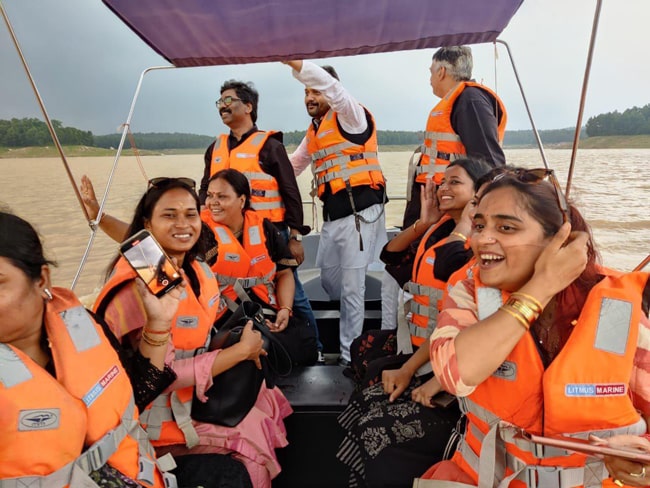
On Saturday, ruling party MLAs led by chief minister Hemant Soren held meetings and also went for a political picnic in Khunti. By the evening, they returned to the state capital.
While Bharatiya Janata Party leaders participated in a three day workshop in Giridih. Former chief minister Raghubar Das told newsmen that they will not let Hemant Soren do anything and they could not do illegal activities sitting on a constitutional post.
Meanwhile, eNewsroom has learnt that on Monday, August 29, the commission can submit another report, this time on Hemant Soren’s brother Basant. Basant Soren, an MLA from Dumka is also facing office of profit allegation.
Delay by the Governor fuels horse-trading
Vinod Singh, the CPIML legislator, who is neither in Gathbandhan camp nor in National Democratic Alliance (NDA) told eNewsroom on the political crisis in the state.
“Whatever is the decision of the Election Commission, the Governor should make it public horse-trading,” alleged the MLA.
Double Engine Ki Sarkar Chalane Ki Sanak
While political analyst Vishnu Rajgadia told eNewsroom, “Earlier, there was a trend in the media that they used to give substantial information and politicians used to react. But now politicians used to tweet any information and the media does not try to find out the truth behind it. What is happening in Jharkhand is nobody knows what is the truth, what is in the Election Commission report. But, a political crisis has been created, which is not good for the state.”
“In 2019, when the Mahagathbandhan got 51 seats, it was believed that there would be a stable government in the state. Lekin Jo Double Engine ki sarkar chalane ki jo sanak hai, Jo Aasanvedhanik Hai Uss Ke Wajah Se Ye Sab Ho Raha Hai. [The intent to run a double engine government (same party government in center and state. A term coined by BJP) leading to such a situation in Jharkhand]. It is not constitutional and it is unethical.”
The senior journalist argued, “Supreme Court should take this note if the party in center is giving preference to the same party government and doing step motherly treatment to another political party government.”
“The anti-defection law is very important. It should be implemented well. And the government at center has the responsibility to maintain it. But the reverse is happening in the country and the center is misusing it the most,” Rajgadia pointed out.
He added, “Hemant Soren government has sufficient numbers, and any government runs on numbers. But if some crisis has been created then it is not just unfortunate for Jharkhand but for the entire country.”
Ranchi: The Governor of Jharkhand is yet to make the state election commission’s report on the issue of office of profit of chief minister Hemant Soren public. But Hemant Soren has used the time to sharpen attack on the center.
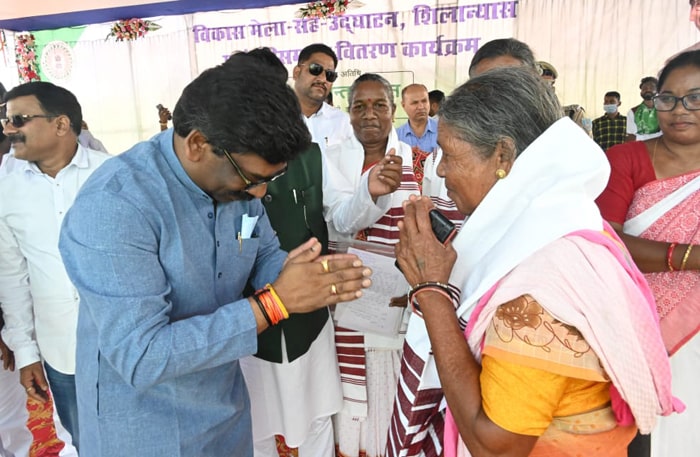
Speaking at a Vikas Mela in Netarhat, Hemant not only highlighted important work that has been done during his tenure but also attacked the center for not letting him work for the people of Jharkhand.
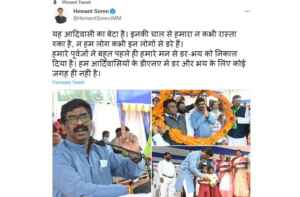
Later, the speech was shared through 12 tweets posted from his social media handle. Apart from his work, which includes several important political aspects—issue of insiders and outsiders in Jharkhand, Tribals being insulted and Soren being the son of the soil.
“As soon as we asked for Rs one lakh 36 thousands crore of state from the center, they sent central agencies behind me. And when they realized that they could not do anything, they tried to disturb ‘Guruji’ (Shibu Soren), a very senior person now to reach me,” Hemant Soren tweeted.
He further stated, “I being the son of a tribal, neither stopped midway nor got frightened. Our forefathers have taught us how not to be afraid. In our Tribal DNA, there is no place for fear.”
The tweet has been pinned to his profile.
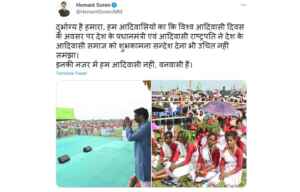
The only tribal chief minister of the country did not forget to remind that neither the tribal President nor Prime Minister greeted tribals on the occasion of World Tribal Day.
“It is our misfortune that the Tribal President and PM did not consider it worthy enough to wish us on World Tribal Day.”
On August 13, eNewsroom had published an exclusive report, how the Tribal community was in disbelief when they were not greeted by the President and Prime Minister on World Tribal Day.
Recently, the Jharkhand government has chosen not to renew notification of Netarhat Firing Range. The locals have been fighting against it for three decades. In the fair, Soren first talked about it and paid two minutes tribute to those killed during the movement.
He also pointed out that some ‘outside’ gang of powerful people are there in the state that have destroyed Jharkhand in the last 20 years, and when they have been rooted out in 2019, those conspirators are not able to digest it.
He also accused the center of being a group of businesses, which only knows how to take money but not give.
The chief minister said that constitutional bodies are being misused.
“Our rivals are not able to defeat us politically, so they are misusing the constitutional institutions. But it will not affect us,” he added.
Meanwhile, it is not just on the ground, but in the virtual world also, Jharkhand Mukti Morcha seems fighting it out on the issue.
On Friday, a trend- Hemant Hai To Himmat Hai was among the top ones nationally on Twitter.