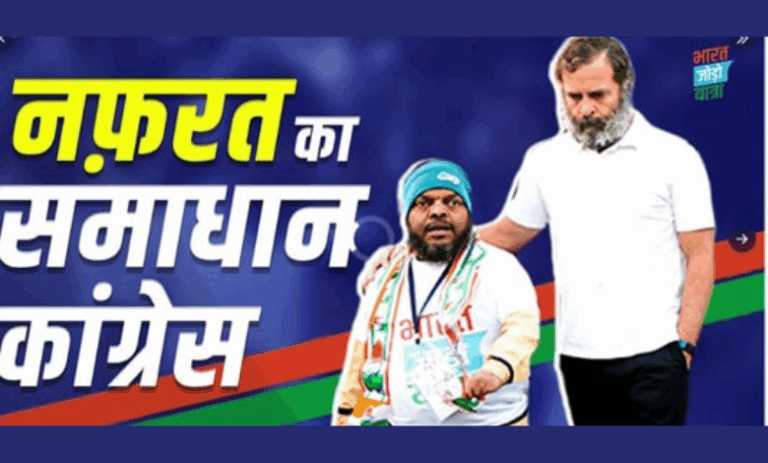
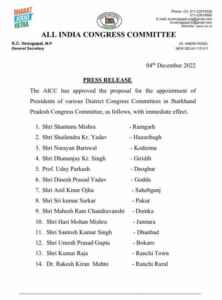
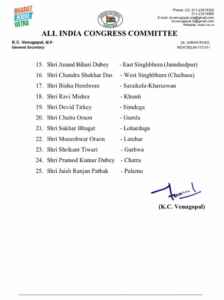
रांची: झारखंड कांग्रेस के टिवीटर हैंडल से आज भारत जोड़ो यात्रा के एक विडियो ट्वीट किया ये दर्शाते हुए कि राहुल गांधी, लोकमन हुसैन नागोरी के साथ चल रहे हैं और देश को एक साथ जोड़कर चलने का संदेश दे रहे हैं। पर इससे पहले के एक दूसरे ट्वीट, जो प्रदेश में 25 ज़िला अध्यक्षों (रांची के लिए दो) के नामों की घोषणा की है में पार्टी की ट्रोल्लिंग इसलिए हो रही है कि सूची में एक भी दलित, मुस्लिम, सिख और महिला का नाम नहीं है।
अखिल भारतीय कांग्रेस कमेटी ने दिसम्बर 4 को झारखंड के 24 जिलों के लिए 25 ज़िला अध्यक्षों (रांची के लिए दो) के नामों की घोषणा की। पर कांग्रेस पार्टी जो दलितों, आदिवासियों और माइनॉरिटि के सवालों को उठाने का दावा करती है, उसने एक भी मुस्लिम, दलित या सिख को ज़िला अध्यक्ष नहीं बनाया है, और प्रदेश की राजधानी, रांची में दो में से एक ज़िला अध्यक्ष आदिवासी को बनाया जाना जरूरी नहीं समझा। हालांकि चार आदिवासियों को इस सूची में जगह मिली है।
हालाँकि नामों की सूची एआईसीसी ने जारी की है, पर राजनीति के जानकार ये जानते हैं की बिना प्रदेश कमिटी के अनुशंसा के किसी भी उम्मीदवार का नाम राष्ट्रीय स्तर से जारी नहीं होता।
81 सीटों वाली झारखंड विधानसभा में कुल 18 विधायक कांग्रेस के हैं। जिनमें दो मुस्लिम है— आलमगीर आलम और इरफान अंसारी। पर देश की सबसे पुरानी पार्टी में दलित समुदाय से झारखंड में कोई विधायक नहीं है। 2019 के विधानसभा चुनाव में पार्टी ने दो दलित नेता को आरक्षित सीटों से टिकट दिया था पर वो नहीं जीत पाये।
पार्टी ने जहाँ एक भी मुस्लिम और दलित को ज़िला अध्यक्ष नहीं बनाया, वहीं सिर्फ ब्राह्मण समुदाय से आठ लोग हैं।
सोशल मीडिया पे इसको लेकर तमाम तरह की प्रतिक्रिया पढ़ने को मिल रही है, कि कांग्रेस को वोट मुसलमान समाज का चाहिए पर प्रतिनिधित्व नहीं देना। कुछ ने तो ये भी कहा कि कांग्रेस के गिरते ग्राफ का यही सबसे बड़ा कारण है कि पार्टी, संगठन में भी अपने बेस वोट को सम्मान नहीं देती। इलेक्शन में तो किसी न किसी फैक्टर और विन्नीब्लीटि (जीतने वाले उम्मीदवार) पे दाँव की बात होती है, पर ये मसला संगठन में नहीं होता।
जब से झारखंड कांग्रेस के ट्विटर हैंडल से ये लिस्ट जारी की गयी तभी से पार्टी की ट्रॉल्लिंग हो रही है।
मुस्लिम और दलित नाम नहीं होना चूक, दूसरी सूची जारी होगा: प्रदेश अध्यक्ष
जब ईन्यूज़रूम ने प्रदेश अध्यक्ष राजेश ठाकुर से बात की तो उन्होंने जहाँ ये कहा इस बार के चुनाव में इंटरव्यू के भी सहारा लिया गया, वहीं कुछ में कन्सिडर भी किया गया। “इस बार पूरी प्रक्रिया में उम्मीदवार का इंटरव्यू का ज़रिया चुनाव हुआ। मुसलमान या दलित का नाम नहीं आना दुर्भाग्यपूर्ण है। इस मामले में दोबारा सूची जारी होगी।”
और दलित उम्मीदवार नहीं होने की ये वजह बताई, “एक ज़िला अध्यक्ष के नाम में दास होने के वजह से ये अंदाज़ा लगाया गया कि वो दलित है, पर ऐसा नहीं था।”
सबसे खास बात ये कि, इंटरव्यू की प्रक्रिया होने के बावजूद, कांग्रेस के एमपी और एमएलए के बच्चों को भी जगह मिली है।
पर 25 में से एक भी महिला का ना होना भी एक बात है, पर इसमें पार्टी दलील देती है के महिला का एक विंग है जो पार्टी का फ्रंटल ऑर्गनाइज़ेशन है, इसलिए किसी महिला ज़िला अध्यक्ष का न होना उतनी बड़ी बात नहीं।
वो 2 दिसंबर की रात- असल में 2 और 3 की दरमियानी रात। शहर भोपाल। नवाबों का शहर। झीलों का शहर। आज भी बाक़ी भारत के तमाम शहरों से अलग, अलहदा, थोड़ा ठिठका हुआ, थोड़ा ठहरा हुआ, थोड़ा क़स्बाई। वो शहर जिसमें सब जोड़ लूँ तो सालों बिताए हैं मैंने।
उस रात भी लोग आराम से घर लौटे थे। पर वो रात आसान आम रात नहीं थी। उस रात भोपाल में ज़हर बरसा था, यूनियन कार्बाइड की फ़ैक्ट्री से- मेथाइल आइसो साइनाइट नाम का ज़हर।
हज़ारों मारे गए थे, लाखों हमेशा के लिए अपंग हुए, जिन्हें अब एक सावरकर बटा पाँच माफ़ीबाज दिव्यांग कहता है और उनके ज़रूरी सामानों पर जीएसटी 28% कर देता है! ख़ैर, बात 1984 की है सो वापस वहीं-
वो क़त्ल की रात थी। वो जंग की रात थी। वो कायरों की रात थी। वो नायकों की रात थी। सबसे बड़े नायक भारतीय रेल के भोपाल स्टेशन के कर्मचारी, ख़ास तौर पर स्टेशन मास्टर हुए उस दिन- हादसे के बारे में समझ आते ही अपनी जान पर खेल भोपाल में रुकने वाली हर रेलगाड़ी को रन थ्रू पास कराया।
उस रात डिप्टी स्टेशन मास्टर की ड्यूटी ख़त्म हो चुकी थी पर कुछ काम निपटाने वह अपने कार्यालय में ही थे। किसी काम से बाहर निकले। घुटन सी हुई, जलन भी। प्लेटफ़ॉर्म पर उल्टी करते, बेहोश होते सैकड़ों को देखा-
अपने बॉस, उस समय ड्यूटी इंचार्ज भी, स्टेशन मास्टर हरीश धुर्ये के ऑफिस की तरफ़ भागे। धुर्ये की साँसें रुक चुकी थीं। किसी ने बताया कि एक दूसरी एक्सप्रेस ट्रेन को रन थ्रू कराने ताकि वह गैस से बच जाये वो एक कुली के साथ प्लेटफार्म 1 पर भागे थे, उसी में दम तोड़ दिया। उनके 23 और साथी कर्मचारियों का भी यही हाल हुआ था, दम तोड़ चुके थे!
इधर सामने रात के एक बजे स्टेशन पर गोरखपुर कुर्ला एक्सप्रेस घुस रही थी, हज़ारों यात्रियों से भरी हुई। अभी जाने का समय नहीं हुआ था। 20 मिनट का ठहराव था।
डिप्टी स्टेशन मास्टर ने एक पल में फ़ैसला ले लिया- अपनी जान की परवाह न करते हुए, भागे नहीं थे। घुटती साँसों में जितनी आवाज़ निकल सके बोले थे इस गाड़ी को निकालो, आसपास के स्टेशनों पर खड़ी गाड़ियों को वहीं रोको- हो सके तो पीछे लौटाओ।
बाक़ी कर्मचारियों ने घबराए हुए से पूछा- मुख्यालय से आदेश का इंतज़ार कर लें।
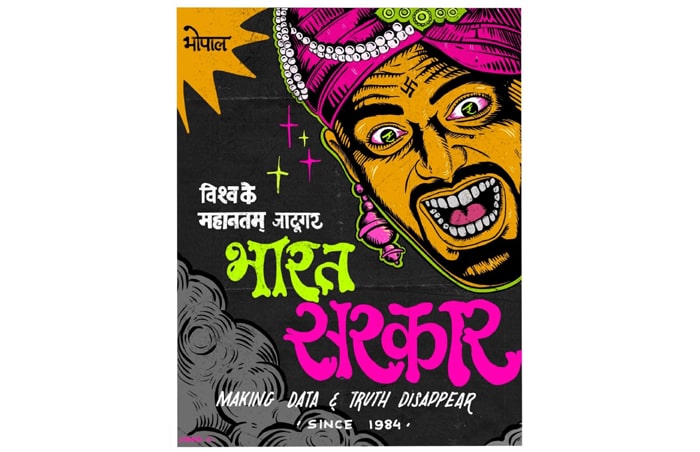
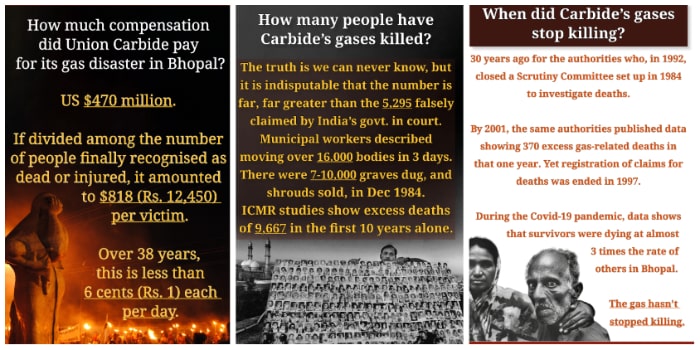
भोपाल गैस कांड की बरसी पे bhopal.net की तरफ से बनाया गया एक पोस्टर
स्टेशन मास्टर बोले मैं पूरी ज़िम्मेदारी खुद लेता हूँ। निकाल दी। वे ये ना करते तो उस रात बरसी गैस से हुई 14,500 मौतों में कई हज़ार और का इज़ाफ़ा होता। उन्होंने ये किया, पूरी रात स्टेशन पर रहे, जूझते रहे। परिवार भोपाल शहर में अपने घर में था, मौत से जूझ रहा था- फ़िक्र तो होगी ही पर कर्तव्य नहीं छोड़ा।
गम्भीर रूप से संक्रमित हुए, 17 साल अस्पताल में रहे। मौत भी इसी गैस लीक के चलते हुई। 2003 में।
उनका नाम ग़ुलाम दस्तगीर था। दोहरा रहा हूँ। ग़ुलाम दस्तगीर। अपनी ही नहीं बल्कि पूरे परिवार की जान दांव पर लगा स्टेशन पर खड़ी रेलगाड़ियों को रवाना ना किया होता तो हज़ारों और मरते।
बाक़ी इस कहानी में गलती कर बैठे भी कई हैं, कायर भी कई, और दलाल भी कई।
आज संघी आपको गलती करने वालों के नाम बताएँगे, दलालों के नहीं।
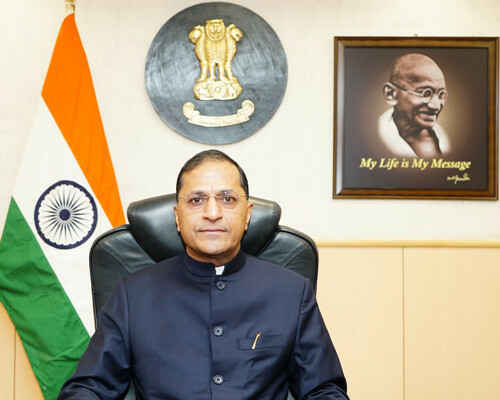
मैं बता देता हूँ- यूनियन कार्बाइड की उस फ़ैक्ट्री में हुए हादसे का ज़िम्मेदार वारेन ऐंडरसन था। सुप्रीम कोर्ट में चले उसके मुक़दमे में उसका वकील अरुण जेटली।
जी- वही भाजपा नेता और वाजपेयी और मोदी दोनों की कैबिनेट में मंत्री रहा अब मरहूम अरुण जेटली।
चेक कर लीजिएगा। बहुत कुछ पता चलेगा- यहाँ तक कि अधनंगी लड़कियों के साथ यूरोप घूम रहे ललित मोदी की ‘मानवता के आधार पर मदद’ सुषमा स्वराज और वसुंधरा राजे ने की थी, मेहुल चौकसी की क़ानूनी टीम में अरुण जेटली की बेटी थी।
एक और बात बताता हूँ: राजीव गांधी ने बाद में ग़ुलाम दस्तगीर की पत्नी को लोकसभा का टिकट दिया था, सांसद बनाया था। इसकी तुलना आज वालों से कर लें जो मासूमों को बम ब्लास्ट में उड़ाने के आरोपियों को टिकट देकर सांसद बनाते हैं!
हरीश धुर्ये, ग़ुलाम दस्तगीर और उन तमाम अनाम रेलवे कर्मचारियों को सलाम जिन्होंने कई हज़ार घरों के चिराग़ बुझने से बचा लिये। उन पर लानत तो जो बस क़ब्रिस्तान शमशान बनवाना चाहते हैं उसी पर वोट माँगते हैं!
Indore/Pithampur/Bhopal: Shiv Prakash Prajapati was devastated when less rainfall thrashed the rabi crops in his farm, leaving the crop to fall prematurely and injury to the grain. The crops stood partially due to lack of water for weeks at Padri Kala village in Unnao district of central Uttar Pradesh. Soon, the stress on the grain became visible. The number of seeds set per spikelet were unable to stand. Prajapati was one among the hundreds of wheat growers in the highly fertile river basin of the Ganges to suffer this plight.
Devastated by climate changes and realising that seeds of wheat spikelet savings won’t be enough to meet the consumption needs for his family, Prajapati accepted the path of migration for economic and social stability. He decided to migrate to a place that could offer a year-round livelihood option with low-cost living. Shiv Prakash reached Indore in 1994–the most populous city and popularly known as Mini Mumbai for connectivity and commercial activity.
It was the same year when the State’s commercial capital hit news headlines for altogether different reasons linked to commercial activity. Residents say, such was the growth prospect. Indore was proposing that it had to implement a ticket system to shoo off purposeless vagabonds chilling in centrally air-conditioned Treasure Island Mall, the first mall of the State.
And one among hundreds who visited the mall with tickets was Prajapati, an industrial worker. It was the period, when Indore’s urban population nearly doubled, in part because migrants devastated by climate change from rural areas were being driven to cities in search of economic and social stability.
Role of migrants in MP’s financial capital
The arrival of migrant workers easily got reflected in the census data of Indore.
In the 2001 census, Indore had a population of 2,465,827. Ten years later, the city had a population of 3,276,697. There was a change of 32.88 percent in the population compared to the population as of 2001. With a population of more than 3.4 million, Indore is the most populous city and the second largest city by area in the central Indian state of Madhya Pradesh and serves as a commercial and industrial hub for the state.
And all this happened when Indore was already struggling to handle its own climate issues. Amidst freshwater scarcity to vehicular congestion on roads, population growth and unplanned expansion made Indore a fast-growing urban center with a diversity of industries, income levels, and health needs.
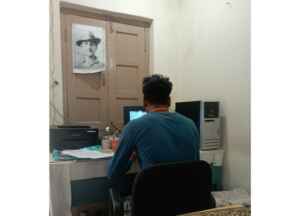
Prajapati who works in an aluminium extrusion plant in Indore | Credit: Author
His son, Vishal Prajapati feels that drastic changes in unhealthy air patterns over the last few years are adversely impacting his health. He blames the surroundings and his workplace.
“We live in a congested two-room house in an overcrowded residential area, where 6-7 people live together in poky 100 sq feet dwellings. About 20% of the residents use community toilets. Most people are informal daily-wage workers who don’t cook at home and go out to get their food,” says Vishal who works in an aluminium extrusion plant in Indore.
According to advocate and All India Trade Union Congress [AITUC] Indore district general secretary Rudra Pal Yadav, “the estimated population of migrant labourers in Indore is more than 8 lakhs. Here they primarily work under filthy conditions in pharmaceutical, automobile, real estate, textile trade industrial units and live in homes lining the narrow lanes of the City. Regular health check-ups and safety equipment are not on the priority list of companies and units”.
The situation after Covid has considerably changed in the working class. There is no shortage of labour and the cost of labour is falling in Pardesipura, Bajrang Nagar, Aerodrome Road, Banganga and other odd- 40 centres where labourers assemble every morning to get a day’s work, Yadav said.
He added, the migrants were found to be one of the most vulnerable groups in this lockdown, as their very livelihood came to a complete standstill. “As many of them were laid off during the downsizing operation, hundreds and hundreds of them are now forced to work in 12-hour shifts for less wages”.
As compared to other labourers, distressed migrant workers are more likely to experience a lack of proper protection at work. They are usually forced to live and work in unsafe conditions in low packages as compared to other workers.
Clean air challenge for Indore
To that end, commercial and industrial hubs work on their economics. They expand to accommodate the ever-increasing population and suck large tracts of rich eco-sensitive zones affecting human life. In the last few years, the same happened with the commercial and industrial hub of the state – Indore and with the industrial belt mostly concentrated at Pithampur. Though, Indore was known for its successful solid waste management campaign and was declared the cleanest city in India for six successive years. However, the city is unable to have made similar progress when it comes to clean air.
In its letter dated 01.07.2016, Central Pollution Control Board identified Indore as a “Non-Attainment City” and issued directions u/s 18(1)(b) of the Air (Prevention & Control of Pollution) Act, 1981 to ensure the time-bound action on various “Action Points”, so as to include the Air quality of Indore to confirm the prescribed standards.
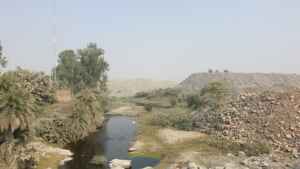
Pollution flowing in a nullah on the outskirts of Indore. Photo for representation purpose only | Credit: Author
In a way to keep a check on the air quality, Madhya Pradesh Government installed Air Quality Monitors in Indore and Pithampur.
“Air quality monitoring in Pithampur is primarily done in two areas Vikas Bhavan Sector 2, RCC Sector 3 – and in Indore in three areas [Kothari Market – Commercial Area, Sanwer Road – Industrial Area, Vijay Nagar – residential area],” maintains Madhya Pradesh Pollution Control Board’s annual 2020-21 report citing National Air Monitoring Programme.
“The air pollution data available over the past five years from two manual sites in Indore suggest that PM2.5 concentrations exceed WHO annual average standards of 10 μg/m3 and are increasing,” cites Ajay Nagpure, World Resources Institute and Nivedita Barman, Environmental Defense Fund in research paper ‘Sources of Air Pollution: Indore’.
“The PM2.5 annual averages measured in 2019 at the three manual monitoring sites in Indore (based on measurements made approximately every third day) are all between 36–39 μg/m3. The highest pollution is measured during the post-monsoon season (October, November) and during the winter months (December–February), due in part to lower wind speeds during these months”, the paper noted.
The annual averages measured in 2019 at the two monitoring sites in Pithampur failed to remain in a good category. “The annual averages remained under the satisfactory category”, attributed to the Madhya Pradesh Pollution Control Board’s annual 2020-21 report.
To make it more clear and loud, it means that people are breathing air that has an average concentration of 250 micrograms of PM 2.5 per cubic metre (µg/m3) in a day, according to the AQI-to-concentration converter. PM 2.5 refers to inhalable particulate matter that can enter the bloodstream and has several health impacts. A level of 250 µg/m3 is four times the permissible amount–60 µg/m3 over 24 hours–according to the standards defined by the Central Pollution Control Board.
A recent analysis of 132 cities by the environment ministry shows that Indore is one of 37 cities whose air quality has declined in the past four years. The survey found that the levels of PM10 (inhalable particles with diameters around 10 micrometres) particulate had increased in the city’s air during the period between 2017 and 2021.
Health report of Pithampur- Detroit of India
A similar clock worked for the climate change migrant labourers and their family members in Pithampur – Indore’s closest industrial town.
Referred to as the Detroit of India primarily due to the heavy concentration of the vehicle industry, Pithampur became a breeding ground for farmers who began losing their ability to bear long-term damages done to their crops due to the impact of climate changes. However, the negative trends of distressed migration workers, working in an unhealthy industrial environment significantly affected female workers’ physical health.
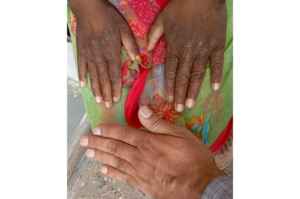
“See my hands and the skin. This damage is done because every day for eight hours I used to remain in contact with a powder to polish diamond,” says 29-year-old Komal Warwary, who is no longer a part of the workforce that puts India in the global map, accounting for over 90% of polished diamond manufacturing.
Komal Warwary, who worked in a diamond cutting and polishing unit in Pithampur came in the grip of several physical health problems, particular diseases and allergies due to the work environment and nature of work.
Here, I was handling silica-based slurry, but without gloves and masks to give diamonds a faceted precious look, she said in grief complaining of a regular pain that her stomach carries.
The 29-year-old consulted the doctors in Pithampur and in MY Hospital, the state’s biggest health facility. However, the allergy, itching and dryness seem to be irreparable.
Born to a family of farm labourers in the village Hirdagarh, in Madhya Pradesh’s Chhindwara district, her father reached Pithampur.
“He regularly talked about crops standing partially up to its size, rotting of wheat spikelets, erratic weather conditions helping pests to breed and new diseases to emerge,” she recalled the words of his father.
The calm, pure and liveable village atmosphere of six family members got replaced by noise and air pollution upon reaching Pithampur in 2001. Here they live in a two-room rented accommodation in Housing Board Colony, where ventilation and fresh air are rare.
Labour activists Yashwant Paithankar | Credit: Author
According to labour activist Yashwant Paithankar, nearly 1 lakh farmers turned distressed migrant labourers live in Pithampur. “Here, they work under stressful, unhealthy conditions and their children and family members live under unhygienic conditions,” he mentioned.
Like the Warwary family, climate change compounded the financial issue that had been in the making for a long time for the farmers’ son Keshav Rao Mandle.
“Our piece of agricultural land was finding it hard to produce enough food to take care of nine family members. My father, a teacher by profession, had to work in a local grocery shop in our village Prabhat Pattan in the Betul district for financial stability. Occasionally, he worked as a farm labourer as well,” said Keshav Rao Mandle.
With no viable options available to move out from the jaws of poverty, Keshav had to discontinue his studies and joined Industrial Training Institute, a skill development training centre in Govindpura Bhopal to share the financial burden of the family.
The next stage for Keshav was Pithampur. But one of the dangers less known to him was the deadly cocktails of working, living and environmental conditions in the industrial town.
“It is impossible to quantify the actual side effects happening on us. However, what we can assume is that we live in the air that has some dust, soot or chemicals floating in it. People who are inside probably won’t notice it, but I think… we live in filthy air surrounding,” he added.
Studies suggest air pollution exposure is linked to 16 lakh premature deaths in India in 2019.
By the time, the son of Savita Bhargav [name changed on request] started talking, walking and bustling with energy, she started noticing the 2-year-old in trouble breathing, sore throat, cough or just not feeling well.
“When he is in village Babai [house of in-laws in Madhya Pradesh’s Hoshangabad district], he doesn’t remain the same. He feels more energetic and falls less sick in the village as compared to his stay in Pithampur. I am deeply concerned about my pregnancy and have told Babu’s [house name of her son] father to take us back to the village,” said Savita, who came to Pithampur after her marriage in 2015.
Every day around 93% of the world’s children under the age of 15 years (1.8 billion children) breathe air that is so polluted, says a WHO report released in 2018. Tragically, 600,000 children died from acute lower respiratory infections caused by polluted air in 2016, says the report.
As compared to adults, air pollution is especially harmful to infants, toddlers and children. “They breathe more rapidly than adults and so absorb more pollutants, they also live closer to the ground, where some pollutants reach peak concentrations – at a time when their brains and bodies are still developing”, explains DrAjay Nagpure of World Resources Institute.
Moreover, their airways are smaller and still developing, thus, particle deposition in both upper and lower airways is the highest in an infant, next in a child, and lowest in an adult, he added.
It is believed that when pregnant women are exposed to polluted air, they are more likely to give birth prematurely, and have small, low birth-weight children. Moreover, air pollution also impacts neurodevelopment and cognitive ability and can trigger asthma, and childhood cancer. Tragically, children who have been exposed to high levels of air pollution may be at greater risk for chronic diseases such as cardiovascular disease later in life.
“As compared to the routine population, migrant labourers, their family members and children live in unhealthy conditions. Many of them live in construction sites or in the areas where heavy machinery are in movement. Poor quality of air increases the risk of viral and bacterial infections, and migrant labourers, their family members and children. They are at greater risk of catching viral and bacterial infections. Moreover, breathing polluted air is as bad as smoking tobacco for human health,” says Dr Salil Bhargava, Clean Air Catalyst Advisory Committee and Head, Department of Pulmonology, MGM College points towards a bigger catastrophe for the migrant labourers.
Hands of Komal with writers hand | Credit: Author
Air for life
A news report published by the national daily Indian Express presents a dark picture by saying patients at India’s premiere health institution All India School of Medical Sciences [AIIMS} patients are rising due to air pollution. Records accessed by The Indian Express show how the number of OPD cases of respiratory ailments at AIIMS has been rising since 2006-07 –to an average of over 100 a day now. It may be noted that AIIMS started a full-fledged respiratory department only in 2013, patients were treated in the chest unit till then.
It also means that the concentration of pollutants in the air “affects healthy people and seriously impacts those with existing diseases”.
According to the report’s analysis, by 2050 Madhya Pradesh is predicted to be one of two climate hotspot states and likely to experience a decline of more than 9% in living standards.
The present scenario portrays a picture where a lot is to be done. Through dialogues with subject experts, public and community representatives the regime is ensuring effective remedial measures to improve the air quality of Indore and its surroundings.
There should be regular checking of pollution levels of commercial vehicles, school buses and other vehicles and PUC centres should be compulsorily set up in all petrol pumps, directed Indore Divisional commissioner Pawan Sharma to officials in a meeting of the Action Plan Implementation Committee for improving the air quality of the city last week. The IMC has decided to replace ‘Alaav’ (bonfire) with electric heaters in major squares of the city during winter.
While the government campaign seems to be functioning, problems persist. “The battle with air for life to me could be long drawn and enervating,” said Komal while showing allergy marks on her hand.
This story has been produced with support from Internews’ Earth Journalism Network
That night’s sleep came sweet. My cold feet touching hers I snuggled close to my mother. We drifted off to sleep but were woken by a loud knocking on our front door. My father walked over to the big brown door and unlocked it to find my cousin standing outside in his night-suit wearing Ray-ban sunglasses, which he pulled off to speak to my father, who asked him, “Kya Hua?”
My cousin replied, “Gas Nikal Gayee hai, log mar rahee hai, Union Carbide se zehereeli gas nikel rahee hai.” “Accha!”, my father reacted.
The Night the World Stopped (For Everyone Else)
Dad being an Air Force man was combat-ready and immediately got into action. He shut the doors and window, and turned on the aircon – in December! – and covered me under the cotton wool-filled blanket, the one with gold branded stitched onto its surface. We all went back to sleep, oblivious to the facts of what was really happening out in the zone of a war nobody had declared.
An eerie silence of death swirled around the city as my father drove me to school, not knowing the magnitude of the disaster and not sensing that the catastrophic events of that day would change the course of my life’s experience forever.
I was ten years old. As time went on I forgot about the disaster, until 1993 when a BBC documentary came with familiar faces and we were very excited as one of our family members had recorded a tape in London and bought it back for us especially. I was excited to see family friends in the documentary and paused it many times, rewinding to giggle at hearing a woman speaking in theeth Bhopali, something so rarely heard on film. Then I heard the woman explain why she was so angry about what had happened, how no one cared as the poor of Bhopal were displaced into unsegregated camps, with no privacy, and given meals as you would an animal, in packets, how the then government thought this will go down well with the poor, and what then struck me was that the Government forgets that poor people have dignity and courage. How could the government not understand the trauma that had engulfed people for no fault of theirs?
The Price of Poisoned Dignity
I was much older when, for a few years, I became involved in working alongside the Gas Survivors of Bhopal. What began as simple translation work for a book became immersive and overwhelming. One by one I learned of the individual, relentless, perversely unnecessary ways in which the survivors suffered the enduring consequences of that one night and I could not get my head around why it was that everyone with a duty of care seemed to have forgotten them.
I remember Rassu Bhai, an oil seller who spent money he could not afford on painful, dangerous treatments from quacks in the desperate hope of being able to breathe a little better. Then there was Sohanlal, a peanut seller who wore chic, threadbare shirts, his days filled with trying to make a few rupees to buy medicines to get minor relief from the pains brought by the gas. There are so many stories from the Gas that it would take 500 volumes of 1001 nights just to tell them.
When I’d mention my encounters to my privileged kin some were dismissive. “Gas, gas, gas, it’s always the gas. The gas tragedy is over, why are you bringing it up now?” I can never forget Nawser Parikh, a family acquaintance who worked for Union Carbide, who told my mother that “These poor people would have died anyway”.
I could not bear it that no one wanted to hear the stories I was trying to share. I was told instead that the Survivors were pretending, exaggerating, and blaming everything on the gas because they only wanted money. I had experienced the opposite. The people I knew would spend their last money they owned to help a neighbour in trouble, or just to make a guest feel welcome and special.
I kept working with others to help unveil the truth. The grave injustices that the people of Bhopal still faced as a direct result of a multinational corporation being built in the heart of their city, one welcomed with open arms as it promised profits and jobs. As losses grew, as safety deteriorated, its parents began to distance themselves, to push it away for fear of infection, much like we did to each other for those months when the pandemic first hit us.
The Activists Who Refused to Look Away
Every anniversary I have watched over the years reporters gather for their annual reports. Before they begin to speak about Bhopal, some big wigs even ask for red carpets and to be garlanded at railway stations, I have worked with filmmakers who offered the Gas Survivors Rs 50 to run for their cameras, to get the big scene for their documentary. People come and go, they take their slice of Bhopali cake and carve a name for themselves, grab some acclaim and move on to their next project.
But then there are the activists that have stayed, and fought, and lost and fought again, battle-weary but undaunted, standing with the Bhopal Gas Tragedy survivors in their longest struggle, determined to make a difference because of a promise they made in their hearts so many years ago to help them get justice, compensation, and some clean water.
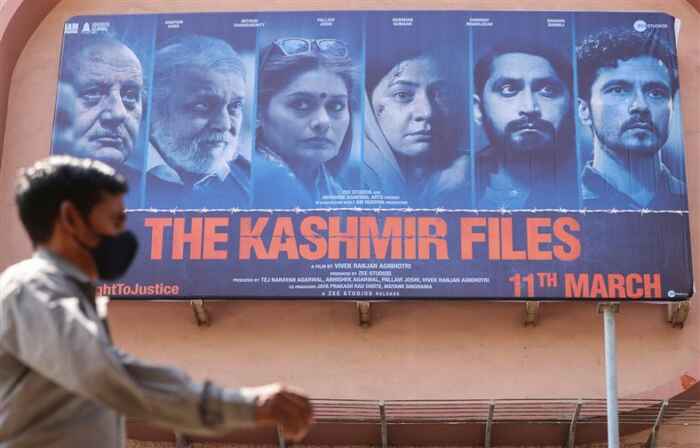
Sarkaar unki hai to kya hua, system to hamara hai.., the lines of The Kashmir Files finally coming to light. When the movie which received a glowing endorsement from Prime Minister Narendra Modi for setting the record straight was trashed as vulgar propaganda by the head of the jury of International Film Festival of India, Goa.
Hate gets called out eventually. Let’s accept that PM Modi and his government, Bharatiya Janata Party, Right Wing ecosystem feverishly promoted The Kashmir Files movie by Vivek Agnihotri.
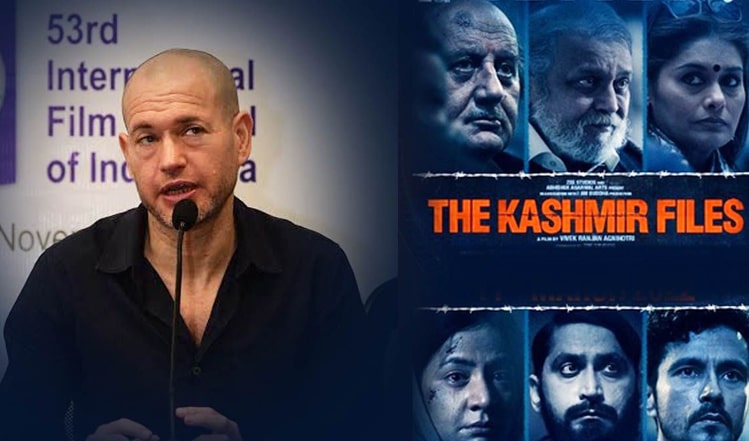
The Kashmir Files– was championed by PM Modi, rejected by IFFI jury head Nadav Lapid who called it propaganda and a vulgar movie inappropriate for the film festival.
So finally, it took an Israeli to publicly embarrass the government on The Kashmir Files.
If vulgar propaganda through the film was not enough, the RW brigade is now spamming the Israeli consulate with ‘threats’ so much so that it managed to bully the Israeli envoy Naor Gilon to release a statement in a series of tweets shaming and calling out Israeli filmmaker Nadav Lapid for his ‘courage’ and ‘audacity’.
We saw how a vile film like The Kashmir Files made, produced, distributed and championed by bigots was highlighted and promoted in India by the political party in power. The folks who were never seen earlier with the Kashmiri Pandit cause suddenly became activists for the pandits who were displaced in the early 90’s. The moot question should be asked to Mr Vivek Agnihotri, Mr Anupam Kher and others-where were you when the KP exodus happened?
Truth be told, I have seen The Kashmir Files, when you make a propaganda film and leave no stone unturned in misusing your power to reward a film that is vulgar and is made with the sole intention of ‘othering’ a community, this is how embarrassing it gets.
The whole country sat and watched how during the screening of The Kashmir Files videos of Anti-Muslim hate, anti-minority sloganeering, slogans went viral on social media. Video of a crowd shouting slogans of ‘Jai Shree Ram’ outside Delite Cinema in New Delhi made it easier for social media to spread vitriol against their own citizenry, putting the already cornered into a state of desolation.
The controversial film opened up to an impressive 600 cinemas across India on March 11.
Reviews of the film found it to be islamophobic and dishonest, much before the film was released it invited public interest litigation on the grounds that its inflammatory scenes are bound to cause communal violence.
All of you should watch it, Indian PM Modi said in a searing attack on the opponents of the BJP and further said that it has rattled the entire ecosystem which claims to be the torch bearer of freedom of expression but does not want the truth to be told.
Apparently Information and Broadcasting Minister Anurag Thakur was in the front row when distinguished Israeli filmmaker Lapid trashed The Kashmir Files as vulgar propaganda and inappropriate for an artistic festival.
A third rate film that weaponises hate against Muslims or rather any community should have no place in a pluralistic democracy let alone its cause being triumphed by the political party in power.
Earlier propaganda films were made to spread hatred against Jews. The film The Eternal Jew was made specifically to target the Jewish community. The Jewish community was sadly misrepresented and stereotyped, Jews were shown with flowing beards wearing kaftans, their movements were compared to those of rodents and rats, they were branded as killers of Christ, even Shakespeare went along with the archetypal idea of the Jew when he penned the character of ‘shylock’ in Merchant Of Venice.
Then there are films that document the horrors of the past be it the world wars series, be it the freedom movement of India and the subsequent partition of the country as what better reflection of life than cinema. The inhumanity of the Nazi’s has been well documented in the Schindler’s List, in Roman’s Polanski’s The Pianist.
The movie Titanic depicted the tragic sinking of the RMS British passenger liner which sank in the North Atlantic Ocean on 15 April 1912 after colliding with an iceberg during its maiden voyage.
Pearl Harbour the film made in 2001 portrays the attack on ‘Pearl Harbour’ in World War II.
Then there’s a movie Parzania inspired by a true story, set during the Gujarat riots of 2002, it portrays the family of a son who tragically went missing during the riots.
The pathos that transcends religion when a riot hits town affects everybody irrespective of religion was portrayed so beautifully.
It’s normal to find fascination with any movie that earns the reputation for pushing extremes and scandalizing society at large, a few were genuine classics that broke shackles of society and have been considered as pioneering works of art.
The birth of a nation 1915 was a civil war epic, but it distorted history and perpetuated racist behaviour as ‘heroic’ and helped revitalize the Ku Klux Klan into a rabid organization.
The need of the times is about humanity and moving beyond the tragedy of war, riots and violence, there’s a greater need to make powerful films and depict solidarity in the face of cruelty and oppression.
As many people confront hard facts about genocides, riots, hate crimes, civic unrest, the need of the hour is educating the youth about the times, lest history repeats itself, weaponizing history and painting an entire community with the same brush is morally wrong and it takes a few good and courageous men like the Israeli jury member Nadav Lapid to discredit a movie, so what if the government in power was promoting it– a wrong is a wrong.
[dropcap]T[/dropcap]hey are caught playing around with the time-tested established principles and procedures of good and fair governance.
In a democracy, public affairs are no one’s personal fiefdom, though those in power often get their way in, say, getting someone into a position. But even here, the rules of eligibility must permit or be stretched to cover the executive’s will, or be vague enough not to stand in the way.
In the instant case, a perfectly eligible official, Arun Goel, was picked and plonked in a constitutional post, that of the Election Commissioner, in just a few hours by fast-forwarding a whole gamut of procedures. In the usual course, these are/were expected to take quite some time, and mind you, gerontocrats had seeded some delays into the process, as ‘breathing space’ for thinking, rethinking, claims and objections. The “tearing hurry” in Goel’s case that the Supreme Court has pounced upon may or may not reveal that any particular procedure was skipped. But to get it through in such a record time, every hallowed institution must surely have lifted its boom barrier in nanoseconds, which is not what they are there for. A democratic system enjoins a certain dose of fair play and transparency and expects institutions to play their roles.
Processes for the posting of officials are covered by several kilograms of orders, all in copious bureaucratese, right from the appointment of the lowly Assistant to that of the Cabinet Secretary. There are strict rules governing proposals screened by the dreaded Appointments Committee of the Cabinet headed by the PM — which, incidentally, has shrunk nowadays to include just one more member, the Home Minister. Proposals are initiated in writing, quoting the vacancy and the rule (for the record and for later reference); reasons and arguments are set forth (again, for propriety in public affairs); they suggest alternatives and shortlist a panel of names according to precedents, career performance and clear norms (to establish transparency) and then the pros and cons of each are elucidated (which means there’s a fair bit of internal debate). Thereafter, the file is submitted to the minister or PM for decision. In the present case, it is amply clear that the PM had decided his candidate first, and then the rest of the system was ‘advised’ to fall in line — within a few hours. According to the omniscient whisperati of Delhi, these ‘surgical strikes’ represent Modi’s style of functioning and has gone unchallenged for eight years.
When, on his first day in office, PM Modi was told that he could not have Nripen Mishra as his Principal Secretary because an Act debarred it, he changed the Act of Parliament on the second day by an Ordinance. He zapped the system like this at regular intervals. S Jaishankar was appointed as the Foreign Secretary of India most dramatically — on the very last date of his service, as he was being given farewell bouquets. Nothing had prevented Modi from appointing him, more properly, weeks ahead of the date, but the elements of suspense and the theatrical would be missing. Similarly, Satish Verma, an IPS officer of Gujarat, who had dared to indict top officers in the Ishrat Jahan killing case, was dismissed from service as he was about to retire. He lost his job for the alleged offence of “talking to the press” several years earlier. The duo has been getting away with it all, as the system has either been overawed or terror struck — which is exactly what they want — or the judiciary was/is over indulgent.
To be fair, it is not as if other governments have not had their share of indecent haste, but none employed ‘lightning strikes’ as the normal mode and none relished trampling over every principle of propriety with spiked jackboots. Since the regime has hijacked all institutions or has broken their spines, they have no option but to fall in place at the drop of a hat — for, “it has been decided.” Reverse engineering of proposals has become the rule, but this time, the real decision making process and the cosmetic paperwork which adorns it meet each other face to face — at the Constitution Bench of the Supreme Court. The post concerned is, indeed, a high constitutional one that deserves the weary nation’s attention though, on the face of it, the Supreme Court can hardly do much other than shed light on the moral compass. But even a candle matters in the enveloping darkness and judicial legislation has often been more than just a beacon.
Kolkata: The Kashmir Files, the controversial movie which was praised by Prime Minister Narendra Modi has been termed a ‘propaganda’ and ‘vulgar movie’ by the jury head of the 53rd International Film Festival.
Speaking in Goa, where IFFI was held between November 20 to 28, Israeli filmmaker Nadav Lapid, who headed the IFFI jury, said “all of them” were “disturbed and shocked” to see the film screened at the festival.
The Kashmir Files revolves around the killings and exodus of Kashmiri Pandits in 1990 from Kashmir Valley.
“It seemed to us like a propagandist movie inappropriate for an artistic, competitive section of such a prestigious film festival. I feel totally comfortable to share openly these feelings here with you on stage. Since the spirit of having a festival is to accept also a critical discussion which is essential for art and for life,” Lapid said in his address.
The Anupam Kher, Mithun Chakraborty and Pallavi Joshi starrer, directed by Vivek Agnihotri, was featured in the Panorama section of the festival last week.
The film has been praised by the BJP and has been declared tax-free in most BJP-ruled states and was a box office hit. PM Modi and Union home minister Amit Shah have praised the movie.
Many, however, have criticised the content, calling it a one-sided portrayal of the events that is sometimes factually incorrect and claiming the movie has a “propagandist tone”.
Ealier, Singapore banned the movie, citing concerns over its “potential to cause enmity between different communities”.
“The film will be refused classification for its provocative and one-sided portrayal of Muslims and the depictions of Hindus being persecuted in the ongoing conflict in Kashmir,” read a statement from the Singapore government, reported news agency Press Trust of India.
He claimed this was the reason his press conference was cancelled by the Foreign Correspondents Club and the Press Club of India
Actor Prakash Raj tweeted after the publication of the news about the Israeli filmmaker’s statement, “SHAME is Official now (sic).”
In November 2022, the Animal Husbandry Department of Kerala State confirmed the outbreak of African Swine Fever in the private pig farms at Karimannoor and Vannappuram panchayat of Idukki District. It is also said that this animal disease has been confirmed in other six districts also. The selling of pork, droppings and other items related to pigs as well as the transportation of Pigs has been banned. It’s also reported that numbers of pigs have been culled to stop dispersing of this disease.
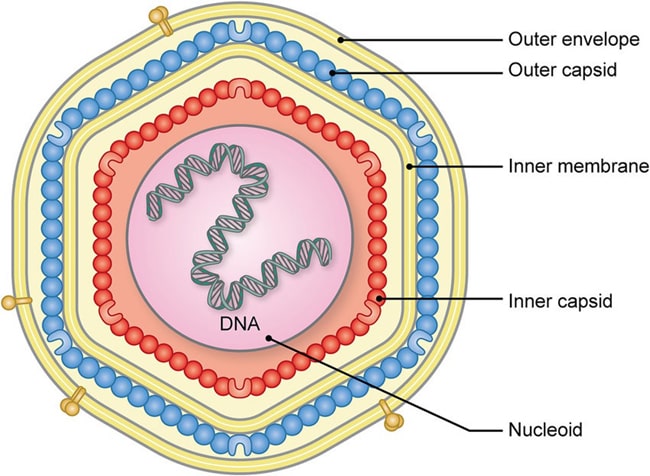
This year, this deadly animal disease has flared in India after its outbreak in the state of Assam and Arunachal Pradesh in 2020, and in March 2021 in Mizoram. It is a highly infectious viral animal disease and “African Swine Fever Virus” is its causative agent. It is a large, icosahedral, double-stranded DNA virus. It is usually 175-215 nanometers in size and has twenty equilateral triangle-shaped sides. This virus has a genome made of DNA and also contains more than 180 genes. This species of virus belongs to the Kingdom of Bomfordvirae, Class of Pokkesviricetes, Family of Asfarviridae, and Genus of Asfivirus.
This virus infects its natural hosts which include Warthogs (Phacochoerus aethiopicus) living in open and semi-open habitats of Sub-Saharan Africa, Bushpigs (Potamochoerus larvatus/porous) of forests, and riverine vegetation cultivated areas of East and Southern Africa, Wild Boars (Sus Scrofa virus), Giant Forest Hogs (Hylochoerus meinertzhagen), Soft Ticks (Ornithodoros moubata). These animals act as vectors of this disease without any symptoms. The virus exists in the wild through a cycle of infections between ticks and wild pigs. It doesn’t cause any harm to humans or other livestock.
ASFV is the only virus having a double-stranded DNA genome figured out to be transmitted by soft ticks of arthropods. This virus inundated omnivorous, domesticated, even-toed, hoofed mammals namely swine, hogs, and domestic pigs (Sus domesticus). The mortality rates of this disease among these animals are very high, nearly 100 percent. Incubation periods of this virus vary from 4 to 19 days. It causes hemorrhagic fever. For the first few days, no symptoms are perceptible but after that, the infected pig may develop severe symptoms. Gradually they lose their normal appetites and become weak to respond to their self-immune systems. Hemorrhage becomes apparent in the ears and abdomen. They start shivering, breathing abnormally, and sometimes they cough, and their extremities turn blueish-purple. They go on depression and congenital tremors. All these symptoms are similar to the normal classical swine fever but in African Swine Fever, within a few days, the infected pig goes into a comatose state and then dies.
This African Swine Fever Virus causes a wide range of signs and lesions. This virus replicates in the infected cells’ cytoplasm, a collection of substances within a eukaryotic cell, a cell having a nucleus. The cytoplasm is enclosed by the cell membrane which is also called the Plasma membrane and it consists of a gel-like substance cytosol, the cell’s internal sub-structures organelles, and various cytoplasmic inclusions. It is about 80 percent water and is usually colorless. First, the ASF virus attacks the Plasma membrane where it encodes enzymes and proteins required for the replication and transcription of its genome. Then the process of replication takes place in the perinuclear factory of the cell. After that, through various stages of transcription, there are virions produced and the animals get infected. Due to this infection, the colorless cytoplasm turns into a blueish-purple.
This virus is enzootic in many African countries. It seems that the first outbreak of this disease occurred in 1907, it was known after ASF was first described in 1921 in Kenya. Until 1957 this virus stayed restricted in Africa. After that, there was an outbreak in Europe in 1957, and then in Cuba in 1971. Thereafter in August 2018 in China and East Asia and in August 2019 in South-East Asia, this virus smeared dangerously. It was on the 29th of April 2020 there was an outbreak in the state of Assam and Arunachal Pradesh of India. It is said that the transboundary transmission of pigs and porks from China is the main reason for this disease in India.
Though the African Swine Fever Virus is endemic to Sub-Saharan Africa, the virus was first discovered after European settlers brought pigs into areas endemic to ASFV and the rest are suffering across the globe. This virus can be transmitted directly or indirectly through contact with infected pigs, feces, or body fluids, and also by eating pork products that contain the virus. The virus may survive eleven days in pig feces, and months or years in pork products, that’s why we’ve to take biosecurity measures to stop the menace. The diagnosis is usually performed by applying an ELISA, IFAT, IPT, or IBT test, Detection of antigen using FAT, real-time PCR, or isolation of the virus from either the blood, lymph nodes, spleen, or serum of an infected pig. There is no exact treatment, only symptomatic treatments are there to cure the animal. It is claimed that Vietnam successfully produced the first vaccine against African Swine Fever on June 1, 2022. But it has proven difficult to control the spreading and transmission of this disease. Often, movement restrictions and herd depopulation are necessary to control measures because of how quickly and easily the virus spreads.
When contacted Idukki District Animal Husbandry Officer Dr Binoy P Mathew, he said that preventive measures have been taken to stop the progression of the disease according to the National Action Plan(NAP) for control, containment, and eradication of the disease. To curb the possible threat, the Department of Animal Husbandry & Dairying (DAHD), GOI has prepared a Disease Control Strategy Plan in India under the Office International Des Epizooties & FAO recommendations. NAP is a part of it. He also said that with the help of the local administration and police mercy killing, disinfecting and deep burial of those pigs have taken place. Under the directions of the District Administration, there are certain Rapid Action Task Forces to supervise the Infected Zone (IZ), The Surveillance Zone (SZ), and the Disease Free Zone (FZ).
As swines have great potential to contribute faster economic returns to the farmers, these outbreaks in India largely affect pig producers, meat processors, and other related industries of domestic and International trade. Various risk factors affect the livelihood economic/nutritional, social, and psychological status of the farmers and the country. It hampers the tourism sector by polluting the Environment and weakens the rural economy. According to the 20th livestock census, there are 9.06 million numbers of pigs in India, which is 1.7 percent of the total livestock in the country. This kind of farming provides money and nutrition for socio-economic weaker people and it’s one of the best sources for the nutrition of the tribals of India. India imports pork of $1.93 million which makes 112th largest importer in the world and exports pork of $1.61 million as the 56th exporter in the world. Due to this deadly infection, there is a million-dollar loss in the financial markets of pigs as inter-state and transboundary transportation of pigs is being hampered. In some cases compensation has been provided by the concerned state governments to the affected farmers, despite there’s great tension over it.
Recently in an interview for a television channel, actor and director Parambrata Chatterjee lamented, “We now have a mutual admiration society which meets at premiers of Bengali films. Each pat the others’ backs and shower words of praise. But films are released and vanish without a trace. This was certainly not the scene during the 50s, 60s and 70s the golden era of Bengali cinema.”
The situation is the same in Bollywood. Though the cruel pangs of the Covid pandemic have lessened, a lot of films are flopping on their faces. Memorable films are created. But no one can predict the future of a new release at the box office.
When it comes to speaking truth to power, Bollywood actors seem most spineless and they are a divided lot too. But does their division also impact the movies?
Sanjay Leela Bhansali, Madhu Bhandarkar, Neeraj Pandey and Rohit Shetty show a picture of union in front of the media. In reality, they are all divided with personal interests gaining prime focus. No one joins hands with the other regarding social, political or issues concerning the film industry.
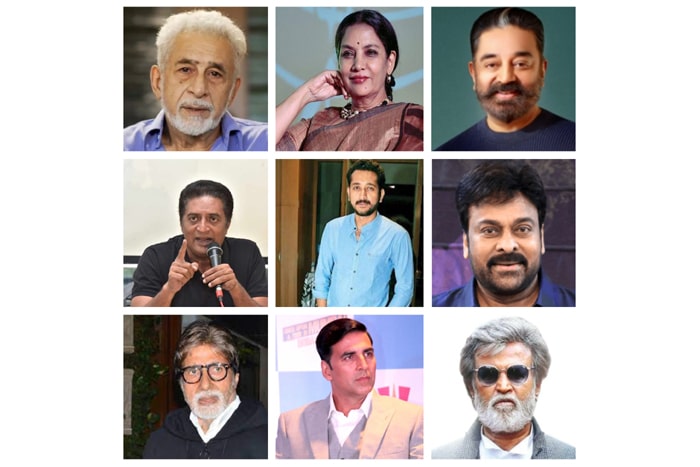
Voicing concern against the ruling party’s atrocities, legends like Nasiruddin Shah and Shabana Azmi find no supporters. Even the king of Hindi cinema, Amitabh Bachhan always maintains diplomatic silence.
Madhu Bhandarkar opines, he respects seniors, contemporaries as well as juniors. He feels the film fraternity consists of brothers sailing in the same ship with silent regard for each other. Bhandarkar sounds ornamental and avoids controversies. So does Karan Johar and many others.
Veteran Dharmendra says, “I will remember that day in the late 50s when Shashi Kapoor, Manoj Kumar and I were sitting on the same bench of Filmistan Studio eagerly waiting for breaks. We were denied any opportunities that day. With sheer merit and hard work, we achieved our positions. During any hour of need, we were at each other’s sides. Manoj was the most cooperative and encouraging among us. Shashi was a thorough gentleman.”
This quote by the grand old He-Man of the film industry may sound like unreality to the present generation. Dadasaheb Phalke award-winning actress, danseuse, Asha Parekh recalls, “Saira Banu, Sadhana, Helen and myself have been true friends ever since we started our careers. In present times we got together often, shared our feelings and even helped each other secretly without taking any credit. Where are those feelings of togetherness now?”
Not to forget Shammi Kapoor’s noble act of persuading director, Lekh Tandon to give all the existing raw stack of their film, Professor to Satyajit Ray. The icon ran short of material filming Kanchenjungha at Darjeeling. Shammi Kapoor shooting at the same location affirmed Professor could wait, not Manikda.
No doubt Dimple Kapadia and Tabu maintain a safe distance from the film fraternity. A real union of souls like Meena Kumari, Nargis, Geeta Bali and Madhubala along with that of other artists, technicians, lyricists, composers and crooners of yore is what the need of today is.
Many gifted filmmakers, artists and technicians now rule the roost in the Hindi film industry.
But after a long era of friendship and compatibility, the first division among top film personalities was witnessed during the Emergency in 1975. Supporting Indira Gandhi and her stance, Dilip Kumar, Raj Kapoor, Sunil Dutt and Manoj Kumar were on one side.
Those who strongly opposed the Emergency were the Anand brothers, Pran, Hrishikesh Mukherjee, Kishore Kumar, Shatrughan Sinha, Danny Dengzongpa and Sadhana. Dev Anand was courageous enough to float the National Party which he later abandoned due to a lack of integrity and cooperation.
A nostalgic Manoj Kumar remembers, “We had different political ideologies. Yet in 1978, when I threw a grand party in honor of the Pakistani cricket team, Dilip Kumarsaab and Devsaab were together, playing ideal hosts to our guests. Both affectionately called me, Manoj Aja and we formed a trio of admiration and respect.” He laments those days don’t exist anymore.”
Down South in Kollywood, situations are better. Chiranjeevi shares the best of vibes with Kamal Hassan, Rajnikant, Prakash Raj, Mohanlal and Mammotty. Once Kamal Hassan commented, “We are brethren working in motion pictures in different regional languages. We have transcended barriers of vested interests.” No wonder Kamal Hasan and Prakash Raj have openly criticized many activities of the current central government.
A thinking soul laughs at the unity projected by the three Khans– Aamir, Salman and Shahrukh. Akshay Kumar is known as the one who is very close to the present Modi regime. The Canadian citizen’s interview of Prime Minister Narendra Modi reminds people that in real life, he is not a Khiladi, who is fearless but the one who is spineless and bows before power. Has anyone ever seen Madhuri Dixit, Vidya Balan, Deepika Padukone and Karishma Kapoor strongly voice any contemporary issue?
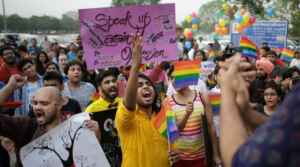
पचहत्तर (75) बसंत देख चुके आजाद भारत में एलजीबीटी (LGBTQ) के लिए सूरज कई बार डूबा है। अगर बारीकी से LGBTQ और उनके समाज से संबंधो को अलग अलग रूपों में उजागर किया जाये तो समाज को गहरी सांस दबाकर खामोश पछतावे के पीछे छुपना पड़ेगा।
पर शायद ऐसा हर वक़्त नहीं रहा होगा। कम से कम से एक ऐसा वक़्त भी रहा होगा जब हम सभी के तरह LGBTQ भी समाज के बेहद करीब रहे होंगे। और इस बात का जिक्र भारतीय पौराणिक कथाओं, मिथक, रामायण, महाभारत आदि में आता रहा है, खासतौर से किन्नरों के बारे में।
रामायण के कुछ संस्करणों में लिखा है, जब राम अपने 14 वर्ष के वनवास के लिए अयोध्या छोड़ने लगे थे, तब अपने साथ आ रही प्रजा को उन्होंने वापस अयोध्या लौटने को कहा था। पर 14 साल के बनवास के बाद जब वो वापिस लौटे तो वो चौक गए, क्योकि, सरयू नदी के किनारे उन्होंने एक बस्ती देखि। करीब पहुंचने पर देखा कि यह तो किन्नरों की बस्ती है। और यह बस्ती उनके बनवास जाते ही अस्तित्व में आ गयी। सर्वविदित है कि भगवन श्री राम ने नदी किनारे सभी को अयोध्या लौट जाने को कहा, पर समुदाय के लिए बिना कुछ कहे ही बनवास पथ पर चल दिए। समुदाय ने निर्णय लिया की भगवान श्री राम के बनवास से वापिस आने तक वो यही इन्तजार करेंगे।
महाभारत में शकुनि की कथा को कौन नहीं जानता? यहाँ तक की अर्जुन के बारे में भी ये सर्वविदित है कि एक अप्सरा के श्राप के कारण उन्हें कुछ समय के अपना पौरुषत्व खोना पड़ा था। अर्जुन और उलुपि के पुत्र इरावन को किन्नरों के अराध्य देव माना जाता है। किवदन्ति है कि पांङवों को महाभारत विजय के लिये एक बलि की जरुरत थी। इरावन इसके लिये तैयार हो गया। पर बलि से पहले वह विवाह करना चाहता था। अतः कृष्ण ने मोहिनी नाम की नारी का रुप धारण कर इरावन से एक रात का विवाह रचाया था।
इसी तरह शिखंडी हिंदू महाकाव्य में एक किन्नर चरित्र है। जो पांचाल के राजा द्रुपद का पुत्र और पांचाली व धृष्टद्युम्न का भाई था। शिखंडी ने पांडवों के पक्ष में कुरुक्षेत्र युद्ध में हिस्सा लिया तथा भीष्म की मृत्यु का कारण बना।
इतिहास के मध्यकालीन समय में भी किन्नरों का जिक्र बार बार आता है। खासकर मुगलकालीन इतिहास में इस बात का जिक्र आता है कि किन्नरों का इस्तेमाल मुग़ल बादशाहों के बेगमों की सेवा में किया जाता था।
अंग्रेजी हुकूमत में किन्नरों का हाल
पर पिछले कुछ वर्षो का इतिहास कुछ और ही बयां करता है। ज्यादा पीछे झाँकने की जरूरत नहीं है, बात अगस्त 1852 की है।
उत्तर प्रदेश के मैनपुरी जिले में भूरा नामक एक किन्नर (eunuch) रहता था। वो वैसे ही रहता था, जैसे की अधिकतर किन्नर हिन्दुतान के अन्य हिस्सों में किराये के मकान में सर और अपना शरीर छिपा छिपा कर रह रहे है। और इन अनजान शहरों में वो पेट के लिए वो सब करते है, जो वे करना नहीं चाहते है या ऐसा करना कभी बचपन में कभी नहीं सोचा।
भूरा दो शिष्यों और एक पुरुष प्रेमी के साथ रहती थी।
बताया जाता है कि हत्या से पहले उसने अपने प्रेमी को किसी और के लिए छोड़ दिया था। बस फिर क्या था उसके पुराने आशिक़ ने उसे बेरहमी से मार डाला।
इस कोल्ड ब्लडेड मर्डर में ब्रिटिश जजों को कुछ और ही नजर आया। हत्या के इस मामले में बोलते हुए जजों ने कहा की उसके पूर्व प्रेमी ने गुस्से में आकर उसकी हत्या कर दी थी। गुस्से में। ध्यान रखिये ब्रिटिश जजों ने अपनी टिपण्णी में गुस्से शब्द का इस्तेमाल किया। यहाँ मतलब साफ़ हो जाता है की समाज और लोगो के सामने भूरा को खलनायक (villain) बना दिया गया। उस भूरा को जिसे उसके माँ-बाप और अन्य परिवार के सदस्यों ने तिस्कार कर डाला। किशोरावस्था (teenage) में घर की चौखट से जिसे निकाल दिया गया हो।
साभार: indianexpress.com
बाद में मुकदमे के दौरान ब्रिटिश जजों ने किन्नरों को क्रॉस-ड्रेसर, भिखारी और अप्राकृतिक वेश्या तक बता डाला।
एक न्यायाधीश ने तो यह तक कह डाला कि यह समुदाय “opprobrium upon colonial rule’ अर्थात कोलोनियल सल्तनत के लिए अपमान की संज्ञा तक दे डाली।
एक अन्य ब्रिटिश जज ने दावा किया कि उनका अस्तित्व ब्रिटिश सरकार के लिए “तिरस्कार” से कम कुछ नहीं है।
मतलब जजों ने तो पूरा प्याज ही परिवार और समाज से जिल्लत झेल कर गुमनामी में जिंदगी जी रहे भूरा पर काट डाला। ऐसा इसलिए क्योकि की वो एक किन्नर था।
अब इसमें ब्रिटिश जजों की भी क्या गलती।
उन्होंने तो शायद वही बात कही जो भारत के हर मुहल्ले और चौराहे में नजर आ जाती है। क्योकि हिन्दुस्तान के हर गली और मोहल्ले में किन्नर (eunuch/transgenders) से छेड़ छाड़, गाली, गंदे कमैंट्स और आम लोगो द्वारा पिटाई का नजारा बहुत ही आम है।
और जो बेचारे इन नजारो को गली, मोहल्ले में देखने और सुनने में चूक जाते है, उन्हें इन नजारो से मुखातिब होने का मौका बस स्टैंड, स्टेशन, कार पार्किंग में जरूर मिल ही जाता है। अगर यहाँ से भी कोई चूक जाये तो जीव आत्मा इसकी भरपाई कहानियाँ और किस्से बनाकर पूरा कर डालते है।
आज़ाद भारत में किन्नर
कहना का मतलब है यह है की आजाद हिंदुस्तान में लैंगिक पहचान की चुनौती पर खुल कर ज्यादा बातचीत नहीं हो पायी। हम आजाद तो हो गए, पर आज भी lgbtq उसी हाल में है जैसे वे 1852 में रहे होंगे। इसका प्रमाण है लगभग दो महीने पुराना एक घटनाक्रम।
इस चौकाने वाले घटना में, इस बार ब्रिटिश जजों की जगह शायद हमारे पत्रकार भाइयों ने ले ली। इंदौर से लेकर दिल्ली तक हमारे साथियो ने उनको गुनहगार बना डाला। देखा जाये तो इसमें उनका कोई कसूर भी नहीं है। उन्हें तो जैसा बताया जायेगा वैसे ही लाइन लिखी जाएगी।
मतलब- जैसा पुलिस बताएगी वैसी ही लाइन तो लिखी जाएगी।
ठीक ब्रिटिश जजों की तरह इंदौर पुलिस ने बताया कि 22 वर्षीय आरोपि का कुछ समय पूर्व transgender जोया से इंटरनेट मीडिया पर दोस्ती हुई। दोनों वाट्सएप पर लगातार चेटिंग करते थे।
घर में जब उसकी बीबी और घर वाले नहीं थे तो उसने किन्नर को काल कर घर बुलाया।
यहाँ गौर करने वाली बात है। आरोपी को किन्नर ने घर बुलाया. ऐसा में नहीं पुलिस खुद कह रही है।
दोनों ने करीब आधा घंटा साथ बिताया लेकिन बाद में आरोपी के साथ किन्नर ने संबंध बनाने से मना कर दिया।
यहाँ गौर करने वाली बात है। आरोपी के साथ किन्नर ने सम्बन्ध बनाने से मना कर दिया। यहाँ यह बात में नहीं, पुलिस खुद कह रही है।
पुलिस आगे कहती है- दोनों में मारपीट शुरु हो गई और आरोपी ने टावेल से घला घोंट कर किन्नर को मार डाला।
उसके बाद शव के दो टुकड़े और वगैरह वगैरह कर डाला।
मतलब गलती किन्नर की रही।
मतलब बिना किंन्नर के साथियो से बात किये ही साबित हो गया की गलती किसकी है।
ऐसा भी तो हो सकता है की किन्नर ने अपने आशिक को कहा हो की समाज इस रिश्ते को accept नहीं करने देगा और न ही उन्हें एक्सेप्ट करेगा।
या किन्नर ने आरोपी को यह कहा हो कि ये शायद यह दोनों के लिए बेहतर होगा की वो अपने परिवार का ही साथ दे और उनके साथ रहे। और किन्नर प्यार व्यार भूल अपनी ज़िन्दगी शांति से जी ले तो वही उसके लिए काफी होगा।
पूरा वाक़्या पढ़ने से समझ आता है कि, किन्नरों के मामले में आजाद हिंदुस्तान की पुलिस काफी हद तक ब्रिटिश जजों की तरह ही वयवहार करती है।
ठीक ब्रिटिश जजों की तरह हमारी पुलिस को भी इस समुदाय के लोग इंसान जैसे नजर ही नहीं आते।
1852 और 2022 में, यानि कि 170 साल में फर्क बस इतना सा है की, तब जो बात जजों ने छाती ठोक कर कही थी, अब वो बात हमारी पुलिस भी छाती ठोक कर ही कह रही है।
यहाँ बात ब्रिटिश जज की हो या आजाद मुल्क की, LGBTQ के साथ कुछ भी नहीं बदला है। मतलब LGBTQ + के लिए सूरज ज्यादातर वक़्त डूबा ही रहता है।
साभार: theweek.in
लॉकडाउन ज्यादा मुसीबत लेकर आई
हमें ज्यादा पीछे जाने की जरूरत नहीं। कोरोनो वायरस महामारी का समय LGBTQ + के लिए शायद सबसे दर्दनाक रहा। लॉकडाउन (lockdown) के दौरान जब छत्तरपुर- टीकमगढ़ ट्रांसजेंडर्स जरूरतमंदो के घर घर जाकर खाना बाटने का काम कर रहे थे, तब देश के अन्य भागो में उनसे घृणा अपराध, भेदभाव, हिंसा और आत्महत्या की घटनाएं भी जमकर इजाफा आया।
lockdown के दौरान एक किन्नर ने मुंबई के मुलुंड (Mulund) में आत्महत्या कर ली क्योंकि उसके पास खाने-पीने और दवाई के लिए पैसे नहीं थे।
असम में दो युवा जो की आपस में प्यार करते थे। दोनों ने आत्महत्या कर ली। आप समझ ही सकते है की इसके पीछे क्या वजह रही होगी।
lockdown के बीच ही नैनीताल पुलिस को उस समय पसीना आ गया जब एक 16 वर्षीय लड़के ने बाल कल्याण समिति (CWC) को पत्र लिखकर दावा किया कि वह समलैंगिक है फिर भी उसके पिता ने उसे 16 वर्षीय लड़की से शादी करने के लिए मजबूर कर रहे है।
सबसे ज्यादा डरावनी कहानी मध्य प्रदेश के जबलपुर के पास के एक शहर से आई। शहर में दो युवा प्रेमी प्यार करते थे और एक छोटे से किराये के कमरे में रहते थे। lockdown लगते ही दोनों को घर वापिस आना पड़ा। अपने अपने परिवार में कुछ दिन बिताने के बाद, दोनों ने अपने बीच स्थापित हो चुके रिश्ते के बारे में परिवार वालो को बता डाला।
बस फिर क्या था, दोनों परिवार के सदस्यों में दोनों युवाओ के प्रति घृणा के भाव दिखाई देने लगे और इस सम्बन्ध को अस्वीकार कर दिया गया।
यहाँ तक तो बात फिर भी ठीक थी।
इस बीच दोनों युवा में से एक संपन्न परिवार ने अपने रसूख के चलते अपने बेटे के द्वारा दुसरे साथी के खिलाफ मामला दर्ज करने का दबाव बनाया। पीड़िता को जब कुछ दिन बाद पता चला कि उसकी शिकायत पर उसके साथी को जेल भेज दिया गया है, तो उसने अपने प्यार को बदनाम नहीं होने दिया। और उसने आत्महत्या कर ली।
बात पिछले महीने की है। कालाहांडी जिले में कथित तौर पर पत्नी की सहमति से एक ट्रांसजेंडर की एक विवाहित व्यक्ति से ‘शादी’ चर्चा का विषय आज तक बनी हुई है।
खबरों के हिसाब से नरला प्रखंड के धुरकुटी गांव की ट्रांसजेंडर संगीता ने भवानीपटना प्रखंड के देयपुर निवासी फकीरा नियाल (30) से शादी की।
फकीरा, एक दिहाड़ी मजदूर है और कुनी से उसकी शादी को पांच साल हो चुके हैं। शादी से दोनों को एक तीन साल का एक बेटा भी है।
स्थानीय लोगों का कहना है कि कुछ समय पहले फकीरा संगीता के संपर्क में आया और दोनों ने शादी करने का फैसला किया।
हालाँकि, परिवार इस शादी को लेकर स्वीकृति नहीं दी थी, पर फकीरा का कहना था जब उसने अपनी पत्नी से संगीता के लिए अपने प्यार का खुलासा किया, तो उसने कथित तौर पर अपनी सहमति दे दी।
पत्नी की सहमति के बाद नरला में ट्रांसजेंडर समुदाय द्वारा बोहुचोरी मंदिर में ‘शादी’ आयोजित की गई। अब संगीता, फकीरा उसकी पत्नी एक घर में रहने लगे है. संगीता की शादी को लेकर फकीरा के परिवार के सदस्यों ने स्वीकृति भी दी है। फकीरा उसकी पत्नी कुनि, ट्रांसजेंडर संगीता, बेटा और परिवार के अन्य सदस्यों के साथ खुश है।
पर इस बीच समाज ने उनसे पूछना शुरू कर दिया है कि कानूनी रूप में दूसरी ‘शादी’ योग्य नहीं मानी जाती है तब तक जब तक पहली कानूनी रूप से जारी है। लगता है अयोग्य और योग्य, कानूनी और गैरकानूनी के बीच जल्द ही चार सदस्यों और उनके परिवार के सदस्यों और ट्रांसजेंडर समुदाय की जिंदगी उलझ कर रहने जा रही है।
संविधान की नज़र में
हमारे संविधान में आम नागरिकों के मौलिक अधिकार को बहुत ही महत्वपूर्ण स्थान दिया गया है। “संविधान की रचना के लिए बनाई गई संविधान सभा में मौलिक अधिकार समिति बनाई गई। जिसकी पहली रिपोर्ट सरदार वल्लभ भाई पटेल ने 29 अप्रेल 1947 की। संविधान सभा के लिए मौलिक अधिकार बहुत महत्वपूर्ण थे। सभा यह मानती थी कि ब्रिटिश उपनिवेशवाद की अवस्था में भारतीयों के सभी मौलिक अधिकारों का ही तो उल्लंघन हुआ था,” लिखते है विकास संवाद से जुड़े सचिन कुमार जैन अपनी किताब ‘संविधान और हम’ में।
सचिन जैन अपनी किताब में आम लोगो के मौलिक अधिकार को विस्तार से समझाते हुए लिखते है, “संविधान में दिए गए मूल अधिकारों का मतलब है किसी भी व्यक्ति को गरिमाय जीवन जीने के लिए जरूरी संरक्षण और अधिकार मिलना, राज्य की जिम्मेदारी है कि मूल अधिकारों को सुनिश्चित करे, इसे पूरा करने में राज्य पीछे नहीं हट सकता। लोगो के मूल अधिकारों को उपलब्ध करवाने के लिए राज्य बाध्य है।”
“यदि किसी व्यक्ति के मूल अधिकारों का हनन होता है, तो वह न्यायलय की शरण ले सकता है। जहाँ न्यायपालिका सरकार को आदेशित कर सकती है कि वह अनिवार्य रूप से व्यक्ति के मूल अधिकारों का संरक्षण करे,” कहती है किताब ‘संविधान और हम।’
पर क्या LGBTQ भारत के नागरिक नहीं है? क्या भारतीय सरकार की इनके प्रति कोई कोई जवाबदेही नहीं बनती? क्या LGBTQ को सामाजिक स्वीकार्यता की लड़ाई के लिए माननीय न्यायालयों के जाने के अलावा कोई और विकल्प का रास्ता है हीं नहीं? और कितने बरस लगेंगे जब समाज छाती के ऊपर, गले के आसपास से इंसान को देख भड़भड़ाना छोड़ देगा।
इस बात को शायद दावे के साथ कहा जा सकता है कि LGBTQ + की दुनिया ना ही अनूठी है और न ही हम सभी से थोड़ी सी भी अलग है। यहाँ के रंग भी ठीक वैसे ही हैं जैसा की हम यहाँ इस वक़्त आस पास देख पा रहे है। मतलब की हमें जो रंग, सुगंध और स्वाद आता है, ठीक वैसा ही ये भी मेहसूस करते हैं और उनके प्रति आभार व्यक्त करते है।
अगर सभी बातों और भावों में समानता है तो फिर समाज का उनके प्रति ऐसा तिस्कार भाव क्यों? आखिर ऐसा क्यों की समाज में LGBTQ के लिए उनकी लैंगिक पहचान उन्ही के लिए सुबह-शाम एक चुनौती बनी हुई है?