Ali Akbar Khan: A Musical Centenary

0

Ali Akbar Khan was recording the bhajan, Ghanshyam Ki Aakhen for Aandhiyan (1952) rendered by Laxmi Shankar. Writer, and director, Chetan Anand asked his Alubhai (the sarod maestro to add a traditional rhythm to the devotional song. The ustad obliged with the use of a khol in the song which created the desired effect. For his debut, Aandhiyan Ali Akbar Khan roped in Ravi Shankar (sitar) and Pannlal Ghosh (flute) to compose the background score. Lata Mangeshkar moved to tears singing the title song Hai Kahin Par Shadmani did not charge a single penny.

The sarod legend always considered Aandhiyan closest to his heart as far film music was concerned. He also composed music for Navketan’s, Humsafar (1953). Though Anadi Nath Banerjee was the director, Chetan Anand supervised the musical score and acted in the film. Ali Akbar Khan used a rare fusion of the sarod and violin to compose a score for an emotional scene of Humsafar.

The Ustad had a brotherly feeling for Dev Anand whom he termed a “Cowboy.” So when composer Hemant Kumar requested the legend to perform the sarod in a scene from Ferry (1955) where Dev Anand would be seen playing it, he did so free of cost. Ali Akbar Khan taught the subtle nuances of the sarod to Dev Anand who along with Hemant Kumar’s son Ritesh on the tabla (played by Shantaprasad) canned the sequence in two takes for director Hemen Gupta.

In his directorial venture Anjali (1956) based on Gautam Buddha’s 2500th birth anniversary, Chetan Anand again took the help of Ali Akbar Khan. In an 800 feet scene where Nimmi tries to break the meditation of Chetan Anand, Ali Akbar Khan was emotionally inspired. He composed four different scores. Chetan Anand opted for the second one though Jaidev was the official composer of Anjali.

Appreciating Ali Akbar Khan’s work in Aandhian, Satyajit Ray assigned him to compose for Devi (1960). As the language of cinema demands, Satyajit Ray controlled the use of music strictly. The results were superb but the non-compromising Ustad strongly protested. He even challenged the Indian classical music sense of Satyajit Ray. The thorough gentleman that he was, Satyajit Ray never retorted against this criticism.

Ali Akbar Khan and Tapan Sinha struck a good rapport working together in Khudito Pashan (1960) and Jhinder Bandi (1966). In Khudito Pashan, Ali Akbar Khan wielded the baton as Hemanta Mukherjee rendered the immortal Tagore number, Saghana Ghana Ratri in his golden voice. In Jhinder Bandi, the maestro combined sarod with bamboo flute and Indian drums well to compose the scores.

Ali Akbar Khan was at his creative best in the English and Hindi versions of Son-Et-Lumet for the Red Fort in 1963. A light, shadow and sound experiment for the Ministry of Tourism was brilliantly directed by Chetan Anand. Ali Akbar Khan’s scores for both versions were masterpieces of fusion music praised by even Yehudi Menuhin and Maurice Jar.

An all-time memorable yet controlled score by Ali Akbar Khan was for Ritwik Ghatak’s, Ajantrik in 1958. There were memorable uses of the sarod, cellos and flute in Ajantrik. For his score in Householder, 1964, an Ivory Merchant English film, the ustad created some unforgettable musical montages with Indian classic and western symphonies.

His last score was for Bernardo Bertolucc’s, The Little Buddha 1996. Though tired by then he did his best and made some interesting musical improvisations. In his centenary, the Ustad will be remembered as Dev Anand rightly said he was a musical saint who created divine melodies on sarod with his eyes closed. When he opened his eyes, they were red.

شتا بدی کا کیٹرنگ اسٹاف اصل ہیرو, میں صرف پیغام رساں ہوں

پیر کی شام رانچی ھوڑہ شتا بدی ٹرین میں مجھے افطاری مہیا کرائی گئی اس سے متعلق میری ٹویٹ پر جو ردعمل آ رہا ہے اس سے میں بہت پر جوش ہوں۔ نہ صرف یہ پوسٹ سماجی میل جول کے میڈیا پر بہت بری طرح پھیلی بلکہ ٹائمز آف انڈیا، انڈیا ٹائمز, این ڈی ٹی وی (انگریزی ہندی دونوں), ہندوستان ٹائمز، انڈین ایکسپریس اور پی ٹی آئی سمیت تمام بڑی ہندوستانی میڈیا تنظیموں نےیہ خبر جاری کی۔ یہاں تک کہ بین الاقوامی میڈیا میں بھی اس کی خبر نگاری ہوئی۔ یہ پیغام کروڑوں لوگوں تک پہنچا ۔ ہزاروں لوگوں نے ٹوئٹر، فیس بک اور جس جس نیوز ویب سائٹس پر یہ خبر چھپی وہاں،ردعمل کا بھی مظاہرہ کیا۔ حالات کے تسلسل نے مجھے اس رپورٹ کے لکھنے کے بارے میں سوچنے کی تحریک دی۔
بہتوں کا خیال ہے کہ مجھے یہ ٹویٹ نہیں کرنی چاہئے تھی کیونکہ حالات ایسے ہو گئے ہیں کہ محبت اور امن کی ہر کاوشِ یا تو نظر انداز ہوتی ہے یا سز ا کی مستحق قرار دی جاتی ہے۔ اُن لوگوں نے اندیشہ ظاہر کیا کہ کہیں افطاری فراہم کرنے والے اسٹاف کو اپنے کام  سے ہاتھ نہ دھونا پڑے۔ بہتوں کا خیال تھا کہ مجھے اس پنٹري مین کو سراہنا چاہئے تھا ،موریلوے کو نہیں۔کئی دوسرے لوگ آپس میں اس پر بحث کرتے رہے اور کہا کہ جب دوسرے عقائد کے لوگ روزہ رکھے ہو ں تو اُن کیلئے خصوصی پکوان کا اہتمام کیا جائے۔
پہلی اہم بات میں یہ کہنا چاہتا ہوں کہ مذہب میرے لئے ذاتی معاملہ ہے۔ میں یقین کرتا ہوں کہ عوامی زندگی میں اس کا زیادہ ذکر نہیں ہونا چاہئے ۔ پینٹری کے کارکنوں کا جذبہ اور میرا ردعمل دونوں چیزیں حقیقی اور فوری تھیں۔ افطار مہیا کرنا خصوصی جذبہ تھا ۔ نہ میں نے اس کا مطالبہ کیا تھا نہ درخواست۔ پھر میں گھر سے بنی ہوئی افطاری لے کر ٹرین پر سوار ہوا تھا ۔ میں چونکہ افطاری کے بعد گرم  چائے پینا پسند کرتا ہوں اس لئے میں نے روزہ کا حوالہ دیا۔ جب پنٹری والا چائے لے کر آیا تو میں نے صرف اتنا کہا کہ مجھے بعد میں دینا۔ چونکہ مجھے اس کا سبب بتانا تھا کہ کیوں بعد میں چائے پیوں گا اس لئے روزہ کا ذکر آیا۔ ورنہ شتا بدی اور راجدھانی جیسی ٹرینوں میں کیٹرنگ اسٹاف کو ناشتہ، کھانا اور چائے کی فراہمی کیلئے نظام _ اوقات کی پابندی کرنی پڑتی ہے۔ چونکہ میں نے روزے کی بات کہی تھی اس لئے پینٹری والے نے افطاری کی پلیٹ دینے سے پہلے پھر مجھ سے ایک بار پوچھا۔ جو آدمی افطاری لے کر آیا تھا وہ کوئی مسٹر پرساد تھا ۔
میں نے افطاری فراہم کرنے سے وابستہ دونوں افراد کا شکریہ ادا کیا پھر اس کے بارے میں ٹویٹ کیا۔ ایسا نہیں ملک کے موجودہ حالات کے پیش_ نظر اس طرح کی ٹویٹ کے مضمرات سے واقف نہیں کیونکہ اس وقت ماحول میں اتنی زہر نا کی ہے کہ مہربانی کے ہر عمل کی اہانت کی جاتی ہے۔
لیکن سفر کے دوران دشواریوں پر ہم لوگ ٹویٹ کرتے ہیں تو مہربانی کے اس عمل سے دنیا کو واقف کرنے کیلئے اس کا اشتراک کیوں نہ کیا جاتا؟ اور ٹویٹ کرتے وقت اس سچ کو کیسے نظر انداز کر سکتے ہیں کہ ہندوستانی ریلوے کے تحت یہ سہولت مل رہی ہے ۔ ہاں مجھے بعد میں اس کا اندازہ ہوا کے مجھے آئی آر سی ٹی سی کے ٹویٹر ہینڈل کو بھی نشانہ کرنا چاہئے تھا۔
سماجی میڈیا پر سرگرم لوگوں نے اس طرف بھی اشارہ کیا کہ آج کے جو حالات ہیں ان میں ہندوستانی آرمی  کو بھی ایسی ایک ٹویٹ مجبوراً ڈیلیٹ کرنی پڑی تھی کیونکہ ایک نیوز چینل نے کشمیریوں کے ساتھ افطار کرنے والے فوجیوں کے خلاف پوری مہم چھیڑ دی تھی۔۔مجھے اس پس منظر میں بھی یہ ٹویٹ نہیں کرنا تھا۔
تو پھر لوگ پينٹری اسٹاف کی کوششوں سے کیسے واقف ہوں گے؟ میں اب بھی اس پر یقین کرتا ہوں کہ بیشتر ہندوستانی  امن اور محبت پر یقین رکھتے ہیں اور چھوٹے چھوٹے جذبوں کی بھی قدر کرتے ہیں۔ اس پیغام کے اس طرح پھیلنے سے بھی یہی ثابت ہوا۔
اس کے علاوہ انسانیت کے ان سفیروں کے ساتھ کوئی نا انصافی ہو تو ہم اس کے خلاف کوئی موقف کیوں نہیں اختیار کر سکتے؟
یہاں زیر _ بحث معاملہ میں ایک وزیر _مملکت برائے ریلوے درشنا جردوش نے میری ٹویٹ کو سراہا ہے۔ مجھے یقین ہے دونوں پینٹر ی والوں کے مہربانی کے مظاہرہ پر اُن کے ساتھ اچّھا ہی ہوگا۔
اور جہاں تک خصوصی پکوان فراہم کرنے کا تعلق ہے نوراتری کے دوران آئی آر سی ٹی سی فراہم کرتی بھی ہے ۔ اگر کیٹرنگ سروس چاہیے تو اس  فہرست میں مزید اضافہ کر سکتی ہے۔
فی الحال ہم لوگوں کو حقیقی زندگی کے ان سورماؤں کا جشن منانا چاہئے۔

Topsy-turvy edition of IPL heads to a tight race for the Top 4

0

Mumbai: For years, the IPL has been a big bonanza for fans of T-20 cricket but the edge of the seat entertainment dished out in this year’s topsy-turvy league has gone well beyond the realms of a script writer’s dream. Just as the canvas has grown larger with 10 teams and 70 plus matches, the thrills and spills have multiplied manifold with most matches turning into nail-biters that are strictly not meant for the faint-hearted.

New entrants like Gujarat Titans and Lucknow Super Giants have performed much above expectations, Rajasthan Royals and Royal Challengers Bengaluru are grooving a lot better than before. Unfortunately, for loyal fans of two champion teams – Mumbai Indians and Chennai Super Kings – this has been a nightmarish season as the two fancied sides are huffing and puffing like old worn-out vehicles.

However, fans of the game have certainly been delighted with the big bang displays of the new boys on the big stage. Granted superstars like Jos Butler, Dinesh Karthik, Andre Russell, Yazuvendra Chahal or Mohammed Shami have been remarkably consistent in their performances, yet it’s the youngsters that have become the central focus in this IPL season. To name just a few, the likes of Umran Malik, Shivam Dube, Devdutt Paddikal, Ravi Bishnoi, Prasidha Krishna, and several others have literally set the turfs on fire.

Practically, every youngster is vying for a place in their respective nation’s team for the T20 World Cup in the latter part of the year in Australia. But from the Indian standpoint, a worrying point to have emerged from the IPL till now is the woeful batting form of their superstars, Virat Kohli and Rohit Sharma. There have been calls from the ex-head coach of the Indian team, Ravi Shastri, and other experts for the two to sit out and rest for some time. Kohli’s case is especially terrible as he has been dismissed cheaply throughout the tournament including 2 golden ducks. He has now gone without a century since 2019 in 112 innings across different formats. While Royal Challengers haven’t done as badly as their ex-captain, they are still in the middle of the points table and need some momentum to climb back into the top 4.

Gujarat Titans, under Hardik Pandya’s captaincy, have sprung a delightful surprise and the boys have gelled well together. Their heist against Sunrisers Hyderabad in the last game was unbelievable. The team has the perfect balance of youngsters and experienced players. Afghan veteran Rashid Khan proved yet again why he is not just a star bowler but a more than capable batsman as he hit 2 sixes off the last 2 balls to steal a win from Sunrisers’ grip. The return to form of Hardik is also a welcome sign for Indian prospects especially as he seems fitter and stronger than before. Gujarat is the only team until now to have lost just one match and are tournament favorites as of now. But as Hardik put it after the win against Hyderabad that the team is cutting close in many games and “might run out of luck by the time the main games come.”

Meanwhile, the exceptional batting form of Jos Butler who’s hit 3 stupendous centuries as well as Trent Boult and Yazuvendra Chahal’s successes, has pushed Rajasthan Royals firmly insight of a last 4 finish. If they maintain their current momentum, there is no reason why they cannot take the trophy as a fitting tribute to their first Captain and mentor Shane Warne who died recently.

Lucknow Super Giants under the hawk-eye supervision of coach Gautam Gambhir have certainly been giant killers with K L Rahul leading from the front with two superlative tons under his belt. A lot was expected of Punjab Kings after they made a reasonably good pick at the IPL auctions in February. Though they are still in the race with some good victories due to fine performances from Shikhar Dhawan, Kagiso Rabada and Arshdeep Singh, the failure of big hitters Shahrukh Khan and Odean Smith does not augur well for them and they need to pull up their socks.

Kolkata Knight Riders’ slide continues unabated like that of CSK and MI. Indeed, the surprise package has been the combined effort of Sunrisers Hyderabad that has risen from the ashes and stormed into the Top Three in the points table. With each player chipping in with reasonable contributions and some exceptionally good fielding, SRH seems to be cruising under the Zen-like Kane Williamson. That Umran Malik tears up the opposition with blazing thunderbolts is of course another reason for India to rejoice since this genuine pacer is sure to give nightmares to the best of batsmen in the international arena, if picked in Team India.

With still a month left to play, IPL2022 is headed for a grand climax. No matter who ultimately becomes the Champions, Brand IPL and its paying public are set to be the big winners!

Shatabdi’s catering staffs, the real hero, I am just a messenger

I am overwhelmed by the responses I am getting on my Tweet on Iftar being provided to me on the Ranchi-Howrah Shatabdi train on Monday evening. Not only did the post get viral on social media but picked up by all major Indian media organizations, including Times of India, India Times, NDTV (both English and Hindi), Hindustan Times, Indian Express and PTI. It even got reported in international media. While the message reached several billion, thousands of them reacted on Twitter, Facebook, and on news websites where it got carried. The sequence of events made me think about writing this piece.

Many thought I should not have tweeted, given the present situation when every work of love or peace is being cornered or even punished. They expressed worry about the men who provided iftar losing their job. Many believed that I should have given credit to the pantrymen and not the Indian railways. And several argued with each other and said that there should be special meals for the people of other religions when they fast.

First and foremost, I would like to say that faith is a personal thing for me. I believe not to mention much about it in public life. The gesture of the pantry workers and my reaction to it were genuine and spontaneous. And providing iftar was special as neither I had demanded nor requested it. I was carrying my homemade iftar. I mentioned ‘fast’ as I love to sip hot tea after breaking my fast. Hence, I had requested the pantryman to serve it late for me. I have to give a reason for my request, as most catering staff on trains like Shatabdi and Rajdhani have their timing to provide snacks, meals, and tea, as I spoke about the ‘fast’, which the pantry workers cross-checked with me once again before serving a platter for iftar.

The man who brought iftar for me was Mr Prasad.

I first thanked both the persons involved in the process and later tweeted about it.
It is not that I do not understand the repercussions of tweeting about the prevailing environment of our country, which has become so toxic that every act of kindness attracts vilification.

But, when we tweet about the inadequacies during our train journeys, why should I hesitate to share this act of kindness with the world? And while doing so, how can we ignore that it is the Indian Railways under which we are getting such favor. Yes, I realized later that I should have tagged IRCTC’s Twitter handle.

Netizens also pointed out that given the present situation where even the Indian Army has to delete one such tweet as a news channel ran a campaign against army men holding iftar with Kashmiris, I shouldn’t have tweeted.

Then how will people know about the efforts of the pantry staff? And, being a ground reporter, I still believe most Indians want to love and peace and appreciate even small gestures. The message getting viral only reflects this.

Also, why can’t we take a stand when any injustice meted out to the ambassadors of humanity?

Here, in this case, as Minister of State for Railways Darshana Jardosh has appreciated my tweet, I only believe it will bring good for the two for their act of kindness.

And as far as providing special meals is concerned, IRCTC provides it during Navratri. If the catering service wants, they can add more to their list.

As of now, we should celebrate such real-life heroes of our country.

Pakistan Zindabad slogan did not get raised: Jharkhand’s villagers

Giridih: The allegation of sloganeering Pakistan Zindabad during the nomination rally of a Mukhiya candidate that resulted in the arresting of five people including the candidate himself is a classic case of India’s one-sided journalism that dishes out stories without verifying facts.

Even after four days of the incident, no mainstream media, which ran the video without even using the word ‘allegedly’, reached out to the families of the accused to know their version of the story.

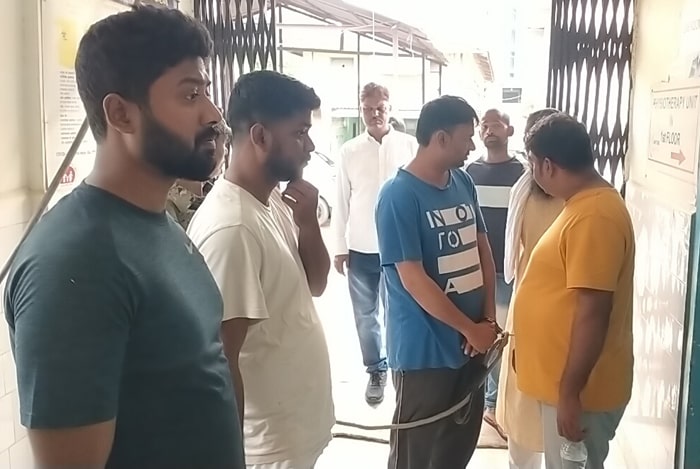
On Sunday, the villagers who were present during the campaign rally for Mohammed Shakir Hussain claimed that there was no sloganeering of ‘Pakistan Zindabad’ done by them, which had been shown in a viral video and on the basis of which Jharkhand police arrested Shakir Hussain and four others.

49-year-old Shakir has been an active social worker in the Dokodih Panchayat, 25 kilometers from the district headquarters. His family claims he has connections with all political leaders. His wife Saleha Khatoon has been the Mukhiya too. The panchayat got a National Panchayat Award 2020 under her leadership.

During the ongoing panchayat election in Jharkhand, the seat has been unreserved. Hence, this time Shakir decided to contest for the position. On April 20, he filed his nominations.

After he filed his nominations, in the evening, News 18 Bihar-Jharkhand ran a video claiming ‘Pakistan Zindabad’ was chanted when Shakir entered the block office, which was also the nomination center. The channel also claimed that neither the candidate nor police personnel deputed before the center objected to the sloganeering.

Later from Zee News, Aaj Tak, Dainik Jagran, India TV, Times Now, Hindustan, NDTV, New Indian Express, India Today, Nav Bharat Times, First Post, Republic Bharat to Dainik Bhaskar all ran the video, without even mentioning the word ‘allegedly’ in their report.

Giridih Police also did not delay in registering a case under several sections of the Indian Penal Code including but not limited to Section 124A (sedition) and Section 153A (disturbing public peace). And arrested the mukhiya candidate and four others.

However, when eNewsroom reached the Dokodih panchayat and talked to the locals, they refuted the allegations.

My fond childhood memories of Kaduna

In the Eighties, as a ten-year-old, I accompanied my parents to Kaduna, a small and peaceful city tucked away in the northern part of Nigeria. My father got a three-year teaching assignment at a polytechnic. He taught environment-related subjects there. We were allotted a bungalow with a beautiful garden. I was still missing Delhi and my school friends and, the feeling of strangeness in a new country refused to leave me for a couple of days.

The Beautiful Garden

The day after we reached Kaduna, my mother busied herself with unpacking the essentials and keeping things in order in all the rooms. Soon, the garden in our house became my favourite place which was a riot of colours. Its shade of “lovely green” offered tranquility and repose. The sheer variety of flowers was a sight to behold. Both my parents were green-fingered, they grew vegetables like tomatoes, beans, pumpkins, papaya and guava. They also planted eucalyptus and marigold along the hedges. The garden turned into a pure visual delight for everyone who walked into our house. It was like a retreat, to quote metaphysical poet Andrew Marvell, to “Fair Quiet” and its sister “Innocence”, a sort of Biblical paradise.

Then there was the six-feet tall, young and sturdy Nigerian helper by the name of Sunday. He was in his mid-twenties, a bit garrulous, and, who, besides doing our household chores, spent time reading comic books. He also had a habit of breaking into a dance while humming a Hindi movie song. It was Sunday who once informed us that the word ‘Kaduna’ meant crocodiles in the local language.

The craze for Amitabh and Rishi Kapoor

I got admission to the fifth standard in a school near our house. I made lots of friends on my first day. My classmates were mostly Nigerians and they were thrilled to have me as a friend from India. We spoke in English which is their official language. These curious and wide-eyed friends were keen to know about my country and culture. They were also ardent Hindi movie buffs and would ask me whether I had met stars like Amitabh Bachchan and Rishi Kapoor. The local people there preferred to watch action-packed Bollywood thrillers on VCR. The movie Sholay was hugely popular in Nigeria. They loved everything about this movie even though they were not familiar with the language.

nigeria kaduna childhood memories culture travel
People of Kaduna | Courtesy: nigeriagalleria.com

Leading simple, uncomplicated life

Life in Kaduna used to be so simple and stress-free. In the evenings, my father and his friends, mostly teachers of different nationalities, would take their ease in the garden, and engage in animated conversations over several rounds of tea and special dishes prepared by mom. Mother, who was an accomplished tabla player, would participate in cultural programmes which were organized regularly by the Indian community during festivals. I was happy to be included in a chorus group. My parents and I had started enjoying our stay in Kaduna.

There were always some surprises that awaited us. One fine morning, I spotted a white cat in the garden and got friendly with her. She became a permanent member of our family. We named her Milky. Mom fed her milk twice a day. But after a few months, she suddenly disappeared, never to return, leaving me and my mother dejected.

Living with Rock Pythons and Iguanas

Mother once had a strange encounter with a reptile. One afternoon, she was busy tending to the flowers in the garden when she spotted a huge snake near our verandah. She didn’t go into a tizzy; she immediately raised an alarm. Sunday, our helper, who was luckily around, shooed the reptile away with a stick. He identified it as an African Rock Python and said these reptiles don’t attack human beings unless provoked.

Then there were those repulsive Iguanas (types of lizards) with their big shiny orange heads and metallic blue bodies who were often seen crawling around in our garden. We used to tread cautiously to avoid stepping on their tails. But it was a peaceful co-existence as these Iguanas never harmed humans.

Visits to neighbouring towns and cities

There were many family friends who resided in neigbhouring cities like Zaria, Bauchi and Jos. We frequently used to visit them just as they would come to visit Kaduna. Travelling by road to these places was a popular choice. Since the distance to these cities was quite long, we would often halt at small roadside stalls to tuck into some refreshments and soft drinks. In the morning, we could feel a fresh bracing quality in the air and the sky was mostly dappled with fleecy clouds.

How time flies! A day came when we had to bid adieu to Kaduna. I had turned thirteen by then. A certain melancholy fell upon us. The city had grown on us all these years and the very thought of leaving it tugged at our heartstrings. On my last day at school, I received a lot of small gifts from my friends and felt overwhelmed. Before leaving for the airport, I cast a wistful glance upon the garden which had become an integral part of our lives all these years, making us discover the beauty of nature. Indeed, our senses hold our most truthful memories.

कोरोना-काल में मातृ-साया की कहानी बयां करती ‘आंधारी’

आंधारी; अस्सी साल की एक बुर्जुग महिला मातंगी के जीवन पर आधारित उपन्यास है, जो महानगर के काका-नगर कॉलोनी में स्थित सी-100 चौमंजिला इमारत के अंदर संभ्रांत उत्तर भारतीय संयुक्त परिवार की मुखिया हैं, जिनके तीन पीढ़ियों के सगे-संबंधी, कर्मचारी और जीव-जन्तु एक ही छत के नीचे अपनी अलग-अलग रसोई, अलग-अलग खर्च और अलग-अलग निजता के साथ रहते हैं। इस चौमंजिला इमारत के नजदीक एक ऐसा परिवेश और पड़ोस भी है, जिनकी कहानियां सी-100 की कहानी के समानांतर एक रहस्यमयी संसार रचती हैं, जिनके बारे में जानने की इच्छा अंत तक बनी रहती है।

यह कोरोना-काल की अवधि में महामारी से जूझते उस बड़े परिवार की कहानी है, जिसमें लॉकडाउन के दौरान परिवार के सदस्य इस सीमा तक बिखर गए थे कि ज्यादातर तो मातंगी मां के अंतिम संस्कार तक में शरीक नहीं हो सके थे । यह वह दौर था, जब असंख्य शवों को किसी तरह ठिकाने लगाया जा रहा था, जिनके विवरण पढ़ते हुए न जाने कितने लोगों को लगे कि कहीं-न-कहीं उपन्यास में दर्ज अनुभव उनकी ही जिंदगी से जुड़े हैं और आखिरी में जब हम एक भरे-पूरे परिवार को टूटते हुए देखते हैं, तो त्रासदी की नींव पर दूसरी त्रासदियां घटती दिखाई देती हैं। इसके बावजूद यह मातृ-साया के संस्कारों की ही शक्ति होती है, जब विकटतम परिस्थितियों में सभी सदस्य भौतिक तौर पर अलग-थलग रहने के बाद भी भावनात्मक रूप से आपस में साथ ही होते हैं और अपनी-अपनी तरह से मातंगी मां का स्मरण कर रहे होते हैं।

आंधारी; साहित्य अकादमी से सम्मानित नमिता गोखले की अंग्रेजी कृति The Blind Matriarch का हिन्दी अनुवाद है, जिसका अनुवाद हिन्दी के सुप्रसिद्ध लेखक प्रभात रंजन ने किया है। हाल ही में राजकमल प्रकाशन से प्रकाशित 224 पृष्ठों वाला यह उपन्यास विषय, भाव और कहानी को बयां करने के ढंग तीनों स्तरों पर नवीनता लिए हुए है। साहित्य का प्रमुख तत्व संवेदनशीलता का प्रसार माना जाता है, विशेषकर इस दृष्टि से यह उपन्यास पाठकों को अधिक संवेदनशील बनाने की विशेषता रखता है। वहीं, भाषा का सौंदर्य कहानी के विवरणों में है, लेखिका अलग से भाषा का आडंबर रचने की कोशिश करती नजर नहीं आती हैं, बल्कि भाषा कहानी में ही है सधी, सपाट और लयबद्ध। उदाहरण के लिए उपन्यास के शुरुआत में ही एक जगह, ”दोपहर की नींद में उन्होंने कभी उलझे हुए सपने नहीं देखे, लेकिन आज अतीत के कुछ उलझे हुए सपने दिखाई दिए। वह अस्पताल में बिस्तर पर पड़ी थीं, पैर फैलाए, कोई गीत गा रही थीं। दीवार पर एक घड़ी टंगी हुई थी, जिसकी गोल आकृति चांद और सूरज जैसी लग रही थी। आकाश में कहीं एक हवाई जहाज दुर्घटनाग्रस्त होकर जमीन पर गिरा। घड़ी चिड़िया बन गई और कमरे में चक्कर काटने लगी। कुक्कू, कुक्कू, कुक्कू, कुक्कू, खुली खिड़की से बाहर जाते हुए उसने जैसे घोषणा की। उसके बाद सपना टूट गया, गायब हो गया, और वह अपनी राजस्थानी रजाई के नीचे पसीने-पसीने हो रही थीं, तभी लाली उसके लिए चाय और बिस्कुट लेकर आ गई।”

इसी तरह, मातंगी मां के इर्द-गिर्द बुनी कहानी में कई पात्र आते हैं, जिनके बारे में भी अलग से बताने की बजाय कहानी के क्रम में ही अलग-अलग अंतराल में बताते हुए आगे बढ़ा गया है, कहने का अर्थ है कि कहानी प्रधान है, भाषा की तरह इसमें शामिल कई सारे पात्र भी कहानी के प्रवाह में हैं, पढ़ते हुए जबरन लादे गए नहीं लगते हैं, पात्र खासी संख्या में हैं और एक के बाद एक तीव्र गति से आते हैं, जिस प्रकार संयुक्त परिवार में कई सारे पात्र इसी तरह शामिल रहते हैं और आते-जाते हैं, ठीक उसी प्रकार मातंगी मां के आसपास पोता राहुल, पुत्र सतीश, बहू रीतिका, बड़ा पुत्र सूर्यवीर, पुत्री शांता, सूर्यवीर का गोद लिया पुत्र समीर, सेविका लाली और मुन्नी, लाली का रिश्तेदार भतीजा पप्पू, ट्रम्प नाम की बिल्ली, डाबर नाम का कुत्ता, महिला इंस्पेक्टर बबली तथा सेन दंपत्ति घिरे रहते हैं। इन पात्रों की संख्या से भी जाहिर होता है कि एक कहानी में कितनी सारी छोटी-बड़ी कहानियां गुंथी पड़ी हैं, जहां एक हद के बाद चीजों की व्याख्या करना जटिल लगने लगता है, लेकिन उन्हें पढ़ते हुए सब स्पष्ट होता जाता है। देखा जाए तो यह 2022 की ताजा तरीन कहानी है जिसका सिरा 1930 के दशक तक जाता है, जिसमें बहुत कुछ पूरा है, फिर भी ज्यादातर अधूरा ही।

आंधारी की नजर से समकालीन भारत का परिदृश्य

उपन्यास में कहीं भी प्रत्यक्ष या परोक्ष तौर पर मातंगी को ‘आंधारी’ नहीं कहा गया है। इसके बावजूद, हिन्दी में उपन्यास का नाम ‘आंधारी’ नाम दिया गया है। दरअसल, मातंगी का चरित्र अंधेपन के आजू-बाजू तैयार हुआ है, जिसमें उनकी आंखों की रोशनी कमजोर पड़ते हुए आखिरी में हमेशा के लिए चली जाती है। कोरोना-काल में जब वह दूसरी बार दूरदर्शन पर महाभारत धारावाहिक का एपिसोड सुन रही होती हैं, तो उनका ध्यान वर्ष 1988 में लौटता है। उस मिथकीय धारावाहिक के संवादों को सुनकर जैसे उनके दिल में धक से लगता था। राजा धृतराष्ट्र, अम्बिका और विचित्रवीर्य का पुत्र जन्म से अंधा। धृतराष्ट्र ने कंधार की राजकुमारी गांधारी से विवाह किया था, गांधारी ने विवाह के बाद अपनी आंखों पर पट्टी बांधकर देखना छोड़ दिया था। (पृष्ठ-126, 127)

यह उपन्यास समकालीन भारत और विशेष तौर पर हिन्दी पट्टी को भलीभांति विश्लेषित करता है, जिसमें हिन्दी साहित्य की कविताएं, हिन्दी न्यूज चैनलों के समाचार, हिन्दी धारावाहिक, बॉलीवुड फिल्में और उनके अभिनेता-अभिनेत्री क्रमश: कोरोना-काल में राष्ट्रीय व अंतरराष्ट्रीय राजनीति की छाया में मौजूदा समाज के सामयिक संकट से जुड़ते जाते हैं। जैसे कि कहानी के क्रम में एक जगह, ”शांता ने टेलीविजन चला दिया, वह किसी ऐसे चैनल की तलाश में लग गई जो कोरोना वायरस को लेकर पगलाया हुआ नहीं हो। एक चैनल पर दिखा कि मध्य-प्रदेश की सरकार के सामने चुनौती खड़ी हो गई है। विधायकों को बंधक बनाकर रखा गया था। ‘राजनीति का नाटक हमेशा मनोरंजक होता है,’ उसने अपने आप से कहा, ‘और शिक्षा देने वाला भी।’ लेकिन, पांच मिनट समाचार देखने के बाद उसने टेलिविजन बंद कर दिया। (पृष्ठ-28, 29)

आज के दौर में जब वाम और दक्षिण पंथ की वैचारिकी पहले से कहीं अधिक आक्रामक, संगठित और सतह पर आकर टकरा रही है, तब पोपले गालों और झुर्रीदार हाथों से धीरे- धीरे रुमाल पर बारीक कढ़ाई करने वाली मातंगी मां जैसा चरित्र संबल देता है, जिनमें अपने परिवार को संभालने के लिए सैनिक जैसा साहस और संतों जैसा धीरज सुकून का भाव है। एक सरल लेकिन विशिष्ट घरेलू महिला की संवेदनशीलता सत्ता-पोषित वैचारिकी पर कहीं अधिक भारी जान पड़ती है, जिनके भीतर मानवीय तथा समतामूलक स्वभाव का ऐसा पक्ष सामने आता है जिसमें कहीं किसी तरह का स्वार्थ नहीं है, यहां तक की आसपास के जीव-जंतुओं के प्रति तक भेद नहीं है। सियासी स्वार्थ सिद्धी के समय में सी-100 की कांच की-सी दुनिया का हर पात्र कितना मासूम, भोला और प्यारा नजर आता है, क्योंकि वह एक मातृ-साया के संस्कारों में जो पला और बढ़ा है। उपन्यास को पढ़ते हुए बारम्बार यही लगता है कि हम पत्थर वाली दुनिया के लोग नर्म दुनिया के लोगों के बारे में पढ़ रहे हैं, जो महामारी के चलते जब ढहता हुआ दिखता है तो बड़ी पीड़ा होती है और खुद को असहाय पाते हैं।

कहीं हम एक परिवार थे

बाजारवाद की चपेट में पल रही हमारी पीढ़ी जो हर भाव और चीज को मोल-भाव की दृष्टि से देखती है, जब कभी कोरोना की विभीषिका को दोबारा पढ़ेगी तो उसे पढ़ते हुए यह हैरानी भी हो सकती है और समझने में मुश्किल भी कि भारत में ऐसे बड़े परिवार वर्ष 2020-22 तक भी शेष थे, जो साथ रहते हुए भावनात्मक स्तर पर परस्पर एक-दूजे से इस सीमा तक जुड़े हुए थे कि घर के कर्मचारी और पड़ोसी भी कहीं-न-कहीं परिवार के ही हिस्सा थे, जहां मातंगी मां का ढहना असल में भारतीय संयुक्त परिवार का ढहना है, जिसके अवशेष के रूप में उनके पुत्र, पुत्री, नाते, रिश्तेदारों की कहानियां रह जाती हैं, जो उपसंहार में बारी-बारी से आती हैं।

वहीं, उपन्यास में बार्बेट चिड़िया का रूपांकन बड़ी बारीकी से आता है। इस लिहाज से एक झलक देखें तो, ”खिड़की से नीम का पुराना पेड़ दिखाई दे रहा था, जिसकी शाख पर बार्बेट चिड़िया गा रही थी। टू-हे-टू-हे। क्या यह पिछले साल की बात है, जब उनको चिड़िया मिली थी, सड़क के किनारे सेमल के पेड़ के नीचे घायल पड़ी हुई? असहाय, अजीब-सी, अभी उसने उड़ना भी नहीं सीखा था।…”लाली ने चिड़िया की देखभाल की थी, ताकि उसके पंख के घाव भर जाएं और फिर एक दिन वह उड़ जाए। दूसरी ओर, घायल चिड़िया को पकड़ने और पुन: उसे उड़ाने की कड़ी में समीर भी लाली के साथ बार्बेट चिड़िया से सह-संबंध स्थापित करके अपनी-अपनी कहानियों से जुड़ी मनोदशा बयां कर रहे होते हैं। (पृष्ठ-95, 96)

इसी तारतम्य में कहानी और चरित्रों के भाव परिवेश और परिवेश के प्रतीकों से जुड़ते हैं। जैसे कि बार्बेट चिड़िया को ही केंद्र में रखते हुए देखें तो यह चिड़िया कथानक में दो से तीन बार आती है। कभी मातंगी मां उसके साथ उड़ने की अभिव्यक्ति जाहिर करती हैं, तो कहीं समीर उसकी आवाज में खुद के लिए भविष्य के संकेत ढूंढ़ रहा होता है-”बता दे, बता दे, बता दे।” (पृष्ठ-195)

और अंत में कोरोना का अभिशप्त कर देने वाला समय पीछे छूट गया था, जहां सब पहले जैसा था और नहीं भी था। कितना विकट समय था जब देश की हालत चरमराई हुई थी, और दिल्ली, मुंबई में लॉकडाउन लगा था, तब मातंगी मां की मौत अपने घर से बहुत दूर उत्तर भारत के पहाड़ों पर होती है, लेकिन अंतिम संस्कार के लिए उनकी पुत्री शांता के साथ लाली और समीर ही रह जाते हैं। संयुक्त परिवार के बाकी सदस्य उन्हें अलविदा तक नहीं कह पाते हैं।

कुल मिलाकर, उपन्यास के आखिर में कही गई यह बात ही जैसे इसका सार भी है, ”कहीं हम एक परिवार थे, भारत एक देश, वह एक वायरस ही नहीं था, एक राक्षसी बीज था…।” विक्रम संवत 2078। एक काल का अंत था। एक युग का अंत।


TMC wins the bypolls, gets historic victory in Asansol but Ballygunge comes with a message

0

Kolkata: Bollywood actor Shatrughan Sinha broke the jinx of Trinamool Congress by winning the Asansol Lok Sabha seat with more votes than former Bharatiya Janata Party MP Babul Supriyo had secured in 2019.

Supriyo, the singer, however, could not claim an empathetic win in his assembly bypoll as TMC got almost 21 per cent fewer votes than what late Subrata Mukherjee had secured during last year’s assembly poll.

However, TMC won Asansol for the first time after coming to power in 2011. Sinha defeated BJP’s Agnimitra Paul by over three lakh votes.

The Bollywood actor got 56.62 per cent votes against Agnimitra who managed 30.46 per cent.

After the historic result, the actor thanked Chief Minister Mamata Banerjee and took a jibe at his former party. He quipped, ‘Khamosh BJP’.

“Mamata Didi’s wish is our command. This is a historical moment and the victory is not just for TMC but also the people of Asansol. The entire team of TMC worked together to confirm the victory. I will do everything to work for the people,” said Sinha addressing the media.

From 1989 to 2014, the Asansol Lok Sabha seat belonged to the Communist Party of India (Marxist) after which BJP had won the seat twice in 2014 and 2019. On both occasions, it was Supriyo who had won the seat for the saffron brigade.

Accepting the defeat, BJP candidate Agnimitra Paul said that the ‘mandate’ of the people should be accepted.

On the other hand, even though TMC candidate Supriyo won from Ballygunge, the Left Front broke the debris and became the main opposition pushing BJP into the distant third position.

Supriyo though he won the Assembly seat by over 20000 votes by getting 51199 total votes, the Left Front’s Saira Shah Halim got 30940 votes.

It can be noted that in two wards CPI (M) had taken the lead and TMC remained second.

Supriyo after winning the seat said that the victory was of ‘Ma Mati and Manush’.

“The CPM and BJP did a deplorable campaign against the TMC. Those who had tried to malign Chief Minister Mamata Banerjee through false allegations got the answer in the result. I dedicate the victory to TMC Supremo Mamata Didi,” said Supriyo.

The former BJP minister was pointing out the No Vote To Babul Supriyo campaign which was a call by civil rights activists asking Ballygunge voters not to vote for Asansol riots accused Supriyo.

“The Ballygunge bypoll mandate has a clear message for ruling TMC that it did not take minorities for granted. TMC’s vote share has reduced drastically and the secular voters of Ballygunge have not accepted Mr Supriyo,” reacted Manzar Jameel, an activist.

Meanwhile, the singer did not forget to slam BJP, his earlier party for not giving ‘respect’ to the Bengalis.

Saira claimed that the result was a ‘morale victory’ for her party.

“The CPM has emerged second and we will soon discuss the vote share within the party. The result is a moral victory for us. Though now we are the main opposition, very soon we will defeat TMC,” said Saira.

Notably, the security deposits of the candidates of both the national parties– the BJP and the Congress have been forfeited in Ballygunge.

After the poll debacle in both the seats, BJP MP Saumitra Khan said that the ‘inexperienced’ state leaders should be replaced to win Bengal.

“There are many things to learn from Trinamool Congress. The inexperienced leaders should be replaced or else there will be more debacles for the BJP. The suspended party workers should be immediately brought back and a review should be made for such loss,” pointed out Khan.

Religion, rituals and communal harmony in colonial Awadh

Qasbas in the colonial Awadh were the spaces where ‘we’ feeling was constantly (re)made across the narrow confines of religion and sect. Three major strands can be seen operating behind this pluralist tradition of the qasbas: Moharram rituals, Sufi traditions and the usage of Urdu as a medium of language. The religious calendar of Awadh was dominated by Eid, Dusshera, Muharram and urs (birth anniversary of a Sufi saint). Textual Urdu and contextual Islam united Hindus and Muslims of the qasbas. Thus we see that Saiyyid Ahmad Husain (d. 1933) a taluqdar of Motikpur and Nirauli and Ram Prasad solemnly observing Moharram together. Ram Prasad managed langar (free food served to the community). Muharram rites were transcommunal a century ago. Not only high caste Hindus but also labourers and artisans observed those rituals. ‘Over 50,000 to 60,000 devotees congregated during Muharram. One of the most impressive spectacles at such places was the tazia processions streaming along the streets, with a vast crowd of mourners that included Hindus of various classes and castes. Most of the qasbati people celebrated ‘Hindu’ festivals without the barrier of religion, mentioned Munshi Brij Bhushan Lal in his Tarikh-e Dariabad. The same was the case with Eid and Diwali. Muharram rituals were the cementing force not only for Hindus and Muslims but also for Shias and Sunnis. One can easily sense that Hasan inverts the narrative about religious rituals as the source of conflict to the source of harmony. ‘They [Shias, Sunnis, and Hindus across castes] all commemorated Muharram with equal solemnity.’ Readers might know that theologically Sunnis can either celebrate martyrdom because a martyr lives forever (zinda-e javed) or prefer plain solemnity. But for the Shias, Muharram occasions means ritually recreating the environment: an environment of mourning and atonement, sermons and recitations of dirges (marsiyas), public flagellation, julooszuljana (Husain’s horse) and the death of Abbas, Husain’s cousin. While the theologians of the nineteenth century Delhi and Awadh kept on splitting hairs on Shia- Sunni rituals, Sunni landholding families were busy commemorating Husain’s martyrdom and paying obeisance to ahl-e-bait (Prophet Mohammad’s immediate family). Sheikhs/Kidwais and other landholding Sunni families of Gadai (Barabanki) are one such example. Kidwais, in general, commemorated Moharram rituals across the Awadh region.

Apart from Muharram, the presence of Sufi shrines consolidated communal harmony. Just like Awadh was dotted with qasbas, so were the qasbas sprinkled with Sufi shrines. These were the spots where people, across social groups, bowed in front of their master (peer). ‘Sufism in a locality, as indeed on a pan-Indian scale, continued with its simple piety and gospel of love and absorbed heterodox elements’. So we find that William Crooke (1869–96), a civil servant, observed that the orthodox Hindu castes worshipped the quintets of the Panch Pir or famous local saints like Shah Madar (d. 1050) or Sakhi Sarwar. The history of such shrines and their influence over the locality can be traced back to early Mughals and Delhi sultans. Sufi saints and their successors got trusteeship over revenue-free land (madad-e mash). Chisti, Qadri and Sabri sufi orders were prominent. Rasauli had graves of Qazi Kidwa, Qazi Qeyamuddin and their family members who were the disciples of Nizamuddin Auliya (1238–1325), the great Chishti saint in Delhi. One of their descendants Aabash (d. 1472) became a Chisti saint and also followed Qadiri silsila (sufi order) through his matrimonial ties with Bansa (Hardoi district). Aabkash is also one of the forefathers of Abdul Majid of Dariabad (Bara Banki), the author-journalist. Abdul Majid Dariabadi’s father Maulvi Abdul Qadir (b. 1848) studied at the feet of Maulvi Muhammad Naim Farangi Mahali; so did his grandfather. Several members of the Kidwai clan in Baragaon were either educated at Farangi Mahal or recognized Abdul Bari as their spiritual preceptor. Sheikh Salahuddin Suhrawardy founded the Suhrawardy silsila in Rudauli during the Iltutmish time. Many other patron saints followed, along with their respective families. Rudauli had shrines of saints like Abdul Quddus Gangohi of the Sabiri silsila, and Sheikh Nasiruddin, who received land from Ibrahim Shah (1402–36). Satrikh (Barabanki) had the shrine of famous Sufi saint Sheikh Salar, the father of Ghazi Miyan Salar Masud. Masud’s shrine was built in Bahraich and had an associated shrine at Rudauli built in 1799. Rudauli was the place where, as the myth was, Zohra bibi was born as a blind girl and recovered her sight after the boon of Salar Masud. In the 1870s, average attendance at the Rudauli fair sometimes exceeded 6,000. This was to commemorate the death and thereafter a mythical marriage of Zohra bibi with Salar Masud.

Among the many mazaars was one prominent at Dewa town (Bara Banki) which had the shrine of Haji Qurban Ali Shah. He was the father of Haji Waris Ali Shah (1818– 1905). With time, urs of the son became more famous and many of his devotees attributed miracles to him. His murids ranged were mostly women, poor and lower castes from distant places. Among the rich followers of Dewa Sharif were Thakur Pancham Singh (zamindar of Mainpuri district), Raja Udyat Narayan Singh (Suratgunj in Awadh), Moti Misser Vakil (Bhagalpur) and Guru Mohun Singh (a Thakur zamindar from Bhagalpur). All these instances, among many others, make a compelling case for understanding pluralism as the signature of colonial qasbas. ‘The presence of Hindus, Sikhs, Parsis, and Jews around the urs revealed the vitality of popular beliefs as against the strict codes of Islamic orthodoxy.’


This essay is based on Mushirul Hasan’s From Pluralism to Separatism: Qasbas in Colonial Awadh (2004).

Nature enhances mental health

0

Natural landscapes, such as beaches, water, forests, parks, and mountains, the availability of public open spaces used for public entertainment and sports reduce attention deficit disorders. Green restoration improves preschooler spatial working memory and cognitive functioning improves when children walk in nature.

According to the latest IPBES report, urbanization can increase isolation from nature, which in turn prevents people from harnessing mental health benefits of being surrounded by natural environments. It also creates risky exposure to the type of air pollution that primarily affects mental health.

“The positive impact of nature, including green environment and clean air, is significant for soft mental health problems like depression and anxiety, which have become the focal points in the 21st Century human situation, especially after the recent epidemic,” says Dr Nimesh G Desai, Senior Consultant in Mental Health, Public Health Expert, Former Director of IHBAS, Delhi.

Children who play in greenspace for 30 minutes have an  increase in sustained mental ability and found greenspace to be restorative. Taking micro-breaks to view nature can help with attention restoration.

“Environment is before human beings. Animals and plants do not do anything harmful. Human beings create climate change. Through my actions, I am creating awareness about growing plants and conducting plantation drives, and workshops in schools – to bring awareness and behavioural change, says Vibhu Rakesh, an environmentalist, and sustainability entrepreneur.

nature enhances mental health environment greenery
Courtesy: hotelexecutive.com

Nature has healing effects

In elementary-level classrooms, green walls (described as a wall with green plants) can provide restorative impacts to school children. Results show that children in classrooms where a green wall was placed scored better on tests for selective attention. The green wall also positively influenced children’s classroom evaluations. When integrating a school garden into the curriculum, children’s physical activity increased and sedentary behavior decreased. Children who receive breaks and time outside in nature,  exhibit improved concentration. According to a study, by placing plants in a classroom can improve performance, with children progressing through the school curriculum 20-26% faster.

Interacting with nature, especially with the presence of water, can increase self-esteem and mood, reduce anger, and improve general psychological well-being with positive effects on emotions or behavior. In fact, moving to homes with greener areas positively influences mental health even after three years post-move. Moving to a less-green area significantly worsens mental health within one-year post-move, but returns to pre-move mental health status thereafter. This is true for public green spaces as well. City park area quantity and accessibility are strong predictors of physical and community well-being. Similarly, studies in Perth, Australia found that people in neighborhoods with high-quality public open spaces had better mental health than those with low-quality public open spaces. Features that made an open space “high quality” included irrigated lawns, walking paths, lighting, water features, playgrounds, and birdlife.

Environment enhances physical and mental health

A study by the Cincinnati Children’s Hospital Medical Center shows a link between high traffic-related air pollution and anxiety levels. While air pollution and other environmental hazards pose a threat to our mental health, healthy environments can help us feel better and even have a curative effect. Local governments can play a key role in tackling mental health crisis by reducing air pollution, enhancing the availability of green spaces or establishing electric and non-motorized transport initiatives, for instance.

nature enhances mental health environment greenery
Courtesy: earth.com

The natural world presents countless other health benefits. According to the latest Global Environmental Outlook, forests for example can promote physical and mental well-being. “The full health benefits of the natural world are too extensive to list,” said Inger Andersen, Executive Director of the UN Environment Programme, adding that nature is “the ultimate healthcare system”.

“Whenever I want to rejuvenate and replenish my spirit, I go for a walk in a garden or some forest.

A few days back while taking a walk in a beautiful garden, I saw a bee, trying to extract nectar from a red flower. I paused and continued looking at it, while she was busy doing her job. I was watching her in awe, time stood still like I was going through this mindfulness meditation. Suddenly this beautiful poetry came out of that moment;

Aren’t we all searching for the nectar

Not knowing

That like a flower carries it within

So do we.

“Being in nature is the best way to set the mind free and soar,” says Dr Jitesh Khanna, Multi Awardee entrepreneur, social activist, writer, and poet.

Nature certainly has a positive, calming impact on the well-being of a person. One needs to find ways to co-exist with nature.

“I look forward to my time in the garden I created 35 years ago. I don’t need therapy as long as I have my green buddies. I don’t remember when and how I got into gardening but it helps me stay sane amidst everything,” says Manju Boruah, Sustainable environment entrepreneur.