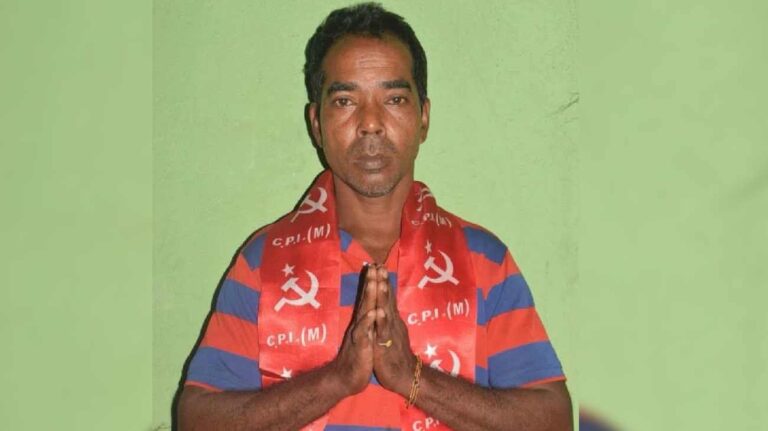
Kolkata: The body of a 52-year-old man, identified as Montu Mia, was recovered under a bridge over the Khutamara River in Sitalkuchi, Cooch Behar district, on Sunday morning, July 5. The deceased’s family and local political leaders have alleged that Mia, a cattle herder worker, was intercepted and brutally beaten to death by a group of alleged cow vigilantes on Saturday evening, July 4. Police have registered a case and launched an investigation, though no arrests had been reported at the time of the family’s allegations.
The deceased was a resident of Nagar Shingimari under the Golenawhati Gram Panchayat in the Sitalkuchi block of Cooch Behar district. His body was recovered on Sunday morning from a bridge over the Khutamara River, nearly a day after he had reportedly left a local cattle market to deliver a cow to its buyer. According to local residents, Montu Mia worked as a cattle handler, locally known as a rakhal, earning a modest livelihood by escorting cattle purchased at local markets to buyers’ homes.
According to local sources, cattle trading in several markets under the Sitalkuchi police station area had reportedly remained suspended for nearly two months following the recent Assembly elections. Saturday marked the reopening of the cattle market at Gosai’s Market, attracting buyers and traders from surrounding villages. A local man, identified as Yakub Mia of Pathantuli village, purchased a cow from the market and requested Montu Mia to deliver the animal to his residence. Witnesses stated that Montu set out on foot with the cow on Saturday evening. According to family members, Montu never returned home.
His relatives searched throughout the night but were unable to trace him. The following morning, local fishermen reportedly spotted a body beneath the Khutamara River bridge. Police were informed, and the deceased was later identified as Montu Mia. The cow he had been transporting was also reportedly found near the scene and was subsequently identified by its owner.
According to Ganashakti report, The victim’s family has alleged that Montu Mia was brutally assaulted before his death. His body bore multiple visible injuries, including broken teeth and wounds across different parts of his body. They further alleged that acid had been poured on parts of his face and body before the body was discarded in the river. Montu Mia’s father-in-law, Tariq Mia, alleged that his son-in-law had been targeted by self-styled cow vigilantes. “They killed him, poured acid on his face and body, and threw him into the river. We demand a thorough investigation and exemplary punishment for those responsible,” he alleged.
The victim’s wife, Aseda Khatun, recalled her husband’s final conversation before he left home. “He told us he would return home that night and have dinner with our seven-year-old daughter. When he did not return, our entire family went out searching for him. My daughter and I spent the whole night looking for him. I never imagined that we would find his body so far from home,” she said.
The death has left the family devastated, with neighbours describing Montu Mia as a quiet and hardworking man who supported his family through daily wage work associated with cattle trading.
The incident has also generated fear among residents of Nagar Shingimari and neighbouring villages. A local resident Samaser Ali said that the injuries found on the victim’s body suggested that he had been subjected to severe violence. “The injuries indicate that several people may have assaulted him. Whoever committed this crime must be identified and punished in accordance with the law,” he said. Several residents expressed concern over safety in the area and called upon the administration to conduct a transparent investigation.
A written complaint was lodged with Sitalkuchi Police Station on Sunday. According to police sources, a criminal case has been registered in connection with the incident. Officials confirmed that the case has been recorded as Case No. 35/26 and that an investigation is underway. However, according to the victim’s family, no arrests had been made by Monday, nearly 24 hours after the complaint was filed.
The incident has also taken on political significance after leaders of the Communist Party of India (Marxist) alleged that Montu Mia was an active party worker. Senior CPI(M) leaders, including Cooch Behar district secretariat members Moksedul Islam, Prosenjit Sarkar, Narayan Chandra Barman, and Rakhal Chandra Sarkar, visited the bereaved family and assured them of legal assistance.
On the other hand, Political tensions escalated further on Tuesday when a CPI(M) delegation led by Central Committee member Minakshi Mukherjee, along with State Committee members Alkesh Das and Anant Roy, and district leaders Amit Dutt, Moksedul Alam, and Prosenjit Sarkar, travelled to Sitalkuchi to meet the victim’s family. According to CPI(M) leaders, their convoy was allegedly stopped by BJP supporters before reaching the village. The party claimed that eggs were thrown at their vehicle and that protesters surrounded the delegation.
Addressing the media, Minakshi Mukherjee alleged that the attack took place in the presence of police personnel. “We were going to meet the family of one of our party workers who was killed. Our vehicle was attacked in front of the police, yet no action was taken to stop those responsible. We will file a formal complaint against the officer-in-charge and demand immediate action,” she stated. Minakshi also questioned the prevailing law-and-order situation in the state, alleging that opposition leaders were being prevented from meeting victims’ families. Police have not officially commented on the allegations surrounding the attack on the CPI(M) delegation.
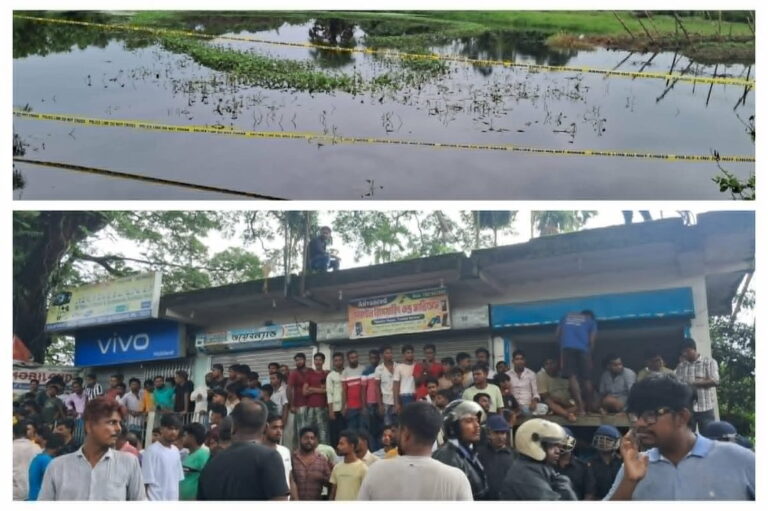
Surjyapur (Baruipur): The pond has fallen silent. The burnt tyres have been cleared. Police barricades now stand where angry villagers had blocked roads barely 24 hours earlier. Outside the modest home of the 11-year-old girl whose body was recovered from a pond on Sunday morning, grieving relatives sit surrounded by neighbours, while police and Central Armed Police Forces keep watch.
Two days after the child, who had stepped out on Saturday afternoon to buy a birthday gift, was allegedly abducted, sexually assaulted and murdered, Surjyapur remains suspended between grief and rage. Four arrests have been made, a Special Investigation Team (SIT) has been constituted and further raids are underway. Yet for residents, the biggest question remains unanswered: could the crime have been prevented had authorities acted faster?
Nearly two years after the rape and murder of a trainee doctor inside RG Kar Medical College Hospital triggered one of Bengal’s biggest public movements, another brutal crime against a girl has once again shaken the state. This time, however, the epicentre of anger is not Kolkata but this village in South 24 Parganas, where protests continue to erupt in different corners rather than under one organised banner.
On Tuesday, there was no single protest site. Small groups of residents could be seen outside the victim’s house, near the Surjyapur police outpost, around the block office and at local crossings. The slogans may have become quieter than Sunday’s fury, but the demand has remained unchanged: justice without delay.
Surjyapur Residents Allege Police Delay, Demand Swift Justice
“We are not scared because police are here,” says Sagir Ali, who witnessed the recovery of the child’s body from the pond. “We are scared because if this could happen to an 11-year-old in our village, it can happen to anyone.”
He recalled standing a short distance away as villagers pulled the body from the water.
“I could not go closer. She was just a little girl. I felt shattered. Around 10 to 12 of us were present, but there was no administration at the spot when the body was recovered. We want nothing less than the severest punishment for those responsible.”
Residents repeatedly alleged that they, not the police, took the lead in tracing the suspects.
Juli Seikh, one of the villagers who participated in the search, claimed locals reviewed CCTV footage from nearby shops, identified two suspects, tracked them down and caught them before handing them over to police.
“It was us who checked the CCTV footage and caught them,” he alleged. “If villagers had not acted immediately, would the arrests have happened this quickly?”
Several residents also accused the police of failing to respond promptly after an FIR was lodged at Baruipur Police Station.
There are further allegations that local BJP workers attempted to intervene after villagers handed over the suspects to police, and that pressure was exerted to secure their release on Sunday. The allegation could not be independently verified, and there has been no official response from the BJP.
The sense of insecurity has spread far beyond the victim’s family. Parents say they are no longer allowing young children, especially girls, to step out alone even for routine errands. Conversations in tea stalls, markets and village lanes repeatedly return to the same question: “If an 11-year-old is not safe here, who is?”
The child’s body, stuffed inside a sack, was recovered from a pond in the Surjyapur Haat area on Sunday morning after she had gone missing the previous afternoon. The shocking discovery transformed grief into fury.
Hundreds of residents from Surjyapur and neighbouring villages poured onto the streets, blocking the Baruipur–Joynagar Road and railway tracks for several hours. Tyres were set on fire, a police vehicle was vandalised and protesters demanded immediate arrests and exemplary punishment.
Amid the violence, one man suspected by the crowd of involvement in the crime was allegedly beaten to death by an enraged mob, underscoring the intensity of public anger.
Political Reactions Intensify as Protests Continue in Surjyapur
Facing mounting pressure, police arrested four persons in connection with the case by Monday. A Special Investigation Team has been formed and further raids are continuing.
Inspector General of Police Kankarprasad Barui assured that every person found involved in the crime would face the maximum punishment under the law. The post-mortem report is awaited to determine the exact cause of death and whether sexual assault took place.
Thousands of people again assembled in Surjyapur on Monday, demanding a fair, transparent and time-bound investigation. Although road blockades had ended by Tuesday, the protests had not. Many villagers said they would continue demonstrating until they were convinced the investigation was moving in the right direction.
The incident has also snowballed into a political flashpoint.
CPI(M) leader Md. Lahek Ali visited the victim’s family and joined protests on both Sunday and Monday. Indian Secular Front (ISF) MLA Nawsad Siddique was prevented by security personnel from meeting the bereaved family.
Meanwhile, heavy deployment of police and Central Armed Police Forces outside former Chief Minister Mamata Banerjee’s Kalighat residence on Sunday night triggered a separate political controversy. The Trinamool Congress alleged the security arrangement amounted to “house arrest” and was intended to prevent her from travelling to Surjyapur. On Monday evening, unable to visit the village, she led a candlelight march in Kolkata condemning the killing and demanding justice for the child.
Back in Surjyapur, however, politics appears secondary to the pain etched on every face.
The pond where the body was found has become a grim reminder of a tragedy the village cannot forget. Outside the victim’s home, neighbours continue to arrive quietly, offering condolences to a family struggling to comprehend its loss.
For the people here, the story is no longer only about a child who left home to buy a birthday gift and never returned. It is about whether a village’s cries for justice will continue to be heard after television cameras leave, political leaders move on and public outrage fades.
Kolkata: Almost two and a half decades ago, a chance encounter with a nearly blind woman and her family from rural Bengal sparked a lifelong mission. Today, that spark has evolved into an internationally recognized initiative. Dr Arijit Mukhopadhyay, Professor of Precision Health at the University of Salford, UK, is collaborating with researchers, clinicians, philanthropists, and industry leaders to eradicate hereditary glaucoma through early clinical interventions.
Alongside his team, Dr Mukhopadhyay has been successfully helping families across West Bengal fight hereditary glaucoma—a leading cause of irreversible blindness that silently claims the sight of individuals, particularly adolescents.
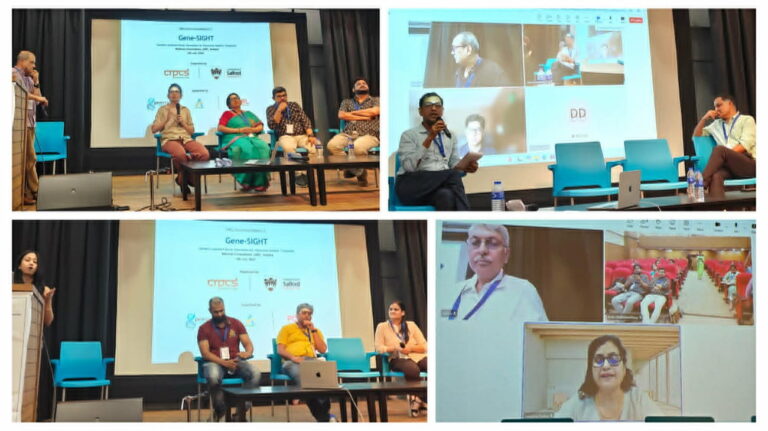
Speaking on the sidelines of Policy Consultation on Integrating Genetic Screening into Public Health Systems for Inherited Glaucoma, a one-day event hosted at The Amartya Sen Research Centre, organised by University of Salford, United Kingdom and the Centre for Research in Policy Communication and Society (CRPCS), Kolkata under the GENE-SIGHT Project, Dr Mukhopadhyay recalled the project’s inception. “The simple question—Can this disease not be prevented through timely intervention?—led to the birth of project GENE-SIGHT. You can consider this project as my way of paying back my research subjects.”
The GENE-SIGHT project (Genetics-enabled Social Innovation for Glaucoma Health & Treatment) aims at making precision genomics step out of high-end urban laboratories and onto the soil of rural Bengal, protecting the sight of vulnerable generations before the disease can even begin.
From Lab to Village: The Genetic Blueprint
Years ago, Dr Mukhopadhyay, as a Phd scholar at the Regional Institute of Ophthalmology along with his research group had mapped the DNA of a highly affected family and identified a specific, aggressive mutation in the Myocilin gene. Armed with this genetic blueprint, the team performed predictive “cascade screening” on more than 30 members of the extended family.
The breakthrough came when the screening pinpointed three children—all under the age of 10—who carried the exact same genetic mutation. Visually, the children felt perfectly healthy, but their DNA revealed a clear countdown to irreversible blindness.
From Data to Knife: The Grassroots Challenge
Genetic data alone cannot save an eye; it requires localised, swift clinical execution. However, this approach brings forward a profound bioethical question: Is it ethical for clinicians to initiate treatment before clinical symptoms manifest?
Dr Mukhopadhyay alongside Dr Asim Kumar Sil, Medical Director at the Vivekananda Mission Ashram (Netra Niramay Niketan) in Chaitanyapur, West Bengal, Geneticist Dr Mainak Sengupta, who is also the president of Rotary CC Jadavpur, and many more formed a group began working relentlessly to help those with hereditary glaucoma not lose their vision.
“Genetic diagnosis is now actively used in India to facilitate targeted screening and counseling, especially for hereditary glaucoma,” explains Dr Sil. “We still do not fully understand the root causes of glaucoma. Standard treatment focuses entirely on managing the intraocular pressure (fluid pressure inside the eye) so it doesn’t destroy the optic nerve.”
Dr Sil notes that while pressure is typically managed via medication or surgery, genetics provides a vital safety net. “When standard surgical or medical interventions fail, genetic analysis helps us understand why they are failing and whether a specific mutation is the culprit. In high-risk lineages, families can opt for genetic testing early to map their risk and actively avert blindness.”
“Glaucoma is the silent thief of sight because permanent damage occurs long before patients notice a single symptom,” Dr Mukhopadhyay emphasised. “Genetics gives us a time machine. The future of public eye health in India must belong to prediction, precision, and prevention—not waiting to treat the damage after a child has already gone blind.”
Achieving this national scale will require robust data systems. Adding to the policy discourse, Sabir Ahamed, Programme Director at the Amartya Sen Research Centre, noted: “Integrating clinical knowledge with localized data on glaucoma can completely transform public health outcomes. However, as of now, the widespread availability of such granular genetic data remains our next big challenge.”
The 2026 Policy Blueprint: Redesigning India’s Health Framework
The GENE-SIGHT 2026 conference in Kolkata, was a manifestation of the dream that Dr Mukhopadhyay had seen. The event brought together clinicians, researchers, policymakers, and public health practitioners like Dr Sunneta Dubey, senior glaucoma expert, Dr Manas Bandhopadhyay from RG Kar, Dr Dipanjana Datta from the Organisation of Rare Disease, Praveen Gupta, founder and MD of Premas Life Sciences, Dr Ashgar Ansari, Co-Founder, Anuvanshika and Dr Suman Paine on the same platform to discuss how they could work together to prevent hereditary glaucoma through early clinical interventions.
The goal of the meet being simple – integrate genetic risk screening into existing public health frameworks, catching high-risk pediatric patients years before irreversible disability sets in.
Hooghly, West Bengal: For nearly a week after 71-year-old Sk Shahaalam was beaten to death outside his home, the silence hanging over Kelepara village was as telling as the grief inside his family’s modest house. His 95-year-old mother sat devastated. His wife struggled to speak through tears. Three young grandchildren moved quietly around the home that had suddenly lost its principal breadwinner.
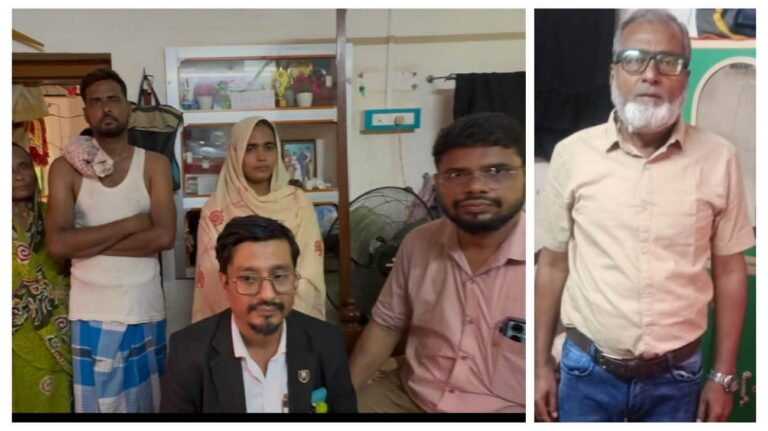
According to a fact-finding report prepared by the Association for Protection of Civil Rights (APCR), Shahaalam’s killing was not an isolated act of violence but allegedly the culmination of weeks of intimidation, fear and post-election tensions that had gripped the village.
An APCR team that visited Kelepara under Pursurah Police Station in Hooghly district on June 23 said the family, neighbours and several local residents described an atmosphere where many people were reluctant to speak openly, fearing retaliation.
The report states that the murder has left the family economically shattered while creating a deep sense of insecurity across the village.
A Family Says Threats Began Long Before the Murder
According to the victim’s family, tension escalated in the village following the Assembly election.
Family members alleged that certain individuals demanded ₹50,000 from them. When the family refused, they allegedly began receiving repeated threats and intimidation.
The APCR team noted that the family consistently maintained they had been living under constant fear before the fatal attack.
Residents who spoke to the fact-finding team also referred to earlier incidents of violence in the village, which, they said, had already created an atmosphere of insecurity.
‘Come Outside’: The Final Moments
According to the family’s account recorded by the fact-finding team, the attack took place on June 15 at around 1.30 pm.
Shahaalam, a labourer employed at a Muslim hotel, had been resting inside his house when several men allegedly arrived and called him outside.
What happened next, according to family members and witnesses interviewed by APCR, unfolded within moments.
The report alleges that he was assaulted by a group of people armed with bamboo sticks, wooden objects, bricks and stones.
The elderly man reportedly suffered severe injuries before collapsing unconscious.
His family alleges that when women members rushed forward to rescue him, they too were threatened and prevented from intervening.
Shahaalam was later taken towards Arambagh Prafulla Chandra Sen Government Medical College and Hospital, where doctors declared him dead.
The Family Left Behind
Beyond the allegations surrounding the murder lies the story of a family pushed into sudden uncertainty.
Shahaalam, approximately 71 years old, was the principal earning member of the household.
His family includes:
his 95-year-old mother, Mahela Bibi;
his wife, Marjina Bibi;
elder son Sk. Saiful Islam, around 36 years old;
younger son Rafikul Islam, around 32 years old;
daughters-in-law Serena Begum and Reshma Khatun; and
three minor grandchildren.
The family’s financial condition, according to the report, was already fragile.
The elder son is reportedly bedridden after suffering serious injuries in a road accident and is unable to work.
The younger son earns only a modest income as a daily labourer.
With Shahaalam’s death, the household has lost its primary source of livelihood.
The APCR report says the family now faces severe financial hardship alongside emotional trauma.
Earlier Assaults Deepened the Climate of Fear
During its inquiry, the fact-finding team documented two earlier incidents that villagers claimed involved the same group of accused persons.
On June 3, Altaf Mullick, a 41-year-old government school teacher, was allegedly assaulted using bamboo sticks and wooden objects. According to the report, he sustained grievous injuries, including a fracture to his right leg.
On the same day, another resident, Sk. Abdul Rahim, aged 56, allegedly suffered a similar assault and also sustained a fractured right leg.
Residents told the team that these incidents had already left many villagers frightened well before Shahaalam’s death.
The report observes that these earlier attacks require careful and independent examination.
Police Investigation Underway
According to information provided by Pursurah Police Station, an FIR (No. 175/2026) has been registered in connection with the murder.
The investigation is being conducted by Sub-Inspector Subhendu Mondal.
Police informed the fact-finding team that six accused persons had been arrested and police custody obtained.
Efforts, officials said, are continuing to arrest the remaining accused.
Police also described the case as being linked to post poll political violence.
Meanwhile, Shahaalam’s body was sent for post-mortem examination at Arambagh Prafulla Chandra Sen Government Medical College and Hospital.
At the time of APCR’s visit, the final post-mortem report had not yet been made available.
Fear Still Lingers in Kelepara
One of the strongest observations made by the APCR team concerns the atmosphere prevailing in the village after the murder.
According to the report, several residents appeared unwilling to speak freely because they feared possible retaliation.
The team concluded that the killing had not only devastated one family but had also disrupted normal life within the village.
The report describes widespread anxiety among women, elderly residents and children.
It also records severe emotional trauma among the victim’s family members and growing insecurity across the locality.
Key Findings of the Fact-Finding Team
After interviewing family members, witnesses, villagers and police officials, inspecting the scene and reviewing available documents, the APCR team reached several conclusions.
The report describes the killing as a grave incident involving allegations of collective violence.
It states that allegations of repeated threats before the murder remained consistent across family testimonies.
The inquiry also found that the victim’s family has lost its principal means of livelihood and now requires immediate rehabilitation support.
The team further emphasised the need for continued monitoring of the law-and-order situation in the village.
Demands
The APCR fact-finding team has urged authorities to:
Immediately arrest all remaining accused persons;
Conduct a fair, impartial and time-bound investigation;
File the charge sheet without unnecessary delay;
Provide protection to witnesses;
Ensure security for the victim’s family;
Grant compensation under applicable victim compensation schemes;
Extend rehabilitation support to the bereaved family;
Provide educational assistance to the three minor grandchildren;
Ensure regular supervision of the investigation by senior police officers; and
Closely monitor the law-and-order situation in Kelepara village.
A Death That Continues to Echo
For the APCR team, Sk. Shahaalam’s death is not merely another criminal case.
Its report concludes that the alleged history of intimidation preceding the murder, the reported pattern of earlier violence and the vulnerable condition of the victim’s family together warrant a fair, impartial and expeditious investigation.
The report argues that justice in this case will require more than arrests. It calls for witness protection, accountability, rehabilitation of the bereaved family and sustained efforts to restore confidence among villagers who, according to the inquiry, continue to live under the shadow of fear.
Delhi: For nearly two decades, the Mahatma Gandhi National Rural Employment Guarantee Act (MGNREGA) has been more than just another welfare programme. It has served as India’s only legal guarantee of work, offering rural families a lifeline during droughts, crop failures, economic downturns and, most dramatically, the COVID-19 lockdown.
Now, the Congress claims that this rights-based safety net has entered a new phase—one that shifts the balance of power from workers to the government.
Launching a sharp attack on the Narendra Modi government, the Opposition party alleged that the Centre’s newly notified VB GRAMG framework fundamentally changes the nature of rural employment by replacing a demand-driven legal guarantee with an allocation-based programme controlled through centrally approved budgets.
Addressing a press conference in New Delhi, Congress leader and Chairman of the Parliamentary Standing Committee on Rural Development and Panchayati Raj, Saptagiri Ulaka, described July 1 as “the saddest day” for India’s rural poor.
“Today is the saddest day for the country,” Ulaka said, claiming that from July 1 the government had effectively dismantled the original framework of MGNREGA by replacing a legally enforceable entitlement with an administrative scheme.
From a Legal Right to a Budgeted Scheme?
The Congress argues that the biggest shift lies not in the name of the programme but in its philosophy.
Under MGNREGA, any registered rural household can demand work, and the administration is legally obligated to provide employment within a stipulated period or pay unemployment allowance. Funding follows demand, meaning the Centre is expected to release funds based on verified employment requirements.
According to Ulaka, the VB GRAMG framework abandons this principle. Instead of employment being guaranteed by law, work would now depend on labour budgets approved in advance, state-wise financial ceilings and central allocations.
In effect, the Congress argues, rural workers would no longer have an enforceable right to employment if a state’s allocation is exhausted.
The Union government has not responded to these allegations.
Congress Warns States Could Bear a Much Larger Financial Burden
Beyond the question of legal entitlement, the Congress believes the new funding architecture could significantly strain state finances.
Ulaka said that under MGNREGA, the Union government bears almost the full wage bill, while material costs are shared between the Centre and states. Under the proposed VB GRAMG model, however, both labour and material expenditure would reportedly follow a broader 60:40 cost-sharing arrangement.
The party fears this could leave states with difficult choices—either allocate substantially more money from their own budgets or restrict employment opportunities despite growing demand.
Referring to internal calculations, Ulaka claimed that states such as Haryana and Maharashtra could eventually shoulder close to 90 per cent of programme costs if they choose to provide the promised 125 days of employment beyond the Centre’s approved allocation.
The Congress also questioned whether the Centre’s present budgetary allocation is sufficient to support its promise of extending employment from 100 to 125 days in several states.
According to the Congress, indicators such as population, geographical area, forest cover, demographic performance and Gross State Domestic Product may work for tax devolution, but they fail to capture the real drivers of rural unemployment.
Employment demand, Ulaka argued, fluctuates with monsoon failures, crop losses, migration, indebtedness, landlessness and local economic distress. A fixed allocation system, he warned, may fail precisely when rural families need public employment the most.
The party also objected to a reported provision allowing public employment to be suspended during peak agricultural seasons.
Agricultural calendars vary widely across India, Ulaka said, arguing that a uniform suspension could reduce workers’ bargaining power by forcing them to accept lower wages offered by private employers when public work is unavailable.
Local Self-Governance Also Under Question
The Congress further alleged that the new framework could weaken decentralised planning—one of MGNREGA’s defining features.
Village development plans, Ulaka claimed, would increasingly have to conform to centrally prescribed work categories, digital planning platforms and approved financial allocations, reducing Gram Sabhas and Gram Panchayats to implementing agencies rather than institutions empowered to determine local priorities.
The party also reiterated its demand for increasing MGNREGA wages to at least ₹500 per day, linked to rural inflation and aligned with statutory minimum wages.
A New Political Battle Over Rural India
The controversy over VB GRAMG comes at a time when rural distress, unemployment and farm incomes continue to dominate political discourse across several states.
While the Centre has presented the new framework as an effort to improve implementation and expand employment opportunities, the Congress argues that the changes fundamentally dilute the legal guarantee that made MGNREGA unique among India’s welfare programmes.
Calling for the restoration of MGNREGA in its original form, the party demanded that the Centre withdraw the new funding mechanism, protect workers’ job cards from arbitrary deletion and remove administrative barriers that restrict access to employment.
The Union government is yet to issue a detailed response to the allegations levelled by the Congress over the implementation of the VB GRAMG framework. As the debate unfolds, the future of India’s largest rural employment programme is once again at the centre of the country’s political contest.
Kolkata: The first signs of trouble came long before the bulldozers arrived.
For days, whispers spread across Jadavpur Railway Station that demolition squads would soon reach the bustling marketplace where hundreds of families had earned their livelihood for decades. Hawkers spoke in hushed voices, some hurriedly reducing their stock, others wondering whether the rumours would pass like so many before them.
Then, in the darkness of June 7, the rumours became reality.
Police personnel and central forces descended on the area in a midnight anti-encroachment operation. Makeshift shops were dismantled, roadside stalls flattened, and temporary shelters demolished. As residents, vendors, students and political activists rushed to protest, the situation spiralled into violence. Baton charges followed, several people were injured, and multiple protesters—including CPI(M) leaders Srijan Bhattacharya and Sujan Chakraborty—were detained before later securing bail.
By dawn, much of what had stood there for years had disappeared.
For many commuters, the drive promised wider roads and less congestion. For hundreds of vendors, however, it marked the collapse of livelihoods painstakingly built over decades.
“I don’t know where we will live if our home is demolished,” said one woman whose makeshift dwelling was partially razed during the operation. “The government has already left us for dead. After this, we will live wherever God wills.”
Nearby, two migrant construction workers from Bihar stood beside the remains of their shelter, trying to salvage whatever little had survived the demolition.
“We came here to earn a living,” one of them said. “Despite a stay order, our shelter was demolished overnight. Now we have no choice except to rent another room somehow.”
Their stories are now being repeated across West Bengal.
From Promise of Change to Fear of Eviction
The demolition at Jadavpur was not an isolated operation.
Since assuming office on May 9, Chief Minister Suvendu Adhikari has launched an aggressive campaign against illegal encroachments across the state. From Kolkata to Howrah and Hooghly, police, railway authorities and civic officials have been directed to clear pavements, railway land and public spaces occupied by unauthorised structures.
The government’s argument is straightforward.
Public roads, railway platforms and footpaths, officials say, are meant for pedestrians and commuters—not permanent commercial occupation. Authorities have repeatedly argued that illegal encroachments obstruct movement, compromise safety and undermine ongoing infrastructure projects, including the redevelopment of railway stations under the Amrit Bharat Station Scheme.
The administration has also invoked provisions of the Railways Act, 1989, under which unauthorised hawking and vending on railway property are prohibited.
Yet, on the ground, the debate is proving far more complicated.
For many of those facing eviction, the question is not whether the government has the authority to remove illegal structures. It is whether people who have spent twenty, thirty or even forty years earning their livelihood from the same place can simply be erased overnight without meaningful rehabilitation.
That uncertainty hangs over nearly every conversation inside Jadavpur’s shrinking marketplace.
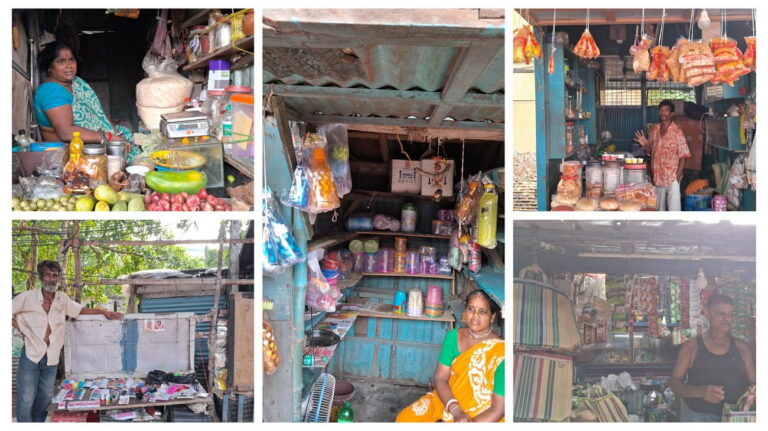
“We have run this shop for more than twenty-six years,” said Sumit Roy, who sells mobile accessories. “No previous government removed us. We wanted change because we were tired of corruption. Instead, we received eviction notices.”
He paused before adding quietly, “We voted for this government. Today, we are paying the price.”
His disappointment is shared by many vendors who openly acknowledge supporting the BJP during the Assembly election, hoping for better governance and employment opportunities.
Instead, many now fear becoming unemployed themselves.
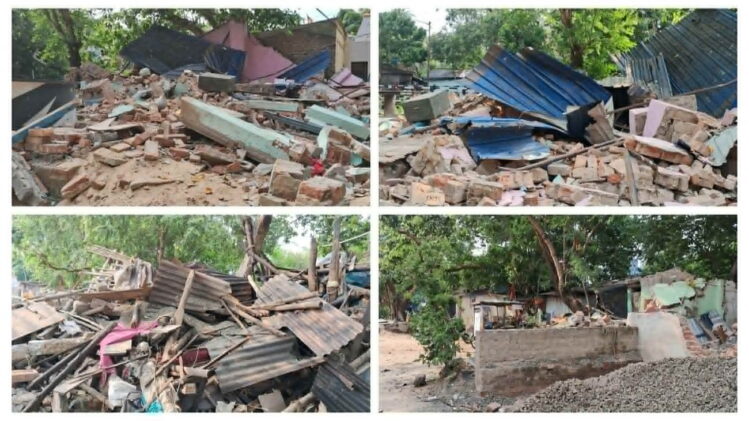
The sites of the demolition of houses around Jadavpur Railway Station. They were partially bulldozed on June 7, 2026
‘Where Will We Go at This Age?’
Inside a modest tea stall that has survived countless elections but now faces demolition, Ratan Das struggles to imagine life beyond the railway station.
For thirty-six years, he has sold tea, toast and simple meals to daily commuters.
Every cup of tea, every biscuit sold, has helped support an entire family.
Today, he sees no future.
“Four or five people depend on every shop,” he said. “At this age, who will employ me? Either I will have to beg at the station or end my life.”
His voice reflected not anger but exhaustion.
Like many others, he says he understands the government’s desire to improve public spaces. What he cannot understand is why rehabilitation appears to remain uncertain.
“The government talks about removing us,” he said. “Nobody talks about where we are supposed to go.”
That fear has forced many vendors to change the way they do business, even before demolition squads arrive.
Mamoni Sinha, who has been selling household goods for nearly twenty-five years, now keeps only a fraction of her usual stock.
Plastic buckets, water bottles, mugs and kitchen containers that once filled her shop have disappeared.
“I am afraid,” she admitted. “If officials come suddenly, everything will be destroyed.”
Her husband works as a private security guard. Together, their earnings barely sustain the family.
“We voted believing this government would help ordinary people and end corruption,” she said. “But if they take away our livelihood without giving us another place to work, how will we survive?”
The uncertainty extends well beyond Kolkata.
In Konnagar, where more than 350 shops are threatened with eviction, sixty-two-year-old grocery seller Dulal Saha has spent forty-two years building his business.
He says vendors are not refusing to relocate.
“What we are asking for is rehabilitation,” he explained. “If all the shops are shifted together to another suitable place, we are ready. But removing us without any alternative will destroy hundreds of families.”
Local representatives have reportedly assured vendors that rehabilitation will be considered, but many traders say they are still waiting for written guarantees.
Until then, every passing police vehicle, every fresh notice pasted on a wall and every rumour of another overnight operation brings renewed anxiety.
For thousands of informal workers across West Bengal, life has become a daily wait for the next demolition drive.
‘They Talk About Eviction, Not Employment’
While vendors describe sleepless nights and shrinking incomes, the West Bengal government has defended its anti-encroachment campaign as an essential step towards restoring public spaces and improving civic infrastructure.
Since taking office, Chief Minister Suvendu Adhikari has repeatedly maintained that roads, footpaths and railway premises cannot remain occupied indefinitely. The administration argues that illegal encroachments inconvenience millions of commuters every day, obstruct emergency services and undermine large-scale infrastructure projects, including the redevelopment of railway stations under the Amrit Bharat Station Scheme.
Officials have also pointed to provisions of the Railways Act, 1989, under which unauthorised vending on railway property is prohibited.
At a press conference on June 12, Adhikari sought to reassure affected vendors by promising compensation and rehabilitation measures, while reiterating that encroachments on public land would not be allowed to continue.
On the ground, however, those assurances have done little to calm anxieties.
Many vendors say they have heard promises before but have yet to receive written rehabilitation plans, designated vending spaces or timelines for relocation.
“If the government gives us a proper place to work, we will gladly shift,” said Mamoni Sinha. “The local MLA assured us that rehabilitation would be arranged, but nobody has told us where or when. Until then, we live in fear every single day.”
Her uncertainty is echoed by vendors across railway markets in Kolkata and neighbouring districts.
Unlike organised businesses, most hawkers operate on razor-thin margins. A day’s closure often means a day’s income lost. An unexpected demolition can wipe out years of savings within minutes.
Some have already begun downsizing voluntarily, reducing inventory to minimise losses if officials arrive without warning.
Others are preparing for something far more painful—the possibility of abandoning the only profession they have ever known.
“I have worked here for twenty years,” said Sushama Halder, who sells homemade snacks near Jadavpur Railway Station.
“I have no choice except to accept whatever the government decides. But they only speak about removing us. Nobody speaks about creating jobs.”
She recalled that there had been no consultation before notices were served.
“There was no discussion with us,” she said. “No written agreement. They simply handed over the notice.”
For thousands of workers in the informal economy, the question is no longer whether eviction will come—but what life will look like after it.
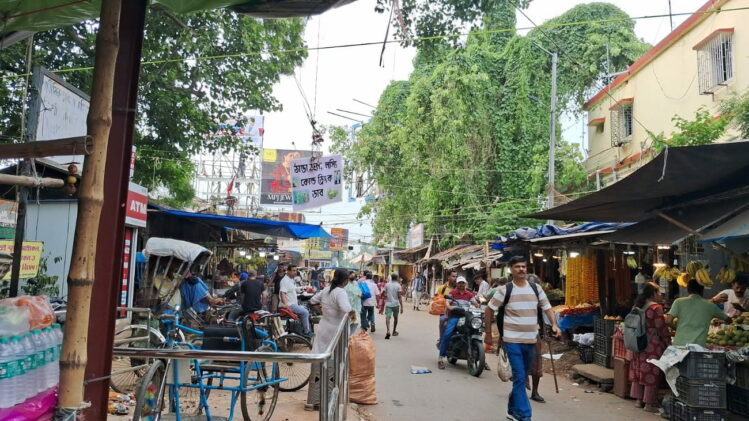
Konnagar market | Credit: Antara Swarnakar
When the Constitution Meets the Bulldozer
The battle unfolding across West Bengal is not merely administrative or political. It also raises complex constitutional questions that have shaped public debates for decades.
Successive governments have invoked laws governing public land and railway property to justify eviction drives. Equally, courts have repeatedly recognised that the Constitution protects not only the right to movement but also the right to livelihood and human dignity.
These two principles now find themselves in direct conflict.
Social activist Rupam Chatterjee of the Association for Protection of Democratic Rights (APDR) believes the issue cannot be reduced to a simple question of legality.
“The Street Vendors Act, 2014, applies primarily to public streets and does not extend to railway land,” he acknowledged. “But authorities also need to remember the history of these spaces. Much of this land originally belonged to ordinary people before being acquired for railway projects. Before removing families who have survived here for decades, the government must ask whether rehabilitation is its responsibility.”
He also questioned the lack of clarity surrounding official assurances.
“Local representatives have spoken about rehabilitation,” he said. “But vendors have not been shown any formal document. At the moment, everything depends on verbal promises.”
That uncertainty has become one of the biggest sources of fear.
Legal experts point out that while unauthorised occupation cannot automatically become a permanent right, governments also have constitutional obligations towards citizens whose livelihoods depend on such spaces.
Article 19(1)(g) guarantees citizens the freedom to practise any profession or carry on any trade or business, subject to reasonable restrictions.
Article 21, interpreted expansively by the Supreme Court over several decades, recognises that the right to life includes the right to live with dignity—and, by extension, the right to earn a livelihood.
Perhaps the most significant judicial precedent remains the Supreme Court’s landmark judgment in Olga Tellis vs Bombay Municipal Corporation (1985), where the Court observed that depriving pavement dwellers of their livelihood without providing alternatives could amount to depriving them of their right to life.
That judgment has since become a reference point in debates over urban evictions across India.
Yet translating constitutional principles into administrative policy remains an enduring challenge.
Across West Bengal, demolition drives continue even as several cases remain under judicial consideration.
The Calcutta High Court has, in several matters relating to railway land, granted interim protection to affected vendors while encouraging authorities to evolve a fair rehabilitation mechanism wherever applicable.
Still, demolition operations have continued in several locations, including Park Circus, where hundreds of structures were cleared after prior notices were issued.
For vendors, every new operation reinforces a troubling perception—that legal protections often arrive too slowly to prevent livelihoods from being destroyed.
As excavators move from one railway station to another, the debate grows sharper.
Can a city reclaim its pavements without first creating space for those who have depended on them for decades?
Can urban order be achieved without deepening economic insecurity?
Those questions extend far beyond West Bengal. They go to the heart of how Indian cities balance development, legality and social justice.
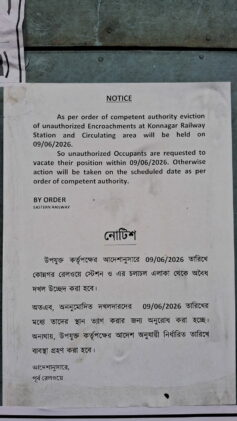
Notices put up by Eastern Railway Authorities at market adjacent to Konnagar Station.
History Repeats Itself, Only the Governments Change
For veterans of Kolkata’s hawkers’ movement, the current eviction drive evokes memories that stretch back decades.
Governments have changed. Political slogans have changed. But the conflict between reclaiming public spaces and protecting livelihoods has remained remarkably constant.
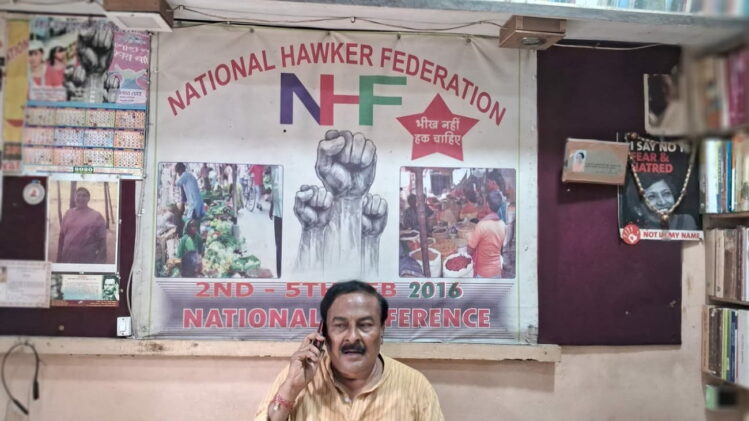
Shaktiman Ghosh, Secretary of the National Hawkers Federation, has spent nearly six decades organising street vendors across the country. To him, today’s crisis is another chapter in a long struggle that successive governments have failed to resolve.
“No hawker should be evicted without proper rehabilitation,” he said. “That has been our position for decades.”
He recalled that the demand for a national policy on street vendors gathered momentum in the early 2000s, eventually leading to the enactment of the Street Vendors (Protection of Livelihood and Regulation of Street Vending) Act, 2014. The law was intended to regulate vending while safeguarding the livelihoods of millions working in India’s informal economy.
“But railway land remains outside the Act,” Ghosh pointed out. “That has created one of the biggest legal grey areas.”
According to him, the present confrontation is not simply about the illegal occupation of land. It reflects a decades-long failure of governments—both at the Centre and in the states—to create planned vending zones, implement rehabilitation policies and recognise the contribution of hawkers to urban life.
“The government speaks about making railway stations world-class,” he said. “We are not opposed to development. But development cannot mean pushing poor people into destitution.”
Ghosh also rejected the perception that the present government alone should bear responsibility.
“Evictions have happened under every regime,” he said. “The faces in power change, but the policy often remains the same.”
His words find support in West Bengal’s own history.
In 1996, the Left Front government launched the controversial Operation Sunshine, one of the largest anti-encroachment drives in Kolkata’s history. Thousands of hawkers were removed from major commercial roads in an operation that triggered widespread protests, strikes and years of political controversy.
Subsequent governments, including the Trinamool Congress administration, also carried out eviction drives in areas such as New Town, Salt Lake and Sector V, arguing that public spaces had to be reclaimed for planned urban development.
The current BJP government has inherited a debate that no political party has been able to settle.
Every administration has promised a balance between development and livelihood.
Every administration has struggled to achieve it.
Shaktiman Ghosh: Secretary of National Hawkers Federation | Credit: Antara Swarankar
An Economy That Runs on Informal Workers
Behind every demolished stall lies an economic reality that rarely appears in official statistics.
The tea seller who serves office-goers before sunrise.
The woman selling vegetables outside a railway station.
The migrant worker is running a small snack stall.
The elderly vendor repairing umbrellas during the monsoon.
Together, they form one of the largest informal economies in the country.
West Bengal is estimated to have more than 1.6 million street vendors, while Kolkata alone is home to nearly three lakh hawkers. They sell affordable food, clothes, vegetables, household goods and countless everyday essentials that millions of people rely upon.
For economist Anamitra Roychowdhury, the consequences of large-scale evictions extend far beyond individual shopkeepers.
“Hawkers occupy the final stage of the supply chain,” he explained. “When their livelihoods are disrupted, the effects ripple through wholesalers, transporters, suppliers and consumers.”
He cautioned that informal vending already represents one of the most precarious forms of employment.
“Most people do not become hawkers because they dream of it,” he said. “They become hawkers because the economy has failed to generate enough secure and dignified jobs.”
That vulnerability becomes especially acute for vendors dealing in perishable goods.
Unlike shopkeepers operating from permanent establishments, many street vendors invest their limited savings each morning, hoping to recover their costs before nightfall.
A single demolition drive can destroy not only their place of business but also the day’s inventory, leaving families with debts they may never recover.
Roychowdhury also highlighted another overlooked reality.
Many vendors working in Kolkata are migrants from districts where agriculture no longer provides sufficient income. Others have travelled from neighbouring states in search of opportunities unavailable in their villages.
For them, relocation is rarely simple.
Moving to another vending site means rebuilding an entire customer base from scratch.
Finding another occupation, particularly for elderly workers, is often impossible.
“The question,” Roychowdhury observed, “is not merely whether hawkers can move elsewhere. It is whether meaningful alternatives actually exist.”
A Question That Will Outlast This Government
As dusk settles over Jadavpur Railway Station, commuters continue to rush past platforms where fragments of broken tin sheets, splintered wooden counters and scattered belongings still bear witness to the night’s demolition.
Some vendors have returned, sitting quietly beside whatever remains of their businesses.
Others are still waiting.
Waiting for rehabilitation.
Waiting for compensation.
Waiting for clarity.
Among them is 65-year-old Dulal Dutta, who has spent decades selling conch-shell products near the station.
Like many others, he openly admits that he had campaigned for political change, believing a new government would improve the lives of ordinary people.
Instead, he now fears losing the only livelihood he has ever known.
“We are poor people,” he said softly. “We earn just enough to survive. If our shops disappear, our stomachs disappear with them.”
His words capture the dilemma confronting West Bengal today.
Few would dispute that pavements, roads and railway stations should remain accessible to the public.
Equally difficult to ignore is the reality that millions of Indians survive because those very spaces became their workplaces when the formal economy failed to provide opportunities.
The conflict, therefore, is no longer simply about hawkers versus commuters.
Nor is it merely about legality versus illegality.
It is about two constitutional promises colliding in the same public space—the citizen’s right to walk freely and the citizen’s right to earn an honest living.
Until governments find a way to protect both, bulldozers may continue clearing roads, but they will also continue raising questions that no demolition can erase.
For the families watching their shops disappear overnight, the debate is no longer about urban planning or politics.
It is about tomorrow’s meal.
And for a state that has witnessed similar battles under governments of every political colour, one question refuses to fade:
Can development truly be called inclusive if it creates cleaner streets but emptier homes?
Folklore is much more than a collection of entertaining stories. It is a repository of a community’s collective memory, preserving its beliefs, customs, moral values, and lived experiences across generations. In India, where oral storytelling has flourished for centuries, folklore occupies a significant place in the cultural imagination. Bihar, with its rich linguistic diversity and vibrant oral traditions, possesses a remarkable heritage of folk narratives that continue to shape its social and cultural identity.
Traditionally, these stories have been transmitted orally in languages such as Bhojpuri, Maithili, Magahi and Angika. Narrated by grandparents, village elders, wandering bards and community storytellers, they have survived not through written records but through memory and performance. They encompass legends, fables, myths, ghost stories, songs, and humorous anecdotes that reflect the everyday lives, aspirations, anxieties, and ethical values of ordinary people. As rapid urbanisation and changing lifestyles threaten these traditions, documenting them has become an important cultural responsibility.
Among contemporary English writers from Bihar, Nalin Verma has made a significant contribution to preserving this oral heritage. Known primarily as a journalist and commentator on Bihar’s politics and society, Verma has also emerged as an important interpreter of the state’s folk traditions. His writings demonstrate that folklore is not merely an anthropological curiosity or children’s literature but an important literary form that preserves cultural memory.
Apart from Verma’s work, this thesis has also reviewed that of Afroz Ashrafi’s Boot Polish and Vestibule, which have substantially contributed to the study and preservation of the narrative traditions of Bihar. Yet others whose works feature in detail in other chapters include Rajkamal Jha’s The Blue Bedspread, Upamanyu Chatterjee’s English August and Tabish Khair’s The Things About The Thugs and How to Fight Islamist Terror from the Missionary Position.
But unlike many academic folklorists who approach oral traditions through theoretical frameworks, Verma’s engagement with folklore is rooted in personal experience. Growing up in Bihar, he inherited a storytelling culture in which tales of kings, saints, witches, spirits, talking animals and mythical beings formed an integral part of everyday life. These stories, narrated during family gatherings and village evenings, nurtured his imagination long before he entered journalism.
Journalism and Folklore
His professional career as a journalist further strengthened his approach to folklore. Journalism trained him to observe carefully, document faithfully and appreciate the complexity of social life. These qualities are reflected in his folklore writing, where careful documentation is combined with literary sensitivity. Rather than romanticising rural life, Verma presents folk narratives as living expressions of community experience, shaped by history, belief, labour, humour and social relationships.
His anthology The Greatest Folk Tales of Bihar represents one of the most substantial English-language collections devoted to the state’s oral traditions. Bringing together thirty-seven stories collected from different regions of Bihar, the anthology introduces readers to a rich narrative world inhabited by kings and queens, saints and ascetics, clever villagers, courageous women, talking animals, ghosts, fairies and supernatural beings. Although deeply rooted in local culture, these narratives explore universal themes such as justice, compassion, courage, greed, wisdom and hope.
One of the strengths of the collection is its ability to preserve the spirit of oral storytelling while presenting it in accessible English prose. Translating folklore from an oral tradition into written form is never a mechanical exercise. Oral narratives depend upon voice, rhythm, gesture and audience participation, all of which are difficult to reproduce on the printed page. Verma negotiates this challenge with sensitivity, retaining the simplicity, warmth and narrative cadence of the original tales while making them accessible to readers unfamiliar with Bihar’s cultural landscape.
His role, therefore, is both curatorial and creative. While he seeks to preserve inherited stories, he also shapes them through editorial decisions involving language, narrative structure and cultural explanation. Such mediation is inevitable whenever oral traditions are translated into written literature. Rather than diminishing their authenticity, it enables these narratives to travel beyond their original linguistic communities and find new readers without losing their cultural identity.
The stories themselves reveal the remarkable diversity of Bihar’s folk imagination. Many celebrate the intelligence of ordinary people rather than the power of rulers. Tricksters repeatedly outwit the arrogant, while poor villagers overcome adversity through courage, wisdom and perseverance. Humour becomes a subtle instrument of social criticism, exposing vanity, hypocrisy and injustice without direct confrontation. In many stories, women emerge as figures of remarkable resilience and intelligence, challenging conventional assumptions about gender roles within traditional society.
Such narratives perform several functions simultaneously. They entertain, educate and preserve collective memory. They record village customs, seasonal festivals, religious beliefs and everyday struggles while also expressing moral values that have guided communities for generations. Even stories populated by magical beings or supernatural events remain firmly connected to human concerns, reflecting the hopes, fears and ethical dilemmas of ordinary life.
Folklore’s Dynamism
Verma’s work demonstrates that folklore should not be regarded simply as a relic of the past. Instead, it remains a dynamic cultural resource capable of speaking meaningfully to contemporary society. Oral traditions survive because each generation adapts them to changing circumstances without abandoning their essential values. By presenting these stories in English, Verma enables younger readers and wider audiences to engage with a literary heritage that might otherwise gradually disappear.
His later work, Lores of Love & Saint Gorakhnath, extends this engagement with India’s narrative traditions by exploring the philosophical dimensions of folklore through the Gorakhnath tradition. The Gorakhnathi worldview, with its emphasis on introspection, spiritual equality and the rejection of rigid social hierarchies, provides a broader framework for understanding the ethical foundations of many folk narratives. Through this perspective, folklore emerges not merely as entertainment but as a vehicle of reflection, social critique and moral inquiry.
An equally important aspect of Verma’s contribution is his accessibility as a writer. His language remains clear and engaging without sacrificing intellectual seriousness. This enables his books to reach both general readers and scholars interested in Indian folklore, regional literature and cultural history. His work successfully bridges the worlds of journalism, folklore and literary writing, making Bihar’s oral traditions available to readers beyond their original linguistic and geographical boundaries.
The significance of such efforts becomes even greater in the contemporary world. Globalisation, migration and digital media have transformed traditional storytelling practices. As village gatherings become less frequent and oral transmission declines, many narratives face the risk of disappearing altogether. Documenting these stories is therefore not an act of nostalgia but one of cultural preservation. Every recorded tale safeguards a fragment of collective memory that might otherwise be lost.
Verma’s work also challenges the tendency to place regional oral traditions at the margins of Indian literary studies. Much scholarly attention has historically been devoted to classical texts and metropolitan literary cultures, while local storytelling traditions have often remained underrepresented. By translating Bihar’s folklore into English, he expands the scope of contemporary Indian literature and demonstrates that regional narratives deserve the same critical attention as more established literary forms.
Ultimately, Nalin Verma’s contribution lies not simply in collecting folk tales but in interpreting them for a wider readership. His writings reveal that oral traditions preserve far more than stories: they preserve a society’s ethical imagination, historical memory and cultural identity. Through sensitive documentation and thoughtful retelling, he has ensured that Bihar’s rich narrative heritage continues to speak to contemporary readers.
Nalin Verma’s work reminds us that folklore is a living tradition, constantly renewed through storytelling and reinterpretation. By bringing Bihar’s oral narratives into English, he has created an important bridge between regional culture and global readership. His contribution deserves recognition not only as an act of literary preservation but also as a significant intervention in contemporary Indian writing in English.
Adapted and abridged from my doctoral thesis, Emergence of English Writers in Bihar with Reference to Novels and Short Stories-Chapter V.
Watching Dhurandhar: The Revenge, one quickly realises that the film has little interest in uncertainty. It does not ask difficult questions about terrorism, justice or national security. It offers certainty. Heroes are unquestionably virtuous. Enemies are instantly recognisable. Ambiguity disappears beneath spectacle.
That is precisely what makes the film politically significant.
Its politics do not lie in explicit speeches or ideological declarations. They lie in the associations it patiently constructs. Muslim identity repeatedly appears alongside terrorism, Pakistan, drugs, blasphemy and anti-national conspiracies until these otherwise distinct ideas begin to feel inseparable. Individual characters matter less than the symbolic burden they are asked to carry. Identity itself becomes evidence.
Turning National Security into a Story of Suspicion
This is propaganda in its classical sense. As Harold Lasswell described, propaganda works by managing public attitudes through symbols. Dhurandhar: The Revenge rarely persuades through argument; it persuades through repetition. When the same associations appear often enough, suspicion begins to feel like common sense.
The emotional architecture of the film rests on revenge. Its recurring line, “Ghayal ho isiliye ghatak ho”, captures the moral universe it constructs. Injury becomes justification. Vengeance becomes virtue. Restraint is treated not as strength but as weakness.
Everything in the film reinforces this emotional logic. The dialogue is deliberately abrasive. Opponents are mocked rather than engaged. Violence is choreographed with soaring music, slow-motion imagery and triumphant framing that invites celebration rather than reflection. The consequences of violence matter less than its emotional satisfaction.
The portrayal of Muslims is especially revealing. A Muslim medical student is quickly drawn into the orbit of terrorism. Allegations of blasphemy function less as legal claims requiring evidence than as dramatic devices that deepen suspicion. Religious identity repeatedly overwhelms every other identity. Doctors, students and professionals cease to be individuals. They become representatives of a community that is expected to prove its loyalty before it can claim equal citizenship.
This extends beyond individual characters. Terrorism, organised crime, cross-border conflict, narcotics and extremist networks are folded into a single story about national insecurity. Complexity disappears beneath a familiar binary of patriots and traitors. Questions of due process, constitutional rights and institutional accountability barely survive within that framework.
Ole Wæver and Barry Buzan describe this process as securitisation, whereby groups are discursively constructed as security threats rather than as equal citizens. Once that shift occurs, extraordinary suspicion begins to appear reasonable. Citizenship is measured less by constitutional equality than by visible demonstrations of loyalty.
Cinema gives this process enormous emotional force. Patriotic music, heroic framing, carefully timed editing and stylised action do not merely entertain. They direct feeling. Viewers are encouraged to experience outrage, pride and vengeance long before they have an opportunity to reflect on the political assumptions beneath those emotions.
Institutions receive similarly selective treatment. Intelligence agencies appear either remarkably efficient or curiously powerless, depending on what the story requires. Investigations quickly give way to retaliation. Justice is imagined not as a process grounded in evidence but as immediate retribution. Constitutional safeguards become obstacles rather than democratic principles.
No single film creates prejudice. Public attitudes are shaped gradually through repetition across culture, politics and media. Yet films matter because they participate in that larger process. When similar narratives recur across popular cinema, they normalise particular ways of imagining the nation. Some communities become permanent objects of suspicion while others become the unquestioned custodians of patriotism.
Their influence does not end in cinemas. Patriotic speeches, revenge sequences and emotionally charged confrontations circulate widely across social media, detached from the larger narrative and repackaged as political messages. In an algorithm-driven public sphere, emotionally satisfying clips often travel much further than nuanced discussion.
The Cinematic Threat to the Democratic Imagination
There is nothing objectionable about making films on terrorism or national security. Some of India’s finest political cinema has explored precisely these themes. What distinguished those films was their willingness to embrace ambiguity. They recognised that democracies are untidy, institutions are imperfect, and citizenship cannot be reduced to a test of ideological loyalty.
Dhurandhar: The Revenge chooses certainty over complexity. That is its central weakness. The problem is not that it is political. Cinema has always been political. The problem is that it mistakes spectacle for truth and revenge for justice. By collapsing constitutional values into emotional retribution and reducing citizenship to suspicion, it narrows the democratic imagination instead of expanding it.
The stories a nation repeatedly tells about its minorities eventually become the stories it tells about itself. That is why films like Dhurandhar: The Revenge deserve serious scrutiny. Not because they take a political position, but because they shape the political language through which audiences come to understand fear, belonging and the nation itself.
India’s informal economy has long served as the country’s largest employment generator and economic shock absorber. According to the International Labour Organisation (ILO), nearly 90 percent of India’s workforce is employed in the informal economy, while the informal sector contributes around 45–50 percent of the country’s Gross Domestic Product (GDP) through agriculture, manufacturing, trade, transport, construction, and services. At the same time, India’s Micro, Small and Medium Enterprises (MSME) sector comprises more than 6.3 crore enterprises, contributing nearly 30 percent of GDP, roughly 45 percent of manufacturing output, and approximately 45 percent of exports. This makes it one of the principal engines of employment and economic growth.
Over the past decade, governments at both the central and state levels have rightly intensified efforts to improve urban planning, fire safety, environmental compliance, and municipal governance. These objectives are essential for sustainable development and public safety. However, the aggressive manner of enforcement has generated an important policy debate: How can India ensure regulatory compliance without undermining the livelihoods of millions who depend on the informal economy?
India’s informal sector constitutes a substantial portion of economic activity and employs a vast number of people, particularly among low- and middle-income households. Small manufacturing units, workshops, roadside vendors, hawkers, family-run enterprises, and micro-businesses form the backbone of local economies in both urban and rural areas.
The Cost of Compliance Without Rehabilitation
In recent years, enforcement drives against unauthorised establishments, the demolition of small business units, and the removal of street vendors in various cities have raised serious concerns about their social and economic consequences. While compliance with municipal, environmental, and safety regulations is undoubtedly important, abrupt closures or demolitions leave thousands of families without a stable source of income.
These concerns are not merely theoretical. Across various states, demolition drives affecting informal workshops, the eviction of street vendors, the closure of small industrial units for environmental or municipal violations, and the removal of roadside businesses have repeatedly highlighted the tension between regulatory enforcement and livelihood protection. While authorities pursue legitimate public goals—like fire safety, pollution control, urban planning, and removing illegal encroachments—the lack of adequate rehabilitation, relocation, or transition support leaves thousands of workers and small entrepreneurs facing prolonged economic uncertainty.
The consequences of large-scale disruption in the informal sector extend far beyond individual households. Reduced household incomes directly lower consumer spending, which triggers a domino effect through local markets, retailers, and service providers. Crucially, this decline in purchasing power hurts the formal sector as well; large-scale industries depend heavily on mass consumption from these very populations for fast-moving consumer goods (FMCG), textiles, and basic electronics. A dip in informal earnings ultimately weakens overall economic growth, reduces indirect tax revenues, and increases social vulnerabilities.
Furthermore, prolonged unemployment and economic insecurity adversely affect access to education, healthcare, and social mobility. Families struggling to meet basic needs may be forced to withdraw children from schools, seek unsafe informal labour opportunities, or become dependent on public assistance. Such conditions inevitably contribute to higher levels of social distress and systemic inequality.
India’s economic strength has traditionally rested on the coexistence of large corporations and millions of small entrepreneurs. Sustainable development requires policies that balance regulatory compliance with social protection. Instead of simply removing non-compliant businesses, governments must prioritise rehabilitation measures, relocation plans, regularisation mechanisms, affordable compliance assistance, and dedicated vending zones for hawkers and small traders.
Economic reforms are most effective when they combine enforcement with inclusion. Ensuring adherence to safety and environmental standards is necessary, but safeguarding livelihoods is equally important. A policy framework that provides affected workers and entrepreneurs with viable alternatives helps maintain economic stability while promoting orderly development.
Policymakers, businesses, and communities must work together to ensure that economic growth remains inclusive and that efforts to improve urban governance do not push vulnerable populations into deeper poverty. Development should not merely be measured by infrastructure and compliance statistics, but by the extent to which it preserves dignity, opportunity, and livelihoods for ordinary citizens.
Constitutional Principles and the Need for Inclusive Regulation
The Indian constitutional framework explicitly recognises the importance of balancing public interest with individual livelihood. While the State possesses the authority to regulate trade, land use, environmental protection, and public safety, such regulation must respect constitutional guarantees.
Article 19(1)(g) of the Constitution of India guarantees citizens the fundamental right to practice any profession or carry on any occupation, trade, or business, subject to reasonable restrictions in the interest of the general public. Likewise, Article 21, which guarantees the right to life and personal liberty, has been interpreted by the Supreme Court of India in several landmark judgments to include the right to livelihood as an integral component of the right to life. These constitutional principles dictate that while governments are fully empowered to enforce legitimate regulations, such enforcement should always be accompanied by fair procedures, reasonable opportunities for compliance, and measures that minimise avoidable hardship.
The same philosophy is reflected in the Street Vendors (Protection of Livelihood and Regulation of Street Vending) Act, 2014. This legislation seeks to regulate street vending while simultaneously protecting the livelihood rights of millions of vendors through designated vending zones and participatory governance.
Concrete Suggestions for Policymakers
To achieve orderly development without depriving millions of citizens of their means of livelihood, policymakers should consider the following constructive measures:
Prioritise Guidance Over Punitive Action: Before demolishing or shutting down any micro-enterprise, workshop, or vending activity, governments should ensure adequate notice, mandatory consultation, and an opportunity for compliance. Small businesses often lack the financial and technical capacity to immediately meet complex requirements relating to fire safety, pollution control, or building norms. Instead of relying solely on punitive action, authorities should provide technical guidance, affordable compliance mechanisms, and realistic timelines.
Mandate “Relocation Before Eviction”: Wherever displacement becomes unavoidable, governments should establish alternative industrial clusters, vending zones, and commercial spaces before undertaking eviction or demolition drives. The objective should always be relocation and rehabilitation rather than the outright elimination of economic activity.
Leverage Existing Welfare Schemes: Existing developmental programmes should be mobilised more effectively. Frameworks under the National Urban Livelihoods Mission (NULM), the Ministry of MSME, and various credit-linked support initiatives can be expanded to help small entrepreneurs financially modernise their establishments to meet modern safety and environmental regulations.
Enforce the Street Vendors Act Extensively: The spirit of the Street Vendors Act, 2014, must be implemented more uniformly across states. Street vendors and hawkers are not urban liabilities; they are essential components of city economies, providing affordable goods and services while generating decentralised employment. Their legally recognised rights should be protected through town vending committees and participatory decision-making processes.
Conduct Socio-Economic Impact Assessments: Governments should mandate independent socio-economic impact assessments before undertaking large-scale demolition, closure, or eviction exercises. These assessments will help estimate the precise number of affected workers, families, and dependents, enabling authorities to formulate tailored, data-driven rehabilitation plans.
Establish a Comprehensive “Livelihood Protection Framework”: Under this framework, no economic activity employing a substantial number of people should be discontinued without first identifying alternative opportunities for those affected. Skill development programmes, targeted reskilling initiatives, concessional credit, and employment transition assistance should be systematically integrated into this safety net.
Focus on Gradual Formalisation: The long-term policy goal should be gradual formalisation rather than the abrupt disruption of the informal economy. Simplified licensing procedures, reduced compliance costs, accessible digital support systems, tax incentives, and easier access to formal banking, insurance, and social security will organically encourage small enterprises to become compliant while continuing to sustain employment.
Development Must Protect Both Order and Opportunity
India’s aspiration to become a developed economy cannot rest solely on modern infrastructure, stricter regulations, or cleaner urban landscapes. It must ensure that development remains inclusive, humane, and economically sustainable. A nation of India’s scale cannot afford to choose between regulatory compliance and livelihoods; it must achieve both simultaneously.
The true measure of development lies not in the number of buildings regularised, roads widened, or encroachments removed, but in whether economic progress expands opportunities rather than displacing those who have long sustained the country’s economy. Policies that combine effective regulation with rehabilitation, gradual formalisation, skill development, and social protection will strengthen governance while preserving social stability and public trust.
Ultimately, India’s greatest strength lies in the resilience, entrepreneurship, and hard work of millions of ordinary citizens. Protecting their livelihoods while promoting lawful and orderly development is not a contradiction—it is the very foundation of inclusive growth and the hallmark of a mature democracy.
Headache is among the most common reasons people visit a neurologist. Most of us associate a headache with having the head scanned with modern imaging techniques such as CT and MRI, assuming the scan will set everything straight. To help readers better understand this, I would like to learn from our experts today.
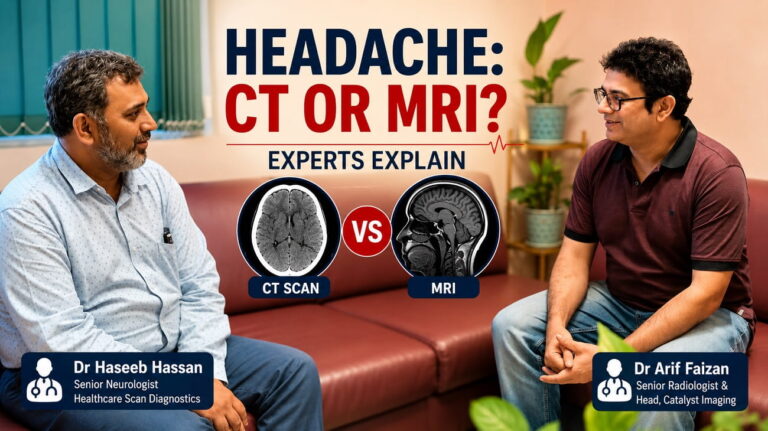
Welcome, Dr Haseeb Hassan, Senior Neurologist at Healthcare Scan Diagnostics, and Dr Arif Faizan, Senior Radiologist and Head of Catalyst Imaging.
eNewsroom: My first question is for Dr Hassan. Headache is extremely common. Can you give our readers an overview?
Dr Haseeb Hassan: Almost everyone experiences a headache at some point in life. Fortunately, nearly 90 to 95 percent of headaches seen in routine clinical practice are primary headache disorders, such as migraines or tension-type headaches. These are not caused by a brain tumour or a stroke. A much smaller proportion are secondary headaches, where the headache is a symptom of another medical condition, such as bleeding in the brain, infection, stroke, raised intracranial pressure, or, rarely, a brain tumour. These headaches are fewer in number, but missing them can have serious consequences. The first task of a neurologist is to distinguish between these two groups through a detailed history and neurological examination.
eNewsroom: What imaging options are available today for evaluating headaches?
Dr Arif Faizan: Depending on the clinical suspicion, referring doctors request different scans and frequently involve us in deciding the best approach. The most appropriate investigation depends entirely on the clinical question raised by the treating physician. There are several common imaging modalities we rely on. A non-contrast CT of the brain is best for emergencies, such as trauma or a suspected brain haemorrhage, while a contrast-enhanced CT is often used for selected infections or tumours. When we need excellent, high-resolution detail of brain tissue, an MRI of the brain is the preferred choice. For vascular concerns, we use CT Angiography to rapidly detect aneurysms or arterial blockages, and MR Angiography to evaluate the arteries supplying the brain. We also utilise MR Venography to assess venous sinuses, especially when cerebral venous thrombosis is suspected.
eNewsroom: Many people feel that unless they have an MRI, they cannot be sure that their headache isn’t due to a brain tumour. How do you approach such patients? Is it not logical to get the MRI done to reassure your patients?
Dr Haseeb Hassan: This is one of the most common situations we encounter in clinical practice. Understandably, patients are anxious, and many believe that every persistent headache could indicate a brain tumour. The fear of a brain tumour is deeply embedded in the public’s mind. Popular movies, television serials, and even social media often portray a persistent headache as the very first sign of a brain tumour. While this makes for dramatic storytelling, it is simply not how headaches present in the overwhelming majority of people. My first responsibility is not to order a scan immediately, but to understand the headache in detail. If a careful history and neurological exam show no red flags, international headache guidelines generally advise against routine MRI because it is unlikely to change the diagnosis or treatment. As neurologists, one of our key roles is to replace fear with facts. The best reassurance comes from an expert clinical assessment rather than imaging performed simply because of anxiety.
Dr Arif Faizan: I completely agree. MRI is an extremely sensitive investigation, but that sensitivity brings its own challenges. We frequently identify incidental findings—small benign cysts, age-related white matter changes, or developmental anatomical variations that have absolutely nothing to do with the patient’s headache. Although these findings are harmless, patients often become worried simply because something abnormal was mentioned in the report, which triggers unnecessary anxiety and repeat imaging. A normal MRI tells us there is no significant structural brain disease, but it does not mean that the patient’s headache isn’t genuine or that a migraine isn’t present.
Dr Haseeb Hassan: Exactly. I have often seen patients become more anxious after an MRI rather than less anxious, especially when they read terms in the report that sound alarming but are actually clinically insignificant. Research has shown that for patients with typical primary headaches, a routine MRI does not consistently provide long-term reassurance. People misunderstand what an MRI actually does. It detects structural abnormalities, but primary headache disorders like migraines arise from complex functional, neurovascular, and neurochemical processes that are simply not visible on a routine scan.
eNewsroom: Dr Hassan, you mentioned at the start regarding some dangerous causes of headache that need urgent attention. When should someone with a headache seek urgent medical attention?
Dr Haseeb Hassan: Anyone experiencing a sudden, severe thunderclap headache should seek immediate medical attention. Similarly, a headache associated with weakness or numbness of the limbs, difficulty speaking, double vision, loss of vision, confusion, altered consciousness, or seizures should never be ignored. Other warning signs include fever with neck stiffness, which may indicate an infection of the brain, persistent or recurrent vomiting, a headache following a significant head injury, or a headache that progressively worsens over days or weeks. These symptoms require prompt medical evaluation and urgent brain imaging to identify the cause and initiate timely treatment.
Dr Arif Faizan: Ironically, we often observe the opposite of what we would ideally expect in these urgent scenarios. Patients with sudden-onset, potentially dangerous headaches sometimes delay the scan because the pain begins to improve. They assume it is just a bad headache. Unfortunately, conditions such as a brain haemorrhage or certain types of strokes can initially present this way, and delaying imaging postpones life-saving treatment. On the other hand, patients with long-standing, recurrent headaches are often keen to undergo repeated MRI scans, hoping to finally reveal a structural cause for their functional suffering.
eNewsroom: What are the common mistakes people make regarding headaches and brain imaging?
Dr Haseeb Hassan: The two biggest mistakes are ignoring dangerous warning signs, which leads to under-investigation, and assuming every single headache requires a brain scan, leading to over-investigation. A headache is a symptom, not a diagnosis. Careful history-taking and neurological examination remain the cornerstone of diagnosis.
Dr Arif Faizan: I often tell people coming for a scan at my centre not to ask which scan is better, but rather to ask which scan is appropriate for their condition. CT and MRI are complementary investigations. Brain imaging is one of the greatest advances in modern medicine, but its strength lies in being used appropriately.
eNewsroom: To conclude, what are the key takeaways for our readers?
Dr Haseeb Hassan: Most headaches are not caused by serious brain disease, and a detailed consultation is often more valuable than an immediate scan. You must avoid both under-investigation and over-investigation. Seek urgent medical attention if your headache is sudden, severe, associated with neurological symptoms, fever, seizures, or follows a significant head injury.
Dr Arif Faizan: Remember that CT and MRI answer entirely different clinical questions, so neither is universally better. The best healthcare is not about performing more tests—it is about performing the right test, at the right time, for the right patient.