Student troll to Muslim teacher: Are you teaching to make bombs?

Kolkata: Just a day after the nation celebrated Teacher’s Day, an educator in Kolkata was repeatedly trolled during his YouTube Live class.

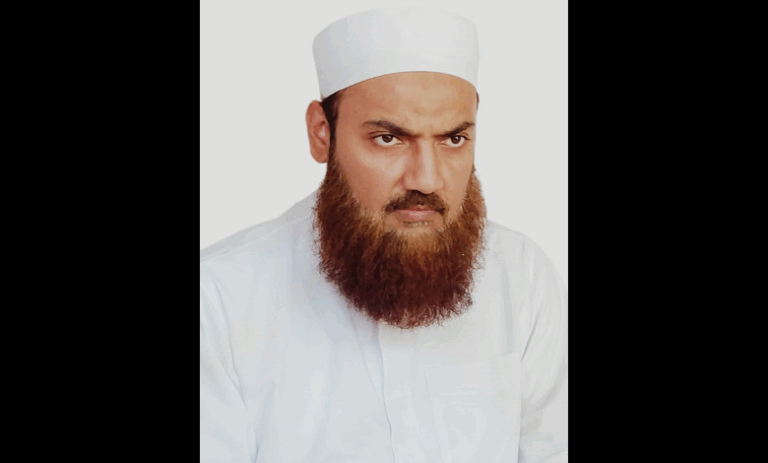
The teacher, Mohammad Shahnawaz of S Nawaz Tutorial, sporting a beard and a skull cap was teaching Cost & Management to his students. When a student started posting comments like: “Are you teaching to make bombs?” “Jai Shree Ram”.

The teacher in the video is seen confronting the student. He tells, “I am not teaching to make bombs but how to do well in exams. Don’t spoil the name of Ram and Hinduism by resorting to such acts.” He is also heard telling the student to follow the true teachings of “Maryada Purushottam Ram” and that he should learn manners, following which he says, “Let’s not waste time and move ahead with the class.”

eNewsroom contacted the teacher, after he shared the video on a social media platform. On being asked if this was the first time that he had faced such trolling during online class, he said, “This was something new for me. But other teachers from my coaching centre have been targeted earlier.”

On being asked why he chose to reply, instead of ignoring and proceeding ahead with his Live session, he said, “On several occasions we have deleted the comments and have chosen to ignore. However, during this live session, I felt that this could no longer be ignored and so tried reasoning it out with the person commenting.”

So, will the rebuttal stop the trolls? “That I am not very sure if this will deter him. The present political scenario is making it easy for people with a certain ideology to target ‘others’. But, I presume such intolerance should not be entertained.”

Shahnawaz, is not the only online tutor, who has been targeted in recent times. Avad Ojha, a UP-based online educator, was also trolled for his political ideology. This too was done during one of his live sessions.

According to a 2022 study conducted by Brussels-based European Center for Populism Studies, “Overall, our analysis has shown that civilizational populist digital authoritarianism in India has recently become more prominent.” The analysis further adds, “In India, hate speech, false news, and misinformation shared on social media have been linked to increased violence and hatred towards non-Hindu religious groups.”

Talking to eNewsroom about this – acts of hate being enacted within school premises or online classes, Social Scientist Shiv Viswanathan said, “Welcome to the age of digital populism, where there is no respect for norms or rules. Academia has lost its control in recent times. Teachers have been devalued and almost anyone can get away with anything.” He then added, “This is a dangerous trend, as there are no referees here. Mobs can be called from anywhere and the police appear to be equally clueless when it comes to tackling such cases.”

So such trends are here to stay or how they could be countered, he said, “Not much can be done till we study electronic communication in-depth. The rules and laws that we have are outdated to counter the havoc that digital communication is unleashing upon us. And we don’t have the imagination to counter it.”

And perhaps he has a point because the head-on confrontation didn’t stop the student from coming back to the Instagram account of Shahnawaz saying – “Magar Bhai tum bol kyu nahi dete (sic)”.

What’s it like to survive as a daughter of a Bhopal disaster victim in Gas Vidhwa colony?

Bhopal: It is easy to spot the painted glass on the window panels from a distance, but not the curtains on flat number L-102 in the unmaintained Motilal Nehru Nagar, better known as Gas-Vidhwa (Gas Widows’) colony in Bhopal. The so-called Gas Widows’ colony, a multistory slum with 2,486 one and two-bedroom apartments, was built by the Madhya Pradesh government in 1992. The Madhya Pradesh government announced a monthly pension of Rs 275 that would take care of the residents in their new homes and pay for medical care and other living expenses.

The vast majority of widows entered the colony in search of safety, protection, and a better life.

Between 1989 and 1993, over 2,000 widows, victims of the Bhopal Gas Tragedy (assumptions of the Supreme Court in the settlement [compensation] order of February 14/15, 1989, stated a number of deaths: 3,000, number of injured victims: 52,000; however, actual figures based on a statement issued by the Office of the Welfare Commissioner regarding disposal of claims as of March 31, 2003, indicated a number of deaths: 15,180, number of injured victims: 5,53,015) were accommodated in the colony. This tiny amount of pension remained the same until 2010 when the central government revised it to Rs 1,000 per month.

Life in the Gas Widows’ colony was always dull and grim as many of the residents were battling diseases ranging from cancer, lung injuries, and the aftermath of cardiac failures to neurological disorders. Many found it very tough to climb stairs due to these diseases. Many others found it very difficult to cope with issues like dry taps, drains getting choked with filth, drinking water supply lines getting mixed with the sewage pipeline, and erratic electricity supply in the colony.

Thirteen years ago, in 2010, Madhya Pradesh Chief Minister Shivraj Singh Chouhan (possibly the only Chief Minister who visited the colony) renamed the settlement Jeevan Jyoti Colony and adopted all the residents as his “Rakhi sisters,” promising to turn Vidhwa Colony into a “model town.”

He renamed the settlement Jeevan Jyoti Colony and sanctioned Rs 15 crore to fix sewage and drainage, build roads, and maintain the apartment buildings. It promised to set up an Anganwadi center, a higher secondary school, and a vocational training center in the colony, a far-fetched dream yet to become a reality.

bhopal gas tragedy disaster victim vidhwa

Reality is a little different in the Gas Widows’ Colony. As expected, half of the widow allottees fled; some within Bhopal while others left for different parts of the State and country. Many flats were rented and sold by the gas victims or their successors who did receive relief, shelter, subsidized ration, educational assistance, medical care, compensation, and widow pension but not enough sustaining assistance to renew hope for them and to take care of children without a father.

Tulsi Yadav, a resident of L-102 (painted glass on the window panels) of the colony, was an exception. Tulsi was her father’s loving daughter; the sparkling ribbon in her two plaits of hair was her identity.

The gas leak from the Union Carbide plant caused the death of her father, damaged the immune system of her mother, and left her with a lingering disability. The administration categorized her parents as victims of the gas leak but not Tulsi. The ill effects of the gas leak made her muscles weak, and gradually, muscular dystrophy took hold of her. For mobility, she decided to use a tricycle. Additionally, she had to cross several steps to reach her tricycle parked on the ground floor.

However, most residents of the colony still believed that Tulsi was a gas victim, drawing a monthly pension, eligible to receive treatment from 24 Health Institutions set up for the gas victims, and receiving medicines free of cost for chronically ill gas victim patients at the doorstep (that is what the government claims).

But that was not the case with her. Tulsi’s greatest sporting feat was climbing down the stairs and changing public transport to reach Swabhiman Kendra (meaning self-respect center, the center founded by Padma Shri awardee, late Abdul Jabbar, convenor of Bhopal Gas Peedit Mahila Udyog Sangathan) near Central Library, Bhopal, to attend major gatherings, protests, and sometimes weekly Saturday afternoon meetings of the gas victims.

My last visit to L-102 was sometime in the summer of April-May 2020 during the extended nationwide COVID-19 lockdown to supply the occupants and others with groceries, other materials, and medicines. It was in June 2022 when I went to meet Tulsi a day after she was admitted to Kamla Nehru Hospital, located on the campus of Gandhi Medical College, Bhopal, overlooking Bada Talab (Upper lake) in Bhopal. It is easier to visit hospitals in the early morning or afternoon when there are fewer people around, and the staff is more likely to be available to talk. She was in a room with four other patients, and the doctors were desperately trying to ascertain what kind of recovery would be good for Tulsi to bring back her mobility (which was always restricted because of hand and finger deformities) and recover her from several ailments.

One of the other problems Tulsi faced was not having an attendant. Her only attendant was her married elder sister.

A few days later, with no sign of recovery, the doctor at the Government Kamla Nehru Hospital advised us (Asha Mishra – civil society activist and ND Jayaprakash – Joint Secretary, Delhi Science Forum & Co-Convener, Bhopal Gas Peedith Sangharsh Sahayog Samiti, who arranged an attendant and many other things for Tulsi) to shift her to Chirayu Medical College, from where she embarked on another journey on July 10, 2022, leaving behind her echoing words, “What was my crime…? They (administrators, public representatives) should know that some gas victims could be like me (coming in the grip of muscular dystrophy).”

Tulsi is not alone; there are many others like her in the colony and in several localities in the State capital who are waiting for the pendulum to swing in their direction. Although the pendulum may now have swung in the other direction, if we zoom into the larger context, we may see the causes for what happened to Tulsi and several others like her are not in the spirit of the founders of our Constitution.

“The Constituent Assembly was clear in its belief that the Constitution’s emphasis must always rest on individual dignity. That is, the Constitution’s chief purpose must be to preserve and guarantee basic human rights, equality, autonomy, and liberty, among others,” says Suhrith Parthasarathy, an advocate practicing at the Madras High Court in his write-up titled “A false conflation between duties and rights,” published in The Hindu on December 16, 2021.

In the case of Tulsi, where our popular discourse veers towards the need to place importance on the burden of obligations and duties over citizens’ rights, the Constitution’s basic ethos once again comes under threat. What her case echoes is that the social revolution that the Constitution was meant to bring about was underpinned by the belief that it is only a guarantee of rights, unimpeded by duty, that could help usher India into a free and equal future for every citizen.

Her eyes remind me of a moving excerpt from English poet and essayist Anna Laetitia Barbauld’s poem, “To The Poor.” It is a window into the common burden of inequality and withdrawal that points to a deep wound in the souls of the gas widows. ‘Child of distress, who encounters bitter scorn, who feels oppression’s iron in your soul, whose bread is anguish, and whose water is tears.’ And the prevailing perception advises against judging gas victims by their added value.


Anup Dutta is a fellow of Vikas Samvad Constitution Fellowship 2022.

BJP Spreads Fake News About Brother-Sister Rahul and Priyanka Gandhi with Insidious Post

1

Every day BJP’s social media campaign hits a new low. The party that should have been giving us the account of its 9 years of work is back on the game which it plays the best. Spread rumours, question people’s choices and abuse the powerful social media to spread fake news. If there is an honest global campaign against fake news then India’s ruling party will not have to hide as it is the founder and champion of fake news in India.

Yesterday, they posted an extremely disturbing Twitter post on Rahul Gandhi and Priyanka Gandhi saying that they are not like other brothers and sisters. The video has some of the photographs of the brothers and sisters which the BJP social media cell wanted to project as immoral in public life. Now the paid media trolls continue to justify such acts. Rajasthan is on their target because they want to be back in power which is not certain. They are easily comparing Rajasthan or violence against the marginalized with what has happened in Manipur.

Violence Against Dalits

The point is, nobody says that the violence against Dalits never happened in the past or is purely a BJP’s contribution. Political parties have failed to handle the issue and speak against caste hatred but it is also a fact that after BJP assumed power at the centre, these forces of Manusmriti have got emboldened and the violence against Dalits and other communities on the margin has increased. Despite flaws in the administrative mechanism, we had a structure that was by and large respectful to the Constitution (If not in personal life but even the pretensions of public life) but today the state character has become unashamedly anti-constitution.

Look at the BJP leaders anywhere, they refuse to speak on any issue of violence or oppression in their state. Have you ever heard Yogi Adityanath expressing any remorse for anything happening in Uttar Pradesh? While we expect Ashok Gahlot to speak immediately, the media has no spine to stand up and ask questions to Yogi Adityanath as to why violence against Dalits is increasing in Uttar Pradesh and yet cases never reach the final stage.

BJP’s problem is the absolute arrogance of its leaders who refuse to speak to common karyakartas and want to be seen as demigods, mahanayaks. The party thinks that as long as they have power and money, they can manage every karyakartas and so far they have succeeded.

Trolling of Rahul Gandhi

Recently, Rahul Gandhi shared a video of cooking mutton at Lalu Yadav’s place. It is a wonderful video and people like it. Actually, Rahul Gandhi’s videos are creating records of all shorts. They are short and crisp without any preaching. They give people an insidious picture of the life of a politician who many think is the future prime minister of India. Whether he is Prime Minister or not does not matter. What is important is that Rahul Gandhi continues to raise issues of public interest despite all negative campaigning against him.

Now, the BJP social media trolls started questioning his faith and why he should eat mutton during Shravan month. Can he be a Shiva devotee or not? All the nonsensical posts are reflective of how BJP and RSS distorted our cultural value system. Even states like Uttarakhand, which they want to make us believe, is the capital of Hindutva, have more meat-eating people than other states. Whether it is vegetarian or not, the food is a personal choice and you cannot decide what we should eat.

The votaries of vegetarianism are the biggest propagators of violence against those who don’t follow their path. It is not surprising the same group opposes the school children getting eggs during the mid-day meal. The problem with this vegetarian agenda wallahs is that most of them hail from Central India which rarely had a contribution to our socio-cultural field. Rajasthan, Gujarat and Madhya Pradesh are socially most oppressive states in India where violence against Dalits remains highest and the power of Dalit resistance is least. The reason is the economic dependence of Dalit-Adivasis on the Brahmin-Bania elite. These are the regions where the Baba culture has ensured the dominance of the Manuwadis. It is here they have made deep inroads among communities spreading superstitions and irrationality in the name of cultures and traditions.

Uttar Pradesh and Bihar are the targets of these groups. With big money and media, they are spreading their irrationality everywhere and targeting the people from the margin. Things are difficult here yet the failure of the Ambedkarites and the others to reach to their women and extend their outreach beyond their castes has only given these hatemongers a complete space in Uttar Pradesh. They are now moving towards Bihar.

Frankly speaking, the biggest achievement of the current regime is a normalisation of hatred against minorities and Dalits, the growth of the casteist Brahmanical priestly forces and the promotion of the business interest of the cronies across the country. Mahatma Jyotiba Phule actually explained this as Sethji Bhatji jodi exploiting us culturally as well as economically.

One Nation One Election

BJP wants to deliberately raise the cultural issues to polarise the people. The One Nation One Election campaign is nothing but a possible agenda to delay the elections too. The Parliament has been told that no questions can be asked or raised during this. I am not sure what will happen but hope it does not impact us like the demonetisation. The thing is that India should not try to follow the American model. It is not possible at the moment because that many laws need to be amended and there has to be a fixed term for all the elected bodies. Is it possible? If yes then remove the governors as the agents of the Centre who interfere in the day-to-day affairs of the state. Abolish Article 356 and the right to dismiss a government. So, one nation one poll is only possible when the constitution ensures that no government can be dismissed or the party can be broken. How will this happen?

Does the Modi government want to change to the Presidential form like what is happening in the United States? That would be extremely dangerous for the polity of the country. The American model is a failed and a sham model of democracy. There is nothing in that. It will ensure that the two biggest parties of the country run by big business interests as is happening in the US. The options remain limited. Modi would not even like to have another national party. He would like one party, meaning one khichadi (khana), one dukan (Adani) system for India. Can a country like India which has so much diversity accept this brahmin-bania oneness?

सबकी नज़र डुमरी पर, पर जनता की नज़र किस पर

गिरिडीह: 5 सितम्बर को जब देश शिक्षक दिवस (Teacher’s Day) मना रहा होगा तो, भारत के सात राज्यों में विधानसभा उपचुनाव के लिए मतदाता वोट डाल रहे होंगे। इनमें झारखंड का डुमरी उपचुनाव काफी दिलचस्प है।

डुमरी से जिस नेता जगन्नाथ महतो की मौत के बाद उपचुनाव का मतदान शिक्षक दिवस पर होना है, यह एक संयोग है कि उनकी मौत शिक्षा मंत्री रहते हुई थी।

झारखंड मुक्ति मोर्चा, जो इंडिया (INDIA) अलाएन्स का हिस्सा हैं, से जगरनाथ महतो की पत्नी बेबी देवी जो की अब झारखंड सरकार में मंत्री हैं वो उम्मीदवार हैं। जगरनाथ महतो, डुमरी से लगातार चार बार चुनाव जीते थे। जेएमएम (JMM) में उनके कद का अंदाजा इससे लग सकता है कि वो दो बार पार्टी के लोकसभा उम्मीदवार भी बने। 2019 में जब महागठबंधन सत्ता में आई तो जगरनाथ महतो शिक्षा मंत्री बने। टाइगर के नाम से अपने छेत्र में मशहूर, ज्यादा पढ़े तो नहीं थे, पर मंत्री बनने के बाद भी दुबारा पढ़ाई शुरू की। नई जिम्मेवारी के प्रति भी संवेदनशील दिखे। कोरोना काल में भी एक्टिव रहे और कोरोना ही उनके मौत का कारण भी बना।

वहीं दामोदर महतो की पत्नी यशोदा देवी आजसु, जो एनडीए (NDA) गठबंधन में शामिल हैं, के तरफ से चुनाव में है। दामोदर महतो की भी पहचान एक संघर्षशील नेता के तौर पे डुमरी में रही थी। यशोदा देवी 2019 में भी चुनाव लड़ी थी। पर उस वक़्त भाजपा के भी प्रत्याशी उनके खिलाफ थे, जो अब साथ दे रहे हैं।

झारखंड के तमाम नेताओं का फिलहाल पता- डुमरी

इंडिया अलाएन्स, एनडीए और एआईएमआईएम अपनी पूरी ताक़त लगा रहे इस चुनाव में। कोई रोड शो कर रहा तो कोई बड़ी जनसभा, कुछ डोर टू डोर के जरिये मतदाता तक पहुँच रहें।

अब तक कई बार मुख्यमंत्री हेमंत सोरेन का दौरा हो चुका। रविवार को मुख्यमंत्री ने रोड शो भी किया। सीपीआईएमएल (CPIML) विधायक विनोद सिंह ने शनिवार को बाइक रैली निकाली थी। झारखंड सरकार के कई मंत्री, जेएमएम-कांग्रेस (Congress) और सीपीआईएमएल विधायक का प्रवास भी रहा है।

आजसु (AJSU) अध्यक्ष सुदेश महतो और एमपी चन्द्र प्रकाश चौधरी डेरा डाले हैं, भाजपा (BJP) प्रदेश अध्यक्ष बाबूलाल मरांडी का कई बार आना-जाना हो चुका। आजसु पिछले रामगढ़ उपचुनाव के जीत से उत्साहित भी है।

असदुद्दीन ओवैसी भी पहुंचे, एआईएमआईएम को पिछला मत पाने की चुनौती

पर सब तो राज्य से जुड़े नेता हैं, तो क्या कोई राष्ट्रिय  नेता नहीं पहुँचा डुमरी? जी वैसे नेता भी आ चुके हैं। एआईएमआईएम अध्यक्ष असदुद्दीन ओवैसी भी आ कर भाषण दे चुके हैं। उनके पार्टी के उम्मीदवार मुबिन अंसारी को 24000 वोट पिछली बार मिला था। बड़ा सवाल ये है कि इंडिया अलाएन्स की गोलबंदी में फिर उनकी पार्टी अपना परफॉर्मेंस रिपीट कर पाएगी? असदुद्दीन ओवैसी के जवाब में इंडिया अलाएन्स के मंत्री आलमगीर आलम और हफीजुल हसन, विधायक सरफराज अहमद, इरफान अंसारी सहित कई माइनॉरिटि के नेता इलाके में दौरा लगातार कर रहे।

अब देखना यह होगा के, शिक्षक दिवस पर शिक्षा मंत्री रहे जगरनाथ महतो को ‘श्रद्धांजलि’ देगी जनता और उनकी पत्नी को चुनेगी या, आजसु रामगढ़ के परिणाम दुहराएगी। और इस बीच मुबिन अंसारी पिछली बार से बेहतर कर पाते हैं या नहीं।

What now for the Bhopal gas tragedy victims that policymakers failed to see?

Bhopal: December 3, 1984, 9:00 am. Nagar Nigam (Bhopal Municipal Corporation), Central Store, Sadar Manzil, Bhopal, Madhya Pradesh.

Shankar Rao was on emergency duty in the central room store of Bhopal Municipal Corporation located in Sadar Manzil. Storekeeper workers are the lowest in the municipality hierarchy. Rao was the one who was alone at that moment after several of his colleagues complained fatigueless and not capable of resuming duty following a gas leak from the Union Carbide plant in Bhopal last night that killed several people and animals.

Rao (with swollen eyes and coughing due to exposure to the gas leak) had to attend the emergency duty and hence had a lot of work to do in the absence of colleagues. Instead, he was expected to deliver more and more to overcome the crisis perhaps following orders from their seniors. It is natural under such circumstances to depend on the available staff in such moments.

There are conflicting words for how many hours and days Rao had to work. However, according to his son, Dinakar Rao, his father spent more than 70 hours working in the store room. His mother, complaining of breathlessness, and burning eyes, had to attend the office, work at home and feed the three siblings who too became a gas victim. In a shocking atmosphere, no one thought about them, other than many workers and their family members.

The stressful hours they endured took a toll on their health, and the couple was unaware of the extent of the damage. Something that should not be expected in a country whose Constitution finds a sacred place for Labour. Under the Constitution of India, Labour is a subject in the Concurrent List where both the Central and State Governments are competent to enact legislation subject to certain matters being reserved for the Centre. This has happened despite provisions in Article 23 (1) of the Constitution which says, that traffic in human beings and beggars and other similar forms of forced labour are prohibited and any contravention of this provision shall be an offence punishable by law.

Like many others, the Maharashtrian couple had worked hard to secure a future that guaranteed work, income, and mobility for their children. For them, children becoming educated is a matter of great pride. All this rudely interrupted. The two became weak, and sick and were caught in the web of several illnesses. There was immediate horror and indignation all around the three brothers and a sister till they (parents) left for another journey to another world in 1986 (father) and in 1998 (mother).

Parents of Furqaan died almost the same way many others died in Bhopal, several parts of India, and outside India, including Swedish photographer Claes-Göran Bjernér.

“Claes-Göran Bjernér died on June 17 this year. The lungs were damaged during the trip to Bhopal, India, and eventually gave up. It cost to document the gas leak in Union Carbide & factory in 1984 that took over ten thousand lives,” says Sweden’s leading magazine on global issues Omvarlden, edition dated October 26, 2015.

According to Ingrid Eckerman, Swedish retired public health doctor (MD) and writer of The Bhopal Saga: Cause and Consequences of the World’s largest industrial disaster writes, “On Swedish TV, I find an interview with Claes-Göran Bjernér, a Swedish photographer. A team from Swedish TV arrived in Bhopal on the first-morning flight on December 3, 1984. The gas was still there, birds were falling to the ground. They went to the most affected area, in the valley, where the gas was most concentrated. Families were lying dead in their beds. It was completely silent, except for the cough. People were walking slowly, choked and blinded. The doctor in the film could not save a single child. Those who were sent back as little affected came back a week later, drowning. The photographer himself got seriously affected (emphysema, chronic obstructive lung disease) and now has 20 % lung function. – Interesting is that the figures used in the TV program are not the official, but the ones from The Bhopal Saga: 8,000 dead and 100,000-200,000 dead.”

There is currently no comprehensive database of these deaths and injuries. Shouldn’t there be a state, central, and unified database of Bhopal gas tragedy victims?

Some relief came when the elder brother and sister replaced their parents on compensatory grounds and began working in the same offices. Dinakar Rao (now Mohammad Furqaan) started devoting much of his time to work among the gas victims. Some of it is understandable because of the loss of parents and the fallout of gas victims feeling insecure.

But there was a lot at stake for him. Dinakar and several other gas victim children, women and others (the majority of the gas victims are from poor economic sections) painstakingly devoted days, months, years and years to bring the sufferings of gas victims before the eyes of a global audience.

In between a bevy of activists made their way to the national and a few before the global audience. Here, they pressed the blame on UCC, demanded harsh measures against the culprits and asked for dollars, and pounds to support life and care for the survivors of the Bhopal Disaster. Very much all to a script. However, their (victims’) efforts and work got ignored for unknown reasons once bodies were formed.

“It is a problem not only on the local stage but at every level in the world,” said Furqaan adding that we need more people like Jabbar Bhai (Padma Shri awardee, late Abdul Jabbar was the convenor of Bhopal Gas Peedit Mahila Udyog Sangathan and Jayprakash Jee (Bhopal Gas Peedit Sangharsh Sahyog Samiti) in this victim v/s government v/s court v/s administration v/s political parties v/s hospital v/s healthcare workers battle.

Furqaan, his brothers, a sister and many others like them deserved better. Both from the outside world and from the activists working among the Bhopal Disaster survivors. This will require drawing on social-economical welfare expertise and also support from people living among the survivors of the Bhopal Gas Tragedy. Most importantly, there should be a prompt move to evaluate whether such survivors of the Bhopal Disaster can sustain themselves and to ensure that there is no substantial disruption to their (already) precarious, painful lives. In hindsight, ignoring the pain of the victims of the world’s worst-ever industrial disaster could be one of policymakers’ biggest mistakes.


Anup Dutta is a fellow of Vikas Samvad Constitution Fellowship 2022. 

Rakhis were not originally for real brothers

0

Many may be surprised to learn that Rakhi or Raksha Bandhan was not originally meant for real brothers and sisters. Rakhis were reserved throughout history for non-related or strategic brothers and sisters.

The oldest story about Rakhi is that of Indra mentioned in the Bhavishya Purana, where after repeated humiliation at the hands of demons, the gods led by Indra were advised by Sage Brihaspati to tell Sachi to tie a divine protective thread around Indra’s wrist on an auspicious date and time This ensured his protection and final victory on Shravan Purnima day, which explains the date.

The Bhagavata Purana and Vishnu Purana further inform us that Vishnu was also victorious over Maha-Bali but it compelled Vishnu to leave his own home and occupy Bali’s palace. Lakshmi was so upset that she went to Bali and made him her brother by firmly tying a Rakhi. Then, she got her new brother to revoke his condition and get her husband back home.

We do not see any real sister in action and even in the Mahabharata, Draupadi tore her sari’s ‘pallu’ to bandage a wounded Krishna, as her adopted brother. Kunti, however, tied a Rakhi around her own grandson, Abhimanyu, before the deadly war began.

In medieval India, we hear that Rani Karnavati the widowed ruler of Chittor pleaded with her Rakhi-brother Humayun to save her kingdom against the invasion by the Sultan of Gujarat. She lost, as Humayun could not send troops in time and though 1535 is mentioned as the exact year, the whole story is doubted by historians.

But Rakhi was quite a legitimate instrument for invoking unpredictable political partnerships, much before “fronts” and “alliances” came on the scene.

This full moon of Shravan has also traditionally been celebrated in western India as Nariyeli Purnima, when coconuts are gifted to the waters to please Varun. In north India, it is however, called Kajri Purnima when farmers sow wheat and barley, after seeking the blessings of mother earth.

The hills have their own version and we find that Kumaonis celebrate it as Jano-Punya and the word janeu stands for the sacred thread. Fairs are held in different parts and the one at Devidhura Bagwal is the most important. The Nepalese also call it Janeu Purnima and tie sacred threads on their relations. while in Jammu, Raksha Bandhan is the day for flying kites, like Bengal has on Biswakarma Puja, about a fortnight later.

Southern Brahmans change their holy thread, upavita, on this day and and Raksha Bandhan is also celebrated as Vish Tarak, the destroyer of venom.

As many know, Rabindranath Tagore distributed Rakhis among Muslims and Hindus in 1905, as his unique poetic protest against Banga-Bhanga, the Partition of Bengal. He thus took it to new heights through his Rakhi Mahotsav as a festival of universal brotherhood.
The point is: when did real, not adopted, brothers enter Raksha Bandhan? One cannot be too sure and there is every likelihood that the custom of real sisters praying for their brothers during this dangerous part of the rainy season (full of snakes) entered the Raksha festival later on. Sisters soon replaced the wives, widows and master strategists of the earlier stories.

After urbanisation had scattered blood relations to distant places, so newer methods had to be devised to get them together — with food and gifts. Custom follows need and human society comes up with solutions.

Nowadays, when meeting is also difficult, sisters have found some solace in sending Rakhis by courier to brothers — just as my sister Sarojoini sends from Mumbai and my cousin Debolina invariably sends from Surat. God bless sisters.

India Lands on the Moon Even as Indian Classroom Turns into Horror Chamber

The successful soft-landing of Chandrayaan3 undoubtedly marks a historic achievement for ISRO. This is the first time a lunar mission has landed in the Moon’s south pole which is expected to open up further prospects of study and exploration of the lunar reality. A major milestone of India’s scientific prowess like this also has the potential to inspire India’s overall forward march in the realm of science and technology in general and space exploration in particular. It is also heartening to note that this success has been achieved at a modest cost of 600 crore rupees which, going by the latest CAG report on India’s road construction, is less than the expenditure that has been incurred for every three kilometres of Dwarka Expressway. Members of the Chandrayaan3 mission and the entire staff of ISRO and other organisations that have contributed to the success of this mission definitely deserve our hearty congratulations.

The Modi government is busy claiming credit for the success of Chandrayaan3, but a closer look will tell us that the mission has actually succeeded in spite of the government’s neglect. To take one example, employees and engineers of Heavy Engineering Corporation, Ranchi, who prepared the mobile launching pad for Chandrayaan3 and delivered it before the scheduled time limit, have not been getting their salaries for eighteen months. The HEC has been the mother plant which has also contributed immensely to the construction of India’s public sector steel plants. Today it has been pushed into a state of sickness with the Modi government denying it the necessary infusion of working capital and even the salaries of the staff. Yet when the mission succeeded, Narendra Modi was all over the TV screen hogging the limelight and delivering a speech when millions of Indians were glued to their mobile phones and computer and TV screens to witness the historic moment of India’s Moon landing.

In its desperate attempt to milk the lunar mission for political propaganda and electoral dividends, the Modi government is treating it not just as a publicity platform for the Prime Minister, but also creating a strange admixture of religious superstition and modern science. Instead of using the lunar mission as an inspiration for the promotion of scientific temper, every attempt is being made to link it up with religious superstition. PM Modi lost no time in naming the landing point of the Vikram lander (named after Vikram Sarabhai, the founding spirit behind India’s space research) Shiv Shakti point, to give it a clear Hindu religious overtone. While Modi stopped at invoking Lord Shiva, a Hindu Mahasabha leader has taken the cue to demand that the Moon be declared a Hindu Rashtra with the Shiv Shakti point as its capital! If this sounds too extreme, take a look at the patronising projection of the women scientists associated with the lunar mission that highlights their religious beliefs and presents them as ‘ideal Indian women’ to whom science is firmly linked, nay rooted in religion.

The breakthrough made by ISRO is the result of decades of research and perseverance. Not all missions have resulted in success, but scientists have taken their lessons from failures. The failed Chandrayaan2 mission paved the way for the success of Chandrayaan3. Most of the members of ISRO’s scientific community are products of the system of public-funded education and research that modern India started building in the first few decades after independence. Like the public sector, the system of public-funded education is also being systematically neglected and weakened today with the increasing push for privatisation of education and research. And almost across the spectrum, the spirit of enquiry, academic freedom and campus democracy is being stifled to promote the culture of superstition, sycophancy, fear and silence in institutions of higher education and research. No wonder that scientific temper is being sacrificed at the altar of bigotry and hate, and the alarming result is staring us in the face.

The Muzaffarnagar video of a classroom where the principal of a primary school is instructing pupils to beat up a seven-year-old Muslim fellow pupil for apparently not doing his Mathematics homework, while the principal verbally abuses Muslims in general, can only remind us of how Jewish children used to be humiliated and persecuted in the classrooms of Hitler’s Nazi Germany. From trains to streets to television studios and digital platforms to classrooms and campuses, hate is threatening to overtake the whole of India after seventy-five years of independence. Muzaffarnagar was the epicentre of the 2013 riots orchestrated by the Sangh brigade in the name of combating ‘love jihad’. The farmers’ movement succeeded in overcoming that hate and divide and forging renewed ties of unity and solidarity. Today once again, that unity is being challenged by the forces of hate and violence in western UP and Haryana and the farmers’ movement and all peace and justice-loving forces will have to put up a determined resistance to foil this conspiracy.

BJP leaders have openly sided with Tripta Tyagi, the offending principal of the school that became a theatre of hate and torture. The school has now been closed down and students are reportedly being absorbed in other nearby schools. The family of the traumatised and tortured student is however under pressure from the dominant social and political forces, and unfortunately also some dubious farmer leaders, to avoid litigation and arrive at a compromise. Reconciliation in such matters can only be achieved on the basis of, and certainly not at the cost of, truth and justice. While the dispensers of hate and perpetrators of violence are being protected, once again fact-checker Mohammad Zubair is being targeted for drawing public attention to this horrific incident.

We should understand that the children who were encouraged to participate in this violence or watch it are also victims of this fascist horror along with the traumatised and tortured child who found himself subjected to it. The hate campaign conducted daily by fascist propagandists, whether operating under political or religious banners or as television anchors or opinion builders or influencers on various social media platforms, has now reached classrooms in primary schools to vitiate the impressionable minds of India’s children. Ignoring this alarming sign can only invite much bigger perils in the days to come.

Wing Commander (Retd) to train youth for Indian Air Force permanent jobs

1

Kolkata: Wing Commander (Retd) Shamim Akhtar, who has taken voluntarily retirement (VRS) from his job 14 years ahead to motivate youth for armed forces jobs, will start coaching the candidates who want to apply for Indian Air Force ‘s Airman in Medical Assistance Trade openings.

The 15-day crash course will begin on Monday, August 28. However, they will enroll students even if they want to join a few days after the beginning of the course.

Significantly, the vacancy by Indian Air Force does not come under Agnipath or Agniveer Scheme by armed forces.

What is Agnipath Scheme?

Agnipath is a new scheme under which the government recruits young personnel (Agniveers) to the Indian Army, Air Force and Navy for a period of four years, with a provision of permanent employment for some. The centre on June 14, 2022 announced the new scheme replacing the legacy system of recruitment in these services with an aim to lower the age profile and ensure a fitter, technically skilled military, reports Hindustan Times.

The selected youth will get a chance to serve IAF for a period of a minimum 20 years. Or he can work till his retirement.

Listen to Wing Commander (Retd) Akhtar.

Deep Tech and its Rise In India

0

The next big surge in the world of innovations will be powered by Deep Tech – A set of technologies pushing the frontiers of Science and Technology, solving some very complex problems of society and unlocking new markets. This includes Artificial Intelligence, Quantum Technologies, Synthetic biology, Cyber-physical Systems, and Blockchain among others. India which has seen a wave of start-ups emerge will have its second wave on the foundations of these technologies. Whether it’s the field of defence and the modernisation agenda being driven there, the pressing problem of climate change and the technological solutions that will give us the hope of minimising its effects or the digital transformation we are seeing in almost every organisation in every sector, deep tech will fuel it.

Technology allows humanity to address its most complex problems and often unleash its greatest potential. Today, technologies from many domains are converging, dramatically enhancing the transformation potential in almost every sector of human activity. This diverse work, focusing on complex technological innovation or significant scientific discovery, is the world of deep tech. The pervasiveness of technological convergence, the rise of cloud computing, lowered cost of computing are all driving the wave of deep tech that we are witnessing and about to see its surge.

Excellence and innovation will fuel the Indian economy in the next 25 years. Every day, a diverse range of companies spur growth producing high-quality products that are sought after by consumers around the world. Leaders in innovation from India are emerging.

While each company followed a unique path, they will all have one thing in common: access to India’s world-class R&D and new wave of manufacturing. These competitive advantages will long fuel Indian innovation and will only grow stronger. Today, the Indian start-up ecosystem has leapfrogged to the third largest ecosystem in the world.

The world has noticed. Global businesses and investors are flocking to India over the past few years and seeking to turn those competitive advantages in their favour. Bolstered by the country’s political stability and market access, factor inputs being in place and complementary assets being connected, along with the benefits of India’s highly skilled workforce along with the reverse brain drain that is happening and innovation prowess- a deep tech hotspot in India is emerging.

According to the Foreign Direct Investment (FDI) Survey, India’s advantages across business-friendly policies, strong talent and high productivity—especially in technology and advanced manufacturing— will continue to drive inbound FDI flows over the next three to five years. Policy and regulation often stifle innovation. Yet with the right adjustments, they become catalysts. India’s future-focused approach to business collaboration fosters an environment where the public and private sectors can champion innovation together. Invest India the national investment facilitation and promotion agency has recently launched the Emerging Tech and R&D investment unit focussed on driving Emerging Tech investments in India along with ensuring India turns into an R&D hub in the years ahead. A wide range of initiatives and incentives make it easier than ever for foreign companies to make India’s advantages their own. The government has recently put for discussion the national deep tech policy which is a work in progress and implementation mechanisms need to be deliberated upon and clarified; however a step in the right direction.

Invest India has been driving innovation agenda in the country, helping agencies and its partners engage deep tech effectively, mitigate risks associated with it, helping push the Atma Nirbhar agenda at the forefront along ensuring the capturing of the value of the Indian Innovation and Technology base. Talent availability is always a function of the environment which the latter, which Invest India is helping build and acting as a catalyst for building synergy among the stakeholder groups. Challenges of Funding, convening the right set for creating infrastructure, developing frameworks for standardisation, advocating the right set of regulations in the domain of emerging and deep tech along ensuring co-creating, co-investing opportunities amongst friendly countries remain the pivot of this new endeavour. Supporting Tech diplomacy, interlacing existing mechanisms and strengthening pipelines of adoption remain crucial and this unit intends to do that.

In turn, India is fast becoming the leading destination for the world’s innovators, entrepreneurs and business leaders to unlock new opportunities for enduring value creation.

Outrageous: Tripta Tyagi is the product of ‘Zahar Ki Pathshala’ of various outfits of saffron propaganda militia

The video of a Muslim student being beaten up, slapped and humiliated in front of the entire class in a school in Uttar Pradesh, has only shown how much the hate propaganda against Muslims in India has reached inside our hearts and minds. That a teacher in the primary school is sadistically enjoying when the poor boy is being humiliated in front of the entire class reflects the power of the poison that has been injected in our minds for years and has become the hallmark of the Noida channels. Remember, the teacher is not beating the boy herself but ordering each student in the class to beat him up. She encouraged and said that all Muslim children should be dealt with like this.

The criminal and thuggish teacher identified as Tripta Tyagi is actually the head of the Neha Public School of a village in Muzaffarnagar district in Uttar Pradesh. This clearly reflects how much poison has been spread in our hearts across the nooks and corners of the country and it should not merely make us feel ashamed of ourselves but worry us. Should we allow such things to happen or do they need a strong socio-political and cultural response? Often BJP and the Sangh Parivar promote their agenda on a ‘non-political basis’ using common prejudices and cultural practices as if they are the sole guardians of the society.

The most atrocious part of these hate crimes is that they are being recorded and spread across the internet by the perpetrators of the crime. In most such cases when there is a huge outrage, the state apparatus acts like it acted in the Manipur case, to punish the person who posted the video on social media. The person who brought it to the notice of the nation becomes a criminal while the criminals who commit such heinous crimes are carefully pushed in the background for some time till someday some outfit of the Hindutva makes the person their leader. Tripta Tyagi actually does not deserve to be a teacher but for certain she is the product of the ‘jahar kee pathshala’ of various outfits of the saffron propaganda militia.

We all celebrated India on the moon yesterday. The G-20 summit is scheduled to happen in the second week of September. The prime minister Narendra MODI has already got an ‘international award’ for his ‘contribution’ but the crisis in India is much bigger than even the BJP can think of now. The poison of hatred has spread across. The Sangh Parivar outfits, and Noida Propaganda channels all have worked hard during the past 10 years. Remember, it is not merely the act of committing the hate crime but justifying it through the vilifying of those who speak up against such hatred. The vilification of the opponents is justified through whataboutery in the prime time. Criminals get normalised on TV. Media will wait for a couple of days till they find some Muslim criminal to have committed a heinous crime to deflate the story. The continuous vilification of Muslims in our media is the biggest achievement of the present dispensation.

India’s ruling party and its Ministers rarely speak on the issue. The officers will wait for the orders of the highest authority and the media will begin to cover up the incident. The Darbaris and loudspeakers on prime time will not allow ‘Hindus’ to be ‘targeted’ for some ‘isolated’ incident and blame the opponents for conspiring to ‘defame’ India when the country has landed on the Moon and G-20 is happening. The ruling party’s response to this will be on conspiracy theory while their ground staff will continue to feed the hatred against Muslims as well as the Bahujan Samaj of India.

Good thing is that the people are speaking. Many political leaders have spoken including Rahul and Priyanka Gandhi. It was essential for them to speak against hatred. I am still waiting for Uttar Pradesh and Bihar Netas to speak up on the issue and call for a full-fledged battle against hatred. More than anything else, India does not merely need a ‘Mohabbat Ki Dukan’ but complete demolition of the hate factories built up so powerfully with the help of the power elite. Hate crime flourishes on the strength of distortion of history and fake news. So, the biggest priority of our political parties today in INDIA should be to unite against the culture of violence, prejudices and hate crimes. Do not legitimise news channels that spread fake news and justify hate crimes. Speak up against hatred as otherwise, it will engulf you. You can’t build a stronger and united India on the edifice of falsehood and hatred.

Remembering Gurudev Rabindranath Tagore’s powerful lines here
‘Where the mind is without fear and the head is held high,
Where knowledge is free
Where the world has not been broken up into fragments by narrow domestic walls;
Where words come out from the depths of truth;
Where tireless striving stretches its arms towards perfection;
Where the clear stream of reason has not lost its way into the dreary desert sand of dead habit;
Where the mind is led forward by thee into ever-widening thought and action,
into that heaven of freedom, my father,
Let my country awake
Let my countrymen awake against this culture of hatred which will ultimately affect us as a society and as a citizen of India.

We must stand united and firm against the culture of hatred and bigotry.