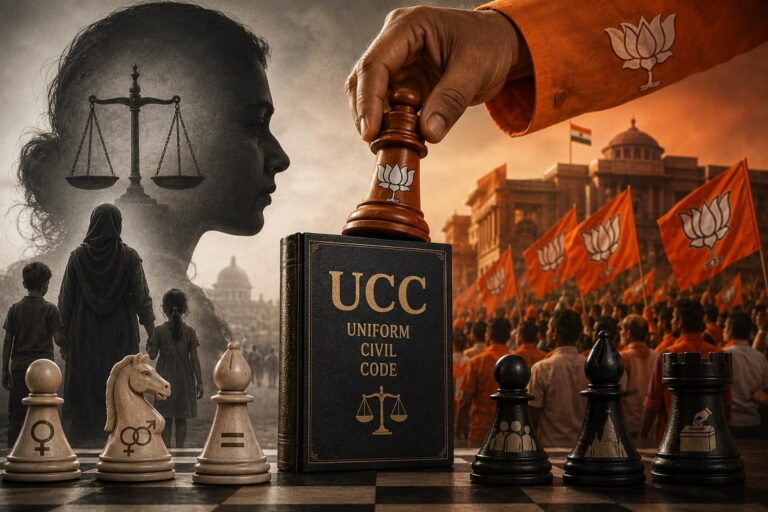
Madhya Pradesh recently became the fourth BJP-ruled state to pass a Uniform Civil Code (UCC) bill, with Chief Minister Mohan Yadav raising the slogan “Jo Hindu hit ki baat karega (those who talk of Hindus’ rights)”, prompting party legislators to complete “Wahi desh par raj karega (only they will rule the nation)”.
Yadav was probably the first CM to talk about the rights of the majority community while discussing UCC, while another BJP legislator, Rameshwar Sharma, branded those opposing UCC as “anti-Hindus.’’ Chants of “Jai Jai Shriram’’ were heard during the assembly proceedings as Opposition members raised slogans seeking implementation of 27 per cent reservation for OBCs.
The legislation seeks to create a common civil law governing marriage, divorce, inheritance and live-in relationships. It exempts Scheduled Tribes covered under Articles 342 and 366 (25) of the Constitution. Banning polygamy, the legislation criminalises practices like triple talaq and nikah halala.
Yadav asserted that the government will completely ban polygamy in the state. “Some people treat women as toys. “Our government will open the path to hell (jahannum) for those who make women suffer,’’ he said, adding women will get an equal share in ancestral property. “When everybody was created as equal, why should there be different laws made by men? He said the state will remove discrepancies in different laws. Quoting a survey, he said more than 90 per cent of the population had said that different laws create complications.
Opposition Questions Timing as BJP Sharpens Political Pitch
Accused of Muslim appeasement, the Congress had a tough time articulating its response to the provisions of the bill while the BJP took charge, its legislators employing dog-whistle tactics. The Congress asked why the bill was being brought in when there were more pressing concerns and demanded that it be sent to a select committee.
Alleging a political agenda aimed at creating discord among people, Congress MLA Arif Masood said when tribals were being exempted, even Muslims rights should be protected. Ruling party legislators said the bill will protect women’s rights and insisted that many Muslim women have supported it.
Known for making controversial remarks inside and outside the state assembly, Sharma said, “Ram will marry once and so will Rehman.’’ At one point, to counter the Opposition’s demand for OBC reservation, he said, “We have an OBC chief minister and an OBC prime minister. What do you have in the name of OBC?
BJP legislators quoted Dr Babasaheb Ambedkar as a champion of the UCC, adding that the bill was prepared after wide public consultations.
BJP legislators even briefly appropriated the first Prime Minister Jawaharlal Nehru to support their arguments. Former assembly speaker and now an MLA, Sitasharan Sharma said Nehru firmly believed that no modern democratic nation could thrive while denying its women equal economic and legal rights.
Enacting a nationwide law to implement the UCC is a core agenda of the saffron party. Though the Modi government has actively championed UCC, the idea has not made much progress so far. Apart from Uttarakhand, Gujarat and Assam, other BJP-ruled states are at different stages of enacting the legislation. The party’s other ideological goals, the construction of the Ram Temple at Ayodhya and the abrogation of Article 370, have already been fulfilled.
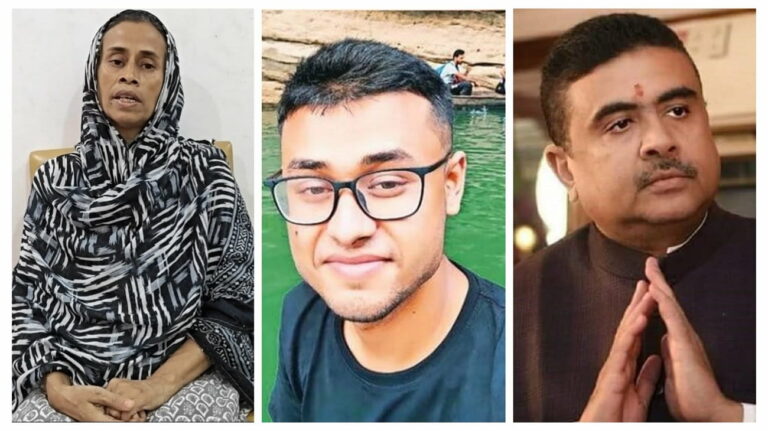
Kolkata: Rehana Ahmed, the mother of murdered Indian Institute of Technology (IIT) Kharagpur student Faizan Ahmed, has finally secured an appointment with West Bengal Chief Minister Suvendu Adhikari. She hopes the meeting will help revive an investigation that has remained stalled for years despite repeated court interventions.
Faizan, the only child of Rehana and Salim Ahmed, was an exceptionally bright student who secured All India Rank (AIR) 11 in the IIT-JEE in 2020. Because of repeated COVID-19 lockdowns, classes remained online for months, and he joined the IIT Kharagpur campus only in December 2021.
Less than nine months later, on October 14, 2022, the partially decomposed body of the 23-year-old student was found in his hostel room. According to the postmortem report, the third year mechanical engineering student is believed to have been killed around October 11.
From the outset, however, IIT Kharagpur authorities and the West Midnapore Police maintained that Faizan had died by suicide. The first autopsy also pointed in that direction. Unconvinced, his parents approached the Calcutta High Court.
The court of Justice Rajasekhar Mantha appointed former forensic expert Dr Ajay Gupta, who, after examining photographs and videos of the body, suspected haemorrhage and urged the court to order a second postmortem in Kolkata.
Faizan’s body, which had already been buried in Assam after being flown home, was exhumed and brought to Kolkata for a fresh autopsy. Based on the findings, the Justice Matha court ruled that Faizan Ahmed’s death was a homicide and constituted a Special Investigation Team (SIT) to investigate the case.
IIT Kharagpur challenged the order before a division bench, but the bench of Chief Justice TS Sivagnanam and Justice Hiranmai Bhattacharyya, upheld the single bench’s decision, allowing the SIT investigation to continue. Subsequently, the forensic expert’s preliminary report also indicated the presence of a gunshot wound on Faizan’s body.
Despite High Court Orders, Investigation Remains Stalled
Yet, more than 18 months after the High Court declared Faizan’s death a homicide and ordered an SIT probe, the investigation has made little progress. The High Court has repeatedly pulled up the SIT for its slow pace.
Between 2023 and 2025, Rehana Ahmed wrote several letters to the West Bengal Minority Commission and repeatedly appealed to then Chief Minister Mamata Banerjee, seeking a meeting and intervention to expedite the investigation.
“I did everything possible to meet Mamata Banerjee, but neither she met us nor did the Bengal Police or the public prosecutor ever appear to support our case,” Rehana said.
On Thursday, as this report goes to publication, Rehana Ahmed is scheduled to meet Chief Minister Suvendu Adhikari. After years of waiting for justice, she hopes the meeting will finally breathe life into an investigation that has long appeared to be at a standstill.
Last week, eNewsroomreported that Rehana Ahmed had travelled to Kolkata in the hope of securing a meeting with the new Chief Minister. The report documented the anguish of a mother who, after years of fighting for justice for her only son, feared that the investigation into Faizan Ahmed’s death had reached a dead end. Her meeting with Chief Minister Suvendu Adhikari on Thursday marks a significant development in the case and follows eNewsroom‘s report on her renewed appeal for justice.
At a time when student protests across India have reignited the demand for accountability and safer campuses, the Chief Minister’s action on Rehana Ahmed’s appeal could prove to be another significant development in the pursuit of justice for Faizan Ahmed.
Kolkata: When television journalists marched through Kolkata on Monday condemning attacks on media persons during last week’s student protest, they presented the incident as yet another assault on press freedom.
But for many students and civil society activists who participated in the July 24 demonstration, the controversy surrounding the alleged attacks cannot be understood without examining another question: Why had a section of the mainstream media itself become the target of public anger?
Interviews with activists and students suggest that the hostility directed at what they repeatedly called “Godi Media” was not born overnight. Instead, they argue, it reflected years of frustration over what they describe as selective journalism that focused more on questioning protesters than questioning those in power.
While every activist interviewed by eNewsroom unequivocally condemned physical violence against journalists, they also insisted that many television reporters arrived at the protest carrying a narrative instead of an open mind.
Their criticism was blunt: the problem was not merely what television reporters showed, but the questions they chose to ask.
‘The Wrong Questions Were Being Asked’
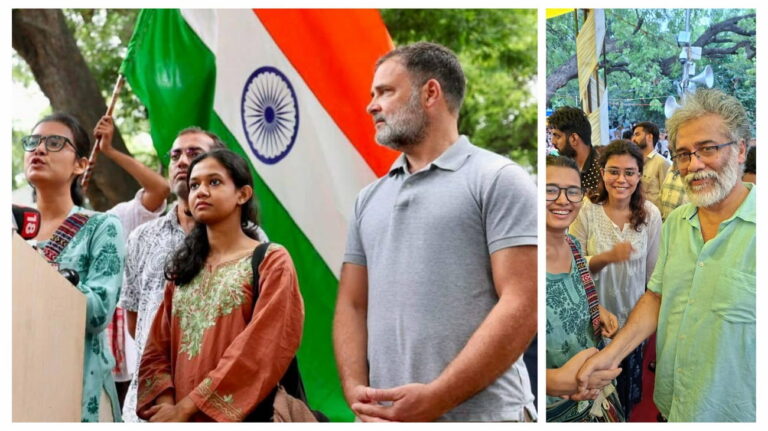
Among the sharpest critics was Rimjhim Sinha, who previously led Kolkata’s widely discussed Reclaim the Night movement.
According to Sinha, the demonstration brought together not only university students but professionals, workers and ordinary citizens protesting the police action against students at Delhi’s Jantar Mantar and demanding accountability over repeated examination controversies involving the National Testing Agency (NTA).
Yet, she argues, much of the television coverage rarely centred those issues.
Instead, Sinha says, sections of the mainstream media focused on slogans, ideological labels and attempts to portray the movement as something more sinister.
According to her, television journalists repeatedly questioned why protesters were shouting slogans such as “Inquilab Zindabad” and drew comparisons with protests in China instead of asking why repeated examination paper leaks had pushed thousands of young people onto the streets.
For Sinha, this represented a deeper failure of journalism.
She argued that students raising legitimate questions over repeated examination failures were increasingly branded as “Pakistani”, “Chinese” or “Bangladeshi” sympathisers instead of having their concerns addressed.
At the same time, she drew a clear line.
“I do not support attacking or physically hurting anyone at all,” she said, while maintaining that journalists should reflect on the nature of the questions they ask during such movements.
Sk Salman after getting bail in Kolkata protest case | Antara Swarnakar
Distrust That Predated Kolkata
The criticism extended beyond the events of a single afternoon.
Sinha believes sections of the mainstream media had already portrayed the Cockroach Janta Party (CJP)-led protests negatively from the beginning, whether in Delhi or in solidarity demonstrations across India.
According to her, this consistent framing created an atmosphere in which many protesters no longer expected fair reporting from large television networks.
In her view, the media conversation shifted away from systemic failures in the examination process and towards questioning the legitimacy of those protesting against them.
“Independent Media Asked Better Questions”
Similar concerns were voiced by Anushka Das, a Film Studies student from Jadavpur University who attended the rally.
She recalled that tens of thousands of people—including students, professors, teachers, elderly citizens and members of the transgender community—had gathered at Dharmatala.
According to Das, the demonstration remained peaceful for much of the day, and volunteers repeatedly appealed to participants not to respond to attempts at provocation.
She also alleged that people associated with the BJP attempted to provoke sections of the crowd but claimed civil society members prevented any escalation.
Her strongest criticism, however, was reserved for television coverage.
Das claimed she hardly saw mainstream television reporters covering the march from its starting point at Sealdah.
Instead, she alleged, many appeared only around Dharmatala alongside police personnel.
By contrast, she praised independent journalists for asking what she described as legitimate questions about the protest itself rather than trying to fit participants into predetermined political narratives.
She also objected to what she described as the rapid branding of protesters as Bangladeshi infiltrators, Pakistanis or outsiders.
Although acknowledging that frustration among demonstrators was real, she rejected claims that protesters had systematically attacked journalists.
Ammar Zaki (center) and Anurag Agrawal (left) | Antara Swarnakar
What Happened at Dharmatala
The July 24 demonstration had begun peacefully.
Thousands assembled at Sealdah railway station before marching towards Dharmatala in solidarity with students protesting police action at Delhi’s Jantar Mantar.
The protesters demanded Union Education Minister Dharmendra Pradhan’s resignation, justice for injured students and the dissolution of the National Testing Agency following repeated examination controversies.
Tensions escalated after demonstrators began a sit-in at Dorina Crossing.
Police resorted to baton charges to disperse the gathering.
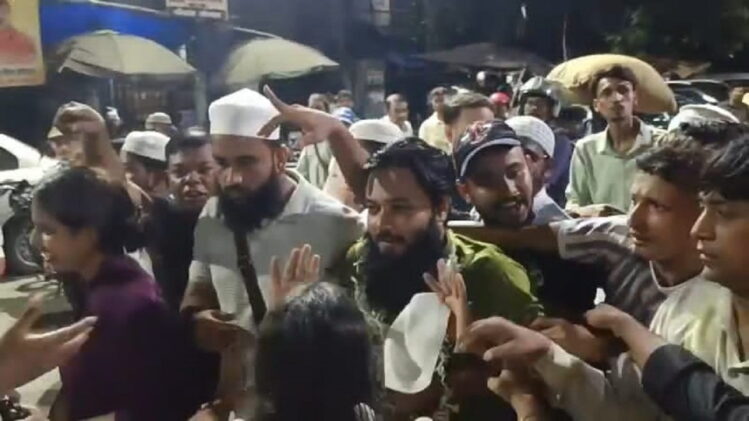
Some protesters allegedly threw bottles and shoes, and several protesters, police personnel and journalists sustained injuries before Rapid Action Force personnel restored order.
Journalists Say They Were Assaulted
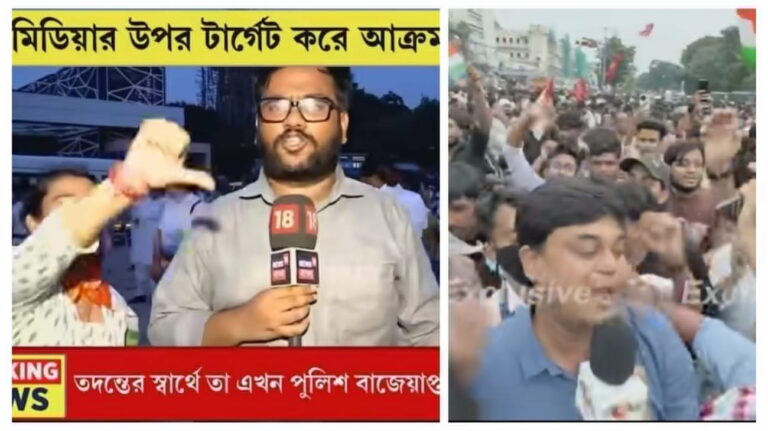
Television journalists have maintained that they became victims of targeted violence.
Several reporters from Bengali television channels alleged that they were physically assaulted while covering the protest.
Videos circulated on social media showed groups of demonstrators shouting slogans such as “Godi Media Hay Hay” and “Godi Media Go Back.”
Among those reportedly targeted were journalists associated with News18 Bangla, Zee 24 Ghanta, TV9 Bangla and Ei Samay.
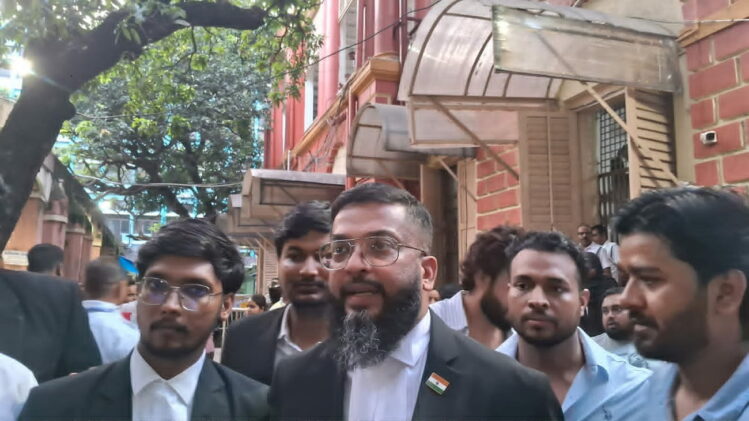
The incident prompted journalists from multiple media organisations to organise a protest march from Kolkata Press Club to Dorina Crossing, demanding accountability for attacks on media personnel.
Politics Deepened the Divide
Soon after the violence, Chief Minister Suvendu Adhikari accused “anti-nationals”, “Jamati” and “Moulobadi” elements of orchestrating the unrest and announced strict action under the Anti-Goonda law.
He also claimed those arrested had no connection with the original student movement and alleged possible foreign involvement.
However, activists interviewed by eNewsroom reject that interpretation.
For them, the larger issue remains the repeated examination controversies, police action against students and what they see as an increasingly hostile media ecosystem that treats dissent itself as suspicious.
A Crisis of Trust
The confrontation in Kolkata raises uncomfortable questions that go beyond one protest.
Physical attacks on journalists deserve condemnation regardless of political differences.
But the interviews conducted by eNewsroom also reveal another reality: a growing section of politically aware young Indians no longer sees parts of mainstream television media as neutral observers.
Instead, they believe certain channels arrive at protests seeking confirmation of an existing narrative rather than understanding the grievances that brought thousands onto the streets.
That, activists argue, explains why slogans against “Godi Media” echoed alongside demands for educational reform.
Whether one agrees with that perception or not, it reflects a widening crisis of trust between sections of the public and the country’s television news industry.
The sixteen protesters arrested after the Kolkata unrest have since secured bail following the Supreme Court’s intervention on student-related cases, but the larger debate remains unresolved.
The questions that students wanted answered—about repeated examination failures, accountability and the future of India’s education system—continue to linger.
And so does another question that emerged from Kolkata: When citizens lose faith in sections of the media, who is left to ask the questions that matter most?
When I was in high school at La Martiniere, we used to see a rickshaw wala waiting to pick up a student who would sit and read Robin Cook and other English books. He would wait a little distance away from the cars and crowd, and I only saw him if either of my parents came to sign me out and pick me up, and we walked up Rawdon Street, on our way to some restaurant. I still remember his face. I remember how I used to battle with a ball of tears in my throat, fighting not to have it come out—every single time. In my near-dementia mental state of now, I have no idea why I remember that, but I do.
Irfan’s Story Reveals the Invisible Talent India Keeps Missing
I have watched Mohammad Irfan’s interview with The Lallantop more times than I care to admit. Every time it ends, I sit there in silence. Every time, my eyes well up. It is one of those rare moments when your heart swells with pride and breaks with regret in the same instant. Because I feel extremely guilty of my privilege and that of our kids and wonder why it has to be so.
What extraordinary young people this country produces. And what an extraordinary talent we have for spectacularly failing them.
Irfan doesn’t speak like someone trying to become famous. He speaks like someone who has spent years carrying questions inside him, polishing them in solitude, until they became convictions. His words are measured, thoughtful; his sincerity almost disarming.
And he’s so emotional too; it’s as though it’s all oozing out of him and he can’t help himself control it. In an age where noise passes for intelligence and outrage is rewarded more than insight, here was a young man reminding us that dignity still has a voice.
I could not stop wondering where he had been all this time. How many buses had he travelled in without anyone noticing him? How many evenings had he spent reading while the rest of us were busy scrolling through our phones? How many dreams had he folded away because life demanded something more urgent than dreams?
Then another thought arrived, and it hurt even more.
Why Exceptional Students Still Depend on Chance to Be Discovered
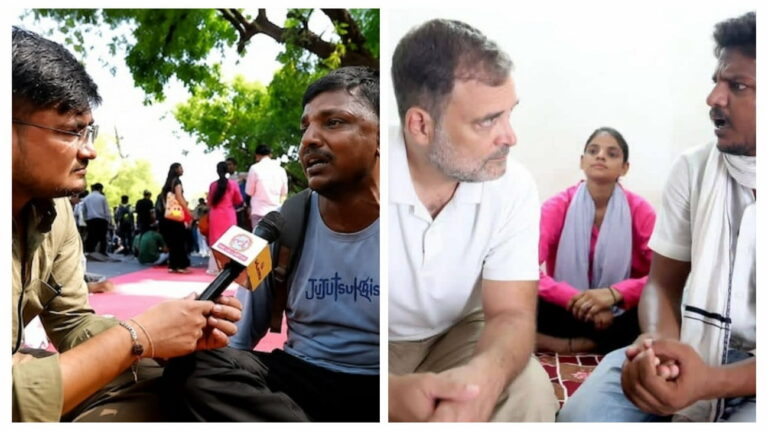
Had the students not occupied Jantar Mantar, had the cameras not turned towards them, would we ever have known Irfan existed? If not for the accident of the reporter catching him, would we have discovered him at all? Or would he have remained one more invisible citizen in a country astonishingly skilled at overlooking its finest minds?
That, to me, is the real tragedy.
The interview was not merely about one articulate young man. It was an indictment of our imagination as a nation. Even as of this last week, if I delved just outside my algorithmic echo chamber, there are many I know who are talking about how the kids are getting unnecessary attention, and I see schadenfreude, the I-told-you-so, how we are just encouraging these good-for-nothing youngsters who want everything on a platter.
We have somehow convinced ourselves that talent rises on its own, that brilliance always finds its way to the top. It is one of the most comforting lies we tell ourselves. Talent does not always rise. Sometimes it drowns quietly beneath poverty. Sometimes it is buried beneath responsibilities. Sometimes it simply grows tired of knocking on doors that never open.
A society is not judged by how it celebrates its successful people. It is judged by how many extraordinary people it never even notices.
Watching Irfan, I was reminded of something Rabindranath Tagore once feared—that education without freedom merely creates clerks, not citizens. Here, before us, stood a citizen in the truest sense of the word: curious, compassionate, informed, fearless enough to ask questions and humble enough to listen. Yet I found myself asking the most painful question of all.
Every Extraordinary Success Is Also an Indictment of the System
Why should someone like him feel exceptional? Why, after nearly eighty years of Independence, are we still astonished when intelligence emerges from hardship? This should be ordinary. Every child, regardless of the family they are born into, should have the opportunity to become everything they are capable of becoming. That should have been the promise of Independence. Not merely the lowering of one flag and the raising of another. Why should birth still dictate destiny?
Why must we still celebrate exceptions? We break out in applause when one brilliant young person breaks through impossible barriers. We call it inspiring. We get more interviews and revel some more. We write newspaper profiles.
But every exception is also an accusation. It quietly asks us – if we care to listen – about the thousands who never broke through. The thousands who were just as intelligent, compassionate, articulate and deserving, whom we never met because our country has no space for them.
Another quality about Irfan stayed with me long after the interview ended. It was not merely his intelligence. Intelligence is common enough. It was his gentleness. His refusal to dehumanise those with whom he disagreed. His belief that ideas still matter. He refused to surrender either to hatred or to despair.
Where does such grace come from? Certainly not from privilege. Perhaps from struggle.
Perhaps from hope itself.
Whatever its source, it felt like a reminder that India’s greatest wealth has never been hidden beneath mountains or buried under oceans. It has always lived inside its ordinary people.
And yet we spend so little time looking for it.
We build statues taller than mountains, but not enough schools worthy of our children.
We celebrate economic growth while millions of gifted young people like Irfan still wonder whether anyone will ever hear their voices.
We measure progress in highways (which turn to nothing, soon enough, thanks to rampant corruption and lack of political will )and airports, while forgetting that the truest measure of a civilisation is whether it recognises the quiet brilliance sitting unnoticed in its smallest towns and poorest homes.
That is why I could not celebrate this interview without also grieving. It’s fabulous that Lallantop ensured (or it was a fluke) that Irfan had finally been heard. But isn’t it somewhat devastating, the thought that he needed a protest to be discovered?
Why do we require an upheaval to notice its brightest young citizens? Why aren’t there classrooms to notice them, universities where they can go to be nurtured? Why can’t our governments invest in them? Why can’t our country believe in them long before they become viral?
The India We Need Exists in Millions of Unseen Young Minds
There are countless Irfans we shall never meet. (I have already told you about one in my home). The 10-year-old server in a tea shop who can calculate the bill of ten tables in minutes when the customer service folks in high-end stores can’t calculate 2+2 without looking at the screen. Some gazillions will never stand before a camera, whose books will remain unread because life demands wages instead of wisdom. This guy and others like him will disappear into anonymity carrying libraries inside their minds.
I find it difficult to hope, but strangely, there is hope too. Because now and then, despite every obstacle placed before them, despite neglect, despite indifference, despite a system that too often rewards inheritance over ability, someone like Irfan steps into the light and reminds us of the country we could still become.
Perhaps that is why this interview feels larger than one young man’s story. It is not simply about this one Irfan. Or even the Neha Bora who has shown us how remarkable she is. It tells about the India that exists beneath the India we usually see. The India that is thoughtful, compassionate, intellectually restless and quietly courageous. The India that asks for very little except to be seen.
I only wish we could learn to recognise it before a protest forces us to look.
More than a year after he made abominable comments against a decorated officer of the Indian Army, Madhya Pradesh Tribal Affairs Minister Vijay Shah has remained in office despite the higher judiciary taking the BJP government to task over the delay in deciding on a request for sanction to prosecute him.
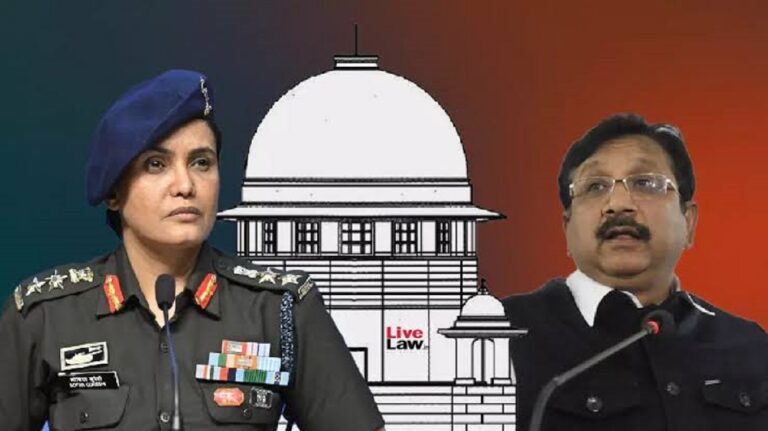
While addressing a public event near Indore in May 2025, within days of Operation Sindoor, the motormouth minister had indirectly referred to Colonel Sofiya Qureshi as ‘sister’ of terrorists involved in the Pahalgam terror attack. The Colonel was among the NDA government’s spokespersons who briefed the media on India’s strikes against Pakistan.
The loose-tongued minister got away despite widespread anger over his controversial remarks because the Mohan Yadav government and the party high command in Delhi chose to look the other way. The minister began with an insincere apology, followed by a conditional one and eventually an unconditional version.
It had taken a directive from the MP High Court for the government to lodge an FIR against Shah. It’s been nearly a year since the court-ordered Special Investigation Team (SIT) submitted its report, but the state government has dragged its feet in granting prosecution sanction.
While the legal proceedings may take longer, nothing should have prevented the party from stripping him of his ministerial responsibility. Neither was the minister misquoted nor did he claim he was. It’s common for politicians and ministers to blame the media for misquoting or quoting them out of context.
It was only when the minister realised that the higher judiciary was seriously watching the developments in the case that he tendered another apology in February 2026, saying the comments were made in the excitement of patriotic fervour in the wake of Operation Sindoor. The apology didn’t work as the courts kept the pressure on the government. And yet, he escaped action.
Shielded by political obstinacy
The high command’s inaction was dictated by the logic that it did not want to succumb to external pressure and crack the whip against a minister lest it set a precedent. However, the extraordinary street mobilisation by Gen Z that led to Union Education Minister Dharmendra Pradhan’s resignation over the NEET examination paper leak case has made the government look vulnerable.
When Shah’s case comes up for hearing in the apex court on August 7, the government will have a lot to answer. In May this year, the Supreme Court questioned the MP government over its failure to comply with its previous direction asking it to decide on sanction within two weeks.
Used to making double-entendre remarks, the minister had courted a slew of controversies even before. But he was penalised only once after he made an alleged pass at then Chief Minister Shivraj Singh Chouhan’s wife in 2013. The Cabinet minister explained that he spoke for nearly 45 minutes, but the media highlighted only his remarks directed at the CM’s wife.
Double standard of accountability
For the sake of argument, let’s accept the NDA government’s initial stand that Pradhan was not directly involved in the paper leak and that the actual perpetrators of the crime were arrested. After standing its ground for weeks, the government succumbed, asking Pradhan to put in his papers.
In comparison, Shah’s transgression took place in full public view, and he apologised after courts expressed displeasure. While some BJP leaders expressed mild disapproval, Union Minister Chirag Paswan had said that if anyone from his party had made such a comment, he would have immediately expelled him for life. The BJP high command was in a position then to ignore the comments by a coalition minister.
Selective immunity at the top
Also, if mere apology, or a series of apologies, helps a minister to go scot-free, why should the privilege not be extended to commoners, or other politicians, many of whom are jailed for comments on social media? The government will have to make its stand clear on August 7 or in further hearings.
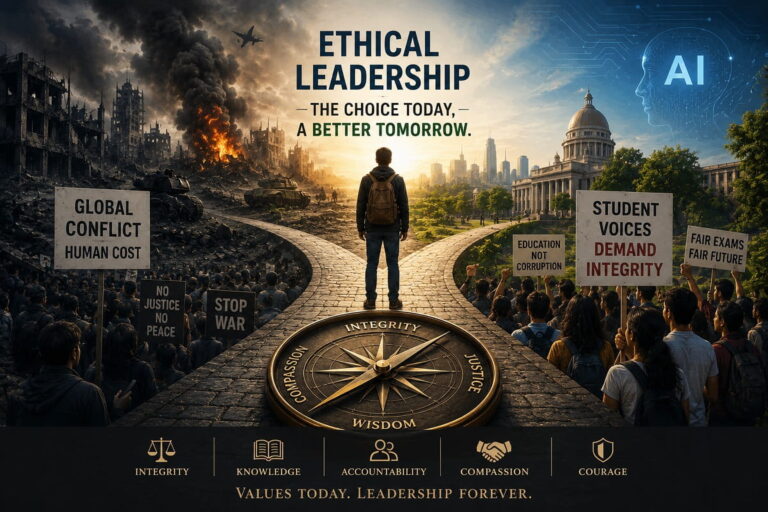
Wars rage across continents. The devastating conflict in Ukraine continues to claim lives and destabilise the global economy. In Gaza, thousands of civilians have lost their lives amid a humanitarian catastrophe that has shocked the conscience of much of the world. Closer to home, student protests in New Delhi and elsewhere over the alleged NEET examination paper leak reflect growing frustration with institutions that are expected to uphold fairness and merit. Around the world, economies are being weaponised through sanctions and tariffs, cyber-attacks threaten national security, and artificial intelligence is rapidly becoming a new arena of geopolitical competition. Its potential is immense, but so are the risks when technological power outpaces ethical judgment.
Although these events differ in scale and context, they point to a common reality. Whether it is war, institutional failure or the erosion of public trust, the heaviest burden is almost always borne by ordinary people. Families lose loved ones. Young people lose opportunities, inflation rises, jobs disappear, and hope begins to fade.
These crises invite a deeper question. Are war, corruption, institutional failures and social unrest the real problems, or are they symptoms of something even more fundamental? Increasingly, the evidence points to a deeper ailment—a crisis of values-based leadership.
When Leadership Fails, Ordinary People Pay
History consistently demonstrates that societies rarely collapse because they lack resources or technological capability. They falter when leadership loses its moral compass. Corruption flourishes where integrity gives way to self-interest. Injustice replaces fairness when power becomes an end in itself. And when leaders abandon character, ordinary people invariably bear the consequences.
This reality explains why governments, multinational corporations, universities and military academies invest billions of dollars every year in leadership development, education and research. They recognise a simple truth: leadership has the power to transform institutions, economies and even the course of history.
Transformation, however, is not merely about achieving growth or winning elections. It is about creating a future that once seemed impossible. History offers numerous examples of such transformational leadership, but the most enduring among them are those rooted not merely in authority, but in moral character.
Few examples are as remarkable as the social transformation initiated by Prophet Muhammad (peace be upon him). Seventh-century Arabia was deeply divided by tribal rivalries, social inequality and cycles of revenge. Many women possessed few legal and social rights, slavery was widespread, and justice often favoured the powerful.
Within a remarkably short period, that fractured society evolved into one founded upon justice, accountability and shared moral responsibility. Former enemies became allies. Tribal loyalties gave way to ethical principles. Mercy replaced vengeance, while honesty and trust became defining social values. This transformation was achieved not primarily through political institutions but through the reform of individual character.
The lesson remains relevant today: lasting social change begins by transforming people before transforming systems. The same principle applies to leadership in times of conflict.
Character Before Power: A Lesson from History
Military history often celebrates tactical brilliance and battlefield victories. Yet perhaps the most enduring example of ethical military leadership came after victory itself. When Prophet Muhammad entered Makkah with overwhelming strength after years of persecution, he chose reconciliation over revenge, granting a general amnesty to many who had once sought his death and destruction. The episode illustrates that enduring peace is often secured not by the ability to punish, but by the willingness to forgive when justice permits.
The principles of ethical leadership are not confined to religious history. Modern organisations offer similar lessons. Business leaders such as Azim Premji demonstrated that sustainable corporate success depends on more than financial performance. Under his leadership, Wipro evolved from a vegetable oil manufacturer into a global technology company while building a reputation for ethical governance, innovation, customer trust and social responsibility. His example reinforces an increasingly recognised business principle: “Sustainable success rests not merely on profits, but on principles.”
Knowledge Without Wisdom Is a Dangerous Weapon
These examples raise an important question: What distinguishes ethical leaders from those who are merely successful?
Research by leadership scholars James Kouzes and Barry Posner offers a revealing answer. After studying leadership across different cultures for more than four decades, they found that honesty consistently emerged as the most admired quality in a leader. Their conclusion was straightforward: “If people do not trust the messenger, they will not trust the message.”
This insight is hardly new. Long before his prophethood, Prophet Muhammad (peace be upon him) was known among the people of Makkah as As-Sadiq (the Truthful) and Al-Amin (the Trustworthy). His reputation for integrity preceded his public mission, illustrating that genuine leadership begins long before one occupies a formal position of authority.
Truthfulness, however, is only one pillar of enduring leadership. Knowledge and wisdom form another.
The opening revelation of the Qur’an begins with a command to “Read.” Significantly, the first divine instruction was not centred on ritual practice but on learning. The emphasis reflects a profound civilisational principle: societies flourish when they pursue knowledge.
Equally important is the distinction between knowledge and wisdom. Knowledge explains what can be done; wisdom determines what ought to be done. In an age where artificial intelligence, biotechnology and digital technologies are advancing at an unprecedented pace, this distinction has become increasingly significant. Technological capability without ethical judgment can amplify human problems rather than solve them. Artificial intelligence, for instance, has the potential to transform healthcare, education and scientific research, yet it can also deepen surveillance, spread misinformation and widen inequality if left without ethical safeguards.
The contemporary Muslim world, like many societies, faces important questions in this regard. Educational advancement, scientific research and intellectual leadership remain essential if communities are to contribute meaningfully to global progress while remaining anchored in ethical values.
Discipline forms the third indispensable pillar of leadership.
History provides a striking example in the Battle of Uhud. Despite careful planning, the Muslim forces suffered a painful setback when a group of archers abandoned their assigned positions contrary to explicit instructions. The episode illustrates how even relatively small acts of indiscipline can overturn the advantages created by sound leadership and strategic planning.
The principle extends far beyond military affairs. Organisations often fail not because of a single catastrophic decision but because small acts of negligence gradually accumulate. Discipline in the use of time, adherence to processes and consistency in execution frequently distinguish enduring institutions from those that decline.
The Future Belongs to Leaders of Character
The modern world undoubtedly requires innovation, technological excellence and economic growth. But these achievements alone cannot guarantee peace, justice or human flourishing. Without ethical leadership, technological progress risks becoming another instrument of conflict and inequality.
The headlines of our time reinforce this reality. Whether it is the continuing devastation in Ukraine, the immense human suffering in Gaza, or the anger of students protesting alleged irregularities in a national examination, each reminds us that leadership failures rarely remain confined to boardrooms or corridors of power. Their consequences ripple through society, affecting families, livelihoods, education and the public’s faith in institutions. While every conflict and controversy has its own political and historical complexities, they all underscore one enduring principle: when ethics disappear from leadership, ordinary people pay the price.
The challenges confronting humanity today therefore demand more than new policies or advanced technologies. They require leaders whose decisions are guided by integrity, enriched by knowledge, tempered by wisdom and sustained by discipline. Leadership ultimately begins not with power, wealth or position, but with character. Nations, businesses and communities will flourish only when those entrusted with authority recognise that lasting influence is earned not through domination, but through moral credibility.
In an era defined by unprecedented technological capability and growing global uncertainty, the world may not simply need more leaders. It needs leaders whose character matches their competence, whose wisdom equals their influence and whose moral courage outlasts the pursuit of power. History repeatedly reminds us that while power may shape events, it is character that ultimately shapes civilisation.
The NDA government led by Prime Minister Narendra Modi has probably tasted its first non-electoral defeat in the resignation of Education Minister Dharmendra Pradhan, having brazened out previous attempts to seek accountability from it by citing a string of electoral victories.
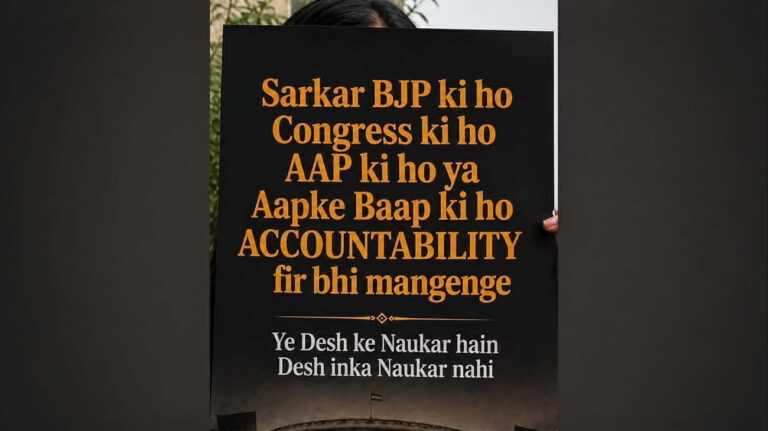
Pradhan’s resignation was a non-negotiable demand made by protesters at Jantar Mantar over the NEET paper leak issue. What seems to have forced the government’s hand was the swelling ranks of protesters across the country, responding to a call issued by the Cockroach Janata Party (CJP), and treating the movement as a matter of conscience.
The government believed that Sonam Wangchuk’s decision to call off his hunger strike would ease pressure on it and probably weaken the agitation that has made headlines across the world for its sheer scale. The forcible eviction of Wangchuk, followed by the alleged use of force, including pellet guns, on young protesters, boomeranged on the government. Wangchuk’s decision to call off his hunger strike didn’t change the mood on the ground as protesters returned despite the use of force and elaborate security arrangements.
The Modi government rolled back farm laws in its second term after refusing to yield to even more intense protests that lasted for more than a year. But those protests had a limited geographical scope, unlike the current round of unrest stemming from the trauma faced by lakhs of youngsters and their parents.
Why the Government Misread the CJP Movement
The government seemed to have believed that the initial response to the CJP mobilisation would die down once the novelty over the name waned. The protesters included a lot of unemployed youngsters who stayed put in Delhi, their profile different from previous protests like those over the citizenship law. The anti-CAA protests were identified with Muslims. The longer they lasted, the more the government benefited because social media was on its side.
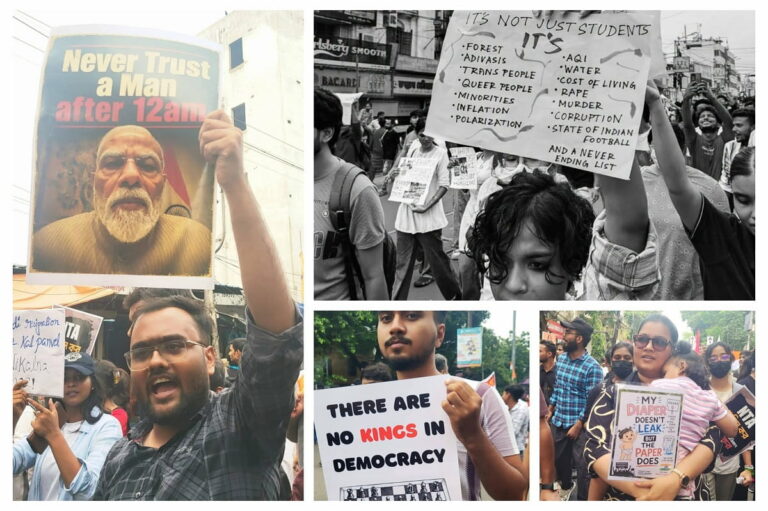
This time, social media was divided, with content suiting both sides doing the rounds. The highly objectionable language used by some protesters, including young girls, without thinking about consequences was entirely avoidable. There were highly creative posters too.
How Gen Z Forced Modi’s First Major Political Climbdown
The protests took the limelight away from recent political victories, registered both in the electoral arena and outside. Counter-protests by the BJP to denounce Rahul Gandhi’s dharna outside the Prime Minister’s residence didn’t enthuse cadres, as the cause wasn’t appealing enough.
And yet the NDA leadership was not willing to address the main demand: the removal of the education minister to fix accountability. The prime minister didn’t want to be seen as weak-kneed by cracking the whip on the education minister and setting a precedent. BJP spokespersons compared the demand for resignation to blackmail.
They insisted the actual perpetrators were behind bars and pointed to the government’s decision to set up fast-track courts and enact a stringent law as sincere efforts to deal with the education mafia. Their stand was clear: Pradhan was not directly involved in the leak and that the demand for his removal was political.
When Youth Anger Became Too Big to Ignore
There’s no denying the fact that the Opposition sensed an opportunity in the CJP’s insistence on Pradhan’s expulsion. What worked eventually was not pressure by established political parties but the relentless mobilization by a digital phenomenon, aided to a large extent by a huge army of unemployed youth.
Most protesters never appeared for the NEET examination held in May, and are unlikely to appear in future examinations, but they identified with the cause, their anger fuelled and sustained by lack of jobs and opportunities.
Former Union Minister of State for External Affairs M J Akbar was forced to resign in the first term of the Modi government. The famous journalist had stepped down because several women had accused him of inappropriate conduct in his personal life.
Pradhan’s resignation resulted from the disenchantment of youngsters, one of the key constituencies which trusted the prime minister for what they thought was his decisive leadership. CJP leaders were very clear in their demand. From the protest site, they announced that if Pradhan was not ready to resign, the PM should.
Only time will tell how the Gen Z movement will play out in future. The government was caught on the wrong foot and will have to tread cautiously because the movement has claimed its first victim. “If you are fearless, you can make the government fall in line,’’ said CJP founder Abhijeet Dipke immediately after Pradhan’s resignation.
23 दिन से उसने अन्न का एक दाना नहीं खाया था। शरीर का वजन साढ़े सात किलो घट चुका था। रक्त में शर्करा खतरनाक स्तर पर पहुँच गई थी। डॉक्टर चेतावनी दे रहे थे कि शरीर के महत्त्वपूर्ण अंग प्रभावित हो सकते हैं। फिर भी नेहा बोरा जब दूसरी बार जंतर-मंतर के मंच पर पहुँचीं, तो उनकी आवाज़ में कमजोरी नहीं थी।
उन्होंने घायल विद्यार्थियों की ओर देखकर कहा, “हमारी चोटें हिंसा की गवाही देंगी।”
सिलीगुड़ी से जेएनयू तक: एक शोधार्थी का सफर
लगभग 29 वर्ष की नेहा मूल रूप से उत्तराखंड से आती हैं। उनके बचपन का एक हिस्सा सिलीगुड़ी में बीता जहाँ उन्होंने दिल्ली पब्लिक स्कूल, सिलीगुड़ी से स्कूली शिक्षा प्राप्त की। स्कूल के बाद वे उच्च शिक्षा के लिए दिल्ली आईं। उन्होंने दिल्ली विश्वविद्यालय से समाजशास्त्र में स्नातक किया। समाजशास्त्र की पढ़ाई ने उन्हें जाति, वर्ग, लैंगिक असमानता, सामाजिक सत्ता और संस्थागत भेदभाव जैसे प्रश्नों से जोड़ा।
नेहा ने आंबेडकर विश्वविद्यालय, दिल्ली से स्नातकोत्तर की पढ़ाई की। आंबेडकर विश्वविद्यालय ने सामाजिक विज्ञान, संस्कृति, मानवीय अध्ययन और आलोचनात्मक चिंतन पर केंद्रित शिक्षा के लिए अपनी अलग पहचान बनाई है। यहीं उनके सामाजिक सरोकारों, रंगमंच और सार्वजनिक सक्रियता को अधिक स्पष्ट दिशा मिली।
नेहा रंगमंच से जुड़ी हैं। रंगमंच ने उनकी भाषा, मंच पर उपस्थिति और लोगों से सीधे संवाद करने की क्षमता को मजबूत किया। उनके भाषण में किसी तैयार राजनीतिक पर्चे की भाषा नहीं सुनाई देती। वे सामने खड़े लोगों से बात करती हैं। उनके वाक्य छोटे होते हैं और चोट सीधे करते हैं।
इस समय नेहा जवाहरलाल नेहरू विश्वविद्यालय के स्कूल ऑफ आर्ट्स एंड एस्थेटिक्स में पीएचडी के तीसरे वर्ष की शोधार्थी हैं। यह केंद्र सिनेमा, रंगमंच, प्रदर्शन, दृश्य संस्कृति और कला के सामाजिक अर्थों का अध्ययन करता है।
यही उनकी पहचान का महत्त्वपूर्ण हिस्सा है। वे केवल नारे लगाने वाली छात्र नेता नहीं हैं। वे समाजशास्त्र की विद्यार्थी, कला और प्रदर्शन की शोधार्थी तथा रंगमंच से जुड़ी कार्यकर्ता हैं। कक्षा, पुस्तकालय, रंगमंच और आंदोलन उनके सार्वजनिक व्यक्तित्व के चार आधार हैं।
कैसे बनीं छात्र आंदोलन की सबसे बुलंद आवाज़
जेएनयू में पढ़ाई के दौरान नेहा छात्र राजनीति में सक्रिय हुईं। वे ऑल इंडिया स्टूडेंट्स एसोसिएशन, आइसा से जुड़ीं और बाद में इसकी राष्ट्रीय अध्यक्ष चुनी गईं। शिक्षा का निजीकरण, विश्वविद्यालयों में फीस वृद्धि, छात्रावास, छात्रवृत्ति, जातिगत भेदभाव, महिलाओं की सुरक्षा और लोकतांत्रिक विरोध का अधिकार उनके प्रमुख मुद्दे बने।
वे मॉब लिंचिंग के विरुद्ध बोलीं। उन्होंने बिलकिस बानो के लिए न्याय की माँग उठाई। उन्होंने गाजा में मारे जा रहे नागरिकों, महिलाओं और बच्चों के पक्ष में आवाज़ उठाई। वे दलित, आदिवासी, पिछड़े और अल्पसंख्यक विद्यार्थियों के समान अधिकार की बात करती रही हैं। उनका मानना है कि शिक्षा केवल उन परिवारों का विशेषाधिकार नहीं बन सकती, जिनके पास महँगी फीस और निजी कोचिंग के लिए पैसा है।
जंतर-मंतर का आंदोलन पेपर लीक, परीक्षाओं में गड़बड़ियों, बेरोजगारी और विद्यार्थियों की आत्महत्याओं के प्रश्न पर खड़ा हुआ। सोशल मीडिया पर “कॉकरोच जनता पार्टी” के व्यंग्यात्मक नाम से शुरू हुई मुहिम जल्द ही सड़कों पर उतर आई। देश के अलग-अलग हिस्सों से विद्यार्थी दिल्ली पहुँचे। उनकी प्रमुख माँग केंद्रीय शिक्षा मंत्री धर्मेंद्र प्रधान का इस्तीफा और परीक्षा व्यवस्था की विफलताओं की जिम्मेदारी तय करना थी।
23 दिन का अनशन और अडिग प्रतिरोध
नेहा ने अपने साथियों मनीष कुमार और आमीन अमितोज के साथ अनिश्चितकालीन भूख हड़ताल शुरू कर दी। सोनम वांगचुक भी उनके साथ अनशन पर बैठे। दिन बीतते गए। सरकार की ओर से कोई निर्णायक बातचीत नहीं हुई। नेहा का शरीर लगातार कमजोर होता गया। फिर भी वे वहीं बैठी रहीं।
21वें दिन पुलिस सोनम वांगचुक को अस्पताल ले गई। नेहा ने उसी समय कहा, “एक ओर सरकार ने 21 दिनों से भूख हड़ताल पर बैठे छात्रों और सोनम वांगचुक की कोई सुध नहीं ली। दूसरी ओर हमारे अनशनकारियों को जबरन उठाकर अस्पताल में भर्ती कराने की कोशिश की जा रही है।”
उन्होंने लोगों से जंतर-मंतर पहुँचने की अपील की और कहा, “यह आंदोलन समाप्त नहीं हुआ है और धर्मेंद्र प्रधान के इस्तीफे तक समाप्त नहीं होगा।”
संसद मार्च के दौरान हुई पुलिस कार्रवाई ने नेहा को भीतर तक झकझोर दिया। जंतर-मंतर के मंच पर लौटकर उन्होंने आरोप लगाया कि शांतिपूर्वक आगे बढ़ रहे विद्यार्थियों पर लाठियाँ चलाई गईं, आँसू गैस छोड़ी गई और महिला प्रदर्शनकारियों के शरीर के निजी हिस्सों पर बैटन से वार किए गए।
नेहा बोली, “संसद तक अपनी माँगें लेकर पहुँचे, तो हमारे सिर फोड़ दिए गए। इसे याद रखा जाएगा।”
उन्होंने कहा, “हमारे इस आंदोलन के बाद जितनी जान बाकी छोड़ी है, वह गवाही देगी। हमारी चोटें हिंसा की गवाही देंगी।”
नेहा ने मंच से सावित्रीबाई फुले और फातिमा शेख को याद किया। उन्होंने उन स्त्रियों का नाम लिया जिन्होंने गालियाँ, अपमान और हमले सहकर लड़कियों तथा वंचित बच्चों के लिए शिक्षा के द्वार खोले थे। नेहा ने आज की शिक्षा की लड़ाई को उसी परंपरा से जोड़ा। उनका संदेश साफ था कि शिक्षा बचाना केवल वर्तमान विद्यार्थियों का प्रश्न नहीं, आने वाली पीढ़ियों का प्रश्न है।
अब पूरा देश सुन रहा है नेहा बोरा का सवाल
वरिष्ठ अधिवक्ता और राज्यसभा सदस्य कपिल सिब्बल ने बाद में अपने कार्यक्रम सेंट्रल हॉल में नेहा बोरा, आमीन अमितोज और आंदोलन में शामिल अनुष्का घोष से बातचीत की। बातचीत का विषय छात्र आंदोलन, नीट, पेपर लीक, शिक्षा सुधार और लोकतांत्रिक अधिकार था।
नेहा ने कपिल सिब्बल से कहा कि युवाओं का गुस्सा अचानक पैदा नहीं हुआ है। वर्षों की तैयारी के बाद पेपर लीक हो जाता है। परीक्षा रद्द हो जाती है। नई तारीख महीनों नहीं आती। परिवार कर्ज लेकर बच्चों को पढ़ाते हैं। विद्यार्थी अपना सबसे अच्छा समय कोचिंग और परीक्षा केंद्रों के बीच बिता देते हैं। इसके बाद भी उन्हें निष्पक्ष अवसर नहीं मिलता।
उन्होंने साफ किया कि यह आंदोलन अब किसी एक नेता या व्यक्ति का आंदोलन नहीं है। यह उन लाखों विद्यार्थियों का आंदोलन है जिनकी मेहनत को कमजोर परीक्षा व्यवस्था ने अनिश्चितता में डाल दिया है। शिक्षा मंत्री का इस्तीफा उनके लिए एक जवाबदेही की माँग है।
कपिल सिब्बल से बातचीत में उन्होंने कहा कि इतिहास में बड़े परिवर्तन युवाओं ने ही किए हैं। नेहा ने आंदोलन का मूल भाव रखा। विद्यार्थी सरकार से बात चाहते हैं, सहानुभूति नहीं। वे ठोस कार्रवाई चाहते हैं, आश्वासन नहीं। वे साफ और सुरक्षित परीक्षा चाहते हैं। वे अपने भविष्य पर भरोसा चाहते हैं।
नेहा की कहानी अभी लिखी जा रही है। सिलीगुड़ी की छात्रा से दिल्ली विश्वविद्यालय में समाजशास्त्र की विद्यार्थी, आंबेडकर विश्वविद्यालय की स्नातकोत्तर छात्रा, रंगकर्मी, जेएनयू की शोधार्थी और आइसा की राष्ट्रीय अध्यक्ष तक की उनकी यात्रा लंबी है।
जंतर-मंतर ने उन्हें राष्ट्रीय चेहरा बना दिया है। उनकी माँगें सीधी हैं। पेपर लीक बंद हों। परीक्षाएँ निष्पक्ष हों। दोषियों को सजा मिले। शिक्षा सस्ती हो। सरकार विद्यार्थियों से बात करे। राजनीतिक जवाबदेही तय हो। शांतिपूर्ण प्रदर्शन करने वाले युवाओं पर बल प्रयोग न हो।
23 दिनों तक भूखी रही वह शोधार्थी आज देश से यही पूछ रही है कि पढ़ने वाला युवा न्याय माँगने कहाँ जाए? और अब उसकी आवाज़ अनसुनी नहीं है
Kolkata: I had taken the train from Bagha Jatin to Sealdah to join the rally called by the left student and youth groups and CJP. Soon the carriage I occupied began to echo with slogans of a kind I had never heard before. They were raw, politically incorrect, unfiltered. In that moment I understood I had stepped into an experience entirely new to me.
The precincts of Sealdah station were so densely thronged that movement became a struggle. Friends were lost in the press within moments. Even after half an hour, the crowds continued to swell. Caught in the heart of the procession, I had to jostle constantly to hold my ground. The energy was electric, undeniable.
Schoolchildren in uniform walked beside their parents; others carried handmade placards and posters scrawled with irreverent wit. I watched them closely, this vast, unprecedented sea of people for whom no simple explanation of numbers seemed possible. Long after we reached Esplanade, the march kept pouring in, wave upon wave, for another hour or more.
From Instagram Reels to Kolkata’s Biggest Student March
What lingered most was the mood. The gestures and rhythms spoke volumes about the politics of this gathering. These participants had learned their craft from Instagram reels and the theatre of Jantar Mantar. Slogans collided freely: Inquilab Zindabad blending into Bande Mataram and Bharat Mata ki Jai; calls for resignation mingling with Modi shaala bharwa hai, Desh bachao, Modi hatao, and of course their disdain for godi media, along with the sharp couplets on fear and division. Traditional left slogans fell flat, unanswered.
These were mostly first-timers, their chants forged in the glow of mobile screens.
Everywhere one saw gestures lifted straight from those digital reels. Packets of ORS and water were offered at corners, strangers fanned fellow marchers, Melody toffees passed hand to hand, even mocking demands for the police to deploy their water cannons. I saw a boy cleaning the Esplanade with meticulous care, a discipline absorbed from YouTube and Instagram. There was a mood of festivity and irreverence that was hard to miss. One of my students attending her very first rally summed it up perfectly: “It’s a rally for a serious cause by not-so-serious people.” That was true. They mocked the regime but did not take themselves too seriously. The memes and posters were political yet funny, the kind I had never seen before in any rally in Kolkata. After the rally was over, nobody left the Esplanade crossing. They made it their own space, shouting slogans, socialising, and quietly taking over the centre of the city.
In these small acts lay a quiet chronicle of how politics was being remade.
This Wasn’t Just a Rally. It Was a Generational Revolt
Yet the central question remained: who were these people, and how had they turned out in such staggering numbers? A rally called at such short notice had drawn crowds far beyond what the left student organisations, who led the march, could have mobilised on their own. They were vastly outnumbered by students who had come independently.
Demographically, 90 per cent or more belonged to the age group of 15 to 20. They seemed to possess their own ecosystem, one that made this turnout possible. Slogans learned, memes generated. I guess that there was scarcely a school or college in Kolkata from which at least one group had not joined. They were treating the protest as a trend they could not afford to miss. When was the last time student anger against a regime had become both trendy and hip? I have no answer.
In their incoherence and irreverence lay a deep yearning for politics, a language and ethos that needed to be understood, distilled, and carried back to them by those serious about the craft. As an old man once said: from the people, and to the people.
When one stands in the midst of something historic, its full significance can be easy to miss. Yet there is unmistakably a pan-Indian upsurge underway, a generation that has known only one kind of ruling-class politics and is now thoroughly tired of it.
Given an opportunity, everyone would love to explore the world in ways to their liking. Some create opportunities, some get them on a platter. But not everybody has a faculty of observation that enables them to compile their experiences lucidly and become a storyteller for life.
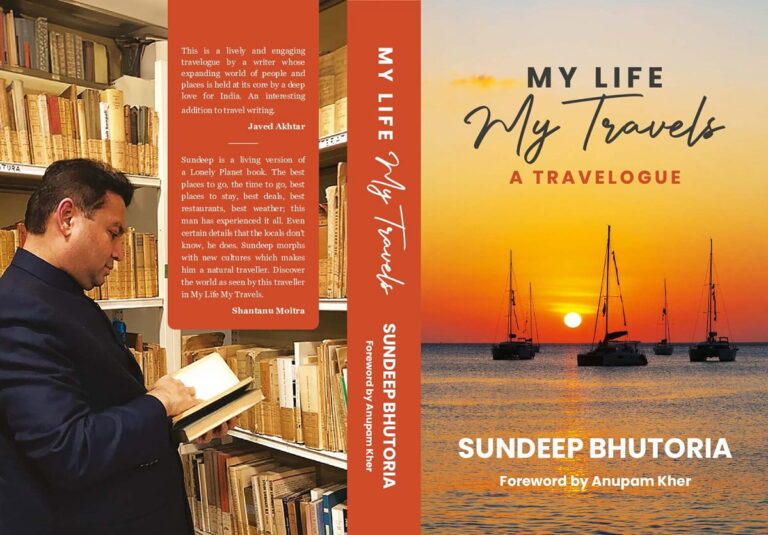
Sundeep Bhutoria, a social and cultural activist, is one of them. A globetrotter, it’s difficult to say whether he was consumed more by wanderlust or by his work that now extends to welfare, international cultural cooperation and promotion and preservation of Indian arts.
Encapsulating his initial trips to foreign shores in My Life My Travels, his candid travelogue is an honest attempt to record what he saw, learned and came up against when he was younger and wide-eyed. He met many world-famous, interesting, and occasionally vile personalities along the way.
The book is full of anecdotes and trivia like a restaurant in Japan named Ganga selling not only alcohol and meat but also beef with naan. He found similarities between some Indian customs and beliefs and those practised abroad. He had pleasant surprises and unpleasant encounters. He met people of Indian origin who refused to identify themselves with India, and also those who possessed a foreign passport but said they were Indians at heart.
Milind Ghatwai
In his own words, he didn’t know how to follow literary conventions and wrote the anecdotes in an unpolished and disorderly fashion, just like his journeys. Irrespective of what he says about his work, there’s a timeless feeling to some pieces; many anecdotes are downright funny and many thought-provoking.
From London to 9/11: Extraordinary Stories from a Global Journey
On his first visit to London, he spent a few hours in the night cowering behind a roadside bench in absolute fear. All because every time he passed a lamppost, the lamp would get switched on or off. He had no idea that the lampposts were automated! He requested a milkman around 6 am to accompany him home. The milkman was in stitches while explaining to him that the bulbs lit up when shadows fell on them!
In another anecdote, he narrates how his hunger pangs led to the arrival of Scotland Yard. His midnight foray to the kitchen triggered a security alarm. No wonder, he describes London as a city of automated things and automated people after that visit. Later he found solace in the fact that the door of the British Parliament, while it was being reconstructed after a devastating fire, was sent from India. “It’s a matter of pride that the British, who ruled us once, today pass through a door made in India to decide their own future.’’ He once wrote in the visitors’ book in the London Museum that Indians should be allowed to see the Kohinoor diamond for free, or at least at a discounted rate, because it belonged to their country.
Culture, Food and Identity: Lessons from Travelling the World
A vegetarian, he often found himself short of choices to satiate his hunger. Though many cities across the world have restaurants serving Indian food, there are still places where strict vegetarians have to either go hungry or take an extraordinary step like removing non-vegetarian pieces from a food item to make it palatable rather than dying of hunger.
On a visit to Machu Picchu, the old civilisation of Peru, he survived only on apples for two days. On the third day, he bought a ‘vegetarian’ sandwich, removed pieces of fish and ate the bread after washing it with milk. Fish and eggs were included in the ‘vegetarian’ category of food served to international travellers. A category called ‘Indian Vegetarian’ was not available. While travelling through parts of South America, he had to make do mostly with brown bread and coffee. Once he was shocked to find that the rice he bought was greased with beef oil. The large, white and shiny grain had made him suspicious. His broken Spanish helped him avert what would have been an assault on his traditional sensibilities.
He admits to developing a feeling of reverence for Mahatma Gandhi only after his visits abroad, especially to South Africa. He found Gandhi statues in places like Caracas, Santiago and other cities of Chile. It was in Johannesburg, Durban and Pietersburg that the greatness of the Father of the Nation was drilled into him.
Near Death, Gandhi and Global Encounters: A Traveller’s Memoir
The most memorable episode of his life happened when he was in New York to participate in the annual meetings of the World Federation of United Nations Associations (WFUNA) and the world’s non-governmental organisations. He was staying in Millennium Plaza, located just opposite the United Nations.
Hectic meetings throughout the day ensured that the author and his friends reached the World Trade Centre (WTC) late one evening. They were advised to come again early the next day to avoid crowds and for a better view from the top. The next morning was the day of the 9/11 terror attacks. The author would have been in the WTC at the time of the attack, but luckily for him, got a call to visit the United Nations instead.
When the plane crashed into the building, the author, unaware of the terror plot, complained to a waiter that “Americans boast so much about themselves and yet cannot even fly planes properly.’’ The same waiter had suggested to him the previous evening to migrate to America! A while later, the author saw another plane crashing into the second WTC tower. Trapped in the hotel, he had a harrowing time over the next 72 hours with rumours about more explosions and blasts flying thick and fast.
During his travels, the author saw ancient cultures and modern societies while encountering and, usually, overcoming language barriers and other inconveniences.
In his foreword to the travelogue, Bollywood actor Anupam Kher has noted that “he (Bhutoria) has travelled and experienced the adventures life has offered him with open arms.’’
In famous poet and lyricist Javed Akhtar’s words, “This is a lively and engaging travelogue by a writer whose expanding world of people and places is held at its core by a deep love for India. An interesting addition to travel writing.’’
One can complain that the pieces are short and lengthier versions could have been equally readable.