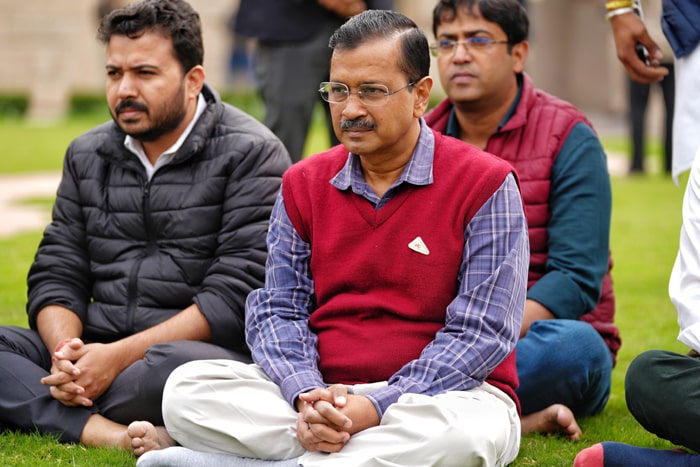
Delhi: Chief Minister Arvind Kejriwal was arrested today by the Enforcement Directorate’s officials in connection with the Delhi Liquor Policy. Kejriwal is the second serving chief minister after Hemant Soren to be arrested by the central agency.
The National Convener of the Aam Aadmi Party is the fourth leader to be arrested after ministers Satyendar Jain, Manish Sisodia, and Rajya Sabha MP Sanjay Singh in this connection.
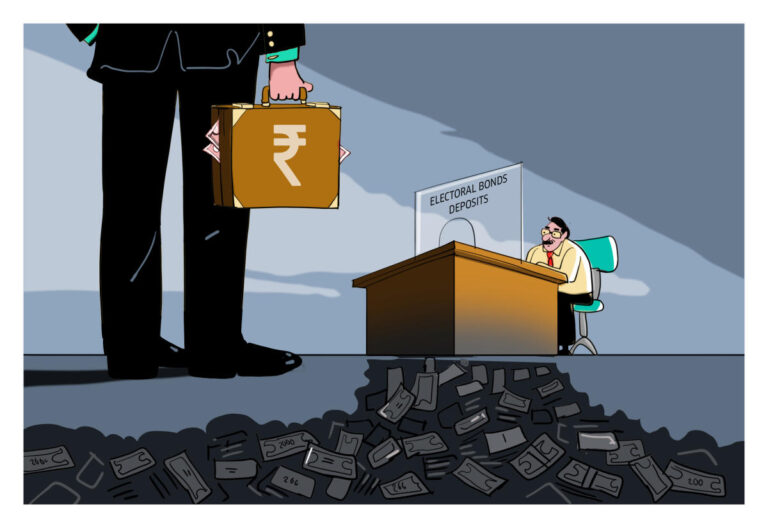
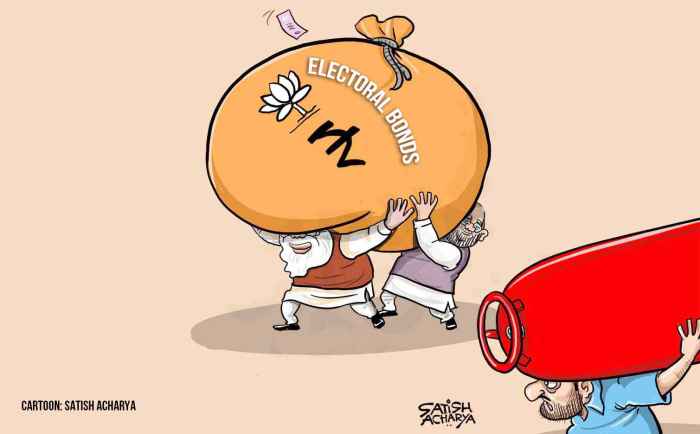
Significantly, today itself, on the order of the Supreme Court, the State Bank of India shared detailed data on Electoral Bonds with the Election Commission of India, revealing which party received how much political funding and from which corporate houses.
As the Model Code of Conduct for Lok Sabha Elections has already been imposed, the larger question remains: Did the ED inform the Election Commission about their plans to arrest Arvind Kejriwal? Or did the EC examine the grounds for arresting a sitting CM weeks before the Lok Sabha elections?
Meanwhile, there is a massive protest on the streets of Delhi. Opposition leaders from Congress, including Rahul Gandhi and Priyanka Gandhi, as well as Tamil Nadu and Kerala Chief Ministers MK Stalin and Pinarayi Vijayan, RJD’s Lalu Prasad Yadav, Sharad Pawar of NCP, CPM’s Sitaram Yechury, Dipankar Bhattacharya of CPIML and TMC’s Derek O’ Brian, have vehemently criticized the arrest.
While AAP has made the political decision that Arvind Kejriwal will run his government from jail, unlike Hemant Soren, he will not resign from the post of Delhi CM.
Significantly, former Governor Satyapal Malik had prophesied ten months ago that Arvind Kejriwal would be arrested.
Hemant Soren was arrested only a month back in February, in a land related case.
AAP has moved to the Supreme Court against the arrest of Delhi Chief Minister Kejriwal. The Apex Court will hear Arvind Kejriwal arrest case today. The Delhi Chief Minister to argue his own case in the SC against ED.
Ranchi: The dates of the Lok Sabha elections 2024 have been announced, but while the National Democratic Alliance has yet to announce its three candidates, the Indian National Development Inclusive Alliance has not revealed the names of candidates of any of the fourteen seats.
One reason for this delay is being cited by both alliances as seat sharing in Bihar. Jharkhand’s seats will also help both alliances to make final adjustments for their partners in Bihar, considered the big brother state.
BJP can give the ticket to Sita Soren from Chatra
Chatra Lok Sabha is one of the two seats where the BJP has not yet fielded its candidates. Sunil Singh is currently the MP from here. But since the name of the sitting MP has not been announced, it is believed that a new face will be in the fray on the Lotus symbol.
If sources are to be believed, Sita Soren was active in Chatra for the last two years, and now that Sita has left JMM and joined BJP, that too by resigning from the legislature, she can become the party’s choice.
Anyway, leaving one party and joining another on the same day is not a day’s work, but it takes months and years of background work between two sides.
Here, the Rashtriya Janata Dal is a claimant from the INDIA bloc side. RJD wants both Chatra and Palamu seats and in return, it wants to adjust seats with Congress in Bihar.
Mathematics of Dhanbad
Like Chatra, in Dhanbad, also the BJP has not announced any candidate yet. And here too, it is considered certain that the current MP PN Singh will not get the ticket. There are many candidates interested to contest from this seat on BJP’s symbol, including MLAs from INDIA, but BJP can leave Dhanbad for JDU. Nitish Kumar’s party has got one less seat than BJP in Bihar.
Jaiprakash Bhai Patel can be the candidate of the INDIA Alliance from Hazaribagh
BJP has also cancelled the ticket of Jayant Sinha from Hazaribagh. Jayant, a minister in the Modi cabinet, is the son of Yashwant Sinha, who was a minister in the Atal Bihari Vajpayee cabinet.
Now the news is coming that BJP’s Mandu MLA Jaiprakash Bhai Patel has left the party and joined Congress. He will now be the Lok Sabha candidate from Hazaribagh from the alliance. Jaiprakash Patel is the son of senior JMM leader and former MP Teklal Mahato.
This loss of BJP MLA in Jharkhand can also impact in Dhanbad, where BJP will want to poach Congress MLAs, who are interested in getting BJP tickets but the saffron brigade had kept them in queue.
Jaiprakash Verma’s claim from INDIA in Koderma
BJP has again fielded Annapurna Devi from Koderma Lok Sabha.
Since Gandey’s assembly election and Koderma Lok Sabha will be held simultaneously and Hemant Soren’s wife Kalpana Soren will contest from Gandey, former MLA Jaiprakash Verma, now in JMM, is arguing that the same election symbol will be beneficial in Lok Sabha and legislative assembly polls. However, political observers did not buy this argument as even in panchayat polls, villagers vote for different symbols and candidates in Panchayat elections where polls take place once.
However, Verma, who has come from the BJP, has the challenge to win the trust of Muslims as well as tribals. While Muslims, do not prefer the saffron brigade or leaders who come from there because of its anti-minority policies, the tribal population is also angry with the BJP due to Hemant Soren being sent to jail.
Notably, in 2004, then United Progressive Alliance, which had the same partners—Congress, JMM and RJD, Champa Verma, wife of Ritlal Prashad Verma, the aunt of Jaiprakash was made UPA candidate, but she could not win. On the other hand, UPA’s candidates had won all of the remaining 13 seats in Jharkhand.
But whoever the Indian alliance fields as candidates, they are lagging behind the announcement of the names
रांची: लोकसभा चुनाव 2024 कि तारीखों का ऐलान हो चुका है, पर जहां एनडीए ने अपने तीन उम्मीदवारों कि घोषणा नहीं कि है, वही इंडिया ने चोदह में से किसी सीट पे, कौनसी सीट किस पार्टी को और किस प्रतियाशी कि लड़ाएगी उसके नाम नहीं बताए हैं।
दोनों गठबंधनों के तरफ से इस देरी कि एक वजह बिहार में सीट बंटवारे को बताया जा रहा है।
सीता सोरेन को चतरा से टिकट दे सकती है भाजपा
भाजपा ने जिन दो सीटों पे अपने उम्मीदवार अभी नहीं उतारे हैं, उनमें से एक है चतरा लोकसभा। यहाँ से पार्टी के सुनील सिंह अभी सांसद हैं। पर सिटिंग सांसद के नाम का घोषणा नहीं होने के वजह से ये तय माना जा रहा कि कोई नया चेहरा कमल निशान पे मैदान में होगा।
सूत्रों कि माने तो सीता सोरेन चतरा में पिछले दो वर्षों से सक्रिय थी, और अब जब सीता ने जेएमएम छोड़ भाजपा जॉइन कर लिया, वो भी विधायकी से भी इस्तीफा दे कर तो वो पार्टी कि पसंद बन सकती हैं।
वैसे भी एक ही दिन में एक पार्टी छोड़ना और दूसरी को जॉइन करना एक दिन का काम होता नहीं, इसमे महीनों और सालों कि साझेदारी होती है।
यहाँ इंडिया कि ओर से राष्ट्रीय जनता दल की दावेदारी हो रही है। आरजेडी चतरा और पलामू दोनों सीट चाह रही और उसके बदले में वो बिहार में कांग्रेस के साथ सीट एडजस्ट करना चाहती है।
धनबाद का गणित
चतरा कि तरह धनबाद में भी भाजपा ने किसी कैंडिडैट कि अभी तक घोषणा नहीं कि। और यहाँ भी वर्तमान सांसद पीएन सिंह को टिकट न मिलना तय माना जा रहा है। इस सीट पे भाजपा के चिन्ह पे चुनाव लड़ने के लिए कई उम्मीदवार है, उसमे इंडिया गठबंधन के एमएलए भी शामिल हैं, पर भाजपा, धनबाद को जेडीयू के लिए छोड़ सकती है, नितीश कुमार कि पार्टी को बिहार में भाजपा से एक सीट कम मिली है।
हजारीबाग से जय प्रकाश पटेल हो सकते है इंडिया गठबंधन के प्रत्याशी
भाजपा ने हजारीबाग से जयंत सिन्हा का भी टिकट काटा है। मोदी कैबिनेट में मंत्री रहे जयंत, यशवंत सिन्हा, जो अटल बिहार वाजपेई के कैबिनेट में मंत्री रह चुके है के पुत्र है।
अब ये खबर आ रही है कि भाजपा के मांडू से विधायक जयप्रकाश भाई पटेल ने पार्टी छोड़ दि और कांग्रेस जॉइन कर लिया है। वह अब इंडिया ब्लॉक के हजारीबाग से लोकसभा उम्मीदवार होंगे। जयप्रकाश पटेल, जेएमएम के वरिष्ठ नेता और पूर्व सांसद टेकलाल महतो के पुत्र हैं।
कोडरमा में इंडिया से जयप्रकाश वर्मा की दावेदारी
कोडरमा लोकसभा से बीजेपी के द्वारा अन्नपूर्णा देवी को दुबारा उतारा गया है।
चूके गाण्डेय विधानसभा और कोडरमा का चुनाव एक साथ होगा और, गाण्डेय से हेमंत सोरेन कि पत्नी कल्पना सोरेन चुनाव लड़ेंगी, इसलिए पूर्व विधायक जयप्रकाश वर्मा जो अब जेएमएम में हैं ये तर्क रख रहें के लोकसभा और विधान सभा में एक ही तरह का चुनाव चिन्ह ज्यादा कारगर होगा, इंडिया के लिए। पर ये तर्क उस दौर में जब पंचायत चुनाव में कई अलग-अलग चिन्ह और प्रतियाशियों के नाम होते हैं और ग्रामीण वोट देते हैं।
वहीं, जयप्रकाश जो भाजपा से आए हैं और न सिर्फ देश कि सबसे बड़ी अल्पसंख्यक- मुस्लिम बीजेपी कि अल्पसंख्यक विरोधी नीतियों और कारवाईओं से इसके खिलाफ वोट करती है बल्के आदिवासी आबादी भी हेमंत सोरेन के जेल भेजे जाने से भाजपा से खफा है, ये दोनों समुदाए के लोग पूर्व भाजपा नेता के उम्मेदवारी पे कितना भरोसा कर पाएंगे।
वैसे इंडिया गठबंधन जिसे भी चुनाव में उतारे पर वो भाजपा के उम्मीदवारों के घोषणा से बहुत पीछे चल रही।
नई दिल्ली: सुप्रीम कोर्ट के आदेश के अनुसार 14 मार्च को चुनाव आयोग की वेबसाइट पर चुनावी बॉन्ड (भारतीय स्टेट बैंक द्वारा उपलब्ध कराया गया) का डेटा प्रकाशित होने के बाद से चौंकाने वाले खुलासे हो रहे हैं। ऐसी 30 कंपनियां हैं, जिन्होंने प्रवर्तन निदेशालय (ईडी), आयकर (आईटी) विभाग, केंद्रीय जांच ब्यूरो (सीबीआई) आदि केंद्रीय एजेंसियों द्वारा की गई छापेमारी के तुरंत बाद राजनीतिक दलों को भारी चंदा दिया।
कई कंपनियों ने अपने शुद्ध मुनाफ़े से कई गुना ज़्यादा दान दिया। ऐसी ही एक व्यावसायिक इकाई मदनलाल लिमिटेड है – एक कोलकाता स्थित कंपनी – जिसने 2019 के आम चुनावों से पहले दो बार 182.5 करोड़ रुपये के बॉन्ड खरीदे, जबकि उस अवधि के दौरान इसका शुद्ध लाभ केवल 1.81 करोड़ था। 2020-21 में यह 2.72 करोड़ बढ़ गया लेकिन 2022-23 में घटकर सिर्फ 44 लाख रुपये रह गया।
यह कहानी का अंत नहीं है। सबसे ज्यादा दान देने वाली 30 कंपनियों में से 14 कंपनियां ऐसी हैं जिनके खिलाफ केंद्रीय या राज्य जांच एजेंसियों ने कार्रवाई शुरू कर दी है।
उदाहरण के लिए, भूमि आवंटन में कथित अनियमितताओं को लेकर जनवरी 2019 में सीबीआई द्वारा छापा मारे जाने के बाद डीएलएफ कमर्शियल ने 30 करोड़ रुपये का दान दिया।
इसी तरह, एक अपेक्षाकृत अज्ञात व्यवसाय – फ्यूचर गेमिंग और होटल सर्विसेज – “लॉटरी किंग” सैंटियागो मार्टिन द्वारा प्रबंधित दानदाताओं की सूची में सबसे ऊपर है। 2019 से 2024 तक चुनावी बॉन्ड योजना (ईबीएस) में इसका योगदान 1,368 करोड़ था – जो इसके शुद्ध लाभ से छह गुना अधिक था, जो इस अवधि के भीतर 215 करोड़ रुपये था।
हालाँकि, धन शोधन निवारण अधिनियम (पीएमएलए) के कथित उल्लंघन के कारण कंपनी 2019 से ईडी की जांच के दायरे में है। एजेंसी ने मई 2023 में चेन्नई और कोयंबटूर में छापेमारी की थी। ईडी की कार्रवाई एक सीबीआई आरोपपत्र द्वारा प्रेरित थी – जिसमें फ्यूचर गेमिंग पर केरल में सिक्किम सरकार की लॉटरी में भाग लेने और कथित तौर पर अप्रैल 2009 और अगस्त 2010 के बीच पूर्वोत्तर राज्य को 910 करोड़ रुपये का नुकसान पहुंचाने का आरोप लगाया गया था।
रिलायंस इंडस्ट्रीज से जुड़ी क्विक सप्लाई चेन प्राइवेट लिमिटेड – एक अल्पज्ञात व्यवसाय, जो भंडारण इकाइयों और गोदामों का निर्माण करती है – चुनावी बॉन्ड का उपयोग करने वाला राजनीतिक दलों को तीसरा सबसे बड़ा दानकर्ता था।
इसने राजनीतिक दलों को देने के लिए वित्तीय वर्ष 2021-22 और 2023-24 के दौरान 410 करोड़ रुपये के चुनावी बॉन्ड खरीदे, हालांकि उसी वर्ष इसका शुद्ध लाभ मात्र 21.72 करोड़ था। इसने 2023-2024 में कुल 50 करोड़ रुपये के अतिरिक्त बॉन्ड हासिल किए।
इसी तरह, कोलकाता स्थित केवेंटर समूह की कंपनियों से जुड़ी चार कंपनियों ने अप्रैल 2019 और जनवरी 2024 के बीच चुनावी बॉन्ड के माध्यम से 600 करोड़ रुपये से अधिक का दान दिया। यह इंगित करता है कि समूह ने फ्यूचर गेमिंग और होटल सर्विसेज के बाद सबसे अधिक बॉन्ड खरीदे। हैदराबाद स्थित मेघा समूह की कंपनियां।
उद्यमी महेंद्र कुमार जालान के नेतृत्व में, समूह के पास रियल एस्टेट और खाद्य प्रसंस्करण सहित कई प्रकार के व्यवसाय हैं।
अक्टूबर 2019 में ईडी द्वारा समूह की कंपनियों में से एक – केवेंटर एग्रो लिमिटेड – के खिलाफ एक कथित विनिवेश योजना, जिसमें सैकड़ों करोड़ रुपये शामिल थे, के खिलाफ जांच शुरू होने के एक साल बाद, समूह से जुड़ी कंपनियों ने गुमनाम बॉन्ड खरीदना शुरू कर दिया।
फरवरी 2021 में, ईडी ने समूह के कोलकाता कार्यालय पर छापा मारा क्योंकि चार संस्थाएं बॉन्ड खरीद रही थीं। नौ महीने बाद, सितंबर 2022 में, सुप्रीम कोर्ट ने उस अपील को खारिज करते हुए उसके पक्ष में फैसला सुनाया, जिसमें मामले की एक अलग जांच की मांग की गई थी।
सूची में पांचवें स्थान पर केवेंटर फूडपार्क इंफ्रा लिमिटेड है, जिसने 195 करोड़ रुपये के 204 बॉन्ड खरीदे। फर्म ने समूह के स्वामित्व वाली अन्य कंपनियों – मदनलाल लिमिटेड (185.5 करोड़ के 199 बॉन्ड) और एमकेजे एंटरप्राइजेज लिमिटेड (192.42 करोड़ रुपये के 324 बॉन्ड) के नाम से भी बॉन्ड हासिल किए।
हालाँकि, इस अवधि के दौरान एमकेजे का शुद्ध लाभ मात्र 58 करोड़ था।
स्वास्थ्य सेवा और शराब कंपनियों द्वारा दिया गया दान
स्वास्थ्य देखभाल उपकरण और दवाएँ बनाने वाली चौदह कंपनियों ने 534 करोड़ रुपये का दान दिया है – व्यक्तिगत कंपनियों ने 20-100 करोड़ रुपये के बॉन्ड खरीदे हैं। इनमें डॉ. रेड्डीज लैब, टोरेंट फार्मा, नैटको फार्मा, डिविस लैब, अरबिंदो फार्मा, सिप्ला, सन फार्मा लैब, हेटेरो ड्रग्स, जाइडस हेल्थकेयर और मैनकाइंड फार्मा शामिल हैं।
इसी तरह पिछले पांच साल में शराब कंपनियों ने 34.54 करोड़ रुपये के बॉन्ड खरीदे. कोलकाता की कैसल लिकर ने इसे 7.5 करोड़, भोपाल के सोम ग्रुप ने 3 करोड़, छत्तीसगढ़ डिस्टिलरीज ने 3 करोड़, मध्य प्रदेश की मेसर्स एवरेस्ट बेवरेजेज ने 1.99 करोड़ और एस्सो अल्कोहल ने 2 करोड़ रुपये में हासिल किया।
कई कंपनियों के रिकॉर्ड अपडेट नहीं हैं
अभिजीत मित्रा की कोलकाता स्थित कंपनी सीरॉक इंफ्रा प्रोजेक्ट ने 4.25 करोड़ रुपये के बॉन्ड खरीदे। इसकी कुल शेयर पूंजी मात्र 6.40 लाख रुपये है. कंपनी की आखिरी बोर्ड मीटिंग 2022 में हुई थी, लेकिन दो साल से कोई अपडेट नहीं हुआ है।
अनिल शेट्टी के स्वामित्व वाली हैदराबाद स्थित कंपनी एस अर्बन डेवलपर्स, जिसने 2022 में मेहुल चोकसी की एपी जेम्स एंड ज्वेलरी खरीदी थी, ने 17 नवंबर 2023 को 10 करोड़ रुपये के बॉन्ड खरीदे।
गौतम होरा के स्वामित्व वाली चेन्नई ग्रीनवुड ने 105 करोड़ के बॉन्ड हासिल किए। हालाँकि, कंपनी की शेयर पूंजी सिर्फ 43 करोड़ रुपये है।
क्रिसेंट पावर ने 34 करोड़ के बॉन्ड खरीदे – जो उसके लाभ का 10% था जो कुल 346 करोड़ रुपये था।
एसबीआई ने 1 मार्च, 2018 से 15 फरवरी, 2024 तक 16,518 करोड़ रुपये के 28,030 बॉन्ड बेचे। वर्तमान में, राज्य ऋणदाता द्वारा ईसीआई को केवल 18,871 बॉन्ड के बारे में जानकारी प्रदान की गई है। शीर्ष अदालत के आदेश के अनुसार, बैंक को 17 मार्च तक 4002 करोड़ के शेष 9,159 बॉन्ड के बारे में जानकारी सार्वजनिक करनी है।
इस बीच, सुप्रीम कोर्ट ने 15 मार्च को एसबीआई को एक नोटिस जारी किया, जिसमें पूछा गया कि उसने चुनाव निगरानी संस्था को अद्वितीय अल्फ़ान्यूमेरिक नंबरों का खुलासा क्यों नहीं किया, जिसमें बॉन्ड का पूरा विवरण शामिल है, जिसमें खरीद की तारीख, खरीदार का नाम, श्रेणी आदि शामिल हैं। शीर्ष अदालत ने 11 मार्च के अपने आदेश में बैंक को खरीदे गए बॉन्ड के सभी विवरण प्रकट करने का निर्देश दिया था।
भारत के मुख्य न्यायाधीश डीवाई चंद्रचूड़ की अध्यक्षता में न्यायमूर्ति संजीव खन्ना, न्यायमूर्ति बीआर गवई, न्यायमूर्ति जेबी पारदीवाला और न्यायमूर्ति मनोज मिश्रा की पीठ चुनाव आयोग की याचिका पर सुनवाई कर रही थी। पीठ ने कहा कि संख्या के बारे में जानकारी नहीं देने पर एसबीआई 18 मार्च तक जवाब दे।
अदालत ने रजिस्ट्री को 16 मार्च शाम 5 बजे तक ईसी से प्राप्त डेटा को स्कैन और डिजिटाइज़ करने का निर्देश दिया। प्रक्रिया पूरी होने के बाद, मूल प्रति आयोग को वापस कर दी जानी चाहिए। इसकी एक कॉपी कोर्ट में रखी जाए और फिर इस डेटा को 17 मार्च तक चुनाव आयोग की वेबसाइट पर अपलोड किया जाए।
EC का कहना है कि उसने शीर्ष अदालत को दो किस्तों में दस्तावेज दिए हैं, जिसमें अप्रैल 2019 से नवंबर 2023 तक का डेटा है। पहली किश्त में 106 सीलबंद लिफाफे थे और दूसरे में 523 थे। आयोग का कहना है कि यह डेटा SBI के बाद ही अपलोड किया जा सकता है। अन्य आवश्यक विवरणों के साथ इस पर वापस आता है।
एसोसिएशन फॉर डेमोक्रेटिक रिफॉर्म्स (एडीआर) द्वारा दायर एक याचिका पर सुनवाई करते हुए, अदालत ने राजनीतिक फंडिंग के लिए चुनावी बॉन्ड योजना को “असंवैधानिक” बताते हुए तत्काल प्रभाव से प्रतिबंध लगा दिया। सर्वोच्च न्यायपालिका ने कहा, “बॉन्ड की गोपनीयता बनाए रखना असंवैधानिक है,” यह योजना “सूचना के अधिकार का उल्लंघन” है।
अदालत ने एसबीआई को 12 मार्च तक विवरण उपलब्ध कराने और ईसीआई को 15 मार्च तक इसे अपनी वेबसाइट पर प्रकाशित करने को कहा था। बैंक ने 11 मार्च को अदालत का दरवाजा खटखटाया और आग्रह किया कि उसे 30 जून तक का समय दिया जाए। लेकिन याचिका खारिज कर दी गई।
नई दिल्ली: सुप्रीम कोर्ट द्वारा चुनावी बांड प्रकटीकरण की तारीख को स्थगित करने के भारतीय स्टेट बैंक (एसबीआई) के अनुरोध को खारिज करने के बाद – एक ऐसा घटनाक्रम जिसे केंद्र की नरेंद्र मोदी सरकार के लिए एक महत्वपूर्ण झटका और शर्म का स्रोत माना गया। इसे समाचार परिदृश्य पर हावी होने से रोकने के लिए एक और प्रमुख कहानी गढ़ना आवश्यक था। और विवादास्पद नागरिकता संशोधन अधिनियम (सीएए), 2019 के कार्यान्वयन के लिए नियमों की घोषणा से अधिक आदर्श क्या हो सकता है?
यह कानून मुसलमानों को छोड़कर विभिन्न धर्मों के “उत्पीड़ित” प्रवासियों को नागरिकता देने का प्रावधान करता है, जो 31 दिसंबर 2014 को या उससे पहले मुस्लिम बहुल पाकिस्तान, अफगानिस्तान और बांग्लादेश से भारत आए थे।
“सीएए नियमों” की घोषणा से पहले, असम के मुख्यमंत्री हिमंत बिस्वा सरमा ने विपक्षी दलों को चेतावनी दी थी कि अगर उन्होंने सीएए के विरोध में आवाज उठाने की हिम्मत की तो उनका पंजीकरण रद्द कर दिया जाएगा। दिल्ली के मुस्लिम इलाकों में भी कार्यकर्ताओं ने सुरक्षा बलों की असाधारण भारी उपस्थिति देखी। शहर की पुलिस ने भी कथित तौर पर कुछ कार्यकर्ताओं को बुलाया और या तो कठोरता से या धीरे से उन्हें किसी भी आंदोलनकारी गतिविधियों में शामिल न होने के लिए कहा।
दिसंबर 2019 में कानून के अधिनियमन के परिणामस्वरूप देश भर में व्यापक विरोध प्रदर्शन हुआ और राष्ट्रीय राजधानी में सांप्रदायिक हिंसा हुई – जिससे मोदी के नेतृत्व वाली हिंदू वर्चस्ववादी भारतीय जनता पार्टी (भाजपा) सरकार को इसके कार्यान्वयन को स्थगित करने के लिए मजबूर होना पड़ा।
जो लोग सीएए का विरोध कर रहे हैं (मुस्लिम समूह, विपक्षी दल और अधिकार कार्यकर्ता) कहते हैं कि यह कानून मुसलमानों के खिलाफ भेदभाव करता है और देश के धर्मनिरपेक्ष संविधान को कमजोर करता है।
जबकि कुछ लोग आश्चर्य करते हैं कि इसमें श्रीलंका और म्यांमार से भागकर आए मुसलमानों को क्यों शामिल नहीं किया गया है, बौद्धों की बहुलता वाले देश, असम और अन्य पूर्वोत्तर राज्यों के लोग बांग्लादेश से प्रवासन पर चिंता जता रहे हैं – एक पड़ोसी देश जो दशकों से इस क्षेत्र में आकर्षण का केंद्र रहा है। .
दूसरी ओर, पश्चिम बंगाल और असम में मुसलमानों को चिंता है कि कानून – अगर भविष्य में योजनाबद्ध राष्ट्रीय नागरिकता रजिस्टर (एनआरसी) के साथ जोड़ा जाता है – तो इसका इस्तेमाल उन्हें बांग्लादेश से अवैध अप्रवासी के रूप में लेबल करने और उनकी नागरिकता से वंचित करने के लिए किया जा सकता है।
हालाँकि, प्रतिक्रिया की पुनरावृत्ति के डर से, केंद्र और राज्यों में भाजपा सरकारें और भगवा पार्टी और उसके सहयोगी दलों के नेता मुसलमानों (देश का दूसरा सबसे बड़ा धार्मिक समूह) को यह समझाने में कोई कसर नहीं छोड़ रहे हैं कि उन्हें “चिंता करने की ज़रूरत नहीं है”। सीएए का मतलब न तो किसी की नागरिकता छीनना है और न ही यह अवैध अप्रवासियों के निर्वासन से संबंधित है। और इसलिए, यह चिंता कि सीएए मुस्लिम अल्पसंख्यकों के खिलाफ है, “अनुचित” है।
हालाँकि, विद्वानों, कानूनी ईगल्स और कार्यकर्ताओं ने कानून और मुस्लिम समुदाय पर इसके प्रभाव के संबंध में सरकार के दावों का विरोध किया।
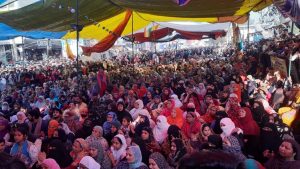
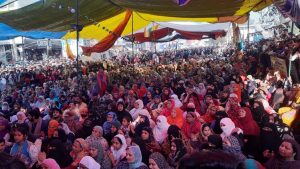
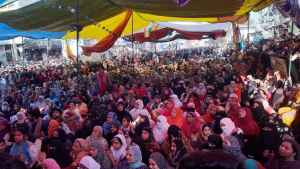
शाहीन बाग स्थल पर बड़ी संख्या में महिला प्रदर्शनकारी (फाइल फोटो) | श्रेय: लेखक
CAA ‘कुटिल मुस्लिम विरोधी डॉग विसल’ है
उन्होंने कहा कि सीएए नियमों का प्रकाशन मोदी सरकार की विचारधारा की पुनरावृत्ति है, जिसे एक वाक्य में संक्षेपित किया जा सकता है: समुदाय को सूचित करें कि वह हिंदुओं की तरह भारत का है। उन्होंने आरोप लगाया कि सरकार मुसलमानों को छोड़कर हिंदुओं को शामिल करने की रणनीति तैयार करेगी।
यह बताते हुए कि कानून भारतीय नागरिकता की धर्मनिरपेक्ष प्रकृति को कैसे प्रभावित करता है, दिल्ली विश्वविद्यालय में पढ़ाने वाले प्रोफेसर अपूर्वानंद ने कहा, “सीएए नियमों की अधिसूचना ने औपचारिक रूप से आस्था-आधारित नागरिकता का द्वार खोल दिया है। और यह दरवाज़ा मुसलमानों को छोड़कर सभी के लिए खुला है। अगर हम सीएए को एनआरसी के साथ जोड़कर नहीं पढ़ेंगे तो हम इसके असली इरादे और निहितार्थ को नहीं समझ पाएंगे। ये मैं नहीं कह रहा हूं. (केंद्रीय) गृह मंत्री (अमित शाह) ने स्वयं यह स्पष्ट कर दिया है कि एक को दूसरे की संगति में महत्व मिलता है। जबकि सीएए एक समावेशी प्रक्रिया है, एनआरसी एक विशिष्ट प्रक्रिया है।
वह शाह सहित भाजपा द्वारा बार-बार दिए गए बयानों का जिक्र कर रहे थे, कि हालांकि सीएए में बहिष्कृत हिंदू शामिल होंगे, एनआरसी “बाहरी” (मुसलमान पढ़ें) को फ़िल्टर कर देगा।
शिक्षाविद् ने कहा, यह जरूरी है कि इस बात पर जोर दिया जाए कि एनआरसी भारतीय नागरिकता देने में एक बड़ा बदलाव लाता है। “एनआरसी के साथ, हम पहले ही नागरिकता की अवधारणा में जस सोली (जन्म के आधार पर नागरिकता) से जस सेंगुइनिस (वंश के आधार पर नागरिकता) में बदलाव देख चुके हैं। फिर भी, असम में इसके कार्यान्वयन के लिए सीएए और एनआरसी की अनुकूलता बहुत महत्वपूर्ण है, ”उन्होंने कहा।
एनआरसी की मदद से, असम को इस नागरिकता पुन: सत्यापन तंत्र के लिए आदर्श परीक्षण मैदान के रूप में नामित किया गया था। इस बात से इनकार नहीं किया जा सकता कि असमिया राष्ट्रवादियों की मांगों के कारण राज्य ने इस तरह के कार्यान्वयन के लिए वैध आधार तैयार किया। एनआरसी का उपयोग असम में “विदेशियों” (हिंदू या मुस्लिम दोनों) की पहचान करने के लिए किया गया था, जिनके पूर्वज कभी पूर्वी बंगाल में रहते थे। असमिया राष्ट्रवादी का दीर्घकालिक उद्देश्य “अवैध बंगाली” की पहचान करना था – चाहे उनका धर्म कुछ भी हो।
एनआरसी प्रक्रिया के कारण असम में 19 लाख से अधिक लोगों को नागरिकता रिकॉर्ड से बाहर कर दिया गया। इनमें बंगला भाषी मुसलमानों के अलावा “मूल निवासी” भी शामिल थे।
अब, यहाँ समस्या है: बंगाली मूल का असमिया मुस्लिम समुदाय एकमात्र समुदाय है जो सीएए अधिसूचना से प्रभावित हुआ है।
“मुसलमानों को छोड़कर जो लोग बाहर हैं, वे अब सीएए के तहत नागरिकता के लिए आवेदन करने के पात्र हैं। तो, अब यह साबित हो गया है कि बंगाली मूल के मुसलमान एनआरसी की नागरिकता प्रक्रिया के मुख्य राजनीतिक शिकार हैं। यह कहना सुरक्षित है कि भारतीय राज्य दोनों प्रक्रियाओं को मुस्लिम विरोधी पहल के रूप में उपयोग कर रहा है, ”उन्होंने कहा।
उन्होंने आरोप लगाया कि सीएए नियमों की घोषणा समान नागरिक के रूप में उनकी स्थिति के बारे में मुसलमानों की चिंताओं को मजबूत करती है, जो एक “मनोवैज्ञानिक हमला” है।
“अब जब हमारे पास सीएए है, तो क्या एनआरसी जल्द ही लागू नहीं होगा?” उसने पूछा।
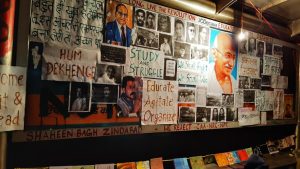
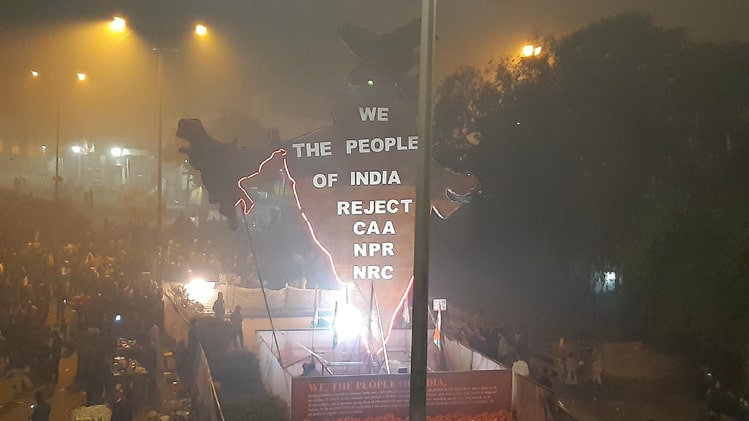
शाहीन बाग स्थल की फाइल फोटो | श्रेय: लेखक
समय पर सवाल उठाते हुए उन्होंने कहा, रमजान के पवित्र महीने के दौरान कानून को अधिसूचित करना वास्तव में “एक प्रतीकात्मक कार्य है जो एक समूह के खिलाफ हिंसा को बढ़ावा देता है”। “यह हिंसा प्रकृति में प्रतीकात्मक है। यह घोषणा उस महीने के दौरान भारत में धर्मनिरपेक्ष नागरिकता पर हमला करती है जो न्याय, दान और शांति जैसी विशेषताओं का जश्न मनाता है, ”उन्होंने निष्कर्ष निकाला।
सुप्रीम कोर्ट के वरिष्ठ वकील राजीव धवन ने कहा कि सीएए का उद्देश्य पाकिस्तान, अफगानिस्तान और बांग्लादेश में हिंदू अल्पसंख्यकों को एक संदेश देना है: “आपके देशों में आपके साथ भेदभाव किया जाता था और आप दुखी थे। इसलिए, मैं हिंदू-बहुल भारत में रहता हूं जहां हम मुसलमानों के खिलाफ भेदभाव करते हैं। दुख की बात है कि 2014 का अंत हमारी कट-ऑफ तारीख है, फिर भी जब तक आप इस्लाम का पालन नहीं करते हैं, तब तक हम आपके लिए रास्ता खोजने के लिए अपनी शक्ति में सब कुछ करेंगे। यह माना जाता है कि उत्पीड़क हमेशा आपके पक्ष में काम कर रहे हैं।”
उन्होंने कहा, इस संचार में एक पोस्टस्क्रिप्ट संलग्न है, जिसमें कहा गया है: “सीएए के तहत नागरिकता प्राप्त सभी गैर-दस्तावेज आप्रवासियों को चेतावनी दी जाती है कि भारत में रोजगार या निर्वाह के अन्य साधन सुनिश्चित नहीं हैं क्योंकि आप घर वापसी (घर वापसी) कर रहे हैं। एक बार आपके पूर्ववर्ती देशों में गद्दार होने पर आपको भेदभाव का सामना करना पड़ सकता है। पूर्वोत्तर की यात्रा भी न करें, क्योंकि वहां आपको हमलों का सामना करना पड़ सकता है या इससे भी बदतर। हालाँकि, निश्चिंत रहें कि आपको ऐसे मुसलमान नहीं मिलेंगे जिन्हें या तो शिविरों में हिरासत में लिया गया है या उन देशों में वापस भेज दिया गया है जहाँ आप हैं। हिंदू प्राथमिकता को छुपाने के लिए, सिखों, जैनियों, बौद्धों, ईसाइयों और पारसियों (एक साथ छह लोगों का समूह) को लाभार्थियों की सूची में शामिल किया गया है।
उन्होंने कहा कि सीएए समकालीन समय में संभवतः अपनी तरह का पहला शरणार्थी कानून है जो “पूर्वाग्रह और कट्टरता” में घिरा हुआ है।
सुप्रीम कोर्ट की वरिष्ठ वकील इंदिरा जयसिंह ने कहा कि हालांकि जिन लोगों को सताया जा रहा है, उनकी रक्षा करना एक अच्छा विचार है, लेकिन इस समस्या को खत्म करने का तरीका उन सभी को शरणार्थी का दर्जा देना है – चाहे वे किसी भी धर्म को मानते हों।
“सरकार ने सार्वजनिक रूप से दावा किया है कि यह अधिनियम उन लोगों को त्वरित नागरिकता प्रदान करने पर आधारित है जिन्हें सताया गया है; हालाँकि, न तो क़ानून और न ही नियम उत्पीड़न का कोई संदर्भ देते हैं, न ही उन्हें (लाभार्थियों को) नागरिकता प्रदान करने के आधार के रूप में उत्पीड़न के किसी सबूत की आवश्यकता होती है, ”पूर्व अतिरिक्त सॉलिसिटर जनरल कहते हैं।
पूर्व अतिरिक्त सॉलिसिटर जनरल ने कहा कि संविधान द्वारा नागरिकता जन्म, वंश और प्रवास के आधार पर दी जाती है। अनुच्छेद 5, 6, 7, 8, 9, और 10 प्रावधानों को संहिताबद्ध करते हैं।
“संविधान का एक मूलभूत पहलू जो इन अनुच्छेदों में परिलक्षित होता है, वह इसका धर्मनिरपेक्ष अभिविन्यास है। नागरिकता देने और रद्द करने को नियंत्रित करने के लिए संसद ने नागरिकता अधिनियम (1955) पारित किया। इसके अलावा, 1955 के अधिनियम में नागरिकता की आवश्यकता के रूप में धर्म शामिल नहीं है। लेकिन अब, संशोधन और नियमों के तहत, इसे केवल धर्म के आधार पर प्राकृतिककरण के माध्यम से प्रदान किया जाएगा, ”उसने कहा।
अधिसूचित नियमों के अनुसार, यह प्रदर्शित करने के लिए कि आवेदक पाकिस्तान, अफगानिस्तान या बांग्लादेश का नागरिक है, नौ अलग-अलग दस्तावेज़ आवेदन के साथ संलग्न किए जा सकते हैं। इस प्रकार यह माना जाता है कि उत्पीड़न का कोई सबूत देने की कोई आवश्यकता नहीं है।
अनुसूची आईए की प्रविष्टि 5 में कहा गया है, “अफगानिस्तान, बांग्लादेश या पाकिस्तान सरकार या इन देशों में किसी अन्य सरकारी प्राधिकरण या सरकारी एजेंसियों द्वारा जारी किए गए किसी भी प्रकार के पहचान दस्तावेज भी राष्ट्रीयता साबित करने के लिए पर्याप्त होंगे।”
31 दिसंबर 2014 को या उससे पहले आवेदक के भारत में प्रवेश को प्रमाणित करने के लिए अनुसूची आईबी में बीस कागजात सूचीबद्ध हैं। इनमें से कोई भी आवेदक के दावे का समर्थन करेगा।
आवश्यक दस्तावेजों में भारत में आगमन पर आवेदक के वीजा और आव्रजन टिकट की प्रतियां, विदेशी पंजीकरण अधिकारी (एफआरओ) या विदेशी क्षेत्रीय पंजीकरण अधिकारी (एफआरआरओ) द्वारा जारी पंजीकरण प्रमाण पत्र या आवासीय परमिट, भारत में जनगणना गणनाकर्ताओं द्वारा प्रदान की गई एक पर्ची शामिल है। , भारत में सरकार द्वारा जारी कोई भी लाइसेंस, प्रमाणपत्र या परमिट (जैसे ड्राइविंग लाइसेंस या आधार कार्ड), आवेदक का राशन कार्ड, कोई आधिकारिक सरकार या अदालती पत्राचार, आवेदक का भारत में जारी जन्म प्रमाण पत्र, विवाह प्रमाण पत्र इत्यादि।
राष्ट्रीय नागरिक रजिस्टर (एनआरसी) के मामले में, किसी को आश्चर्य होता है कि क्या भारतीय नागरिक होने का दावा करने वाले व्यक्तियों पर भी निवास के प्रमाण के संबंध में समान ढीले मानक लागू होंगे।
उत्पीड़न को मानने और उत्पत्ति के प्रमाण के लिए आवश्यकताओं में ढील देने के अलावा, संघीय प्रशासनिक संरचना अधिक केंद्रीकृत हो गई है। इन नियमों को लागू करने से पहले संबंधित जिला कलेक्टर को नागरिकता आवेदन जमा करना होगा। जो लोग सीएए का लाभ लेना चाहते हैं उन्हें अब उस समिति के पास आवेदन करना होगा जिसे केंद्र सरकार अधिकार के साथ स्थापित करेगी।
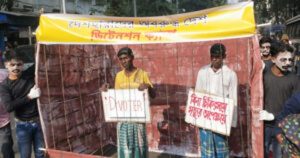
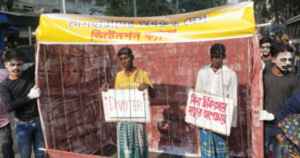
कोलकाता के विभिन्न कॉलेजों के छात्र डिटेंशन सेंटर की प्रतिकृति के साथ सीएए और एनआरसी के खिलाफ विरोध प्रदर्शन कर रहे हैं (फाइल फोटो)
‘सीएए हिंदुओं को भी परेशान करेगा’
भाजपा नेताओं ने अक्सर कहा है कि सीएए एनआरसी में छूटे सभी गैर-मुस्लिम लोगों को कवर करेगा – उन्हें विदेशी न्यायाधिकरण की अपील से छूट दी जाएगी। आख़िर कैसे?
सीएए नियमों के अनुसार, मुसलमानों को छोड़कर – जो प्रवासी भारतीय नागरिकता चाहते हैं, उन्हें यह सबूत देना होगा कि वे अफगानिस्तान, बांग्लादेश या पाकिस्तान के नागरिक थे। वे इसे कैसे पूरा करेंगे क्योंकि उनमें से अधिकांश बिना किसी दस्तावेज़ के यहां आए हैं? क्या इन लगभग 15 लाख हिंदू नागरिकों के लिए कोई राज्य नहीं होगा?
“यह सच है कि मुसलमानों को छोड़कर, एनआरसी से बाहर रखा गया कोई भी व्यक्ति अब सीएए के तहत नागरिकता के लिए आवेदन कर सकता है, लेकिन ऐसा करने के लिए उन्हें पहले खुद को बांग्लादेशी के रूप में पहचानना होगा। इसके अतिरिक्त, सीएए नियमों के अनुसार, एक आवेदक केवल कानून के तहत लाभ के लिए पात्र होगा यदि वह बांग्लादेश, पाकिस्तान या अफगानिस्तान से अपने वंश को प्रमाणित करने वाले दस्तावेज प्रस्तुत करने में सक्षम है। उन्होंने अपनी भारतीय नागरिकता स्थापित करने के लिए एनआरसी अभ्यास के दौरान 1971 (कटऑफ तिथि) से पहले आवश्यक दस्तावेज उपलब्ध कराए थे; अब, सीएए के तहत, उन्हें यह प्रदर्शित करना होगा कि वे या उनके पूर्वज तीन देशों में से किसी एक के नागरिक हैं या थे,” अधिवक्ता अमन वदूद, जो गौहाटी उच्च न्यायालय में प्रैक्टिस करते हैं और एनआरसी के दौरान और उसके बाद कई लोगों को कानूनी सहायता प्रदान करते हैं। व्यायाम।
उन्होंने बताया कि कई हिंदू जो अंतिम एनआरसी ड्राफ्ट में जगह बनाने में असफल रहे, उनके पूर्वज ब्रिटिश भारत में रहते थे, वे कभी बांग्लादेश या पूर्वी बंगाल में नहीं रहे। “अब वे अपने वंश को बांग्लादेश से कैसे जोड़ पाएंगे?” उसने पूछा।
कैसे CAA, संविधान के अनुच्छेद 14 का उल्लंघन करता है?
अधिनियम में कानून के समक्ष समानता और कानून के तहत समान सुरक्षा से कथित इनकार अनुच्छेद 14 का उल्लंघन है।
“यह याद रखना महत्वपूर्ण है कि केवल नागरिक ही नहीं, बल्कि हर कोई अनुच्छेद 14 के अंतर्गत आता है। तुलनीय परिस्थितियों में मुसलमानों को सीएए द्वारा पंजीकरण या प्राकृतिककरण के माध्यम से फास्ट-ट्रैक नागरिकता के समान लाभ नहीं दिए जाते हैं, ”जयसिंह ने आरोप लगाया।
अधिनियम में सूचीबद्ध देशों के अलावा अन्य देशों के लोगों पर भी ध्यान नहीं दिया जाता है।
“चूंकि यह सर्वविदित है कि विभिन्न संप्रदायों के मुसलमानों पर भी उन्हीं देशों में अत्याचार किया जाता है, इसलिए इन तीन देशों में सताए गए अल्पसंख्यकों को नागरिकता लाभ देने का सीएए का कथित लक्ष्य हिंदुओं का पक्ष लेने के अलावा और कुछ नहीं प्रतीत होता है,” विख्यात व्यक्ति का तर्क है सलाह.
उनके अनुसार, यह मान लेना असंभव है कि बहुसंख्यक समुदाय के जो लोग पारंपरिक राजनीति से असहमत हैं, उन्हें अपने साथियों से उत्पीड़न का सामना नहीं करना पड़ेगा।
वह दावा करती हैं, ”यह अक्सर माना जाता है कि पाकिस्तान के सबसे अधिक उत्पीड़ित अल्पसंख्यकों में से एक अहमदिया मुस्लिम समुदाय है।”
अन्य लोगों ने इस तथ्य पर ध्यान आकर्षित किया है कि सीएए अल्पसंख्यक समूहों को फास्ट-ट्रैक नागरिकता लाभ प्रदान नहीं करता है, जो श्रीलंका और म्यांमार जैसे पड़ोसी देशों में उत्पीड़न के अधीन हैं, जहां क्रमशः रोहिंग्या और तमिल उत्पीड़न के अधीन हैं।
अवैध शरणार्थी बनेंगे भारतीय?
2019 के कानून ने शरणार्थियों को दो प्रमुख छूटें दी हैं – विदेशी नागरिकों के लिए भारतीय नागरिक बनने के लिए 11 साल की अवधि को घटाकर पांच साल करना और आगमन से पहले किसी के निवास को साबित करने वाले दस्तावेज के अभाव में भी नागरिकता प्राप्त करने का अधिकार।
यूएनएचसीआर डेटा इंगित करता है कि कानून, वास्तव में, भारत में अधिकांश शरणार्थी समूहों की उपेक्षा कर रहा है; यदि यह किसी समूह की मदद कर रहा है, तो संभवतः यह गैर-दस्तावेजी समूह है। 2023 के मध्य तक, बांग्लादेश से केवल 12 शरणार्थी थे और पाकिस्तान से कोई भी भारत में आधिकारिक एजेंसी के साथ पंजीकृत नहीं था।
देश के अधिकांश शरणार्थी और शरण चाहने वाले चीन, विशेष रूप से तिब्बत, श्रीलंका और म्यांमार में रोहिंग्या के रूप में जाने जाने वाले मुस्लिम अल्पसंख्यक हैं। भारत में 13,000 से अधिक पंजीकृत शरणार्थियों और शरण चाहने वालों के साथ अफगानिस्तान एक अपवाद के रूप में खड़ा है।
फिर भी, चल रहे संघर्ष को देखते हुए जो देश के सभी जनसंख्या समूहों को प्रभावित करता है, ये व्यक्ति मुस्लिम हो सकते हैं, जिनमें सताए गए हजारा जातीय समूह भी शामिल हैं या वे अफगानिस्तान के छोटे हिंदू, सिख, पारसी और संभवतः ईसाई अल्पसंख्यकों के सदस्य हो सकते हैं।
2011 की जनगणना के आंकड़ों के अनुसार, 1991 से पहले पाकिस्तान और बांग्लादेश दोनों से आव्रजन लहरें थीं, जब 2011 में लगभग 80% लोग जो पाकिस्तान या बांग्लादेश में पैदा हुए थे और भारत में रहते थे, आकर बस गए। 2002 और 2011 के बीच इन दोनों देशों के सभी अप्रवासियों में से केवल 6.5% से 7.5% ही भारत आए।
New Delhi: Shocking revelations are pouring in since the data on electoral bonds (provided by the State Bank of India or SBI) was published on the website of the Election Commission on March 14 in accordance with a Supreme Court order. There are 30 companies, which gave huge donations to political parties immediately after a raid carried out by Central agencies such as the Enforcement Directorate (ED), Income Tax (IT) department, the Central Bureau of Investigation (CBI) among others.
Several firms gave the donations many times more than their net profits. One such business entity is Madanlal Limited — a Kolkata-based company — which bought bonds worth Rs 182.5 crore twice before the 2019 general elections, while its net profit during that period was only Rs 1.81 crore. In 2020-21, it rose Rs 2.72 crore but declined to just Rs 44 lakh in 2022-23.
This is not the end of the story. Of the 30 companies, which made the highest donations, there are 14 firms against which Central or state investigating agencies have initiated actions.
For example, the DLF Commercial donated Rs 30 crore after it was raided by the CBI in January 2019 over alleged irregularities in land allotment.
Similarly, a relatively unknown business — the Future Gaming and Hotel Services — managed by “Lottery King” Santiago Martin tops the list of donors. Its contributions to the Electoral Bonds Scheme (EBS) from 2019 to 2024 stood at Rs 1,368 crore — over six times higher than its net profit, which was Rs 215 crore within the period.
However, the company has been under ED investigation since 2019 because of alleged violations of the Prevention of Money Laundering Act (PMLA). The agency raided it in May 2023 in Chennai and Coimbatore. The ED’s action was prompted by a CBI chargesheet — which accused Future Gaming of participating in Sikkim government lotteries in Kerala and allegedly, costing the northeastern state a loss of Rs 910 crore between April 2009 and August 2010.
Reliance Industries-linked Qwik Supply Chain Private Limited — a little-known business, which manufactures storage units and warehouses — was the third-largest donor to political parties, using electoral bonds.
It purchased electoral bonds worth Rs 410 crore during the financial years 2021-22 and 2023-24 to give away to political parties, though its net profit for the same year was a mere Rs 21.72 crore. It acquired extra bonds in 2023–2024 for a total of Rs 50 crore.
Similarly, four firms connected to the Kolkata-based Keventer group of companies donated more than Rs 600 crore through electoral bonds between April 2019 and January 2024. This indicates that the group purchased the most number of bonds, following the Future Gaming and Hotel Services and the Hyderabad-based Megha group of companies.
Led by entrepreneur Mahendra Kumar Jalan, the group has a variety of businesses, including real estate and food processing.
A year after the ED launched an investigation against one of the group’s companies — Keventer Agro Limited — in October 2019 over a purported disinvestment scheme, involving hundreds of crores of rupees, the firms associated with the conglomerate started buying the anonymous bonds.
In February 2021, the ED raided the group’s Kolkata office as the four entities were purchasing bonds. Nine months later, in September 2022, the Supreme Court ruled in its favor, rejecting an appeal that called for a separate inquiry into the case.
The fifth in the list is Keventer Foodpark Infra Limited, which purchased 204 bonds worth Rs 195 crore. The firm also acquired bonds under the names of other companies owned by the group — Madanlal Ltd (199 bonds worth Rs 185.5 crore) and MKJ Enterprises Ltd (324 bonds for Rs 192.42 crore).
However, MKJ’s net profit during the period was mere Rs 58 crore.
Donations made by healthcare and liquor firms
Fourteen companies, manufacturing health care equipment and medicines, have donated Rs 534 crore — with individual firms purchasing bonds worth Rs 20-100 crores. These include Dr. Reddy’s Lab, Torrent Pharma, Natco Pharma, Divis Lab, Aurobindo Pharma, Cipla, Sun Pharma Lab, Hetero Drugs, Zydus Healthcare and Mankind Pharma.
Similarly, in the past five years, liquor companies purchased bonds worth Rs 34.54 crore. Kolkata’s Castle Liquor acquired it for Rs 7.5 crores, Bhopal’s Som Group Rs 3 crore, Chhattisgarh Distilleries Rs 3 crore, Madhya Pradesh’s M/S Everest Beverages Rs 1.99 crore and Esso Alcohol Rs 2 crore.
Records of many companies are not updated
Abhijeet Mitra’s Searock Infra Project, a Kolkata-based firm, bought bonds worth Rs 4.25 crore. Its total share capital is only Rs 6.40 lakh. The last board meeting of the company was held in 2022, but there has been no update for two years.
Owned by one Anil Shetty, S. Urban Developers, a Hyderabad-based company that bought Mehul Choksi’s AP Gems & Jewelry in 2022, purchased bonds worth Rs 10 crore on 17 November 2023.
Chennai Greenwood, owned by Gautam Hora, acquired bonds worth Rs 105 crore. However, the firm’s share capital is just Rs 43 crore.
Crescent Power bought bonds worth Rs 34 crore — which was 10% of its profit that totalled at Rs 346 crore.
The SBI sold 28,030 bonds worth Rs 16,518 crore from March 1, 2018 to February 15, 2024. Currently, information about only 18,871 bonds has been furnished by the state lender to the ECI. As per the apex court’s order, the bank has to make information public about the remaining 9,159 bonds worth Rs 4002 crore by March 17.
Meanwhile, the Supreme Court on March 15 issued a notice to the SBI, asking why it did not disclose to the election watchdog the unique alphanumeric numbers that contain complete details of the bonds, including date of purchase, name of the buyer, category, etc. The top court in its March 11 order had directed the bank to reveal all details of the bonds acquired.
Headed by Chief Justice of India DY Chandrachud, a bench comprising Justice Sanjiv Khanna, Justice BR Gavai, Justice JB Pardiwala and Justice Manoj Mishra were hearing the petition by the EC. The bench said that SBI should reply by March 18 for not providing information about the number.
The court directed the registry to scan and digitize the data received from the EC by 5 pm on March 16. After completion of the process, the original copy should be returned to the Commission. A copy should be kept in the court and then this data should be uploaded on the Election Commission website by March 17.
EC says that it has given the documents to the apex court in two installments, containing data from April 2019 to November 2023. The first tranche contained 106 sealed envelopes and the second 523. The Commission says that this data can be uploaded only after the SBI gets back to it with the other necessary details.
Hearing a petition filed by the Association for Democratic Reforms (ADR), the court banned the Electoral Bond Scheme for political funding with immediate effect — calling it “unconstitutional”. “Maintaining the secrecy of the bond is unconstitutional,” observed the highest judiciary, saying that the scheme is a “violation of the Right to Information”.
The court had asked the SBI to provide the details by March 12 and the ECI to publish it on its website by March 15. The bank on March 11 approached the court, urging that it be granted time till June 30. But the plea was rejected.
[dropcap]N[/dropcap]arrating a scene from Bertolt Brecht’s famous play has become very important now, a well-known play. In 1937, Brecht wrote the play – ‘The Life of Galileo’. In one scene, Galileo’s student Andrei says – ‘Unhappy the land that has no heroes’ means that the country is unhappy, and has no heroes. Galileo, the protagonist of the play upon entering the place hears this remained silent for a while, and after sometime, Galileo is heard saying, ‘Unhappy the land that needs heroes’, means, the country that needs heroes is the most unhappy. Through these two dialogues, all the stories of today’s times can be narrated. The fight of two ideas, the debate of two thoughts. Sometimes, we try to find heroes in Narendra Modi or sometimes in Abhijit Gangopadhyay that all our grievances and unhappiness can be solved by a single hero. Whether it is the question of corruption or violence against women, we think of trusting a hero more than ourselves. If that hero also uses the Central Bureau of Investigation (CBI) or Extortion Department or ED we forget to ask questions because we are busy looking for the hero. We are busy making messiahs. We’ve been waiting since 2014 for a Nayak to change everything.
From the year 2011, every day there was news in the mainstream media about the corruption of the Congress. The everyday face of the anti-BJP Prime Minister was stabbing the ruling Congress on the issue of corruption, on the other hand, what was going on in Delhi, the so-called non-political faces like Anna Hazare were raising voices from the civil society, we needed a corruption-free India. A narrative was being created that only Narendra Modi could be trusted to get rid of such corruption. Who alone can build a new India, can build a corruption-free India? Then came the elections, ousting the Congress, and proving all the narratives true, BJP came to power. Everyone was very excited that this will be a new India, a corruption-free India. Narendra Modi became the Prime Minister, giving the slogan, ‘Na Khaunga, Na Khane Dunga’, meaning do not corrupt yourself, do not allow anyone to do corruption. Walking the talk, suddenly one day in 2016 the announcement came that all ongoing currency notes were demonetised. His announcement cancelled all old notes of 500 and 1000 rupees. He said that those who do not have black money have no reason to fear. Terrorism was supported with this black money. So if it stops, terrorism will also stop. It is said that those who have the money should go to the bank and either change it or deposit it. Everyone started thinking that ‘maybe the man next door is the owner of black money, I will have trouble for some time, but that man must throw the money in the water or burn it’. Everyone thought that all the black money would come out now. All the stolen money will be caught now. But what happened was that all the small businesses closed down, and the big industrialists got richer. Not long after that, the then-finance minister suggested that the electoral system should be made transparent. Until now all political parties used to deal in cash, now an ‘Electoral Bond’ is being introduced, through which no one will know who is supporting those political parties. So there is no question of getting benefits in exchange for that money. The opposition started saying that this would lead to more corruption, so this system should be stopped. The case went to the highest court in the country. Six years passed and the court did not even hear the case, while the opposition’s objections continued to increase. Then a five-member constitution bench of the country’s highest court heard the case and stayed the verdict for some time.
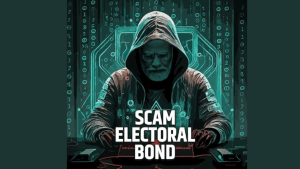
One of the thousand memes doing round on social media after the revelation of Electoral Bond scam | Courtesy: X/@Sujat_Ambedkar
Then on February 15, the Supreme Court declared the ‘electoral bonds’ unconstitutional and ordered the State Bank of India, which claims to be the ‘Banker To Every Indian’, through which the bonds were bought and sold, to immediately disclose the names of who bought the bonds and who the beneficiaries were. After much deliberation, SBI finally deposited the names (donor and recipient) in two completely different envelopes, separately, which the Election Commission, following the court’s order, released to the public on their website.
Now, the fun began. As soon as the list of names was published, several people, who are still in ‘journalism’ and don’t think bootlicking is journalism, came down to compile this information. Some terrible information was revealed, which shocked the whole country. The information that has been published has not included the data from March 2018 to 2019, but the information that has come after that, it can be said for sure that ‘Electoral Bond’ is the biggest government-sponsored corruption in independent India.
As it turns out, many companies and many individuals have bought crores of `electoral bonds’.
A company, Future Gaming and Hotel Services, owned by Santiago Martin alone bought bonds worth Rs 1,368 crore. On further investigation, it appears that this organization is a daily lottery organization. They are Daily Online Lottery Vendors in many Northeast States and Tamil Nadu in South India. In 2015, Santiago Martin’s son joined the BJP. Before that, the ED and CBI went to the headquarters of the agency. After that, it is seen that the company bought 1368 crore bonds in 7 days.
Another company name is Megha Engineering. A news media called TV 9 is in collusion with this organization, which is quoted as building roads and infrastructure at the border. It has been seen that they bought bonds worth 980 crore rupees. Elections are coming up, and this time most of the media are showing opinion polls about which party will win. TV 9 is also showing it. Naturally, the BJP is winning the election with a huge majority, so after this information comes out today, what is left to understand is that these opinion polls are not being shown to know the public opinion but to form the public opinion and it is done by those Megha engineers and their money. In third place is Vedanta Group, which gave Rs. 400 crores. What did you give for? It doesn’t take any calculus to understand that they paid this money to get the benefits of the Water Land Jungle, a company that is a very familiar name.
Another meme after Electoral Bond scam came to fore
There are also many other organizations. Those who bought bonds above 100 crores. Sudhir Mehta’s Torrent Group bought bonds worth Tk 185 crore. In 2019, Devendra Fadnavis, the then Chief Minister of Maharashtra, waived a property tax of Rs 285 crore on the company. Now say the BJP is an honest party, their leaders are very honest.
Where did the money they gave to the MLAs of Eknath Shinde to topple the Uddhav Thackeray government in Maharashtra come from? Many may have tried to find the names of Adani and Ambani. A word should be said for them. Companies like Adani or Ambani never directly buy bonds in their name. However, it appears that several people associated with their organization have personally bought these bonds. Lakshmidas Vallabhbhai Merchant, in 2023, paid Rs 25 crore in one hit in November, through this electoral bond. He is also the head of the News 18 news agency. Whose News 18? Everyone knows it is Reliance. A little search can be seen on LinkedIn. Now News 18 is showing that BJP can get 400 seats in the next elections. Now do the math. Then think about why the BJP creates such ideas with this media.
Some information is given here. It is not possible to give everything in one text. It is understood that money has been withdrawn in two ways. One is that the official citation has been obtained by withdrawing the money. Second, by sending ED and CBI, the money has been siphoned off by fear-mongering. One more thing needs to be said here. The money that was not redeemed in the ‘electoral bond’ went to the PM CARES fund, which cannot be audited, it is said. It means that the money is not coming from this side but it has been deposited in the same BJP fund from that side. More news about this will come very soon. But more than that, why is this discussion not being widely circulated in the media? Why is this electoral bond scam not making big headlines in the daily papers like the Congress corruption in 2011? So in the name of journalism, what they are doing is protecting the BJP and promoting it? So what are they, journalists? They should not say anything except the moderators, who are sitting on their channel every night, directly or indirectly, and are blaspheming in the name of journalism. Hate, hate and fake news are spreading.
To go back, again to Brecht. Since 2011, we have been looking for a ‘Messiah’ to curb corruption to prevent violence against women. I hope that the Messiah will come and save us. The media has supported that thinking. Sometimes we think of Narendra Modi and sometimes Justice Abhijit Gangopadhyay as the saviour. One has become a saviour himself a panda in the Tolabaji cycle and the other wants to take his hand in curbing corruption. While searching for the thief every evening, we don’t even realize when the thief has entered our brains with the help of those media. Do we understand, or rather want to say, that the media that spread hate all the time, the media that spread lies all the time, is running on the money of this electoral bond called Tolabaji Chakra or Extortion Racket?
নয়াদিল্লি: সুপ্রিম কোর্ট (এসসি) স্টেট ব্যাঙ্ক অফ ইন্ডিয়ার (এসবিআই) নির্বাচনী বন্ড প্রকাশের তারিখ স্থগিত করার অনুরোধ প্রত্যাখ্যান করার পরে – একটি উন্নয়ন যা কেন্দ্রের নরেন্দ্র মোদী সরকারের জন্য একটি উল্লেখযোগ্য ধাক্কা এবং লজ্জার উৎস হিসাবে দেখা হয়েছিল, খবরের ল্যান্ডস্কেপ দখল করা থেকে রক্ষা করার জন্য আরেকটি বড় গল্প তৈরি করা প্রয়োজন ছিল। এবং বিতর্কিত নাগরিকত্ব সংশোধনী আইন (CAA), 2019 বাস্তবায়নের জন্য বিধি ঘোষণার চেয়ে আদর্শ আর কী হতে পারে?
এই আইনটি বিভিন্ন ধর্মের “নিপীড়িত” অভিবাসীদের নাগরিকত্ব প্রদান করতে চায় – মুসলিম ছাড়া – যারা মুসলিম সংখ্যাগরিষ্ঠ পাকিস্তান, আফগানিস্তান এবং বাংলাদেশ থেকে 31 ডিসেম্বর, 2014 বা তার আগে ভারতে এসেছিলেন।
“সিএএ বিধি” ঘোষণার আগে, আসামের মুখ্যমন্ত্রী হিমন্ত বিশ্ব শর্মা বিরোধী দলগুলিকে সতর্ক করেছিলেন যে তারা যদি সিএএর বিরোধিতা করার সাহস করে তবে তাদের নিবন্ধন প্রত্যাহার করা হবে। দিল্লির মুসলিম পাড়ায় কর্মীরা নিরাপত্তা বাহিনীর একটি ব্যতিক্রমী ভারী উপস্থিতি প্রত্যক্ষ করেছেন। সিটি পুলিশও কয়েকজন কর্মীকে ডেকেছে এবং কঠোরভাবে বা নম্রভাবে তাদের কোনো আন্দোলনমূলক কর্মকাণ্ডে জড়িত না হওয়ার জন্য বলেছে।
2019 সালের ডিসেম্বরে আইনটি কার্যকর করার ফলে দেশ জুড়ে ব্যাপক বিক্ষোভ এবং জাতীয় রাজধানীতে একটি সাম্প্রদায়িক সহিংসতা দেখা দেয় – মোদির নেতৃত্বাধীন হিন্দু আধিপত্যবাদী ভারতীয় জনতা পার্টি (বিজেপি) সরকারকে এর বাস্তবায়ন স্থগিত করতে বাধ্য করে।
যারা সিএএ (CAA) এর বিরোধিতা করছেন (মুসলিম গোষ্ঠী, বিরোধী দল এবং অধিকার কর্মীরা) বলছেন যে আইনটি মুসলমানদের প্রতি বৈষম্য করে এবং দেশের ধর্মনিরপেক্ষ সংবিধানকে দুর্বল করে।
যদিও কেউ কেউ ভাবছেন যে কেন এটি মুসলমানদের বাদ দেয়, শ্রীলঙ্কা এবং মায়ানমার থেকে পালিয়ে যায়, বৌদ্ধ সংখ্যাগরিষ্ঠ দেশ, আসাম এবং অন্যান্য উত্তর-পূর্ব রাজ্যের লোকেরা বাংলাদেশ থেকে অভিবাসন নিয়ে উদ্বেগ প্রকাশ করছে – একটি প্রতিবেশী দেশ যেটি কয়েক দশক ধরে এই অঞ্চলে একটি ফ্ল্যাশপয়েন্ট।
অন্যদিকে, পশ্চিমবঙ্গ এবং আসামের মুসলমানরা উদ্বিগ্ন যে আইনটি – যদি ভবিষ্যতে পরিকল্পিত জাতীয় নাগরিকপঞ্জির (এনআরসি) সাথে যুক্ত করা হয় – তবে তাদের বাংলাদেশ থেকে অবৈধ অভিবাসী হিসাবে চিহ্নিত করতে এবং তাদের নাগরিকত্ব থেকে বঞ্চিত করতে ব্যবহার করা যেতে পারে।
যাইহোক, প্রতিক্রিয়ার পুনরাবৃত্তির ভয়ে, কেন্দ্র ও রাজ্যের বিজেপি সরকার এবং জাফরান দল এবং এর সহযোগী সংগঠনের নেতারা মুসলমানদের (দেশের দ্বিতীয় বৃহত্তম ধর্মীয় গোষ্ঠী) বোঝাতে কোন কসরত ছাড়ছে না যে তাদের “চিন্তা করার দরকার নেই”। সিএএ (CAA) এর মানে না কারো নাগরিকত্ব কেড়ে নেওয়া বা এটি অবৈধ অভিবাসীদের নির্বাসন নিয়ে কাজ করে না। এবং তাই, সিএএ (CAA) মুসলিম সংখ্যালঘুদের বিরুদ্ধে যে উদ্বেগ তা “অযৌক্তিক”।
যাইহোক, আইন প্রণয়ন এবং মুসলিম সম্প্রদায়ের উপর এর প্রভাব সম্পর্কে সরকারের দাবির বিরুদ্ধে পণ্ডিত, আইনী ঈগল এবং অ্যাক্টিভিস্টরা ওজন করেছেন।
শাহীনবাগ সাইটের ফাইল ছবি | ক্রেডিট: লেখক
সিএএ (CAA) হল ‘মুসলিম-বিদ্বেষী কুকুরের বাঁশি’
তারা বলেছে যে সিএএ বিধিগুলির প্রকাশনা হল মোদী সরকারের আদর্শের পুনরাবৃত্তি, যা একটি একক বাক্যে সংক্ষিপ্ত করা যেতে পারে: সম্প্রদায়কে জানান যে এটি হিন্দুদের মতো করে ভারতের অন্তর্গত। তারা অভিযোগ করেছে যে সরকার মুসলমানদের বাদ দিয়ে হিন্দুদের অন্তর্ভুক্ত করার কৌশল তৈরি করবে।
আইনটি কীভাবে ভারতীয় নাগরিকত্বের ধর্মনিরপেক্ষ প্রকৃতিকে প্রভাবিত করে তা ব্যাখ্যা করে, দিল্লি বিশ্ববিদ্যালয়ে অধ্যাপনাকারী অধ্যাপক অপূর্বানন্দ বলেছেন, “সিএএ নিয়মের বিজ্ঞপ্তি আনুষ্ঠানিকভাবে বিশ্বাস-ভিত্তিক নাগরিকত্বের দরজা খুলে দিয়েছে। আর এই দরজা মুসলমান ছাড়া সবার জন্য উন্মুক্ত। আমরা যদি এনআরসি-র সাথে একত্রে সিএএ না পড়ি, আমরা এর প্রকৃত উদ্দেশ্য এবং প্রভাব বুঝতে সক্ষম হব না। এটা যে আমি বলছি না। (কেন্দ্রীয়) স্বরাষ্ট্রমন্ত্রী (অমিত শাহ) নিজেই এটা স্পষ্ট করেছেন যে একজন অন্যের সাথে তাত্পর্য খুঁজে পায়। যদিও সিএএ (CAA) একটি অন্তর্ভুক্তিমূলক প্রক্রিয়া, NRC একটি একচেটিয়া প্রক্রিয়া।”
তিনি শাহ সহ বিজেপির বারবার দেওয়া বিবৃতিকে উল্লেখ করেছিলেন যে যদিও সিএএ বাদ দেওয়া হিন্দুদের অন্তর্ভুক্ত করবে, এনআরসি “বহিরাগতদের” (পড়ুন মুসলমানদের) ফিল্টার করবে।
এনআরসি ভারতীয় নাগরিকত্ব প্রদানের ক্ষেত্রে একটি উল্লেখযোগ্য পরিবর্তনের প্রবর্তন করে বলে জোর দেওয়া – শিক্ষাবিদ বলেছেন – এটি অপরিহার্য। “এনআরসি-এর মাধ্যমে, আমরা ইতিমধ্যেই জুস সোলি (জন্ম অনুসারে নাগরিকত্ব) থেকে জুস সাঙ্গুইনিস (বংশ অনুসারে নাগরিকত্ব) নাগরিকত্বের ধারণার পরিবর্তন প্রত্যক্ষ করেছি। তবুও, এনআরসির সাথে সিএএ-এর সামঞ্জস্য আসামে কার্যকর করার জন্য অপরিহার্য, গুরুত্বপূর্ণ উল্লেখ করার মতো নয়, “তিনি উল্লেখ করেছিলেন।
এনআরসি-র সাহায্যে, আসামকে এই নাগরিকত্ব পুনঃ-যাচাই পদ্ধতির জন্য আদর্শ পরীক্ষার ক্ষেত্র হিসাবে মনোনীত করা হয়েছিল। অসমিয়া জাতীয়তাবাদীদের দাবির কারণে রাজ্য এই জাতীয় বাস্তবায়নের জন্য বৈধ ভিত্তি তৈরি করেছে তা অস্বীকার করা যায় না। আসামে এনআরসি ব্যবহার করা হয়েছিল “বিদেশী” (হিন্দু বা মুসলিম উভয়ই) চিহ্নিত করতে যাদের পূর্বপুরুষরা একসময় পূর্ববঙ্গে বসবাস করতেন। অসমিয়া জাতীয়তাবাদীদের দীর্ঘস্থায়ী লক্ষ্য ছিল “অবৈধ বাঙালি” – পরবর্তীদের ধর্ম নির্বিশেষে চিহ্নিত করা।
আসামের 19 লাখেরও বেশি লোককে এনআরসি অনুশীলনের মাধ্যমে নাগরিকত্বের রেকর্ড থেকে বাদ দেওয়া হয়েছিল। বাংলাভাষী মুসলমানদের পাশাপাশি, তারা “আদি বাসিন্দাদের”ও অন্তর্ভুক্ত করেছিল।
এখন, এখানে ধরা হল: বাঙালি বংশোদ্ভূত অসমীয়া মুসলিম সম্প্রদায়ই একমাত্র সম্প্রদায় যা সিএএ (CAA) বিজ্ঞপ্তি দ্বারা প্রভাবিত হয়েছে।
“যারা বাদ পড়েছে, মুসলমান ছাড়া, তারা এখন সিএএ-এর অধীনে নাগরিকত্বের জন্য আবেদন করার যোগ্য। সুতরাং, এটা এখন প্রমাণিত যে বাঙালি বংশোদ্ভূত মুসলমানরা NRC-এর নাগরিকত্ব পদ্ধতির প্রধান রাজনৈতিক শিকার। এটা বলা নিরাপদ যে ভারতীয় রাষ্ট্র উভয় প্রক্রিয়াকেই মুসলিম বিরোধী উদ্যোগ হিসেবে ব্যবহার করছে,” তিনি বলেন।
তিনি অভিযোগ করেন, সিএএ বিধিগুলির ঘোষণা মুসলমানদের সমান নাগরিক হিসাবে তাদের মর্যাদা সম্পর্কে উদ্বেগকে শক্তিশালী করে, যা একটি “মনস্তাত্ত্বিক আক্রমণ”।
“এখন যেহেতু আমাদের সিএএ আছে, শীঘ্রই কি এনআরসি অনুসরণ করবে না?” তিনি জিজ্ঞাসা.
সময় নিয়ে প্রশ্ন রেখে তিনি বলেন, পবিত্র রমজান মাসে আইনটি অবহিত করা আসলে “একটি প্রতীকী কাজ যা একটি গোষ্ঠীর বিরুদ্ধে সহিংসতার জন্য ভিক্ষা করে”। “এই সহিংসতা চরিত্রে প্রতীকী। এই ঘোষণাটি এমন এক মাসে ভারতে ধর্মনিরপেক্ষ নাগরিকত্বকে ছুরিকাঘাত করে যা অন্যদের মধ্যে ন্যায়বিচার, দাতব্য এবং শান্তির মতো বৈশিষ্ট্যগুলি উদযাপন করে,” তিনি উপসংহারে বলেছিলেন।
সুপ্রিম কোর্টের সিনিয়র আইনজীবী রাজীব ধাওয়ান বলেছেন যে সিএএ পাকিস্তান, আফগানিস্তান এবং বাংলাদেশের হিন্দু সংখ্যালঘুদের কাছে একটি বার্তা দেওয়ার লক্ষ্যে রয়েছে: “আপনার দেশে আপনি বৈষম্যের শিকার ছিলেন এবং দুঃখী ছিলেন। তাই, আমি হিন্দু-সংখ্যাগরিষ্ঠ ভারতে বাস করি যেখানে আমরা মুসলমানদের প্রতি বৈষম্য করি। দুঃখজনকভাবে, 2014 এর শেষ আমাদের কাট-অফ ডেট, তারপরও আমরা যতক্ষণ না আপনি ইসলামের অনুশীলন না করেন ততক্ষণ আমরা আপনার জন্য একটি উপায় খুঁজে বের করার জন্য আমাদের ক্ষমতার সবকিছু করব। নিপীড়কদের সবসময় আপনার পক্ষে কাজ করছে বলে ধরে নেওয়া হয়।”
শাহিনবাগ সাইটে বিপুল সংখ্যক নারী বিক্ষোভকারী (ফাইল ছবি)
তিনি বলেন, একটি পোস্টস্ক্রিপ্ট এই যোগাযোগের সাথে যুক্ত করা হয়েছে, যাতে বলা হয়েছে: “সিএএ-এর অধীনে নাগরিকত্ব দেওয়া সমস্ত অনথিভুক্ত অভিবাসীদের সতর্ক করা হচ্ছে যে ভারতে কর্মসংস্থান বা জীবিকা নির্বাহের অন্যান্য উপায় নিশ্চিত নয় কারণ আপনি ঘর ওয়াপসি (স্বদেশ প্রত্যাবর্তন) করছেন। আপনার পূর্ববর্তী দেশগুলিতে একবার বিশ্বাসঘাতক হলে, আপনি বৈষম্যের সম্মুখীন হতে পারেন। উত্তর-পূর্বে ভ্রমণ করবেন না, কারণ আপনি সেখানে আক্রমণের মুখোমুখি হতে পারেন বা আরও খারাপ। যাইহোক, নিশ্চিন্ত থাকুন যে আপনি এমন মুসলমানদের দেখতে পাবেন না যারা হয় শিবিরে বন্দী বা আপনার অন্তর্ভুক্ত দেশগুলিতে ফেরত পাঠানো হয়েছে। হিন্দুদের পছন্দকে আড়াল করার জন্য, শিখ, জৈন, বৌদ্ধ, খ্রিস্টান এবং পার্সি (একসঙ্গে ছয়জনের দল) সুবিধাভোগীদের তালিকায় অন্তর্ভুক্ত করা হয়েছে।”
তিনি বলেছিলেন যে সিএএ যুক্তিযুক্তভাবে সমসাময়িক সময়ে শরণার্থী আইনের প্রথম ধরণের যা “কুসংস্কার এবং ধর্মান্ধতার” মধ্যে আবদ্ধ।
সুপ্রিম কোর্টের সিনিয়র আইনজীবী ইন্দিরা জয়সিং বলেন, যদিও যারা নির্যাতিত হচ্ছেন তাদের রক্ষা করা একটি ভালো ধারণা, এই সমস্যাটি শেষ করার উপায় হল তাদের সবাইকে শরণার্থী মর্যাদা দেওয়া – তারা যে বিশ্বাসেই চর্চা করুক না কেন।
“সরকার জনসম্মুখে দাবি করেছে যে আইনটি নির্যাতিতদের দ্রুত-ট্র্যাক নাগরিকত্ব প্রদানের জন্য পূর্বাভাস দেওয়া হয়েছে; যাইহোক, সংবিধি বা বিধি নিপীড়নের কোন উল্লেখ করে না, বা তাদের (সুবিধাভোগীদের) নাগরিকত্ব প্রদানের ভিত্তি হিসাবে কাজ করার জন্য নিপীড়নের কোনও প্রমাণের প্রয়োজন হয় না, “সাবেক অতিরিক্ত সলিসিটর জেনারেল বলেছেন।
প্রাক্তন অতিরিক্ত সলিসিটর জেনারেল বলেছিলেন যে নাগরিকত্ব জন্ম, বংশ ও অভিবাসন দ্বারা সংবিধান দ্বারা দেওয়া হয়। অনুচ্ছেদ 5, 6, 7, 8, 9, এবং 10 বিধানগুলিকে কোড করে।
“সংবিধানের একটি মৌলিক দিক যা এই অনুচ্ছেদে প্রতিফলিত হয়েছে তা হল এর ধর্মনিরপেক্ষ অভিমুখীতা। নাগরিকত্ব প্রদান এবং প্রত্যাহার নিয়ন্ত্রণ করতে সংসদ নাগরিকত্ব আইন (1955) পাস করেছে। অধিকন্তু, 1955 আইনে নাগরিকত্বের প্রয়োজনীয়তা হিসাবে ধর্মকে অন্তর্ভুক্ত করা হয়নি। কিন্তু এখন, সংশোধনী এবং বিধিমালার অধীনে, এটি শুধুমাত্র ধর্মের ভিত্তিতে প্রাকৃতিককরণের মাধ্যমে প্রদান করা হবে,” তিনি বলেছিলেন।
বিজ্ঞপ্তি দেওয়া নিয়ম অনুসারে আবেদনকারী পাকিস্তান, আফগানিস্তান বা বাংলাদেশের একজন নাগরিক তা প্রদর্শনের জন্য আবেদনের সাথে নয়টি ভিন্ন নথি সংযুক্ত করা যেতে পারে। এভাবে ধরে নেওয়া হয় যে নিপীড়নের কোনো প্রমাণ দেওয়ার প্রয়োজন নেই।
“আফগানিস্তান, বাংলাদেশ বা পাকিস্তান সরকার বা এই দেশের অন্য কোনো সরকারি কর্তৃপক্ষ বা সরকারী সংস্থা কর্তৃক জারি করা যেকোনো ধরনের পরিচয় নথিও জাতীয়তা প্রমাণের জন্য যথেষ্ট হবে,” আইএ তফসিলের এন্ট্রি 5 বলে।
31 ডিসেম্বর, 2014 তারিখে বা তার আগে আবেদনকারীর ভারতে প্রবেশের বিষয়টি প্রমাণ করার জন্য তফসিল IB-তে বিশটি কাগজ তালিকাভুক্ত করা হয়েছে৷ এর মধ্যে যে কোনো একটি আবেদনকারীর দাবিকে সমর্থন করবে৷
প্রয়োজনীয় নথিগুলির মধ্যে রয়েছে আবেদনকারীর ভিসার কপি এবং ভারতে আসার পরে অভিবাসন স্ট্যাম্প, একটি নিবন্ধন শংসাপত্র বা বিদেশী নিবন্ধন কর্মকর্তা (FRO) বা বিদেশী আঞ্চলিক নিবন্ধন কর্মকর্তা (FRRO) দ্বারা জারি করা আবাসিক পারমিট, ভারতের আদমশুমারি গণনাকারীদের দ্বারা প্রদত্ত একটি স্লিপ , ভারতে সরকার-প্রদত্ত যেকোন লাইসেন্স, সার্টিফিকেট বা পারমিট (যেমন ড্রাইভিং লাইসেন্স বা আধার কার্ড), আবেদনকারীর রেশন কার্ড, সরকারী সরকারী বা আদালতের চিঠিপত্র, ভারতে জারি করা আবেদনকারীর জন্ম শংসাপত্র, একটি বিবাহের শংসাপত্র এবং আরও অনেক কিছু।
ন্যাশনাল রেজিস্টার অফ সিটিজেনস (এনআরসি) এর ক্ষেত্রে, একজন আশ্চর্যের বিষয় যে ভারতীয় নাগরিক বলে দাবি করা ব্যক্তিরা বসবাসের প্রমাণের ক্ষেত্রে একই শৈথিল্য মানদণ্ডের অধীন হবে।
উৎপত্তি প্রমাণের জন্য নিপীড়ন এবং শিথিল প্রয়োজনীয়তা অনুমান করার পাশাপাশি, ফেডারেল প্রশাসনিক কাঠামো আরও কেন্দ্রীভূত হয়েছে। এই নিয়মগুলি কার্যকর করার আগে একটি নাগরিকত্বের আবেদন সংশ্লিষ্ট জেলা কালেক্টরের কাছে জমা দিতে হবে। যারা সিএএ-এর সুবিধা নিতে চান তাদের এখন কেন্দ্রীয় সরকার কর্তৃপক্ষের সাথে যে কমিটি গঠন করবে তাদের কাছে আবেদন করতে হবে।
‘সিএএ হিন্দুদেরও তাড়িত করবে’
বিজেপি নেতারা প্রায়ই বলেছেন যে সিএএ সমস্ত অমুসলিম এনআরসি বাম-আউটদের কভার করবে – তাদের বিদেশী ট্রাইব্যুনালের আপিল থেকে অব্যাহতি দেবে। কিন্তু কিভাবে?
সিএএ-র নিয়ম অনুসারে, অভিবাসীরা – মুসলিম ব্যতীত – যারা ভারতীয় নাগরিকত্ব চাইছেন তাদের অবশ্যই প্রমাণ দিতে হবে যে তারা আফগানিস্তান, বাংলাদেশ বা পাকিস্তানের নাগরিক। তাদের অধিকাংশই কোনো দলিল ছাড়াই এখানে এসেছে, তা কীভাবে তারা সম্পন্ন করবে? এই প্রায় 15 লক্ষ হিন্দু নাগরিকের জন্য কি কোন রাষ্ট্র থাকবে না?
সিএএ-র নিয়ম অনুসারে, অভিবাসীরা – মুসলিম ব্যতীত – যারা ভারতীয় নাগরিকত্ব চাইছেন তাদের অবশ্যই প্রমাণ দিতে হবে যে তারা আফগানিস্তান, বাংলাদেশ বা পাকিস্তানের নাগরিক। তাদের অধিকাংশই কোনো দলিল ছাড়াই এখানে এসেছে, তা কীভাবে তারা সম্পন্ন করবে? এই প্রায় 15 লক্ষ হিন্দু নাগরিকের জন্য কি কোন রাষ্ট্র থাকবে না?
“এটা সত্য যে এনআরসি থেকে বাদ পড়া মুসলিম ব্যতীত যে কেউ এখন সিএএ-এর অধীনে নাগরিকত্বের জন্য আবেদন করতে পারে, তবে এটি করার জন্য তাদের প্রথমে নিজেকে বাংলাদেশী হিসাবে পরিচয় দিতে হবে। উপরন্তু, সিএএ (CAA) নিয়ম অনুসারে, একজন আবেদনকারী শুধুমাত্র আইনের অধীনে সুবিধা পাওয়ার জন্য যোগ্য হবেন যদি তিনি ডকুমেন্টেশন তৈরি করতে সক্ষম হন — বাংলাদেশ, পাকিস্তান বা আফগানিস্তান থেকে তার বা তার বংশের প্রত্যয়িত। তাদের ভারতীয় নাগরিকত্ব প্রতিষ্ঠার জন্য এনআরসি অনুশীলনের সময় তারা 1971 সালের আগে প্রয়োজনীয় নথি সরবরাহ করেছিল (কাট অফ তারিখ); এখন, সিএএ (CAA) -এর অধীনে, তাদের দেখাতে হবে যে তারা বা তাদের পূর্বপুরুষরা তিনটি দেশের একটির নাগরিক বা ছিলেন,” অ্যাডভোকেট আমান ওয়াদুদ, যিনি গুয়াহাটি হাইকোর্টে অনুশীলন করেন এবং এনআরসি চলাকালীন এবং পরে বেশ কয়েকজনকে আইনি সহায়তা প্রদান করেন। ব্যায়াম
তিনি উল্লেখ করেছিলেন যে অনেক হিন্দু যারা চূড়ান্ত এনআরসি খসড়ায় এটি তৈরি করতে ব্যর্থ হয়েছিল তাদের পূর্বপুরুষরা ব্রিটিশ ভারতে বাস করতেন, তারা কখনও বাংলাদেশে বা এমনকি পূর্ববঙ্গেও বাস করেননি। “তারা এখন কিভাবে তাদের বংশকে বাংলাদেশের সাথে সংযুক্ত করতে পারবে?” তিনি জিজ্ঞাসা.
(ফাইল ছবি) কলকাতার বিভিন্ন কলেজের ছাত্ররা আটক কেন্দ্রের প্রতিরূপ নিয়ে সিএএ এবং এনআরসির বিরুদ্ধে প্রতিবাদ করছে
কিভাবে সিএএ (CAA) সংবিধানের 14 অনুচ্ছেদ লঙ্ঘন করে
আইনের কথিত আইনের সামনে সমতা অস্বীকার করা এবং আইনের অধীনে সমান সুরক্ষা 14 ধারার লঙ্ঘন।
“এটি মনে রাখা গুরুত্বপূর্ণ যে প্রত্যেকেই 14 ধারার আওতায় রয়েছে, কেবল নাগরিক নয়। তুলনামূলক পরিস্থিতিতে মুসলমানদের সিএএ দ্বারা নিবন্ধন বা স্বাভাবিকীকরণের মাধ্যমে দ্রুত-ট্র্যাক নাগরিকত্বের একই সুবিধা দেওয়া হয় না, “জয়সিং অভিযোগ করেছেন।
আইনে তালিকাভুক্ত দেশগুলি ছাড়া অন্য দেশের লোকদেরও বিবেচনায় নেওয়া হয় না।
“যেহেতু এটি সুপরিচিত যে বিভিন্ন সম্প্রদায়ের মুসলমানরাও একই জাতিতে নিপীড়িত হয়, তাই এই তিনটি দেশে নির্যাতিত সংখ্যালঘুদের নাগরিকত্বের সুবিধা দেওয়ার সিএএ-এর কাঙ্ক্ষিত লক্ষ্যটি হিন্দুদের পক্ষ নেওয়ার জন্য একটি ফ্রন্ট ছাড়া আর কিছুই বলে মনে হচ্ছে না,” উল্লেখ করা যুক্তিযুক্ত। পরামর্শ
তার মতে, এটা অনুমান করা অসম্ভব যে সংখ্যাগরিষ্ঠ সম্প্রদায়ের ব্যক্তিরা যারা প্রচলিত রাজনীতির সাথে একমত নন তারা তাদের সমবয়সীদের কাছ থেকে নিপীড়নের মুখোমুখি হবেন না।
“এটি প্রায়ই স্বীকৃত হয় যে পাকিস্তানের সবচেয়ে নির্যাতিত সংখ্যালঘুদের মধ্যে একটি হল আহমদিয়া মুসলিম সম্প্রদায়,” তিনি দাবি করেন।
অন্যরা এই বিষয়টির প্রতি দৃষ্টি আকর্ষণ করেছে যে সিএএ (CAA) সংখ্যালঘু গোষ্ঠীগুলিকে দ্রুত-ট্র্যাক নাগরিকত্বের সুবিধা দেয় না, যারা শ্রীলঙ্কা এবং মিয়ানমারের মতো প্রতিবেশী দেশগুলিতে নিপীড়নের শিকার, যেখানে যথাক্রমে রোহিঙ্গা এবং তামিলরা নিপীড়নের শিকার।
অবৈধ শরণার্থীরা কি ভারতীয় হবেন?
2019 আইন শরণার্থীদের দুটি বড় ছাড় দিয়েছে – বিদেশী নাগরিকদের ভারতীয় নাগরিক হওয়ার জন্য 11-বছরের উইন্ডো কমিয়ে পাঁচ বছর করা এবং আগমনের আগে কোনও ব্যক্তির বসবাসের প্রমাণের ডকুমেন্টেশনের অনুপস্থিতিতেও নাগরিকত্ব চাওয়ার অধিকার।
ইউএনএইচসিআর ডেটা ইঙ্গিত করে যে আইনটি বাস্তবে, ভারতের অধিকাংশ শরণার্থী গোষ্ঠীকে উপেক্ষা করছে; যদি এটি কোন গোষ্ঠীকে সাহায্য করে, তবে এটি সম্ভবত অনথিভুক্ত। 2023 সালের মাঝামাঝি পর্যন্ত, বাংলাদেশ থেকে মাত্র 12 জন শরণার্থী ছিল এবং পাকিস্তানের কেউই ভারতের সরকারী সংস্থার সাথে নিবন্ধিত হয়নি।
দেশের বেশিরভাগ শরণার্থী এবং আশ্রয়প্রার্থী চীন থেকে, বিশেষ করে তিব্বত, শ্রীলঙ্কা এবং মিয়ানমারের রোহিঙ্গা নামে পরিচিত মুসলিম সংখ্যালঘু। আফগানিস্তান একটি ব্যতিক্রম হিসাবে দাঁড়িয়েছে, ভারতে 13,000 এরও বেশি নিবন্ধিত শরণার্থী এবং আশ্রয়প্রার্থী রয়েছে৷
তবুও, চলমান সংঘাতের পরিপ্রেক্ষিতে যা দেশের সমস্ত জনসংখ্যা গোষ্ঠীকে প্রভাবিত করে, এই ব্যক্তিরা মুসলিম হতে পারে, যার মধ্যে নির্যাতিত হাজারা জাতিগোষ্ঠীও রয়েছে বা তারা আফগানিস্তানের ছোট হিন্দু, শিখ, পার্সি এবং সম্ভবত খ্রিস্টান সংখ্যালঘুদের সদস্য হতে পারে।
2011 সালের আদমশুমারির তথ্য অনুযায়ী, 1991 সালের আগে পাকিস্তান ও বাংলাদেশ উভয় দেশ থেকেই অভিবাসন তরঙ্গ ছিল, যখন প্রায় 80% লোক যারা পাকিস্তান বা বাংলাদেশে জন্মগ্রহণ করেছিল এবং 2011 সালে ভারতে বসবাস করেছিল। 2002 এবং 2011-এর মধ্যে এই দুটি দেশ থেকে সমস্ত অভিবাসীদের মধ্যে মাত্র 6.5% থেকে 7.5% ভারতে এসেছিল।
New Delhi: After the Supreme Court (SC) rejected the State Bank of India (SBI)’s request to postpone the electoral bond disclosure date — a development that was viewed as a significant setback and source of shame for the Centre’s Narendra Modi government, it was necessary to fabricate another major story in order to keep that from taking over the news landscape. And what could be more ideal than the announcement of the rules for the implementation of the controversial Citizenship Amendment Act (CAA), 2019?
The legislation seeks to grant citizenship to “persecuted” migrants of different faiths — except Muslims — who came to India from Muslim-majority Pakistan, Afghanistan and Bangladesh on or before December 31, 2014.
Ahead of the declaration of the “CAA Rules”, Assam Chief Minister Himanta Biswa Sarma had warned the Opposition parties that their registrations would be revoked if they dared to voice opposition to CAA. Activists in Delhi’s Muslim neighborhoods also witnessed an exceptionally heavy presence of security forces. The city police also reportedly called a few activists and either harshly or gently asked them not to engage in any agitational activities.
The enactment of the law in December 2019 had resulted in widespread protests across the country and a communal violence in the national capital — forcing the Modi-led Hindu supremacist Bharatiya Janata Party (BJP) government to postpone its implementation.
Those who are opposing the CAA (Muslim groups, Opposition parties and rights activists) say the law discriminates against Muslims and undermines the country’s secular Constitution.
While some wonder why it excludes Muslims, escaping Sri Lanka and Myanmar, the countries with a majority of Buddhists, people in Assam and other northeast states are raising concerns over migration from Bangladesh — a neighboring country that has been a flashpoint in the region for decades.
On the other hand, Muslims in West Bengal and Assam worry that the law — if linked with the planned National Register of Citizenship (NRC) in future — can be used to label them as illegal immigrants from Bangladesh and deprive them of their citizenship.
However, fearing repeat of a backlash, BJP governments in the Centre and states and leaders of the saffron party and its affiliates are leaving no stone unturned to convince Muslims (second largest religious group in the country) that they “need not worry” as the CAA neither meant to strip off anyone’s citizenship nor does it deal with the deportation of illegal immigrants. And therefore, the concern that CAA is against Muslim minorities is “unjustifiable”.
However, scholars, legal eagles and activists weighed in, countering the government’s claims with regard to the legislation and its impact on the Muslim community.
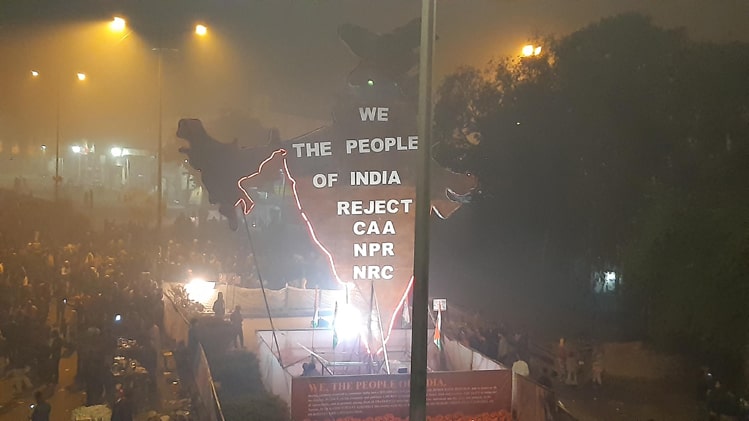
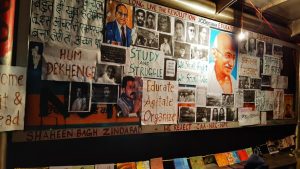
File Photo of Shaheen Bagh site | Credit: Author
CAA is ‘devious anti-Muslim dog whistle’
They said the publication of the CAA rules is a reiteration of the Modi government’s ideology, which may be summed up in a single sentence: inform the community that it does belong to India in the way Hindus do. They alleged the government will devise strategies to include Hindus while excluding Muslims.
Explaining how the law impacts the secular nature of Indian citizenship, Professor Apoorvanand, who teaches at the Delhi University, said, “The notification of the CAA rules has formally opened the door to faith-based citizenship. And this door is opened for everyone, except Muslims. If we do not read the CAA in conjunction with the NRC, we will not be able to comprehend its true intent and implications. It’s not me who is saying this. The (Union) Home Minister (Amit Shah) himself has made it very evident that one finds significance in the company of the other. While CAA is an inclusionary process, the NRC is an exclusive one.”
Apoorvanand was referring to the repeated statements made by BJP, including Shah, that though the CAA would include the excluded Hindus, the NRC will filter out “outsiders” (read Muslims).
It is imperative — said the academician — to emphasize that the NRC introduces a substantial shift in granting Indian citizenship. “With the NRC, we have already witnessed a change in the concept of citizenship from jus soli (citizenship by birth) to jus sanguinis (citizenship by descent). Nonetheless, the compatibility of the CAA with the NRC is essential to its execution in Assam, not to mention crucial,” the professor pointed out.
With the help of the NRC, Assam was designated as the ideal testing ground for this citizenship re-verification mechanism. There is no denial that the state gave rise to legitimate grounds for such an implementation because of the Assamese nationalists demands. The NRC was used in Assam to identify “foreigners” (both Hindus or Muslims) whose ancestors once lived in East Bengal. The Assamese nationalist’s long-standing aim was to identify the “illegal Bengali” — irrespective of the latter’s religion.
Over 19 lakh people in Assam were excluded from the citizenship record by the NRC exercise. In addition to Bangla-speaking Muslims, they also included “original inhabitants”.
Now, here’s the catch: the Assamese Muslim community of Bengali descent is the only community that has been affected by the CAA notification.
“Those excluded, except Muslims, are now eligible to apply for citizenship under the CAA. So, it’s now proven that Muslims of Bengali descent are the main political victims of the NRC’s citizenship procedure. It is safe to say that the Indian state is using both the process as anti-Muslim initiatives,” said Apoorvanand.
The announcement of CAA rules, he alleged, reinforces Muslims’ concerns about their status as equal citizens, which is a “psychological attack”.
“Now that we have the CAA, won’t the NRC follow soon?” he asked.
Questioning the timing, he said, notifying the legislation during the holy month of Ramadan is in fact “a symbolic act that begs for violence against a group”. “This violence is symbolic in character. This declaration stabs at secular citizenship in India during a month that celebrates characteristics like justice, charity and peace, among others,” he concluded.
Senior Supreme Court lawyer Rajeev Dhavan said the CAA is aimed at giving out a message to the Hindu minorities in Pakistan, Afghanistan and Bangladesh: “You were and are discriminated against and miserable in your countries. So, I live in a Hindu-majority India where we discriminate against Muslims. Sadly, the end of 2014 is our cut-off date, even then we will do everything in our power to find a way for you as long as you do not practice Islam. Persecutors are always presumed to be working in your favor.”
The large number of women protesters at Shaheen Bagh site (File Photo) | Credit: Author
A postscript, he said, is appended to this communication, stating: “All undocumented immigrants granted citizenship under the CAA are cautioned that employment or other means of subsistence in India are not assured because you are doing ghar wapsi (homecoming). Once traitors in your erstwhile countries, you can face discrimination. Don’t travel to the Northeast either, as you could face attacks there or worse. However, rest assured that you won’t come across Muslims who are either detained in camps or sent back to the nations you belong to. In order to conceal the Hindu preference, Sikhs, Jains, Buddhists, Christians and Parsis (together the group of six) have been included to the list of beneficiaries.”
He said the CAA is arguably the first of its kind a refugee legislation in contemporary times to be enmeshed in “prejudice and bigotry”.
Senior Supreme Court lawyer Indira Jaising said although it is a good idea to protect those who are being persecuted, the way to end this problem is to give all of them refugee status — regardless of the faith they practice.
“The government has claimed in public that the Act is predicated on providing fast-track citizenship to those who have been persecuted; however, neither the statute nor the Rules make any reference to persecution, nor do they (the beneficiaries) require any proof of persecution to serve as a basis for them to be granted citizenship,” says the former additional solicitor general.
The former additional solicitor general said citizenship is granted by the Constitution by birth, descent and migration. Articles 5, 6, 7, 8, 9, and 10 codify the provisions.
“One fundamental aspect of the Constitution that is reflected in these articles is its secular orientation. Parliament passed the Citizenship Act (1955) to control the granting and revocation of citizenship. Furthermore, the 1955 Act does not include religion as a requirement for citizenship. But now, under the amendment and the rules, it will be awarded through naturalization on the basis of religion alone,” she said.
Nine different documents can be attached with the application to demonstrate that the applicant is a citizen of Pakistan, Afghanistan or Bangladesh, according to the rules that have been notified. Thus it is assumed that there is no need to provide any proof of persecution.
“Identity documents of any kind issued by the Government of Afghanistan, Bangladesh or Pakistan or any other government authorities or government agencies in these countries would also suffice to prove nationality,” states Entry 5 of the Schedule IA.
Twenty papers are listed in Schedule IB to substantiate the applicant’s entry into India on or before December 31, 2014. Any one of these will support the applicant’s claim.
The documents required include copies of the applicant’s visa and immigration stamp upon arrival in India, a registration certificate or residential permit issued by the Foreigners Registration Officer (FRO) or Foreigners Regional Registration Officer (FRRO), a slip provided by the Census enumerators in India, any government-issued license, certificate or permit in India (such as a driving license or Aadhaar card), the applicant’s ration card, any official government or court correspondence, the applicant’s birth certificate issued in India, a marriage certificate and so forth.
In the case of the National Register of Citizens (NRC), one wonders if individuals claiming to be Indian citizens will be subject to the same lax standards regarding proof of residency.
In addition to assuming persecution and relaxing requirements for proof of origin, the federal administrative structure has become more centralized. A citizenship application has to be submitted to the relevant district collector prior to the implementation of these rules. Those who wish to take advantage of the CAA must now apply to the committee that the Union government will establish with authority.
‘The CAA will haunt Hindus too’
BJP leaders have often said that the CAA will cover all non-Muslim NRC left-outs — exempting them from Foreigner Tribunal’s appeals. But, how?
As per the CAA rules, the migrants — barring Muslims — who are seeking Indian citizenship must provide proof that they were nationals of Afghanistan, Bangladesh or Pakistan. How are they going to accomplish that as the majority of them have come here without any document? Would there be no state for these roughly 15 lakh Hindu citizens?
“It’s true that anyone, barring Muslims, who was excluded from the NRC may now apply for citizenship under the CAA, but doing so will require them to first identify themselves as a Bangladeshi. Additionally, in accordance with the CAA rules, an applicant will only be eligible for benefits under the law if he or she is able to produce documentation — attesting to his or her ancestry from Bangladesh, Pakistan or Afghanistan. They provided required documents prior to 1971 (the cutoff date) during the NRC exercise to establish their Indian citizenship; now, under the CAA, they will need to demonstrate that they or their ancestors are or were citizens of one of the three nations,” Advocate Aman Wadud, who practices at the Gauhati High Court and provided legal assistance to several during and after the NRC exercise.
He pointed out that many Hindus who failed to make it to the final NRC draft had ancestors who lived in British India, they never lived in Bangladesh or even East Bengal. “How will they be able to connect their lineage to Bangladesh now?” he asked.
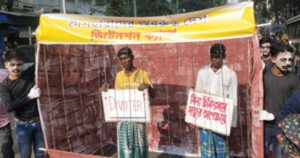
Students of various Kolkata colleges protest against CAA and NRC with the replica of detention centers (File photo)
How CAA violates Article 14 of the Constitution
The Act’s alleged denial of equality before the law and equal protection under the law is a violation of Article 14.
“It is important to remember that everyone is covered by Article 14, not only citizens. Muslims in comparable circumstances are not granted the same benefits of fast-track citizenship through registration or naturalization by the CAA,” alleged Jaising.
People from countries other than those listed in the Act are also not taken into account.
“Since it is well known that Muslims of different sects are also oppressed in those same nations, the CAA’s purported goal of granting citizenship advantages to persecuted minorities in these three countries appears to be nothing more than a front to favour Hindus,” argues the noted counsel.
It is impossible, according to her, to assume that individuals of the majority community who disagree with conventional politics won’t face persecution from their peers.
“It is often recognized that one of Pakistan’s most persecuted minorities is the Ahmadiyya Muslim community,” she claims.
Others have drawn attention to the fact that the CAA does not grant fast-track citizenship benefits to minority groups, which are subject to persecution in neighboring countries like Sri Lanka and Myanmar, where the Rohingya and Tamils, respectively, are subject to persecution.
Illegal refugees to become Indians?
The 2019 legislation has given refugees two major exemptions — reduction in 11-year window to five years for foreign nationals to become Indian citizens and the right to seek for citizenship even in the absence of documentation proving one’s residency before arrival.
UNHCR data indicates that the law is, in reality, neglecting the majority of refugee groups in India; if it is helping any of the groups, it is probably the undocumented ones. As of mid-2023, there were only 12 refugees from Bangladesh and none from Pakistan registered with the official agency in India.
The majority of the nation’s refugees and asylum seekers are from China, particularly Tibet, Sri Lanka and the Muslim minority known as the Rohingyas in Myanmar. Afghanistan stands out as an exception, with over 13,000 registered refugees and asylum seekers in India.
Nevertheless, given the ongoing conflict that affects all of the nation’s population groups, these individuals may be Muslims, including the persecuted Hazara ethnic group or they may be members of Afghanistan’s smaller Hindu, Sikh, Parsi and possibly Christian minorities.
According to the 2011 Census data, there were immigration waves from both Pakistan and Bangladesh prior to 1991, when about 80% of people who were born in Pakistan or Bangladesh and lived in India in 2011 immigrated. Merely 6.5% to 7.5% of all immigrants from these two nations came to India between 2002 and 2011.
[dropcap]বা[/dropcap]র্টোল্ড ব্রেখটের বিখ্যাত নাটকের একটি দৃশ্যের বর্ণনা করা অত্যন্ত জরুরি হয়ে পড়েছে। অত্যন্ত পরিচিত একটি নাটক। ১৯৩৭ সালে ব্রেখট এই নাটকটি লিখেছিলেন- ‘দি লাইফ অফ গ্যালিলিও’। একটি দৃশ্যে দেখা যায়, গ্যালিলিওর ছাত্র আন্দ্রেই বলছেন- ‘আনহ্যাপি দা ল্যান্ড, দ্যাট হ্যাস নো হিরোস’ অর্থাৎ সেই দেশটি অত্যন্ত অখুশী হয়, যে দেশের কোনও নায়ক নেই। নাটকের মূল চরিত্র গ্যালিলিও, সেই স্থানে ঢোকার সময়ে, এই কথাটি শুনতে পান। কিছুক্ষণ চুপ করে থাকেন তিনি, আরো কিছু কথা বার্তার পরে, গ্যালিলিওর মুখে শোনা যায়, ‘আনহ্যাপি দা ল্যান্ড, দ্যাট নিড হিরোস’, অর্থাৎ যে দেশের নায়কের প্রয়োজন হয়, সেই দেশটি সবচেয়ে অখুশী হয়। এই দুটি সংলাপের মধ্যে দিয়েই, আজকের সময়ের সমস্ত কথা বলে দেওয়া যায়। দুটো ধারণার লড়াই, দুটো চিন্তাভাবনার বিতর্ক। কখনো নরেন্দ্র মোদীর মধ্যে বা কখনো অভিজিৎ গঙ্গোপাধ্যায়ের মধ্যে আমরা নায়ক খুঁজে চলেছি। আমাদের সমস্ত না পাওয়া, সমস্ত অভিযোগ যেন কোনও একজন নায়কের মাধ্যমে সমাধান হয়ে যাবে। দুর্নীতির প্রশ্নে, নারী নির্যাতনের প্রশ্নে আমরা নিজেদের থেকেও অনেক বেশী আস্থা রাখার কথা ভাবি, একজন নায়কের প্রতি। সেই নায়ক যদি কেন্দ্রীয় তদন্তকারী সংস্থাকে ব্যবহারও করেন, আমরা ভুলে যাই প্রশ্ন করতে, কারণ আমরা যে নায়কের খোঁজে ব্যস্ত। আমরা যে মসীহা বা হিরো বানাতে ব্যস্ত। আমরা আশা করে বসে আছি সেই ২০১৪ সালের আগে থেকে কবে নায়ক সমস্ত কিছু বদলে দেবেন।
২০১১ সাল। কংগ্রেসের এক একটি দুর্নীতি নিয়ে রোজ গণমাধ্যমে খবর হচ্ছে, রোজ বিরোধী বিজেপির প্রধানমন্ত্রীর মুখ, দুর্নীতির প্রশ্নে শাসক কংগ্রেসকে বিঁধছে, আর অন্যদিকে দিল্লিতে চলছে, আন্না হাজারের মতো তথাকথিত অরাজনৈতিক মুখকে সামনে রেখে নাগরিক সমাজ থেকে আওয়াজ উঠছে, দুর্নীতি মুক্ত ভারতবর্ষ দরকার। একটা ন্যারেটিভ তৈরী করা হচ্ছে, যে এই ধরনের দুর্নীতি থেকে মুক্তি দিতে একমাত্র নরেন্দ্র মোদীই ভরসা। যিনি একাই নতুন ভারতবর্ষ গড়তে পারবেন, দুর্নীতিমুক্ত ভারত গড়তে পারবেন। তারপর নির্বাচন হলো, কংগ্রেসকে পর্যুদস্ত করে, সমস্ত ন্যারেটিভকে সত্য প্রমাণিত করে, বিজেপি ক্ষমতায় এলো। সবাই খুব উল্লসিত, এবার নতুন ভারতবর্ষ, দুর্নীতিমুক্ত ভারত হবে। নরেন্দ্র মোদী প্রধানমন্ত্রী হলেন, শ্লোগান দিলেন, ‘না খাউঙ্গা, না খানে দুঙ্গা’, অর্থাৎ নিজেও দুর্নীতি করবেন না, কাউকে দুর্নীতি করতেও দেবেন না। যেমন কথা, তেমন কাজ, ২০১৬ সালে হঠাৎ একদিন ঘোষণা, সমস্ত টাকা, বাতিল করা হলো। সমস্ত পুরনো ৫০০, ১০০০ টাকার নোট এক লহমায় বাতিল করে দিলেন। বললেন যাঁদের কালো টাকা নেই, তাঁদের ভয় পাওয়ার কোনও কারণ নেই। এই কালো টাকা দিয়েই নাকি সন্ত্রাসবাদের মদত দেওয়া হতো। সুতরাং এটা বন্ধ হলে সন্ত্রাসবাদও বন্ধ হবে। বলা হল যার কাছে যা টাকা আছে সেগুলো যেন তাঁরা ব্যাঙ্কে গিয়ে হয় বদল করেন নয় জমা দিয়ে দেন। সবাই ভাবতে শুরু করলো সত্যিও তো ‘হয়তো বা পাশের বাড়ির মানুষটি কালো টাকার মালিক, আমার না হয় কিছুদিন অসুবিধা হবে, কিন্তু ওই মানুষটির তো টাকাগুলো জলে ফেলে দিতে হবে বা পুড়িয়ে ফেলতে হবে’। সবাই ভাবলেন, সব কালো টাকা এবার বেরিয়ে আসবে। যত চুরি হয়েছে টাকা, সব এবার ধরা পড়বে। কিন্তু আসলে কি হলো, সমস্ত ছোট ব্যবসা বন্ধ হলো, আর বড় শিল্পপতিরা আরো ধনী হলেন। তারপর বেশীদিন গেল না, তৎকালীন অর্থমন্ত্রী প্রস্তাব দিলেন নির্বাচনী ব্যবস্থাকে স্বচ্ছ করতে হবে। এতদিন সমস্ত রাজনৈতিক দল ক্যাশ টাকায় লেনদেন করতে অভ্যস্ত ছিল, এবার একটি ‘নির্বাচনী বন্ড’ আনা হচ্ছে, যার মধ্যে দিয়ে কেউ জানতে পারবে না, কে ঐ রাজনৈতিক দলগুলোকে সহায়তা করছেন। সুতরাং ঐ টাকার বিনিময়ে সুবিধা পাওয়ারও প্রশ্ন নেই। বিরোধীরা বলা শুরু করলেন, এতে আরো দুর্নীতি হবে, সুতরাং বন্ধ হোক এই ব্যবস্থা। মামলা হলো দেশের সর্বোচ্চ আদালতে। নয় নয় করে কেটে গেল ৬ বছর, আদালত মামলাও শোনে না, ওদিকে বিরোধীদের আপত্তি ক্রমশ বেড়েই চলতে থাকলো। তারপরে দেশের সর্বোচ্চ আদালতের পাঁচ সদস্যের একটি সাংবিধানিক বেঞ্চ সেই মামলা শুনলো এবং বেশ কিছুদিন রায়দান স্থগিত রাখলো। তারপরে গত ১৫ই ফেব্রুয়ারি, তাঁরা এই ‘নির্বাচনী বন্ড’কে অসাংবিধানিক ঘোষণা করলো এবং এসবিআই, অর্থাৎ স্টেট ব্যাঙ্ক অফ ইন্ডিয়া, যার মাধ্যম দিয়ে এই বন্ড কেনাবেচা হয়েছে, তাঁদের আদেশ দিল, অবিলম্বে কারা এই বন্ড কিনেছেন এবং কারা তার গ্রহীতা, তা প্রকাশ করতে হবে। নানা টালবাহানার পরে, অবশেষে এসবিআই সেই নামগুলো ( দাতা এবং গ্রহীতা) দুটো সম্পুর্ণ ভিন্ন খামে, আলাদা করে জমা করলো, যা নির্বাচন কমিশন, আদালতের নির্দেশ মেনে তাঁদের ওয়েবসাইটে মানুষের সামনে প্রকাশ করলো।
এবার শুরু হলো মজা। ঐ নামের তালিকা প্রকাশ হওয়ার সঙ্গে সঙ্গেই বেশ কিছু মানুষ, যাঁরা এখনও সাংবাদিকতা করেন, তাঁরা নেমে পড়লেন, এই তথ্য সংশ্লেষ করতে। প্রকাশ হতে থাকলো এমন ভয়ঙ্কর কিছু তথ্য, যা দেখে চমকে উঠলো, সারা দেশ। যে তথ্য প্রকাশিত হয়েছে, তার মধ্যে এখনো অবশ্য মার্চ, ২০১৮ থেকে ২০১৯ সালের তথ্য আসেনি, কিন্তু তার পরের যা তথ্য এসেছে, তা দেখে নিশ্চিত বলা যায়, ‘নির্বাচনী বন্ড’ স্বাধীন ভারতের সবচেয়ে বড়, সরকারি পৃষ্ঠপোষকতার দুর্নীতি। দেখা যাচ্ছে, বহু সংস্থা এবং বহু ব্যক্তিগত মানুষ কোটি কোটি টাকার ‘নির্বাচনী বন্ড’ কিনেছেন।
ফিউচার গেমিং এবং হোটেল সার্ভিস নামে একটি সংস্থা, যার মালিকের নাম স্যান্টিয়াগো মার্টিন একাই ১৩৬৮ কোটি টাকার বন্ড কিনেছেন। আরো খোঁজ নিয়ে দেখা যাচ্ছে, এই সংস্থা দৈনিক লটারি সংস্থা। তাঁরা উত্তরপূর্বের বহু রাজ্য এবং দক্ষিণ ভারতের তামিলনাডুতে দৈনিক অনলাইন লটারি বিক্রেতা। ২০১৫ সালে, এই স্যান্টিয়াগো মার্টিনের ছেলে বিজেপিতে যোগ দেন। তার আগে ঐ সংস্থার সদর দপ্তরে, ইডি এবং সিবিআই যায়। তারপরেই দেখা যায়, ঐ সংস্থা ৭ দিনের মধ্যে ১৩৬৮ কোটি টাকার বন্ড কিনেছেন।
আরেকটি সংস্থার নাম উঠে এসেছে, তার নাম মেঘা ইঞ্জিনিয়ারিং। সীমান্তে সড়ক এবং পরিকাঠামো বানানোর বরাত পাওয়া এই সংস্থার সঙ্গে আবার টিভি ৯ বলে একটি সংবাদ মাধ্যমের যোগসাজশ রয়েছে। দেখা গেছে তাঁরা ৯৮০ কোটি টাকার বন্ড কিনেছে। সামনে নির্বাচন আসছে, এবার প্রায় বেশীরভাগ গণমাধ্যমেই কোন দল জিতবে, সেই সংক্রান্ত ওপিনিয়ন পোল দেখাচ্ছে, টিভি ৯ ও দেখাচ্ছে। স্বাভাবিকভাবেই সেখানে দেখাচ্ছে বিপুল সংখ্যাগরিষ্ঠতা নিয়ে বিজেপি নির্বাচনে জিতছে, ফলে আজকে এই তথ্য প্রকাশ্যে আসার পরে, কারো কি বুঝতে বাকি থাকছে, যে এই ওপিনিয়ন পোলগুলো জনমত জানার জন্য নয়, জনমত গঠন করার জন্যেই দেখানো হচ্ছে এবং ঐ মেঘা ইঞ্জিনিয়ারিং এবং তাঁদের টাকা দিয়েই তা হচ্ছে।
তৃতীয় স্থানে আছে ভেদান্ত গ্রুপ, যারা ৪০০ কোটি টাকা দিয়েছেন। কিসের জন্য দিয়েছেন? জল জমি জঙ্গল, দখল করার জন্য, যে সংস্থা অত্যন্ত পরিচিত একটি নাম, তাঁরা যে সেই কাজে সুবিধা পাওয়ার জন্যেই এই টাকা দিয়েছে, তা বুঝতে কোনও ক্যালকুলাসের অঙ্ক জানতে হয় না।
এছাড়াও আরো বহু সংস্থা আছে। যাঁরা ১০০ কোটির ওপরে বন্ড কিনেছে। সুধীর মেহতা’র টরেন্ট গ্রুপ ১৮৫ কোটি টাকার বন্ড কিনেছে। ২০১৯ সালে, মহারাষ্ট্রের সেই সময়ের মুখ্যমন্ত্রী ছিলেন দেবেন্দ্র ফডনবিশ, তিনি এই সংস্থার ২৮৫ কোটি টাকার সম্পত্তি কর মকুব করেন। এবার বলুন, বিজেপি একটি সৎ দল, তাঁদের নেতারা অত্যন্ত সৎ। তাঁরা মহারাষ্ট্রে উদ্ধব ঠাকরের সরকার ফেলতে যে টাকা একনাথ শিন্ডের বিধায়কদের দিয়েছিল, তা কোথা থেকে এসেছিল, অঙ্ক মেলানো কি কঠিন কোনও কাজ? অনেকে হয়তো আদানি এবং আম্বানির নাম খোঁজার চেষ্টা করেছেন। তাঁদের জন্য একটি কথা বলা উচিৎ। আদানি কিংবা আম্বানির মতো সংস্থারা কখনোই সরাসরি নিজেদের নামে বন্ড কিনবেন না। কিন্তু দেখা যাচ্ছে, তাঁদের সংস্থার সঙ্গে জড়িত বেশ কিছু মানুষ, ব্যক্তিগতভাবে এই বন্ড কিনেছেন। লক্ষ্মীদাস বল্লভভাই মার্চেন্ট, ২০২৩ সালে, নভেম্বর মাসে এক ধাক্কায় ২৫ কোটি টাকা দিয়েছে, এই নির্বাচনী বন্ডের মাধ্যমে। তিনি আবার নিউজ ১৮ সংবাদ সংস্থার মাথা। নিউজ ১৮ কাদের? সবাই জানে ওটা রিলায়েন্সের। একটু খোঁজ নিলেই দেখা যাবে লিঙ্কডিন থেকে। এবার নিউজ ১৮ দেখাচ্ছে, বিজেপি আগামী নির্বাচনে ৪০০ সিট পেতে পারে। এবার হিসেব মেলান। তারপরে ভাবুন, কেন বিজেপি এই গণমাধ্যম দিয়ে এই ধরনের ধারণা তৈরী করে।
মোটামুটি কয়েকটা তথ্য এখানে দেওয়া হলো। সমস্ত কিছু একটি লেখায় দেওয়া সম্ভব নয়। যা বোঝা যাচ্ছে, দু ধরনের পদ্ধতিতে টাকা তোলা হয়েছে। এক হচ্ছে, টাকা তুলে সরকারি বরাত পাওয়া গেছে। দ্বিতীয় হচ্ছে, ইডি এবং সিবিআই পাঠিয়ে, ভয় পাইয়ে তোলাবাজি করে টাকা শুষে নেওয়া হয়েছে। আরো একটি বিষয় এখানে বলা প্রয়োজন। ‘নির্বাচনী বন্ডে’ যে টাকা ভাঙানো হয়নি, সেই টাকা চলে গেছে পিএম কেয়ারস ফান্ডে, যার কোনও অডিট করা যাবে না, বলা আছে। মানে টাকা এদিক দিয়ে না আসলেও ওদিক দিয়ে সেই একই বিজেপির তহবিলে জমা পড়েছে। এই সংক্রান্ত খবর খুব দ্রুত আরো আসবে। কিন্তু তার থেকেও বড় কথা, এই আলোচনা কেন বহুল প্রচারিত গণমাধ্যমে হচ্ছে না? কেন ২০১১ সালে কংগ্রেসের দুর্নীতির মতো এই নির্বাচনী বন্ড দুর্নীতির খবর প্রতিদিনের কাগজে বড় হেডলাইন হচ্ছে না? তাহলে কী সাংবাদিকতার নাম করে, তাঁরা যা করছেন, সেটাকে বিজেপিকে সুরক্ষা দেওয়া এবং পদলেহন করা বলে? তাহলে তাঁরা কীসের সাংবাদিক? তাঁদের তো সঞ্চালক ছাড়া কিছু বলা উচিৎ নয়, যাঁরা রোজ রাতে তাঁদের চ্যানেলে বসে সোজাসুজি অথবা ঘুরিয়ে, সাংবাদিকতার নামে বেসাতি করে চলেছেন। ঘৃণা, বিদ্বেষ ও মিথ্যে খবর ছড়িয়ে চলেছেন।
ফিরে যেতে হয়, আবার ব্রেখটের কাছে। ২০১১ সাল থেকে দুর্নীতি দমন করার জন্য, নারী নির্যাতন রোখার জন্য, আমরা নিজেরাই একজন ‘মসীহা’ খুঁজেছি। সেই মসীহা এসে আমাদের পরিত্রাণ করবেন সেই আশা করেছি। গণমাধ্যম সেই চিন্তাভাবনাকেই সায় দিয়ে গেছে। কখনো নরেন্দ্র মোদী কখনো বিচারপতি অভিজিৎ গঙ্গোপাধ্যায়কে আমরা মনে করেছি পরিত্রাতা। একজন নিজে পরিত্রাতা থেকে হয়ে উঠেছেন, তোলাবাজি চক্রের পান্ডা আর অন্যজন তাঁর হাত ধরেই দুর্নীতি দমন করতে চেয়েছেন। রোজ সন্ধ্যেবেলা চোর খুঁজতে গিয়ে, আমরা বুঝতেও পারিনি, কখন আমাদের মস্তিষ্কে ডাকাত ঢুকে পড়েছে, ঐ গণমাধ্যমগুলোর সহায়তায়। যে গণমাধ্যমে সারাক্ষণ ঘৃণা ছড়ানো হয়, যে গণমাধ্যমে সারাক্ষণ মিথ্যের বেসাতি করা হয়, তা যে এই নির্বাচনী বন্ড, নামক তোলাবাজি চক্রের পয়সায় চলছে, তা কি আমরা বুঝতে পারছি, বা বলা ভালো দেখতে চাইছি?