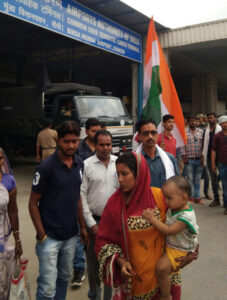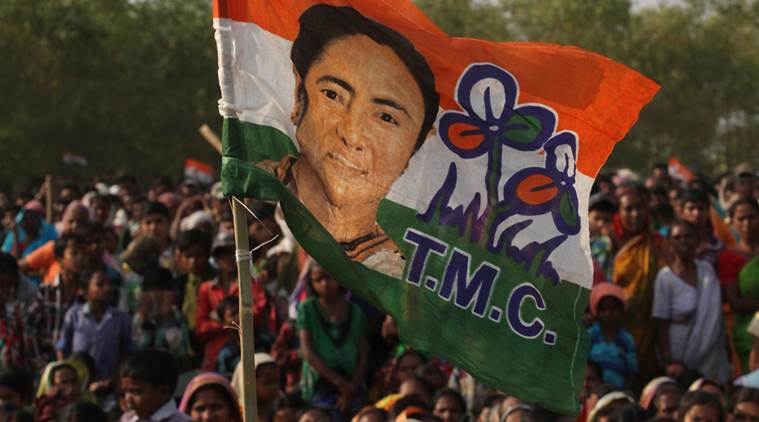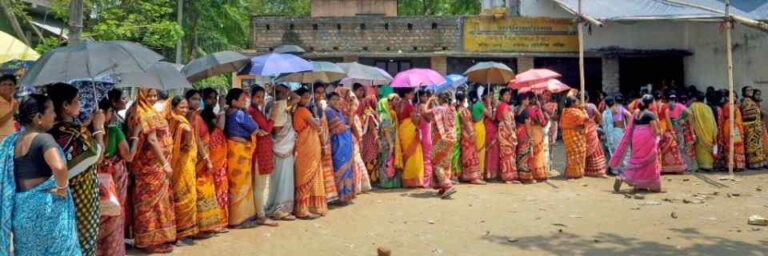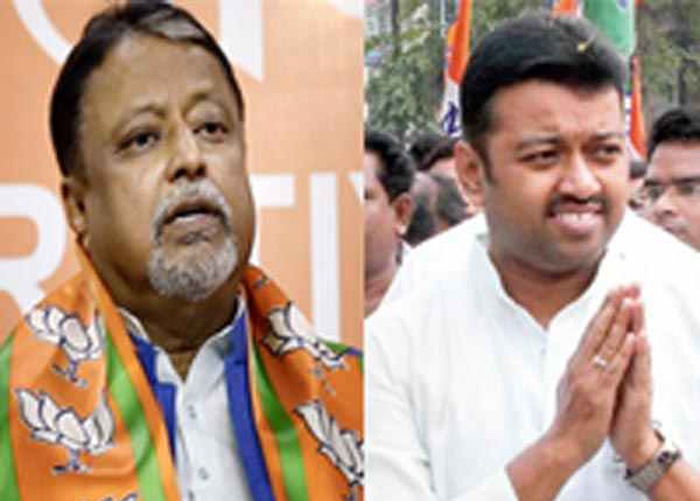
Kolkata: Like Assam, Bhartiya Janata Party (BJP), wants to have a National Register of Citizens (NRC) system in Bengal too. Senior BJP leader Mohit Roy told eNewsroom that state BJP will demand National Register of Citizens (NRC) to be implemented in Bengal. “A significant number of Bangladeshis are here in Bengal, who even has voting rights. We need to find these illegal immigrants. NRC would be the best way out,” claimed Roy, who is also a consultant environmentalist.
However, what Roy is claiming about NRC updation, a system to weed out illegal immigrants, is not going down well for so many people not only in Assam but also in Bengal. The Chief Minister of Bengal, Mamata Banerjee, on Wednesday accused the BJP-led central government of “hatching a conspiracy” to drive out Bengalis from Assam by “excluding” their names from the list of the NRC. “People have gone there for work and some of them have made Assam their home. In the name of NRC, they are planning to drive Bengalis out of the state,” said Banerjee. The first draft of NRC has listed only 1.9 million people out of 3.29 million applicants as legal Indian citizens.
And to register their protest strongly, on Thursday, Member of Parliament (MP)s from Trinamool Congress held protest over NRC issue outside Parliament House.
And in Assam, according to sources, Bengali residents of Subhas Pally, Dhubri or Silchar are feeling the heat as the first draft list of NRC that was published at the stroke of midnight of December 31. Many are feeling helpless and insecure as their names have not been listed in the draft. At present, NRC of 1951 is being updated in Assam under the supervision of the Supreme Court to identify original residents of the state in order to check illegal migration from neighbouring country.
But, observers feel that under the garb of weeding out illegal immigrants, names of Indian citizens who have provided all valid documents have not been listed whereas top ULFA rebel leader Paresh Baruah’s name made it to the first draft. While names of many prominent personalities have been left out.
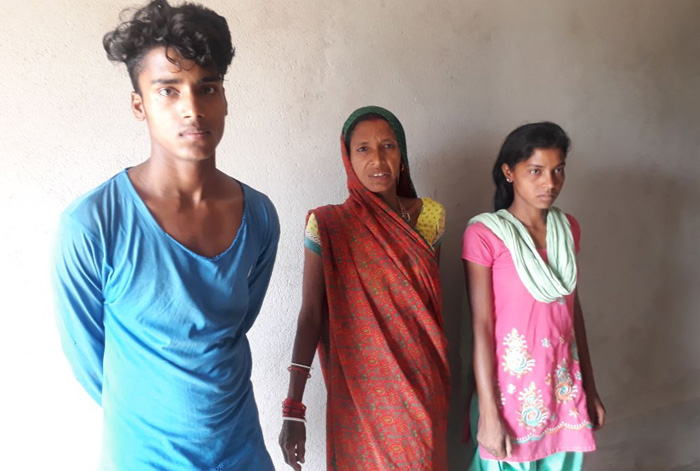
Pradeep Saha, and his family have been living in Subhas Pally for four generations now, but he informed, “Our names are not in the first list despite furnishing all required documents.” His wife Arpita said that many families are in the same boast as they are in. “In some families, out of five family members only two names have made it to the draft list,” claimed Arpita.
Another Bengali resident of Subhas Palli, Malati Kar, speaking to eNewsroom said, “We had provided all the documents including the documents of NRC of 1951 of my father-in-law and my husband. Still, my husband’s name is missing from the list.”
Districts like Dhubri and Silchar (headquarters of Cachar district) of Assam has nearly 100 per cent Bengali population. But only 29.83 per cent of their population have made it to the list. Speaking of Cachar district, which comprises of three villages, only 35 per cent of its NRC applicants have been listed. Here too, a majority of the population are Bengalis, who claim to have migrated to the region during the British regime, when India had not been partitioned.
Significantly, the name of former vice-chancellor of Assam University Tapodhir Bhattacharjee, whose family has been living in Silchar from 1930s, has also not made it to the first draft of NRC. “My father Tarapada Bhattacharjee was an elected MLA in 1962 and we have been living here since 30’s. We neither entered India as traffickers or as immigrants. We are not refugees. We are simple residents India, who chose to make Silchar our home, at a time when Bengal had not been partitioned. We have been branded as Bangladeshis, as we speak Bangla,” Bhattacharjee told eNewsroom.
[dropcap]T[/dropcap]he Electoral Bonds scheme, notified by the Union Government on January 2, is a clever step towards emaciating the opposition parties. Neither will it lead to greater transparency in the funding of political parties (as claimed by Finance Minister Arun Jaitley) nor will it check the flow of black money into the electoral process. Even Election Commission has expressed apprehensions at the move. The scheme was mischievously included in the 2017-2018 budget proposals.
According to the notification, only the State Bank of India (SBI) can issue the Electoral Bonds in the denominations of Rs 1000, Rs 10,000, Rs one lakh, Rs ten lakh and Rs one crore. A total of 53 branches of SBI have been authorised to sell the Bonds – one branch in the capitals of all the States and Union Territories – more than one branch in some States. An individual or body can purchase these Bonds from the designated branches after fulfilling the KYC (Know Your Customer) requirements. However, the Bonds will not carry the name of the purchaser.
The byer can donate these Bonds to a political party which is registered with the Election Commission and has received not less than one per cent of the votes in the last Lok Sabha or Assembly election. The party can encash the Bonds only by depositing these in its bank, registered with Election Commission, within 15 days after the issuance of the Bond. If not deposited within 15 days, the amount of the Bond will go to the Prime Minister’s Relief Fund.
Jaitley told Lok Sabha on January 2 that ‘the element of transparency is that the balance sheet of donors will reflect that they have bought a certain amount of Bonds and political parties will also file their returns (with the Election Commission) that will reflect the extent of Electoral Bonds received.’ The Finance Minister also said that ‘political funding needs to be cleansed up. A very large part of donation coming to political parties by the donors, quantum and source is not known…. Electoral Bonds (will) substantially cleanse the system.’
Election Commission had expressed the apprehension that abolition of relevant provisions of the Companies Act of removing a cap of 7.5 per cent of profit for political donations can lead to money laundering by setting up of shell companies for diverting funds for donations to political parties.
The Election Commission was not amused when Jaitley had announced the Electoral Bonds scheme in his budget proposals. Its objection mainly was that it might lead to the use of black money in electoral politics. In his keynote address at a conference of Association for Democratic Reforms (ADR) some time back, Election Commissioner O P Rawat observed that ‘the recent amendments in the election and income tax laws make it clear that any donation received by a political party through an Electoral Bond has been taken out of the ambit of reporting in the Contribution Report which political parties have to submit to the EC. Implications of this step can be retrograde as far as transparency is concerned. Furthermore, where contributions received through Electoral Bonds are not reported, a perusal of contributions reports will not make it clear whether the party in question has taken any donations in violation of Section 298 of the Representation of the People Act, which prohibits political parties from taking donations from Government companies and foreign sources.’
Election Commission had expressed the apprehension that abolition of relevant provisions of the Companies Act of removing a cap of 7.5 per cent of profit for political donations can lead to money laundering by setting up of shell companies for diverting funds for donations to political parties.
The January 2 notification says: ‘the information furnished by the buyer (of Electoral Bonds) shall be treated confidential by the authorised bank and shall not be disclosed to any authority for any purposes, except when demanded by a competent court or upon registration of a criminal case by any law enforcement agency.’
That, of course, is the official position. Unofficially, the SBI is all but part of Finance Ministry. In the corruption-ridden system that we have, an unscrupulous Finance Minister can always get the information as to who purchased Electoral Bonds of what amounts and to which parties’ accounts have these been credited. Next is carrots and sticks approach.
Kolkata/Jaipur: The replicas of seven wonders were the preferred choice for the New Year revelers on the night of December 31, 2017, and January 1, 2018, in the state capital of Bengal and Rajasthan– Kolkata and Jaipur respectively. And here also Taj Mahal, the 1st among the seven wonders saw the maximum number of revelers. Kolkata’s Eco-Park which set up replicas of seven wonders recently had more than a lakh visitors. While a club in Jaipur too made Taj Mahal, London Bridge, and other models to attract people. While in Giridih, Somnath, the coordinator of Sankalp, an NGO organized a New Year celebration for the underprivileged children. And it was not only in India, migrated workers from Jharkhand, celebrated ushered in the new year in style, in Malaysia. Pictures by Chandra Mohan Aloria, and Arpita Das
Another replica of The Taj in Jaipur
Even London Bridge came calling for the party goers in Jaipur
Jaipurites off to the Seven Wonders!
A club’s scene in Rajasthan’s capital
Sankalp NGO celebrated with the lesser privileged
Migrants from Jharkhand in Malaysia too celebrated the New Year
New Year revelers ushering at The Taj replica in Kolkata
Kolkata: A day after being declared as Trinamool Congress (TMC) candidate from Uluberia parliamentary constituency, Sajda Ahmed, widow of Sultan Ahmed, claims that her husband had worked for all, and not any specific community. She also maintains that Bhartiya Janata Party (BJP) will play communal politics in Uluberia, but she will not get trapped and will stick to the development agenda of TMC.
Sultan Ahmed, two times MP from Uluberia, and prominent Muslim face TMC had died of cardiac arrest on September 4, 2017. Ahmed was named in Narada sting case and died during its trial. Sajda, his widow, is the TMC candidate for Uluberia, which will be going for a by-election on January 29, 2018.
Dressed in a white salwar kameez, seated in one of the many rooms of the most important building of Ripon Street, Sajda meets media persons for the first time after her husband’s demise.
And she seems to be following instructions from the party. When Sajda is asked about the speculations of her son Sharique Ahmed contesting the elections, she passes it off by saying, “Well, to be honest, he is too young to enter this field. However, if he wants to and the party approves of him then, of course, he can contest sometime later. We will do what our party supremo, Mamata didi wants. If she has shown confidence in me then I shall deliver.”
She then adds, “The issue now is not me or Sharique contesting elections from Uluberia, but we overcoming the communal forces, who are trying their best break the peace out there.” Sajda asserts that she has a good idea about the constituency, from where her husband had won back to back. Speaking about the approaching elections, she says, “Senior party men made it clear that– we will fight this election on the basis of developmental work. We know that BJP will be playing the communal card and will try to polarize the votes, but we have no plans of doing so as communalism is not the ideology of TMC politics.” On being asked if she was aware of Yogi Adityanath traveling to Bengal to mobilize BJP workers and supporters, she smiles, pauses and says, “They can do what they want. We know what the people of Bengal want. We under no circumstance will polarize the votes by playing the communal card. My husband has worked for the people of Uluberia and I want to take forward his legacy. I am sure the common man understands this and will do what they feel is right.”
As the interview proceeds and questions related to her husband props, an emotional Sajda takes a break only to come back after a few minutes to answer questions like a pro. Speaking about her political debut, she shares, “Long back, my husband had wanted me to join politics. But I had declined. There were already two politicians in the family and I had my kids to groom. So many years down the line, today, when I will be contesting this election, in a way will be fulfilling his wish.” Sajda, a graduate of the University of Calcutta, is a social worker and one of the governing members of Islamia Hospital, Kolkata.
And now that Sajda is contesting on the same turf, which once belonged to her husband, she tries to convince that, “I might not have campaigned, but I have been like a shadow for my husband, during his 30 years of political career.”
However, Sajda seemed not so keen on touching upon or commenting on the controversy surrounding Sultan Ahmed.
Kolkata: By the end of January, 2018, India will have its own floating market like the one in Bangkok. To make the floating market in Patuli, Kolkata even better, apart from being the first of its kind, the authorities are also trying their best to keep it eco-friendly.
An entire lake spanning 24000 square feet is all set to be transformed into a floating market in January 2017. Patuli floating market, touted as the first floating market of India and Asia’s third, not just promises to offer a new shopping experience but also has a plan to contain the water pollution of the lake.
This floating market will be having four sections or clusters. Each dedicated to veggies, groceries, fish and meat. It in a way increases the risk of the lake to be contaminated by the continuous disposal of both biodegradable and non-biodegradable waste.
“We have taken environmental concerns into account while taking the decision to convert the lake into a floating market,” told councillor of Ward 110 of KMC, Arup Chakraborty to eNewsroom. On being asked, what measures the Kolkata Municipal Corporation will be taking to address the concern, he revealed, “Proper drainage system has been made to keep the lake healthy. We will be installing a lake aerator to pump in oxygen into the lake, to allow fast decomposition of organic waste. We will also be cultivating certain fishes which will inorganic and biodegradable waste. We also have recruited a bunch of workers to scavenge the plastic wastes that would be dumped into the lake.”
Kashmir does has its Shikaras on which some sell flowers and vegetables from their boats in its famous Dal Lake, but there is no organized market in Dal Lake or anywhere in India on the lines of the famous floating market of Bangkok.
Kolkata’s floating market will also be having a café, fountains, seats, a jogger’s track and even a light and sound show in the evening. Interestingly, the idea to have a floating market in Kolkata came to Firhad Hakim, the Urban Development Minister and Municipal Affairs Minister was visiting Bangkok. The idea seemed feasible to the government which was already mulling over rehabilitation of vendors of Baishnabghata market, who were to be evicted due to expansion of Eastern Metropolitan Bypass.
The proposed market will have 114 specially designed boats anchored in the lake. Ramps or aisles leading to these boats have been designed for the shoppers to reach these boats and make their purchases. Each boat has a storage pit to store their goods.
The shopkeepers being rehabilitated here are happy and hopeful of witnessing a rise in their sale. “We are very happy on being shifted to this new market. This new concept might increase our customers as people may come from far off places will come to see this different market,” said by a vegetable seller, Satish Brahma.
The boats have been designed in Bholguri area of Bengal’s Hoogly district. And have been transported to Patuli via engine vans. With the inaugural date approaching closer, the labours are burning their midnight oil. Once ready, this latest attraction of Bengal will be inaugurated by Bengal Chief Minister Mamata Banerjee.
[dropcap]F[/dropcap]ew people know that hing (asafoetida) that constitutes an important ingredient for preparing lentil curry or dal and other numerous vegetables dishes based on potato and cauliflower had caused Lalu Prasad Yadav—a teenager then—the first punishment in his life.
It was in 1950’s.
Lalu was a naughty kid of Phulwaria—a nondescript village in north Indian state of Bihar. He dropped the basket containing a bag of asafoetida in the well right at the door of his hut. The asafoetida seller raised alarm bringing several other villagers to Lalu’s door and shouting at his mother Marachia Devi to reign in his son.
“I too was fed up with daily complaint about Lalu’s naughtiness. I was tired of shouting at my son several times. Lalu mein bachpana bahut rahe (Lalu was naughty as child). We were poor. I feared that powerful people might harm my son because of his naughtiness and sent him to my elder son at Patna, the next day Lalu dropped the basket of asafoetida in the well”, Marachia Devi told me this story when I had visited Phulwaria, soon after Lalu had become the chief minister in 1990 to do a story on him and his background for The Hindustan Times.
His mother recalled how Lalu who enjoyed playing with cows and buffalos had wept uncontrollably when her elder son took him away from Patna. “Humko Patna mat bheja, ab badmashi na karab (Don’t send me to Patna. I will no longer do naughtiness)”, Marajia quoted Lalu yelling while leaving home.
Lalu, thus, was banished from his village for his offence.
His mother—alive and in good health then—told me several such stories about Lalu’s naughtiness. It was not because I was a journalist. The old woman opened up to me when I told her that I too belonged to Daraily Mathia—a village barely 30 kilometres from Phulwaria.
Lalu’s mother had an instant rapport with me. She brought out a soiled sheet of cloth from her hut and spread it on a bamboo bench near the well in which Lalu had dropped the bag of asafoetida and which was still functional. Lalu’s nephews and other family members drew water from the well and offered it to me a in a lota (brass tumbler) with beaten rice and jiggery.
I called on Lalu ahead of proceeding to join my new assignment as a faculty at Lovely Professional University, Jalandhar, Punjab in July this year and reminded him about his mother’s story at his Patna home. Lalu laughed heartily. Two other senior RJD leaders, Shivanand Tiwary and Manoj Jha too were in attendance. Lalu recalled how he used to sleep in a corner of huge Peepal tree behind his hut and his mother searched for him.
The CBI officials had raided Lalu’s establishment and had questioned his family members before I met him in early July. The Ranchi court was carrying out trial against him in fodder scam cases. Lalu, his family members and party cadres almost knew that Lalu—sooner or later—would land in jail again.
Five months after I came to Punjab, the court punished Lalu second time in a fodder case, sending him to jail for seventh time.
The purpose of this column is not to go in the details of the case or the politics around it which is a fodder to the ubiquitous channels and newspapers. I simply wonder that Lalu would have been a phenomenal writer in folklore too had he cultivated the interest in writing.
There was a unique way of selling hing (asafoetida) in Bihar hinterlands in 1960’s and 70’s. The asafoetida sellers carrying a bag with asafoetida in a basket on their head moved around in the village streets, shouting, “Le hin Baisakh karar-e (Take asafoetida and pay for it in the month of May)”.
The asafoetida sellers usually descended on the villages in winter and supplied asafoetida to the agriculturists and cowherds. They would return in May to collect the payment against the asafoetida which the agriculturists paid in kind—wheat, barley etc.
Asafoetida was still a commodity for barter system of marketing.
It is hard to tell when exactly Lalu was ‘banished’ from his village for dropping the basket of asafoetida in the well. An archetypal villager, Marachia Devi was not the kind of woman to keep the records of dates and time. I conjectured that Lalu might have left his village to join his milk selling elder brothers in Patna sometimes in 1950’s.
What Lalu became after reaching Patna is known to the nation and the world. Everything has changed beyond recognition in over five decades down the line.
Lalu’s mother died long ago. The asafoetida sellers exist only in folktales. A hand pump has replaced the well in which Lalu had dropped asafoetida and a life-size statue of Marachia Devi has replaced the hut in which she lived with Lalu and other sons. Lalu got a railway station built at Phulwaria when he was India’s railway minister. The village is connected to road from all the sides and is equipped with electricity, hospital and banks.
I wonder if Phulwaria—now equipped with all the modern facilities—will ever produce the Lalu that the old Phulwaria had produced.
Jaipur: December 25 was the most exciting day for the children of Jaipur, as during Christmas celebration, a procession moved around Gaurav Tower in which performers had not only become Santa Cluas, but Spiderman and Black Spiderman, British Drummer and many more. Hundreds of children had gathered on both sides of roads with their parents to enjoy it.
Bollywood actor Dia Mirza had also visited the Pink City and sang Christmas carol.
Earlier in the day, hundreds of women had ran as Santa in the event called Women Santa Run, in the city.
Jaipur is fast growing as a center of multicultural metro city and it is hosting several activities of different cultures and faiths. And this year’s Christmas celebration was very attractive and enjoyed a lot by the kids. World Trade Park has specially created a page where in its gallery, Xmas activity pictures have been uploaded for its visitors.
Recently, the Indian government announced December 25 as Good Governance Day and because of it, most of the offices remain open on the day. Since then fewer Christmas-related activities have been conducted in public places, and the Jaipur celebration has surprised everyone, especially children.
Pictures by Chandra Mohan Aloria.
It’s Spiderman versus Black Spiderman
Cartoon characters straight out of TV greeting the kids
Hampi/Bellary: Between Hospet and Bellary in Karnataka State, lies a small village of Hampi, one of India’s important heritage sites. Aging monuments, dilapidated structures and temples complimented with big boulders adds on an irresistible appeal to Hampi. This city, now a historical attraction, and often thronged by visitors , was once the thriving capital of Vijayanagar (the city of Victory) of the Deccan empire that covered the entire South India barring the Kerala Coasts. Walking through the Hampi evokes a sense of wonder in visitors in terms of beautiful stone architecture.
Districts of Hospet and Bellary, is best known for extensive iron ore mining and quarrying other than farmlands of bananas, sugarcane plantations and paddy fields.
From mid-fourteenth century to 1565 CE, it served as the capital of the Vijayanagara Empire, famous for King Krishnadevrai and his jester and minister Tenalirama. Though the kingdom of Vijayanagara is long gone, the remains etched on these magnificent palaces and ornate temples. Besides Deccan Empire, this village also has a Ramayana connection.
These are the stories which we listened to and learnt in our childhood. So this was exactly a new opportunity for me to reach at a dream place and find the source of these stories. During my currently ongoing solo cycle journey across India, this was another chance of taking a detour towards another beautiful escapade. On having entered into Karnataka state, I decided to venture here to learn more about its history and sensational stories of Indian mythology.
Archives
Hampi remained undiscovered until the mid-9th century, when Alexander Greenlaw visited and photographed the site in 1856. These photographs were held in a private collection in the United Kingdom and were not published until 1980.They are the most valuable source of the mid-19th-century state of Hampi monuments to scholars.
Many travellers have talked in detail about Hampi, in Chronicles left behind by the Persian, European and Portuguese travellers. All have describes it as a prosperous, wealthy and grand city near the Tungabhadra River. Memoirs of Niccolò de’ Conti, an Italian merchant and traveller who visited Hampi in 1420 CE, mentions about its fortification in his book. In 1442, Abdul Razzaq, a Persian traveller described it as a city with seven layers of forts.
Richness and prosperity
By 1500 CE, Hampi-Vijayanagara, ranked as the second richest city in the world, standing second to only Beijing. It had many travellers from Persia and Portugal visiting it for business. According to legends, heaps of diamonds and precious stones were traded openly in the markets of Hampi. Several factors worked for the development of the city, right from its geographical location to its rugged terrain. Even today, Hampi, stands charismatic even in its ruins.
Virupaksha Temple, Hampi
Origin of name
River Tungabhadra, which flows through the city, was earlier called Pampa. Hampi is considered to be derived from Pampa. According to folklores, it was in the Hemkunta Hills that Parvati wooed Shiva, who is also known as Pampapati. Thus the river flowing by the hill began to be called Pampa. Over the years, Pampa got distorted to Hampa in Kannada, and thus the area where Parvati pursued Shiva, got named as Hampi.
Vitthala temple and market complex
This temple and market complex spans across three kilometres and is a very famous tourist spot. The temple, itself is dedicated to Lord Vishnu, who is called ‘Venugopala’ in South India. It is unclear when the temple complex was built, and who built it; most scholars call it 16th century architecture. The inscriptions include male and female names, suggesting that the complex was built by multiple sponsors. The temple was dedicated to Vitthala, an incarnation of Krishna Vithoba. The temple has a stone chariot in the courtyard; similar to the one at Mahabalipuram and the Konark temple, which is the biggest one.
Outside the temple compound, is a colonnaded market street almost a kilometre long, but in ruins now. To the north, there is another market and a south-facing shrine with carvings and drawings of Ramayana scenes, Mahabharata scenes and of Vaishnava saints. The temples have some very intricate designs that are a source of inspiration for the designs seen in the famous Kanchipuram silk sarees.
Water infrastructure
The Square Water Pavilion, also called the Queen’s Bath, is a pavilion water basin, which uses the method of moving fresh water to remove wash water and overflows. The building’s interior arches have a strong Indo-Islamic influence.
Vijayanagara Empire built an extensive water infrastructure. According to an inscription, the Manmatha tank was upgraded and a Durga shrine was added to it, in 1199 CE. The inclusion of artwork at the tank, such as a warrior fighting a lion, is dated to the 13th century, when Hoysalas frequented Hampi.
Water was harvested during the monsoon season in a great tank, near the village and was channelled through big stoned drainages into the royal centre where it flowed from one enclosure to the next, filling ponds and pools.
The Elephant Stable, Hampi
Tales from the Ramayana
The village of Hampi has many tales from the Ramayana. Anegundi, is a village located on the right banks of Tungabhadra river which is believed to be the monkey kingdom of Kishkindha mentioned in the Ramayana. It is at a distance of 5 km from the historical site of Hampi. Anjanadri hill, the birthplace of monkey-god Hanuman, and the mountain Rishimuka are the other places near Anegundi are associated with Ramayana. It is said to have one of the oldest plateaus on the planet, estimated to be 3,000 million years old.
Three dynasties of Hampi
From Vijayanagara, three dynasties ruled over: Sangama (1336-1485), Saluva (1485-1505) and Taluva (1505-65), the rulers of which assumed the title of Devraya or King.
Also the present king from the dynasty of Krishnadevrai lives in the village of Anegundi. His name is Ramdevrai. Though he is not the direct descendants of the same lineage but has the indirect connection to the dynasty.
Hampi today
Hampi and its surrounding region are today undergoing profound changes. It’s a UNESCO world Heritage site now. Besides government and Archaeological survey of India, some private enterprises are developing this site by giving conservation techniques to young architects and archaeologists and also promoting educational programmes that will raise awareness among young people. Cleaning of Hampi village is also on the agenda. However, government and private agencies are yet to determine the best strategies for ensuring the preservation of its prestigious history and advertise the site to attract more tourists. Hampi is now part of most southern Indian travel itineraries but according to the local people government of Karnataka lacks the skills of promoting tourism. They are expecting some cultural events like ‘Hampi by nite’ which is not happening for long
Another aspect of worrying is the inappropriate ‘renewing’ or ‘refurbishing’ of the ruins. In consequence, some of Vijayanagara sculptures and monuments have been irreversibly altered, such as the torso and face of the great Narsimha monolith as well as the rebuilding of the Vitthala temple with plaster and new stones.
Traveling to Hampi
Most of the visitors to Hampi arrive at the well connected Hospet Junction railway station, located about 13km from Hampi. Hospet town also has a bus station with long distance and interstate connections. The nearest airport is 60 kms away at Ballary district. Consider a 3 days itinerary for a fulfilling experience.
Thank You note: The author extends his gratitude to his supporters, Innovation Roots from Bangalore and the Round Table India are supporting him to make a documentary on his cycle journey of India.
Jaipur: For the first time in India, a large number of women ran on the streets of Jaipur, as Santa Claus and spread the message of ‘Healthy Women Healthy Family’. The 5 kilometers long run was organized by AU Bank, Biyani Group of Colleges and Aladdin on Saturday. The participants were not only young girls from school and colleges but also a good number of mid-age women. Before the run, participants also did Jumba.
Women Santa
Pandit Suresh Mishra of AU Bank Jaipur Marathon, said, “Seeing this huge number of girls participating is really a good feeling.” At a time when the age old Christmas celebration is under attack and in Rajasthan also, recently Christians were attacked for singing carols, women ran as Santas are heartening to watch, felt most onlookers.
The concept of women santa (in large numbers) was seen for the first time anywhere in India. And it was not only liked by the passerby, but by the children as well.
So this year, it was not a male-old Santa Clause distributing gifts to kids or fulfilling their wishes, but the fair sex were also seen celebrating being Santa Clause.
Merry Christmas and Happy Xmas to all the readers of eNewsroom.
Kolkata: Having a cup of tea, on a windy winter evening at the university, Pratik Sinha, the founder of Alt News, who is giving sleepless nights to fake news producers says, “We need to fight this menace even more sternly. With the 2019 General Election inching closer, the number or frequency of fake news being circulated via Facebook and WhatsApp will be on the rise.” Pratik, the man who has debunked hundreds of fake news through his now so-famous website, Alt News, in this post truth era, adds, “They need to be countered as they influence electoral choices, polarize opinions and of course creates an environment which is more conducive of creating social unrest at the slightest provocation.” He maintains that this is very much needed, as the chances of almost every political party using such news is on the rise with every passing day.
First time net users most vulnerable
With the ongoing telecom war in India and slashing down of internet charges and advent of Jio, internet has been able to reach the most remote areas of India. It is these newbie internet users, equipped with a smart phone or even a feature phone loaded with WhatsApp or Facebook, that are the most suitable consumers of fake news, warns Pratik Sinha. He states, “These people located in remote Indian villages neither know about Google or how to cross check facts. Add on to that their conditioning, which makes them susceptible to believing the fake news that is circulated these days. And that’s dangerous. They will believe the news being propagated by hate mongers or those wanting to make quick buck.” On being asked, how could certain people who refuse to believe or question the authenticity of fake news being circulated. He sadly adds, “Well, to be honest, there will always be a section, which will refuse to believe, till they suffer the loss.” Citing an example he says, “There was fan of mine, who kept calling me names on social media. He even used to message me about how biased I am. I chose to ignore him. And then viola, one day he messages me and tells me how correct I was. A chat with him revealed that he had lost his.”
Business of Fake News
Fact checking while doing stories is not the in thing maintains the fake news buster. “Today, revenue generation is the primary target. Even mainstream media, is falling to the click bait. Eye grabbing stories are more important, so what is fact checking is thrown out of the window,” he adds.
He reveals, that business follows a simple tenet – the more the number of clicks, the more foot fall for the website and the more the chances of generating revenue via ads. “This simple math is making fake news churners and at times even seasoned journalists to dish out half-baked news or half-truths,” he says. According to him fighting such fake news churners is not that easy. “We bust one site; they come up with another site and get as many followers and a bigger business. A little research revealed that most of these companies have set up multiple Facebook pages, dedicated to eminent personalities and ideologies. Interestingly, these pages have a huge fan following, which ultimately leads to a huge number of clicks, which boils down to great business,” he reveals.
WhatsApp the most lethal
According to this fake news buster, WhatsApp, is the most dangerous social media platform when it comes to sharing inciting posts, fake news or video content. “Unlike other tool of communication, WhatsApp offers end to end encryption facility to its users. This thereby makes it absolutely impossible for the police to trace the origin of fake news, when circulated on this platform,” reveals Pratik.
He adds that most of the inflammatory videos as in the case of Muzaffarnagar riots or the Bashirhaat riots or the lynching of Naeem Khan, was due rumours circulated via WhatsApp. According to him the only way to tackle fake news spread via WhatsApp is that the police to releases mass advisories to the common man aware of fake news.
Dealing with the menace
The three fake news busters of India—Alt News, Haox Slayer and Boom Live, fighting the epidemic, had recently raised the issue with Google at a global conference. Revealing the outcome he says, “Google has agreed to incorporate certain recommendations like adding on a word of warning to news uploaded by online portals, which have been marked as fake news producers. They also might run the news links of stories that debunk the claim of the fake news portal as suggested links. This has been incorporated in the United States, and will soon be implemented.”
He adds that dealing with the menace is not that easy. “We can’t expect Google to completely take off certain news as it might amount to violation of one’s right to freedom of expression. Same is the case with Facebook. However, Facebook has agreed to reduce the ranking of communities or groups that propagate hate via fake news,” says Pratik.