From committing suicide to opting protest, how Indian farmers transformed themselves amid existential crisis

1

Kolkata: The waves of farmer’s agitations across the country are beyond anything that has been seen since 80’s. India being an agrarian society with around 70% of its people depending directly or indirectly upon agriculture has started showing clear indication of discontent as neoliberal policy reforms made their situation extremely vulnerable.

The agrarian crisis that picked up pace from the late 90’s had its origin in the combination of trade liberalisation exposing cultivators to highly subsidised volatile global market prices and continued reduction in public expenditure for agriculture resulting in extreme distress migration and suicide of more than 3 lakh.

What is new this time is that we are witnessing a phase of transformation where farmers are taking the route to protest instead of suicides. Cultivators are angry upset and desperate at the same time and perhaps in recent memory facing existential crisis which is reflected in the involvement in series of protests. The spectacular Mumbai long march in the late 2018, ‘Kisan Sansad’ and huge conglomeration of workers and peasants in the national capital, ‘Kisan Mukti March’ as well as local protests in various parts have rekindled the hope of millions towards organised movements.

NDA prime ministerial candidate Narendra Modi had promised to double farm income which after being elected was consciously not looked upon. The average farm income have declined drastically and worst, it has taken the most anti farmer policies ranging from tabling land acquisition bills , crop loans , enforcing debt repayments from already distressed cultivators.
Another milestone of election manifesto was implementation of ‘Swaminathan Commission’ which was never discussed along the 4 years tenure.

The most significant development that is evident from the recent political reading is that the nation is not responding to the prevailing discourse of fanatism and jumlas. These endorsed acts of hooliganism are not appealing to the people anymore like it did before. Instead huge mobilisation of people demanding basic necessities emerged. The continuous struggle of peasants and workers have paved course of transformation of priorities.

The left political forces especially the mass organisation’s like All India ‘Kisan Sabha’ and CPI-M in particular with barely significant base in recent elections have for the first time in recent memory succeeded meeting the agenda. The previous governments have ignored the basic demands but not for long and the marginalised people are making their presence felt even as those in power continue to remain mute.

The policies of Narendra Modi government which has pushed the rural economy to the extreme extent possible resulting in the wrath of farmers nationwide can be assessed;

• The new farm insurance scheme, ‘Pradhan Mantri Fasal Bima Yojana’, has consumed as much money as earlier schemes without increasing the proportion of farmers benefiting from it. The promise of welfare schemes like pension for farmers and peasants was forgotten. The national land use policy was never enacted as well as The Agriculture Produce Market Committee Act (APMC) was not reformed.

• The government backed off from the biggest pre poll promise of MSP. Narendra Modi reneged on its commitment of ensuring 50% profit over the cost of production to the farmers. Moreover, in February 2015, it filed an affidavit in the Supreme Court refusing to implement this promise citing films reasons. Adding to this, the cabinet changed the definition of cost of production for purpose of calculating the Minimum Support Prices. It failed to maintain the routine annual increase in MSP. Even the much publicised hike this year is much lower than the annual increase announced by UPA in 2008. The govt’s failure to implement forced the farmers into distress sell of ‘kharif’ and ‘rabi’ crops amounting to atleast 5000 crores in 17-18 alone.

• The response to nationwide drought was extremely poor. The central response was limited to a revision in eligibility ceiling for compensation. Despite repeated push from the Supreme Court, the government didn’t take any proactive steps in terms of either declaration of drought, ration delivery or response to drinking water crisis.

• The lack of political will in implementation of Mahatma Gandhi National Rural Employment Guarantee Schemes (MNREGA) has hit the rural poor in general and farm labourers in particular. After an unsuccessful attempt to dismantle the scheme, the govt choked the fund cheating several distresses.

• Modi government’s ill advised and implemented policy of demonetization and GST dealt a severe blow to agro market just when the farmers ere recovering from drought. A sudden shrinking of cash led to demand contractions and fall in price whose effects can be felt even now. Another drastic measure of regulating livestock market and sudden violence relating to cow has disrupted livestock economy.

• The govt diluted the Forest Rights Act for the adivasi (tribal) farmers and various other environmental conservation laws in order to help the transfer of common land and resources from adivasi to industries.

The economic questions of ‘roti, kapda, makan’ were taken up by the various mass organisation’s of left and a continuous mass struggle has achieved to create an alternative discourse to the religious narrative of Hindutvaa politics. The shift of narrative is clearly reflected in the recent polls and the left is the undoubtedly responsible for the dramatic shift of political discourse.

किसान कर्ज माफी से लगने लगा है कि लोकसभा चुनाव का प्रमुख मुद्दा होगा भारत का “किसान”

0

जयपुर। दिसंबर मे पांच राज्यों के विधानसभा चुनावों के रिजल्ट के बाद तीन राज्यों मे बनी कांग्रेस सरकारो ने अपने नेता राहुल गांधी के चुनाव प्रचार के समय मे सभाओ को सम्बोधित करते हुये यह कहने कि अगर कांग्रेस सरकार बनती है तो दस दिन मे दो लाख तक का किसानों का कर्जा माफ होने को अमलीजामा पहनाते हुये राजस्थान, मध्यप्रदेश व छत्तीसगढ़ की कांग्रेस सरकारो ने दो लाख रुपयों तक का किसानों का कर्जा माफ करने की घोषणा करने के बाद साफ लगने लगा कि भारत के पांच माह बाद होने वाले आम लोकसभा चुनावों मे “किसान” भारतीय राजनीति का केंद्र बिन्दु व किसान कर्जा प्रमुख मुद्दा बनने वाला है।

भारत मे एचडी देवेगौडा के प्रधानमंत्री काल के पुरा होने के बाद भारत की राजनीति किसानों से अलग हटकर कोरपोरेट घरानो के हित साधने की तरफ जाना शुरु होकर पीछले महिने तक उसी ढर्रे पर चल रही थी। लेकिन हातास हो चुकी कांग्रेस ने जुमलेबाजी करने वाली मोदी सरकार की पार्टी भाजपा सरकारों को प्रदेश से उखाड़ भगाने के लिये किसानों का कर्ज माफ करने का कहकर किसानों की हमदर्दी पाकर और फिर सरकारे बना कर वादे के मुताबिक लोन माफ करके किसानों का भरोसा जीता है । अब साफ नजर आने लगा है कि करीब पच्चीस साल बाद फिर किसान वर्ग भारतीय राजनीति का एक अहम मुद्दा बनने जा रहा है।

हालांकि तीन प्रदेशों की कांग्रेस सरकारों द्वारा किसानों का दो लाख तक का कर्ज माफ करने मे पहले की अन्य सरकारों की घोषणाओं की तरह अनेक तरह की पेचीदगियां सामने आयेगी एवं विरोधी दल भी अनेक तरह के सवाल इस कर्जमाफी पर खड़े करेगे। लेकिन तब तक जनता कुछ सोचने की कोशिश करेगी तब तक देश भर का किसान भारतीय राजनीति का केंद्र बिंदु बन चुका होगा।

1989 मे चोधरी देवीलाल ने वीपी सिंह के साथ मिलकर अलग से जनता दल नामक राजनीतिक दल बनाकर चुनावो मे सरकार बनने पर किसानों का कर्ज माफी करने की घोषणा करके सरकार के लिये बहुमत पाकर सरकार बनने पर कर्ज माफ करने पर उनको काफी राजनीतिक हाईट मिली थी। चोधरी देवीलाल के बाद अब जाकर कांग्रेस के राष्ट्रीय अध्यक्ष राहुल गांधी फिर किसानों का कर्ज माफ करने का मुद्दा लेकर आने के बाद भाजपा की सरकार के सामने गहरा संकट दिखाई देने लगा है।

मध्यप्रदेश, छत्तीसगढ़ व राजस्थान जैसे तीन प्रदेशों मे कांग्रेस सरकार बनने के बाद आसाम की भाजपा सरकार ने किसानों का कर्ज माफ करने व गुजरात की भाजपा सरकार ने बीजली बील माफ करने की घोषणा करने पर मजबूर हुई है। लेकिन कर्जा माफी की घोषणा का राजनीतिक लाभ कांग्रेस को मिलेगा उतना शायद भाजपा को किसी हालत मे मिलने वाला नही है।

तीन प्रदेश की सरकारों द्वारा कर्ज माफी करने के बाद करीब पच्चास हजार करोड़ रुपयो का अतिरिक्त भार उन तीनो प्रदेश की सरकारों को झेलना होगा। लेकिन तीनो सरकारों ने अपने नेता राहुल गांधी की घोषणा पर पूरी तरह अमल करके जनता का विश्वास जीता है। जबकि भारतीय जनता के मन मे एक भावना पूरी तरह घर कर गई है कि भाजपा बडे बडे उधोगपतियों व कोरपोरेट घरानो का कर्ज माफ करती है। जबकि कांग्रेस किसानों की दशा सुधारने व उनके आत्महत्या करने से बचाने के लिये किसानों का कर्ज माफ करने लगी है।

कुल मिलाकर यह है कि पांच माह बाद भारत मे होने वाले आम लोकसभा चुनावों मे भाजपा चाहे मंदिर मुद्दे को प्रमुख चुनावी मुद्दा बनाने की कोशिश करे लेकिन किसान व गरीबी ही हर हाल मे प्रमुख मुद्दा बनकर रहेगा। हाल ही मे पांच राज्यों मे सम्पन्न हुये विधानसभा चुनावों के पहले पंजाब व कर्नाटक के विधानसभा चुनावों मे भी कर्जा माफी की घोषणा करने वाले दलो को ही मोदी इफेक्ट के बावजूद सरकार बनाने का अवसर मीला है।

रघुबर सरकार से आर-पार की लड़ाई के मूड में झारखंड के पारा शिक्षक, एक महीने से बेमियादी हड़ताल पर 70 हजार शिक्षक

रांची: बीते सोमवार को देवघर के पारा शिक्षक उज्ज्वल राय ने आखिरी सांस ली। 15 नवंबर को झारखंड स्थापना दिवस के मौके पर मुख्यमंत्री रघुबर दास के खिलाफ प्रदर्शन के दौरान उज्ज्वल चोटिल हो गए थे। इससे ठीक एक दिन पहले दुमका के पारा शिक्षक कंचन कुमार दास की तब ठंड लगने से मौत हो गई जब वो मंत्री लुईस मरांडी के घर के बाहर धरना दे रहे थे। स्थापना दिवस पर प्रदर्शन के दौरान घायल हुए हजारीबाग के पारा शिक्षक सूर्यदेव ठाकुर भी जिंदगी की जंग हार गए और 15 दिसंबर को उनकी मौत हो गई। कंचन कुमार दास पारा शिक्षकों के ‘घेरा डालो डेरा डालो’ आंदोलन का हिस्सा थे जिसके तहत ये शिक्षक, मंत्रियों, सांसदों और विधायकों के आवास के बाहर धरना दे रहे हैं ताकि सरकार पर दबाव बन सके।

15 से 17 दिसंबर के बीच झारखंड में तीन पारा शिक्षकों की मौत हुई है। पिछले एक महीने में नौ पारा शिक्षकों की जान गई है। इनमें दो महिला भी हैं। एक, रामगढ़ की जीनत खातून और दूसरी छतरा की प्रियंका कुमारी। यहां गौर करने वाली बात ये भी है कि रांची में 15 नवंबर को लाठीचार्ज की घटना के बाद से शिवलाल सोरेन नाम के एक पारा शिक्षक अभी तक लापता हैं।

पारा शिक्षकों का आंदोलन क्या है ?

पारा शिक्षकों का मौजूदा आंदोलन करीब एक महीने पहले झारखंड के स्थापना दिवस के मौके पर 15 नवंबर से शुरू हुआ था स्थापना दिवस के जश्न के दौरान रांची के मोराबादी मैदान में भारी संख्या में पारा शिक्षक पहुंचे थे। ये लोग नौकरी स्थायी करने की मांग कर रहे थे जैसा कि छत्तीसगढ़ में हो चुका है। झारखंड में करीब 70 हजार की तादाद में पारा शिक्षक हैं जो अस्थायी तौर पर स्कूलों में पढ़ा रहे हैं।

पारा शिक्षक संघर्ष मोर्चा ने बताया कि, पारा शिक्षकों के सहायक शिक्षक के तौर पर स्थायी नौकरी मिलने की उम्मीदें तब बढ़ गईं जब झारखंड सरकार के छह सचिवों ने संयुक्त रूप से इसकी मंजूरी दी। हालांकि अभी ये मामला मुख्यमंत्री रघुबर दास के पास लंबित है।

पारा शिक्षक संघर्ष मोर्चा के नारायण महतो ने ई-न्यूजरूम को बताया कि ‘अपनी मांगों को लेकर सरकार पर दबाव डालने के मकसद से हजारों पारा शिक्षकों ने 15 नबंवरको झारखंड के स्थापना दिवस पर रांची पहुंचने की योजना बनाई थी।’ लेकिन उस दिन हुई पुलिसिया कार्रवाई और लाठीचार्ज के बाद, पारा शिक्षकों बेमियादी हड़ताल पर चले गए।

पारा शिक्षकों के आंदोलन पर सरकार की चुप्पी

नारायण महतो के मुताबिक, 15 नवंबर को 297 पारा शिक्षकों को गिरफ्तार किया गया और उसके बाद जो आंदोलन शुरू हुआ उसमें पारा शिक्षको की मौत का सिलसिला शुरू हो गया। लेकिन एक महीने बाद भी रघुबर दास सरकार ने मौजूदा हालात पर कोई ध्यान नहीं दिया है।

जिन और पारा शिक्षकों की मौत हुई है उनमें राजकुमार पासवान (हजारीबाग), उदय शंकर पांडेय (गढ़वा), जगदेव यादव (चतरा) और रघुनाथ हेम्ब्रम (बोकारो) के नाम शामिल हैं।

पारा शिक्षक चाहते क्या हैं ?

नौकरी को स्थायी करना और वेतन में इजाफा, इन पारा शिक्षकों की मुख्य मांग है। फिलहाल अप्रशिक्षित पारा शिक्षक (प्राथमिक) को महज 7800 रुपए महीने मिलते हैं वहीं प्रशिक्षित को 8200 रुपए मेहनताना मिलता है। मध्य विद्यालयों में प्रशिक्षित पारा शिक्षकों को 8800 रुपए मिलते हैं और जिन लोगों ने टीईटी परीक्षा पास की है वो 9200 रुपए पाते हैं।

लंबे समय तक सेवा देने के बाद भी इन पारा शिक्षकों की तनख्वाह में ज्यादा इजाफा नहीं हुआ है। नारायण महतो को ही लें, पिछले 15 साल से पारा शिक्षक के तौर पर काम कर रहे हैं लेकिन बहुत मामूली मेहनताना पा रहे हैं।

नारायण महतो कहते हैं कि ’70 हजार प्रदर्शनकारी पार शिक्षकों में से अधिकतर के पास 10 साल से ज्यादा का अनुभव है। हमने अपना बहुमूल्य समय झारखंड के शिक्षा विभाग को दिया है। लेकिन दुख की बात है कि आज की तारीख में हमारे पास स्थायी नौकरी नहीं है और तनख्वाह के नाम पर भी मामूली पैसे ही मिलते हैं। अगर मान लें कि हम में से किसी की मौत हो जाती है तो हमारे परिजनों को अनुकम्पा के आधार पर नौकरी मिलने का कोई प्रावधान भी नहीं है।

बीजेपी के प्रदेश अध्यक्ष लक्ष्मण गिलुवा समेत कई सांसदों और विधायकों ने सार्वजनिक तौर पर माना है कि पारा शिक्षकों की मांग जायज है लेकिन ये जनप्रतिनिधि भी प्रदर्शनकारी पारा शिक्षकों और सरकार के बीच समझौता करा पाने में नाकाम रहे हैं।

पारा शिक्षकों के साथ खड़ा है विपक्ष

झारखंड की तमाम विपक्षी पार्टियों ने पारा शिक्षकों के आंदोलन का समर्थन किया है। पूर्व मुख्यमंत्री और नेता विपक्ष हेमंत सोरेन ने 17 दिसंबर को ट्वीट कर कहा कि तीन पारा शिक्षकों की मौत के बाद अब रघुबर दास सरकार में नैतिकता नाम की कोई चीज नहीं बची है इसीलिए सरकार गहरी नींद में सो रही है।

पारा शिक्षकों को लेकर सरकार की नीतियों के खिलाफ भाकपा-माले ने कई बार प्रदर्शन किया है। माले नेता विनोद सिंह कहते हैं कि ‘सभी प्रशिक्षित पारा शिक्षकों को तत्काल शिक्षक के तौर पर सरकारी नौकरी दी जानी चाहिए। जहां तक अप्रशिक्षित शिक्षकों की बात है तो उन्हें गैर-शिक्षण कार्य में स्थानी नौकरी मिलनी चाहिए।’

दिल्ली के सरकारी स्कूलों में बेहतरीन सुधार लाने वाली आम आदमी पार्टी का मानना है कि झारखंड की बीजेपी सरकार की मंशा शिक्षा में सुधार लाने की नहीं रही है। आम आदमी पार्टी का कहना है कि झारखंड सरकार के पास गिरती हुई शिक्षा-व्यवस्था में सुधार करने की न तो कोई नीति है और न ही ये सरकार शिक्षकों का सम्मान करती है। आम आदमी पार्टी का आरोप है कि झारखंड सरकार लोककल्याण के मकसद को पूरा करने में नाकाम रही है।

आम आदमी पार्टी के झारखंड संयोजक जयशंकर चौधरी ने कहा कि ‘रघुबर दास सरकार शिक्षा को प्राइवेट हाथों में सौंपना चाहती है। सांसदों-विधायकों के विरोध के बावजूद सरकार ने सूबे के कई सरकारी स्कूलों को बंद भी कर दिया है।’

अरविंद केजरीवाल की अगुवाई वाली दिल्ली सरकार का हवाला देते हुए जयशंकर चौधरी कहते हैं कि वहां सरकार ने कई शिक्षकों को स्थायी नौकरी दी है और उनकी सैलरी में भी अच्छी-खासी वृद्धि की है। उनका कहना है कि ‘दिल्ली में शिक्षकों का भरपूर सम्मान होता है, उन पर न तो लाठीचार्ज होता है और न ही उन्हें मरने के लिए छोड़ दिया जाता है।


शाहनवाज़ अख़्तर की अंग्रेजी की मूल रिपोर्ट का हिंदी अनुवाद संदीप कुमार ने eNewsroom के पाठकों के लिए किया है।

Eight accused of Jharkhand’s first lynching case get life term for killing two

0

Ranchi: All the eight accused in the Latehar Lynching case, the first lynching case of Jharkhand, have got life imprisonment by a Latehar Court on Friday. A fine of Rs 25000 has been imposed on each of the accused for the brutal killing of the two victims, one of whom was 12-year-old boy.

On the morning of March 18, 2016, 35-year-old Mazloom Ansari and his partner’s son, Imtiaz Khan were on their way to sell their oxen in a village fair, which falls under Balumath police station. Here they were picked up by a group of cow vigilantes and taken to a nearby forest area, where they were first brutally beaten to death and later hanged from one of the forest trees.

Father of Imtiaz, Azad Khan and Nizamuddin were the first to have reached the spot along with some of the villagers. They lodged an FIR (42/2016) at Balumath police station.

“The FIR was lodged by Nizamuddin and Azad Khan, and around 10 witnesses were presented before the court in connection with this case. The court (Additional District and Sessions Judge Rasikesh Kumar) awarded life imprisonment to all the eight accused under section 302 of the Indian Penal Code (IPC) and Rs 25000 also fine on each of them,” said Public Prosecutor, Balram Shah to the media, outside Latehar court. Abdul Salam was the informant lawyer in the case.

Two days back, on December 19, court had convicted the eight accused.

The names of the killers who will serve life term imprisonment are Arun Sahu, Manoj Sahu, Vishal Tiwari, Mithilesh Kumar, Sahdeo Soni, Pramod Sahu, Avdhesh Sahu and Manoj Kumar. All of them are residents of Jhabar village, under Balumath police station.


Tight security arrangements had been made in the court area before the judgment was given. According to locals heavy police deployment had been made Jhabar and Nawada villages too, as the families of the killers and deceased belong to these areas.

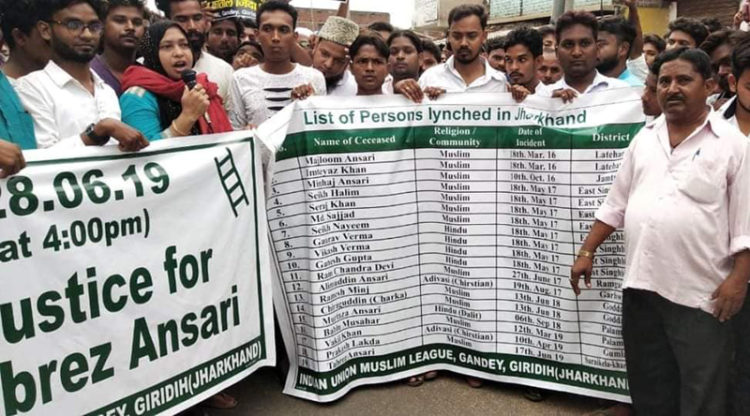
It is only the second case of lynching, in India where a judgment has been delivered since 2015, when Akhlaque Ahmed was lynched over beef eating allegation. The first verdict came in the lynching case of Alimuddin Ansari, a resident of Ramgarh, Jharkhand. This year in March, 11 killers were sentenced for life by a Ramgarh court. However, all of them are out on bail. And Union Minister Jayant Sinha had also garlanded them when they were granted bail. Following which, he had been criticized nationally.

In July this year, wife of Mazloom Ansari, Saira Bibi had told that the killing of her husband and 12-year-old Imtiaz was a planned one as killers had threatened her husband twice. And once they had even threatened Mazloom in their residence. Following which, Mazloom and his partners, who used to buy oxen from one village fair and sell it out at other, had decided to leave the trade. It was the last time that they had gone to sell, the already purchased animals when they were picked by the killers and brutally killed.

latehar lynching mob lynchings Abdul Salam lawyer
Informant lawyer Abdul Salam

After the judgment, Saira told eNewsroom over phone, “We had lost hope that we will get justice, but we are happy to hear this. The family of the killers should face the situation, which my children and I are facing after the murder of my husband.”

She also thanked the support of several unknown people because of whom the case reached to conclusion.

“We are very poor people and we could not fight the killers, but because of the support of people, it happened today,” she added.

However, despite welcoming the verdict, brother of Mazloom Ansari, Manauwar fears that the killers might get bail from High Court. “We are satisfied with the judgment, but because of what happened in the Ramgarh case, we fear that they can also get bail from High Court,” said Manuwar to eNewsroom.

Justice after 33 months, all the eight accused in Latehar Lynching, the first lynching case of Jharkhand get convicted

0

Ranchi: December 19, brought respite and peace to the families of Mazloom Ansari and Imtiaz Khan, who had been lynched and later hanged from a tree, an area falls under Balumath police station area in March 2016. After relentless struggle and effort the eight got convicted for life by a Latehar court on Wednesday.

Among the two victims, Imtiaz was only 12 years old. His father, Azad Khan was partner of Mazloom. The duo were cattle traders. Azad had met with an accident and hence had sent his son with Mazloom to the village cattle fair to sell their oxen.

However, while the duo were on their way, they were picked by those accused in the case and taken to a nearby forest, where they first beaten to death and later hanged from a tree.

Wife of Mazloom, Saira Bibi, maintained that that the attack was pre-planned. Speaking to eNewsroom in July this year, she had told that two of the accused (Arun Sahu and Bunty alias Manoj Sahu) had threatened her husband twice. First by the roadside and second time they had even come to their home and warned Mazloom. So the attack was not an spontaneous reaction, but a preplanned murder.

latehar lynching jharkhand mob lynchings
Saira Bibi, widow of Mazloom Ansari

She had also mentioned, “Mazloom and his partners- Azad and Nizamuddin used to buy oxen from one village fair and sell at another. They had decided to quit the business, after the constant threats he kept getting. However, since a certain number of oxen had already been purchased selling them and starting afresh was the only way out. But, even before the business could be wrapped up the duo had been brutally killed.”

Besides Arun and Bunty Sahu, Vishal Tiwari, Mithilesh Kumar, Sahdeo Soni, Pramod Sahu, Avdhesh Sahu and Manoj Kumar accused in the case have been convicted under under section 302, and 201.

Vishal Tiwari, a para-teacher, was a suspended for a few days. However, he had resumed his job later.

Now, 33 months later all the accused were pronounced guilty by Additional District and Session Judge Rashikesh Kumar.

“We want death sentences for all the killers. They should be hanged till death, the way in which they killed my brother and a small boy,” said Manauwar Ansari, who has fought a long battle to get justice.

Informat lawyer, Abdul Salam, told eNewsroom, “We presented 11 witnesses in the case, and it is a strong one. For two of the accused, Arun and Bunty Sahu, there is a strong chance of the court awarding death sentences for them. They have criminal records too.”

The court fixed Thursday only to pronounce its verdict. The verdict is of great importance as 12 more people have been lynched to death in Jharkhand after the Latehar lynching case.

Raghubar Das led BJP government at war with Para-Teachers of Jharkhand, 70k on indefinite strike since a month

Ranchi: Ujjwal Rai, a para-teacher from Deoghar injured while protesting before Chief Minister Raghubar Das on Jharkhand Foundation Day breathed his last on Monday. Just a day before, another para-teacher – Kanchan Kumar Das (Dumka), died due to cold, outside Minister Louis Marandi’s residence. And on December 15, Suryadeo Thakur (Hazaribagh) too succumbed to his injuries he had received on Foundation Day. Das, was part of the ‘Ghera Dalo, Dera Dalo’ movement of the Para-teacher movement in Jharkhand, where the teachers have camped outside the residence of Ministers, Parliamentarians and Legislators, to create pressure.

What’s the Para-teacher movement all about?

Between December 15 and 17, three Para-Teachers have died in Jharkhand. However, the state has witnessed a total of nine deaths (para-teacher) in last one month. The death list also includes two female para-teachers—Zeenat Khatoon (Ramgarh) and Priyanka Kumari (Chatra).

Significantly, since the lathi-charge incident, one para-teacher Shivlal Soren is also missing.

The para-teacher movement began a month back on November 15, Statehood Day in Ranchi. As the celebratory function was on, a large number of para-teachers had gathered at Morabadi Ground, demanding their jobs to be secured like their counterparts in Chhatisgarh had been. Jharkhand has over 70000 para-teachers (contractual). Their hope of getting a permanent job as assistant teachers were raised when six secretaries of Jharkhand Government had jointly approved it and left it upon Chief Minister Raghubar Das to take a call.

“To press our demand, thousands of para-teachers had planned to reach Ranchi from across the state, on the Foundation Day function on November 15. However, several para-teachers stopped mid-way by the police. And those that reached the ground faced the brutal lathi-charge at Morabadi Ground,” informed Narayan Mahto, a member of Para-Teachers’ Sangharsh Morcha to eNewsroom.

Next day, following the brutal assault, para-teachers went on an indefinite strike.

Para Teachers education jharkhand
Para-Teachers stage-in at the residence of BJP’s Sindri MLA Phoolchand Mandal on Tuesday

Government silent over protest

According to Mahto, on November 15, 297 para-teachers were arrested, and thereafter deaths are continue. But even after a month, Raghubar Das government has refused to take note of the situation.
The other para-teachers who died are—Rajkumar Paswan (Hazaribad), Uday Shankar Pandey (Garhwa), Jagdev Yadav (Chatra) and Raghunath Hemburm (Bokaro).

What Para-Teachers want?

The mainstreaming, and hike in their salaries are main demand of the para-teachers. At present, an untrained para-teacher (primary) gets a salary of Rs 7800 only, while a trained one gets Rs 8200. In middle school, its Rs 8800 for a trained ones and for a TET qualified Science stream para-teachers it is Rs 9200.

The experience of teachers sadly enough doesn’t lead to much salary hike. For instance, Mahto itself, a para-teacher for 15 years now, earns a paltry sum.

“Most of us among the 70000 protesting teachers have over 10 years of experience. We have given our prime to the education department of Jharkhand. And sadly enough, till date, we don’t have a permanent job and in the name of salary, we get peanuts. In case, one of us dies, there is no provision that a kin get compensation job,” said Mahto.

Despite several MPs and MLAs from the government including BJP state President Laxman Giluwa publicly accepted that the demands of para-teachers are genuine, they couldn’t facilitate a mutual agreement between the state and the protesting teachers.

Opposition stands with Para-Teachers

Jharkhand’s opposition parties have supported the agitation of para-teachers.

Former Chief Minister and Leader of Opposition Hemant Soren tweeted on December 17 that there is no morality left now in Raghubar Das government as even after deaths of three para-teachers, it is still sleeping.

CPI-ML has organized several protest march against government’s policy towards Para-Teacher, its leader Vinod Singh said, “All the trained para-teachers should immediately get permanent jobs as educators. As for the non-trained teachers, they should be given permanent position for non-teaching works.”

The Aam Aadmi Party (AAP) which brought a drastic change in the education sector and especially in government schools of Delhi believes that Jharkhand’s BJP government has no intention of improving education, as it has no policy to improve the deteriorating education situation and respecting teachers. In fact it does not work like a welfare state.

“Raghubar Das government wants to hand over the education sector to the private sector. Several government schools across the state have been closed, even after the opposition of local MLAs and MP,” told Jai Shankar Choudhary, Jharkhand State Convener, AAP to eNewsroom.

Choudhary also cited how Arvind Kejriwal led Delhi government had recently, made several teachers permanent and increased their salaries substantially. “In Delhi, teachers’ are being respected and not getting beaten or left to die,” said the AAP leader.

1984, 2002 ,1993 और 2013 के नरसंहारों पर चोट दे गया है दिल्ली हाईकोर्ट का फ़ैसला- रवीश कुमार

वारिस शाह से

आज वारिस शाह से कहती हूं-

अपनी क़ब्र से बोलो !

और इश्क़ की किताब का

कोई नया वर्क़ खोलो !

पंजाब की एक बेटी रोयी थी

तूने उसकी लम्बी दास्तान लिखी,

आज लाखों बेटियां रो रही हैं

वारिस शाह ! तुमसे कह रही हैं

ऐ दर्दमंदों के दोस्त,

पंजाब की हालत देखो

चौपाल लाशों से अटा पड़ा है

चनाब लहू से भर गया है

किसी ने पांचों दरियाओं में

ज़हर मिला दिया है

और यही पानी

धरती को सींचने लगा है

इस ज़रख़ेज़ धरती से

ज़हर फूट निकला है

देखो, सुर्खी कहां तक आ पहुंची !

और क़हर कहां तक आ पहुंचा !

फिर ज़हरीली हवा

वन-जंगलो में चलने लगी

उसमें हर बांस की बांसुरी

जैसे एक नाग बना दी

इन नागों ने लोगों के होंट डस लिए

फिर ये डंक बढ़ते चले गए

और देखते-देखते पंजाब के

सारे अंग नीले पड़ गए

जस्टिस एस मुरलीधर और जस्टिस विनोद गोयल ने अपने फैसले की शुरूआत अमृता प्रीतम की इस कविता से की है। लिखा है कि 1947 की गर्मियों में विभाजन के दौरान जब देश भयावह सामूहिक अपराध का गवाह बना, जिसमें लाखों लोग मारे गए। मरने वालों में सिख, मुस्लिम और हिन्दू थे। एक युवा कवि जो अपने दो बच्चों के साथ लाहौर से भागी थी, रास्ते में चारों तरफ दर्दनाक मंज़र देखे थे और एक कविता लिखी थी। उसके 37 साल बाद देश में एक और भयावह त्रासदी होती है, तब की प्रधानमंत्री इंदिरा गांधी की हत्या के बाद दिल्ली में 2,733 सिखों को निर्ममता से मार दिया जाता है। घर नष्ट कर दिए जाते हैं। देश भर में भी हज़ारों सिखों को मारा जाता है। इस नरसंहार में शामिल अपराधी राजनीतिक संरक्षण के कारण और जांच एजेंसियों की बेरूख़ी के कारण मुकदमों और सज़ा पाने से बचते रहे। दस कमेटियां और आयोगों ने इसमें शामिल लोगों की भूमिका की जांच की और घटना के 21 साल बाद यह मामला सीबीआई के पास गया।

अगर जगदीश कौर, निरप्रीत कौर और जंगशेर सिंह ने हिम्मत नहीं दिखाई होती तो हत्यारों को सज़ा नहीं मिलती। सीबीआई तो बाद में आई। उसके बाद उन्हें भरोसा मिला और बोलने लगीं। दिल्ली के राजनगर में मारे गए पांच सिखों के मामले में सज्जन कुमार और अन्य 5 लोगों को सज़ा हुई है। दो लोगों को दस-दस साल की सज़ा हुई है और बाकियों को उम्र क़ैद।

इस फैसले के पेज नंबर 193 पर भी लिखा है जो 84 बनाम 2002 की बहस करने वालों के काम आ सकती है।

“भारत में 1984 के नवंबर के शुरू में सिर्फ दिल्ली में 2,733 सिखों को और देश भर में करीब 3350 सिखों को निर्ममता से मारा गया था। ये न तो नरसंहार के पहले मामले थे और न ही आख़िरी। भारत के विभाजन के समय पंजाब, दिल्ली व अन्य जगहों पर नरसंहारों की सामूहिक स्मृतियां 1984 के निर्दोष सिखों की हत्या की तरह दर्दनाक है। इससे मिलती जुलती घटनाएं 1993 में मुंबई में, 2002 में गुजरात में, 2008 में कंधमाल और 2013 में मुज़फ्फरनगर में हो चुकी है। इन सब सामूहिक अपराधों में एक बात जो सामान्य है वह यह है कि हमेशा अल्पसंख्यकों को निशाना बनाया जाता है। अपवाद की तरह नहीं बल्कि हर जगह। लेकिन समाज भी अतीत में मिले ऐसे ज़ख्मों की जांच के लिए आगे आता जा रहा है।”

2002 की बात को कमज़ोर करने के लिए 1984 की बात का ज़िक्र होता था अब 1984 की बात चली है तो अदालत ने 2013 तक के मुज़फ्फरनगर के दंगों तक का ज़िक्र कर दिया है। सबक यही है कि हम सब चीखें चिल्लाएं नहीं। फैसले को पढ़ें और प्रायश्चित करें। वो भी जो भीड़ की हिंसा पर अख़लाक़ से लेकर सुबोध कुमार सिंह की हत्या तक चुप रहे और वो भी जो 1984 को लेकर चुप रहे और वो भी जो 2002 पर बात नहीं करना चाहते, वो उससे पहले गोधरा की बात करना चाहते हैं। कोई उससे पहले 1993 के मुंबई दंगों की बात करना चाहता है।

कुल मिलाकर इन सब हिंसा में हमीं हैं, महान भारत के नागरिक, जिन्होंने नागरिकों को मारा है। मरने वालों में सिख भी है, मुसलमान भी है और हिन्दू भी है। ये फैसला हमारी निर्ममता के खिलाफ आया है। 1984 के समय राज कर रही कांग्रेस के खिलाफ आया है। जैसे 2002 में राज कर रही बीजेपी के खिलाफ ऐसे कई फैसले आए हैं। गोधरा की घटना के लिए मुसलमान जेल गए और गुलबर्ग सोसायटी की घटना के लिए हिन्दुओं को सज़ा हुई।

Ravish Kumar has posted this piece on his Facebook page.

Ashok Gehlot and Sachin Pilot take oath of CM and Dy CM in the presence of Mahagathbandhan leaders

0

Jaipur:  Monday witnesses formation of Congress government in three Indian states– Rajasthan, Madhya Pradesh and Chhattisgarh and its Chief Ministers taking oath of secrecy. The first and most important one remain the largest Indian state– Rajasthan, where Congress made a deputy chief minister too. So both chief minister and its deputy Ashok Gehlot and Sachin Pilot respectively took oath. 67-year-old Ashok Gehlot becomes Chief Minister of desert state for the third time. On the occassion, from Congress president Rahul Gandhi and former Prime Minister Manmohan Singh to several chief ministers including Chandrababu Naidu, Kumara Swamy, former CMs including Hemant Soren, Babulal Marandi, RJD Leader Tejashwi Yadav, Congress leader Tarique Anwar and former Prime Minister HD Deve Gowde and many others who are part of Mahagathbandhan remain present in the function.

All photographs by Chandra Mohan Aloria


There was a time when Mamata was beaten, locked-up where she would study and appear for exam the next day

0

Kolkata: Did you know that Mamata Banerjee, the present Chief Minister of West Bengal, detested CPI (M) to such an extent that she never consumed laal cha (liquor tea)? Untold trivia about the much talked about Didi of Bengal was the crux of the third session of the recently concluded Women Writers’ Fest in Kolkata when Shutapa Paul, author of Didi, The Untold Mamata Banerjee and political journalist-cum- author Swati Sengupta engaged in a conversation.

Mamata is more relevant now

The young author, who hails from Kolkata, began by saying, “Being from Kolkata, Mamata was my obvious choice for my book. She has an aura, she is an achiever, and above all being a woman she has scaled stature in Indian politics, where she can actually call the shots. And politically speaking, she is very relevant now.”

She mentioned, “Think about it, Mamata hails from the stinky, dingy lanes of Kalighat and today she is the Chief Minister of Bengal. There was a time when she would be beaten, put behind bars but she would study in the lockup and then the next day appear for her exam. Her character has all the traits that are needed for a great read.” Shutapa quickly added, “Hence, I have treated my book, (Didi) like a novel, where Mamata is the protagonist and I narrate strengths, weakness and even her mistakes.”

Unknown pressure

Speaking about the craft of writing biographies, Shutapa, without mincing words said, “Writing a biography of a living person is not an easy task. Needless to say, that penning down an unauthorized biography becomes even more challenging. There is an unknown pressure from different quarters, making it difficult to gain access to information and trivia.”

On being prodded by Swati, she revealed, “Writing an unofficial biography had its own challenges. Mamata Banerjee was the last person that I interviewed for my book. It was a conscious choice. I was scared that if I approached her first then it could so happen that the other doors leading me to information about her would be closed. So, I took the more difficult route, met people, interviewed them and then when I had all the information I needed I approached my protagonist. She met me but declined from giving me an interview.”

When the young author was asked about the challenges, she said, “There were many. Mamata’s best friend had agreed for an interview, but she backed out in the eleventh hour. Then, I had to travel to Kolkata just to trace her school teacher, who is far too old. But then she gave me valuable insights such as despite my protagonist being an average school student, she had two character traits which have definitely brought her, this far – determination and honesty.”

Shutapa added, “Given the fact that she (Mamata) is a regional leader who could play the kingmaker in 2019 Lok Sabha election, has made wary of the book (Didi). Not many are keen on writing about this book. During my book’s launch in New Delhi, a prominent speaker excused himself, we also had problems in getting a venue for the book release.”

Revealing the untold

Some of the untold stories that the book highlights are her childhood days, what she was like in school and college and what she liked to do as a child and what perhaps brought her into politics. The book also highlights her political low and how she used it to make a political comeback.

“The year 2006 was the most difficult and crucial year for Mamata’s political career. Her party had almost been decimated. She was the sole representative of the Trinamool Congress in the Parliament. People had stopped calling Mamata and political pundits had almost written her off. Known for her perfect attendance, Mamata even missed a few sessions,” Shutapa revealed. However, she added that perhaps, this was the time that gave her the determination to make a comeback. “One my sources for the book revealed, that one day, Mamata after her shower sat in her Delhi apartment’s living room, curiously looking at the now-silent telephone. Perturbed by its silence she asked her PA, ‘Is the phone out of order?’ only to be informed that the phone was in order.” This the author felt was the nadir of her political career, following which she strategically used the Singur issue to make an astounding political comeback by completely wiping out the CPI(M).

Method to Madness

Revealing more about her protagonist, when asked if there was a method the infamous madness of Mamata, as popularized by the opposition, Shutapa said, “Yes. Of course, there is a method to her behaviour. Let me make it clear with this example of mine – in the mid-nineties when she was keen on becoming the Congress Pradesh Parishad’s chief she had to face a lot of resentment, at that point of time she didn’t even get support from Pranab Mukherjee.

Twenty years later when Mukherjee’s name was suggested for the president’s position, then Mamata went out of her way supporting APJ Kalam, for second term. She not just supported his candidature, but also took on to Facebook, created an account to make environment for Kalam. She did everything possible to make things a bit difficult for Mukherjee and then one day calls Mukherjee’s PA and saying that she would support dada. This proves that she had not forgotten the 1997 incident and made sure to make Mukherjee work hard to seek her support, so what might have seemed to be madness to many was a method to make her senior realize something that she hadn’t forgotten over the years.

A Lit Fest in Kolkata, creates symbiotic and democratic space for the women authors in India

0

Kolkata: Before the season of book fairs and literature festivals set up its mood for January 2019, SheThePeople.TV made Kolkata witness another fiery edition of Women Writers’ Festival on December 14. Setting the mood of a Literature Festival that aims to celebrate the contribution of women in Literature and Art was Bengali actor Swastika Mukherjee.

S for She and S for Scissors

Swastika known for playing bold and unconventional characters in Bengali cinema was seen engaging in a conversation with SheThePeople.TV’s Ideas Editor Kiran Manral on ‘The Art and Craft of the Nayika’. She began with saying, “Sadly, enough, at a time when female actors are getting to do women-centric scenes, am often appalled with the censor board’s rejection of such women. A character like that of Vidya Balan’s in The Dirty Picture who was unapologetic about her sexuality had to have portions explaining as to why her character was the way it had been scripted, in the film.” She then citing her example said, “In one of my film, we had the Censor Board, categorically asking the filmmakers to make my character have a section where she needs to repent or show remorse for having opted to bear a child out of wedlock from one of her underage student. I remember having told the producers that I would not do that scene. For, I don’t endorse the ideology of doing things and then crying or apologizing for being what you are.”

Self-censorship a strict ‘no’

With the mood of the single-day Literature Festival being set with Swastika’s fiery talk, it was evident that there would more to it than just reading out excerpts from books. In the second session of the festival, the authors were seen engaging in a discussion about self censorship and sharing personal experiences through one’s book. Sharing her experiences was debutante author Bali D Sanghvi, said, “As they say, write your memoir when it’s fresh. Hence, I chose to write my extremely personal journey from infertility to motherhood through my book – My Frozen Embryo. I chose to not censor my experiences, as then the idea of writing my book would be lost, which is to give all the much details to women, who have to undergo infertility treatment. The idea was to break the taboo that surrounds infertility treatment in India.”

women writers fest kolkata authors
(L-R) Bali D Sanghvi Pritha Kejriwal, Jayeeta Ganguly, Ipsita Ganguly and Baisali Chatterjee Dutt

Echoing a similar sentiment, journalist-turned-author and media educator Joyeeta Ganguly,she said, “My book – Just Another Fan! is a very personal experience. It’s my story of being an Imran Khan fan girl and how a certain person ditching me at the eleventh hour shattered my dream of meeting Imran Khan in 1989, inspired me to become a journalist. JAF! encompasses my quest and fulfilling my dream to meet him.” She maintained that her book not just chronicles her journey but also narrates some invaluable lessons which actually helped her discover her inner-self

She then went on to add, “Had I imposed self censorship and thought about, what people will say, then the book wouldn’t have the effect that it has had. In the age of blogs and social media, first-hand narratives are gaining popularity, but to tell one’s story in the most perfect way, it becomes necessary to know the craft of writing one’s story.”

Adding to that poetess, Pritha Kejriwal said, “Being a poet, I write about things that inspire me or makes me think. I write more out of philosophical training now, than out of melancholy. However, coming to the issue of self-censorship, let me be clear – I write from my experiences, I write about places I visit or people I meet. So, it is very much me about I feel connected with things.”

Platform for women, by women and of women

Apart from these, the festival had some interesting sessions like – How to make one’s blog click, Flavours of Food Writing, Men Writing Women and more.

Speaking about the need of such a festival, Kiran Manral, author and Ideas Editor at SheThePeople.TV, “The Women Writers Fest is a lit fest with a difference, in that it puts women writers and the issues they write about up front and centre, these often get pushed to the sidelines in most mainstream events. The Women Writers’ Fest is a nurturing, symbiotic, democratic space where writers across disciplines and genres can come together and talk about their writing and the issues that inform their work.”

Watch the session of Swastika Mukherjee at Women Writers’ Fest: