From Waqf to Churches to Adivasi Lands: Who’s Safe in BJP’s India?

0

[dropcap]P[/dropcap]arliament recently passed the Waqf Amendment Bill, calling it the ‘Unified Waqf Management, Empowerment, Efficiency and Development Act, 1995, UMMID,’ in short. In the wake of the LoP, Rahul Gandhi stated that after this, the religious properties of other communities will be targeted. He was on the dot, as immediately after the passage of the bill, the RSS mouthpiece Organiser published an article about the property of the Catholic Church. Though it immediately withdrew the article, the message was loud and clear.

One Jharkhand minister expressed her anguish that similarly RSS-BJP will target the Adivasi properties. Who will be in the line next? During the debate on the bill the non-BJP NDA allies like Nitish Kumar, Chandrababu Naidu, Chirag Paswan and Jayant Singh Choudhary also fell in line with the BJP and betrayed the Muslim community in the worst possible way. Had they any principles of pluralism they could very well stopped the bill from passing. As Pastor Martin Noemollers classic anguish shows the methods of Fascists is to target one group at a time with the help of others and then be and by crush the other communities. The case of Catholic Bishops is also in line with the same they have enthusiastically supported the Waqf Amendment bill, but tragically they may be the next targets. They are a strange group, deeply infested by Islamophobia and so in a shortsighted manner are supporting the communal strategies.

Waqf is a property donated by Muslims (even others can donate) for religious purposes. India has a vast property which comes under this provision. While claims are that Waqf is the third largest property owner in the country as such, Hindu trusts and temples have much more property. The present amendments in the Waqf are totally dictated by the Hindu nationalist agenda to diminish the control of Muslims in the Waqf Board.

The control of Hindu temples and trusts is exclusively in the hands of Hindus. Now Waqf, in contrast, will have non-Muslims on the Board and the district collector will be the main authority in issues related to ownership of the property. The contrast between the ownership of Hindu trusts and Waqf is partisan and the Government is determined to undermine the authority of Muslims in these matters.

The minority minister Kiran Rijuju, in his speech introducing the bill, said that the bill is being aimed at bettering the condition of poor Muslims. Waqf as such is for religious and social purposes. Poverty alleviation is the job of the Government, and this government in particular has washed its hands in this direction. Be it Muslims or Hindus or poor from other communities all Government policies are directed to serve the big Corporate.

If his logic is correct why not begin with the majority Hindu community? Our Hindu temples and trusts have astronomical wealth which can nurture many educational institutions, and health facilities and support employment generation. Why is this Government, guided by the RSS agenda of the Hindu nation, not undertaking the task of ensuring that temple trust properties are used to help poor farmers, unemployed youth and other marginalized sections of society?

Kiran Rijuju claimed that many poor Muslims have thanked him for undertaking this! Good joke! Thousands of Muslim organizations have registered their opposition to this Amendment which the BJP is imposing on the country to reduce the power of the Muslim community. It is a warped argument that many poor Muslims have urged him to implement.

As far as democratic and secular values are concerned BJP cares the least about it. Its visible tears for the plight of Muslims in India will shame the Crocodiles. It is Muslims who have been the worst victims of BJP’s coming to power in the centre. They are being beaten for offering Namaz on roads, being targeted for eating beef, being boycotted in Hindu Festivals or on the pretext of Corona Jihad or spitting jihad among others. Despite the counter instructions from the Supreme Court the states are using bulldozers against Muslim properties.

Mr Modi put the Constitution on his forehead as a mark of respect. It was in the backdrop of campaigning for the 2024 general elections when the INDIA coalition was carrying the Constitution as the major symbol of its campaign. For BJP Constitution is a mere showpiece. In Uttar Pradesh, anyone opposing the Waqf bill will have to give a bond of RS 2 Lakhs, so much for our democratic freedoms in this regime!

The Waqf Amendment Bill violates the Indian Constitution in letter and spirit. P Chidambaram summarizes it well “…Courts have recognized a waqf that was created by a non-Muslim, and examples are many. Further, under the existing law, a waqf is, by and large, independent and autonomous. The highest regulatory body in a State is the Board of Waqfs which consists of members who are all Muslims and the Chief Executive Officer is required to be a Muslim. The Board in exercise of its powers is required to “act in conformity with the directions of the waqf, the purposes of the waqf and any usage or custom of the waqf. The only body that has adjudicatory jurisdiction over waqf(s) is a Tribunal which is a judicial body presided over by a District Judge.”

The bill introduced by the BJP stands its spirit on the head and smashes its original purpose. This is one more step to intimidate and disempowered the Muslims. The question of corruption in the matters of Waqf is a serious matter. The Anna-Kejriwal campaign for Jan Lokpal has demonstrated that such methods don’t work. What can remove the corruption from the body politic of our institutions by making them more transparent and democratic? This applies not only to Waqf but also to most of the religious organizations controlling wealth and land.

The jumping in of Organiser with the article on Catholic prosperities reminds us that those supporting the assault on the Muslim community should not be under the illusion that they can save themselves by supporting the attacks on other minorities.

While protests among the Muslim community are picking up all those believing in democratic and plural values need to support these, and stand in solid unity with them. The turncoats, those for power and pelf for their selfish interests stand exposed and hopefully, the countrymen will rise up in the forthcoming elections and other campaigns to show them their place in the dustbin of our History. 

The Great Iftar Deception: How Politicians Feast While Muslims Suffer

[dropcap]A[/dropcap]s the holy month of Ramadan arrives, political parties and leaders begin organizing grand Iftar parties one after another. At first glance, these events may seem like gestures of solidarity toward Muslims. However, in reality, they are nothing more than political strategies where the real issues of Muslims remain unaddressed.

Political parties attempt to project themselves as well-wishers of the Muslim community by hosting these gatherings. Yet, in practice, they keep Muslim leaders away from mainstream politics, fail to introduce policy reforms for their upliftment, and continue treating them merely as a vote bank.

The Reality Behind the Mask of Iftar Parties

Like every year, various political parties and leaders will once again host lavish Iftar events attended by celebrities, businessmen, and religious figures. But the crucial question remains: Do these parties bring any real change to the lives of Muslims?

  • Are there concrete plans for the educational advancement of Muslims?
  • Are efforts being made to create employment opportunities and reduce unemployment?
  • Are tangible steps being taken to maintain communal harmony?

If the answer is ‘No,’ it is evident that these Iftar parties are nothing but political spectacles.

political iftar parties ramadan muslims leadership sonia gandhi akhilesh yadav
On March Sonia Gandhi, Akhilesh Yadav and Jaya Bachchan attended IUML’s iftar party | Courtesy: ANI Photo

The Double Standards in Dealing with Muslim Leaders

Political parties maintain a hypocritical stance when it comes to Muslim leadership. On one hand, they organize grand Iftar parties to showcase their so-called inclusivity. On the other, they deliberately sideline Muslim leaders from key decision-making roles. The political isolation of Muslims has become a serious concern, with parties preferring to engage with Muslims only as voters rather than as stakeholders in governance.

This marginalization is not accidental—it is the result of a systematic political vilification campaign driven by the right-wing ecosystem. Any meaningful engagement with Muslims or policy measures aimed at their upliftment is quickly labeled as “appeasement politics.” Even non-right-wing parties have failed to challenge this narrative. Instead of resisting the deliberate exclusion of Muslims, they have chosen to play it safe, avoiding any confrontation with right-wing propaganda.

political iftar parties ramadan muslims leadership Nitish Kumar chirag paswan
Nitish Kumar attends Chirag Paswan hosted Iftar party in Patna on March 24 | Courtesy: IANS

The Need for Muslim Leaders in Mainstream Politics

If the true welfare of Muslims is the goal, mere Iftar parties are insufficient—political inclusion is essential. When Muslim leaders are integrated into core decision-making processes, real policy changes can occur.

  • Muslim representation in political parties must be increased.
  • Genuine efforts should be made to address the socio-economic issues faced by Muslims.
  • Muslims should be given leadership roles based on merit rather than being reduced to a minority vote bank.
  • Political parties must actively challenge the false narrative that engaging with Muslim issues is “appeasement.”

The outward glamour of Iftar parties does not translate into real progress for Muslims. Instead, political parties must implement concrete policy changes to ensure the upliftment of the community. Muslim leaders must be given the space to play a natural and effective political role. Only through inclusive politics—not political tokenism—can real development be achieved. Most importantly, parties must find the courage to break free from the fear of right-wing propaganda and stand for genuine representation and empowerment of Muslims.

इतिहास की अदालत में औरंगजेब: न्याय, मिथक और राजनीति

0

[dropcap]इ[/dropcap]स दुनिया में अजनबी की तरह आया और इसे छोडते समय भी मैं अजनबी ही हूं”, लिखा था औरंगजेब ने अपने एक खत में अपनी जिन्दगी के आखिरी वक्त में।

वह जानता था कि उस से गलतियां हुयीं। उसने अपने बेटे से कहा, “मैंने राजधर्म का पालन नहीं किया। मैं प्रजावत्सल नहीं था। मैंने अपना जीवन व्यर्थ में गंवा दिया..ㅣउसने यह भी लिखा, “प्रभु हम परिणाम निराशा।” प्रभु मेरे पास हैं, लेकिन मेरी आंखों की ज्योति क्षीण है, इसलिये उनकी प्रोज्ज्वल प्रभा को मै नहीं देख पा रहा हूं।”  इस आत्म स्वीकृति में सूरदास की प्रार्थना  “मो सम कौन कुटिल खल कामी”, तुलसीदास के विनय भाव “अब लौं नसानी, अब न नसैहों” या  George Herbert की भक्ति भावना “Love bade me welcome; yet my soul drew back, Guilty of dust and sin” की अनुगूंज है।

औरंगजेब जन्मजात योद्धा था और एक महत्वाकांक्षी और निपुण सेनापति के रूप में उसे बहुत-सारी सफलताएं मिलीं जिनमें उत्तर में चटगांव और दक्षिण में दक्कन सल्तनत और कर्नाटक क्षेत्र पर विजय सम्मिलित है। उसने निश्चित तौर पर भौगोलिक रूप से भारत के एकीकरण में योगदान दिया, लेकिन चूंकि उसकी प्रशासनिक दृष्टि एक धर्म विशेष से प्रभावित थी, वह सफल प्रशासक नहीं बन पाया। अपने साम्राज्य की वैचारिक आधारशिला को मजबूत करने के उद्देश्य से उसने अनेक मंदिरों को धरा ध्वस्त किया, लेकिन उसका परिणाम उल्टा निकला। वह नहीं समझ पाया कि भारत के सफल सम्राटों की राजनीतिक विचारधारा “सर्वधर्म समभाव” पर आधृत रही है।

हर व्यक्ति के जीवन में कुछ सकारात्मक पहलू होते हैं। औरंगजेब का व्यक्तिगत जीवन सीधा-सादा था। वह आलमगीर था, जिल्ले इलाही था, लेकिन कहा जाता था कि वह अपने खर्च के लिये सरकारी खजाने नहीं खोलता था। वह कॅलिग्राफी (सुलेखन)  में सिद्धहस्त था और कुरान की नकल करने से जो कुछ पैसे वह  कमाता  था, उसी से उसकी जरूरतें पूरी हो जाती थीं। उसने सार्वजनिक स्थानों पर मदिरापान, बादशाह को सोने से तौले जाने, पटाखों और आतिशबाजी के उपयोग आदि प्रथाओं पर रोक लगायी जिससे मुल्क में सादगी को बढावा मिला। गांधीजी को भी औरंगजेब की सादगी पसन्द थी। उन्होंने कहा, औरंगजेब अपने हाथ से बनाई टोपी पहनता था जिससे स्पष्ट होता है कि चर्खा स्वावलंबन का प्रतीक है। उन्होंने एक बार यह भी कहा, मुगल जिसके शासनकाल में राणा प्रताप और क्षत्रपति शिवाजी जैसे प्रतिद्वंदी शासक पैदा हुये, की अपेक्षा ब्रिटिश शासक जिसने विरोध की हर आवाज को निर्ममता से कुचलने का प्रयास किया, अधिक निरंकुश है। विलासिता में आकंठ डूबे हुए आज के धनकुबेर राजनेताओं को औरंगजेब के निजी जीवन की सादगी से सबक लेनी चाहिए।

मुगल शासक औरंगजेब
मुगल शासक औरंगजेब

चूकि औरंगजेब तत्कालीन विश्व के सबसे शक्तिशाली और समृद्ध साम्राज्य का सम्राट था, उसकी ख्याति सात समुद्र पार  फैली और उसके जीवनकाल में ही इंग्लैंड के पोएट-लाॅरियेट जाॅन ड्राइडेन ने उस पर Aureng-Zebe नामक नाटक लिखा। फारसी कवियों और लेखकों ने उस पर कवितायें लिखीं, किताबें लिखी। गुरु गोविंद सिंह ने “जफरनामा” (विजय पत्र) जो वस्तुतः चमकौर के युद्ध के बारे में औरंगजेब के नाम लिखा गया लम्बा पत्र है, की रचना की। भवानी दास समेत अनेक चित्रकारों की तूलिका ने औरंगजेब के चित्र बनाये जो आज भी लंदन के ब्रिटिश म्युजियम, विक्टोरिया एंड अल्बर्ट म्यूजियम और यूएसए के हार्वर्ड आर्ट म्यूजियम, क्लीवलैंड आर्ट म्यूजियम, मेट्रोपॉलिटन म्यूजियम ऑफ आर्ट, स्मिथसोनियन, एशियन आर्ट म्यूजियम, न्यूजीलैंड के ऑकलैंड म्युजियम आदि स्थानों में सुरक्षित हैं।

औरंगजेब एक व्यक्ति नहीं, भारतीय इतिहास के प्रवाह का अंग है। उसके कब्र को तोडा जा सकता है, लेकिन हम अतीत में प्रवेश कर इतिहास की उस धारा को नहीं बदल सकते जो औरंगजेब के सिंहासन से उठी थी। सत्रहवीं से लेकर इक्कीसवीं सदी के अनेक इतिहासकारों, साहित्यिकों और चित्रकारों ने अपने अपने ढंग से उस प्रवाह को अंकित किया या उसका आकलन और विश्लेषण किया जो आज दुनियाभर के पुस्तकालयों और अजायबघरों में सुरक्षित हैं और जिनकी डिजिटल काॅपी इन्टरनेट पर उपलब्ध है। क्या हम उन्हें भी मिटा सकते हैं? क्या हम औरंगजेब को विस्मृति के गर्भ में डाल सकते हैं?

हर युग में इतिहासकार युगबोध के आधार पर इतिहास के नये सवालों से जूझता है। बीसवीं सदी के आरंभ से लेकर आज तक पेशेवर इतिहासकारों ने हजारों पुस्तकें लिखी हैं। वे गलत इतिहास नहीं हैं और हम उन्हें खारिज नहीं कर सकते। वे  इतिहास के अधूरे पन्ने हैं, अधूरी व्याख्यान हैं।  कोई भी इतिहासकार इतिहास की सम्पूर्ण, सम्प्रभु  तथा सर्वमान्य व्याख्या नहीं कर सकता। शिबली नोमानी, यदुनाथ सरकार या Audrey Truschke ने औरंगजेब पर जो पुस्तक लिखी है या इरफान हबीब, सतीश चन्द्र आदि विद्वानों ने औरंगजेब के शासनकाल की राजनीति, अर्थतंत्र और समाज पर जो लिखा है, वे उसके युग, जीवन, कर्म, विचार या प्रभाव से सम्बन्धित सभी प्रश्नों का समुचित और समग्र उत्तर नहीं देते। आज से पचास साल बाद कुछ नयी  शोध सामग्रियां, नये पुरातात्विक साक्ष्य प्रकाश में आयेंगे, कुछ नये मुद्दे खडे होंगे और इतिहासकार नये ढंग से औरंगजेब का विश्लेषण करेंगे। हम इस बात पर ध्यान देने की जरूरत है कि अतीत कभी भी स्वतः और सहज भाव से  इतिहास में परिणत नही होता। एएनयू की टेरेसा मौरिस सुजुकी और कुछ अन्य इतिहासकारों ने इस बात पर जोर दिया है कि अतीत के साक्ष्य जिनमें प्राचीन भाषाओं में लिखे शिलालेख, इतिहास-पुस्तक, पुरातात्विक उत्खनन में पायी गयी सामग्रियां और कलाकृतियां शामिल हैं, को समझने वाला और इतिहास-शोध की प्रविधि में प्रशिक्षित व्यक्ति के शोध कार्य ही अतीत और वर्तमान के बीच  सफल रूप से मध्यस्थता की भूमिका निभाते हैं और अतीत के कुछ पक्ष को हमारे सामने मूर्तिमान करते हैं, हमारा उससे साक्षात्कार कराते हैं।

आज देश में मुगलकालीन इतिहास के इर्द-गिर्द भीषण समस्या इसलिये खडी हो गयी है क्योंकि मुस्लिम शासनकाल के अतीत और हिन्दुत्ववादी वर्तमान के बीच की मध्यस्थता हिन्दुत्ववादी संगठनों से जुड़े संत समाज या भक्तगण कर रहे हैं और पेशेवर इतिहासकारों को पब्लिक डिस्कोर्स में हाशिये पर फेंका जा रहा है। ऐतिहासिक तथ्य के निर्णय मे जिसकी लाठी, उसका कब्जा, जिसकी सत्ता टीवी चैनल, फिल्म और अखबारों के माध्यम से पब्लिक डिस्कोर्स पर उसका कन्ट्रोल।

Gadkari’s Muslim Dream vs India’s Harsh Reality: Why the Largest Minority’s Aspiration Hits a Wall

[dropcap]M[/dropcap]uslims are labelled as “Abdul” and “puncture wallahs,” always stereotyped as madarsa chhaap, kathmullahs, and despised as illiterate, conservative people who don’t want higher education. Nitin Gadkari says he wants Muslims to become engineers and doctors — but that’s easier said than done.

So let’s check the reality, it is very ugly.

Article 335 ensures a fair representation in government jobs for SC/ST communities. But what about Dalit Muslims — Halalkhor, Mehtar, Bhangi, Kalwar, Chamar, Kunjara, Pasmanda, and many others?

Caste doesn’t exist in Islam as doctrine, but in India, caste exists everywhere — including among Muslims. These are India’s Dalit Muslims. Their oppression is real, but their rights are denied.

Under Article 341, SC reservations are extended to Hindu, Sikh, and Buddhist Dalits — but not to Dalit Muslims or Christians. The logic? “You converted, so your caste no longer exists.” However, on the ground, discrimination remains the same. The law picks and chooses whom to protect, no?

Let me share the data that tells the story:

According to the NSSO and the Sachar Committee, Muslims have lower literacy rates, fewer job opportunities, and higher poverty levels than even SC/ST communities.

Only 2.2% of Muslims in India make it to higher education, compared to 7% of SCs and 5% of STs. Muslims are more backwards than ST/SC.

Article 40 talks about decentralization — but village panchayats remain caste fortresses, sidelining both Dalits and Muslims.

Article 44 mentions the Uniform Civil Code — but the focus is only on Muslim personal laws. Hindu Undivided Family tax benefits continue, but Muslims are told “Shariah Law Nahin Chalega.” Gazab ka hypocrisy hai bhaisaab!!

No. This isn’t just about education. The system is built to keep “Abdul” in his place.

Deny them education.

Deny them reservations.

Deny them justice.

How many Muslim representatives are in Lok and Rajya Sabha, the two houses of Indian Parliament? Please go and check.

Notwithstanding if a few manage to rise and question the system? Harass them, jail them.

Sharjeel Imam, an IIT graduate and JNU PhD scholar — was jailed under UAPA.

Umar Khalid, a history PhD, branded a riot conspirator for questioning the government.

Dr Kafeel Khan — his crime? Trying to save dying children. He was jailed.

Gulfisha Fatima, a student protester, was locked up.

Siddique Kappan was arrested on his way to report on the Hathras rape case.

Najeeb Ahmed, a JNU student who argued with the wrong people — vanished. No media noise, and no CBI action. Just another Muslim who went missing.

If Muslims remain uneducated, they’re called backwards.

If they get educated, they’re called “Urban Naxals” or “Islamists” or “Jihadis.”

If they demand rights, they’re told, “Go to Pakistan.”

Is the system broken?

No. It’s not broken.

It was designed and built this way.

A harsh reality!!

No wonder marginalized Muslims end up in ghettos. The system leaves them with no other choice but to remain silent!

Holi Through the Ages: From the Mughals to Modern Times, the Colorful Celebrations of Spring

0

[dropcap]H[/dropcap]oli is a very ancient Indian festival. It is mentioned in Dandin’s Sanskrit play Dasa-kumaracharita and Sri Harsha’s Ratnavali, both of which are 1300 years old. Holi is also mentioned in the Puranas of similar antiquity and is resplendent in all the performing arts.

The English were fascinated with this festival, right from the 17th century. The Oxford Dictionary called it ‘Houly’ in 1687, ‘Hoolee’ in 1698, ‘Huli’ in 1798, ‘Hoh-lee’ in 1809 and so on.

Holi goes by different names in India as well. It’s Phaguaa in Bihar and  Dol-Jatra or Dola Purnima in Bengal, Odisha and Assam. In Maharashtra, it is celebrated as Shimga and in Goa-Konkan this spring festival goes by the name Shigmo. They call it Ukkuli in southern Konkan.

Spring is, after all, the celebration of youth and some amount of unrestrained behaviour is visible in all cultures. Foreigners have recorded, right from the medieval period, that obscene songs were sung.  William Crooke noted this in the 1880s, and so did M.M Underhill, that lewd language was used in Holi, along with “free dancing of men and women.” The real Holi is said to be in Mathura and Vrindavan. Still, it is the Lathmar Holi of Barsana that takes the cake. As women beat up their menfolk with sticks, playfully with a touch of sensuality, that comes out openly through provocative songs.

As we move down the banks of the Ganga, we find Holi is celebrated as the patriotic Ganga Mela in Kanpur but Benaras must have its mud wrestling. Further down, the Phaguaa of Bihar, which is a predominantly Bhojpuri version, is celebrated with wild abandon and wet mud and clay often substitute colours. Intoxicating bhang made from cannabis, milk and spices and served as thandai has been an essential feature of the celebrations and the dances that come with the beat of the dholak only lift the mood even higher.

Andhra Pradesh celebrates Holi as part of Vasant Panchami but the folk of Karnataka and Telangana insist that it is not the demoness Holika that is burnt in the sacred fire. They say it is the naughty erotic god Kama-Devata, hence, they call it Kama-dahana. Destroying Kamadeva in spring is, however, easier said than done as the heart is lighter. This is evident in much of Holi’s ‘excesses’.

In Tamil Nadu, it is Panguni-Uthiram and people celebrate the marriage anniversaries of many pre-Hindu deities on this date. This was obviously to assimilate them into the broad band of Hindu worship. In Kerala, it is a rather low-key celebration called Manjal Kuli (turmeric bath).

When we head straight north to Punjab, we see how houses are painted afresh and how rural women create exquisite artworks called Chowk-Poorna, on cloth with colourful motifs. Holika burning is not a primary event as Holi is Basant Utsav, but it is certainly more religious than in other states. Punjab’s very important three-day festival Hola Mohalla usually coincides with Holi and is replete with kirtan, music and langar food. It is the occasion to forgive and forget and embrace one and all. The event concludes with a long, “military-style” procession near Takht Keshgarh Sahib, one of the five seats of temporal authority of the Sikhs.

Bengal has two traditions to uphold — Chaitanya Dev’s Dol celebrations and Rabindranath’s Basanta Utsav. Shri Chaitanya emphasised Krishna’s reunion with Radha during this scintillating Purnima that he insisted was Dol Yatra while the rest of India focuses on the mythology of good winning over evil during Holi when Holika gets killed in the very fire in which she was trying to murder Prahlad. The Basant Utsav that is commemorated in Bengal’s Santiniketan is a very graceful ceremony that was started by Tagore, in which young women and men dress up in bright yellow and welcome spring through exquisite songs and dances.

In Gujarat, Holi is a two-day festival, where raw coconuts and corn are thrown into the Holika bonfire and since the rabi crop is ripe, it calls for more intense celebrations: with dance, food and music. Mock fights between young girls and boys over a pot of butter milk adds to the general entertainment.

Incidentally, Holi was celebrated on a grand scale by Akbar and the two Mughal emperors who succeeded him —which is attested by numerous miniature paintings of this festival.

Celebrating spring is great but it is the season of the most diseases — air-borne and water-borne — that reach their peak in spring. The deadly smallpox is called Basant in Bengal. Interestingly, the Pracheen Smritis mention this festival centuries before Chaitanya, and remark that the so-called ‘lower castes’ uttered terrible profanities. More significant is its clear mention that “touching of the low caste on the second day of Holi, followed by bathing means that all kinds of illness are destroyed”.

This is an intriguing explanation, as Holi drew people of all castes to mix as they never did for the rest of the year. This intermingling must have conferred some of the immunity that the harder so-called ‘menial classes’ had to the more hygiene-conscious ‘upper strata’. The obsession of the upper castes for ‘purity’ actually made them more vulnerable to disease — very much like our NRIs get sick with the food we relish as their stomachs are more delicate.

Thus, Holi’s mandate to mix with all, irrespective of caste or class appears so gratifying but may well have served the purpose of acquiring better immunity — In fact, the gulal powder made from marigolds has protective medicinal properties.

Beyond the Headlines: The Subtle Art of Ignoring Independent Media

0

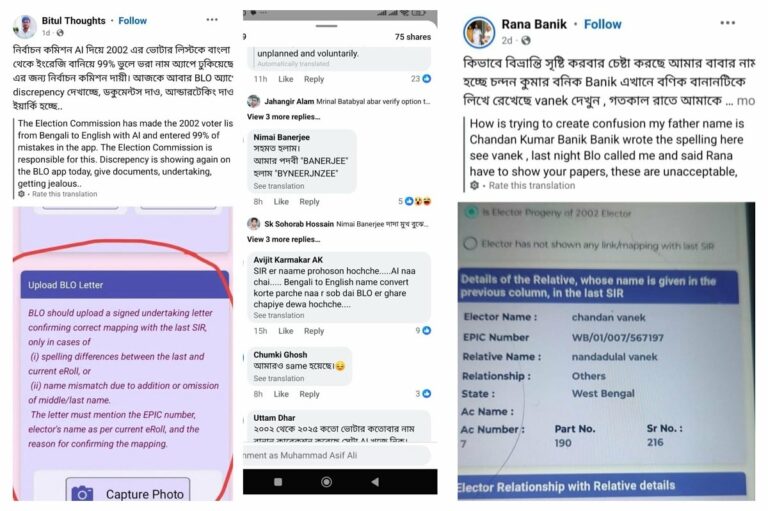
Kolkata: The issue of duplicate voters, or the same EPIC (Electors Photo Identity Card) number being assigned to two or more voters, has now been raised in Parliament. Almost all opposition parties are united on this issue.

For some, the issue of duplicate voters became public either through West Bengal Chief Minister Mamata Banerjee or on social media. Mamata Banerjee mentioned it during an event in Kolkata, and a few days later, the Election Commission held a press conference on the matter in the national capital, Delhi. While the Commission accepted that duplicate voters do exist, it also claimed that they were addressing the issue after it was highlighted on several social media platforms.

However, the reality is that Mamata Banerjee was not aware of the existence of duplicate voters until it was brought to her notice, nor was there any viral social media debate or issue surrounding it.

A non-government organization (NGO), Parijayee Shramik Aikya Mancha, which works with migrant workers, discovered several such cases and sent a letter on December 27, 2024, to the Bengal State Election Commission as well as to Mamata Banerjee.

The Mancha also shared its findings with eNewsroom. Recognizing the significance of the issue, we immediately published the report on January 5, 2025.

In late February, Mamata Banerjee raised the issue but did not mention the organization that discovered the anomalies or reported the issue. A few days later, after the Bengal Chief Minister’s comment, the Election Commission, in its press briefing, only mentioned that the issue was being posted on social media. The Commission neither acknowledged Mamata Banerjee, eNewsroom, nor the NGO. However, sources at the Bengal State Election Commission confirmed that it had received a letter from the Mancha and forwarded it to the National Election Commission, after which the press conference was held.

The significance of the duplicate voter issue for the opposition is clear. After Banerjee highlighted it, TMC leaders held a press conference in Delhi. Now, the Leader of the Opposition, Rahul Gandhi, has also spoken about it, both inside and outside Parliament.

Yet, throughout this entire process, neither the Mancha nor the media organization has been mentioned. Additionally, the people from the Mancha have now gone silent on the matter.

Even without receiving credit, as a media organization, eNewsroom has been raising such important issues for the past eight years and will continue to do so. We believe that it is the people and their rights that matter to us.

From Hunger to Humanity: What the World Can Learn from the Sacred Fast of Ramadan

0

[dropcap]T[/dropcap]here are admirable traits in all religions that I salute. Very recently, the world’s largest congregation of humanity took their sacred dip at the maha-prayag of Mahakumbh. Yogi’s team claims 66 crores bathed, while mature estimates place this at 25 crores — still a world record. We admire the tremendous social service that Sikhs render across the globe, like offering free food to all irrespective of religion or origin, in every Gurudwara. They are the first to cook and provide hot meals for Americans stranded during wildfires and snowstorms. Similarly, the Muslim custom or mandatory charity or Zakat that every earning Muslim has to render to the less fortunate is simply outstanding. And right now, what amazes many is how some least 150 crores or more of the 204 crore Muslims all over the world (1/4th of humanity) will be working like normal every day throughout March 2025 — without a drop of water or a morsel of food. What astonishing self-discipline!

The more we learn of other religions, the more we understand each other and the initial doubts and misgivings about other religions disappear. We understand the special features of other religions and also the fact that, ultimately, all devout people everywhere seek the blessings of the Almighty.

Ramzan: A Time for Reflection and Discipline

This current Muslim month of Ramzan or Ramadan is the ninth of their lunar calendar. Prophet Muhammad instituted the custom of fasting from dawn to dusk — to commemorate the first revelation of the Holy Quran to him. Some Arabs practised this mandatory fast even before Islam arrived, like the Mandeans of northern Iraq who were reported by Abu Zanad in the mid-eighth century. As is known, Prophet Muhammad often turned around quite a few pre-Islamic festivals of the period of Jahiliyyah or ‘ignorance’ into observances that bore the stamp of ethics and new meaning.

Jews observe fast on Yom Kippur and Christians used to do so during Lent before Easter. Other religions, like Hinduism, also enjoy certain days of religious fasting. Hinduism prescribes a period of strictly restricted diet like Navaratri, but most leave it to the individual to decide. The binding observance on such a large scale as Muslims do all over the world is really beyond comparison.

The Power of Fasting: A Global Tradition

The Arabs call it Ramadan which is from their root word for scorching heat or dryness. It was meant to take physical suffering head-on — deliberately — in order to strengthen one’s resolve and inner conviction. Muslims practice strict Sawm and after a pre-dawn meal called Suhoor and their first prayer Fajr, they do not touch even a drop of water or any food until the sun sets. Islam exempts only the sick or those who are really old or travelling, as well as pregnant women.

How long is the fast? India like Arab countries could have it for 15 to 16 hours, while in New Zealand it could be for less than 10. But as we go up to Europe or North America, daylight hours extend to 20 hours, while the sun never sets near the North Pole. To obviate extreme rigour, Muslims may simply stick to the sunset hours of Mecca.

Taraweeh: The Spiritual Significance of Nightly Prayers

Several mosques all over the world arrange for the entire Quran to be recited over thirty nights in prayers called Taraweeh.

Despite the uncompromising Roza, common Muslims celebrate the month and lights and lanterns are strung in mosques and public places, a tradition that was started in Egypt. While Indonesians and Malaysians light obor torches and twinkling pelita lamps, the Gulf countries light up mosques quite ostentatiously. In many countries, giant drums, firecrackers and microphones are used to wake up people before the sun appears.

Iftar: Unity Through Shared Meals

It is only normal for everyone to look forward to sunset when the fast is broken — usually with dates and a sweet drink. Then comes Maghrib, which is the fourth of the five namaz that a pious Muslim observes every day.

In India, Iftar, the community meal taken after the whole day’s fast, assumed a political dimension— to display overt secularism — or a show of power and status. But, nevertheless, the real Iftaar is meant to bring the entire community together — to share food in common. Iftar has given rise to a whole genre of culinary excellence and food markets that are shut during the day and bustle in the evenings with tantalising aromas and abundant choices.

Zakat: Charity at the Heart of Ramzan

As mentioned, a most remarkable Islamic virtue is that of compulsory charity, Zakat.  It is another pillar of Islam that mandates that the poor must be given a portion of one’s earnings as Sadaqah. During Ramzan, this is increased as religious merit also becomes more.

What is less known to outsiders is that Muslims are also expected to exercise utmost restraint in every form of behaviour and abstain from sexual relations during their fast. All forms of good conduct are amply rewarded by the Almighty during this holy period and this injunction against aggression or spite is as important as fasting. In this context, it is tragic to see (that other than a brutal Israel) some Muslims are also waging a war on their co-religionists in the Middle East during this holy month.

Frank Huzur: The Unseen Rebel Who Navigated Politics with Creativity and Integrity

[dropcap]T[/dropcap]he sudden and untimely demise of author-activist Frank Huzur has shocked everyone who knew him. He reportedly passed away at a hospital in Delhi due to cardiac failure in the intervening night of March 5th-6th. Though there was no clarification in the beginning about his whereabouts, it was certain that his last meeting was with Rahul Gandhi on March 4th along with other activists, a group photo of which he shared with me on the same day.

Frank was an acclaimed author, and his biography of Imran Khan, entitled Imran vs Imran, was highly appreciated by critics. However, he could not continue with that tradition of internationalism. A die-hard secularist, Frank was born Manoj Kumar Yadav in the Buxar district of Bihar. He received his education at St Xavier’s Ranchi and then at Hindu College in Delhi. He began participating in cultural events, particularly theatre, at an early age under the name Manoj Kumar, as he wanted to distance himself from domestic caste identities. He was not satisfied with that and changed his name to Manoj Khan. His first drama, Hitler in Love with Madonna, was initially written under the name Manoj Khan. However, the drama could not be performed due to political controversy in the mid-1990s, when Hindutva groups were gaining prominence, not just in the streets and villages of India but also in universities. There was a lot of controversy, and realizing this, he completely changed his identity to Frank Huzur. He lived in London initially but returned to India to settle in Lucknow. One does not know whether that was the right decision or not, but his creative world moved towards the rustic politics of Samajwadis in Uttar Pradesh. It must have been a difficult decision for him, but one does not know what inspired him to make this move. He remained unsatisfied with it despite giving his hundred percent to it.

We met around 2004 and became instant friends. He was very impressed with our humanist work and wanted to participate. He respected my thoughts and understanding of not only the caste issues in India but also admired my knowledge of important international issues. He had a great grasp of the language and knew well how to ‘play with words’, but somehow his talent remained unused and unrecognized. Years later, he jumped into the bandwagon of the Samajwadi Party and started a glossy monthly journal, Socialist Factor. Perhaps Akhilesh Yadav thought the magazine would help build his brand with the English-speaking people. Frank did everything to promote the Samajwadi Party as well as brand Mulayam and Akhilesh. However, it is also the fact that the magazine was not merely devoted to the Samajwadi Party. Frank used his connections with creative people from all over the world to write for the journal. He was extremely fond of me and would ask me to contribute regularly, which I always did. To propagate the Samajwadi Party and its agenda, Frank used his soft writing skills to write portraits and lives of the prominent leaders. Later, he wrote biographies not only of Mulayam Singh Yadav but also of Akhilesh Yadav.

Frank Huzur was given a bungalow in Lucknow during the Samajwadi Party government headed by Akhilesh Yadav. It became the office of Socialist Factor, where he put all his creativity on the walls and lawns of his house. He was fond of photography and deeply in love with his wife, Femina Mukta Singh, and their son, Marcos. Their love story fascinated everyone, and even after years of marriage, they remained deeply in love with each other.

His house became a center for all the young or old Samajwadis who would come to Lucknow for their work and stay there. He was a great host, but that was the price you pay to be part of a political culture. The people who thronged his place didn’t necessarily respect his intellect but his connections. The crowd that came to his house were political activists who felt that Frank’s connections with top echelons of Samajwadi Party leadership would help them, and secondly, they were getting the necessary support in terms of hospitality. Though Femina Mukta Singh is also a creative person, I feel they both had to pay a price for this kind of ‘political activism,’ which they were not familiar with. The resources given for Socialist Factor were not much, so Frank could not run an independent autonomous office with several staff, including writers and editors. The magazine did not do well in terms of circulation and could gain nothing from advertisements because, except for being a trophy for some of the Samajwadi Party workers, it was not of much use to them. Afterwards, Frank started Socialist Factor in Hindi, which aimed to galvanize the party workers in Uttar Pradesh. He started participating in Samajwadi Party rallies and meetings all over the state, not only reporting but also finding people who could write regularly. This was a difficult task, as political activists on the ground are not supposed to be more than sloganeers. To find writers from political activists on the ground is difficult because ‘intellectualism’ is a ‘drawing room’ work. Political parties want pamphleteers, and even more than that, they want you to be as artificial as possible in their ‘glorification’.

author-activist frank huzur samajwadi party vidya bhushan rawat
Vidya Bhushan Rawat with Frank Huzur

Some want you to be their ghostwriters, but none want you to become the propagandists of their ideology. The parties that are surviving today have a history of ideological propaganda, and none understands this better than the Dravidian parties. They enriched the political discourse and encouraged youngsters and creative people. That spirit is absent in North India.

After Akhilesh Yadav was out of office, Frank Huzur became a target, and one day he was forcibly evicted from his house. He lost many cats, and there were difficulties for him. After Socialist Factor, his house had become a place for young Samajwadi Party activists who would come and stay over. Frank was investing more into social capital, but the fact is that people were merely coming to him because they felt he had powerful connections with Akhilesh Yadav. Perhaps that resulted in internal backbiting, and soon he was out of favor, though Akhilesh Yadav provided him with a place to stay—a house where Mulayam Singh Yadav used to stay. But Frank was finding it difficult.

It is difficult for a creative person to be comfortable in a political party, particularly if the leaders want you to be their propaganda tool. Frank was a great copy editor and writer. He could have been used in Samajwadi Party’s media department, but that did not happen. There was no space for him in the social media cell where he could have excelled and helped the party. The party was looking for ‘professionals’ and must have invested a lot into it.

I have always asked why the Bahujan parties mostly encourage and support the Brahmanical ‘intellectualism’ or so-called ‘liberals’ and ignore those who have been associated with the Bahujan movement. Probably, they need people who can get them ‘space’ in the media. Rather than creating their own media, they simply wish to be part of the existing media, which has often been hostile to them. The Samajwadi Party has a history of encouraging and supporting forces that later became part of the Hindutva movement. Frankly, they had no sympathy for Samajwad or social justice—only their power and connections brought them to these parties.

It has been more than two days, and we have yet to hear anything officially from the Samajwadi Party. Neither did Akhilesh Yadav speak about him. This is extremely shocking and sad. Frank Huzur associated with the Samajwadi Party for a long time and worked diligently for the party. He was extremely loyal to Akhilesh Yadav from the beginning and did everything to protect them as the ‘greatest’ ‘Samajwadi’ leaders. I always resented many of these overhyped terminologies being used, but he continued with them, probably because of the political pressure.

I don’t know what happened between him and the Samajwadi Party, and he had to look for new avenues. He was very disappointed and slowly started moving towards the Congress Party, particularly Rahul Gandhi, who has been speaking on caste census and issues of social justice. The last meeting of Frank Huzur actually was with Rahul Gandhi, but after his return, he reportedly had a cardiac failure and was brought to the hospital but passed away.

We discussed many times the issue of a cultural organization and engagement with more and more creative people building up intellectual capital emerging from the ground and mostly from the marginalized sections, but those ideas do not excite in the age of fast-food activism. You are known for your ‘reach’ on Twitter, Instagram, and Facebook. If you don’t have anything of such kind, you are of no use to the political parties. So, an intellectual with an understanding of culture and society, particularly those who promote Bahujan philosophy and ideology, are actually ‘unwanted’ and ‘persona non grata’ for these parties.

Frank Huzur was an ‘alien’ in political activism. A creative person at heart, he could write great profiles and interesting stories, either sitting at his desk or interviewing people. Unfortunately, he was often compelled to do things that went against his intellect. A liberal humanist, he enjoyed evenings with his friends and family, but politics started taking its toll. He was a creative individual, yet in the din of political activism, he had little time to devote to his creativity. Political activism is not meant for creative people unless they are fully immersed in the shouting brigade of their respective parties, influencing their “jaatis”—which Frank was not comfortable with.

In India, surviving as an autonomous writer is nearly impossible; you need recognition from your party or community to be acknowledged as a writer. Unfortunately, this often turns into political sloganeering and pamphleteering. The reality is that today’s writers are rapidly becoming part of this system. Independent thinkers are despised because of the intense competition everywhere. People are willing to “crawl if asked to bend,” as LK Advani famously said about the Emergency period. But today, we are even worse than that, resulting in the isolation of those who maintain principled stands. Frank was caught in this tension—doing something that was not natural to him. Political activism did not give him what he deserved, yet it demanded “full loyalty,” even at the cost of his creativity, which had to be converted into a propaganda tool for the party. In response, the body does things that the heart and mind resist, leading to depression and suffocation. Many are suffering like this today.

We critique capitalism, fanaticism, and religious bigotry, but ironically, these are the only things thriving in the market. Those who remain uncompromising feel suffocated and unwanted because they can’t submit to the demands of flattery or total submission. Without such compromises, they face rejection and isolation. This crisis is serious and demands urgent introspection.

Frank Huzur’s creative potential remained unfulfilled and unutilized. His talent could have served the party and its leadership, to whom he devoted his life for over twenty years. Sadly, neither the Samajwadi Party nor its leadership have expressed condolences or sympathy for his wife, Mukta Singh, and son, Marcos, even today. In this age of social media, such disregard is troubling. It reflects the growing brutality of our political system, where leaders become increasingly insensitive. Today, value is measured by your “reach” on social media, not by your intellect or contributions. Competing with media “professionals” is a difficult and often unwanted task for intellectuals. Political leaders now prefer personalities like Kumar Vishwas, or the Babas from Art of Living or Bageshwar, rather than creative individuals who may challenge the status quo. Frank Huzur’s untimely death is a warning to those who find themselves unable to compete in the social media-driven world. It underscores the harsh reality of market-driven politics, where your capability and intellect count for little if you don’t have “reach.”

Frank Huzur became a victim of this trap. He dedicated his life, hoping his creativity would flourish, but it never did. This must have been deeply frustrating for him, impacting his health. Frank will be especially missed by the young aspirants in Bahujan communities who dreamed of entering the creative world. Our sincere condolences.

‘हिन्दी मीडियम टाइट’, ऐसी किताब जिसमें छिपा है- हिन्दी भाषियों के दर्द और उनकी पहचान का सच

[dropcap]”पि[/dropcap]छली बार गाँव गया था तो राजन भैया ने एक बात कही- पहले तुम ‘हिन्दी मीडियम टाइप’ थे अब ‘हिन्दी मीडियम टाइट” हो गए हो।”

‘हिन्दी मीडियम टाइट’, दरअसल दिल्ली के ‘राजपाल प्रकाशन’ से छपी किताब का शीर्षक है, जिसकी ये पंक्तियाँ इसी किताब के सबसे आखिर में एक तरह की ठसक के साथ समाप्त हो जाती हैं।

पूरी कहानी सच्ची है, और उन सबका सच भी है जो गाँव-कस्बों में हिन्दी माध्यम से पढ़कर महानगरों के बड़े-कुलीन संस्थानों में प्रवेश तो पा जाते हैं, लेकिन जिन्हें हिन्दी भाषी होने के चलते पिछड़ा जान न सिर्फ अनदेखा किया जाता है, बल्कि तंज, उपहास और अपमान का पात्र भी बना दिया जाता है। प्रभात रंजन बिहार के सीतामढ़ी से दिल्ली के प्रतिष्ठित ‘हिंदू कॉलेज’ में प्रवेश पाने वाले ऐसे ही सच्चे पात्र हैं, एक अंग्रेजीदाँ-अभिजात परिसर में प्रवेश पाने के बाद जिनके सामने सबसे बड़ा संकट होता है- एडजस्ट कैसे हों?

प्रभात रंजन हिन्दी के बेबाक लेखक के रूप में जाने जाते हैं, इस मायने में करीब सौ पेजों की उनकी यह किताब उनकी बेबाकी पुष्टि करती है। पूरी किताब आत्मकथ्य के रूप में है और यह अपनी शुरुआत में कहीं-न-कहीं एक युवा के असामान्य बर्ताव की तरफ हमारा ध्यान खींचती है, जो दरअसल हिन्दी भाषा के लिए पैदा कराई गई हीन-भावना का ही परिणाम है। यही वजह है कि जो ऐसी पीड़ा से गुजरे हैं वे इसकी कथा-व्यथा से जुड़ाव महसूस करते हैं और इस दौरान अपने जीवन के कई प्रसंग भी याद करते हैं।

एक स्थापित लेखक के नजरिए से देखा जाए तो प्रभात रंजन के लिए ऐसी किताब लिखने का विचार ही अपनेआप में साहसी है। इसके दो कारण हैं, पहला तो यह कि एक पड़ाव पर पहुँचने के बाद लेखक अपने गए कल से उन किस्सों को चुनते हैं, जिनमें झिझक, लज्जा, द्वंद है और जिन्हें वे एक किस्सागोई अंदाज में ऐसे सार्वजनिक करते हैं जो मजे-मजे में कई बार खुद का मजाक उड़ाने जैसा लगता है।

दूसरा कारण और भी महत्त्वपूर्ण लगता है कि बौद्धिक दुनिया का एक वर्ग जब ‘हिन्दी वाले’ के हर एक हाव-भाव और उसकी राय को दक्षिणपंथी होने के संदेह के रूप में देख रहा है, तब उसी दुनिया से एक लेखक न सिर्फ हिन्दी के बचाव में लिखते हैं, बल्कि हिन्दी के विरोध में तैयार की जा रहीं धारणाओं को तोड़ने के लिए मुखर होकर अपनी आपबीती सुनाते हैं।

वाकया शुरू होता है ‘हिंदू कॉलेज’ में लेखक के पहले दिन से जुड़ी एक घटना से, जिसमें उसी कॉलेज की एक अंग्रेजीदाँ लड़की उन्हें देख ‘दीज एचएमटी’ कहकर उन पर कमेंट करती है। उस दिन उनके लिए एक बड़े सपने से अधिक बड़ी चीज यह जानना हो जाता है कि एचएमटी मतलब क्या? और एक दिन जब लेखक को एचएमटी का फुल-फार्म मतलब ‘हिन्दी मीडियम टाइप’ का पता चलता है तो उन्हें समझ आ जाता है कि ‘हिन्दू कॉलेज’ उनके जैसे लड़के के लिए वह जूता है जो उनके नाप से ज्यादा ही बड़ा है और जिसे संभालते हुए चलना उनके लिए अपनेआप में किसी मुश्किल टास्क से कम नहीं।

उसके बाद बहुत सारे ‘हिन्दी मीडियम टाइपों’ की तर्ज पर लेखक भी माहौल के मुताबिक खुद को ढालने के लिए तरह-तरह के जतन करते हैं, जिनमें ‘या-या’ और टूटे-फूटे अंग्रेजी के शब्दों से आगे अंग्रेजी के गाने, अंग्रेजी के साहित्य, अंग्रेजी के अखबार, अंग्रेजी की फिल्में, फैशन से लेकर बाकी तमाम गतिविधियों के प्रसंग महज फोबिया को कम करने की कड़ी के हिस्से के तौर पर जुड़ते चले जाते हैं। इसी कड़ी में विमल सर, निरंजन, विधान, तेनजिंग, समरेंद्र, रमेश ठाकुर, सुनील, गौरव और अखिलेश भी आते हैं, जो दरअसल हिन्दी भाषा के भीतर की परेशानियों और बाधाओं की तह में जाने और उन्हें जानने के जरिए बनते हैं, और व्यवहारिक रूप से इस बात को समझने के कारण भी बनते हैं कि यदि अंग्रेजी-अभिजात्य की मुख्यधारा ‘आपको’ स्वीकार करती भी है तो किस रूप में? और, यहीं से लेखक को ‘एचएमटी’ के बाद जल्द ही ‘भैया’ शब्द का अर्थ भी समझ आ जाता है।

लेखक के लिए नब्बे के दशक का वह दौर एक ऐसा समय सिद्ध होता है जिसमें उन्हें हिन्दी अनंत मजबूरियों की भाषा नजर आती है। भाषा की इस दीवार को पार करते हुए जिन्होंने अंग्रेजी सीख ली वे ठीक, जो नहीं सीख सके वे हाशिये के लोग रह गए। देखते ही देखते ‘भैया’ से ‘दीदी’, ‘मौसी’, ‘काकी, ‘दादा’ जैसे प्यारे शब्दों के साथ उनके संबंध और उनके अर्थ बदल गए।

इस बदली हुई अर्थो की दुनिया में ‘भैया’ पर ‘संघी’ समझे जाने की तलवार और लटक गई, इसलिए भैया लोग ‘गोबरपट्टी’ के वे रहवासी हो गए, जिन पर साम्प्रदायिकता के विस्तार का आरोप है, यह आरोप एक तरह से भैया लोगों पर एक खासा दबाव है, जिसके चलते उन्हें अपना हर कदम फूँक-फूँककर रखना पड़ता है। क्या खाया, क्या पिया, क्या बोला, क्या किया के उत्तर में ‘भैया’ बात-बात पर सफाई देने का आदी हो गया है इस डर से कि कहीं उसे बौद्धिक जगत से बाहर न कर दिया जाए। दरअसल, इस जगत में एक ऐसी जमात तैयार हो चुकी है जिसके सामने हिन्दी बोलने भर से ज्ञान का स्तर नीचे की ओर खिसकता है।

किसी गंभीर विषय को लेकर हिन्दी वाले की बात मायने रखती भी है तो बस कहने-सुनने के लिए। लेकिन, समस्या यहीं खत्म नहीं होती, बल्कि यहां से एक दूसरा मोड़ लेती है। असल में हिन्दी मीडियम वाले दूसरी तरफ से भी पिसते हैं, क्योंकि हिन्दी पढ़ने, लिखने से लेकर कुछ कहने और सुनने वाले को हिन्दी वाला भी गंभीरता से नहीं लेता। जैसे एक जगह- “.. बाद में जब परिपक्व हुआ तो समझ में आया कि जिस प्रोफेसर साहब के बारे में चुटकुला सुनाया जाता था, वे संस्कृतनिष्ठ हिन्दी बोलते थे, हिन्दी के अच्छे विद्वानों में माने जाते थे, पर उन्हें इस तरह से आज भी कोई याद नहीं करता। आज भी उनके जानने वाले उनका नाम आते ही चुटकुला सुना देते हैं। हिन्दी के बड़े-बड़े विद्वान् भी हिन्दी समाज में चुटकुलों के काम आते हैं।”

“हिन्दी के बड़े-बड़े विद्वान् भी हिन्दी समाज में चुटकुलों के काम आते हैं।” जैसे कई पंक्तियाँ तीर की तरह मन के कोमल हिस्से पर चुभती हैं। वहीं, ‘यू केन किस मी ऑन अ मंडे, अ मंडे इज बेरी-बेरी गुड’ जैसे छोटे-छोटे चैप्टर में बंटा यह आत्मकथ्य कई बार इसी तरह के रोचक कमेंट्स से शुरू होता है और गाँव-कस्बे के परिवेश तक जाता है, जिसमें लेखक अपनी तरह से उनकी तुलना करते हुए उन्हें महानगर की दुनिया से तोलते हैं, सोचते-विचारते हैं और कई तरह की उधेड़-बुन में लगे रहते हुए कई सारी बातें कई सारे किस्से और कई सारे तजुर्बे सुनाते हैं। लेखक का यह तरीका हिन्दी वालों के लिए हिन्दी में किस्सागोई सीखने के काम भी आ सकता है।

आज जब सोशल मीडिया और वैश्विक बाजार के दौर में हिन्दी के लिए कई क्षेत्र खुले हैं तो इस लिहाज से लेखक हिन्दी के भविष्य को सकारात्मक रूप में देखते हैं। हालांकि, आत्मकथ्य अपने अंत की ओर एकलाप में बदलने लगता है जो शेष भाग की तुलना में हल्का बोझिल लगते हुए भी वैचारिक स्पष्टता को दर्शाने की दृष्टि से आवश्यक जान पड़ता है।

Hemant Soren’s Battle Cry: ‘Fight for ₹1.36 Lakh Crore—Jharkhand’s Rights Are Non-Negotiable!’

0

Giridih: Jharkhand Chief Minister Hemant Soren called upon the people to be ready to fight against the Centre’s stepmotherly treatment to claim their rights.

Addressing a large crowd during the 52nd Foundation Day of the Jharkhand Mukti Morcha’s Giridih chapter, the Chief Minister said, “The Central government always treats us with stepmotherly care. It is ironic that everything—from fields, rivers, to mines—is ours, yet we don’t get our due share. How is that possible? First, we must receive our rightful dues of Rs 1,36,000 crore.”

CM Soren, now sporting a rugged look inspired by his father, Shibu Soren, repeated his statement in Santhali. In his 33-minute long speech, he made several references in the language of the indigenous people.

“Crony capitalists are looting the country. Here, they are trying everything they can. But we are sitting here, and until the Adivasis, Dalits, and minorities receive their due, they will not succeed here,” he said, urging the crowd to stay united.

Expansion on the Jharkhand Government vs. Centre’s Dues Standoff

The stand-off regarding Jharkhand’s dues from the Centre is a critical and ongoing issue. Hemant Soren’s government has been vocal about the Rs 1,36,000 crore that the state believes is owed by the Centre. This amount represents funds that Jharkhand claims are due for its rightful share from natural resources like mines, rivers, and forests, which the state has long struggled to control effectively. Despite the state’s substantial natural wealth, the Centre’s delay in releasing these funds has sparked frustration, particularly as the state continues to face infrastructural deficits and rising poverty rates.

Soren’s comments during the Giridih address are part of a larger political narrative in Jharkhand that underscores the regional government’s struggle for financial autonomy and justice. He has made it clear that the state will not back down in its demand for these funds, which he sees as crucial for the development of Jharkhand and the welfare of its marginalized communities. The standoff with the Centre is also seen as emblematic of the growing tensions between regional governments and the Union Government over fiscal federalism, resource sharing, and the management of state economies.

Maiyya Samman Yojna to Combat Inflation

Soren went on to address the nation’s worsening economic situation, highlighting the rising taxes on essential items like salt, flour, milk, and even school supplies—things that had never been taxed before. He criticized the government’s handling of inflation and emphasized how the Jharkhand government is actively fighting against these burdens. “To ease your difficulties, we are supporting families through the Maiyya Samman Yojna. This program provides direct financial support to lessen the impact of inflation,” he explained.

Soren also cited a recent report from the NITI Aayog, which acknowledged Jharkhand as one of the four Indian states strengthening its economic position. “We affirm that our government is working towards lifting people out of poverty and improving the living standards of those Below the Poverty Line,” he added.

Giridih: From Shibu Soren’s Work Field to Kalpana Soren’s Political Journey

Jharkhand Mukti Morcha (JMM) has a long-standing relationship with Giridih, a bond stretching over half a century. On March 4, the ruling party celebrated its 52nd foundation day in the district. The significance of this day goes beyond just being the birthplace of one of the party’s oldest chapters—it was also the work field of JMM’s founder, Shibu Soren. A new chapter was added this year, as Kalpana Murmu Soren, the wife of Hemant Soren and a legislator from Gandey, made her first public appearance as a politician. She marked her one-year milestone in politics with a heartfelt speech.

Kalpana, who had captured national attention with her impressive oratory skills, reflected on her journey. “This is the same platform where you saw me crying. Everyone was there, except Hemant Soren. You were my strength, and I am thankful for it,” she said.

The day before, on March 3, she had celebrated her birthday. On March 4, 2024, she again became emotional, recalling the significance of the moment: “To remember this situation, you all affirmed that if there is a government in Jharkhand, it will be the same government, and we have the Abua government.”

Kalpana Soren also highlighted the significance of the Jharkhand government’s budget, emphasizing that it reflects the promises made by Hemant Soren. “The budget is a reflection of Hemant’s promises,” she stated.

She also requested Minister Sudivya Sonu to work on developing the tourism sector in the region to generate employment opportunities for the people of Giridih.

“It was the dream and vision of Shibu Soren and his colleagues—who left their homes and families to create a separate state – Jharkhand. I salute them. This party is born out of struggle, and I, too, have come from struggles, but you, the people, have always been my strength,” she said.