Nobel Dreams and Bayraktar Beams: What the Indo-Pak War Really Sold Us

1

[dropcap]T[/dropcap]he India-Pakistan war after the Pahalgam attack wasn’t just another conflict. It was a laboratory experiment.

South Asia became the guinea pig—a testing ground where global powers trialed their weapons, alliances, and strategies, while ordinary people paid the price with their lives.

Pakistan, reeling from economic collapse, walked away with a $7 billion IMF bailout. Not bad for a nation on the brink—but the war became its bargaining chip.

China didn’t fire a single shot, nor did it need to. Its J-10C “Vigorous Dragon” jets, deployed by Pakistan, made their combat debut. The PL-15 missiles followed—not for defense, but for display. No Chinese soldier moved, no border was touched. But Beijing’s arms catalog got an upgrade, sending a shockwave through many weapon manufacturers. China’s defense exports are now poised to rise.

Turkey’s Bayraktar TB2 drones, flown remotely, were not just war machines—they were live demonstrations. Every strike became an advertisement. The battlefield became an open-air defense expo.

Trump, after failing in Gaza and Ukraine, played peacemaker—pushing for a ceasefire not out of compassion, but to polish his brand and whisper “Nobel” into the global echo chamber. Nobel Peace Prize? Let’s see…

France watched its Rafale jets enter headlines—some glorified, some reportedly downed. But even wreckage tells a story. For the arms lobby, failure is feedback. Damage becomes data. New contracts are born from old smoke.

India responded with Operation Sindoor—a carefully timed military display showcasing layered air defense and retaliation. But the mission didn’t stop in the skies. On the ground, the Tiranga Yatras will begin in days to come. Nationalism will be repackaged, election-ready. In a land where emotions vote, military glory translates into ballot power.

And how can we forget the media? They too reaped the benefits of TRPs, with many advertisers bidding high for prime time slots.

But in all this… who are the real guinea pigs?

The stupid common men, whose blood always spills first, and who, like lab rats, are tested again and again.

Born Here, Thrown Out: Bengali Muslim Families Face Forced Evictions in Kolkata’s Rajabazar

0

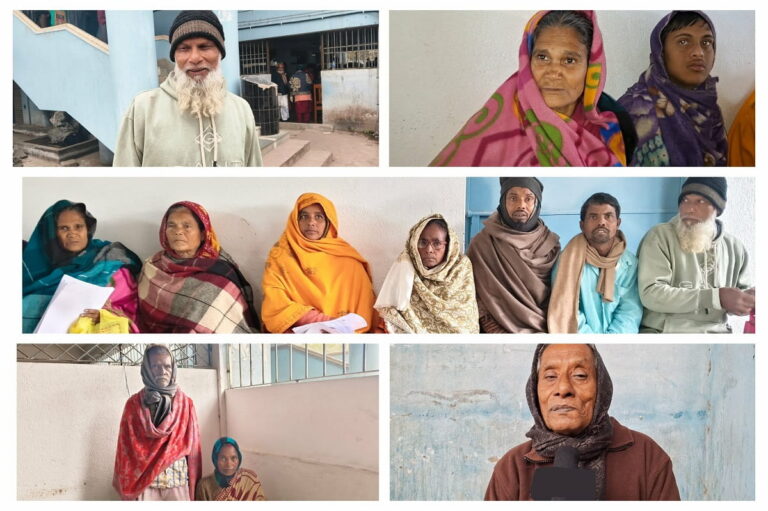
Kolkata: Tensions are escalating in Kolkata’s Rajabazar after police-led evictions left dozens of families, including many school-going children, homeless and exposed to the elements. Students like Muhammad Farhan, Rosy Khatun, and Ayesha Khatun—who study at Mitra Institution—now struggle to attend classes while living under makeshift roofs, their books and uniforms buried under rubble. Their homes, small huts built along the roadside near 299 Acharya Prafulla Chandra Road, were demolished by Amherst Street Police on May 9, leaving their families without shelter or support.

“This is no way to treat children,” said Shehzadi Bibi, one of the evicted residents. “We are poor, but we tried to educate our kids. Now they are studying on pavements.” Her voice trembled as she pointed to the shattered remains of her home. “This shack was everything. We have nowhere else to go.”

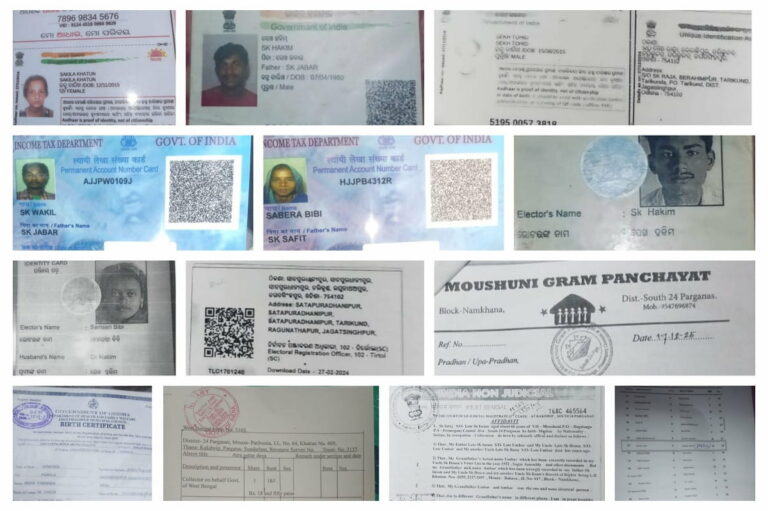
The affected families, all Bengali Muslims, say they have been living in the area for over 50 to 60 years. They allege that the police arrived without notice or legal paperwork, demolished three huts, and warned of legal action if they did not vacate. “These are not illegal encroachments by outsiders,” said Sheikh Rahim, another resident. “We were born here. We have voter cards going back decades. Yet they treat us like we don’t exist.”

The residents include cart-pullers, shoe shop workers, and daily wage earners—people whose incomes barely cover food and education, let alone alternative housing. Despite their hardships, many have enrolled their children in local schools. Now, with their homes razed, even basic schooling hangs in the balance.

Repeated attempts to contact police officials for comment have gone unanswered. Residents also say that their appeals to the local councillor and the MLA of Ward 36 have fallen on deaf ears. “No one has come to speak with us. Not a single official,” said Rahim.

In response, a formal complaint has been submitted to the West Bengal State Minorities Commission. “Save the people of the Bengali Muslim community from persecution and eviction,” the letter pleads. Civic rights group Bhumi (Bhumiputra Unnayan Morcha of India) has condemned the evictions. “These are Indian citizens who’ve lived here for generations,” said Imraz Sheikh, a representative of the group. “If eviction is necessary, where is the rehabilitation plan? Why this cruelty?”

They also informed BHUMI that “women were subjected to lewd stares when they returned after bathing, along with threats of false legal cases being filed in their husbands’ names. Meanwhile, liquor and drug dens were set up near the slum area.”

Some have alleged that outsiders—specifically non-Bengali goons—have established these drug and liquor dens.

However, when residents complained to the police, instead of taking action, the police began evicting them from their decades-old homes.

Ahmed Hasan Imran, Chairman of the West Bengal State Minorities Commission, confirmed receipt of the complaint. “I shall be forwarding the same to the concerned authorities and Nabanna so that they get State intervention in their plight on humanitarian grounds,” he said. He added that Chief Minister Mamata Banerjee is known for her humane approach, and he hopes suitable alternatives will be arranged.

The episode has reignited a larger debate about the rights of long-established slum communities in rapidly urbanising cities like Kolkata. Critics argue that unchecked eviction drives in the name of development are displacing vulnerable populations without due process or rehabilitation. For the families of Rajabazar, the issue is not just legal—it’s existential.

“Where do we go now?” asked Shehzadi Bibi. “We didn’t ask for palaces. We just want our children to be safe, to study, and to live with dignity.”

The Real Soldiers Want Peace—Only Cowards Turn Grief Into Communal Fire

[dropcap]I[/dropcap]t is sad to see persistent attempts being made to create communal frenzy across the country under various pretexts. In the aftermath of the Pahalgam terror attack, we saw a united India condemn the violence unequivocally. That unity is India’s greatest strength. While the public responded with sensitivity and reason, the prime-time mercenaries did everything they could to disrupt peace and stoke polarisation.

They were expecting the Prime Minister to order the complete annihilation of Pakistan—but that hasn’t happened. Instead, what came was the caste census, which they despise. It felt like egg on their face. Is this a Mandal 2.0, as many are suggesting?

To me, it seems more like headline management. But even if that’s the case, let’s hope the government genuinely follows through on conducting the caste census seriously. The only difference is that when VP Singh launched the original Mandal Commission process in 1990, there was complete honesty in that government’s intent. Today, we simply don’t know what will happen. I fear we’re heading toward more polarisation.

Anyway, let’s see how things evolve. I’ve stopped being either too excited or too cynical. Let things unfold. All political parties will make their calculations. The real crisis in India is the absence of true intellectuals. Those who claim to be intellectuals often end up as mere tailors stitching narratives to suit their jaati (caste) leaders or caste interests. While various castes have been clubbed into categories, today’s political leaders are experts at engineering new caste realignments—and that is exactly what we will see.

The government seems to be working on all fronts. On international affairs, there’s wide consensus, so there isn’t much space for the government to manipulate things. The people have punctured their plans to politicise national security. Unlike the Pulwama incident, which gave rise to many conspiracy theories, the Pahalgam attack has offered valuable lessons. The entire nation stood with the government. Still, the Hindutva loudspeakers kept trying to provoke by portraying others as anti-national or by putting words into people’s mouths to create tensions.

The incident in Muzaffarnagar is a prime example. Rakesh Tikait was publicly humiliated, but the move backfired. The truth is that farmers and soldiers have shown far more maturity and reason than our politicians. There’s no point playing games with national security. It takes time. Military leadership knows what to do. There’s significant international pressure as well—neither the Americans nor the Russians want war between India and Pakistan. That’s the geopolitical reality.

So let the bhakts shout, but the military will act according to strategy—not based on the chest-thumping of street-level politicians. Frankly, I’ve found our serving military personnel (not the retired rabble-rousers on prime-time debates) to have a deep understanding of the situation. Remember, a man in uniform is ready to sacrifice his life for the country, but he too knows that war is never the ultimate solution. Those living in border areas understand this better than anyone—they want peace and stability more than anyone else.

Look at the dignified response of Himanshi Narwal, wife of martyred Navy officer Vinay Narwal. Despite losing the most precious person in her life, she spoke out against spreading hatred towards Muslims. It takes immense courage to speak from the heart at such a moment. Salute to Himanshi for her strength and conviction.

Now is the time to rise and speak out against criminals and terrorists—without prejudice. In Uttarakhand, Sangeeta Negi bravely condemned the communal violence in Nainital. She stood firm against punishing an entire community for the act of an individual. And yet today, she receives rape threats from the same communal bigots who stayed silent when Ankita Bhandari was murdered—the accused being the son of a top BJP leader from the state.

We all remember how the narrative around the Nirbhaya case was crafted, but ask yourself: what has changed since 2013? The mindset remains deeply rooted in Brahmanical patriarchy. The outrage resurfaces only when their caste hierarchy is challenged—like when a film on Jyotiba Phule is shown that critiques Brahmanism.

As a nation, India will become truly powerful only when we collectively stand against all forms of violence, intimidation, terror, and goondaism—regardless of caste, gender, or religion. We cannot address today’s crises by selectively using problems for narrow political gains. Let the armed forces do their job based on their expertise and understanding. Let’s not speculate irresponsibly. Politicians chase electoral goals, but it is the brave men and women of our armed forces who guard our borders and defend our lives.

Let us stay united in this difficult hour, and not allow criminal incidents to be used as tools to spread rumour and hate.

राशन पर ओटीपी की मुहर: झारखंड की हाशिए की आबादी भूख और अपमान के बीच फंसी

[dropcap]39[/dropcap] वर्षीय हमीदा लातेहार जिले के मनिका प्रखंड की रहने वाली हैं, जुलाई 2024 में हमीदा अपने दो बेटों का राशन कार्ड में नाम जुडवाने के लिए स्थानीय जन सेवा केंद्र गयीं. इनके दोनों बेटो की उम्र 15 वर्ष से कम है, राशन कार्ड में नाम जुड़ने के पश्चात अतिरिक्त राशन का अधिकार व अन्य कल्याणकारी योजनाओं का लाभ मिल सकती है।

जन सेवा केंद्र के ऑपरेटर ने हमीदा को बताया कि राज्य के राशन कार्ड प्रबंधन प्रणाली पोर्टल पर आवेदन को आगे बढ़ाने के लिए वन टाइम पासवर्ड या ओटीपी (OTP) की आवश्यकता थी।  हमीदा ने कई बार अपना फोन चेक किया लेकिन कोई ओटीपी नहीं आया। फिर ऑपरेटर ने स्क्रीन पर संदेश पढ़ा जिसमें कहा गया था कि उसका फोन नंबर उसके आधार से लिंक होना चाहिए। हमीदा उलझन में थी। कुछ महीने पहले दिसंबर 2023 में, उसने बिना ओटीपी दर्ज किए अपने सबसे बड़े बेटे का नाम राशन कार्ड में जोड़ने के लिए एक आवेदन जमा किया था।

अब क्या बदल गया?

लगभग एक साल पहले जन वितरण प्रणाली अध्ययन के लिए क्षेत्र भ्रमण के दौरान, हमने पाया की लोगो राशन कार्ड विवरण बदलने में परेशानी का सामना करना पड़ रहा।

इससे पहले झारखंड राशन कार्ड प्रबंधन प्रणाली पोर्टल में राशन कार्ड विवरण में बदलाव के लिए  केवल राशन कार्ड नंबर और परिवार के मुखिया का आधार नंबर की आवश्यकता थी। अब, नाम जोड़ने, हटाने, सुधार या अपडेट को लेकर आवेदन के लिए परिवार के मुखिया के आधार से जुड़े मोबाइल नंबर पर भेजे गए ओटीपी को भी दर्ज करने की जरूरत पड़ती है।

हमीदा की तरह, लातेहार जिले के कई अन्य लोग ओटीपी की आवश्यकता से अनजान थे। बिना किसी उचित जानकारी के इस अचानक बदलाव से भ्रम की स्थिति पैदा हो गई है, परिवार के मुखिया के लिए मोबाइल नंबर को आधार से लिंक कराने का अतिरिक्त बोझ बढ़ गया है और आवेदन में देरी होगी।

सीमित डिजिटल साक्षरता और तकनीक तक पहुंच वाले लोगो के लिए, यह पहले से ही एक बड़ी बाधा है। यह विशेष रूप से हमीदा जैसी महिलाओं को प्रभावित करता है जो सीमित संसाधनों के साथ अपने घर का प्रबंधन करती हैं और भोजन के राशन पर निर्भर हैं।

राष्ट्रीय खाद्य सुरक्षा अधिनियम में राशन कार्ड के प्रयोजनों के लिए घर की सबसे बड़ी महिला को घर की मुखिया के रूप में नामित करने का प्रगतिशील आदेश शामिल है। यह प्रावधान खाद्य सुरक्षा में महिलाओं की केंद्रीय भूमिका को मान्यता देता है और उन्हें आवश्यक अधिकारों पर अधिक नियंत्रण प्रदान करके उन्हें सशक्त बनाने का लक्ष्य रखता है। आधार-आधारित ओटीपी प्रमाणीकरण की शुरूआत ने संरचनात्मक और प्रणालीगत बाधाओं को पैदा करके अनजाने में इस उद्देश्य को कमजोर कर दिया है जो महिलाओं को असमान रूप से प्रभावित करते हैं।

इस लेख में, हमने जानबूझकर “हक़दार” शब्द का इस्तेमाल इस बात पर जोर देने के लिए किया है कि राष्ट्रीय खाद्य सुरक्षा अधिनियम के तहत खाद्य अधिकारों तक पहुँच राज्य द्वारा कोई उपकार या परोपकार का कार्य नहीं है, बल्कि एक कानूनी अधिकार है। व्यक्तियों को हक़दार के रूप में मान्यता देने से राज्य की जिम्मेदारी पर ध्यान केंद्रित होता है ताकि न्यायसंगत और सुलभ सेवा वितरण सुनिश्चित किया जा सके। आधार-आधारित ओटीपी प्रमाणीकरण हक़दारों को पहचानने में यह विफलता को बढ़ाती है, खासकर महिलाओं और आर्थिक रूप से कमजोर समूहों के लिए।

डिजिटल भूलभुलैया

आधार, भारत के निवासियों के लिए एक विशिष्ट पहचान है। पिछले कुछ वर्षों में आधार अधिकांश सामाजिक सुरक्षा कार्यक्रमों, विशेष रूप से जन वितरण प्रणाली का हक़ प्राप्त करने में अनिवार्य हो गया है। भारत में, अनुमानित 81 करोड़ लोग सब्सिडी वाले खाद्यान्न के लिए राशन की दुकानों पर निर्भर हैं। झारखंड में, लगभग 2.86 करोड़ लोग राशन की दुकानों पर निर्भर हैं।

केंद्र सरकार का दावा है कि आधार को जन वितरण प्रणाली से जोड़ने से लक्ष्य निर्धारण में सुधार होगा, लीकेज और भ्रष्टाचार कम होगा, जिससे कार्यक्रम की दक्षता में सुधार होगा। 2015 से, आधार को योजनाओं के एंड-टू-एंड कम्प्यूटरीकरण, विभिन्न प्रक्रियाओं के स्वचालन और राशन कार्डों के ऑनलाइन डेटाबेस को बनाए रखने के साथ जन वितरण प्रणाली के साथ एकीकृत किया गया है।

अक्टूबर 2024 में प्रकाशित झारखंड के पीडीएस नियंत्रण आदेश में राशन कार्ड में बदलाव करने के लिए आधार से जुड़े ओटीपी को दर्ज करने के अतिरिक्त चरण का उल्लेख है, लेकिन यह नहीं बताया गया है कि इसकी आवश्यकता क्यों है।

जन सेवा केंद्र (सीएससी) संचालकों और कुछ प्रखंड अधिकारियों सहित हितधारकों के साथ चर्चा में पाया गया कि अधिकांश लोग इस बदलाव से अनजान थे. एक राज्य के अधिकारी ने आधार आधारित ओटिपी को सुरक्षा बढ़ाने के रूप में बताया ताकि यह सुनिश्चित हो सके कि राशन कार्ड में बदलाव या विलोपन करने के लिए वास्तविक आवेदन हैं।

राशन कार्ड में बदलाव करना महत्वपूर्ण है और समय-समय पर इसकी आवश्यकता होती है क्योंकि परिवार में जन्म, शादी और मृत्यु के साथ नाम जोड़ना या हटाना पड़ता है। ऐसी प्रक्रियाएं सरल और पारदर्शी होनी चाहिए, जिसमें लोगो की बेहतर पहुंच और निश्चित समय में अपडेट की सुविधा हो.

लातेहार जिले के सरयू ब्लॉक के चोरहा पंचायत की एक महिला ने बताया कि वह अपनी सास की मौत के बाद घर के मुखिया के तौर पर अपना नाम अपडेट करवाने के लिए पिछले कुछ महीनों से कोशिश कर रही थी।

उन्होंने ने कहा “मैं ब्लॉक ऑफिस, यहां तक ​​कि जिला और वहां के एक केंद्र में कई बार जा चुकी हूं, लेकिन मेरा काम नहीं हो पा रहा है।” “मैंने अब तो हार मान ली है।”

यदि आधार पूर्व से मोबाइल नंबर से लिंक नहीं है तो समस्याओं का समाधान मुश्किल हो जाता है। हमें कई ऐसे मामले भी मिले जहां ग्रामीण क्षेत्रों में आधार मोबाइल नंबर से लिंक नहीं था। ये बाधाएं उन लोगों के आर्थिक बोझ को और बढ़ा देती हैं जो पहले से ही अनिश्चित जीवन जी रहे हैं।

कार्ड धारकों को अक्सर प्रखंड या जिला मुख्यालय की यात्रा करनी पड़ती है, क्योंकि आस-पास गाँव या पंचायतों में आधार केंद्र उपलब्ध नहीं हैं, जिससे परिवहन व्यय के साथ-साथ उस दिन की मजदूरी का नुकसान भी होता है।

यदि आधार केंद्र हो या केंद्र में बहुत भीड़ होने की वजह से, कई हकदार बिचौलियों की मदद लेने के लिए मजबूर होना पड़ता है जो आधार को मोबाइल नंबर से लिंक करने या राशन कार्ड विवरण अपडेट करने जैसे सरल कार्यों को पूरा करने के लिए अत्यधिक शुल्क लेते हैं। उदाहरण के लिए, बरहेट के एक गाँव में कई लोगों  ने उन सेवाओं के लिए 500 रुपये से लेकर 1,600 रुपये तक दिए , जो हकदारों को आम तौर पर मुफ़्त या न्यूनतम मूल्य पर होने थे ।

महिलाओं की निजी मोबाइल फोन तक सीमित पहुँच है, जो एक बड़ी चुनौती है, खासकर ग्रामीण इलाकों में। राष्ट्रीय परिवार स्वास्थ्य सर्वे-5 (2019-21) के अनुसार, भारत में 8.5% और झारखंड में 10% घरों में मोबाइल फोन नहीं है। एक बड़ा लैंगिक अंतर भी है: राष्ट्रीय नमूना सर्वेक्षण कार्यालय द्वारा 2023 व्यापक वार्षिक मॉड्यूलर सर्वेक्षण के अनुसार, 10 में से सात गैर-मोबाइल उपयोगकर्ता महिलाएं हैं, यह सर्वे मोबाइल फोन और इंटरनेट उपयोग की व्यक्तिगत और घरेलू विशेषताओं को एकत्रित करता है। यह अंतर शिक्षा और उम्र और अन्य कारकों जैसे स्मार्टफोन का स्वामित्व होना और इंटरनेट का उपयोग करने के साथ बढ़ता है।

सांस्कृतिक मानदंड और आर्थिक बाधाएं पुरुषों के पास मोबाइल रखने की प्राथमिकता देती हैं, जिससे महिलाएं पुरुष परिवार के सदस्यों पर निर्भर रहती हैं। और यदि  महिलाओं के पास फोन तक पहुंच होती है, तो उनका उपयोग सीमित होता है। कई महिलाएं जो घर की मुखिया हैं, उनके आधार से या तो निष्क्रिय मोबाइल नंबर जुड़े हुए हैं या पुरुष रिश्तेदारों के मोबाइल नंबर जुड़े हुए हैं या कोई मोबाइल नंबर ही नहीं जुड़ा है।

मोबाइल फोन रखने वालों में भी, एक सक्रिय कनेक्शन को बनाए रखने की लागत, जो पिछले वर्ष लगभग 15% बढ़ गई. हमें कई आर्थिक रूप से वंचित परिवार मिले, जिनके मोबाइल नंबर अफोर्डेबल टैरिफ के कारण निष्क्रिय या बंद पड़े हैं। इससे वे सिस्टम से बाहर हो जाते हैं, क्योंकि राशन कार्ड मैनेजमेंट सिस्टम पोर्टल पर बदलाव करने के लिए एक चालू मोबाइल फोन कनेक्शन होना अब एक अनिवार्य शर्त है।

महिलाओं के पास पुरुष या अन्य लोगो पर निर्भर रहने के अलावा कोई विकल्प नहीं है, जिससे राष्ट्रीय खाद्य सुरक्षा अधिनियम द्वारा बढ़ावा दिए जाने वाले स्वायत्तता को नुकसान पहुँच रहा है। कुछ मामलों में, महिलाओं ने बताया कि उन्हें साधारण अपडेट के लिए बिचौलियों को बहुत ज़्यादा शुल्क देना पड़ता है।

ये अनुभव इस बात पर प्रकाश डालते हैं कि महिलाओं को सशक्त बनाने के लिए बनाई गई नीति ने खाद्य अधिकारों तक पहुँच में लैंगिक अंतर को कैसे बढ़ाया है। महिलाओं की डिजिटल पहुँच और स्वायत्तता को सीमित करने वाली संरचनात्मक असमानताओं को अनदेखा करके, अनुपालन का बोझ अनजाने में उन लोगों पर डाल दिया गया है, जिन्हें इससे लाभ मिलना चाहिए था। महिलाओं की पात्रता तक पहुँच सुनिश्चित करने के लिए आधार एकीकरण द्वारा पेश किए गए तकनीकी सुधारों से परे, इन बाधाओं को समग्र रूप से संबोधित करने की आवश्यकता है।

समाधान की दिशा में सुझाव

भारत की जन वितरण प्रणाली के डिजिटलीकरण की कल्पना पारदर्शीता और जवाबदेही की दिशा में कदम बढ़ाने के रूप में की गई थी, लेकिन ज़मीनी हकीकत एक जटिल कहानी बयां करती है।

हालाँकि आधार-आधारित बायोमेट्रिक प्रमाणीकरण और ओटीपी सत्यापन जैसी तकनीकों का उद्देश्य धोखाधड़ी और चोरी को रोकना है, लेकिन वे कमज़ोर समुदाय के लिए चुनौतियों को और बढ़ा देते हैं, जिनके पास डिजिटल साक्षरता की कमी है और मोबाइल फ़ोन या इन प्रणालियों को चलाने की कनेक्टिविटी की पहुँच सिमित है।

केवल तकनीकी पहुँच की समस्याएँ ही नहीं हैं, बल्कि डिजिटल और सामाजिक समावेशन की व्यापक चिंताएँ हैं, हकदार इन प्रक्रियाओं को कैसे समझते हैं और क्या उनके पास बनाई गई प्रणाली को चलाने का कौशल है। एक बुनियादी सवाल सामने आता है: क्या राज्य इन हकदारों को पहचानता भी है और वह उनकी मदद कैसे कर रहा है?

डिजिटलीकरण के लाभों को सभी हक़दार तक पहुँचाने के लिए एक लचीला और समावेशी दृष्टिकोण आवश्यक है। डिजिटलीकरण के प्रयासों में विभिन्न हितधारकों के साथ परामर्श शामिल होना चाहिए और अधिकार धारकों को परिवर्तनों के बारे में यथासंभव स्पष्ट रूप से जानकारी दिए जाने के बाद इसे लागू किया जाना चाहिए।

साथ ही, झारखंड के खाद्य और जन वितरण विभाग को यह सुनिश्चित करने के लिए आवश्यक सहायता प्रदान करनी चाहिए कि राशन कार्ड धारक संघर्ष या कठिनाइयों का सामना किए बिना आसानी से परिवर्तनों को कर सकें। इस मामले में कई विकल्प होने चाहिए, जैसे कि ओटीपी प्राप्त करने के लिए राशन कार्ड से जुड़े मोबाइल नंबर। अगर राशन कार्ड से कोई मोबाइल नंबर लिंक नहीं है या फिर कोई मोबाइल नंबर ही नहीं है, तो एक ऑफलाइन सिस्टम होना चाहिए जो आधार-आधारित ओटीपी की मांग नहीं करता हो। मोबाइल फोन नंबर और आधार विवरण अपडेट करने की प्रक्रिया को भी सरल बनाया जाना चाहिए।

तकनिकी लाभों को देखते हुए डिजिटलीकरण का संतुलित उपयोग कर हाशिए पर पड़े समूहों की वास्तविकताओं के प्रति संवेदनशीलता के साथ जोड़ा जाना चाहिए, ताकि यह सुनिश्चित किया जा सके कि अधिक सुरक्षित और पारदर्शी जन वितरण प्रणाली की खोज में कोई भी पीछे न छूट जाए।


लेख में व्यक्त विचार व्यक्तिगत हैं।

‘Himachal CM Should Quit’—A Sarcastic Quip That Unmasked Political Hypocrisy

0

Ranchi: “Sarcasm is the lowest form of wit—but the highest form of intelligence.”
— Oscar Wilde

Jharkhand’s politicians have rarely been known for their wit and sarcasm. So when Sudivya Kumar Sonu, a minister in the Hemant Soren cabinet, stated sarcastically after the Pahalgam terror attack that Himachal Pradesh’s Chief Minister should resign, not only did several netizens fail to understand it, but the president of the Bharatiya Janata Party, which is in opposition in the state, called it a vulgar statement.

On April 22, in the Pahalgam district of Jammu and Kashmir, 27 tourists and a local Kashmiri were killed in a terror attack. Despite such a large-scale assault—where several innocent lives were lost or injured—it was found that there were no police or army personnel deployed in the area, even though Jammu and Kashmir is considered to have the highest concentration of military presence in the world. The region is directly governed by the Union Government and falls under the jurisdiction of the Home Ministry. But even after 24 hours, with no questions raised about accountability, Minister Sudivya Kumar made a statement while briefing the media.

“For the incident in Pahalgam, Himachal Pradesh’s CM Sukhvinder Singh Sukhu should resign, as he could not save his citizens. It is an unfortunate incident, and I believe Himachal’s Chief Minister should resign,” said the minister.

As Kumar repeated that the Himachal CM should resign, he raised his finger in a manner that made the sarcastic tone of his remark apparent.

Still, on social media, several users—especially those unfamiliar with the minister or aligned with the BJP—mocked him, saying that he should have blamed the (non-existent) Chief Minister of Jammu and Kashmir, not Himachal’s.

Later, BJP’s Jharkhand president Babulal Marandi described Kumar’s remark as fuhad (vulgar), in the wake of a national tragedy. This gave Kumar an opportunity to call a press conference and clarify that his remark was, in fact, sarcasm.

He said today,

“BJP and its leaders should remember that our leaders have set high moral standards in public life. In 1956, Lal Bahadur Shastri resigned after a train accident. In 1999, Nitish Kumar did the same. In 2008, after the Mumbai terror attack, Home Minister Shivraj Patil resigned. But now, despite multiple terror attacks including Pathankot, Pulwama and the one in Pahalgam in 28 people killed, the media doesn’t even question the accountability of any person. In such silence, a minister like me is forced to step in and remind the nation. I also question that why national mourning was not announced.”

Who is Sudivya Kumar Sonu?

The Minister for Tourism, Higher Education, and Urban Development, Kumar is a two-time MLA from Giridih. A long-time member of the JMM, he calls himself a disciple of party founder Shibu Soren. Kumar is also considered part of the ruling government’s think tank in Jharkhand.

JMM Hits Streets Demanding Resignation of HM and Defense Minister

After the Pahalgam terror attack, very few opposition leaders at the national level demanded the resignation of the Prime Minister or the Home Minister. No party had taken to the streets. This is in contrast to the pre-2014 era when BJP leaders regularly took to the streets demanding accountability after every such incident.

However, following the minister’s press conference in Ranchi, JMM leaders in Giridih—Kumar’s home constituency—not only demanded resignations over the failure to prevent the terror attack, but also burned effigies of HM Shah and Defense Minister Rajnath Singh. They also shouted Pakistan Murdabad slogans.

United India Under Fire: Pahalgam Bloodshed and the Dangerous Politics of Hate

[dropcap]T[/dropcap]he massacre of tourists in Pahalgam must be unequivocally condemned, but our response should go beyond outrage. This attack has multiple ramifications, precisely what the terrorists and their cross-border handlers intended. The idea of a composite and united India has always posed a challenge to those who justified the partition of the country under various pretexts. There is no doubt that terrorism in Jammu and Kashmir cannot be sustained without the active support of Pakistan’s military leadership and religious political parties, for whom such acts serve as a convenient way to collect chanda (donations) across regions.

How we address this issue must be handled with diplomatic wisdom—not through rhetorical challenges or divisive politics at home.

The BJP and its leaders must understand that the call for a united India is not mere rhetoric—it is a fundamental necessity for building national strength. This is not the time for blame games or reinforcing ideological positions. What we are witnessing is an attack on India by Pakistan-supported terrorist outfits. The challenge lies in isolating and eliminating them, a goal that cannot be achieved through vote-bank politics or by appeasing bhakts (fanatical supporters).

The key is not to fall into their trap, even as we strengthen security at the borders and across the country. Jammu and Kashmir was returning to normalcy, and tourists had started visiting the region again. Once tourism and business thrive, many of the region’s problems would dissipate—something the terrorists are desperate to prevent. Their goal is to keep the state under permanent military presence so they can push the narrative of “Islam khatre mein hai” and justify their calls for jihad.

The ruling party must refrain from using this tragic incident to stoke anti-Muslim sentiments across the country. This is not a Hindu-Muslim issue, but a war being waged against India by terror groups based in Pakistan. These terrorists cannot survive without the support of Pakistan’s military establishment and religious leaders who remain driven by the unfinished, religion-based partition agenda.

Other questions—such as whether President’s Rule is better or whether the army should be given more powers—are technical in nature. What we must remember is that Pakistan wants Kashmir to remain in chaos and under military control so it can continue its propaganda about India violating Kashmiri rights. A democratically elected government bringing stability and normalcy to Jammu and Kashmir is the last thing Pakistan wants, as it directly undermines their narrative. Therefore, those calling for President’s Rule should avoid making such misguided demands.

Our condolences and solidarity are with the families and loved ones of all the innocent tourists slaughtered by barbarians in Pahalgam. Let us stay united and vigilant in this critical hour and defeat the designs of terrorists who seek to further their hateful agenda through bloodshed and division.

A $200 Billion Saudi Waqf, a $50 Billion Harvard Fund—And India Wants to Dismantle Its Own with Waqf Act 2025

Kolkata: The Waqf Act 2025 will not only result in a loss of land for Muslims but also disrupt services provided to non-Muslims, claimed Ahmed Wali Faisal Rahmani, Ameer-e-Shariat, Imarat Shariah.

Presenting a report titled The Implications and the Way Forward as the Waqf Act 2025 Gets Implemented, Rahmani said, “Not only will it take away lands donated by Muslims for the benefit of mankind, but it will also halt the services that non-Muslims have been availing.”

Waqf, a Muslim religious endowment, is considered an ibadat (act of worship) in Islam and was first regulated by law in India in 1864. Today, over nine lakh acres of land are registered under Waqf, although observers believe the actual extent is ten times higher.

In his 90-minute-long report, Rahmani highlighted the numerous benefits provided by Waqf. “There are science colleges, B.Ed colleges, medical colleges, hospitals, clinics, educational trusts, madrasas, and orphanages that run on Waqf land. Muslims make up only 15 percent of India’s population. In Bihar alone, there are medical and B.Ed colleges where 85 to 98 percent of students are non-Muslims,” he said.

He added that Muslims are also facing significant losses due to the disturbance, decontrol, and demolition of mosques, madrasas, and graveyards (kabristans).

Rahmani recalled a time when Waqf offered comprehensive support—from the cradle to the grave. “When a child was born in a Waqf hospital, and if the mother died, Waqf would pay the nanny who took care of the orphan. When the child was of school-going age, they would be admitted to madrasas run under Awqaf. Students also received stipends. If they fell ill, they were treated at Waqf-run clinics and hospitals. In many cases, Awqaf institutions even helped them find jobs. Finally, upon death, they were buried in Waqf land.”

Amid the ongoing hearings on the Waqf Act 2025 in Supreme Court and “threats” from BJP MPs, Rahmani, a former IT professional, argued that the Waqf Act 1995 was amended based on propaganda and fake narratives against Awqaf properties. He warned that the amendments would negatively affect the education of thousands of students from marginalised communities.

He sought to debunk three common pieces of misinformation against Waqf:

  1. “There is no Waqf system in Muslim countries”
    Rahmani said, “There may not be Waqf Boards, but there are ministries—known as the Ministries of Awqaf—in countries like Turkey, Saudi Arabia, UAE, Egypt, and even Palestine. These ministries handle education, book printing, and mosque administration. You’ll be surprised to know that in Turkey, more than two-thirds of the land is still under Waqf. The largest endowment fund in the world today is in Saudi Arabia—the Al Haramain Waqf—valued at over $200 billion.”
  2.  “Wherever the Waqf Board points its finger, land comes under its control”
    “This is false,” he said. “To Waqf a property, 14 documents must be submitted. Government officials then verify the details with relevant departments. If no objections are raised within one year, it comes under Waqf. Even after that, a person can challenge it in the tribunal, and further appeal to the High Court and Supreme Court if necessary.”
  3. “Women have no role or benefit in the Waqf system”
    Rahmani said, “Historically, women have been among the biggest Waqf donors. In Gaya district, several hundred acres were donated by a woman. Another woman donated 250 bighas of land. Women have always been both donors and beneficiaries of Waqf.”

He also rejected the claim that Waqf is the third-largest landholder in India after the Railways and the Army. “Even three Hindu temples in Odisha own more land than Waqf properties,” he noted.

On the allegation that Waqf properties lack documentation, he clarified, “There is documentation—it is called Waqfiah. It contains details about the donor’s intentions, the appointed mutawalli (caretaker), and other specifics. The deterioration in documentation has only happened in the last 150 years.”

Rahmani warned that one of the most profound impacts of the Waqf Act 2025 would be that people would now have to buy land for burial grounds.

“By destroying the Waqf system, it’s not just about taking away land from Muslims—this is an erasure of the history of Muslim religious endowments and a blow to shared civilisational values. There was a time when Dalits, denied access to water elsewhere, drank from Waqf wells,” he concluded.

The programme, “Waqf Act 2025: A Direct Threat to Indian Muslims,” was organized by young educator and Umeed Global School founder Wali Rahmani, along with Rafay Siddiqui and Mohammad Nooruddin of the Good Human Foundation. Several speakers participated, including Maulana Shafique Qasmi, Maulana Shabbir Alam, Dr Neelam Ghazala, and Uzma Alam.

धार्मिक आज़ादी पर मोदी सरकार का हमला: वक्फ संशोधन कानून संविधान, इतिहास और न्याय के खिलाफ़- झारखंड जनाधिकार महासभा

Censor Board’s Double Standards on Phule: Protecting Propaganda, Silencing Revolution

[dropcap]T[/dropcap]he film Phule, about Jyotiba Phule and Savitri Mai Phule, was expected to be released today. However, it is now scheduled for the last week of April due to protests by the Brahmins and the changes forced by the Central Board of Film Certification (CBFC) or Censor Board, which has been thoroughly discredited at the moment.

I do not closely follow what happens in the tinsel world, particularly when anything is planned about a historical figure. I am always cautious, and I have found that, most of the time, our filmmakers show deep disrespect for historical facts and create their own. Bombay cinema today has become the backbone of the Hindutva grand narrative-building exercise, which has emerged from WhatsApp gossip.

The shameless Censor Board, which passes disgraceful and distorted films like The Kashmir Files, The Kerala Story, and even propaganda films about Indira Gandhi without much scrutiny or questioning, is now asking the makers of Phule to remove certain sentences.

The Censor Board members are highly ‘offended’ by the ‘anti-Brahmin’ sentiments in the film. Jyotiba Phule was a revolutionary whose work went beyond merely critiquing Brahmanism; he provided an alternative to India’s most corrupt and racist ideology. The Satyashodhak Samaj was a movement that offered modern values as an alternative. Anyone who has read about the lives of Jyotiba and Savitri Mai would vouch for the fact that they were among the most extraordinary couples in India. There are very few like them.

The contempt and humiliation that Savitri Mai faced at the hands of the Peshwai Brahmins are well documented. It is well known that a Brahmanical caste order was strictly enforced in two of the erstwhile Princely states of India: one was Peshwai in and around Pune, and the other was the Travancore Kingdom, where Dalit women were not allowed to cover the upper part of their bodies.

It is not surprising that the Brahmanical elite feels offended by Phule on screen. They have used their privileges to control the narrative, but now Ambedkarites have come of age and are challenging them. With more and more Dalit-Bahujan intellectuals and filmmakers picking up the issue and making documentaries and films, the prohibition is vanishing, and hence this issue has arisen. Those who have read the works of Phule, Ambedkar, and Periyar know well that they critique the Brahmanical system but never harbor hatred for any individual Brahmin. It is important to understand that distinction. Phule started his first school for girls, particularly for Brahmin widows, as he knew well that the largest number of widows—or child widows—came from the Brahmin community.

The Phule couple were extraordinary individuals who lived their lives in alignment with the mission they believed in. They adopted a son, born to a widowed mother. To protect that woman from harassment and harm, Phule gave the child his name, and later, that person—named Yashwant Rao—carried forward his parents’ legacy and served the people till the end of his life. Phule’s actions were anything but ordinary, and all of us, whether Brahmin or non-Brahmin, should emulate the path of Satyashodhak as shown by him. He was an organic intellectual, and his work impacted the lives of India’s Bahujan Samaj.

A good film about Jyotiba Phule and Savitri Mai Phule will inspire the youth of India if they learn to look beyond their jaatis and false pride.

The Censor Board cannot dictate terms, and its false sense of Brahmanical pride must be called out. The makers of the film should speak to political executives and, if necessary, take the matter to court. If they win, it could be a pivotal moment. They must not allow the Censor Board to bully them and should consider approaching the court.

It is shameful that the film Phule has been delayed for the wrong reasons due to this partisan approach. The Supreme Court must step in and speak up.

Critiquing the Brahmanical system is an integral part of India’s historical journey—from Brahmanism to Humanism, which then forms part of our Constitution. The values of Phule, Ambedkar, and Periyar represent modernity, rationality, and humanism. Let us celebrate their lives so that our younger generation understands their struggles and benefits from their ideas.

A big revolutionary salute to Jyotiba Phule and Savitri Mai Phule.

From Saffron to Star of David: Decoding the Disturbing Signals of Bengal’s Ram Navami

[dropcap]A[/dropcap] recent article by Jawhar Sircar, the former Rajya Sabha member and IAS officer, published in The Wire, argued that communal riots in India, particularly during Ram Navami, are no longer spontaneous but strategically planned, funded, and carried out with impunity. He traces the roots of this phenomenon to historical events, beginning with the 1980s Ram Janmabhoomi movement, and even earlier, to the Rath Yatra of LK Advani and Doordarshan’s Ramayan in 1987. Supporting his arguments with multiple anecdotes, he stressed that Bengal, with no traditional Ram Navami celebration, has been forcibly introduced to armed processions post-2017. These efforts aimed to create religious polarisation where none existed, especially after the BJP’s electoral failures in 2014 and 2016.

Sircar’s argument can be vividly mirrored and substantiated by the recent Ram Navami procession at the Barrackpore Lok Sabha constituency in the district of North 24 Parganas. Once an industrial hub, it has become a flashpoint of communal tension in recent years, particularly after Arjun Singh, a former Trinamool Congress (TMC) leader who turned BJP strongman, emerged as a key figure. Known for muscle power and riot-mongering, Arjun Singh has instrumentalised Ram Navami as a show of Hindu assertion.

On April 7th, on the side of B.T. Road in Titagarh, part of the larger Barrackpore constituency, the Ram Navami procession passed by. It had all the hallmarks of celebration: saffron flags fluttering, devotional music, young men in festive attire, and rhythmic chants of “Jai Shri Ram.” It was fervent, visible, and emotionally charged. The atmosphere was intense, but not necessarily violent. Yet something about it felt unignorable. What we witnessed, needless to elaborate, spoke more through the silences between chants than through the decibels of the loudspeakers.

Now, moving slightly north to the Bhatpara constituency, after coming across a recent police complaint and a few viral social media posts, tensions simmered again in the Kankinara area — not just due to the events, but also due to the pattern.

Ram Navami, like many other festivals in India, is not the domain of any one political party. As a religious celebration, anyone can participate, and Hindu leaders from different political backgrounds often do. But festivals have not remained untouched by political currents.

As Irfan Ali Engineer argued while discussing Holi, religious festivals are increasingly being weaponised for communal polarisation. Though his critique was not Bengal-specific, the underlying mechanism is mirrored in multiple geographies. In his view, it’s not the faith or the festival that causes division, but the deliberate repurposing of these public rituals into performative shows of dominance, often at the cost of inter-community harmony.

Engineer’s framework, though rooted in the context of Holi, resonates powerfully with recent developments in West Bengal, especially the Ram Navami processions that, over the years, have undergone a clear shift in tone—from devotional celebration to political signalling.

Take, for instance, the Ram Navami procession in the Barrackpore Lok Sabha constituency where two prominent political figures, Somnath Shyam, MLA of Jagatdal, and Arjun Singh, MP of Barrackpore constituency, joined in as part of the larger religious event. Their presence per se isn’t contentious—or not—is a debate. Ram Navami, after all, is a religious celebration, open to participation across party lines. What is disturbing was the incident that started from the Mazdoor Bhawan, BJP party office located at Meghnamore, Jagatdal, where a group of young men emerged not with saffron flags alone, but waving Israeli flags.

This display wasn’t just unusual. When wearing a keffiyeh—a cultural symbol—can get you detained in Ontario, Canada, flaunting the Israeli flag in a religious procession is a matter of honour for the complicit.

As Arjun Singh reached Kankinara, he was seen holding the Israeli flag, which he also acknowledged in video footage. While this act may be defended under the guise of symbolic solidarity, its implications—especially in a communally sensitive area like Barrackpore—are deeply troubling.

The justification that Arjun Singh offers for carrying the Israeli flag is that Israel is a “friend of India.”

But what kind of friendship are we endorsing—military? Ideological? Selective solidarity?
Can a religious festival be used to endorse a foreign state’s political agenda?
Is it really about religion anymore, or has it become a performance of power?

His repeated invocation of the term “Jihadi” in the same footage further sharpens the edge of this symbolic aggression. It is not merely political rhetoric; it is a deliberate dog whistle, designed to otherise and vilify the Muslim community. When leaders equate Muslims or dissenters with “jihadis” (remember Corona Jihad instigated by the same Arjun Singh during lockdown), that underlines the message that Muslims are threats, outsiders, or enemies. In such a context, waving the Israeli flag—which, in the present geopolitical moment, carries significant communal overtones—serves as a calculated provocation.

One might say, those who casually use “jihadis” to describe Muslims find natural comfort in waving the flag of a state currently associated with military aggression, war crimes, and genocide. Such gestures are not about faith; they are about power, polarisation, and political gains—or a premise for the upcoming 2026 Assembly elections in Bengal.

This is not just conjecture. In Barrackpore, residents take immense pride in their shared heritage. A vivid example is the Karbala Grounds located in areas like Titagarh and Kankinara, among others. Here, during Muharram, Hindus and Muslims have historically participated with equal devotion. In such a context, when two individuals allegedly flared a saffron flag marked Bhagwa on the Kankinara Karbala ground, it was seen as an incitement to communal tension. The response from the locals was immediate and unified—they gathered at the Bhatpara police station, demanding the arrest of the men responsible.

But the question remains: should the leaders not be held to a higher standard in volatile times? When festivals become political theatres, and peace becomes performative, what are we left with?

The question isn’t whether festivals should be celebrated. They must be, and vibrantly so. The concern is how, where, and to what end. If faith is the core, then coexistence must be its soul. But if political signalling is the driver, then even joy can be laced with intimidation.

As Irfan Engineer and Sircar both point out, “Communalism doesn’t erupt overnight. It simmers in silence, builds through symbols, and bursts forth through orchestrated rituals.”

Many of us are boycotting global brands like PepsiCo, Unilever, Nestlé, P&G, and McDonald’s—brands that either operate in or support Israel. Lists are shared widely. Indian alternatives are being explored, including Reliance products. But has Reliance spoken out against what’s happening in Palestine?

No.
Have they supported Israel openly?
Not officially.
But has silence become the new alignment with power?
More often than not, yes.

This is why it hurts even more when the same political forces waving Israeli flags here claim to be caretakers of Indian Hindus.

Because how can they speak for those when Hindus across India are speaking for Palestine and resisting Israel?
How can they hijack symbols of devotion to serve a divisive narrative?

Even the platform you are reading this on—what it promotes, what it censors—it shapes our thinking too.

Why were Israeli flags carried during Ram Navami in Kankinara?

What message does it send to both Muslims and Hindus in Bengal who have always co-participated in their shared rituals?
What exactly are we being trained to cheer for?
Is consumer activism enough, or are we also responsible for the narratives we normalize?
Because this is not just about chips, shampoo, or boycotts.
We are not just choosing what to consume.
We are choosing what to fund.
And, crucially—what to remain silent about.

But there’s more.
A few days ago, the RTI activist Jiten Nand of the No NRC Movement (Metiabruz) said something that echoed louder than ever.
We were trying to figure out a way—any way—to send relief to Gaza.
I reminded him of the political climate, how dissent is being strangled, and how the state machinery is being used to monitor, harass, and arrest people for caring too loudly.
And then he said something, and I am sharing that with you:

“Let the transaction happen in my name. It will be transparent, it will be accountable. And even if I am arrested, I won’t mind. Because if I don’t stand with Gaza now, in any form, I won’t be able to forgive myself.”

That sentence is a reminder:
That neutrality is not safe. It’s surrender.
That silence is not peace. It’s compliance.
And that sometimes, choosing to act is the only way to live with ourselves.

I’m not telling you what to boycott or whom to vote for.
I’m asking you: Can we afford to look away when we smell what’s cooking in the garb of religion right before elections—and how genocide continues, even after public outrage around the world?
Can we still claim innocence when symbols of culture and devotion are turned into tools of hate?