Now 24-year-old Sanaul lynched in Bengal over bike theft allegation

Kolkata: Barely few weeks after the brutal lynching of Tabrez Ansari, another 24-year-old youth was lynched to death, but this time in West Bengal. The victim identified as Sanaul Sheikh, like Tabrez has been accused of bike theft by the mob that took the liberty of lynching him instead of having him arrested, in Malda district, 326 kms from Bengal state capital.

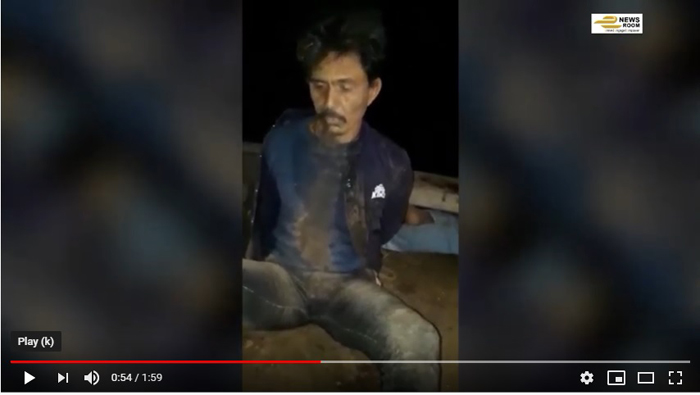
The video that went viral shows three sturdy brutally assaulting Sanaul, who is seen both bleeding and pleading. The video shows the assailants hitting the boy in his private parts as he groans in pain. The two minute video also shows a civic volunteer thrashing the boy, who was later rescued by the local police. The police took him to the Bedrabad primary healthcare centre, where he was given first aid and taken back to the police station, where his condition further worsened and was rushed back to the healthcare centre, from where he was taken to Malda Medical College (MMC) and then Sanaul was brought to Kolkata’s SSKM hospital where he breathed his last.

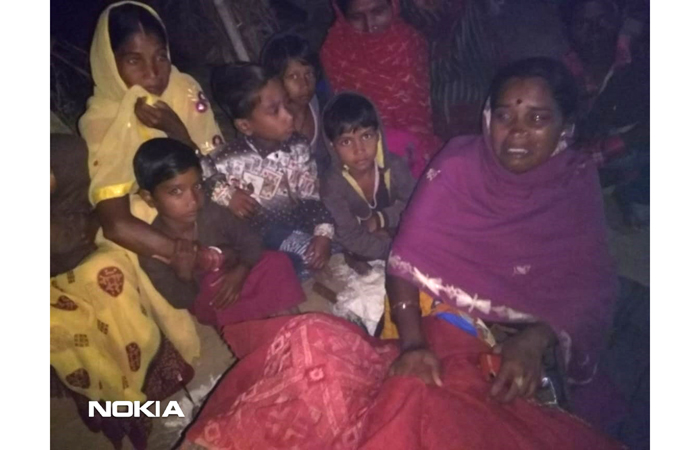
Speaking to eNewsroom, his mother Safira Bibi said, “I want the culprits to be punished. The killing was a planned one. He was picked up from our home by two men. Later a boy came to inform us that Sanaul was being assaulted by men near Baishnabnagar bazaar. When we reached the spot he had already been rescued by police and was in the police station after having got the first aid. However, later in the day, I was called by the police saying that my son was not well and we needed to take him to Malda Medical College.” She takes a pause and then continues, “On reaching the hospital the police made me sign a blank paper saying that they needed my signature to get my son admitted at Malda Medical College. In the healthcare care centre I saw my son lying naked. His eyes and ears had been punctured and he had server bruise in his genital. He was bleeding both from his ear and head.”

She added that the police also gave her Rs 2000 to pay the ambulance driver. On reaching MMC she was referred to Kolkata’s SSKM hospital, where the boy breathed his last breath. On being asked about his son being accused of bike theft she said, “If he had stolen the bike, then where is the bike that was recovered, and even if he guilty of stealing then he should have been handed over to the police and not assaulted by the mob. He was also beaten by the police in the police station. I lost my husband recently and now my eldest son.”

On the allegation of Sanaul being a charge-sheeted thief, his neighbour Mosaeda Khatoon said, “Yes he used to steal bikes earlier. But it’s been over two years since he had reformed. His wife had played a pivotal role in reforming his ways. They have a six-month-old child; his tragic death has left the family without any earning member.”

When Aloke Rajoria, Superintendent of Police, Malda, was contacted to seek an official statement, he said, “We have arrested two of the accused so far. We are hopeful of arresting the remaining accused, who have been identified by us with the help of the viral video.” On being asked about the police negligence and other allegations being made by the family he said, “I am not aware of the mother being made to sign a blank paper, if we get a complaint, we will definitely look into the matter. And as for him being brought back to the police station after being given first aid, then let me tell you that this is the normal protocol in such cases.”

Local MLA Sabina Yeasmin, who had visited the victim’s residence told eNewsroom, “Let’s not look into the religion of the victim. The fact is that a person, a citizen of this country has been killed. His killers need to be punished.” She on being questioned about the police negligence, said, “Anyone found guilty will be punished, irrespective of his position.”

Meanwhile, Md Najimur Rahman, a member of Banga Sankriti Manch, an NGO that advocates for Human Rights said, “All that we want is the punishment of the culprits and some stern action against the police officials who have been lax and taken signature Sanual’s mother on some pretext and then filing an FIR on the same sheet. She along with some of our members will be meeting the SP with a fresh FIR in which she has identified the killers.”

Kolkata Junior doctors live a nightmare

Kolkata: A gigantic gate in blue and white, laced with colours of poriborton in Bengal, welcomes you at the entrance of Calcutta Medical College (CMC) at Chittaranjan Avenue. This may seem welcoming, at least to someone who does not frequent government hospitals. But on entering the premises of the heritage institute one can easily smell the rot that the government has tried to shove under the carpet, albeit unsuccessfully.

Even if an individual manages to ignore the heaps of garbage overflowing vats lying unattended on the premises, the unhygienic condition, obnoxious stench and unhealthy air inside the building housing the emergency ward of the hospital cannot be overlooked. And yet hundreds of patients, numerous junior doctors and paramedics ignore the viciousness and unwillingly become part of a decaying system that has become immune to antidotes over decades.

CMC is a microcosm of the rotten public healthcare system in the state where the government has been boasting of improving hospitals since the change of power in 2011.

It has been a few weeks that healthcare is smarting from the body blow dealt by the junior doctors’ strike in Kolkata that had rippling effects in other parts of the state as well as the country. The strike followed a mob attack on junior doctors at Nil Ratan Sarkar Medical College and Hospital that left a postgraduate trainee critically injured. Trainees as well as senior doctors across the country joined hands to demand for security at government hospitals.

But the root of the problem runs deep and the discontent and frustration of trainee doctors are only growing. A PGT, or a post-graduate trainee, at Calcutta National Medical College (CNMC) and Hospital said though junior doctors run the show at government hospitals but facilities for them are almost zero.

“It is particularly difficult for women doctors as the toilets are in terrible condition. There is no hygiene and sanitation,” said the doctor, who didn’t wish to be named.

.She pointed out that despite the long hours of duty; no proper restroom is available for doctors. Even the water filter is dirty. “I just close my eyes while filling my bottle. Even after complaining nothing has changed,” she added.

Health healthcare hospital kolkata junior doctor west bengal
An inside photograph of CMC Hospital

A peek at the doctors’ restroom at CMC revealed the same. The small room despite being air-conditioned, cleanliness seemed alien to it. A lady doctor was curling up at the edge of a bed which was being used to dump bags. Outside the room a litter of puppies were nibbling on the waste spilling from a dustbin. Apart from doctors and patients, canines and felines are aplenty inside the hospital, including the acute medical unit.

This correspondent spoke to several junior doctors and students from CNMC, CMC and SSKM and almost everyone had the same story. But none wanted to reveal their identity fearing repercussions.

Two junior doctors at CNMC were highly critical of the present condition of the hospital in particular and healthcare in the state in general. One of them, who can be referred to as Doctor A, said though the government hospital is getting a facelift outwardly, there remain several lacunae inside.

Doctor A pointed out that the hospital is grossly under-staffed. “Manpower crisis is a major problem. Everyday around 400-500 patients come to the outdoor patient department and there are only five to seven doctors to attend them. Senior or junior doctors not enough. There is a shortage of non-medical staff, so patient parties have to take the stretchers. Junior doctors, besides their usual work, have to do works like drawing blood, taking reports to respective departments, helping patients’ relatives find the right ward,” said Doctor A.

He said while MCI guideline specifies ‘not more than 24-hour duty’, every junior doctor has to spend more time. “Once I had to work for 54 hours at a stretch. After that, can someone expect us to remain in the right state of mind?”

A junior doctor (Doctor B) at CMC echoed the same, “Lack of staff is a perennial problem and we are forced to do clerical work,” she said.

The number of nurses at CNMC and other hospitals is appalling. “There is an immediate need to recruit more nurses as the existing ones are under tremendous pressure”, said Doctor C, adding that interns everywhere have to spend more time on non-medical chores.

However, Dr Raghunath Misra, medical superintendent cum vice principal at SSKM Hospital, downplayed the problem saying interns are there to learn and “we had also done the same”.

“Long working hours is common for doctors. When it comes to overwork then one should understand that those in their internship period are in the learning process. Drawing blood, preparing reports etc are part of their job,” he said.

A group of students at CMC said in most cases senior doctors do not come as the salary is too low. “If you compare the pay scales then you will see that the salary at the central hospitals is almost double of what is given to doctors in state-run hospitals. Why would someone work so hard for a paltry sum,” they explained.

Lack of washrooms is a major problem, especially for nurses and women doctors, and this was pointed out by all the doctors. On lack of basic facilities for junior doctors, Misra said SSKM is trying to improve infrastructure but reluctantly admitted that problems do exist.

Cleanliness at SSKM Hospital is better than any government hospital as the responsibility has been outsourced, informed a junior doctor here who has been working at SSKM for the last three years.

Medicines at government hospitals are supposed to be free but most of the time there is a shortage of supply. “How can there be a shortage when it is written on the board outside that medicines are free? When we tell patients that they have to buy medicines from outside they get agitated,” said Doctor A.

Doctor B pointed out that scarcity of beds not only creates problem for patients but also for doctors. “And yet we take in patients because they need help,” she added.

The condition at RG Kar Medical College and Hospital is equally pathetic. Lack of hygiene, staff crunch, work pressure haunt doctors and patients alike; add to that lack of security, which led to the doctors’ strike. But it’s only the tip of the iceberg. There are numerous problems plaguing government hospitals in the city and it would not be difficult to imagine the condition of healthcare service in rural Bengal.

Dr Sayan Roy, a house staff at CNMC, agreed to the existence of the problems mentioned by the junior doctors, but maintained that changes are being made to improve things. According g to him, there were only four to six neonatal care units in the entire state till 2011 but the number rose to 72 in the last 10 years.

“Also medical college campuses have been extended and new buildings are coming up. Bed numbers have been increased. AC layout room has been introduced. So development is happening,” he added.

While Dr Santanu Sen, secretary of the Indian Medical Association, when contacted did not speak and asked the correspondent to call after 10 minutes. But calls made after that went unanswered. Even a message sent to him asking whether he is willing to speak remained unanswered till the filing of the report. Many IMA members refused to speak saying they were not the right persons to comment.

Kailash Kher: If I want to do something for next generation, I must do it now, not at the age of 60

On his birth day, July 7, singer-composer and lyricist, Kailash Kher to announce the launch of Kailash Kher Academy of Learning Arts (KKALA) and promote new talent at the third edition of Nayii Udaan.

eNewsroom: Happy Birthday to you in advance.

Kailash Kher: Thank you so much. (Smiles).

eNewsroom: So, how are you planning to celebrate your birthday, this year?

Kailash Kher: Well, as you are aware, I have been celebrating my birthday since 2017 with the launch of my dream project Nayii Udaan. The stage is set for its third edition and this year I am also going to announce the launch of Kailash Kher Academy of Learning Arts (KKALA).

eNewsroom: That is amazing. Congratulations.

Kailash Kher: Thank you.

eNewsroom: Tell us something more about KKALA

Kailash Kher: KKALA will be launched online first and it will be functional from this year for sure. I have plans to open the physical academy either in Kolkata or in Rishikesh or in both the places simultaneously. I believe that since I have decided to educate this generation – in both traditional as well as modern forms of music and performing arts – the universe will bless me in my endeavour. I am sure it has planned out everything. We might be able to foresee those plans, but they are already in motion.

eNewsroom: What will be the USP of KKALA? Have you chalked out the curriculum details et al?

Kailash Kher: At KKALA, the students will not only receive talim in music but they will also learn how to showcase their talent and let their inner confidence shine. So, besides teaching them music and honing their musical skills, we will also be grooming them, teaching them basic etiquettes, developing their personality, communication as well as presentation skills. They will learn how to speak with confidence, how to dress, handle the attention et al. They will also learn about the ways of industry. I come across so many talented musicians who fail to make a mark because they lack the above-mentioned skill-set. These are important in today’s world and lack of these skills cost them when they enter the real world. The students of my academy will not only know how to perform; compose; write and sing, but will know how to face and operate in the real world with confidence, thereby making KKALA unique.

eNewsroom: Please tell something about Nayii Udaan.

Kailash Kher: The project of Nayii Udaan is very close to my heart. I have completed 14 years in the industry and I had been nurturing this desire to promote new talents; give them the platform and the grooming that are needed to reach out to the music connoisseurs – for a long, long time now. A few years ago, I felt that if I want to do something I must do it now, not at the age of 60. I can devote my time and energy and get a good thing going – discover and promote new talents that will also benefit the music industry in the long run. That is how it was born. I have received so much from God, my fans and mankind. Nayii Udaan is my way of saying ‘Thank you’ to all of them and giving back to society and to music for believing in me and for being there for me.

eNewsroom: The first edition of Nayii Udaan was launched in 2017 on your birthday – July 7.

Kailash Kher: That’s right and till date we have launched three very talented bands – Sreekant’s Surfira, Sparsh and AR Divine. Though they have signed contracts with Kailasa Entertainment Private Limited (KEPL), it is not exclusive – that means that they can perform outside as well. When the bands are selected via Nayii Udaan, they are not only getting a platform, but they are getting our team that is grooming, mentoring and guiding them and making them understand how the field operates. Without these skills and proper knowledge about the field, young talents tend to fall prey to shrewd agents and brokers who make this a murky business.

eNewsroom: We believe that a team from KEPL goes on talent-hunt expedition for Nayii Udaan.

Kailash Kher: That is correct, but this year since we were busy with many programmes, we decided to hold an online contest. Bands were invited to send us entries via BookMyShow. The final decision will be taken by the maha judge: Pandit Hariprasad Chaurasiaji and jury members comprising Hans Raj Hans. Rekha Bhardwaj and myself. The final announcement will be made on July 7. The bands will be showcasing their talent in front of the who’s who of Mumbai and a live audience.

eNewsroom: That sounds really interesting. And now the final question. When can we expect a new album from Kailasa?

Kailash Kher: (Laughs). Work on the new album is over and we are looking forward to regal our fans soon, No, make that very soon (smiles).

Humanity is alive, many students opt for it as religion while seeking admission in West Bengal Colleges

Kolkata: At a time when a lot of hatred is being spread in the name of religion, not just in India but globally, two colleges in West Bengal chose to do what not many would have imagined.

Bethune College, one of Asia’s oldest women college and Midnapore College chose to offer Humanity along with Hinduism, Jainism, Buddhism, Christianity and Islam as a choice for religion for applicants applying for their undergraduate course.

The move was lauded by many on social media. Almost a month down the line, since the two colleges made this move, eNewsroom contacted principals of both the colleges to know how many students had actually opted for humanity as religion.

Dr Gopal Chandra Bera, while highlighting the same said, “Around 200 applicants have opted for humanity as their religion among the 7000 odd application that we had received for the undergraduate courses that we have on offer.” He then added, “Let me tell you that this number might seem too little for some but for me, I am quite happy with this number, to begin with. Of course, even I was expecting a little higher percentage.”

humanity west bengal religion college students study
A screenshot of Midnapur College’s online form

On the contrary, when Mala Ray of Bethune College was contacted to know the number of applicants, she said, “We have been very busy with the admission procedure, so we don’t have any statistics on the same. Also, we had made no instructions to the service providers to keep an account of the number of applicants opting for Humanity as religion. The idea was just to give humanity as an option to students who are atheists or non-believers and are not comfortable with citing their religious beliefs.”

However, on being asked if this could be replicated by other schools and colleges to promote Humanity among children and youth. Both the academic heads agreed on the same. Ray said, “Of course this can be used to promote humanity among youth.”

While Dr Bera added, “With us promoting Humanity as a religion could be a way of sensitizing the future generation to give it more priority than the religion they follow back home. Given the time we are living in this move can definitely make them more tolerant.”

Endorsing the move, sociologist Bula Bhadra said, “This is a very liberal move. To be honest, why would the religion of a student be known if when they come to study. Revealing one’s religious identity is a traditional compulsion and I am glad that two colleges from Bengal have chosen to initiate this educational reform.”

She further added, “I am of the opinion that there should be no need to mention one’s religion while applying in schools and colleges. However, this simple move of introducing Humanity as religion is an excellent move, given the present scenario that we are living in.”

Protest continues from Indian cities to Boston to condemn lynching of Tabrez and hate crimes

Kolkata: The lynching of 24-year-old Tabrez Ansari in Jharkhand has sparked nation wide protests across India including Jharkhand, West Bengal, and Delhi. Three more incidents of hate crimes have been reported from major cities of India—Kolkata, Mumbai and Delhi.

Today, a Muslim cab driver in national capital was forced to chant Jai Sri Ram. Yesterday in Mumbai a similar incident took place in Mumbai, where Faisal Usman an Uber driver was trashed and forced to chant Jai Sri Ram.

Incidentally, a day after Tabrez’s death from merciless beating, Kolkata too witnessed a hate crime immediately after the Jharkhand lynching case, where Sharukh Haldar, a Madarsa teacher along with two other Muslim men were assaulted and beaten on a local train in the heart of the city.

In all the three cases, forcing victims to chant religious slogan—Jai Sri Ram, was common.

The incidents had called deep criticism from all quarters. Understanding the need for creating pressure on both the state and central government a series of protests, public meetings were organised in many cities.

United Against Hate, a movement against hate crime, spearheaded protest rallies in more than 70 cities, some other big and small organizations also came together in other districts to protest against Tabrez’s lynching and other hate crimes.

Tabrez Ansari Hate Crime mob Lynching Jharkhand
SIO and other NGOs protest in West Bengal for the justice for Tabrez Ansari and against other hate crimes

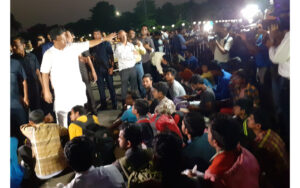
In Kolkata, since June 26, a number of NGOs and human rights organisations assembled at Bipin Behari Ganguly Street to have a public meeting to raise public concern on the same. A street theatre had also been staged.

Speaking to eNewsroom, Asit Roy, a social activist associated with Medha Patkar’s National Alliance for People’s Movement (NAPM) said, “This public meeting was organised on June 26, in the memory of the dark emergency days of 1975. Needless to say, at present, we have an undeclared emergency in our country since 2014. Mob lynching has become a norm today. The number of such cases has only increased with time. So, through this public meeting, we condemn not just the mob lynching of Tabrez Ansari in Jharkhand but also the assault on the Madarsa teacher in Kolkata by the saffron brigade.”

Aftab Ahmed, Assistant Secretary of APDR, said, “It’s not just in Bengal or Jharkhand that Muslims are being attacked. This trend is common across all Indian states. Mob lynching of Muslims only reflects the increasing fascism in the country, which needs to be countered vehemently.”

Contrary to the general perception that Bengal is a safe haven for Muslims, registered at least five mob lynching cases.

Muslim organisations like Jamiat-e-Islami-Hind, has threatened to take on to the streets on a regular basis if enough action is not taken to reign control on the cow vigilantes.

Perturbed by increasing number of hate crimes against Muslims Bhasha Chatana Samity organised a protest at Sealdah Station on June 27, while the Student Islamic Organisation of India (SIO) organised a human chain at Kolkata’s iconic Dharmatalla crossing to put forward their demand for justice in both Tabrez Ansari and Sharukh Haldar’s case.

President of SIO West Bengal, Osman Gani condemning these incidents said, “Recently mob lynching in the name of ‘Jai Shree Ram’ has become common. The Government should make a powerful law to stop such incidents.’’

Meanwhile, CM Mamata Banerjee who was maintaining an eerie silence over the Kolkata train assault case met the victims and announced for compensation worth INR 50000 each. However, activists believe that this is not enough as the culprits are yet to be arrested.

Delhi Waqf board has also come forward to extend a helping hand to Ansari’s widow Sahista Parveen, by offering a job along with compensation worth INR 5,00,000.

On Friday cities like Deoband, Bhopal, Giridih, Bhojpur and Gadhani witnessed similar protest meets.

Voices against mob lynching and hate crimes being committed in India is now being heard internationally. Tomorrow, on June 29, people will hit the streets of Boston, Unites States, to condemn the increasing trend of religious racism in India.

PIL Filed at Jharkhand High Court for compliance of SC directive in lynching cases

Ranchi:  An activist and former Indian Administrative Service (IAS) officer Harsh Mander has filed a Public Interest Litigation (PIL) at the Jharkhand High Court for the compliance of Supreme Court orders given in Tahseen Poonawala versus Union of India.

In 2018, on the petition of social activist Tahseen Poonawala, the Apex Court had issued directives to state governments to curb the menace of mob lynching in India.

However, this did not curb the lynching menace and among all Indian states, Jharkhand remains to be the worst affected.

On the night of June 17, Tabrez Ansari, a resident of Kharsawan district, was mercilessly beaten by a mob on the allegation of theft. Tabrez succumbed to injuries on June 22.

In April, one Prakash Lakra, was lynched in Gumla on the allegation of skinning a cow.

Tabrez and Prakash happen to be first two mob lynching victims in 2019. In the past three years, a total of 18 have lost their lives because of mob lynching in Jharkhand.

supreme court pil lynching jharkhand
Two participants with their placards during the  protest mob lynching, organised in Delhi.

Now Harsh Mander, who has travelled to many states of India and met the families of mob lynching victims, has filed a PIL seeking compliance of the Supreme Court directive in connection with mob lynching cases. It includes – preparing a lynching or mob violence victim compensation scheme in the light of the provisions of section 357A of CrPC and in the said scheme for computation of compensation. The state should give due regard to the nature of the bodily and psychological injury and loss of earnings among others.

To designate a court at the district level to trial lynching cases on daily basis and conclude the trial within six months from the day of cognizance to ensure that all families of the mob lynching victim receive commensurate compensation.

According to the directive, the state government and the police need to broadcast that mob violence and lynching shall invite serious consequences, on television, radio and other media platforms.

“Jharkhand is the worst affected with lynching incidents, but the state government is yet to follow Supreme Court orders, so to hold the government accountable, I have filed the PIL” Harsh Mander told eNewsroom over the phone.

On June 26, in several cities of India and outside, including Delhi, Ranchi, Kolkata, Bhopal, Jaipur, Lucknow, Varanasi, Dhanbad, Ahmedabad, Araria and in the United States too, people hit the street to protest the lynching of Tabrez Ansari and demand justice.

Communal Profiling of Kolkata’s Biker Gangs

0

Kolkata: Kolkata, for that matter, West Bengal is known for political violence. But suddenly now, the city’s everyday urban conflicts and crimes are being seen through communal prism, courtesy, the resurgent BJP. Its latest example is communal profiling of a bike-borne youth gang now booked for attacking a young model and her app-cab driver at late night last week.

The biker gangs: a new menace?

The harrowing encounter of young city model, Ushoshi Sengupta and her friend from LGBT community as well as the driver of their app-cab with such a bike-borne gang is the latest reminder of the menace. The gang not only heckled and harassed the victims twice for an alleged knockdown of one of its members by the car but also chased the latter to damage it. Fortunately, they failed to snatch the model’s smartphone which she had used to film the attackers without losing nerves.

Her courageous next moves; insistence on filing FIRs against the culprits and their subsequent arrests, despite initial police inaction on the ground of jurisdiction, is inspiring for helpless commoners, both men and women. Most victims often dither to lodge complaint and follow up it fearing further troubles from the attackers and callousness of law enforcers. Her Facebook posting after the double ordeals; on the road and at police stations, prompted action by the top cop of the city police cyber cell, herself a young woman.

The showbiz girl, however, underlined the fact that her media and social connections helped her to get the attention that the incident deserved. Not all the ordinary mortals are so fortunate. Also she pointed to fearlessness of the gang during the chase and attack making it clear that they gave a shit to police. This also speaks volumes about the political will to enforce rule of law.

The socio-economic backgrounds

Though I have not come across any organised study on the socio-economic backgrounds of these urban gangs in Kolkata and other Indian metros, personal and shared experiences as well as media reports underline many factors behind the rise of this menace. They point to the gang members being mainly school and college dropouts, jobless or low-paid odd job-doers from lower income group families mainly in the city’s slums and middle rung localities. They are typically low on self-esteem and self-efforts to fight the lives’ challenges, but high on consumerist instincts and ambitions for a quick rise up the social ladder. These bike-borne and smartphone-toting boys have mostly acquired their glitzy machines by squeezing parents or draining meagre personal income.

They ape the six-pack super-heros from Bollywood and other macho males from advertising world who constantly fuel their fantasies via smartphones. A typical bike ad that appeals to their instincts invariably depicts a dreamland that awaits a daredevil on superfast machines as sexiest girls jump to be their pillion riders for a short drive to the fairy bed of roses. The surge of testosterone that is provoked by unfulfilled desires often leads to competitive show of Mardangi among gangs on roads. If a good-looking girl is accompanied by a protective or macho boyfriend, we witness the show of Mawaali might  to their affluent or upwardly mobile bhadrolok competitors, a la Bollywood masala films.

Bike-borne or not, street corner gangs have been part of cityscapes from Chicago to Kolkata, an important part of urban youth subcultures, mostly in underprivileged and unemployed areas. Kolkata’s legendary roadside tea-stalls as well as low ledges in front of neighborhood homes used to be meeting points as well as seats of power and judgement for jobless youth groups. Mostly sports and politics enthusiasts from Bhadralok milieu, they spent almost a whole day away from their families at their coveted corners. But today’s criminalized biker gangs with political blessings who run community club rooms as their power centres and recreation cum torture chambers for their victims represent different times and genre.

It should have compelled all of us to dig into the socio-economic factors behind the rise of such recurring incidents. What happens when these boys belong to Hindu families or neighborhood too?  We need Kolkata’s social historians like Benoy Ghosh and Radharaman Gupta to understand these new sections of street gangs who are much more mobile than their predecessors, in order to fathom the ‘Metropolitan mind’ of 21st century Kolkata.

Instead, we witnessed equally scary and depressing communal profiling of the attackers, in sections of media and social media, just because of the religious identity of the gang members. All the ten accused, now in police custody as well as their accomplices who are still off the hook, reported to be Muslims.

So-called National Media Picked up BJP’s Hate Campaign

BJP and rest of the Sangh Paivar, now more aggressive after their huge electoral success in Bengal and larger country, has habitually stigmatized minority community as they did after the attack on junior doctors that triggered the weeklong shutdown of state hospitals last week. The saffron shenanigans are aimed at stoking Hindu outrage against ‘Muslim appeasement’ of Bengal chief minister Mamata Banerjee before the 2021 assembly polls.

Most of the so-called national TV channels; Republic and TimesNow Et all picked up the thread of BJP campaign and drummed up the communal narrative instead of any journalistic social-political investigations into the background of similar biker gangs in Kolkata and other big cities. The paid army of Modified trolls in social media continued its hate-campaign making insinuations about the predatory nature of Muslim men despite the model’s caveat that she had suffered no sexual molestation. What is shocking that many a middle class Hindu Bengalis, apparently new converts to the saffron cause, joined in demonizing Muslims as a criminalized community, overprotected by the secular parties and their governments; nationally Congress and Lefts and TMC in Bengal.

Undivided Bengal’s history shows that communalization of criminals, both Hindus and Muslims was in full bloom during the Partition riots. It was most brutally manifested in Great Calcutta Killings. Though it ebbed in post independence decades, political patronage to musclemen by parties of all hues has continued leading to ascendency of criminals in politics.

True, Mamata has courted Muslim clergy and other community conservatives to ensure en bloc votes of Muslims. She has also given power to criminal-turned politicians in her fold, both Hindus and Muslims, as well as speakers of Bengali, Hindi and Urdu across the city and the state. But her criminalization of politics was not community-specific.

On the other hand, Bal Thakery’s fascistic parochial politics and subsequent Hindutva waves led to sizeable communal polarization in Mumbai underworld, particularly in the wake of riots after demolition of Babri mosque by Sangh’s Rambhakts and subsequent competitive terror campaigns of Hindutva forces and Pakistan-sponsored Jihadi groups. Yogi Adityanath’s ‘éncounter Raj’ is trying to institutionalize it in UP. Modi-bhakts now want to repeat it Bengal.

Kolkata’s criminals belong to a single community?

For those citizens who still care for facts, reasoning and humanity, the key question is: Do these street gangs come exclusively from Muslim families? Did not we face their counterparts from Hindu community, sometimes even mixed gangs in every part of the city and suburbs? What about our Para goons; extortionists, controllers of public spaces, land-grabbers and killers as well as  eve-teasers, stalkers and rapists? Do they all belong to minority community?

Do the residents of areas under total or near total Hindu dominance find their neighborhoods crime-free? Do the perpetrators of heinous crimes there represent a single religious/ linguistic community?

Communalization of criminals since colonial age

During  my three decades in professional journalism, I had come across some police records of city’s underworld. Friendly cops too shared their experiences and insights informally. Though administration do not publish communal profiling of criminals, detective department at city police headquarters and police stations maintain such list of Mahalla history-sheeters since the Raj. Muslim goons have major shares in crime in city areas which have been historically dominated by Urdu-speaking Muslims with the sprinkling of their Bengali-speaking co-religionists around. On the other hand, Hindu criminals rule the roost in areas dominated by the majority community. Also Muslims had higher share in certain crimes in Kolkata which are as old as in Dickens’ London. Pickpocketing  tops such crimes that helped communal profiling of criminals since the colonial times.

The Muslim citizen’s public appeal to Mamata: the reality check

Around fifty city Muslim professionals have appealed the chief minister not to go soft on the arrested Muslim youths; the bikers and the attackers on the NRS doctors, for that matter, any accused from the community in order to wither the  ‘growing perception’ that the minority offenders are being ‘appeased and shielded’ by the regime. The appeal has also called for administrative ‘engagement with Muslim youths and their families in the areas of gender sensitization, civic consciousness and law compliance’ with ‘long-term patience’ for the social process to yield results.

The appeal has evoked mixed response among Muslims and Hindus. While well-meaning voices across religious divide have welcomed it, Hindutva camp has construed it as confession of the community’s criminality and admission of its appeasement by Mamata government. Such reactions have provoked the anti-Hindutva Left-liberals and Muslim conservatives to question the sagacity of writing this letter and its timing, calling it a capitulation to the saffron trap. They asked: do the Hindu professionals need to distance themselves from coreligionist miscreants in order to dispel similarly growing but false perceptions of the minorities? Does it not reflect the increasing fear and compulsion of a cornered community which is now being blamed for almost all the maladies of Modiland?

Ghettoisation of Muslims in the city has been blamed for the lack of their education, health and meaningful  employment as well as brutalisation and criminalization. But personal as well as social experiences are gallore over the denial of physical and social space even to educated middle class members of  community since the pre-Partition days. Riots-induced desertion and migration of Muslims shrinkened their areas while latter influx from other parts of India and Bangladesh have made them explosive. The Sachar Committee report on the socio-economic conditions of the Muslims in India, published during the UPA-2 government is a factful reminder of the ground reality, including that of then Left-ruled Bengal.

True, Muslim conservative clergy and opportunist politicians among them have their shares of responsibilities for plights of the poor and uneducated in the community.  But did the Hindu Bhadroloks, particularly the Left-liberals ever try to reach out to emerging Muslim middle class to end their isolation and help them to be the change agents within the community? Had they tried so, the Sangh Parivar would not have been successful in poisoning the Hindu minds In Bengal so alarmingly.

Two men accompanying Tabrez Ansari when he was lynched are still missing

0

Ranchi: In the latest lynching of 25-year-old Tabrez Ansari, Kharsawan Police has been termed as an equal culprit in the lynching case. His relatives have alleged that Tabrez was alive and was walking on his feet when he was taken in police custody in Dhadkidih.

On June 17 night, Tabrez and two of his friends were returning from his uncle’s place, when Tabrez got surrounded by a furious mob which beat him so badly that he later succumbed to his injuries. The two friends– Md Irfan And Numer Ali, who were accompanying Tabrez are missing since then.

According to Tabrez’s family, he was working as a welder in Pune and had come home to celebrate Eid. He had got married only two months back on April 26.

Before leaving for home, he had called his wife and informed that he would be reaching home late. He had also mentioned the route (Dhadkidih) that he would be taken to travel back home. It was here that he was brutally assaulted by the mob.

The video of Tabrez being brutally assaulted has gone viral, clearly shows the mob asking his name, and on him revealing his name Tabrez, he is shown being assaulted and forced to chant Jai Sri Ram and Jai Hanuman. The inhuman lynching for 14 hours eventually led to his death in police custody.

“On June 18, Tabrez had called his wife to let her know that he had been caught by a mob in Dhadkidih the previous night and been badly beaten. He had then mentioned that he was being taken to the police station. Following which we met him at 7.30 am in the morning at Saraikela police station, where we saw that he was not being able to talk to us properly, he was in severe pain, so we requested police to first get him treated and then sent him jail if he has been accused of theft,” Maqsood Ansari told eNewsroom over phone from Kharsawan.

“But, instead of paying heed to our request Sini Out Post (OP)’s Police Officer Bipin Bihari told us to leave the police station. He even threatened us of breaking our legs if we remained there,” he added.

At that time, police had also brought Pappu Mandal, one of the prime accused in the case. When he saw Tabrez in the police station, he abused him and expressed surprise on Tabrez being alive despite the brutal beating that he had been subjected to.

“On June 22, at 11.30 we got information from jail that Tabrez was ill and that he had been sent to the hospital for treatment. It was in the hospital that he died. But when we reached the Saraikela Hospital, his pulse was there. The doctor who had declared him dead had left the place, and the second attending doctor was not taking any interest, so we demanded ECG report. The ECG also showed that Tabrez had life. We then wanted him to be transferred to Tata Medical Hospital (TMH). But, despite better ambulances being available we were given one ambulance without a siren. It took us two hours to reach TMH, which is just 40 kilometres away. On reaching TMH he was declared brought dead,” he narrated.

Aurangzeb Ansari, a social activist while speaking to eNewsroom, said, “We have given a written complaint against the police officer and he has been suspended but we have also demanded the SP to take Pappu Mandal into custody and run the video before him to identify the other culprit in the case.”

Significantly, two more people– Md Irfan And Numer Ali, who were with Tabrez are still missing and are yet to reach their home. They have not even contacted their respective families.

“One of the families have lodged missing FIR in a police station, while other may lodge today,” informed Maqsood.

Sahista Perween, wife of Tabrez, is not well after hearing the news of her husband’s death from lynching, she is on drips since then.

Family members and social activists have strong objection on the allegation of Tabrez being a thief.  “He has been accused of stealing a bike, in 2017, at least 7 people have been lynched in the neighbouring areas of Jamshedpur on the pretext of them being bachcha chor (thieve of children), but these accusations are yet to be proved. This is a trend in Jharkhand that in every such incident police simply believes the allegations of culprits of the victim being thieves, or criminal and without verification follow the allegations made by culprits,” added Aurangzeb.

Along with Pappu Mandal, four other accused have been arrested by the police, said SP Chandan Kumar Sinha. Two policemen, Bipin Bihari and one another also been suspended for dereliction of duty.

However, SP told eNewsroom that he has no idea regarding the missing men as no FIR has been lodged anywhere.

Madrasa Teacher asked to chant Jai Sri Ram in Kolkata’s Local Train, thrashed

1

Kolkata: Twenty-year-old Mohammad Shahrukh Haldar, a resident of Canning, a town in south 24 Parganas was travelling to Hoogly on Thursday afternoon, when a group of people, assaulted and bullied him for sporting a beard and skull cap and refusing to chant Jai Sri Ram on a moving local train, this time in the heart of Kolkata.

Speaking to eNewsroom over the phone he said, “I had boarded the local train from Canning, to reach my Madrasa in Hoogly, like I usually do. However, on Thursday, when the train reached Dhakuria, a lot of people boarded chanting religious slogans. From their attire, it seemed like they were going to attend some rally and seemed to be members of Hindu Samhiti. We were seated and kept quiet. Soon we heard some ruckus, it seemed like there was some quarrelling on in the compartment, just next to ours. However, we little realised that it would reach our compartment soon.”

He took a pause and then went on to narrate, “As the train reached Ballygunge, these people then began harassing men sporting skull caps and beard. They then asked me as to why I was sporting a skull cap and beard. They also asked me chant Jai Sri Ram. When I didn’t reply to their questioning, they began assaulting me. By this time the train entered Park Circus. Here they pulled me along with others towards the train and pushed us off. Some locals came to our rescue. By the time I narrated my ordeal the train chugged away. So, we went to the Topsia Police station and lodged a police complaint, following which the case has been taken up by the GRP. However, my assailants are yet to be traced and booked.”

Speaking about a mob lynching case in heart of the city, Santasree Chaudhuri, a social entrepreneur and activist said, “I am ashamed that such an incident has taken place in the heart of the city. Lord Rama is an epitome of grace. Forcing and bullying the common man, particularly from another community is only a way of disrespecting him. It’s unbelievable to see how these Hindutva goons are taking control over the city after their recent victory.” She further added, “This is a way of making the minorities feel the heat. But the biggest question here is – how Mamata Banerjee will address this issue?”

However, this is not the first time that this type of assault has taken place in Bengal. “This definitely not the first time that such an assault has taken place. Last year, another Muslim man (beggar) had been physically assaulted for not knowing the national anthem by the saffron brigade near Howrah. So, Haldar’s case is not new. The recent win will only make such attacks more frequent in our state,” said social activist Samirul Islam.

He added, “Our NGO – Bangla Sanskriti Manch has been playing a role in providing legal support to him, but he is yet to get justice. In Haldar’s case too, we are open to providing legal aid.”

Another lynching took place in Jharkhand, a paradise for mobs

Ranchi: Jharkhand witnessed another lynching. This time of a Muslim youth, in Kharsawan on June 21, the day Prime Minister Narendra Modi was in Jharkhand to participate in International Yoga Day event.

The mob who captured one Tabrez Ansari alias Sonu, in the allegation of theft and tied him with an electric pole. The video of the incident shows that mob asked his name and when he said Sonu, they abused him and asked real name. As soon as Sonu, said Tabrez, mob chanted Jai Sri Ram and pounced on him, and beaten him brutally.

Later, they left him, when he was brought to hospital, Tabrez succumbed to his injuries during treatment.

Superintendent of Police Chandan Kumar Sinha, confirmed the lynching and told eNewsroom, “I have joined here yesterday only and informed about the incident verbally. One accused have been arrested so far, while three to four persons have been named and many unnamed accused too mentioned in the FIR.”

The video of the lynching incident:


However, while it has been reported that Tabrez was a Welder and used to work outside. He had come to his home to celebrate Eid.

But Superintendent of Police said, “There were two more persons with Tabrez and they had stolen a bike. When mob chased them two other escaped and Tabrez got caught.”

When confronted that whether victim was an accused or not, mob could not take law in its hand and could not kill anybody, the SP added that yes he should not be killed.

Tabrez became 13th person, who got lynched in Jharkhand, since 2016. The last one was a tribal Prakash Lakda who was beaten to death on April 10 for skinning dead Ox. While most remain Muslims, and got lynched over suspicion of beef eating or for cattle trading, some got killed over allegation of theft too.

Since 2015, a large number of lynching cases have taken place in BJP ruled state particularly in Uttar Pradesh, Rajasthan, Haryana and Jharkhand.

Significantly, in June 29, 2017 when Alimuddin Ansari of Ramgarh was lynched, same day, Prime Minister Narendra Modi had condemned the killings in the name of cow worshiping. But it continued in Jharkhand and in other states too.

To stop lynching cases, Supreme Court has also issued orders in this regard, but the incidents are continued.