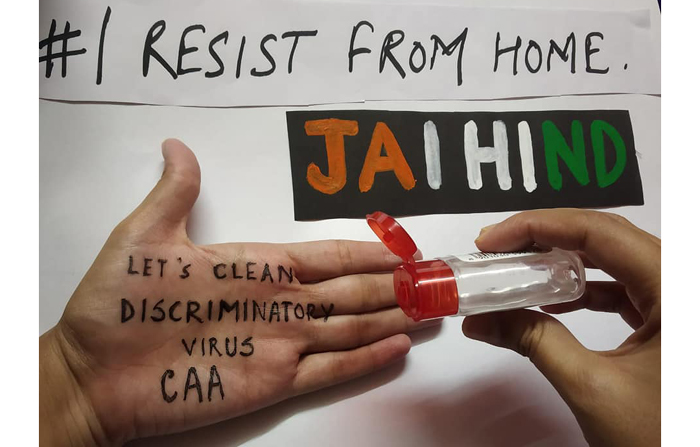
Anti-CAA sentiments run high at Kolkata Book Fair

0

Kolkata: The anti-NRC, CAA protests, which had been marking its presence at 44th International Kolkata Book Fair since its beginning in a muted way, took a violent turn on Saturday when a bunch of protesting students clashed with VHP, BJP supporters and later, were lathicharged by the police.

Eyewitnesses said trouble started when BJP national secretary Rahul Sinha was visiting the Janabarta stall in the evening. At the time few students, chanting slogans against the implementation of CAA passed through the stall. The protesters alleged that some of the BJP-VHP supporters came out of the stall and pushed them aside, leading to jostling and fisticuffs. Later, cops arrived from the nearby control room and lathicharged on the two feuding factions. The protesters were taken away to different police stations in Salt Lake area by the police.

On the incident at the fair in front of the VHP stall, BJP’s Sinha said that the fight over CAA and NRC is between two political parties, The BJP and the TMC. “The students’ forum has nothing to do with this. They are trying to steal the limelight and create more chaos.” On the violence, the BJP national general secretary said, “It will be dealt by the state administration and the party has nothing to do with it.”

A senior lawyer, who was an eyewitness, said that the police on one side was asking the students to talk out the differences but when they did, the policemen reigned blows on them.

No policemen on the spot were willing to talk on the issue.

anti-caa nrc kolkata book fair bjp
Anti-CAA and NRC protesters at Kolkata Book Fair site

While the protests were on, Congress MP and author Shashi Tharoor was holding fort inside the SBI auditorium on the other side of the fair. The hall was choc-a-bloc with interested listeners lapping up all the former civil servant had to say about his latest book, The New World Disorder and the Indian Imperative.  Earlier, the author took part in a discussion with filmmaker Aparna Sen and others on We Are Who We Elect.

Tharoor said, “We were very proud of whom we elected but in the last six months many might have changed their mind as the reality of what the government has turned to has sunk in. We know people changed their mind between 2014 and 2019 and yet they got more votes, more percentage. We have come across many people who in 2014 voted for this government for its promise of ‘sabka saath sabka vikas’, who in 2019 said not again. I don’t know many voted for brazenly for the Hindutva agenda, this kind of majoritarian ‘triumphanism’. We are seeing extreme level of polarization in our politics. When we say, ‘who are we’, we are currently a bunch of divided people.”

Talking further on the present national narrative of dividing people on the basis of religion, Tharoor said, “The great magical thing about India was that you can be many things and one; you can be a Bengali, a Muslim and an Indian at the same time. The fact that you are secure in each of the identities because of the overall space of the Indian identity. To take India to the primordial idea of Hindu Rashtra, is an assault on the freedom struggle. There was no division on ideological differences. Mahatma Gandhi, (Jawaharlal) Nehru, (Maulana) Azad, they all said our struggle for freedom is for everyone and write the Constitution with equal rights for everyone. That to me in the fundamental difference of idea of 1940-50 and what is being propagated today.”

शिक्षा में बदलाव के लिए कुछ खिड़कियां खुली हैं

0

[dropcap]सं[/dropcap]विधान के मुताबिक ‘लोकतांत्रिक गणराज्य’ बनाने के लिए बराबरी, न्याय, स्वतंत्रता और बंधुता मूलभूत मूल्य हैं। लेकिन शिक्षा व्यवस्था गैर-बराबरी और भेदभाव की बुनियाद पर खड़ी की गई है जबकि सबको समतामूलक शिक्षा मुहैय्या करना संवैधानिक तकाज़ा था। विडंबना है कि जितनी परतों में समाज बंटा हुआ था उतनी ही परतों में बंटी शिक्षा व्यवस्था खड़ी करके शिक्षा की परिवर्तनकामी धार कुंद कर दी। वैश्वीकरण के तीस सालों के दौर की नीतियों ने तो सार्वजनिक शिक्षा व्यवस्था को ही ध्वस्त करने का काम किया ताकि शिक्षा का बाज़ारीकरण तेज़ किया जा सके। आज प्रायवेट शिक्षा, वैश्विक पूंजी के लिए कुशल लेकिन गुलाम मज़दूर तैयार कर रही है, न कि लोकतांत्रिक नागरिक।

इस संदर्भ में शिरीष खरे की यह पुस्तक नई रोशनी लेकर आई है। लेखक ने पांच राज्यों के दूरदराज के इलाकों में सरकारी स्कूलों के बेहतरीकरण के लिए शिक्षकों, पालकों, समुदायों व पंचायतों द्वारा की गई पहलकदमियों की प्रेरणादायक कहानियां दर्ज़ की हैं। ये कहानियां, बदलाव की तीन अहम संभावनाओं को उजागर करती हैं। पहला, सरकारी स्कूलों में शिक्षा की गुणवत्ता सभी तबकों के बच्चों के लिए बेहतरीन करना मुमकिन है। दूसरा, बहुजन (आदिवासी, दलित, ओबीसी, मुस्लिम, विमुक्त व घुमन्तू जाति) बच्चे कभी भी ‘ड्रॉप-आऊट’ नहीं होते वरन् पूरी स्कूली व्यवस्था और माहौल के द्वारा वे ‘पुश-आऊट’ या बेदखल किए जाते हैं। तीसरा, यह मिथक है कि प्रायवेट स्कूल बेहतर होते हैं और सरकारी स्कूल घटिया। जब स्कूलों में बदलाव लाए गए तो न केवल पालकों ने बच्चों को प्रायवेट स्कूलों से निकालकर सरकारी स्कूलों में भेजा लेकिन बहुजनों के बेदखल किए गए बच्चे-बच्चियां भी स्कूल आने लगे यानी पूरे गांव या इलाके का सरकारी स्कूल पर भरोसा लौट आया।

एक और सबक। बदलाव के सब दरवाजे बंद नहीं हुए हैं, कम-से-कम खिड़कियां अधखुली हैं। चुनौती है कि हम देशव्यापी सामाजिक हस्तक्षेप के ज़रिए लाखों सरकारी स्कूलों में जहां ज़रा-सी भी गुंजाइश दिखे वहां स्थानीय जनचेतना के ज़रिए अधखुली खिड़कियों को पूरा खोल दें ताकि सबको समतामूलक गुणवत्ता की शिक्षा मिले और भारत को उसकी ऐतिहासिक गैर-बराबरी व भेदभाव से मुक्त किया जा सके।

पुस्तक से एक स्टोरी :

यहां कैसे बच्चों ने बदल दिया अपना टाइम

एक सरकारी शिक्षक ने पढ़ाने की एक नई पद्धति के सहारे बच्चों के लिए समय-सारणी से जुड़ी कुछ गतिविधियों को अमल में लाकर महज छह महीने में स्कूल की तस्वीर बदल दी है। इस दौरान यहां बच्चों की उपस्थिति एक तिहाई बढ़ गई है। यही वजह है कि महाराष्ट्र के दूरदराज के गांव का यह स्कूल इन दिनों ‘समय के सदुपयोग’ के मुद्दे पर दूर-दूर तक चर्चा के केंद्र में है। यहां के शिक्षक ने सप्ताह में दो से तीन बार अतिरिक्त सत्र आयोजित किए और ऐसी गतिविधियों को अंजाम दिया कि अधिकतर बच्चों में पढ़ाई के प्रति रुचि जाग गई। और तो और, उनमें अपने सहपाठियों के प्रति ऐसा लगाव भी पैदा हो गया कि आज पूरे स्कूल का वातावरण मैत्रीपूर्ण नजर आता है।

शिक्षक के कौशल और उनकी लगातार कोशिशों का ही नतीजा है कि बच्चों में आत्मविश्वास तो बढ़ ही रहा है, वे अपनी दिनचर्या के कई काम समय पर पूरे कर रहे हैं। बात हो रही है औरंगाबाद जिले से करीब 50 किलोमीटर दूर के शासकीय प्राथमिक शाला बनशेंद्रा की। वर्ष 1914 में स्थापित इस मराठी माध्यम की शाला में कुल 143 बच्चे और प्रधानाध्यापक सहित छह शिक्षक हैं। शिक्षक योगेश रिंदे के मुताबिक, इस प्रयोग का नतीजा यह हुआ कि आज 80 प्रतिशत से अधिक बच्चे अपना होमवर्क पूरा करके कक्षा में आते हैं, जबकि पिछले सत्र में 40 प्रतिशत बच्चे ही होमवर्क करते थे। इसी तरह, पिछले सत्र में 19 बच्चों ने स्कूल छोड़ दिया था। पर, इस सत्र में अब तक किसी बच्चे ने स्कूल नहीं छोड़ा है।

उनकी मानें तो बच्चों में पढ़ाई की गुणवत्ता पहले के मुकाबले काफी बढ़ गई है और वे एक-दूसरे से भी काफी कुछ सीख रहे हैं। फिर, घर और खेत के कामों में भी समय देने से उनकी इस आदत को बनाए रखने के लिए उन्हें शिक्षक के साथ ही परिजनों का भी सहयोग मिल रहा है। योगेश की मानें तो इस परिवर्तन के पीछे की वजह यह है कि उन्होंने पढ़ाने के पारंपरिक तौर-तरीके से अलग कुछ विशेष तरह की गतिविधियां कराईं। इसमें उन्होंने बच्चों को उनकी सुविधा से खुद उनकी समय-सारणी बनवाने में मदद की। इसलिए, ज्यादातर बच्चे अच्छी तरह से अपनी-अपनी समय-सारणियों का पालन कर पा रहे हैं। खास तौर से चौथी और पांचवीं के बड़े बच्चे अधिक अनुशासित हुए हैं।

उम्मीद की पाठशाला
शिरीष खरे
अगोरा प्रकाशन, बनारस
पृष्ठ: 136
मूल्य: 150 रुपए

पहले बच्चे थे सिरदर्द

बता दें कि करीब ढाई हजार की जनसंख्या के इस गांव में अधिकतर मजदूर और किसान परिवार हैं। लिहाजा, इन बच्चों के परिजन खेतों में मजदूरी करने जाते हैं। स्कूल में आयोजित इन सत्रों से पहले वे अपने कामों में हाथ बटाने के लिए कई बार बच्चों की जरूरत से ज्यादा मदद लेते थे। इसके लिए वे बच्चों को अक्सर अपने साथ या तो खेत ले जाते थे, या फिर उन्हें घर पर रखवाली के लिए छोड़ते थे। कुछ लड़के गाय, भैंस और बकरियां चराने गांव से बाहर निकल जाते थे, जबकि कुछ लड़कियां घर पर या तो खाना बनाने में मां की मदद करतीं, या फिर अपने छोटे भाइयों को संभालने जैसे कामों में पूरा समय बितातीं। ऐसे में ज्यादातर बच्चों का स्कूल से कोई विशेष लगाव नहीं था। ऐसे बच्चे कभी-कभार स्कूल आते भी थे तो देरी से और आमतौर पर होमवर्क नहीं करते थे, इसलिए शिक्षकों को कक्षा में दुबारा पढ़ाना पढ़ता था।

योगेश के मुताबिक इन गतिविधियों को कराने के करीब तीन महीने बाद तक सिर्फ एक चौथाई बच्चे ही समय पर स्कूल आते थे और अपना होमवर्क पूरा करते थे। दूसरी तरफ, ज्यादातर बच्चे पढ़ाई में पीछे रहने की वजह से हीनभावना का शिकार थे। वे कहते हैं, ‘बच्चे अव्यवस्थित रहते थे। वजह, हमारे बच्चों ने खेलकूद या घर, स्कूल और खेत के कामों को करने के लिए समय प्रबंधन की कोई योजना नहीं बनाई थी। इसलिए, वे कोई भी काम अच्छी तरह से नहीं कर पाते थे। कई बार बहुत सारे काम वे खुद नहीं कर पाते थे। इसलिए, हमें उन्हें अलग-अलग बताना पड़ता था। इससे हमारा काम और मुश्किल हो जाता था। फिर, हमारी कक्षा के बच्चे भावनात्मक रूप से एक नहीं थे।’

स्कूल सरकारी उम्मीद की पाठशाला
उम्मीद की पाठशाला का कवर पेज

राजू की दिनचर्या से लिया सबक

योगेश के लिए यह स्थिति चुनौतीपूर्ण बन गई थी और वे बच्चों को अच्छी तरह से पढ़ाने के लिए इस तस्वीर को हर हालत में बदलना चाहते थे। उसके बाद, योगेश ने कक्षा चौथी की पुस्तिका में ‘राजू की दिनचर्या’ और ‘मेरी दैनिक समय-सारणी’ जैसे पाठ पढ़े तो विचार किया कि राजू की तरह यदि उनकी कक्षा के बच्चे भी खुद अपने समय का सही उपयोग करना सीख गए तो उनके स्कूल की स्थिति बदली जा सकती है। फिर, उन्होंने इन पाठों को पढ़ाने की बजाय बच्चों के साथ एक मंनोरंतक गतिविधि कराई। पहले योगेश ने बच्चों को पुस्तिका से राजू नाम के बच्चे की समय-सारणी दिखाई। फिर उन्होंने बच्चों से राजू की दिनचर्या से जुड़े कुछ प्रश्न पूछें। फिर, बच्चों की जोड़ियां बनाकर इन प्रश्नों पर चर्चा करने के लिए कहा कि क्या राजू अपने समय का सही उपयोग करता है? क्या उसकी समय-सारणी में कुछ सुधार की जरूरत है?

फिर, चर्चा के बाद हर जोड़ी से राजू की नई समय-सारणी बनाने के लिए कहा। इसमें बच्चों ने खुद बताया कि यदि राजू टीवी कम देखे तो उसे खेलने के लिए पर्याप्त समय मिल सकता है। बच्चों ने ही बताया कि राजू को खेल और पढ़ाई के लिए कब-कब और कितना-कितना समय देना चाहिए। इसी तरह, उन्होंने यह भी बताया कि यदि राजू को चित्र बनाने की कला सीखनी है तो उसे चित्र बनाने में कितना समय देना चाहिए। उसके बाद, बच्चों ने खुद अपनी समय-सारणी बनाईं और एक-दूसरे की समय-सारणियों को मूल्यांकन करके उनमें आवश्यक सुधार लाने के लिए सुझाव दिए।

योगेश के अनुसार, ‘करीब एक महीने बाद कुछ बच्चों में शुरुआती बदलाव दिखने लगे।’ जाहिर है बच्चों ने अपनी समय-सारणी खुद अपने हाथों से तैयार की थीं। इसलिए, इसका पालन करना उनके लिए अधिक आसान था। योगेश की मानें तो अपनी कक्षा में ‘राजू की दिनचर्या’ और ‘मेरी दैनिक समय-सारणी’ जैसी गतिविधियों को कराने से पहले उन्होंने खुद अपने लिए समय-सारणी बनाई थी और करीब एक सप्ताह तक अपनी बनाई समय-सारणी के हिसाब से अपनी दिनचर्या तैयार की थी। वे कहते हैं, ‘जब मेरे दिन के सारे महत्त्वपूर्ण काम समय पर अच्छी तरह से होने लगे तो मुझे आत्मविश्वास आया कि इस तरह की गतिविधियां बच्चों पर भी लागू कराई जा सकती हैं।’

पूरे गांव के लिए डिजाइन किया टास्क

प्रश्न है कि क्या बच्चों की समय-सारणी बनने भर से स्थिति बदली जा सकती थी? उत्तर है- नहीं। यही वजह है कि इस शिक्षक ने इस बात को ध्यान रखने के लिए एक विशेष रणनीति पर काम करना शुरु किया। वे कुछ दिनों तक सुबह स्कूल लगने के पहले और शाम को स्कूल छूटने के बाद बच्चों के परिजनों से मिलते। उन्हें शिक्षा का महत्व बताते हुए उनके बच्चों की समय-सारणियों का पालन कराने के लिए समझाने का प्रयास करते। उसके बाद, योगेश ने बच्चों और परिजनों से चर्चा करके मुख्य समस्याओं की एक सूची तैयार की। इसमें ‘बच्चों की समस्याएं’ और ‘पालकों की समस्याएं’ नाम से दो खाने बनाएं और उसे वर्गीकृत किया। इस दौरान कई तरह की बातें उभरकर आईं। जैसे कि कई बार बच्चे सुबह समय पर नहीं उठते हैं। इसलिए, न घर के काम ही कर पाते हैं और न ही समय पर स्कूल ही पहुंच पाते हैं। इसलिए, उन्हें घर और स्कूल दोनों जगह डांट झेलनी पड़ती है।

योगेश बताते हैं कि कुछ दिनों बाद उन्होंने बच्चों और परिजनों के बीच एक बैठक आयोजित की। इसमें तय हुआ कि बच्चों से परिजनों की अपेक्षाएं क्या हैं और उसके लिए बच्चे किस हद तक मदद करने के लिए तैयार हैं। इसके बावजूद, ज्यादातर बच्चों को शुरुआत में समय-सारणी का पूरी तरह से पालन करना मुश्किल हो रहा था। पर, करीब तीन महीने बाद ज्यादातर बच्चों ने खुद को समय-सारणी के अनुरूप ढाल लिया। इसका नतीजा यह है कि उनके ज्यादातर काम समय पर पूरे होने लगे। कक्षा चौथी की समृद्धि मोलिंगे बताती हैं, ‘मेरी कक्षा में बीस बच्चे हैं। इसमें अठारह बच्चे तो समय-सारणी का अच्छी तरह से पालन करते ही हैं।’

उसके बाद, शिक्षक के लिए सभी बच्चों को एक साथ पढ़ाना आसान हो गया। यदि कोई बच्चो पढ़ाई में पीछे रहता तो दूसरा बच्चा उसकी मदद करता। इससे पढ़ाई में कमजोर कई बच्चों का आत्मविश्वास बढ़ने लगा। इस स्कूल में पढ़ने वाली प्रिया सोनवाने नाम की बच्ची के पिता राजेन्द्र सोनवाने चर्चा में बताते हैं कि उनकी बेटी ने दो तरह की समय-सारणी बनाई हैं। पहली समय-सारणी में उसके दिन भर की योजना होती है। दूसरी समय-सारणी में महीने भर की योजना होती है। इन समय-सारणियों में उसने स्कूल और स्कूल बाद के समय में किए जाने वाले कामों को लिखा है। आकाश घाडगे के पिता भारत घाडगे के मुताबिक, ‘आकाश अब समय पर नहाने में आनाकानी नहीं करता। वह साफ कपड़े पहनता है। सफाई का बहुत ध्यान रखता है।’

योगेश बताते हैं कि यह हमारी छह-आठ महीनों की मेहनत और उनसे लगातार संवाद करते रहने का नतीजा है कि ज्यादातर बच्चों के परिजन अब बच्चों से बहुत ज्यादा काम नहीं कराते हैं। स्कूल द्वारा बच्चों के परिजनों को विभिन्न कार्यक्रमों में आमंत्रित किया जाता है तब उनसे बच्चों की प्रगति के बारे में चर्चा की जाती है और इस दौरान दोनों तरफ से बाधा डालने वाली बातों को सुलझाने की कोशिश की जाती है। ज्यादातर बच्चों से बातचीत से यह स्पष्ट होता है कि पढ़ाई के मामले में उनमें किसी तरह की कोई हीनभावना नहीं है। अंत में आदित्य खैरनार नाम का बच्चा कहता है, ‘अब हम परीक्षा में पास तो हो ही सकते हैं। इसके अलावा भी बहुत कुछ कर सकते हैं!’

यह पुस्तक अमेजन पर उपलब्ध है :
https://www.amazon.in/dp/9388695143/ref=cm_sw_r_fa_dp_U_saWbEbMN7SZHV

Farming no more a way of life in Mechukha, Arunachal Pradesh

0

Shi-Yomi: Mechukha Valley in the newly formed Shi-Yomi district,  west Arunachal Pradesh is over 200 km from Pasighat. The constituency comprising 20 villages with mostly Memba and Adi tribes. The village has changed over the years in terms of livelihood. The once farm-based society now banks on tourism, business and other petty jobs to eke out a living.

The main reason for agriculture being shunned is its infertile soil. Khandu Philley, who runs a home stay in Mechukha town, says that the rocky terrain is unsuitable for most crops. “Earlier, people grew millets and a few vegetables in the town. But it involved hard work as we had to spend a lot of time digging the fields and manuring them,” he said.

Philley is originally from Yorko village but has shifted to the town to venture into tourism business.
Tenzing Sharjo, who is in his sixties, runs a restaurant in the town. His land in Chorling village lies unattended. “My children refuse to farm as they say it is too much of hard work. So they have either taken up government jobs or are into business. When I was young, I helped my family in farming. Now the land is there but no farming is done,” he said.

Home stay is a popular business option for many in Mechukha. With the valley becoming popular among travelers, earning is consistent. Tasa Chenna and his wife, Tsering Lhomu Chenna, are running Bazashree Homestay for over two decades now. According to Tasa, agriculture was once the main source of livelihood for his family. “My father was also a farmer. Even I did it for some time but shifted to the town for better earnings,” he adds.

The Chennas also have tourist transport business and their Sumos run from Mechukha to Aalo. Even their sons and daughter are reluctant about taking up farming.

Millet is the main food crop in the mountainous Mechukha. Besides being used as food, millet is also used to make popular local brews like chhang and ara.

Impacts of climate change farming livelihood arunachal pradesh jobs agriculture
Mechukha, a village in Arunchal Pradesh’s Shi-Yomi district

Most of the vegetables in the local market and other essential food like rice and lentils come from Assam. “This definitely increases the cost of living but there is no other option,” says Tasa.

Tashi Sona, who works in the office of the additional deputy commissioner in Mechukha, has never done farming. Sona, whoa is in his thirties, says he never considered farming as a lucrative option. He is among several youth in the valley who have shifted to the new way of life.

Besides tourism, government job is a popular choice. Many educated youth are shifting to the town or even outside Mechukha for a secured livelihood.

“People here are hard-working and get easily hired by the army as porters. It is a temporary job but they earn substantially to get food and clothes. This is a better option than laborious farming,” says Philley.

Some home stay owners like Philley maintain kitchen gardens for daily consumption. They grow tomatoes, leafy vegetables and chillies, among other things, to feed guests and families. “The small garden in my backyard takes care of our daily need. For bulk buying, I have to depend on the market,” Philley adds.

Many villagers, both men and women, are also taking up work under MGNREGS. They are employed to build roads and earn Rs 500-250 a day depending on the volume of work and the project.

Agriculture is a problem due to changing climatic conditions. The untimely rain often destroy crops after months of hard work. “It is raining in winter, which is usually not the time. It sometimes rain during harvest time. Climate change has, in many ways, affected farming. Also, maintaining livestock becomes a problem as there is nothing to feed the animals in winter,” says Sona.

Impacts of climate change farming livelihood arunachal pradesh jobs agriculture
Tenzing Sharjo (left) in his restaurant

Another mode of earning livelihood is the handicrafts. The state government’s handicrafts emporium promotes local weaving and knitting. Local carpets, bedsheets, cushion covers and gali (skirts) are sold at the emporium outlet. Trainer Drema Naksang says she has four workers under her in the knitting section. The carpet weaving section has five workers. The wool used for the handicrafts comes from Ludhiana.

“All these workers come from the villages. They work from Monday to Friday and go back to the villages in the weekends,” says Naksang, who got training in knitting in Ziro and has a government job for the last 25 years.

The emporium also promotes carpentry and wood work. Women take up knitting and weaving, men go for carpentry. The handicrafts are sold outside Mechukha and fetch good price.

“Farming is no more an option when so many livelihood opportunities are available in today’s world. Our children can earn better and have a better future if they go for government or private job or start-up. True that we have to buy food from outside at a higher rate but this is the way of life now,” says Sharjo, sitting comfortably near the hearth inside his restaurant.

Religious bonhomie at Kolkata Book Fair

0

Kolkata: Kolkata has always been known for its ability to soak in all kinds of forces positive, negative and also neutral. It is unique. On one hand it has been the hotbed of social activism, where homemakers and students are protesting the Citizenship Amendment Act (CAA) and the National Population Register (NPR), which tries to draw religious lines in the social firmament of the country. The 44th International Kolkata Book Fair, on the other hand, has proved to be a platform to exercise religious harmony and an understanding for other religions.

Showing no signs of any religious divide, the book worms are thronging the fair with renewed gusto.

Many famous book stores have put up stalls, either standalone or inside one of the two halls. Competing with them are stalls, which are of religious nature, propagating their faith or of the government stalls like the government of West Bengal, department of mass education extension and library services etc, or of the religious variety, like the Sri Krishna Chaitanya Seva Sadan Trust, Sri Sarada Math & Ramakrishna Sarada Mission, The Bible Society of India.

One can easily get an abridged free copy of the holy Quran or the holy Bible, being distributed by the faithful followers of Islam and Christianity.

But in these turbulent times, one of the stalls, Ahmadiyya Muslim Jamat, (No. 401) instantly draws attention for its position. It is placed opposite Vishwa Hindu Parishad (VHP) stall (No. 370). One wonders if their placement is by design or plain coincidence. This, at a time when there is so much social upheaval over religious prosecution of minorities in neighbouring countries or targeting of minorities within the country over CAA.

But the stall occupants do not think so. They are not much perturbed with their placement. In fact, one of them thinks that it is good that they are placed opposite each other. If a visitor is visiting one of the stalls, he or she will be drawn to the other stall out of curiosity.

Talking about the stall, which has been a regular feature at International Kolkata Book Fair over the years, Mubashir Ahmed Munir, a missionary of the Ahmadiyya Muslim community, said the special feature of them has been the wide subjects on display. “Apart from our regular books, we have a prominent section of our wall dedicated to the Quran. Here we have showcased the holy Quran displayed in 56 languages. Though we have the translation of the holy book in 76 languages, we could not put up all on display for paucity of space,” said Munir.

Ask him about the placement of the stall, raising eyebrows of visitors, opposite to the VHP stall, who follow a very different ideology, Munir is not bothered. “This is not in our hands and I do not think this is deliberate. We have all been allotted spaces through lottery. But, there is no harm if the two stalls are facing each other. The placement can be beneficial for us as people visiting one stall will also visit the other out of curiosity,” said Munir. Later, the missionary was seen explaining to the handful of visitors at the stall about the ideals of Mirza Gulam Ahmed of Kadian, whose principle the sect follows.

Munir was joined by other missionaries, who said, “The stall and the teachings of Prophet Muhammad have gained significance more so in present times as the country is in turmoil. Islam has been projected wrongly and we have to understand the religion better.”

On being asked about his organization’s stall facing the Ahmadiyaa Muslim Jamat stall, Sourish Mukherjee, spokesperson, state VHP, said, “The state government has given the stall through lottery and we had no say over it. Moreover, the BJP is completely prepared to tackle any inadvertent situation caused by anyone. The people’s response to VHP despite all odds by the state government and other opposition is noteworthy as people in large numbers are visiting our stall. Even the student and resident of Burdwan, who had misbehaved with Union minister Babul Supriyo visited out stall on Wednesday.”

In keeping with the religious bonhomie, BJP state president Dilip Ghosh, who was visiting the VHP stall on Thursday, also visited the Ahmadiyaa Muslim Jamat stall and was presented the book ‘World Crisis and the pathways to Peace’ by Mirza Masroor Ahmad.

Coincidence or not, book lovers will not mind the placement and cut across ideologies to just concentrate on the teachings of the faith and unity in diversity theme.

Powerful feel the need to muzzle media: Swara Bhaskar

0

Kolkata: One would expect an exciting discussion when actress Swara Bhaskar, radio jockey Jimmy Tangri, actress Saayoni Ghosh, film director Arnab Middya and author Sreemoyee Piu Kundu came together for a talk show at the 44th International Kolkata Book Fair on Tuesday. And they did not disappoint!

The session– Media, Literature and Society, was a successful one. Though the discussion was, how media and literature affect the society and the vice versa, the panelists could not but talk about how the media and the literary world is affected by what is happening in the society presently.

The Nil Battey Sannata actress Swara Bhaskar, who has been very vocal against the Citizenship Amendment Act (CAA) and visiting different forum campaigning against it, did not mention CAA issue, and remained focused that the media is being muzzled by the people in power. Bengali actress Saayoni Ghosh too was forthcoming with her version on how the people from the acting fraternity are being sidelined for expressing their opinion against the government.

First to speak at the show, Saayoni said today it is being told that poets are not real, they live in fantasy. She said she could rather wake up to a dream than to a bitter reality. She rued the fact that people, in general, are happy with what they have and not move out of their comfort zone. “We see students being compelled to protest, they are not studying. If people are not literate, how can they be literary?” she asked. She pointed out at another problem the society is facing today is that children are more interested in information than knowledge, more interested in getting updated than being educated. “The media is supposed to give us a true narrative of the society. But it has changed. There is yellow journalism. People who have an opinion are being showed aside. The society is getting drifted from the truth and the more the drift, the more it will hate the people who speak it. Today, there is an historian who is being heckled on the streets, a professor in Varanasi who is being boycotted from teaching Sanskrit because of his religion. What is going to make India rich is its homogeneity that binds us together, said the actress.

Continuing from where Saayoni left, the Bollywood actress, who has a strong voice of her own and has raised it against injustice in the society, said media does the job of amplifying stories for the society. The stories are powerful. But, the system feels the need to control the stories the media show.

What binds the three aspects of our lives, she asked. “Society is where strong stories are born, literature tells those stories. We do something similar. Literature sometimes takes the form of cinema. Media does the job of amplifying those stories. But we live in a time when people in power feel the need to control even the stories being told. That is the power of stories. We have all our lives being told of Ravana from someone else’s perspective. When we hear Supranakha’s story from her mouth and not from a man recording the story, it makes us wonder if what happened to her is completely unjust and unfair. Stories teach us empathy and humanity. We live in a time when in the society where there is a paranoia of such powerful stories being disseminated. Today, our country is being mired with protests by common citizens who come to the streets to stand up for our constitution. Standing at the literary platform I must say the first set of protests started, when this government came to power, was when authors refused and returned awards by the government. That was a powerful gesture, rejecting hate,” she said.

But before making her thoughts known she gave a disclaimer that she is a polite person at heart. “I have to keep proving myself as on Twitter I come across as being possessed by some ill-mannered spirit,” she said.

Author Sreemoyee Piu Kundu, whose latest book Status Single: The Truth About Being Single Woman in India is being sold out well at the fair, she has tried to bring out voices of the people to the fore, be it the topic of sedition or the story of a young girl, who was being brutalized by a godman in the pretext of teaching her how to become a mother. RJ Jimmy Tangri talked how using a medium of radio he was able to save people from committing suicide and connected 26 couples on air. For him that is the power of the media, while director Arnab Middya talked about how telling a story on cinema is so difficult.

Prof. Ujjwal K. Chowdhury, pro vice-chancellor Adamas University moderated the show.

Mamata Banerjee finds her place of pride at Kolkata Book Fair

0

Kolkata: The bibliophiles are excited and are doing last-minute planning on the stalls to visit or the books to buy. And they are not just stopping on just books. Well, reading or collecting books may be a hobby but it not complete without some gastronomical delights serving as vitamin.

One of the highlight of this year’s Kolkata Book Fair is Chief Minister Mamata Banerjee completed a century of books to her credit as an author. The year she launched 13 of her books for her fans and readers in general, six in Bengali, Six in English and one in Urdu, making her authored books touch the 101 figure. Considering the busy schedule she has as a chief minister of a state and leader of Trinamool Congress party, she must be lauded for taking her time out and wording these books. The books have a collection of poems and essays and even her lectures in the assembly. What is interesting for the readers is her compilation on NRC, CAA and NPR, subjects which are talk of the country right now.

The list of the books in Bengali are Poshchim Bongo Bidhanshabhaye Nirbachito Boktitamala, Kobitabitan, Himmat, Lohpronam Choraye Choraye, Manusher Pokkhe Unnayaner Lokkhe and Nagorik, while the English ones are Poems for You, A brief Introduction of Bengal Heritage, Bengal Can, Why we are saying no to NRC, CAA and NPR, Bloom and A world Without Water.

Seven of the CM’s books were published last year at the book fair.

“Many of Didi’d fans and also bibliophiles look forward to this time of the year, when they get to see new books from their favourite leader’s stable. And Mamata too, takes immense pride in compiling these books, which she had been doing over many years now. This, is in addition to the many biographies, written on her and on her political journey. Her ‘Bipanna Bharat’, ‘Ami’, ‘Shishudola’ and ‘Namanjali Samagra’ were sold like hot cakes last year,” said spokesperson of Dey’s Publishing. Her ‘Myself’, containing English translations of her recent poems, also sold well last year.

Nagorik is a compilation of 59 poems which Didi wrote for all the protests and sit-ins at various places on CAA and NRC,” said Apu.

She has brought out the books in active association from Apu and Esha Chatterjee. Talking about the books, Apu, owner of Dey’s Publishing, said he along with his team had worked overtime to compile the books for the release at the International Kolkata Book Fair. The time it took to complete the books is 12-13 days.

Talking on the experience of working on the project, Apu said, “There comes a time in life when you know that you can take up the challenge (of working in such short notice). It was a test for me to take up the challenge. I have enjoyed the experience all the while. She (Mamata) goes through all the details before she finalizes anything, right from doing the cover, the name, everything had to be done in advance and then brought up to her which she okays or suggests changes. Didi is very particular about the details and knows the content is. Definitely in future we will work on other projects but when and how it will happen, let’s see.”

About a working relation with the CM, Apu said the journey was started by his father and now it is he who is helming the affairs.

Esha, CEO of Bee Books, too has good things to share about her experience of bringing out these books. She said, “Every year, we keep bringing one or two books, but this is first time that we brought out six books, with in a span of two months. She usually does not interacts directly with us but when she does, she is very much grounded, approachable. She has very good inter-personal relations with people around her. She gives a touch of affection, which is palpable through her body language. Other politicians maintain a distance but not her. She can make you feel very comfortable in her presence. I’m very grateful that I got this opportunity of working with her.”

How many more lives CAA, NRC will take, asks niece of Sameeda, the martyr of Park Circus

0

Kolkata: After almost 15 hours of no slogans, when Annie Raja from Delhi was sharing her experiences of Shaheen Bagh protest and explaining NRC, CAA and NPR to the protestors at Park Circus, an emotionally charged lady, walked onto the dais and with tears rolling down her cheeks nearly screamed – When will CAA stop? NRC has to stop? She paused and then said, “We have just had our aunty buried. How many more lives are going to be taken before things come back to normal and we start staying as we used to earlier?”

The lady in the traditional black niqaab was Shaheen Khatoon, niece of the first casualty – Sameeda Khatoon of the anti-NRC, anti-CAA and anti-NPR movement that has been taking place in Kolkata. The Park Circus sit-in is going on for 26 days. Later, she told eNewsroom she said, “We don’t want NRC and NPR to be implemented. Modi government should stop this discriminatory law. We are not against Modi. We are against these discriminatory laws. We are also Indians, then why is the citizenship of Indian Muslims at stake?”

Sameeda, in her late fifties, was a regular face at Park Circus sit-in. “She was a high blood pressure patient. But she used to make it a point to be here on a daily basis. She used to walk-in late in around four in the evening and stay on till late in the night. Such was her dedication and spirit to fight against the discriminatory CAA and the draconian NRC and NPR, which are soon to be implemented across the country,” recalled Asmat Jameel, the social activist, under whose leadership the Park Circus protest is taking place and is growing daily.

martyrs caa nrc sameeda khatoon martyr park circus Kolkata
Niece of Sameeda Khatoon, Shaheen Khatoon (in black niqab) and other family members of Kolkata’s first anti-CAA martyr

Asmat, herself has undergone a kidney transplant, said, “I might be physically unwell. I understand the health risks but that is not stopping people like me and Sameeda, who have health risks are not willing to sit back at home and let politicians with ulterior motives shred the unity and secular fabric of India.” She paused and added, “I recall the effort that Sameeda took to ensure that she came to the spot daily. I clearly remember her telling me that if we won’t take on to the streets then we will be stripped off our citizenship rights. For us, Sameeda is a martyr but we believe that Sameeda has been murdered by the Modi-Shah government. I wonder how many dead bodies they want to see before scrapping this law. They say that they won’t move an inch but now we are saying that we will not give in till the government changes or makes the necessary changes in CAA and scraps NPR and CAA.”

martyrs caa nrc sameeda khatoon martyr park circus Kolkata
The sit-in site of Park Circus where protest against CAA, NRC and NPR is going on since January 7

Adding to that Apsara Begum, another relative of Sameeda said, “Everyday people are sacrificing their lives while protesting against NRC. We want the government to take back NRC, else we will keep fighting against NRC.” Adding to that Roshan Begum, sister of Sameeda said, “We are very sad about having lost our sister in this way. She was sitting here protesting against NRC when she suffered from a heart attack, by the time she was rushed to the hospital, she died. Her family is shattered. Her sons are away on foreign shores to earn a living. Her husband is physically challenged. Will, the government take care of them? We hold the government responsible for her death.”

Sameeda, suffered from a cardiac arrest at around 11 pm on Saturday (February 1, 2020) night. She died around three in the morning on February 2. She was buried at the Shia burial ground around 7 pm, in the absence of her sons, who are working in Iran and Iraq and were unable to come back to India at such a short time. They are slated to arrive later this week.

As a sign of mourning, black flags had been put across Park Circus Maidan. Candles were also lit to mark the martyrdom of her. Along with Sameeda, 25 more people have died across India for protesting against the controversial amendment in Indian citizenship law by Narendra Modi led BJP government.

They can fire as many bullets into our chest, but will not get the country divided – Zeeshan Ayyub

0

Kolkata: On a day, when a rightwing goon fired bullets on the protesting students of Jamia, in Delhi, Bollywood actor Zeeshan Ayyub stated that they (right wing goon) can fire as many bullets, but people of India will not let country get divided.

The Bollywood actor had first shown solidarity with Jamia students when police had barged into the university campus and assaulted the students in the University library and even washrooms. The actor along with another Bollywood actress Swara Bhaskar had even participated at a protest gathering in Jamia to show their solidarity with the students.

On Martyr Day – the death anniversary of Mahtama Gandhi, several marches were organized by the anti-CAA and anti-NRC protestors in Kolkata. However, no sooner than their march began, the news of a right wing goon firing on Jamia students got flashed on television and social media, thereby making many recall Nathuram Godse shooting Mahatma on January 30, 1948.

Zeeshan began his speech by thanking women protestors present at the New Market. He said, “When I see you people, I get strength. I should thank you people. This is a movement of women and students. They do not know how to fight against women. They fear the common man. I came here to say a lot, but the firing that took place at Jamia has disturbed me.”

“The way you are protesting peacefully, we have to continue in this manner. They are afraid of this mass movement. They are firing bullets out of fear, they can fire as many bullets, we will put our chest before them, but will not let our country get divided,” said the actor.

mahatma gandhi citizenship caa martydom NRC Kolkata
Bollywood actor Zeeshan Ayyub during the anti-CAA march

Joint Forum Against NRC had organized a sit-in at Chaplin Square, for almost a week, which was concluded with a rally or march from the sit-in site to Gandhi statue on the martyrdom anniversary of Mahatma Gandhi. This rally was also addressed by former National Security Guard (NSG) commando Dipanjan Chakraborty, who had also won the President Award for his bravery claimed that, if raising question on the injustice done by the government is making him anti-national then, he doesn’t mind being called an anti-national. Dipanjan who worked as the security chief in Jawahar Lal Nehru University (JNU) said, “I know more than hundred IAS and IPS officers who come from JNU, so all of them are anti-national. And there are two other famous anti-nationals – Finance Minister Nirmala Sitaraman and External Affairs Minister Jai Shankar.”

“It is not like that every army person favour government and did not like protestors. They have also several issues like One Rank One Pension, which government did not fulfill,” the former NSG commando said.

“I know you people do not fear, and I am telling you not to fear anybody and to continue with this fight,” he appealed.

The sit-in was also addressed by Prasenjit Bose, Convener of Joint Forum Against NRC, who not only warned Narendra Modi-led central government for the firing that took place at the Jamia students , but also Nitish Kumar and Mamata Banerjee-led governments for detaining activist Kanhaiya Kumar and the TMC workers firing at two anti- CAA protestors in Murshidabad, respectively.

“If protesters are attacked in Delhi, then we will march to Delhi in thousands and throw out the Modi government. It is also a warning to ruling government here as we can protest against TMC too if they will attack NRC protestors,” Bose warned.

Unlike, Bose, Imtiaz Molla, another prominent member of the Forum sharply attacked Mamata Banerjee government for Murshidabad killings. He said, “We will not tolerate attack on protesters. We are ready to get killed to save constitution, but our blood will not go in waste in such a manner. Mamata Banerjee has to speak up on the killings by TMC goons.”

Deborshi Chakraborty another convener of Joint Forum, maintained that the protests won’t stop with the Modi government taking back CAA, but will continue till the government falls.”

শর্ট ফিল্মগুলি তরুণ অভিনেতা, পরিচালকদের সিনেমার বিশ্বে উচ্চ উড়তে সাহায্য করে

0

কলকাতা: শর্ট ফিল্মগুলি কেবল সারা বিশ্বের ফিল্ম ইন্ডাস্ট্রিতে ঝড় তুলেছে তা নয়, ধীরে ধীরে এবং ধীরে ধীরে ভারতজুড়ে তরুণদের কণ্ঠস্বর হয়ে উঠেছে। সারা বিশ্ব থেকে আরও বেশি সংখ্যক ছাত্র এবং চলচ্চিত্র উত্সাহীরা চলচ্চিত্র নির্মাণের সংক্ষিপ্ত বিন্যাসে অভিনব হয়ে উঠেছে। শুধু এই কারণে নয় যে এটি আরও বেশি লাভজনক, বরং দ্রুত সংক্ষিপ্ত মনোযোগের স্প্যান রয়েছে এমন একটি প্রজন্মের মধ্যে সর্বাধিক প্রভাব ফেলতে!

যাদবপুর বিশ্ববিদ্যালয়ের গণযোগাযোগ বিভাগের প্রাক্তন ছাত্রী ও লেখক রূপসা ঘোষাল বলেন, “আমি কলেজে কয়েকটি শর্ট ফিল্মে অভিনয় করেছি। অন্যান্য ছবির প্রযোজনা দলেরও অংশ হয়েছি। একটি শর্ট ফিল্ম আপনাকে বিভিন্ন প্ল্যাটফর্মে আপনার কাজ প্রদর্শন করতে সাহায্য করে। একবার আপনি নজরে পড়লে, অফার আসতে থাকে। আপনি ধীরে ধীরে পরিচিত মুখ হয়ে উঠছেন। ইন্টারনেট আপনাকে সেই সুবিধা দেয়। এ কারণেই শর্ট ফিল্ম ফরম্যাটে আরও বেশি সংখ্যক মানুষ কিছু স্থল ভাঙতে চাইছেন।”

আরেকটি কারণ হতে পারে বাজেটের সীমাবদ্ধতা। আপনি যখন একজন নবাগত কাজের অফার সহজে আসে না, বিশেষ করে যদি আপনি একজন অভিনেতা বা পরিচালক হিসাবে শুরু করেন। শর্ট ফিল্মগুলি ন্যূনতম বাজেটে তৈরি করা যেতে পারে এবং পরে আরও বড় কিছুতে বিকশিত হতে পারে যদি আপনি যে সামগ্রীটি প্রদর্শন করতে চান তার জন্য একজন প্রযোজক খুঁজে পান।

যে ফ্যাক্টরটি সরাসরি এই মাধ্যমের জনপ্রিয়তাকে প্রভাবিত করে তা হল সোশ্যাল মিডিয়া প্ল্যাটফর্ম। যখন একটি ফিল্ম সোশ্যাল মিডিয়ায় ব্যাপকভাবে শেয়ার করা হয় এবং অনেক ব্যবহারকারী দেখেন, তখন তা স্বয়ংক্রিয়ভাবে ভাইরাল হয়ে যায়। এমনকি সম্প্রদায় পর্যায়ে, এই চলচ্চিত্রগুলি ব্যাপক দর্শক সংগ্রহ করে। একটি আকর্ষণীয় উপায়ে ছোট বিষয়বস্তু উপস্থাপন এখন একটি প্রবণতা. এ কারণেই টেলিভিশনের দর্শক সংখ্যা ব্যাপকভাবে কমে গেছে এবং মানুষ ওয়েব সিরিজের দিকে ঝুঁকছে। লোকেরা তাদের ফোনে সবকিছু দেখে এবং তাদের হাতে খুব কম সময় থাকে। তাই দৈর্ঘ্য ছোট রাখা এবং বার্তা খাস্তা রাখা প্রয়োজন।

কিন্তু এই প্রবণতা সম্পর্কে আকর্ষণীয় বিষয় হল যে এই সব শুধুমাত্র বিনোদনের জন্য নয়। ফর্ম্যাটটি এখন শক্তিশালী সামাজিক বার্তাগুলিকে সমর্থন করার জন্যও ব্যবহৃত হয়, যা সাধারণত আমাদের চারপাশের সমাজের ভণ্ডামিকে প্রকাশ করে। বেশ কিছু সরকারি সংস্থাও এখন বিভিন্ন সামাজিক সচেতনতামূলক প্রকল্পে শর্ট ফিল্ম তৈরির জন্য স্বল্পদৈর্ঘ্য চলচ্চিত্র নির্মাতাদের নিয়োগ করছে। এই ভিডিওগুলি সাধারণত 3-5 মিনিটের হয় এবং একটি শক্তিশালী বার্তা বহন করে।

স্বপন মৈত্র, নির্বাহী প্রকৌশলী বিধাননগর মিউনিসিপ্যাল কর্পোরেশন, পশ্চিমবঙ্গ জানান যে কীভাবে সরকার তাদের কাজের প্রচারের জন্য শর্ট ফিল্ম ব্যবহার করছে, “স্বল্পদৈর্ঘ্য চলচ্চিত্রের এখন বেশ চাহিদা রয়েছে এমনকি সরকারি অফিসেও যেখানে আমরা কন্যাশ্রী, সর্বের মতো বিভিন্ন সরকারি প্রকল্পের প্রচার সামগ্রী তৈরি করি। শিক্ষা অভিযান, মিড ডে মিল স্কিম, পালস পোলিও। আমরা চুক্তির ভিত্তিতে চলচ্চিত্র নির্মাতাদের নিয়োগ করি এবং এই কাজটি আউটসোর্স করি। প্রকল্পটি প্রস্তুত এবং কর্তৃপক্ষ কর্তৃক অনুমোদিত হওয়ার পরে সরকার থেকে অর্থপ্রদান আসে।”

এত জনপ্রিয়তা যে এমনকি শিক্ষাপ্রতিষ্ঠান এবং সামাজিক গোষ্ঠীগুলি এমন বিষয়গুলি নিয়ে কথা বলার জন্য এই ফর্ম্যাটটি ব্যবহার করছে যা ইচ্ছাকৃতভাবে জনসাধারণের দৃষ্টি থেকে দূরে রাখা হয়েছিল।

short films movies youth youngsters filmmaking cinema
A short of film’s poster

রামকৃষ্ণ মিশন ক্যালকাটা স্টুডেন্টস হোমের স্বামী বলদেবানন্দ উল্লেখ করেছেন, “আমরা সম্প্রতি আমাদের ছাত্র এবং রামকৃষ্ণ মিশনের প্রাক্তন ছাত্রদের মধ্যে একটি চলচ্চিত্র নির্মাণ প্রতিযোগিতার আয়োজন করেছি। চেন্নাইতে স্ক্রীনিং অনুষ্ঠিত হয়েছিল এবং রামকৃষ্ণ মিশনের সমস্ত শাখার ছাত্ররা তাদের এন্ট্রি পাঠিয়েছিল। কলকাতা থেকে আমরা আমাদের একদল প্রাক্তন ছাত্রের তৈরি ‘আল্পনা’ নামের ছবিটি পাঠিয়েছিলাম। আমরা ছবিটির জন্য নগদ পুরস্কার এবং অন্যান্য অনেক প্রশংসা পেয়েছি। ছবিটি বৈচিত্র্যের মধ্যে ঐক্যের বার্তা ছড়ায়।”

উচ্চাকাঙ্ক্ষী অভিনেতা কৌশিকী চক্রবর্তী যখন থিয়েটার এবং চলচ্চিত্র অভিনেতা অরুণাভা দে তাকে তার শর্ট ফিল্ম প্রজাপোতিতে কাস্ট করেছিলেন তখন রোমাঞ্চিত হয়েছিলেন। প্রজাপোতি দুটি মেয়ে, গঙ্গা এবং অহল্যা, তাদের বন্ধুত্ব এবং তাদের নারীত্বে প্রবেশের গল্প। কিন্তু যখন তারা একে অপরের প্রতি তাদের অনুভূতি আবিষ্কার করে তখন জীবন অনেক বিপর্যয়কর মোড় নেয়। “চলচ্চিত্রটি একটি স্বপ্ন পূরণ। আমরা এটা সত্যিই কঠোর পরিশ্রম করেছি. শর্ট ফিল্ম ফরম্যাট হল ইন্ডাস্ট্রির সেরা জিনিসগুলির মধ্যে একটি। এটা আমার মত তরুণদের একটি ভয়েস খুঁজে পেতে সাহায্য করে। এছাড়াও এটি আমাদের সামাজিক মিডিয়াতে দৃশ্যমানতা খুঁজে পেতে সাহায্য করে। ‘মেঘ’ নামের আরেকটি স্বল্পদৈর্ঘ্য চলচ্চিত্রের কাজও শুরু করেছি।

তবে মাধ্যমটির জন্য যেটি বেশি গুরুত্বপূর্ণ তা হল চলচ্চিত্র নির্মাতাদের সাথে অনুরণিত হওয়া। চলচ্চিত্র নির্মাণের প্রতি আগ্রহ না থাকলে সাফল্যের কোনো শর্টকাট হতে পারে না। কিছু গল্প আছে যেগুলো দীর্ঘ ফরম্যাটের জন্য উপযুক্ত নয়। কিন্তু স্বাধীন চলচ্চিত্র নির্মাতাদের জন্য যা প্রয়োজন তা হল আরও তহবিল, কারণ কেউ সত্যিই বিপুল পরিমাণ অর্থ বিনিয়োগ করতে এবং আপনাকে বিশ্বাস করতে ইচ্ছুক নয়। এছাড়াও বিতরণের কোন হেকলস নেই, যেহেতু ইন্টারনেট আপনার কারণ গ্রহণ করে এবং আসলে আপনাকে দৃশ্যমানতা অর্জনে সহায়তা করে। ফিল্ম ফেস্টিভ্যালগুলোও দর্শক খোঁজার জন্য খুবই গুরুত্বপূর্ণ। লোকেরা আপনার ফিল্ম দেখতে পারে এবং তাদের মতামত থাকলে আপনার সাথে কথা বলতে পারে। ফিল্ম ফেস্টিভ্যালগুলোতে সাধারণ দর্শকের কণ্ঠস্বর থাকে।

শ্রীচেতা দাস, সত্যজিৎ রায় ফিল্ম অ্যান্ড টেলিভিশন ইনস্টিটিউটের (এসআরএফটিআই) প্রাক্তন ছাত্র এবং এখন একজন স্বাধীন চলচ্চিত্র নির্মাতা বলেছেন, “আমি আমার ছাত্রজীবনের প্রকল্প হিসাবে এবং স্বাধীন অর্থায়নে বেশ কয়েকটি শর্ট ফিল্ম তৈরি করেছি। কিছু লোক আছে যারা এটিকে ফিচার ফিল্ম ইন্ডাস্ট্রিতে প্রবেশের জন্য একটি ধাপ হিসাবে বিবেচনা করে। কিন্তু আমার কাছে প্রতিটি ন্যারেটেই গল্প বলার একটা বিশেষ চাহিদা আছে। কিছু গল্প আছে যেগুলো 10 মিনিটের মধ্যে বলা দরকার আবার কিছু গল্প আছে যেগুলোর জন্য 2 ঘন্টা সময় লাগে! পুরোটাই নির্ভর করে গল্পের ওপর।”

16 তম মুম্বাই আন্তর্জাতিক চলচ্চিত্র উৎসব 2020-এর অংশ হিসাবে তার চলচ্চিত্র ‘পশারিণী’ মুম্বাই এবং কলকাতা সহ সারা দেশে 5টি শহরে প্রদর্শিত হওয়ার কথা রয়েছে। এটি কেরলের দ্বিতীয় মহিলা আন্তর্জাতিক চলচ্চিত্র উৎসব, 4র্থ কলিঙ্গ গ্লোবাল ফিল্ম-এও প্রদর্শিত হবে। উৎসব, ৭ম কলকাতা পিপলস ফিল্ম ফেস্টিভ্যাল এবং সম্ভাব ট্রাভেলিং ফিল্ম ফেস্টিভ্যাল।

Short films help young actors, directors in flying high at world of cinema

0

Kolkata: Short films have not only taken film industries across the world by storm but have also slowly and gradually become the voice of youngsters across India. More and more students and film enthusiasts from across the world have taken a fancy to the shorter format of filmmaking. Not just because it is more economical but also to make maximum the impact among a generation that has a fast shortening attention span!

Rupsha Ghoshal, a former student of Jadavpur University’s Mass Communication department and a writer says, “I have acted in a few short films in college. I have also been part of the production team of other films. A short film helps you to showcase your work on several platforms. Once you get noticed, the offers keep coming. You slowly become a known face. Internet gives you that advantage. That is why more and more people are looking to break some ground in the short film format.”

Another reason could be the budget constraints. When you are a newcomer job offers don’t come easy, especially if you are starting out as an actor or a director. Short films can be made on a minimum budget and later developed into something bigger if one can find a producer for the content you want to showcase.

The factor that directly affects the popularity of this medium is the social media platform. When a film is widely shared on social media and viewed by many users, it automatically becomes viral. Even at the community level, these films gather wide viewership. Presenting short content in an attractive way is a trend now. That is also why television viewership has gone down drastically and people are more inclined towards web series. People watch everything on their phones and have very little time in their hands. Hence it is necessary to keep the length short and message crisp.

But what is striking about this trend is the fact that all this is not just for entertainment. The format is now also used to uphold strong social messages, which usually expose the hypocrisy of the society around us. Several government agencies are also now hiring short filmmakers to make short films on several social awareness schemes. These videos are usually 3-5 minutes long and carry a strong message.

Swapan Moitra, executive engineer Bidhannagar Municipal Corporation, West Bengal informs how government is using short films for the promotion of their works, “Short films are quite in demand now even in government offices where we make publicity material for various government schemes like Kanyasree, Sarva Siksha Abhiyaan, Midday Meal Scheme, Pulse Polio among others. We hire filmmakers on contract basis and outsource this job. The payments come from the government once the project is ready and approved by the authorities.”

Such is the popularity that even educational institutions and social groups are using this format to talk about issues that were deliberately kept away from the public eye till now.

short films movies youth youngsters filmmaking cinema
A short of film’s poster

Swami Baladevananda of Ramakrishna Mission Calcutta Students’ Home mentions, “We recently organised a filmmaking competition among our students and former students of Ramakrishna Mission. The screenings were held in Chennai and students from all branches of Ramkrishna Mission sent their entries. From Calcutta we sent the film titled ‘Alpona’ made by a group of our former students. We got a cash prize and several other accolades for the film. The film spreads the message of unity in diversity.”

Aspiring actor Kaushiki Chakraborty was thrilled when theatre and film actor Arunava Dey cast her in his short film Projapoti. Projapoti is the story of two girls, Ganga and Ahalya, their friendship, and their entry into womanhood. But life takes a series of disastrous turns, once they discover their feelings for each other. “The film is a dream come true. We have worked really hard on it. The short film format is one of the best things to have happened to the industry. It helps youngsters like me find a voice. Also it helps us to find visibility on social media. I have also started working on another short film titled ‘Megh’.”

But what is more important for the medium is to resonate with filmmakers. Unless there is a passion for filmmaking, there can be no shortcut to success. There are some stories that are not suited for the long format. But what is required for independent filmmakers is more funding, because no one is really willing to invest and trust you with huge sums of money. Also there are no heckles of distribution, since the internet takes up your cause and actually helps you gain visibility. The film festivals are also very important to find viewers. People can watch your films and come up and talk to you if they have a opinion. The ordinary viewer has a voice in the film festivals.

Sreecheta Das, a former student of Satyajit Ray Film and Television Institute (SRFTI) and now an independent filmmaker said, “I have made several short films, both as my student life projects and also with independent funding. There are some people who treat this as a stepping stone to get an entry into the feature film industry. But for me every narrative has a particular demand of storytelling. There are some stories which need to be told in 10 minutes while there are others that need 2 hours! It all depends on the story.”

Her film ‘Posharini’ is scheduled to be screened in 5 cities across the country including Mumbai and Kolkata as part of the 16th Mumbai International Film Festival 2020. It will also be screened at the 2nd Women’s International Film Festival of Kerala, 4th Kalinga Global Film Festival, 7th Kolkata People’s Film Festival and Sambhav Travelling Film Festival.