Kolkata/Ranchi: At a time when reports continue to highlight the declining participation of girls and Muslims in science education, the latest results of the Jharkhand Academic Council have delivered a powerful counter-narrative.
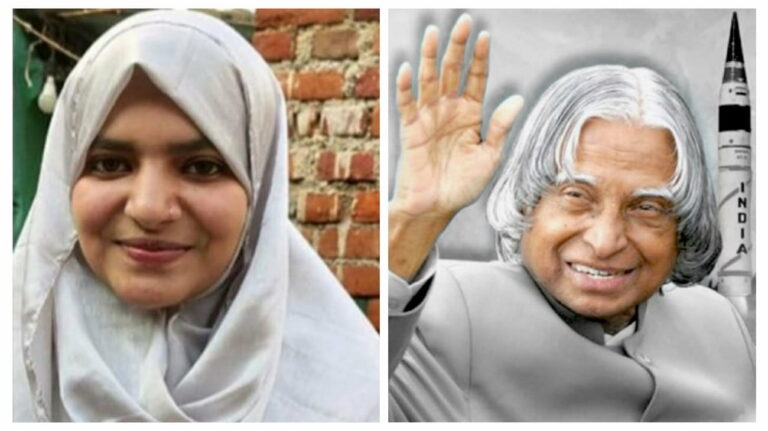
The top three ranks in the Science stream were secured by students who not only broke academic barriers but also challenged social stereotypes. Among them is 17-year-old Rashida Naaz, a Muslim girl from Dhanbad who topped the entire state with an extraordinary 97.8 percent.
Rashida scored 98 in Mathematics, 99 in Chemistry, and 98 in Physics — marks that reflect not just brilliance, but determination forged under financial hardship. What makes her achievement even more remarkable is that she never attended private tuition classes during her Plus Two studies.
A student of DAV +2 High School Pathardih, Rashida had earlier secured 94 percent marks in her secondary examination from USS Barari Colliery Jharia, already showing signs of academic excellence long before becoming the state topper.
“I could not afford tuition, so I studied online. I watched science classes on YouTube and prepared on my own,” Rashida told eNewsroom over the phone.
She lives with her family in a modest concrete-sheet house built on colliery land in Dhanbad. Youngest daughter of Md Rustam Ansari and Gulafsha Parween, her father works as a storekeeper in a private company, struggling to support the family’s education. Yet education became the family’s strongest pillar. Her elder sister, Kaniz Fatima, completed a Master’s degree in English, while her brother, Junaid Ansari, is pursuing Bachelor in Computer Applications (BCA).
From Tin-Roof Home to State Topper: Rashida’s Academic Triumph
Despite becoming the state topper, Rashida’s biggest challenge still lies ahead — higher education.
“I want to study BTech. But I could not sit for IIT-JEE because my family could not bear the expenses. If I get admission in Indian School of Mines or BIT Sindri, since both are in Dhanbad, I would love to continue my studies there,” she said.
Her role model is APJ Abdul Kalam, whose words continue to inspire her journey.
“I love Kalam sir’s quote — ‘Dream is not that which you see while sleeping, it is something that does not let you sleep,’” Rashida says with quiet confidence.
Yet, two days after the results, neither financial assistance nor official support has reportedly reached the young topper from the Jharkhand government.
“We want her to continue studying the subject of her choice. If the government supports us, it can help fulfil her dream,” said her brother Junaid.
Defying Social Barriers: How Jharkhand’s Girls are Leading in Science
The Jharkhand Science toppers’ list itself tells a larger social story. Alongside Rashida, two girls — Akanksha Kumari and Sana Afrin — jointly secured third rank with 481 marks.
Meanwhile, Faizan Alam secured second position in the state with 483 marks.
In an environment where minorities and girls are often portrayed as lagging behind in science education, these results send a strong message from Jharkhand: talent exists everywhere, but opportunity does not.
And perhaps that is what makes Rashida Naaz’s story bigger than a board examination result. From a small tin-roof home in Dhanbad, a young girl studied under economic constraints, relied on free online lessons, and emerged as the brightest science student in an entire state.
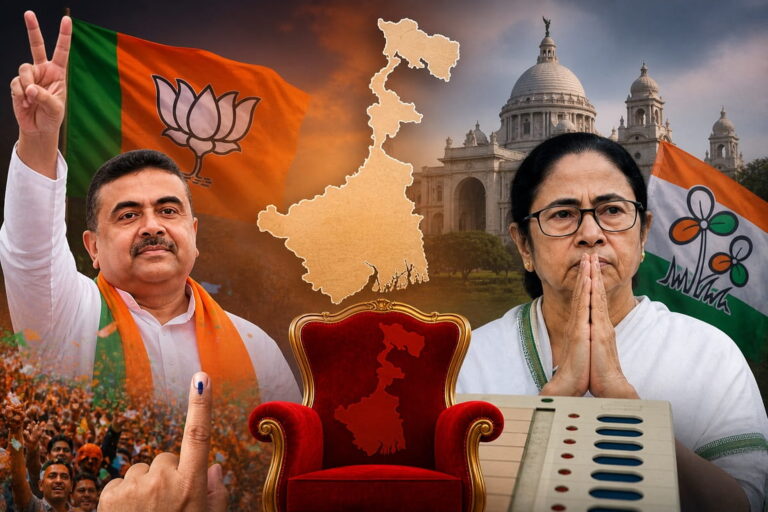
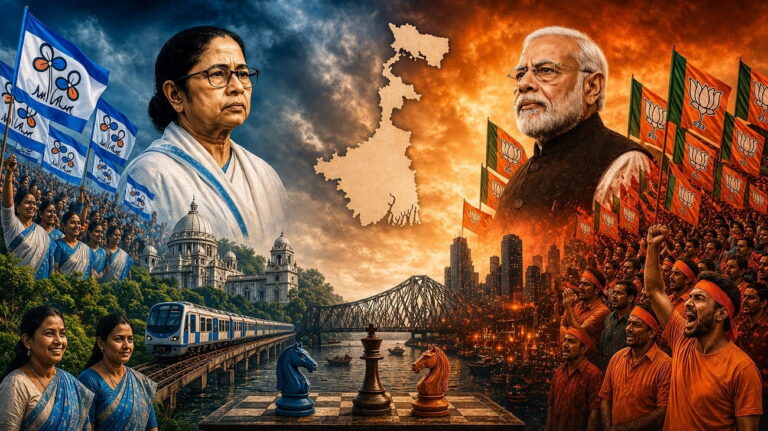
Kolkata: The 2026 West Bengal Assembly election has delivered a dramatic and deeply contested verdict, marking a potential end to the 15-year rule of Chief Minister Mamata Banerjee and the rise of the Bharatiya Janata Party as the dominant force in the state. According to trends available on the Election Commission of India website, the BJP is leading in over 200 seats, while the All India Trinamool Congress (TMC) is ahead in around 80 seats—a steep fall from its commanding 215-seat victory in 2021.
The most striking and symbolic result has come from Bhabanipur, where Mamata Banerjee has lost to Suvendu Adhikari by 15,105 votes. The contest saw a dramatic turnaround: Banerjee was leading comfortably till around the 15th round of counting, but the trend reversed sharply in the final rounds, with Adhikari consolidating late gains to secure victory by the end of the 20th round late at night. The defeat in her political stronghold underscores not just a local setback but a wider shift in Bengal’s electoral mood. Adhikari, once a close aide of Banerjee, now emerges as a frontrunner for the chief minister’s post.
The SIR Factor: Procedural Update or Structural Shift?
While anti-incumbency, organisational expansion by the BJP, and a polarised campaign environment have all contributed to this outcome, one of the most critical—and relatively under-discussed—factors is the impact of the Special Intensive Revision (SIR) of electoral rolls.According to available data and political assessments, nearly 27 lakh names were deleted from the voter rolls across West Bengal during the revision process. This figure assumes significance when placed alongside the overall vote margin between the BJP and the TMC, which stands at roughly 31 lakh votes.
In several constituencies, early trends and ground-level reports indicate that the BJP’s victory margins are lower than the number of deletions recorded under SIR. Even the loss margin of Mamata Banerjee is far less than the SIR deletion- 47000 in Bhabanipur. This raises serious questions about the extent to which the revision process may have altered electoral outcomes. Critics, including sections of the opposition, argue that the deletions disproportionately affected marginalised and minority voters—groups that have traditionally formed a core part of the TMC’s support base. If this assessment holds, the SIR exercise may not just be a procedural update but a decisive structural factor that influenced the final verdict.
Beyond the Roll: Anti-Incumbency and the Shift in the “Bhadralok” Vote
The scale of the BJP’s surge across the state is nevertheless undeniable. The party has made inroads across urban, semi-urban, and rural constituencies, breaking into areas that were once considered TMC bastions. However, the relatively narrow aggregate vote gap compared to the large number of deletions suggests that the electoral contest may have been far closer than the seat tally indicates. This contrast between vote share and seat conversion adds another layer of complexity to interpreting the mandate.
PM Modi Hails a “Mandate for Development”
In his victory speech, Prime Minister Narendra Modi described the verdict as a mandate for “development, stability, and decisive governance.” He said the people of Bengal had rejected “corruption and appeasement politics” and embraced a vision aligned with national growth. Modi also emphasised that the BJP government would work towards “inclusive development” in the state while strengthening governance and infrastructure.
Beyond West Bengal, the election results across other states reflect a mixed national picture. The BJP appears set to retain Assam, while in Kerala the Congress-led alliance has returned to power. Tamil Nadu has witnessed a significant disruption with actor Vijay’s political entry reshaping traditional alliances, and other regional outcomes point to a fragmented but evolving opposition landscape.
Yet, the Bengal result stands apart—not just for the scale of political change but for the questions it raises. The interplay between electoral roll revisions, voter turnout, and constituency-level margins will likely remain a subject of intense scrutiny in the coming weeks. For Mamata Banerjee and the TMC, this is not just an electoral defeat but a moment of deep political introspection. For Suvendu Adhikari and the BJP, it is a historic breakthrough—but one that will continue to be debated in terms of both mandate and method.
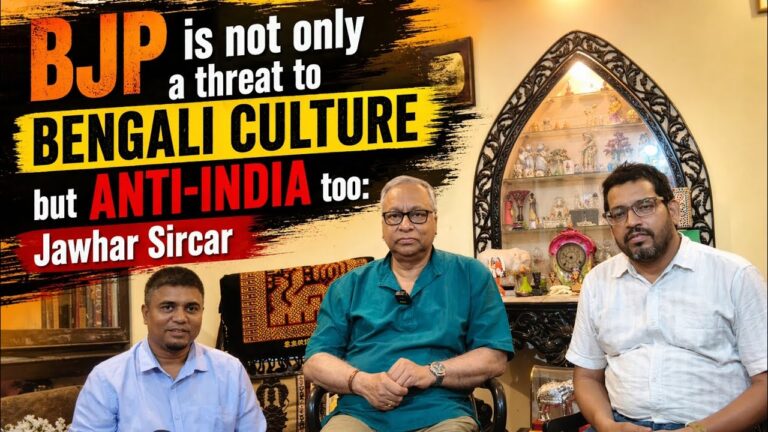
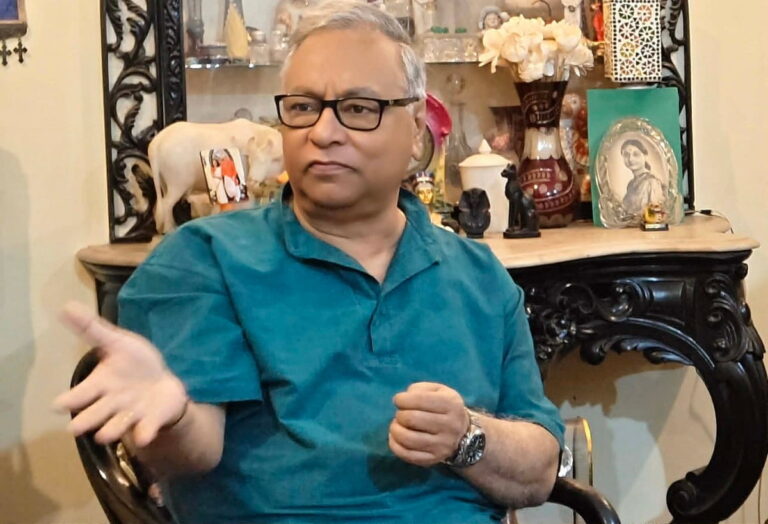
In a strongly worded exclusive interview, Jawhar Sircar, the former IAS officer and ex-MP Rajya Sabha has issued a sharp warning ahead of the crucial West Bengal elections, alleging that the Bharatiya Janata Party poses a serious threat not only to Bengal’s plural culture but also to India’s democratic fabric.
Speaking to Insaf News Online and eNewsroom, Sircar described the BJP’s political ideology as deeply divisive and incompatible with Bengal’s historical ethos of social harmony. “The soul of Bengal does not carry hatred,” he said, emphasizing that for over 200 years, the state has consciously tried to rise above caste and communal divisions, unlike regions that witnessed sustained sectarian conflict.
A significant part of his criticism focused on the controversial SIR (Special Intensive Revision) exercise, which he termed “illegal” and without any constitutional backing. Sircar alleged that the process, overseen by the Election Commission of India, was driven by mala fide intent and aimed at influencing electoral outcomes. Referring to Chief Election Commissioner Gyanesh Kumar, he claimed that no such exercise had been conducted in the past 75 years and called it an unprecedented move that raises serious questions about institutional neutrality.
However, Sircar also acknowledged public dissatisfaction with the ruling All India Trinamool Congress (AITMC) government. He pointed to issues such as corruption and lawlessness under Chief Minister Mamata Banerjee, stating that these concerns are real and deserve attention. He even criticized her handling of communal tensions, suggesting that administrative lapses created space for political exploitation.
Positioning himself beyond binary politics, Sircar advocated for a “third alternative,” urging voters to reject both Dada (Narendra Modi) and Didi (Mamata Banerjee). He also called on Muslims to move beyond identity politics and focus on development, governance, and accountability.
Sircar urged citizens to exercise their franchise responsibly, warning that any attempt to impose a government “against the spirit of Bengal” would ultimately be resisted by its politically aware electorate.
Kolkata: Amid the high-stakes West Bengal elections, a deeply layered story has slipped under the radar—one that raises serious questions about surveillance, identity, and political timing.
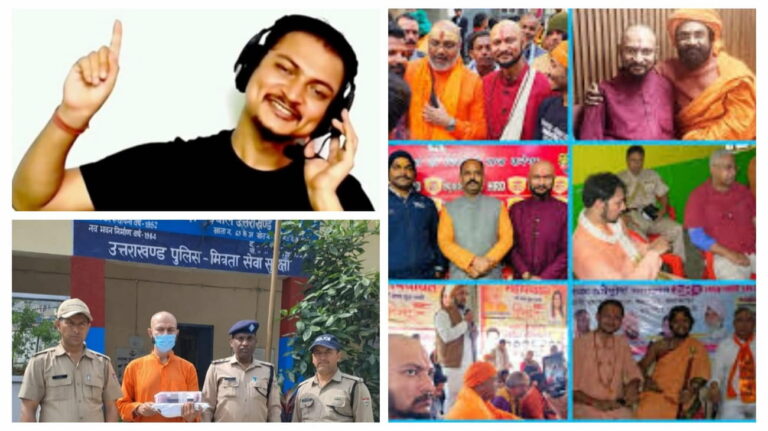
The arrest of Sunnyur Rahman, a Bangladeshi blogger who lived in India under the name Satyanishth Arya, is not just a routine police action. It is a story that stretches back nearly a decade—and one that eNewsroom had flagged as early as 2018.
From Shahbag to Bengal: A Radical Shift in Identity
Sunnyur Rahman first came into the spotlight in Bangladesh after the Shahbag movement, where he reportedly faced public backlash and assault for making derogatory remarks against Prophet Muhammad. Following this, Bangladeshi media reported that he fled the country, allegedly entering India through Nepal.
By the time he surfaced in West Bengal, his identity had dramatically changed. The self-proclaimed atheist had reinvented himself as a Hindu, adopting the name Satyanishth Arya.
But this was not just a change of faith—it came with a pattern.
The 2018 Warning: Early Red Flags and Police Inaction
eNewsroom’s 2018 investigative report documented his presence in Bengal, where he was actively producing and circulating Islamophobic content. He wasn’t limited to social media—he reportedly travelled across villages, engaging directly with people and attempting to provoke communal sentiments.
When contacted at the time, Kolkata Police had acknowledged awareness of his activities, stating that he was under watch.
The Ghaziabad Video That Reopened the Past
Fast forward to December 25, 2025—Christmas Day.
A disturbing video emerged from Ghaziabad showing a bald-headed man with a tilak confronting a pastor inside a church, abusing him and Christian devotees for celebrating the birth of Jesus Christ. He was heard declaring that such celebrations had no place in India.
Initially, many assumed he was a fringe Hindutva activist.
But eNewsroom connected the dots.
The man in the video was none other than Satyanishth Arya—aka Sunnyur Rahman, the same Bangladeshi national reported years ago. Following the video, a Christian organisation filed a police complaint against him.
The Uttarakhand Arrest: Operation Prahar and Official Gaps
Four months later, on April 18, 2026, he was arrested by Pauri Police in Uttarakhand.
According to the official press release, the arrest took place under “Operation Prahar,” a statewide अभियान targeting illegal residents, fake documents, and suspicious individuals.
Police claim that during a routine verification drive in the Ramjhula area of Laxman Jhula on April 16, a suspicious man was detained. His inconsistent answers led to deeper interrogation, eventually revealing his real identity as Saniur Rahman alias Satyasadhu, a Bangladeshi national living illegally in India since 2016.
He had allegedly obtained an Aadhaar card under the fake name Satyanishth Arya. Police recovered an expired Bangladeshi passport (valid till 2018), along with electronic devices and identity documents. A case has been registered under relevant sections of the Bharatiya Nyaya Sanhita and the Immigration and Foreigners Act, 2025.
Contradictions and Unanswered Questions
However, the official version leaves gaps.
Police maintain that he had arrived in Uttarakhand just a day before his arrest. But sources said that he had been living there for several months.
This discrepancy adds to a larger set of troubling questions:
How did a foreign national manage to live in India for more than eight years using fake identity documents?
If authorities were aware of his presence as early as 2018, why was no decisive action taken then?
Why did his arrest come only months after a viral communal incident—and notably, during the West Bengal elections?
And despite the seriousness of the case, why is there still no clarity on his extradition to Bangladesh?
A Story Bigger Than One Arrest: 8 Years Under a Fake ID
The case of Sunnyur Rahman is not just about one individual. It highlights systemic gaps—how identities can be reinvented, how narratives can be weaponised, and how enforcement can appear selective.
At a time when “illegal infiltration” remains a politically charged issue, this arrest raises an uncomfortable paradox:
A man widely known, reported, and even booked in multiple incidents continued to move across states—until he was finally caught during a politically sensitive moment.
Interestingly, the arrest has triggered sharply divergent narratives across media ecosystems. While several Hindutva-aligned websites and social media handles have portrayed Sunnyur Rahman as a “jihadi infiltrator” who allegedly penetrated Hindu spaces, reports from sections of Bangladeshi media have framed the case very differently—describing it as the arrest of a “Hindutva extremist” who had adopted a fabricated identity to spread hate. This stark contrast in portrayal underscores how the same individual is being interpreted through competing ideological lenses, turning the case into not just a question of identity fraud, but also of narrative construction in a polarised information landscape.
The layers of this story are still unfolding. But one thing is clear—the questions it raises are far from over.
Kolkata: The electoral contest in Bengal this time has not been shaped by a single wave but by a layered mix of social anxieties, identity assertions, welfare considerations, and institutional interventions. Several factors have worked both for and against the two principal contenders—the Trinamool Congress (TMC) and the Bharatiya Janata Party (BJP). In the end, the outcome will depend on which of these forces translated more effectively into votes on the ground.
The TMC Strategy: A Fortress of Welfare and Identity
Minority consolidation
One of the most decisive factors for the ruling party appears to be the consolidation of minority votes. Muslims, who constitute around 27 percent of Bengal’s population, seem to have rallied strongly behind the TMC. Reports of names being deleted or subjected to scrutiny under the SIR process appear to have deepened a sense of political vulnerability, pushing even fence-sitters towards the ruling party.
This consolidation extended beyond Muslims. Sections of Sikhs, particularly after the controversy involving a senior Sikh IPS officer and remarks by Leader of Opposition Suvendu Adhikari, appear to have gravitated towards TMC. Christians and Anglo-Indians too, wary of what they perceive as majoritarian politics, seem to have leaned in the same direction. Together, this created a broad-based minority bloc with significant electoral weight.
Women voters and welfare politics
Women voters—especially in rural Bengal—continue to be a strong support base for Mamata Banerjee. Welfare schemes, direct benefit transfers, and a carefully cultivated image of “Didi” have resonated widely. Alongside policy, there is also visible resentment among sections of women voters over the use of derogatory language against the Chief Minister during the campaign. This combination of material benefits and emotional connect may have ensured a clear tilt in favour of the TMC.
Rural Bengal’s leaning
The rural-urban divide remains evident. Rural Bengal, by most accounts, appears to have stayed with the ruling party. Government outreach, local networks, and booth-level mobilization played a key role. Rural women, in particular, were seen turning out in large numbers, often influencing the voting behaviour within families.
Bengali Asmita (identity)
In the final days of campaigning, especially during the second phase, the issue of Bengali pride—or Bengali Asmita—gained prominence. The TMC framed the election around protecting Bengal’s cultural and linguistic identity. This narrative appears to have resonated across sections, adding an emotional dimension to voter choice.
Organizational strength
The TMC’s cadre network remains one of its biggest strengths. The party’s presence was visible across booths, reflecting deep organizational reach. Even with heavy deployment of central forces, this grassroots machinery plays a crucial role in mobilization and turnout management.
The BJP: Anti-Incumbency and the Push for Parivartan
Desire for change and anti-incumbency
Despite TMC’s strong presence, a section of voters—particularly among the urban middle and upper classes—continues to express a desire for change. Added to this is a degree of anti-incumbency after nearly 15 years of TMC rule, which has influenced segments of the electorate to look towards the BJP as an alternative. While this sentiment was somewhat diluted by controversies around SIR and allegations of central overreach, it has not disappeared. Among both Hindi-speaking and Bengali-speaking urban voters, this factor remains relevant.
Hindi-speaking electorate
The consolidation of Hindi-speaking voters—across caste lines—has been a key pillar for the BJP. Many among those who have settled in Bengal over the past decade appear to have backed the party in large numbers. This demographic, especially in urban and semi-urban areas, could influence closely contested seats.
Central machinery and high-voltage campaigning
The BJP’s campaign saw extensive involvement of central leadership. Prime Minister Narendra Modi and Home Minister Amit Shah led an aggressive outreach. The large deployment of central forces and officials from outside the state has shaped the electoral atmosphere in a significant way. Supporters view it as ensuring neutrality, while critics see it differently—but its impact is undeniable.
Pro-SIR sentiment
While anger against the SIR process was visible in several areas, there were also pockets where it may have worked to the BJP’s advantage. In tightly contested constituencies, even small shifts in voter rolls can have a decisive impact. A segment of voters also appears to support stricter scrutiny, aligning with the BJP’s position.
Where do Congress and CPM stand?
The Congress and the CPM were also in the fray, though their impact remains uneven. Congress continues to retain pockets of influence, particularly in parts of Malda and Murshidabad, where its organizational base still holds. The CPM, which ruled Bengal for 35 years, appears to still be struggling to regain legislative presence in the Assembly. While there are indications that its vote share may see a marginal increase, it is unlikely to be substantial enough to translate into a significant number of seats.
The Final Countdown: A Battle of Mandates and Math
This election, in many ways, reflects a contest between consolidation and counter-consolidation—between identity, welfare, and the demand for change. The TMC has relied on its social coalitions, welfare framework, and organizational depth. The BJP has leaned on anti-incumbency, demographic consolidation, and strong central campaigning.
As Bengal awaits the verdict on May 4, the central question remains: which of these factors carried more weight inside the polling booth? The answer will shape not just the next government, but also the direction of politics in the state in the years to come.
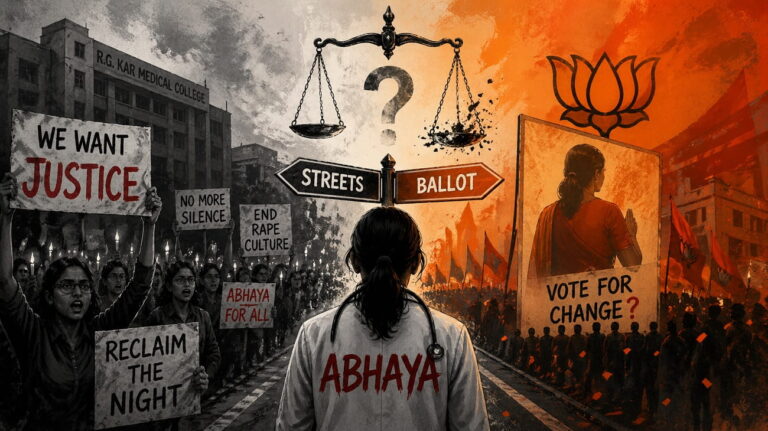
Kolkata: What began as a spontaneous outpouring of grief and anger over the rape and murder of a young doctor at R. G. Kar Medical College and Hospital has now entered a complex and uneasy political phase. The “Abhaya movement,” once hailed as one of the most organic, leaderless uprisings in recent times, is confronting internal disquiet after the victim’s mother, Ratna Debnath, decided to contest the Panihati assembly seat on a Bharatiya Janata Party (BJP) symbol.
For many who marched, fasted, and mobilized under the banner of justice, the development has been deeply unsettling.
“I feel Abhaya’s mother is being used—knowingly or unknowingly,” said activist Mahasweta Samajdar. “We protested not just for her, but for ourselves… so that such incidents don’t happen again.”
Yet, beyond emotion and mobilisation, the movement is now confronting a harder truth—justice delayed is reshaping its direction.
Stalled Justice: The 20-Month Legal Vacuum
The movement, which saw hundreds of thousands reclaim the streets during the “Reclaim the Night” protests in August 2024, is now grappling with a stark legal reality. While the Central Bureau of Investigation’s initial charge sheet listed 128 witnesses and 11 distinct pieces of evidence—including DNA matches—the lack of a final, exhaustive conviction after 20 months has created a vacuum.
This vacuum of stalled justice has increasingly drawn in institutional and political actors.
Beyond the Family: A Broadening Resistance
From the early days, the protests were driven largely by junior doctors under the banner of the West Bengal Junior Doctors Front (WBJDF). Their 17-day hunger strike and sustained mobilization turned a tragic incident into a wider call against institutional apathy. The movement peaked during the “Droho Carnival” (Carnival of Resistance)—a counter-mobilization that drew thousands in a direct challenge to the state-sponsored Durga Puja festivities.
This momentum led to the formation of Abhaya Mancha, a platform with three core demands: justice for the victim, an end to rape culture, and dismantling the “threat culture” within Bengal’s medical and administrative systems. Over time, the movement expanded to include similar cases in Jaigaon, Jainagar, Canning, and Singur, evolving into a broader resistance against systemic failures.
The Ballot Rupture: When Justice Meets Power
The parents’ decision to enter the electoral arena has introduced a sharp rupture. Activist Gopa Mukherjee noted, “When justice feels inaccessible, people turn to power. But Abhaya was never just their daughter—she became a symbol for all of us.”
However, the choice of platform remains a point of contention. The movement’s activists point to a documented history of controversy involving the BJP’s record on women’s safety, citing the party’s handling of the Bilkis Bano case—where 11 convicts were initially granted remission—as well as the Kathua rape case and the Hathras gang rape case. For many protesters, these precedents create a jarring contradiction with the movement’s original “non-partisan” ethos.
Survival of a Symbol: An Unfinished Struggle
Tensions have further intensified due to perceptions that the parents’ recent accusations against sections of the medical community align with political narratives aimed at weakening the WBJDF.
Still, many insist the core struggle remains intact. “The movement did not begin with the parents, and it will not end with them,” said Mukherjee. “There is no question of demoralization.”
Despite ideological fractures, the Abhaya movement stands as a rare example of a decentralized, citizen-led uprising—one that forced uncomfortable questions about governance into the public sphere.
As the 2026 Assembly elections approach, the battle over Abhaya’s legacy has clearly moved from the streets into the polling booth. The question now is no longer just about justice for one victim, but whether a people’s movement can survive the very politics it once stood apart from.
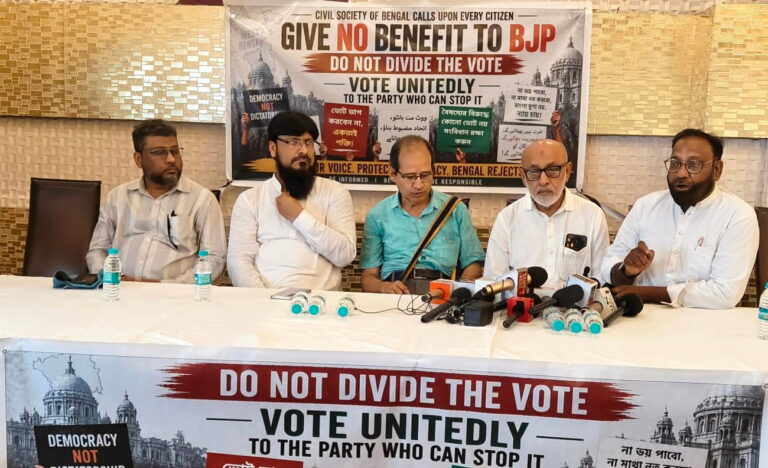
Kolkata: Ahead of the second phase of voting in the Bengal elections, Kolkata’s civil society has launched a campaign—“Give No Benefit to BJP”—aimed at encouraging people to vote unitedly and in maximum numbers.
Well-known activists from the city under the banner of Concerned Citizens of Bengal, however did not name any political party to vote for and claimed they have no connection with any political organisation. The speakers used different languages to convey their message to the masses.
The speakers first explained why they felt the need to hold a press conference just days ahead of the second phase of polling.
“We have seen votes getting divided over many issues, which can be addressed later. No party is perfect, including those challenging the BJP. But right now, we must prioritise safety and reject hatred. Local issues can wait—this moment demands one thing: give no benefit to the BJP,” said social activist Azhar Salim.
Another activist Dr Adil Sarfaraz said that the BJP is attempting to destroy the longstanding traditions of peace, harmony, and brotherhood in the state. Therefore, he urged people to unite against the BJP and the RSS and vote for candidates who can defeat them.
Social activist Manzar Jameel, speaking in Urdu, stressed that defeating the BJP is essential to counter the divisions and fear being spread. “It is a matter of great shame that the entire machinery of the Centre, including PM, HM, CMs and forces, are in Bengal to conduct elections. It feels like a war situation. While different parts of the country need better governance and attention from BJP leaders and governments, they are here to terrorise Bengalis,” he said.
Azar Salim, speaking in Bangla, said Bengal is a land of mishti (sweets) and harmony, where people believe in coexistence, not hatred. He emphasised the need to protect Bengali language, culture, and brotherhood, noting that Kolkata is known as the ‘City of Joy’ for its peaceful way of life.
Athar Firdausi, who moderated the event, said that ordinary people are living in deep fear. He alleged that the BJP is creating divisions and intimidating certain communities, and to counter this, voters must support candidates capable of defeating the BJP.
Human rights activist and president of the Bandi Mukti Committee, Chhoton Das, stated that the SIR process has caused immense distress in people’s lives. Thousands of marginalised individuals, who may lack documents but undeniably exist, need support. He warned that if the BJP comes to power, it could lead to attempts to render people stateless. He urged Bengal’s intelligentsia to act against the BJP. The speakers also appealed to the general public to actively participate in voting.
Notably, during the 2021 Assembly polls, a successful campaign—“No Vote to BJP”—was carried out by Left-backed organisations. However, this year, no such campaign has been formally launched. The organisers had said after the previous election results that their campaign—later evolving into a movement—would continue, as it also stood against fascism.
Kolkata: Ahead of the crucial West Bengal elections, former bureaucrat and ex-Member of Parliament Jawhar Sircar has issued a strong warning to voters against supporting the Bharatiya Janata Party (BJP), calling it not only a grave threat to Bengal’s pluralistic culture but also “anti-India.”
Speaking exclusively to Insaf News Online and eNewsroom, Sircar—widely regarded as a public intellectual known for his integrity—launched a scathing critique of the BJP’s politics under Narendra Modi, the governance of Mamata Banerjee, and the functioning of the Election Commission. He also expressed disappointment with how the Supreme Court handled the contentious SIR (Special Intensive Revision) case.
The former bureaucrat, who has conducted at least five elections during his tenure as State Election Commissioner, asserted that the entire SIR process is illegal and driven by mala fide intent.
BJP Is Not Only a Threat to Bengal’s Culture but India’s Too
On being asked how seriously the people of Bengal should view the upcoming election—especially in the face of a party that, according to critics, does not align with Bengal’s cultural ethos—Sircar responded sharply.
“See, the party (BJP), which you are indicating, is not only against the culture of Bengal, it is also against the culture of our nation. We did not see, such kattar (hardened party) in the country. Bengal is more liberal. Here since 200 years, we try to forget caste and Hindu-Muslim issue, so Bengal did not see that much riots, as much it happened in West Pakistan (today’s Pakistan). Few riots happened, to take properties by some greedy people, but there is no feeling of hatred among people here.”
He further added: “There are 10 to 15 percent people who do not bear each other. Which now increased to 35 percent, who did not like Mamata Banerjee government. Mamata Banerjee government has several issues too, including corruption. And civil society was against it too, but since BJP’s looming threat, people get confused. I say, neither dada (Modi), nor Didi (Mamata) but choose a good candidate, from whichever party he belongs too, even independents. And when I say about elected good candidates, I know, they will never go to BJP.”
No Legal Basis for SIR, It’s a Manufactured Exercise
On the SIR exercise, Sircar pointed out, “I conducted elections at a time when the current Chief Election Commissioner Gyanesh Kumar was still in school. So he cannot teach us what the law is. There is no such provision as SIR in the law.”
He claimed that in the past 75 years, no such exercise had ever been conducted, calling it “a creation of Gyanesh Kumar’s imagination.” He further noted that entries were made through Booth Level Officers (BLOs), many of whom are not proficient in using computers.
Raising serious concerns, Sircar said that citizens whose names have been deleted on such a large scale have the right to know how these entries were made in the system.
The former state election commissioner also alleged that the terminology used during the SIR process in Bengal was intended to reduce Bengalis to second-class citizens. According to him, the BJP and its political culture are not just anti-Bengal but anti-India, and the party lacks an understanding of Bengal’s cultural fabric.
Expressing disappointment with the judiciary, he said, “I do not understand why the courts could not stop this process despite such a clear situation. The Supreme Court has been slow in several matters in recent years.”
BJP’s Strategy, Bengal’s Resistance and Political Faultlines
Sircar noted that in Gujarat and other states where SIR was conducted, large-scale deletions also took place. However, since elections are not imminent there, public awareness remains low.
“In Bengal, the opposition is stronger because the Election Commission’s manipulation has been exposed,” he said, alleging that SIR is part of a broader strategy by the BJP to win elections in the state.
Responding to the Chief Justice’s remark—“Why is there politics over SIR in Bengal?”—Sircar argued that the contradictions are far more visible in Bengal and its citizens are more politically aware.
Criticizing the BJP’s political approach, he said Bengal has spent over 200 years attempting to overcome caste and religious divisions. While a few communal riots did occur, he maintained they were driven by vested interests rather than hatred.
“The soul of Bengal does not carry hatred,” he said.
Beyond Identity: Call for Development, Accountability and a Third Alternative
Sircar, the anti-corruption crusader acknowledged public dissatisfaction with the Mamata Banerjee government, stating that concerns such as corruption and lawlessness are valid and deserve discussion. However, he emphasized that the people of Bengal reject both corruption and communal politics.
“Personally, I am in favor of a third alternative beyond both Mamata Banerjee and Narendra Modi,” he said.
He also urged Muslims to focus on development issues rather than identity politics, stressing that elections in Bengal should center on social and economic concerns.
“When riots were taking place in Murshidabad, Mamata Banerjee was performing puja (worship) in Digha. Had she acted decisively, the BJP would not have had the opportunity to politicize the situation. She created the ground for BJP.”
Recalling former Chief Minister Jyoti Basu, he said Basu would issue strict instructions against rioters, enabling officials to act decisively and without fear.
Concluding the interview, Sircar urged all eligible voters to exercise their franchise. He warned that any attempt to impose a government against the spirit of Bengal would not be accepted by its people.
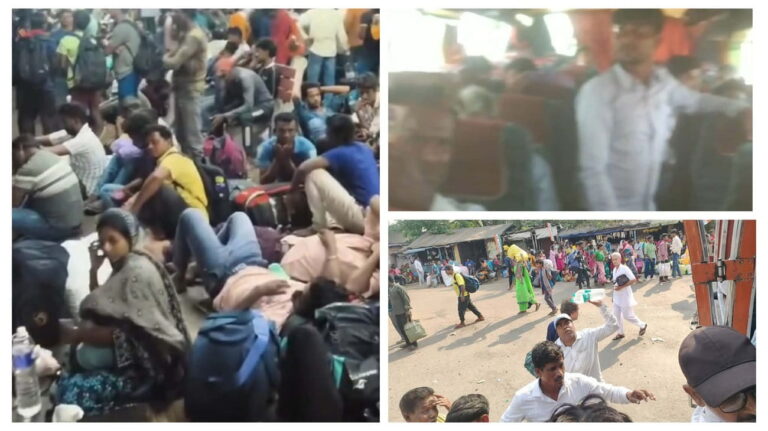
Murshidabad: A large-scale return of migrant workers to West Bengal ahead of the upcoming Assembly elections is placing severe strain on transport systems while revealing deeper anxieties around voter identity, employment insecurity, and administrative preparedness.
While there are reports of special travel arrangements being facilitated for select groups of migrant workers—allegedly backed by networks linked to the Bharatiya Janata Party (BJP)—thousands of others are making their way back to the state on their own, facing significant financial and logistical hardships. For these workers, the journey home is not just about participating in an election, but about ensuring their continued presence on the voter list.
Each year, thousands of workers from Bengal migrate to other states in search of livelihood, typically returning home during festivals like Eid or Durga Puja. Elections, historically, have not prompted such large-scale movement. This year, however, the pattern has shifted dramatically.
Following the completion of the Special Intensive Revision (SIR) of electoral rolls, a widespread perception has taken hold among migrant workers that failing to vote could result in their names being removed from voter lists. This fear—whether fully grounded or amplified by circulating narratives—has triggered a surge in return travel from states such as Maharashtra, Kerala, Odisha, Gujarat, and Haryana, placing immense pressure on already stretched railway services.
Trains Hit Capacity as Expensive Private Travel Becomes the Norm
With train tickets largely unavailable, migrant workers are being forced to rely on alternative—and often more expensive—means of travel. Long-distance bus journeys, which are both time-consuming and physically exhausting, have become the primary fallback option.
Samshujoha Sarkar, a migrant worker from Sagarpara in Murshidabad, described the ordeal of returning home from Pune. Despite attempting to book train tickets a month in advance, he failed to secure a seat. Even boarding a general compartment proved impossible due to overcrowding.
Ultimately, he was forced to take a longer and more expensive route—travelling first to Odisha, then by bus to Kolkata, and finally onward to his village.
“For the past 15 years, I have been travelling between my workplace and home, but I have never faced such difficulties,” Sarkar said. “If I had managed to get a train, I could have reached home within a day. Instead, I had to take a longer route, which cost me around 6,000 rupees instead of the usual 2,000.”
Frustrated by the lack of arrangements, he asked: “Can’t the government arrange special trains for people like us?”
In major cities such as Mumbai, Delhi, and Bengaluru, migrant workers employed as domestic helpers, cooks, and daily-wage labourers are undertaking similarly difficult journeys back to Bengal—often without any institutional support.
From Kerala to Bengal: Workers Endure High Costs to Reach Home
The surge is particularly visible in Kerala, where migrant workers form a crucial part of the labour force. In Thiruvananthapuram, tickets for trains bound for Bengal are completely sold out, with only those who booked well in advance able to travel.
Key services—including the Shalimar Superfast Express, Dibrugarh Vivek Express, TVC SCL Express, Gurudev Superfast Express, CBE SCL Superfast Express, and Aronai Express—are struggling to cope with the sudden spike in demand.
As waiting lists grow longer, many workers who initially considered skipping the vote are now turning to private transport. From parts of Ernakulam district—including Perumbavoor, Kothamangalam, and Muvattupuzha—several buses have already departed carrying workers back to West Bengal.
These journeys come at a steep cost. Passengers are paying between ₹4,000 and ₹6,000 per trip—₹4,000 for non-AC buses, ₹5,000 for AC buses, and ₹6,000 for sleeper coaches. Each bus is operated by two drivers to manage the long-distance travel, and many workers have already arranged return trips on the same buses after casting their votes.
“Our train tickets are unlikely to be confirmed. Even if we lose our jobs, we will still go back and vote,” said one worker travelling with his family.
Fears of Voter List Deletion Spark Panic at Major Stations
The impact of this return migration is also visible within West Bengal. For over a week, heavy crowds of returning workers have been witnessed at Sealdah Railway Station, particularly those boarding trains towards Lalgola and surrounding areas.
Reports that numerous names have already been removed from voter lists have intensified anxiety among residents.
Farid Sheikh, a resident of Lalgola, said: “The names of many people have been deleted from the voter lists. Casting a vote is crucial this time. Like many others, I am returning home because I fear that if I don’t vote, my name might be removed.”
Organisations working closely with migrant labourers note that while workers usually return home enthusiastically during festive seasons, elections have historically not drawn the same level of response. This year, however, the aftermath of the SIR appears to have altered behaviour significantly, turning voting into a perceived necessity rather than a routine civic exercise.
Mass Exodus Disrupts Local Industries and Small Businesses
The sudden movement of workers is also disrupting economic activity in sectors dependent on migrant labour. A shortage of LPG cylinders has further compounded the situation, affecting small-scale industries such as jewellery workshops.
One manufacturer, who employs dozens of artisans across multiple units, said operations have been severely impacted.
“This situation has arisen due to a shortage of LPG cylinders, making it increasingly difficult for business owners to sustain their work,” he said. “Around 40 artisans are employed in my units, and nearly half of them have already left. Many more are likely to follow.”
He added that, in the absence of train tickets, both employers and workers are being forced to arrange private bus transport.
“This time, the demand among workers to return home is largely driven by the issue of voter list revision,” he said.
For workers themselves, the decision carries both financial and emotional consequences.
Rabiul Sheikh from Shamsherganj said: “We go outside to earn because we have no choice. Now we are forced to return, losing wages and spending our savings just to protect our identity.”
Rajibul Mondal of Domkal, who returned from Kerala, added: “As long as the fear of exclusion from the voter list remains, democracy will be a ‘festival’ only in name.”
Migrants Decry Lack of Government Support for Returning Voters
Despite strong political messaging urging migrant workers to return and vote, many workers say that such appeals have not been matched by adequate logistical support for the majority.
While some groups are believed to be benefiting from organised travel arrangements, large sections of migrant workers—especially those in informal sectors—are left to fend for themselves, navigating expensive and uncertain travel options.
Rahul Chakraborty, Central Committee member of the Association for Protection of Democratic Rights (APDR), criticised this gap.
“In the run-up to the Assembly elections, we are witnessing a surge in activity among migrant workers living outside the state,” he said. “Many are returning to Bengal—often at the cost of their livelihoods—solely to cast their votes.”
He added: “The panic created around the SIR has had a profound impact on them. The most concerning aspect is that the very government elected by their votes has not arranged special trains to bring them back.”
Voting Seen as an Essential Shield for Citizenship Status
Beyond logistics and economics, the current wave of migration reflects a deeper crisis—one rooted in the perceived link between voting and citizenship.
According to activists, many migrant workers now believe that failing to vote could not only result in deletion from voter lists but may also jeopardise their status as citizens.
Asif Faruk, State Secretary of the Migrant Workers’ Unity Forum (Parijaye Shramik Aikya Mancha), described the situation as a reflection of systemic insecurity.
“This rush of migrant workers—coming back solely to register their names on West Bengal’s voter list or to ensure their names remain on it—reflects a deep-seated sense of existential anxiety among ordinary people, as well as administrative failure,” he said.
“In the current political climate, having one’s name on the voter list has come to be seen as an indirect safeguard of citizenship,” Faruk added. “Following the SIR, a profound fear has taken root—that if they fail to vote even once, they may be labelled as ‘infiltrators’ or ‘missing voters’.”
He emphasised that this fear is not spontaneous, but shaped over time through political rhetoric and administrative complexity.
Social activist Abdul Gani echoed similar concerns: “The fact that people are travelling thousands of miles—driven solely by the fear of having their names struck off—just to cast their votes highlights serious concerns about institutional assurance. The Election Commission and administrative machinery have yet to inspire confidence among common people.”
Border Delays and High Fees Hamper the Final Journey Home
The journey back home has not been without further complications. Officials confirmed that several buses carrying migrant workers were detained at the Bengal–Odisha border, reportedly on grounds of overcrowding.
Private bus operators, who usually operate during festive seasons, report an unprecedented surge in demand. One operator said more than 100 buses have been deployed—far exceeding typical numbers during Eid or Durga Puja.
However, operators allege that they are facing additional challenges, including being forced to pay around ₹5,000 per trip at the border, cutting into their margins. Buses are also required to remain in Bengal for several days before making return trips.
Beyond the Ballot: A Fight for Recognition and Existence
What is unfolding across West Bengal is not merely a logistical challenge or a seasonal migration. It is a moment that exposes the fragile intersection of democracy, identity, and livelihood.
For thousands of migrant workers, the journey home is no longer just about participating in an election. It has become an act of safeguarding their presence—on paper and, by extension, in the nation itself.
In choosing to return—despite financial loss, physical hardship, and uncertainty—they are not just casting a vote. They are asserting their existence.
Mohd Shamim Akhter, son of Mohd Motiur Rahman, son of Hakim Mohd Suleman, son of Yaad Ali.
I am shaped from the fragrance of that soil which the world calls India. It is this very land that gave me birth—this blessed earth, often likened to paradise; it taught me how to walk, gave direction to my steps, and bestowed wings upon my dreams, allowing them to soar into the vastness of the skies.
My village, Bhatura, in the district of Madhubani, Bihar, may not shine brightly on the world map, yet for me, it is an entire universe—my identity, my roots, my very existence. The laughter of my childhood lies buried in its soil, and the prayers of my ancestors still breathe in its air. Whenever I close my eyes, those same unpaved lanes, that earthy fragrance, and those simple, innocent faces come alive before me—the ones who shaped me into a human being, who taught me how to live, and who grounded me in humility.
That is why, whenever the scent of my village calls out to me, I find myself returning—if not in body, then in memory and emotion—and a couplet rises unbidden from the depths of my heart: Where will you go, far from your homeland? Whenever longing rises, you will return here.
From Bihar to Saharanpur: Building a Life Through Calligraphy
I remember my student days—books in my hands and a restless fire in my heart. It was as though I was determined to become something, driven by a passion to carve my destiny with my own hands. During those years, I was studying at a large madrasa in a town in Saharanpur, Uttar Pradesh. Alongside my studies, I would practice calligraphy whenever time allowed—earning a few rupees with the labor of my own hands. Sometimes my fingers would be stained with ink, sometimes my eyes would grow weary, but a quiet light within me kept burning—the realization that I was learning to live with dignity through my own effort.
From those modest earnings, I would spend a little on myself and save the rest quietly. What seemed insignificant to the world was, for me, the first brick of my dreams. One day, I placed those savings in my father’s hands, so that the walls of our home could rise—so that my dreams could take a tangible form.
Under my grandfather’s supervision, I began building our house. Those bricks were not merely forming walls—they were giving shape to my dreams, breathing life into my hopes, laying the foundation of my future. At that time, concrete houses were rare in my village, and mine becoming one of them felt like a monumental achievement. When it was completed, it stood as a living testament to my labor, my youth, my resolve, and my dreams. Later, I saved more money and gave it to my father again, with the wish that a water tap could be installed at home, so my mother would no longer have to go door to door in search of water. This was not merely money; it was my love and my sense of responsibility.
The Aligarh Years: A Scholar’s Struggle for Academic Excellence
My father was always close to my heart, yet life kept us apart. A modest job in a distant place separated him from us. Meetings became rare, waiting grew longer, and conversations were confined to letters—letters that sometimes carried the firmness of advice, sometimes the gentleness of prayers, and sometimes a love so profound that words could scarcely contain it. I lived within those letters; in them, I sought the presence of my father.
As the eldest son—somewhat mischievous, somewhat stubborn—I still carried within me a glowing flame of responsibility. The dreams reflected in my parents’ eyes would not let me rest. Perhaps that is why I eventually reached Aligarh to pursue my Master’s degree—a city of knowledge where dreams gather the courage to become reality.
But life never offered an easy path. Sometimes my pockets were empty, sometimes my heart heavy, sometimes circumstances unforgiving. I would spend my days immersed in the silence of the library, and by evening, I would take my bicycle and set out—writing essays for others, doing calligraphy, or exchanging knowledge for a few coins. Even in those difficult days, despite my limited income, I made it a point to send some money every month for my brothers’ education, hoping to ease my father’s burden. That amount may have been small, but it carried my sincerity and my silent sacrifice.
Then came another phase of life—in the year 2000, I got married. Responsibilities grew, and a young son entered my world. When he was old enough to walk, I enrolled him in a school in Aligarh. It was a beautiful sight—the father a student, and the son a student too. He would go to school, and I to the university.
The PhD Milestone and the Call of Aliah University in Kolkata
Time passed, and in 2007, I finally earned my PhD. That moment felt as though years of struggle, sacrifice, tears, and perseverance had finally borne fruit. I was the first person from my village to achieve this distinction, and later I secured a respectable government position. This was not just my success—it was the honor of my village and the reward of my parents’ prayers.
Then Kolkata called me. Aliah University opened a new door—a new chapter of life. In 2011, I appeared for an interview and succeeded, but a change in government halted my appointment. It felt like a shattered dream. Later that year, the position was advertised again. I applied, appeared once more, and this time destiny stood by me. In May 2012, I joined as an Assistant Professor.
Over time, I continued teaching, served twice as Head of the Department, and today I hold the position of Associate Professor as well as Head of the Department. I have taught thousands of students—not just academic knowledge, but values of life, truth, and humanity. I made Kolkata my home and began to dream of a future here. In 2016, I became a registered voter here, then my wife, then my son. I believed I was no longer just living in this city; I had become a part of it.
After moving here, I was blessed with three more sons. My eldest son—whose name has now been erased from the voter list of Bengal—is an MBBS student, training to save lives. My other three sons are still in school, nurturing dreams in their young eyes. But perhaps fate had other plans.
The 2026 SIR Crisis: When Citizenship Becomes a Question Mark
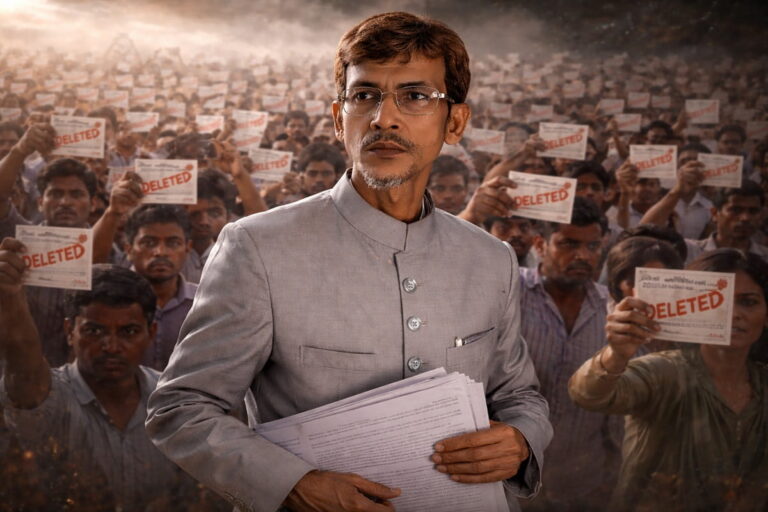
2026 arrived as a catastrophe. A Bengal electoral roll under Special Intensive Revision (SIR) was published, and beside my name, there appeared a single word: “Deleted.”
Just one word… yet it was not merely a word—it was a verdict. Against my identity. Against my existence. Against my entire life. I kept staring at it, as if it were asking me: Who are you? Am I not the one born on this very soil? Am I not the one who dedicated his youth to building this nation? Am I not the one who now educates its children? Then why was my name erased? Am I not a citizen of India?
Not just mine—my son’s name too was removed, even though he had duly registered just a year ago. A young boy, whose world is still confined to books and medical aspirations, has been pushed into this darkness of uncertainty. And as if this pain were not enough, there is another silent suffering within my home. My wife has been battling a severe illness—ILD—since 2021, living on 24-hour oxygen support. This mental distress has not only shaken me but has also affected her fragile condition.
Most painful, and utterly inexplicable, is this: within the same household—myself, my wife, and my son—our names were all included. Yet in this opaque process, both father and son were deleted, while the mother’s name remained intact. What kind of criteria is this? What kind of scrutiny is this? The same foundation, the same documents—then why this contradiction? On what principles is the Election Commission functioning? Or have principles themselves ceased to exist—replaced only by unchecked authority?
Mass Disenfranchisement in Bengal: A Systematic Failure of Policy
When I looked deeper into this process, my heart sank further. What is happening in Bengal under the name of SIR does not reflect transparency or fairness. It resembles a systematic irregularity, a deep indifference. Lakhs of names have been erased as though those people never belonged to this nation. This is not a mere error; it is a silent brutality.
And most distressing of all, the Supreme Court, our last hope for justice, has yet to take a decisive step that reassures the common citizen that their fundamental rights are secure. Has justice itself lost its meaning in delay? Will a citizen’s identity now remain entangled in files and dates? I ask the Supreme Court, every responsible institution, and every awakened conscience—not as a plea, but as a challenge: Has the Constitution become a shield only for the powerful? Does justice collapse before reaching the weak?
I am not alone. There are lakhs like me—broken, scattered, yet still standing—fighting to reclaim their identity. If today a teacher, a worker, or a medical student can be rendered doubtful in their own homeland, then who is safe? Who can be certain they will not be next?
Reclaiming the Narrative: Hope as a Form of Resistance
I am a teacher. I have always taught my students the values of truth, justice, and hope. But today, I myself have become a question. Can a single word erase an entire identity? Can a list invalidate a whole lifetime? I am not broken—but I am wounded. I have not stopped—but the path has grown uncertain.
Yet somewhere within me, a ray of hope still remains—the same hope that has always sustained me: Do not complain of fate—keep testing your destiny; Do not fear the distance—keep moving forward. But now, this hope is no longer just personal strength—it has become a question, a protest, a call.
The time has come to break this silence and to remind the system of its constitutional duty—otherwise, the day is not far when history will write, beside all our names, with ruthless finality: