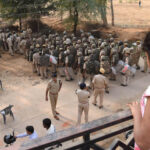
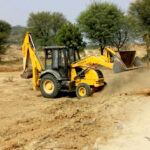
Jaipur: On Saturday farmers of Nindar village, Rajasthan, woke up to see a large number of police present in their village along with officials from Jaipur Development Authority (JDA) and JCB machines.
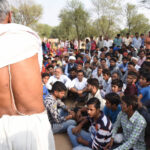
Soon policemen and officials began taking control of the lands, for which farmers had staged a month long protest by staying half-buried in pits. On getting assurance from JDA ministers, they had withdrawn their protest.
While taking control of the area, the police also beat male and female farmers, who tried to protest. The farmers also alleged that the police barged into their inside house and beat up female farmers. This forced them to resort to stone pelting.
A large number of policemen had been called to make farmers evacuate the area. JDA officials have taken control of a huge portion of the land, which the farmers were hopeful of having a fresh survey done, as promised by the government.
Nagendra Singh, a farmer who had led the protest, said that it’s breach of contract by the JDA and now they will decide their future course of action.
The protest by Nindar farmers is unique and probably nowhere in India such half-buried protest took place to save land.
Pictures credit: Chandra Mohan Aloria
Nindar village, Rajasthan