Beyond Names: Celebrating India’s Collective Soul

[dropcap]I[/dropcap] don’t care…

I don’t care if the salesman who sells me shoes is Abdul or Abhishek.

I don’t care if the tea stall owner is Mohammed or Manish.

I don’t care if the owner of the restaurant where I eat is Bashir or Bandya.

I don’t care if my fruit seller is Ghafoor or Ganesh.

I don’t care if the shop where I buy the flowers for a temple is owned by Perwez or Piyush.

I don’t care if my office colleague is Hafiz or Harish.

Sayyed or Suresh, Fatima or Falguni, Imtiaz or Inder… These are just names.. I don’t care..

That’s how it is for me and that’s how it will remain.

I am an Indian and for me, all Indians are a part of my family.

I never have and never will differentiate between them based on their names, their religious beliefs, their castes or their social status.

I understand that these differences exist and these very differences are what my country thrives upon.
That is not just the fundamental core of my country but also its USP.

I have seen no other country where such a multitude of religious diversity comes together to form a unified nation.

A Unity that some unscrupulous characters have been trying to break.

And they are failing..

After a concentrated effort of 100+ years they did taste success for the last 10 years but I honestly believe that the majority of people have started seeing right through it and their fall has begun.

We just need to keep pushing them back into the wormhole that they climbed out and soon they will go back to the obscurity that they truly deserve.

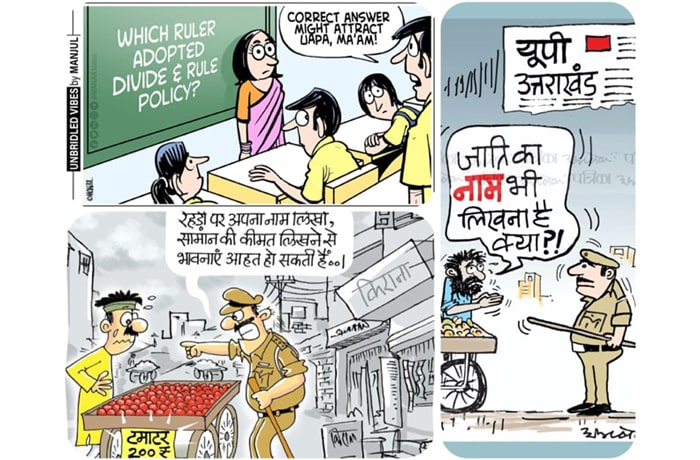
So, yeah, make all the laws that you want to identify and highlight them.. I will embrace them.

You make them write their names on their shops and I won’t care about it. It’s their products and services that matter and not their names.

You try your best to ghettoize them and I will ensure that I embrace them.

You try your best to ostracize them and I will do my best to break those lines you draw and make them feel a part of the society.

That’s what my parents have taught me.

That’s what my religion has taught me.

And That’s what my Constitution has taught me.

So keep playing your Hindu Muslim cards and you will find more and more people shunting your vile propaganda……and eventually you will be defeated.

I will defeat you with love while you try to keep spreading hate.

Because hate has a short shelf life, love is forever..❤️

Disclaimer: I am not an individual. I am not a single person. I am the spirit of India. The same India where the blood that flows doesn’t know religion, whether it flows to save someone’s life in a hospital or whether it flows to defend our country at its borders. Jai Hind. Jai Samvidhaan.

The Grandeur of Hypocrisy: The Grand Spectacle of India’s ‘Wedding of the Century’

0

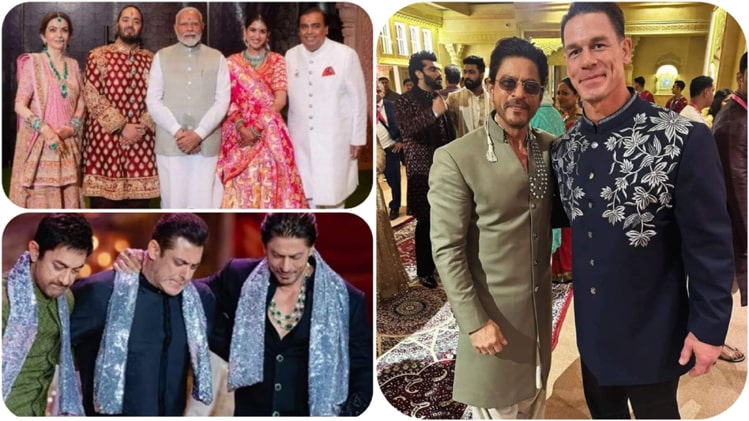
[dropcap]I[/dropcap]ndians simply love fat weddings. We recently saw the wedding of the ‘meritorious’ son of a mighty Business family, which is being ‘claimed’ as a marriage of the century where celebrities of the spineless tinsel world as well as hypocritical political class from India and big corporate network from different part of the world joined hand and celebrated. Of course, a large number of saffron robe Mahatmas and Babas were seen cherishing the moment at the truly ‘Sanatan’ wedding making every ‘Hindu’ proud of the great achievement. For the last six months, we have been provided ‘clips’ of the fat Indian wedding now being projected as an ideal wedding with lectures by the tycoon and his better half. The nation is being ‘obliged’ with these ‘personal’ clips of celebrities and stars ‘behaving’ as ‘common’ people. Everybody is not speaking about the bride and groom but the ultimate mom, her sarees, accessories and great talks of ‘wisdom’ about our ‘great’ ‘culture’ including ‘kanyadaan’.  The babas and sadhus who give great gyan on how and what an ideal ‘Hindu’ woman should wear, were silently enjoying the warmth filled with the aroma of artificiality. Many people have criticized such lavish expenditure on marriage while others found it as ‘grapes’ turning sour for those who are criticizing it. Many of those who went to attend the wedding said that people should not bother about the extraordinary expenses incurred as ultimately it helped create ‘work’ and business hence thousands of people must have benefitted from it.

While such kind of exhibition of power connection by industrialists, journalists, and public personalities always happened in the past Page 4 came into prominence due to such gossip which the Indian middle classes aspire to and hence are more eager to watch and listen to such things in both shock and awe. In the 1980s, a fat Indian wedding in Gwalior was the talk of the town. Yes, Madhavrao Scindia’s daughter’s wedding got huge criticism in the media for lavishness. Media criticized it but it may not be possible for the Manustream media to even question anything on the same. The Brahmanical elite wants to find ways and means to justify its actions but one fact is these marriages are a place for networking as well as showing your strength. In Bombay’s tinsel world, it was Raj Kapoor who started his envious parties particularly that on Holi and hence got named as greatest Showman of Indian Cinema. Industrialists, most of the time, rarely displayed their wealth but in the 1990s, Subrata Roy of Sahara India changed that and his Sahara City in Lucknow became a centre of activity for all power elite of the country. Cinema stars, cricketers, politicians, literary figures etc, all used to be at Sahara City in Lucknow for specific events. Mulayam Singh Yadav, Chandrashekhar, Amitabh Bachchan, Anil Ambani, Sachin Tendulkar, Jayaprada and Amar Singh were the lead stars of Sahara events but that is past now.

Reliance started by Dhiru Bhai Ambani used the power connection to rise high. Connections with Gandhis were used well but that became the bone of contention between Rajiv Gandhi and his finance minister Vishwanath Pratap Singh. Indian Express and Nusli Wadia played a big role in aggravating it further as Editor Arun Shourie then launched an extremely personal campaign against Reliance. That was the time when Income Tax notices had been served to various industrialists and they complained against the finance minister soon VP was shunted out of the Finance Ministry rather unceremoniously and made Defence Minister. Anyway, that showed the power of corporations in India who could get an honest and effective finance minister out of the ministry as he was seeking accountability from them and acting against the wrong. Corporations succeeded in drawing room manoeuvres but VP won the war of perception in the masses as the lone fighter against corruption and the result was Congress’s downfall politically.

UPA governments under Dr Man Mohan Singh was the best period for corporate houses to strengthen them and it was said that Pranab Mukherjee was the biggest friend of Ambanis.

So, the corporate politician’s relationship is well known. The Gandhi family deciding not to attend the wedding was an important political decision since Rahul Gandhi had been speaking about the corruption of the corporate in his political rallies so it was good for him to keep away from it. Given the powerful media adversary, this decision was good otherwise this media would have trashed his entire future campaigns. It is another matter that all the near dear ones of Gandhis were there at the wedding but yes this is pure politics. Right from Mamta to the Lalu family the Akhilesh Family, all were present. The exceptions were left parties, M K Stalin and BSP chief Miss Mayawati but we don’t know whether they were invited or not. The sad part is that it is a poor reflection of our political class and democracy itself and how most of the colonial democracies are now controlled by corrupt corporates. The slogans of ‘’social justice’ and ‘secularism’ look empty and rhetorical when you hear these champions speaking again.

Earthy wisdom of Jitan Ram Manjhi

One does not know why the Indians are so obsessed with these fatty weddings but the reality is today these obscene weddings are made to look glorious in the artificial surroundings of glamour. We are told that marriage is a personal affair and everyone has a right to do what they wish to but was this a personal affair when state apparatus was being used and roads were closed and airports were converted into the private domain to ensure the guests reach the venue without any hassle? That apart, not only are the social media pages but the corporate media too made every effort to push them into our minds with an attempt to legitimize everything. Even when the marriage is over, we are still being provided with the clips of ‘’words of wisdom’ by the Ambanis and the casteist middle class is simply overjoyed claiming ‘it is his money and he can do anything. The jaati (caste) elite want us to believe that we should mind our business and focus on our work but then it is not that simple. Why are these gossip clips being released or planted every day? Do we rejoice that India has got a new Badshah and begum?  The Babas are overwhelmed by this ‘love for Indian values’’ by one of the most powerful men in India. I loved what Jitan Ram Manjhi, the Union Minister, said when someone asked him whether he would attend the marriage or not. He said, ‘We are from a rural background. It is a complete waste of money. The women present there were wearing revealing dresses which for him looked obscene hence in such a situation, how could one take his wife, daughter and daughter-in-law there? Hence, we did not go there. He further said: “As we would not be able to settle in that richness and grandeur, that is why we did not go there. That wedding is only and only a display of money. That was not a wedding but a display of money.”

One may or may not agree with Jitan Ram Manjhi but most of the religious gurus and Babas who give enormous preaching to women and girls about how to wear and what as per Bhartiya Sanskriti kept quiet during the entire episode. Perhaps, they are happy that the son of one of the richest persons in the world did not marry a Gori or Christian woman and that is enough for Bhartiya Sanskriti. The fact that all the right-wing echo system is celebrating is because it gives justification to the divinely ordained Brahmanical value system where marriage is not between two ‘individuals’ but two ‘families’ as Nita Ambani said so ‘graciously’. None ask the question of whether these two families should be from the same ‘caste’ or not. We are then given the ‘gyan’ or wisdom of greatness of ‘Kanyadan’ and how ‘daughters’ are ‘blessings and that marriage is not a promise for one life but seven lives. Everybody enjoys such ‘spiritual’ talks of ‘saat janmo ka bandhan’ i.e. ‘seven lives bond’ and we had so many songs, and films celebrating this ‘seven lives promise’. Indians, after all, don’t live in their present. They either rejoice in the golden past or think of a diamond future. For a majority of Indians, the present has become ‘uncertain’ because of such big talks which deliver little on the ground.  Most of the time, the girl’s parents in India complain about having fulfilled all the requirements of the boy and yet things went bad because the boy’s parents were greedy. People try everything to put their best foot forward by succumbing to dowry demands and yet things go hopelessly wrong. Dowry is a big issue and such lavish weddings only promote that. Dowry deaths and domestic violence against women continue unabated in India and a majority of them under pressure to protect ‘’culture and society’ don’t even dare to file cases with the police. ‘According to the National Family Health Survey (NFHS), 2019-2021, 29.3 percent of married Indian women between the ages of 18 and 49 have experienced domestic/sexual violence; 3.1 per cent of pregnant women aged 18 to 49 have suffered physical violence during their pregnancy. It further says that 87 per cent of married women who are victims of marital violence do not seek help.

Another serious matter is the crisis of our marriage system and the concept attached to it. While such a ‘concept’ looks beautiful when everything is great but turns horrific when a crisis emerges in the marriage as it virtually closes all the doors, particularly for women once the marriage is either broken or the spouse is no more. India is considered to be one of those countries where widowhood is a curse as she suffers in silence. The Seven Lives Wonderful Bond theory is close to all options of remarriage for her. ‘Widowhood is defined as the status of an individual who was legally married to someone who subsequently died. As per the 2011 census, there are 5.6 crore widowed persons in India. Women outnumber men accounting for nearly 78% of the total widowed population. Between 2001 and 2011, 89.71 lakh widowed persons were added. It has been over 13 years. I can vouch that this number is much bigger now as we are in 2024.

The crisis is that a young woman married recently can’t think of remarriage according to social taboos. We have just heard the story of an army officer who was sacrificed at the Jammu-Kashmir border and was awarded Kirti Chakra by the President of India for his valiant efforts to protect the country. Everyone saw the sober-looking young widow with her mother-in-law at the Rashtrapati Bhavan during the award ceremony. After a few days, we got an interview from the parents of the officer that their daughter-in-law had left for her parents’ house and that they did not get anything in terms of financial compensation as their daughter-in-law got everything. These things are happening and particularly make parents very vulnerable where the parents are dependent on their sons but it is unfortunate that even where the parents are financially independent, the cultural taboos force them to behave like that. The problem in such cases is the feeling of ‘autonomy’ of a woman to decide about herself and it has pure relation with finance and property. Due to pressure, many of the parents can boast that they are not against the remarriage of their daughter-in-law if she is ready to marry someone else in the family, particularly her younger brother. The whole idea behind such a thing is about the money and property to remain within the family. Many times, the parents of the boy or girl are worried about their children ( if she has) being maltreated if she marries someone else outside the family. These are serious questions and frankly speaking indicative of a cultural crisis that we are greatly trapped in and which needs to be corrected and not defended in the name of ‘holy tradition’.

Inspiring Life of Jacqueline Kennedy

Before I conclude, it is important to read the inspiring story of Jacqueline B Kennedy, wife of one of the most popular American President John F Kennedy who assumed office on January 20th, 1961. Jacqueline was 31 then and had two children. On November 22, 1963, President Kennedy was shot in Dallas, Texas when he was riding a Presidential motorcade. The bullet pierced his head and it fell on the lap of Jacqueline who was brave enough to carry her husband to a hospital where he died. Americans saw on their TV channels how Jacqueline Kennedy remained calm and dignified even at the biggest personal loss of her life. After some time, she focused on building a memorial for her late husband. In 1968, Jacqueline married a shipping magnate Aristotle Onassis and continued with her creative work. There was no hue and cry of her decision which was personal and none thought of commenting on her. In 1975 her second husband passed away and Jacqueline was widowed again. These wounds of life did not deter her from following her much-desired path of public service which she continued. She was a celebrity who devoted herself to charities and creative work including being an editor of a magazine. On May 19, 1994, she passed away and was laid to rest near her husband John F Kennedy.

The way forward

It would be better for us to understand the gravity of our social crisis which ultimately affects both men and women. Let us not hide the dirty discriminatory practices in the garb of ‘glorious’ ‘traditions. The weddings where tradition is hyped are nothing but a legitimization of unequal social order which we refuse to accept. Anyway, how many of you noticed the parents of the bride in the ‘wedding of the century’. Well, you might not have but that is what our marriages are where the bride’s family has to just stand with folded hands and wait for the ‘comments’ of the bridegroom. Our Barats and shades are the best reflection of the prevailing Brahmanical patriarchy in our society.

Let us not worry about seven lives and focus on making our lives better here and for that our constitutional values should become our morality. Let us make it clear that it is only constitutional morality that will ensure a strong and united India where citizens have equal rights irrespective of their gender and religion. Let the women of India remember Baba Saheb Ambedkar for his historical work through the Hindu Code Bill. Remember, those glorifying and glamouring the iniquitous order are the same who opposed the Hindu Code Bill abused Jawaharlal Nehru and Baba Saheb Ambedkar. We take a few lessons from our history and move ahead.


The Painful Remembrance: Ashura’s Historical and Spiritual Significance

0

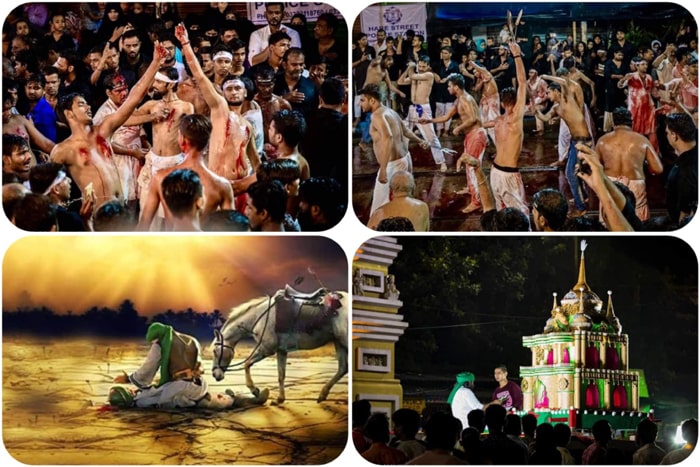
[dropcap]I[/dropcap] remember the tremendous tension that I went through as SDO Barrackpur and Magistrate in charge of “Muharram” at Loha Gate in Agarpara in 1978 — as oceans of frenzied humans went all around me, lashing and bleeding themselves with whips, chains and fighting dangerously swords — crying “Ya Hassan, Ya Hussain”! It continued through the evening and night. Though there were grievous and other (self-inflicted) injuries, I could report early in the morning that it was “peaceful” and “law and order under control”.

This day, like today, is actually the day of Ashura on the 10th day of the month of Muharram, which we refer to mistakenly as “Muharram”.  It commemorates the martyrdom of Imam Hussain (Husayn), grandson of Prophet Muhammad, who was the third Imam of the Shia community.

History says that after the death of Hazrat Mohammad in 632 AD, disunity and disputes arose among the several warring Arab tribes that had come together. One was on who would be the next leader and how to select him — by consensus or follow the blood lineage of the Prophet, and both these options were tried out for the highest seat of Islam, called the Khalifa. Hazrat Abu Bakr was the first, and Hazrat Ali became the fourth Khalifa — after the two in between were assassinated — which shows how difficult the situation was.

The most terrible confrontation took place in 680 AD, when Imam Hussain and his 72 followers, including women and infants, were mercilessly slaughtered by a tyrannical ruler, Yazid — to stop the bloodline of Hazrat Muhammad from assuming the Khalifa. This led to the final rupture between those who swear by Hussain (and his pre-deceased brother Hassan), called Shias and the majority of Muslims, called Sunnis.

Shia Muslims consider this day as the darkest but holiest and mark the period with ceremonial mourning by recalling the pain of the last moments of those who fought and died for their principles. Their mourning reached its height on the day of Ashura, when they came out in processions, in black clothes, carrying tall decorated tazias,  beating their chests. Many practice very painful rites of self-flagellation — the type that I had shuddered to see in 1978, and again in 1979.

Several Sunnis also observe Ashura but they insist that the day is holy not only because of Karbala, but because the Prophet had observed this day. He honoured Prophet Moses or Musa Nabi, who miraculously parted the waters of the Red Sea on this day —  to lead his people out of bondage in Egypt.

We get written records as early as the 17th century, from Europeans in India that there were large public gatherings on Ashura at the towns of Hyderabad, Bombay, Lucknow, Dacca, Patna, Murshidabad, Hooghly and Calcutta, where the event was observed with solemnity. They were aghast to see the dangerous sword plays and blood in the massive processions.

Before ending, I must talk of just one remarkable Ashsura in Kolkata at Gol Kothi, in Chitpur — flashes of which are in 3 of these photos. It is so moving to see every one of the hundreds present at Gol Kothi literally howling and mourning the massacre at Karbala — as if their family members had been killed. Then, begins the chanting  “Ya Ali Asgar”— slow at first and then picking up in tempo and volume. Large boxes called ‘Tabut’, representing the coffins of the martyrs appear and are passed around, with everyone trying to carry or touch them.

‘Zuljanah’—Hussain’s horse, is mandatory and a beautiful white horse, all decked up, walks calmly through the frenzied crowd. This is followed by the crowd beating its chest most animatedly, while several men recreate the dying pain of the martyrs of Karbala by slashing themselves with razors, knives and whips. This is the painful ritual of ‘Zanjeera  Maatam’ that I described at Agarpara.

I am grateful to my cousin, Shaiqua Murshed, who pointed to the blog note with photos posted by Deepanjan Ghosh, made with help from Iftekhar Ahsan.

Incidentally, I have witnessed equally gory rituals of self-flaggelation among Hindus during Chark and Gajan and seen photos of blood and pain during the Catholic rites of Easter in the Philippines and Latin America. Religion has its own domain and faith is what matters.

The Power of Two: Kalpana and Hemant Soren to Energize Jharkhand’s Political Scene

0

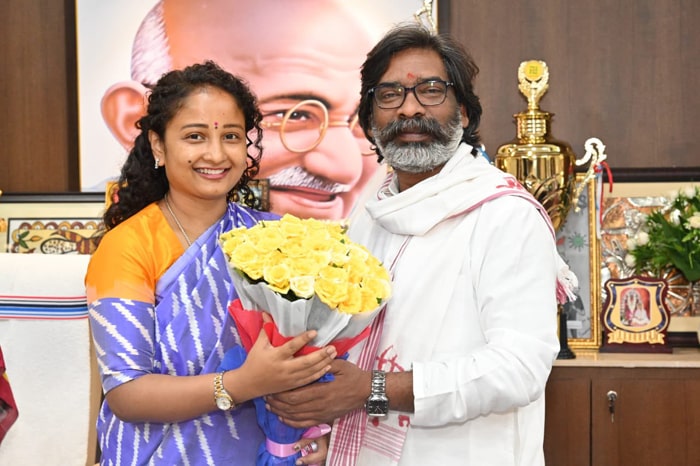
Ranchi: Despite the cries against dynasty politics in Jharkhand, the state now has a power couple: Hemant and Kalpana Soren. Together, they are poised to strengthen Jharkhand Mukti Morcha and the INDIA bloc in the upcoming assembly polls.

Present partners in politics

Apart from the husband-wife Soren duo, another example is Himachal Pradesh chief minister Kamlesh Thakur and Sukhvinder Singh Shukhu, who are both members of the same assembly house. In the 18th Lok Sabha, Akhilesh Yadav and Dimple Yadav were notable for both being elected to the lower house of the Indian parliament.

However, the story of Hemant and Kalpana Soren is different from all other power couples in Indian political history.

Not the usual power couple

Kalpana Soren, not your typical power couple member, entered politics during a crisis in her party.

She won her first election, a bypoll from Gandey assembly segment, when her husband, the former chief minister of Jharkhand was in jail.

Kalpana Soren married Hemant Soren some 18 years ago. She remained a homemaker, nurturing their two children.

Political observers have noted that Kalpana Soren, who speaks four languages—Hindi, English, Santhali, and Odia—and holds an MBA, is a skilled orator. As an empowered woman, Kalpana Soren not only contested her election but also campaigned for INDIA bloc candidates across all fourteen Lok Sabha seats in Jharkhand in the absence of the party’s working president, Hemant Soren. The alliance improved its tally from 2 to 5 in the state.

The power of two

For any political party, the synergy between two individuals is more effective. And it is time for Jharkhand Mukti Morcha to get the benefits of husband-wife duo.

Recently, after taking oath as chief minister, Hemant Soren toured Delhi and met President Draupadi Murmu, Prime Minister Narendra Modi, Sonia Gandhi and Sunita Kerjriwal. Kalpana Soren was with Hemant Soren while meeting everyone, except PM Modi. The duo also toured Varanasi.

Hemant Soren, who had single-handedly campaigned in the 2019 assembly election for Gathbandhan, now has a leader, who can accompany him or even run the party’s campaign separately. Hemant Soren can campaign along with Rahul Gandhi and Tejashwi Yadav while Kalpana can team up with Priyanka Gandhi and Sunita Kejriwal and help sail through the INDIA bloc in the state.

It would be interesting to watch how the JMM or INDIA bloc use the couple during the assembly polls.

Ghetto Tech Wizards: How Ijma International is Revolutionizing Education

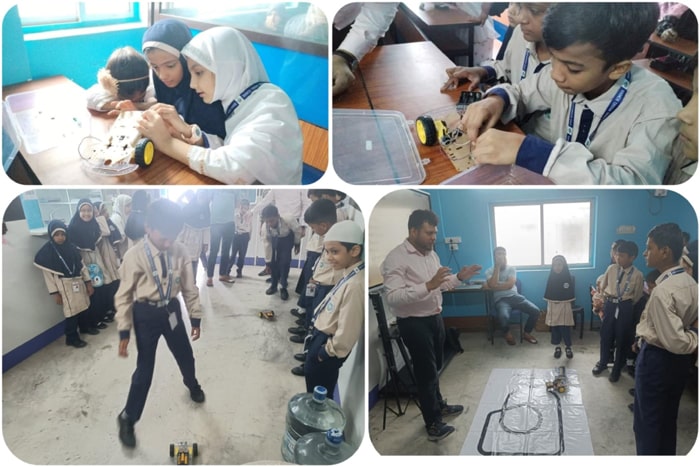
Kolkata: When you first see 8-year-old Mohammed Ashfaque or 7-year-old Mariam Adil, along with other students assembling robotic cars, understanding the processes to build them, and participating in races to see how they work practically, you might think the students are from one of the top-notch schools in the city. But in reality, they study at Ijma International Model School, which is not only small but also situated in the lanes of Topsia, a Muslim ghetto in Kolkata.

However, meeting experts from different fields of international repute to learn new technology at a tender age has become a routine for them.

The boys wearing skull caps and the girls wearing hijab speak fluent English. They were seen listening to the administrators during this weekend..

“As you have learned to assemble robotic cars and tried to understand their engineering, we will also give you an idea of how cars move without drivers and how WiFi-enabled cars function,” said Nafis Ahmed Khan to the excited children. Khan added, “The purpose of the workshop was to give them an insight into robotic cars, how their connections work, and how to make battery connections so that they have a better understanding of how controlled cars work.”

The pupils not only took part in the two-hour-long robotics workshop but their curriculum follows CBSE (Central Board of Secondary Education) Board too. They learn mathematics, science, and computers as well as the Arabic language and Deeniyat. Every classroom has air conditioners, and there is a smart big screen for students. The school not only holds workshops on the latest technologies but also brings experts from different fields to interact with curious young minds.

Experts visit

There is a long list of experts from different fields from India and abroad, including Professor Ewaz Al-Jum’aa Al-Laila from King Saud University, Riyadh, Saudi Arabia; Mufti Obaidulla Asadi, Chairman of the Jurisprudence Committee, Islami Fiqh Academy; Muhammad Mushtaque Nadwi, Judge in the lower court, Doha, Qatar; Maulana Jaafar Hasani Nadwi, Deputy General Secretary, Nadwatul Ulama, Lucknow; Wing Commander (Retd) Shamim Akhtar; NUJS Dean Sarfaraz Ahmed Khan; Advocate Khurshid Alam; Mamoon Akhtar, Founder and Chairman of Samaritan Group; Wali Rahmani, Founder of Umeed Academy; Chartered Accountants Faiz Anwar and Asif Ali; NEET Basket Founder Noor Alam; and social activists Manzar Jameel, Athar Firdausi, Umar Owais, Abu Talha Jamal Qasmi, Manzar Imam, and Alam Jamshed, who have met the kids from time to time over the last two years.

“Our students will compete with any other school’s children. We are preparing them so they can remain ahead in every aspect. The future belongs to Artificial Intelligence (AI), so these kids, when they grow up, will not only be well-versed with the latest technology but will also be able to think beyond it and may contribute something new to mankind,” the director, Dr Sarfaraz Adil, told eNewsroom. Dr Sarfaraz revealed the school’s plan to have a robotics lab in the school.

Role of Ijma Charitable Trust

Starting in the year 2023, the classes range from Nursery to 3rd grade. It has around 100 students. Run under the Izma Charitable Trust, it also has a provision for giving scholarships to 20 percent of the total students for each session. Ten percent can get a half-freeship in the fees, and the other ten percent can get a full freeship. “We have a plan to run the senior secondary school, and we have got land for this as well,” added the director.

Message for Parents

Mariam Adil is the daughter of the director. Her presence, according to the director, gives a message that unlike other small schools, the sons and daughters of the faculty also study here. This move will make parents confident about the fact that there will be no compromise in the education imparted at the school.

Emergency Revisited: Constitutional Amendments Needed to Prevent History Repeating

0

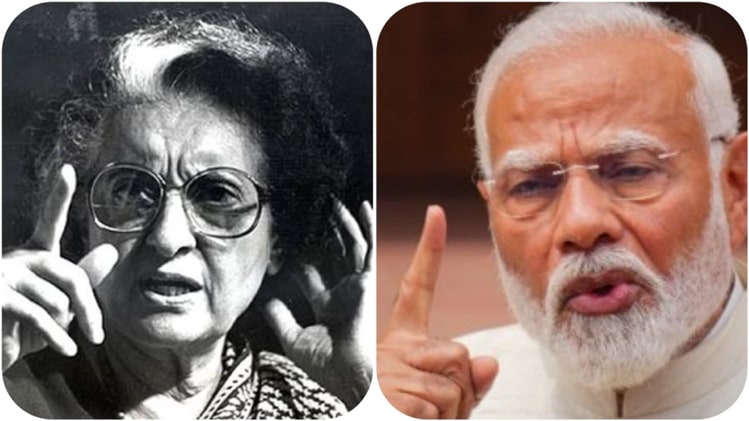
[dropcap]T[/dropcap]he history of this country is woven around building narratives and myths around popular figures. A lot has been said and written about the imposition of Emergency on the intervening night of June 25th-26th 1975 by the then Prime Minister Mrs Indira Gandhi under article 352 of the Constitution. So, the emergency was not imposed outside the constitution but very much through a constitutional provision and not by ‘murdering’ it. It might have been an immoral act or undemocratic but it was not unconstitutional as it was part of the constitution. I hope that day an honest appraisal of the emergency and a proper scanning of the heroes who enjoyed power post-emergency after Indira Gandhi was defeated in the Parliamentary elections. Researchers and historians must find out the truth.

There needs to be a detailed analysis of Justice Jagmohan Lal Sinha”s verdict against the prime minister. Did he intentionally call her to Court to humiliate or embarrass her? We have never seen such a case again even when it is a well-known fact that ruling parties often misuse bureaucracy and government machinery. Was Indira Gandhi the only leader who misused power and all others are too democratic to misuse it? Can any court do such a thing in today’s time? If a court gives a judgment against any powerful leader what will the government do? Was this a normal decision or was there a conspiracy to derail the government and create anarchy?Actually, the 975 crisis is a lesson for all. For political parties, for judiciary, for media as well as for the government.

What could the government do when Jai Prakash Narain called for a total revolt against the government from the police and armed forces? Was that not an act of inciting a rebellion? Indira Gandhi could or should have initiated a political dialogue but somewhere she failed to rise on the occasion and depended too much on a coterie that just found ways and means to legitimise her acts particularly that of her son Sanjay Gandhi.

We also need to understand the political ideology of forces opposed to Indira Gandhi.

Who was Morarji Desai and how did he become prime minister instead of Babu Jagjivan Ram? The whole Janata experiment failed because of overambitious leaders and their rigidities in humiliating Mrs Gandhi. If Indira had failed in politically handling the crisis, Janata leaders failed miserably and believed in tit for tat.

We need to go a bit earlier to the 1970s when Indira Gandhi made some extremely radical and revolutionary decisions. Land Distribution was one major factor. Implementation of reservation was another important decision. Nationalisation of Banks and insurance companies. We were doing away with the privy purses of the erstwhile Raja Maharajas. Now, remember, who was opposed to the Nationalisation of Banks and strengthening of the public sector? Yes, It was Moraraji Desai, who later became Prime Minister. Don’t we understand that the 1971 Indo-Soviet Peace Treaty which actually helped India from any further Chinese aggression and ultimately helped create Bangladesh was always a bone of contention? So, most of these self-proclaimed socialists had a pro-American slant. World over socialism has an inherent link with Marxism and left politics and before Lohia and Jai Prakash, there was a leader of great courage of conviction, named Acharya Narendra Dev, a scholar on Buddhism but completely forgotten and ignored by the Samajwadis today, many of them might not even heard. Why did socialism in India take a pro-American turn? Does the 1977 uprising against Indira Gandhi have any linkage with those who never wanted Indo-Russia friendship?

Do we know that despite so much noise, the Janata Party won merely 295 seats and the Congress under Indira Gandhi won 154 seats? There was a sharp difference between the voting patterns of North and South. Indira Gandhi lost RaeBareli seat and Sanjay Gandhi was defeated in Amethi but Mrs Gandhi returned to Parliament after winning from Chikmanglur in Karnataka.

Now what was the reason for Indira Gandhi’s defeat in 1977? I can bet it. The reason was not the detention of political prisoners but mostly the compulsory sterilisation campaign in the name of family planning and this was under instructions of Sanjay Gandhi. It was resented by people vehemently. The second issue was the highhandedness of government officials in removing ‘encroachments’. Both these actions of highhandedness actually hurt and impacted negatively, the Congress’ core vote bank, the scheduled castes and Muslims. The results were obvious. Congress lost their support.

Interestingly, Sanjay Gandhi’s anti-sterilisation initiative as well as his bulldozing at Turkman Gate on May 31st, 1976 got the biggest support from RSS and Jan Sangh. Congress paid the price of Emergency due to Sanjay Gandhi’s highhandedness against Muslims as well as other marginalised communities.

Indira Gandhi brought secularism and socialism into the Constitution and also added article 51a, our constitutional duties, an important point.

Emergency was a wrong decision politically for a leader who had become immensely popular and was slowly pushing her son Sanjay Gandhi for the leadership issue. She was too dependent on her and in haste to become Supreme Leader, Sanjay created an intimidating environment. Rather than handling the discontent against the government politically, he felt they needed to be dealt with almost like criminals. It resulted in widespread anger against the party in north India.

Remember, the Janata leaders could not build anything and the two years they focused only on humiliating Indira Gandhi. The people of India did not take it lightly. The Janata government failed due to its contradictions. RSS became the point of difference. It resulted in snap polls in 1980 and the people of India gave Indira Gandhi and Congress party one of the biggest mandates. Congress won 353 seats and Indira Gandhi won not only from Raibareilly but also from Medak in Andhra Pradesh at that time.

We must remember one thing. It is time for political parties to understand that people don’t like highhandedness and they punished Congress for that but the same people did not like Janata Party leaders humiliating Indira Gandhi and defeating them.

Emergency should not have been imposed but it needs to be seen whether such an important issue could have been dealt with by the judiciary in a different way. Will someone critique Justice Jagmohan Lal Sinha and Shanti Bhushan responsible for creating a constitutional crisis? I don’t know but I feel such important matters which can have far-reaching consequences need to be heard by a constitution bench so that the country is saved from anarchy and chaos.

Emergency was a political failure of Indira Gandhi, was an immoral act but not unconstitutional as those powers are still with the government. If we all are so upset about that then the government must bring a constitutional amendment and remove those powers so that no powerful leader can dare to impose it on people and their political opponents. Indira Gandhi brought the Foreign Contribution Regulation Act (FCRA) during an emergency to curtail political opposition and civil society and this law is still there to punish civil society organisations. Why can’t these remnants of the emergency be removed?

And lastly the most important part. The pro-American lobby led by Jai Prakash blamed Indira Gandhi for trying to create a Soviet Style dictatorial structure in India while Indira Gandhi blamed them for being funded by the CIA but one fact is there. India’s right wing always aspired that India has better relations with the West particularly with the United States. Indira Gandhi stood solidly on the foundation of Indo-Soviet Friendship. Fifty years after the emergency, the political opponents of Indira Gandhi are following her foreign policy and Russia India friendship is on a rock-solid foundation.

Let us not be caged in our past. Impartial understanding of history provides lessons for all so that our future generations do not face it. Politically, the issue is settled as Indira Gandhi never defended it. She was defeated by people and the same people brought her back by defeating her opponents who had come to power just two years back. Let us move forward and focus on issues concerning the nation.

সত্য, প্রেম এবং অহিংসা: হিন্দু ধর্মের রাহুল গান্ধীর দৃষ্টিভঙ্গি

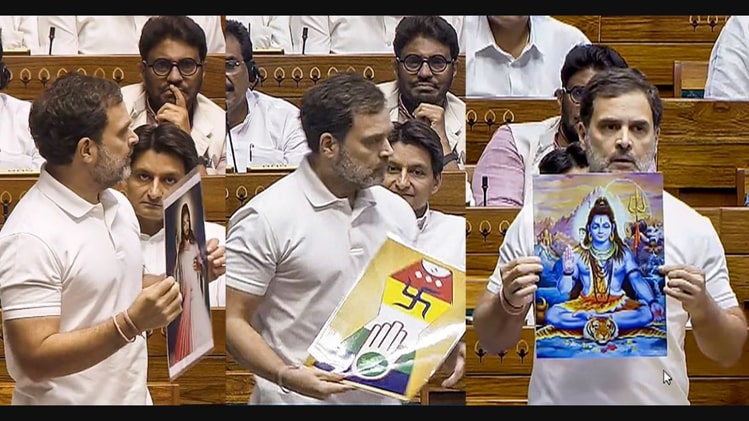
সাম্প্রতিক লোকসভা নির্বাচনের ফল প্রকাশের পর সংসদ এমন এক জায়গা হয়ে উঠেছে যেখানে সত্যি সত্যি বিরোধী স্বরের পরিসর রয়েছে। রাষ্ট্রপতির ভাষণ নিয়ে বিতর্কের পর লোকসভার বিরোধী দলনেতা রাহুল গান্ধী জবাবি ভাষণে দেশের বিভিন্ন সমস্যা তুলে ধরেছেন। সেই ভাষণের একটি অংশ, যা কার্যবিবরণী থেকে সম্ভবত ইতিমধ্যেই মুছে ফেলা হয়েছে, ছিল হিন্দুধর্মের প্রকৃতি সম্পর্কে। রাহুলের মতে, হিন্দুধর্মের ভিত্তি হল সত্য ও অহিংসা। ‘ভারত অহিংসার দেশ, ভয়ের দেশ নয়। আমাদের সমস্ত মহাপুরুষ অহিংসার কথা এবং ভয়কে জয় করার কথা বলেছেন।’ একথা বলার পর বিজেপি সাংসদদের বেঞ্চের দিকে আঙুল তুলে রাহুল যোগ করেন ‘অথচ যারা নিজেদের হিন্দু বলে, তারা সারাদিন হিংসা, ঘৃণা আর অসত্য বলে বেড়ায়।’

তারপর থেকে বহু সাধু, সন্ন্যাসী রাহুলের বিবৃতির প্রতিবাদ করেছেন। আমেদাবাদের কংগ্রেস দফতরের উপর আক্রমণ চালানো হয়েছে, রাষ্ট্রীয় স্বয়ংসেবক সঙ্ঘ (আরএসএস) ও তার সাঙ্গোপাঙ্গরা বলছে রাহুল হিন্দুদের সহিংস বলেছেন ইত্যাদি। অন্যদিকে রাহুল তাঁর বক্তব্যের ব্যাখ্যা দিয়েছেন। আরএসএসের আদর্শে উদ্বুদ্ধ ব্যক্তিরা এই সুযোগে বলে বেড়াচ্ছেন যে জওহরলাল নেহরু থেকে শুরু করে রাহুল পর্যন্ত কারোর আদর্শ দেশের বাস্তবতায় সম্পৃক্ত নয়। তাঁদের মতে নেহরু, রাহুল প্রমুখ কেবল সংখ্যালঘুদের নিয়ে কথা বলেন ভোটব্যাঙ্ক অক্ষত রাখার জন্য।

হিন্দুধর্মের যে মানবতাবাদী ব্যাখ্যা রাহুল দিয়েছেন, ইন্ডিয়া ব্লকের অনেকেই তার পক্ষে দাঁড়িয়েছেন। এই মুহূর্তে হিন্দুধর্ম আর হিন্দুত্ব শব্দ দুটোর ব্যবহারে তফাত রাখা হচ্ছে না। যেমন উদ্ধব ঠাকরে বলেছেন হিন্দুত্ব সম্পর্কে তাঁর মতামত রাহুল যা বলেছেন (হিন্দুধর্ম সম্পর্কে) তার অনুরূপ। আরএসএস মতাদর্শে বিশ্বাসীরা নেহরুর সাম্প্রদায়িকতাবিরোধী অভিযানের সমালোচনা করে সেটিকে আরএসএসের বিরুদ্ধে অভিযান হিসাবে চিহ্নিত করেন! তাঁরা তৎকালীন রাষ্ট্রপতি রাজেন্দ্র প্রসাদের সোমনাথ মন্দিরের উদ্বোধন করার বিরোধিতা করার জন্যেও নেহরুর নিন্দা করেন। তাঁদের বক্তব্য, আরএসএসের হিন্দুত্ব দয়ানন্দ সরস্বতী, স্বামী বিবেকানন্দ, বঙ্কিমচন্দ্র চট্টোপাধ্যায় এবং শ্যামাপ্রসাদ মুখার্জির উত্তরাধিকার। কিন্তু প্রকৃতপক্ষে আরএসএসের আদর্শের সঙ্গে দয়ানন্দ আর বিবেকানন্দের আদর্শের সম্পর্কে মোটেই খুব জোরালো নয়। ওই নামগুলো ব্যবহার করে আরএসএস শাক দিয়ে মাছ ঢাকার মত করে নিজেদের আদর্শ লুকিয়ে রাখে।

হিন্দু শব্দটিই বেদ, উপনিষদ, গীতা বা মনুস্মৃতির মত পবিত্র হিন্দু গ্রন্থগুলিতে নেই। শব্দটি চালু করেছিল সিন্ধু নদের পশ্চিম দিক থেকে আসা মানুষেরা, যাদের ভাষায় স-এর ব্যবহার সীমিত এবং স-এর উচ্চারণ হ-এর মত। ফলে সিন্ধু হয়ে দাঁড়ায় হিন্দু


হিন্দুধর্ম যেহেতু পয়গম্বর বা দেবদূতভিত্তিক ধর্ম নয়, সেহেতু একই কথার বহুরকম ব্যাখ্যা চালু আছে। হিন্দু শব্দটিই বেদ, উপনিষদ, গীতা বা মনুস্মৃতির মত পবিত্র হিন্দু গ্রন্থগুলিতে নেই। শব্দটি চালু করেছিল সিন্ধু নদের পশ্চিম দিক থেকে আসা মানুষেরা, যাদের ভাষায় স-এর ব্যবহার সীমিত এবং স-এর উচ্চারণ হ-এর মত। ফলে সিন্ধু হয়ে দাঁড়ায় হিন্দু এবং প্রাথমিকভাবে ওই শব্দের দ্বারা বোঝানো হত সিন্ধু নদ থেকে সমুদ্র পর্যন্ত বিস্তৃত অঞ্চলকে। এই অঞ্চলে প্রধানত যেসব ধর্মীয় প্রবণতা সেইসময় থেকে প্রচলিত ছিল সেগুলি হল বৈদিক ধর্ম (যাকে ব্রাহ্মণ্যবাদও বলা চলে), আজীবিক, তন্ত্র, নাথ, শৈব, বৌদ্ধ ধর্ম এবং জৈন ধর্ম।

পরে হিন্দু শব্দটি এই এলাকায় প্রচলিত আলাদা আলাদা ধর্মীয় প্রবণতাকে (বৌদ্ধ ধর্ম ও জৈন ধর্ম ছাড়া) একত্রে বোঝানোর মত একটি শব্দ হয়ে দাঁড়ায়। ব্রাহ্মণ্যবাদ বাদে অন্য প্রবণতাগুলিকে বলা হত শ্রমণবাদ। ব্রাহ্মণ্যবাদ আর শ্রমণবাদের মূল পার্থক্য হল, প্রথমটিতে বর্ণভিত্তিক এবং লিঙ্গভিত্তিক ক্ষমতার বিন্যাস ছিল। হিন্দুধর্ম শব্দটির উৎপত্তির চমৎকার ব্যাখ্যা করেছিলেন ডিএন ঝা, ২০০৬ সালের ভারতীয় ইতিহাস কংগ্রেসে তাঁর সভাপতির ভাষণে। তিনি দেখিয়ে দেন যে ‘অবশ্যই প্রাক-উপনিবেশ ভারতে শব্দটির ব্যবহার ছিল, কিন্তু অষ্টাদশ শতকের শেষদিক বা উনিশ শতকের প্রথম ভাগের আগে নয় ব্রিটিশ পণ্ডিতরা এই শব্দটি গ্রহণ করেননি।’ তা হওয়ার পর থেকেই এর ব্যাপক ব্যবহার আরম্ভ হয়। তখন থেকেই এই উপমহাদেশের শিখ, জৈন, বৌদ্ধ, মুসলমান ও খ্রিস্টান ছাড়া সকলের জন্যই ঐ শব্দটি ব্যবহৃত হতে থাকে।

যেহেতু কোনো উঁচু পাঁচিল তোলা ছিল না, সেহেতু ব্রাহ্মণ্যবাদী ধারা বেদ ও মনুস্মৃতিকে পবিত্র গ্রন্থ হিসাবে তুলে ধরে। হিন্দুধর্ম সম্পর্কে প্রধান দৃষ্টিভঙ্গিগুলিরও বৈচিত্র্য ছিল। আম্বেদকরের মতে হিন্দুধর্ম ব্রাহ্মণ্যবাদ দ্বারা নিয়ন্ত্রিত, যা আসলে বর্ণাশ্রম। সেই কারণেই তিনি মনুস্মৃতি পুড়িয়েছিলেন। অন্যদিকে মহাত্মা গান্ধী নিজেকে বলতেন সনাতনী হিন্দু এবং ইয়াং ইন্ডিয়া-তে ৬ অক্টোবর ১৯২১ তারিখে লেখেন ‘হিন্দুধর্ম সকলকে নিজের বিশ্বাস বা ধর্ম অনুযায়ী ঈশ্বরের উপাসনা করতে বলে, তাই সমস্ত ধর্মের সঙ্গেই শান্তিতে বসবাস করে।’ আন্তঃধর্ম সম্পর্ক এবং বহুত্ববাদের এ এক অনন্য ধারণা। এখন রাহুল হিন্দুধর্ম সম্পর্কে বলতে গিয়ে সত্য, প্রেম এবং অহিংসাকেই হিন্দুধর্মে প্রাণ বলে গণ্য করছেন।

অবশ্যই প্রাক-উপনিবেশ ভারতে শব্দটির ব্যবহার ছিল, কিন্তু অষ্টাদশ শতকের শেষদিক বা উনিশ শতকের প্রথম ভাগের আগে নয় ব্রিটিশ পণ্ডিতরা এই শব্দটি গ্রহণ করেননি। তা হওয়ার পর থেকেই এর ব্যাপক ব্যবহার আরম্ভ হয়।


হিন্দুত্ব শব্দটি চালু করেন চন্দ্রনাথ বসু, ১৮৯২ সালে। তিনি একে আধ্যাত্মিক উচ্চতা অর্জন করার সঙ্গে যুক্ত করেন। রাজনৈতিক পরিসরে হিন্দুত্ব শব্দটিকে নিয়ে আসেন এবং সংজ্ঞায়িত করেন বিনায়ক দামোদর সাভারকর, এসেনশিয়ালস অফ হিন্দুত্ব (১৯২৩) বইতে। তাঁর হিন্দুত্বের ভিত্তি হল আর্য জাতি, পবিত্র ভূমি (সিন্ধু নদ থেকে সমুদ্র পর্যন্ত) এবং সংস্কৃতি (ব্রাহ্মণ্যবাদী)। সাভারকর বৌদ্ধ ধর্মের অহিংসার অতি বড় সমালোচক ছিলেন সেটিকেই এবং ভারতের দুর্বলতার কারণ হিসাবে চিহ্নিত করতেন। এটি ইতিহাসের অত্যন্ত গোলমেলে পাঠ। কারণ বৌদ্ধ ধর্ম যখন ভারতে তুঙ্গে, তখন আধুনিক অর্থে দেশ বলতে যা বোঝায় তার কোনো অস্তিত্ব ছিল না। যদি আমরা সাম্রাজ্যগুলিকেও দেশ বলে ধরি, মনে রাখতে হবে, সম্রাট অশোক বৌদ্ধ ধর্ম গ্রহণ করেছিলেন এবং তখন তাঁর সাম্রাজ্য প্রাচীন ভারতের সবচেয়ে বড় সাম্রাজ্য ছিল। তিনি হিন্দু বলতে বুঝিয়েছিলেন এমন একজনকে যে এই ভূমিকে নিজের পিতৃভূমি এবং পবিত্র ভূমি বলে গণ্য করে।

আরএসএস সাভারকরের পদাঙ্ক অনুসরণ করে ইসলাম ও খ্রিস্টধর্মকে বিদেশি ধর্ম বলে এবং প্রাচীন গ্রন্থগুলিকে (যেমন মনুস্মৃতি) মান্য বলে তুলে ধরে। আরএসএস হিংসাকে নিজেদের বিশ্বাসের অঙ্গ করে তুলেছে এবং তাদের সদর দফতরে নানারকম অস্ত্রশস্ত্র রাখা আছে। দশেরায় সেগুলির পুজো করা হয়। আরএসএস শাখাগুলি বখতিয়ার ও আলাউদ্দিন খিলজি, বাবর, ঔরঙ্গজেবের মত মুসলমান রাজাদের খলনায়ক হিসাবে তুলে ধরে এবং রাণাপ্রতাপ, শিবাজি ও পৃথ্বীরাজ চৌহানের মত হিন্দু রাজাদের নায়ক হিসাবে দেখিয়ে ঘৃণা ছড়ানোর কাজ করেছে। এই সংগঠন দেশের স্বাধীনতা আন্দোলনেরও সমালোচক, কারণ তাতে সব ধর্মের মানুষ অংশগ্রহণ করেছিলেন। আরএসএসের দাবি হল, তারা হিন্দুদের প্রতিনিধি কারণ তারা মন্দির ধ্বংস, গোমাংস খাওয়া এবং বলপূর্বক ধর্মান্তরের মত আবেগপ্রবণ বিষয় নিয়ে কথা বলে। আরএসএস প্রচারিত ঘৃণার দিকে আঙুল তুলেছিলেন স্বয়ং সর্দার বল্লভভাই প্যাটেল, যখন ১৯৪৮ সালে তিনি বলেন ‘ওদের সমস্ত বক্তৃতা সাম্প্রদায়িক বিষে ভর্তি ছিল। সেই বিষের চূড়ান্ত ফলাফল হিসাবে দেশকে গান্ধীজির অমূল্য জীবন আহুতি দিতে হল (All their speeches were full of communal poison, as a final result of the poison, the country had to suffer the sacrifice of the invaluable life of Gandhiji)।’

সম্রাট অশোক বৌদ্ধ ধর্ম গ্রহণ করেছিলেন এবং তখন তাঁর সাম্রাজ্য প্রাচীন ভারতের সবচেয়ে বড় সাম্রাজ্য ছিল। তিনি হিন্দু বলতে বুঝিয়েছিলেন এমন একজনকে যে এই ভূমিকে নিজের পিতৃভূমি এবং পবিত্র ভূমি বলে গণ্য করে।


মহাত্মা আর রাহুলের মত নেতারা যেখানে হিন্দুধর্মের মানবিক দিকগুলিকে আরও প্রসারিত এবং বর্ধিত রূপ দিয়েছেন, সেখানে সাভারকর-আরএসএস ঘৃণা এবং তার ফলস্বরূপ হিংসার পথে হেঁটেছে। একদিকে আম্বেদকর হিন্দু জীবনচর্যার উপর ব্রাহ্মণ্যবাদের আধিপত্যের বিরোধিতা করেছেন, অন্যদিকে মহাত্মা থেকে রাহুল পর্যন্ত অনেকে হিন্দুধর্মে এক অন্তর্ভুক্তিমূলক ও অহিংস অর্থ খোঁজার চেষ্টা করেছেন।


এটি ইংরেজিতে প্রকাশিত প্রতিবেদনের একটি অনুবাদ।


Critic, Conservationist, Changemaker: Jawhar Sircar’s Impactful Journey

0

Kolkata: Bengal has long been a cradle of intellectuals, contributing many great minds to India’s cultural and political landscape. Among these luminaries is Jawhar Sircar, a Rajya Sabha member from Bengal who stands out for his modesty and intellectual vigor. A bureaucrat-turned-politician, Sircar has an impressive background, having served as CEO of Prasar Bharti and as a distinguished officer of the Indian Administrative Service (IAS).

Sircar’s journey from bureaucracy to politics has been marked by a commitment to public service and intellectual discourse. As a prolific writer and a regular participant in city debates and seminars, the public intellectual brings a sober and thoughtful presence to discussions. His articles, published in prominent Indian media outlets such as The Indian Express, The Wire, and The Quint, reflect his deep understanding of various issues.

At 72, Sircar’s interests extend beyond politics. He is a nature lover and photographer, often sharing stunning images captured during his morning walks or travels to significant destinations. His Facebook posts, which offer detailed insights into the background of various Indian festivals, are well-received by his followers. Whether it’s a major celebration or a lesser-known festival, Sircar meticulously documents and shares the cultural significance, making his social media presence both informative and engaging.

Jawhar Sircar’s July 1 speech

The Xaverian remains deeply connected to his roots. Unlike many MPs who restrict their appearances to high-profile events, Sircar is a familiar face at smaller, yet meaningful gatherings in the city. His writings often focus on heritage conservation and giving voice to individuals who are overlooked by mainstream media. His accessibility and willingness to engage with the public are rare qualities among politicians today.

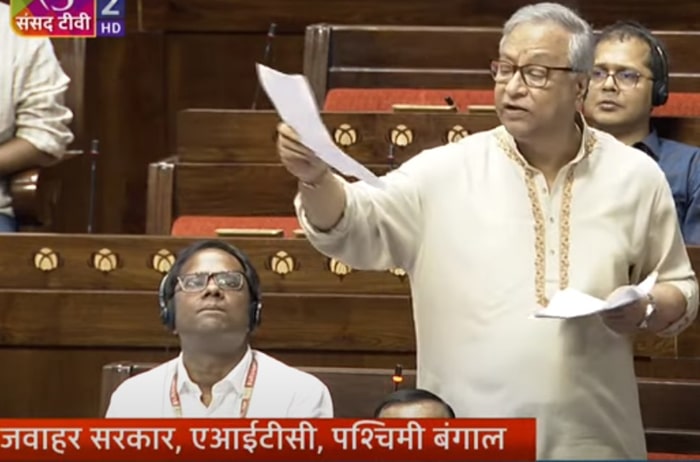
In his role as a Rajya Sabha MP, Sircar has made significant contributions. On July 1, during the Motion of Thanks for the President’s Address, he delivered a compelling speech lasting over 15 minutes. He addressed critical issues such as the potential risks of implementing three new criminal laws (BNS, BNSS, and BSA), the need for prioritizing rail safety over bullet trains, and the government’s mismanagement of public funds to cover corporate losses and frauds.

His performance in the Rajya Sabha has been exemplary. According to PRS India, Sircar outperforms his peers on all important parameters, including attendance, participation in debates, and the number of questions asked. His scores surpass the national average, underscoring his commitment and effectiveness as a parliamentarian.

Jawhar Sircar as Rajya Sabha MP

Rajya Sabha MP Jawhar Sircar TMC IAS

When Sircar, the former CEO of Prasar Bharti, saw that Prasar Bharti had changed its logo color to saffron, he was one of the few voices to speak out against it, perceiving it as the saffronisation of the institution. His career in bureaucracy, spanning 42 years, was marked by dedication and service.

Sircar’s appeal extends across party lines. Despite being a former bureaucrat and a current Rajya Sabha member, he remains approachable and engaged with the public.

“We have also heard that he follows up on cases that he makes a note of and tries to get the work done, which is a rare thing among politicians these days. He shares good bounds with present bureaucrats and intellectual circle” says Bimal Sharma, a neighbor.

However, Sircar’s outspokenness has not been well-received at times by opponents as well as by members of his own party. As one of the harshest critics of Prime Minister Narendra Modi’s policies, he frequently faces trolling from the BJP IT Cell. Nonetheless, he continues to raise critical questions on the microblogging site. In 2022, he stirred the political waters further by publicly criticizing a faction of his own party, the TMC, calling it “completely rotten” and hinting at a possible departure from politics. His frustration was evident following the arrests of TMC leaders Partha Chatterjee and Anubrata Mondal on corruption charges, with Chatterjee serving as the education minister at the time.

Truth, Love and Non-Violence: Rahul Gandhi’s Vision of Hinduism

0

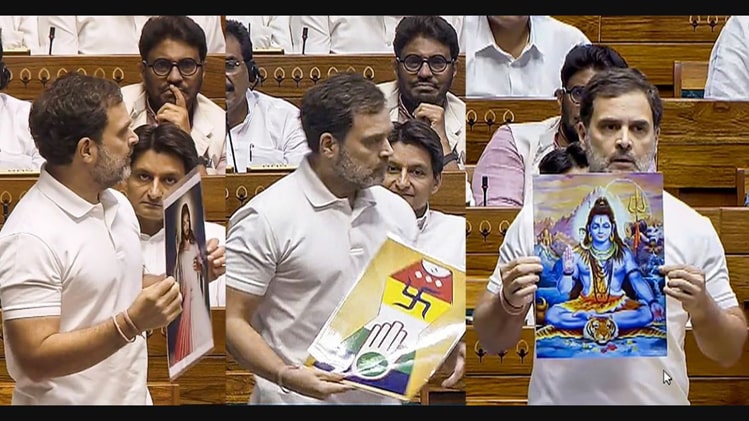
[dropcap]A[/dropcap]fter the mandate of the recent Lok Sabha elections (2024), the parliament has become a real ground where the voice of the opposition also has space. In the debate following the President’s Address, Rahul Gandhi, the Leader of opposition responded by outlining the various problems facing the country. One part of his speech, which probably has been expunged from the proceedings related to the nature of Hinduism. As per him, Hinduism is based on truth and non-violence. “India is a country of non-violence, and not of fear. All our great men have spoken about non-violence and overcoming fear.” Gesturing towards the benches of BJP MPs, Gandhi added: “Those who call themselves Hindus speak all day about violence, hate and untruth.”

Since then many protests by Sadhus have taken place against Rahul’s statement. In Ahmedabad, the Congress office was attacked. RSS Combine is spreading that Rahul has called all Hindus violent etc. On the other side, Rahul has elaborated that what he means by Hinduism is based on truth, nonviolence and love. RSS ideologues are taking a sweep that Nehru to Rahul Gandhi’s ideology is out of touch with reality. As per them, they have restricted only to minority questions to preserve their vote bank.

As such from the INDIA block many have stood with Rahul’s elaboration of the humanistic view of Hinduism. There is some overlap between the use of the word Hinduism and Hindutva currently. As Uddhav Thackeray said his views on Hindutva are the same as Rahul elaborated (about Hinduism). RSS ideologues also criticize Nehru for starting his work of Sampradayikata Virodhi Abhiyan (Campaign against communalism) as being directed against RSS! They also take Nehru on for opposing President Rajendra Prasad’s inauguration at the Somnath temple. They claim that RSS Hindutva derives from Dayanand Saraswati, Swami Vivekanand, Bankim Chandra Chatterjee and Shyama Prasad Mukherjee. As such RSS ideology does not have much to do with the ideologies of Dayanand Saraswati and Swami Vivekanand, except using their names to cover their ideology.

As Hinduism is not a prophet-based religion many interpretations of the same have been used. The very word Hindu is missing in the Holy Hindu scriptures, Vedas, Upanishad, Gita or Manu Smriti. The word was coined by those coming from the West of Sindhu, for whom the word S was used in a restricted manner and for S they used to pronounce H. Sindhu became Hindu and the word initially denoted the area spread from Sindhu river to sea. The earlier religious tendencies prevalent here were Vedic religion (which also can be labelled as Brahmanism), Ajivikas, Tantra, Nath, Shaiva, Buddhism and Jainism in the main.

Later the word Hindu became a conglomerate of different tendencies (barring Buddhism and Jainism) prevailing here. Except for Brahmanism, the other tendencies were called Shramans. The main difference between Brahmanism and Shramanism was the presence of caste and gender hierarchy in Brahmanism. The construction of the term Hinduism has been well explained by historian DN Jha in his Presidential address at the Indian History Congress 2006. He points out “Of Course the Word (Hindu, added) was in use in pre-colonial India, but it was not before late eighteen or early 19th Century that it was appropriated by British scholars.” Since then it has found wider use. From here on the term was used for all in the subcontinent except for those who were Sikhs, Jains, Buddhists, Muslims and Christians.

As there were no rigid boundaries, the Brahmanical stream projected Vedas and Manusmriti as sacred scriptures. The major understandings of Hinduism also varied. For Ambedkar Hinduism is dominated by Brahmanism, a caste system. That’s what led him to burn Manusmriti. Mahatma Gandhi on the other hand called himself a Sanatani Hindu and wrote in Young India on 6th October 1921 “Hinduism tells everyone to worship God according to his faith or Dharma, and so it lives at peace with all the religions.” A unique concept for interfaith relations and pluralism! Now Rahul Gandhi while talking about Hinduism harps on truth, love and non-violence as being the core of Hinduism.

The word Hindutva was coined by Chandranath Basu in 1892 and linked it with the idealism of attaining spiritual heights. At the political level, the word Hindutva was introduced and defined by Savarkar in his book ‘Essentials of Hindutva’. (1923) His Hindutva is based on the Aryan race, this Holy land (from Sindhu to Seas) and Culture (Brahmanical). Savarkar was very critical of Buddhism’s non-violence and attributed India’s weakness to non-violence propagated by Buddhism. This is a warped understanding of our History. There was no country in the modern sense, and even if we grant Kingdoms equal to country we need to remember Emperor Asoka adopted Buddhism and his empire was the largest in Ancient India. He defined Hindu as one who regarded this land as his fatherland and Holy land.

RSS takes off from Savarkar and regards Islam and Christianity as foreign religions and upholds the ancient Holy Scriptures (Manu Smriti e.g.). RSS has made violence as part of its creed and its head office has an exhibition of various armaments, which are worshipped on the Dussehra day. RSS shakhas have spread Hate by demonizing Muslim kings like Khilji, Babar, and Aurangzeb and glorifying Hindu Kings like Rana Pratap, Shivaji and Prithviraj Chauhan. It had also been critical of the national movement as people of all religions participated in it. It claims to represent the Hindus, as it takes up emotive issues like temple destructions, Cow beef, and forcible conversions. The Hate spread by RSS was pointed out by none other than Sardar Vallabh bhai Patel after banning RSS in 1948, “All their speeches were full of communal poison, as a final result of the poison, the country had to suffer the sacrifice of the invaluable life of Gandhiji.”   

While leaders like Mahatma Gandhi to Rahul Gandhi have expanded and enhanced the humane aspect of Hinduism, the Savarkar-RSS have trodden the path of hate and consequent violence. While Ambedkar stands to oppose the Brahmanical domination of Hindu practice, Mahatma Gandhi to Rahul, is giving an inclusive and non-violent meaning to Hinduism.

Two Nations, One Friendship: The India-Russia Story

0

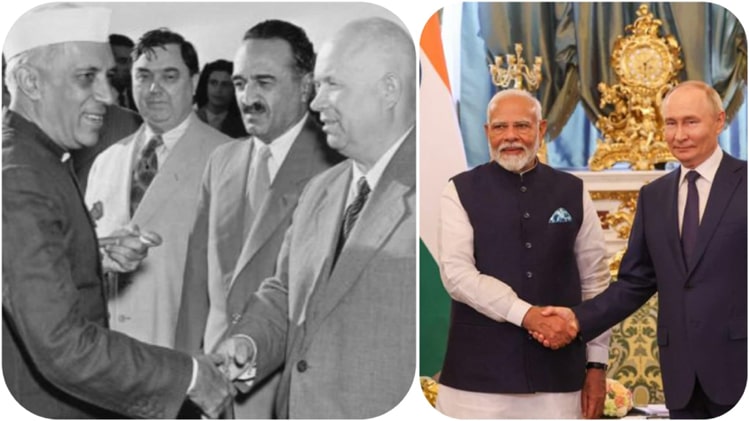
[dropcap]T[/dropcap]he grand welcome given to Indian Prime Minister Narendra Modis’ in Russia has not been taken kindly in the Western capitals because of various reasons. Many in India too are commenting on it in contempt without knowing the warm relationship between the two countries. Indian leaders always received a rousing reception in the Soviet Union. Jawaharlal Nehru and Indira Gandhi are highly popular names in Russia and all the CIS countries even today. One is the timing of it when NATO allies were meeting in Washington to celebrate 75 years of its formation. The question is why should India bother about it and why is the Western world expecting too much from India. India has been a traditional ally of Russia for a long and it is not a government-imposed thing but the people of both countries understand it. The fact of the matter is that India’s right wing was never comfortable with our ties with Russia. The Gujarat lobby particularly the business one felt that their interests were well built in maintaining relationships with the Western world. Then some liberals are promoted by various American ‘policy organizations’ to promote their interests in the name of ‘democracy’. Just think of a time when Indira Gandhi was taking Indo Russia’s friendship to a new level in 1971, she nationalised the banks and insurance companies, withdrew all the privy purses given to former crowns of different Riyasats and imposed Land Ceiling laws, redistributed land, strengthened Public sector undertakings and implemented reservation for scheduled castes and tribes. Who opposed all these measures? The corporate lobby is supported by Morarji Desai, Neelam Sanjeeva Reddy and others.

While Western liberals were crying foul against the Communist Soviet Union, the same governments were promoting China as a counterforce to the Soviets on one side and Taliban and Islamic fanatics in Pakistan on the other side. It is a fact that the entire global south opted to be part of the Non-Aligned Movement to save itself from the American bullying and standing with Soviet Russia.

The 1990s were the most crucial phase of world politics. In August 1991 there was a coup against Mikhail Gorbachev, the Secretary General of the Communist Party of the Soviet Union. That failed but soon there were revolts in many other republics that ceded from the Soviet Union. The Western world rejoiced that their bete noir was now crushed. They started promoting their interest in smaller countries and ignored all these so-called independent countries that were part of the former Soviet Union and were nursed by them. Still, the West wanted to make them hostile against Russia. The Russian Federation was still the world’s largest country and powerful but everyone enjoyed the ‘fall of the Communist Empire. Indian liberals too were happy as they felt the Indian establishment would be tilting more towards the United States and other Western countries. Most of them were speaking about Russia as if people were dying of hunger and malnutrition. Western commentators rejoice in mocking Russia when speaking about that country but those who have seen Moscow and other places can vouch that a metro in Moscow is far superior to that in New York. Moscow is truly a beautiful city.

Vladimir Putin may be termed as dictator and undemocratic but there is no doubt in saying that he has brought glory to Russia like a phoenix. It is a country full of confidence and prosperity. Russia’s actions against Ukraine were based on its national interest and to protect Russian-speaking people from what it alleged were the Nazis there. The fact that NATO has been trying to encircle Russia is a well-known fact. How can Indians forget that they did the same? Supporting China and then promoting Pakistan’s anti-India rhetoric was part of that attempt to encircle India too. Today, the West wants us to believe that Russia is a junior partner of China. In their hatred and contempt for Russia, they can go to any length even not asking for elections in Ukraine. How is Zelensky being allowed as leader of Ukraine when the man has arrested all the dissenters and political opponents? Russia tried to negotiate and withdrew its forces from Kiev but that was considered a weakness and now it seems NATO is preparing for a showdown with Russia which will be dangerous and only take us to World War III. The world can’t afford it but then you can not bring peace by humiliating Russia which is growing more powerful and has bigger acceptance globally right from Africa to Asia and Latin America.

Unfortunately in India, we all suffer from amnesia of the Western media propaganda about the word left and socialism and its relation with Russia. Even when the tide is turning in a different direction in Europe after the recent elections in France. In Britain too, left socialist forces will be strengthened in future. In India, we somehow have become victims of Western Propaganda as far as Russia is concerned. Narendra Modi just finished his trip to Russia. As usual, Russia gave him a huge welcome. Both the countries are playing their politics. Some are for their domestic constituency while for Russia it is addressing the global elite that Russia or Vladimir Putin is not a pariah. Frankly speaking, many of the comments in India about Russia suffer from hatred towards the left. Some of these experts feel as if Russia is suffering after the Americans and Europeans have put their sanctions on them. Well, these sanctions don’t even work for a country like North Korea. Every country has its strategy and North Korea too may be a matter of joke for us but look at their capital city Pyongyang which is beautiful and only shows that we should not make our opinion based on the Western media narrative.

The Western World defines communities, societies and people as per its conveniences and we have just been following it. Russia has been a global power and the world owes to them to defeat the Nazi forces of Hitler during the second world war.

The election of President Putin became a butt of jokes for everyone including political leaders. They forgot that Russia, even when it was the Soviet Union, never had the governance structure followed by the West. China too had a similar pattern for their governance structure. They have their critique about Western democracy, which is a fast-turning right controlled by the big-bag corporations. Democracy or not is an internal matter of Russia and they will deal with it but the fact is that Russia is the fastest growing economy and the World Bank itself has put it among the High Income Countries.

The fact is that Russia is a powerful country with enormous energy resources. It has no issue about land mass. It knows what is good for us. Most importantly, it has stood with India through thick and thin. The India-Russia friendship started immediately after our independence. Even during independence, a large number of freedom fighters got support from Russia.

Prime Minister Jawaharlal Nehru was highly impressed with the Soviet Union and Indira Gandhi gave it a new height. We all know how the Americans and Brits created a hostile environment in 1971 and it was the Soviet Union that came in open support of India during the War with Pakistan and the result was the creation of Bangladesh.

What I wish to state here is that the Indo-Russia relationship is time-tested. Of course, after the 1990s event when many republics broke away from Russia, the Western world and much of India felt that Russia was a gone case but Vladimir Putin has brought it back to new heights. Today, Russia is not isolated but helping create a multipolar world. With Mali-Niger-Burkina Faso throwing the French American forces out of their soil, we are witnessing a new wave of anti-colonial movement in Africa and Latin America. One can not ignore how the people’s résistance in Bolivia foiled a coup attempt by the military there against the President.

People of the global south now realise how in the name of democracy, the Western world created unrest in various countries and intervened. The issues of India will be resolved by the people of India and those trying to find its solution in Brussels or Washington will not succeed as it is the people in our states, in Uttar Pradesh, Bihar, Bengal, Tamilnadu elsewhere will decide what is good or bad for India. Let us not mock Russia and its support to India which is based on a historic relationship with two people. Don’t forget Raj Kapoor’s immortal ‘Mera Juta Hai Jaapani, Ye Patloon Englistani, Sar Pe Laal Topi RusiPhir Bhi Dil Hai Hindustani‘ still reverberating in the air in Russia. Awara Hoon is one of the most popular songs there. Russian literature has been hugely popular in India. So, this relationship is not merely based on military alliance but also cultural one. Except for the Western-dependent Indian urban elite, Russia remains in the heart of the rest of the working-class Indians who enjoyed the pro-people policies and programmes of the government.

Countries have the right to decide about their foreign policies. India is as much independent as Russia and both countries today are redefining their relationship. I am sure even if the governments change here and there this relationship will remain the same and grow further. It is similar to the Western World. The first visit of a British Prime Minister, normally, is to visit the White House, whether she is a Tory or a Labour. Let India and Russia celebrate their historic relationship which stands on rock solid foundations. Let us not mock it for our petty political considerations.

Celebrate the Indo-Russian friendship.