An IPS officer, whose passion lies in Urdu poetry

0

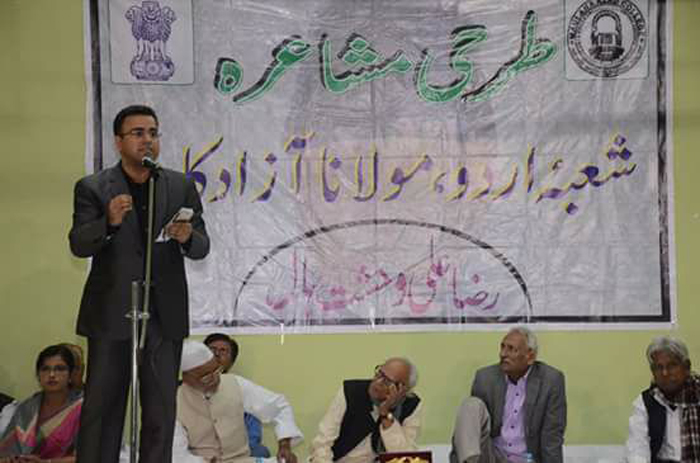
Kolkata: He is just forty, and is the deputy commissioner of Kolkata’s Special Task Force. But that is not his only introduction these days. Murlidhar Sharma, an Indian Police Service (IPS) Officer has just completed a book, which is a compilation of his Urdu poetry. Yes, you heard that right! Urdu, it is. Murlidhar Sharma, has burned his midnight oil to master Urdu zubaan (language).

Speaking to eNewsroom, Sharma says, “Even, as a child, I remember, I had this inherent curiosity for Urdu language. It was the sweetness of Urdu that appealed to me. I was also very fascinated by this language, where people wrote from other side of the page (Urdu is written from the right hand side, of the page, unlike other languages, which are written from the left hand side).”

Sharma, has a pen name too. “I write under the name of Taalib, it means the one with a hunger to learn. It was given to me by my ustad, who thought that I was really crazy to learn the language,”says the IPS officer, who is all set to publish his first book called Haasil-e-Sahranavardi (What is gained by wandering in a desert).

To understand his fascination for the language, one needs to know, that Sharma, has a strong connect with his roots. This becomes, evident, when he says, that his favourite colour is khakhi–the colour of his uniform and also the soil, that he calls maati. The IPS officer, was born into a humble family, in a small village called Mandi Adampur, near Hisar in Haryana. His hamlet happens to be a town, which had a lot of refugees from Pakistan’s Punjab area inhabiting it, from the time of partition. It was some of his Urdu speaking neighbours, in his village, who introduced a young Sharma to the world of Ghalib, Mir, Firaaq and Daag.

“The softness of Urdu words amid the rough Haryanvi language was like music to my ears. No wonder, I was fascinated towards it. However, all my attempts to master the language, failed. My friends at Jawahar Lal Nehru’s Urdu department did try helping me out, but I guess, I was destined to fulfill my dream in Kolkata,”says Sharma.

His passion was Urdu was so much that he even hired a maulana from a mosque that was bang opposite his police station to introduce him to a language that he had always loved. “Now, it’s obvious that I couldn’t hire a pandit to teach me Urdu. So, it had to be a maulana. My family had initial reservation towards me learning the language. But seeing my passion, they too surrendered,”he says with a laugh. He then adds, “You know what, you can’t link Urdu to a particular religion. It is an Indian language and can be learnt by any.”

Coming back to his favourite poets, he says, “Mir, is my favourite poet, as there is a certain mausiqi (music) in his poems. Also, I can relate myself with his writings. “Well, does, that mean he has no favourite in the contemporary poets? He says, “Well, its not like that. The present generation shayars (poets), are also good. You can’t compare classics and contemporary. The poets of today, can also create the same magic as Ghalib and Mir. But yes, the style has changed. And why not? Back then poets didn’t have Facebook or Twitter.”

Speaking, about poets of today, he mentions, “Urdu poetry is making a comeback. Events like Jashn-e-Rekhta, which just concluded in New Delhi is doing great in popularising works of Urdu poets.”

Sharma says, for him, writing poems is like jogging or eating. “I have to write a couple of verses daily. My poems are about life, they are not romantic. Though the first few that I wrote, as a youngster were all mushy,”he says with a chuckle.

Being a modern poet, who is very much into YouTube and other social media, he says, that contemporary poets don’t need a stage. “In the age of YouTube, who needs a stage? Also, when it comes to writing my poems I just keep them onto my smart phone.”

With the recent popularity that poet Hussain Haidry, has got via his YouTube upload, the officer does have a point. Times are changing for sure.
The story behind the Triple Talaq

0

Kolkata: Ahmed Ali (name changed), a senior police officer, in a fit of rage, pronounced talaq, talaq, talaq to the wife he loved dearly. Later in a bid to undo this error he changed his name and had nikaah with his wife again.

Instigated by his mother and sisters Shahryar Khan uttered the three words to his bride of a few months over the phone from the Middle East. Unable to come to terms with his own decision he returned home and coaxed an elderly man from his village to marry his ex wife, who was an orphan, with a plan to get the old man to divorce her so that he could marry her again. It is another matter that she opted to live with her second husband with dignity than test her destiny again.

Razia Bano was not happy with the way her in laws treated her and refused to go back after a trip to her parental home. She wanted a better life. Her brothers put a gun on her husband’s head and forced him to pronounce talaq.

Clearly, women are not the only suffers of the ignominy of the triple talaq. And, as weird as they sound, these are real life stories that are not rare occurrence either.

“The Quran has no provision for talaq of this kind,” says historian and scholar Dr Safoora Razeq. “You cannot give talaq in one sitting. It has to be over a period of three months or two menstrual cycles. And only when the couple cannot reconcile in the intervening period that the talaq becomes valid after the third and final pronouncement. Also, if the woman is pregnant at that time then also the talaq is void,” she explains.

Origin of triple talaq

Then why is the instant triple talaq, a common occurrence among the Muslims in India?

“There was no provision for instant talaq in the Quran. But later when Sharia laws began to be codified and four schools of jurisprudence emerged, Imam Hanifa, whose school of thought is followed in India, gave the talaq his seal of approval. However, the undeniable fact remains that our Prophet used to condemn it and such talaq never got his approval,” shares historian and social activist Md Sulaiman Khurshid.

Community divided on ban

While there is strong opposition to ban triple talaq, primarily because it is seen as an intervention into its personal affairs, the majority of women in the community are all for it. “The men and their family use the instant talaq as a threat and use it to harass and ill treat the wife. Even a woman in her 90s is not safe from this threat. Remember Shah Banu?” asks Nakahat Sultana Bano, lawyer and social activist.

There are women who oppose the idea of banning it. “It is accepted by our Sharia so even though it goes against my interest and it is a harsh view I will not support its ban,” says Tarannum Khanum. But she is quick to point out that men who give such talaq should be punished by the community, a view she shares with the well known Islamic scholar Dr Israr Ahmed.

“While debates and discussions on the topic are going round in circles no one seems to notice the safeguard against exploitation of women that is right there in practice, the nikahnama,” exclaims Ayesha Fatima.

“It is ironical that pre-nuptial agreements are getting popular in the modern world while Muslims today are readily forgoing theirs. They are talking about model nikahnama. But the nikahnama which is in use right now and which was introduced fourteen hundred years ago, can be used by women to dictate their own terms. Not only can she demand money, property and include any other clause she can also get the right to divorce!” shares Imam Walayat Hussain.

Patriarchy, the main culprit

So why are the women in this community being denied their legitimate rights? “Not only do the boy’s side of the family put social pressure on us not to put in any demands, even the girl’s side of the family prefer to keep those portions blank. So the bride ends up without getting any of her legitimate rights. Even when we try to prompt them to assert the rights we are told not to rake up the topic and let the nikah take place peacefully. In the villages at least we manage to get the sides to discuss but the situation in worse in cities. In fact the affluent and educated families are the most reluctant to let us tell the bride what her rights are,” shares Qazi Hakim Abdul Aziz.

“It is such a pity that Islam which became popular because it introduced revolutionary rights to women and promoted social equality is now either identified as a religion that suppresses women or produces terrorists,” rues aspiring actor Md Mansoor.

Dramatist and academician Zaheer Anwar puts things in perspective when he points out that this is not an easy matter. “Not all Muslim countries follow triple talaq. In fact one entire Surah in the Quran, Surah Nissa delves into the issue of women rights and their safety and security. So those having doubts would do well to read it and clear their doubts,” he says.

The good news is that now even the All India Muslim Personal Law Board (AIMPLB) is looking at the matter in light of the changing situation. “After their recent gathering in Kolkata talks are on among the AIMPLB members to re-orient the common practice because it is both legally and morally wrong,” shares Md Khurshid.

Confirming the growing acceptance for promoting the rights of women in the community AIMPLB member Kamaal Farooqui says,”While we cannot overrule triple talaq completely we definitely need to spread awareness of women”s rights that are given in the Quran and ensure that men don’t misuse their rights either.”

Question remains, will the Indian Muslim women be able to negotiate the terms and conditions of this contract or merely sign on the dotted lines?

First transgender woman to get legally married in Kolkata

0

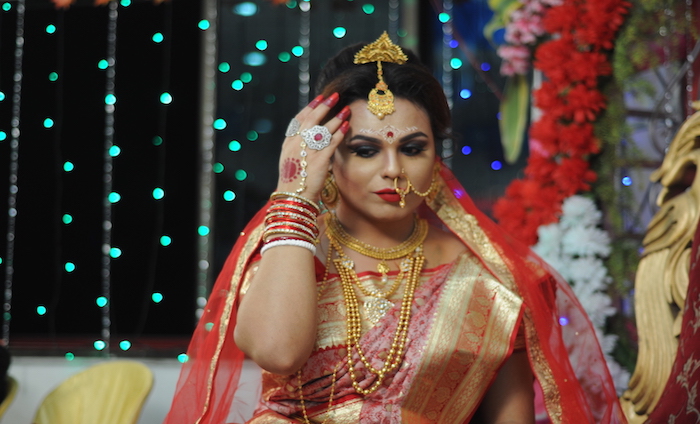
Kolkata: Thirty-year-old Shree Ghatak Muhuri, a Kolkata-based theatre personality, set an example for the transgender community in the city on Saturday night by getting hitch, albeit the legal way with her childhood sweetheart Sanjay Muhuri. The journey, definitely hasn’t been a bed of roses for her, giving the stigma associated with the transgender community.

Sanjay and Shree Ghatak, have been friends since they turned 14. They duo even went to the same school. Talking to eNewsroom, hours after her wedding, she said, “I was in class VIII when I began getting attracted to Sanjay. It was just like any woman gets attracted towards a man. But it was so confusing for me. Being a woman trapped in a man’s body, made feel lonely, strange and bad at times. Making things worse was the fact that there was no one in my family to understand my feelings.”

Shree reveals that as a child and an adult, she has been subjected to ridicule and social ostracisation. “I was often beaten or abused for being what I am. It was really difficult for me. But thankfully, my mother understood my trauma and pain and chose to stand by me even when I chose to go for sex reassignment surgery (SRS) in 2015,” she reveals. The prejudice faced by the society has made her wary of what she speaks and what information she shares. On being asked her birth name, she said, “I wouldn’t like to disclose that. My name is Shree, please address me by that.”

She turns protective when asked about Sanjay. “He works as a marketing consultant with a multi-national company.” She has her reason for being cagey. Even Sanjay, had often been ridiculed by his office peers for being in a relation with her. It was only post Shree’s SRS that they, have accepted their relation, socially. “You know, even today, there is so much stigma associated with being a transwoman. Despite the law of the nation giving us an identity, we have to face a lot of arpatheid. Initially our families were very much opposed to us getting married. They were worried about what people would say. But once I underwent the surgery, to be what I had always been – a woman, my in-laws welcomed me with open arms.”

Shree reveals that she had tied the knot with Sanjay, last year itself, immediately after having undergone a successful SRS. “It was a social marriage. Back then I didn’t have any documents supporting my transition, so we went ahead with a social wedding. It took me about a year’s time to get my gender identity sorted out on papers. And now that it’s done, we decided to get our marriage registered.”

In doing so, Shree and Sanjay, have become the first legally wedded Trans couple. However, the duo does not want to stop here. “From today, Troyee Foundation, a social organisation that works towards the betterment of the people of community, women and differently-abled people, has also become functional. Tista Das, Biman Paul, Monalisa Bose, Somnath Chatterjee and Goutam Chakaborty are also the founder member of this foundation.”

The foundation also plans to produce both feature and short films that with highlight issues related to the society.  “We will be producing a short film, Sampurna, which is about the hardships faced by women. Please don’t assume that it’s my story,” she says with a low laugh.

Amongst those attending the wedding to bless the couple were Tista Das, Dr Manobi Bandyopadyay (the first transgender principal in India), Ranjita Sinha and more.

For a first, Kolkata Muslims revolt against Shahi Imam Barkati

0

Kolkata: Over hundred of odd shops in and around Tipu Sultan Mosque mostly of Muslims, in Kolkata remained shut for 24 hours on Wednesday, protesting against the perpetual habit of Shahi Imam Nurur Rehman Barkati’s making political comments and issuing fatwas.

Those from the Muslim community feel that it’s the pent up frustration against the Shahi Imam of Kolkata that surfacing at last. Imam Barkati, who often choses to tread along the path shown by the equally controversial Muslim religious leader Shahi Imam Bukhari of Jama Masjid, New Delhi, is infamous in the community for his inflammatory comments or obscure fatwas that he chooses to pronounce in front of the media, within the mosque. It is this, to which many have begun objecting to off late.

“He has the habit of calling press conferences within the mosque and giving his views as the Imam of this mosque. This is just not acceptable. He as the Imam should understand that he is only a religious leader, who’s job is merely to lead the namaz. He can’t make comments on behalf of the community,” said Anwar Ali, the mutawalli or caretaker of the Tipu Sultan Masjid, which happens to be a waqf (donated) property.

Ali added, “So, this time when he called a press conference to show his stand for a certain political party in Uttar Pradesh, I objected to it and that made his sons gets violent.”

Shahi Imam Barkati
Protesting against Imam Barkati, shutter goes down for shops near Tipu Sultan Mosque

The shopkeepers near Tipu Sultan Mosque, a majority of whom are Muslims, took offence to this  outrageous behaviour of the Imam Barkati and his sons. The incident, perhaps, made the community people come together and say, enough is enough.

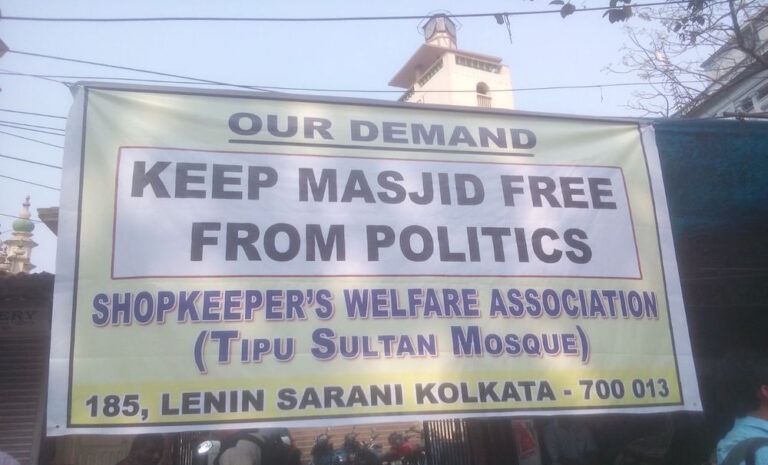
“Whatever Barkati has to say he can say but not as the Imam of this mosque. Why does he has to announce it in a way that to the world it appears as if he is representing us. His opinion is never ours. His comments often have a communal tinge and are very inflammatory. We can’t let him do what he wills, it is high time that he gets the message of keeping politics away from the mosque,” said a member of the Shopkeeper’s Welfare Association of the Tipu Sultan Mosque.

However, when Imam Barkati, was contacted, he took a dig at the protestor, saying that those who had pulled down the shutters of their shops were having a picnic. He said, “These days people call bandhs when they feel like going for a picnic. So, that is what the shopkeepers are doing.”

But, it looks like Muslims are no mood to take his comments lightly. And, guess what? It’s not just the Muslim common man, who is putting down his foot, but also several clergies from the community, who are of the opinion that politics and religion shouldn’t be mixed. Imam Ashraf Ali Qasmi of Khidderpore Mosque, said, “Every individual is entitled to have a political opinion. But being an Imam, one’s duty is to lead the namaz, to spread religious beliefs and not to use the mosque as a centre to propagate political ideologies. One should be careful, as this often sends across a wrong message to other communities. We should always try preserving the peace of our country.” Qasmi, for the past two years, has been organising a two hour programme called Ao Mil Baithe, which aims at promoting peace between people of different communities.

The entire, Muslim community, it seems to be united on this front – not using mosque for political purpose. Hinting at a similar comment that Imam Bukhari had made, a few days back, urging people to vote for secular forces, Faizan Mustafa, Vice Chancellor of NALSAR Law College, Hyderabad said, “Imams should stay out of politics. They have no business to suggest anything to Muslims other than leading the namaz. Voters are mature enough to make rational choice. Such comments damage Muslim cause.”

Echoing the same was, Mohammad Sajjad, Associate Professor of History, Aligarh Muslim University. He said, “Political leaders and even media people go running to such people, seeking their support or comment, as they don’t know the fact that being the Imam doesn’t make him the representative of the Muslim community. He as per Islamic rules, is just the leader for namaz only. He thus is not entitled to give any comment on behalf of the community. They often do such things for personal gains. People need to understand, that running to them and getting them on their side could be easier, but that doesn’t guarantee them the support of the community, as Muslims will vote according to their political and social inclination. The mosque or the Imam has no role in it.”

India’s first minority cybergram closes down

0

Jaipur: Digital India is one of the flagship programmes of present union government. Going by that logic, Minority CyberGram, which was started by United Progressive Alliance (UPA) should have continued being part of Digital India movement. But despite meeting all the criterions the initiative ceased getting funds after its first year. However, those running the programme, continued running the show, without government funds. But they too seem to have given up and chosen to shut down the center completely.

The idea of setting up Minority CyberGram was to provide digital literacy to the backward community in identified knowledge clusters, so that they could use the new-age tools to gain information and knowledge for growth and development.

The first center, which was also a pilot project, was set up in Chandauli, Rajasthan, situated only 150 kilometres away from the national capital, New Delhi.

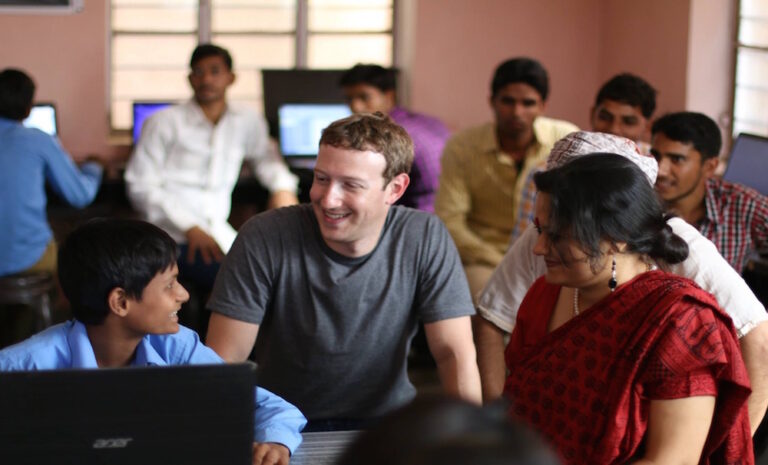
The center became the face of digital India, when it was visited by none other than Facebook founder Mark Zuckerberg in 2014.

“The Minority CyberGram, was a pilot project, of the UPA II government. We were supposed to replicate it in other villages if it did well in Chandauli. Interestingly, the project did extremely well but UPA didn’t come back in power. And BJP was not interested in renewing the project, once it completed its one year. As a consequence we had to shut down the project way back in February, 2015,” informed Shahid Siddiqui, Project lead of the Minority CyberGram, back then.

The selected area is dominated by Meo Muslims, who are both educationally and socially backward. However, it was chosen not just because of its socio-economic backwardness, but also because, it used to be India’s first Education Minister, Maulana Abul Kalam Azad’s constituency.

He recounted, that the project was doing extremely well. “A small nondescript village, which was inhabited by socio-economically backward people, had access to Facebook and was using OLX to buy or sell their products. When Zuckerberg, came to know about it, he was very interested in visiting this village,” he said.

However, despite the project being very much along with Prime Minister’s Digtal India campaign, the funds for this project was ceased by union government in February 2015.

Later, Digital Empowerment Federation (DEF), the non government organization, associated with the project continued running the centre, despite getting no aid.

Yusuf Khan, regional manager of DEF, Alwar, said, “As union government didn’t renew this scheme, the area allocated to run the centre was taken away. Then the former Mukhiya of the village gave us a spot to run it. But the number of students began to fall. This was because the new training centre was next to a mosque, thereby, making many Hindu refusing to attend the classes. DEC, despite all odds continued doing its job, but now that the student strength is really low, we have been forced to shut down the centre.”

When enewsroom tried to contact the Ministry of Minority Affairs, seeking an official comment on the same, were routed to its Director Anurag Bajpai, who couldn’t be reached despite making repeated calls.

A 2016 communique by the Press Information Bureau (PIB), carrying an statement of Minority Minister, Mukhtar Abbas Naqvi mentioned that, the project at Chandauli was successfully completed as two people from 1300 households become digital literate, and since it was a success, so project had been closed.

But the continuation of the center by DEF itself suggests that it was going on successfully, however, was in initial phase and it was forced to shut down midway.

Women inmates of Tihar Jail experience Euphonic Yoga

0

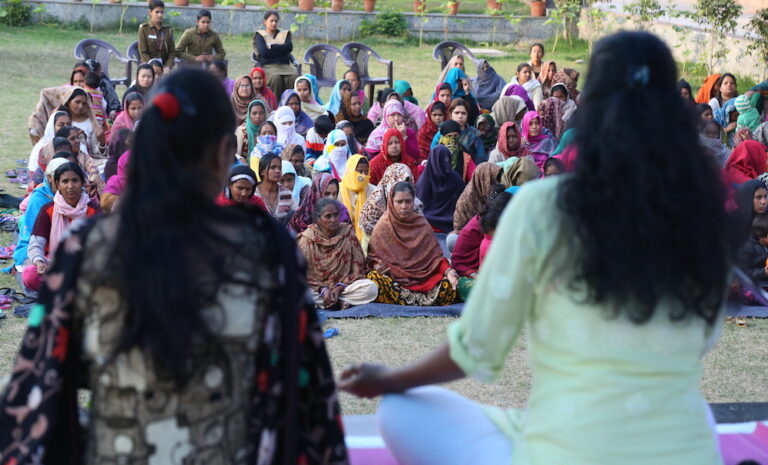
New Delhi/Kolkata: About a hundred of women, their faces covered with dupatta or shawls were seen squatting on the ground of Jail No 6, the women section of Tihar Jail, New Delhi, with their eyes brimming with excitement. After all, it’s not every day that they have something special to do, let alone meeting people from the outside world, interacting with them. On the other hand, four young women Shruti ChaturLal, Suman Kanawat, Garima Arya and Rajnandini, with a unique concept of yoga – Euphonic Yoga, were having last minutes jitter, with regards, to pulling off the specially designed session that they going to conduct for the women inmates of the Tihar Jail.

Euphonic Yoga is a new concept or style of healing, spiritually. It is a concept that has integrated classical dance, classical music and Yoga to vitalise and activate the energy flow in a person.

Speaking to eNewsroom, Shruti Chaturlal, brain behind this unique form of yoga says, “Our team symbolises women power at its best. The idea of taking Euphonic Yoga to Jail No. 6 was to celebrate womanhood. The idea was to give a healing touch to these troubled souls. Also, we wanted to know them so that we would conduct these healing workshops on a regular basis with them.”

Describing the journey of the four friends, Shruti, says, “This initiative is our effort to bring back people to their roots.” She then adds, “If Euphonic Yoga is done in the correct way then right vibrations are generated in right combination. This has deep and profound effects on our body, physically, emotionally and spiritually.”

“Initially, we were really worried about, how to initiate talks, how introduce the session to them, as we didn’t want to hurt the emotions of any inmate. But once we were there, and got to meet them, we were astounded by the kind of love and affection that they showered on us,” recounts Shruti. She added, “They shared their feelings, their anguish and helpless state, their struggle with the system and their fear, their parting relations and broken families. These conversations moved use tremendously. Our heart wept for them, when we heard their side of the story.”

This interaction made them connect, think, design and come up with a power packed session of Euphonic Yoga that left the inmates rejuvenated. Explaining what did the trick, was Suman, she said, “We had a discussion with them, to know their issues following which we explained various ragas, compositions, mudras and asanas and the concept of Euphonic Yoga to them. We made them understand how this form of yoga, could be used to gain inner peace. We knew exactly where we could contribute for their better, but the real challenge was to motivate them, to make them join the ongoing session.”

This session was a precursor to a month long celebration that the Tihar Jail officials want to host on the jail premise to celebrate the International Women’s Day for their inmates. “This experience of Euphonic Yoga session was a unique one and we are looking forward for our performance on February 15, for them,” said Shruti.

Muezza and Babyjaan: ABC of love, peace and tolerance

0

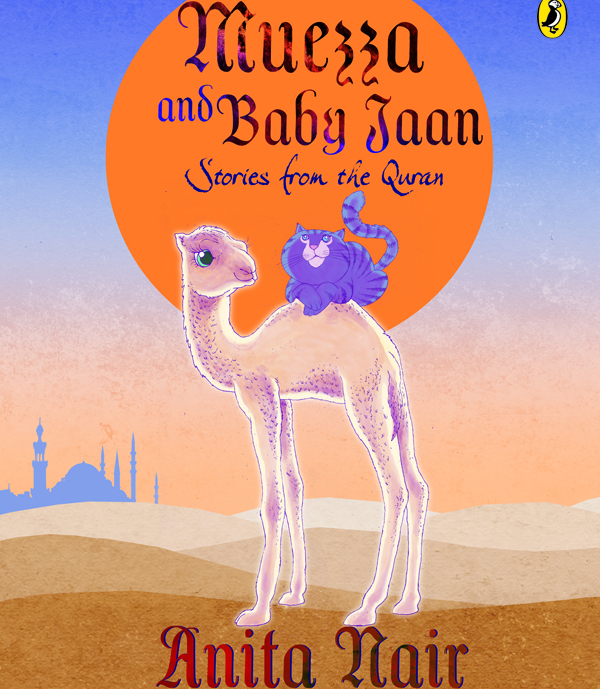
Kolkata: It’s not everyday that an author chooses to narrate stories from the Quran to children. But then, that is exactly what Anita Nair’s children’s book, Muezza and Babyjaan: Stories from the Quran, is all about. Nair, author The Better Man, Ladies Coupe and Mistress, has her book beautifully complimented with Harshad Marathe’s illustrations. The novel has Muezza, Prophet Muhammad’s cat, narrating Islamic fables to a baby camel called Baby Jaan. Nair, a 2013, central Sahitya Akademi Award winner, engages in a bare-it-all conversation with eNewsroom about her writings, Baby Jaan, Islam and more. Following are the edited excerpts of the conversation:

eN: At a time when people want to stay away from things related to Islam, you have come up with this book. Why?

Anita: That is precisely the reason why. I have been noticing a rising intolerance in our country and the world. It is a worrying kind of intolerance, there seems to be no inclusiveness offered to the members of the Islamic faith. There seems to a lot of misunderstanding surrounding Islam, people don’t disassociate between the religion and the fundamentalist elements manipulating the tenets of the religion  for ulterior motives.

It was also surprising how little people know about Islam. We all have some general information about all other religions except Islam. I am hoping that these stories will bring to light how similar all religions are.

eN: Was it a conscious choice?

Anita: Yes. It was a very conscious and very carefully thought out decision.

eN: Your book has reference to the Prophet. Did it ever come to your mind that it could create a controversy?

Anita: No. Just because the book has several references to the Prophet, I don’t think it would stir up any controversy. In fact, everything in the book are only positive inferences about Islam.

eN: How much time did it take you to write this book?

Anita: It took me about two years to complete the book.

eN: Was penning this book, difficult?

Anita: Not more so than any other book. You do have to change your tone while writing for children; you can’t come off as being instructive or sound didactic. The most arduous part of the writing was the research, of course.

eN: Your book is out, it has illustrations and also reference to The Quran, still no controversy?

Anita: Sometimes an author’s interpretations of a particular scripture may not be palatable to the right-wing elements of that particular religion. Just as in the game of Chinese whispers, certain references by the time they percolate down to the mass can be blown out of proportions and thereafter used by the right wing elements to further their own cause. This leads to friction and attacking the author for perhaps something they never intended in the first place.

eN: Did you have to put in a lot of time researching on the subject?

Anita: The research was very extensive and drawn from various sources. The primary source was a book by 13th century scholar Ibn Khathir’sAl-BidayahWan-Nihayah (The Beginning and the End).

eN: Why did you choose this book to be a children’s book?

Anita: I just feel like children are a great place to start. Besides, what better way to introduce a religion than through a simple re-telling of its stories?

eN: Do you need to have a different set of skill, to pen a children’s book?

Anita: Not really. But what matters is your tone of writing. To be children author, you need to be very friendly. The narration should be humourous and simple. Also, the book needs to interesting from page one, if they find the start boring, they will just leave it.

Fair At Naxal Hot-bed Gets A Thumbs Up

0

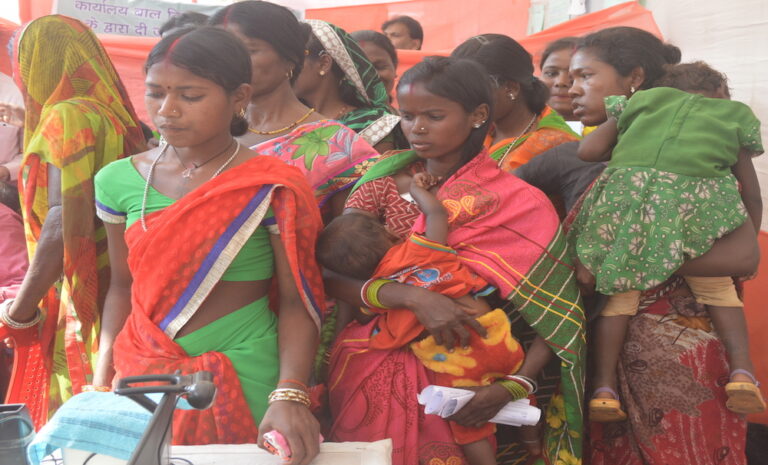
Giridih: Sixty-year-old Mahavir Mahto, a resident of Ambagarha, is happily returning home from the Poor Welfare Fair cum Night Stay. Not only has Mahto got his medical check up done at the fair but has also accepted the free medicines given to him.

It’s not just Mahto who reaped the dividends from the first of its kind community event organised by the government in these many year, there were thousands. Take the example of 22-year-old Devki Kumari of Baradih, a major in chemistry. She has not only filled the government employment form. She has been assured to be bagging a government job at the right time.

“It’s a lifetime experience for me. For the first time that such an event has been organised by the administration here,” recalls Mahto.

Giridih was carved out of Hazaribagh in 1972. However, even before getting a separate status, Pirtand was a backward area and hence it became a stronghold of naxals. Its political vacuum coupled with absence of government activity, a lot of naxal activities used to take place here. So, this fair was the first major intervention at Harladih, Pirtand, targeting villagers of 21 villages. The villager also embraced this opportunity with open heart.


The large number of people at the Poor Welfare Fair cum Night Stay

The humongous turnout at the fair, made the organisers go tizzy. Stalls related to health, employment, pension and LED bulb distribution witnessed the maximum footfall. Around 4501 applications were submitted to stalls set up by various admistrative departments, of which 3881 applications have been addressed on the spot.

However, keeping into account the huge turnout and the chaos that followed it, not every visitor was pleased with the fair’s arrangement. “I have been moving from one stall to another, ever since I have reached the fair. The help desk has also not been helpful. I had approached them seeking their help to locate the stall, from where I could get an employment form? But despite running to many stall, I am yet to get one. No one is providing correct information,” complained Sapna Murmu, who had come from Palma to attend the fair. Murmu has completed Post Graduation (PG) in Hindi from PK Roy college, Dhanbad and looking for job. Her sister-in-law has also done her PG in political Science. However, despite being tribals from an extremely backward area, have not been able to get a job so far.

“The fair should not become a place for visiting purpose. There should be facilities to resolve issues on the spot,” rued Murmu.

Pirtand, being the hub of naxal activities in Giridih, was a place where no officials preferred getting posted or staying there. So, when this fair was being planned, it faced a lot of apprehensions. And because of security concerns, officials chose to keep the event site adjacent to Harladih police picket.

“We had not expected that this many people would turn up. But, we will try to entertain each person. We have instructed official in every stall to cater to each visitor, they need to address maximum people,” claimed Deputy Commissioner Uma Shankar Singh.
The list of Maoist leaders and the reward for informers displayed at the fair

Significantly, there was a stall set up by Giridih police, which had put up a banner listing a dozen of most wanted CPI-Maoist leaders. In other words, the police was using the opportunity to seek help from the villagers to hunt down the naxal leaders, they even were offering huge cash prize to the informers. One Turuk Manjhi has Rs one crore reward on him, was also listed there.

Keeping public safety into account, a huge number of Central Reserve Police Force (CRPF) had been deployed in and around Pirtand. Senior commanders, with experience of having worked in naxal area, but who were now posted in Jammu & Kashmir were also present on duty at this fair to assist local police officials to safely conduct the event.

“We will not reveal the exact number, how much force has been deployed, but they are sufficient in number,” said CRPF commandant Nisheet Kumar.

While superintendent of police Akhilesh Variar said that, adequate security arrangements have made around the fair area.

Member of Parliament from Giridih Ravindra Pandey also reached the fair, late in the evening and will be staying overnight along with the administration officials.

There will be late night cultural activities also at the site.

Lack of occupational safety makes six widows under one roof

0

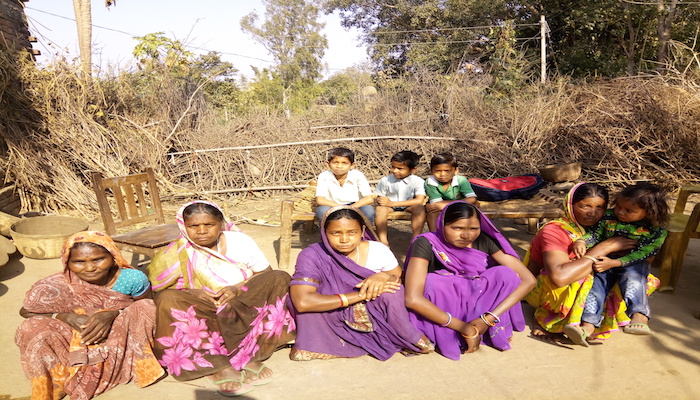
Giridih: What Asha Devi, Gulbi Devi, Shohgi Devi, Kaushalya Devi, Suniyo and Basanti Devi have more in common than just their surnames. The six women are widows, and two among them have not only lost their husbands but sons too.

They hail from a single family, and based in Ranginiya village of Gorhar block, Hazaribagh district.

Sanichar Mahto had five sons — Bada Buddhan, Kanshi, Chota Buddhan, Hira Lal and Teklal Mahto. Asha, Gulbi, Shohgi and Kuashalaya were married to four of the brothers of the Sanichar family.

The brothers were workers who used to install electrical towers and help transmit cables. Despite this being a job with severe occupational hazards, workers of such nature rarely get an opportunity to work near their native place or state.

Among the six deaths, three members of the family died outside Jharkhand and two on foreign shores.

“There is not much opportunity to find work here. So, we couldn’t even force them to stay back or not take up such jobs. We had a dream of a better life, instead we lost our husbands and sons, one after another,” rues Asha.

Kaushalaya and Gulbi are the ones whose tragedies did not stop there, as Kaushalaya’s son Taleshwar and Gulbi’s Prayag also died while working outside and in same work, leaving behind Basanti and Suniyo as other two widows in the family.

The oldest of the men to have died thus was 55 years old, while the younger ones were only 26 and 25 years of age.

Asha was widowed in April 2016, when her husband Teklal died in Saudi Arabia. Just eight days before Teklal’s death, their daughter, Reena Kumari had got married.

While Basanti, now 20, was nursing a three months baby, when her husband Taleshwar had died in Congo in 2014.

Prayag had died in Mumbai, and only two years back he had got married. He had no kids, and his wife Suniyo now lives with her parents.

In 2011-12, the mineral rich Jharkhand state was reported to be having the second highest unemployment rate in India, which tells the story why people migrate outside state to eke-out-a-living.

A report published in the International Journal of Engineering Innovations & Research, volume 5, mentioned that over 1000 electrical workers die each year due to workplace accidents.

There are several laws for workers’ safety in India including the Factory Act. Yet non implementations of the laws are resulting in such deaths on a regular basis and most of them go unreported.There are compensatory acts as well such as the Employees State Insurance Act and the Workmen’s Compensation Act. But to no avail.

The tragedy of this family goes beyond the loss of lives. These women are struggling to live with dignity. Only two of them could manage to get some amount as compensation. One was made possible because the local CPI-ML leaders had stepped in. And the other one got lucky because her husband worked for the Indian Railways who not only give pension but also gave her son a job.

The rest of them are barely able to manage even a single meal a day. “Most of us are not getting widow pension by the government,” complains Shohgi Devi. Fortunately, being physically challenged she has managed to get Rs 300 per month through the disability pension scheme.

“I had no such luck. I neither got any compensation, nor any kind of pension. My parents are supporting me financially. Now my daughter has reached marriageable age. I don’t know what to do,” shares a very worried Asha.

When contacted Barkattha MLA, Janaki Yadav, he told eNewsroom, “We had some knowledge about the deaths in the family, though not in much detail. But, how they are not getting widow pension remains a mystery. These days, the formalities get done in just five days, and recently, five hundred women from Bharkatta block alone have been added to the widow pension list.” He promised to look into all such cases and come up with concrete steps for their wellbeing.

But the question remains, will it be enough?

A Fair To Conquer Fear At Naxal Hot-bed

0

Giridih: From the night of February 11, the officials of Giridih district administration will add a new chapter to their history, by spending night at the Harladih village, in Pirtand block.

The stay will be of great significance, as for more than three decades naxals or CPI-Maoists ruled from the lowland of Parasnath Hills. Leave aside doing over night duty, the officials were reluctant to be posted there.

Pirtand, connecting Giridih, Dhanbad and Bokaro districts, is the place, where Jharkhand’s naxal movement began in the late 70s.

Post 80s, Pirtand graduated to not only being the focal point of the movement but also to serve as a training centre for the naxalites. It also served as a safe red corridor for the leaders of the banned outfit.

Till recent times, Pirtand Police Station had the least number of first information report (FIR) registered. Despite being one of the oldest blocks in Jharkhand, there has been minuscule development in this area.

In order to initiate a fresh beginning for the villagers of this area officials have clubbed their stay with a fair, called the Garib Kalyan Mela Sah Ratri Vishram (Poor Welfare Fair cum Night Stay). This fair is being organised for 21 villages, belonging to six panchayats. Twenty stalls will be set up by different departments like health, education and agriculture, to name a few, during this fair. Along with a night chaupal, a football match will be organised in the following morning.

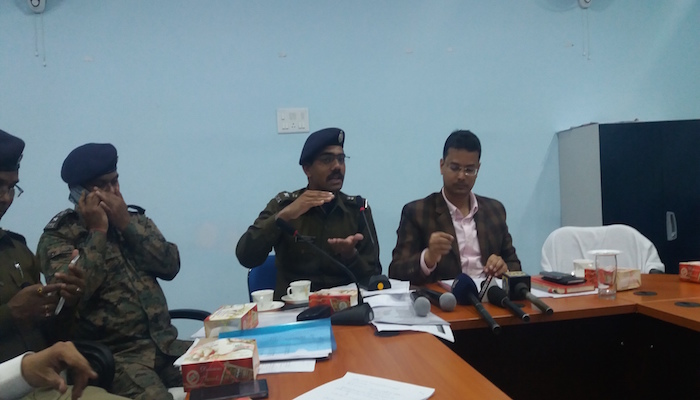
“We want to send a message to the people living in these areas that, the administration is available for them, just like for others. Also, that we can go to any extent for them,” elaborated Uma Shankar Singh, Deputy Commissioner, Giridih, while briefing media persons about this stay.

Around 300 officials of district administration will be posted there for 24 hours. The duty of these officials begins from 9 am on February 11 and ends next day, around same time in the morning.

“We have been working on this for few months now. Normally, in such a fair, we opt for on the spot applications, and provide its benefits later. However, in this case, we have already identified most of the beneficiaries. We have plans of accommodating around 550 local youths in government and private jobs,” Singh informed.

However, the biggest challenge for the superintendent of police Akhilesh Variar, who has to conduct everything safely, said, “We have come to know that people of these villages feel that we don’t visit these areas because of the Naxalites. Organising such a fair, is our way of sending across a message that we can go anywhere, anytime.”

On being asked how fruitful will be such an exercise be when many officials do not stay there during their term. The deputy commissioner replied, “From now onwards, we are going to make officials mark their address and send it to Chief Secretary, to start off an inspection, with regards, to officials who don’t stay posted there.”

Last December, the administrative officials of Lohardaga had also stayed overnight at the Panchayat Bhavan. Given that, Giridih is a naxal hot bed, and Harladih, a place where only police have been able to do Long Range Patrolling (LRP). Even the government schemes do not reach there. This initiative will thereby, mark the beginning of a new chapter.