ABP Ananda too tweets fake news about UAE crown prince chanting Jai Siya Ram

0

Kolkata: Fake news, seems to be the order of the day or more precisely a weapon or a tool used for political gains.

On the day, Indian Prime Minister Narendra Modi was to address a rally in United Arab Emirate (UAE), a story containing a video clip went viral on India’s mainstream media claiming that Shaikh Mohammad Bin Zayed Al Nahyan, the crown prince of Abu Dhabi had chanted ‘Jai Siya Ram’, just ahead of the PM Modi delivering his speech in UAE. Shaikh Mohammad Bin Zayed Al Nahyan is also the deputy supreme commander of UAE Armed Forces.

The false story seems to be a carefully designed attempt by some groups with vested interest to spread false propaganda and gain political mileage. The crown prince of Abu Dhabi never attended any such religious gathering organized by the Hindu community settled there. The video is almost two years old and the person in the video is actually Sultan Sooud Al Qassemi, a UAE-based columnist, and commentator on Arab affairs. He had said ‘Jai Siya Ram’ while addressing a Hindu spiritual programme conducted by the guru Morari Bapu in Abu Dhabi in September 2016.

Some mainstream news channels who have become habitual circulator of such fake news in recent time are Times Now and Zee News. But surprisingly ABP Ananda, also fell for it.

Within few hours after the misleading video went viral on social media especially on Twitter, many users were seen retweeting and hailing Modi as a great leader of the masses. A user with the handle @sona2905, for instance, said: “If you understand geopolitics, you know what this means and where [Indian] PM Modi stands.”

Another user, with the handle @nandlala559, offered his “heartiest congratulations to Abu Dhabi Crown Prince for his valuable speech” and said: “Really Good Job for PM MODIJI/INDIA”.

A tweet from official handle of UAE Embassy– New Delhi

The tweet was retweeted more than thousand times. This viral news compelled UAE Embassy in New Delhi to issue a clarification stating that the it was a fake news.

Disturbing trend

The most disturbing thing about posting this fake video is that the top media houses had not bothered to cross-check before uploading the video. The crown prince of Abu Dhabi was the chief guest who attended the 2017 Republic Day parade. And in 2016 he visited our country as a state guest.

The top media houses failed to distinguish between the crown prince and a UAE journalist, forcing many to question if it was done by choice or was it a deliberate propaganda tool to help someone get political mileage?

When tracked online, the digital footprints of the viral videos show a definite pattern. All the stories were uploaded between a similar time frame: just ahead of PM’s arrival in UAE.

The deliberate attempt of circulating and recirculating a fake video multiple of times in social media by top media houses is an indication of a structured design and objective of spreading the malicious and fake news that feeds on unsuspecting news consumers.

PM Modi laid the foundation stone of the first Hindu temple in Abu Dhabi on a land donated by Shaikh Mohammad. This act reveals a range of pluralism in terms of religion, language, ethnicity, food shown by the UAE government.

The pace at which books and films are being banned, one day humans might also be banned – Sowvendra

0

Kolkata: It was not just films that got banned in 2017 but books too. Last year, two authors were in the docks, with their books being blocked. The Adivasis Will Not Dance, by Hansda Sowvendra Shekhar was one of the books that were banned last year. Sowendra, a Sahitya Akademi Yuva Puraskar winner, when asked about the concept of books being banned reacted, “The way books and movies are getting banned that, the day doesn’t seem to be far off when there would be a ban on humans taking birth too.”

However, Sowvendra, sitting comfortably at a Kolkata hotel as the discussion proceeds, added that he was relatively relieved, as the ban on his book by Jharkhand government has been lifted. However, Sowvendra, who is also a doctor by profession added that his suspension from the duties of being a government doctor, by Raghubar Das government is yet to be revoked.

The author had a very strong stand on the issue of bans and had also had a session on freedom of speech in the recently concluded Jaipur Literature Festival. In KLF, too he was part of a discussion on right to be heard. Speaking about bans, he mentioned, “As now everything is politics and politicians decide everything for us, you can’t do much about it?”

Elaborating further, he said, “Politicians decide how many rations you get. They allot money for food, schools, and treatment for us, then why will they miss out the opportunity to ban books or films.”

Sowvendra’s first book was The Mysterious Ailment of Rupy Baskey, and the second was The Adivasis Will Not Dance. Both the literary works of Sowvendra touched upon tribal culture and medicine field.

“I am not into any type of activism through my writings, nor are my writings exclusively for the tribals. As an author, I am willing to write on any issue and believe that there should be no stereotyping. When I feel strongly on something, I write,” he added.

But how an author feels, when he or she gets the news of his work being banned? “I went blank for some time, I just couldn’t believe that all this was happening to my book, as I had not written against the tribals or portrayed them in the bad light. Later, I took a grip of my emotions and thought as I can not change what others think or do, it would be best if I chose not to acknowledge it, because if you do, then your problem will only increase. For almost two months, I got myself busy with several translation works, and stayed away from all these negative news,” mentioned Sowvendra.

So, did the ban affect you as a writer or your writing? “Not really! Two of my books will be published this year (2018). One is a collection of short stories, called Death Of A Pahadi and the other is a children book.” He then added, “Opposition makes me write more and better.”

Sowvendra seemed excited about his forthcoming book for children. “It is a special book for me as I never wrote for children. The name of the book is Jawala Kumar, it is about a dragon,” he excitedly informed.

While this doctor in suspension is waiting for the Jharkhand government to revoke his suspension, however, the author Sowvendra is going places. He has recently been invited by Indian Institute of Management (IIM)- Ahmedabad and Osmania University, as a speaker.

Speaking about his suspension he said, “I have submitted my explanation to the government on the suspension notice, and am waiting for their response.”

A mother cries for help, as his engineer son along with 159 Indians land in Azerbaijan jail

0

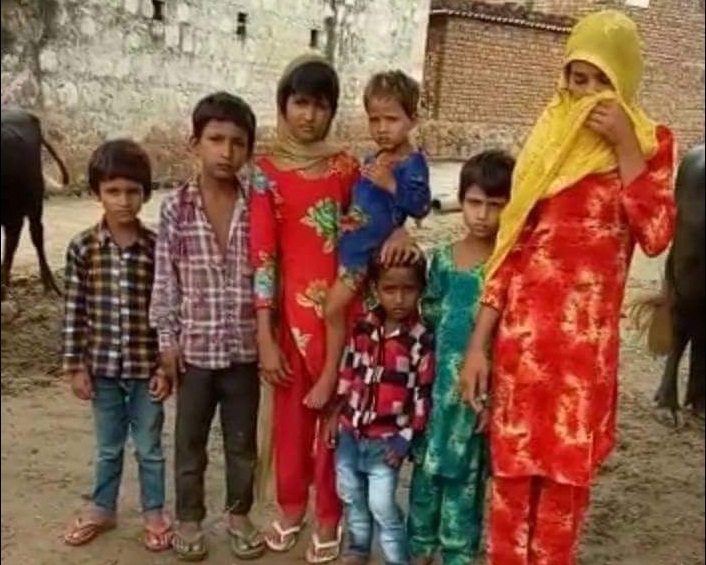
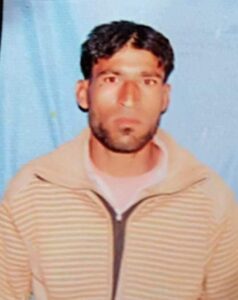
Kolkata: It had been almost 15-20 days since Abdul Hossain had not contacted his parents, who reside in Koytha Village at Nalhati, Birbhum district of West Bengal. The worried parents were pinning their hope to get a call from their son, when a group of social activists landed at their doorstep with a clipping sent by Hossain, which told a different story.

Hossain, a civil engineer in search of better earnings, without informing his parents had bagged a job with a company in Baku, capital of Azerbaijan, through a travel agent. “The video shared by Abdul, narrates a scary tale, where not just him but around 160 Indians (45 from West Bengal) have been put behind the bar by the Azerbanian police,” informed social activist Samirul Islam, who runs Bangla Sanskriti Mancha,  a Kolkata-based non-profit organization.

Speaking to eNewsroom, Abdul’s mother, Anarban Bibi, said, “It’s been almost 15 days since we had last talked to him. He had told that he was in Kolkata for some training. I am clueless about how my son went to Baku.” Amid sobs she added, “I came to know about his condition through these social activists. Please help me bring back my son.”

The video shows a huge number of Indians locked together in a single jail room, where the police provides them only a single meal for the day and are forced to work for long hours. According to Abdul, he along with his group with the help of some travel agents, who only turned out to be touts, peddling them to a foreign country, without relevant documents. On reaching Azerbaijan, they were kept locked in a room in Baku and were not assigned any work. On realizing that they had been cheated they approached the Indian Embassy. “Following which police even arrested touts not just from India but also from Pakistan and Bangladesh, who were involved in this case. In the video, he is even seen addressing the Prime Minister of India and West Bengal government to help them come back to India,” said Samirul.

abdul-Indians azerbaijan bengal engineer birbhum
The letter, written by Abdul’s mother to SDO, Birbhum

Identity of those touts arrested was revealed by Abdul in the video – Sakir Khan from Mumbai, Allarakkha Khan from Nadia of West Bengal,Sajid Khan from Pakistan,Paresh Sahanawaz and Allimuddin from Delhi and one unidentified tout. According to Abdul, he along with Shubho Ghosh,Tanmoy Biswas,Shyamal Chakrabarty,Kalyan Mondal,Sanjit Mondal,Ratan Sharma,Sharuk Khan,Haradhan,Manjarul, Kabirul and Peudip from Nadia have been detained in Baku since January 31.

The parents have written a letter to the SDO of Birbhum, asking them to do the needful to bring back the Indians detained in Baku. Islam, added, “Our NGO has sent off a three-member team to the boys village to provide legal assistance and any other help to the family.” eNewsroom tried contacting the SDO but the calls remained unattended.

Pakoda: More a part of our culture than a tool in political gimmick

0

When Prime Minister Narendra Modi described Pakoda sellers as employment gainers at a TV interview, he did two grave blunders: first, he displayed his poor knowledge about our food culture and secondly, he trivialised the issue of unemployment on which he has miserably failed after making tall promises.

Anyway, the purpose of this column is more to tell about delicious Pakoda that we have been enjoying during our Holi, Iftar, Diwali and Chhath festivals for centuries rather than discussing about the PM playing to the gallery, reneging on his promises and his lies—which are a fodder to old, new and social media and are known to all now.

Unlike Maggi noodles, chaat, chips wrapped in plastics, sandwiches, pizza and other variants of fast food which are a feature of the exploitative market economy we live in, Pakoda has been rooted to the composite socio-religious and food culture of the land and its people divided now in India, Pakistan and Bangladesh.

Ask about the traditional food items of anyone in India, Pakistan and Bangladesh, he/she would tell you that his grandmas, great grandmas and great-great grandmas were adept in cooking Pakoda, using mustard oil, besan (gram flour), gram soaked in water, onion, potato, cauliflower, eggplant, green chillies and spices even in the era of earthen chulhas (ovens) in our villages.

My experience about Pakoda goes back to my childhood days in a Bihar village. My mother now in her 80’s used to fry Pakoda which we called jhuri on special occasions. My father was fond of eating jhuri with dal, bhat and tarkari cooked by my mother and my grandmother. During winter and rainy seasons too, we used to eat jhuri or Pakoda, Pakodi—lumps of potato, eggplant or cauliflower wrapped in gram flour, chilly pastes, spices and deep fried in mustard oil—as evening snacks or appetisers.

The villagers loved Pakoda also called as bajka, bhajiye, bhajji in other parts of our sub-continent. But the largely poor villagers could not afford it on regular basis for it required costly ingredients and oil which most of the poor agriculturists did not have. It was an item for special occasions.

Muslim peasants would work harder for whole of the year to have Pakoda, dates and other fruits for breaking their roza (daily fast) during the holy month Ramzan. Hindu women would break their fast of Chhath and Jeotiya festivals by eating jhuri, pakodi, pakoda. We waited for the festivals like Holi and Diwali to eat Pakoda.

Pakoda was more a luxury for the poor villagers of our sub-continent. It still is in the large part of the rural hinterlands in India, Pakistan and Bangladesh. But it has been more a part of our food culture for centuries. It is blasphemous to put our Pakoda in the category of Maggi noodles, chips, sandwiches and pizzas which are the items evolved and developed by profiteer multi-nationals thriving at the cost of the poor’s health and traditional food culture.

My estimable colleague in Journalism and Film Production Department at the LPU, Jalandhar, Prof Simran S Kaler said, “Gram which is our native grain was the first source of making Pakoda also called kachri in some parts of our sub-continent. Pakoda has been the part of our food culture for centuries. It is hard to understand why a Prime Minister has linked it with his drive for employment”.

According to a study, the word Pakoṛā is derived from Sanskrit, PAKWATA, a compound of Pakva (cooked) and Vata (a small lump) or its derivative Vataka—a round cake made of pulse fried in ghee.

Three child sex abuse incidents in two months at Kolkata schools paints a grim picture of decaying morality

0

Kolkata: Easy access to pornography and decay of morality is the main reason behind the rise of child sex abuse in Kolkata’s premium schools, feels counsellors and social activists.

On Friday too, a dance teacher was arrested from Carmel Primary School for sexually assault of a 6-year-old, class II student for months. The issue came to the notice when the child refused to go to school. A little prodding by her mother opened a can of worms. Following which the lady lodged a complaint at Tollygunge Police Station, which eventually led to the arrested of the teacher.

Angry parents were seen camping outside the school premise. Most parents wanted to know why a male teacher had been employed in a girls school and also why the CCTV cameras were not functional in the school.

“My child is in a state of panic and shock,” said the victim’s mother, while her aunt alleged that the teacher had threatened her with dire consequences if she reported the matter to anyone.

This is not the first time that a child has been sexually abused within the school premises in Kolkata.

Only two months back in December, two individual incidents of sexual assaults on school students had been reported.

At GD Birla School, two male physical education teachers had been arrested for sexually abusing one of their student, who was only 4-year-old. Another such was reported at MP Birla Foundation Higher Secondary School.

Speaking on the disturbing trend, Paromita Mitra Bhowmick, Consultant psychologist and resource person for teachers training and development, said, “Today teachers are mostly bogged down by personal issues. They need an annual mental health screening and sensitization. Many are teachers by default as it’s still an easy profession to get in. Their commitment and accountability is decreasing except in some schools with a very efficient administration. Children are easy victims of outlet of sexual frustrations, anger and displaced emotions from personal issues of some teachers.”

However, she maintained that most schools lacked a system where teachers are counselled. “CBSE has made it mandatory for such counselling a few months back. Most reputed ICSE schools do have such arrangements, but not every school subscribes to this, despite there being an immediate need, especially when values are eroding away,” she added.

Adding another dimension to the entire issue was social activist Leena Kejriwal. She said, “Easy access to internet and smart phones is making India one of the biggest consumers of pornography. I think the investigating officers should also probe this angle. Kejriwal, who works to combat human trafficking added, “With the rise in violence in all public spaces in India and specially in schools, it is about time the government try and understand the root cause of it. There is apparently a big upheaval going on in the behaviour of men and boys and we should try and understand what are the causes so that there can be awareness on the causes and the horrific effects they are having.”

A young IPS officer, who sees opportunity in being posted at Naxal hot-bed

0

Ranchi: It is no secret that most government employees do not want to work in rural areas, be it babus or officers. Let alone, being posted in naxal infested area. But, then exceptions always prove the rule. Take the example of young Indian Police Service (IPS) officer, Ehtesham Waquarib, posted in Chatra district of Jharkhand. Not only does he like being posted there but also sees an opportunity in it.

Located 130 kilometres away from Ranchi, Jharkhand’s capital, Chatra is one of the poorest districts of the mineral rich state, and a hot-bed for naxal activities.

“Jharkhand is my home cadre. And I am fortunate enough to get it as my cadre. Our state is infested with naxals and its splinter groups. About 18 of 24 districts are naxal affected. Being posted in one such district, I see these challenges as an opportunity to grow. As an IPS officer I can bring about a positive change in Jharkhand, I believe,” Ehtesham told eNewsroom.

The 2015 batch IPS officer seeing opportunity comes from his background, Ehtesham is a doctor too. Before clearing Union Public Service Commission (UPSC), Ehtesham did his MBBS and MD from AMU, Aligarh.

“UPSC was always my goal and as a member of AIS (All India Service) whether IAS or IPS, I believe I can always contribute towards solving the grass root problems of the masses. And in latter stage of my career, I will be handling policy decisions matters, which will affect the nation as a whole,” said the 32-year-old officer. “As an MD with community medicine, I have left a lucrative career with WHO to serve the other land,” he added.

Ehtesham, posted as Assistant Superintendent of Police (ASP) in his first posting, was also part of the recent raid against illegal inter-state sand trading in Chatra. The raid was led by Superintendent of Police Chatra, Akhilesh Bariar. More than 100 heavy vehicles of Bihar, Uttar Pradesh and Guwahati were seized. At least 30 people have been arrested including drivers, truck owners and sand mafias from the spot, in one of the biggest raids in the district.

A resident of Giridih, Jharkhand, however, the journey so far, was not an easy one, as he hails from a very humble background.

“I did not feel that I was going through a difficult phase, as my focus was to work hard and achieve my goal of cracking UPSC. Of course, I had a back up of medical degree to fall back on if I failed. It was my background (medical education) which gave me enough courage to go for UPSC full throttle without any fear of failure,” Ehtesham, who love to read and travel, elaborated.

May the tribe increase!

Mukh-o-Mukhos: Bengal’s Postcard spreads hatred

0

Kolkata: Mukh-o-Mukhos is the first Bengali feature film made in East Pakistan (Bangladesh) but now, the same has a different identity. A blog with similar name has been recently launched. Unlike the film, which highlighted corruption, this Bengali blog from the look of it has a single agenda – spread hate through articles and videos posted on it. A glance through the blog and you will realize that it’s nothing but a propaganda tool, designed to spread hatred through distorted facts that it presents.

Based along the lines of websites like Postcard and OpIndia, the author of Mukh-o-Mukhos prominantely highlights love-jihad as a section. Interestingly, the issue has probably no taker in Bengal. As even Rizwanur Rahman, a techie, who had married to Priyanka Todi and died for love, in 2007.  But neither it was escalated as love-jihad, nor could create a Hindu and Muslim divide in Bengal.

A segment is called ‘Phire Dekha’ which deals with history or rather distorted Medieval History of India.

The latest article of it says that Shah Jahan has established physical relationship with his two daughters too.  The entire article showcased Mughal Emperor Shah Jahan has a sex maniac with no mercy for anyone.

Some of the topics and pictures posted are almost the same as the ones on Postcard. Interestingly, this blog is not a very old one. It is a bilingual blog, where the author posts in Bengali and English.  It even has a Facebook page.

Mukesh Choudhary, a cyber crime expert analysed the blog for eNewsroom, “The blog seems to be active from August 2017. The Bengali version has around 27 lakh hits while its English version has had only 34,000 hits since going live. This makes me believe that the target audience of the blog is the Bengalis from Bengal or Bangladesh.”

Like fake site or blog, it doesn’t have anyone listed as its author or admin. However, its Facebook Group, which also goes by the same name, does have an admin. Interestingly, the group has two admins, one being Himal Hemu and the other Mukh-o-Mukhos. Elaborating on the same, Choudhary mentioned, “Hemu resides in Bongaon, West Bengal but is originally from Kolkata. Both are fake accounts. The real identity of the people behind it cannot be extracted from public domain. Only a legal investigation can reveal their identity.” He also informed that, the blog has been functioning since August 2017, while the Facebook group created a month later on 18 September 2017. “Members of the group are from both Hindu and Muslim community. I presume these members could have been added without their consent as only a hand-full of them post on the group,” he said.

The purpose of this group and blog is clear – spread hate stories which are not even verified by the author before posting. In one of the stories, the author talks about the mass Hindu killing by Taiemur (Sultan of Delhi), and writes, “If a researcher can prove one of the above facts, we will be grateful to him forever.”

“Such posts when posted on social media platform can only cause problem,” he added.

The main agenda of Mukh-o-Mukhos is to create communal disturbances, with general election approaching; one can definitely understand the purpose of it—sow hatred and reap votes.

Aliah University: India’s only state run minority varsity has no VC since four months now

0

Kolkata: It has been four months since Aliah University, the only state-run minority university in India, has been without a vice-chancellor. Following the end of former VC Professor Abu Taleb’s tenure in September last year, the university’s registrar, Dr. Nurshad Ali, has also been doubling up as the acting VC.

Despite Partha Chatterjee, Minister of Higher Education, declaring in September that a search committee for selecting the university’s VC would soon be set up, most university professors remain clueless about the recruitment process.

“No university can run this way. It’s been almost four months since we have been without a VC. We have an acting VC who is filling in efficiently, but there are many decisions that only a VC can take, so they are getting stuck in the pending list. We are in a limbo-like situation where the day-to-day tasks of the university are being carried out, but nothing beyond that,” said Dr. Mohammad Maseehur Rahman, an associate professor of Arabic. He maintained that being without a VC for such a long period would only stagnate the university’s standards.

Another professor, Tajuddin Ahmed, associated with the university, also expressed his frustration over the situation. Ahmed said, “This is definitely damaging the image of Aliah University. It’s not just the students—faculty members are also being affected. Many professors who wanted to avail themselves of scholarships haven’t been able to do so, as the university lacks a VC to sign these forms. Only classroom teaching is taking place. Apart from that, every major decision is on hold.”

However, not many were willing to elaborate on the reasons that have led to this situation. Most, however, believe it could be an attempt to bring the university under the Ministry of Higher Education’s jurisdiction.

At present, the university falls under the Ministry of Minority Affairs and Madrasah Education (MA&ME). Clarifying the matter, Amzed Hossein, Professor in the Department of English and Dean of Student Welfare, stated, “These are just rumors. Last year, the university was notified that while it would remain under MA&ME, it would also receive guidance from the Department of Higher Education of Bengal. The delay in recruitment could be due to a lack of communication between the two departments. I am afraid I wouldn’t be able to explain beyond this.”

Shedding some light on the issue, an official associated with MA&ME, speaking on condition of anonymity, said, “There could be a political angle. A few individuals are lobbying for the recruitment of candidates of their choice. This could be causing the delay.”

Professor Hossein, however, declined to comment on this. He maintained that the university has yet to receive any notification regarding the formation of a selection committee to appoint a VC. He added, “As per my knowledge, the acting VC has approached both ministries, requesting the immediate recruitment of a VC. But unfortunately, no concrete steps have been taken by the authorities to resolve this crisis.”

When eNewsroom contacted Minister Giasuddin Molla, Minister of State for Minority Affairs and Madrasah Education, he said, “The Chief Minister, who is also the Minister-in-Charge of this ministry, is a bit busy these days, hence the delay. But rest assured, Aliah University will have a VC by the end of this month.”

Jamia Millia Islamia is the only other Muslim minority institution in India, but unlike Aliah University, it is funded by the central government.

Pressure on Raghubar Das now as PMO wants action against chief secretary Rajbala Verma

1

Ranchi: The controversial chief secretary of Jharkhand, Rajbala Verma, who has been served notice several times by the Central Bureau of Investigation (CBI), while investigating the multi-crore fodder scam had not been removed from her position by Chief Minister Raghubar Das despite the opposition as well as senior BJP leaders demanding her removal. But with the Prime Minister Office (PMO) sending a letter to the Jharkhand Government seeking action against Rajabala Verma, CM Das will not have much option left, but to act.

Interestingly, the order to take action is not for the fodder scam controversy, but another issue in which Rajbala and another IAS, AP Singh had acquitted DM of Palamu, Puja Singhal Purwar in a coal block allotment case. Purwar, had allotted 200 acres coal block land worth billions of rupees to a private organization.

Rajbala and Singh had acquitted Purwar, who was found guilty in previous report filed by other investigating officials because of which several junior officers and assistant officers, served jail.

Against it, Jharkhand Vikash Morcha (JVM) district secretary Dilip Mishra had written to chief vigilance commissioner and appraised the PMO about the same last year in September.

“It is a matter of 2009. Puja Singhal violating CNT/SPT and forest acts had transferred 200 acres land worth billions to a private party. I had got the related document through RTI and when initial inquiry was set, DC Palamu was found involved in it along with other officials. But later, AP Singh without visiting the site had acquitted Puja Singhal, and Rajbala Verma promoted her to secretary level. Thereafter, I had written to CVC and PMO,” Dilip Mishra told eNewsroom, over phone.

rajabala verma raghubar das pmo
Letter issued from PMO

The 1983 batch IAS officer Rajbala is also facing another major controversy – related to the fodder scam, in which Rashtriya Janata Dal (RJD) supremo and former chief minister of Bihar, Lalu Prasad Yadav and another former chief minister Jagannath Mishra are serving jail terms. In 1990-91, when Rajbala was DM of Chaibasa, several fodder related irregularities—withdrawals  from the treasury using fake slips were done.

While investigating the case, CBI had sent 23 notices to Rajbala, to which she never replied. When RJD chief Lalu Prasad sentenced in fodder scam, the issue was raised not only by opposition parties but by BJP senior leader Saryu Roy too.

Before the beginning of assembly session, Rabhubar Das had show-caused the chief secretary, to which Rajbala had replied stating that she had no idea about the withdrawals made from the Chaibasa treasury.

During the Jharkhand assembly’s budget session, opposition parties had again demanded action against Rajbala, however, Jharkhand chief minister did not take any action.

By-election results: Congress’ bloody blow to BJP in Rajasthan, TMC strengthen itself more in Bengal

Jaipur/Kolkata:  By winning three out of three seats in Rajasthan’s by-election Congress has sent out a strong message to the ruling Vasundhara Raje led Bhartiya Janata Party (BJP) government, that the BJP will not have it easy now in State Assembly Election, scheduled to take place at the end of 2018.

Meanwhile in Bengal, its ruling party, All India Trinamool Congress (AITMC) won both the Uluberia Parliamentary constituency as well as Naopara assembly seats comfortably, without having to face any competition from any political party.

Sajda Ahmed, wife of late Sultan Ahmed, who had died in September 2017, won from Uluberia with a record margin of over 4.74 lakhs.

With Sajda winning, TMC has increased the number of its women representatives in the parliament. After her win, it now has a total of 12 female members, standing second to Bhartiya Janata Party (BJP), which has 30 female members out of its 276 MPs. TMC has 33 MPs in 16th Lok Sabha.

by- election congress bjp rajasthan tmc bengal
Sajda Ahmed, being greeted after winning Uluberia parliamentary by-election

Speaking to eNewsroom, minutes after her victory, Sajda said “I will first be finishing off the pending work of my husband. It’s my primary agenda, as of now. I very excited about working towards making quality education accessible to every child.” On being asked, one issue that she would like to raise at the parliament, she said, “The women reservation bill for women in parliament is in the cold storage. The present government which is claiming to a crusader for women cause should definitely have this bill passed.”

Not just Uluberia, TMC has also won the Naopara assembly seat, which was earlier with Congress. Here its candidate Sunil Singh won with a margin of over 63000 votes.

However, with the Congress – CPIM tie-up no longer being in place, the grand old party slipped from its third position to fourth in Bengal by-polls, despite having scripted a major comeback in Rajasthan politics, where it has won all three seats —Prliamentary for Ajmer and Alwar and Mandalgarh (assembly).

In 2014’s Lok Sabha election, BJP had won all the 25 Lok Sabha seats from the desert state, and with this loss, its tally has now been reduced to 23.

Ajmer parliamentary seat was significant as Rajasthan’s state Congress Committee chief Sachin Pilot had lost from this very seat in 2014 election. Now Raghu Sharma won by a margin of 8000 votes.

In Alwar, Dr Karan Singh defeated BJP by a huge margin of 118000 votes. Alwar has been in the limelight off late for the continuous attack of Muslim dairy farmers by the cow vigilantes. In Mandalgarh, Vivek Dakad of Congress won the assembly bypoll by 12997 votes.

After the results, former chief minister Ashok Gehlot said, “This has happened because of Vasundhara Raje led BJP government’s ‘negative’ attitude as they either rejected or slow down all the social welfare works of previous government.”

A jubiliant Sachin Pilot, the state Congress chief, further enhanced his attack on BJP and tweeted, “it’s the start of the end of BJP in the state.”

Political observers believe that the winning of an opposition party in a by-election always sends out a strong message to ruling party.

Post result declaration, Vasundhara Raje did not address media, however, accepting her defeat, she has tweeted that democracy is ultimately for and of the people.