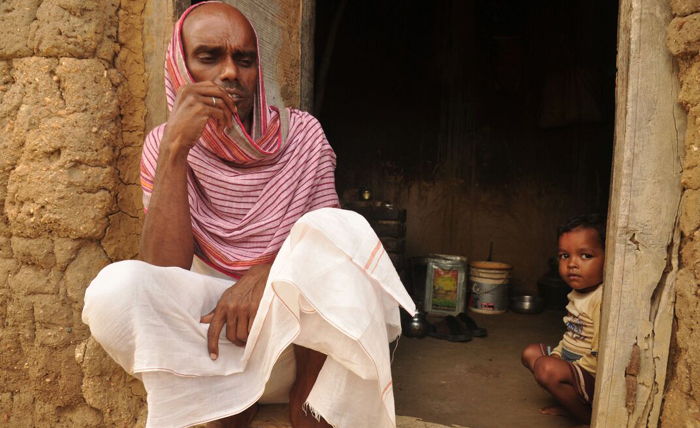
Jharkhand youth up in arms against Raghubar government over one state, two employment policies

Ranchi: At a time when, Narendra Modi led Bhartiya Janata Party (BJP) government in center has tried to coin most of the important issues of India in ‘One’, like– One Rank One Pension, One Nation One Number, One India One Tax better known as Goods and Services Tax (GST), Jharkhand’s Raghubar Das government has implemented ‘two’ employment policies in the state. The step is hurting unemployed youth of Jharkhand’s eleven districts.

While bringing new Domicile Policy, in April 2016, Jharkhand government had made two different policies for employment in state, for its scheduled and non-scheduled districts—which means, in 13 scheduled districts, candidates from other districts of Jharkhand can’t apply for a job, not even the same scheduled district’s candidate can apply in others, in class III and IV category jobs. However, in the rest 11 districts, which comes under non-scheduled category, candidates not just from entire Jharkhand but from across India can apply and get jobs.

These 11 eleven districts are—Dhanbad, Bokaro, Giridih, Hazaribagh, Chatra, Koderma, Godda, Ramgarh, Deoghar, Palamu and Garhwa.

Since then, the policy is being opposed, but in last one month, it got momentum and unemployed youth of non-scheduled districts have been protesting. Angry youths have hit the streets in many districts, including state capital Ranchi.

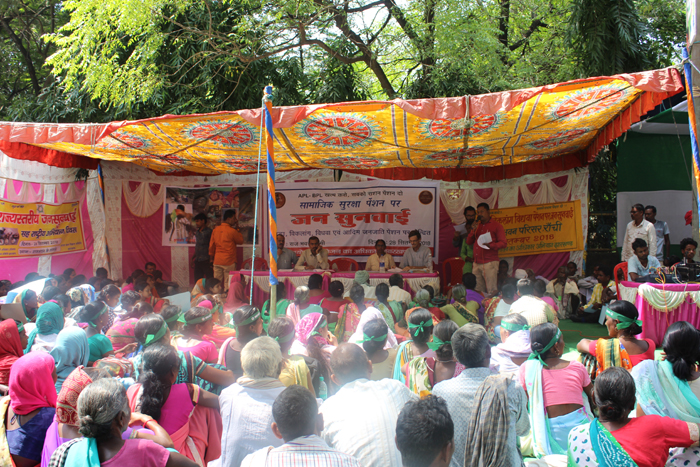
“The dual policy will no longer be tolerated by the residents of the non-scheduled area. It has already created scope for people from other states eating into the jobs of the locals. We will not allow outsiders to apply for Class III and IV category job openings,” said Manoj Yadav, a student leader who played an instrumental role in organizing the protest marches in Hazaribagh and Ranchi, while speaking to eNewsroom. Yadav even claimed that around 25000 youth were present in Hazaribagh’s protest.

Recently, a protest was organized by CPI-ML in Giridih, where party leader Rajesh Sinha had led the march. The matter was also raised by the opposition leaders including former chief minister Hemant Soren and Congress state president Ajoy Kumar. Later, some BJP MLAs also demanded change in job policy during the budget session.

To Understanding that the anger of the unemployed youths of non-schedule areas could affect the party’s performance in Jharkhand, the state government has formed a six member committee led by Amar Bauri, Minister of Revenue and Land Reforms to look into the matter and submit a report.

The committee had to submit the report on February 17 itself, but it took a month extension. However, the anger of natives of 11 districts has not subsided.

“We are planning to conduct protests in every district. So far, we have organized rallies in five districts and will soon hold protest in six left, one by one,” added Yadav.

NGOs scam Skill India project of National Urban Livelihood Mission in Jharkhand, produce fake placement certificates

Ranchi: Scams are no longer limited to banks and business tycoons in India. Government schemes in small towns too have the potential of attracting scammers it seems. A scam involving three Non-Government Organizations (NGOs) have come to the fore, in Jharkhand’s Giridih district, 220 kilometres away from state capital Ranchi. These NGOs have withdrawn funds more than 5 crores from one of the most ambitious schemes of the Union Government of India—National Urban Livelihood Mission (NULM) without even providing proper training or placement being trained which comes under Skill India project of the mission. The NGOs even provided fake placement certificates, to claim that their programmes going well, year after year.

These are initial figures and it could eventually sum up to a higher amount. Giridih Municipal Corporation, is the nodal agency for the implementation of NULM scheme.

Under NULM, poor urban households were to be provided with short term training to equip them with some professional skills like beautician course, embroidery, computer software training and driving, so that the beneficiaries could certain jobs as skilled professionals  or they could even set up a small business of their own. The certification has been done under– Skilled India.

Since 2013, three NGOs—Sant Ravidas, Nature Care and Gyan Jyoti, in Giridih, had been dutifully submitting documents, indicating that they were training 1200 persons on an annual basis. Most of the enrolled candidates were girls and were supposed to undergo a six-month training for the beautician course. However, in reality, the NGOs were neither training the girls in a proper way, nor were they providing the beneficiaries with the prescribed training kit.

NULM-Scam-Skill-India-Jharkhand
IAS officer Vijaya Jadhav and vice president Rakesh Modi listening to the complaints of the enrolled candidates for skill India certification under NULM

The scam came to the fore, when girls met Executive Officer (EO) Vijaya Jadhav with the help of Rakesh Modi, vice president, Giridih Municipal Corporation. When Modi, presented the girls before the executive officer, then they narrated their plight. “We were being trained to become skilled beauticians under NULM. However, we have not been provided any training kit. During the training classes, all that we were provided were a pen and an exercise book, individually. On completion of the course, we were neither given certificates nor placed anywhere,” informed a trainee (name not revealed for security purpose) to Jadhav.

Interestingly, when Jadhav called an NGO official to know why they had not provided placement to the girls after completion of course, then the official claimed before everyone that they had provided placement to all trainees. He even named a girl, who was present in the meeting. She refuted the claim by stating that she had not got any placement.

Jadhav, an Indian Administration Service (IAS) officer was in for another shocker when some of the girls alleged being abused by Rakesh Kumar, city manager of Sant Ravidas NGO, for demanding certificates and placement. When the officer raided the offices of these three NGOs, she discovered that despite the NGOs having printed the certificates annually, had for some reasons refrained from handing them over to the trained girls.

“It is surprising that the NGOs have trained a large number of girls to become beauticians. However, one fails to understand the reason for training so many girls for the same course, without having conducted a proper survey to know where they will be placed?” stated Jadhav, while addressing the press.

The executive officer clearly maintained that NULM’s purpose couldn’t be fulfilled because of these three NGOs. She stated that despite having sending off repeated reminders; Sant Ravidas NGO’s city manager did not turn up.

Modi, has been raising the issue on several platforms since long. Speaking to eNewsroom, he said, “Municipal officials also involved in the scam, else with so many irregularities, no NGO will get funds year after year.”

According to sources, a tainted municipal officer had played an instrumental role in the functioning of Sant Ravidas NGO. “NULM is an ambitious project, there should be detailed inquiry into it to reach the root of the scam,” Modi demanded.

With scams being the flavour of the season, one needs to understand that while in other scams involving banks,  the fake activities simply involved swindling of money, but in  Skill India (NULM) scam, those guilty have robbed not just the government of the money but the poor urban girls of a career.

Marriage code in Punjab panchayats, to check extravagant marriages

0

People of Punjab had a harrowing experience during the militancy which lasted over a decade. However, one facet of that period that old timers still remember with reluctant approval. At some stage during the prevailing anarchy, the militants had imposed a code of marriage on the people of Punjab – No more than 11 persons were allowed to be included in the baraat.

This code they enforced in a peculiar way. Generally during the marriage seasons, there used to be a surprise check of the vehicles carrying the baraatis. The militants, or their representatives, made the head count. If the number of baraatis exceeded 11, they first declared that those in excess of 11 should voluntarily get down. The offer was initially ignored by the baraatis. The militants then picked up arbitrarily those in excess, brought them down, stripped them off their clothes except undergarments and ordered them to walk in that condition to their homes. The vehicle with the remaining 11 baraatis would then be allowed to move on.

After the militancy was checked, life in Punjab returned to the old norm. A marriage ceremony is a near disaster in the middle and lower middle classes, particularly for the bride’s family. There is too much extravagance in the name of tradition and imaginary fear of society. In a marriage that I recently attended, the number of baraatis alone was around 200 and dozens of dishes had to be prepared for over 400 invitees. Besides, gold rings and other valuable items were given as gifts for the elders of the groom’s family along with furniture etc, for the bride which is the standard practice for the society. After attending the marriage, a teenager, studying to become CA, remarked that she felt like becoming a militant to control this wastage.

extravagant marriage punjab panchayat sangrur village marriage
A screenshot of news appeared in Punjabi newspaper

Now 20 village panchayats of Sangrur district have taken the initiative to restrict the profligacy in marriages. According to a report in a Punjabi newspaper, the major decisions of the panchayats are as follows:

  • There will be no ring ceremony because it is not part of our society.
  • Liquor and non-vegetarian food will not be served in the marriages.
  • The baraat will consist of not more than 31 persons including women.
  • The family of the bride will accord a simple reception to the baraat whether at their home or in a gurdwara.
  • There will be no bawdy songs nor a display of weapons at the marriage.
  • No speaker or DJ will play in loud voice after 10 PM.

The panchayats have decided to impose a fine of Rs 10,000 to Rs 51,000 on those defying the panchayat decisions. It was also decided that each of the 20 panchayats would constitute its own committee to oversee the implementation of the decisions. The panchayats also decided to take whatever measure is necessary to create awareness among the people.

It will be interesting to watch if other panchayats in other regions also frame and enforce such codes.

When Indira mistook ‘haath’ as ‘haathi’, but Narasimha Rao’s reference of ‘Panja’ gave Congress its symbol

0

“Unsure of which symbol to pick, Singh (Buta) booked a call to seek Indira’s approval. The line was, probably, not clear or, perhaps, Singh’s accent was thick but Indira kept hearing haathi or elephant instead of haath or hand when it came to the third option. She kept refusing even as he tried to explain that it was not elephant but the open palm symbol that he was advising her to pick. An exasperated Indira handed the telephone to Rao (P. V Narasimha Rao). In a matter of seconds, Rao, a master of more than dozen languages, understood what Singh was trying to convey and reportedly shouted out to Singh to call it Panja. Relieved Indira took the receiver and wholeheartedly agreed”.

This is the story of how Indira Gandhi approved open palm as her party’s symbol ahead of the 1980 elections that enabled her to regain power from the socialists, rightists and renegades from Congress who had joined hands to dethrone the redoubtable daughter of India’s first Prime Minister, Jawaharlal Nehru in 1977.

The above extract is a part of the BALLOT, telling the story of Panja (open palm) that is still the Congress’s symbol. The BALLOT also tells an enthralling account of how elephant and cycle—the two other symbols which Indira disapproved, falling for open palm– have been dominating the political landscape of Uttar Pradesh– India’s most populous state. The Samajvadi Party and Bahujan Samaj Party have cycle and elephant respectively as their symbols.

Ballot rasheed kidwai indian politics books
Rasheed Kidwai

Rasheed Kidwai—author of the BALLOT, published by Hachette (India) is a master raconteur in contemporary Indian politics. He has used the anecdotes with panache to produce an enchanting account on the complex politics of India.

The above extract is in the context of Indira’s selection of her party’s symbol. But it also tells about the power structure in Congress then. Buta Singh was a Congress general secretary, assigned to apply for a fresh symbol as Indira had lost interest in cow and calf. Indira was travelling in Vijaywada with P.V Narasimha Rao when the Election Commission gave open palm, cycle and elephant to the Congress to choose from. The mobile phone and Whatsapp were yet to arrive. Buta Singh booked a call to Indira in Vijaywada and it was how the polyglot Narasimha Rao helped her getting the symbol that catapulted her to power again.

It is not that Rasheed Kidwai has used anecdotes simply to spice up his story. Rather he, has used the charming anecdotes to throw lights on as complex as issues of dynastic politics, nepotism, corruption as well as niceties and decencies of Indian politics. The book takes the readers through the complex twists and turns apart from the tact, guile and camouflage which the politicians operate in.

It is refreshing as well as enlightening for the present generation to learn that Feroze Gandhi—a great freedom fighter and husband of Indira Gandhi—while contesting the Rai Baraili seat on the Congress’s ticket in 1952 had a breakfast at his Communist Party rival’s house and then proceeded on campaign. The first electoral roll got million of north Indian and central Indian women named as “B’s wife, A’ mother and C’s daughter” which the first chief election commissioner of India, Sukumar Sen had to deal with. The book brings to the fore how the custom and culture on play in Indian hinterlands then restricted the women from revealing their names.

The BALLOT has numerous anecdotes—so far unheard off and unrecorded but true and meaty—to tell the sweet and sour stories from the leaders ranging from Jawaharlal Nehru to Lal Bahadur Sashtri, to Indira to Morarji Desai to Rajiv Gandhi to A. B Vayapee to Manmohan Singh to Narendra Modi and the myriad political parties from Congress, Socialist, Jan Sangh, BJP besides regional parties in Indian states from south to north and from east to west.

Rasheed Kidwai has narrated the RSS as skilfully as skilful the right wing Hindu outfit has been over the years since the first general elections in making short term and long term goals.

The most enthralling aspect of the BALLOT is, it is a page turner. Few books on Indian politics can keep the readers as engaged. The BALLOT is an exception. It is the whole of the many enchanting tales. The captivating anecdotes will make you race through the pages with ease. Plus, it has been written in the simplest possible language.

Perhaps, the author—an avid political reporter—knows that the new generation in hurry is in no mood delve in complex words. I bet this generation will find it hard to put once it begins reading it.

I have seen the word “UNPUTDOWNABLE” in many advertisements. But I understood what “UNPUTDOWNABLE” really stands for when I started reading it….I am still in the middle of reading it.

Syria: From Land of glory to rubble of gory spectacles

0

Har sham hai shaam-e-Misr yahaṅ, har shab hai shab-e Shiraz yahaṅ
Hai saarey jahaṅ ka soz yahaṅ aur saarey jahaṅ ka saaz yahaṅ

(Every evening is ‘Sham-I-Misr’ here. Every night ‘Shab-I-Shiraz’

The music of whole world is here as is its entire musicality).

People in Indian sub-continent get a sense of the beautiful and serene night Syria has been known for, at least, in the rich imagination of the poets and bards.

Mazaj Lakhnavi originally named as Asrarul Haq had penned this tarana to capture the spirit of Aligarh Muslim University. The alumnae of AMU proudly sing this tarana which, figuratively, captures the glorious serenity of Syria—the land known for its beautiful evening and nights.

Alas! Syria today presents a tale of contrast. The pictures and descriptions coming out in mainstream and social media from Syria have shocked the senses of the mankind in Indian sub-continent known for its close proximity to Syria in particular and across the globe in general.

“I will go and tell everything to Allah”, a three year old cries at her marauders. The peace activists find a four year old carrying a bag full with the garments of his slain mother and father and wading alone in the sprawling desert of Syria. There are reports of the U.S forces revelling in the flesh of women in bargain for morsels of food. Millions of people have turned into homeless refugees and are scampering for life. Many of them have gone without food and water for days and weeks, not to speak of medicine and healthcare.

The crisis in Syria is an ongoing multi-pronged armed conflict in that country fought primarily between the government of President Bashar al-Assad and his allies on one side, and various forces opposing the establishment on the other.

The unrest in Syria, part of a wider wave of 2011 Arab Spring protests, grew out of discontent with the Assad government and escalated to an armed conflict after protesters calling for his removal were violently suppressed. The war is being fought by several factions: the Syrian government and its allies, a loose alliance of Sunni Arab rebel groups (including the Free Syrian Army), the majority-Kurdish Syrian Democratic Forces (SDF), Salafi jihadist groups (including al-Nusra Front) and the Islamic State of Iraq and the Levant (ISIL), with a number of countries in the region and beyond being either directly involved, or rendering support to one or another faction.

Iran, Russia and Hezbollah support the Syrian government militarily, with Russia conducting air operations in support of the government since September 2015. On the other hand, the U.S.-led international coalition established in 2014 with a declared purpose of countering ISIL, have conducted airstrikes against ISIL in Syria as well as against government and pro-government targets.

But the US sponsored media is painting its action as a “war” against terrorism on the part of the ISIL or ISIS and, thus, camouflaging the horrendous act of bloodshed the US forces are carrying out against the civilian population in Syria. The world has seen the havoc that U.S forces played on the people of Iraq in the name of ending the so called “dictatorial” regime of Saddam Hussein.

The conflict has caused a major refugee crisis.

According to U.N report, the country’s pre-war population was some 21 million.  But 5.2 million have fled the country, wandering in deserts of Jordan and other neighbourhood without food and shelter. This figure includes two million Syrians registered by UNHCR in Egypt, Iraq, Jordan and Lebanese Republic.

If anything, such phenomena require humanitarian intervention on global scale. The barrel of guns and blasts from tanks and missiles will not throw food, cloth, shelter, medicine and care these millions of people need. This humanitarian crisis cannot be glossed over just in the name of “military action against ISIL terrorists”.

As the set rules of the foreign policy of any country goes, it is the national/ domestic interest that guides the foreign relations. Needless to say that be it the United States or the Russia—they are working in the violence torn Syria to guard their own vested interests.

The best solution is Syria, its neighbours and its people at large should be left alone to battle out the issues afflicting them. The armed intervention by U.S and its allies in middle-east has created more troubles, particularly on human index, over the years. History is testimony to it. Thus, the U.N members should make collective efforts to keep out western forces—devoid of sensibility and culture of Arab nations –from the middle-east.

It is no time to fish in Syria’s troubled waters. Let the people of Syria and its neighbours to battle out the issue. If Bashar al-Assad has lost the confidence of the people, he should negotiate with his own people to regain their confidence rather than allowing the external forces to rain bombs and missiles on his own people.

Disclaimer: The views and opinions expressed in this article are those of the author.

Doctors Write To PM On Women’s Day, demands Implementation of Maternity Entitlements As Per National Food Security Act

1

Kolkata: At least forty concerned doctors that include Gynaecologists and Paediatricians wrote an open letter to Prime Minister of India Narendra Modi on the occasion of Women’s Day and drew his attention on the status of pregnant and lactating women in India.

Significantly, PM was in Jhunjhunu district of Rajasthan today where he launched National Nutrition Mission that aims to reduce stunting, under-nutrition, and low birth weight by 2 per cent and anaemia (among young children, women and adolescent girls) by 3 per cent annually over the three-year mission period (2017-18 to 2019-20).

They appreciated the PM and reminded, “We appreciate your earlier efforts to promote the importance of food and health security of pregnant women but much remains to be done,”

The doctors claimed in the open letter, that the goal of NNM will remain unrealised if women continue to remain undernourished and anaemic during pregnancy. It will contribute to intergenerational cycle of malnutrition by passing the burden of malnutrition to the new born child.

The World Health Organisation (WHO) website states “Breastfeeding is an unequalled way of providing ideal food for the healthy growth and development of infants; it is also an integral part of the reproductive process with important implications for the health of mothers. Review of evidence has shown that, on a population basis, exclusive breastfeeding for six months is the optimal way of feeding infants.”

The letter mentions, to enable mothers to establish and sustain exclusive breastfeeding for six months, WHO and UNICEF recommend:

  • Initiation of breastfeeding within the first hour of life
  • Exclusive breastfeeding – that is the infant only receives breast milk without any additional food or drink, not even water
  • Breastfeeding on demand – that is as often as the child wants, day and night
  • No use of bottles, teats or pacifiers

The implementation of the above, which are so critical for the health, nutrition andcare of women and children, is not possible, unless women can withdraw from her regular responsibilities of work to be with the child in the first six months. The recent amendment in National Maternity Benefit Act does acknowledge this fact by providing six months of paid leave to women in the organised sector.

“In India 95 per cent women workers are in the informal and unorganized sector and do not receive any wage compensation during pregnancy and after childbirth, although we expect them to rest, gain weight, improve their own health and then provide the baby with exclusive breastfeeding for six months,” it reads.

The Economic Survey of India 2016 (Ministry of Finance, Government of India) points out that “42.295 per cent Indian women begin pregnancy too thin and do not gain enough weight during pregnancy’ and recommends that ‘some of the highest economic returns to public investment in human capital in India lie in maternal and early life health and nutrition interventions.”

The concerned doctors requested the PM to implement the National Food Security Act 2013, which covers:

  • Pradhan Mantri Matru Vandana Yojana (PMMVY), the Central Scheme for maternity entitlements should immediately be made universal and free of conditionalities and not linked to the number of children or age of the woman, as that is fundamentally discriminatory to both women and children as citizens.
  • The amount of maternity entitlement given under this scheme should be increased fromRs.5000 to at least Rs 6000 (as per the National Food Security norms) and be increased progressively to achieve coherence with wage compensation.
  • Supplementary nutrition through locally prepared foods – preferably hot cooked meals to be supplied to all pregnant and lactating women at the local Anganwadi centre.

These doctors come from every part of India, be it Delhi, Kolkata, Ranchi, Nainital or Bilaspur.

Some of the names are Dr Abha Govind (London), Abha Kullar Sabhikhi, Amit, Anshu Sharma, Anita Verma, Asha Sharma (all from Delhi), Binayak Sen and Charulatha Bannerjee (Bengal) among others.

Indian workers denied their due in Malaysia, left to stay at embassy’s labour cell in deplorable conditions for a month

1

Ranchi/Kolkata: At least 35 migrant workers from Bengal and nine from Jharkhand remain stranded in the Indian Embassy, Malaysia. Neither is the company that employed them paying their dues nor is the Indian Embassy officials persuading the company to clear their dues so that they can be sent back to India.

Almost 11 months back, 44 workers from Bengal and Jharkhand had been hired by Malaysia’s Lead Master Engineering & Construction Company. Following which they travelled to Malaysia and began working for the company, but after some time, they learnt that were not getting their salaries, as promised. As per their contract or letter of appointment, these Indians had been promised a monthly salary of 1800 Ringgit but were only getting 900 or 1000 Ringgit and that too, not on time. One Ringgit amounts to INR 16.30.

Their passports were also seized by the company. However, somehow they reached the Indian Embassy in Malaysia in the month of February, seeking the help of Government of India (GoI).

Since then these workers have been kept at the embassy’s labour cell, which is located almost 100 kilometres away from it. However, their problems didn’t end here, the workers, who contact social activists back in Jharkhand have complained of having being subjected to an inhumane living condition in this labour cell. They have alleged that at times even water supply is cut off and they have to buy water from their own money. The workers could not go out on their own and forced to live inside only.

“Even after being in Embassy for over 25 days, nobody has informed us about any development. We have no idea about what is going on,” informed Bhim Mahto, one of the labours stranded in Malaysia, to eNewsroom, over a WhatsApp call that he made from Kuala Lumpur.

The incident had got highlighted when these workers posted a video in a WhatsApp group, meant for migrant workers, and appealed to its admin Sikander Ali to rescue them.

“There were two more labours from Jharkhand, stranded here. But they are old employees and their visa tenure was ending so they had been sent back to the embassy. However, our company still needs to clear our dues. They owe us about two-three month’s salary. We do not want to work with the company, but before going to India, we want our dues cleared,” stated Mahto, who was almost on the verge to break down while speaking.

Mahto also informed that the condition of 35 workers from Bengal was also the same. He also maintained that with time passing, their condition was getting worse.

One Bikash Mahto, who works in Malaysia with some other company is mediating between the workers and Lead Master company authorities claimed, “The company may send workers back but there are still not assuring regarding clearing their dues.”

But most surprising is the indifferent attitude of Embassy officials. When the matter was reported in India, the embassy had tweeted, claiming that they are negotiating with the company, but thereafter no further development has been reported, barring the returning of two Jharkhand origin workers .

The workers who are at the mercy of embassy officials also cited, ‘cut’ behind the delay as the reason. “Some officials demanding their share in our dues, to pursue the company,” said a worker.

It seems, Minister of External Affairs Sushma Swaraj’s immediate interference is the need of the hour to expedite the returning of helpless migrant workers.

India’s first TransQueen resigns, fights on and off the stage while participating MIQ

0

Kolkata: India’s first TransQueen Nitasha Biswas is participating in Miss International Queen (MIQ) 2018, at Bangkok, which could have been the inception of a grand phase for India’s Lesbian Gay Bisexual Transgender (LGBT) community but it has been marred by a series of allegation and counter allegations being made between Nitasha and Reena Rai, founder of the TransQueen Beauty Pageant in India.

The duo had made it to the headlines of national dailies and news channels when 26-year-old Nitasha from Kolkata was crowned as the first TransQueen of India. Six months down the line, things are no longer that sweet between Nitasha and her mentor –Rai.

The allegations and counter allegations have been highlighted in the social media since March 1, when Nitasha, during MIQ, uploaded a video from Bangkok, in her Facebook page saying that she is resigning from TransQueen 2017. In the video, she alleged that the pressure created by Suhani Dream Catchers, the event organizers of TransQueen India, pushed her to end the contract. Despite her having tagged all the leading dailies and news channels of India, mainstream media is yet to report on the same.

Post, March 1 video post of Nitasha, Rai took on to Facebook on March 3 to declare that Nitasha would have to cut short her journey as Miss TransQueen India 2017 as she had breached her contract with the organizers. On her Facebook page, Rai alleged, “I would like to highlight few incidence which has been recurring from her end after her arrival at Thailand. Nitasha has lied in her MIQ interviews claiming herself as a classical dancer and motivational speaker back home in India. Not only has she breached the contract but has also failed to deliver obligation towards the Designers, Makeup Artist, her Stylist and her Agency.” The declaration made by Rai, also alleged that Nitasha had resigned from her post with the intention of not returning fashion accessories among others and also that the organizers of TransQueen India Pageant had filed a defamation case again her.

Watch Nitasha's video when she announced resigning from TransQueen 2017:


On the other hand, Nitasha, who is at present representing India at the Miss International Queen, immediately took on to the social networking media to make her stand clear. In a two-part reply, which she termed as Right to Reply, the 26-year-old writes emotionally, “I just would like to thanks also Mrs Reena Rai for lodging a police report for defamation, that will allow us to meet in court. As I said in my resignation video, there is nothing to expose in public, as there is so much to expose in court, the right place created for that.”

In the videos that she shared along with this post she declared, that she was under constant pressure and was being harassed by Rai for personal reasons. She also alleged that the Rai’s post on March 3 declared that she had sent in a resignation on the same day, while she had sent in her resignation on March 1. She even alleged that Rai’s allegations of her not returning the fashion accessories were baseless as she (Rai) already had them in her custody.

In a series of WhatsApp screen grabs that Nitasha shared in the video, she tried making a point that she had been forced to change her number as she was constantly being bombarded with texts which were only demotivating her. She, in the video, stated, “I am here to represent India in Miss International Queen. Let me do so.” Both have indicated that they would meet each other in a court to have things legally sorted, once MIQ is over.

The posts made by the duo have invited both criticism and support from people. Supporting Nitasha, Kailashi Gaurav Arora, Director Immaculate Hair Clinic Pvt Ltd, New Delhi, commented on her post, “Till my last breath I will stand up for you, as I know how you managed for this international event. I have seen you fighting and managing money for this event. No one helped you. Please stand tall don’t worry about (what’s happening) back home.”

However, after the two-part reply by Nitasha, Rai is yet to make any public post. On the other hand, Nitasha, who through her FB Page has been sharing updates from MIQ.

Joyita Mondal: Transgender, who left home, begged, slept at platform but now holds the most respectable job

0

Kolkata: She has had to sleep on a bus stop or railway station. Hotels have refused accommodation. She has been bullied for her identity. But she only let these experiences propel her forward, to scale new heights in life.

Meet Joyita Mondal, India’s first transgender judge. Being appointed as one of the three judges for the Lok Adalat (Civil Court) Uttar Dinajpur, near Siliguri in West Bengal, she has emerged as an icon for the LGBT community in India. Her success can be gauged from the fact that this year, a question was framed on her for the West Bengal Public Service Commission.

Thirty-year-old Joyita was born as Joyonto in a typical Bengali family in Kolkata. Unable to lead a dual life, Joyita Mondal left her home in Kolkata almost a decade back. With no one willing to understand her plight of being a woman trapped in a man’s body, Joyita distanced herself from her parents, who were hoping against hope of their son to be the boy that they so very wanted her to be. She felt that despite her parents having loved her, they were failing to come to terms with the fact that their son was a transgender.

Identity Crisis

“My parents were shocked when they realized that I was a kinnar (Eunuch) and not a boy. Unlike my peers, I preferred doll houses to football. But my parents failed to understand that. I was constantly pressurized to play with boys. Once my mother dragged me to the football ground, forcing me to play a match, she even beat me for not playing the boy’s game,” recalls Joyita. She adds, “On the other hand I was always eager to pick up instructions that my mother gave to my sisters, with regards to how they should groom themselves or conduct in public. I think the combination of these two infuriated my mother, who always believed that I will turn normal (according to her) one day. All this in a way was taking a toll on me. Here I was a kinnar and was being forced to lead a life of a man.”

Joyita Mondal, the Judge, disposing cases at  a Lok Adalat

She recounts that as she was growing up, the difference was becoming evident, which her parents were refusing to acknowledge. “They felt that it was an illness and I would be fine one day. With every passing day, the society that we live in was getting mean to me. I was constantly being bullied in school and college for my gender identity. And no one was there to help me out. Around this time I also met more individuals like me, that gave me hope that I was not alone. And it was normal,” she says.

Fighting her demons

Perhaps, with that began her journey to carve an identity. Recounting one of the many cruel experiences of hers she says, “I was in college, and these boys used to catcall and bully me. I once went to the teachers complaining about the abuse that I was being forced endure. But instead of helping me out the teachers too laughed at me and said that if I would behave as a sissy, I would be bullied. This made me drop out of college. Around this time, I also realized that my parents won’t accept my gender identity. I took a decision of distancing myself from my parents, despite the fact that I love them a lot. But I needed to make peace with myself first. Hence, I lied to my mother about getting a job in Uttar Dinajpur’s Islampur city.”

However, things were not that easy for her. When she reached Islampur, she was denied accommodation in hotels as she belonged to the third gender. She had to sleep at bus stops and railway stations before moving in with the kinnars in Islampur. “I even went singing and asking for money from families, with the folks of my community to make ends meet. But I always felt that begging or resorting to flesh trade was not the way out. Thus in 2010, along with a couple of friends, I founded the Dinajpur Notun Aalo, an NGO for transgenders and LGBT community and it was from here that my life took a new turn. Soon people noticed me and my work for transgenders and the prostitutes of Islampur.”

Mentor paves the way

Joyita feels that her journey wouldn’t have been so smooth had she not met Thendup Sherpa, the then collector and DM of Islampur and Subrata Pole, the additional district judge, Islampur. “It’s because of these two people that I have reached this status in my life. They not just mentored me, but also guided me and even nominated me to be one of the judges of the Lok Adalat. It’s a great responsibility but I am enjoying it. But I feel that me being given this position has in a way helped us fight a certain mindset that exists in the society, which is that kinnars beg, they like to get things for free. Believe me; we all want a respectable job. We all want to work. We all want the society to accept us, but we are often ignored and even ill-treated for being different from what is considered being a norm.”

On being asked if she has undergone the genital reconstructive surgery, she reveals, “It has taken 10 years for my parents to accept me the way I am. Now I plan to undergo this surgery. It’s a costly affair but I am saving money for the same.”

Talking about, if she will ever return back to Kolkata, she says, “What Kolkata denied, Islampur gave me – respect for my identity. I shall stay here and work for the betterment of my community. However, I will keep visiting Kolkata, as my parents live there.”

Queen Harish: The Man, The Woman, The Performer

0

 Jaisalmer/Kolkata: He slips into the gait of a woman to set the stage on fire and when the show is over, he has a different identity – a doting father and a loving husband. Between the gallis of Jaisalmer and stages that he takes on, Harish Kumar turns into a diva that many may desire. It is here that the line blurs between the dual lives of Harish albeit Queen Harish – the Indian drag queen leads.

Born in the dusty town of Jaisalmer, Harish was a brilliant school student, who had never in his wildest dream had thought of being a dancer. But as a thirteen-year-old, he was left with no other option but to slip on a ghagra choli and keep dancing for two hours at hotels to earn as little as Rs 100.

“I was only 13 when my mother died of cancer. It was a long battle, which definitely exhausted our savings. To make matters worse, the same year my father passed away, leaving the three of us all by ourselves,” recounts Harish while speaking to eNewsroom over phone from Jaisalmer. He then goes on to add, “With the responsibility of making ends meet, someone suggested me to take on dancing at hotels as a part-time job. I took it on as that meant I could continue studying.”

A road less trodden

At a time when dancing was considered as a profession not that dignified, the road was definitely much more difficult for a man who chose dance as a cross-dresser. “Indeed it was a difficult decision. And at times I was even forced to think of quitting. The society, as you know, was not ready to accept me as a man who was merely dressing up as a woman to dance. They often bracketed me in the league of a transgender or even eunuch. Today, when I look back, I feel that I had to face a lot of criticism for doing what I am doing now – dancing,” he said.

Queen Harish dancer jaisalmer man woman
Harish Kumar, walking on the ramp as a Show Stopper

Having to face jeer or being called a hijra, Harish, at a point of time was left with no option but to stay limited to his dancing fraternity. His sisters too began to create pressure to quit the job. But Harish was firm, that at least for a year or two, he had no other option but to lead this dual life. “Everyone was telling me to not dance as a cross-dresser but no one was stepping in to take on the responsibility of feeding my family for six-month, thereby, giving me time to hunt for an alternative job. So, I told my sisters, that this was all that we had to manage our expenses,” he recalled.

Harish, maintained that when he took on this profession, back then, no television artist even dared to cross-dress, barring Amitabh Bachchan, who cross-dressed for the Bollywood number, Mere Angney Mein.

Destined to be the Queen

When Harish put on the ghagra for the first time to dance, he thought it to be a cakewalk. But no, it wasn’t. The fact that he was good dancer didn’t help him much. He soon realized that he needed to put in more time if he wanted to make a mark as a dancer. “I was earning only hundred bucks a day. To earn more I needed to sharpen my skills. I took classes to perfect my poise, and soon I graduated from being a background dancer to being the lead dancer of the troupe.  A couple of international performances and I managed to make a mark for myself as a folk dancer. I still faced rejection from the society. People began to avoid me and seeing their behaviour even I began to avoid them. But God definitely had a different plan for me,” he said.

His dedication and no-nonsense attitude made him create a brand, which he chose to call Queen Harish. Elaborating on how he chose his brand name, the dancer revealed, “I am a man, who chooses to dance for a living. That’s a reality that I will never ignore. So, Harish had to be there. The queen part comes from the Drag Queen culture of the West. But unlike the west, I chose to make the Queen part more regal and not comical. The combination – Queen Harish clicked. And rest as they say is history.”

His dedication even helped him emerge as the semi finalist for  India Got Talent. Queen Harish also has a Bollywood number—Najar Tori Raja in Priyanka Chopra starrer Jai Gangaajal to his credit. His Bollywood connect doesn’t end here. He was an integral part of Aiyaary movie’s promotional activity in Jaisalmer. The film released in February, 2018.

Finding love

On being asked about his marriage, Harish laughed and said, “Well, that’s a different story. I come from a place where casteism is at its peak. So, getting a girl from the same caste to marry a cross-dresser was definitely not easy. Ours was a love-cum-arranged marriage. Her family understood my circumstances. The fact that I used to lead a dual life made things easier. When on stage, I was the diva, when offstage; I was the normal man, Harish, just like any other man of Jaisalmer. Guess that added on to my advantage.”  He added that post marriage, things became better for him. “Once I fathered my first child all things became better for me. People, who used to ridicule me by calling me by various, now have nothing more to jeer me with.”

Queen Harish dancer jaisalmer man woman
Harish Kumar with Bollywood actor Sidharth Malhotra during the promotion of Aiyaary

Being a Cross-Dresser in India

Along with the fame and money came unsolicited calls from gays and catcalls from men wanting to have fun. Harish said, “Be it me, or a woman or a transgender, such advances are part and parcel of such a job. We must learn to accept things gracefully and now how to draw the line. There have been cases, where if I had compromised, I could have earned a few extra bucks. But I stuck on to my ethics and just took dancing as a job, and turned down such advances. This, in the long run, helped me earn a reputation for myself and I kept growing and people began loving me as Queen Harish, the dancer.” However, he added, “Cross-dressing has definitely made me understand the problems that women face in a much better way.”

Today, Harish, in collaboration with the government of Rajasthan runs a daily evening show at Jaisalmer called The Queen Harish Show. “It feels good to have a show named after me. I take immense pride in what I do and the place that I hail from. I leave no chance to promote my city,” he summed up.