Rajiv Gandhi was a gentleman, without any experience of statecraft and uninitiated in political roguery. But the same cannot be said about those who had become his close advisers when he became Prime Minister following his mother Indira Gandhi’s assassination in 1984. Towards the fag end of his tenure, Rajiv was under attack for various lapses of his government. He decided to reign in the Press. A Bill with the draconian provisions was drafted. As he had a massive majority in Parliament, there was no problem in passing the Bill. It was popularly known as Defamation Bill.
The Bill broadened the definition of defamation, shifting the burden of proof from the aggrieved to the accused — generally a newspaper – and forced editors, publishers and printers to be present in the court at all hearings.
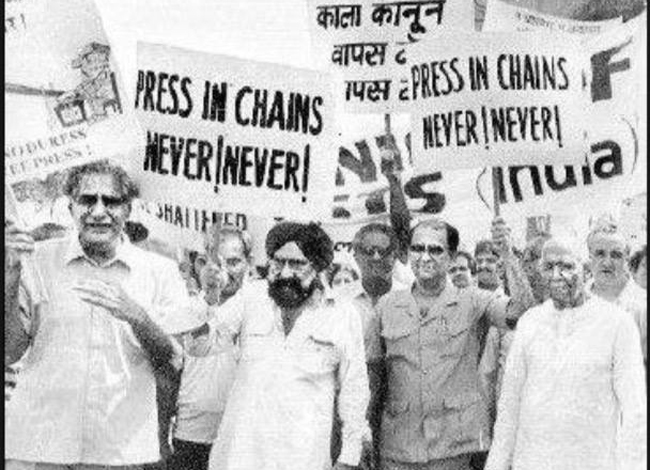
This led to an unprecedented unity among journalists and non-journalist employees of newspapers and news agencies – both left-wing and right-wing — to protest against the Bill. Public meetings were held to explain to the people the disastrous consequences of the Bill. Government functions and Assembly sessions were boycotted. Senior journalists and editors led the protests at several places. In Delhi a procession was taken out (on September 5, 1988) on a four-km route from India Gate to Boat Club with Ramnath Goenka, Khushwant Singh, B G Verghese, Kuldip Nayyar and others carrying placards against the Bill. On September 6, newspaper and news agency employees all over the country observed strike. The following morning the only newspaper that came out in Delhi was ‘National Herald’, founded by Jawaharlal Nehru and run by a Congress Trust. From September 14, the journalists in the country went about their work wearing black badges for three days.
Rajiv Gandhi only got more stubborn. He told journalists in Guwahati on September 15 that the Defamation Bill was a ‘prestige issue with the Government’. He had earlier issued a statement imputing (in Modi style) a lack of proper understanding of the contents of the Bill to protesting journalists. His statement said, inter alia: ‘we will like them (the Press) to read the Bill. We are totally convinced that the Bill is needed. I am myself convinced that we are proceeding on the right path.’
A fallout of the countrywide anger against the Bill was a feeling of panic among Congress MPs as they feared certain defeat in the elections due within a year. Several Congress MPs tried to reason with Rajiv Gandhi. Some of them displayed rare courage and publicly appealed to the Prime Minister to withdraw the Bill.
On September 22, Rajiv Gandhi decided to bow to the public opinion and issued a statement saying that the Bill would not be made into law. A press release signed by the Prime Minister said: ‘a free Press is an integral part of the inner strength and dynamism of our democracy. Without a free Press, there can be no democracy. The imperishable values of our freedom struggle have gone into making the Press in India. We uphold this legacy.’
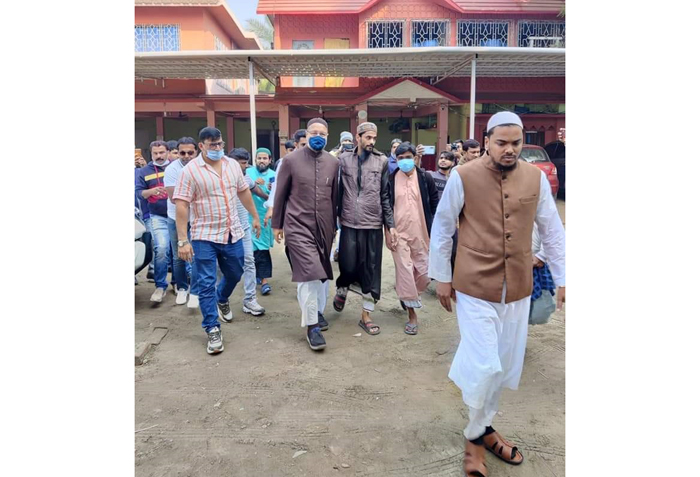
Kolkata: Muslim politics in Bengal has taken a potentially divisive turn as Asaduddin Owaisi, the leader of the AIMIM met Abbas Siddiqui, a vocal and young scion of the Pir clan that presides over the influential Furfura Sharif on order to spread the Hyderabad-based party’s wings in West Bengal before the assembly polls which is due by May 2021. The MIM chief visited the clan’ s citadel around the Mazar of its founder Abu Bakr Siddiqui, revered as Dadahuzur in undivided Bengal on Sunday and met Abbas along with a few other Pirzadas from the feud-torn family.
Lavishing praises on the young man, Owaisi later announced that he would work in Bengal with the younger Siddiqui while being behind him. His gesture to work under the leadership of the politically rookie and rustic youth from a popular Pir clan is well-planned. Abbas is a Bengali-speaking rural Muslim while the MIM is still a party of Urdu-speaking and mainly urban Muslims who comprise a small portion of Bengal’s 30 per cent Muslim population.
It is not clear whether Abbas and his allied Pirzadas would join MIM or form their own political outfit to contest the coming polls in alliance with the MIM. Holding rallies in south Bengal districts in post-Lockdown months, Abbas has already made it clear that he would enter the electoral fray and field candidates in a sizable number of seats. He wants Mamata to share some seats with his unborn outfit which she has not responded to so far. Earlier, Congress and Left too had warmed up to the Pirzada but could not make any deal.
Whatever may be their next course of action, it will likely to provide a good foothold for the Hyderabad MP, particularly in south Bengal. Owaisi is bolstered by the result of recently held Bihar polls in which his party (in alliance with BSP et al) has secured five seats in Seemanchal close to Bengal. He is now keen to open his account in the neighboring state where incumbent Mamata Banerjee government is facing a tough challenge from the BJP and Sangh Parivar.
Mamata’s party Trinamool Congress (TMC) which has got 43 per cent of vote share as against 40 per cent of the BJP in 2019 Lok Sabha polls is heavily dependent on the Muslim support base. The largest minority community which has been mainly targeted by the reigning majoritarian right wing regime is decisive in around 130 seats, mostly in south Bengal. Any division in Muslim votes will surely hurt Mamata’s defence against the surging Hindutva forces which is working overtime for communal polarisation in order to bag Bengal.
This is why Mamata is worried about Owaisi and both have increased the decibel of their verbal duel since the Bihar polls. The Bengal chief mInister has called the MIM chief an ‘outsider’ and the ‘head of BJP’s B team’. She accused Owaisi of helping the ruling party at the Centre not only to retain power in Patna along with the JD(U) but also to emerge stronger. Owaisi has retaliated by reminding her blow-hot blow-cold relation with the BJP as the NDA minister under AB Vajpayee and with Narendra Modi even after Gujarat 2002. He also ridiculed the TMC chief for her inability to arrest defection of her minions to the Sangh fold.
The blame game notwithstanding, it is pertinent to remember that both sides have skeletons in their cupboards. Mamata cannot wish away her role in opportunist politics in helping BJP to make a dent in Bengal in post Babri demolition and post Gujarat 2002 years in pursuance of her blind opposition to CPM-led Left Front. Similarly, Owaisi can’t sweep his party’s communal politics under carpet in successive polls in Hyderabad and its role in the politics of polarization that paved the way for BJP’s advent in the recent civic election in his home turf.
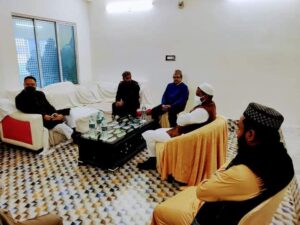
AIMIM President Asaduddin Owaisi had a close door meet too with Pir clan of Furfura Sharif I Courtesy: Anonymous
BJP is happy
Bengal BJP is clearly elated with his entry in the state politics as it has justified MIM intent on ground of any registered political party’s right to contest in states. The saffron camp had garnered 17 per cent vote in Bengal in 2014 during the Modi wave but it dipped to 10 per cent in the 2016 assembly election.
It has resurged again as a close rival to the TMC not only in vote share but also by bagging 18 out of 42 seats, mainly at the cost of the Congress and the Left Front.
The party of Sonia-Rahul Gandhi has reduced its vote share to 5.6 per cent in 2019 from 12.4 per cent in 2016. The LF is the biggest loser at mere 7.5 per cent in 2019, a pale show in comparison to its 26.6 per cent in 2016 which was three per cent lesser than its 2014 tally. It’s a far cry from its impressive share of 41 per cent in 2011 when it lost power to Mamata after 34 years.
Nevertheless, bitter over Mamata’s role in opposition as well as her poaching into Congress-LF camp and persecution of its supporters after she has assumed office since 2011, the latter combine has been following a politics of vengeance. The bengali coinage of ‘ aage Ram pare Bam’ (first vote for BJP in 2021 then for LF in 2026) reflects the crux of that politics. The CPM top guns in Bengal have virtually justified it by refusing to make any difference between TMC and BJP.
In this backdrop, If Muslim vote divides mainly between TMC and Owaisi-Pir assorted alliance in 2021, with a little fraction to LF-Congress, it will further help BJP which is ahead of the ruling party in 120 seats out of 294.
Larger Issues at stake
Beyond electoral arithmetic, larger considerations can not be shelved. Many observers among Indian Muslims as well as those outside the community are worried about the advent of Muslim identity-based politics at the cost of secular or cross-faith pluralist opposition to majoritarian BJP’s politics of religious nationalism and communal polarization. Some fear the gradual advent of another Muslim League and repeat of pre-Partition years. Others consider the fear far-fetched but caution against the minoritarian religious consolidation.
They largely agree that the main opposition party, Indian National Congress is still running like a headless chicken. The disarray in the entire opposition camp has failed to galvanise a spirited resistance inside and outside the parliament against successive onslaughts on the minority as well as farmer and labor rights.
This has made room for Muslim politicians like Owaisi whose vociferous role in the parliament has caught the imagination of a section of Muslim youth. They consider him and his party as a radical and independent alternative for the community.
Abbas Siddiqui is one of them who seems to have made Owaisi a role model in Bengal. Both of them harp on the growing Muslim sentiments about being used as mere vote-bank by the opposition parties, to the elation of the BJP and urge Muslims to float their own political outfit. Both, of course, are careful to swear by secular republican constitution of India and want Dalit-Muslim unity against Brahminical Hinduism of the Sangh Parivar.
Abbas and his maverick uncle Twaha Siddiqui, despite their angularities over politics have been underlining the unity of poor Hindu and Muslims across faithline and Bengal’s liberal social fabric.
The efforts for Dalit-Muslim alliance had a strong current in undivided Bengal which died in the killing fields of the Partition and post-partition riots. Nevertheless, it has gained currency in recent years in West Bengal politics as BJP has been wooing Matuas or Namo Shudras and other Dalit/lower caste Hindus in Its fold.
Harping on the influx of Hindus and other religious minorities in Bangladesh following persecution by Jamate Islami and other Islamist fundamentalist outfits, the Sangh is promising citizenship to those non-Muslims under the CAA (Citizenship Amendment Act). Abbas has publicly admitted the persecution across the border, a rarity in mainstream politics and urged for electoral and social understanding between the minorities at two sides of the border, now neighbors.
Ironically, Mamata too depends on Matua votes and any further division in the largest SC community vote beyond BJP and TMC may cost Bengal’s big sis more.
Observers also pointed to the political aspirations hidden under the grandstanding among the Pirzadas of Furfura and other Pir clans and Ulemas in pollbound Bengal. Their increasing rivalries for public devotion in rural areas and clamor for bargains are surely the signs of template shifts in Bengal politics. The state did not witness such openly political roles by those who claimed hereditary or otherwise acquired religious authority in post-independence decades.
২০১৯ সালের লোকসভা নির্বাচনে বিজেপি এ রাজ্যে পাগলের মতো টাকা ঢেলে এবং মিথ্যে প্রচার ছড়িয়ে ইতিহাসে প্রথমবার প্রধান বিরোধী পার্টির স্থানটা নিয়ে নিয়েছিল। ব্যাপক ভোট কমেছিল বাম ও কংগ্রেসের।
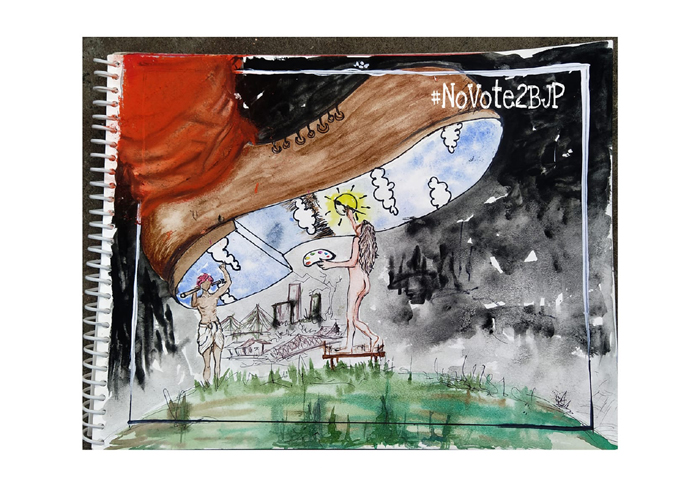
২০২১ সালের বিধানসভা (ও তার ফল অনুসারে রাজ্যসভা) নির্বাচনে বিজেপি আবারও পাগলের মত টাকা ঢেলে ও মিথ্যে প্রচার চালিয়ে প্রথমবার বাংলার বিধানসভাতে প্রধান বিরোধী পার্টির জায়গাটা নিয়ে নিতে চাইছে। সে চাইছে বাম ও কংগ্রেসের জায়গাটা দখল করে নিতে।
একবার এই জায়গাটা পেলে তারপর সে চেষ্টা করবে আরও এগোতে।
এটা কোনও ভাবেই হতে দেওয়া যাবে না। বিজেপির কট্টর ভোটার খুবই কম এ রাজ্যে। বেশিরভাগই ফ্লোটিং ভোটার, যারা হাওয়া দেখে ভোট দেয়। প্রচারে বিশ্বাস করে ভোট দেয়। যে বেশি টাকা ছড়ায় তার প্রচার দেখে ভেবলে যায়। গোদি মিডিয়ায় যা দেখে তাই বিশ্বাস করে। এছাড়া অন্যান্য পার্টিগুলোর ভেতরে বিশ্বাসঘাতক আছে। অন্তর্ঘাত করে, বিজেপির টাকা খেয়ে দালালি করে কিছু লোক। তলে তলে লুকিয়ে লুকিয়ে রাতের অন্ধকারে ফিস্ ফাস্ করে, গুজব ছড়ায়। তারা নাকি “হাওয়া” জানে।
“হাওয়া”-র চক্করে, গুজব, কানাঘুষো, ফিসফাসের চক্করে পড়ে আসামের ১৯ লক্ষ বাঙ্গালি-গোর্খা-আদিবাসীদের মতো মারাত্মক ভুল করবেন না। আপনি খোঁজ খবর নিয়ে যা ঠিক করবেন, সেটাই হাওয়া। অন্য কেউ হাওয়া ঠিক করে দেবে না। অন্তত সবথেকে ক্ষতিকারক ভাইরাস বিজেপি-কে চিনুন। মিডিয়ার কথা না শুনে কৃষকদের কথা শুনুন। মিডিয়ার কথা না শুনে ছাত্রদের কথা শুনুন। মিডিয়ার কথা না শুনে রাজনৈতিক বন্দীদের বাড়ির লোক, বন্ধু-স্বজনদের কথা শুনুন।
দেশের সবচেয়ে বড় দেশপ্রেমিকদের বিনা বিচারে গারদে পুরল বিজেপি কার স্বার্থে? নিরপরাধ সহনাগরিকদের পিটিয়ে মারছে বিজেপি কার স্বার্থে? কোন ব্যবসা দখলের স্বার্থে? রেল থেকে বিএসএনএল থেকে এয়ারপোর্ট বেচে দিচ্ছে কার স্বার্থে? এরকম শিক্ষা নীতি বিজেপি কেন এনেছে যাতে গরীব বাড়ির ছেলেমেয়েরা ক্লাস এইটেই স্কুলছুট হয়, যাতে গ্রামের পর গ্রাম লক্ষ লক্ষ স্কুল বন্ধ হয়ে যায়, বেসরকারি পুঁজি ঢুকে পড়ে প্রতিটা কলেজ বিশ্ববিদ্যালয়ে, যাতে গরিবের সন্তানের লেখাপড়ার সমস্ত সুযোগই বন্ধ হয়ে যায়? বিজেপি এমন বিল আনল যাতে দেশের সমস্ত অরণ্য, নদী, পাহাড় ধ্বংসের ছাড়পত্র পায় কর্পোরেটরা? বিজেপি-র আমলে সুপ্রিম বিচারব্যবস্থা একেবারে নাঙ্গা হয়ে গেল কেন – সর্বোচ্চ বিচারপতি বিজেপি নেতার ছেলের বাইক চেপে ঘুরছে আর একের পর এক কলঙ্কিত রায় দিচ্ছে কেন? কোভিড মহামারীকে রুখতে শুরুতেই দেশের বিমানবন্দরগুলি সীল না করে কোটি কোটি শ্রমিককে বিনা রেশনে, বিনা মাইনেয়, বাড়ি ফেরার ব্যবস্থা না করে মাসের পর মাস অমানুষিক যন্ত্রণা কেন দিল বিজেপি? শ্রমিকদের কুকুর বেড়ালের মতো করে খেদাল, গায়ে ব্লিচিং স্প্রে করল, আর বড়লোকদের বেলায় সমাদরে অভ্যর্থনা, ফাইভ স্টার হোটেল?
বিজেপি-কে চিনতে হলে শেফালি হাজং-এর কথা শুনুন। আদিবাসী শেফালি হাজং অনাহারে বাধ্য হয়ে নাম মাত্র মজুরিতে নিজের হাতে বানাচ্ছেন নিজের ডিটেনশন ক্যাম্প। ক্রীতদাস হতে আর বেশি বাকি নেই তাঁর।
বিজেপি-কে চিনতে হলে ফাতিমা নাফিস-এর কথা শুনুন। ফাতিমার ছেলে নাজীবকে শুধু তার ধর্মের কারণে বিশ্ববিদ্যালয় থেকে গায়েব করে দিল বিজেপি। গুপ্তহত্যা করে এতদিনে নিকেশই করে ফেলেছে, কিন্তু পুলিশ, আইন, আদালত কেউ কিচ্ছু জানে না।
বিজেপি-কে চিনতে হলে রাধিকা ভেমুলা-র কথা শুনুন। রাধিকার ছেলে রোহিত ভেমুলা তার বাড়িতে প্রথম প্রজন্মের বিশ্ববিদ্যালয় পড়ুয়া। সে ছেলেটি দলিত হয়ে বিজেপির বিরোধিতা করেছিল বলে তাকে হোস্টেল থেকে বের করে দিয়ে, স্কলারশিপ বন্ধ করে দিয়ে এমন অবস্থা করল যে সে আর বেঁচে থাকতেই পারল না।
বিজেপি-কে চিনতে হলে জুনেইদের মায়ের কথা শুনুন। কিশোর জুনেইদ এর অপরাধ ছিল সে পরবের দিনে বন্ধুদের সাথে ট্রেনে করে যাচ্ছিল উৎসবে আনন্দ করবে বলে। ধর্মের কারণে এক কিশোরকে পিটিয়ে মারল। মালদার শ্রমিক আফরাজুল-এর মেয়ের কথা শুনুন। আফরাজুলকে পিটিয়ে মারল রামের নাম করে। তারপর পুড়িয়ে দিল। সেই খুনিকে নির্বাচনের আগে সম্বর্ধনা দিয়ে প্যারেড করালো বিজেপি।
বিজেপি-কে চিনতে হলে আসিফা-র পরিবারের কথা শুনুন। পশুপালক যাযাবর পরিবারের ছোট্ট মেয়েকে মন্দিরের ভেতরে গণধর্ষণ করে খুঁচিয়ে মেরে তারপর জাতীয় পতাকা নিয়ে ধর্ষকদের সমর্থনে মিছিল করল বিজেপি। হাথরাসে দলিত পরিবারের মেয়েটিকে গণধর্ষণ করে পুলিশ দিয়ে প্রমাণ লোপাট করে পুড়িয়ে দিল। ধর্ষকদের সমর্থনে খাপ বসাল, মেয়েটির চরিত্রহনন করতে মিডিয়া লেলিয়ে দিল। এই হচ্ছে বিজেপি।
এতদিন যে মতুয়ারা এ দেশের নাগরিক ছিলেন, আজ সবাই বলে বেড়াচ্ছে তারা অবৈধ বাংলাদেশি। তাদেরই ভোটে জিতে এসে, তাদেরই ভোটার কার্ডকে মিথ্যে বলছে। এই হচ্ছে বিজেপি।
যে বাংলায় দেশভাগের পর কোনওদিন দাঙ্গা হয়নি। সেই বাংলায় দিকে দিকে বহিরাগতদের প্রত্যক্ষ সাহায্যে, ফেক নিউজ ও পরিকল্পিত ধর্ম-আমদানির সাহায্যে দাঙ্গা লাগিয়ে বেরাচ্ছে। মানুষ খুন করছে। দোকান, বাড়ি জ্বালাচ্ছে। ধর্মের নামে গরীব মানুষকে পেটাচ্ছে। মানুষের মনের সুন্দর দিকগুলো মুছে দিয়ে নিকৃষ্ট দিকগুলোয় হাওয়া দিচ্ছে। মাতৃভাষাকে রোজ অপমান করছে। এই হচ্ছে বিজেপি।
চার ঘন্টার নোটিসে লকডাউন করিয়ে গরীবদের ভাতে মারল। বড়লোকরা বারান্দা থেকে থালা বাজাল। আগে যখন মেয়েদের সতী সাজিয়ে পুড়িয়ে মারত তখন খুনের আওয়াজ চাপা দিতে ঠিক যেমন করে ব্রাহ্মণরা, গ্রামের পুরুষ মুরুব্বিরা ক্যানেস্তারা বাজাত। ঠিক সেরকম অশালীন ছিল মৃত্যুমিছিলের মাঝে বড়লোকদের থালা বাজানোর মহড়া। এই হচ্ছে বিজেপি।
এক রাতের নোটিসে নোটবাতিল করিয়ে আবারও গরীবদের ভাতে মারল। দুশ’ গরীব মানুষ লাইনে দাঁড়িয়ে মারা গেলেন। ভারতের অর্থনীতি খুচরো ক্যাশে চলে। সেই ছোট ছোট মানুষরা পথে বসল। অর্থনীতির মন্দা তখন থেকেই শুরু। আর আম্বানি আদানি টাটা থেকে শুরু করে অমিত শা’র ছেলের মত পুঁজিপতিরা ফুলে ফেঁপে উঠল। এই হচ্ছে বিজেপি।
করোনার নাম করে পি এম কেয়ার্স ফান্ড বানিয়ে প্রধানমন্ত্রীর ছবি লাগিয়ে লক্ষ লক্ষ কোটি টাকা তুলল। তাতে পুঁজিপতিদের টাকা, সরকারি সংস্থার টাকা, জবরদস্তি বেতন কেটে নিয়ে সেই টাকা, মানুষের দানের টাকা সব ঢুকল। করোনার নামে। তারপর থেকে কোর্ট কাছারি আইন আদালত করেও সে টাকার হিসেব দিচ্ছে না পাবলিককে। সৎ প্রধানমন্ত্রী সব টাকা খাবে। বিজেপির পার্টি ফান্ডে যাবে এই টাকা? হিসেব দেবে না। এই হচ্ছে বিজেপি।
লকডাউন ঘোষণার পরের দিন সব কাগজে পাতা জোড়া বিজ্ঞাপন মনে আছে? চীনা কোম্পানি পে-টিমের মডেল হাসি মুখে বলছে – পেটিএম করো। নোটবাতিল জিন্দাবাদ। সেই মডেল ছিল নরেন্দ্র মোদী। এখন পাব-জি ব্যান করেও চীনা আগ্রাসনের একটি চুলও ছিঁড়তে না পারা মোদী, যার আমলে পুলওয়ামার ঘোরতর সন্দেহজনক ঘটনায় কারুর শাস্তি হয়নি, বাংলার মৃত সৈনিক বাবলু সাঁতরার স্ত্রীর জরুরি ও চোখা প্রশ্নের উত্তর না দিয়ে তাঁকে জঘন্য নোংরা কথা বলেছিল মোডিভক্ত মিডিয়া, এবং তারপর সীমান্ত পেরিয়ে কয়েকটা পাইন গাছের ওপর বোমা মেরে মিডিয়ার সাহায্যে তিলকে তাল করে ফেক ইমেজ ফাটিয়ে ইলেকশন জিতেছিল। এই হচ্ছে বিজেপি।
গ্যাসের দাম, আলু পেয়াজের দাম, চালের দাম, ডালের দাম – কোনও কিছুই এখন আর সরকার নিয়ন্ত্রণ করবে না। সবই বাজারের খেলায় চলবে। মানুষ মরবে কিন্তু মানুষের ভোটে নির্বাচিত সরকার কিছুই করবে না। সরি, ভুল বললাম। করবে। তারা মানুষকে না খাইয়ে মারার কাজ করবে। তাই অত্যাবশ্যক পণ্যের তালিকা থেকে মানুষের শেষ সম্বল চাল, ডাল, আলু, পেঁয়াজও সরিয়ে নিয়েছে। এই হচ্ছে বিজেপি।
—
তাই বিজেপি-কে যে বা যারা ভুল কারণে ভোট দিয়েছিলেন, তারা সেই ভোট ফিরিয়ে নিন, অন্যত্র দিন বা দেবেন না বা যা খুশি করুন। *একমাত্র দেশদ্রোহী ছাড়া কেউই বিজেপিকে ভোট দেবেন না।*
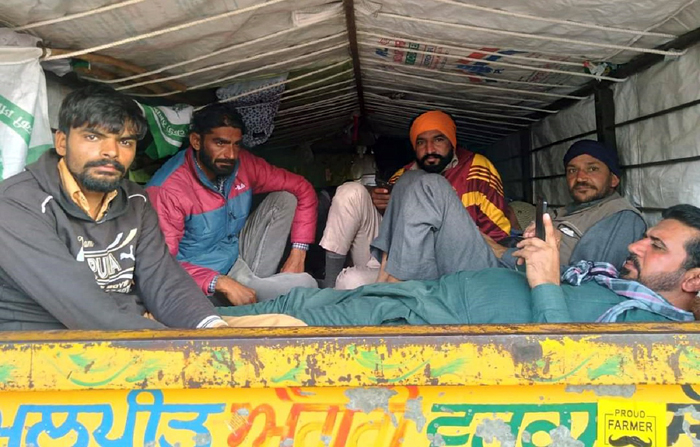
[dropcap]স্বা[/dropcap]ধীন দেশের ইতিহাসে সর্বাপেক্ষা বৃহৎ কৃষক আন্দোলন, যা আমরা দেখছি চোখের সামনে, তাকে কালিমালিপ্ত করার জন্য, ছোট করার জন্য মোদি সরকার, আর.এস.এস-বিজেপির আর গোদি মিডিয়ার কতই না প্রয়াস! একটা কথা বলা হচ্ছে যে এই আন্দোলন মূলত পাঞ্জাবের আন্দোলন। MSP বা সরকারের দেওয়া সর্বোচ্চ সাহায্য মূল্য বাতিল হয়ে যাবার ভয়ে ওখানকার কৃষকরা এই আন্দোলন করছে।
প্রথমত, একথা বলে সরকার নিজেই প্রমাণ করছে যে, তারা এমন কিছু একটা ঘটিয়েছে যাতে সাহায্য মূল্য বাতিল হয়ে যাবার ভয়টা কৃষকদের মনে ঢুকেছে। অথচ, আবার তারাই কৃষকদের প্রবোধ দিতে চাইছে, MSP বহাল থাকবে। এদিকে কৃষক নেতারা যখন বলছেন, মুখের কথায় হবে না, আইন করো, পার্লামেন্ট ডাকো। তখন কিন্তু তারা তা মানতে রাজি হচ্ছে না।
যাই হোক না কেন, এই আন্দোলন কিন্তু শুধুমাত্র পাঞ্জাবের কৃষকদের আন্দোলন নয়। সিঙ্ঘু এবং বিশেষ করে টিকরি বর্ডারে ভালো রকম উপস্থিতি রয়েছে হরিয়ানার কৃষকদের। হরিয়ানায় কৃষকদের পক্ষে জনমত কতটা তীব্র হয়ে উঠেছে তা বোঝা যাচ্ছে খাপ পঞ্চায়েতের আচরণে। এই খাপ পঞ্চায়েতের কর্তাব্যক্তিরা কিন্তু সামাজিকভাবে বিজেপির কাছাকাছি, তাদেরই সমর্থক। কিন্তু হৈ হৈ করে তারা নেমে পড়েছে কৃষকদের সমর্থনে। রাজস্থানে এনডিএ-তে ফাটল ধরেছে। রাজস্থান সীমান্তে সেখানকার কৃষকদের জমায়েত দমনপীড়ন উপেক্ষা করে বাড়ছে। গাজিপুরে উত্তরপ্রদেশ সীমান্তেও সেখানকার কৃষকরা বেশ জমিয়ে বসেছেন। মনে রাখতে হবে উত্তরপ্রদেশ, মধ্যপ্রদেশ প্রভৃতি বিজেপি শাসিত দিল্লির সীমান্তবর্তী রাজ্যগুলির পুলিশ কিন্তু ভয়ংকর দমন-পীড়ন চালাচ্ছে কৃষক আন্দোলনের ওপর। সে সব উপেক্ষা করেই কিন্তু এগোতে হচ্ছে।
সর্বভারতীয় কিষাণ সংঘর্ষ সমন্বয় কমিটি প্রথম যখন দিল্লি অভিযানের পরিকল্পনা করে তখনই ঠিক হয়েছিল দিল্লিকে ঘিরবে কাছাকাছি রাজ্যগুলির কৃষকরা। অপেক্ষাকৃত দূরবর্তী অঞ্চলের কৃষকরা নিজ নিজ রাজ্যে সংহতিমূলক কর্মসূচি নেবে। এই পরিকল্পনা দারুনভাবে সফল হয়েছে। তাই, উত্তরভারতীয় রাজ্যগুলির কৃষকদেরই এই ঘেরাবন্দীর সৈনিক হিসাবে দেখা যাচ্ছে।
কিন্তু ফসলের ন্যয্যা এবং উচিত দাম পাওয়ার বিষয়টা একটা সর্বভারতীয় সমস্যা। পাঞ্জাব, হরিয়ানার মত পশ্চিমবঙ্গ বা বিহারের কৃষকদের কাছেও এটি আক্ষরিক অর্থেই জীবনমরণের প্রশ্ন। কৃষক আত্মহত্যা সব রাজ্যেরই বৈশিষ্ট্য, পশ্চিমবঙ্গেরও। আর সেটা কিন্তু ‘বউ-এর সাথে ঝগড়া করে’ হয় না, যা বোঝাতে চান মমতা বন্দ্যোপাধ্যায়রা।
কিন্তু সব কিছু সত্ত্বেও এই আন্দোলনে পাঞ্জাবের কৃষকদের মধ্যে৷ যে একটা অভূতপূর্ব স্বতঃস্ফূর্ততা দেখা যাছে তা কিন্তু অস্বীকার করা যাবে না। বিপুল অংশগ্রহণ, সঙ্গে চমৎকার সাংগঠনিক দক্ষতা তাদের একটা বিশিষ্টতা হয়ে দাঁড়িয়েছে। সংযুক্ত কিষাণ মোর্চার মধ্যে পাঁচশোর বেশি কৃষক সংগঠন রয়েছে। তার মধ্যে যে চল্লিশ পঁয়তাল্লিশটা অগ্রগামী বলে চিহ্নিত তার বেশিরভাগটাই পাঞ্জাবের। সচেতনাতেও তাঁরা অত্যন্ত এগিয়ে। পাঞ্জাবের জমায়েত থেকে যেভাবে কর্পোরেট-বিরোধী স্লোগান উঠছে তাতে বোঝা যাচ্ছে বর্তমানে ভারতের কৃষিক্ষেত্রে কর্পোরেট বনাম কৃষক দ্বন্দ্বটিকে তাঁরা অতি স্পষ্টতায় চিনে নিয়েছেন। পশ্চিমবঙ্গের কৃষকরা কর্পোরেট চিনেছেন এই সেদিন, সিঙ্গুর-নন্দীগ্রাম আন্দোলনের সময়ে। কিন্তু পাঞ্জাব কি সেই “সবুজ বিপ্লব”-এর সময় থেকেই কর্পোরেট চিনতে শেখেনি? সার, বীজ, কীটনাশক প্রভৃতির ওপর দেশি-বিদেশি কর্পোরেটদের একচেটিয়া আধিপত্য কি ইতিমধ্যেই নরক বানিয়ে তোলেনি? আর এখন, কৃষি উৎপাদের ওপর বহুজাতিকদের একচেটিয়া দখলদারি যে সেই নরককে আরও ভয়াবহ করে তুলবে তা বুঝে নিতে তাঁদের ভুল হয়নি। ভারতীয় কৃষিক্ষেত্রের কর্পোরেটীকরণ যদি আমাদের কৃষিব্যবস্থার নবীনতম প্রবণতা হয়ে থাকে তাহলে কর্পোরেটদের চরিত্র সম্পর্কে অভিজ্ঞতায় প্রবীন পাঞ্জাবের কৃষকরাই যে এই আধুনিক দ্বন্দ্বকে সর্বোত্তমরূপে উপলব্ধি করে এ আন্দোলনের নেতা হয়ে উঠবেন তাতে তো আশ্চর্যের কিছু নেই।
কিন্তু তার পরেও আরও কিছু কথা থাকে। শুধু এইটুকু দেখলেই ‘ভারত দর্শন’ সম্পূর্ণ হয় না। সিঙ্ঘু সীমান্তে একটা স্টলের ব্যানারে আমার চোখ আটকে গেল যথারীতি। সেখানে লেখা, ‘আর্য হোমিওপ্যাথিক ক্লিনিক’। সাথে সাথে আমার চোখে ভেসে উঠল সপ্তসিন্ধুর দেশের মহাকাব্যিক ইতিহাস। কতই না কান্ড ঘটেছে এই সিন্ধু, বিপাসা, পারুষনি অথবা শতদ্রুর তীরে। সুদাসের নেতৃত্বে আর্য বাহিনী দখল নিয়েছিল এই বিস্তীর্ণ জনপদের। এখানে বসেই ঋগ্বৈদিক ঋষিরা রচনা করেছেন বেদ। বৈদিক সভ্যতার পীঠস্থান এই অঞ্চল। বৈদিক দর্শন এবং ধ্যানধারণারও। কিন্তু মধ্যকালীন সময়ে এসে সহসা ভাবনা-চিন্তা, দর্শনের পাশা ঘুরিয়ে দিলেন মহাগুরু নানক। গাঙ্গেয় উপত্যকায় যা বহু আগেই ঘটিয়েছিলেন গৌতম বুদ্ধ। বৈদিক ধ্যানধারণায় ইতিমধ্যে জাঁকিয়ে বসা জাতি-বর্ণের ভেদবিচার আর অসমানতার বিরুদ্ধে নানকের সমানতা, সৌভ্রাতৃত্ব আর সেবার বাণী পাঞ্জাবকে ভাসিয়ে নিয়ে গেল। আদি-বৈদিক সমানতা আর সৌভ্রাতৃত্ব যেন নেতির নেতি হয়ে ফিরে এল নানকের হাত ধরে। শিখরা আজ তাই বিশ্বের যে প্রান্তেই থাকুন না কেন, তাঁদের উপার্জনের একটা অংশ নিয়ম করে গুরুদুয়ারাতে দান করে থাকেন। আর প্রতিটি শিখকে, তিনি যত বড় ব্যাপারী বা শিল্পপতিই হোন না কেন, মাসে একদিন গুরুদুয়ারাতে কায়িক শ্রম বিনা বিনিময়ে দান করতেই হয়। আজ সিঙ্ঘু বা টিকরি সীমান্তে যে অভূতপূর্ব সাংগঠনিক দক্ষতা দেখা যাচ্ছে তা কিন্তু একদিনে অর্জিত হয় নি। দশম গুরু গোবিন্দ সিং এর মধ্যে প্রবিষ্ট করে দিয়েছিলেন বীরত্ব, সাহস আর আত্মত্যাগের ধারণা। তৈরি হয়েছিল ‘খালসা’, অর্থাৎ যোদ্ধাবাহিনী। খালসাতে কিন্তু শুধুমাত্র পুরুষই নয়, মহিলারাও আছে। খালসার পুরুষ সদস্যরা নিজেদের “সিং” বলে অভিহিত করে, মহিলারা “কাউর”। তৈরি হল হার না মানার মনোভাব, যে কোন ধরণের পরাধীনতাকে ঘৃণার মনোভাব। ব্রিটিশ বিরোধী স্বাধীনতা সংগ্রামে, বা পরবর্তীকালের কমিউনিষ্ট আন্দোলনে পাঞ্জাব যে গুরুত্বপূর্ণ ভূমিকা নিতে পেরেছিল তা তো এমনি এমনি নয়!
আর এ সবের সঙ্গেই কোথাও যেন ওতপ্রোতভাবে মিশে রয়েছে কৃষক হিসাবে এক প্রবল গর্ববোধ। বঙ্গদেশে যেমন আমরা “চাষাভুষো” বলে বেশ খানিকটা নিচু নজরেই দেখেছি কৃষক বা কৃষিকাজ, পাঞ্জাবে কিন্তু তা হয়নি। শিখবাদের সঙ্গে প্রবল কৃষক-অস্মিতার উপস্থিতি এবং তারই সঙ্গে বহুজাতিক এবং কর্পোরেটদের প্রকৃত স্বরূপ চিনে নেওয়ার সৌভাগ্য —- এই ত্রহ্যস্পর্ষই বোধহয় আজ পাঞ্জাবকে আজকের লড়াইয়ের নেতা করে তুলেছে।
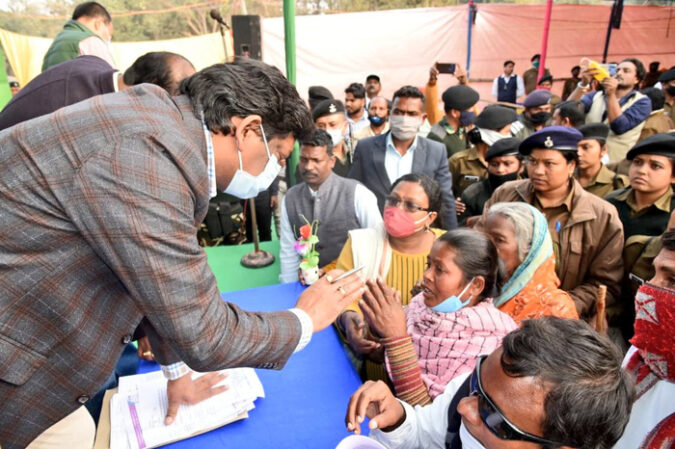
Ranchi: Towards the end of 2019, Jharkhand got its youngest Chief Ministers in Hemant Soren. One year down the line, its chief minister has achieved what none of his predecessors ever attained.
45-year-old Hemant has been invited to speak at the India Conference being hosted at the prestigious Harvard University, on the issue of tribal indigenous politics with a welfarist development agenda and on his impressive way of handling the Covid-19 crisis.
On scanning India Conference’s site revealed that no chief minister from India had ever been invited as a keynote speaker till its 17th edition. However, in the past, few political leaders including Sachin Pilot, Asaduddin Owaisi and Jayant Patil have addressed Harvard’s India Conference. But till date, most of the speakers remain from academic, journalistic, policy making and industry backgrounds.
When contacted, Suraj Yengde, the Senior Fellow of Harvard Kennedy School, who sent the invite to the CM informed eNewsroom, “Chattisgarh Chief Minister Bhupesh Baghel had addressed India Conference in 2020.”
Significantly, Hemant Soren was invited for 2020 conference too. “But he had gracefully turned the invite saying, it is too early and that he wants to spend time on working for the people,” added Suraj over phone from the US.
In 2021, there will be a panel of chief ministers and Bengal Chief Minister Mamata Banerjee as well as Maharashtra CM Uddhav Thakery can also be the part of the panel.
Hemant Soren, took charge of the Chief Minister office at the end of December 2019, was able to form his cabinet by January-February, but had to face the massive challenge of handling the Covid-19 crisis.
Jharkhand is among the top states when it comes to migrants, working at different parts of India. Right from India’s financial capital Mumbai, to textile and diamond cutting hub Surat, to mountaineering region of Leh, youths from Jharkhand will be seen toiling to eke-out a living.
However, they were the ones most affected during sthe pandemic. The Hemant Soren government stood by these individuals and brought back migrant workers not only from Surat by arranging special trains but also flew down hundreds of workers from Leh and other places during lockdown.
As soon as Hemant was sworn in as Jharkhand’s CM, he during his first cabinet meeting decided to remove all cases slapped on the tribals for the Pathalgadi movement by the previous government.
He even promised that in future no or less migrant workers would have to go to other states to earn their living. The Jharkhand government has initiated some rural projects recently and plan to provide jobs to 15000 youths by March, 2021.
The invite from Harvard to a Jharkhand chief minister has its significance, as the state has also been known for having unstable government, unpopular chief ministers, some of whom have even landed in jail on corruption charges.
Hemant, son of Shibu Soren – Rajya Sabha member and three time chief minister of Jharkhand, who fought for the creation of a separate state, is now serving his second term as the chief minister.
The Jharkhand chief minister will be addressing (virtually) the India Conference on February 20, 2021.
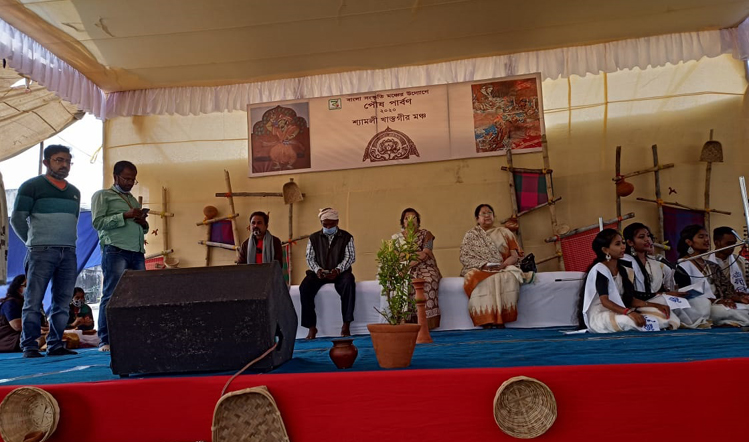
Kolkata: Visva Bharati University (VBU) while celebrating its centenary year chose to break away from its century-old tradition of hosting the Poush Mela on its university grounds. A move that shocked many in West Bengal and forced a group of culturally aware individuals to even host the ‘alternate’ poush mela called the Poush Parbon on the scheduled date (December 23-25) with intention of upholding Bengal’s secular tradition but also to promote the local trade and artwork.
Lauding the move of the social group Bangla Sanskriti Mancha (BSM), Manisha Banerjee, headmistress of a government high school near Shantiniketan said, “Poush Mela, traditionally has been a secular fair. Unlike hundreds of other religious fairs, this century-old fair flagged off by Debendranath Tagore, father of Rabindranath Tagore promotes not just the local art and traders but also secularism. So, the news of it not being hosted on my alma mater’s campus was a bit disheartening. But thanks to BSM’s Poush Parban, we were able to celebrate a mini poush mela this year.”
The fair, unlike the previous years, was smaller in size, especially as the organisers tried their best to pull it off in the best possible manner even after following the Covid-19 protocols.
Speaking to eNewsroom, Samirul Islam, president of BSM said, “This fair is part of Bengal’s heritage, we just couldn’t let it go. Also, given the fact that the artisans and local trade had suffered a lot due to the pandemic, people were looking forward to this mela to sell their products. With the university deciding to do away with the fair, we planned this alternate Poush Praban to help the local traders and artists.” Islam, along with his team took on the daunting task of having organised the fair in such a short notice.
A must listen song by Baul singer, Basudev Das Baul at Poush Mela
Adding to that Tanmoy Ghosh, secretary of BSM pointed out, “The move of not holding the century-old mela, has its roots in the agenda of outsiders wanting to ruin Bengal’s heritage. This stems from their monolithic agenda of one nation, one religion and one language. We will resist any attempt being made to tamper with Bengal’s heritage of inclusiveness. This fair is a secular fair that has people of different religions and sects assemble together not just to celebrate the harvesting period but also to do trade.”
He maintained that the already economically hit poor artisans have had to suffer a lot because of this decision of the university. Interestingly, when the artisans were showcasing their art during this three-day event, Prime Minister Narendra Modi during a virtual conference with the university students and officials, requested to help the artisans in selling off their work online.
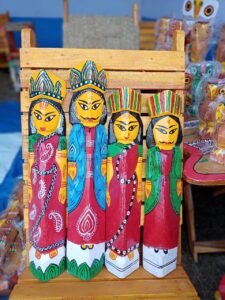
A stall selling wooden handicrafts at Poush Mela
Reacting to that, Professor Sabuj Koli Sen, former officiating VC of VBU, said, “It’s a good gesture on behalf of the PM but I don’t think that it will be that easy to have it done.” She added, “Poush Mela, is not just a fair for the people of this region, but also their main source of income as people from across the globe come to witness this event.”
While Banerjee further said, “It’s more like damage control. The VC of VBU has been making outrageous comments on poush mela and even Rabindranath Tagore. We need to remember that Tagore and his university stands for diversity and this is a direct attack on him and his idea of education and pluralism.” She added, “With election round the corner all this is being done to polarise the tribal votes by hinduising them, doing away with the mela is just the method to achieve the agenda.”
Meanwhile, Basudev Das Baul, the Baul singer with whom Amit Shah had a meal with, reacting to the entire episode, said, “It’s sad that VBU didn’t host it this year. I am hoping that they will organise it in 2021.” On being asked if he had spoken to Shah regarding the same, he said, “We just had the meal together. I didn’t get a chance to speak to him about it. Poush mela is very important for we performers.” He then added, “I am glad that the alternate mela was hosted by BSM, I have even performed on a Hindu-Muslim unity baul song.”
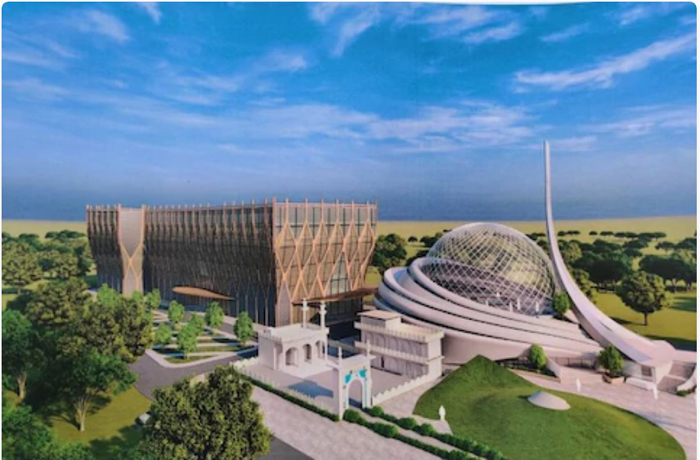
ایودھیا میں متبادل مجوزہ مسجد میں ایک ایسا عجائب گھر بنانے کی ضرورت ہے جس میں روز اول سے ابتک بابری مسجد کی شہادت کی پوری سچّی تاریخ محفوظ کی جائے۔فرنگیوں سے لے کر کانگریس تک یکے بعد دیگرے بننے والی حکومتوں اور ترقی پسند اتحاد اور قومی جمہوری محاذ اور بی جے پی تک جو گندی، ریا کارانہ سیاست کا کھیل کھیلا گیاوہ بھی محفوظ کیا جائے اور یہ بھی ریکارڈ کیا جائے کہ بابری مسجد کی مسماری کےبعد کس طرح ملک میں کثرت پسند فسطائی طاقتوں کو عروج ملا اور کیسے مابعد شہادت گجرات، اتر پردیش، مہا راشٹر، بہار اور بقیہ ہندوستان میں مسلمانوں کی نسل کشی کے واقعات ہوئے اور ملک بھر میں مسلمانوں کے خلاف دہشت کا بازار گرم کیا گیا۔ اس کا بھی بیان ہو کہ عدالت نے اکثر یتی فرقہ کی اجتماعی ضد کی تسکین کی غرض سے انصاف کی پامالی کا ارتکاب کیا۔ یہ بھی بتایا جائے کہ نام نہاد آزاد فکر شہری معاشرہ نے کیسی پتھریلی خاموشی سے یہ سب کچھ ہوتے دیکھا۔
یہ عجائب گھر بناتے وقت یاد رکھا جائے کہ جیسے یہودیوں نے ہولوکاسٹ کے بعد اوش وز میوزیم بنایا اسی طرح ہمیں بھی میوزیم بنانے کی ضرورت ہے۔ ہمیں ان دلالوں کی بات نہیں سنّی جو دیدہ و دانستہ چیزوں کی طرف سے غفلت برت کر انہیں مسلم فرقہ کے اجتماعی حافظہ سے مٹا دینے کیلئے اس پر سہل پسندانہ زور دے رہے ہیں کہ جو ہوا سو ہوا، ماضی کا قیدی بنے رہنے میں عقلمندی نہیں ، ہمیں آگے کی طرف دیکھنا چاہئے۔
جی درست ہمیں آگے بڑھنا چاہیے، یہ لازمی ہے لیکن اس کا مطلب قطعی یہ نہیں کہ ہم اپنی تاریخ مکمل فراموش کر دیں۔ اسرائیل وقت کے لپیٹے میں تھم نہیں گیا لیکن یہودیوں نے سینکڑوں فلموں، ڈراموں، افسانوں، ناولوں اور یادداشتوں میں اپنے ادب، ثقافت اور آرٹ میں اپنے اُوپر ہونے والے مظالم کی چھوٹی سے چھوٹی تفصیل درج کرتے ہوئے اسے یقینی بنایا کہ ظلم اور ناانصافی کی ایک چھوٹی سی چھوٹی واردات بھی چھوٹ نہ جائے اور ہر تفصیل آنے والی تمام نسلوں تک پہنچتی رہے۔ آپ تصور کریں، این فرینک کی ڈائری اب 70 سے 80سال گزر جانے کے بعد بھی ہندوستان سمیت پوری دنیا میں آسکولی بچوں کے نصاب میں جا گزین ہے۔
یاد رکھیں جو فرقہ اپنی تاریخ کو بھولنے اور ترک کرنے کے رجحان میں مبتلا ہو وہ اسی تاریخ کی زد میں آنے کے خطرہ سے دو چار رہتا ہے اور ایسا ہو تو زیادہ بڑا المیہ رونما ہوتا ہے۔
اس لئے میں یہ مطالبہ کرتا ہوں کہ اس مجوزہ مسجد کی اراضی پر اور جو کچھ بنانے کا منصوبہ ہے، بنایا جائے مگر مظالم کی تاریخ کا میوزیم بھی تیار کیا جائے
ایودھیا میں متبادل مجوزہ مسجد میں ایک ایسا عجائب گھر بنانے کی ضرورت ہے جس میں روز اول سے ابتک بابری مسجد کی شہادت کی پوری سچّی تاریخ محفوظ کی جائے۔فرنگیوں سے لے کر کانگریس تک یکے بعد دیگرے بننے والی حکومتوں اور ترقی پسند اتحاد اور قومی جمہوری محاذ اور بی جے پی تک جو گندی، ریا کارانہ سیاست کا کھیل کھیلا گیاوہ بھی محفوظ کیا جائے اور یہ بھی ریکارڈ کیا جائے کہ بابری مسجد کی مسماری کےبعد کس طرح ملک میں کثرت پسند فسطائی طاقتوں کو عروج ملا اور کیسے مابعد شہادت گجرات، اتر پردیش، مہا راشٹر، بہار اور بقیہ ہندوستان میں مسلمانوں کی نسل کشی کے واقعات ہوئے اور ملک بھر میں مسلمانوں کے خلاف دہشت کا بازار گرم کیا گیا۔ اس کا بھی بیان ہو کہ عدالت نے اکثر یتی فرقہ کی اجتماعی ضد کی تسکین کی غرض سے انصاف کی پامالی کا ارتکاب کیا۔ یہ بھی بتایا جائے کہ نام نہاد آزاد فکر شہری معاشرہ نے کیسی پتھریلی خاموشی سے یہ سب کچھ ہوتے دیکھا۔
یہ عجائب گھر بناتے وقت یاد رکھا جائے کہ جیسے یہودیوں نے ہولوکاسٹ کے بعد اوش وز میوزیم بنایا اسی طرح ہمیں بھی میوزیم بنانے کی ضرورت ہے۔ ہمیں ان دلالوں کی بات نہیں سنّی جو دیدہ و دانستہ چیزوں کی طرف سے غفلت برت کر انہیں مسلم فرقہ کے اجتماعی حافظہ سے مٹا دینے کیلئے اس پر سہل پسندانہ زور دے رہے ہیں کہ جو ہوا سو ہوا، ماضی کا قیدی بنے رہنے میں عقلمندی نہیں ، ہمیں آگے کی طرف دیکھنا چاہئے۔
جی درست ہمیں آگے بڑھنا چاہیے، یہ لازمی ہے لیکن اس کا مطلب قطعی یہ نہیں کہ ہم اپنی تاریخ مکمل فراموش کر دیں۔ اسرائیل وقت کے لپیٹے میں تھم نہیں گیا لیکن یہودیوں نے سینکڑوں فلموں، ڈراموں، افسانوں، ناولوں اور یادداشتوں میں اپنے ادب، ثقافت اور آرٹ میں اپنے اُوپر ہونے والے مظالم کی چھوٹی سے چھوٹی تفصیل درج کرتے ہوئے اسے یقینی بنایا کہ ظلم اور ناانصافی کی ایک چھوٹی سی چھوٹی واردات بھی چھوٹ نہ جائے اور ہر تفصیل آنے والی تمام نسلوں تک پہنچتی رہے۔ آپ تصور کریں، این فرینک کی ڈائری اب 70 سے 80سال گزر جانے کے بعد بھی ہندوستان سمیت پوری دنیا میں آسکولی بچوں کے نصاب میں جا گزین ہے۔
یاد رکھیں جو فرقہ اپنی تاریخ کو بھولنے اور ترک کرنے کے رجحان میں مبتلا ہو وہ اسی تاریخ کی زد میں آنے کے خطرہ سے دو چار رہتا ہے اور ایسا ہو تو زیادہ بڑا المیہ رونما ہوتا ہے۔
اس لئے میں یہ مطالبہ کرتا ہوں کہ اس مجوزہ مسجد کی اراضی پر اور جو کچھ بنانے کا منصوبہ ہے، بنایا جائے مگر مظالم کی تاریخ کا میوزیم بھی تیار کیا جائے
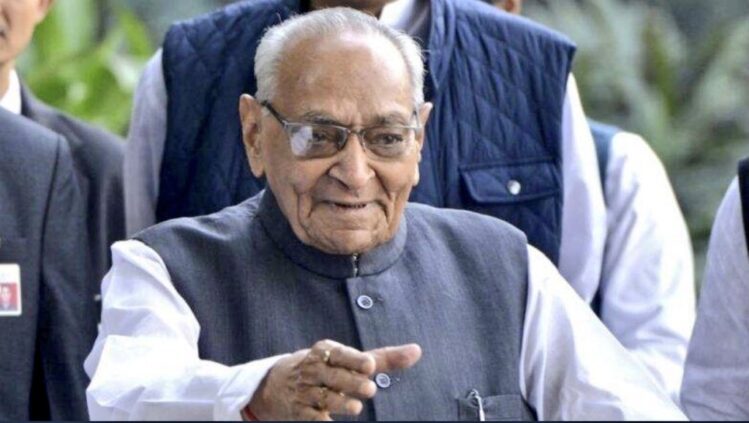
Motilal Vora who died on December 21, a day after he had turned 93, had a humanitarian quality not so common among the political class. Survivors of the 1984 Bhopal Gas Leak Disaster have a particular reason to remember him. According to the late Abdul Jabbar, Convener of Bhopal Gas Peedith Mahila Udyog Sangathan (BGPMUS), Vora, as Chief Minister of Madhya Pradesh, had shown a genuine concern for the gas-affected people; he would go to their dingy places to see their conditions for himself, sometimes in bad weather, and talk to them about their problems and needs. No other Chief Minister had done that. In fact, those who succeeded him as Chief Minister undid what Vora had done or wanted to do to lessen the suffering of the survivors.
Jabbar, for instance, gave credit to Vora for starting the stitching centres for providing employment to the gas affected women. Over 3000 women, incapable of doing any hard work, were happily engaged in this remunerative activity, forgetting their handicap. Quite congenial atmosphere prevailed in those stitching centres. However, the dismantling of the project started when Sunderlal Patwa of BJP became Chief Minister in 1990 and the process of winding up was completed by Digvijaya Singh’s Congress government which took office in 1993.
Through Vora’s efforts, some Centrally funded projects for economic rehabilitation of the gas disaster survivors were started during his period. The most important of these was a “special industrial area” which envisaged setting up of small and medium scale industrial units over a 21-hectare piece of land. The industrialists were to be invited for setting up their units, which would not require heavy labour. The electronics industry and the diamond cutting industry were identified, to begin with, as suited to the requirement. It was announced at the time that 10,000 gas-affected persons would get direct employment in the units to be started in the first phase. Even construction work had started. But his successor Sunderlal Patwa abandoned the project and allotted the sheds, already constructed, to the Central paramilitary forces for housing their units.
Starting from humble beginnings, Vora was handpicked by Indira Gandhi for replacement of Ramgopal Tiwari as the PCC chief on the eve of the 1985 Assembly elections. Rajiv Gandhi, who succeeded his mother after the latter’s’ assassination, was so much impressed by Vora’s hard work during the elections that Vora became a natural choice for the Chief Ministership after Arjun Singh was shifted to Punjab as Governor within 24 hours of his having been sworn in. Arjun Singh, who had opposed the party ticket to Vora in 1980, had not only included Vora into his cabinet but had also to accept him as the Chief Minister in 1985.
Vora, however, did not have the requisite support in the party and could never really come to his own. He had to tread cautiously, as a bureaucrat who had worked with him remarked. Vora’s pious intentions and his lack of confidence were illustrated by two incidents. One related to Bharat Bhavan. Arjun Singh had made himself and his cronies’ life trustees of this multi-arts complex. Vora did not think it was good in a democratic set-up. He made the noting in the file to the effect that the structure of Bharat Bhavan should be changed. But he himself failed to act. (The structure was later changed by Sunderlal Patwa).
The second relates to his second term when he had replaced Arjun Singh who was forced to step down following adverse remarks against him in the High Court judgement on the Churhat lottery scam. Vora included in the terms of reference of the proposed Commission of Inquiry the construction of (Arjun Singh’s) Kerva mansion also. Later on he withdrew that part of notification, but leaving sufficient evidence in the files about his real intentions.
A journalist, who had seen Vora’s political career from close quarters, was impressed by Vora’s concern for the underprivileged. He once accompanied Vora and some high officials on the eight-seater State plane to Shahdol. Looking at the condition of the airstrip there, the pilot declared that the plane would be able to take off with not more than four passengers. Vora himself made the selection and one of the passengers on the plane was a peon while the senior civil and police officers were asked to make their own arrangement for return to Bhopal.
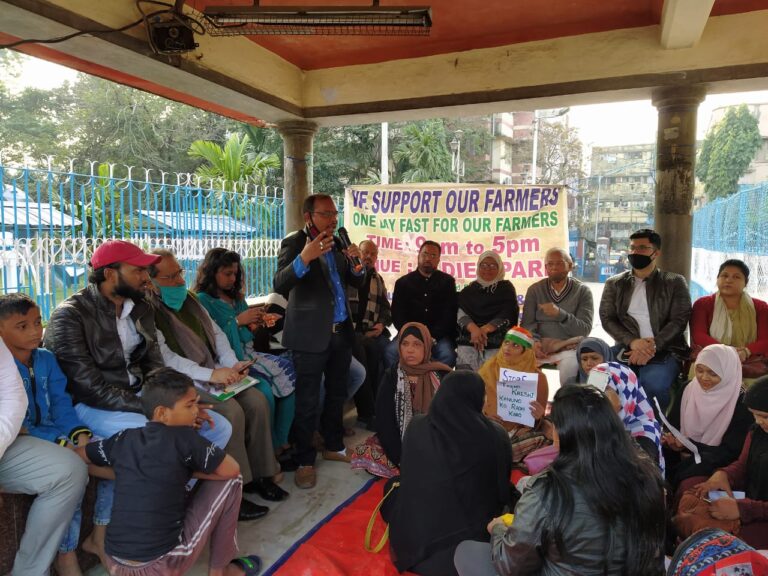
Kolkata: On Kisan Diwas, Kolkatans expressed their solidarity with the protesting farmers demanding repeal of the new farm laws by not just skipping a meal but by skipping it for eight hours at a stretch.
Farmers across India and especially at the Singhu border had called upon people to skip a meal to express their solidarity with the protesting farmers on December 23rd, the Kisan Diwas.
In Kolkata people as young as 15 to 80 year-old senior citizens attended the day-long fast at Ladies Park in central Kolkata and sat there from 9 am till 5 pm on Wednesday.
Significantly, seventy five percent of the participants were young girls and students. Most of the participants did not even drink water to show their solidarity with the protesting farmers.
The protest fast was organised by Centre For Peace & Progress and Purple Foundation
Trust deficit between farmers and government
The Chairman of Center for Peace & Progress, Om Prakash Shah, told eNewsroom, “Students, professors, homemakers and people from my age group, all participated.”
On being asked how significant this ongoing farmers’ protest is for the common man of the country and for the future of India, the Chairman said, “If farmers have to protest and it gets longer because the government continues to ignore their concerns then it is not in the interest of the country. It is important that the PM take the initiative to resolve the issue now.”
In Ranchi too, people skipped their meals in solidarity of farmers : Courtesy: Vinod Kumar/FB
Shah, who has organized several peace dialogues between India and Pakistan, further elaborated, “There is total trust deficit. Farmers believe that what the government is doing, they are not doing for their welfare. Farmers are questioning the government for passing the Bills in a hurry. They are questioning the government for not talking to them, the stakeholders. They are concerned why the government did not take the opposition into confidence and why they rejected the demand to send the Bills to the Select Committee. When you wish to bring about fundamental changes, you should talk to stakeholders. But the Bills got passed by voice votes and not by actual voting.”
“Supreme Court also asked the Solicitor General whether the three laws could be kept in abeyance but SG replied that he could not say anything without talking to the government. After that nothing was stated,” he further added.
The veteran activist warned the government, “Longer this protest gets in this chilly winter, more hardened the feelings of the protesting farmers will be against the government. Already several deaths have taken place. It is not a happy situation.”
How will skipping a meal help the farmers’ movement?
Social activist Ujjaini Halim, who has just recovered from Covid-19, too skipped her lunch in solidarity with the protesting farmers.
“I believe in the farmers’ movement and if farmers are in distress then it is a distress for the entire population. Knowing that those who feed us are going hungry and fighting for their rights I too skipped my meal.”
She added, “People asked me how skipping a meal will help farmers’ movement? My answer is, the farmers’ movement is integral to the Right to Life and by extension Right to Food. And Right to Food does not mean only supply of the food but extends to the people who grow that food. People without whom there can be no food. Right to Life and Food is a Fundamental Right. No government can deny its citizens their Fundamental Rights. The Indian government has to abide by the Constitution of India. The government has to ensure that the Fundamental Right is upheld. To express this fact of law and in solidarity, I skipped my meal.”
Jharhand too observed fast and sit-in
Expressing their solidarity with the protest farmers, people sat at iconic Gandhi Statue at Morahabadi Ground in Ranchi between 11 am to 3 pm. Besides them, people at Jamshedpur and Giridih too skipped a meal on the call of farmers.