सोनिया गांधी के पास तीन ऑडियो, एक में सचिन पायलट बात कर रहे भाजपा के साथ मिल कर गहलोत सरकार गिराने की

वरिष्ठ पत्रकार पंकज चतुर्वेदी मानते हैं के अब जो तस्वीर सामने आ रही है उसमें सचिन पायलट का कांग्रेस से निकालने पर सहानुभूति होना नहीं चाहिए। वो इसके लिए कई तथ्य रख रहे अपने लेख में।

1. सोनिया गांधी के पास तीन से अधिक ऑडियो और एक वीडियो है जिसमें सचिन पायलट, रमेश मीणा और विश्वेन्द्र सिंह के साथ मिल कर बात कर रहे हैं जिसमें भारतीय जनता पार्टी (भाजपा) के साथ मिल कर अशोक गहलोत सरकार गिराने की बातचीत है। एक वीडियों में वे कांग्रेस आलाकमान को लगभग गाली देते दिखे हैं। इसके बावजूद प्रियंका गांधी, और सोनिया ने उनसे बात कर एक और मौका देने की बात कहीं– हालाँकि राहुल गांधी इस पर दृढ दिखे और उनका कहना था कि इस तरह की साजिश करने वाले को पार्टी में रहने का कोई हक नहीं।

2. असल में सचिन पायलट को चने के झाड़ पर चढाने वाली उनकी माँ रमा पायलट हैं और उनकी महत्वाकांक्षा ने अपने बेटे को पर्याप्त विधायक ना होते हुए भी विद्रोह, जिद्द पर अटकने को मजबूर किया। कांग्रेस आलकमान के पास इस बात के साबुत हैं कि रमा पायलेट की दो बार मुलाक़ात जे पी नड्डा से हुई और उसमें “डील” पक्की हुयी। वह पैसा राजस्थान में न घुस पाए, इसके लिए राज्य की सीमाएं सील की गयी।

3. अभी भी सचिन के जरिये निर्दलीय विधायकों पर डोरे डाले जा रहे हैं, अभी राजस्थान का सेमी फ़ाइनल है, फ़ाइनल अभी होगा।

4. यह करोड़ों का खेल है — इसके असल मोहरे ट्रायबल पार्टी और निर्दलीय हैं जिन पर दल बदल विरोधी कानून लागु होगा नहीं और इन्हें पैसे की जरूरत भी है। खबर थी कि गहलोत के भामाशाह भी पोटली खोले हैं सो सीन में ईडी इन्कम टैक्स आदि का प्रवेश हो गया।

दुखद है कि देश में वैचारिक प्रतिबद्धता “सात शून्य ” के आगे कोई राशि लगते ही धेला हो जा रही है। फिलहाल आप सत्ता में संख्या के खेल में जीत पर गौरवान्वित हो सकते हो लेकिन आने वाले दशक में दुनिया का सबसे बड़ा लोकतंत्र इस खेल के चलते “बिडीयाना ” बन जाएगा।

यह भी जान लें इन सबका उद्देश्य केवल सत्ता लूटना नहीं राहुल गांधी को नए से नकारा सिद्ध करना है क्योंकि कोरोना और चीन मामले में वह अपनी उपादेयता सिद्ध कर चुके हैं।

कुछ “चुप्प संघी ” इसे – “ओल्ड गार्ड न्यू गार्ड ” का खेल बता रहे हैं — युवा का रोना रो रहे बताएं कि सिंधिया, पायलट, सुष्मिता देव, दीपेन्द्र हुड्डा सहित लगभग सभी युवा लोकसभा चुनाव क्यों हार गए? युवा प्रदेश अध्यक्ष सचिन पायलट 20 विधायक नहीं जुटा पाया। राजनीति में कोई मेराथन दौड़ नहीं लगानी हैं — यहाँ आडवानी, मनमोहन सिंह भी उतनी ही जरुरी है जितना अमित शाह या मिलिंद देवड़ा। फिर जो लोग यह भूल जाते हैं कि कांग्रेस जिसकी राज्य और संसद में ताकत है नहीं उसका सामना अमित शाह से है — जो हर तरीका अपना कर, सभी तरह से सियासत की धारा मोड़ने में नैतिकता को कोई बाधा नहीं मानते। जो चाहते हैं कि कांग्रेस वही करे जो भाजपा करती है तो– वे सियासत का क कहरा भी नहीं जानते।

याद रखना होगा कि अभी १३ जून को ही पाकिस्तान से सटी सीमा पर हथियार और ड्रग तस्करों के कुछ फोन इन्टरसेप्ट हुए जिसमें अवैध धन का इस्तेमाल गहलोत सरकार गिराने मे किये जाने की बातचीत थी। इस आधार पर आरएसएस के दो नेता गिरफ्तार भी किये गये। जाहिर है कि हमला दोतरफा प्लान किया गया- भीतर से पायलट और बाहर से आरएसएस। इसके बावजूद जिन्हें लग रहा है कि पायलट बेचारा है तो वे भी लोकतंत्र विरोधी हैं — कुछ अभी पुराना इतिहास गिनवा सकते हैं– अमुक साल में कांग्रेस ने ये किया — अरे उन्होंने किया तो ४४ पर हैं और क्या वह सब कुछ आपको भी करना अनिवार्य है क्या? यदि वह अनैतिक था तो भी!

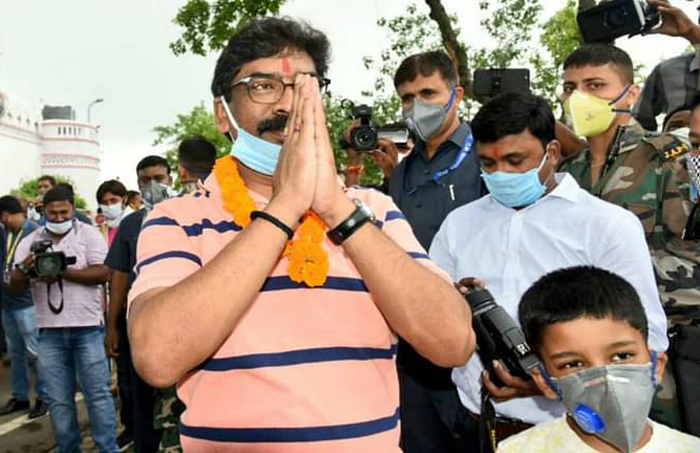
एक खबर — झारखण्ड में भी कांग्रेस के टिकट पर पहली बार चुने गए चार विधायकों को मोटी रकम का लालच दिया गया। यह काम राज्यसभा चुनाव के पहले शुरू हुआ था — मुख्यमंत्री हेमंत सोरेन का ख़ुफ़िया तन्त्र मजबूत है और उन्होंने इसे संभाल लिया, अभी परसों भी झारखण्ड सरकार को पलटने के लिए कतिपय कांग्रेस विधायकों के साथ डील का प्रयास हुआ जिसे विधायकों ने स्वीकार नहीं किया — वहाँ भी खेल चल रहा है।


ये लेखक के निजी विचार हैं। 

India-China conflict: A Renegade’s Reading

0

Mao’s conquest of Tibet and Xinjiang happened during the high days of Sino-Soviet camaraderie. But the relation between communist giants nosedived after the Indo-China border war in 1962 as Soviets blamed Chinese leadership for it. Moscow had long considered Nehru’s India as an essential ally to Moscow-led Socialist Bloc and accused Mao’s China of opportunism during the Cuban missile base crisis between the USA and USSR around the same time in the year. But Soviets found the Indo-China war a threat to their geo-strategic interests and a reminder of Sino-Russian tension over territorial disputes in Mongolia, Manchuria and Siberia at their Asian backyards after the defeat of Japan in WWII. As American historian and political theorist Paul Kennedy has later observed in his acclaimed book, The Rise and Fall of the Great Powers (Fontana Press, 1989), the Himalayan war was the decisive moment for Sino-Soviet rupture which will be sharpened more over their conflicting geo-strategic interests and military priorities leading to border clashes between the two nuclear-powered communist countries in late sixties.

Let us examine another perspective from within the then ‘socialist camp’. Che Guevara, the iconic revolutionary, then minister of Fidel Castro’s government in Cuba, met both Mao and Nehru and Soviet leaders in the late fifties. He sensed the chill between the two Asian leaders prior to the border war. Jon Lee Anderson in his seminal work, Che, (Grove Press, New York, 1997) narrated how Nehru avoided ‘Mr. Commandante’s repeated questions on China and Mao during a ‘sumptuous luncheon’ in New Delhi in 1959 despite the Indian leader’s ‘amiable familiarity of a patriarchal grandfather’ and his ‘noble interest in the struggles and vicissitudes of the Cuban people’. The guerilla-turned minister who would later return to Jungles and hills in Congo and Bolivia had reasons to be sarcastic as Nehru did not embark on radical land reforms to free the peasants from landlordism as he had promised and communists of all hues were asking for.

Che was also keen on understanding the ‘Asiatic socialism’ of China, albeit ‘a bit despotic’ while being increasingly critical about Soviet party-state. He met Mao and grew identical ideas on ‘New (socialist) Man’ prior to the CPC chairman’s ‘Bombard the Headquarters’ campaign against ‘capitalist roaders’ within his party that heralded his Cultural Revolution in 1966. Nevertheless, Che was denied Mao’s ‘hallowed presence’ in 1965 as one of his comrades in the Cuban delegation did some ‘shouting’ and was ‘talking too much’ in a meeting with Chou Enlai and other leaders. The CPC wanted Fidel’s Cuba ‘to be more clearly identifiable as pro-Chinese’ vis-à-vis Soviets which neither Fidel nor Che could afford on military-political reasons, given the existential threats from neighboring USA.

Why did Socialist states fight each other?

It will be ahistorical to say that Ideological rifts have been mere smokescreen for material disputes between the ruling classes of countries and States in the name of their nations. But it will be an equally harmful caricature of history to shy away from calling a spade a spade. My earlier takes of renegade reading in the origin of Indo-China border conflict were about Mao and Nehru’s pursuance of the imperial legacies of their countries despite their anti-colonial and socialist, internationalist ideologies. It was provoked by queer mix of their nationalist prides and material, geo-strategic interests of their modern but ‘civilizational states’. The Dynamics of mutually overlapping nation-state ideologies and material interests and how they shape each other is not the subject of this review. Suffice to say that it was neither specific to any region and ideology nor it would be in the foreseeable future.

india-china border clashes soviet vietnam geo
An old villager in Gandhi cap garlanding Che Guevara during the Cuban team’s visit to a Community Project Area in Pilana Block near Delhi in 1959 I Courtesy: The Better India

The tumultuous Sino-Soviet relation too was governed by ideological as well realpolitik clashes between the two giant communist states since the 1960s. They were engaged in border clashes in pursuance of territorial claims-counterclaims by Qing (Chiang) and Tsarist empires even after Mao’s party came to control Beijing. Contrary to popular notion in the left circle in India, Sino-Soviet relations survived Nikita Khrushchev’s criticism of Stalin at the watershed 20th congress of Soviet Communist Party (CPSU) in 1956. The new Soviet leader visited China even after that. But the rift became bitter over the mutual border disputes as well as the Indo-China border war.

Soviets had attained parity with Americans in nuclear weapons within a few years of US atomic bombing in Japan’s Hiroshima and Nagasaki in August 1945. Many left-liberal democrats and pacifists feared the arrival of days of ultimate destruction but communists welcomed it as the deterrent to the one-sided Doom by the capitalist world, pending the universal nuclear disarmament proposed by the Soviets. However, when Red China too achieved it in 1964, not all the socialist world did enjoy nuclear multi-polarity as Moscow was no less threatened than Washington DC. Although, Soviets had helped their Chinese comrades to build up the Lop Nur nuclear test base in 1959 in Xinjiang, Soviet experts were withdrawn from China the next year. Both their geo-strategic and ideological divergences were acute in 1964.

China went ahead with its hydrogen bomb project in 1967. It not only triggered full-fledged Sino-Soviet border clashes but also risked mutual nuclear annihilation in 1969-70. As Paul Kennedy observed in his book, The US bloc was happy with the growing Sino-Soviet rupture as Moscow had to deploy fifty divisions of its armed forces at China border even at height of Cold War with the West. Troubles with Chinese in Korean peninsula and Indo-China notwithstanding, Americans would not have sat tight had the Kremlin decided to destroy Beijing’s nuclear bomb infrastructure, he said. After all, an enemy’s enemy is always a friend irrespective of its color, goes the ancient wisdom.

Soviet tanks in red Hungary in 1956 and later Czechoslovakia in 1968 had divided communists, particularly, in the West. In the meantime, my generation in the East were taught to believe that ideological rifts between revolutionary Maoism and Khrushchevite Soviet revisionism on the question of ‘peaceful coexistence’ with the US imperialism and its native ‘lackeys’, both dictators and democrats of various hues would be the life and death question for us. The resultant fratricide among communists in India and some other Asian countries that spilled over to early seventies was unparalleled. It reminded the tragic fights between communists and anarchists during Spanish Civil War that had also contributed to the further rise of Hitler and Mussolini.

Killing Fields of Indo-China

I still believed that Mao’s revolutionary impulses at home and across the ‘third world’ were genuine. But I could not stomach his decision to sleep with his earlier global ‘enemy number one’ America in 1972 and its replacement with ‘Soviet social imperialism’. My further disillusionment came after Vietnam-Cambodia and China-Vietnam border disputes that snowballed in full-scale wars in late seventies even if Mao was dead in 1976. But the tension among former allies in Indo-China evidently had grown during his twilight years after free Vietnam sided with Moscow.

india-china border clashes soviet vietnam geo
Prime Minister Jawaharlal Nehru and President Ho Chi Minh had laid the foundation for India-Vietnam relations I Courtesy: en.nhandan.org.vn

To my disbelief, I later found that nationalists-turned communists who fought French and American imperialists together for 30 years also had conflicting territorial claims in the frontiers of their liberated lands, based either on the conquests by ancient Chinese-Annamese- Khmer kings- emperors or boundaries reshaped by Western powers later. Vietnamese led by Ho Chi Minh initially accused Mao’s China of trying to extend their empire into Indo-China like the rival Chiang-Kai-Shek regime and later pursuing a policy of Korea-like military-political stalemate to prevent unification of north and South Vietnam. According to Hanoi, it was part of Chinese moves for strategic Détente with America much before Nixon’s visit in Beijing in 1972. On the other hand, the pro-Beijing Khemer Rouge regime under Pol Pot blamed Vietnam for trying to impose an Indo-China federation on Cambodia and Laos to be the local big brother.

This led to ethnic cleansing of people of Vietnamese origin in the infamous Cambodian killing fields triggering border clashes and later full scale wars, first between Khmers and Vietnamese and then between China and Vietnam in the winter of 1978-79. The latter, just liberated from the US military after 30 years of bloody war, occupied Cambodia for 10 years and ruled it by proxy. Beijing stood by Pol Pot while Moscow supported Hanoi while Washington DC used the Khmer Rouge to contain Vietnam. The US continued jockeying the horses among its former enemies as suited its interests later on. Readers interested in that sordid saga of mutual slaughter of Asian communist-nationalists in details may consult A history of South-East Asia, by DGE Hall, (Macmillan, 1981) and After Tamerlane, the Rise & Fall of Global Empires, 1400-2000  by John Darwin (Penguin Books, 2007) as well as publications from regional communist- nationalist parties of the period.

After the Soviet invasions in East Europe, these ethno-national wars close to home finally killed my belief in the rhetoric that ‘no socialist country attacks other’. Nevertheless, it is still a painful irony for our generation to see American Seventh Fleet now being deployed to safeguard Vietnam from China. Vietnamese party documents now hardly mention the role of Mao’s China in its liberation from the US.

Narrow Nationalism won over postcolonial Internationalism

I have already observed that Nehru was self-delusive in harboring a dream of rekindling an Indian influence zone in south-east Asia mainland and Indonesia-Malaysia peninsula across the strategic Malacca Strait in the Pacific-Indian Oceans region. His dream-scheme was partly nourished by the nostalgia for ancient Hindu-Buddhist trade and cultural influences in the region since the days of Chola-Pallava-Pandya maritime powers of south India coasts as well as land contacts through eastern Himalayas. His policies on Himalayan highlanders including Kashmir and Ladakh also followed pre-British and colonial patterns by and large. But he lacked both ideological conviction and military power of Mao’s China in pursuing India’s ancient legacy.

Mao was more chauvinistic in its military incorporation of Tibet, Xinjiang and Inner Mongolia. It was aimed at ‘Chinese national unification and restoration of its territories’ won by last Chinese emperors of Qing dynasty and succeeded by the first republic of 1911. In continuance of the policies of rival ‘nationalist’ Kuomintang regime of Chiang-Kai-Shek, Mao also insisted on asserting Chinese civilizational soft and hard power on the old ‘tributary and dependent states’ in trans-border Red River and Mekong, Irrawaddy and Salween basins in south-east Asia. It too was based on claims created by shifting sand of borders in earlier centuries as well as on the current strength of Chinese Diaspora in the region.

india-china border clashes soviet vietnam geo Nikita Khrushchev
Prime Minister Jawaharlal Nehru with Russian Premier Nikita Khrushchev in New York in 1960 I Courtesy: National Herald

Unfortunately, both of his moves became handy for West-backed national elite regimes in larger south-east Asia to whip up fears and rage about China in the fifties and sixties. Beijing was accused of further territorial ambitions by exporting revolution or regime changes with the help of Chinese settlers in the whole region. Chinese immigrants in Malaysia and Indonesia as well as Thailand suffered most. Regional communists, particularly those aligned to the Chinese party, endured genocides irrespective of whether they had waged insurgency or followed peaceful paths.

Today’s regional rivalries between China and its neighbors including Japan, Vietnam and Philippine around South China Sea today, both for onshore and offshore oil and gas exploitation and strategic sea-lane defenses, now painfully reminds the victory of nationalist realpolitik over lofty ideals of unity of the ‘wretched of the earth’ whom the idealist and internationalist Lefts- the heroes of our generation like Che and Franz Fanon– wanted to be together. Surely, our postcolonial rulers wanted to be the new drivers of the engine of global history, replacing the self-proclaimed ‘Shadow of God’s of medieval and early modern world after Timur to Vasco Ad Gama.

The hope for a new world was genuine As John Darwin has observed, postcolonial leaders across Asia from Kamal Pasha to Nasser, Nehru, Ho Chi Minh and Mao had grasped ‘the significance of Europe’s technological lead, and the social-cultural innovations that helped to sustain it’. Also, ‘they were attracted to the versions of modernity, while framed in the West, were bitterly hostile to its liberal capitalist values and imperial claims’. But these liberators later became demigods, weaved personality cults around their blotted egos and sought popular legitimacy in narrow nationalism as their failures piled up.

This reminds me of Rabindranath Tagore’s cautions to Eastern societies during WWI and early WWII. Underlining the need to learn from Europe’s positive and negative contributions to human civilization, the philosopher-poet in his lectures on Nationalism (available from multiple publishers) had displeased Japanese audience when he criticized the growing militarism of the land of the rising sun in 1916-17. “What is dangerous for Japan is not the imitation of the outer features of the West, but the acceptance of the motive force of the Western nationalism as her own.” Criticizing the emulation of the Western credo of ‘survival of the Fittest’, he warned the ‘nations who sedulously cultivate moral blindness as the cult of patriotism’ of a sordid end. ‘The spirit of Western nationalism’, he pointed out, teaches people ‘from boyhood to foster hatreds and ambitions by all kinds of means—by the manufacture of half-truths and untruths in history, by persistent misrepresentation of other races and the culture of unfavorable sentiments towards them…”

After the defeat of Japanese imperialism closer home in WWII, we hoped that China and India would emerge as the hub of non-militarist, non-expansionist variety of Asian multiculturalism within and beyond territorial boundaries in contrast to Western nation-state’s straightjacket nationalism that led to rise of Fascism and Nazism. Our ethno-religious-linguistic diversity which is steeped in our pluralist- syncretic traditions and our memory of colonial subjugation will remind us not to oppress others like the hegemonic West as Tagore had hoped. But that hope was gradually believed after the spirit of postcolonial peoples’ unity at Bandung conference in 1955 with the ‘struggles for succession between the rival claimants’ to the ‘title deeds’ of ancient eastern or modern Western empires.

Altogether, it led to the great miscarriage of the hopes of millions of Asians and their brethren across postcolonial world. Youth of my generation became gullible to the national and global elite power games despite shedding rivers of blood, sweat and tears in fulfilling their dreams of a ‘sea of humanity at the confluence of Mekong –Mississippi- Volga- Yangtze and Ganges’. Our children, both in big China and India today, are global in their material aspirations but most myopically local in their worldview, thanks to systemic inculcation of jingoist, hate and fear-mongering ‘patriotic education’ and political propaganda.

सीबीएसई सिलेबस में कटौती पर झामुमो विधायक एवम झारखंड अधिविद्य परिषद सदस्य को आपत्ति

रांची: झामुमो विधायक सुदिव्य कुमार ने सीबीएसई (CBSE) सिलेबस में कटौती पर गहरी आपत्ति जताई है। उन्होंने केंद्रीय मानव संसाधन (HRD) मंत्री रमेश पोखरियाल को पत्र लिखकर सिलेबस में कटौती को फौरन वापस लेने की मांग की है। गिरिडीह विधायक सुदिव्य कुमार को हाल ही में झारखंड अधिविद्य परिषद का सदस्य भी मनोनीत किया गया है।

श्री कुमार ने लिखा है कि कोरोना महामारी और लाॅकडाउन के आलोक में सीबीएसई द्वारा कक्षा 9 से 12 तक के सिलेबस में कटौती की गई है। मौजूदा सत्र में ऐसा करना व्यावहारिक तौर पर जरूरी है। लेकिन मुझे हैरानी है कि पाठ्यक्रम में कटौती हेतु विषयों के चयन में भाजपा की एकांगी, असंवैधानिक, अलोकतांत्रिक और सांप्रदायिक राजनीतिक दृष्टि को आधार बनाया गया है। यह देखने योग्य विषय है कि आपने किन विषयों को अनावश्यक समझा है।

झामुमो विधायक सुदिव्य कुमार ने पत्र में लिखा है कि नवीं कक्षा के पाठ्यक्रम से ’लोकतांत्रिक अधिकार’ को हटाया गया है। क्या भारत में बच्चों को लोकतंत्र की शिक्षा से वंचित किया जाएगा? कोरोना संकट में जब भुखमरी बढ़ रही है, तब ’भारत में खाद्य सुरक्षा’ को भी सिलेबस से हटाना भी हैरानी की बात है। कक्षा 10 के पाठ्यक्रम से ’लोकतंत्र और विविधता’, ’लिंग, धर्म और जाति’, ’लोकप्रिय संघर्ष और आंदोलन’ और ’लोकतंत्र के लिए चुनौतियां’ को हटाया गया है।

पत्र के अनुसार कक्षा 11 के राजनीति विज्ञान के पाठ्यक्रम से संघवाद, नागरिकता, राष्ट्रवाद और धर्मनिरपेक्षता को हटाया गया है। बारहवीं कक्षा में राजनीति विज्ञान के पाठ्यक्रम से ’भारत में सामाजिक और नव-सामाजिक आंदोलन’ तथा ’क्षेत्रीय आकांक्षाओं’ हटाया गया है। जबकि झारखंड जैसे राज्यों में राष्ट्रीयता और अस्मिता की लड़ाई का काफी महत्व है। इनकी शिक्षा से बच्चों को भला क्यों वंचित किया जा रहा है? बारहवीं कक्षा के पाठ्यक्रम से भारत-पाक विभाजन की समझ को भी हटाया गया है।

विधायक सुदिव्य कुमार ने लिखा है कि कुछ समय से देश में धर्मनिरपेक्षता, लोकतंत्र और संघवाद जैसे विषयों पर अलग विचार थोपने की सचेत कोशिश दिखाई पड़ रही है। इस क्रम में सांप्रदायिक, असंवैधानिक और अलोकतांत्रिक विचारों को बढ़ावा दिया जा रहा है। मीडिया के एक हिस्से को प्रभाव में लेकर तथा सोशल मीडिया का दुरूपयोग करते हुए नागरिकों, खासकर नई पीढ़ी को गुमराह किया जा रहा है। इसे व्हाट्सअप यूनिवर्सिटी का ज्ञान बताया जा रहा है। ऐसे में यह जरूरी है कि हम अपने सिलेबस में बच्चों को इन विषयों की समुचित जानकारी दें।

सुदिव्य कुमार के अनुसार भारत का संविधान ’संघवाद’ की भावना पर आधारित है। लेकिन माननीय प्रधानमंत्री तथा भाजपा शासित राज्यों के मुख्यमंत्री अक्सर ’डबल इंजन’ की सरकार की डींग हांकते हैं। उनका आशय यह होता है कि केंद्र और राज्य में एक ही पार्टी की सरकार हो, तो राज्य पर केंद्र की विशेष मेहरबानी होगी। यह असंवैधानिक बात है, जिसकी समझ बच्चों में पैदा हो, इसके लिए उन्हें ’संघवाद’ की शिक्षा देना उतना ही जरूरी है, जितना धर्मनिरपेक्षता और लोकतंत्र की समझ विकसित करना।

श्री कुमार ने आरोप लगाया है कि पांच साल तक रघुवर दास की डबल इंजन सरकार का कोई लाभ झारखंड को नहीं मिला। उल्टे, उस दौरान राज्य के हजारों स्कूलों को बंद करके सरकारी शिक्षा को तबाह कर दिया गया। अब मुख्यमंत्री हेमंत सोरेन तथा शिक्षामंत्री जगरनाथ महतो के नेतृत्व में हम पर राज्य में बर्बाद स्कूली शिक्षा को फिर से संवारने की बड़ी चुनौती है। केंद्रीय मानव संसाधन मंत्री होने के नाते आप इस दिशा में कोई विशेष मदद कर सकें, तो झारखंड आपका आभारी होगा।

श्री कुमार ने आशा जताई है कि इस पत्र के आलोक में केंद्र सरकार उचित कदम उठाएगी।

India is using the economy as a weapon against China, but how far can it go?

0

Delhi/Kolkata: If you think India and China having a stand-off at the borders is the only issue that they are dealing with or have to sort out in order to have  good relations in the future, think again. For the record, the stand pertaining to the borders of these two countries can be described as the world’s longest standing territorial dispute. India is using the economy as a tool to contain China, but how far can it go, is the question we are trying to find an answer to.

On July 5, the de-escalation process by Indian and Chinese troops was initiated at the Galwan valley. However, in terms of trade, it will take time for things to move at normal pace between the two Asian giants.

Economists who are watching India and China’s move keenly believe that India may not take any further action like it did by banning 59 Chinese Apps that were operational in India. They added that India might not revoke its decision to ban these apps but will keep a close watch on China’s move as far as trading activities are concerned.

Recently some highly placed sources within the Indian government revealed that the Government of India has been reviewing around 50 investment proposals of Chinese investors. There is also the issue of the Chinese network instrument maker Huawei which is interested in participating in the 5G trials in India.

This implies that India has adopted the wait and watch policy and is giving a message that they can take further stern actions besides banning the apps. Trying to understand what the wait and watch policy means we talked to Sanjaya Baru– Media Advisor to Manmohan Singh, the former PM of India and Policy Analyst – Jean Dreze, who is also an economist and has worked with Nobel Laureate Amartya Sen and Prasenjit Bose—one of India’s young economists.

Silly act of banning or boycotting

Jean Dreze, who is inarguably one of the most well known economists and activists in India, stated that India should not try to ban or boycott Chinese products as it is not in the country’s interest. Dreze, who has co-authored a book with Nobel Laureate Amartya Sen, reasoned that India’s economy is already in a bad shape because of the Coronavirus pandemic and earlier policy decisions taken by the government, so any further action related to the economy will hurt India more. “Economic boycott of China is a silly reaction that will hurt India more than China. And it does nothing to resolve the border issue.”

india china stand off trade economy economic jean dreze
Courtesy: yourstory.com

He even warned, “If China boycotts India in retaliation then the impact will be worse. The leaders of both countries can easily resolve this crisis, if they wish to, through talks.”

When asked about what economic measures that the GoI can take now? The noted economist added “I have no idea of the government’s thinking on these issues. I suspect that it (the decision to boycott or ban) is more influenced by domestic corporate lobbies than by the country’s real interests.”

Lack of trust between India and China

However, policy analyst and former Media Advisor to former Prime Minister of India Manmohan Singh, Sanjaya Baru maintained that things are not that easy for China.

He mentioned that India’s import from China is worth $ 70 billion, and amounts to about 17 percent of the country’s total import. However, India exports only 3 percent.

“Whatever measures have been taken by the government with respect to the digital economy, they will continue with it. It is not going to reverse it immediately. If China’s behaviour improves, then only decisions such as revoking the ban on 59 Chinese Apps are likely to take place,” the former advisor to the PM and policy analyst told eNewsroom over the phone from New Delhi.

Baru mentioned that there is a lack of trust between India and China.

“We have a larger problem with China, which is a trade deficit of $ 50 billion. It has been India’s complaint to China for 10 years now. But China is yet to pay heed to it. We will continue demanding for better access to the Chinese market for fruits, agriculture and pharmaceuticals. So India will watch whether China improves (decreases trade deficit) or not. I do not expect any immediate change in our policy,” said Baru.

The policy analyst also pointed out an important issue, “One major decision which we have to take is about Huawei’s interest in being part of India’s 5G trials.  The government will not take immediate decisions. We have to wait and watch how China responds.”

india china stand off trade economy jean dreze economic
China-made goods inch along. India buys much more from China than it does from US I Courtesy: Getty Images

India’s foreign and strategic policy cannot be solved with economic measures

In contrast to the claims of Sanjaya Baru, former Media Advisor to Manmohan Singh, economist and social activist Prasenjit Bose strongly asserted that economic measures will have no impact on China. The young economist explained in detail and claimed that it is a border dispute, and India should have to settle it with China politically and strategically, not by resorting to economic measures.

“Boycott of Chinese goods in India will not have much impact since China has a much bigger economy. Indian imports from China accounted for only around 3% of Chinese exports in 2019, whereas it was over 14% of India’s total imports. Thus China is not too dependent on India as an export market, whereas for Indian imports it is the other way round”, said economist Prasenjit Bose. He added that as per official estimates China had cumulative FDI of over 5 billion dollars in India till September 2019, while Indian companies had invested less than 1 billion dollars in China till then. Much of Chinese FDI in India is also routed through third countries like Hong Kong and Singapore, which does not get reflected in official FDI data. India stands to lose more if the economic relationship deteriorates between India and China.

He further explained, “India’s capacity to dent the Chinese economy is very limited. Economic boycott would rather make China feel more confident that India cannot fight back militarily. Reportedly, Chinese troops had entered 18 kilometres into India’s territory. After negotiations they seem to have moved back 2 kilometres. Therefore they still retain 16 kilometres. The solutions to such territorial incursions by China does not lie in economic boycotts.”

“Why are we dependent on Chinese items? It’s because we cannot manufacture those goods domestically at competitive prices. There are millions of smartphone users in India, why can’t we manufacture smartphones? Why does the BSNL or Reliance Jio have to import Chinese equipment? If we want to become self-reliant, just sloganeering on ‘Make in India’ won’t help. We need large public investments in manufacturing, research and development (R&D). This is where we lag behind”, the economist reasoned.

Commenting on India’s foreign policy Bose said, “Problem also lies in the foreign policy of our country. Why is it that none of India’s South Asian neighbours stand by India even when Chinese troops made incursions into Indian territory? And from whom does India seek help? From the US, Australia, Japan and Europe. Are these our South Asian neighbours? We have a longstanding dispute with Pakistan. But what about Nepal, Bhutan, Bangladesh, Sri Lanka and Myanmar? If they are our friends, why are they silent? In fact, Nepal has openly sided with China. The erroneous foreign policy of India has isolated us in South Asia, while China has increased its influence in our neighbourhood, which is perceptible now. The Modi government’s policies such as the abrogation of Article 370, NRC, CAA etc. have all contributed to India’s isolation in South Asia. Ladakh was converted into an Union Territory overnight and Amit Shah made aggressive statements about PoK and Aksai Chin in Parliament. All that was useless sabre-rattling,” he pointed out.

Bose maintained, “Reversing India’s isolation in South Asia is the key. India has to settle its boundary dispute with China. If it is not settled, Chinese incursions will occur every year and one day they may reach Leh. Economic boycott measures will have no impact on all this. It is a territorial dispute and India needs to find a strategic and political solution for it.”

The economist added, “India will be taken seriously only when our foreign policy is truly independent. If we are to line up behind Donald Trump, who is being opposed all over the world, what message are we sending?”

The family of poet Varavara Rao accuse the state of trying to kill the poet

0

The family members of Varavara Rao, world-renowned Telugu revolutionary poet and public intellectual expressed their concern over the deteriorating health of Rao, who is incarcerated in Navi Mumbai’s Taloja Jail, through a virtual press conference.

They claimed 81-year-old activists health condition has been on the decline over the past six weeks. There has been little improvement in his health since he had been shifted to JJ Hospital from Taloja Jail on May 28, 2020, in an unconscious state. Three days later he was discharged from the hospital and sent back to the jail. But no significant improvement has been observed in his health. The family maintained that the poet still needs emergency healthcare treatment.

His family has demanded both the central and state government to provide better health care for him. They also highlighted the need for the authorities to shift him immediately to a hospital.

N Venugopla, Rao’s nephew during the press meet said, “For two and half months Varavara was under house arrest. But in November he was taken to the jail. He has many physical complications. He suffers from at least seven known ailments, for which he had not been treated regularly, hence those conditions have now aggravated and he is now facing some more complications.”

He further alleged, “It’s a fabricated case. For the past two years, there has been no investigation, the National Investigative Agency (NIA) is trying to fabricate the case. The authorities did not find any proof against him so far. But the bail, even on health grounds, is being rejected.”

Reminding about the Supreme Court ruling, he said, “Supreme Court has clearly stated that if the prisoner is above 60 and has physical complications then he should be released. But his bail plea has been rejected again and again in the last 22 months.”

The family informed that on May 28, he was shifted to JJ hospital because he fell sick. His Potassium and Sodium level had shot down.

He maintained that the family, at the moment is very much worries, after receiving a call from the hospital. He said, “He has been critically ill for the past few days. He is mumbling things. Yesterday evening we got a scary call from him during which he was mumbling about the death of his father when he was three. His co-prisoner took the phone from his hand and said that the poet is unable to walk or go to the toilet. He is unable to brush his teeth, he is hallucinating. Doctors have indicated it as a sign of brain damage.”

Venugopla informed that in the last two years, Hemlata (Varavara’s wife) and other family members have written several letters to the many people including the President of India but are yet to get any reply.

“We are not making any political comment here. But we are fearing that the state is trying to kill him,” Rao’s nephew alleged.

He said, “We are saying please don’t kill him in the jail. Government has no right to take away the life of Varavara Rao. He is under judicial custody and he has all the right to get medical support.”

Venugopla added, “We are requesting the authorities to shift to a multi-speciality hospital for his treatment.”

Phone calls made us realize that his condition is critical

In the first few phone calls, he reciprocated what the family asked. His daughter P Pavana claimed, “Yesterday the way he spoke, was horrifying. He was unable to walk or complete his sentences. He was repeating one word again and again. Yesterday’s call made us understand that he is disoriented and that his condition is critical.”

She maintained that he is eligible for bail by all needs but still he hasn’t been granted one. “We are requesting the Maharashtra government because he is in Maharashtra jail and also the central government to have him shifted to a hospital, immediately.”Pavana added, “Yesterday I spoke to his jail co-mate when my father had called my mother. It made me understand that Varavara was getting food but he is not getting any treatment inside the jail.”

Feeling betrayed by Telangana CM and Maharashtra govt

“Maharashtra government spoke a lot about the Bhima Koregaon case, we expected that they would do something for those put behind the bars in connection with this case,” said Pavana.

She further said, “My mother wrote many letters to the Telangana Chief Minister and other authorities, my father was part of the Telangana movement, he was in the forefront from the very beginning but now the CM is not even responding to any of the letters written by my mother. We tried to contact the CM in many different ways but he did not reply.”

Pavana rued, “Will a person like Varavara Rao, who is a poet and an intellectual, die in jail because of the government’s negligence? It will be very bad.”

She warned, “If this happens, Krishna Reddy (Minister of State for Home Affairs) will be answerable to the people.”

Amitabh Bachchan tests Covid-19 positive, hospitalized, informs well wishers

0

Mumbai: Bollywood actor, also known as the Star of the Millenium, Amitabh Bachchan tests Covid-19 positive and admitted to Mumbai’s Nanavati Hospital.

The veteran actor himself broke the news through Twitter and requested people who have met him recently to get the Covid-19 test done.

The Bachchan family members and their staff members have also undergone the test, but their test results are awaited.

Almost an hour later, Abhishek Bachchan too informed that he has also been tested Covid-19 positive along with his father.

Junior Bachchan tweeted: “Earlier today both my father and I tested positive for Covid 19. Both of us having mild symptoms have been admitted to hospital. we have been informed all the required authorities and our family and staff are all being tested. I request all to stay calm and not panic. Thank you.(sic)”

Abhishek also tweeted that the Bombay Municipal Corporation (BMC) has been in touch and they are complying with them.

Soon after the announcement, hashtag Amitabh Bachchan started trending on Twitter.

Mumbai, the financial capital of India and where the 77-year-old actor, also known as the Shahenshah of Bollywood, resides is one of the worst affected cities in India.

Meanwhile, Bollywood actress Rekha’s bungalow in Mumbai also sealed by BMC after her security guard found Covid-19 positive.

Rekha is another veteran actor of Indian film industry.

Earlier, music composer Wajid Ali has succumbed to Covid-19.

On Saturday, July 11, Mumbai had total 84,524 positive cases, among them 55,884 have recovered and 4,899 succumbed to the highly contagious disease.

Maharashtra has 2.38 lakh covid-19 cases, while 1.33 lakh have recovered and 9,893 died.

Recently, Dharavi, Asia’s largest slum has been able to flatten the curve and there were only single case was reported after almost three months.

India, with more than 8 lakh cases, have become third most affected country after the United States and Brazil.

আপনি এখানে শিয়াল লুকিয়ে রাখতে পারবেন না

দিল্লি বেলি একটি শোকেসে রাখা হীরা দিয়ে ভরা রাশিয়ান পুতুল (যদিও সিনেমায় ব্যবহৃত বহু-কাঠের একটি বেনারস হস্তশিল্প) দিয়ে শেষ হয়েছিল। এর ডপেলগ্যাঞ্জার, বিষ্ঠায় ভরা, তবে গুন্ডাটির সাথে অবতরণ করেছে!

ওয়েব সিরিজ ব্রীথ

নয় বছর পরে, পরিচালক মায়াঙ্ক শর্মা – যিনি আশ্চর্যজনকভাবে ব্রীথ (মাধবনের সাথে) পরিচালনাও করেছিলেন – একই নামের আরেকটি ক্রাইম থ্রিলার উপস্থাপন করার জন্য পুতুলটি তুলেছেন এবং এটিতে সামান্য সংযোজন। ঠিক আছে, আমি নিশ্চিত যে আপনি এখানে বিন্দু সংযোগ করতে পারবেন না! পুতুল হল এখানে সেই গল্প যা আপনাকে খুলে দেয় এবং সংকুচিত করে তা খুঁজে বের করতে যে এটিই বিজয় রাজের টেবিলে অবতরণ করেছিল।

এই গল্পটি যদি অনুরাগ কাশ্যপ বা আনিস বাজমি তুলে নিতেন, তাহলে এটি একটি “কুৎসিত” শো হতে পারত যা আপনার “দিওয়াঙ্গী”-কে ভালো সিনেমার জন্য উৎসাহিত করত!

ওয়েব সিরিজ ব্রীথ গল্প: একটি শিশুকে অপহরণ করা হয় এবং তার সচ্ছল এবং স্বনামধন্য (সমাজে মর্যাদার পরিপ্রেক্ষিতে) বাবা-মা, প্রথম নয় মাস প্রায় কিছুই করেননি, তাকে ফিরিয়ে আনার জন্য হঠাৎ করে অপরাধ করার জন্য প্রস্তুত হন। অন্তত, ট্রেলার থেকে আপনি এটাই শিখতে পারেন। আর কোনো স্পয়লার নেই।

ত্রুটিগুলি: যদিও প্রথম নয় মাস — সংলাপের মাধ্যমে — সংকলিত এবং প্রথম পর্বে সংক্ষিপ্ত করা হয়েছে, ত্রুটিগুলি আপনার চিন্তা করা প্রতিটি বাক্সে টিক চিহ্ন দেওয়া শুরু করে৷ আপনি যদি একজন দিল্লির হয়ে থাকেন তাহলে আরও বেশি স্পট করুন। কিভাবে? অবিনাশ সাবরাওয়াল (অভিষেক বচ্চন) রামলীলা ময়দানে যান এবং রাবনের “গুণ” সম্পর্কে শিখেন। ধরা যাক রাম লীলা অক্টোবরের শেষে বা নভেম্বরের শুরুতে হয়। পরের দৃশ্যে, যদি আমি অস্পষ্টভাবে মনে করি, আরেকটি দম্পতি ফেব্রুয়ারিতে অনুষ্ঠিত হওয়া সুরজকুন্ড মেলায় দেখা করার পরিকল্পনা করেছে। আমি বলতে চাচ্ছি যে যতক্ষণ না আপনি দিল্লিতে শীত দেখাতে চালিয়ে যান এবং অষ্টম বা নবম পর্বে একটি সংলাপ উপস্থাপন করেন যে “থান্ড বহুত বার গয়ি হ্যায় আজকাল”। দিল্লিতে শীত কতক্ষণ থাকে? এই দিকনির্দেশক ত্রুটি কি ধরনের?

পরেরটি হল একটি ডায়াবেটিক শিশুকে খোলা জায়গায় চকলেট এবং পেস্ট্রি দিয়ে ফেলে রাখা হয়েছে এবং ঈশ্বর জানেন তার সামনে আর কী মিষ্টি আইটেম রয়েছে।

তৃতীয় ত্রুটি হ’ল অপহরণকারী প্রতি রাতে ঠিক একই সময়ে ঘুম থেকে উঠে শিশুটিকে পরীক্ষা করে। প্রথমত, কেউ তাকে লক্ষ্য করে না এবং সে তার কাজ ত্রুটিহীনভাবে করে। অপেক্ষা করুন। পরিচালক বিষয়টি পরে খেয়াল করেছেন! তারপর তিনি তাকে একটি বা দুটি প্রশ্ন করেছিলেন কিন্তু অপহরণকারীর উত্তর এবং প্রতিক্রিয়া এতই সন্তোষজনক ছিল যে তারা হেসে চলে যায়।

মাধবন শো যা অফার করেছে তার কাছাকাছি কোথাও নেই, এই 45×12 (প্রতিটি শোকে এপিসোড দ্বারা গুণিত গড় মিনিট) 540 মিনিটের অপচয় ছাড়া আর কিছুই নয়।

আপনি যদি এখনও অ্যাবি বেবিকে ভালোবাসেন তবে এটি দেখুন যে তিনি তার চরিত্রটি ভালভাবে টেনেছেন, অবশ্যই, অমিত সাধ এবং নিথ্যা মেনেন সহ।

তবে আমার পছন্দ হল শ্রদ্ধা কৌল, যিনি একটি ক্যামিও চরিত্রে অভিনয় করেছেন এবং দেখার মতো। সে এক থালা পূর্ণ অভিব্যক্তি!

P.S: অজয় ​​দেবগন — সম্প্রতি একটি অত্যন্ত নোংরা, নোংরা এবং দুর্বল মাল্টি-স্টারার ওয়েব সিরিজ তৈরি করার খবরে — আমার অবিনাশ সাবরাওয়াল হতেন এবং হতে পারতেন।

আমার রেটিং: 2/5

You can’t hide the jackal here

0

Delhi Belly ended with the Russian doll (a Banaras handcraft multi-wooden one used in the movie though) filled with diamonds kept in a showcase. Its doppelganger, filled with shit, however, landed with the goon!

Nine years later, director Mayank Sharma — who surprisingly had also directed Breathe (with Madhavan) — picks up the doll to present another crime thriller with the same name and a little addition to it. Well, am sure you can’t connect the dots here! The doll is the story here which opens and narrows you down to find that it’s the one that had landed on the table of Vijay Raaz.

Had this story been picked up by Anurag Kashyap or Anees Bazmee, it could have been an “ugly” show that would have fuelled your “deewangee” for good movies!

Filled with glaring factual errors to Delhi darshan and a predictable story, all you have in front of you is good acting and fine cinematography, by S Bharathwaaj. That’s it.

The story: A child is kidnapped and her well-to-do and reputed (in terms of status in society) parents, doing almost nothing for the first nine months, suddenly gear up to commit crimes to get her back. At least, that’s what you learn from the trailer. No further spoiler.

The flaws: While the first nine months are — through dialogues — compiled and summarised in the first episode, the errors start ticking every box you think about. Spot more if you are a Delhiite. How? Avinash Sabrawal (Abhishek Bachchan) visits Ramlila Maidan and learns about the “qualities” of Raavan. Let’s assume Ram Leela takes place at the end of October or beginning of November. At the very next scene, if I remember vaguely, another couple plans to meet at Surajkund Mela, which takes place in February. I mean it’s fine until you continue to show the winter in Delhi and present a dialogue way down in the eighth or the ninth episode that “thand bahut barh gayi hai aajkal”. How long does winter stay in Delhi? What type of directional flaw is this?

The next one is a diabetic child left in the open with chocolates and pastries and God knows what else sweet items in front of her.

The third flaw is the kidnapper wakes up exactly at the same time every night to go and check the child. First, no one notices him and he does his work flawlessly. Wait. The director did notice this later! He then made a character or two question him but the answers and responses from the kidnapper were so satisfactory that they smiled and left.

Nowhere close to what the Madhavan show offered, this 45×12 (average minutes every show multiplied by episodes) is nothing else but a waste of 540 minutes.

If you still love Abby baby, watch it as he pulls his character well, along with, of course, Amit Sadh and Nithya Menen.

My pick, however, is Shraddha Kaul, who plays a cameo and worth watching. She is a plate full of abhivyakti!

P.S: Ajay Devgn — in news for producing a very raunchy, filthy and poor multi-starrer web series recently — would have been and could be my Avinash Sabrawal.

My rating: 2/5

Bihar DGP: A Mystic in Uniform

0

It was a hot summer evening in 1983. The sun had faded out but there was no relief. The table fans creaked and blew hot air; our rooms at the PG Hostel Ranighat had turned into ovens with its walls baked in the blaze for the whole day.

Gupteshwar Pandey in his shorts came out and dived in the river Ganga, swimming like a flying fish in its swirling streams. He vanished in the depth and sprang up his face—bubbles gurgling out from his lips and nose-holes—in repeat acts. Wary that the swirl might suck us, we were splashing and floating near the staircases at the riverfront. We breathtakingly watched Gupteshwar’s head bobbing up and down at distant streams.

It was neither the era of internet triggered social media nor Gupteswhar had grown tall in his career to draw attention beyond his friends. But the Ganga that flew right near our hostel in Patna was scarier than the little known river Khanua in Gopalganj district in which the Bihar DGP dived on May 21.

The video of the DGP dipping and bobbing his head and face up went viral, taking the generation living in the internet era, by surprise. “Sir, you are from Bihar. Look at this video, the DGP of your state has dived in a swirling river”, said Renu, a young woman who supplied me food at my room in Jalandhar, Punjab, thrusting her mobile phone ahead of the food packet on me.

To be honest to all of you my readers I was not surprised at all. What I thought after seeing off my food supplier was that my friend Gupteshwar has not changed at all. He remains the same he was when he was a 22/23-year old student—same impulses, same virility, same generosity and same reflexes.

I have not much to say about why he had jumped into the river Khanua . In this era of internet driven lightning fast communication, you all know that he had taken the dip to dispel the communal tinge that the vested interests had given to an unfortunate incident of death of a 15-year old boy Rohit by drowning.

What I would like to bring to the fore is the aspects of Gupteshwar’s persona which you are not aware of. Many of you might not have been born when he was a student. Many of you who lived at that time might not have lived with him as a friend or student.

What has been cardinal to Gupteshwar is his proclivity to act in an extraordinary manner against extraordinary situations. The day was extraordinarily hot and humid when Gupteshwar had dived in the swollen Ganga. He had helped me and many other friends floating and swimming in the river to beat the heat. All of us know that the communal fire spreads faster than jungle fire. He had dipped in Khanua to douse the communal fire before it leaped up and spread engulfing Gopalganj district that borders Uttar Pradesh.

Our India has as many as 29 states and as many DGPs. Some of the DGPs might be sharing their initiation in the 1987 batch of the Indian Police Service (IPS) with Gupteshwar. Incidentally, a common IPS friend, Binoy Singh informed me that the current Punjab DGP was Gupteshwar’s batch mate and I as Gupteshwar’s friend could meet him when I was in Punjab recently.

But it is Gupteswhar who is more in the news of late. India among most of the countries across the world is reeling in the havoc of Covid-19. There is a sense of hopelessness all around. Stress and depression have gripped the youths and old alike. In such a situation mired in dark spells of melancholy, Gupteshwar has been working as a proverbial ray of hope. He fans out in remote hinterlands of Bihar, inspecting his police stations, patrol police, talking caringly with chowkidars to star ones in his rank and file and presenting himself among the sad-faced dwellers in hinterlands as their brothers and sons. You invariably watch him popping on Facebook— mask on and hands folded—and appealing you to stay isolated and quarantined. He appears to have taken it upon himself to save the Biharis from the impact of the novel virus. And the people at large respond to him for they find in him someone from among them. Serving the state for over 30 years in the capacity of the SP, DIG, IG, ADG and now the DGP he is the same for the larger people what he was to his family and friends as a student.

Saints and Thieves

Some of you might be finding bizarre in him sporting a long tuft tied in a bun in the back centre of his head. Some of you might have watched him wearing ochre-colour lungi and vest when he is relaxed—these moments are few and far between these days. These days, he wears a knit uniform and strides like a determined Corona warrior. But walking, talking and meditating in ochre-coloured attire are natural to him from his youth days.

You know, several chillum smoking and cannabis ball gulping hermits lived at the river bank when we lived there at the Ranighat PG hostel. The Ganga, then, was in full flow. The Raj Kapur film’s song—“Ram teri Ganga maili hogayee; papiyon ka paap dhot-e dhot-e (The Ganga has contaminated itself by washing the sins of sinners)”—had not yet emerged. Unlike today when it looks like a putrid drain with mound ubiquitous sands in its bed here and there, the Ganga was alive in full glory then. Its bank was abode of small temples and half clad hermits; their bare torso and forehead smeared in ashes from the fire on cremation grounds. The heart-shaped leaves of the Peepal trees that shaded these temples and hermits danced and sang even in stillness.  The crows cawed and sparrows, bulbuls, barbets, pigeons and parrots chirped in the leaves and foliage that glistened and were as fresh as the river.

A Brahmin from Buxar, Gupteshwar loved the company of these hermits as much as he loved us. To our amusement, he talked to those ascetics for hours and they shared with him stories about Gods, ghosts and spirits. Had it been fiction, I would have conjured the images of the ghosts and spirits, Gupteshwar met through these reclusive hermits. But it is a column aimed at telling you what I watched with my eyes and observed with my physical senses. I was amused to see him spending nights with them when flowing water cried, hitting the banks and the mortals cremated their dead.

Recently, you would have seen a video news-clip in which Gupteshwar milks his ‘desi’ cow in his official campus at Patna. The scene might have fuelled unusual glee in you. But let me recall the story of a milkman. A vegetarian who abhorred the essence of onion and garlic, he had a milkman, supplying milk to him in his hostel room. Of course it was a ‘desi’ cow’s milk for hybrid variety that was non-existent those days. The milkman who wore soiled dhoti in his waist and sported bare torso was a self-styled palm reader. Many of us made fun of him but Guteshwar stretched out his palm to him, making him read it and do his prophecies. After some time, I found that he did it more to make the milkman feel important before him.

Once we went to watch the night show of a movie at Ashoka Cinema Hall on the Buddha Marg, 10 kilometres away. Over with the movie, we walked for our hostel; it was a moonlit night. A suspected thief clad in lungi and netted vest began stalking us as we came near Chhajju Bagh. I sensed that he had a dagger in hand and I was scared. We took the turn for a lane that had the house of a judge. That stalker too took to the same lane and was closing in on us. Gupteshwar suddenly stopped removing his shirt and shouted, “If you you want to take our shirt you can take it but don’t follow us. We don’t have money that you can snatch”. The thief fled.

His Food

Coming from a farmer family, he had a steady supply of ghee—clarified butter– from his home. He used to mix ghee and rice to eat. He generously shared it with me and others. Not a foodie in the classical sense, Gupteshwar loved eating vegetable eggplants and berries with rice that is still his favourite. Though a vegetarian he had many meat eating friends. I was one of them.

He was deeply drawn in mysticism. He meditated for hours when he found time from his studies that he still does when he finds time from his police duty. He had deep reverence for the scriptures—be it the Vedas or the Quran Sharif or Bible. Though deeply religious, he abhorred sectarianism that he still does. But I will tell you about these aspects in my subsequent columns when I get the chance to write on him again.

Covid-19 and Indian Muslims

0

“It’s a matter of common decency. That’s an idea which may make some people smile, but the only means of fighting a plague is common decency.” — Albert Camus

Elisabeth Kubler-Ross’s seminal work, Death and Dying, describes the five distinct stages of grief: denial, anger, bargaining, depression and acceptance. While the Swiss-American psychiatrist was speaking about the series of emotions terminally ill patients go through, the first of the five stages that she postulated possibly holds true for a section of India’s people when the country was trying to come to terms with Covid-19 in the initial days of the pandemic.

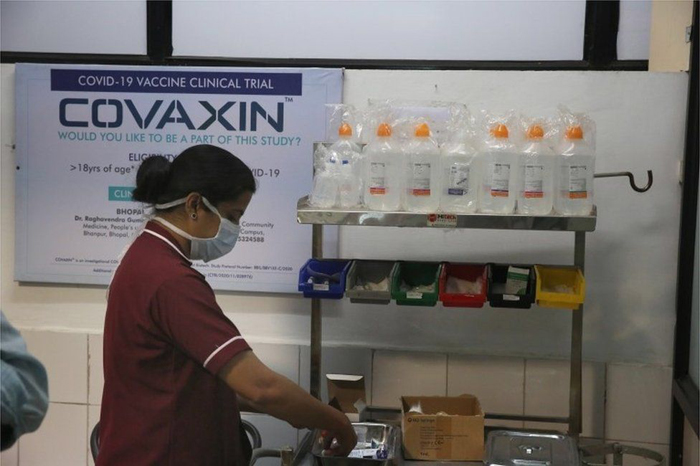
The spread of the virus in the early months had then exposed the country’s second-largest religious group to a vulnerability born out of denial. Indiscretion and reckless behaviour by members of the Tablighi Jamaat had purportedly led to a spurt in coronavirus-positive cases, not only in Delhi but also in many other parts of the country.

An international gathering of Tablighis — preachers or a society to spread the faith —had taken place in New Delhi’s Nizamuddin area in March 2020, drawing hundreds of foreign nationals from Thailand, Nepal, Myanmar, Indonesia, Bangladesh, Malaysia, Sri Lanka and Kyrgyzstan. Despite a government order prohibiting large gatherings, more than 4,500 people had assembled at the Tablighi Jamaat Markaz (headquarters).

Media reports had quoted government sources as saying that since 1 January 2020, over 2,000 foreigners from 70 countries had arrived in India to participate in Jamaat activities. As the Covid-19 lockdown came into force on 25 March 2020, over 1,000 were left stranded in Nizamuddin.

Within days, a state of panic had set in as reports of Covid-19 deaths and positive cases started coming in from various parts of the country. By early April, private television news channels had begun insisting that over 30 per cent of the corona-positive cases had the “Tablighi Virus.”

The Tablighis’ state of alleged ignorance was dubbed a “Himalayan” blunder as a heavy dose of media onslaught, Islamophobia and blame game followed. As Najmul Hoda, a Chennai-based IPS officer, lamented on his Facebook wall, Covid-19 looked like a common cold in comparison to the plague of communal hatred.

tablighi jamaat covid-19 pandemic indian muslims coronavirus markaz
As early as 6 March, Maulana Khalid Rasheed Firangimahli, a Lucknow-based Imam, Eidgah, had asked [AT8] mosque-going Muslims to take preventive measures against COVID-19, and told them to avoid congregations and coughing and sneezing in public
Political factors were at play too. The country was already in ferment over the Citizenship Amendment Act and the National Register of Citizens. Shaheen Bagh and its women protesters were making international headlines and the February 2020 riots in Delhi had deepened the sectarian divide, exacerbating religious tensions. It was in this situation that the Tablighi Jamaat held its congregation. According to data shared by Equality Labs (a digital human rights group) with TIME magazine, the hashtag ‘Corona Jihad’ appeared nearly 300,000 times.

The online attack became more and more vicious as reports of people leaving for different parts of the country from the Markaz poured in. For days, “Tablighi virus” and “Corona Jihad” trended on Twitter. Our entire focus shifted from fighting and containing Covid-19 to fighting the Tablighis and the Muslims, who the general population started equating as one and the same. Those were the initial days of our Covid-stricken lives, unsure of what awaited us and we were quick to blame the Markaz for all our misery.

In the midst of this Islamophobic onslaught, many articles and tweets expressed fears of a Muslim apartheid. The usual practice of portraying Muslims as the other came into play, as did indulging in victimhood.

“Social media, as ever, remained truculent and toxic. Generally speaking, Muslims continue to use social media space to indulge in their victimhood addiction,” observed Najmul Hoda.

While the community needed to address the elephant in the room and could not be absolved of its responsibility for wrongful acts by the Tablighis, the polarised discourse that was unleashed in mainstream media impacted the psyche of the general population. Most Muslims came out against the Jamaat, but the entire community was still clubbed together and labelled the “Superspreader”.

The Tablighis were guilty for sure for the congregation of thousands of people despite the prohibitory orders, and of not reporting cases, but the wave of hatred failed to see that the Tablighi Jamaat is not the sole representative of India’s 170 million Muslims and its actions should not be linked with the larger community. It is also pertinent to note that the Tablighi Jamaat preaches a narrow interpretation of Islam to some sections of Muslim society.

But the way the Tablighi Jamaat’s role and, by extension, of the entire Muslim population’s involvement in the spread of the virus was covered by the mainstream media, it suddenly felt that Covid-19 had a religion.

Soon, stories of discrimination against the poorer sections among Muslims started coming out. NDTV reported how vendors in Mahoba district of Uttar Pradesh were allegedly targeted and stopped from selling vegetables by people who accused them of being members of the Tablighi Jamaat and of spreading the coronavirus.

The Bharatiya Janata Party (BJP) MLA from Deoria in Uttar Pradesh, Suresh Tiwari, warned people against buying vegetables from Muslims. The defiant leader was later asked to explain his comment by his party chief.

A video shared widely on Facebook and on Twitter purportedly showed Muslims intentionally sneezing on each other. It was later debunked by the fact-checking website AltNews.

tablighi jamaat covid-19 pandemic indian muslims coronavirus markaz
Maulana Naeem Ur Rahman Siddiqui, secretary of the Islamic Centre of India, claims that zakat — or charity — saw a rise of over 50 per cent as compared to the previous year

Several video clips purportedly showing Covid-positive members of the Tablighi Jamaat misbehaving with hospital staff and other patients found space on prime-time debates. Old sociological problems, such as overcrowded ghettos, lack of hygiene and low levels of awareness, became handy tools again to stigmatise the community.

The reaction from the community was at times defiant, while some took to social media to counter the hate being peddled with tweets that were either equally toxic or full of self-pity.

It was at this point that the Muslim clergy, intellectuals and other community leaders stepped in. On 2 April, seven signatories — Dr. Zafarul Islam Khan, Chairman, Delhi Minorities Commission; Prof. Akhtarul Wasey, President, Maulana Azad University, Jodhpur; Prof. Mohsin Usmani Nadwi, President, Human Welfare Society; Prof. A.R. Kidwai, Director, K.A. Nizami Center for Quranic studies, AMU; Masoom Moradabadi, Secretary, All India Urdu Editors Conference; Zaheeruddin Ali Khan, Managing Editor, Daily Siasat, Hyderabad, and Prof. Iqtedar Mohd. Khan, Deptt. Islamic Studies, Jamia Millia Islamia, Delhi — issued an appeal to the government to take into consideration the “genuine constraints faced by certain people.” They argued that it was not a time to find fault. “Any attempt to give it a sectarian twist would weaken our battle against the deadly virus,” they said.

A closer look at the role the Muslim clergy played reveals a far more constructive engagement than what has been projected by the mainstream media. As early as 6 March, Maulana Khalid Rasheed Firangimahli, Lucknow-based Imam, Eidgah, had asked [AT8] mosque-going Muslims to take preventive measures against Covid-19, and told them to avoid congregations and coughing and sneezing in public.

Firangimahli was among many religious heads across the country who issued fatwas saying that the fight against the coronavirus was a religious obligation.

A major challenge came during the month-long period of Ramadan — that began in the last week of April — in terms of enforcing social distancing and avoiding guests at the breaking of fast (iftar) and at community prayers (tarahwih), etc. But enforcing a sense of discipline among 170 million people sharply divided on sectarian and linguistic lines was done with remarkable ease and voluntary compliance.

As Ramadan is closely followed by Eid, suspension of the customary Eid prayer posed another hurdle. However, a broad consensus that was worked out decided against special Eid prayers at Eidgahs (where special Eid prayers are held) and at mosques, etc. Islamic seminaries, such as the Darul Uloom, Nadwa and Deoband, issued fatwas asking the faithful to offer Eid prayers at home.

The results were so good that Uttar Pradesh Chief Minister Yogi Adityanath called up [AT9] Firangimahli in Lucknow and congratulated him, saying that Eid prayers throughout the state had been observed without any incident of the virus spreading. The state government also issued a letter of appreciation.

Eid-ul-Fitr 2020 saw the largest ever participation of women in family prayers. That prompted Najmul Huda, the IPS officer, to say “thanks” to the virus for bringing gender equality to every Muslim home. “May it get institutionalised. Corona, I can’t really say thank you to you, but it’s thanks to you,” he wrote.

There were other positives too. Charity acted as a great succor as appeals were issued to channelise Ramadan and Eid shopping for the needy. Maulana Naeem Ur Rahman Siddiqui, secretary of the Islamic Centre of India, claims [AT11] that zakat — or charity — saw a rise of over 50 per cent as compared to the previous year.

Not to forget, the redemption and acknowledgement that came after all those days of hate. If the members of the Tablighi Jamaat were guilty of ignorance in the initial phase of the pandemic, they turned adversity they had wrought upon themselves into opportunity in the form of penance. Those who had tested positive for the virus, and have since been cured, came forward in huge numbers to donate their blood plasma — containing anti-viral antibodies — and helped cure many affected people.

Some say it was in keeping with what the Quran teaches — that divine injunction is not for returning evil with good, but with the best. It says: “Good and evil are not equal. Repel (evil) with what is best, and you will see that the one you had mutual enmity with, will become the closest of friends.” (41:34)


This story was first published at ORF