India stands with lawyer Prashant Bhushan

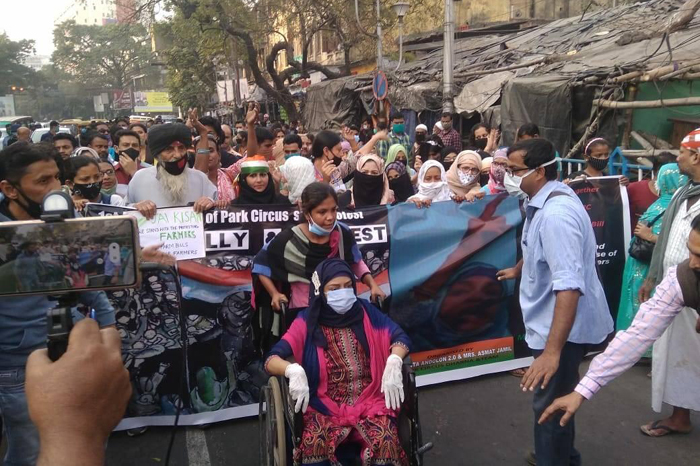
Ranchi: From homes and roads to in front of the Supreme Court braving the rain, hundreds of lawyers, activists, leaders and ordinary people all protested in cities across India including Ranchi, Jaipur, Kolkata, Bengaluru and Delhi against the contempt of court case in which senior lawyer Prashant Bhushan was declared guilty by Apex court.

In June, Prashant Bhushan in his two tweets had raised serious concern on the recent decisions of highest court of India and tweeted, “When historians in future look back at last 6 years to see how democracy has been destroyed in India without even a formal Emergency, they will particularly mark the role of the Supreme Court in this destruction & more particularly the role of last 4 CJIs (sic).”

The Supreme Court had taken suo-moto cognizance on his tweets and on August 14, on the eve of India’s 74th Independence Day Bhushan was found guilty.

But today during the hearing of the case, Prashant Bhushan was adamant on his stand and declared he will not apologize for his tweets on the Supreme Court and its judges. Whereas, people of India too did not stop because of lockdown and rain to register their dissent on the SC’s decision to sentence Bhushan.

“I am pained that I have been held guilty of committing contempt of the Court whose majesty I have tried to uphold — not as a courtier or cheerleader but as a humble guard – for over three decades, at some personal and professional cost,” the statement of Prashant Bhushan reads.

The senior lawyer further said, “I am pained, not because I may be punished, but because I have been grossly misunderstood. I am shocked that the court holds me guilty of “malicious, scurrilous, calculated attack” on the institution of administration of justice. I am dismayed that the Court has arrived at this conclusion without providing any evidence of my motives to launch such an attack. I must confess that I am disappointed that the court did not find it necessary to serve me with a copy of the complaint on the basis of which the suo motu notice was issued, nor found it necessary to respond to the specific averments made by me in my reply affidavit or the many submissions of my counsel.”

prashant bhushan supreme court contempt case Ranchi jaipur delhi bengaluru
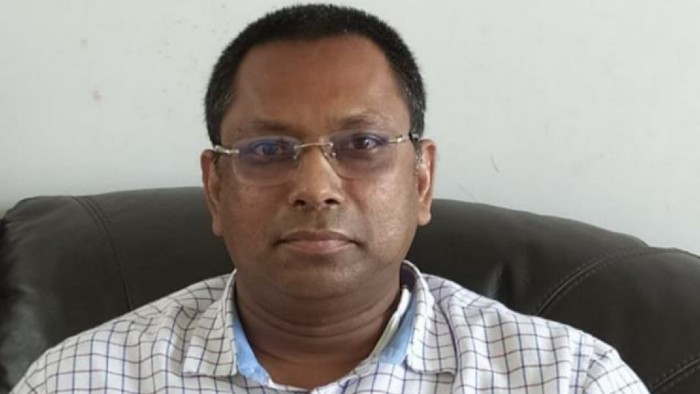
Prashant Bhushan I Courtesy: Anonymous

Bhushan expressed his shock and reminded the court, “I find it hard to believe that the Court finds my tweet “has the effect of destabilizing the very foundation of this important pillar of Indian democracy”. I can only reiterate that these two tweets represented my bonafide beliefs, the expression of which must be permissible in any democracy.”

He also mentioned, “Indeed, public scrutiny is desirable for the healthy functioning of the judiciary itself. I believe that open criticism of any institution is necessary in a democracy, to safeguard the constitutional order. We are living through that moment in our history when higher principles must trump routine obligations, when saving the constitutional order must come before personal and professional niceties, when considerations of the present must not come in the way of discharging our responsibility towards the future. Failing to speak up would have been a dereliction of duty, especially for an officer of the court like myself.”

And pointed out his duty as a citizen of India, “My tweets were nothing but a small attempt to discharge what I considered to be my highest duty at this juncture in the history of our republic.”

Bhushan refused to cow down and quoted Mahatma Gandhi, “I did not tweet in a fit of absence mindedness. It would be insincere and contemptuous on my part to offer an apology for the tweets that expressed what was and continues to be my bonafide belief. Therefore, “I can only humbly paraphrase what the father of the nation Mahatma Gandhi had said in his trial: I do not ask for mercy. I do not appeal to magnanimity.”

“I am here, therefore, to cheerfully submit to any penalty that can lawfully be inflicted upon me for what the Court has determined to be an offence, and what appears to me to be the highest duty of a citizen,” he added.

Significantly, during the hearing, not only Attorney General KK Venugopal sided with Bhushan and said that the court should not punish him for his tweets, but SC also gave 2-3 days time to the senior lawyer to reconsider it and if he will apologize, the matter will be ended. However, Bhushan replied, “If your lordships want to give me time, I welcome. But I don't think it will serve any useful purpose and it will be a waste of time of Court. It is not very likely that I will change my statement.”

Bhushan said that his statement was, “Well-considered and well thought of,” reported Live Law.

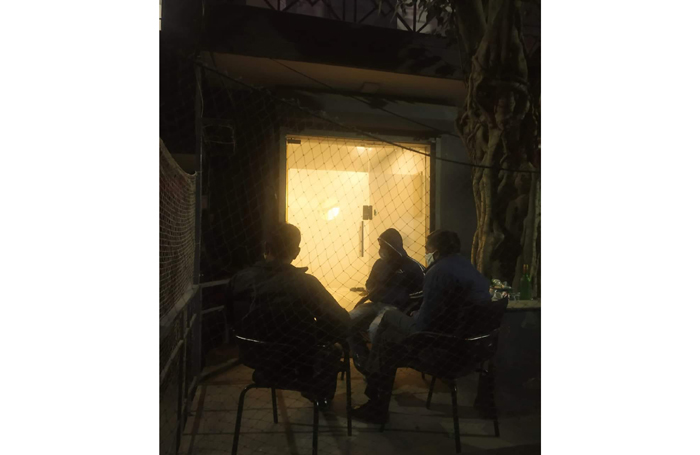
Meanwhile, when the Supreme Court’s virtual hearing was going on, protests (see the pictures) were taking place at many cities in India in opposition of Prashant Bhushan being considered guilty of contempt of court and about to be punished.

Is BJP on shaky grounds in Tripura?

0

Shillong: Recent political developments in Tripura indicate that there is deep discontentment among grassroots level workers of the Bharatiya Janata Party (BJP) over the way the ruling party leadership is functioning in the northeastern state.

Violent incidents, including one this July, in the last couple of years have shaken party workers’ confidence and made them wonder whether the “real workers” are being sidelined for the new entrants.

Tripura’s paribartan or the change came in 2018 when the 25-year-old Left Front government was toppled and the saffron party, for the first time in the northeastern state, formed the government in alliance with the Indigenous People’s Front of Tripura (IPFT). But as power equations changed, BJP saw new entrants from the Congress and the Left and “those who did the groundwork for the 2018 victory were ignored”, claimed a party source.

In the beginning of July, armed and masked goons, numbering over 200, attacked the house of BJP karyakarta (cader) and former spokesperson of the state BJP Prasenjit Chakraborty. The goons attacked the senior party worker’s family members too.

Speculations are that they were sent by the BJP state leadership because Chakraborty was criticising the party on social media.

“Recently, all my social media activities, particularly videos, highlighted the importance and ignorance of the party karyakartas who devoted themselves to the betterment of the party. I never said a single word against BJP. I wanted the wrongdoings to be corrected so that workers live in a better condition and the popularity of the party increases. The central leadership needs to realise this fact in time,” Chakraborty told this correspondent on phone from Agartala.

Chakraborty became a member of BJP in 1999. He had joined the Collegetila Shakha of RSS, in 1997 itself. Chakraborty was the party’s state convener and was also in the intellectual cell. He was crucial in sealing the party’s first electoral victory in Tripura in the 2014 gram panchayat elections. Then why was his introspection considered an anti-party activity?

When asked, Tripura BJP chief Dr Manik Saha said Chakraborty was not a party member. “He was with the party a long time back but he has not been there since 2017. The party has no connection with him,” he added.

There were reports of similar attacks on grassroots workers. The correspondent spoke to several karyakartas, all of whom narrated their experience but preferred to remain anonymous fearing backlash.

BJP tripura caders workers northeast
The IPFT, BJP’s alliance partner had held a 24-hour strike at Khumulwng in July I Courtesy: Indian Express

A grassroots level worker and panchayat committee member who is associated with the party since 2004 said, “What we did for the party was forgotten soon after the victory.”

This worker’s father and son were beaten up by unidentified miscreants in August 2019 because he reported against some members for their anti-party activities. “Even during the Left Front government, my house was never attacked,” he said.

“We have been betrayed by our own people,” said another karyakarta.

The new entrants in the BJP are allegedly enjoying more power than the old workers, “many of whom were removed from old party positions and many were insulted in the public”.

Another BJP worker sounded exasperated while talking about the party’s achievements in the last two and a half years. “In the past two and a half years, the voters have lost their faith. Many are thinking that the earlier government was better,” he added.

Several karyakartas said with conviction that the 2023 election in the state “will be a disaster for the BJP if the party leadership fails to protect its foot soldiers”.

A panchayat pradhan, who has been associated with the party for the last 25 years, expressed his helplessness in executing development works. According to him, new members often create hurdles and “don’t even bother to take my consent in official works”.

The situation was raised with the state leadership but no action was taken, he informed.
When pointed out about the sluggish development work, state BJP chief Saha denied the allegations. “Work at the grassroots level is going on very well. But in the current situation, our main aim is to serve people and protect them from the pandemic and we are doing the work well,” he added.

Biplab Kumar Deb, the chief minister of Tripura, is also losing popularity among party workers. “People voted for BJP because of Modi (Narendra Modi). Nobody knew Deb before,” said a worker.

But Saha disagrees, “It was him (Deb) who brought down the Left Front government. We have faith in Deb as he is doing a good job,” he answered when asked about Deb’s popularity.

The internal bickering apart, the BJP in Tripura is also witnessing dissent among allied partners. In the beginning of this year, IPFT had demanded another Cabinet berth, besides the two ministers it has. Some IPFT leaders also alleged that BJP did not fulfil the promises it made to the local party.

Mebar Jamatia, IPFT general secretary and state minister, said alliances always have problems and those should be solved through dialogues. “IPFT is a regional party with a tribal base. There will be differences in ideologies and it is only two years (of the new government). There are problems but we will adjust,” he added.

On the demands, like development of the council areas and recognition of Kokborok language, Jamatia said IPFT leaders had met BJP leaders in Delhi and “we are waiting for the report of a high-level committee under the Home Ministry”.

“Now that lockdown is there, Parliament is not in session. So we are waiting for decisions on various issues,” he added.

However, he admitted that “pure BJP workers who are committed to the causes” in Tripura are less as many people from other parties have joined the party.

While the ally is banking on dialogues, the party’s own men are losing faith and they believe that the hierarchy needs to strengthen the roots of the party. “But if things go on like this then you can be assured that BJP will not even get two seats in 2023,” said a panchayat member and BJP cader.

Jharkhand will always be indebted to Dhoni

0

In 1997 I toured the national capital, New Delhi. It was quite common there to hear the word ‘Bihari’ being used as a slang denoting a person who lacks social etiquette or to make fun of people from Bihar and to make them feel inferior.

Due to this it was also common for the people hailing from Bihar to avoid mentioning the name of their state or telling people where their roots were.

In November 2000, Jharkhand got carved out of Bihar and it had the image of a mineral rich tribal state.

In later years, when I went to Delhi again, I found the people from Jharkhand proudly saying that they come from Jharkhand and not from Bihar.

However, within five years, Jharkhand proved to be a politically unstable state and several corruption cases surfaced. Soon, the most promising state of India had turned into the most corrupt one. There was not much to talk about the state. And Bihar on the other hand started doing well and the people from Bihar were not being targeted like before because of their place of origin.

But just before the end of the 2004, on December 3, cricketer Mahendra Singh Dhoni made it to Team India and, in cricketing lingo, took a stance.

After Jaipal Singh Munda, Mahendra Singh Dhoni or MS Dhoni was the biggest star and sportsperson from Jharkhand.

He did not perform remarkably in that series, but he got selected for India-Pakistan One Day International (ODI) series in 2005. And in his fifth ODI match he had smashed 148 runs in just 123 balls. It was the highest score by any Indian wicket-keeper, and Dhoni had arrived.

Since then he never looked back and on August 15, India’s Independence Day when he announced his retirement from International cricket, Dhoni had played 350 ODIs, 90 Tests and 98 T20 matches.

Under his leadership, Team India won the T20 inaugural World Cup in 2007, in 2011 ODI World Cup and in 2013 picked up the Champions Trophy. The team also got 1st ranking in Test cricket.

With every achievement by Mahi, as he is lovingly referred to, Ranchi and Jharkhand were once again making headlines and getting written about.

It became common for the people from Jharkhand to hear, “Oh, you are from Jharkhand, Dhoni’s place?”

While with every success of Dhoni the entire nation, and the people of Jharkhand in particular, were feeling proud, the image of the new born state was further deteriorating.

In 2007, when Dhoni had lifted the T20 ICC trophy, a former chief minister was arrested on charges of corruption.

Within a decade and half Jharkhand had become synonymous with corruption and it was only brand Dhoni which saved the people from humiliation that every resident had to face outside the state.

Under the leadership of Dhoni, Team India was shining but, due to lack of leadership in the state, Jharkhand’s sheen was wearing away.

Now that Captain Cool has left international cricket the people of Jharkhand can only wish that they get somebody like him in public life or in sports to again revive the image of the mineral rich tribal state not just in India but also across the globe.

स्मॉल टाउन, बिग ड्रीम की जब भी मिसाल होगी, धोनी उस चैप्टर के नायक बने रहेंगे

भी सोचा था कि महेंद्र सिंह धोनी चुपके से ऐसे अलविदा कह देंगे? खामोशी से। वक्त कितना क्रूर होता है, बेरहम होता है, हम इससे सीख ले सकते हैं।

धोनी की चुपके से ‘आई क्विट’ घटना के बीच याद करें कि ठीक एक दशक पहले 2007 में वर्ल्ड कप में बुरी तरह हार कर जब पहली बार T-20 वर्ल्ड कप हुआ तो सारे सीनियर हटा दिए गए थे। ‘जूनियर’ धोनी को कमान दे दी गयी टीम इंडिया की। उन्हें प्रूव करना था, उनमें वह जज्बा है कि नहीं। वह स्टॉर इलिमेंट हैं कि नहीं? डाउन मार्केट माहौल से आने के कारण उसमें एक्स फैक्टर है कि नहीं? क्योंकि क्रिकेट देश में सिर्फ खेल नहीं बल्कि एक जुनून भी है जिसके किरदार को नायक सरीखा होना चाहिए।

लेकिन उसके बाद फिर क्या हुआ, वह इतिहास है। धोनी ‘लार्जर दैन लाइफ’ सा लगने लगे। कोई ऐसे सक्सेस नहीं रही, जो उनकी लीडरशिप में न मिली। विश्व में एकमात्र ऐसा कैप्टन जिसने भारत को क्रिकेट के हर फॉर्मेट में नम्बर-1 बनाया।

बचपन में पढ़ते थे, चाचा चौधरी का दिमाग कंप्यूटर से भी तेज चलता है। क्रिकेट में हमने देखा है– धोनी का दिमाग कंप्यूटर से भी तेज चलता है।

इंडिव्यूजल सक्सेस तो सुनील गावस्कर, सचिन तेंदुलकर जैसे प्लेयर लेते रहे लेकिन सौरव गांग्रुली ने बतौर टीम जीत दिलाने की परंपरा की शुरूआत की उसे धोनी ने आदत बना दी। अगर धोनी चाहते तो देश की जीत से अधिक अपनी सेंचुरी बना लेते। लेकिन वह उस मूल्यों में पले-बढ़े जहां परिवार का मुखिया सभी का पेट भरने के बाद अपने लिए खाना बचाता है।

महेंद्र सिंह धोनी क्रिकेट भारतीय टीम कप्तान झारखंड रांची
महेंद्र सिंह धोनी आईपीएल के एक मैच में जयपुर में खेलते हुए I फोटो: चन्द्रमोहन आलोरिया

धोनी के काल में भारत की हार खबर बनने लगी। पहले जीत खबर, सरप्राइज एलिमेंट होता था। लेकिन मैदान पर सक्सेस के बावजूद उन्हें डाउन मार्केट से अप मार्केट में प्रोमोशन में काफी परेशानी उठानी पड़ी। कभी उन्हें कोको-कोला की मॉडलिंग इसलिए नहीं दी गयी कि उनका अपीयरेंस डाउन मार्केट सा था। बाद में क्रिकेट मैदान पर ही नहीं बल्कि स्पोर्टस ब्रांड में भी इस मुकाम तक पहुंचे जहां आज तक कोई भारतीय खिलाडी नहीं पहुंच सका था। मेसी, रोनैल्डो के स्तर तक पहुंच गए।

लेकिन अपने धोनी टिपिकल मिडिल क्लास बैकग्राउंड से हैं जहाँ पूरी जिंदगी प्रूव करने में ही गुजर जाती है और फिर भी लगता है बहुत कुछ छूट गया। अपनों की अपेक्षा पूरी नहीं होती। उसी अपेक्षा के बीच धोनी ने पूरी तरह से कप्तानी छोड़ दी। तुम्हें किसी को नहीं, खुद को प्रूव करना है। कुछ गलती हुई, थोड़े अरोगेंस हुए। लेकिन यह सब पार्ट ऑफ लाइफ है। यू आर ए हीरो।

धोनी कभी अनजान जोगिन्दर शर्मा से वर्ल्ड कप जीतवाते हैं कभी हार्दिक पंड्या से हारा हुआ मैच। वह ऐसे हीरो रहे जो दूसरो पर विश्वास किया, उन्हें हीरो बनाया। हर कोई मानेगा कि खुद अपने रिकार्ड पर ध्यान देता तो वनडे में कई शतक और हजारों अतिरिक्त रन बना चुका होता। लेकिन धोनी ने देश को जीताने का जिम्मा लिया। कप्तान से हटकर, टीम से बाहर रहकर भी धोनी रोल मॉडल रहेंगे। स्मॉल टाउन, बिग ड्रीम की जब भी मिसाल होगी, धोनी उस चैप्टर के एक नायक बने रहेंगे।

धोनी एक मिडिल क्लास के संघर्ष की अंतहीन कहानी के प्रतिनिधि करने वाले किरदार हैं। इसे किसी एक ब्रैकेट में बांध कर नहीं समझा जा सकता है।

धोनी एक खिलाड़ी नहीं, एक पीढ़ी है, एक सफर है, एक संघर्ष है, एक कहानी है जो कभी समाप्त नहीं हाेती है, लगातार जारी रहती है…।

बेस्ट ऑफ लक, धोनी।

Vidyut’s hunt for his lost love is worth a watch

0

My wife got a call yesterday morning that she lost her aunt to Covid. Later, another call mentioning that her father, despite being a patient of diabetes and other illnesses, rushed to the hospital in the evening to take a last look at his sister. That was love and desperation.

Later, in the night, when I watched this movie, a similar story – which of course, I started watching as an action film – touched my heart due to the love and desperation of a simple man.

Three things first why I liked this movie:

  1. Vidyut Jammwal did act well after of course Force,
  2. Despite being today’s best martial arts genius in the film industry, he did not even for once show any of the styles and techniques while dealing with goons and
  3. The simplicity of the two lead characters worked for me.

The story: Remember Kareena Kapoor’s Talaash: The Hunt Begins? Yes, apart from the one she played a ghost in with Aamir Khan, she did a movie with Akshay Kumar in 2003. Based on the same line, the difference here is the hero goes looking for his wife, while Akshay’s hunt was for his sister. 

Director Faruk Kabir did not go the extra mile to tell us a story that was unbelievable, except the fact that the country in the Middle East named Noman was fictitious.

From the simple presentation to development of a crisis gradually and things getting worse even further to an ordinary man dealing with the situations in his own way worked for me.

Even after the story was predictable, the presentation and a fast screenplay made things really interesting. You may find flaws in accessibility and easy availability of many things to a newbie but teamed with Annu Kapoor, the journey of Sameer Chowdhury (Jammwal) to an unknown country looked smooth and interesting to me.

While acting by Kapoor wasn’t something outstanding as we have seen way better roles played by him, Shiv Pandit and Aahana Kumra did a great job with the accent and a fight scene. Even the damsel is distress Shivaleeka Oberoi and Vipin Sharma in a cameo did a good job.

Talking about the fight scenes, the action sequences were well choreographed, especially the corridor fight scene where Vidyut Jammwal fights at least 20 men to save his heroine. Superb is the word I would use because had it been any other movie where his being ordinary wouldn’t have been the USP, he could have brought down the goon in half the time used here. Good presentation, really appreciate.

Other luggage which seemed unnecessary in the movie were songs, needless characters (in Lucknow) and conversation in Hindi in a foreign country. Overall, from acting to direction to a simple and predictable story, Jammwal as Sameer Chowdhury is nice and definitely can make you love him in his search for his lost love.

P.S: My 1.5-year-old daughter is crazy for the song Bella Ciao and often points at Alvero Morte and calls him “Baba”. Lol! While everyone a few months ago was talking about a remake of Money Heist in Hindi, Aahana definitely has a Kumra (room) for the role of Nairobi. I feel.


Rating: 3.5/5

Tripathi controls the cyclic in Saxena’s chopper

0

If Dangal sold because it was an Aamir Khan movie and so did Gurgaon because it was a Pankaj Tripathi movie then why not sell Gunjan Saxena: The Kargil Girl as another Tripathi movie?

Well, maybe, because it’s a Dharma Productions movie and our very own Karan Johar loves to back star kids!

In none of the first two movies, the big names are the lead characters but the pivotal ones.

Based on the same proven theory, the Kargil Girl can still work if promoted uniquely by Tripathi. He plays the role of a cool, calm and composed father who knows what it takes to push his daughter to the edge and how to keep her focused while achieving her dreams and goals.

The real-life story of Gunjan Saxena, India’s first female Air Force officer to fly in a combat zone during the 1999 Kargil War, is not about her achievements in the war but her journey to success, beating social evils in a men-dominated society which surprisingly also has another man in the role of a father who supports her.

Janhvi Kapoor (as Gunjan Saxena) is perhaps too soft-spoken and timid to give her best despite the fact that we know she can act well.

A storyline not that impressive but to be shown to children by their parents saying that “Beta, dekho, tumhe didi k jaesa banna hai aage jaake zindagi mein”, it was more like a Disney movie presenting a damsel in distress and how she flew out of it!

While the cinematography by Manush Nandan is really good, the movie lacks in a lot of areas, including background score, music and impactful presentation due to a weak screenplay.

I wouldn’t call the work of director Sharan Sharma impressive as a lot more could have been catered if not decided to present a happy-go goody-goody type of a movie.

Acting by Angad Bedi and Manav Vij is really good but Vineet Kumar stands out as an “obstruction”. Child artist Riva Arora plays a cameo but you will like her. However, as mentioned in the beginning, Tripathi doesn’t improvise but presents what he is best at.

Overall, this is a Sunday afternoon post-heavy lunch watch with family, climax of which can be learnt later over tea in the evening when you wake up.

Rating: 2.5/5

NEP and Higher Education: The Inevitable Nightmare

0

Unlike primary and secondary education, higher education is where the greatest members of a society are nurtured. If the purpose of secondary education is to make you familiar with your culture, language, identity and building character; then the role of higher education is to prepare one to be in different roles which require expertise, deep knowledge and mastery of a particular subject(s).

The working class is the foundational unit of society since they maintain the regular order of any society. A majority of businessmen and self-employed people also don’t need a graduate degree since for them higher education is not essential. To be a full citizen of a country, a secondary education is often enough because the civics taught will be sufficient to equip you with knowledge required for full political participation. So, who needs higher education? Interestingly, the socially disadvantaged class. Why? Higher education equips a socially backward or a Dalit person with proper lexicon to articulate their issues, their political aspirations, their voices against atrocities and fulfillment of their social duties and responsibilities.

Higher education also gives you an escape from the ghetto and an escape to places around the world which makes you a well-rounded person & helps you gather like-minded people to your cause and fight for justice. The complicated and subtle tactics played by oppressors can only be countered by people who are courageous and armed with deep knowledge & expertise. The subtlety of NEP is to lure backward class into the abyss of vocational courses and to destroy their path to articulation.

For privileged sections of the society, higher education can often be pure pursuit of knowledge, not so for the marginalised. For the marginalized members of the society, higher education is paramount, often the only way out! Instead of increasing their participation in higher education, the vision document of NEP instead wants to populate the ‘garbage’ vocational institutes with them, thus essentially forming a legalized graded hierarchy. The problem doesn’t end here, the undergraduate course is replete with exit options (sec. 11.9, NEP 2020) each year. You may ask what’s the issue here? Earlier, when students (especially from the marginalized sections) used to drop out, parents would question the Institutes and hold them to account. By cleverly making exit a legitimate choice for students, the accountability now falls on the students, thus freeing the Institutes from any blame altogether. So, what’s the problem with an exit degree you may ask! Well, first and second year exit students are basically post secondary students with certificates and will never be treated as full graduates, thus missing out on a vast number of opportunity ladders. Once, a 4-year graduate degree becomes mainstream, even a 3-year exit graduation will be a lesser and undervalued degree. Moreover, after 4 year of graduate degree, you will be able to directly apply for PhDs and also go abroad for research. Exit in that case will become an unfortunate choice disproportionately affecting the underprivileged. Most of the high-paying private and public jobs will require a proper graduate or a technical graduate degree with 4 years of education, training and research.

The problem goes even further. The NEP document declares in sec. 11.10c, “The M.Phil. programme shall be discontinued”. This is devastating not only for students who want to join college as assistant professors but also those who wanted to experience research before going into PhD. Two-year M.Phil. was far preferable to a 6-year PhD for some and sometimes was enough to carry out all duties as a college teacher (undergraduate and postgraduate). The Masters program for those with a 4-year bachelor degree is relatively easy as it will be a 1-year course-intensive program. On the other hand, 3-year graduate students will have to enroll for a 2-year Masters program with second year dedicated entirely to research. This second year will be crucial because without this there will be no Masters & thus no pathway to join a PhD program. The assessment of Masters advisor will be eminently important as his/her recommendations and patronage will make or break a career. In a way, without a 4-year graduate degree it will be extremely difficult to join a PhD or project/research program.

Since the Universities will become autonomous, they will have much leeway in creating a filter which may not be conducive for students from socially backward backgrounds. The first block for these students will be completing secondary education since they can be lured into vocational courses resulting in the end of formal education. Then there will be exit options throughout the 4-year bachelor program and if they go through a 4-year program, a Masters degree and challenging filtering system before entering PhD. Those exiting before completion of a 4-year undergraduate degree will have a much more difficult time. It has been seen in the past that underprivileged students overcome gaps in entrance tests at a faster rate than cracking the interview. It may be because they don’t have formal training in appearing for interviews. But a more reasonable assumption will be that one or more members of the panel (mostly from affluent backgrounds) can influence the panel against selecting these candidates. Then there are further issues where an upper caste guide may discriminate against a lower caste student, not being supporting, not giving good recommendations and essentially leaving the student on his/her own, ultimately destroying his/her career in academics. And then there is post doctoral research where the same filtering system will continue. The problem is even more acute when it comes to the recruitment of faculty, since the large share of faculty of any Institute is made of upper caste ones, it becomes extremely challenging for a lower caste candidate to enter the space. It’s our concern that the new NEP policies will aggravate the situation and not rectify this.

Another problematic aspect of this document is dilution of the separation of arts and science. The motivation here is clear: In the large scheme of things, arts and science don’t have boundaries. When NEP talks about ‘Sanskrit knowledge system’, it talks about a comprehensive system consisting of arts, music, literature, philosophy & theology, mathematics, astronomy and other branches of study. Thus they want to open the whole higher education sector to a knowledge structure which is immersed in ancient and classical Indian knowledge systems. Any subject in higher education will be studied in the context of an ode to the ancient wisdom and the classical knowledge system. Each subject and its course structure will be framed keeping in mind the vast treasure trove of knowledge and ‘treasures’ India always had.

The original idea is not to raise the status of Humanities to that of Science but rather to raise the status of the ancient knowledge system to a far greater height. In isolation, vedic & Sanskrit science is underwhelming and unimpressive but together with all other branches it looks voluminous and intimidating, evoking almost a sense of awe. But there are other concerns as well which are purely pragmatic. For example, let’s assume that you want to do a BS in Chemistry. In the new hodgepodge system, you can do a BS in Chemistry with Vaisesika Philosophy (one of the major branches of orthodox Hindu philosophies). It’s not clear whether in that case the syllabus of core Chemistry will be diluted (all indications say yes), thus creating a deficient Bachelor program. With such certification, it won’t be easy to join foreign universities for higher research since it won’t be easy to convince them about the rigor of such a program. In IIT systems, there are concepts like Majors and Minors which will be beneficial if the government wants to create a robust undergraduate program. It’s better to offer small projects to students on their subjects of interests rather than diluting the rigor of an entire subject.

The financing of research through NRF also seems troubling as it seems that the government wants to divert more funds to ancient knowledge systems rather than creating new knowledge and technologies. The financing of Higher Education Institutes will also decrease forcing them to rely more on Alumni, loans and increased fees. Higher education will increasingly become expensive except in classical Indian language studies, ancient Indian knowledge systems and AYUSH (Ayurveda, Yoga and Naturopathy, Unani, Siddha and Homeopathy). May God help us!

Continuous lockdown in Kashmir: Despaired Children

0

The world has seen a new order after Covid-19 which broke down on 31 Dec 2019. It has paralysed the whole system that has been created and shaped since the centuries. The businesses are shut, overseas movement closed; the doors of every working institution were made to stop working overnight. It seems that the virus is not going to stop in the very near future. However the world has started to look into the ways for survival. We have realised now Society can grow and survive if it can constructively respond to the challenges. We can get alcohol by standing in long queues for hours or at least a less privileged can get food to eat.

Apart from basic necessities, the education system was the biggest challenge to restart its functioning. Likewise we cope up the problems of daily utilities we are now seeing the education system coming into the term of working online. Children are getting online assignments, online classes and class tests. I heard someone asking a Jio customer care executive in Delhi to inform him about some extra data plans so that the education of his child won’t suffer.

But when I visited my home town (A village in Kashmir), the story was different. The children of the village have not been to school since the abrogation of Article 370 in Jammu and Kashmir On 5 August 2019. Keeping children away from the schools for such a long period of time is not normal.

The children in the village are prone to get into serious problems like depression, losing ability to make and keep friendships, which is a vital part of growing up. Due to full involvement of children into different family discussions, the children have started growing mature before their age which according to different psychologists are not good signs for the development and growth. Seeing parents arguing at home creates a sensation of panic within the child. They feel frightened and helpless. These feelings of vulnerability and insecurity can shape a child’s personality and last a lifetime.

All these issues have made children very vulnerable and children in Kashmir who are not having access even to their online classes due to disturbed internet facilities are on edge of losing their interest in education. The state after abrogation of Article 370 has not only curbed the dreams of the Kashmiris but they have shuttered the basic right to education, right to live in a peaceful environment.

If the children from rest of the world are going to online classes why is this right not given to the children of Kashmir?

The tale of destructive childhood is not new in Kashmir. It started decades ago when Kashmir was made a fighting club by different powers over a period of time. Our generation is the prime witness of all these miseries. We did not have a normal childhood. We grew up when militancy and gun culture had firmly established their sway in the Valley. Our elders were more preoccupied, trying to be safe from the security forces, which had a ubiquitous presence in our homes, schools and streets. We heard tales of the military taking away some youth, never to be seen again.

We have been socialised in such a manner that even our games were not normal if we evaluate them in today’s child development parameters.

We grew up playing games like “Military Mujahid”. This is how children in conflict zones grew up. The Stages where children are meant to learn softness, peace, prosperity are forced to get into the harshness, despair, oppression. We grew up playing the military-Mujahid game in the streets of our village. The game where Children play roles of mujahid (militants) and army men. The robust kids with relatively better histrionic talent are given the role of mujahids. They are also equipped with better rifles, bullets, made of wood and discarded pieces of wool or cotton. And the relatively weaker kids are given the role of army men. The game always ended in the defeat of the army men and victory of the Mujahids, who were presented as heroes while the army was the villain. The generation of kids in our villages has been forced to experience an even more distorted childhood.

The situation has worsened during the protracted lockdown in the Valley after the dilution of Article 370 and now lockdown because of Covid-19 pandemic. The common drawing room discussions that children heard in Kashmir are encounters, Loot of resources, invasion of their land by strangers. They perceive this information as they are being told. The kind of disparity that every institution in Kashmir is facing will lead to more agony and anguish among common Kashmiris.

National Education Policy 2020: Misplaced Priority

0

The new National Education Policy (NEP) was long overdue. The last time the education policy was overhauled was in 1992. The NEP is new, radical in its approach and a revolution for its admirers. This article will deal with primary and secondary education policy as envisioned in NEP 2020. We will talk about higher education in another installment.

NEP is a vision document. It’s always a very important document since it decides the course of a country with regards to its future direction and the proper use of its human resources. The essential essence of a country will be determined by the education it will impart on its citizens and the identity it will foster. Whether it’s a religious country, a communist dictatorship or a democracy, the education policy is essential for infusing identity, educating citizens about civics or teaching them their moral duties. The role of primary and secondary education is primarily character building, basic aggregate knowledge about the nation and the world and creating a sense of identity and self-worth. On the other hand, the role of higher education is to prepare its citizenry for different roles and duties, skills and knowledge creation.

NEP declares at its outset that it wants to see its citizens as torchbearers of its heritage and diversity. The framers of this document are extremely intelligent people and they know what they are doing. The motivation behind NEP document seems to be making students familiar with the vast cultural capital of India and appreciate its diversity. If you read the whole document, you will understand people from diverse groups were assembled to prepare this document and there was an attempt to fuse ancient with modern which appears to its readers as hodgepodge. Some of its pronunciations will read like wishful thinking, emanating from maladaptive ‘daydreaming’. NEP wants to make students familiar with vast amounts of knowledge sources in different classical languages like Sanskrit, Prakrit, Pali, Persian etc.

There are 27 sections in the full document; the entirety of section 22 is devoted to ‘Promotion of Indian Languages, Arts, and Culture’. But apart from this, there are numerous references to Indian languages, their cultivation, their preservation, different cultures and traditions, music, arts, literature and knowledge systems associated with different languages. Students from all sections will be consumers of this knowledge and their sense of national identity and pride will be based on this collective heritage. There will be workshops, field studies and projects to understand different aspects of Indian culture. The emphasis in this phase is not on producing knowledge but only consumption and creating a sense of pride.

It feels as if there is a ‘sense of inferiority’ among Indians and this new policy is intended to educate them and create a false sense of pride. There are of course cultural elements which make one proud like different shades of hindustani music, especially sufi and bhakti music, carnatic vocals, dances like bharatnatyam, magnificent odissi dance of Orissa, Kathak, Theater traditions like Kathakali, Thumri among others, vast literature in so many different languages, diverse and sophisticated philosophies and so on. However, the moment you analyze the underlying social structures, you see exploitation of Sudras, dehumanization of Dalits, the othering of Muslims. You can then take refuge in syncretic folk traditions like Baul, Sahojiya, tribal music and dances and other folk traditions with their vast literature, food practices, customs, festivals and other cultural elements. These are the true sources of diversity which ought to survive and flourish and be part of the idea called India.

Having outlined the basic features of the document, let us now move to some technical details about primary and secondary educational structures under new policy and their implications. Overall, I have mixed reactions to the new policy & I will explain why. In the new policy Secondary (Class 10) and Higher Secondary (10+2) will be replaced by 5+3+3+4 systems.

national education policy NEP 2020 school class students

The 5+3+3+4 system was adopted because it was seen that students from poor socially disadvantaged backgrounds dropped out in those particular years of education. As the above figure [taken from NEP 2020] explains, the first five years are foundational which is further divided into three years of pre-schooling/Anganwadi and two years of primary education. The aim of this phase is to equip students with foundational literacy and numeracy as explained in section 1.2 of the document. Next three years are the preparatory stage which will incorporate some ‘light textbooks’ designed to lay the foundation for different subjects like mathematics, science, reading, writing, speaking, languages, art etc. Next three years will be dedicated to the middle stage in which students will be introduced to abstract concepts across different subjects. Coding will be introduced in this stage as well and gradually different vocational courses, skills, co-curricular activities, extra-curricular activities and sports will be part of the holistic structure of the next and last stage. The last stage is the secondary stage consisting of four years. This stage will introduce multidisciplinary study, flexible choices of subjects. Students will have options to exit after Class 10 & enter vocational courses (possibly in specialised schools of vocational training) in Grades 11-12. During the course of the 5+3+3+4 education, three language formulas will be implemented, a local language, a nationally recognised language and a foreign language. Medium of instruction will initially be encouraged to be in the mother-tongue/local language.

Sanskrit will be one of optional languages in the 3-language formula. To quote section 4.17, “Sanskrit, while also an important modern language mentioned in the Eighth Schedule of the Constitution of India, possesses a classical literature that is greater in volume than that of Latin and Greek put together, containing vast treasures of mathematics, philosophy, grammar, music, politics, medicine, architecture, metallurgy, drama, poetry, storytelling, and more (known as ‘Sanskrit Knowledge Systems’)”. To make the integration with arts and culture of ancient and medieval India even more deeper [sec. 4.7], “Art-integration is a cross-curricular pedagogical approach that utilizes various aspects and forms of art and culture as the basis for learning of concepts across subjects. As a part of the thrust on experiential learning, art-integrated education will be embedded in classroom transactions not only for creating joyful classrooms, but also for imbibing the Indian ethos through integration of Indian art and culture in the teaching and learning process at every level. This art-integrated approach will strengthen the linkages between education and culture.”

There is certainly utility in this kind of cultural education but the concern is that it will not achieve the inclusive education we were hoping for. Firstly, textbooks are notorious in ignoring contributions of people from lower castes, Dalits and Muslims, for these students history will be replete with unfamiliar faces and names whom they can’t relate to. Moreover, over-emphasis on vocational courses will drive poor and socially disadvantaged groups away from higher education and into more vocational courses. A new labour class entirely comprising these people will be formed while people from rich and upper-caste families will continue their exploration into bountiful Indian cultures through evening music and dance classes. The gaps between upper caste and lower caste students will widen further. While socially forward groups will explore great avenues of higher education, pupils from backward castes will plunge into the abyss of vocational courses. The section 6 of the document deals entirely with equitable and inclusive education with some measures to curtail dropouts among poor but those poor people will be lured into vocational courses which will create a cycle of discordance. I will be extremely happy if I am wrong. Only time will tell.

Lord Rama’s Temple: Modi’s Milky Cow in 2020-24 polls!

0

Rama, the mythological god-king will continue to be the savior for ruling Hindu nationalist BJP in forthcoming Indian Elections in 2020-24, at least its realpolitik mascot and the Prime Minister Narendra Modi hopes so. To ensure that, Modi and his party-ruled Uttar Pradesh state (UP) dispensation pulled all the stops to hold the ‘Bhoomi Pujan’ , a ritual ceremony for laying foundation of the grand Rama Temple on August 5 at the deity’s purported birthplace in UP’s Ayodhya amid the Corona Pandemic which is ravaging Indian lives and livelihood more than our neighbors. Bihar will go to polls at the end of this year while Bengal and most importantly, the Hindi heartland state UP will follow in next two years and the national election is due in 2024.

A five-century old mosque was destroyed by the ‘friends of Ram Lala’ or the child-god to reclaim the Lord’s right to his cradle in 1992. The watershed in contemporary Indian history was decisive for the political Hindutva forces to move forward to national power, slowly but steadily. Indian Supreme Court in its November 2019 drew a curtain on 150 years long legal and political tussle by adjudicating in favor of the ‘friends’ on the title suit of the contested land even after calling the demolition of the mosque in modern India a ‘crime against law’. Many legal experts found it based on a convoluted priority of majority faith over historic facts and constitutional principles of a professedly secular democracy

 Modi, not Rama is the new deity

Modi was the master of the ceremony as he did the Bhoomi-Pujan, the Hindu religious ritual before construction of buildings and monuments invoking Gods and goddesses in astrologically auspicious hours. He was arrayed by Mohan Bhagwat, the chief of BJP’s ideological mother, the Rastriya Swamsevak Sangha (RSS) and UP chief minister, Yogi Adityanath, a fanatic monk-politician as well as state governor and Modi’s protégé from his home state, Anandi Ben. Modi prostrated before the deity in the makeshift temple and did Bhoomi-Pujan as the ‘Swarastra-pratinidhi’ or the representative of the Indian state, still officially a secular one, at the very spot where the idol was surreptitiously placed under the mosque’s dome in 1949.

Nonetheless, the political Puja of the Prime Minister as the new deity of Hindu nationalism overshadowed the spiritual trapping of assembled Rama devotees, mainly, the monks of various orders close to the ruling RSS parivar. The SC order had asked the Centre to be the facilitator of the construction of the temple by transferring the land to a religious Trust representing primarily the monks. But the head of the trust named Ram Janambhoomi Tirthsthan Nyas, Mahant Nityagopal Das or any other godmen were not allowed to be the Jajman or rightful worshipper at the ceremony except Modi.

RSS chief was visibly the second important man seated close to him and offering the puja. The Sangh control over the new Temple was solemnized by sanctifying the nine bricks with the deity’s name embossed on them which were reminiscent of the saffron Parivar’s Shila Pujan campaign in 1989-92. This is perhaps the first major occasion in post-2014 India where the RSS chief, no constitutional functionary, shared the official space with an elected prime minister at a State function. Bhagwat claimed Sangh’s legitimacy as the new regulator of Rama legacies among a billion Hindus of infinite sects on the authority of the Lord’s ‘liberators’ when he reminded his predecessor Balasaheb Deoras who had urged them to ‘embark upon a 25-30 years long struggle’ to this end.

ram temple mandir ayodhya narendra modi
A cartoon which was shared by BJP MP Shobha Karandlaje on Aug 5 was vehemently criticized for showing Lord Ram smaller than Narendra Modi

The presiding priest, however, was more focused on today’s power-equations as he flattered Modi as the ‘worthy son of Bharatmata’ for his deeds and prayed for more power to him in between chanting hymns to the divine pantheon. The chief minister called Modi a ‘Mahapurush’, a great man while the RSS chief eulogized his Pracharak (preacher) PM as the ‘popular’ ruler.

It was left to Bhagwat to acknowledge the role of LK Advani, the former deputy prime minister and the leader of the original Ram Janambhoomi movement in the late eighties and Asoke Singhal, the late leader of Viswa Hindu Parisad, a RSS front.

Modi was not among the front-running BJP leaders like AB Vajpai, later a prime minister and his buddy Advani. The latter, once a mentor of Modi and later an irritant to the young prime ministerial aspirant, could not share the limelight in Ayodhya at the twilight of his life. Officially, he and few other old-guards still face criminal charges related to the mosque demolition.

Linking past to present

A little hindsight is likely to help the new generation readers to locate the trajectory of the current hoopla since the global and national scenario in between 1979-1992 and time onward. It was the time when both Berlin Wall and Soviet Union fell and Afghanistan became the hotbed of Islamic fundamentalism, thanks to US-Saudi- Pak axis. Two Indian prime ministers were assassinated over botched military campaigns against religio-ethnic armed separatism, namely, Khalistan for Indian Sikhs and Tamil Elam for Sri Lankan Tamils while insurgency in Muslim-dominated Kashmir valley also erupted. The Hindu right wing seized the opportunity of global- national ideological vacuum and political instability. They harped on the majority insecurity by tuning up to growing Islamophobia and other minority insurgencies.

More pressingly, the new-born BJP with its RSS Brahmanical and anti-Muslim ideology was threatened by the surge in new type of caste-based identity politics over the reservation for Other Backward Castes, mainly the rising middle stratas among the Homo Hierarchicus, in government jobs and education, The VP Singh government’s move to implement Mandal Commission recommendations on reservations, unnerved BJP, his partner in the then ruling Janata Party, an anti-Congress hotchpotch. The temple-mosque conflict in Ayodhya was still a local issue among various Hindus and Muslim claimants since the colonial period. However, the RSS-BJP brainstorming session in 1984 identified as the choicest weapon to fight the ‘Mandal politics’ with ‘Kamandal (urn of holy water carried by Brahmin priests) politics’.

The appeal for Hindu unity to keep Brahminical caste hierarchy intact against the threats of new caste wars could only be cemented by raising a Hindu hysteria against the ‘historical enemy’ and contenders for power, the Muslims. Ayodhya is located at the heart of the Hindi heartland, the breeding ground of both Hindu and Muslim communalisms even before the Partition of India. Hitherto an ancient but small religious town, known for both syncretic and divisive beliefs, was transformed into a national Armageddon in the late eighties.

ram temple mandir ayodhya narendra modi
Coverage of Ram Temple foundation laying in different newspapers I Courtesy: Scroll.in

Like all religious jingoists, the BJP- RSS Ram Janambhoomi movement has been playing on ‘historical victimhood’ or ‘medieval wrongs,’ perceived or real, perpetrated by Muslim rulers of pre-British India. Though never proved conclusively either in the court and in historical-archeological scholarship, their narrative has continued to insist on the purported destruction of an original Rama temple by the army of Babar, the first Mughal ruler of North India. ‘The 500 years old wound and trauma’ of the Sanatan believers, the Hindu traditionalists was harped constantly during the government-run ceremony on Wednesday.

The glee over the modern revenges for ancient and medieval destructions was unmistakable among the Saffron VIPs present. No matter how much the ideas on human progress have changed after the age of conquerors of all faiths who razed places of worship on religio- political grounds in addition to plundering divine wealth.

However, the saffron brigade were careful not to mention the demolition of the Babri mosque while recalling the ‘fallen soldiers of Rama and their sacrifices during the liberation struggle’. Their victimhood came to fore as Modi-Bhagwat-Yogi reminded the repression of the Temple warriors by non-BJP governments.

Moditva: Rabid religious nationalism plus new-con corporate cronyism     

By no means a moderate as his records in the role of a RSS preacher and chief minister of Gujarat in early last decade had witnessed, Modi , however, had maintained some distance from Ayodhya movement while hard-selling himself as the Messiah of inclusive economic growth in the run-up to his prime ministerial campaign in 2014.  All his populist promises for the miraculous economic recoveries and financial deliveries to masses have miserably failed while his crony corporate houses are making hay with proactive government support. Nevertheless, he has romped back to power in May 2019 with bigger share of seats in the parliament by employing the time-tested twin strategy of whipping up majoritarian Hindu hysteria against Muslim minority and war-mongering against neighboring Islamic Pakistan which was curved out of mother India 73 years back.

Since then, his government has been aggressive in pursuing the RSS original agenda of demolishing the secular democratic constitution of the postcolonial Nehruvian era and replacing it with the ideals of establishing Hindu Rashtra. The surge in Hindu nationalism in mainland India, particularly in greater Hindi heartland that includes Modi’s Gujarat which has been hotbed of communal riots for long has helped to abrogate the constitutional special status of Muslim-dominated Jammu &Kashmir state as well as abolish the state itself by dividing it into two centrally-ruled Union Territories.

ram temple in ayodhya mandir narendra modi BJP RSS
Paramilitary soldiers patrol a deserted street on the first anniversary of India’s decision to revoke the disputed region’s semi-autonomy, in Srinagar on Wednesday ( AP )

The Choice of D-Day was deliberate

No doubt, the coincidence of the first anniversary of the annulment of J&K to the Bhoomi-Pujan in Ayodhya on the same day was deliberately planned to send a clear message to the core support base of BJP-RSS. The visible contrast between Kashmir and Ayodhya was too stark. The normal life in Muslim- dominated valley stood standstill under a yearlong lockdown looked occupied under gun-toting jackboots while Hindu nationalists rulers celebrated ‘liberation’ of Rama’s birthplace in Ayodhya the epicenter of their Temple-mosque politics.

The juggernaut has not stopped in Kashmir to Ayodhya. After establishing the ‘one nation, one constitution’ rule in Kashmir and initiating a grand Rama Temple at the bank of river Saryu, Modi and his party has been swift in moving towards an unitary, over centralized and majoritarian state to ensure ‘one election, one party, one leader’ rule with a presidential form of government. His introductions of National Register of Citizens and a National Population Register, first used to weed out the ‘doubtful’ voters, Muslim ‘infiltrators’ from Bangladesh in Assam and an amended Citizenship Act institutionalizing denial of Indian citizenship to Muslims from neighboring Islamic countries– all are meant to disenfranchise mainland Muslims while consolidating the demographic and electoral base for a BJP-ruled majoritarian and steamrolled nation-state or Hindu Rashtra.

The new official narrative of Indian history

Modi and Bhagwat’s speeches after the Bhoomi Pujan have made it amply clear that they would use the upcoming Rama Temple for strengthening their master narrative of Hindu religious nationalism or jingoism in next polls. Hailing lord Rama as the unifier of India across regions, castes and genders as well as the most vital link between our past and present, they claimed their lineage from Valmiki to Buddha, Kabir to Gandhi in order to obfuscate RSS-BJP lies and debauchery about the teachings of those ancient and modern teachers. Both conflated anti-British freedom struggle and the divisive Ram Janambhoomi movement to confuse today’s youth, the demographic mainstay of today’s India about the quintessential differences between their hate-politics and our fragile but time-honored pluralist ethos of Indian civilization as well as modern secular nationalism shaped during our freedom struggle.

This queer mixing of Gandhi and his killer Godse suits the master pretender best as he promised to herald us into Rama Rajya or the reign of Rama; the proverbial rule of the just and compassionate god-king in a land of milk and honey, even if the protagonist of new Ramayana is the epitome of warlike vainglory of ancient divine’s demon challenger, the Ravana.

Secular Democrats in retreat

But the Devil must be given his due. He and his chums are on cloud nine as Hitler and Mussolini had enjoyed in their heydays. The latter’s ghosts are again ruling the roosts as neo-fascists like America’s Trump, Russia’s Putin, China’s Xi, Turkey’s Erdogan and Israel’s Netanyahu are playing up varieties of populist nativism and religio- racial majoritarianism based either on former imperial glory or historical victimhood. In fact, Modi and Erdogan as well as their domestic Opposition parties are copy-pasting each other as Turkish opposition’s support to their neo-Ottoman president’s reconversion of historic Hagia Sophia into a mosque has underlined.

In India, the main Opposition party, Indian National Congress is still running like a headless chicken as its reaction to the foundation-laying ceremony for the Rama temple has proved. In earlier decades too, successive Congress governments which tried to run with the hares while hunting with the hounds had only lost the struggle for winning Hindu majority minds to the single-minded and aggressive BJP. Rest of the secular democrat as well as Left parties are on the retreat, both ideologically and organizationally. In these dark hours, people across faiths, ideologies and parties who still believe in the idea of pluralist India and the world must go for honest self-introspection to fathom what went wrong with us and how to turn the table on the murderous communalism and religious nationalism in the name of Rama & Rahim, Christ & Buddha as well as Bharatmata (Mother India).