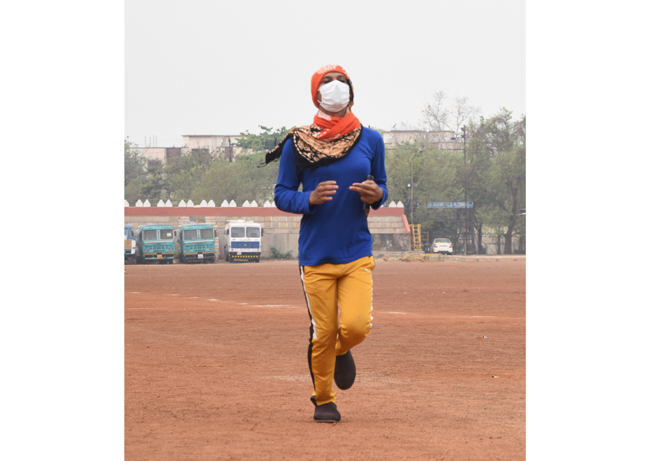
“Cancer patients are immune-compromised, a potential high risk population to contract Covid-19”

0

Kolkata: As per data collected from various State Health Departments the number of Covid-19 cases in India crossed 80 lakh last month. The total cases of Covid-19 in West Bengal as on Novmber 15 was reported to be 4,09,221 with 3,907 new cases while the active cases  went down to 34,021 and the discharge rate has gone upto 89.89%. There has been a rapid transformation in the healthcare system as Covid-19 pandemic tends to magnify pre- existing diseases, especially cancer. In order to avoid mortality, optimal standards of cancer care and therapies are needed to be maintained to provide positive outcomes. Dr Kazi S Manir, well-known clinical Oncologist speaks to eNewsroom about how the Covid-19 pandemic has been a roadblock in treating cancer patients and for oncologists too in West Bengal are fighting with the current situation and providing the best possible treatment. Below is the excerpt.

eNewsroom: How is the pandemic linked to the rising cancer cases?  

Dr Manir: For several reasons, incidence of new cases are on the rise in our country for a couple of years which has no relation with the current pandemic. But due to the Covid crisis, treatment of many other major chronic diseases related to heart and kidney have been seriously affected. Cancer surgeries are getting postpended while radiotherapy, chemotherapy treatment are getting either delayed or interrupted. Cancer treatment is lengthy and needs a multimodality approach (Surgery/Radiotherapy/Chemotherapy) in major cases. Any interruption or delay ultimately leads to progression in disease. So currently, we are observing a sharp rise in advanced cancer cases in our day to day practice.

eNewsroom: How services in oncology have transformed to provide consultation, therapy and surgery while shielding the patients from contracting Covid?

Dr Manir: It is really a challenging situation for oncologists worldwide. It took time to strategize and streamline oncology services. Cancer treatment is neither elective which can be delayed nor emergency but it is essential. Cancer patients are immune-compromised, a potential high risk population for contracting Covid in severe form.

What we did is triage, encouraging patients for online consultation after completion of treatment for follow up. There are separate follow up clinic for patients who need physical examination to avoid mixing up with other patients. For new patients who need diagnostic or treatment we are trying our best to reduce their duration or frequency of hospital stay/visit. Radiotherapy is a daily treatment which runs for 5 to 7 weeks so depending on the cases we are adopting alternative shorter radiotherapy treatment schedules. In selective cases for chemotherapy we are adopting 3 weekly chemotherapy cycles instead of weekly chemotherapy cycles. For any planned procedures like cancer surgeries we are routinely doing Nasal Swab for Covid-19 testing prior to surgery. Cancer patients usually have separate wards, there is less chance of contracting the disease from other patients.

eNewsroom: Comment on the overall cancer care scenario in West Bengal.

Dr Manir: West Bengal has comprehensive cancer care facilities both in private and government sectors. The state has advanced surgical equipment like surgical robots, radiotherapy machines like advanced generation linear accelerator machines and other facilities as well. We have excellent trained doctors, staff, technologists both in government and private clinics. Few hospitals have their own lab and clinical research infrastructure also. Currently advanced cancer facilities are also coming up in districts and towns too.

eNewsroom: Which type of cancer will be majorly at the risk of contraction and complication due to Covid?

Dr Manir: Almost all cancer patients have a little bit higher risk of contracting Covid than general healthy people because cancer hits the immune system and in some situations, cancer patients become more susceptible for infection. Patients undergoing chemotherapy have less number of white blood cells, a crucial backbone of our immune system. So they are more prone to get any infection. They are at a high risk for Covid infection and severity. Same is also true for blood cancers or lymphnode cancers like leukemia or lymphoma where patients are usually immune compromised. A major section of cancer patients are aged people with other chronic diseases like heart diseases, lung diseases, diabetes which makes them more susceptible to Covid infection.

eNewsroom: Your suggestions for a healthy happy and cancer free life.

Dr Manir: Do regular physical activities, pick up sports, yoga or indulge in small activities like brisk walking so that the body is healthy and fit. Consume healthy nutritious food, green vegetables and seasonal fruits to boost up immunity and prevent cancer. Any type of addiction like alcohol, smoking, tobacco along with fast food, carbonated drinks and excessive stress should be avoided. Mental peace also plays a crucial role in leading a healthy cancer free life.

Legendary actor Soumitra Chatterjee breathes his last at the age of 85

1

Kolkata: In the late 80s came a Shirshendu Mukhopadhyay novel ‘Nana Ronger Aalo’. Still a school student with a deep desire to make films, the novel caught my attention. It had everything. A young hero, a striking heroine, a vampish sexy ‘boudi’ (sister-in-law), family conflict, suicide attempt, reversals and final victory. And, there was a father, who part narrates the story. For various reasons the novel stayed with me.

The protagonist Jojo had shades of me, a disillusioned Marxist in Calcutta, without a job. The female protagonist a strong character whom I had again tweaked equal to Jojo’s role. In the final draft several other characters were dropped or completely changed. For many years I had been discussing this film and the probable casting with my friends.

At Nandan we went to watch Aparna Sen’s Paromitar Ekdin, where he had a small role. His

At Nandan we went to watch Aparna Sen’s Paromitar Ekdin, where he had a small role. His first appearance was tentatively walking towards the house. The friend seated next to me whispered, you are damn right in thinking about him. I merely nodded.

Ten years later when I finally started writing ‘Bishanno‘, I had made up my mind whatever happens Soumitra babu will not play the father because by then he had played rich father, poor father, weak father, crying father, even a church father (‘Shyam Saheb’). The decision was simply to give him a challenging role, something he hadn’t done but in a six-decade long career it is difficult to figure out what he hadn’t done.

Now the novel had the character of a hen-pecked neighbour Jhampati babu forever imagining his wife would elope with every other man. Somehow, this character didn’t appeal to me. By the time I completed the script Jhampati babu had turned into a kind of salesman going door to door with agarbattis, homemade cookies and every such product after having lost his job. A struggling man, not a father. Finally I was happy for the then septuagenarian I finally had a dignified character. The cardinal rule for me is to treat the characters with dignity. I knew Bengali films primarily through Satyajit Ray and how could I make my first film without his favourite actor?

For various reasons, the film didn’t happen. Today, Soumitra Chatterjee passed away ending a 41 day battle with Covid and encephalopathy of the nervous system without knowing there was such a character written for him.

Aspiring Bengali filmmakers couldn’t have thought of making Bengali films without him.
He was the institution that took us to the most revered of film persona in Bengal, Satyajit Ray.

In 14 of Ray’s films from the late 50s to late 80s, and in two of his finest films the period drama ‘Charulata’ and the the very contemporary ‘Aranyer Dinratri’ (Days and Nights of the Forest) he played the male lead. There were other films. Ray purists will not agree but I felt he was miscast as Narsingh in ‘Abhijaan’.

Soumitra was essentially the educated, good looking, with an aura of innocence which could be misconstrued as naivete. That person as the angry, rough talking, bearded Hindi speaker… I would say Ray was wrong. That happens to the best.

Ray knew what Soumitra could do and what he couldn’t. He had turned down Soumitra the first time when he came for ‘Aparajito’. But, for ‘Apur Sansar’ he was the only choice. Ray never thought of Soumitra for ‘Nayak’.

In Tapan Sinha’s ‘Jhinder Bandi’ when Uttam Kumar first sees him on horseback, says how beautiful. Indeed Soumitra was beautiful. I haven’t seen any other Bengali male so strikingly goodlooking. Ok, very few.

Uttam Kumar had a charisma that Soumitra was short of. Uttam Kumar had a presence on the screen that was overpowering. Soumitra was possibly inhibited by his striking good looks worried it would overshadow his performance. He was a thinking actor. Somewhere possibly he looked down at the Bengali film situation, which couldn’t offer him roles that would challenge his interpretative skills to present a character.

In an interview he once said Ray had asked whether he was laughing at a particular scene (his back was to the camera) in a Bengali film. Soumitra admitted the truth to his mentor. Ray wasn’t too happy.

The intellectual satisfaction that Bengali cinema in general could not offer, came from theatre, composing poems and editing a magazine. After Ray, if someone in Bengal was carrying his legacy, then it was Soumitra.

One of the biggest controversies involving two of Bengal’s tallest filmmakers, Ray and Mrinal Sen was about ‘Akashkusum’ where Soumitra played the lead. Sen criticised Ray’s ‘Sonar Kella’ for peddling superstition. Again Soumitra was playing the most favoured Bengali fictional detective of my generation Felu da.

Couple of years back, in another interview he spoke about a feud with another great Ritwik Ghatak which could have ended in a full-fledged physical brawl. Then his open endorsement of the mainstream Left led by CPM angered many. But he stayed away from electoral politics. He was political like all artists should be.

He remained where he was unfazed, unapologetic. By then it was I am Soumitra Chatterjee, he had himself turned into an institution. Not that he wasn’t above criticism or everything he did was befitting his stature. Like his endorsing astrological devices. I thought Ray wouldn’t have approved this. But, who am I to judge. He had a family.

I will forever regret not getting to bring Jhampati babu to life on the screen among many other regrets.

Only Sabitri Chatterjee the finest Bengali actress and filmmaker Tarun Majumdar remain. Soon there will be no one left to adulate in Bengal. None to learn from. The Bengali film screen gets a bit more darker.

How safe are you when you have a health emergency at Kolkata’s top shopping malls?

0

Kolkata:  The light and brightness that Kolkatans are witnessing during Deepawali have turned dark for the family of Md. Shabbir, a store manager of Samsonite showroom, well known retail chain selling luggage and travel gear.

Thirty-four-year-old Shabbir, married to Simrana Fatima was employed with Samsonite India for 13 years and had won best employee award at All India level many times.

On Friday, Md Shabbir reached his workplace on time to open Samsonite’s store at Quest Mall. He had another staff to help in running the store. But the support staff left around 11:45 am to deliver an item to one of their clients. Soon after Shabbir began to feel uneasy, complained of chest pain and experienced a bout of vomiting. Seeing his condition, the housekeeping staff tried helping him by pouring water on Shabbir’s head. She made him sit on a chair. But Shabbir felt his condition worsening and requested the lady to get help and asked her to call his wife. Around 11:58 am, the housekeeping staff called the family about his condition. She also alerted the mall authorities. When the mall authorities arrived Shabbir requested them to take him to the hospital as it was a medical emergency.

However, when the family managed to reach the store in about 15-20 minutes, they saw people surrounding Shabbir and he was gasping for breath. No medical help was provided to him in the entire intervening period.

“We saw the housekeeping staff attending to my brother-in-law who was gasping for breath, while a number of men, some of whom were representatives of the mall, standing and watching him. Understanding the gravity of the situation, we started shouting for the ambulance, my sister called on 102 for an ambulance, but we could see that time was getting wasted and requested for a car/cab. Unfortunately by the time we managed to take Shabbir to Chittaranjan Hospital, he was declared brought dead,” shared Abdul Ali, brother-in-law of the deceased.

Shabbir was a healthy young man with no previous medical history of any kind of health issue.

quest mall samsonite manager heart attack ambulance medical emergency
The name of Md Shabbir can be read at the website of Quest Mall


Aggrieved by the loss of a young son, the family members reached Quest Mall on Saturday, and first inquired about the CCTV footage of Samsonite store, but to their shock they were told that the store is running without having any CCTV cameras.

Later they approached the mall authority. Surprisingly, even before talking to the family Sanjeev Mehra, vice-president of Quest Mall, called Karaya police officials and then talked to the family members. He maintained that the matter would be investigated and they would take necessary action like having an ambulance stationed in the mall and instructing all store owners to have CCTV cameras, but he refused to give anything in writing.

When eNewsroom spoke to Sanjeev Mehra he said, “I will inquire within a week and have called the family members to meet me on Friday.”

“We are not demanding any compensation nor have we registered a police case against anyone. We only want to know what happened. How did a healthy man suddenly collapse and die? Why was he left unattended and not provided even basic first aid by anyone at the mall? How does a busy mall like this function without having the basic medical infrastructure in place? Why was the dying man treated like a spectacle for others to just watch him die there?” asks a grieving Najma Rahman, Shabbir’s sister.

“If the Mall authorities will not answer our genuine queries, then we will definitely escalate the matter. The basic premise is not just about the safety of the staff of the malls, but also how equipped are the malls to cater to such emergency situations of people who visit it for shopping,” said Rahman, who was present during the meeting with the vice-president.

Anandiya Bhattacharya, Samsonite’s Zonal Sales Manager, while offering condolences and stating that Md Shabbir was one of Samsonite’s best employees, had nothing much to say about the absence of CCTV. On being asked by eNewsroom he only said, “It has been planned, but we could not get them installed yet. I will inquire again, why it has been delayed.”

Clearly, the non-availability of ambulance and other emergency medical facilities for the staff and visitors , and operating stores without CCTV cameras to one of the most popular malls in the city need to address urgently, but are authorities serious?

Need for a comprehensive review of law governing Election Commission of India

0

In an article in The Tribune, eminent journalist and author Rasheed Kidwai has focussed attention on the inadequacies of the Election Commission to hold elections with a modicum of fairness and deal appropriately with those violating its guidelines or the Model Code of Conduct. He has suggested, among other things, the induction of a retired Supreme Court judge in the Central Election Commission as the Election Commission of India (ECI) performs several important functions which are quasi-judicial in nature, such as dealing with the crucial issue of the disqualification of MPs and MLAs, petitions and interpretation of rules in the Representation of the People Act. Another important suggestion made by him is implementation of the 1990 Dinesh Goswami Committee recommendation that members of the ECI should be selected by a panel consisting of the Prime Minister, the Chief Justice of India and the Leader of Opposition in the Lok Sabha.

Valuable as these suggestions are, these are not enough under the prevailing circumstances when hate-mongers and criminals dominate the politics and get elected with the help of money and muscle power. In the just concluded Bihar Assembly elections, as many as 1157 (out of a total of 3,733) candidates were with criminal backgrounds, some of whom might be declared winners when the results are announced on November 10.

In fact, the need is to have a relook into the very law governing the ECI, as suggested by then Chief Election Commissioner Nasim Zaidi in 2016. In his inaugural address at National Interactive Conference on Electoral Laws in New Delhi, he said that the issue is vital and needs rather a debate at national level because almost everyone is involved in one way or the other in the electoral process.

When a comprehensive review of the Representation of People Act is taken up, thought must also be given to the helplessness of ECI in protecting the career of officers working honestly but not to the like of the political party that comes to power. It has been seen that politicians and officers accused of electoral crimes are rewarded by the party in power and officers doing their job honestly are punished once the period of Model Code of Conduct is over.

Here are the examples. When Shivraj Singh Chouhan became Chief Minister of Madhya Pradesh in 2005, he was not a member of the Assembly, but a member of Lok Sabha. He resigned from Lok Sabha and contested from Budhni constituency in Sehore district. Collector of Sehore and Returning Officer S K Mishra was removed by Election Commission a few days before polling for violating the law to help Chouhan. As soon as the Election Commission’s Code of Conduct was over, Chouhan appointed Mishra Collector of Bhopal, one of the most coveted posts, and then Secretary to CM, virtually ridiculing the Election Commission and its Code of Conduct.

During the 2008 Madhya Pradesh Assembly elections, Phoolchand Verma filed his nomination papers as BJP candidate from Sonkutch (SC) constituency in Dewas district. Sajjan Singh Verma was the Congress candidate. Tukojirao Puar, a Minister of State in the Chouhan council of ministers, was the BJP candidate from Dewas. As the scrutiny of the nomination papers was being held, Tukojirao Puar, accompanied by Phool Chand Verma, created a ruckus in the office of Dewas Sub-Divisional Magistrate (SDM) Sanjana Jain, who was the Returning Officer for the Sonkutch (SC) Assembly constituency. They wanted Sanjana Jain to reject Sajjan Singh Verma’s nomination papers under one pretext or another. As the lady officer tried to explain the things, Puar had lost his temper and he and Phoolchand Verma started threatening her. The rowdy behaviour of the BJP leaders lasted for quite some time.

After receiving a report, accompanied by a CD of the proceedings in her office, from Sanjana Jain, the Election Commission pondered over the matter and directed the Chief Electoral Officer of Madhya Pradesh to get a criminal case registered against Puar under Sections 186, 353 and 506 of IPC. As the Sections make it a cognisable offence, Puar was subsequently arrested by the police. At the same time, the Election Commission ordered immediate removal of Dewas Collector Navneet Mohan Kothari, who was the District Returning Officer, for not sending SDM Sanjana Jain’s report to the Commission promptly. Shivraj Singh Chouhan told an election meeting at Dewas a few days later that he was proud of Tukojirao Puar (the main culprit).

In due course, Chief Judicial Magistrate (CJM) of Dewas D K Mittal framed charges under Sections 353 (assault or criminal force to deter a public servant from discharge of his duty) and 504 (intentional insult) of Indian Penal Code (IPC) against Puar and Phoolchand Verma.

Meanwhile, BJP had returned to power and Chouhan again become Chief Minister. He promoted Puar to cabinet rank and transferred Sanjana Jain to an insignificant post. The case against Puar and Phoolchand Verma fizzled out as it was Chouhan’s prosecution officer. The Election Commission could neither protect Sanjana Jain nor ensure prosecution of Puar and Verma.

French Public Schooling: How Much ‘Neutral Space’ Does It Offer to Children from Different Faiths?

0

Let us consider the latest spate of religious hate-crimes in France. Samuel Patty, a middle-aged French teacher of history and geography at a school in Paris suburb was brutally killed by a young Chechen Muslim refugee for showing the inflamatory cartoons on Prophet Muhammad to his students in classroom. These are the same cartoons which French toon-mag Charlie Hebdo had carried in 2015 triggering a terror attack in its Paris office that killed a dozen staffers.

The heinous hate-crime of the Chechen boy (from Muslim-dominated Chechenia region in Russia that had witnessed brutal war between Vladimir Putin’s increasingly Orthdox Christian, ultranationalist, imperial state and seperatist Muslim groups) and the medieval mindset of those who are lionising him must be condemned. But surely, Patty was aware that the emotive and divisive issue had continued to be a live wire. More so because of the trial for the carnage which is going on in Paris making it a part of mainstream media and social media discourse in the country.

Hebdo editor then and French president Emanuel Macron now denied the Muslim charge that Islam and its prophet was singled out in the name of Freedom of Speech and Expression. Both Macron and his predecessors insisted on the status of public schools as ‘neutral space’ as tender hearts and minds are to be protected from the contagions of elders’ prejudices against each other. The Cross, Hijab, Kippa, turban and other markers of community identities and dress code that disrupt the children’s togetherness was prohibited on the same ground.

What Patty was teaching?

The slain teacher had reportedly asked his Muslim students to leave the classroom considering their religious sensitivity. But it is not clear from French media reports whether he had done so before showing the cartoons to the class. Nevertheless, some questions pop up in our mind.

Was he referring to these controversial cartoons for illustrative and pedagogic purposes only? Did he take care to put forward the points- counterpoints in an academic manner in the context of ongoing debates over the freedom of speech and expression in French society? Did he teach the tender minds to know the differences between Free Speech and Hate Speech?  He was supposed to do so in the light of the professed goal of French schooling.

Was he simply defending Hebdo artist’s freedom of expression,i.e. right to mock Muhammad?  Did he extend the same right to question, criticize and mock all spiritual authorities including Christ, for that matter, the God of Bible? Had he shown Hebdo caricatures of Pope and other Catholic authorities to the students to underline the secular liberal right to criticise religions even blasphemy but without any malice to the French Muslims?

Did he initiate any critical appraisal of all the received wisdom over the freedom of speech and other ideals of French Revolution and Enlightenment, particularly in the light of subsequent disjunctions of the country’s polity to those ideals at home and abroad?  In the course of his earlier lectures, did he encourage the young minds to get glimpses of the country’s blood-drenched medieval history as the cradle for Crusaders against Muslim control of Jerusalem? Had he revisited the hysterical mob violence sponsored by the state-church jointly against Christian heretics and Jewish minority?

Did he enlighten they on the legacy of the anti-semitism and other varieties of racism in Nazi-occupied France and free France even today to appreciate the present need to oppose all forms of hate crimes? Did he inspire to revisit equally gory modern French colonial history from Algeria-Tunisia to Syria-Lebanon, Mali to Vietnam, let alone its neo-colonial legacies? Was he widening the mental horizon of the young minds on the diversity of the past and present French citizenry and larger world? Was he motivating them to look for out of box creative ideas to unify people of all creeds and colors in a composite nationhood and humanity in the light of ongoing controversies?

Enterprising teachers always try to enliven their classroom lessons with examples from everyday life and the contemporary world.  But they also know the skill to avoid imposition of a partisan position even while making their personal preference clear. Did Patty try it or the school authorities encouraged him to do so?

france french free speech hate speech secular liberal islam cartoons
Demonstrators hold placards reading “I am a teacher” during a demonstration in Paris in support of freedom of speech and to pay tribute to a French history teacher who was beheaded near Paris after discussing caricatures of Islam’s Prophet Muhammad with his class I Courtesy: AP

Patty and French liberal values

The answer to these questions may reveal the murdered teacher’s mindset too, glimpses of which may be gathered from the social media acrimonies that he joined before his killing. A parent of a Muslim student had complained against him to the school authorities. It later snowballed into to a larger public row involving some Muslim clerics and local non-Muslim politicians.

Had he been alive, Patty as an individual with his right to express strong likes and dislikes would not have needed to reply to our queries on his approach to history and teaching. But his posthumous personification of quintessential French values by the country’s president has put him under public scrutiny as an exemplifier of secular liberal, French values including freedom of speech/expression, conscience and free quest for knowledge that should govern the public school ethos. We will come to Laicite; the French version of secularism, Macron’s rhetoric and realpolitik hypocrisy over it later.

For now, more pertinent is the question of how to nurture the young minds with an open-minded approach to national and global history which won’t be barred either by selective amnesia or political correctness. Consider the experiences of some other school teachers who shared them during some French TV debates after Patty’s murder. One of them faced irate students who refused to believe in the existence of other people’s God or gods apart from the God of Bible. Another faced anonymous threats from a parent to be denounced as a denier of the Holocaust simply for asking to join a debate on French Resistance during the Nazi occupation.

Is the French pedagogical training for public school teachers liberal enough?  Does it make distinctions between systematic indoctrination of students in conformity to the state policies, however well-meaning they may be and inculcation of an inquisitive and uninhibited mindset open to informed choice? Totalitarian, theocratic, majoritarian states would insist for the first. But liberal democratic France is expected to vouch for the second.

But how open-minded and inclusive is French and rest of Western liberalism, past and present? Prohibition on any religious interference in state institutions and politics is a welcome and pertinent principle in the light of history and current world. But does its school curriculum include basic knowledge on the tenets of different societies, their religions and cultures across the world, without any comparative validation or rejection but as an objective part of past and present human existence?

Agree, the proposition which has been tried elsewhere is not problem-free at all. But how does the French secular state want to ensure that children from different social-cultural backgrounds in its schools mix more intimately and learn to respect their certain differences and sensitivities? How to protect their minds from being easily poisoned by divisive prejudices and politics outside the ‘neutral zone’?

Agree that the multiculturalist schooling elsewhere is not a panacea for hate-crimes. But the Macronian image of tender minds as a ‘Blank Page’ is deliberately deceptive as it is more vulnerable to both majoritarian and minoritarian spin masters as the unfortunate Patty episode has underlined.

100 years on, time for another Non-Cooperation Movement

0

[dropcap]T[/dropcap]he year 2020 marks the centenary of the Non-Cooperation Movement, which began on September 5, 1920.

Before that, the country had erupted in protest against the Draconian Rowlatt Act imposed by the colonial rulers. The Rowlatt Act was the imposition of a much more severe martial law meant to terrorise the Indian populace into subjugation. The Act was imposed on March 21, 1919. On April 13, 1919, a peaceful gathering of Indians at Jallianwala Bagh in Amritsar was mercilessly gunned down by soldiers of the British army on the orders of their commanding officer, General Reginald Dyer, the mass murderer.

Mahatma Gandhi had arrived on the national scene due to his success in the Champaran Satyagraha of 1917 to get justice for the district’s enslaved and impoverished indigo farmers. The Champaran Satyagraha was the first time that an Indian had forced the colonial power to retreat.

After the uprising of 1857, Indians had resigned themselves to the belief that the British were invincible and destined to rule. The Champaran Satyagraha surprised the nation. It was followed by success in Kheda, where Vallabhbhai Patel emerged as ‘Sardar’.

Along with the Non-Cooperation Movement, the Congress lent support to the Khilafat Movement which galvanised the till then alienated Muslim community  to join the mainstream of  protests against the colonisers. The atmosphere was conducive for a revolution.

Elation and heartbreak

The success of the Non-cooperation Movement was such that it took, along with the British, the Congress leadership by surprise too. The entire nation rose as one and at one point it felt as if the British would capitulate. Then the incident in Chauri Chaura happened on February 4, 1921, in a village in Gorakhpur district of the eastern United Province, present-day Uttar Pradesh.

Villagers gathered to march in solidarity with the Non-cooperation Movement. Policemen from the local chowki beat up a group of Satyagrahis, enraging the protesters who chased the policemen to the chowki and laid siege to it. Soon the protesters turned into a mob howling for blood. The police had locked themselves inside the chowki, so to smoke them out the mob set fire to it. When the policemen stumbled out, they were slaughtered and thrown back into the fire.

This incident was reported widely to discredit the till then non-violent Non-Cooperation Movement. When Bapu heard of the incident, he could not accept that a movement spearheaded by him was slipping out of control. Though the success of the Non-Cooperation Movement was significant and, despite the insistence of the other Congress leaders to continue with the protests, Bapu called off the movement.

Many leaders argued that the British were about to capitulate, but Bapu would have none of it. For him, the means were as important as the ends. He called off the movement. It was an awe-inspiring display of his power and ability, the magnitude of the movement and his ability to bring it to a screeching halt single-handedly.

Non cooperation movement mahatma gandhi
A protest march during Non-cooperation Movement I Courtesy: allindiansmatter.in

Why has the Congress forgotten it?

This is not a lesson in the freedom movement, although it feels as if we need a reminder of our contemporary history. As a nation, we seem to have regressed into ancient history and mythology. The Non-Cooperation Movement was an important milestone, but today it is forgotten even in its centenary year. Neither the government – nor, surprisingly, the Congress – is celebrating it.

I am happy that the government isn’t. It would be ironic if the progeny of the organisation that collaborated with the British to subvert our freedom movement were to commemorate the centenary of a landmark movement that led to our liberation.

I am sad that the Congress has forgotten it. It was in its 35th session held at Nagpur in December 1920, that the party passed the Non-Cooperation Resolution. The present-day Congress, although far removed from the pre-independence Congress, is still legitimately the inheritor of the legacy of the party that was at the forefront of the freedom movement. Is it now going to fritter away that glorious legacy too?

Time to rise again

Like the events leading to the Non-Cooperation Movement – Champaran, Kheda, the Rowlatt Act and Jallianwala Bagh – India is passing through turmoil. Once again, the nation is in torment, there is agrarian distress, unemployment and lack of quality education are making the youth anxious. Last year, the abrogation of Article 370 and the imposition of the Citizenship  Amendment Act (CAA) and the National Registry of Citizens (NRC) caused grave concern amongst the minorities, and rightly so. The official patronage to the Ram Mandir movement has caused a rift in the Indian populace similar to the days before the Khilafat Movement.

The sly manipulation of the democratic system and Parliament by the government is a threat to our democracy. The way bills have been turned into laws and imposed on the nation is worrying. The recent farm bills have added fuel to the agrarian fire. Anti-labour amendments to laws, coupled with job losses, are causing anxiety and discontent among the working class. The panic-stricken exodus of labourers from our cities at the start of the mismanaged Covid-19 lockdown has added to the alienation of the large casual and migrant labour force, and shown the fragility of our industrial sector.

In a way, the centenary year began appropriately with the nationwide protests against CAA and NRC, beginning with Shaheen Bagh and the protests at Jamia Milia Islamia and Jawaharlal Nehru University (JNU). Those sit-ins were replicated nationwide – at Ghanta Ghar in Lukhnow, in Kolkata, Mumbai, Chennai and several other cities and campuses. It felt as if the spirit of non-cooperation was alive and well in the land of its birth, the most appropriate commemoration of its centenary. A people’s movement celebrating a historic people’s movement.

The government used dirty tricks to subvert the protests. The Delhi riots were engineered to sabotage them and, since then, this government, the descendant of collaborators with the British, is using powers similar to those vested in the colonial administration by the Rowlatt Act to frame and prosecute those who participated in the anti-CAA and NRC agitation. There is rampant abuse of the sedition and anti-terror laws in order to crush legitimate dissent. In a democracy, it is the legitimate right of citizens to question the government and protest if they feel it is wrong.

A hundred years ago, Indians rose against an alien, undemocratic ruler. The arrogance of this government and its tendency towards autocracy signifies that India is ripe for another Non-Cooperation Movement. Are we ready?


The piece first appeared on All Indians Matter

मैं आज क्यों लिख रहा हूं, अर्णब की गिरफ्तारी के तुरंत बाद क्यों नहीं लिखा?

0

त्महत्या के लिए उकसाने का मामला संगीन है लेकिन सिर्फ नाम भर आ जाना काफी नहीं होता है। नाम आया है तो उसकी जांच होनी चाहिए और तय प्रक्रिया के अनुसार होनी चाहिए। एक पुराने केस में इस तरह से गिरफ्तारी संदेह पैदा करती है। महाराष्ट्र पुलिस को कोर्ट में या पब्लिक में स्पष्ट करना चाहिए कि क्या प्रमाण होने के बाद भी इस केस को बंद किया गया था? क्या राजनीतिक दबाव था? तब हम जान सकेंगे कि इस बार राजनीतिक दबाव में ही सही, किसी के साथ इंसाफ़ हो रहा है। अदालतों के कई आदेश हैं। आत्महत्या के लिए उकसाने के ऐसे मामलों में इस तरह से गिरफ्तारी नहीं होती है। कानून के जानकारों ने भी यह बात कही है। इसलिए महाराष्ट्र पुलिस पर संदेह के कई ठोस कारण बनते हैं। जिस कारण से पुलिस की कार्रवाई को महज़ न्याय दिलाने की कार्रवाई नहीं मानी जा सकती।

भारत की पुलिस पर आंख बंद कर भरोसा करना अपने गले में फांसी का फंदा डालने जैसा है। झूठे मामले में फंसाने से लेकर लॉक अप में किसी को मार मार कर मार देने, किसी ग़रीब दुकानदार से हफ्ता वसूल लेने और किसी को भी बर्बाद कर देने का इसका गौरवशाली इतिहास रहा है। पेशेवर जांच और काम में इसका नाम कम ही आता है। इसलिए किसी भी राज्य की पुलिस हो उसकी हर करतूत को संंदेह के साथ देखा जाना चाहिए। ताकि भारत की पुलिस ऐसे दुर्गुणों से मुक्त हो सके और वह राजनीतिक दबाव या अन्य लालच के दबाव में किसी निर्दोष को आतंकवाद से लेकर दंगों के आरोप में न फंसाए।

अर्णब गोस्वामी के केस में कहा जा रहा है कि महाराष्ट्र की पुलिस बदले की भावना से कार्रवाई कर रही है। ग़लत नहीं कहा जा रहा है। क्या दिल्ली पलिस और यूपी की पुलिस बदले की भावना से कार्रवाई नहीं करती है? अर्णब गोस्वामी ने कभी अपने जीवन में हमारी तरह ऐसा पोज़िशन नहीं लिया है। मुझे कुछ होगा तो अर्णब गोस्वामी एक लाइन नहीं बोलेंगे। अगर पुलिस किसी को दंगों के झूठे आरोप में फंसा दे तो अर्णब गोस्वामी पहले पत्रकार होंगे जो कहेंगे कि बिल्कुल ठीक है। पुलिस पर संदेह करने वाले ही ग़लत हैं। फिर भी एक नागरिक के तौर आप भी अर्णब के केस में पुलिस के बर्ताव का सख़्त परीक्षण कीजिए ताकि सिस्टम दबाव और दोष मुक्त बन सके। इसी में सबका भला है।

डॉ कफ़ील ख़ान पर अवैध रूप से राष्ट्रीय सुरक्षा क़ानून लगा कर छह महीने बंद रखा गया। इलाहाबाद हाई कोर्ट ने कहा था कि अवैध रूप से रासुका लगाई गई है। उक्त अधिकारी के ख़िलाफ़ कोई कार्रवाई नहीं हुई है। अर्णब गोस्वामी से लेकर गृह मंत्री अमित शाह से लेकर तमाम मंत्री और मुख्यमंत्री योगी आदित्यनाथ तक ने इस नाइंसाफी पर कुछ नहीं कहा। भारत में किनके राज में प्रेस की स्वतंत्रता अभी खत्म होकर मिट्टी में मिल चुकी है यह बताने की ज़रूरत नहीं है। आपको एक लाख बार बता चुका हूं। प्रेस की स्वतंत्रता की बात करने वाले मंत्रियों के प्रधानमंत्री ने आज तक एक प्रेस कांफ्रेंस नहीं की है।

बिल्कुल अन्वय नाइक और कुमुद नाइक की आत्महत्या के मामले में इंसाफ मिलना चाहिए। अन्वय नाइक की बेटी की कहानी बेहद मार्मिक है। इस बात की जांच आराम से हो सकती है कि अर्णब गोस्वामी ने अन्वय नाइक से स्टुडियो बनाकर पैसे क्यों नहीं दिए? 80 लाख से ऊपर का काम है तो कुछ न कुछ रसीदी सबूत भी होंगे। अन्वय नाइक की बेटी का कहना सही है कि कोई भी कानून से ऊपर नहीं होना चाहिए लेकिन कानून को भी मर्यादा से ऊपर नहीं होना चाहिए। जांच की निष्पक्षता की मर्यादा अहम है। तभी लगेगा कि पारदर्शिता के साथ न्याय हो रहा है। राजनीतिक दबाव में केस का खुलना और केस का बंद होना ठीक नहीं है।

जब एनडीटीवी पर छापे पड़ रहे थे और एक चैनल को डराया जा रहा था तब अर्णब का कैमरा बाहर लगा था और लिंचमैन की तरह कवर किया जा रहा था। उनके कवरेज में एक लाइन प्रेस की स्वतंत्रता पर नहीं थी। उनका रिपोर्टर डॉ रॉय के घर की दीवार फांदने का प्रयास कर रहा था। बीजेपी के मंत्री प्रवक्ता मेरा बहिष्कार करते हैं। एन डी टी वी की सोनिया वर्मा सिंह ने ट्विट कर अर्णब की गिरफ्तारी की निंदा की है। एनडीटीवी के अन्य सहयोगियों ने अर्णब की गिरफ्तारी की निंदा की है। ये फर्क है। जब 2016 में एन डी टी वी इंडिया को बैन किया जा रहा था तब प्रेस क्लब में पत्रकार जुटे थे। आप पूछ सकते हैं कि अर्णब और उनके बचाव में उतरे मंत्री लोग क्या कर रहे थे। जब विपक्ष के नेताओं पर छापे की आड़ में हमले होते हैं अर्णब हमेशा जांच एजेंसियों की साइड लेते हैं।

अर्णब ने मोदी सरकार पर क्या सवाल उठाए हैं, बेरोज़गारी से लेकर किसानों के मुद्दे कितने दिखाए गए हैं यह सब दर्शकों को पता है। उल्टा अर्णब गोस्वामी सरकार पर सवाल उठाने वालों को नक्सल से लेकर राष्ट्रविरोधी कहते हैं। भीड़ को उकसाते हैं। झूठी और अनर्गल बाते करते हैं। वे कहीं से पत्रकार नहीं हैं। उनका बचाव पत्रकारिता के संदर्भ में करना उनकी तमाम हिंसक और भ्रष्ट हरकतों को सही ठहराना हो जाएगा।

अर्णब की पत्रकारिता रेडियो रवांडा का उदाहरण है जिसके उद्घोषक ने भीड़ को उकसा दिया और लाखों लोग मारे गए थे। अर्णब ने कभी भीड़ की हिंसा में मारे गए लोगों का पक्ष नहीं लिया। पिछले चार महीने से अपने न्यूज़ चैनल में जो वो कर रहे हैं उस पर अदालतों की कई टिप्पणियां आ चुकी हैं। तब किसी मंत्री ने क्यों नहीं कहा कि कोर्ट अभिव्यक्ति की स्वतंत्रता पर हमला कर रहा है? जबकि मोदी राज में अभिव्यक्ति की स्वतंत्रता की सीमाओं को जिनती बार उभारा गया है उतना किसी सरकार के कार्यकाल में नहीं हुआ। हर बात में अभिव्यक्ति की स्वतंत्रता की सीमा बताई और दिखाई जाती है।

एक बार अर्णब हाथरस केस में योगी की पुलिस को ललकार कर देख लेते, मुख्यमंत्री योगी को ललकार कर देख लेते जिस तरह से वे मुख्यमंत्री उद्धव को ललकारते हैं तो आपको अंतर पता चल जाता कि कौन सी सरकार संविधान का पालन कर रही है। उद्धव ठाकरे ने प्रचुर संयम का परिचय दिया है और उनकी पार्टी के कार्यकर्ताओ ने भी जिनकी एक छवि मारपीट की भी रही है। कई हफ्तों से अर्णब बेलगाम पत्रकारिता की हत्या करते हुए हर संवैधानिक मर्यादा की धज्जियां उड़ा रहे थे। पत्रकार रोहिणी सिंह ने ट्विट किया है कि यूपी में पत्रकारों के खिलाफ 50 से अधिक मामले दर्ज हुए हैं। क्या अर्णब में साहस है कि वे अब भी योगी सरकार को ललकार दें इस मसले पर। जो आज अभिव्यक्ति की स्वतंत्रता की बात कर रहे हैं वो सीमा की बात करने लगेंगे और अर्णब पर रासुका लगा दी जाएगा डॉ कफील ख़ान की तरह। गौरी लंकेश की हत्या के मामले को अर्णब ने कैसे कवर किया था? या नहीं किया था?

द वायर के संस्थापक हैं सिद्धार्थ वरदराजन। अर्णब गोस्वामी सिद्धार्थ वरदराजन के बारे में क्या क्या कहते रहे हैं आप रिकार्ड निकाल कर देख सकते हैं मगर सिद्धार्थ वरदराजन ने उनकी गिरफ्तारी में पुलिस की भूमिका को लेकर सवाल उठाए हैं। निंदा की है। उसी तरह से कई ऐसे लोगों ने की है। अर्णब के पक्ष में उतरे बीजेपी की मंत्रियों और समर्थकों की लाचारी देखिए। वे सुना रहे हैं कि कहां गए संविधान की बात करने वाले। पत्रकार रोहिणी सिंह ने एक जवाब दिया है राकेश सिन्हा को। संविधान की बात करने वालों को आपने जेल भेज दिया है। कुछ को दंगों के आरोप में फंसा दिया है। इनकी समस्या ये है कि जिन्हें नक्सल कहते हैं, देशद्रोही कहते हैं उन्हीं को ऐसे वक्त में खोजते हैं। इस बात के अनेक प्रमाण हैं कि कई लोगों ने एक नागरिक के तौर पर अर्णब की गिरफ्तारी की प्रक्रिया को लेकर सवाल उठाए हैं। उन्होंने यह फर्क साफ रखा है कि अर्णब पत्रकार नहीं है और न ही यह अभिव्यक्ति की स्वतंत्रता का मामला है।

न्यूज़ ब्राडकास्टर्स एसोसिएशन ने भी निंदा की है जबकि अर्णब इसके सदस्य तक नहीं है। अर्णब ने हमेशा इस संस्था का मज़ाक उड़ाया है। क्या न्यूज़ ब्राडकास्टर्स एसोसिएशन किसी ऐसे छोटे चैनल के पत्रकार की गिरफ्तारी पर बोलेगा जो उसका सदस्य नहीं है? ज़ाहिर है केंद्र सरकार अर्णब के साथ खड़ी है। अर्णब केंद्र सरकार के हिस्सा हो चुके हैं। अर्णब पत्रकार नहीं हैं। इसे लेकर किसी प्रकार का संदेह नहीं होना चाहिए। पत्रकारिता के हर पैमाने को ध्वस्त किया है। जिस तरह से पुलिस कमिश्नर को ललकार रहे थे वो पत्रकारिता नहीं थी।

मैंने कल इस मामले पर कुछ नहीं लिखा क्योंकि प्राइम टाइम के अलावा कई काम करने पड़ते हैं। मैं लंबा लिखता हूं इसलिए भी टाइम चाहिए होता है। जब गिरफ्तारी की ख़बर आई तो मैं व्हाट्स एप पर था। फिर तुरंत कपड़े धोने चला गया। नील डालने के बाद भी बनियान में सफेदी नहीं आ रही थी। उससे जूझ रहा था तभी किसी का फोन आया कि चैनल खोलिए अर्णब गिरफ्तार हुए हैं। मैंने कहा कि उन्हीं जैसौं के कारण तो मेरे घर में न्यूज़ चैनल नहीं खुलता है। ख़ैर जब बनियान धोने के बाद पंखे की सफाई के लिए ड्राईंग रूम में आया तो चैनल खोल दिया। पंखे पर जमी धूल आंखों में गिर रही थी और मीडिया पर जमी धूल चैनल पर दिखने लगी। वैेसे कुछ दिन पहले फेसबुक पर रिपब्लिक चैनल के मामले में एडिटर्स गिल्ड की प्रतिक्रिया पोस्ट की थी कि किसी एक पर आरोप है तो आप पूरे गांव पर मुकदमा नहीं कर सकते।

लेकिन मैं अर्णब का घर देखकर हैरान रह गया। रोज़ 6000 शब्द टाइप करके मैं गाज़ियाबाद के उस फ्लैट में रहता हूं जिसमें कुर्सी लगाने भर के लिए बालकनी नहीं है। अर्णब का घर कितना शानदार है। ईर्ष्या से नहीं कह रहा। मुझे किसी का भी अच्छा घर अच्छा लगता है। एक रोज़ किसी अमीर प्रशंसक ने घर आने की ज़िद कर दी और आते ही बच्चों के सामने कह दिया कि बस यही घर है आपका। हम तो सोचे कि आलीशान फ्लैट होगा। एक मोहतरमा तो रोने लगीं कि मेरा घर ले लीजिए। कोरोना के कारण जब घर से एंकरिंग करने लगा तो मेरे घर में झांकने लगे। उन्हें लगा कि रवीश कुमार शाहरूख़ ख़ान है। जल्दी उन्हें मेरे घर की दीवारों से निरशा हो गई। मैं ठीक ठाक कमाता हूं और किसी चीज़ की कमी नहीं है। मुझे अपना घर बहुत अच्छा लगता है। मेरी तेरह साल पुरानी कार को देखकर कई बार लोगों को लगा कि किसे बुला लिया अपनी महफिल में। वैसे ईश्वर ने सब कुछ दिया है। लोगों ने इतना प्यार दे दिया कि सौ फ्लैट कम पड़ जाएं उसे रखने के लिए। मैं अर्णब के शानदार घर के विजुअल के सामने असंगठित क्षेत्र के एक मज़दूर की तरह सहमा खड़ा रह गया। मैं क्या बोलता, मेरे बोले का कोई मोल है भी या नहीं। एक अदना सा पत्रकार एक चैनल के मालिक के लिए बोले, यह मालिकों का अपमान है।

मैं तो बस अर्णब के घर की ख़ूबसूरती में समा गया। कल्पनाओं में खो गया। ड्राईंग रूम की लंबी चौड़ी शीशे की खिड़की के पार नीला समंदर बेहद सुंदर दिख रहा था। अरब सागर की हवाएं खिड़की को कितना थपथपाती होंगी। यहां तो क़ैदी भी कवि हो जाए। मुझे इस बात की खुशी हुई कि अर्णब के दिलो दिमाग़ में जितना भी ज़हर भरा हो घर कैसा हो, कहां हो, कैसे रहा जाए इसका टेस्ट काफी अच्छा है। उसमें सौंदर्य बोध है। बिल्कुल किसी नफ़ीस रईस की तरह जो अपने टी-पॉट की टिकोजी भी मिर्ज़ापुर के कारीगरों से बनवाता हो। मैं यकीन से कह सकता हूं कि अर्णब के अंदर सुंदरता की संभवानाएं बची हुई हैं। लेकिन सोचिए रोज़ समंदर के विशाल ह्रदय का दर्शन करने वाले एंकर का ह्रदय कितना संकुचित और नफ़रतों से भरा है।

अर्णब गोस्वामी जब भी जेल से आएं, अव्वल तो पुलिस उन्हें तुरंत रिहा करे, मैं यही कहूंगा कि कुछ दिनों की छुट्टी लेकर अपने इस सुंदर घर को निहारा करें। इस सुंदर घर का लुत्फ उठाएं। सातों दिन कई कई घंटे एंकरिंग करना श्रम की हर अवधारणा का अश्लील उदाहरण है। अगर इस घर का लुत्फ नहीं उठा सकते तो मुझे मेहमान के रूप में आमंत्रित करें। मैं कुछ दिन वहां रहूंगा। सुबह उनके घर की कॉफी पीऊंगा। वैसे अपने घर में चाय पीता हूं लेकिन जब आप अमीर के घर जाएं तो अपना टेस्ट बदल लें। कुछ दिन कॉफी पर शिफ्ट हो जाएं। और हां एक चीज़ और करना चाहता हूं। उनकी बालकनी में बैठकर अरब सागर से आती हवाओं को सलाम भेजना चाहता हूं और बॉर्डर फिल्म का गाना फुल वॉल्यूम में सुनना चाहता हूं। ऐ जाते हुए लम्हों, ज़रा ठहरो, ज़रा ठहरो….मैं भी चलता हूं… ज़रा उनसे मिलता हूं… जो इक बात दिल में है उनसे कहूं तो चलूं तो चलूं…. और हां पुलिस की हर नाइंसाफी के खिलाफ हूं। चाहें लिखू या न लिखूं।

Love jihad is a campaign to curb inter-faith marriages

0

Allahabad High Court in its recent judgment opposed the conversion to get married to the person of another faith. The logic is that in the Special Marriages act, interfaith marriages are totally acceptable. One Muslim woman had converted to Hinduism to get married to a Hindu man. Talking in this aftermath the UP Chief Minister launched a tirade against Muslim men. As per him many Muslim youth hide their religious identity, lure the Hindu girls and then convert them to Islam. They will be dealt with sternly and their own funeral processions (Ram Naam Satya Hai) will be taken out.

In a strict warning he said that such incidents will not be allowed, his Government will come out with a law against it. He also said that posters will be put up of those indulging in such activities. As if on the cue, Haryana Chief Minster Manohar Lal Khattar, another BJP ruled state came forward with the resolve of his Government to bring a law against such interfaith marriages, Muslim boy-Hindu girls, which are referred to by the derogatory ‘Love Jihad’, which by now has become a sort of provocation for violence., as witnessed in the case of Muzzafarnagar violence of UP in 2013.

In contrast to these hyperbole speeches by BJP leaders the number of cases of interfaith marriages is handful. There are both types of such marriages. One does recall the marriage of Trinmul Congress MP, Nusrat Jahan to a Hindu and the way she was trolled. Selectively case of Nikita Tomar, who was murdered by a Muslim man, in which case Tausif and Rehan have been arrested and hash tag #KshtriyaLivesMatter is making the rounds is also being projected as an attempted love jihad. Officially speaking  G.Kishan Reddy, Junior minister in Home Ministry had stated in Parliament that there is no such category as love jihad. He also pointed this out while replying to a question by a Kerala MP, about love Jihad cases in Kerala. As per him the cases were investigated and not found to be the one related to coercion etc.

Love Jihad had come to fore in a big way in case of Akhila. This Hindu girl had married a Muslim man; and had changed her name to Hadiya. After the long battle the Supreme Court upheld her right to her choice and overruling the Kerala High Court verdict and permitted her to stay with her husband. Again we witnessed the same in case of recently released and then withdrawn Tanishq advertisement. In this ad a Hindu bride, looking happy and cheerful is surprised that a Hindu ritual of God Bharai (Baby Shower) is being organized for her in her husband’s Muslim household. The communalists not only trolled this ad but also declared a boycott of Tanishq products. Under the threat of this the company buckled and withdrew the ad. The charge was same that such advertisements promote Love Jihad.

This time around apart from the types of steps being outlined by the UP and Haryana Chief Ministers, what is being dished out is a series of advices to the parents of Hindu girls to keep a watch on them, to whom they talk, their mobile phone messages and their movements. Clearly control mechanisms are being devised to keep a control on the lives of girls/women. Control over the lives of women is one of the agenda of the communal politics. Communal politics seems to be operating on the ground of ‘hate minorities’, Muslim and also partly Christians. Its other components are to push the caste equations to the pre-democratic times and also to intensify the patriarchal control, which has the danger of weakening in the democratic society. In the wake of rising education among girls in particular, the social interactions between opposite sex do go up.

As such this patriarchy is the integral part of the communal politics everywhere. It may be Muslim communalism or Christian fundamentalism, patriarchal control is the core of their agenda.

In case of Hindu Communalism, showing the threat of Hindu women being converted to Islam has part of communal propaganda. Hindutva ideologue Savarkar; in his writings chastises Chatrapati Shivaji Maharaj, a great icon for Hindu communalists, for leaving alone the daughter-in-law of Bassien’s Subhedar, a Muslim, who was brought to her as a gift by his soldiers. It is precisely for this reason that Savarkar, despite being admirer of Shivaji on other counts did not include Shivaji’s reign in his ‘Six Golden Pages of Indian History’, the major book by him.

As Hindu communalism (parallel and opposite to Muslim communalism) developed in north India, the communalists projected the threat of rising Muslim population in India, way back in 1920s. Charu Gupta in her ‘Myth of Love jihad’ makes an interesting observation “Pamphlets with provocative titles like “Hindu Auraton ki Loot”, which denounced Muslim propaganda for proselytizing female preys, and “Hindu Striyon ki Loot ke Karan”, an Arya Samajist tract showing how to save “our” ladies from becoming Muslim, appeared at this time. The love jihad campaign of today, too, is using similar tropes.”

Not to be left behind RSS Chief Mohan Bhagwat reiterates that women should restricts themselves to household chores, while men should do the earning part.

In our large society multiple layers of life patterns are occurring at the same time. The interaction between people of different castes and religious communities is the natural phenomenon. It is this interaction which does bring people in close bandings, some of these leading to marital alliances. As such even inter caste marriage is not occurring in India in significant proportions. One of the prescriptions Babasaheb Ambedkar makes for ‘Annihilation of Caste’ is promotion of inter-caste marriages. We on the contrary are witnessing reverse phenomenon. In case of interfaith marriages the matters are worse. Here Hindu vigilantes and Muslim fanatics bay for the blood of those crossing the religious boundaries in matters of love and marriage.

Islamophobia Vs Regressive Islamists: how to get out of the vicious cycle of hatred and violence?

0

Recent terror killings in France and later in Canada in the wake of controversy over the cartoons on Islam’s Prophet Muhammad has once again foregrounded the so-called clash of civilizations between the Christian – secular West and the Islamic world in global media and political discourses. It has huge implications in Hindu and Buddhist-majority countries like India and Myanmar also where ethno-religious politics is already reigning at the top.The row has overshadowed the unprecedented global pandemic and its staggering tolls in terms of millions of human lives as well as massive economic devastation that has ruined livelihood of billions, mostly poor across the religio-ethnic divide in both the hemispheres.

Informed and civilised debates are most welcome. The theory and practice of secularism and multiculturalism in different parts of the world, freedom of speech and expression and its limits including right to criticise religions, blasphemy and atheism should be examined. Particularly, the reality check on the religio-cultural freedom and other rights of minorities vis-a -vis majoritarian ‘national cultures’ dominated by one or other religious creed must be done based on lived experiences. However, what we are witnessing now are fanatic violence, both physical and verbal, in the name of divine and secular faiths.

Hypocrites are ruling the roost as every side is playing up their victimhood in a vicious cycle of hate crimes blinded by deep-seated prejudices to people of other races and religions, cultures and colors while hiding the fact that blood of innocents is in their hands too. This hellfire is being fueled constantly by many state and non-state powers who are hellbent to impose supremacy of their beliefs and ruling systems on the multitude of masses.

Terror in Thy Name 

We have no qualm in condemning those killing in the name of Allah and Muhammad. These self-appointed avengers for Islam are no different from those who have massacred people for long or still running murderous campaigns in the name of Christ, Moses, Rama even Buddha. Tech-savvy Jihadists with medieval, misogynist mindset in Al Queda, ISIS and tribal Taliban as well as other non-state terror networks have ruled their proto-states as killings machines even for Muslim sects who differ with their version of Islam.

Like the fundamentalist Christians and Hindus, they refuse to understand and follow scriptural injunctions in their historical contexts and use human intellect and rational faculties to mitigate the current troubles. Instead, they want to bring back either the dawn of Islam in seventh-century Arabia or later-day global Islamic empires, at least pan-Islamic one in the 21st century world.

islamophobia islamic world france muslims prophet hate macron erdogan france turkey
A protest against Macron’s comments, considered insulting Muslims, in Indonesia. Courtesy: Reuters / Hendra Nurdiyansyah/rt.com

History is the witness to the fact that most of these modern avenging angels for Islam are the Frankensteins of the Western powers since the colonial times down to the anti-Soviet Afghan war in the eighties. Osama Bin Laden and other Jihadists had collaborated with the ‘greedy but god-fearing’ Capitalist West during its post-WW2 Cold War with ‘helpful but godless’ Communist bloc. Radical Islamists have replaced the hated commies as the first enemy of the US-led European nations, predominantly Christian, after 9/11. The lone wolves inspired by them are mostly underprivileged and alienated youth, ignorant about the rich and diverse history of the Islamic civilization and its huge contribution to humanity. Killing to avenge insults to the prophet undermines those contributions and exposes a lack of confidence and seized mentality of a weak mind.

But the other side of the coin is hardly different. West-dominated global media generally call Muslim attackers as Islamic terrorists. But it never identifies the bigots from other faiths with their creeds or probe into their association to organised terror. Even the most liberals often demonise fanatic Muslim youth as horrible monsters in human forms who bear the DNA of an alien and abnormal species. But they treat neo-Nazi killers as freak but fringe elements in a normal society. American White supremacists, anti-Muslim, anti-black and misogynists like Proud Boys who have stood by Donald Trump during the Black Lives Matter protests are considered mere aberrations. They never raise any Doomsday alarm about white Christian fundamentalism when lone wolves mowed down black Christian congregations or Muslim worshippers en masse in the US and Norway to New Zealand.

The Hypocrisy of the Politicians

Consider the roles of other wily politicians like young French president Emanuel Macron and his grey-haired Turkish counterpart Recep T Erdogan. Both the right wingers are deliberately playing with fire knowing well that it would open up the Pandora’s Box again. Our discerning readers may know how deeply entrenched is the current tirade in the grand narratives of historical rivalries between former Christian and Islamic empires since the days of Crusades and Jihads as well as ‘secular’ colonial and postcolonial history.

Macron’s defence of the cartoons on Prophet Muhammad and Erdogan et al’s reaction have underlined that both sides are resorting to age-old straightjacketing and stereotyping aimed at mutual demonization and vilification to gain in domestic electoral fortune  and larger geo-political influence.The renewed tirade on radical Islam Vs Islamophobia have provided both leaders the opportunity to mask their ongoing resource wars over natural gas and oil in eastern Mediterranean region from Cyprus to Libya as well as old power rivalries in Syria-Lebanon, even in latest Armenia-Azerbaijan war over disputed territory of Nogorno-Karabach.

The latest spate of Jihadi terror attacks had begun following the French president’s provocative TV deliberation on his ‘anti-seperatism’ bill on 2nd October. He went on denouncing ‘Muslim seperatism and Islamic radicalism, preached and practised by foreign-funded mosques and social- religious associations’ which prefer ‘home or community schooling’ to secular state-run public education etc. France retains an overwhelming white Catholic majority but it also hosts the largest black and brown Muslim population in Europe, a historical consequence of its colonial past.

islamophobia islamic world france muslims prophet hate macron erdogan france turkey
France, Islam, Qibab, Burka, anti Face Mask, political cartoon I Courtesy: huffpost.com

Macron knew well that the French society is already deeply divided over the cartoons and Hijab controversies that had led to terror attacks in churches and mosques as well as public places like Jewish market. But he brazenly rubbed the raw scars of earlier anti-government riots in dingy and crammed Paris suburbs.The suburbs witnessed intermittent violent protests by immigrant youth including those were born in France against poverty, unemployment, lack of civic amenities including sports facilities as well as  police brutalities and other institutional discrimination. The president sparsely admitted the scars left by the French colonial past on Algerian and other north African Arab and Barber immigrants. He fleetingly mentioned that the ‘government’s withdrawal’ or cut in state expenditure in poor suburbs had facilitated the alienation and separatism.

But his matra for Muslim integration was far from persuasive and inclusive healing touches capped with long-term economic moves to generate jobs for poor minorities as well as social security and social justice for them as their legitimate cultural space expected in a multi-ethnic, multi-cultural society. Instead, he feigned to be a savior of Laicite or French version of secularism and made public schooling mandatory for all children except those can’t attend schools on health grounds. He also thundered against foreign-funded mosques et al and promised to come down on them heavily through new laws. As it was not enough, he spoke of ‘Islam in crisis all over the world’ and virtually called for a global campaign against radical, revivalist Islam a la the ‘war on terror’ of junior Bush era.

Erdogan, on the other hand, complains about minority rights in France and lack of sanity in Macron’s mind. Only a few months back,he had reconverted the iconic Hagia Sophia in Istanbul, the historic symbol of the East-West meeting point, into a mosque. The medieval cathedral-turned mosque in Istanbul was transformed into a museum by post-Ottoman Turkey’s secular and modernist ruler Kamal Pasha, ‘the Ataturk’ in 1934-5 in a bid to reduce the centuries-old tensions between the Orthodox Christians and Muslims in Turkey and its neighborhood. Islamist Erdogan ignored all protests within and outside Turkey while undoing the Ataturk-era ‘injustice to the believers and virtually claimed himself as new defender of Islamic faith.

Increasingly dictatorial in his long rule, he is now playing Islamist-nationalist card more aggressively to fulfil his neo-Ottoman ambition to be the uncrowned Caliph of the Islamic world. He has no qualm in suppressing violently his friend-turned foes among the Turkish Islamists and the Kurds, the largest ethnic minority as well as opposition parties despite most of them are Muslims. His contests with Saudi’s Salman, Egypt’s Al Sisi or Iran’s Rohani over the control of Libyan and Caspean Sea oil and gas reserves as well as middle east politics are still hot. The Macron has only provided him a suitable route to claim his numero uno status in Islamic world by asking Muslim masses to boycott French products..

However, neither Macron is a new Napoleon spearheading an enlightened European modernist mission in Africa nor Erdogan is a new Fatih; Mehmet II, the Ottoman conqueror of the Byzantine Constantinople which was the centre of medieval Eastern Christianity. Despite their best efforts to don the cloaks of the new champions of Western and Islamic identities respectively, neither have managed to hide their domestic economic failures and outsmart their regional challengers. Both– Macron and Erdogan, the opportunist and ambitious politicians are busy in mainstreaming the discourse of their domestic far right racists and bigots with an eye to the upcoming presidential elections in their countries.

How soccer’s loss became Hollywood’s gain

0

For over a month, the 1965 film The Hill was on my watchlist. I kept pushing back, for a variety of reasons. Saturday evening, I played the film some minutes after its lead Sir Sean Connery’s death was announced. The “Greatest Scot Alive” was dead. The “sexiest man” of the 20th century had breathed his last. The death came just days before James Bond, the character he immortalized on screen, turns 100.

One of the reasons, behind being so keen on The Hill was that Sir Connery was much more than James Bond, a character he played for the first time and then returned twice to, before finally calling it quits and switching to supporting roles.

Born to a Catholic father and a Protestant mother in Edinburgh’s Fountainbridge area, Sir Thomas Sean Connery never completed formal education. Till he joined the Royal Navy, Sir Connery had worked as a bricklayer, polished coffins and delivered milk. After three years, invalided from the Royal Navy, Sir Connery returned home to an uncertain present and near absent future. Driving trucks, posing as model for art students and working as lifeguard to scrape a living, Sir Connery had gained quite a reputation as a “tough guy”.

He carried that toughness into playing Bond, a role that was still few years away from him. Sir Connery might also have a different career, a sporting one, had he accepted an offer from the English football club Manchester United. He thought otherwise and tried his luck on the stage. It was here that he started reading Ibsen and other playwrights, modern and past greats.

The ladies liked him in Blood Money. A year later he was rumoured to have been romancing Lana Turner, his leading lady in Another Place, Another Time. Turner’s gangster boyfriend, Johny Stompanato stormed into the set pointing a gun at Sir Connery, who had him easily overpowered and snatched the gun. Stompanato returned to Los Angeles the next morning.

Then came the offer to play the character that would turn him into a global fan-favourite, the British secret service agent 007, James Bond, fond of golf, gambling and women, that passed off well in the 60s but in the post-Cold War world has been frowned upon. That did not affect the popularity of either Sir Connery or Bond, James Bond. Incidentally, Fleming was unhappy with the producers favouring Sir Connery to play Bond in Dr No and came around only after seeing the film. (Fleming had described Sir Connery as an “overgrown stuntman”. Well, too err is human). Fellow Scotsman Sir Richard Burton, Cary Grant and Rex Harrison were the first choices to play Bond.

Sir Connery returned twice to play James Bond, in the 1971 film Diamonds Are Forever and Never Say, Never Again (1983).

Sir Connery’s impact was such that Bond creator Ian Fleming had to provide the character with a Scottish family background like Sir Connery, a proud Scotsman, who never gave the Scottish way of speaking which meant, the Ss were Shs, the Ohs turning Ors and more. The same actor playing an Irish beat cop in an American city with a strong Scottish accent won his only Academy Award for best supporting actor in the now-considered classic The Untouchables. 

Sir Connery would play a Soviet submarine captain Marko Ramius who defects to the US at the end of the Hunt for the Red October.

The Hill was among the non-Bond films that Sir Connery did in the 60s. He hated Bond and had told his close friend and actor Sir Michael Caine that he would kill Bond. In The Hill he played a former squadron sergeant major charged with assaulting his senior officers, now imprisoned in a British military prison in the Libyan desert.

The character required raw physicality as he was subjected to severe punishment in the form of routine drills by a sadistic and brutal staff sergeant Williams (Ian Hendry).  And, Sir Connery’s on-screen raw sexuality was a major pull for his fans.

Tired of Bond, Sir Connery appeared in Alfred Hitchcock’s Marnie, played Robin Hood opposite Audrey Hepburn in Robin and Marian, in John Huston’s Man Who Would Be King with Sir Caine and the late Saaed Jaffrey, Murder in the Orient Express, The Name of the Rose (for which he won a Bafta award), Highlander, Steven Spielberg’s Indiana Jones and the Last Crusade, The Russia House, Entrapment, The Rock (both box office successes) and Finding Forrester. Others like The First Knight and The League of Extraordinary Gentlemen (Naseeruddin Shah played Captain Nemo in the film) tanked. Never comfortable in the glitzy life of Hollywood and keen to avoid the “idiots now making films in Hollywood”, he turned down an offer to play Gandalf in the Lord of the Rings.

A member of the Scottish National Party (Left-oriented), Sir Connery was key votary for Scottish independence (a stand that almost cost him the Knighthood, not that he cared).

Several times he had turned down Apple founder Steve Jobs’ offer to endorse the company products.

He preferred exile over Hollywood, moving from the houses he owned in the Bahamas (where he died in sleep), Spain and Portugal as retirement was “too much fun.”